
Newsgrinder

0

Important events as reported by daily newspapers and summarized by Daedalus Howell.

Saturday 11.25.00

Things have gotten fishy with the Sausalito Arts Commission, reports the Marin Independent Journal. The commission is recommending that the City Council allow a six-foot-tall, two-ton bronze sculpture of a mermaid to be installed at one of two public parks in this bayside town. “Public art should put a song in your heart and speak to you at some level,” said Arts Commissioner Linda Pfeifer, who has yet to propose simply installing a stereo system in lieu of the statue. Arts Commissioner Luz-Mary “Bah-humbug” Harris, cast the lone vote against the statue at a recent hearing. “I didn’t want the mermaid to become a symbol of the art in Sausalito,” she said. No word if she would condone it as a symbol for seafood. Built on spec, the half-woman, half-sushi work was sculpted by Sausalito artist Jennie Wasser, who says, “I’m determined that government will work if I just stay with it.” Nope, go fish.

Saturday 11.25.00

The Santa Rosa Press Democrat reports that the Humane Society fears that dalmatians will again become the dog du jour with the release of Disney’s 102 Dalmatians, the sequel to its 1996 smash 101 Dalmatians, which had thousands of kids buying that little spotted puppy in the window, only to discard it after the trend abated. With the release of the first flick (which also stars Glenn Close as that shrieking villainess Cruella de Vil), some shelters reported a 25 percent increase in abandoned dalmatians, according to the Humane Society. Cast-off canines that aren’t adopted end up being destroyed. Breeder Denise Powell of the Dalmatian Club of Northern California says, “We want people to know that these are good dogs, and if you are a responsible pet owner, we can steer you toward where you can find one.” If you are an irresponsible and trend-conscious pet owner, however, you can follow the lead of Close’s character in Fatal Attraction and die a miserable death.

Sunday 11.26.00

Happiness ain’t a warm gun for the bevy of protesters who picketed the T.S. Gun Show at the Marin County Exhibition Hall on Nov. 25, reports the Marin Independent Journal. Among them were members of the Marin chapter of the Million Mom March Foundation (a grassroots organization that supports strict gun legislation), who are not mothers of participants in the Million Man March or the Seven Sister Sashay. Don Kilmer, an attorney for the gun show, argued that “more people get killed in soccer games in Great Britain than they do at gun shows in Marin County.” To extrapolate from Kilmer’s logic, one could also say more fish drown than horticulturists whistle. Says Kilmer, “I don’t run into a better class of people than at these gun shows.” That’s right, Kil, them’s good ol’ American folk who can relax, pull back the white hood, and shoot the breeze with a Heckler and Kosch 9mm standard NATO-issue machine gun. “I don’t mind regulation. I just don’t want to be regulated out of a hobby that I love,” said handheld-death-machine enthusiast Robert Orr, failing to realize that most hobbies aren’t lethal. “I totally respect people who aren’t interested in guns.” Indeed, they’re easier targets. Pull!

Sunday 11.26.00

In an unrelated gun matter, the Napa Valley Register reports that battle lines are being drawn on public lands in Knoxville, popular for off-road drive-by gun shooting and the study of rare plants. Botanical researcher Christy Brigham was on a field trip last spring when she was surprised by a truck full of “guys driving over the plants, with beers in one hand and guns in the other.” Brigham says that last Easter Sunday she came across three guys “sitting in folding chairs and blasting away with pistols at three crosses and a stuffed purple Easter bunny.” Who says religion is dead?

Sunday 11.26.00

Eight years ago, Santa Rosa twins Nick and Rick Batres thought they had embarked on a career as department store ad models when they agreed to be photographed by Novato’s Steven Underhill. In 1996, they opened a copy of the gay youth magazine XY and were greeted by their own mugs beaming back at them (I hate it when that happens). The now 24-year-old bros, who swear they are not gay, filed a lawsuit in Sonoma County Superior Court claiming misappropriation of their likeness, libel, infliction of emotional distress, and being photographed in vertical and horizontal stripes, reports the local daily. “I felt pretty violated by the whole thing,” said brother Nick. “I got a real bad sour taste from it.”

Tuesday 11.28.00

Color us jaded. Sebastopol Vice Mayor Bob Anderson is seeing red over the possibility that the nation’s only Green Party municipal majority will pass him over for the chief seat on the City Council in favor of City Councilman Larry Robinson. In fact, Anderson is so steamed that he alleges Robinson and City Councilmembers-elect Sam Spooner and Craig Litwin violated the state’s Brown Act (which requires a majority of a public body to meet in public) when the elated newcomers stated at an election party that they wanted Robinson to be mayor, a position that traditionally goes, ahem, to the vice mayor. It’s unclear whether unseated politicians are restricted under the Brown Act. But it’s a sure bet that Anderson won’t be tickled pink by the actual mayoral selection, which takes place after Spooner and Litwin are sworn in Dec. 5.

From the November 30-December 6, 2000 issue of the Northern California Bohemian.

© Metro Publishing Inc.

Stu Blank Benefit Concert

0

Photograph by Michael Amsler

Band Aid

Sonoma County musicians rally for Stu Blank benefit

By Bill English

SOME ACTS you just never forget. Stu Blank of Santa Rosa has always been a musician’s musician. Back in the ’70s and early ’80s when his band, the Nasty Habits, was a major attraction on the Bay Area club scene, Blank gained a reputation for being a consummate keyboard player with a penchant for outrageous displays of showmanship.

On closing night in 1996 at the Rio Theater in Rio Nido, Blank lit his piano on fire, pushed it out into the audience, jumped on top of it, and did a harmonica solo while it burned.

Earlier this year, Blank was making a strong comeback both musically and personally. He’d done some sessions with Boz Scaggs and had reunited with his wife and five children. But then tragedy struck. In early September, he was diagnosed with skin cancer that quickly metastasized throughout his body.

Although Blank does have medical insurance, Frank Hayhurst and Musicians Helping Musicians–a nonprofit organization founded by Hayhurst that assists ailing musicians and their families with medical costs and living expenses–have scheduled a major benefit in Cotati to help Stu and his family.

“Insurance covers the basic treatments when someone is very ill,” says Hayhurst, owner of Zone Music in Cotati. “But the medical establishment quickly runs out of options. If you want to seek any type of alternative medicine that won’t be covered by insurance.

“First and foremost we want to take care of Stu, but we also want to help the Blank family,” he continues. “We want to pay down their mortgage and other debts and see if we can provide some future security for his wife and children.”

Hayhurst, who this year was a recipient of the Bohemian‘s Indy Award for his work with MHM, founded the organization in 1994. To date, MHM’s musical benefits and donations have raised over $300,000 for various causes.

Hayhurst has set a goal of $40,000 for the Blank benefit, which he hopes to raise through the musical event itself and a silent auction to be held at the Inn of the Beginning on the night of the show.

A preview of auction items will be displayed at the Powerhouse Brewing Co. in Sebastopol on the Sunday afternoon before the benefit.

A separate benefit concert, organized by pop writer Joel Selvin and held last week at the Galleria in San Francisco, featured Skaggs, Blank, Steve Miller, Petaluma keyboardist John Allair, and others.

Among the performers scheduled to perform at the Cotati event are Norton Buffalo, Nick Gravenites, the Pulsators, Mark Naftalin, Michael Bolivar, Chris Hayes, Steve Kimock, the 40-member Stu Blank Inspirational Singers, Love Choir, Sarah Baker, and the Kay Irvine Band. Each group will play a short set in what should prove to be a memorable musical marathon.

“This will be one of the biggest gatherings of performing musicians in the history of the North Bay area,” Hayhurst promises. “Hopefully we can use our local MHM efforts as a template to show the National Association of Music Merchants how to do this sort of thing on a national level.

“Our program is a way people can raise money and be sure it’s going directly to the people who need it,” he continues. “It truly is musicians helping musicians.”

Hayhurst has high hopes for the Cotati event. “Beyond the incredible outpouring of love from the bands themselves, people have donated all kinds of things for the auction, including massages, artwork, posters, and jewelry,” Hayhurst says.

“Zone Music also has donated a Fender Squire Stratocaster guitar that will be autographed by all the musicians playing in the event.”

More than 30 bands and over 300 musicians have agreed to appear at different venues in downtown Cotati. Hayhurst feels everyone is sure to be comfortable at one of the locations.

“The bands will play at four separate spots,” says Hayhurst. “The Tradewinds and Spanky’s are bars. The Inn of the Beginning is a nightclub, and the Redwood Cafe is a restaurant. Even if you don’t drink or you’re underage, you can still listen to some great music.

“Each venue will have its fair share of top acts.”

In the past, Stu Blank was always quick to take part in MHM benefits. He appeared at the first-ever MHM event (to aid two musicians’ wives with breast cancer) with a group of local players who billed themselves as Stu Blank and Friends. Blank is also one of the founders of the Sonoma County Music Association, which puts on showcase concerts for young musicians in addition to offering professional legal advice.

“Stu has been at the front of the line whenever the call went out for North Bay musicians to play,” says Hayhurst. “He’s also a guy we all recognize as a musical genius. I’ve seen Stu do some amazing things. He can sit at a piano by himself in a bar and make up songs. I mean, these are great tunes with strong hooks that could be potential hits.

“The man is a boogie-woogie Mozart.”

Blank is currently undergoing intensive chemotherapy in an effort to turn his cancer around–though he did play the San Francisco benefit concert–and was unable to speak to the Bohemian. He did e-mail a thank-you to everyone involved in the benefit, however, and asked people to “please send light and prayers.”

The Stu Blank benefit concerts take place Sunday, Dec. 3, from 6 to 11:30 p.m. at various venues in downtown Cotati. Admission is $10 at the door. For details, call 707/664-1213, ext .9.

From the November 30-December 6, 2000 issue of the Northern California Bohemian.
© Metro Publishing Inc.

Open Mic

0

Spring Back

By Shepherd Bliss

THE BOOK Silent Spring, by the imminent scientist Rachel Carson, was published nearly 40 years ago, in 1962. It led to the banning of the oft-used insecticide DDT, at least here in the United States. Though we named a hall at Sonoma State University after Rachel Carson, did we really listen to her? I think not, or we would never even consider the mass forced spraying of that deadly nerve poison carbaryl on innocent people, as the workplan against the glass-winged sharpshooter proposes.

I am old enough to remember when the birds started disappearing from our Iowa farms because of the insecticide DDT. The award-winning and history-changing Silent Spring was stimulated by the forced spraying of fire ants on Long Island. Carson led that fight, with the aid of Justice William O. Douglas and Laurance Rockefeller. They lost, but eventually won a larger struggle against pesticides. By threatening us with forced spraying, again, the wine industry has made a historic, tragic mistake. It has revealed its disregard for human and animal life and for private property in its prideful overvaluation of its luxury product.

Carson starts her book: “A grim specter has crept upon us almost unnoticed. What has silenced the voices of spring in countless towns in America? This book is an attempt to explain.”

I suggest you read or reread Carson’s scientific indictment of pesticides. She concludes, “The current vogue for poison has failed utterly to take into account these most fundamental considerations. As crude a weapon as the caveman’s club, the chemical barrage has been hurled against the fabric of life. . . . The ‘control of nature’ is a phrase conceived in arrogance.”

If ever there was an appropriate word to describe the wine industry, it is arrogance. Here is what the New York Herald Tribune wrote about Silent Spring: “A smashing indictment that faces up to the disastrous consequences, for both nature and man, of the chemical mass warfare that is being waged today indiscriminately against insects, weeds, and fungi.”

Carson describes what she calls “man’s war against nature,” which today’s wine industry unfortunately continues. I remember when the hawks soared again, when the birds came back to our Iowa farm. The deadly nerve poisons lorsban and carbaryl should go the way of DDT. They should be banned, here in Sonoma County, in California, and in the United States.

We are losing so much of nature here in Sonoma County. We should not let the state spray carbaryl or lorsban or any other deadly chemical on innocent, vulnerable people.

Shepherd Bliss Kokopelli Farm Sebastopol

Shepherd Bliss is an organic farmer and owner of Kokopelli Farms in Sebastopol.

From the November 30-December 6, 2000 issue of the Northern California Bohemian.
© Metro Publishing Inc.

Paul H. Ray, Sherry Ruth Anderson

0

Photograph by Michael Amsler

Secret Society

Authors say a silent revolution is brewing

HOLD ON, HUMANS. A revolution is coming. When it strikes, you’ll know it, because this revolution will dramatically change the direction of our country, the world, and probably the human race. Unfortunately, we may have to wait for it. See, most of its leaders don’t even know it’s happening yet.

That’s right, the revolutionaries themselves are not aware of their part in the revolution. And according to anthropologist Paul H. Ray and psychologist Sherry Ruth Anderson, it is that very lack of knowledge that is delaying the inevitable explosion. If the bold revolutionaries only knew that there were other revolutionaries out there–50 million of them–all separately dreaming of a brave new world, well . . .there would be no stopping them.

But alas! They remain unaware: unaware of each other; unaware that they are, already, a significant part of the movement that could end up being the most important sociological evolution of the New Millennium; unaware, even, that they already have a nifty nickname.

They are the Cultural Creatives.

Named and identified by Ray in a 1996 report titled “A Study of the Emergence of Transformational Values in America,” the Cultural Creatives are apparently an emerging force of disparate but ethically similar people–passionately altruistic, devoted to social justice, and deeply concerned about the environment–that is growing exponentially across the planet and is already having an irreversible impact on global society.

These conclusions are based on 13 years of survey research studies by Ray, executive vice president of American LIVES Inc., an opinion-polling firm researching the values and lifestyles of Americans. The findings are meticulously and entertainingly revealed in The Cultural Creatives: How 50 Million People Are Changing the World (Harmony; $25), co-authored with Anderson, co-author of the best-selling The Feminine Face of God.

The married duo, who live in San Rafael and speak Dec. 6 in Sonoma, are just now wrapping up a months-long speaking tour to promote the book–and to sound the wake-up call to latent CCs everywhere.

These people, say Ray and Anderson, will be the shapers of a whole new agenda for the 21st century.

“This is not about official policies,” says Ray. “This is not about businesses making small, incremental changes. This is about a fundamental change in the whole way of life of the culture. We’ve got to deal with big structural changes in the next 25 years, or we’re going to be in big trouble.”

Anderson and Ray, holding forth in the living room of their comfortably book-crammed, art-filled home near Dominican College, are articulate and authoritative on their subject. Asked to define the average Cultural Creative, they refer to the 18-point checklist at the front of their book.

According to the list, the anything-but-average CCs–of which the authors are themselves more-or-less typical–are lovers of nature “deeply concerned about its destruction,” are unhappy with both the left and the right in politics, are working to ensure equal status for women, tend to be distrustful of media cynicism, and are rather optimistic about the future.

Hmmm. Environmentalism, social justice, equality for women; on first pass, it kind of sounds like “Cultural Creative” is just another way of saying “Liberal.”

Not so, says Ray.

“Cultural creatives are no more likely to be liberal or conservative than anyone else in the population,” he insists, citing the studies. “The highest percent, like 45 to 48 percent, something like that–are none of the above, neither left nor right.”

“There are two pieces to the story of the Cultural Creatives,” expounds Anderson. “One piece is, ‘Who are they, how come there are so many of them, and what do they care about?’ The other piece is, ‘OK. So what? So we have one more group of people. We already have the baby boomers and Generation X. Why do the Cultural Creatives matter?'”

The reason, says Anderson, is immensely simple.

“The reason it matters is because these are people who care,” she says. “They want to make a difference.”

If Anderson and Ray’s predictions are correct–that the CCs will step in to act as midwives for the next level of human sociopolitical achievement–they will have to get organized pretty soon. Does that mean there will one day be a Cultural Creative political party?

In short, yes.

But first they’ll have to come out of the closet.

And that might not be a simple maneuver. Because of course, they still don’t know they’re a movement yet.

“Right now, if you ask any one of them, the Cultural Creatives will tell you, ‘Oh, maybe 1 percent of the population agrees with my values,'” says Ray. “They’ll say, ‘Five percent at the most.’ I’ve had focus groups where people have said, ‘I don’t know how you got so many of us in a room together. I thought it was just me and my friends who had these ideas.’ ”

“Since the ’60s, we’ve had 20 kinds of new social movements, consciousness movements, and trends,” says Anderson, “and those have, basically, been the seedbed from which the Cultural Creatives have come. But in the ’80s, people in these movements started to say, ‘Hey. Where did everybody go?’

“They didn’t go anywhere. They became the Cultural Creatives.”

Such is the worldwide Zeitgeist, say Anderson and Ray, that these proto-CCs have since been joined by others. Many others. And the American members have now been officially outnumbered.

“There are 50 million Cultural Creatives in America,” Ray says, again citing the studies described in the book, “but there are 80 or 90 million in Western Europe. They’ve been growing steadily since the ’60s, a very slow growth process, about a half a percent a year. When I started this work 13 years ago, the Cultural Creatives were around 18 to 20 percent. Now they’re at 26, and I expect it will be half the population in another 10 years.”

At which point, the movement will break on through to the surface.

“Then,” says Ray, “there will be major changes.”

By that time of course, the Cultural Creatives–and everyone else on the planet Earth–will know exactly who and what they are.

Paul Ray and Sherry Anderson discuss their ideas on Wednesday, Dec. 6, at 7:30 p.m. at Readers’ Books, 130 E. Napa St., Sonoma. For details, call 707/939-1779.

From the November 30-December 6, 2000 issue of the Northern California Bohemian.

© Metro Publishing Inc.

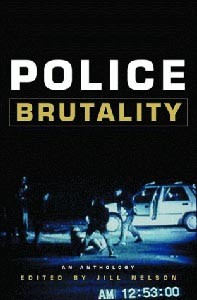
‘Police Brutality’

‘Police Brutality’ offers troubling take on law enforcement

By Patrick Sullivan

LONG AFTER we have all forgotten the significance of a hanging chad or the name of O.J.’s lead attorney, one media story from the last 10 years will live on. The nightmare scene, captured by an amateur cameraman in 1991, was unforgettable: Rodney King’s body at the center of a whirlwind of violence as Los Angeles police officers dealt out a crippling barrage of punches, kicks, and baton strikes.

The televised images were searing enough. But what truly confirmed their durability, what ensured the iconic status of King’s name into the next millennium, was the string of similar incidents that followed.

And they came with a thumping, horrific regularity that rose to a crescendo: Abner Louima held down and sodomized with a broomstick by cops in a Brooklyn police station. Amadou Diallo dying in a hail of 41 police bullets after reaching for his wallet. An LAPD officer coming clean about the violence and corruption in the Rampart station’s gang-fighting unit.

Racism and law enforcement have a long and ugly relationship in this country, as is made clear by the contributors to Police Brutality (Norton & Co.; $24.95), a new collection of original essays on the subject by writers ranging from academics to a former black police officer to a former Black Panther.

But as these essays also make clear, the last 10 years brought the issue into sharper focus than at any time since the ’60s. The results? Massive controversy in New York and Los Angeles, federal oversight of mandated reforms at the LAPD, and increasing scrutiny of such law enforcement activities as racial profiling in traffic stops.

But does white America understand the extent of the problem, even now? Not by a long shot, according to these writers. “Most Whites believe that Louima and Diallo are exceptions–good Blacks,” writes Jill Nelson, the anthology’s editor, “and that there is in the police department no systemic problem, just a few rotten apples who need to be thrown out.”

But many minorities, says Nelson, have a lifetime of personal experience that leads them to the opposite conclusion. It’s this gap in perception that is the primary focus of Police Brutality.

Historian Robin D. G. Kelley and law professor Derrik Bell both trace the origins of police presence in minority communities back to the era of slavery.

Retired NYPD Lt. Arthur Doyle details his experiences during 29 years on the force. Criminologist Katheryn K. Russell provides a bleak examination of the political and legal dynamic that shuts down debate during brutality controversies.

In one of the book’s most compelling pieces, Columbia University law professor and Nation columnist Patricia Williams offers a beautifully crafted dissection of the cult of racial appearance. Her “Obstacle Illusions” compares the fearsome stereotypes about young black men with the incredible blindness at work prior to the massacre at Columbine High School: “Dylan Klebold and Eric Harris seem to have been shrouded in presumptions of innocence–even after professing their love for Hitler, declaring their hatred for Blacks, Asians, and Latinos (on a public Web site no less), downloading instructions for making bombs.”

But most of the writers featured in Police Brutality also have personal stories to tell, accounts of humiliating, terrifying encounters with racism and brutality wearing a badge.

Some white people will find these stories hard to believe. Others will relate to them better than some of the authors might imagine. But no one–black or white–will finish this book with an untroubled mind.

From the November 30-December 6, 2000 issue of the Northern California Bohemian.

© Metro Publishing Inc.

Lesbian Film Festival

0

Yuletide cheer: ‘Home for Christmas’ screens at the Lesbian Film Festival.

Women’s Work

Short and sweet at Lesbian Film Festival

By Bill English

SURE, it might be called the Lesbian Film Festival, but the producer of the event wants to emphasize that you don’t actually have to be gay to attend or enjoy the films on offer. “While the audience might be 95 percent gay or lesbian, we don’t discriminate against straight people,” Jodi Selene says.

“And we certainly don’t ask people about [their orientation] when they walk in,” she adds with a laugh.

This year’s festival, held Dec. 2 at the Rialto Lakeside Cinemas in Santa Rosa, features five shorts, all dealing with lesbian characters.

Before the event changed venues (it was held last year at the Raven Theater in Healdsburg), gay and lesbian films were usually shown together. But this year, Selene–who previews 40 to 50 films every year to make her selections–says she had trouble finding men’s films strong enough to make the cut.

“I’m looking for well-done and interesting films that have something to do with the gay lifestyle,” Selene explains. “I did screen a number of men’s short films this year and just didn’t find any that were really good. This is the first time I’ve found fewer men’s films of quality than women’s films.”

Selene decided to move to the more centrally located Rialto because the theater–which “was very open to having a lesbian film festival”–already has a gay audience for its own male showcase, called Face To Face.

She says the increasing mainstream nature of gay films, and the increase in gay film festivals in general, has had little impact on her Sonoma County event. Also, because of budget concerns, she is limited to what she can afford to rent.

“My festival is not affected much by what’s being done in the City,” Selene says, “because I don’t do full-length features–I only screen shorts.”

Snailfingers (video) and Switch (video), by Canadian filmmakers Alina Martiros and Hope Thompson, respectively, have the longest running time at just over 20 minutes. Life’s a Butch (video) by Rosser Goodman of California lasts 15 minutes, while Home for Christmas (35mm) by Frank Mosvold and Lullaby (video) by Antonia Kao get it done in just over five minutes. Mosvold, a native of Norway, is the only gay male director to be included in this year’s festival.

While all the films have lesbian themes, the story lines range from gay coming-of-age tales to ’40s-style gangster flicks. Over the previous six years the Sonoma County Gay and Lesbian Film Festival has screened many great films coming out of the UCLA film school. This year the tradition continues with the beautiful feminist creation story Lullaby.

The Sonoma County Lesbian Film Festival was first held in 1995 and immediately found an audience. In 1996 it was expanded to include gay men’s films–but reverted to its original format in 1997 when Selene went back to grad school at SSU. There she found herself producing the event on a limited budget.

“Sonoma County has a large population of gays and lesbians,” she says. “It’s important for us to see people and relationships we can relate to on the screen. This has always been a fun event to put on. I like the fact that it brings the community together for an evening of entertainment.”

The Lesbian Film Festival hits the screen on Saturday, Dec. 2, at 7:30 p.m. at the Rialto Cinemas Lakeside, 551 Summerfield Road, Santa Rosa. Tickets are $7. For details, call 530/272-1106 or 707/525-4840.

From the November 30-December 6, 2000 issue of the Northern California Bohemian.
© Metro Publishing Inc.

The Wide-Eyed Gourmet

Fluent in Food

By Marina Wolf

I WAS PUTTING together a menu the other day, trying to decide which preparation of roast pork loin would be best, when it hit me, as cold and blunt as a marble rolling pin: I am not a fluent cook, and may never be. Yes, I can follow just about any recipe, and most of my friends are glad to eat at my house. But I’m just not a native speaker of food. It will always be a second language, and an imperfectly learned one at that.

Like many people’s, my first cooking “sentence” was simple, like “can opener” + “pan” + “one can of water” + “heat.” Later came such semantic subtleties as “medium-low heat” or “milk instead of water” or “stir with wooden spoon, not metal, to avoid scraping the nonstick coating.” Some people never progress further than this, or they regress to microwave dinners, whose instructions are paradoxically the crudest, most rudimentary food phrases possible: “heat” + “eat.” It’s the equivalent of “Where is the bathroom?” or some other essential but inelegant phrase.

Others people pick up a bigger vocabulary and move into longer conversations, dinner parties and homemade spaghetti sauce, banana bread, and maybe even some fancy deep-fried dish. For us, food magazines offer a sort of abbreviated course, the Berlitz school of cooking. Just as learners of second languages have flash cards and videotapes, so do we speakers of food have brightly illustrated recipe cards and Saturday morning cooking shows.

We can put on a coherent culinary event. But it is an effort, and it’s also usually a closed system, where the parameters are clearly defined. The depth of our knowledge is revealed in our response to sudden changes in those parameters. What if there is no pork loin available, only ham? I stutter, I skim the cookbooks, and my apparent ease vanishes. It’s like trying to buy boots in a foreign language, without knowing that in this language there are six distinct words for boots. You might eventually get the boots you want, but it’ll take longer and your reliance on the little pocket dictionary will peg you instantly as a non-native speaker.

So what makes one a fluent speaker of food? It’s the ability to improvise, to respond to the unique parameters of an interaction. And that, I suspect, is picked up in much the same way that people pick up languages: through constant exposure at a relatively young age, or through an intense immersion program in college (otherwise known as cooking school). One way requires merely a family interest in food, the other a commitment to starting over from the alphabet, relearning how to hold a knife and peel potatoes.

Like a second language, cooking skills fade when not used. During my time in Russia, I found myself both conversing and cooking with ease. But the skills never really took root. My understanding of the language has lapsed into passive knowledge (I could eavesdrop, but wouldn’t be able to gracefully recover if somebody caught me at it). And nine years later, I can only vaguely recall dishes we ate and how I made them.

Even in English, my food abilities tend to be more passive than active. I can taste a dish at a restaurant and really appreciate it, but I would have a hard time explaining why it works, and an even harder time producing it myself. And did I mention that I have a really hard time choosing between five kinds of roast pork?

Sigh. If only my parents had cooked around me more.

From the November 30-December 6, 2000 issue of the Northern California Bohemian.

© Metro Publishing Inc.

‘Pay It Forward’

0

A famed psychologist and Gifted Persons Advocate analyzes the new film ‘Pay It Forward’

“The inner world of the gifted person is always filled with balancing acts and turmoil,” explains Dr. Mary-Elaine Jacobsen. “It’s sad but true.”

She stops. Waits a moment. Thinks it through. Continues.

“It’s very risky business to be a creator of ideas,” she says, “because the first thing that happens to a fresh idea in our society–especially an idea that has any integrity to it–is that it gets slapped around like a bad baby. What kills so many brilliant ideas is all the ‘wet blanketing’ that begins to hit it the moment it sees the light of day.

“Bright people,” she adds, “have to constantly get themselves up, dust themselves off, and recreate, from scratch, their own courage and convictions.

“I know,” she adds. “I’ve done it my whole life.”

Dr. Jacobsen is the founder of OmegaPoint Resources, a consultation service dedicated to “advanced human development.” A psychologist with a private practice in St. Paul, Minnesota, she’s also the author of the best-selling guide book Liberating Everyday Genius: A Revolutionary Guide to Identifying and Mastering Your Exceptional Gifts (1999, Ballantine).

To be released this month in paperback, under the title The Gifted Adult, Jacobsen’s eye-opening tome is an attempt to liberate the millions of frustrated, unsatisfied individuals she believes are latently gifted–secret geniuses whose exceptional gifts are unknown even to themselves.

One example of such an ‘everyday genius’ is young Trevor McKinney, the 12-year-old latchkey kid played by Haley Joel Osment in the controversial film Pay It Forward.

The movie–directed by Mimi Leder (Deep Impact) and also starring Kevin Spacey and Helen Hunt–tells what happens when Trevor’s social studies class is instructed to think of a way to change the world. The teacher (Spacey) is himself something of a wonder, a deeply introspective man who hides behind a mask of serious burn scars.

What Trevor devises is a plan with unexpected consequences: he will a good deed for three different people and make them promise, not to pay the favor back, but to pay it forward to three other people, each of whom must help three others, and so on.

Though critics have dumped unprecedented amounts of scorn on the film, attacking its heavy-handed manipulation of the audience’s emotions, the film does maintain a remarkable balance between optimism and pessimism.

Trevor’s scheme, while clearly having some positive impact on the world, ultimately brings as much derision and skepticism–and outright fury–as it does success and satisfaction.

This illustrates one of Jacobsen’s main points, among the chief reasons she chose to become an advocate for the gifted: some everyday geniuses, though they live in a world that supposedly prizes innovation, can end up paying a terrible price for their gift.

“It does extract quite a price for many people,” Jacobsen agrees, “but that doesn’t necessarily mean that their lives are lives of misery. That’s not the case. But it can be very painful for bright young kids to notice what’s going on in the society around them, and to see that everybody else just kind of take it for granted and accepts it.

“I’ll give you an example from my own life, when I was very little. I remember the time I came across some old World War II movie on TV. I’d never seen anything like it before. I remember running out to the kitchen and saying to my mother, ‘There’s war! There’s war!’ It was my first conception that there was such a thing, and I was beside myself. ‘There’s war! We have to do something about it. What can we do?’

“And my mother was very kind. She didn’t blow me off or laugh, but she was clearly not as upset about war as I was. Next thing I know she was saying, ‘It’s time for dinner.” And I said, ‘Dinner? We can’t have dinner. There’s war!’

“When Helen Hunt’s character [Trevor’s struggling alcoholic mother] comes storming into the classroom, she says, ‘You can’t give an assignment like that to a kid like this! He’ll believe it. He’ll do it. He’ll try to change the world and expect the world to change.’ That’s very true for gifted kids. They will go to the heart of the matter and will take it into a depth of understanding that the adults around them can’t know or appreciate.”

Jacobsen pauses again. She waits. Then she laughs.

“It’s really remarkable how well this film relates to my book,” she says. “If the gifted people in this story had read my book, they might not have been so hard on each other–and on themselves.”

So Trevor really is the ultimate gifted child?

“He is,” Jacobsen says. “The only thing I’d like to see, in some movie sometime in the future, is a gifted kid who’s big, strong, athletic and popular. They’re always shown in the movies as little, picked on, marginalized nerds, but they can be anyone.”

And do they always tend to be so . . . um, sensitive?

“Most of them are,” Jacobsen replies. “Moral outrage starts early. We have this whole clunk of gifted kids out there who are naturally designed to be extra sensitive to the goodness and badness of the world. These are the little monitors of the playground, theses are the little champions of justice in the nursery school, people who are constantly upset by injustice and unfairness. Unfairness takes gifted kids apart.”

According to Jacobsen, the Pay it Forward idea–with its emphasis on cause and effect–is exactly the kind of plan a gifted kid would think of.

“A gifted person realizes that everything they do, and also what they don’t do, will cause a ripple effect,” she says. “Every action, every thought, is like throwing a pebble in the pond, and it leaves a wake, either a wake of constructiveness or a wake of destruction. That’s true for every one of us.”

One more pause. One last chuckle. And a final remark.

“It’s a huge responsibility, you know, to be gifted,” says Dr. Jacobsen “It’s a blessing and a curse, but it’s a responsibility. Because the more you’ve got, the more you’ve got to do.”

From the November 30-December 6, 2000 issue of the Northern California Bohemian.

© Metro Publishing Inc.

Stock Option Woes

0

Blue Notes

From rags to rags: Stock option woes

By Marjorie Kelly

AM I THE ONLY ONE who’s grown weary of the endless trumpeting about the glory of stock options? Everyone’s getting rich, the headlines blare. The stock market is “democratizing,” pundits announce with fanfare. Yes, corporations may be intent on serving shareholders, we’re told, but because employees are shareholders too, they’re sharing in the gains, thanks to stock options. Pardon me if I stuff a sock in the trumpet.

I would offer for the reader’s consideration a simple scenario: Let’s say your colleagues are laid off, your benefits have been cut, your pension has been reduced, your hours have steadily increased, and you’ve been handed a couple of hundred dollars’ worth of stock options: Are you “sharing in the gains”?

Now, granted, a handful of employees are indeed becoming millionaires. But the reason they make the headlines is because they’re news. Which is to say, they’re a rare event, something along the lines of “First Woman in Congress.” Remember when those stories were everywhere in the 1970s? It was because, in 99 out of 100 cases, congressional seats were not going to women, but men. The same can be said today of stock market wealth. The lion’s share is going not to employees, but to the wealthy, and to the hand-picked few being invited into the aristocracy: CEOs.

A 1999 Federal Reserve survey found stock options were extended to nonmanagement employees (i.e., small fry) by only 7 percent of companies. This hardly constitutes a world- shattering redistribution of wealth. Top managers, by contrast, got 279 times the number of options awarded to other employees, according to a 1998 Financial Markets Center survey. And these lavish management options actually reduced the money available to pay nonmanagers, by an estimated $500 per employee, according to the FMC.

Despite the impression the media might give, stock options are not “making everyone rich,” but are in fact concentrated in the technology sector, to an overwhelming extent. A 2000 study by UBS Warburg economist Joseph Carson found that, in adding up the entire net-gain value of all outstanding S&P company options at June 30, 2000, nearly 60 percent was in technology firms. And nearly a third of the total net-gain value was at just six firms: Microsoft, Cisco, Yahoo!, America Online, Sun Microsystems, and Broadcom.

The notion that employees are getting rich from stock options is a figment of the media’s imagination.

Even the few employees who do get stock or options aren’t all that lucky, compared to the really lucky folks: the wealthy. As an illustration, imagine an exceptional employee, Tom, who at XYZ Corp. makes $70,000 a year and owns $35,000 of his company’s stock. If his stock returns, say, 10 percent a year, he gets $3,500 as a shareholder. But he makes 20 times that as an employee, so less than 5 percent of his income is as a stockholder, while 95 percent is an employee. He is 20 times more an employee than he is a stockholder.

If the company holds down wages or cuts benefits and pensions to drive up its share price, he can lose far more than he gains.

THE REAL winners in this scenario are the 1 percent wealthiest families, most of whom do not work, who reap a major windfall from our friend’s labors. If XYZ Corp. has a $1 billion market cap, Tom’s $35,000 in stock represents an infinitesimal fraction of the company’s value. The 1 percent wealthiest families own about half of all stock, so they own hypothetically half of XYZ stock. When its $1 billion value goes up 10 percent, they gain $50 million, while our friend gains $3,500. On whose behalf is he really working?

Still, I must admit employee stock options are a step in the right direction. In granting to employees a right to pocket the increase in stock’s value, option companies implicitly recognize that employees have a right to wealth they help create.

Options are a foot in the door of an emerging free-market truth: that wealth belongs to those who create it.

Or perhaps I should say they’re a big toe in the door, and that door should open much wider.

Options are a good move, but a small one. Employees still must buy the stock, when many lack the wherewithal to do so, since the corporation’s overall aim is to hold wages down. As a result, 90 percent of all employees “flip” stock options (exercising the options but selling the stock immediately), according to a study by Westward Pay Strategies. Stock options thus discourage long-term employee ownership.

There are more direct, long-term ways for employees to share in the wealth they create, like profit sharing, Employee Stock Ownership Plans, or other forms of real employee ownership. Robert Beyster, founder and CEO of SAIC–and a major proponent of employee ownership, said it best: “Those who contribute to the company should own it.” Employees are making enormous contributions to companies today, and they should have an ownership stake equally as enormous. Stock options may be a step in that direction. But what we need is a leap.

From the November 30-December 6, 2000 issue of the Northern California Bohemian.

© Metro Publishing Inc.

Chinook

0

Photograph by Rory MacNamara

Eclectic Eats

Chinook blows hot and cold in San Rafael

By Paula Harris

CURIOUSLY, the most insistent memory we’ll take with us when we leave Chinook Restaurant in downtown San Rafael may not be of the food or the decor, but of the waitress. She manages to be hardworking and very jolly–in a grim sort of way.

As if operating on autopilot, this bustling lady enthusiastically admonishes us to “Enjoy!” whatever she places before us on the white linen cloth. A candle, a plate of food, a glass of water, hell, even the menu. “What does she expect us to do?” we wonder. “Lick the print?”

We duly dub her Stepford Server. Not that it’s entirely her fault, mind you–to be fair, she seems to be hustling tremendously to keep up with the flow and pace of the demanding diners. Even on a surprisingly quiet Friday evening on Fourth Street, this place is keeping a steady pace.

One might imagine that a restaurant called Chinook would feature Pacific Northwest specialties, but chef Sunita Dutt instead offers a real eclectic mix of global cuisines, from beef carpaccio ($8) and Fiji style “bouillabaisse” ($19.50) to chilled oysters ($1.25 each) and tandoori chicken ($15).

Chinook is, according to Stepford, named for the moist warm wind that blows from the sea in the coastal regions of the Pacific Northwest.

The restaurant is a cozy and bright oasis in the midst of a gray autumn main street, with an inviting full bar at the entrance. The tables are aglow with tea lights (but no salt and pepper receptacles), lively splashes of colorful art and tapestries embellish the soft salmon-hued walls, there’s a snazzy artsy blue, purple and yellow carpet, and a spiral staircase graces one corner.

We quickly scarf down a basket of yummy home-baked artichoke loaf and cumin corn bread with the appetizers. The fried calamari with lemon-basil sauce ($8) is a hit. It’s a huge plateful of light, fresh-tasting (and not at all rubbery) little golden rings. Our one gripe is the sauce, which is a bit overly tart and tastes of pickle.

On this cold evening, we also enjoy the five-lentil soup ($5). It’s nourishing and luxuriously thick with whole lentils and flecked with aromatic cilantro leaves. Very satisfying, although it would be improved with a tad less lemon juice.

A child at a nearby table is asking for chicken noodle soup. “No!” barks Stepford with a dazzling smile. “Just lentil or butternut squash.” The kid falls silent.

Our favorite appetizer is the wild mushroom and chestnut flan ($9), served warm, with the silken texture of a smooth paté. It’s rich and lovely with a slight sweet earthiness that pairs well with the accompanying red onion-strewn green salad in a light vinaigrette.

The night’s special, grilled swordfish ($18), is thick and delicious–perfectly cooked. It comes with good roasted root vegetables and a potato galette that has a light texture and is not creamy-rich but is unfortunately overly seasoned tarragon.

For vegetarians, there’s a satisfying risotto ($20), enriched with porcini, black trumpet, and chanterelle mushrooms. It’s lovely, although we heard some diners questioning the $20 price tag. Stepford is not amused. She reels off the ingredients list from memory and moves on to the next table.

The “Rafael Theater Triple-Feature Special” hamburger ($10.50)–named for the stylish and recently renovated deco-era cinema a few doors down–is a sure and safe bet. Made with Niman Ranch hormone-free beef, the burger is a juicy taste treat, resting on an herbed roll. The other parts of the “triple-feature” are a marinated grilled portobello mushroom cap and a rasher of applewood-smoked bacon. A heap of thin and pretty good garlic fries complete the dish, which would indeed make decent dinner and movie-date fare for the theater crowd.

The highly touted house special, apple pie ($6.50), is a huge disappointment. The crust has a mushy texture that looks as if the dessert has been heated and reheated several times, and it tastes stale. The filling is ho-hum. It’s served with a scoop of homemade vanilla ice cream, which is the best part.

But triangles of Austrian chocolate torte ($6.50), served with accompanying drizzles of raspberry coulis and white chocolate sauce, is a rich and fudgy delight. Our dining companion pronounces it to be “divine.” In addition to the fairly extensive wine list, dessert wines, ports, cognacs, and liqueurs are available by the glass.

Eventually it’s time for Stepford to bring us the check. “Enjoy!” she verily sings, plonking it on the table with a slight glare. We guess we already did.

Chinook Address: 1130 Fourth St., San Rafael; 415/457-0566 Hours: Lunch and dinner, Monday-Saturday Food: Global cuisine Service: Highly capable, if not personable Ambiance: Relaxing, chic, and global Price: Moderate to expensive Wine list: Good selection Overall: 2 1/2 stars (out of 4)

From the November 30-December 6, 2000 issue of the Northern California Bohemian.

© Metro Publishing Inc.

Newsgrinder

Important events as reported by daily newspapers and summarized by Daedalus Howell. Saturday 11.25.00 Things have gotten fishy with the Sausalito Arts Commission, reports the Marin Independent Journal. The commission is recommending that the City Council allow a six-foot-tall, two-ton bronze sculpture of a mermaid to be installed at one of two public parks...

Stu Blank Benefit Concert

Photograph by Michael Amsler Band Aid Sonoma County musicians rally for Stu Blank benefit By Bill English SOME ACTS you just never forget. Stu Blank of Santa Rosa has always been a musician's musician. Back in the '70s and early '80s when his band, the Nasty Habits, was...

Open Mic

Spring Back By Shepherd Bliss THE BOOK Silent Spring, by the imminent scientist Rachel Carson, was published nearly 40 years ago, in 1962. It led to the banning of the oft-used insecticide DDT, at least here in the United States. Though we named a hall at Sonoma State University after Rachel Carson, did we...

Paul H. Ray, Sherry Ruth Anderson

Photograph by Michael Amsler Secret Society Authors say a silent revolution is brewing HOLD ON, HUMANS. A revolution is coming. When it strikes, you'll know it, because this revolution will dramatically change the direction of our country, the world, and probably the human race. Unfortunately, we may...

‘Police Brutality’

'Police Brutality' offers troubling take on law enforcement By Patrick Sullivan LONG AFTER we have all forgotten the significance of a hanging chad or the name of O.J.'s lead attorney, one media story from the last 10 years will live on. The nightmare scene, captured by an amateur cameraman in 1991, was unforgettable:...

Lesbian Film Festival

Yuletide cheer: 'Home for Christmas' screens at the Lesbian Film Festival. Women's Work Short and sweet at Lesbian Film Festival By Bill English SURE, it might be called the Lesbian Film Festival, but the producer of the event wants to emphasize that you don't actually have...

The Wide-Eyed Gourmet

Fluent in Food By Marina Wolf I WAS PUTTING together a menu the other day, trying to decide which preparation of roast pork loin would be best, when it hit me, as cold and blunt as a marble rolling pin: I am not a fluent cook, and may never be. Yes, I can follow just...

‘Pay It Forward’

A famed psychologist and Gifted Persons Advocate analyzes the new film 'Pay It Forward' "The inner world of the gifted person is always filled with balancing acts and turmoil," explains Dr. Mary-Elaine Jacobsen. "It's sad but true." She stops. Waits a moment. Thinks it through. Continues. "It's very risky...

Stock Option Woes

Blue Notes From rags to rags: Stock option woes By Marjorie Kelly AM I THE ONLY ONE who's grown weary of the endless trumpeting about the glory of stock options? Everyone's getting rich, the headlines blare. The stock market is "democratizing," pundits announce with fanfare. Yes, corporations may be intent on...

Chinook

Photograph by Rory MacNamara Eclectic Eats Chinook blows hot and cold in San Rafael By Paula Harris CURIOUSLY, the most insistent memory we'll take with us when we leave Chinook Restaurant in downtown San Rafael may not be of the food or the decor, but of the waitress. She...
11,084FansLike
4,606FollowersFollow
6,928FollowersFollow