Newsgrinder

0

Important events as reported by daily newspapers and summarized by Daedalus Howell

Tuesday 02.27.01

The first train in over two years pulled into the Petaluma depot in mid-February, reports the Argus-Courier, resulting in the first train story in over two years for the city’s flagship newspaper. In the coming months, the Northwestern Pacific Railway Co.’s 1,500-horsepower locomotive will be hauling beer, grain, and lumber to Petaluma from Schellville–offering fierce competition for the Napa Wine Train, which moves only middlebrow winos.

Monday 02.26.01

In 1994, Cotati bought land for a proposed 48-unit senior housing complex, but ran out of money before its completion. Though the original seniors interested in the low-income units have long since passed, a new crop will soon be calling the Charles Street Village home, at least for a little while, according to the Press Democrat. The complex, affectionately nicknamed the Mausoleum, is comprised of 13 buildings a few steps from the downtown hub. “They are not just left in their units; there are actually activities that they will be encouraged to participate in,” says regional manager Annie Derringer. Among the activities will be waiting and waiting and waiting for visitors, as well as pinning the scythe on the reaper.

Friday 02.23.01

Greedy Canucks no longer satisfied with laundering their useless coinage for ours via innocent vending machines have a new scheme, reports the Marin Independent Journal. The FBI is warning residents to beware of the “Canadian lottery scam” wherein a telemarketer calls and convinces suckers that they have hit the Canadian jackpot, but in order to collect they need to send a cashier’s check to process the paperwork or cover taxes. Not dissimilar to the “I have a girlfriend in Canada scam” perpetrated by virgin males to account for make-believe sexual conquests, the con often results in dozens of useless calls north of the border. For more information, e-mail your credit card numbers (with expiration dates) to da******@**am.com.

Thursday 02.22.01

Tomales High School is no longer home of the Braves, just land of a hundred dogmatic jocks, reports the Point Reyes Light. More than 100 Tomales High School students, a third of the student body, cut morning classes to protest Shoreline School District trustees’ vote asking the school council to pick a new mascot to replace the “Braves,” presumably because it is offensive to Native Americans. Demonstrators lined the road to the high school, waved signs, and chanted, “It’s our school!” to which the deposed spirits of thousands of coastal Miwok retorted, “It’s our land!” Principal Terry Hughey entreated the protesters to return to class, but was out-testosteroned. Varsity boys basketball captain Kevin Ballatore said that if his involvement in the protest meant forfeiting the last game of the season–so be it; he wasn’t interested in playing if he couldn’t be a Brave. Choose your battles, Kev. In an unrelated story, a Native American basketball team has elected to use “Angry White Boy” as their team mascot name.

From the March 1-8, 2001 issue of the Northern California Bohemian.

© Metro Publishing Inc.

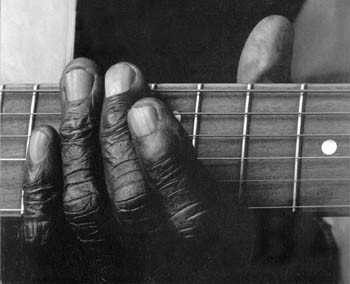
Robert Johnson

0

Blue Mood

Robert Johnson tribute is a keeper

By Greg Cahill

ROBERT JOHNSON casts a long shadow, even 63 years after his untimely death. The enigmatic Mississippi delta bluesman wrote and recorded just 28 songs during his brief career, and only a handful of people alive today actually knew him or heard him perform, yet Johnson remains a wildly intriguing figure on the American music landscape.

Over the years, Johnson’s songs have been recorded by Eric Clapton, the Rolling Stones, Fleetwood Mac, Peter Green, and hundreds of others. The 1986 film Crossroads riffed off of Johnson’s elusive personal history and the myth that the bluesman once cut a deal with the devil. And a handful of documentaries, including one starring bluesman Keb ‘Mo in dramatized sequences, have sought to unveil the man behind the legend.

Easier said than done. Johnson, who died in 1938 at age 27, reportedly after being poisoned by a jealous husband, was virtually unknown in his day, but left an impressive–if diminutive–body of work. A new all-star tribute CD, Hellhounds on My Trail: Songs of Robert Johnson (Telarc), adds to that legacy 16 tracks about cheating women, cheating men, cheap booze, and hard luck. Together these songs, lovingly rendered and infused with passion, still touch the soul (just check out the chilling version of “Hellhound on My Trail” from Alvin “Youngblood” Hart and James Cotton) and retain much of the heat of the originals.

Far removed from the high-octane Stevie Ray Vaughan-inspired power blues contingent–Johnny Lang, Kenny Wayne Shepherd, Doyle Bramhall II, et al.–this is laid-back country blues, plain and simple.

And that’s most refreshing in its own way.

There are plenty of recognizable names here: The ubiquitous Taj Mahal–a living repository of American blues–leads off with a stripped-down version of “Crossroads,” delivering a propulsive solo on his National steel guitar; North Bay bluesman Joe Louis Walker dishes up a rare solo acoustic track on “Dust My Broom”; and Grammy-nominated guitarist Susan Tedeschi teams up with guitarist Derek Trucks (nephew of longtime Allman Brothers drummer Butch Trucks) for a sassy take on “Walking Blues.”

There also are lesser-known players as well. For instance, Memphis blues guitar phenom Eric Gales deconstructs “Me and the Devil Blues,” featuring a marvelously understated Hammond B-3 organ backing from Norris Johnson.

But it is the seasoned touch that gives this compilation its special flair–it just doesn’t get any better than 85-year-old guitarist and singer David “Honeyboy” Edwards, who apprenticed under Johnson and blues legend Charley Patton, strolling through “Traveling Riverside Blues.” Authentic? Believe it.

Indeed, Telarc–which in the past year has emerged as the nation’s premier blues label–draws here on a super-roster of veteran players that includes Robert Lockwood Jr., who learned his blues firsthand from Johnson and was so close to the itinerant bluesman that he considered himself Johnson’s stepson. Among others are Chicago blues harmonica giant Carey Bell, former Muddy Waters sideman Bob Margolin, Texas blues legend Clarence “Gatemouth” Brown, and Chicago blues pianist Pinetop Perkins, as well as relative newcomers Lucky Peterson and Chris Thomas King.

An strong lineup, to be sure, collaborating on a humble tribute to an unlikely musical giant. As blues writer Lawrence Cohn points out in his liner notes, “[P]erhaps no single individual has had more of an impact on blues in general and the artists of the past three and half decades in particular.”

Johnson couldn’t possibly have imagined that he would be such a larger-than-life figure after all these years–deal with the devil or not.

Spin du Jour

Honeyboy Edwards Mississippi Delta Bluesman Smithsonian Folkways

Probably best known for his oft-covered composition “Feel So Good Today,” David “Honeyboy” Edwards is one of the last living links to the great country blues players of the 1920s. This newly reissued 13-track CD (originally issued in 1979 on the Folkways label) is just Edwards, his slide-guitar playing, warm vocals, and heart of soul. From the opening track, “Big Fat Mama,” which served as a model of vocal phrasing for Taj Mahal, it becomes apparent that Edwards–who worked with all the founding fathers of the Delta blues–was a major influence on a whole generation of contemporary bluesmen, from Taj Mahal to Keb Mo and beyond. An essential recording for any serious blues hound.

From the March 1-8, 2001 issue of Metro, Silicon Valley’s Weekly Newspaper.

© 2000 Metro Publishing Inc. MetroActive is affiliated with the Boulevards Network.

For more information about the San Jose/Silicon Valley area, visit sanjose.com.

Eating Habits of the Manly Man

The Manly Man menu and other strange vittle viewings

By Marina Wolf

ONLY CATS and face-twitching sociopaths openly watch other people eat. I know this. But much as listening to someone else’s conversation is considered an etiquette violation only if you get caught, so is watching other people while they eat a problem only if the watching is noticed.

And it’s so much more fun than eavesdropping. The psychology of eating goes beyond etiquette, though etiquette is often the first observable quality about a person’s dining habits. Does he push the food carefully apart or mash it together? Does she stir the coffee incessantly or cut the lettuce in the salad? There are no right or wrong answers, no chart to match up manners with personality type. The most interesting part of the process is whether any of it matches up with what you might have guessed just from looking at the person, and that says more about the observer than the observee.

You see how amusing it can be to check out someone else chowing down. Nonetheless I usually avert my eyes. People in restaurants are already hypersensitive to the presence of others–like wild animals in the Serengeti, we are, eying each other around the watering hole–and I hate adding pressure. But sometimes I simply can’t help but watch.

The other day I was entranced by a fellow who sat across the aisle from me. He sat alone, turned slightly away from me, in perfect alignment for discreet observation: our eyes could never meet, yet I could see most of his profile, a rough face with broad cheekbones, deep outdoor tan. As I coupled his well-worn jacket with his scuffed work boots planted firmly on the floor, the signs in my head read: construction worker. Manly man. Meat and potatoes. Light beer.

Manly Man held the menu carefully in his sturdy calloused hands and read each page from top to bottom. He gave his order to the waiter with quiet firmness: New York steak, baked potato, salad with two containers of Thousand Island dressing, yes, bread, please. Anything to drink, sir? Strawberry daiquiri, with extra whipped cream.

I stifled a giggle, but resisted looking up until the waiter brought the drink out, a goblet full of rosy pink froth with a cloud of whipped cream on top. In the same matter-of-fact way, this diner licked off a bite of the cream. He then drenched his salad with dressing–more pink!–he just dumped it in, one cup after another. Even from inside his closed mouth, the bites of lettuce made brisk, crisp noises that cheered me up in a strange sort of visceral way. He ripped a roll with calloused fingers and spread margarine thickly on the pieces. He obviously did not know or care about dietary guidelines, not in that moment, at least.

When his skillet arrived, Manly Man slathered the potato with both margarine and sour cream and let it all melt in a puddle while he tore into his steak. The pieces of meat were savagely large chunks, but he speared them neatly on his fork and into his mouth, and managed to keep his mouth closed while chewing meditatively on the mouthfuls of meat. When the potato had been thoroughly soaked in dairy product, he shoveled it in, his fingers grasping the fork over the top.

Meanwhile the daiquiri had disappeared, and Manly Man sipped delicately at another one while he cleaned his plate with an intensity of focus that knocked the breath out of me. He had no newspaper or book or laptop to distract him, the way many solo diners do. It was just him and the dinner and his appetite at that table, with enough room for all three. And two daiquiris, besides.

From the March 1-8, 2001 issue of the Northern California Bohemian.

© Metro Publishing Inc.

‘The View from Spring to Autumn’

0

Dance Dreams

Choreographer Ann Woodhead stages final piece

By Paula Harris

ANN WOODHEAD can recall the exact moment she got hooked. It happened out of the blue one day when Woodhead, just a schoolgirl then, went to see a performance by renowned Spanish dancer José Greco.

“I can still remember what the weather was like that day and what I was wearing,” she remembers dreamily. “While other girls were infatuated with movie stars, I was in love with him!”

Woodhead realized then she was also in love with dance.

“Not with ballet–at the time I hated that,” she explains, “but with other forms like social dancing. I knew that when I danced I was really happy. It engaged me totally–my intellect, my spirit, and my body. It made me feel like a whole person. It made me feel beautiful.”

That love affair has spanned almost four decades. Woodhead began ballroom dancing in high school. For the past 39 years, she’s danced seriously, working as a dance instructor at Sonoma State University since 1975 and creating adventurous choreography that often melds classical and modern dance and music.

Now the acclaimed Sonoma County dancer and choreographer is winding down her teaching career at SSU by directing The View from Spring to Autumn, her last production before she retires next January.

Today, at age 61, the unconventional Sebastopol resident is as provocative as ever. She lounges in a Santa Rosa restaurant booth, dressed entirely in scarlet and black, a dramatic figure with a flowing scarf, chunky silver earrings, and gray hair cut short and spiky with the ends colored red.

Woodhead is not about to “act her age.” Right now she’s admiring a woman’s blood-red fake snakeskin ankle boots from afar. “I’d like a pair of those,” she remarks and settles back in her seat to order a thick sirloin steak and fizzy mineral water with lemon. During the conversation, Woodhead polishes off the meat with gusto but eschews the mashed potato. At one point, she rests her steak knife on the plate looks across the table intently and doesn’t mince words.

“What I love in dance and theater isn’t Hello, Dolly,” she announces. “And it doesn’t interest me to make steps. I’ve done a lot of steps. Now the thrust is improvisation.”

Described by Woodhead as postmodern dance, her new show combines material from two older pieces, Earth and Air (originally created for the Ann Woodhead Dance Company in the early ’80s) and Garden of the Heart (created for the Sonoma State University Dance Ensemble in the mid-’90s), with newer pieces, including Temporary Excuses, with original music by Tony D’Anna and Jason Sherbundy, which will contain some subtle nudity.

“Unlike some of the things I’ve done, this show is extremely accessible,” she promises.

“In my early years as a choreographer I was only interested in totally cutting edge and avant garde,” she says. “But I’ve softened. I still consider dance to be experimental, but I’ve seen so much, I’m not even sure what’s cutting edge anymore.”

Earth and Air will use seven dancers performing to a prerecorded version of Bach’s Third Brandenburg Concerto. In Garden of the Heart, SSU music professor Marilyn Thompson will play Chopin’s nocturnes to accompany seven female dancers.

Besides the Sonoma State University Dance Ensemble, Woodhead has invited guest dancers Elizabeth Boubion, Tom Truss, and Julie Kane. According to Woodhead, Kane will dance at eight months pregnant to enhance one choreography. “It calls for a very pregnant woman,” Woodhead explains. “But if she goes into labor beforehand, the piece can still function without her.”

Woodhead herself will perform an eight-minute solo called The Burden of Breath: An Autumn Tango. “Yeah, I’m definitely the oldest dancer in the show,” she adds. “Everyone else ranges from 18 to 40.”

She’s proud of the fact that age and shape play no role in her production. “Different body types humanize the dancing,” she says. “I have a lot of body types in my show–big-round, little-round, tall-skinny. I love that.”

Woodhead believes the Western art of dance should begin to embrace artists who fall outside the stereotype.

“There’s a whole generation of dancers in their 40s, 50s, and beyond, and there are going to be more of us,” she says, explaining that today’s dancers take better care of their bodies, make use of sports medicine, and are able to continue for longer despite breakdown of connective tissue and loss of resilience over time.

Some critics may disapprove of dancers who still perform at age 61, Woodhead says, but far more congratulate her positive example. However, she grudgingly admits, “Aging is a challenge.”

As far as the future of dance is concerned, Woodhead spots a trend toward a more athletic, almost circus-style showiness. She doesn’t like it.

“There’s a place for flashy, but it’s not my fundamental intention,” she explains. “I’m interested in the poetics of dancing in imagery and evoking feeling rather than demonstrating and telling people what they’re supposed to feel. I want audiences to find layers of experiences in what they’re seeing. I don’t like it to be too simple.”

Although her time as an educator with SSU is coming to a close, Woodhead says there are still lots of challenges on the horizon. She plans to pursue her second love, acting, move eventually to a home by the sea north of Fort Bragg–and, yes, keep on dancing.

“Yes, of course I’m going to continue to use dance as my exercise,” she says with a laugh. “Somehow walking just doesn’t make it.”

‘The View from Spring to Autumn’ hits the stage Feb. 23-25 and March 1-4 at Sonoma State University, Persons Theater, 1801 E. Cotati Ave., Rohnert Park. Tickets are $15. Call for times. 707/664-2353.

From the February 22-28, 2001 issue of the Northern California Bohemian.

© Metro Publishing Inc.

Newsgrinder

0

Important events as reported by daily newspapers and summarized by Daedalus Howell

Tuesday 02.20.01

The Marin County chapter of the American Red Cross and the National Disaster Operations Center will join in an extensive earthquake exercise on Friday, reports the Marin Independent Journal. Though critics believe the activities will prove moot after the coming earthquake plunges the state into the ocean, enthusiasts are boning up on preparedness tactics: Bolinas’ self-titled Tsunami Six plan to surf the towering waves generated by aftershocks, and the Looters Local 537 is gearing up for post-quake “anarchy shopping.” Tom Busk, disaster manager for the Marin County chapter of the American Red Cross, quotes a frustrated mime: “We’re pretending we’re having the big one.” The two-day exercise will consist of working out almost every possible scenario, including alien invasion and a Jermaine Jackson comeback tour. “There will be no business as usual,” says Hank Waschow, coordinator for the Marin Office of Emergency Services–no business except underwater tours of Marin County.

Tuesday 02.20.01

A stowaway aboard a US Airways flight failed to make his connection to the Land of the Living, reports the Napa Valley Register. The dead man was found in the wheel well of one of the airline’s 767-200 jets at San Francisco International Airport. The human popsicle boarded the jet at London’s Gatwick Airport before landing in San Francisco, where the skyrocketing rents may have killed him instantly. “At higher altitudes you can get to almost minus-60 degrees Fahrenheit with no oxygen. So the chances of surviving something like that are totally remote,” said SFO spokesman Ron Wilson, though he could not deny that being a stowaway is more socially responsible than purchasing tickets through Priceline and furthering the scourge of pitchman William Shatner.

Sunday 02.18.01

A recent settlement has one cracker slum lord eating Jim Crow. In 1997, Fred Rogers allegedly told Lynn Hudson that African-Americans were prohibited from moving into Novato’s Marin Valley Mobile Country Club, seeing as it was apparently a “white trash only” trailer park. “He told Mr. Hudson to look around and he would see that there were no black residents,” said Fair Housing Executive Director Nancy Kenyon. In an out-of-court settlement, Rogers has agreed to pay Hudson $3,000 in damages and perform 240 hours of community service in Marin City. “Mr. Rogers led me to understand that people of the African-American race and people of color are not welcome into his community because they would bring it down,” said Hudson in a written statement. “To the contrary, it is only people with ignorant, insensitive attitudes who . . . bear the responsibility for making a community unattractive to anyone.” Despite the housing crush, methinks no one wants to live in Mr. Rogers’ neighborhood.

From the February 22-28, 2001 issue of Metro, Silicon Valley’s Weekly Newspaper.

© 2000 Metro Publishing Inc. MetroActive is affiliated with the Boulevards Network.

For more information about the San Jose/Silicon Valley area, visit sanjose.com.

Usual Suspects

0

Women’s Justice Center fires new salvo at SRPD

By Greg Cahill

DESPITE an official study of charges that the Santa Rosa Police Department mishandled seven cases last year involving violence against women and children, a local women’s advocate is charging that city hall has failed to address adequately an alleged cover-up and “police defensiveness” over the issue.

Those claims, raised by victims’ advocate Marie De Santis of the Women’s Justice Center, were first brought to the attention of the Santa Rosa City Council in an Aug. 24 letter that detailed seven cases, all involving Spanish-speaking victims.

“This is the kind of snowballing of critical life problems that overtakes victims when police deny services,” wrote De Santis in a Jan. 1 letter to Santa Rosa officials. “It is something we see on a daily basis, because police denial of protection and justice is so common, especially in the minority communities we serve.

“The regular denial of protection, combined with police’s incurable cover-ups of complaints, is a deadly mix for the women and children of Santa Rosa.”

De Santis wants an independent review of the Police Department’s handling of the cases. Santa Rosa–like most other North Bay communities, with the exception of Novato–has no civilian police review board. Dunbaugh and Santa Rosa City Council members oppose the formation of such a review board.

In one of the disputed cases, De Santis charges, the detective assigned to investigate a child molestation report “dumped” the case, failing to contact the mother of the 14-year-old victim and accepting the girl’s contention that there was no need to pursue the perpetrator because the multiple felony sex crimes had stopped. Further investigations, following complaints from advocates, led to a conviction in the case. In another, the actions of officers allegedly resulted in the suicide of an estranged spouse who was the subject of a court-invoked restraining order that De Santis says should have led to the victim’s arrest and safekeeping. In yet a third, a Santa Rosa woman claims to have been beaten by a police officer after the victim returned home to find her son in handcuffs. According to De Santis, the victim attempted to file a complaint with the District Attorney’s Office, which subsequently referred the case to the state Attorney General’s Office.

In her Aug. 24 letter, De Santis asked the City Council to instruct Santa Rosa Police Chief Michael Dunbaugh to refrain from contacting the state prosecutor assigned to the case so that Dunbaugh could not “in any way attempt to forestall, obstruct, or influence” the progress of the investigation.

Dunbaugh–who last fall dismissed allegations that the department has mishandled the cases–has said he welcomes such criticism. “We’re always open to evaluations about what we’re doing, right, wrong, or indifferent,” he said, during a phone interview when the charges first came to light. “We accept them and follow through.”

In response to the Aug. 24 letter, Dunbaugh has scheduled a March 14 meeting with community leaders to discuss complaints that the department has failed to provide adequate translation services to non-English-speaking victims of sexual assault. According to De Santis, the department routinely enlists bilingual family members, roommates, and neighbors to translate testimony from victims of rape and other sex crimes. That practice, she says, inhibits traumatized victims from filing a complaint.

“The more [the victim] holds back, the less work the officer has to do,” says De Santis. The police just haven’t taken this issue very seriously yet.

Police records obtained by the Women’s Justice Center through a public records disclosure found that, while police dispatcher frequently use an ATT subscription service that offers translations in 77 languages, officers in the field seldom utilize the service.

Meanwhile, De Santis adds, eight more Spanish-speaking women stepped forward between August and January to register their dissatisfaction with the way their cases were handled by the SRPD. Several more have contacted the Women’s Justice Center in the past few weeks.

THIS IS NOT the first time that social justice advocates have butted heads with the SRPD. In 1998, complaints about eight police-involved deaths–including several in Santa Rosa–led to public hearings on the matter by the U.S. Commission on Civil Rights.

The commission’s report, released last May, noted that panel members were “appalled” by the police-involved deaths of eight people over the 25-month period leading up to the commission’s packed public hearing. “The Advisory Committee agrees with community spokespersons who said that the number of events should be cause for alarm for all citizens of the county,” the report stated.

The civil rights panel recommended that the Sonoma County Board of Supervisors and the Santa Rosa and Rohnert Park city councils create independent civilian review boards with the power to, among other things, investigate police-involved shootings or alleged misconduct; promote improved procedures for filing a citizen complaint; encourage increased ethnic, gender, and language diversity in law enforcement ranks; and support better training in cultural diversity and handling of domestic violence cases and of suspects experiencing psychiatric and drug- or alcohol-induced episodes.

Santa Rosa Mayor Janet Condron was quick to denounce the report. At an April 21 press conference, Condron asked, “Is [independent civilian review] really what’s needed in this community? We don’t think so.”

Others disagree. “This report is important,” Judith Volkart, attorney and former chair of the Sonoma County chapter of the American Civil Liberties Union, said at the time. “It’s the first time an outside group not affiliated with local law enforcement has focused on the pattern of police behavior and the pattern of mistrust in the community, and listened to everyone.

“These are the recommendations, and we need to pay attention–it’s everyone’s responsibility.”

Usual Suspects loves tips. Email us at Su******@******an.com

From the February 22-28, 2001 issue of the Northern California Bohemian.

© Metro Publishing Inc.

World Social Forum

0

Going Global

Dispatches from the World Social Forum

By Kenny Bruno

“UM OUTRO mundo é possível.”–Another world is possible. That’s the slogan of the World Social Forum under way here in Porto Alegre, Brazil, in early February. Or, as they said in Seattle, “This is what democracy looks like.” While thousands chanted that slogan in Seattle, Washington, D.C., Chiang Mai, Melbourne, and Prague, they were being tear-gassed, pre-emptively arrested, harassed, and generally denied their rights by an enormous show of state force on behalf of undemocratic international institutions.

In Porto Alegre, this is what democracy looks like: During a march of thousands against neoliberalism I counted 10 police officers. When 200 Brazilian anarchists broke off from the march to throw white paint on a McDonald’s, about six police stood by.

The next day, an ex-cop explained it this way, “We police were instructed to form partnerships with the social movements.” By comparison, Davos, Switzerland, where the World Economic Forum is meeting this week, has become a fortress.

Porto Alegre is an appropriate setting for the World Social Forum, while authorities have shut down the roads to Davos, deported activists, and banned marches. In Porto Alegre, the governor of the state of Rio Grande do Sul, gave the opening speech. In fact, his government was a major funder of the forum.

In Porto Alegre, this is what democracy looks like: Hundreds of young people are camping nearby–apparently without ever sleeping–virtually without police presence.

This is what democracy looks like: Participatory budgeting. For 12 years, Porto Alegre’s budget has been decided by hundreds of well-organized community and worker groups.

This is what democracy looks like: There is no corporate sponsorship of the World Social Forum. No ads telling us how sustainable Shell is, or how clean Dow is, or how concerned for the poor Philip Morris is. No Nike swooshes. Just a few banners for the national bank of Brazil, saying “It’s better because it’s ours.” The most ubiquitous logo around is that of the Workers’ Party, on flags everywhere.

In Porto Alegre, this is what democracy looks like: Lots of meetings and lots of talking. The humid rooms, overpacked with people listening for the umpteenth hour to plans to stop new free-trade agreements and for models for local economic democracy.

This is what democracy looks like: There are lots of unionized workers present. The state of Rio Grande do Sul has twice as many union members as the national average.

This is what democracy looks like: The entire state of Rio Grande do Sul has been declared GMO-free, although some Roundup Ready soy has been smuggled in from Argentina, according to one knowledgeable government official from Brasilia. Two days ago activists traveled with French farmer/activist José Bové four hours out of Porto Alegre to tear up a few illegal acres of Monsanto’s Roundup Ready Franken-soy.

THE WORLD SOCIAL Forum is the first significant post-Seattle gathering where the goal is not to disrupt the meetings of undemocratic institutions, in what has become a series of traveling protests. Rather it is a space for activists to think, talk, and imagine another world–a more just, democratic world.

The anticorporate globalization movement has come to “an important stage in the counteroffensive that began in Seattle,” says Walden Bello, executive director of Thailand-based Focus on the Global South.

Naturally, the rhetoric of democracy in Porto Alegre cannot be transferred everywhere, especially not to the United States. In the opening ceremony, during introductions of the 120 countries represented by delegates, Cuba received the loudest ovation, while the United States and Israel got a smattering of boos. There is occasionally a flavor of old-style leftism that sounds irrelevant to most U.S. ears.

And, as one should expect in a gathering as large and diverse as this one, there are significant differences of opinion on policy and strategy. For example, some participants are working to incorporate social and environmental clauses into the WTO; others insist there must be no new round of the WTO.

Nevertheless, the overall feeling here is of fresh air coming into the debate over globalization, especially compared with the stale rhetoric in Davos. From Porto Alegre, the concept that a gathering of the rich and powerful is the answer for the poor and dispossessed, that the World Economic Forum has somehow transformed itself into a global poverty program, seems too absurd to bother debunking.

Yet neither is the Social Forum a poverty program. And that is one of the most refreshing aspects of the gathering. It is not about money. It’s not about growth, “sustainable” or otherwise. It’s not even really about development–a concept that has perhaps been hopelessly perverted by institutions like the World Economic Forum and the World Bank. Still, economic issues are prominent in the discussions here.

Rather the forum is about democracy. Not the democracy that comes from more money and therefore more choices of things to buy, but rather the democracy of participation in local and societywide economic decisions. This is the democracy that corporate globalization gazes so harshly on.

Even the most ardent supporters of the current form of globalization acknowledge that it is a web of powerful and unaccountable forces. They say the best we can do, as individuals and as nations, is to prepare ourselves to flourish in this lightning-fast, hyper-competitive world, grabbing what we can for ourselves–mobility, wealth, markets, computers.

THE FOLKS HERE would not be interested in this individualistic and competitive vision of society, even if the powerful institutions controlling globalization were to reduce the inequities and provide a safety net for those left out.

There are many challenges for the World Social Forum. Midway through the gathering, participants had not decided where, when, and if there will be another one (it seems likely). Nor had they settled on producing a statement or manifesto (it seems unlikely). Activists must stay alert to the co-optation of our language and ideas by the World Economic Forum, by the WTO, and by the World Bank. We must improve the democratic process within the Social Forum–to include more students, more non-Brazilians, more indigenous people, and others. We must make sure to keep the momentum that started with the explosion in Seattle.

Seattle was the pivotal moment in the first plank of this complex movement–protest and resistance. Porto Alegre will, I believe, come to be seen as an important step in moving forward the second part: innovation and alternatives.

It is important that many protesters have gone to Davos to continue to expose the injustice of the World Economic Forum. But I’m glad I came to Porto Alegre. As Walden Bello, a veteran of Davos meetings, says, “Davos is the past. Porto Alegre is the future.”

And the present is a collective dream of the thousands gathered here: Um outro mundo é possível.

Kenny Bruno is a research associate at ‘Corporate Watch,’ where this article first appeared.

From the February 22-28, 2001 issue of the Northern California Bohemian.

© Metro Publishing Inc.

Mose Allison

0

Sly Sage

Mose Allison slips into the Mystic

By Greg Cahill

“Y OU KNOW, I used to joke in interviews, whenever a reporter would ask me how long I’m going to keep playing music, that I’m going to get myself a Gray Panthers punk-rock band and retire in Arizona. So I wrote that into a song lyric once,” says 73-year-old jazz great Mose Allison, in a rich Southern drawl, during a phone call from his Long Island home. “Then I found out that there already is a Gray Panthers punk-rock band in Arizona. It’s called One Foot in the Grave.

“That’s the trouble when you write songs and hold them–the weird stuff comes true.”

And “the weird stuff” has come steadily over the years. Allison, an unflappable Mississippi native, is known for a laconic wit that fans revere for its hipster philosophy but that some critics confuse with cynicism. “It’s erroneous,” he says of that perception. “They don’t get it. My songs usually have a joke in them. To me, it’s a form of humor. A lot of them are ironic–the ironic couplet, that’s my staple weapon.

“But cynical is the last thing that I am.”

You need only listen to the newly released The Mose Chronicles: Live in London, Vol. 1 (Blue Note), his latest–recorded last year with bassist Roy Babbington and drummer Mark Taylor–to grasp his point. It’s an energetic showcase for Allison’s trademark laid-back phrasing and sly wit, with songs ranging from his own “If You Only Knew” and “Everybody’s Crying Mercy” to J. D. Loudermilk’s “You Call It Jogging” and Willie Dixon’s “I Love the Life I Live.”

His patented lyrical twists have earned Allison–who last year marked his 50th anniversary as a performer–a loyal cadre of fans, including some of the music industry’s biggest names. In 1970, the Who included his anthemic “Young Boy Blues” on their classic Live at Leeds (MCA)–one of just a few cover tunes the iconoclastic British rockers ever recorded. Indeed, the list of those who have tapped the Mose Allison songbook is impressive: Bonnie Raitt (“Everybody’s Cryin’ Mercy”); John Mayall (“Parchman Farm”); Van Morrison (“If You Only Knew”); the Clash (“Look Here”); and the Yardbirds (“I’m Not Talking”), among others.

In 1994, a pair of retrospectives hit the racks: Allison Wonderland–The Mose Allison Anthology (Rhino) and High Jinks! The Mose Allison Trilogy (Columbia). In 1996, Tell Me Something: The Songs of Mose Allison (Verve)–an acclaimed tribute album featuring Mose acolytes Van Morrison, Georgie Fame, and Ben Sidran–took a scintillating romp through the master’s bluesy jazz catalog.

“My songwriting just sort of develops little by little,” Allison muses when asked about his gift. “I might write a song when I can’t sleep one night. Or I might finish another. It’s just a matter of accumulation and pulling them together.”

AS THE SON of a stride-jazz pianist, Allison took up piano lessons at age 6. In the backwater town of Tippo, Miss., he was immersed in jazz and country blues. While he’s lived on Long Island for nearly 40 years, he has retained a Southern state of mind–a condition that is evident in his breezy musical style.

“Oh, some of the things that come with [being raised in the South] are the ironic comment, the exaggeration, the understatement,” he says. “That’s just part of the way people think and speak down there, particularly in the rural areas.

“So I catch myself thinking in the idiom of my ancestors.”

He still credits the black country blues singers heard blaring on the jukebox at the small gas station near his home as among his major influences.

His first gig was playing six nights a week at a club in Lake Charles, La., in 1950. Drawn to the work of jazz pianists Nat Cole, Bud Powell, John Lewis, and Al Haig, Allison soon found himself playing with some of the fastest rising stars in the jazz world. In 1956, he moved to New York City and began playing piano with some of the emerging “cool” jazzmen, including sax players Al Cohn, Zoot Sims, Stan Getz, and Gerry Mulligan. “We used to call them ‘Lesterians,’ ” he says of those reedmen. “That was the swing thing and that was my primary motivation. I never wanted to know if a guy was a good technician or could play a lot of notes–I wanted to know if he could swing.”

It was a heady time–bohemian poets, modern artists, and even Beat writer Jack Kerouac dotted the audience at those gigs (Kerouac later recorded with Cohn and Sims), but Allison didn’t run with that crowd, preferring to stay close to his Southern roots when it came to songwriting.

The following year, Allison began singing and started his own combo. He quickly became known for his understated, idiosyncratic style that the Rough Guide to Jazz has called “a sophisticated and wry form of self-communion” and that remains his signature.

“The media like to make a big deal about me being there at the birth of the cool, but just about every good jazz player blows hot at one time and cool at another,” he laughingly says. “But I came up through the bebop era and trying to be as hip as possible and all of that. That was just part of the process of growing up as a jazz musician in America. The thing about me is that I really wanted to use the music I had heard while growing up in the South and mix it in with modern jazz.

“If I had any individuality, that’s what it was based on.”

And he has refined that blend in a manner that has earned him the title “King of Cool.” “I tell everybody that if I was in this for the money, I’d be in trouble,” says Allison, who still tours extensively and remains a legend in jazz circles. “I still get gratification out of a good performance. That’s one of my rules: a good performance is its own reward.”

Mose Allison performs, along with bassist Mel Graves and drummer George Marsh, Friday, March 2, at 8:30 p.m., at the Mystic Theater, 21 Petaluma Blvd. N., Petaluma. Tickets are $15. 707/765-2121.

From the February 22-28, 2001 issue of the Northern California Bohemian.

© Metro Publishing Inc.
Open Mic

0

Free Your Mind

By Greg Cahill

LAST WEEK, some of our newspaper racks in Guerneville and Petaluma were vandalized, the contents dumped in the trash, apparently by readers offended by the “Christianity at the Crossroads” cover story. That thought-provoking article, by longtime contributor David Templeton (who once studied for a ministerial career), related the latest work of the Santa Rosa-based Jesus Seminar, a group of scholars examining how mainstream Christianity might change over the course of the next thousand years.

(If you missed it, or if your neighborhood rack was emptied, the article can be found in our .)

This isn’t the first time our racks have been vandalized because of our coverage. And it’s not the first time we’ve upset people–from both ends of the spectrum–by tackling challenging topics. That often provokes a loud and emotionally charged response. For example, last month, we received scads of phone calls, letters, and e-mails from angry Republicans upset over Stephen Kessler’s satirical spin on George W. Bush’s inaugural speech. And we still get correspondence from North Bay progressives who disdained our opposition to Ralph Nader’s vanity campaign. And then there are those folks who just think that it is the duty of an alternative newsweekly to preach to the choir.

Not enough for some folks, too much for others.

The incident last week reminded me of a bit of wisdom that comedian Howard Hessemen passed along a few years back when I interviewed him in connection with a benefit concert for the Mill Valley-based Bread & Roses. Hessemen, best known as the burned-out radio deejay Dr. Johnny Fever on WKRP in Cincinnati, was preparing to reunite with other former members of the ’60s radical political improv comedy troupe the Committee, which also included such well-known North Bay figures as actor Peter Coyote and folksinger Mimi Farina (who had since formed Bread & Roses to bring musicians into prisons, hospitals, and other institutions).

When asked to describe his motivation for shaking things up, Hessemen simply stated his motto: Challenge your credulity. In other words, never get comfortable with your own beliefs. Stay open to new ideas. Embrace change.

The Bohemian will continue to challenge readers with its news, opinion, ideas, and arts coverage. And, hopefully, readers will hold us to that task and continue to challenge themselves as well.

‘Bohemian’ editor Greg Cahill used to make ice cream runs for the nuns at a neighboring convent.

From the February 22-28, 2001 issue of the Northern California Bohemian.

© Metro Publishing Inc.
Grocery Shopping

0

Basket Case

Of grocery carts and guessing games

By Marina Wolf

IT ONLY HAPPENED once that I can remember, and that was five or six years ago, but the details of my supermarket encounter remain as vivid as a National Enquirer point-of-sale display: I reached to pick out my usual container of cottage cheese (fortunately, I have no dieting trauma associated with it, and enjoy it with pineapple). I wanted to keep moving because I left my coat in the car and it was chilly in the dairy aisle. But the sharp-nosed older woman in a tan coat, reaching to get a box of margarine, wanted to make a point. She looked at the container in my hand and said cheerily, “You really ought to try the 1-percent cottage cheese.”

I was initially unable to fathom why this stranger was taking me to task for my choice in dairy products, but she soon made her point clear: “It tastes just fine, and, you know, it’s lower in fat.

Being new to fat liberation and the art of fat-friendly comebacks, I mumbled something like, well, this is my favorite brand, and we moved apart, a blushing large woman and a busybody who probably felt great about spreading the low-fat gospel to someone who “obviously” needed it.

Nowhere are our eating habits more exposed to public scrutiny than in grocery stores. The gleaming cages of the carts provide the illusion of containment and privacy, but the reality is that everything is hanging out for public assessment. People who wouldn’t even think about peeking in our cupboards or rummaging through our refrigerators without an invitation are free to mentally weigh out the calories, grams of fat, and menu of every product in our baskets.

“YOU ARE what you eat.” We play the game every time we look at the cart of the person in front of us and imagine to ourselves where they are going, what their plans are, what kind of person they might be. Heck, I do it, too. Five kinds of flavored potato chips, along with red-eyed laughter: duuude, don’t bogart that joint. One steak and a six-pack of Bud: lonely guy on Monday night. Turkey breast, diet cola, magazine with a half-naked anorectic on the cover: woman on a diet. It’s not such a great step from this to some buttinsky looking at my cottage cheese, looking at me, and imagining that I must be–I should be–interested in finding a low-fat alternative to my small-curd indulgence. Of course, there’s a difference between playing mental guessing games with someone else’s 10-items-or-less and offering them diet tips in the aisles. It’s the difference of intent, and of some presumption of personal involvement, and then actually saying the words.

The last time I felt people’s eyes so sharply upon my eating habits was in college, the year when I was getting food stamps. They made my penniless existence easier–and I didn’t faint anymore at work for lack of eating–but standing in line at the grocery store was a whole new experience in hostility. As I hurriedly tore out the food stamps, the food moved along the excruciatingly slow conveyor belt, getting scanned twice: once by the cashier and once by the eyes of the people behind me. It didn’t matter whether I was buying my steak (with expiring-today, 50-percent-off tags) because I was having my period and seriously craving iron, or that I just wanted some Ovaltine to sit with while I studied in my damp cellar apartment. There was no explaining.

At a deeper level, I resented then, as I do now, the idea that I need an explanation. Why does it matter how I pay? Why does it matter what my weight is? We all have to eat, and we have the right to determine what and how much we want to put into our mouths.

Of course, the grocery store has become a treacherous, confusing place for everyone, a battlefield of ads and information from food manufacturers, whose best interest is to have people feel insecure about what they eat. That way there’s always demand for products that play to those insecurities. Read the packages and you can track the dietary worry of the day. Salt raises blood pressure? Let’s offer low-sodium soups (that need more than a few grains of salt to taste good). Fiber! It’s good for what ails ya! Next thing you know, those dish-scrubbing pads will get labels saying that they’re naturally high in fiber. Of course, fat is the biggie, has been for years. I saw a “low in fat” sticker on an apple recently and immediately grew depressed that people don’t know this already.

The point here is that grocery stores are only partly in the business of selling you food and essential feminine hygiene products (ooh, don’t get me started). Grocery stores also serve as showcases for the food industry’s best marketing games. That interfering old biddy with her 1 percent cottage cheese wasn’t being mean; she was just parroting the slogan from the side of the carton.

Which doesn’t mean I feel compassion for those unwitting pawns of the diet-food industry. It just puts me on the lookout for better, sharper ways to snap them out of it. Next time I’ll do what I’ve started to do when faced with a choice between fat-free and regular baked goods at a coffee counter. “Does this have fat in it?” I say, pointing at the ones that I know are “fat enriched.” When I get a confused nod or a nervous giggle, I say, “Oh, good! I’ll take it.”

From the February 22-28, 2001 issue of the Northern California Bohemian.

© Metro Publishing Inc.

Newsgrinder

Important events as reported by daily newspapers and summarized by Daedalus Howell Tuesday 02.27.01 The first train in over two years pulled into the Petaluma depot in mid-February, reports the Argus-Courier, resulting in the first train story in over two years for the city's flagship newspaper. In the coming months, the Northwestern Pacific Railway Co.'s...

Robert Johnson

Blue Mood Robert Johnson tribute is a keeper By Greg Cahill ROBERT JOHNSON casts a long shadow, even 63 years after his untimely death. The enigmatic Mississippi delta bluesman wrote and recorded just 28 songs during his brief career, and only a handful of people alive today actually knew him or heard...

Eating Habits of the Manly Man

The Manly Man menu and other strange vittle viewings By Marina Wolf ONLY CATS and face-twitching sociopaths openly watch other people eat. I know this. But much as listening to someone else's conversation is considered an etiquette violation only if you get caught, so is watching other people while they eat a problem only if...

‘The View from Spring to Autumn’

Dance Dreams Choreographer Ann Woodhead stages final piece By Paula Harris ANN WOODHEAD can recall the exact moment she got hooked. It happened out of the blue one day when Woodhead, just a schoolgirl then, went to see a performance by renowned Spanish dancer José Greco. "I can...

Newsgrinder

Important events as reported by daily newspapers and summarized by Daedalus Howell Tuesday 02.20.01 The Marin County chapter of the American Red Cross and the National Disaster Operations Center will join in an extensive earthquake exercise on Friday, reports the Marin Independent Journal. Though critics believe the activities will prove moot after the coming earthquake...

Usual Suspects

Women's Justice Center fires new salvo at SRPD By Greg Cahill DESPITE an official study of charges that the Santa Rosa Police Department mishandled seven cases last year involving violence against women and children, a local women's advocate is charging that city hall has failed to address adequately an alleged cover-up and "police defensiveness" over...

World Social Forum

Going Global Dispatches from the World Social Forum By Kenny Bruno "UM OUTRO mundo é possível."--Another world is possible. That's the slogan of the World Social Forum under way here in Porto Alegre, Brazil, in early February. Or, as they said in Seattle, "This is what democracy looks like." While thousands...

Mose Allison

Sly Sage Mose Allison slips into the Mystic By Greg Cahill "Y OU KNOW, I used to joke in interviews, whenever a reporter would ask me how long I'm going to keep playing music, that I'm going to get myself a Gray Panthers punk-rock band and retire in Arizona. So I wrote...

Open Mic

Free Your Mind By Greg Cahill LAST WEEK, some of our newspaper racks in Guerneville and Petaluma were vandalized, the contents dumped in the trash, apparently by readers offended by the "Christianity at the Crossroads" cover story. That thought-provoking article, by longtime contributor David Templeton (who once studied for a ministerial career), related the latest...

Grocery Shopping

Basket Case Of grocery carts and guessing games By Marina Wolf IT ONLY HAPPENED once that I can remember, and that was five or six years ago, but the details of my supermarket encounter remain as vivid as a National Enquirer point-of-sale display: I reached to pick out my usual container...
11,084FansLike
4,606FollowersFollow
6,928FollowersFollow