

Spins

0

Great Scott

Two new discs spotlight jazz singer

By Greg Cahill

IS THIS A CASE of hackers run wild? The All Music Guide, one of the Internet’s most authoritative musical sites, describes a close encounter between jazz balladeer Jimmy Scott and the Beatles. The Web page–replete with a photo of the diminutive Scott cradling a hefty old chrome microphone–claims that during the early ’60s, and before his supposed death in 1986, Scott met a young songwriter named Paul McCartney, inspiring a tune with a favorite expression of Scott’s, ob-la-di ob-la-da. According to the website, in an effort to avoid an alleged plagiarism suit, McCartney later paid off Scott’s alimony bills and bailed the diminutive musician out of jail. But not before Scott had gone on to record the conga intro to the Rolling Stones’ “Sympathy for the Devil.”

It’s a grand tale–none of which is true, at least not the part about meeting the grim Reaper. You see, the announcement of Scott’s death was premature.

The 75-year-old Scott–who launched his career 50 years ago as a singer with Lionel Hampton’s celebrated swing band–is alive and well, working on an autobiography (set for release next year) that should help set the record straight. He can be heard on a gorgeous newly recorded CD, Over the Rainbow (Milestone), and his classic 1969 Atlantic Records album, The Source (Label M), has just been released for the first time on CD.

Indeed, there is a flurry of activity around Scott: In the past couple of years, he has toured Japan and Europe extensively, been saluted by the likes of Ray Charles and Lou Reed in a Bravo Profiles cable TV showcase, and worked as a fashion model in an Italian advertising campaign.

There is no question that Scott possesses one of the most beautiful voices in the jazz world–that is reaffirmed over and again on the lush ballads featured on Over the Rainbow–or that he has enjoyed a most unusual career. One of 10 siblings, all of whom sang at their mother’s church, Scott (like one of his brothers) never experienced puberty, the result of Kallman’s syndrome, a hereditary hormonal disorder that stunted his growth and prevented his voice from developing beyond boyhood. That left Scott with an angelic, feminized voice. While the condition is now reversible (his brother underwent hormonal therapy), Scott chose not to risk losing his distinctive style. “I fought through it,” Scott has said of his condition. “It didn’t matter. I was accepted in show business back in the early ’40s. That helped a lot, and it never bothered me like it might some others.”

His big break came in 1949, when Lionel Hampton hired him, billing the then 24-year-old singer as “Little Jimmy Scott.” The labels of some Decca sides mistakenly credited Scott’s vocals to Irma Curry, Hampton’s female vocalist at the time.

Scott scored a No. 6 hit with “Everybody’s Somebody’s Fool.” But despite some success as a Savoy records artist, Scott spent time away from the microphone, working as a hotel shipping clerk and a caretaker.

In the late ’80s, Village Music record store owner John Goddard tracked Scott down and hired him to perform at a private party–a move that helped persuade Scott to return to performing. His career took off again in 1990 when record industry bigwig Seymour Stein heard Scott singing at songwriter Doc Pomus’ funeral. Stein signed Scott to a high-profile Warner Bros. record deal. Three albums followed–one on Sire, one on Warner Bros., and a third on the smaller Artists Only! label.

Over the Rainbow includes some of Scott’s finest work.

“In the fragility of his voice,” biographer David Ritz opines in his liner notes, “there is enormous strength. His songs say that we can live with our inconsistencies; we can be fools but still survive; we can still hope for those pennies from heaven.

“We look to him for lessons in how to live out lives with patience, dignity, and a sense of wondrous beauty.”

From the April 12-18, 2001 issue of the Northern California Bohemian.
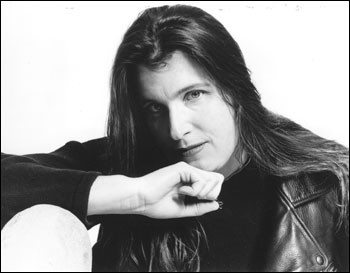
© Metro Publishing Inc.

The Wide Eyed Gourmet

Finding ties in the taste of another culture

By Marina Wolf

WHEN I LEFT my family’s church, I wasn’t really leaving much in the way of holiday food traditions. It was a fairly standard Protestant-based religion, and festive days such as Easter were observed simply, with understated prayers and overcooked meats. A few years later I met my soon-to-be life partner, a Russian-American with a sternly Orthodox father. Amazingly, her family took me to church once or twice, and it was there that I found a whole new way of celebrating the season: chanting, incense, drinking, and paskha.

Paskha is the name for Orthodox Easter, which falls two weeks after the Christian holiday. Paskha is also the sweet, creamy, cheesy spread that Orthodox Russians whip up to help break Lent. Now, people generally understand Lent to be a ritual of great self-sacrifice–my girlfriend remembers giving up TV for Lent one year–but it doesn’t have to be. There is no Lenten prohibition against caviar, for example, or smoked salmon. Still, every ritual calls for release, and paskha is perfectly suited for the purpose.

The only way to get more release from eating paskha is to have other people eat it off you. My apologies for the sacrilege, but it’s that good.

THE ONLY THING keeping me from eating paskha every week is the fact that paskha-making is a monumental production. The amounts of butter, eggs, cream, sugar, and farmer cheese are staggering, both in cost and in quantity. Even for the smallest amount I have a recipe for, at least a dozen egg yolks must be separated–fie upon thee, salmonella, we defy thee!–or else the eggs must be cooked and the whites peeled away. The farmer cheese must be drained for a day, a process that takes up half the shelves in the refrigerator. The last time we made it, we could barely find a bowl big enough to hold everything. And of course, combining everything to that perfect degree of smoothness requires an industrial-sized mixer or Popeye’s right arm.

In short, it is a project not for the faint of heart or weak of arteries.

I haven’t even gotten to kulich, the bread that carries this spread. Kulich is a sort of panettone, made with still more eggs and butter, golden raisins, and a generous pinch of saffron, all of which gives the dough a warm golden color. As beautiful as the bread is, the baking of it is a beast. You have to find, clean, and grease tall cylindrical pans (we used coffee tins, which are conveniently dented at intervals for slicing guides, but are almost as hard to find these days as paskha molds).

ALL DRAFTS must be kept out of the kitchen, along with anything else–a game of basketball, a dropped baby–that might make the tender dough fall during baking. If the tall loaves don’t fall, they will inevitably emerge slightly burnt from the heat off the top element. No matter: the burnt parts are easily cut off, and the rest sliced away into rounds like Boston brown bread, and then slathered with paskha. Now this is an Easter tradition to get into. No clove-studded ham; no overboiled, green-yolked eggs; no simple cinnamon rolls on Sunday morning. This is hard, sweaty work, redeemed by a mouthful of tender, sweet goodness.

I never converted to Orthodoxy, in case you’re wondering, and actually my girlfriend stopped being Orthodox sometime during college. Her father died three years ago, and we haven’t made paskha since. So why should I even be thinking about paskha? It’s mine only tenuously, owing to a strange combination of interest and proximity.

Yet I still feel the strange tug as spring arrives. I wonder about where to get the cheese, and try to remember where we put the paskha mold. Is it time? Are we there yet? Yes.

Paskha

The following paskha recipe is slightly adapted from the parish cookbook of St. Mary’s Orthodox Church in Santa Rosa.

2 1/2 lbs. sweet butter (unsalted) 5 1/2 cups sugar 5 lbs. farmer cheese 12 hard-boiled egg yolks (run through a sieve) Pulp of 2 vanilla beans 1 quart whipping cream Nuts, candied cherries , or dried fruit

Set aside 1/2 cup sugar and cream remaining sugar with butter. Add cheese and egg yolks. Process vanilla pulp in blender with 1/2 cup of sugar, add to rest of ingredients, and mix well. Whip cream and fold into all other ingredients. Pack mixture into new flowerpot with drainage holes, lined with cheesecloth, and put in refrigerator for 2 days to drain. Unmold onto pretty plate and garnish with nuts, candied cherries, or dried fruit. (Warning: This recipe makes a lot of paskha.)

From the April 12-18, 2001 issue of the Northern California Bohemian.

© Metro Publishing Inc.

Live Theater in Downtown Santa Rosa

0

Downtown bound? Sonoma County Rep’s Jim dePriest hopes to bring live theater back to central Santa Rosa.

Downtown Drama

Theater groups vie to create new performing arts space in downtown Santa Rosa

By Paula Harris

ONE BY ONE, central Santa Rosa’s live theaters are going dark. By the end of April, the so-called cultural hub of Sonoma County could be devoid of any regular live theater performances downtown.

But like all good dramas, there’s more than a little intrigue at work. Amid a swirl of rumors, at least two groups of local arts organizations are formulating ambitious plans to create new downtown Santa Rosa performing arts venues. One plan could put live theater on stage in the building that now houses the United Artists 6 movie theater.

First the closings. This weekend, Santa Rosa Players will stage its final show at the Lincoln Arts Center, which was the theater company’s home for many years until the building was recently purchased and donated to a local nonprofit organization that works with at-risk children.

Trey McAlister, the Players’ board president, says the group is considering relocating to the Merlo Theater at the Luther Burbank Center for the Arts, or to an undisclosed Highway 12 location en route to Sonoma.

Also this week comes the announcement that the Studio Be theater company has lost its lease on the building it was renting near Railroad Square. Associate artistic director Robert Pickett says the company must be out by the end of the month and is in dire need of a new home.

The theater-closing trend began at the end of last year with the closure of 10-year-old Sonoma County Repertory Theatre’s Humboldt Street location after the building was converted to office space. The theater company has had to consolidate resources into its other venue, the smaller Main Street Theatre in Sebastopol.

But one group of collaborators is working quickly on plans to bring live theater back downtown. Santa Rosa-based movie house mogul Dan Tocchini, who owns the Roxy Theatre megaplex downtown and Airport Cinemas in north Santa Rosa, last week confirmed that he is attempting to buy the UA6 Cinemas building on Third Street, with plans to create a combination movie art house and live theater venue.

“The negotiations are finished,” Tocchini says. “There’s been a proposal on our part, and we have a verbal commitment from one person in the company, and now it has to go through the board of directors. They’re drawing up the paperwork.”

Further information on the deal is sketchy. “It’s difficult. We’re dealing with a big corporation in bankruptcy,” Tocchini says, referring to United Artists’ current economic struggle.

“The chances are we’ll use [the venue] for theatrical and nontheatrical purposes,” Tocchini confirms. He adds that he has talked with Actors Theatre creative director Argo Thompson about potential collaboration on the project.

Since Tocchini wouldn’t need all six screens–he’ll just use four to show art films–Thompson says Actors Theatre (currently housed at the Luther Burbank Center) could create two stages at the site. “We could have a 300-seat theater and a flexible black box,” Thompson explains.

Michelle Gervais, executive director of the CityVision downtown revitalization program, is enthusiastic about the plan. “If a venue could be half live performances and half movies that would be fantastic, because then you’d have a very healthy mix of diet,” Gervais says.

Meanwhile, Thompson says that Actors Theater must move soon on its expansion plans. “We have to take that step now,” he says. “We don’t have enough room for the audiences we’re getting.”

But downtown may not be the only option. Thompson says such a location has both pluses and minuses. “Being at the heart of a vital cultural life is ideal, and also being within walking distance to shops and restaurants is conducive to the marriage of art and commerce that needs to take place,” he says.

On the negative side, Thompson says, downtown Santa Rosa is still dead. “A lot of people pay lip service to the idea that it’s being revitalized, but it’s still dead,” he argues. “I was born and raised in Santa Rosa, so I can badmouth it.” Another potential problem is lack of parking, he says.

Thompson adds that possibilities for Actors Theater include converting an existing space in the LBC, building a new facility on the LBC grounds, or moving into the UA6 or UA5 building on Mendocino Avenue.

At press time, it was unclear whether Tocchini is also negotiating to purchase the UA5 building. Representatives of United Artists Theatre Circuit Inc., headquartered in Englewood, Colo., declined to comment on any current negotiations.

Another set of allies has its eyes set on the UA5 building on Mendocino Avenue, also with the idea of creating a multi-use arts venue. According to Sonoma County Repertory’s Jim dePriest, the Sonoma County Museum, Sonoma County Repertory Theatre, and Santa Rosa Symphony are planning to collaborate on a downtown space that will accommodate all their needs. The UA5 building would fit the bill.

The Sonoma County Museum made its ambitions clear in its December 2000 Envisioning Report. In that document, the museum’s board of trustees discusses establishing a facility called CenterSpace, a multi-use cultural arts campus for the museum.

“Contributions of other disciplines (such as music, performing arts, contemporary art, etc.) to CenterSpace Cycles will be supplied by local cultural arts groups already specializing in those disciplines and partnered with the museum,” notes the 95-page report.

“A collaboration seems to be the best way to work,” dePriest says. “Downtown Santa Rosa is a tough place to run a business.”

DePriest adds that Sonoma County Rep’s minimum space requirement for a downtown venue is 12,000 square feet–room for a 250-seat theater, a classroom for youth programs, shops, and storage.

“I’ve looked at the ground plan for the UA on Mendocino Avenue, and it has 20,000 square feet,” dePriest says. “It’s a very large facility. The CenterSpace idea could happen there because it could accommodate the needs of the museum, the theater, and the symphony. It could all work very well.”

Santa Rosa Symphony executive director Joan Lounsbery confirms that the symphony is interested in moving its offices to downtown Santa Rosa when the symphony’s lease at the Luther Burbank Center expires in 2003 and performances move to the Green Music Center on the Sonoma State University campus.

“We want to have a presence downtown and believe cultural life will thrive downtown,” Lounsbery says. “We’re looking for 5,000 square feet [for office space and box office], but we feel we have a couple of years to find something.”

While Sonoma County Museum board president Kevin Konicek declines to comment on plans to purchase the UA5 Cinemas, he does point out that various groups have agreed to work together on an experimental basis for an upcoming exhibit focusing on work by the artist Christo.

The September exhibit will involve music by the symphony and participation by various art galleries in the county, plus a stage production of Art by Sonoma County Rep. It will be curated by Gay Shelton of the Sonoma Museum of Visual Art.

“There’s a swirl involving the museum, the repertory theater, the symphony, and SMOVA that involves downtown activities,” Konicek notes.

Of course, several theater companies could collaborate and all operate from the same venue. AT’s Thompson says such a collaboration could be in the cards. But Sonoma County Rep’s dePriest hasn’t heard of any such plans. CityVision’s Gervais thinks cooperation would be a great idea.

“Collaboration is especially important when it comes to the arts because the project will have to be as financially solvent as possible,” Gervais says. “Because I don’t think there will be terrific support or funds available from the city.”

From the April 12-18, 2001 issue of the Northern California Bohemian.
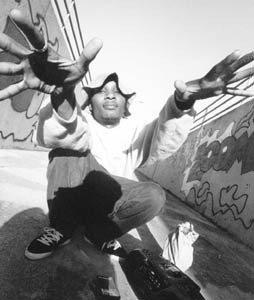
© Metro Publishing Inc.

Pairs Restaurant

0

Craig’s wine list: Pairs owner Craig Schauffel savors a sample from the restaurant’s extensive selection of wines.

Feng Shui Kitchen

Pairs reopens in Napa with Zen-like style

By Paula Harris

THE SLENDER sticks of incense burning in the bathroom are an immediate tip-off. The spot Pairs’ restaurant owners, Keith and Craig Schauffel, have chosen for their newly expanded eatery may have once been a Denny’s greasy spoon, but the location now is all pure and peaceful feng shui grace.

The brothers recently revamped and relocated their former restaurant, Pairs Parkside Cafe, from St. Helena’s main street to this expanded home on Solano Avenue in downtown Napa. The entire look, like the food, is elegant Asian-fusion.

Apart from the chic bathroom–worth a trip in itself just to meditate amid the dark walls, stainless-steel sinks, oversize mirrors, and aforementioned sticks of incense burning in a sand-filled platter–there are other signs of Zen-like style. Note the tranquil Oriental water garden screened by bamboo as you enter the restaurant. And the dining-room dividers fashioned from rows of silver birch tree saplings. Or the curvaceous bar made from stacked dark polished river rocks, where loose-faced patrons are sipping sake-based cocktails like Killer Cosmo (sake, cranberry juice, and orange juice) or Kitty’s Milk (sake, coconut milk, and pink lemonade) in relaxed abandon.

Pairs boasts three dining rooms; one with a fireplace and circular paper lanterns dancing above a wooden-trellis false ceiling; another, a dusky and romantic eating area near the bar; and a private room tucked away behind a sliding wooden shoji screen. The walls are decorated with kimono-quilt artwork.

The tables are set with candles, white paper, and squared-off oval plates set with folded napkins with a pair of wooden chopsticks slipped inside. And the competent staff slink around in navy blue tunics with mandarin collars.

Dinner begins with complimentary and completely addictive housemade grilled garlic focaccia. These warm chewy triangles just three bites big have a tasty batter flavor like pancakes, and are wonderful dipped into the accompanying piquant sugar, white wine vinegar, and chili dipping sauce. Unable to stop ourselves, we allow the server to bring us two more basketfuls.

The vegetarian spring rolls ($5) come with another chili pepper-based dipping sauce and are crisp, hot, and crammed with shredded veggies like carrot, bok choy, and bamboo shoots. These babies are served on a bed of refreshing fresh cilantro.

If you’re a bivalve buff, don’t miss the wonderful roasted mussels in a tomato coconut broth ($12). The small sweet mussels are fanned around a pile of cilantro lime fettuccine, and the broth is both tart and creamy, flavored with delicate coconut and flecked with tomato and garlic. An excellent appetizer or light main course.

The entrées include exotic fare, such as grilled tilapia with tropical fruit salsa and sweet crab jasmine rice ($18), or more mainstream dishes like golden garlic grilled ribeye steak with fluffy mashed potatoes ($22).

One quibble is the total lack of vegetarian main dishes. Noncarnivores can either opt for a grilled vegetable and smoked mozzarella sandwich ($8.50), or else order a couple of vegetarian side dishes.

These are hit and miss. A side of Parmesan herb fries ($4) consists of passable shoestrings served with a container of tomato ketchup; but a side of gingered sweet-potato risotto with shiitaki mushrooms ($6.50) fights bitterly with the accompanying pickled ginger; whereas a side of garlicky broccolini with oyster sauce ($5) is super-fresh, completely garlic-infused, and delicious.

The restaurant’s signature tamarind tangerine rack of lamb with sweet potato risotto ($23) features three perfect lamb chops, but the risotto’s pickle-like flavor (from the tamarind) is odd, and the thick coins of sweet potato are too undercooked to enjoy.

The wine list is varied and international, with some excellent selections offered by the glass. If you can’t decide, let the well-informed staff come up with some inspired wine and food pairings–the place is after all called Pairs with this in mind.

As for desserts, we find the mandarin chocolate macadamia nut torte ($7), a cake sandwich wedged with mandarin flavor, to be a bit heavy-handed. But the banana tarte Tatin with candied walnut ice cream ($7) is a delightful orgy of warm banana, toffee, ice cream, and sweet cookie.

As we leave, the incense is still smoldering in the bathroom, but the dining room’s ambiance of peaceful elegance is rudely disrupted by a large raucous party that has invaded the private dining area and is beginning to make dinner hellish for the poor souls seated at nearby tables. A few diners ask to be moved away from the shrieking emanating from behind the wooden screen.

Hmm, a little Zen-like sound proofing may be in order, but even so, this new Pairs is an enlightening culinary experience.

Pairs Address: 4175 Solano Ave., Napa; 707/224-8464. Hours: 11:30 a.m. to 9:30 p.m. daily Food: California-Asian Service: Good, knowledgeable Ambiance: Zen-like elegance Price: Expensive Wine list: Expansive, including international selections Overall: 3 stars (out of 4)

From the April 12-18, 2001 issue of the Northern California Bohemian.

© Metro Publishing Inc.

North Bay Water Resources

0

A moment of reflection: Marin County environmentalist Huey Johnson says the Sonoma County Water Agency “has run roughshod over honesty and logic.”

Ripple Effect

Welcome to the byzantine world of North Bay water politics

By Janet Wells

‘Whiskey’s for drinking, water’s for fighting.’

–Attributed to Mark Twain

IN SONOMA COUNTY, the deeply entrenched political battles are not really about grapes or redwoods, clogged highways or even sprawl. It’s about water and how Sonoma County has, time and again, put up its dukes, battling litigation, environmentalists, and public scrutiny in order to maintain a stranglehold on the lifeblood resource that sustains the county’s burgeoning growth.

For 50 years, the Sonoma County Water Agency has, according to former Petaluma City Councilman-turned-water activist David Keller, relentlessly pursued its mission “to get access to, get control of, and use as much water as possible.”

Keller was part of a bare majority of the Petaluma City Council last year that, for a short time, rebuked the water agency’s Goliath-like push to expand its water system. That action was overturned earlier this year by the council’s newly elected, less-than-environmentally friendly majority.

What gets Keller–the affable hazel-eyed toolmaker and self-described “moderate from Bolinas”–talking a mile a minute for hours on end is that the $180 million pipeline project at the heart of last year’s confrontation between Petaluma and the SCWA was just one of four major and diverse expansion schemes simmering away on the agency’s burners.

If successful, the projects would be a windfall in the form of billions of gallons of water annually to meet–and critics say encourage–residential, industrial, and agricultural growth in Sonoma and Marin counties. The projects would also have a combined price tag in the hundreds of millions and could have dire consequences for already compromised watershed habitat in Northern California.

Keller–along with a bevy of high-profile environmentalists, legislators, and water resource experts–says the agency has been forging ahead with its plans in a bureaucratic vacuum, with little input from the folks who will end up footing the bills through increased water rates.

“[Water agency officials] seem to be pretty unavailable for public scrutiny in terms of some of their proposals and their plans and where they are going to be spending their money,” agrees Assemblywoman Virginia Strom-Martin, D-Duncans Mills, who has introduced legislation designed to strip the Sonoma County Board of Supervisors of its authority to regulate water issues, as well as force the water agency to drop its drawbridge and invite the public in for a look.

Keller bluntly characterizes water agency tactics as “dishonest,” “disrespectful,” “secretive,” and “childish.” “How we manage our water is really a touchstone for what happens to Sonoma County,” he fumes during lunch at a Petaluma cafe. “I really resent being treated like mushrooms.”

Does he mean being kept in the dark by the water agency? “Yes,” he replies. “And being fed shit.”

Coveting Your Neighbor’s Water

Unlike many regions of arid California–Los Angeles being the prime example–Sonoma County has a source of high-quality water in its backyard. With almost 1,500 square miles of watershed and more than 80 tributaries, the Russian River’s clear, naturally gravel-filtered water flows 84 miles from its headwaters in southern Mendocino County, feeding Sonoma County’s fertile agricultural lands and shady redwood-studded coastline on the way to its ocean outlet at Jenner.

It didn’t take a crystal ball for Sonoma County forefathers to see that the Russian River–with its summer flow down to a trickle in drier years–wouldn’t have ample capacity for the future. And a readily available source of water is key for population growth and agricultural and industrial expansion, which add up to increased revenues and healthy municipal coffers. So, in the hallowed tradition of California’s legendary water wars, the county started stealing its water from somewhere else, dipping its massive bureaucratic bucket into the Eel River in Mendocino County and pouring it into the Russian River in order to quench the thirst of 600,000 residential and commercial water users in Sonoma and Marin counties.

Of course, “stealing” is a relative term under California’s water laws. Known as “appropriative rights,” the law essentially grants water rights to the first person or agency to divert water and use it–which Sonoma County did, way back in 1908, when PG&E started diverting Eel River water into the Russian River to fuel the Potter Valley hydroelectric plant.

The headwaters of the Eel River spill out of a volcanic cauldron surrounded by 7,000-foot-high snow-capped mountains in the southern part of Mendocino National Forest. The river’s main stem and three forks rank as the state’s third largest watershed, covering almost 3,700 square miles as the river winds north for more than 200 miles before draining to the ocean south of Eureka.

To tap this treasure, the SCWA (then the Flood Control and Water Conservation District) was established in 1949 under the Sonoma County Water Act. One of the agency’s first actions was to apply for construction of the Coyote Valley Dam to form Lake Mendocino, mostly with water from the Eel River diversion.

In the byzantine world of water law, the Eel’s value lay not in its abundant water, but in its capacity to provide electricity. Once the diverted water rocketed through the Potter Valley Project’s turbines and out the two-mile-long diversion tunnel, PG&E considered it useless, technically “abandoned.”

Sonoma County was only too happy to adopt the water, scoring–for free–50 to 70 percent of the diverted water to sell to cities and water districts in Sonoma and Marin counties. By doing so, the water agency and the ratepayers have–perhaps unwittingly at first–supported the degradation of 80 miles of the Eel’s once-thriving salmon and trout habitat, since the Potter Valley Project siphons up to 97 percent of the Eel River’s main-stem flow for energy production, diverting some 58 billion gallons of water annually.

Sonoma County also helped deep-six a crucial revenue source for Humboldt County, according to an ongoing lawsuit filed by Friends of the Eel River. “While Sonoma County’s economic fortunes have risen steadily on a wave of urban growth subsidized by vast quantities of cheap water diverted from the Eel River without compensation to that watershed’s inhabitants, Humboldt County’s reliance upon a once-thriving commercial and sport fishery has collapsed,” causing a loss to that county of over $10 million annually, according to the 1999 suit, which was filed in Sonoma County Superior Court against the water agency and PG&E.

Pipeline Expansion: Petaluma City Council vs. Sonoma County Water Agency.

Eel River Diversions: The SCWA maneuvers to control the Potter Valley Project and protect the diversions that bolster Russian River supplies.

Wastewater Distribution: Is the SCWA seeking to control west county sanitation districts?

Water Treatment Plant: The water agency studies the option of building a $500 million surface water-filtration system on the Russian River.

Use It or Lose It

The SCWA doesn’t unilaterally steamroll the environment or the needs of other counties in seeking to expand its water clout. Several agency programs focus on restoration and conservation. Indeed, a block-lettered sign in front of the agency’s modern glass and concrete headquarters on West College Avenue in Santa Rosa notes that the lawn is made verdant by reclaimed water.

Agency researchers and biologists try to give fish a break from the relentless march of urban growth, through state and federally mandated habitat restoration programs. There are staff hydrogeologists who agree that conservation and recycling can be far more effective and cost-efficient than engineering new water sources.

Nevertheless, the agency’s direction over the years has remained fixated on water as an asset to consume and sell. It’s easy to see why: Another quirky facet of water law, which states, in essence, “Use it or lose it,” is a compelling policy motivator.

“There’s a danger to having unappropriated water,” says Sonoma County Supervisor Mike Reilly, who, like his colleagues, is with a quick change of hats also a member of the SCWA board of directors.

“I don’t pretend to be an expert in California water law, but if you have a reserve of water that you don’t have a reasonable projection that you will use within your region, then external regions will come in and take it.”

Translation? Danged if the county–primed for considerable growth–is going to let anyone else have the water. And no doubt, there are those salivating over the Eel River’s development potential. After all, in the 1930s, Los Angeles interloped hundreds of miles north into the Owens River Valley, pretty much sucking it dry. And, 30 years ago, when a dam was proposed–although never built–on the Eel River’s middle fork near Covelo, Los Angeles again galloped north and bought up land there in search of water.

In establishing a firm grip on its water rights, the SCWA has spearheaded several massive public works projects, resulting in two dams and two reservoirs–Lake Mendocino and Lake Sonoma–that hold more than 400,000 acre feet of water (about 130 billion gallons) and sport 79 miles of underground pipeline.

The Coyote Dam, along with transmission pipelines to cities in Sonoma and Marin counties, was financed by a 1955 bond issue for about $14 million. By 1995, payments on the debt totaled almost $25 million, according to a lengthy paper on the water agency written by local environmentalist Krista Rector for the Sonoma County Conservation Center.

Warm Springs Dam–which forms Lake Mendocino–was so controversial that construction was delayed for more than 20 years by litigation, protests, and failed ballot measures. The project was completed at a cost of $360 million. The agency’s debt service will reach more than $6 million a year by 2007, according to Rector’s research, and the debt is scheduled to be retired in 2035.

Interestingly, in 1961–the year before the Warm Springs Dam project was approved by Congress–the water agency’s board won the right to authorize revenue bonds in any amount without a vote of the people, giving the agency an avenue for financing projects without having to kowtow to public approval.

The water agency has continued over the years to march to the same drumbeat of build and expand–and is now in the midst of an ambitious burst of activity, striving to maintain Eel River diversions, as well as expand the agency’s supply and transmission capabilities.

“The water agency here is still gripped by old thinking–control the Russian River, continue to take water out of the rivers because the population is growing,” says Keller, who would like to see far more money and time put into conservation and recycling. “Institutionally, that’s where these guys are. They are a dinosaur as a public agency and as an engineering agency. Their mission needs to shift, and that’s where the crunching of gears is. These guys feel very threatened.”

Keller says his numerous attempts to obtain public documents and information on water agency plans, proposals, operations, and finances have been thwarted repeatedly.

To the fish advocates, the county residents, even the elected officials who have asked questions and raised concerns, the water agency’s attitude has been, says Keller, “Stop bugging us. Do you get your water? Do we take away your wastewater? Then what’s the problem?”

Mum’s the Word

The agency’s honchos do seem unenthusiastic about public scrutiny. There are glossy brochures, with nice maps, photos, and historical information. But there’s minimal information about the agency on the Web, and public information officer Ellen Dowling refers all policy questions to the agency’s director, Randy Poole.

Poole refuses to talk. After terse “no comments” in response to questions about Strom-Martin’s proposed legislation, he says bluntly, “That’s it. I’ve heard the questions”–he actually has heard only two–“I think most of them are for the Board of Supervisors. I’m not going to make any comment on any of it.”

He also declines to discuss the agency and its plans via fax or e-mail, forwarding a list of questions to the Board of Supervisors, who also do not respond.

The water agency–with a staff of 225 and expenditures estimated at $138 million this fiscal year–has fulfilled part of its mission statement, to provide “a safe, reliable supply for growing cities, towns, and agriculture.”

Critics charge, however, that rather than simply meeting the delivery demands of its contractors, the SCWA has actively expedited the consumption and sale of water–making money and stimulating development at the expense of the watershed’s health. Strom-Martin tried to initiate an audit of the water agency’s books last year after the Press Democrat revealed that the agency had spent more than $1 million on lobbying efforts to receive federal funds for fish restoration. Strom-Martin, whose sprawling first Assembly District extends along the North Coast through Mendocino and Humboldt counties, says the agency failed to provide her with a strict accounting of how the funds were used. The morning of the Joint Audit Committee vote none of the committee senators showed up, says Strom-Martin.

“I suspect somebody made a phone call. . . . I did have their votes previously. I personally lobbied,” she says. “This is the Sonoma County Board of Supervisors, who don’t want to give up their power.”

Backed by constituents who say, “Thank God someone is taking on the water agency,” Strom-Martin is trying a different tack this year with her legislation to strip the Board of Supervisors of double duty as water regulators.

The water agency’s board structure is a “huge conflict,” agrees Marin Municipal Water District board member Jared Huffman, whose five-member board is elected. “I have the luxury in Marin of focusing on resource management and water supply without the pressures of being a planning agency,” he says. “You cannot just take off one hat and put on the other and do justice to both.”

Sonoma County Supervisor Reilly defended the board’s water regulatory powers as having logistical benefits, with a “value to being able to coordinate water activities and county public works activities.”

Although Strom-Martin’s proposed legislation has not garnered support from other North Coast legislators–and the Santa Rosa City Council and the city’s Board of Public Utilities both lambasted it as costly and bureaucratic–about 95 percent of the public water districts in California have separately elected boards, Strom-Martin says.

“It’s clear in my mind that this is about good governance and accountability,” she says.

Meanwhile, support for that position is growing. In his recent San Francisco Chronicle opinion piece, Huey D. Johnson, former secretary of the state’s Resources Agency under the Brown administration and now president of the Resource Renewal Institute in San Francisco, went even further: “The Sonoma County Board of Supervisors and their general manager have run roughshod over honesty and logic, and now it is time for a change. It is time to form a separate regional water agency for Sonoma County and time to fire the general manager.”

From the April 5-11, 2001 issue of the Northern California Bohemian.
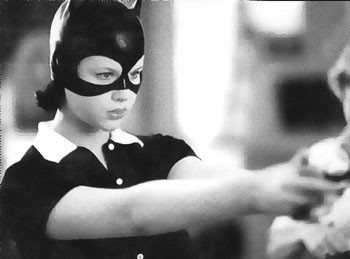
© Metro Publishing Inc.

Dessert Wines

0

Sweet Dreams

Dessert wines don’t have to be a sticky business

By Marina Wolf

DESSERT WINES are the forgotten finale. Until recently, restaurants gave them the last page of the wine list. At home, people think of stale sherry on top of their grandma’s fridge, and say no thanks. But as more restaurants bring dessert wines out from the back, pairing them with everything from chocolate cake to cheese or foie gras, consumers are finding that it’s worth getting to know the sweet stuff.

There’s a lot to learn, too, as dessert wines aren’t created using normal winemaking techniques. For example, a traditional German Eiswein is made from grapes that froze on the vine and then were hand-picked by lantern light. “It’s a very picturesque harvest,” says wine writer Heidi Yorkshire, “but it makes the Eiswein very expensive”–at least $80 for a 375-ml. bottle. More affordable alternatives are ice wines that have been made from artificially frozen grapes, as pioneered by Bonny Doon in the Santa Cruz area. This version of ice wine goes for between $14 and $20.

Or take botrytized wines, made from white varietals raised in cold, wet climes. The botrytis fungus usually shows up on its own, shriveling the host fruits, which must then be picked berry by berry. At Chateau d’Yquem in France’s Bordeaux region, the fields are picked over 10 times a season to get all the grapes at the height of their luscious decay. For fruits of this labor, people will pay hundreds of dollars for a bottle of Sauterne. But not every season is miserable enough to bring on the fungus. So once again, an American winery–Beringer in Napa Valley–came up with a more reliable and less expensive process than Mother Nature: pick the grapes and then apply the botrytis spore.

A basic grounding in dessert-wine background will assist you in understanding the flavor profiles of various wines. A later harvest generally means more ripeness. Botrytis adds a honeyed taste that, when combined with the fruit and floral notes of many white varietals, creates a heady, almost lightheaded, nectar. Tawny ports, which age on wood, have a smoky tinge and are made smooth by prolonged oxidation, or exposure to oxygen, which reduces the harshness of tannins.

IN PAIRING these wines with food, there are really only two main rules: the wine should be as sweet as or sweeter than a dessert; and a strong wine should accompany a very rich dish. Beyond that, you can simply emphasize the matching elements, either in flavor or in intensity. Or you may go for a more subtle approach, calling up contrasting or complementary qualities in the pairing.

Professionals who like dessert wines enjoy playing with these qualities in their pairings. Randy Goodman, co-owner and wine buyer for Wildwood Restaurant in Portland, Ore., sits down every month with his pastry chef, Jennifer Welshhons, to match wines with the changing dessert menu.

Goodman’s favorite pairing couples a chocolate pot de crème with cream sherry. Vanilla and cherries on top of the pot de crème match the sherry and provide a perfect foil for the rich chocolate, explains Goodman. Welsshons’ favorite match is a black-bottom banana cream pie flavored with chocolate, butterscotch, and a rum mousse, and paired with a 5-year-old Malmsey Madeira. “It’s strong enough to stand up to the chocolate and bananas, and also matches the butterscotch elements,” says Welsshons.

It’s not all sweets to the sweet, either. At Elka’s in San Francisco, sommelier Randall Grahm (the winemaker at Bonny Doon) often pairs dessert wines with items in other parts of the menu. The combination of sweet wines with savory foods was highly popular 100 years ago–Diamond Jim Brady, for example, drank Sauterne with oysters–and wine with cheese is a standard, port with Roquefort being one of the classic pairings. But Grahm takes a distinctly modern approach, guiding guests to a Pedro Ximenes sherry with the foie gras, or a German Riesling with Asian-inspired dishes.

“Asian ingredients are very savory and umame-intensive,” explains Grahm. “They have such a persistence of flavor that they will dominate dry wines. Something with low tannins and residual sugar is a much better match.”

When exploring the possibilities of dessert wines, take a page from restaurants: pour small. A normal pour on dessert wines is three ounces, but some restaurants will offer tastes to as small as half an ounce. Dessert wines are usually intense, in both flavor and aroma, and a few sips, with and without food, are enough to give you an idea of the wine.

Such caution leads to an obvious question: How do you store the wine between samplings? The ideal temperature, for opened or unopened bottles, is around 55 degrees, but everything else depends entirely on the wine. Certain dessert wines, such as Madeira or tawny port, can be open for up to a month and a half without losing flavor to oxygen; they’ve already been oxidized during the aging process. A vintage port, on the other hand, has been aged in an anaerobic, or oxygen-free, environment, so it’s more susceptible to oxidation.

The age of the wine is also an issue. Younger wines tend to have more acidity and free sulfites, which defend them against oxidation. But as the bottle ages, those things get used up in protecting the wine from the ravages of any air that might try to get in through the cork. The older the wine, the more quickly the bottle should be emptied.

So, if you ever run across a bottle of 1900 Sauterne, pour it quickly and enjoy.

From the April 5-11, 2001 issue of the Northern California Bohemian.
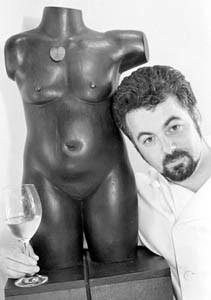
© Metro Publishing Inc.

DivaBands

0

Sisters in Song

DivaBands showcases local female artists

By Paula Harris

DON’T underestimate Roberta Donnay. The 5-foot-4 pixielike woman (the exact same height as Madonna, as Donnay is quick to point out) with long red hair bops around the Studio B recording studio in Sausalito in her black silk pants and purple velvet jacket with oversize buttons. In her little-girl voice, Donnay chats easily about hitchhiking around Europe as a teen, about her study of Buddhism, and about recently moving in with her new boyfriend.

Good-natured girl talk.

But delve deeper and Donnay’s conversation starts to make references to her Grammy nominations, to her record label, and to her reason for being at the recording studio–mixing a product for a client. It’s then you begin to realize that the 32-year-old Donnay is a seasoned music industry professional.

The alt-rock recording artist, who started warbling at age 5 and describes her high-pitched singing voice as a cross between those of Shawn Colvin and Sting, is a songwriter, a record producer, and something of an impresario in the music biz.

“I really don’t fear the music industry,” Donnay declares. “I’ve been nominated for Grammies, and I’ve also been in big record company offices and been yelled at by record executives. I feel like it’s a big game.”

It’s a game that’s paying off big for Donnay. Last year the Mill Valley resident co-founded DivaBands with comedian Amy Camus. The organization is dedicated to showcasing local ascending women musicians and songwriters–and it’s built a growing audience at venues around the North Bay and San Francisco.

DivaBands kicked off last year when Donnay was offered a gig in San Francisco’s Red Devil Lounge. She assembled an all-female format as a benefit for women’s rights that was devoured by an audience hungry for more Lilith Fair-type gal concerts.

“It was a very interesting night,” recalls Donnay. “I noticed that the audience was completely different from my usual audience. It was mostly women, and it was a very respectful audience, very into listening.”

Donnay was invited to come back and “do that girl thing again” on a weekly basis. “I basically just called all my friends and began begging people to come down,” Donnay explains. “DivaBands started to go and took on a life of its own, with a lot of attention from the community.”

In the last year, DivaBands has showcased more then 64 Bay Area female artists in a variety of venues, including the Mystic Theatre in Petaluma and Sweetwater in Mill Valley.

DivaBands has completed two promotional compilation CDs and is even taking the show on the road. Last year several artists attended the Rockr Grl Conference, a national women’s music gathering in Seattle. As a result, Donnay started getting calls from national women’s music organizations.

“I think there’s a need in the community between artists to have to network with other artists and create a supportive atmosphere,” says Donnay. “Women in general haven’t had that bonding between themselves. We’ve basically been out there in the music scene as recording artists out there on our own.

“It’s just a very isolated business.”

She credits singer-songwriter Sarah McLachlan’s successful Lilith Fair concept with capturing a lot of attention that forced the record industry to sign more female artists.

“Historically, it’s been a lot easier for male artists because rock ‘n’ roll is a male-dominated business,” Donnay says. “Years ago radio would only play one female artist at a time. It only seemed competitive between women because they were really being kept out because the industry is run by men.”

DivaBands is all about getting exposure, Donnay explains. One example of a success story is DivaBands member BeRn, an Irish folksinger who was recently signed with a large independent record label after a talent scout spotted her at a DivaBands concert.

Prospective artists can log onto the Diva website for details on how to send in a package and possibly jump on the bandwagon. The main criteria, says Donnay, are that the band be female or female-fronted, experienced, and have been recently recorded.

Donnay says she sees DivaBands becoming a national organization in the future, with separate divisions such as world music, techno, and hip-hop–so those artists can hook up and do shows together.

“It’s all about girls hanging with other girls,” says Donnay. “It’s like a big slumber party.”

In the meantime, Donnay will continue with plans to expand the organization, with more radio and television exposure and extensive national touring. Next month she’ll take the DivaBands Showcase to New York City for a benefit concert for Afghan women.

“In the end, I’m just a crazed musician who believes the world is better because of art,” she says.

“If we didn’t have art, I don’t think I could stay here very long.”

The next DivaBands Showcase features Susan Z, Kellee Bradley, Holly Figuera, and Hopscotch on Wednesday, April 11, at 9 p.m., Sweetwater, 153 Throckmorton Ave., Mill Valley. 415/388-2820. Cat McLean, Electric Peach, and Charm School appear on April 19, at the 19 Broadway in Fairfax. Admission to both shows is $7. 415/459-1091.

From the April 5-11, 2001 issue of the Northern California Bohemian.

© Metro Publishing Inc.

Joe Jackson

0

Joltin’ Joe

Joe Jackson–the consummate outsider

By Alan Sculley

FEW OF TODAY’S musicians have enjoyed a career where they have explored as many different musical styles and settings as Joe Jackson. Over a two-decade span, the New York-based British-born singer/songwriter has touched on punk-edged pop, songs that have been flavored by reggae and Latin music, 1940s-era swing, jazz, classical, and even more of an adult contemporary style of pop. Occasionally, Jackson’s eclecticism has been rewarded commercially. His first CD, 1979’s Look Sharp, spawned the radio-friendly hit song “Is She Really Going Out with Him?” On the other end of the spectrum, his 1982 release Night and Day has become something of his signature album, with that album’s elegant stylings spawning his biggest hit, “Stepping Out,” as well as the popular ballad “Breaking Us in Two.”

His latest CD, Night And Day II (Sony/Classical)–a street-smart snapshot of urban America–is something of a sequel to that earlier album. Jackson, though, feels that if he were starting out in music today, he’d never get the chance to even begin making albums that enabled him to explore such wide-ranging music.

“It has definitely gotten tougher, no question. The only reason I’m still actually making records and getting any kind of attention at all is because I sort of got my foot in the door awhile ago when things were different. Everything has changed so much,” says Jackson, who cites the British pop personified by the Beatles and the classical music of Beethoven as his two biggest influences. “The more eclectic creativity that I aspire to–once again, the Beethoven and the Beatles–it’s being squashed by big corporations. That’s happening all over in all different fields. I mean, I saw it in publishing when I tried to get my book [1999’s somewhat autobiographical A Cure for Gravity] published. Publishing is the same thing. People say ‘Look, this is a great book. If you’d brought it to us five years ago there’s no question we would have published it. But we’re not going to publish it now because of the way things are, because we’re under so much pressure to produce large short-term profit.’

“That’s what’s going on in the industry. So people who are eclectic, hard to categorize, and so on are just . . . it’s very, very difficult.”

AS IT IS, Jackson remains a vibrant presence on the music scene 21 years after Look Sharp put him on the map with its diverse brand of punkish guitar pop. The 46-year-old native of Portsmouth, England, followed that LP with another album of punchy guitar pop, I’m the Man, before his artistic sense of adventure really began to show. His 1980 album, Beat Crazy, brought a variety of rhythms–reggae being a predominant tempo–into his style. Then in 1981 came Jumpin’ Jive, a CD influenced by 1940s-era swing. Following Night and Day, Jackson explored a jazzier vein once again on Body & Soul before returning to more of a pop-based sound on Big World.

The musical carousel continued. Blaze of Glory (1989), which Jackson considers one of his finest CDs, synthesized Jackson’s pop, jazz, and classical influences into a cohesive whole. Laughter and Lust (1991)tended to be streamlined rock. Later albums, such as 1997’s Heaven and Hell and last year’s Symphony No. 1–which won a Grammy Award in February as the Best Pop Instrumental Album–have shown more of a classical influence.

Considering the variety in his albums, it’s understandable that some people view Jackson as an artist who has played stylistic hopscotch, moving from one style to the next with each album. Jackson himself thinks that perception is far off base. He says his albums have never been limited to just one style, and he sees a strong thread connecting all of the records he has made.

“I see them as being consistently eclectic, but no two eclectics sound the same,” he says. “Eclectic seems to make some people think that it’s not authentic, that there isn’t an authentic voice there. But a lot of the greatest artists in history were very eclectic and were just all over the place and broke all the rules and everything else, including once again Beethoven and the Beatles. But I think that the thread going through it is just me. It’s my personality and my voice and putting different elements together. I think you just see different sides of it on different albums. But you know, people like to make out that I did a jazz album and then a salsa album, then classical. I just think when people read this stuff, no wonder they’re turned off.”

While some might consider Jackson’s latest album, the aforementioned Night And Day II, a shrewd–if belated–commercial move to tie his new CD to the popular 1982 album, Jackson didn’t have a preconceived plan for the new record. “I know people keep asking me, ‘Why did you decide to do Night and Day II?‘ and I never decide to do anything,” Jackson said. “When I start a project I have no idea where it’s going to go.”

The only notion Jackson had going into the project involved a thematic idea.

“There was sort of a vague idea that I wanted to write about New York. I didn’t even know if it could be a whole album or what,” he adds.

The New York theme, as it began to play out in his writing, drew Jackson back to the original Night and Day. Many songs from that 1982 album were centered around the impressions a newcomer to New York had about the city. Just as important, Jackson began to realize his new material also had musical similarities to the songs on the first Night and Day album.

“There’s a certain sound world. They inhabit the same sound world,” Jackson says. “They’re both based around my keyboard playing also with percussion and strings. I think they both draw on a lot of different rhythms, including Latin rhythms. I think that there’s just a similar kind of language. I don’t know if I can define it much better than that. I think Night and Day II is richer and kind of fuller, a bigger picture.”

INDEED, the finished version of Night and Day II strongly echoes its predecessor. And as in that first album, the songs here feel like a series of snapshots of life in New York. This time, they’re told through the eyes of a variety of characters.

“Hell of a Town” captures the darker side that comes with living in a dynamic city. “Stranger than You” reflects the diversity of New York through its references to a kaleidoscope of misfits and offbeat characters. “Dear Mom” finds Jackson spinning a tale of an embittered teenage runaway.

On several songs Jackson recruited guest vocalists to portray his stories. Marianne Faithfull effectively captures the world-weary tone of a 50-something woman feeling alone in the harsh big city. Iranian singer Sussan Deyhim puts the proper accent on “Why,” a song about an immigrant trying to adjust to her strange new surroundings. Drag queen Dale DeVere does an effective turn bringing to life the hardened edge of a transgender hooker working the city’s meatpacking district in the song “Glamour and Pain.”

ONE NOTABLE contrast between the two Night and Day albums is that the new CD is written from the perspective of someone who has been in New York for a decade and a half, as opposed to someone who was a newcomer to the city. Yet, Jackson thinks his feelings about New York City haven’t changed much over the years.

“I think I know it better. I know more sides and so on,” he said. “But I’ve really got pretty much the same attitude to what I had in the first place. I still find it very romantic and very glamorous. And I also am still aware of the sort of dark, scary side that is also there. I tried to put both of those sides into the project. So basically my feeling hasn’t really changed. It’s kind of like when you meet someone and you have a first impression, but then you get to know a lot of different sides to them. But then 20 years later you realize that your first impressions were nevertheless pretty accurate. I think that’s the way I feel about New York. And I still love it and sometimes I hate it.

“But that’s really part of the same thing, I think.”

Joe Jackson performs Thursday, April 12, at 8 p.m. at the Luther Burbank Center, 50 Mark West Springs Road, Santa Rosa. Tickets are $35. 707/546-3600

From the April 5-11, 2001 issue of the Northern California Bohemian.

© Metro Publishing Inc.

‘Himalaya’

0

Yak Attack

Lumbering gracefully through ‘Himalaya’

TAKE A PIECE of paper. Draw a straight line from the upper-left corner to the lower-right. Now draw a few silhouettes–rural peasants, rickety wagons, a handful of yaks–each figure making its way upward along the line.

And there you have it.

That’s filmmaker Eric Valli’s favorite shot, and in his gloriously visual, Oscar-nominated film Himalaya–the epic adventure of an annual yak caravan making its way through the mountains of Nepal to trade salt for grain–the French-born former documentarian uses that shot over and over and over again.

This is not a bad thing, though some critics have accused the film of “visual redundancy.” Some have gone so far as to call it boring, and if Himalaya were a movie about car racing, they might be right.

But, in fact–this being a story of Nepalese yak farmers on a salt trek–the constant repetition of imagery becomes one of the film’s most powerful tools, reflecting both the beautiful monotony of the Himalayan landscape and the mindset of those who live there. The people of the Dolpopo region–where Himalaya was painstakingly filmed–spend their entire lives on a slope, their day-to-day existence literally an uphill battle.

Tinle (Thinlen Lhondup) is the tenacious, elderly chieftain of a tiny village high in the Himalayas. His son, who had been expected to become the next chieftain, was killed on the most recent trek. When the brave young Karma (Gurgon Kwap) is chosen by the city’s holy men to lead the next caravan, Tinle objects, insisting on leading treks himself until his grandson, Tsering (Karma Wangiel), is old enough to take over the job.

Impatient with the Himalayan tradition that would choose the date of the trek according to the movements of the stars, Karma forms a group of caravaners and sets out before the chosen date.

Unwilling to see Karma force his way into leadership, Tinle pulls together another caravan to give chase, enlisting Tsering, his dead son’s wife, Pema (Lhakpa Tsamchoe), and his other son, Norbou (Karma Tenzing Nyima Lama), a Tibetan Buddhist lama who has not been outside his monastery since the age of 9.

Along the way, the adventurers face punishing trails, blinding storms, and a generational clash that will ultimately decide the future of the entire tribe.

Then there are the yaks.

Among Himalaya‘s many cinematic treasures is its numerous shots of yaks loping along in surprisingly graceful motion. Until now, my own yak-awareness has been limited to a drawing of a yak that represented the letter Y in a kindergarten alphabet book. In Himalaya, with its opening shots of a yak herd thundering breathless down a dusty mountainside, the mighty yak appears to resemble something out of a Star Wars movie, alien and vaguely unreal.

By the end of the film, however, we come to love and respect the yak for its courage and sure-footedness, if not for its apparently limited brains. One nail-biting sequence in which Tinle leads the caravan along a sheer cliff-side as the ground crumbles under their feet stands as evidence of these qualities. In fact, one could say that Himalaya does for yaks what Dances with Wolves did for buffaloes.

In its best moments–the tension-filled cliff scene, a cryptic debate between the village astrologers, a shocking funeral service involving dismemberment and vultures–Valli’s film provides a peek into a world as mysterious as it is breathtakingly beautiful. It may move at a glacial pace at times, but Himalaya is nevertheless a remarkable film, as elegant and graceful as a single line on a piece of paper.

‘Himalaya’ opens Friday, April 6, at Rialto Cinemas Lakeside in Santa Rosa (707/525-4840) and the Rafael Film Center in San Rafael (415/454-1222). For details, see .

From the April 5-11, 2001 issue of Metro, Silicon Valley’s Weekly Newspaper.

© 2001 Metro Publishing Inc. MetroActive is affiliated with the Boulevards Network.

For more information about the San Jose/Silicon Valley area, visit sanjose.com.

Kenneth Cleaver

Consumer Correspondent

March 17, 2001 Consulate General of Ireland Ireland House 345 Park Ave., 17th Floor New York, New York 10154-0037

Dear Irish Consulate:

My maternal grandmother immigrated to this country 70 years ago, and her life is an Irish-American success story. After several years working as a domestic on a New England estate she met her husband, also an Irish immigrant, and enjoyed a life of considerable prosperity and happiness. She and her late husband owned a home and begat two wonderful daughters, the eldest of whom is my mother.

While we have enjoyed her immensely, I’m afraid the family’s consensus is that she must be returned to Ireland within the next year. She is a sweet and wonderful woman, but we can no longer stomach her mawkish poetry, songs, and country folktales, most of which involve her encounters with ill-tempered Co. Cavan livestock. She has become quite a nuisance.

I would be greatly obliged if you could forward the appropriate paperwork for repatriation.

Sincerely, Kenneth Cleaver

Mr. Kenneth Cleaver P.O. Box 810 Bedford, NY 10506 March 28, 2001

Thank you for your letter. Your grandmother seems to be one of the many success stories who emigrated from Ireland to make a new life in the United States, and I am sure you treasure her.

In response to your query, your grandmother, as an Irish national, is free to return to Ireland at any time, should she so wish. There is no “repatriation” scheme in place for this purpose. Should you require any additional information on Ireland, please do not hesitate to contact me.

Yours sincerely, Cait Moran Vice Consul

From the April 5-11, 2001 issue of the Northern California Bohemian.

© Metro Publishing Inc.

Spins

Great Scott Two new discs spotlight jazz singer By Greg Cahill IS THIS A CASE of hackers run wild? The All Music Guide, one of the Internet's most authoritative musical sites, describes a close encounter between jazz balladeer Jimmy Scott and the Beatles. The Web page--replete with a photo of the diminutive...

The Wide Eyed Gourmet

Finding ties in the taste of another culture By Marina Wolf WHEN I LEFT my family's church, I wasn't really leaving much in the way of holiday food traditions. It was a fairly standard Protestant-based religion, and festive days such as Easter were observed simply, with understated prayers and overcooked meats. A few years later...

Live Theater in Downtown Santa Rosa

Downtown bound? Sonoma County Rep's Jim dePriest hopes to bring live theater back to central Santa Rosa. Downtown Drama Theater groups vie to create new performing arts space in downtown Santa Rosa By Paula Harris ONE BY ONE, central Santa Rosa's live theaters are...

Pairs Restaurant

Craig's wine list: Pairs owner Craig Schauffel savors a sample from the restaurant's extensive selection of wines. Feng Shui Kitchen Pairs reopens in Napa with Zen-like style By Paula Harris THE SLENDER sticks of incense burning in the bathroom are an immediate tip-off. The spot Pairs' restaurant...

North Bay Water Resources

A moment of reflection: Marin County environmentalist Huey Johnson says the Sonoma County Water Agency "has run roughshod over honesty and logic." Ripple Effect Welcome to the byzantine world of North Bay water politics By Janet Wells 'Whiskey's for drinking, water's for fighting.' --Attributed to Mark...

Dessert Wines

Sweet Dreams Dessert wines don't have to be a sticky business By Marina Wolf DESSERT WINES are the forgotten finale. Until recently, restaurants gave them the last page of the wine list. At home, people think of stale sherry on top of their grandma's fridge, and say no thanks. But...

DivaBands

Sisters in Song DivaBands showcases local female artists By Paula Harris DON'T underestimate Roberta Donnay. The 5-foot-4 pixielike woman (the exact same height as Madonna, as Donnay is quick to point out) with long red hair bops around the Studio B recording studio in Sausalito in her black silk pants and...

Joe Jackson

Joltin' Joe Joe Jackson--the consummate outsider By Alan Sculley FEW OF TODAY'S musicians have enjoyed a career where they have explored as many different musical styles and settings as Joe Jackson. Over a two-decade span, the New York-based British-born singer/songwriter has touched on punk-edged pop, songs that have been flavored...

‘Himalaya’

Yak Attack Lumbering gracefully through 'Himalaya' TAKE A PIECE of paper. Draw a straight line from the upper-left corner to the lower-right. Now draw a few silhouettes--rural peasants, rickety wagons, a handful of yaks--each figure making its way upward along the line. And there you have it....

Kenneth Cleaver

Consumer Correspondent March 17, 2001 Consulate General of Ireland Ireland House 345 Park Ave., 17th Floor New York, New York 10154-0037 Dear Irish Consulate: My maternal grandmother immigrated to this country 70 years ago, and her life is an Irish-American success story. After several years...
11,084FansLike
4,606FollowersFollow
6,928FollowersFollow