
Bohemian Grove

0

Groovin’ at the Grove

Big boys party and plot as activists besiege the gates

By Patrick Sullivan

“HOW DID you miss all those signs?” asks a peeved security guard, peering with narrowed eyes through the car window. “This is private property. You can’t be here. The public is not allowed.”

He’s got a point. The warnings are hard to miss: “Private road,” “No trespassing,” and a few other variations on the theme. Finally, there’s the guard station. And that is as much as most Sonoma County residents will ever see of the Bohemian Grove.

Still, it all seems relatively relaxed. A few snippy signs, a well-tanned watchman armed with a cell phone, and an open gate–surprisingly loose security for what’s supposed to be the most exclusive men’s club on the planet.

Of course, it’s still a few days before this 2,700-acre redwood resort near Monte Rio plays host to the 122nd annual gathering of some of the world’s most powerful men.

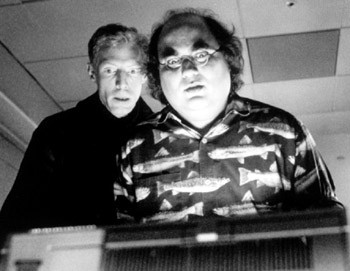
Film Bares All: ‘Teddy Bears’ Picnic’ satirical take on Bohemian Grove.

For a two-week period starting July 14, this rich man’s summer camp operated by the San Francisco Bohemian Club will bristle with an unrivaled arsenal of alpha males. Typical attendees range from high-profile big boys like former Nixon cabinet member Henry Kissinger to powerful corporate chieftains whose names wouldn’t draw a twitch of recognition from most folks on the street.

Looking for power? The Bohemian Grove is where it’s at. Never mind those tear gas-plagued meetings of the World Trade Organization; forget those turbulent Republican Party conventions. All those gatherings have to offer are politicians and bureaucrats–in other words, the kind of mere middle-management types who take marching orders from the bigwigs about to gather at the Bohemian Grove.

At least, that’s the way the system works in the eyes of Mary Moore, 65, a Camp Meeker activist who runs the Bohemian Grove Action Network. Since 1980, Moore and as many as 400 other demonstrators have held on-and-off protests outside the grove. One measure of Moore’s commitment: she will be spending her 66th birthday at the opening-day demonstration. Another measure: she occasionally refers to nonactivists as “you people.”

This year, with a conservative in the White House, interest in the protest has been high, drawing attendees from as far away as Colorado. This crowd plans to gather across from the Rio Theater on July 14 at 2 p.m. to march on the Bohemian Grove. A flyer put out by one participating organization–the San Francisco-based International Action Center–features a drawing of the storming of the Bastille. Remember the Battle in Seattle? Sonoma County just might be about to host the Rumble in the Redwoods.

What are these protesters so upset about? Moore is glad you asked. Frankly, she’s sick of being misunderstood. For her, the Bohemian Grove is a prime example of how America’s power elite make crucial decisions about the world behind an anti-democratic veil of secrecy.

But working against Moore’s serious purpose, she says, is the lurid reputation the grove has acquired.

Rumors have graduated to full-blown urban legends. The wildest allegation is that the annual gathering is a demonic ceremony in which virgins and/or children are sacrificed to dark supernatural powers. The satanic conspiracy theory is hotter than ever since a Texas radio-show host named Alex Jones snuck into the grove last year. Jones smuggled out video footage of the “Cremation of Care” ceremony, an annual ritual in which an effigy is burned to represent the death of dull responsibility. For Jones, it was irrefutable proof of Satanism; of course, he also believes secret U.N. soldiers are preparing to conquer the United States.

Photograph by Kerry Richardson

ON THE LIGHTER side, some assume Moore and her collaborators are simply upset about being excluded from what’s basically a giant frat party.

The annual gathering is usually portrayed as a retro recreational opportunity for the powerful–a chance for these mighty men to return to their carefree college days. Most informed sources agree on the popular activities: the guys get drunk, they walk around naked, they take a whiz on a redwood or two. And maybe they squeeze into a dress and participate in a burlesque show. Moronic? Maybe. But who gives a damn about such schoolboy antics?

Not Mary Moore.

“If they’re just up there getting drunk and peeing on trees and all that, I don’t care,” Moore says. “It’s what their policies are on the outside that affects you and me. That’s what we’re trying to bring to the public’s attention.”

Moore began protesting at the grove because she and some fellow activists wanted to put the heat on honchos in the nuclear power industry. But the one-time civil rights activist stuck with it because she quickly realized that most of her enemies gathered conveniently together five miles from her house every summer.

“No matter what your issue is, you can usually find some fat cat up there who represents what you’re fighting against,” observes Moore, who claims that the decision to drop the A-bomb on Hiroshima was made at the grove.

To prove that the Bohemian Grove is as much about serious thinking as it is about serious drinking, Moore offers a list of topics discussed at the grove’s annual lakeside chats. These lectures feature speakers like former Secretary of State James Baker and former British Prime Minister John Major addressing social and political issues.

Even Supreme Court justices make presentations.

“In 1997, [Justice Antonin] Scalia was up there speaking on church, state, and the Constitution,” Moore observes. “And you and I aren’t allowed to know what he had to say.

“I think that’s a really big deal.”

From the July 12-18, 2001 issue of the Northern California Bohemian.
© Metro Publishing Inc.

Kenneth Cleaver

Consumer Correspondent

Hertz Rental Car 225 Brae Boulevard Park Ridge, NJ 07656

Dear Hertz:

I currently prostitute my intimate knowledge of Microsoft Word and my ability to operate a copy machine as an “office manager”; I’m partial to “Ethel.” When not engaged in the Zen of database maintenance, I arrange travel for my superiors. On more than one occasion, I have been hoodwinked by Hertz promotional coupons.

My mother has been known to wear through two scissors a year with her incessant clipping, so the lure of coupons, for me, is mere heredity. Be proud of your phone operators; they are detail-oriented workers, quick to inform me of the infinite clauses invalidating every coupon I’ve ever attempted to use. For instance, to save $15.00 off a week’s rental, the fine print tells me that a five-day reservation is required. I booked Sunday to Friday, a total of six days; no problem, right? Wrong! Because I was not renting on a Saturday, the offer was void. Nowhere on the coupon was this restriction mentioned.

Like many liberals, I do not believe in biblical justice until something happens to me. On the scale of human misery, this experience rates somewhere between a paper cut and an Oliver Stone film.

Sincerely, Kenneth H. Cleaver

Dear Mr. Cleaver:

This letter is in response to the letter you wrote to the Hertz Corporation. Please accept our apologies for the inconvenience that led you to write.

Thank you for taking the time to let us know of your experience. The Hertz Corporation’s goal is to provide the #1 service in the car industry, and it is a concern when we do not meet our expectations. I do apologize for the trouble you had with applying the coupons and for the overall quality service you received. Your experience has been shared with the management so they may take appropriate corrective action.

As a goodwill gesture I have enclosed a $25.00 rental certificate that you can use for your future rental needs. The Hertz rental certificate is good for one year at any one of our Hertz worldwide locations.

Your business is valued, and we hope you continue to use Hertz for your car rental needs.

Sincerely, Kristen Ritschl Customer Relations Correspondent

From the July 12-18, 2001 issue of the Northern California Bohemian.
© Metro Publishing Inc.

Open Mic

0

Jar Star

FOURTEEN YEARS ago this August, I masturbated into a baby food jar. Doctor’s orders. Honest. Approximately 10cc of semen went into that jar, my momentous first spurt after undergoing–a few weeks before–the vasectomy that had ceremoniously rendered me joyfully spermless. Of course, sperm are merciless–and have a way of finding loopholes (not the technical term)–so my doctor required a semen sample. Having somehow misplaced the little plastic container I’d been given for that purpose, I was informed that any clean jar would do.

As testament to the natural ability of my sperm up to that moment, there was no shortage of Gerber baby-food jars in the house. To my delight, I found that baby-food jars make perfect semen receptacles: not only are they small and tightly sealable; they hide easily in a coat pocket.

Half an hour later, I surrendered my sample to a poker-faced lab technician.

“Hmmmmm,” she murmured, swirling the jar’s slippery contents, gazing past the famous baby face on the label. “This is kind of poetic.” What it was not, however, was original. The things she’d received in Gerber jars included urine samples, blood samples, skin samples. I shouldn’t have been surprised.

The Gerber jar is a beloved icon of American ingenuity, an elegant symbol of creative reuse. Washed and de-labeled, it is the perfect container for powdered paint, freshly shed baby teeth, or dried lizard parts. Over the years, empty Gerber jars have been used to hold nails, washers, sequins, ration stamps, tacks, aspirin, beetles, broken wedding rings, shoestrings, and pennies. The Gerber jar has been made into everything from a classroom snow globe to the coffin of the family pet mouse.

Sadly, last week, Gerber Products Inc. announced the immediate discontinuation of its famous glass baby-food jar. A new plastic version, square-shaped for easier stacking, will soon be unvelied. What is important, the Gerber people say, is that the new jars will contain the same quality baby food when they take the place of the glass jars on supermarket shelves.

But will they take the same place in our hearts? Of course not. When it is gone, we will mourn the glass Gerber jar, significant to millions, not so much for what came out of them, but for the bits and pieces of our lives that we’ve so willingly placed into them afterward.

From the July 12-18, 2001 issue of the Northern California Bohemian.
© Metro Publishing Inc.

‘Ghost World’

0

Global Visions

‘Ghost World’ kicks off Wine Country Film Festival

By Patrick Sullivan

WHEN HOLLYWOOD goes running to the world of comic books for ideas, it’s usually a very bad sign. Most creative marriages between the silver screen and the “graphic novel” result in exactly what you might expect: pure crap. Think Batman Forever. Think (oh god no!) Howard the Duck.

But your thinking may be about to change. A film is headed our way that some critics are already calling the perfect high-IQ antidote to a summer filled with brainless blockbusters. And it’s adapted from one of the most popular alternative comic books on the shelves.

Ghost World, which jumpstarts a month of offbeat flicks at the Wine County Film Festival, is no super-hero slugfest. Forget those muscle-bound goofballs strutting around in tight costumes. The main characters in Dan Clowes’ graphic novel, published by Fantagraphics, are two eccentric young women who have just graduated from high school and are wondering what to do with the rest of their lives.

In the film, the pair are played by Thora Birch (of American Beauty fame) and Scarlett Johansson. Indie film stalwart Steve Buscemi co-stars. The creative duo behind the project is hard to beat: Dan Clowes teamed up with Terry Zwigoff (director of Crumb) to write the screenplay, and Zwigoff directs.

The result is big-screen magic, at least according to the few critics (including Peter Travers of Rolling Stone) who have seen it. Ghost World opens around the country on Aug. 3, but North Bay residents can catch it on Thursday, July 19, when the film screens at 7 p.m. at the Sequoia Grove Vineyards in Rutherford. Admission is $20.

Of course, the Wine Country Film Festival has more to offer than just Ghost World. Now in its 15th year, the festival has made a name for screening an offbeat assortment of features, shorts, and documentaries from around the world, with a strong emphasis on politics and social commentary. This year’s festival offers scores of films from around the world, beginning with screenings July 19-29 in Napa County and continuing Aug. 2-11 in Sonoma County.

Big names and famous faces are another distinguishing trademark of the festival. Last year, it was Richard Harris. This year, it’s Nobel Peace Prize winner José Ramos Horta, who will be appearing before the screening of the film The Diplomat.

The Diplomat, which screens Aug. 8 at 9 p.m. at Jack London State Park, is an Australian documentary focusing on Horta and his efforts to bring an end to Indonesia’s bloody occupation of East Timor. It’s a fast-moving, compelling film featuring an irresistible David vs. Goliath struggle and a very human figure at its center. Horta is a passionate advocate for his beleaguered homeland, but he’s also a colorful character with a salty vocabulary and a flair for the dramatic.

Talent from abroad is a mainstay of the festival. For instance, Polish filmmaker Jarek Kupsc appears in person to introduce Recoil, a gritty story about a mercenary from the Bosnian war who settles in San Francisco under false pretenses. The film screens Saturday, July 21, at 4 p.m. at the Native Sons Hall in St. Helena.

Filmmakers from Northern California are also well represented. The Last Stand, a documentary from San Francisco filmmaker Todd Wagner, screens Aug. 4 at 7 p.m. at Jack London State Park. And Exodus to Berlin, a documentary about Jewish immigrants in Germany co-directed by Bodega Bay resident Peter Laufer, screens Aug. 5 at 3 p.m. at the Sebastiani Theatre in Sonoma.

Of course, all that’s just a taste of what’s on offer. For more information, call 707-996-2536, or log on to winecountryfilmfest.com.

From the July 12-18, 2001 issue of the Northern California Bohemian.
© Metro Publishing Inc.

Sonoma County Showcase of Wine and Food 2001

0

Photograph by Rory MacNamara

Local Flavor

Chefs prepare for showcase foodie event

By Paula Harris

THE SONOMA COUNTY Showcase of Wine and Food 2001 signature event “The Taste of Sonoma County,” happening Saturday at the gloriously landscaped Richard’s Grove and Saralee’s Vineyard in Windsor, is the sort of gourmet extravaganza that makes your taste buds reel, your mouth water, and your wallet go into cardiac shock.

And foodies, winers, locals, and day-trippers love it.

Last year minivans whisked in epicures, wine connoisseurs, and all the rest to a veritable (though civilized–no drunken brawls here) feeding frenzy as some 1,100 event-goers drooled at the bounty awaiting them in the shady white-tented pavilions.

It was a joyous summertime clash of straw sun hats, designer shades, and Hawaiian print shirts brushing floral shoulders as their wearers wielded clear plastic food trays and souvenir wine glasses. Across the banquet tables, caterers scrambled to plate the elaborate tapas-sized hors d’oeuvres and pour the seemingly never-ending flow of ultra-premium wines. The ambiance was festive–the moods set to a pleasant vino-induced buzz, the stomachs slowly filling.

Last year’s exotic munchies included poached scallops lounging on Asian pears, heirloom potatoes decorated with shaved truffles, and slivers of Liberty duck, salmon, and lobster mini “burgers” atop tiny aïoli-smeared buns.

This year promises to top it with even more participants. “There are going to be more wineries and more attendees,” avers showcase director Michelle Danzer. At presstime, according to Danzer, the number of tickets sold for the Taste of Sonoma County event are reaching 13,000 (with tickets still available).

On Saturday, more than 70 vintners and 40 local and national chefs will offer more epicurean excess inside four pavilions–one for each of the appellations of the Russian River Valley, the Alexander Valley, the Dry Creek Valley, and Sonoma/ Carneros. This year the extravagant presentations of Sonoma County edible products will focus on Mediterranean flavors.

The Taste of Sonoma County and a separate event later in the evening–an al fresco concert by the San Francisco Symphony and country-swing legends Asleep at the Wheel at Sonoma-Cutrer Winery–are the culmination of a heady three-day stint of grape-and-gourmet-related revelry.

THE SONOMA County Showcase of Wine and Food, sponsored by the Sonoma County Wineries Association, is the county’s answer to the prestigious and pricey Napa Wine Auction, which last month raised $7.6 million for charity.

In contrast, last year the Sonoma County barrel and silent auctions raised some $446,000. Though its scale and prices trail the Napa event, the Sonoma County showcase (which also features appellation tours, winery dinners, a golf tournament, and more) is certainly a splurge. This year, some visitors will be shelling out $735 per person for a three-day event package. Entrance to the Taste of Sonoma County is $150 a pop.

The showcase raises money for anti-hunger programs Share Our Strength and the Redwood Empire Food Bank. And while some sweat it out sprinting, bicycling, or swimming for charity (as in the grueling Vineman and Ironman triathlons), these folks raise dough by running around the kitchen.

Josh Silvers, chef owner of Santa Rosa’s Syrah restaurant, who last year served up house-cured salmon with homemade crackers at the Taste event, says he’s been inspired this year to offer up corn and crab cakes with lemon poppy seed slaw and chunky tartare sauce. “It’s a blast,” Silvers says of the event, adding that he’s is looking forward to sharing space in the Russian River appellation pavilion with his old cooking buddies, chefs Ray Tang of Mariposa restaurant in Windsor and Jesse Malgren of Madrona Manor in Healdsburg.

With the crab cakes, Silvers recommends a dry rosé. “It’s summer in a glass,” he enthuses. “Not a sickly, fruity white zin, but one that’s bone dry.”

Silvers is so enamored of the varietal, he plans to offer seven styles in his restaurant.

As for other food and wine combos, Silvers recommends pinot noir for fish, chicken, and light meats; and syrah for grilled lamb, steak, bacon-tinged sauces, and barbecued burgers.

HOWEVER, not everyone is so content with the event. Some local chefs wonder why national chefs are participating while some local cooks have been passed over. Chef Derek McCarthy of Healdsburg’s popular 1-year-old Tastings Restaurant mentions that he wasn’t invited to participate. “I guess it’s an invitation situation and the more you’re out there, the more people will take notice,” he says. “I guess it’s just a matter of time.”

Showcase director Danzer explains that five national chefs, plus two from San Francisco, are being brought in by the national charity Share Our Strength and by the event’s sponsor, Food and Wine magazine. All the rest are from Sonoma County. “We send out letters of invitation requesting attendance,” she says. “We try to coordinate it so we go all over the county, but space is limited.”

If finances are also limited in your own wallet, chefs say, it’s easy to put together your own food and wine pairing session on your own patio or around the backyard barbecue grill.

Sondra Bernstein–owner of Sonoma’s Girl and the Fig and Glen Ellen’s Girl and the Gaucho–who says she may be going to the event as a guest, agrees that a rosé as dry as John Cleese’s humor is a good choice for a sizzling day. “Try it with grilled prawns–grill them right on the barbecue and drizzle them with perfumey basil oil or pepper oil,” she advises. “The coolness of the wine will balance everything.”

And McCarthy, although not participating, is happy to share his recommendation. “It’s a mahi mahi ceviche with mango, melon, lemon, and lime paired with viognier,” he says. “You can pair it with the Preston, which is from Sonoma County.”

Of course (don’t tell the showcase organizers), you can venture out of Sonoma County for your own summer tasting shindig. Bernstein reveals she’s discovered that albarino, a white wine made with grapes grown in the northwest of Spain in Galicia, is a good marriage with steamed clams, ceviche, and fresh fruit salad. “It’s the ultimate hot-day pairing,” she says. “Try it at home.”

But for those who venture to the showcase events this weekend, Danzer has some final advice. “I want people to learn about Sonoma County, not just that it’s a world-class wine-growing region, but that it has great chefs and products,” she says. “I want them to have a good time and leave educated–oh, and happy.”

Weekend Whirl

The snazzy Sonoma County Showcase of Wine and Food is a three-day blowout highlighting the highlife here in wineland. The event is sponsored by the Sonoma Wineries Foundation, and proceeds benefit anti-hunger programs Share Our Strength and the Redwood Empire Food Bank. Prices are per person. Here’s the rundown:

Thursday, July 12, from 3 to 11 p.m. Appellation Tours and Winery Dinners. Guests tour various appellations of Sonoma County and mingle with growers and vintners at four wineries (Chateau Souverain, Gallo of Sonoma, Imagery Winery, and Dutton Ranch). Includes barrel tasting, tours, and dinner. $155.

Thursday, July 12, Golf Tournament at Windsor Golf Club. Participation is limited, call (see below) for details. $150.

Friday, July 13, from 11 a.m. to 2 p.m., winery luncheons at various locations. $75.

Friday, July 13, from 4:30 to 11 p.m. Gala Dinner and Barrel Auction at the Kendall-Jackson Wine Center. Bid, sample wines, and enjoy a multicourse meal prepared by five prominent Sonoma County chefs. $225.

Saturday, July 14, from noon to 5 p.m. The Taste of Sonoma County–signature event highlighting the foods and wines of the county. Plus cooking demonstrations and a silent auction. At Richard’s Grove and Saralee’s Vineyard in Windsor. $150.

Saturday, July 14, from 6:30 to 11 p.m. The San Francisco Symphony culminates the weekend’s events in an evening concert on the lawns of Sonoma-Cutrer Winery. Following the concert will be a fireworks display and dancing to live western swing music by Asleep at the Wheel. $95.

For more information, call 800/939-7666 or log into www.sonomawine.com.

From the July 12-18, 2001 issue of the Northern California Bohemian.
© Metro Publishing Inc.

Spins

0

World Class

New CDs groove to a global beat

By Greg Cahill

Afrocelt Sound System Volume 3: Further in Time (Realworld)

SINCE 1995, this tightly woven group of musicians–which includes whistle player James McNally of the Pogues, Irish vocalist Iarla O’Lionard, and a revolving troupe of African artists–has been fusing the traditional music of West Africa and Ireland while wowing crowds on the annual WOMAD tour, Peter Gabriel’s world music showcase. This third outing delivers percussion-heavy techno-based sounds and features Gabriel singing on “When You’re Falling” and Robert Plant’s vocals on “Life Begins Again.” Energized, ebullient, and incredibly contagious.

Anourag Anoushka Shankar (Angel)

Ravi Shankar Bridges: The Best of Ravi Shankar (Private Music/BMG)

AT THE TENDER AGE of 19, the daughter of sitar legend Ravi Shankar delivers the follow-up to her impressive 1999 debut, teaming up with her famous father on several ragas. Pops once said it takes several lifetimes to master the complicated Indian instrument the sitar, though Anoushka shows a lot of mastery and maturity. These father-and-daughter duets are often intense and show that Anoushka is filled with promise. As for dad–who did, indeed, build a formidable bridge between East and West with his tutelage of Beatle George Harrison (who appears on this Best of Ravi package)–this new collection of material culled from the Private Music years is a mixed bag, centering around a variety of nontraditional cross-cultural projects that include his late-’80s collaborations with Philip Glass. These experimentations often were hit or miss, but when Shankar scores the results are memorable.

Various Artists Gardens of Eden (Putumayo)

THIS WORLD-music label has built a following by placing its festively decorated CDs on the counters of cafes and bookstore–sort of an eco-tourist guide to the sounds of the planet. These releases have become so ubiquitous that it’s sometimes easy to take them for granted. Gardens of Eden, a collection of ethno-pop songs focusing on the mystical, suggests that it’s best not to ignore these little gems. From Papua New Guinea to Tibet, it’s a most pleasant trip–a veritable magical mystery tour.

Trilok Gurtu The Beat of Love (Blue Thumb)

FOR SOMEONE who tortures his children by watching Namaste America (the low-budget Indian film showcase on KTSF/cable channel 26) each and every Sunday afternoon, this is second heaven. Percussionist Trilok Gurtu (who performs this week at the Justice League in San Francisco) is the son of a popular Indian light classical singer and has collaborated with the likes of Bill Laswell and Pat Metheny. On his latest CD, Gurtu is five steps above those up-tempo and hokey Bollywood videos, having pulled together a talent-laden conglomeration of top-ranked Indian and African musicians that include sitar player Ravi Chary and Benin-born Afro-pop singer Angelique Kidjo. “Ola Bombay,” indeed.

Spin du Jour

Centuries of displacement in Eastern Europe have created a deep sense of longing and a rich folk-song tradition that laments the plight of the Hungarian Roma. On I Left my Sweet Homeland (Rounder), the Okros Ensemble gathers songs from Transylvania and Hungary that beautifully evoke this wayward Gypsy culture and features the virtuoso violin of Aladar Csiszar. The title track was first collected by Béla Bartók in his early field recordings.

From the July 5-11, 2001 issue of the Northern California Bohemian.
© Metro Publishing Inc.

Open Mic

World of the Work

By Gretchen Giles

A GROUSE is what I intended to write, but I’ve grudgingly had to reconsider. I wanted to complain about the state of the Petaluma River–that turgid, silt-heavy trickle pushing stickily against turd-colored banks studded with shopping carts, old bikes, and rusty unidentifiables. But a group of volunteers recently got together and cleaned much of that junk up. I wanted to dis the lack of Petaluma bike trails, but darned if another gang of neighborhood residents didn’t mass themselves last month to clear weeds and debris from an Eastside trail.

Sure, it’s too bad that no one’s volunteered to personally renovate the Lucchesi Park swimming pool, needed by area youth for meets and practice, or to change the sorry truth that the second largest city in Sonoma County drearily exists without a cinema. Certainly someone should volunteer to return my video rentals on time and save me the late fee.

Because what this grouse has secretly morphed into is actually a salute to volunteerism. One son wouldn’t have art class without it. Another wouldn’t have attended the opera. Even I force a thin weekly smile and lead a fifth-grade book club, always glad to arrive and always glad again to leave. I guess dumb runs thick in my blood: I didn’t even notice that taking an hour from work each week–to terrify a group of 11-year-olds into understanding the graduate-school term “world of the work” as applied to author Judy Blume’s juvenile literature–was volunteering. I thought that it had more to do with ensuring that my own 11-year-old doesn’t become an illiterate heroin addict, as per those studies indicating that parental involvement in schools equals a drug-free Harvard graduate, guaranteed. Selfish, I believe, is the term.

But I don’t even see my son when I drop in on his classmates each week. I see and hear them. We fight about why I never bring treats. We commiserate over the terrible cover illustrations that clearly have nothing to do with the story. We discuss metaphor and character arc. We applaud large type and frequent pictures. And yes, we submerge in the world of the work. Apt and neat and finally winning on the grouse, isn’t that exactly what volunteerism is–world, work, we?

Perhaps, during summer break, I’ll take it upon myself to build a pool with a cinema.

Bring the popcorn–you’re all invited.

Gretchen Giles, a frequent ‘Bohemian ‘contributor, works plenty hard when she’s not volunteering or just fooling around.

From the July 5-11, 2001 issue of the Northern California Bohemian.

© Metro Publishing Inc.

‘The Anniversary Party’

0

On a Binge

Recovering film critic tests resolve at ‘The Anniversary Party’

Writer David Templeton takes interesting people to interesting movies in his ongoing quest for the ultimate post-film conversation. This is not a review; rather, it’s a freewheeling, tangential discussion of art, alternative ideas, and popular culture.

BARBARA Shulgasser-Parker doesn’t do criticism anymore. She’s given it up. Cold turkey. After nearly two decades as a movie critic, Shulgasser-Parker has kicked the critical habit.

All those long nights spent huddled in darkened rooms with hollow-eyed strangers (her fellow critics), all those years devoted to cool, objective cinematic appraisals, and of course all those lousy movies–they’re finally things of the past.

“And now you show up,” she grouses, “and ask me to weigh in on a movie. Right when I’m trying to quit.”

Even so, Shulgasser-Parker, a novelist now–a good one, as Funny Accent (Picador; $22), her debut novel, proves–has consented to go to the movies. Her book demonstrates a keen understanding of aberrant human behavior–it’s a funny story about a brilliant young woman with a not-so-brilliant attraction to older men. So I suggest we see The Anniversary Party, a veritable orgy of aberrant human behavior.

Shulgasser-Parker agrees, but there’s one catch. She’ll talk about the film in terms of its sociopsychological perspectives, but she won’t offer any critical opinion. “Though naturally,” she adds coyly after seeing the movie, “I do have an opinion.” What critic wouldn’t?

A spectacularly uneven effort from Alan Cumming and Jennifer Jason Leigh, The Anniversary Party takes place at an all-night Hollywood shindig attended by loathsome, self-deluded people who drop a lot of Ecstasy.

I know, I know. Inviting a recovering film critic to a movie like that is a bit like sneaking the Bush twins into a bar for a cup of coffee. The Anniversary Party is a film that demands to be trashed. Even so, Shulgasser-Parker’s cinematic sobriety seems to be holding. For now.

In response to my comment that the movie’s central characters–a novelist and his actress wife (Cumming and Leigh), just reunited after a trial separation–might have a happier life if they had different friends, Shulgasser-Parker laughs.

“What any intelligent person beyond the age of 30 begins to realize,” she says, “is that if you’re going to live a happy, productive life, then you have to get rid of certain kinds of behavior around you. . . . Everybody has friends who they ought to get rid of.” Especially in Hollywood. Unhappy people, the movie would have us believe, are particularly abundant in L.A., where suffering for one’s art is everyone’s favorite sport.

“But you don’t have to suffer for your art,” insists Shulgasser-Parker. “Not all your life. Maybe suffering does provide some fuel for your art–when you’re younger–but it’s much better to be happy, and happiness is also fuel for art.”

She mentions the moment in the film when Leigh compares herself to a character in her husband’s latest novel. “‘She’s obsessive, controlling, jealous, and neurotic. She’s obviously me!'” quotes Shulgasser-Parker. “And she says it as if she’s boasting. I think that, past the age of 30, that’s no longer charming.

“And that,” she adds, “is why this is such a childish movie.”

A childish movie? Uh oh. Was that criticism? “While the filmmakers seem willing to show the dark, neurotic underside of Hollywood,” she continues, “It’s clear they’re not too upset about it. They’re proud to be neurotic. It’s a big turnoff.”

Well, it’s all over now. After a valiant effort to resist, Shulgasser-Parker has plunged into a critical binge. In rapid succession, she tears into the film’s most egregious flaws: over-the-top acting, numerous loose ends, and bad editing.

All in all, it’s a magnificent purge. “For the actors involved in this,” she says, “I’m sure it’s a very expensive home movie that they all will cherish. But for a stranger to sit through it, it’s just a trial.

‘So. Thank you,” the ex-critic concludes. “I enjoyed this, very much.”

From the July 5-11, 2001 issue of the Northern California Bohemian.

© Metro Publishing Inc.

Elvis Costello

0

Photograph by James Minchin

Classical Rock

Elvis Costello provides torch-song settings for diva Anne Sofie von Otter on ‘For the Stars’

By Gina Arnold

THOSE SEEKING the newest Elvis Costello album, For the Stars, shouldn’t go to the “C” bin in the rock/pop section at the local record store. They should head instead for the “V” section in classical music, where their record will sit behind the card marked “Anne Sofie von Otter.” Strange to say, former punk songwriter Costello and Swedish mezzo-soprano von Otter have just collaborated on an album of pop songs written by Costello, Tom Waits, Brian Wilson, Lennon and McCartney, Ron Sexsmith and Abba (to name a few), and the results are at times quite painfully beautiful.

For the Stars (Deutsche Grammophon) is a genre-breaking record that should charm anyone who likes Costello’s verbosity and the pristine sound of the female voice, since von Otter–best known for singing roles in works by Berlioz (Faust, etc.)–possesses a voice considered by many to be one of the most gorgeous in opera.

As a pop instrument, however, it comes off slightly different: unlike more untrained voices, von Otter’s is cool, perfectly accurate, and slightly unemotional (at least by pop standards). She’s no Odetta or even a Christina, but then, the music that Costello has written–or chosen or fashioned–for her is quietly effective anyway.

For the Stars contains 18 tracks, about half of which are newly written but sonically old-fashioned torch songs. The rest are covers of standards that have been transformed into something wholly other by this extremely subdued, orchestral treatment.

COSTELLO’S ability to write for different genres is well known, but some of these songs sound downright Merchant-Ivory. On the opening track, “No Wonder,” for example, Von Otter sings against a background of piano and cello that has more in common with Lieber and Stoller than with the angry author of “Pump It Up”: “I dreamed I stood as you were passing/ Just as the horse-drawn carriage sped away/ Of petticoats in puddles dragging . . . and my high-button boots were splashed with clay.”

“Baby Plays Around” is even quieter and more orchestral, as are many of the lost-my-love songs on the record. A real high point comes with “Broken Bicycles” by Waits, which is sung in exactly the opposite manner from Waits’-but which sounds just as good, especially when Costello and von Otter’s voices mesh for the finale.

And what von Otter does with two different Pet Sounds-era Brian Wilson songs–“Don’t Talk (Put Your Head on My Shoulder)” and “You Still Believe in Me”–proves to be really quite astonishing.

For the Stars is all about interpretation. Costello’s own voice is sparingly used (although it appears on occasion). There are several covers that are almost unrecognizable, while on the original numbers Costello collaborates with a number of other diverse musicians, including Ruben Blades, Burt Bacharach, Svane Henryson, his latest group, Fleshquartet, and his wife, former Pogue Cait O’Riordon.

You wouldn’t know from the seamlessness of this record, however, that it wasn’t the work of one artist, which is a tribute to von Otter’s vocal power.

THE ALBUM does not represent Costello’s first foray into classic forms by any means. In 1993, he collaborated with the Brodsky Quartet on The Juliet Letters. Costello has also made music with an eclectic group of folks, including jazz guitarist Bill Frisell, Burt Bacharach, the Chieftains, Paul McCartney, and many others, in addition to creating soundtracks for British TV shows like Jake’s Progress and G.B.H. and a PBS special called The Irish in America, and even making a recent appearance on Third Rock from the Sun.

In fact, Costello seems to do everything but rock music these days, and that is to his credit. Compared to his more successful contemporaries–Tom Petty, say–his repertoire is far more sophisticated and interesting; one can’t help but imagine that his daily life is probably all those things as well. No rock-star clichés–drug ODs, ugly divorces, or the consequent Behind the Music episode–for him; instead he has pursued a career that has much more scope in it for aging.

But Costello’s interest in all types of music is one thing. The trick is training one’s own taste in music to embrace a palette as wide as his. Luckily for him, those of us who really enjoy mid-tempo rock in 4/4 time are having a hard time staying interested in pop stars these days–and hip-hop, country, and metal are even more commercial and less fulfilling. No wonder everyone’s looking backward at classic rock, oldies, and now (judging by Costello) classical music for inspiration.

Costello’s venture is only the latest in a long line of projects by artists who’ve searched out new media to inform their old ones: Metallica now works with the San Francisco Symphony, members of Primus have joined the Blue Man Group, and Steve Earle, Britney Spears, and Paul McCartney all have published books–and the list goes on.

Given the profusion of such projects, one can’t help but feel that these are signs that artists are frustrated with the confines of rock. They find straight-ahead pop music a fallow field, and so do many listeners. Hence, records like For the Stars, which have almost no contemporary cultural relevance or contextuality, but which are at least exciting and fun to listen to: accessible, pretty, and yet totally unique.

From the July 5-11, 2001 issue of the Northern California Bohemian.

© Metro Publishing Inc.

Jimmy Santiago Baca

Language on the Line

Poetry as the ultimate act of self-creation

By Louise Brooks

IT’S CLEAR from Jimmy Santiago Baca’s voice that he hasn’t done an interview in a while. Talking on the phone from his home-office in Albuquerque, N.M., the poet seems happy to talk, is constantly laughing along with his comments, and expects an interviewer not only to ask questions, but to answer them as well.

Baca–who will be in town July 14 for a reading at the Sonoma Valley Poetry Festival–has been sticking close to home in recent years, passing up teaching opportunities in order to “live among the coyotes and the horny toads, and track down a roadrunner to see where its nest is.

“That gives me pleasure,” he explains. “I can write about that. So that’s what I do. I try to not distract myself with Madonna’s newest CD.”

Over the past two decades Baca has gained recognition, numerous literary awards–including the American Book Award–and chairs at Yale and Berkeley for his lyrical volumes of poetry (Immigrants in Our Own Land, Martín & Meditations on the South Valley, Black Mesa Poems). His vision focuses on the arid, impoverished, searingly beautiful Southwestern landscape of his youth.

Much of his poetry and autobiographical writing (Working in the Dark: Reflections of a Poet of the Barrio) also focuses on his continual rebirth through poetry. He does not describe an easy, blissful emergence, however. His is a wrenching, painful birth from which the poet emerges, ragged, bloody, and squinting in the light.

“It really is beautiful to encounter pain,” Baca says, “because right behind the pain is God waiting, you know? . . . But we gear this whole society, everything we have, and everything we do, to go away from pain.”

Pain has not been rare in Baca’s own life, as he makes clear in his long-awaited memoir, A Place to Stand: The Making of a Poet, out this month from Grove Press, which is also publishing a new collection of his poems, titled Healing Earthquakes.

Baca grew up in New Mexico, largely by himself, spending some time in an orphanage. He points out, however, that his self-sufficient childhood gave him a huge freedom of imagination and exploration. “Left to the resources of a child’s innocence,” he says, “I think it’s really amazing what can happen.”

But his life took an ugly turn. Hitting the streets as a teenager with few resources and no education, Baca soon ended up in prison on drug charges. It was in prison that Baca stole a book of Romantic poetry and taught himself to read and write. It was a process he compares to putting on glasses for the first time and discovering he’d needed them his whole life. He remembers the first poem that he wrote during this time.

“I was naked in the shower,” he recalls. “I was in prison, and I think I was reading Turgenev. I soaped myself up, and all of a sudden I got hit with a lightning bolt. You know how they call it the ‘muse’? I call it the ‘Mohammed Ali left hook.’ These lines came to me, and I ran out of the shower naked, and the guard hit the alarm button, because you can’t run, you know?

“Besides, there goes a naked Mexican running down the hall, so what are you going to do?” Baca continues. “He hit the alarm button, and I ran into my cell with soapy hands and stuff, and wrote down these six lines of poetry. And then of course, the soap got in my eyes and reality came back and I had to rush back to the shower to wash the soap off. But at that point I think I was classified as a nutcase.”

The poem was a response to a group of senators who had come touring through the prison the previous day, examining the aftermath of a riot. Baca’s first poetic refrain was: “Did you tell them, that hell is not a dream, that you’ve been there, did you tell them?”

If prison was hell, then poetry was Baca’s salvation. In fact, as his new memoir makes clear, poetry literally saved him from becoming a murderer. As Baca tells it in A Place to Stand, he was standing over another convict with a weapon, ready to finish him off. Suddenly he heard “the voices of Neruda and Lorca . . . praising life as sacred and challenging me: How can you kill and still be a poet?”

These days, Baca is almost as well known for his work with at-risk youth as he is for his poetry. He’s given workshops to homeless teens, to prison inmates, and to kids in a juvenile detention center. Partly, Baca believes that poetry gives voice to individuals who might otherwise remain silent.

He writes about the silence that he witnesses in the Latino community, a silence he terms “protective.” He argues that when Latino kids grow up hearing that their community is filled with nothing but drugs and crime, and they know this not to be true, they learn to mistrust and remain silent around the society that tells them this.

Baca says his work with kids also keeps his own voice strong.

“There’s dead languages that you study in classical-language departments that are never used,” he says by way of explanation. “And then there’s the language that you hear on the street corner, or the language that you hear on Wall Street, or the language that you hear during the Beat generation, or the rappers, or techno people. You have all these different kinds of languages that are immediately describing the lived experience of people that are [living] now.

“I don’t dismiss the academic and scholarly sectors of society,” he continues. “I go listen to what they say, and I read what they write. But it’s not near as exciting as hearing language invented from experiences that have truly been lived, almost, in many cases, on the verge of dying.

“I’ve never heard a professor stand up and say, ‘I’ll give my life for this,’ ” Baca continues. “And yet I listen to these kids and they say, ‘I’ll give up my life, I put my life on the line with this poem about my mom.’ And I’m like, ‘Wow.’ That keeps educating me about where my poetry should be.”

ULTIMATELY, for Baca, poetry becomes a personal process of representation and creation. Through the act of writing, Baca constantly re-creates himself; he becomes a man capable of healing some wounds and humble enough to accept that others cannot be healed.

“You can’t write poetry and be an asshole,” Baca claims. “Not while you’re writing it. You can be an asshole after you write it. I’ve heard some really bad poems in my time, but I’ll bet you the person felt like a saint when he or she was writing it. So I’m saying that the act of writing poetry is a beautiful act.”

He starts to laugh. “It’s like seeing a dog pee on a fire hydrant. It’s just so natural, so normal, it’s just the way it goes.”

Jimmy Santiago Baca reads on Saturday, July 14, at 7:30 p.m. at Readers’ Books, 130 E. Napa St., Sonoma. The Sonoma Valley Poetry Festival continues through July 29 at various venues. For details, call 707/280-4696.

From the July 5-11, 2001 issue of the Northern California Bohemian.

© Metro Publishing Inc.

Bohemian Grove

Groovin' at the Grove Big boys party and plot as activists besiege the gates By Patrick Sullivan "HOW DID you miss all those signs?" asks a peeved security guard, peering with narrowed eyes through the car window. "This is private property. You can't be here. The public is not allowed." ...

Kenneth Cleaver

Consumer Correspondent Hertz Rental Car 225 Brae Boulevard Park Ridge, NJ 07656 Dear Hertz: I currently prostitute my intimate knowledge of Microsoft Word and my ability to operate a copy machine as an "office manager"; I'm partial to "Ethel." When not engaged in the Zen of database maintenance, I...

Open Mic

Jar Star FOURTEEN YEARS ago this August, I masturbated into a baby food jar. Doctor's orders. Honest. Approximately 10cc of semen went into that jar, my momentous first spurt after undergoing--a few weeks before--the vasectomy that had ceremoniously rendered me joyfully spermless. Of course, sperm are merciless--and have a way of finding loopholes...

‘Ghost World’

Global Visions 'Ghost World' kicks off Wine Country Film Festival By Patrick Sullivan WHEN HOLLYWOOD goes running to the world of comic books for ideas, it's usually a very bad sign. Most creative marriages between the silver screen and the "graphic novel" result in exactly what you might expect: pure crap....

Sonoma County Showcase of Wine and Food 2001

Photograph by Rory MacNamara Local Flavor Chefs prepare for showcase foodie event By Paula Harris THE SONOMA COUNTY Showcase of Wine and Food 2001 signature event "The Taste of Sonoma County," happening Saturday at the gloriously landscaped Richard's Grove and Saralee's Vineyard in Windsor, is the sort of gourmet...

Spins

World Class New CDs groove to a global beat By Greg Cahill Afrocelt Sound System Volume 3: Further in Time (Realworld) SINCE 1995, this tightly woven group of musicians--which includes whistle player James McNally of the Pogues, Irish vocalist Iarla O'Lionard, and a revolving troupe of African...

Open Mic

World of the Work By Gretchen Giles A GROUSE is what I intended to write, but I've grudgingly had to reconsider. I wanted to complain about the state of the Petaluma River--that turgid, silt-heavy trickle pushing stickily against turd-colored banks studded with shopping carts, old bikes, and rusty unidentifiables. But a group of volunteers...

‘The Anniversary Party’

On a Binge Recovering film critic tests resolve at 'The Anniversary Party' Writer David Templeton takes interesting people to interesting movies in his ongoing quest for the ultimate post-film conversation. This is not a review; rather, it's a freewheeling, tangential discussion of art, alternative ideas, and popular culture. ...

Elvis Costello

Photograph by James Minchin Classical Rock Elvis Costello provides torch-song settings for diva Anne Sofie von Otter on 'For the Stars' By Gina Arnold THOSE SEEKING the newest Elvis Costello album, For the Stars, shouldn't go to the "C" bin in the rock/pop section at the local record store....

Jimmy Santiago Baca

Language on the Line Poetry as the ultimate act of self-creation By Louise Brooks IT'S CLEAR from Jimmy Santiago Baca's voice that he hasn't done an interview in a while. Talking on the phone from his home-office in Albuquerque, N.M., the poet seems happy to talk, is constantly laughing along with...
11,084FansLike
4,606FollowersFollow
6,928FollowersFollow