Donations

0

Donations

The devastating effects of the Sept. 11 terrorist attacks that took the lives of many innocent people–including more than 4,000 workers in and around the World Trade Center and the Pentagon, hundreds of emergency personnel at the scene, and the passengers and crews of four U.S. airliners–will continue to have a huge impact for families and communities for years to come. A number of relief organizations have set up funds earmarked specifically for the families and survivors of the attacks. Your cash donations can help:

The United Way The September 11th Fund United Way 2 Park Ave., New York, NY 10016 212/251-4035 Online: national.unitedway.org (Donors may specify the community where they want their donation to help (New York City, Washington D.C, or other affected areas).

New York Firefighters 9-11 Disaster Relief Fund 1127 Broadway Ave., Suite 102 Tacoma, WA 98402 Phone: 877/863-4783 Second Phone: 253/274-0432 Fax: 253/274-0309 E-mail: ds***@***********ns.com

The American Red Cross Disaster Relief Fund Online: www.redcross.org On Saturday, Sept. 22, dozens of Sonoma County businesses are sponsoring the Spirit of America Picnic, a benefit for the American Red Cross and for the New York City Police and Firefighters’ Widows and Orphans Fund. The event takes place from noon till 5 p.m. at the Luther Burbank Center tent pavilion, 50 Mark West Springs Road, Santa Rosa. There will be carnival games, an Uncle Sam/Statute of Liberty lookalike contest, and live music.Tickets are $20 for adults; $5 for youth age 6 to 16 (free for children 5 and under). For details, call 707/577-7608. Or to make a donation to the American Red Cross, call 800/HELP-NOW; 800/435-7669 (English-speaking); or 800/257-7575 (Spanish-speaking)

The Salvation Army The Salvation Army National Capital and Virginia Division (for relief efforts at the Pentagon) P.O. Box 18658 Washington, D.C. 20036 800/SAL-ARMY (800/725-2769)

From the September 20-26, 2001 issue of the Northern California Bohemian.

© Metro Publishing Inc.

9-11 Tribute

0

“And Death Shall Have No Dominion”

By Dylan Thomas

And death shall have no dominion. Dead men naked they shall be one With the man in the wind       and the west moon; When their bones are picked clean       and the clean bones gone, They shall have stars at elbow and foot; Though they go mad they shall be sane, Though they sink through the sea       they shall rise again; Though lovers be lost love shall not; And death shall have no dominion. And death shall have no dominion. Under the windings of the sea They lying long shall not die windily; Twisting on racks when sinews give way, Strapped to a wheel,       yet they shall not break; Faith in their hands shall snap in two, And the unicorn evils run them through; Split all ends up they shan’t crack; And death shall have no dominion.

And death shall have no dominion. No more may gulls cry at their ears Or waves break loud on the seashores; Where blew a flower may       a flower no more Lift its head to the blows of the rain; Though they be mad and dead as nails, Heads of the characters hammer       through daisies; Break in the sun till the sun breaks down, And death shall have no dominion.

From the September 20-26, 2001 issue of the Northern California Bohemian.

© Metro Publishing Inc.

Taylor Maid

0

Something brewing: Occidental coffee and tea maker Mark Inman is at the forefront of the fair-trade movement.

The Coffee King

Taylor Maid Coffee’s co-founder stirs it up in the java jungle

By Paula Harris

MARK INMAN downs between 10 and 20 steaming hot cups of joe each day, mainly potent espressos and deeply fragranced brewed coffees–an alarming amount, even by his own admission. But he wouldn’t have it any other way. “I’ve been a coffee person for 15 years. It’s more than a job for me,” says the feisty 33-year-old co-founder and roastmaster for the Occidental-based “green” company Taylor Maid Coffee. “Basically my entire life is surrounded by it.”

He’s not kidding. Inman no doubt needs all that caffeine-caressed elixir as aromatic gasoline to get him though his punishing 12-hour workday schedule, a daily grind that typically runs from 8 a.m. to 8 p.m.

Inman, who’s known in the field as a coffee connoisseur, the equivalent of a “nose” in the perfume industry, kick-starts his mornings by roasting and sampling coffees from different farms, with a view not only to purchasing them himself, but to give feedback to other groups that send him their blends. Midday is the time for board meetings and phone conferences, and afternoons are normally tied up with training sessions, with writing for two trade magazines, and with daily operations.

“My mind is always buzzing around with new ideas, new concepts, and possibilities about where the coffee industry can go,” gushes Inman, not batting an eye when using the term buzzing. “I usually overcommit myself to a lot of outside extracurricular things just because I’m interested in what the possibilities are.”

Indeed, the energetic Inman (who races mountain bikes and runs in his limited spare time) last month completed a trip to Peru, where he was one of three American judges selected to drain java in a quest to find the 20 best coffees in that South American nation. Those farmers selected will now reap 10 times their normal earnings.

It’s all in keeping with Taylor Maid’s overall philosophy to positively affect the lives and communities of coffee growers around the world who no longer depend on agrochemicals.

The 10-year old company started life as an herb farm in Occidental. At the time, Inman, a roaster for 10 years in the mainstream coffee biz, became dismayed by the profit-grabbing practices he encountered. So he and his business partner Chris Martin, 47, started the Taylor Maid coffee line, the first 100 percent organic coffee line in Northern California. More recently another partner, Julie Baron, 37, joined the company to develop a line of organic teas.

“My goal is to create a company where the bottom line is not always about profit, but to create a greater mission,” explains Inman, who also helped start the Organic Coffee Association, a national group that promotes organic coffees globally.

TAYLOR MAID is a pioneer in the green-business movement: recycling waste on-site; using biodegradable or recyclable packaging; promoting other green companies and organic farming groups; and using only shade-grown crops (to protect the ever-decreasing numbers of migratory birds).

In addition, the company is trying to break the chain of poverty for growers in other countries, using the fair-trade coffee system to ensure farmers a living wage.

“I have commitments to farmers in 16 different countries that I will find them a place to sell their products in the United States,” says Inman. “We’re working to help develop and increase economic and educational standards in those countries.”

Inman says many consumers don’t consider coffee an agricultural product, requiring backbreaking work. “The idea of Juan Valdez in a sense is true,” he explains, “that a human being picks that coffee and processes it from start to finish. You can compare coffee with wine–and yes, wine may be handpicked, but it’s not hand-processed all the way through; with coffee it’s amazingly labor intensive.”

Inman adds that the quintessential cup of joe yields qualities as complex as some of the finest cabernets in the world. “The perfect cup of coffee would be a single-country-origin coffee,” he says, touting a recent discovery–a Nicaraguan organic coffee called Miraflor–in wine-snob terms. “This one has got nice rounded acidity–almost tannic in acid structure–a very floral and bright note to the top end of the coffee, and a rich velvety body. If you French-press or really prepare these coffees properly, not just use a filter brewer, and really let these coffees sit in your mouth and think about them, they have much more complexity than wine. There are so many flavors going on.”

One of the biggest detriments to well-crafted coffee is overroasting, according to Inman. “In California, people drink coffees that are roasted way too dark,” he scolds. “If you were to give a lighter roast coffee a try and brew it strong, you’d find that you’d have no reason to put sugar or cream in that coffee. You’d pick up a lot more sweetness and a lot more complexity. . . .”

Inman’s voice trails off excitedly. He’s already planning his next pot of joe.

From the September 20-26, 2001 issue of the Northern California Bohemian.

© Metro Publishing Inc.

Kenneth Cleaver

Consumer Correspondent

Staples Inc. Attn: Customer Service 500 Staples Drive Framington, MA 01702

Dear Staples:

I am responsible for managing a small office and in recent months have ordered copy paper, binder clips, seven file folders–all from Staples. Last week, the ink cartridge ran out during a crucial fax. I replaced the cartridge within seconds, and the fax transmitted without delay. If the nightly news had featured office plays of the week, I would have been on it.

When I have finished placing my order, your operators inquire whether I need candy and coffee, pens and copy paper. I politely decline. I do not think your operators mean to be rude. I do not think they wish to suggest that I am incompetent, that I am not thoroughly abreast of the state of my supplies. I presume your marketing analysis finds that such reminders, however irksome, increase revenues significantly. I do not possess the arrogance to suggest changing your policies to suit me, only that you incorporate my needs into your current practice. Unfortunately, the competency with which I manage an office does not extend to my personal life, which is a ceaseless carnival of angst. Thus my request is that Staples matches its marketing pitches with my personal growth challenges. For instance, “Are you sure you don’t need any pens or notebooks?” would be followed by “If you both recognize the relationship is going nowhere, why are you still sleeping together?” Or, “Are you all set with folders and copy paper?” would be matched with “”She’s a happily coupled lesbian living in Europe; it was a fling, get over it.”

I will continue to purchase supplies from Staples and stomach your cajoling pitches if you will return favors with my own. I scratch your back; it is only fair, and good business sense, that you scratch mine.

Sincerely, Kenneth H. Cleaver

Dear Mr. Cleaver,

We are in receipt of your letter and appreciate your feedback; we take our customers’ recommendations very seriously.

I would like to assure you that your comments have been shared with our marketing department, as well as our call center management team, where such information is used to provide our customers with the best catalog shopping experience possible.

Thank you again for your comments and for shopping at Staples.

Respectfully, Devon Whitney-Deal Customer Relations Manager Office of the President

From the September 20-26, 2001 issue of the Northern California Bohemian.

© Metro Publishing Inc.

Robert Cray

0

Blue Soul

Robert Cray is feeling satisfied

By ALAN SCULLEY

ROBERT CRAY being an artist who has recorded a dozen studio albums and has established a readily identifiable sound that draws liberally from classic Memphis soul and smooth yet punchy blues, it can be tempting to think that one Cray CD sounds pretty much like the rest. That could easily be the first impression with Cray’s new CD, Shoulda Been Home (Ryko). It boasts the familiar trademarks fans have come to expect from the 47-year-old singer-guitarist–such as the wrenching ballads dealing with heartache and wayward lovers, Cray’s silky smooth vocals, the tight, grooving interplay between Cray and his longtime bandmates, keyboardist Jim Pugh, drummer Kevin Hayes, and bassist Karl Sevareid.

Yet Cray–a Novato resident–can point to enough new wrinkles on Shoulda Been Home to make a case that the CD is as notable for its differences as for the traits it shares with the other albums that make up his catalog. “I think when one listens to the current record, you hear a lot of different influences,” Cray says.

And some of those influences are ones that Cray says he feels give the disc a unique identity. For starters, the CD includes covers of two Elmore James blues songs–the rollicking hard-swinging “Cry for Me, Baby” and the gut-bucket ballad “12-Year-Old Boy.” One actually has to go back several Cray albums–to 1995’s Some Rainy Morning –to find him doing this sort of straight-ahead blues.

“It’s just the songs weren’t there,” Cray says, explaining the absence of blues material on recent records.

“That’s what happens for me. The songs weren’t there.”

Shoulda Been Home marks the second straight album in which the Robert Cray Band has worked with producer Steve Jordan. It also was recorded in the same studio–Woodland Studios in Nashville–as Cray’s preceding CD, the 1999 release Take Your Shoes Off. On such early albums as Bad Influence, Cray forged a close partnership with Dennis Walker, who co-wrote with Cray many of the songs and produced each of the group’s albums. But with the 1993 album Shame + a Sin, Cray split with Walker and assumed production duties. Cray says he hasn’t minded giving up some of the control over his albums, even though Jordan is a highly proactive producer who takes a major role in everything from song arrangements to getting precise instrumental sounds for each song. “I’m open to new ideas, especially with somebody whose work I admire,” he explains. “He’s also a great person to get along with.”

The teaming of Jordan and Cray has proven to be a potent combination. The acclaimed Take Your Shoes Off, a CD that explored Cray’s deep roots in the Memphis soul sound of the ’60s and ’70s, earned the Cray Band a Grammy Award for best blues album.

Cray had won Grammys before, but this award had a special meaning to him. “What was really cool was the fact that this particular band won a Grammy,” Cray says, noting that the earlier awards were with a different edition of his band. “With Jim and Kevin coming in ’89 and Karl in ’92, it’s been 10, 11 years, 12 years for somebody being in this band and being nominated a lot, and they finally got to take one home.

“That was really cool.”

The Robert Cray Band performs Friday, Sept. 28, at 8 p.m., at the Luther Burbank Center for Performing Arts, 50 Mark West Springs Road, Santa Rosa. Tickets are $35. 707/546-3600.

From the September 20-26, 2001 issue of the Northern California Bohemian.

© Metro Publishing Inc.

Bookends

By Patrick Sullivan

Rage and ‘Fury’

IT WAS AMONG the smallest casualties of this month’s devastating terror, but it offered a special irony. Two days after the World Trade Center attack, Salman Rushdie was scheduled to appear at Book Passage in Corte Madera. Rushdie, whose The Satanic Verses once earned him a death sentence from Iranian clerics, planned to read from Fury, his new novel about runaway rage in New York City. But like those of countless other airline passengers, Rushdie’s travel plans changed drastically. “We don’t really know if he’s going to reschedule, but he might,” explained one Book Passage employee. Meanwhile, Rushdie’s new book couldn’t seem more relevant: “Life is fury. Fury–sexual, Oedipal, political, magical, brutal–drives us to our finest heights and coarsest depths.”

Book Beat

THE EVENTS of that black Tuesday also cast a pall over the much-anticipated Sonoma County Book Fair in Santa Rosa. Many scheduled authors were unable to make it. But most events went ahead, including a crowd-pleasing reading by short-story master Roy Parvin.

From the September 20-26, 2001 issue of the Northern California Bohemian.

© Metro Publishing Inc.

‘Rock Star’

0

Fame Aim

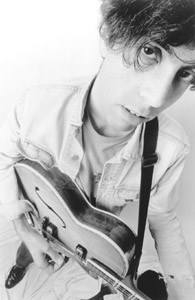
Chris von Sneidern wants to be a ‘Rock Star’

Writer David Templeton takes interesting people to interesting movies in his ongoing quest for the ultimate post-film conversation. This is not a review; rather, it’s a freewheeling discussion of art, alternative ideas, and popular culture.

FAME. David Bowie turned it into a song. Captain Hook called it an “insignificant bauble” just before leaping overboard into the jaws of the crocodile in Peter Pan. And in Rock Star, Mark Wahlberg has it handed to him on a platter–and finds it isn’t what he expected.

So what about Chris von Sneidern? Is underground acclaim enough to content the technically successful, but largely unknown, San Francisco pop-rocker (affectionately known as CvS) behind such underground hit CDs as Wood + Wire?

“Oh, I’m still pursuing [fame], in my own way,” von Sneidern admits. “But the further along I go, the further away it seems. The deeper in I go, the more I realize how far away it is.”

Though not exactly a household name, von Sneidern has a reputation that’s strong in the music world, both as a producer (John Wesley Harding’s New Deal and Awake) and a session player. He played with the Sneetches in the ’80s and Paul Collins’ Beat in the ’90s.

For the last hour, the two of us have been having a conversation that’s traveled all over the map. We’ve touched on such subjects as the easily crushed feelings of struggling musicians, the enduring pleasures of Spinal Tap, and the curious fact that, in most rock-and-roll movies, the only guy with any intelligence is the road manager.

“They’re always like the Shakespearean fool character,” CvS notes. “Old and wise.”

Our talk started, a dozen tangents ago, with Rock Star, the new Mark Wahlberg movie about a wannabe metal god who works as an office-supply salesman before he’s recruited to front his favorite big-hair rock band. Co-starring Jennifer Aniston and Timothy Spall (as the wise road manager), the film’s a drug- and sex-fueled fable about a regular guy whose dreams come true. . . for a while.

“People love films like this,” CvS suggests, “because we all want to be rock stars, and this movie says it’s possible. But it also reinforces the idea that we don’t really need to be a rock star, because being a rock star, in the end, is really just a bunch of shit.”

So what really makes people want to be rock stars? CvS recalls discussing that very topic recently with a former child actor.

“We were sitting by the pool in L.A. drinking beers, and he said, ‘Being a performer is the best way to receive love and not have to give it back,'” CvS recalls. “So if you can’t give love, or you’re too afraid to commit to giving love–but you want to be loved–becoming a performer is the way to go, because there’s a moat between you and the audience.

“You do your thing, and they sit out there and give you love and affection and applause,” he continues. “And you get to go back to the green-room and drink your booze.”

Wow, that’s depressing.

“Yeah, but that’s life,” CvS says. “That’s why people want to be rock stars. It’s a charge, especially at the level of the guys in this movie–it’s a big, big charge. But, at the end of the day, all you really get is pussy and booze and first-class tickets.

“We all know that’s not anything but a holiday.”

From the September 13-19, 2001 issue of the Northern California Bohemian.

© Metro Publishing Inc.

‘Nuggets II’

0

Feelin’ Groovy

‘Nuggets II’ delves deep into rock arcana

By Greg Cahill

FOR A NATION that wasn’t big on garages (thanks to the popularity of rail lines, small cars, or no cars at all), England sure did produce a lot of garage bands. And here they are, in all their punkish glory, compiled on Nuggets II: Original Artyfacts from the British Empire and Beyond, 1964-1969 (Rhino). This four-CD set is the latest in an enduring franchise that started in 1972 when Patti Smith and guitarist Lenny Kaye–a major garage-rock freak–assembled a two-album collection of ’60s garage rock that included fuzz-fried and psychedelia-steeped songs by the Shadows of Knight, the Standells, the Count Five, the Amboy Dukes, and other legendary proto-punkers, all mostly raw and unprofessional and mostly one-hit wonders.

Nuggets spawned the Pebbles series of obscure regional garage bands and unleashed a sonic tsunami of reissues.

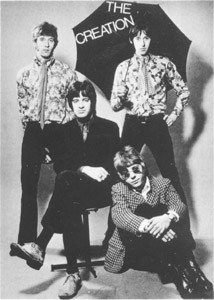
Over the years, Rhino Records has reissued that original Nuggets album as a pair of beefed-up single CDs and later as a four-CD box set with a bunch of extra tracks, some nifty, some decidedly forgettable. Nuggets II is surprisingly strong (a single CD sampler sent to radio stations kicks ass); such songs as “Everything (That’s Mine)” by the Dutch band Motions bristles with mod grooves and explosive art-pop guitar solos. And there are some relatively big names among the pack, caught in their apprenticeships, including a young Van Morrison (post-Them), Jimmy Page (with the Primitives), David Bowie (then Davey Jones), the Rolling Stones’ Ron Wood (with the Birds), the Bee Gees (backing Australian singer Ronnie Burns), and the Small Faces, which morphed into Rod Stewart’s first band. Other ragged rockers showcased here in their early years include guitarist Steve Howe (later of Yes), who pops up with Tomorrow on the Pink Floydish ditty “My White Bicycle”; Beatles producer George Martin, who supervised the studio for the Action, who offer a raucous cover of the Marvelettes’ “I’ll Keep Holding On”; ELO headman Jeff Lynne (who more recently got to produce the Beatles’ comeback singles), contributing vocals to the Idle Race’s “Imposters of Life’s Magazine”; pub rocker Dave Edmund with Live Sculpture; Led Zeppelin bassist John Paul Jones, doing a stint with the Poets; and John’s Children, featuring guitarist Marc Bolan of T Rex.

A few of these bands–Los Bravos, the Small Faces, the Easybeats (whose “Friday on My Mind” climbed to No. 16 on the U.S. charts)–broke through to a mainstream audience. But most of these bands–the Pretty Things, the Kaleidoscope, the Move–languished in the shadows of the Beatles, Rolling Stones, Kinks, Dave Clark 5, and other big-name Brit acts, barely noticed in the backwaters of the British Invasion.

Still, these are the cream of the underground R&B rave-ups, psychedelic soul, Motown dance grooves, and teen anthems that surfaced in the wake of the unfathomable success of the initial Nuggets box, what compilation producer Gary Stewart calls “the fruits of decades spent reading fanzines, attending record swap meets, bidding at vinyl auctions, and other forms of dysfunctional record-collecting-as-lifestyle behavior (all too perverse or embarrassing to recount here but captured well in the film/novel High Fidelity).”

From the September 13-19, 2001 issue of the Northern California Bohemian.

© Metro Publishing Inc.

Bill Ayers

’60s radical offers unapologetic autobiography in ‘Fugitive Days’

By Jonah Raskin

LIKE SO MANY members of his generation, Bill Ayers was seduced by the serpent of revolutionary romanticism. In the 1960s, while at the University of Michigan, he shed his upper-class upbringing–his father ran Commonwealth Edison, the energy giant–and became a vocal antiwar activist, intoxicated by his own rhetoric.

Later, Ayers helped create Weatherman, a radical splinter group. Soon thereafter he became a leader of the Weather Underground, the clandestine organization that set off mini-bombs–they damaged property, not people–in the U.S. Capitol Building and the Pentagon to protest the war in Vietnam.

Now in his 50s and a professor of education at the University of Illinois at Chicago, Ayers is still spouting revolutionary rhetoric as though it has never gone out of fashion. Indeed, the language of insurrection and defiance washes all over Fugitive Days (Beacon; $24), Ayers’ unapologetic account of his years as a rabble-rouser and a saboteur.

“I was born into an orgy of explosions,” he writes at the beginning of this autobiography, which also serves as a fiery political manifesto and a legal brief for Ayers and his ex-comrades, who turned themselves in to the authorities in the early 1980s and made their peace with America.

Ayers’ dilemma as an author is that he wants to talk, but can’t–not without incriminating himself and others. Of course, he is fully aware of the literary burden he bears. In the process of telling his tantalizing tale, he provides provocative comments about the nature of lies, secrets, and silence. His book is, in part, the compelling story of a man struggling to tell a story he knows he can’t tell without recourse to myth and fiction. Ayers changes names, dates, and places–and alters more than a few facts, too, which is distressing.

The first part of Fugitive Days feels genuine. Here, Ayers relates his activities in the early and mid-1960s, when he was a member of Students for a Democratic Society. He describes real people and events, the laws he broke, the occasions when he was arrested and jailed–all of which he seems to have enjoyed tremendously.

When the story follows his underground exploits in the 1970s, it seems less trustworthy. Indeed, while this book can be fascinating and entertaining, it’s also a highly romanticized view of life as a fugitive, and I wouldn’t want anyone–especially anyone going underground–to take it as gospel.

Ayers insists that he and his ilk were “exiles in America,” but that’s not how I remember it. I knew most of the members of the Weather Underground, and, in my recollection, they were in close contact with friends, family members, and the aboveground antiwar movement. Indeed, they were probably never more in touch with America than when they were wanted by the FBI.

Ayers insists that he and his comrades lived a more or less working-class life on the lam. Again, that’s not my recollection. I remember visiting fugitives in comfortable surroundings in Marin County and Brooklyn Heights. Hippie chic was more their style. And though Ayers likes to think that the Weather Underground was invincible, that just isn’t true either. Several fugitives were captured by the FBI, and Ayers himself was nearly caught in New York, though he doesn’t seem to remember that occasion.

Is this book worth reading? Yes, it is! Despite flaws, it’s the best book there is on the Weatherman and the Weather Underground. What redeems it is Ayers’ loving portrait of Diana Oughton, one of three Weather Underground members who accidentally killed themselves in 1970 when a bomb they were making exploded in a New York townhouse.

Ayers describes Oughton as a Quaker, a teacher, and an activist, without recourse to revolutionary rhetoric. He also returns again and again to the explosion itself and tries to understand why his friends blew themselves to kingdom come.

With a prose style that can make you positively dizzy, Ayers recaptures the surreal sense of a time when young people from elite families began to make bombs. “The serpent of rage was loosed in the wide world,” he writes. “It sank its passionate fangs deep into our inflamed hearts.” And so it did.

Sonoma State University professor Jonah Raskin is the author of ‘For the Hell of It: The Life and Times of Abbie Hoffman.’

From the September 13-19, 2001 issue of the Northern California Bohemian.

© Metro Publishing Inc.

Camera Art 3

0

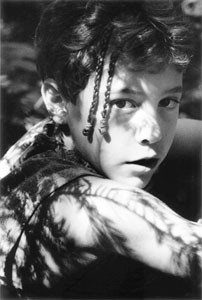
Photograph by Kathleen McCallum

The Big Picture

Camera Art 3 organizer sells photography as investment

By Patrick Sullivan

“IT’S A NERVOUS time for many people,” Kathleen McCallum says. “Especially artists. But I feel art is essential. It was my first success, it’s my cause of choice, and it’s my life.” Even as the declining economy and the sagging stock market send a chilly blast through the soul of the nation’s artistic community, McCallum is once again bringing together dozens of North Bay photographers for a weekend art festival in Montgomery Village Shopping Center in Santa Rosa.

Can local artists survive the death of dot.com-fueled conspicuous consumption? McCallum’s 3-year-old festival, called Camera Art 3, aims to help them try. The goal is simple: to help local shutterbugs catch the fickle eye of the public and break through to new levels in their careers.

McCallum, 43, who is the event’s founder, organizer, and chief cheerleader, thinks her effort is paying off.

“I think we’re definitely making a difference,” she says. “The festival is taking talented people and helping to launch their careers.”

As evidence, McCallum points to the success achieved by several Camera Art participants, including Santa Rosa Junior College student Brian Gaberman, who was picked up by Petaluma’s Barry Singer Gallery, which landed him shows in New York City and Los Angeles.

Of course, McCallum has also weathered a major disappointment since the last festival: the closing of the Silver Stone Gallery, a collective art gallery she helped put together in Montgomery Village to build on the success of Camera Art 1. The gallery closed in Febuary, one year after opening, because the landlord moved McCallum and her collaborators to a month-to-month lease.

“You can’t really plan shows if you might lose your lease at any minute,” McCallum says. “But we had a great run.”

Diversity has always been the main focus of Camera Art shows. In the previous two years, between 3,000 and 4,000 people trouped through Montgomery Village during the two-day show to see work by artists ranging from Rolling Stone photographer Baron Wolman to Polaroid-transfer artist Kathleen T. Carr to McCallum herself to little-known nature photographers.

On exhibit is everything from traditional figurative works to stuff some purists would be loath to even admit is really photography: liquid-emulsion works, hand-colored images, and photography combined with computer art.

“I always welcome new photographers,” McCallum explains. “Their enthusiasm is contagious.”

But this year, the bar is set a bit higher. McCallum organized a juried portion of the festival: Katie Burke of Pomegranate Communications selected works, awarding more than $1,000 in prizes to four winners, including Santa Rosa photographer Diane Miller, who took first prize. In all, fewer photographers will exhibit: 30 instead of last year’s 50.

“Artists will have more room,” McCallum says. “They’ll have a better chance to make some money.”

THIS YEAR’S festival is also making an almost evangelical effort to convince ordinary folks who attend the festival that art is a good investment, both financially and socially. As part of that effort, Barry Singer of the Barry Singer Gallery will give a talk about collecting fine art photography.

“Artists enrich our lives,” McCallum says. “What I’m trying to communicate is that the community needs to support artists too.”

But if that sounds a bit too much like charity for your tastes, McCallum offers another incentive: the possibility of big bucks. She studied with the late Ansel Adams back in the ’80s, and she looks back with chagrin on her decision to pass on the opportunity to purchase prints for a couple of hundred dollars, prints that would now be worth $40,000.

The only trick, then, is distinguishing the next Ansel Adams from the artist whose work soon won’t be worth the price of the paper it’s printed on. But McCallum urges a less mercenary attitude.

“I think you need to be in it for the long haul,” she says. “You need to follow artists through their transformations and growth.”

McCallum says she already sees photographers reacting to the softening art market by adopting such cost-cutting measures as producing smaller prints. But regardless of how big a bite the high-tech crash takes out of the art world, McCallum can’t imagine most artists she knows walking away from their work.

“It’s in your soul.” McCallum says. “Stopping is not an option. I’ve worked three jobs at a time before.

“You do what you have to do.”

Camera Art 3 takes place Saturday and Sunday, Sept. 22-23, from 10 a.m. to 5 p.m. at the Village Court Mall, Montgomery Village Shopping Center, Santa Rosa. Admission is free. 707/539-1855.

From the September 13-19, 2001 issue of the Northern California Bohemian.

© Metro Publishing Inc.

Donations

Donations The devastating effects of the Sept. 11 terrorist attacks that took the lives of many innocent people--including more than 4,000 workers in and around the World Trade Center and the Pentagon, hundreds of emergency personnel at the scene, and the passengers and crews of four U.S. airliners--will continue to have a huge impact for families and...

9-11 Tribute

"And Death Shall Have No Dominion" By Dylan Thomas And death shall have no dominion. Dead men naked they shall be one With the man in the wind       and the west moon; When their bones are picked clean       and the clean bones gone, They...

Taylor Maid

Something brewing: Occidental coffee and tea maker Mark Inman is at the forefront of the fair-trade movement. The Coffee King Taylor Maid Coffee's co-founder stirs it up in the java jungle By Paula Harris MARK INMAN downs between 10 and 20 steaming hot cups of joe...

Kenneth Cleaver

Consumer Correspondent Staples Inc. Attn: Customer Service 500 Staples Drive Framington, MA 01702 Dear Staples: I am responsible for managing a small office and in recent months have ordered copy paper, binder clips, seven file folders--all from Staples. Last week, the ink cartridge ran out during a crucial fax. I replaced the...

Robert Cray

Blue Soul Robert Cray is feeling satisfied By ALAN SCULLEY ROBERT CRAY being an artist who has recorded a dozen studio albums and has established a readily identifiable sound that draws liberally from classic Memphis soul and smooth yet punchy blues, it can be tempting to think that one Cray CD...

Bookends

By Patrick Sullivan Rage and 'Fury' IT WAS AMONG the smallest casualties of this month's devastating terror, but it offered a special irony. Two days after the World Trade Center attack, Salman Rushdie was scheduled to appear at Book Passage in Corte Madera. Rushdie, whose The Satanic Verses once earned him a death sentence...

‘Rock Star’

Fame Aim Chris von Sneidern wants to be a 'Rock Star' Writer David Templeton takes interesting people to interesting movies in his ongoing quest for the ultimate post-film conversation. This is not a review; rather, it's a freewheeling discussion of art, alternative ideas, and popular culture. FAME....

‘Nuggets II’

Feelin' Groovy 'Nuggets II' delves deep into rock arcana By Greg Cahill FOR A NATION that wasn't big on garages (thanks to the popularity of rail lines, small cars, or no cars at all), England sure did produce a lot of garage bands. And here they are, in all their punkish...

Bill Ayers

'60s radical offers unapologetic autobiography in 'Fugitive Days' By Jonah Raskin LIKE SO MANY members of his generation, Bill Ayers was seduced by the serpent of revolutionary romanticism. In the 1960s, while at the University of Michigan, he shed his upper-class upbringing--his father ran Commonwealth Edison, the energy giant--and became a vocal antiwar activist, intoxicated...

Camera Art 3

Photograph by Kathleen McCallum The Big Picture Camera Art 3 organizer sells photography as investment By Patrick Sullivan "IT'S A NERVOUS time for many people," Kathleen McCallum says. "Especially artists. But I feel art is essential. It was my first success, it's my cause of choice, and it's my...
11,084FansLike
4,606FollowersFollow
6,928FollowersFollow