Charities Seek Cash

0

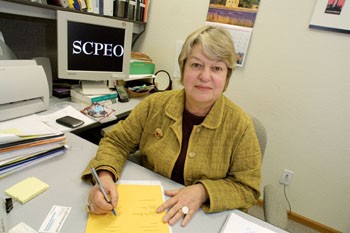
Times Are Tight: Helga Lemke says charities are feeling the pinch.

Sweet Charity

Local causes go begging after cash goes to New York

By Paula Harris

As the season of giving approaches, local charities are bracing for a potentially serious reduction in donations during what is traditionally their most productive time. The unprecedented outpouring of contributions to support victims of the Sept. 11 terrorist attacks on the East Coast–an estimated $600 million has been raised for disaster relief nationwide–is putting a myriad of North Bay causes in jeopardy.

Some say donations are drying up.

This “9-11 effect,” coupled with the accelerated downturn in the economy in recent months, could deal a powerful blow to those already seeking assistance.

And knowledgeable observers say the looming recession will likely bring even more individuals into food banks, church food pantries, soup kitchens, and shelters seeking help.

Maureen Shaw, executive director of Catholic Charities of the Diocese of Santa Rosa, says her organization’s homeless shelter is currently full. But the group’s coffers are not. “From the perspective of the September 11 tragedy, we’ve noted a reduction, not in the size, but in the number of gifts,” she explains. “It’s about a 15 percent decrease over last year.”

Still, Shaw says she is cautiously optimistic that Catholic Charities, a multiservice organization with 25 different programs serving the needy in six counties throughout the Redwood Empire, can continue to garner financial support. But she admits that the economic slowdown is “frightening” and could cause a trickle-down effect, creating more homelessness.

Helga Lemke, executive director of Sonoma County People for Economic Opportunity, says it’s still too early in the holiday season to accurately gauge donations, but she is definitely concerned.

Those most immediately affected were charities engaged in pledge drives when the attacks hit. “We sent out an appeal just before September 11 and got very little response,” Lemke recalls. “I guess it was understandable because everyone’s minds were elsewhere. But clearly the combination of the economic slump and the fact that people have been very generous on behalf of the needs of New York may have some impact.”

SCPEO runs a variety of housing, health, and youth programs, including Head Start. Lemke adds that lots of local families are hurting financially and that many individuals have suffered layoffs, which in turn is making it harder for charities to snag corporate donations that used to be a slam dunk.

David Goodman, executive director of the Redwood Empire Food Bank, a local hunger relief organization, agrees. “It’s a bit more challenging for corporations to justify layoffs and then give to charities,” he explains.

Goodman subscribes to the theory that the real culprit is not the terrorist attacks. “A lot of nonprofits have attached the current challenge to September 11, but it’s much more about the economy than about September 11,” he comments, adding that the REFB does most of its fundraising in the holiday season. Had the attacks happened Nov. 11, he says, the organization would have been in dire straits.

“It’s always challenging to fundraise and do the work we do,” he concludes. “We stretch and pull to make ends meet every year.”

Meanwhile, Lemke believes the tragedy may help revive a tradition of philanthropy. “The biggest message we can take from September 11 is that the ensuing response shows how generous we can be,” she says. “I hope people are now reaffirming their priorities and will continue to be generous.”

From the November 22-28, 2001 issue of the Northern California Bohemian.

© Metro Publishing Inc.

‘Without a Trace’

On the Run

‘Without a Trace’ is an enchanting but tough road movie

By

Many critics who have seen Sin Dejar Huella (Without a Trace) compare it to Thelma and Louise. But the comparison is unfair: director Maria Novaro has delivered a much better movie than Thelma and Louise, that supposed feminist classic, with its shaky sense of working-class life, its slumming big-name actresses, and its finale dripping with old-school masochism.

Without a Trace is an adventure tracing the length of Mexico, but it’s also an engaging, joking film about the prevailing conditions there. Maybe it’s not as tormented as the social-realist films you expect to cross the border, but neither is it blind to the plight of Mexico.

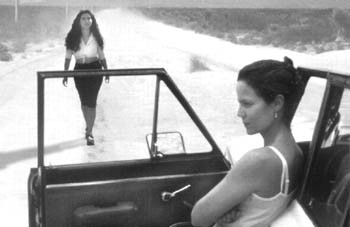
There are two heroines. One is a Juarez single mom, fleeing life on the border. Aurelia (Tiare Scanda), a friendly but tough girl with a taste for beer, is moving to Cancún. She’s leaving behind a no-good boyfriend in the drug trade, work in the maquiladora factories, and the still-uncaught serial killer suspected of the deaths of countless local women.

At a roadside diner, Aurelia picks up a woman bumming a ride. Traveling under the name Ana (Aitana Sanchez-Gijon), she’s a fancy, Spain-educated woman with a Castilian accent. The two head south, keeping their secrets.

Aurelia doesn’t mention that she’s lifted her boyfriend’s stash of drugs and money to help pay for the relocation. Ana is also being dogged. A federale named Mendizabal has trumped up charges against her for selling fake pre-Columbian artifacts to Yanqui museums.

Jesus Ochoa, who reaches Wayne Newton levels of ickiness, plays the cop. He wears snakeskin boots and boot-shaped sideburns; he has a bulging belly that he likes to enhance with a big silver belt buckle, skin-tight cowboy shirts, and, of course, bribes.

As the two women and their pursuers head for the resorts, the Caribbean coast is photographed in luscious wide-screen 35 mm. The coast is paradise, yes, but it’s always seen warts and all, with small-town garages, muddy streets, boisterous stray-dog packs, pro-Zapatista graffiti, and the petrochemical plant here and there.

The soundtrack music builds the atmosphere: defiant ranchero protest songs in the north, plaintive Vera Cruz harps in the interior, and Yucatán string bands when the women arrive in the tropical south.

Director Novaro, who also did the dance-hall romance picture Danzon, slows down the film when the women arrive on an antique plantation that’s been recycled into a hammock-hotel. The movie stalls there. Novaro refuses to provide a time line for the adventure–the running gag is that she cuts away whenever we’re supposed to find out the date.

Maybe objecting to the slow pace in this plantation segment is like being a North American fretting about schedules when south of the border. Without a Trace lingers because it’s passionate about the road south: the people, the land, and the public art. Indeed, the film is practically a companion piece to Helen Escobar’s diverting picture book, Mexican Monuments: Strange Encounters. Like Escobar, Novaro is very fond of Mexico’s unique public statuary.

Note that the adventure turns briefly bloody, but never sadistic. The blood is used as an object lesson. Women like Aurelia may never spill blood, but they have to clean up a lot of it.

Without a Trace is at the Rafael Film Center only for a week, unfortunately. Sanchez-Gijon’s “cute little bandit face” (as Mendizabal says)–not to mention what an old-time advertising hack might call Tiare Scanda’s “scanda-lous” body–should have been enough to get distribution for Without a Trace. And the studios are angling for a Latin audience, too–they’re quite pious on that count. Yet Without a Trace didn’t get a distributor–and look, in the name of God and Griffith, at what does!

‘Without a Trace’ screens Nov. 16-22 at the Rafael Film Center, 1118 Fourth St., San Rafael. For details, see or call 415/454-1222.

From the November 15-21, 2001 issue of the Northern California Bohemian.

© Metro Publishing Inc.

Holiday Guide

0

Gift Wrapped!

Wander through a winter wonderland of holiday events

By Paula Harris

Mistletoe, menorahs, and mariachis will all be out in full force to help make your holidays a little merrier this year. So don’t shut yourself in with the TV Guide and your special, lethal version of eggnog. Get out and experience some of the festive sights and sounds collected in this selective sampling of holiday events.

Parties & Gatherings

Holiday Victorian Tea You don’t have to be British to have a hankering for dainty sandwiches and tea in china cups. The Woman’s Club of Petaluma will be transformed into an elegant Christmas setting for a genuine tea with costumed servers as the Museum Association sponsors this annual holiday tradition. Tea will be served at three seatings on Dec. 2 at 11 a.m., and 2 and 5 p.m. 518 B St., Petaluma. $25. 707/778-4247.

Bob Burke’s Christmas Party Do you think the holiday should mean more than an opportunity to stuff yourself with sweets and drown yourself in eggnog? So does Forestville’s Bob Burke, the founder of a 28-year-old program that offers free year-round support groups and fun events to children with cancer and other serious illnesses in Sonoma County. Revenues for the program come from donations made during events such as Burke’s annual Christmas Party. This year’s party, hosted by the Gonnella Family, will be held at the Union Hotel Restaurant in Occidental. Dec. 5, 5 to 9 p.m. Free, but donations appreciated. 707/887-2222.

Santa Sightings

Downtown Santa Parade Bummer! After 17 years, Santa Rosa’s whimsical annual Downtown Santa Parade has been canceled, apparently due to lack of volunteers and funds. We’ll miss it! However, Santa Rosa has some other holiday events to get you in the seasonal spirit.

Holiday Open House Santa Claus rolls into Santa Rosa on a fire truck during an afternoon of holiday festivities on Nov. 24. Other attractions include a merchants’ open house, carolers, musicians, food, and children’s activities. Santa comes by at 5 p.m., and at 6 p.m. is the VNA Hospice Foundation’s annual Lights of Life celebration. Old Courthouse Square, downtown Santa Rosa. 707/523-3728.

Santa & Mrs. Claus in Petaluma The Jolly Man and his missus give old Rudolph et al. a break and come to Petaluma via water. This year, they will arrive on the deck of their usual decked-out tugboat at high noon on Nov. 24. The cheery couple will then distribute candy canes as they take a ride through downtown Petaluma aboard an antique horse-drawn sleigh. 707/769-0429.

Dickens of a Holiday Next, Santa swings by Novato for the Dickens of a Holiday event. Stroll down Sherman Avenue in downtown Novato amid live music, carolers, and horse-drawn carriages. Dec. 1, 11 a.m. to 6 p.m. Santa shows up at 5 p.m. 415-892-1516.

Parade of Lights Carols, candles, and 100,000 pounds of real snow for sledding are the high points of downtown San Rafael’s Parade of Lights. Nov. 23. Call for times. Downtown San Rafael. Free. 415/457-2266.

Tinsel & Lights

Light Up a Life This annual tree lighting–sponsored by Hospice of Petaluma–has become a major focal point of the community over the years, as hundreds gather to cheer on the lighting of the enormous Christmas trees in the old downtown and to remember the dearly departed. Dec. 7, starting at 6:30 p.m. Petaluma Blvd. N. and B St. For information or to sponsor a tree light in the name of a loved one, call 707/778-6242. The Friends of Sonoma Hospice also holds its Light Up a Life celebration Dec. 2 at 6 p.m. Southwest corner of the Plaza in Sonoma. A $10 donation will illuminate a light in honor or remembrance. 707/935-7504.

Flotilla on Parade Ogle in awe as dozens of lighted and decorated boats transform the Petaluma River Turning Basin into a light show. Visitors can view the boats all evening at the Turning Basin (Petaluma Boulevard North and B streets, behind the Great Petaluma Mill) with local entertainment on the dock. This watery parade sets sail on Dec. 8 at 6:30 p.m. 707/769-0429.

Yountville Festival of Lights An all-day street fair on Nov. 23 kicks off the month-long Festival of Lights celebration. The party offers food, wine, strolling musicians, entertainment, and a tree- and town-lighting extravaganza that will set the entire town aglow with thousands of lights. Festivities run from 2 to 9 p.m. along Washington Street in Yountville. The always dramatic town lighting is at 5 p.m. Free. 707/944-0904.

Holiday Lights Parade This parade of lights features more than 100 floats, horses, antique cars, trucks, marching bands, and more–all decked out in Christmas lights. This year’s theme is “Candyland Fantasy.” Dec. 1 at 7 p.m. Main Street, Guerneville. 887/664-9001.

Community Christmas What’s Christmas without a festive tractor parade? Calistoga has this and more during the Calistoga Community Christmas Bazaar and Parade Celebration. Dec. 1. The fun starts at 9 a.m. with an old-fashioned crafts bazaar in the fairgrounds at 1439 North Oak St. The decorated tractors roll down Lincoln Avenue from 6 to 7 p.m., to be followed by a tree lighting with carols and refreshments at the Washington Street Community Center. 707/942-6333.

Seasonal Tours

Christmas Parlor Tour Tour four stunningly decorated Victorian parlors in Petaluma, plus the Petaluma Museum, this year for Petaluma’s annual Heritage Homes Christmas Parlor Tour. Organizers ask you to dress warmly, wear soft-soled shoes, and bring a flashlight. Dec. 2, 6 to 9 p.m. $10. 707/769-0429.

Candlelight Tour Wander through nine historic Victorian homes, mingle with costumed docents and strolling carolers, and partake of chocolate delights and more during Napa Landmarks’ 13th annual Holiday Candlelight Tour. Dec. 8, 3 to 8 p.m. Fuller Park and Napa Abajo historic districts in Old Town Napa. $22 in advance; $25 on the day of the event. 707/255-1836.

Holiday Crafts

Holiday Fair Wanna buy presents but sick to death of shopping malls? The 29th annual Gifts ‘n’ Tyme holiday fair in Napa has tons of booths crammed with arts and crafts that will make great gifts. Find everything from wind chimes to sweatshirts. Food available. Nov. 16-18. Friday, 11 a.m. to 8 p.m.; Saturday, 11 a.m. to 6 p.m.; Sunday 11 a.m. to 5 p.m. Napa Valley Exposition, Chardonnay Hall, 575 Third St., Napa. Free. 707/255-0902.

Dickens Fair Pick out some unique hand-crafted gifts while immersing yourself in seasonal good cheer. A Dickens of a Holiday Crafts Fair will warm your heart with music, song, crafts, and even roving minstrels. Dec. 1 and 2. Call for times. Finley Community Center, 2060 W. College Ave., Santa Rosa. Free. 707/543-3737.

Spirit of Christmas Crafts Faire The 25th annual Spirit of Christmas Crafts Faire is the largest holiday gift show in the North Bay, with more than 200 booths offering handmade goodies to delight even the pickiest person on your Christmas list. Minstrels, carolers, and a variety of local bands will be there to spread musical cheer. Among the headliners: the Pulsators serve up Christmas rock on Nov. 23; Sourdough Slim rocks the accordion on Nov. 30; and Grammy-nominated harmonica master Norton Buffalo gets the blues on Dec. 9. The fair is open three weekends: Nov. 23-25, Nov. 30-Dec. 2, and Dec. 7-9. It’s open Fridays from noon to 9 p.m., and Saturdays and Sundays from 10 a.m. to 6 p.m. Sonoma County Fairgrounds, 1350 Bennett Valley Road, Santa Rosa. $4. Fridays are half price. 707/575-9355.

Christmas Bazaar Petaluma United Church of Christ holds an alternative Christmas Bazaar featuring gift ideas from Third World artisans. Nov. 17, 10 a.m. to 4 p.m. 825 Middlefield Drive, Petaluma. Free admission. Proceeds go to artists and charitable organizations. 707/763-2454.

Center Stage

Santa Rosa Symphony The symphony celebrates the holiday season with a program full of Spanish flair and fire. Guitarist Paul Galbraith will perform Concierto de Aranjuez by Joaquín Rodrigo, and harpist Michael Rado will offer Alberto Ginastera’s Concerto for Harp. Debussy’s Iberia rounds out the program. Dec. 15 and 17 at 8 p.m.; and Dec. 16 at 3 p.m. Luther Burbank Center, 50 Mark West Springs Road, Santa Rosa. $15-$40. 707/546-8742.

Scrooge: The Musical The Santa Rosa Junior College Theater Arts department presents an enchanting musical adaptation of this classic tale at the Luther Burbank Center for the Arts. Nov. 16-25. Call for days and times. LBC Main Theatre, 50 Mark West Springs Road, Santa Rosa. $12. 707/527-4263.

Snoopy on Ice Snoopy and the gang continue with their popular holiday ice show. Get your tickets early, because this show sells out very quickly. The visual feast also stars champion skaters, extravagant costumes, and holiday scenery. Dec. 8-22. Most shows start at 3 and 7 p.m. Redwood Empire Ice Arena, 1667 W. Steele Lane, Santa Rosa. $10-$45. 707/546-3385.

Christmas Comes to Wildwood The lovable characters from the children’s classic The Wind in the Willows come alive when the Cinnabar Theater presents Christmas Comes to Wildwood. For the young and the very young at heart. Nov. 30-Dec. 9. 3333 Petaluma Blvd. N., Petaluma. $10 for adults and $6 for children. Call for times. 707/763-8920.

It’s a Wonderful Life The Cinnabar Theater presents the holiday classic. Dec. 13-22, Thursdays through Saturdays (with one Sunday performance on Dec. 16). 3333 Petaluma Blvd. N., Petaluma. $10 for adults and $6 for children. Call for times. 707/763-8920.

Winnie the Pooh Sonoma County Repertory Theatre presents kids’ favorite honey-lovin’ bear in Winnie the Pooh’s Christmas Tail. Dec. 1, 8, 15, and 22. Call for times and prices. 707/823-0177.

The Elves and the Shoemaker California Theater Center presents this adaptation of a classic Brothers Grimm fairy tale at the Luther Burbank Center for the Arts. Following the performance, join the cast for the annual tree-lighting ceremony in the lobby. Dec. 2 at 3 p.m. LBC Main Theatre, 50 Mark West Springs Road, Santa Rosa. $14 for adults and $12 for children and seniors. 707/546-3600.

Dance Dreams

Nutcrackers Galore Dancing mice, dazzling costumes, fairy-tale kingdoms–The Nutcracker has it all. Indeed, as far as we can tell, this timeless holiday classic has only one drawback. Nearly every dance company in the North Bay stages a version, so it’s tough to decide which one to see. We can’t make that decision for you, but here are your options.

As usual, Ballet California offers a jam-packed holiday season. First, meet the characters and view a mini-performance at the company’s annual Nutcracker breakfast on Dec. 2 from 9:30 a.m. to noon at the Sonoma County Hilton, 3555 Round Barn Blvd., Santa Rosa. Tickets are $22 for adults and $15 for children (aged 10 and under). 707/537-0140.

Then it’s on to a full performance as Ballet California offers the only Nutcracker in Sonoma County with a full live orchestra, featuring guest conductor Gabriel Saketeeny of the Cotati Philharmonic Orchestra. Catch the production on Dec. 7 at 8 p.m., Dec. 8 at 2 and 7 p.m., and Dec. 9 at 2 p.m. at the Luther Burbank Center, 50 Mark West Springs Road, Santa Rosa. Tickets are $21-$24 for adults and $16 for children, students, and seniors. 707/546-3600.

Ballet Califa also present Tchaikovsky’s classic with choreography by David McNaughton. Dec. 14 at 8 p.m., Dec. 15 at 2:30 and 8 p.m., and Dec. 16 at 2:30 p.m. Codding Theatre, Spreckels Performing Arts Center, 5409 Snyder Lane, Rohnert Park. Tickets $16 for adults and $12 for kids and seniors. 707/588-3400.

The Petaluma City Ballet and the Petaluma School of Ballet team up to present the city’s 15th production of The Nutcracker. Dec. 7 at 8 p.m., Dec. 8 at 2 and 8 p.m., Dec. 9 at 2 p.m., and Dec. 11 at 2 and 8 p.m. at the Evert B. Person Theater, Sonoma State University, 1801 E. Cotati Ave., Rohnert Park. Tickets are $17 for adults and $11 for children and seniors. 707/765-2660.

The Marin Ballet presents its 29th seasonal production of the holiday classic, offering the lavish full tale, complete and uncut, followed by a candy cane party. Dec. 8 and 9 at 1 and 4:30 p.m. Marin Memorial Auditorium, Marin Center, Avenue of the Flags, San Rafael. $17-$25 for adults and $14.50 for seniors and youth. 415/472-3500.

Stapleton School also presents a full-length version of this holiday treat, featuring a cast of 5 to 18-year-olds, plus returning alumni. Dec. 21-22 at 3 and 7:30 p.m., and Dec. 23 at 1 p.m. Marin Memorial Auditorium, Marin Center, Avenue of the Flags, San Rafael. $19 for adults and $13.50 for seniors and youth. 415/472-3500.

Uplifting Dance The NOMAD Dance Company of Sausalito teams with the Alchemia Theater for Life, a performing arts program for adults with developmental disabilities to present Belonging. The uplifting performance will showcase the talents of both groups. Dec. 8 at 7 p.m. The United Methodist Church, 410 D St., Petaluma. Donations of $5 suggested. 707/775-3794.

Ballet Story Under the direction of Teresa Lubarsky Schork, the students of Healdsburg Ballet perform a full-length Night Before Christmas. The characters in Clement B. Moore’s story come to life as they dance to the music of Bizet and Tchaikovsky in this three-act ballet. Dec. 15 at 7:30 p.m., and Dec. 16 at 2:30 p.m. Jackson Theater at Sonoma Country Day School, 4400 Day School Place, Santa Rosa. $10.50 in advance; $15 at the door. 707/431-7617.

Sophie & the Enchanted Toy Shop Marin Dance Theatre’s enchanting ballet, created by two award-winning local choreographers, features a cast of 90 characters. The toys come to life on Dec. 15 at 1 and 5 p.m. Marin Memorial Auditorium, Marin Center, Avenue of the Flags, San Rafael. $25-$20 for adults and $14 for children. 415/499-7687.

World Dance Cultural music and dance exhibition of many cultures, including Irish, Mexican, Caribbean, and Native American. Nov. 30 at 6 p.m. Guerneville Veterans Hall, Guerneville. Free. 707/869-3533.

Songs of the Season

Carols in the Caves Multi-talented local musician David Auerbach celebrates his 16th year of performing traditional Christmas music from America and beyond on rare instruments in the cask-lined caves of local wineries. His vast collection includes the Celtic harp, hammer dulcimer, pan pipes, and bowed psaltery (an ancestor of the violin). Auerbach plays on Nov. 24 at 7 p.m. and Nov. 25 at 2 p.m. at the Clos Pegase Winery, 1060 Dunaweal Lane, Calistoga; on Dec. 1-2 at 2 p.m. at the Hans Fahden Vineyards, 4855 Petrified Forest Road, just west of Calistoga; on Dec. 15-16 at 2 p.m. at the Folie à Deux Winery, 3070 St. Helena Hwy. N., St. Helena; and on Dec. 22 at 7 p.m. at RMS Carneros Alambic, 1250 Cuttings Wharf Road, Napa–not a cave, but amid the cognac stills. $35. 925/866-9559.

Chanticleer Christmas The Chanticleer Men’s Chorus performs traditional carols and medieval and Renaissance sacred music that brings the holidays to life. Dec. 18, at 6 and 8:30 p.m. St. Vincent de Paul Church, 35 Liberty St., Petaluma. $32-$22. 415/392-4400.

Winter Concert The Occidental Community Choir celebrates Christmas, Hanukkah, and the winter solstice at its annual Winter Holiday Concert. Dec. 1 at 8 p.m. at the Church of the Incarnation, 550 Mendocino Ave., Santa Rosa; Dec. 2 at 7 p.m. at the St. Phillips Center, Occidental; Dec. 8 at 8 p.m. at the Sebastopol United Methodist Church, 500 N. Main St., Sebastopol; Dec. 9 at 4 p.m. Clos Pegase Winery, 1060 Dunaweal Lane, Calistoga. Tickets are $7 ($12 for Calistoga). Kids under 18 get in for free. 707/547-0204.

Magical Harp Napa Valley Museum’s Music in the Gallery series continues with a performance of soothing harp music by local harpist Colleen Carter, who has been playing Celtic harp for years but recently added concert harp to her repertoire. Dec. 8, 2 p.m. Napa Valley Museum, 55 Presidents Circle, Yountville. Call for price. 707/944-0500.

Petaluma Sings! This talented local choir presents the songs of the season in what has become a much-loved holiday tradition. Dec. 15 at 8 p.m. St. Vincent Church, Bassett and Liberty streets, Petaluma. Call for price. 707/763-8920.

‘Tis the Season Choral Singers of Marin will help you catch the spirit of the season and lead you in a rousing burst of caroling. Everyone, even the flat-voiced, can join in! Dec. 16 at 4 p.m. Marin Memorial Auditorium, Marin Center, Avenue of the Flags, San Rafael. $15-$28 for adults or $10 for students and children. 415/472-3500.

Sing-Along Messiah Join the West Marin Festival Singers and Orchestra in a sing-along of this glorious choral piece. Dec. 16. Call for time and prices. Dance Palace, Fifth and B streets, Point Reyes Station. 415/663-1075.

Dickens Celebration Step back in time when Falkirk Cultural Center presents a Victorian Holiday Benefit and Dickens Celebration. The evening will spotlight Caroling Kids, the Starlight, characters in Dickens attire, and Father Christmas. Dec. 7, 6 to 9 p.m. 1408 Mission Ave., San Rafael. $8. 415/485-3328.

Vivaldi Sing-Along Flex those vocal cords when the River Choir–accompanied by the Coffee Concert Chamber Ensemble–hosts the fourth annual Vivaldi’s Gloria sing-along Christmas tradition. Dec. 16 at 7 p.m. Newman Auditorium in Elliot Hall, Santa Rosa Junior College campus on Elliot Ave., Santa Rosa. $12. 707/869-0516.

Happy Hanukkah

The North Bay offers a plethora of opportunities to celebrate Hanukkah. Here are a few.

Beth Ami Congregation/Santa Rosa Jewish Community invites families to a dinner, dancing, music, and a play on Dec. 11 at 5:30 p.m. Friedman Center, 4676 Mayette Ave., Santa Rosa. $6 for adults and $4 for kids. 707/545-4334.

Petaluma’s Congregation B’nai Israel holds a Hanukkah dinner (chicken or vegetarian) on Dec. 9 at 5:30 p.m. Bring your own menorah and candles for a special lighting ceremony. Call for prices and reservations. 707/762-0340.

Keeping the holiday humming, the River Choir, directed by Sonia Tubridy, performs “O Magnun Mysterium.” Dec. 9 at 7 p.m. Guerneville Community Church, 14520 Armstrong Woods Road. Call for prices. 707/869-0516.

Other Traditions

Winter Powwow The American Indian Cultural Education Committee presents its fourth annual one-day intertribal celebration of American Indian culture. The event features traditional music, drumming, food, arts and crafts, and several kinds of dancing, including Pomo dancers, Aztec dancers, and gourd dancing. Dec. 1, 10 a.m. to 10 p.m. Veterans Building, 1351 Maple Ave., Santa Rosa. Admission is free. 707/869-8233.

Las Posadas Traditional and classical songs are combined to create an interpretation of old California’s culture during Las Posadas. The Mother Lode Musical Theatre presents this bilingual concert version of the traditional early California procession of music and dance. Las Posadas is a holiday ceremony in which local people act out a musical version of the biblical story of Mary and Joseph seeking shelter for the birth of infant Jesus. Dec. 15 (call for time). Dance Palace, Fifth and B streets, Point Reyes Station. Free. 415/663-1075.

Kwanza Celebration The Bay Area Discovery Museum celebrates African-American heritage in this fourth annual event. Families will make traditional African crafts and watch live entertainment. Dec. 16, 11 a.m. to 4 p.m. Fort Baker, 557 McReynolds Road, Sausalito. Free. 415/487-4398 or 415/289-7266.

Fiesta Navidad A Mexican Christmas fiesta comes to the Luther Burbank Center for the Arts, complete with colorful regional dances from Ballet Folklórico Mexicano de Carlos Moreno. Dec. 5 at 7 p.m. Luther Burbank Center, 50 Mark West Springs Road, Santa Rosa. $14. 707/546-3600.

Magical Miscellany

Ice Art Gawk as world-class ice carvers transform up to half a ton of ice into glistening works of art during the Napa Valley Ice Art Championship. This cool event is warm-up competition for the 2001 Ice Art Championship, which is scheduled to be a qualifying event for the 2002 Winter Olympics in Salt Lake City. Nov. 23, 2 to 5 p.m. in downtown Yountville. Free. 707/944-0904.

Chocolate Sampling Get a massive endorphin fix at this sweet little event, which is part of the Napa Valley Museum’s program of events. Among the attractions: learning how chocolate can be made right in our own backyard using 25-year-old recipes. Dec. 14 at 2 p.m. Vintage Sweet Shoppe, Browns Valley, Napa. Call for prices and reservations. 707/944-0500.

New Year’s Eve

First Night Santa Rosa This drug- and alcohol-free New Year’s Eve celebration in downtown Santa Rosa is slated to be a bit smaller this year, but it will still feature a myriad of musicians, performance artists, poets, dancers, food vendors, and activities for kids. This year the focus is on interactive projects and venues, including a community sing-along, a journey through a labyrinth, a hands-on art project, and dancing in the streets. Dec. 31, starting at 4 p.m. Entry badges (available at Copperfield’s bookstores) are $7 in advance and $10 at the gate. 707/577-6448.

Best of the S.F. Comedy Competition The long-running standup competition that’s discovered the likes of Dana Carvey, Sinbad, and Robin Williams offers a year-end “best of” event featuring performances by four alums of previous contests. Dec. 31 at 9 p.m. $25. Marin Memorial Auditorium, Marin Center, Avenue of the Flags, San Rafael. 415/472-3500.

Will Durst Just before New Year’s Eve, the political satirist labeled a “modern-day Will Rogers” by the Los Angeles Times caps off this long, strange year with two performances. Dec. 29 at 7:30 and 10:45 p.m. Mystic Theatre, 23 Petaluma Blvd. N., Petaluma. $17. 707/765-2121.

From the November 15-21, 2001 issue of the Northern California Bohemian.

© Metro Publishing Inc.

‘Harry Potter and the Sorcerer’s Stone’

0

Fantasy author says girls deserve better than ‘Harry Potter’

Writer David Templeton takes interesting people to interesting movies in his ongoing quest for the ultimate post-film conversation. This is not a review; rather, it’s a freewheeling, tangential discussion of art, alternative ideas, and popular culture.

It’s impossible to surmise what an author of Lemony Snicket’s morose and mysterious stature would have to say about a rip-roaring fantasy film like the brand new Harry Potter and the Sorcerer’s Stone. But thanks to Mr. Snicket’s “official representative,” Daniel Handler, now rushing from the theater where said movie has just concluded, I am treated to an informed guess as to how the elusive mystery man might have behaved had he been with us today.

“Well, Mr. Snicket is something of a coward,” Handler confesses, cradling a cup of tea as we talk in a cluttered coffeehouse near the theater. “So he’d probably have been under the seat. Whenever someone was tangled up in killer vines, or threatened by a three-headed dog, he’d have been tempted to run away.

“And I’m certain he’d have objected to how loud the movie was.”

Loud? Try EAR-SHATTERING. Neither of us can recall a film played at such deafening levels. Says Handler, “The climax alone was louder than anything in Apocalypse Now, and in Harry Potter, all they do is play chess.”

: Uneven ‘Harry Potter’ casts reasonably enjoyable spell.

: Once a creature of the reader’s imagination, Harry Potter is poised to be the next corporate marketing coup.

: One adult reader first fell under the sorcerer’s spell thanks to the richness of the accents in the Harry Potter series–can the movie live up to the imagination?

Lemony Snicket is best-known, if little understood, as the author of the wicked, eight-volume Series of Unfortunate Events (Harper Collins), four of which–The Bad Beginning, The Reptile Room, The Hostile Hospital, and The Wide Window–are currently ranked at third, sixth, eighth and ninth (respectively) on the New York Times best-selling children’s books list, where they are woven around J.K. Rowling’s four Harry Potter books.

The Snicket books, targeted by Nickolodeon for their own big screen adaptation, all follow the three kind-hearted but woefully unlucky Baudelair Orphans–Violet, Klaus, and Sunny–as they suffer through a nasty series of, well, unfortunate events.

Daniel Handler, who may or may not actually be Lemony Snicket–he does tend to show up in Snicket’s place at book store appearances–admits to being the author of two critically acclaimed books for adults: The Basic Eight and Watch Your Mouth.

As for Harry Potter, the movie, Handler is confident that he and Lemony Snicket would offer similar opinions.

“He, like I, admires people who are good and true, ” Handler says, “so it’s always good to see depictions of them up on the silver screen. He, like I, sees that the story of life is more complicated than often presented, something Rowling seems to hint at in her book. But unfortunately, there wasn’t as much of that in the movie as either of us would have liked.”

“The Harry Potter stories, like the Snicket books, are constantly being celebrated, or taken to task, for their sense of darkness,” I say to Handler. “So was the movie dark enough for you?”

“Um, no,” he replies with a laugh. “But I never really thought the book was all that dark. Even so, there are moments in the book that did send shivers up my spine. In the movie, though, the hairs on the back of my neck just sat there.”

Harry Potter, as nearly everyone in the Western World is aware by now, is the scar-headed orphan boy who discovers, on his 11th birthday, that he is a wizard, the son of a magical mother and father who died protecting him from and evil sorcerer’s curse. The books describe his life-and-death adventures at Hogwarts School of Witchcraft and Wizardry, and some exciting encounters with magical mirrors–and the all-important cloak of invisibility.

Asked what he’d do with his own cloak of invisibility, Handler muses, “Well, my first thought is that I’d try to find out what people say about me when I wasn’t in the room, but then I thought, ‘I don’t want to know that.’ I’d rather leave every room thinking I’m special. So I’d probably just use the cloak to mess with people’s stuff.”

“Back to that thought about wanting to feel special,” I interject. “Isn’t that, at its core, what the Harry Potter mythos is all about?”

“Sure,” he says. “It appeals to everyone’s existential and egomaniacal fantasy that the world’s been waiting just for them, that everything is falling into place, with one’s self at the center. Because, down deep, everyone wants to feel special.”

This leads Handler to mention his unhappiest objection to the movie version of Harry Potter.

“I wanted the girls to be special. I wanted them to do more,” he says, admitting to a certain fondness for “plucky female characters,” like Violet Baudelaire in his own–er, I’m sorry, in Mr. Snicket’s–children’s books.

“There aren’t enough good female characters in books and movies,” he argues. “Whenever there’s an opportunity squandered to do something wonderful with a female character, it seems too bad. When I first read the book of Harry Potter, no warning bells went off for me, I had no sense of sexism at all.

“But in this movie,” he continues, “it’s all over the place. Every time Hermione speaks there are two boys standing there rolling their eyes. Hermione is really smart, she’s good at the things she does, but that’s just barely tolerated by the boys. It’s never really celebrated. The implication is that there’s somehow something wrong with the fact that Hermione reads so much.

“In the book, where everything was fleshed out, it wasn’t such a problem, but in the movie’s condensed version, it really stands out. When any of the boys pulls out a fact and save the moment, they’re a hero. When Hermione does it, she’s just some embarrassing know-it-all.

“If you’re a girl seeing this movie–and you’re the kind of girl who is always reading a lot, learning lots of facts–then the lesson you’re going to get from this film is that somehow, that is not the appealing and acceptable way for a girl to behave.”

“But,” I attempt to counter, “at the awards ceremony at the end of the film, her thorough knowledge of magic and her sense of calm in the face of danger do win her fifty points. So she is finally rewarded, isn’t she?”

“Well, she’s forgiven,” Handler allows. “That’s the overall tone I took from it. Think about it–for some reason, Hermione believes that she’ll never be a better wizard than Harry Potter. But she is a better wizard than Harry. She’s smarter, better organized, calmer, just as brave as Harry, and her spells always work. Girls have it rough enough without being told–once again, in this movie they all can’t wait to see–that their role in life is to support the boys.

“Mr. Snicket ,” he adds, “Would have been appalled.”

From the November 15-21, 2001 issue of the Northern California Bohemian.

© Metro Publishing Inc.

Grateful Dead

0

Dead in a Box

Long, strange trip arrives at new box set

By Greg Cahill

Grateful Dead archivist David Lemieux has called it “the Rolls Royce of vaults.” And there’s no denying that the band’s virtually impregnable San Rafael storehouse–13,000 audio tapes and 3,000 videotapes protected by five-layer thick walls, numerous security alarms, and a state-of-the-art fire-suppression system that releases Inergen, a gas that replaces all the available oxygen in the room–is as impressive as all the other endeavors taken on by the Dead during their long, strange trip.

Last month, Rhino Records issued Grateful Dead: The Golden Road (1965-1973), a 12-CD box set that tapped that vaunted vault to include seven hours of previously unreleased material in addition to the band’s entire Warner Bros. Records catalog.

Suffice to say that this set features rarities that have dazzled even the most committed bootleg collector. That’s quite an accomplishment for a band that actively encouraged tape trading and authorized the release over the years of 22 multidisc volumes of live material–the ambitious Dick’s Picks series–compiled by the late tape archivist Dick Latvala of Petaluma.

“There’s stuff in here I didn’t even know existed,” Grateful Dead guitarist Bob Weir said of the Golden Road box set in a recent Rolling Stone interview.

The dozen discs run the gamut, from the blues-based tunes on 1967’s self-titled debut to the wild experimentation of 1969’s Aoxomoxoa, from the reflective country-inflected songs of Workingman’s Dead and American Beauty (both released in 1970 and listed by late guitarist Jerry Garcia as his favorite Dead albums) to the acid-laced jams of Europe ’72.

The radio-friendly lengths of 1966’s “Can’t Come Down” and Gordon Lightfoot’s “Early Morning Rain” (included on the set’s first disc, which showcases pre-Dead bands the Warlocks and the Emergency Crew) may be an eye opener for casual fans familiar with the most popular cult band in rock history’s reputation for extended improvisations.

Diehard Deadheads can satisfy their seemingly endless appetite for rarities with alternate studio takes of such classics as “New Speedway Boogie,” an obscure and until recently completely unknown 35-minute jam from the Aoxomoxoa sessions, and a rare rendition of “Fire in the City” with jazz singer Jon Hendricks.

With input from longtime Dead publicist Dennis McNally (who is preparing a much-anticipated biography of the band) and Lou Tambakos (together they co-conceived and compiled the introductory “Birth of the Dead” disc), and produced for release by Rhino’s Grammy-winning executive James Austin and tape archivist Lemieux, the hefty box set is a lavish affair. Each disc features fully restored artwork and its own 16-page booklet with brand-new essays by such noted Deadologists as McNally, David Gans, Blair Jackson, Gary Lambert, Lenny Kaye, Hale Milgrim, Paul Nichols, Steve Silberman, and Owsley “Bear” Stanley (the North Bay resident best known as the onetime underground chemist responsible for the psychedelic era’s best LSD).

The box set also includes an 80-page booklet chronicling the band’s history, dozens of rare photos, reproductions of vintage rock posters and other memorabilia, promotional campaigns (one flyer recruits candidates for a Pig Pen look-a-like contest inspired by the band’s late keyboardist), and a detailed discography.

“The fact that this band played at the pyramids in Egypt testifies to their adventurous spirit, not to mention a feat of global and spiritual diplomacy. . . ,” producer James Austin writes in the liner notes. “There were many such high points on the Dead trail. For myself and millions of fans, we seemed to be living for the next concert. Our grades may have suffered, we worked fewer part-time hours, got high, and heard the most amazing music on the planet.

“It was a colorful, electric, mind-altering world. . . . It was a blessing and a curse.”

The box set will set you back 150 bucks. But if you’re a rock & roll fan, you’ll consider that a cheap ticket on this long, strange trip.

From the November 15-21, 2001 issue of the Northern California Bohemian.

© Metro Publishing Inc.
‘9.11–Artists Respond to the Events of September 11, 2001’

0

Beauty & Truth

Art from tragedy at “9.11” exhibit

By Gretchen Giles

Two somber months have marked two somber anniversaries, millions of dollars have been donated and spent, and still we cast about for a way to mark our mourning. Perhaps the satirical newsweekly The Onion captured it best when it was prompted to the serious silliness of its Sept. 26 story, “Woman Bakes American Flag-Shaped Cake.” Isn’t it how we’ve all felt–what to do, what to do? How can we express our feelings of solidarity and sadness? What can we give or do to make it all right?

While damnable common sense reminds us that we can’t make it all right, it further dictates that we can do that which we do best, even if that includes floured pans and frosting. In the case of some 55 Sonoma County artists, it is to document, explore, and hopefully transform the experience through beauty.

A jump-start collaboration between the newly born Petaluma Arts Council, the Cultural Arts Council of Sonoma County, gallery owner Barry Shapiro, and West County painter Gerald Huth, this transformation coalesces in “9.11–Artists Respond to the Events of Sept. 11, 2001,” an exhibit opening Nov. 16 at two Petaluma venues.

Huth, whose most recent exhibit opened on Sept. 11 at Shapiro’s Circle Gallery, “wanted to do something immediately,” says Shapiro, seated behind the desk of his airy fine-crafts store. “And we thought that this could be a chance for Sonoma County to get in touch collectively. It’s kind of why people go to funerals; it’s that collective experience.”

Ideally, the tone of the works, solicited by curator Elisa Baker of the CAC, will be less funereal than reflective. Shapiro was unsurprised by the volume of response from area artists. “They were doing this already,” he says.

In fact, Huth created two large mixed-media works immediately, collaging recent headlines onto his canvases. Large abstracts in muted colors of smoke and sunrise, the two pieces reflect on our tragedy as reported in the media. “Horror” shouts a headline adhered to the top left of Night Spirit’s Renewal. Newspaper reproductions of the many homemade “Missing” posters papering Manhattan stripe sadly through its middle.

Sales from the “9.11” show will benefit the New York Times‘ Neediest Fund, a well-established seasonal drive. Shapiro, who moved here from New York five years ago, was particularly seized by the desire “to do anything” to help. With so many options, he phoned his former New York fire station for direction. Upon their counsel, he settled on the venerable Times as the best conduit.

But will people want to purchase art directly born of such astounding sorrow? Shapiro cites Picasso’s Guernica as an example and refers the visitor to the words of sculptor Auguste Rodin: “There is no truly beautiful style, drawing, or color. There is only one beauty: that of truth revealing itself.”

‘9.11–Artists Respond to the Events of September 11, 2001’ shows through Dec. 8 at two venues: The Circle Gallery, 143 Petaluma Blvd. N., and the Petaluma Arts Council, 136 Kentucky St. A reception at both galleries is slated for Sunday, Nov. 18, from 3 to 6 p.m. 707/763-5000.

From the November 15-21, 2001 issue of the Northern California Bohemian.

© Metro Publishing Inc.
‘Glimpsings’

0

Long View

Fred Curchack surveys his own eventful life in ‘Glimpsings’

Fred Curchack has been crying. Don’t expect him to stop anytime soon. The acclaimed Texas performance artist (Lear’s Shadow, Live Love Acts) has been rehearsing around the clock, readying his latest performance piece for its world premiere this weekend. According to custom, Curchack will be unveiling the fledgling show at Petaluma’s Cinnabar Theater, his West Coast home-away-from-home.

The preparation has been unusually emotional. Titled Glimpsings: A Portrait of the Artist as a Young Nincompoop, the revealing one-man show is the 53-year-old Curchack’s first attempt at unfictionalized autobiography–with none of the puppetry or elaborate masks that are his trademark. And the process of coaxing his own outrageous life stories from the recesses of his psyche and out onto the stage has proved more than a little overwhelming.

“As soon as you start remembering things,” Curchack explains, taking a rehearsal break to chat on the phone, “an enormous cascade of memory is unleashed. I’m so in the habit of churning up memories now, I can’t seem to stop it. I can’t imagine how I’m packing this many stories into an 80-minute show! I just decided to add one this morning.”

Just one? Throughout this 30-minute break, Curchack interrupts himself at least half a dozen times, breaking off in the midst of some anecdote or recollection to say, “I’d forgotten that. That’s good. I’d better weave that in somehow.”

Glimpsings was inspired by a suggestion from Curchack’s son, Adam, 25, that his father take all the “incredible stories” he tells and craft them into a show, a notion that was initially met with reluctance. “Everybody believes their own life is incredible and very interesting,” Curchack says, “while it might actually be incredibly boring.

“Not that I suspect,” he adds, “that my own life has been boring.”

In truth, it’s been anything but. By his own admission, Fred Curchack’s life–what he calls, “the seeming chaos of my personal experience”–has been packed full of close shaves with killers, whores, cougars, demons, gurus, girlfriends, and gods. “Plus a number of life-and-death encounters,” he says, “some of which end in actual death.”

Sounds like a hell of a show.

“It’s really very funny,” Curchack reveals. “I cry with laughter while I’m rehearsing this–but I also just cry. The show contains some excruciating memories that are crucial to the puzzle.”

The funny parts include one bit about the inventive way Curchack avoided the Vietnam War draft (he sat at the desk of the Army psychologist, reading aloud from The Tibetan Book of the Dead), while one of the tougher recollections takes him back to the suicide of a girlfriend when he was just 17.

“It’s been a profound learning experience,” he admits. “But that’s why I’m doing it. That’s why I make art. Art is a sublime attempt to understand what it is we experience in life.”

A key part of Curchack’s personal philosophy is that all of us, not just the artists and performers of the world, can use the artistic process to draw meaning from our own tears and laughter.

“I think it’s important for everyone to sense their own artistry in living their life,” he says. “The human self is a supreme artist, and every human life is a perfect work of art. It’s sad and it’s a waste that people don’t develop the insight to appreciate their own artistry in living.”

‘Glimpsings’ opens Nov. 16 at the Cinnabar Theater. Curchack also offers acting workshops on Nov. 17-18 and 24. ‘Glimpsings’ continues through Nov. 24 at 3333 Petaluma Blvd. N., Petaluma. For details, call 707/763-8920.

From the November 15-21, 2001 issue of the Northern California Bohemian.

© Metro Publishing Inc.

Homeless Evaluation Liaison Program

0

Ticket to Ride

Santa Rosa considers busing homeless back to families

By Patrick Sullivan

As temperatures drop and the economy cools, the Santa Rosa Police Department thinks it’s found a partial solution to the city’s homeless problem–bus homeless people somewhere else.

Under the proposal, presented to the Santa Rosa City Council by Police Chief Mike Dunbaugh at a study session last week, police would meet with a homeless person to determine if a family member might be willing to put a roof over his or her head. If a hospitable relative can be located, police would issue a bus ticket home.

The proposal, called the Homeless Evaluation Liaison Program, or HELP, is based on a 7-year-old program of the same name in Reno that the Santa Rosa Police Department says has been very successful.

But not everyone agrees with that rosy assessment of HELP. One Reno advocate for the homeless says the program raises significant questions that its organizers there don’t seem to be able to answer.

“It sounds nice and it may do some good, but people shouldn’t think it’s the answer to the homeless question, ’cause it isn’t,” says the activist, who wants to remain anonymous because he works closely with city officials on homeless issues.

Here are two of the biggest questions about the program: How do HELP organizers know people aren’t getting off the bus and quickly becoming homeless again? And how many people who are bused away end up returning to the streets of Reno?

“They have no statistics to show that isn’t happening,” the activist says. “Are these people truly better off? Without statistics, how do we know?”

“Many of us feel, let’s take them, get them job training, get ’em into rehab, instead of sending them home and hoping their families can straighten them out,” the activist continues. “If a guy has a major drug problem, just sending him back to his brother in some other state is not going to solve the problem.”

Members of the Santa Rosa City Council were generally supportive of the HELP proposal, though some expressed concerns.

“I think it’s a tool that we can add to the toolbox to help the homeless,” says council member Noreen Evans. “There’s no one-size-fits-all solution, but this program may help some people who otherwise wouldn’t be helped. That’s my goal in supporting it.”

But Evans wants to be sure that the program is voluntary: “My main concern is that nobody’s civil rights would be violated,” she says, adding that she thinks the program should include some networking with social service agencies in cities where people are being bused. Evans also favors the inclusion of an evaluation mechanism.

Tracking the success rate of the program is fine with the Santa Rosa Police Department, according to SRPD commander Rodney Sverko. “We’d want to set some goals for the program,” Sverko says. “We wouldn’t want to be accused of just shipping people out to the next city.”

But even if all concerns about the program can be addressed, Sverko says getting HELP approved and implemented could take some time. The earliest it would take effect is July 1.

The major issue? Cost.

“Right now, it looks like it’s just on hold,” Sverko says. “It has to have a dedicated police officer for the program, and we need about $80,000 plus the salary. So I don’t think we’ll see anything happening for a while.”

From the November 15-21, 2001 issue of the Northern California Bohemian.

© Metro Publishing Inc.
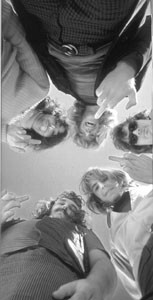
Spins

0

Holy Hosts

New CDs offer slice of blues heaven

By Greg Cahill

Independent record labels come and independent record labels go. So it’s worth taking note when a pair of top blues indie labels–Blind Pig and Alligator–celebrate their 25th and 30th anniversaries, respectively, with recession-busting, low-priced, multi-disc samplers chock full of some of the most badass blues around.

Blind Pig Records–which splits its operations between Chicago and San Francisco–got its humble start in 1977 in the basement of a rowdy Ann Arbor, Mich., blues club. These days, the label’s porcine catalog reads like a virtual who’s who of blues and roots artists: Otis Rush, Koko Taylor, Commander Cody, Asleep at the Wheel, Roosevelt Sykes, Robert Lockwood, Mighty Joe Young, Johnny Shines, the Fabulous Thunderbirds, Walter Horton, Bonnie Raitt, Eddie Taylor, Jimmy Rogers, and Hound Dog Taylor, to name a few.

More recently, Blind Pig has nurtured the careers of up-and-coming blues artists Tommy Castro, a Bay Area native who recently bailed to sign on with Tower Records’ fledgling label; former John Mayall sideman Coco Montoya, who sports a blues guitar deluxe; and the incredible singer, songwriter, and guitarist Deborah Coleman (a big hit at this year’s Russian River Blues Festival).

Over the years, the label has opened its doors to such North Bay artists as Roy Rogers, Norton Buffalo, and Mitch Woods & His Rocket 88s.

The label’s impressive 25th Anniversary Collection–two audio CDs, including 35 great selections spanning Blind Pig’s quarter century, plus a bonus video CD–runs the gamut from gospel to rockabilly, such Southside blues legends as Pinetop Perkins to hip-hoppin’ newcomer Popa Chubby, the traditional blues of Chris Thomas King to the powerhouse wail of guitarist Jimmy Thackery.

The collection boasts standout tracks by Arthur Adams and B.B. King, James Cotton, Muddy Waters, Big Bill Morganfield (the son of Muddy Waters), and Taj Mahal.

It’s something to squeal about.

At the ripe old age of 30, Alligator Records has helped define the often funk-laden and percussive sound of contemporary blues. Label founder and diehard blues fan Bruce Iglauer invested a small family inheritance to record his idol, the whirlwind slide electric blues guitarist Hound Dog Taylor and the Houserockers, whom Iglauer had seen performing in a Chicago storefront window. The resulting album, still among the best in the genre, helped finance the next recording (Big Walter Horton with Carey Bell) and established Iglauer as perhaps the most important blues promoter of the past three decades.

The label’s major coups include 1985’s triple-threat smash Showdown!, which teamed axeslingers Robert Cray, Albert Collins, and Johnny Copeland.

Today, Alligator Records is widely regarded as the premier blues label in the United States. The Alligator set–two CDs, one recorded in the studio and one live–is a steal at under $20.

It showcases a host of startlingly talented blues performers (although Charlie Musselwhite is inexplicably absent) that includes harmonica ace Carey Bell’s haunting lament “Hard Working Woman,” one of the finest blues tracks recorded in recent history; the awe-inspiring work of the late guitarist Luther Allison; and less solid but impressive tracks by jump blues enthusiasts Little Charlie and the Nightcats, guitar phenom Rusty Zinn, and Texas blues queen Marcia Ball.

“Iglauer has done his duty, risking everything to follow the blues god,” the Washington Post recently opined. “When he dies, he’s going straight to the roadhouse Valhalla.”

From the November 8-14, 2001 issue of the Northern California Bohemian.

© Metro Publishing Inc.
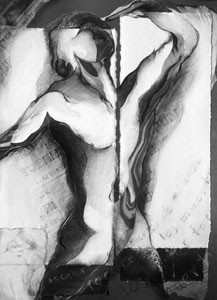
Loafing

0

Daydream Believer

A loafer’s manifesto

By Bob Jacobson

Industrious people create industry. Lazy people create civilization.                             –Hideo Nakamura

Hard work never killed anybody, but why take the chance?                             –Edgar Bergen

It only took me about two hours of membership in that not-very-exclusive club we call the American Workforce to realize that my participation would forever be grudging at best. For a long time I thought something must be wrong with me. Other people seemed to enjoy working hard, if not at a job, then at some hobby or artistic endeavor. I enjoyed nothing of the sort. I liked to loaf.

Over the years I’ve seen my friends–the same gang among whom it was once a badge of honor to work for only a few months out of each year–mature and launch seemingly satisfying careers as writers, teachers, psychologists, and computer gurus. Meanwhile I bounced in and out of the labor force, out more than in, spending every loathsome minute of “in” counting the number of pay periods left before I could afford a few months of “out.”

I now have two children and a mortgage to support, but I haven’t changed. I manage to pass myself off as a productive citizen, but I work only because I am too stupid to have figured out a way to avoid it without inflicting a guilt-inducing level of hardship on my family. In fact, I am more convinced than ever that my anti work orientation is utterly reasonable. Judge me harshly for that if you must. But at least understand how one pathetic shmuck arrived at the conclusion that idleness is a valid, perhaps even noble, lifestyle choice.

My journey began 21 years and nine months ago, when my brother’s pal Ira Handler got me my first job, busing tables at Irving’s Delicatessen in Southfield, Mich. I started after school on my 16th birthday. Part of my job was to unload the dishwasher and carry the steaming-hot dishes about 10 feet to the shelves on which they resided.

Alas, even this simple-sounding task was too much for my tender paws. I fared no better at any of the other, less painful tasks I was assigned. Bottom line: I was a bad buser. On day 2, Irving, a toxic little crust of a man with white hair and a raspy Delancey Street voice, started giving me grief. He called me “good for nothing.” But he was wrong; I knew I was good for plenty of things. It was just that none of them happened to involve wiping up pools of pastrami grease or scraping crud off a grill for less than minimum wage. I called in sick on day 3, and never went back.

Irving’s was only the first of perhaps a dozen jobs for which I have, over the years, failed to show up on day 3, give or take a couple weeks. I got through my college years hardly working at all except during the summer. That income, along with a generous National Merit Scholarship and a minor revenue-producing hobby or two, was sufficient to enable me to squeeze by.

After college, the jobs started coming and going in rapid succession. I lasted three full weeks as stock boy at a little party store called Sgt. Pepper’s. I stuck with my law-firm-messenger gig for four months, after which I was rescued by some insurance money from an apartment break-in. For a day and a half I did a plant-watering route that included a major university hospital, a vegetarian restaurant, and a porn shop. I inherited that job from a friend who was forced out for being too smelly. Too smelly to water the plants at a smut shop.

Many job fiascos later, it’s clear that work and me are a bad fit. And it’s not just jobs; I don’t even like working at leisure most of the time.

The problem is that our culture does not appreciate the things I truly enjoy most in life, such as wandering around a city aimlessly, or sitting on a comfortable piece of furniture and staring absently into space–activities, if one can call them activities, that are of absolutely no value to anybody in the world but me, unless you count their value to the people who must interact with me. Usually they get to interact with a slightly happier me when I have been allowed to be sufficiently inert.

Our society is set up in a way that tries to make us feel bad for enjoying inactivity. There is a pervasive notion that one should spend one’s precious time doing “useful” things, things that somehow benefit society, as if my personal enjoyment of life is of no value to society. Even when we are not working, we are supposed to be doing something useful, like exercising or reading poetry or learning Swedish. We slander a perfectly respectable animal species by naming a deadly sin after it. And yet the sloth has been every bit as successful as Homo sapiens from an evolutionary standpoint.

The job that finally broke the cycle for me was telepanhandling for the Chicago Symphony Orchestra. Granted, it was a half-time job, and it lasted only for half of each year, making it really only a quarter of a job I guess, but it was a breakthrough nonetheless. The CSO Annual Fund boiler room was populated by a fascinating mix of actors, musicians, and other weirdoes and misfits. My favorite misfit was Tom Harris, a lovable, African-American narcoleptic who worked the phone clad in threadbare, mismatched suits and wide polyester ties. Tom was brilliant, possessed of an encyclopedic knowledge of classical music. But as a fundraiser he was totally inept. He would fall asleep in mid-pitch.

I, on the other hand, turned out to be pretty good at cajoling Chitown’s cultural elite into whipping out their Visa card in the name of the Three B’s. It was a nice ride for a while, but the thought eventually sank in that I had spent the last three years kissing rich people’s butts for a living. Thus my seasons of symphonic solicitation came to an end.

By then I had figured out that I could get people to pay me for writing. The thing about writing for money is that there is an inverse relationship between compensation and enjoyment–the more interesting the work, the less you get paid. Earning a living writing fun, creative stuff is quite rare. I could support myself because I was willing to write, for example, a blistering overview of the wood pallet industry, and instructor’s guides for a number of courses on restaurant management. That willingness allowed me to avoid actual employment for another five years or so, and while writing freelance actually does entail a certain amount of labor, it still beats the hell out of having a job.

I actually believe that many more Americans than let on secretly share my distaste for work. They can sense that the American Dream of getting so rich they no longer have to work is a hallucination. It is almost impossible to achieve it through hard work alone. They believe instead in a version of the Dream that requires outsmarting work by going for the big kill. You can see that Dream being chased in casinos, in the slush piles of publishing houses, in the overflowing file cabinets of the patent office, and in classifieds sections thickened by omnipresent ads for multilevel marketing schemes and make-millions-working-at-home-in-your-spare-time scams. We are as much a nation of disappointed dreamers as of optimistic laborers. You can’t really blame people for dreaming big. The problem with big dreams, of course, is that when you eventually wake up, you’re still in the same grubby little bed you fell asleep in; the bigger the dream, the littler and grubbier the bed seems in the morning.

Realistically, the decision to forego work must be made independently of any attachment to material comfort. It is a decision that must be made from the soul. Being idle means being willing to live with two separate categories of unpleasantness: the unpleasantness of being broke all the time and therefore unable to buy things you want; and the unpleasantness of public opinion, of people calling you a lazy shit, of people telling you to get a life. But public opinion has it backwards; the people who really need to get a life are those who have no life because they are wasting theirs slaving away at some inane job that they detest but will not admit it.

There finally came a day not so many years ago when, largely owing to the idiotic way we finance health care in this country, I had to bite the bullet and get a regular, professional-type job. I found myself, irony of ironies, employed in a position that involved editing a twice-monthly publication all about employment. One of my tasks was to review books about how to get a job. I became quite well-read on the topics of job-hunting and career navigation. Most of these books contained a certain amount of useful technical information, like how to format your résumé and what kinds of questions to expect in an interview. Beyond that, many employment book authors seem to put a lot of stock in the notion that the real key to career success is finding the job you were meant to do. This “Do-What-You-Love-and-Let-the-Money-Take-Care-of-Itself” school can be annoyingly New Agey at times. They would have you believe that some folks have “insurance adjustor” or “phlebotomist” woven into the fabric of their soul. How sad, as I wrote in one of those reviews, that innocent soybeans had to die for the ink used to print those ridiculous volumes.

I have a friend who, two years ago, had a job that paid exactly the same salary as mine. There were, however, two major differences between his job and mine. One was that he worked for the state, so he had really good benefits while mine sucked. The other was that he didn’t have to do anything. He could just sit around all day and surf the Web if he wanted to, or do crossword puzzles, or read cheap westerns.

Other than the fact that my friend had to actually show up to not work, his job was my idea of the American Dream, or close to it. But my friend was miserable, because he thought he should be doing something useful. He and another friend of his got the idea to write a book called Not Working, which would be a spoof on Studs Terkel’s famous opus Working. It would consist of a bunch of people’s accounts of the no-work jobs they have held. Naturally, they never got around to writing the book. My friend has since changed jobs and is, I presume, much happier for it.

As it happens, my friend is married to a labor economist. She will tell you that workers have been getting shafted for years. At the dawn of the industrial age, the masses were led to believe that they would be the beneficiaries of the increased productivity that technology was bringing to the work process. Socialist types tended to envision a society in which people worked a lot less, and were free to spend the rest of their time enriching their lives through cultural endeavors, or quaffing ale, or screwing, or whatever. The idea is that since it takes only half as many hours to produce a widget as it used to, the other, newly liberated half of that erstwhile widget-making time belongs to the worker.

Our pinko friends would seem to be implying that nobody in his right mind would choose to work more than he had to.

Sadly, the owning class has elected not to cooperate with this little fantasy. They have, if I may continue to wax slightly Marxist for just another moment, stolen all that newly created productivity from us working stiffs. Thus the income of workers has actually shrunk over the last few decades in spite of all that spiffy new machinery. I say, therefore, that having a job that entails lots of loafing really just represents the workers taking back a little bit of what has been stolen from them. I would argue that under the right circumstances, getting paid to not work is not only defensible and desirable, but gosh darn it, it’s the right thing to do.

Hating work is hardly a new idea. In fact, for most of history people have understood that work is difficult and degrading. It wasn’t until the Protestant Reformation that anybody thought to design an ethic around work. Even since then, my attitude puts me in some pretty heady historical company. Some of our brainiest geniuses and wittiest wags have been closet layabouts. Mark Twain, for example, staked out a fairly extreme position when he wrote: “I do not like work, even when someone else does it.”

Benjamin Franklin, on the other hand, tended to waffle on the matter. Franklin’s alter ego Poor Richard preached an “early-to-bed-early-to-rise” brand of industriousness, but Ben didn’t really buy it, admitting: “I am the laziest man in the world. I invented all those things to save myself from toil.” In other words, he avoided a life of print shop drudgery by dreaming up bifocals. Perhaps the most influential slack enthusiast was the multitalented Bertrand Russell, whose 1932 essay “In Praise of Idleness” was published at a time when thousands of Americans had idleness thrust upon them by cold economic reality. Russell wrote:

“I think that there is far too much work done in the world, that immense harm is caused by the belief that work is virtuous, and that what needs to be preached in modern industrial countries is quite different from what always has been preached. . . . The road to happiness and prosperity lies in the organised diminution of work.”

Another intellectual giant who lobbied for lethargy was R. Buckminster Fuller, of geodesic dome fame. Fuller, not surprisingly, had an ecological take on work. As he explained in his visionary tome Critical Path:

“History’s political and economic power structures have always abhorred ‘idle people’ as potential troublemakers. Yet nature never abhors seemingly idle trees, grass, snails, coral reefs, and clouds in the sky.”

Fuller goes on to complain about the waste inherent in a society rife with jobs that produce nothing of real value to the world.

“We find all the no-life-support-wealth-producing people . . . spending trillions of dollars’ worth of petroleum daily to get to their no-wealth-producing jobs. It doesn’t take a computer to tell you that it will save both Universe and humanity trillions of dollars a day to pay them handsomely to stay at home.”

Too bad Bucky didn’t stick around quite long enough to take part in the debate over welfare reform.

Unfortunately, only a very lucky few actually get paid to loaf. Most quality loafing must be done on a volunteer basis, as an act of conscience. Sparsely populated areas of the country, including parts of the northern Midwest, are crawling with folks who have opted out of the conventional workaday world. Many of them have kids, but, unlike me, have not let that little detail force their hands. For a lot of people, an aversion to work is part of a broader lifestyle choice.

One can arrive at the decision to not work from several different philosophical angles. A common one is the desire to live simply and in harmony with the environment. The Midwestern countryside is dotted with communities of people who grow their own food and make their own clothes and don’t have jobs. Some, including a cluster of homesteads in the vicinity of Amherst, Wisc. (home of the Midwest Renewable Energy Association), get their power by tapping the sun and milling the wind. They know how to fix things when they break. They barter and invent alternative economic structures, like co-ops and local currencies.

A similar dedication can be found among the black-helicopter crowd, which values self-reliance above all else. A different set of skills is required, but in many ways the choice stems from the same impulse: a fundamental distaste for and consequent refusal to participate in a political/economic system they perceive as being corrupt beyond repair; a rejection of mainstream values, one of which is the good old Protestant Work Ethic.

But make no mistake–avoiding employment by going “off the grid” is no stroll in the park. There are photovoltaic cells to hook up and bunkers to booby-trap. A truly work-averse individual, be he extremely green or extremely olive-drab, would probably balk at the effort involved in either undertaking.

I envy people who successfully pull off an intentional workforce withdrawal, regardless of their motivation or political persuasion. For me, the failure to concoct a work-free lifestyle is a big defeat. I feel like a sellout and a coward. Sure, I still hold out hope that someday I will figure out a way to end the misery, but it gets harder to imagine with each home repair and dentist bill. In the meantime, a fella can still dream, and calculate, and revel in the occasional privilege of delivering that most exquisite phrase, “I quit.”

As for Irving, my first employer, he eventually got nailed by the NLRB for failing to shell out the overtime pay he owed his workers. A couple years later, he developed a circulatory problem and had to have his leg amputated. It’s tempting to chalk his misfortune up to twisted fate or poetic justice, but in the words of Bartleby, American literature’s most famous idler, “I would prefer not to.”

From the November 8-14, 2001 issue of the Northern California Bohemian.

© Metro Publishing Inc.
Charities Seek Cash

Times Are Tight: Helga Lemke says charities are feeling the pinch. Sweet Charity Local causes go begging after cash goes to New York By Paula Harris As the season of giving approaches, local charities are bracing for a potentially serious reduction in donations during what is traditionally their...

‘Without a Trace’

On the Run 'Without a Trace' is an enchanting but tough road movie By Many critics who have seen Sin Dejar Huella (Without a Trace) compare it to Thelma and Louise. But the comparison is unfair: director Maria Novaro has delivered a much better movie than Thelma and Louise, that supposed...

Holiday Guide

Gift Wrapped! Wander through a winter wonderland of holiday events By Paula Harris Mistletoe, menorahs, and mariachis will all be out in full force to help make your holidays a little merrier this year. So don't shut yourself in with the TV Guide and your special, lethal version of eggnog....

‘Harry Potter and the Sorcerer’s Stone’

Fantasy author says girls deserve better than 'Harry Potter' Writer David Templeton takes interesting people to interesting movies in his ongoing quest for the ultimate post-film conversation. This is not a review; rather, it's a freewheeling, tangential discussion of art, alternative ideas, and popular culture. It's impossible to surmise what...

Grateful Dead

Dead in a Box Long, strange trip arrives at new box set By Greg Cahill Grateful Dead archivist David Lemieux has called it "the Rolls Royce of vaults." And there's no denying that the band's virtually impregnable San Rafael storehouse--13,000 audio tapes and 3,000 videotapes protected by five-layer thick walls, numerous...

‘9.11–Artists Respond to the Events of September 11, 2001’

Beauty & Truth Art from tragedy at "9.11" exhibit By Gretchen Giles Two somber months have marked two somber anniversaries, millions of dollars have been donated and spent, and still we cast about for a way to mark our mourning. Perhaps the satirical newsweekly The Onion captured it best when it...

‘Glimpsings’

Long View Fred Curchack surveys his own eventful life in 'Glimpsings' Fred Curchack has been crying. Don't expect him to stop anytime soon. The acclaimed Texas performance artist (Lear's Shadow, Live Love Acts) has been rehearsing around the clock, readying his latest performance piece for its world premiere this weekend....

Homeless Evaluation Liaison Program

Ticket to Ride Santa Rosa considers busing homeless back to families By Patrick Sullivan As temperatures drop and the economy cools, the Santa Rosa Police Department thinks it's found a partial solution to the city's homeless problem--bus homeless people somewhere else. Under the proposal, presented to the Santa...

Spins

Holy Hosts New CDs offer slice of blues heaven By Greg Cahill Independent record labels come and independent record labels go. So it's worth taking note when a pair of top blues indie labels--Blind Pig and Alligator--celebrate their 25th and 30th anniversaries, respectively, with recession-busting, low-priced, multi-disc samplers chock full of...

Loafing

Daydream Believer A loafer's manifesto By Bob Jacobson Industrious people create industry. Lazy people create civilization.                             --Hideo Nakamura Hard work never killed anybody, but why take the chance?                             --Edgar Bergen It only took me about two hours...
11,084FansLike
4,606FollowersFollow
6,928FollowersFollow