Biotech Ban

0

Biotech Ban

Mendocino County fights a preemptive fight against Frankenfoods

By Joy Lanzendorfer

Genetically altered foods have become more prevalent in the United States than most Americans realize. In 1999 half of U.S. soybean and cotton crops and one-third of the corn supply were genetically modified. Since no labeling is required of genetically altered foods, it’s impossible to tell what exactly is going into your mouth (unless you buy organic).

While many people hail bioengineered foods as an improvement on nature with the potential to feed the world, some scientists say such crops raise more problems than they solve. Planting genetically altered crops brings up a host of questions over what happens when bioengineered plants cross-contaminate with wild plants, what the effect on insects and animals might be, and how far genetic drift travels.

Considering how interconnected everything in nature is, are we wise enough to anticipate the problems that might arise from such technologies, especially considering that there is no evolutionary history to help predict those problems? Are the potential benefits of these technologies worth the risks they bring with them?

For one community at least, the answer
to those last two questions may be no. Mendocino County is considering an initiative which, if it passes, would make it the first county in the United States to ban the planting of genetically engineered crops. The ordinance, which may be on the March 2004 ballot, was created through the efforts of the Mendocino Organic Network, a group that promotes sustainable organic agriculture. In addition to drafting the ordinance, the group gathered 4,147 signatures–about 20 percent of the voters in Mendocino County and more than enough for the required 2,579 signatures needed to get the initiative on the ballot.

“This ordinance has incredible support,” says Els Cooperrider, co-owner of the Ukiah Brewing Company and one of the people who spearheaded the effort. “To give you an idea, we collected the signatures in six weeks’ time without having to pay anyone to gather them. We have businesses, organizations, physicians, and church groups involved. An awful lot of individuals support this ban.”

Some of the support comes from Mendocino County’s high number of organic farms. In fact, 20 percent of the county’s vineyards are organic, compared to 2.4 percent in Napa and less than 1 percent in Sonoma County.

Protecting the organic label, which is earned through a certification process that checks for pesticides, herbicides, fungicides, and synthetic fertilizers in the food, is one of the reasons for the ban.

“The concern is that if someone came into the county and planted genetically engineered crops, they could potentially contaminate conventional organic crops,” says Cooperrider. “Were that to happen, those farms might lose their organic certification.”

The bill is intended to stop a problem before it starts. There are no genetically engineered crops in Mendocino County right now and there probably won’t be any in the near future. Scientists have not targeted grapevines for improvements as much as they have targeted other crops. And the few technologies under development for grapes would still be allowed under the ordinance since it does not ban improvements within the species (for example, two soybean plants combined) but technologies developed between two different species (a soybean and a nut).

Still, banning these crops raises the question of whether Mendocino County could be cheating itself out of the potential benefits of these technologies. Supporters, though, say they would rather be safe than sorry.

“I haven’t seen a model or an example that shows how a serious threat can be thwarted by biotech,” says Mark Lappe, head of the Center for Ethics and Toxics. “And the environmental concerns are overwhelming.”

If the initiative becomes an issue, the Biotechnology Industry Organization says it might devote resources to educating Mendocino County about genetically altered food.

But what some call education, others call spin.

“We expect the biotech industry to pour millions of dollars into Mendocino County to do what they call educating people,” says Cooperrider. “We expect to be under fire by the biotech industry.”

The last time the biotech industry launched an education campaign was in Oregon when the state voted whether to require labeling of genetically altered food. The bill failed by a three-to-one margin.

“The measure didn’t pass because from the time the signatures were gathered to the time people voted on it, we conducted education in the state,” says BIO spokesperson Lisa Dry. “We wanted to help folks voting for the initiative to understand what they were voting on.”

But other groups have been educating the public as well. Activists and environmental groups are organizing a new set of protests against the biotech industry.

“The biotech industry is about to face a swelling of public antipathy and anger against the way they’ve handled their products,” says Lappe. “We hope it will have a snowballing effect against genetically altered foods.”

If that happens, he hopes Mendocino County will be leading the way.

From the October 30-November 5, 2003 issue of the North Bay Bohemian.

© Metro Publishing Inc.

Mental Health Services

Head Games

As mental health services get cut further, the number of people in need grows

By Joy Lanzendorfer

About two years ago, Dave Thompson was diagnosed with clinical depression. His illness was so severe that doctors put him on three different kinds of medication and sent him to a hospital in Concord for treatment. When he was released, doctors told him about a two-week follow-up program at Kaiser Permanente in Santa Rosa that Thompson was eligible for, even though he had no money to pay for insurance. The idea was that Thompson would get needed therapy, medication, and help getting back on his feet as he made the transition from hospitalization back to the real world.

But it didn’t turn out that way.

When he came to Santa Rosa, Thompson found that he wouldn’t be receiving help from Kaiser after all. He says Kaiser told him that since his illness wasn’t in an acute stage–he wasn’t about to kill himself or someone else–his problems were not serious enough for medical care. Since then, he has been trying to get help from every healthcare source he can think of, but every provider he calls just tells him to call someone else instead.

“I have been able to get zero help, period,” he says. “It has been an uphill battle all the way. The only people who can really get help are the people with a pocket full of money and the best insurance.”

With no healthcare and no money, Thompson has ended up homeless. In the daytime, he hangs out at Interlink in Santa Rosa, a membership-operated community center for people suffering from disabling mental problems. At night, he tries to find somewhere, anywhere, to sleep. Though he has used drugs and alcohol in the past, he says he’s not using now. He’s just trying to get some help.

“Walking down the street today, I thought about how hard this world is,” he says. “It seems like everybody is just in it for themselves. It’s a pretty cold world.”

Thompson’s situation, though extreme, is part of a larger problem with Sonoma County’s mental health system. As the healthcare crisis tries to dodge the slings and arrows of recall elections and budget debacles, mental health has fallen to the bottom of most people’s priority lists. After all, in a state where dental care is becoming more of a luxury than a right for many, who has time to care about the health of the brain?

But Sonoma County’s mental healthcare is undergoing a crisis of its own. As a state system (which many feel wasn’t meeting the mentally ill’s needs before there ever was a budget crisis), it has already faced cuts and may see more next year. The problem is that the longer mental health needs go unmet, the more it costs the community as a whole.

Heads Up

If you’re looking for mental healthcare in Sonoma County, you have a few options. One is to pay for care out-of-pocket. Another is to pay for good insurance that covers mental health. If those two things are out of your price range, you can try the Sonoma County Mental Health Division, though it only serves a narrow population, primarily low-income Medi-Cal patients and the most acute cases of mental illness.

“We have very targeted services,” says Cathy Geary, director of the Sonoma County Mental Health Division’s health services. “We are not here to provide mental health services for everyone who needs them, but for a very small slice of the population.”

That small portion of patients are often the ones most in need of care. Funding for the Sonoma County Mental Health Division was tight even before the budget crisis. Mental health is primarily funded through something called Realignment, which was enacted in 1991 partially to protect mental health from the whims of the state budget and to provide a steady flow of funding. Realignment, a combination of sales tax and the vehicle license fee (also known as the car tax), is supposed to go only to certain social programs, including mental health. At first, it provided enough funding, but over time it has not kept up with population growth or the rising cost of medial care.

Then the state budget crisis came along. This year, Sonoma County’s Mental Health Division was forced to trim $3 million from its budget, which led to the closing of three mental health clinics in Guerneville, Petaluma, and Cloverdale. As a result, the 600 patients those clinics served, many of whom are severely mentally ill, no longer have easy access to care. They are now expected to find their way to Santa Rosa for treatment.

“Tell me how long it takes to ride a bus from Guerneville to Santa Rosa, and then add to that being mentally ill and trying to negotiate the bus system,” says Kristine Laroux Siebert from the National Alliance for the Mentally Ill, a support group for family members of the mentally ill. “The county has tried to arrange meetings in coffee shops with some patients to make up for the lack of clinics, but that isn’t adequate.”

When one part of the mental healthcare system is stressed, it puts more pressure on other parts. For example, with the closing of the three mental health clinics in Sonoma County, Interlink has seen an increase of attendance in peer-to-peer counseling and has heard that many in-patient clinics don’t have enough beds to meet the need. And, as Dave Thompson found out, cuts contribute to the lack of resources and make it hard for healthcare providers to accept anything but the most serious cases–and in time, perhaps not even that.

But this year’s cuts may not be the end of it. With Arnold Schwarzenegger taking Governor Davis’s place in office, the fate of the mental health system is up in the air. Either way, the budget must be balanced.

“We’re worried that if we are cut again, we will lose ground in a time when needs are increasing and we will be unable to come anywhere near meeting those needs,” says Patricia Ryan, executive director of the California Mental Health Directors Association, which represents California’s 58 mental health directors. “Much of the budget is not discretionary, and mental health is one of the few programs that could be cut. So we are concerned about that, and we don’t know where Schwarzenegger stands on the issue.”

Failing Grades

As far as mental healthcare goes, California does consistently poorly. According to the California Health Foundation, our public mental health system manages to serve fewer than half the people with serious, disabling mental illness. And that’s just the tip of the iceberg.

Take a recent study by the RAND Corporation, a nonprofit organization based in Santa Monica that does research to help with policy and decision making. The study, published in the online magazine Pediatrics, compared access to mental healthcare for children ages six to 16 among 13 states. The study found that in California, the need for services was average compared to other states, but California was the worst of all the states in meeting those needs. In fact, of the children RAND surveyed, 80.6 percent of children who needed care were not receiving it in California (compared to an average of 6 percent of the children across the states). And those who did receive services were usually wealthy.

The difference in care between California and other states is a more important factor in access than disparities between ethnic groups, according to RAND. In other words, whether or not a child lives in California or another state is more of a determinant of whether that child gets mental healthcare than whether or not that child is white.

“In some ways, that’s encouraging,” says Jeanne Ringel, who co-authored the study. “Our hypothesis is that state policies and healthcare market conditions are a lot easier to change than, say, to change whether a Hispanic is less likely to access care than a white person. It’s easier to make a difference in government compared to demographics of the population.”

There are few recent studies on the state of Sonoma County’s mental healthcare. In 2001, 5,979 people in Sonoma County received services from the public mental health system. In 1998 the California Department of Health listed Sonoma County as the 13th highest in the state for the number of deaths from suicide and drugs. It listed an average of 72 suicides annually in 1995­1997, a higher per-capita rate than either Marin or San Francisco counties at the time. Since then, there seems to be little data on the subject. The Sonoma County Department of Public Health said that there were 8.3 suicides per 100,000 people in Sonoma County in 1998. By 2001, that had jumped to 8.6 suicides per 100,000 people.

All this says very little about the state of Sonoma County’s mental health. But anecdotally speaking, most professionals believe that Sonoma County’s mental health is doing as well as other California counties.

“My impression is that Sonoma County is probably right up there in the average with everyone else in terms of our general mental healthcare,” says Rick Carson, head of mental health at Santa Rosa Memorial Hospital. “Of course, there are glaring deficits. Sonoma County has no program for treating children or adolescent in-patients. And we have no programs for the elderly mentally ill.”

Hell for Homeless

RAND is not the only group pointing out flaws in California’s mental healthcare. The National Coalition for the Homeless called California the “meanest” state and San Francisco the second “meanest” city in the nation when it comes to government services available to the homeless. That includes mental health services.

The word “homeless” is a broad term that can be defined many ways. Of the entire population of homeless people, meaning people with no permanent dwelling under their control, only about 10 percent are estimated to have a mental illness, according to NCH. Substance abuse, the high cost of housing, the recession, and a host of other factors may have as much to do with homelessness as mental illnesses does. But when dealing with the category of people who primarily live on the streets or in shelters, the percentage of mental illness is much higher and the availability of mental healthcare becomes more of an issue.

“Mental health does not cause homelessness,” says David Whitehead, executive director of NCH. “But it does contribute to the situation. There needs to be a dramatic increase in the number of resources and facilities for people with mental health issues.”

In one count, the Sonoma County Task Force on the Homeless estimated 1,750 homeless people on the streets and shelters in Sonoma County, but the organization thinks the number is actually closer to somewhere between 5,000 and 8,000. No one knows whether that number is increasing or decreasing, though it seems likely with the rising housing rates that the situation must have gotten worse.

“There’s no question that the mental health’s funding problems and the lack of services are affecting the homeless in Sonoma County,” says Sonoma County Task Force on the Homeless executive director Georgia Berland. “The closing of those outlying mental health clinics have kept people from assistance. It’s very disturbing.”

For people with mental illnesses, a lack of housing can aggravate mental illnesses. In addition, the stress of having no home can cause otherwise sane people to get disoriented. Not surprisingly, health officials say it is harder to treat people with mental illnesses when they don’t even have something as basic as a roof over their heads.

The mental health problem among the homeless may go back to deinstitutionalization of the late 1960s. Then-governor Ronald Reagan signed the Lanterman-Petris-Short Act in 1967, which was designed to protect the civil rights of the mentally ill by making it more difficult for them to be medicated or institutionalized against their will. The bill also emptied out the state’s mental hospitals to save taxpayers money, a move that lead to an explosion of homelessness.

When the mental hospitals were emptied, the state promised to still care for those patients. The intention was to replace institutionalized care with outpatient care, medication, and therapy. Many of the promises never materialized.

“It’s time for the state to live up to the promises made when deinstitutionalization happened,” says Whitehead. “There are a number of programs that target the mental health of the homeless, but there needs to be more.”

Hole in the Head

Of course, mental illness among the homeless is one of the most obvious kind of mental health issues. Who hasn’t seen someone walking down the street muttering to themselves or been told a convoluted theory involving aliens and brain probes when riding a bus or sitting on a park bench? But many quieter mental illnesses take their toll on society as well. Depression, for example, is estimated to be the largest undiagnosed mental illness in the United States. Because depressed people are less likely to work productively, depression is actually thought to have an effect on the country’s gross national product.

It’s that kind of immeasurable impact that makes mental illness an intriguing issue. It’s estimated that one in five people have a diagnosable mental illness in the United States. In fact, professionals say that most families in the United States deal with some sort of mental illness. And yet, mental health is routinely pushed aside and ignored. Why?

“Mental illness has a stigma attached to it,” says Siebert. “It’s the step-child of medicine. A lot of people even confuse the mentally ill with the mentally retarded, which is amazing to me.”

This stigma makes it harder for people to admit mental problems or seek help. It also makes it easier for people to dismiss the seriousness of some mental issues. The stigma also affects whether or not mental health gets funding and whether services are available.

Ignoring mental illness can take a toll on society. Because the state requires emergency rooms to treat everyone who comes in, many people use them in place of usual doctor visits. These situations clog up emergency rooms, cost the hospitals a fortune, and contribute to long waits and lack of care.

Cutting public services will only increase this problem, believes Carson.

“The net effect of cutting public services is that people who would normally be served on an outpatient basis have fewer resources and end up in emergency,” he says. “It’s penny-wise, pound-foolish. It’s treating people on an expensive, urgent basis instead of ongoing basis.”

Many mentally ill people also end up in jail. Since desperate people often do desperate things, and since there is no place to put them otherwise, many end up costing the state millions of dollars in legal fees. As many as one in five of the 2.1 million Americans in prison are seriously mentally ill, far outnumbering the number of mentally ill who are in mental hospitals, according to a recent study by Human Rights Watch.

But beyond these societal costs is the human cost of allowing mental anguish to run rampant.

“My perspective is that it is important for the whole community to pay attention to the needs of the mentally ill before they become too big and too visible,” says Geary. “But we are slow to come to that as a people, as Californians, and as a whole country, for reasons I don’t quite understand.”

From the October 30-November 5, 2003 issue of the North Bay Bohemian.

© Metro Publishing Inc.

‘Tibet: Cry of the Snow Lion’

0

Bullets and Riddles: The Chinese government has waged an all-out war against the ancient culture and religion of Tibet.

Nation in Crisis

‘Tibet: Cry of the Snow Lion’ offers a moving portrait of occupied Tibet

By Davina Baum

Since 1950, when the Chinese first invaded Tibet and began its brutal occupation, 1.2 million Tibetans have been killed. That, according to the documentary Tibet: Cry of the Snow Lion, is one out of every six Tibetans.

For the film, which is now playing at the Rafael and opens for a week at the Rialto on Friday, a core team of four people–producer-director Tom Peosay, producer and co-writer Sue Peosay and producers Maria Florio and Victoria Mudd (also co-writer)–spent ten years traveling in and around the country. They amassed extensive material that, combined with archival images of the Chinese invasion and subsequent occupation and interviews with politicians and Tibetan activists, adds up to a powerful and motivating documentary.

Hollywood has taken the Tibetan cause under its wing; the film is narrated by Martin Sheen and features voiceovers by Susan Sarandon, Ed Harris, and Tim Robbins, as well as shots of various Free Tibet concerts staged in San Francisco and Washington, D.C. But the celebrity factor is downplayed in favor of the Tibetans themselves. Interviews with monks and nuns who have been tortured, as well as the Dalai Lama himself, bring the immediacy and determination of the Tibetan people to the fore.

The history of the country since the invasion is clearly laid out. Tibet’s position as one of the most strategic sites in Asia led to its downfall. The country sits between China and India, the two most populous nations in the world, and the narration asserts that whoever controls Tibet controls Asia.

China’s control has been complete and brutal. The Cultural Revolution, in which Mao Tse-tung committed his people to an utter destruction of their cultural history, led to the demolition of 6,000 monasteries as well as an attempt to erase the Tibetan language and culture from memory.

Historical footage of both Nixon and Kissinger in China point to the warming of relations between America and China and a resultant cooling of official American help for Tibet. Until China’s strategic importance to the United States became took precedence, Tibetan freedom fighters were trained in America.

The film is overtly pro-Tibet, though lip service is paid to the Chinese position by allowing a Chinese government spokesperson to explain his country’s position. His assertions, that China means to modernize Tibet, fall flat in the face of images of Tibetans bloodied and dying, and interviews with monks and nuns who were tortured.

The “modernization,” of Tibet means the destruction of an ancient culture. Lhasa, Tibet’s capital, is depicted as almost a second Bangkok, with prostitutes enticing Chinese soldiers into their lairs and unemployed Tibetans loitering. Tibetan culture and religion have been commodified for tourist consumption, and the film notes that a new railroad connection will exacerbate the situation. The influx of Chinese immigrants has placed Tibetans as second-class citizens.

The documentary portrays the Tibetans as clean of spirit and overwhelmingly forgiving of their Chinese oppressors–thanks to their peaceful religion. But it also points out that the Dalai Lama’s nonviolent methods may be losing ground in favor of more active resistance. The snow lion referred to in the title is the mythic Tibetan animal pictured on the national flag (which is outlawed by the Chinese). The beast is said to protect the nation, but the Tibetans may need a more forceful animal.

‘Tibet: Cry of the Snow Lion’ plays at the Rafael Film Center and at Rialto Cinemas Lakeside. Check .

From the October 23-29, 2003 issue of the North Bay Bohemian.

© Metro Publishing Inc.

Gyuto Monks

0

Artists Under Fire: The monks of the Gyuto Monastery practice their ancient Tibetan arts in exile in India.

Sacred Sound

Gyuto choir caps a weeklong Tibetan art series at LBC

By Greg Cahill

A full autumn moon lit the narrow path for Huston Smith as he worked his way along a steep, narrow mountain path toward a ceremonial tent at the Gyuto monastery. The year was 1964 and Smith–then professor of philosophy and world religions at MIT–had come to this secluded refuge in India’s Punjab region to study about the Tibetan Buddhist tradition.

He came away with one of the greatest musicological discoveries of the century.

The day after his arrival, the 88 Gyuto monks entered a four-day observance of a high holy day. At 3am Smith joined them. “It started with a low guttural and rhythmic chanting that had certain awesomeness to it, but it was nothing really distinctive musically,” recalls Smith, now a professor emeritus at UC Berkeley and the author of a definitive book on comparative world religions. “That went on for about an hour when suddenly they splayed out into multiphonic singing.”

His first thought was that the monks were singing collectively in chords, which in itself seemed strange because Smith understood harmony was a Western invention, Asia having concentrated on rhythmic and melodic lines.

“But that was nothing compared to what followed, says Smith, who soon realized that the monks were able individually to intone a three-part chord–a feat thought by Westerners to be impossible. “After about ten minutes of this chordal chanting, the choir cut out and left it to a single cantor. There he was, ten or 12 feet away from me, and the entire three-note chord was coming out of his larynx.

“I became truly astonished. It sounded like the holiest sound I had ever heard.”

The North Bay is a long way from the Indian border, where the Gyuto order has worshipped and studied since its expulsion from Tibet by the Communist Chinese in 1959, a time that saw the Dalai Lama go into exile. Nevertheless, during the past 15 years, these monks have made the region a way station on their fundraising journeys. The monks have performed several times at the Marin Center and the Luther Burbank Center and in 1988 stopped over at George Lucas’ Skywalker Ranch, where Grateful Dead drummer and ethnomusicologist Mickey Hart recorded the monks’ second and most commercially successful album, Freedom Chants from the Roof of the World (Rykodisc).

The Gyuto monks of the Drepung Loseling Monastery perform their multiphonic singing on Thursday, Oct. 23, at the Luther Burbank Center in Santa Rosa. The concert culminates a weeklong series of events that included the creation of an intricate sacred sand painting, lectures, and a dance concert.

Of course, the important thing to remember about the monks’ concert is that this is not a “performance” in the traditional sense; the monks are conducting a powerful series of ritual prayers that is incredibly stirring and remarkable to behold. “Their chanting conveys a sense of transformation and transfiguration that is an extraordinarily moving spiritual experience that translates on a level far beyond musical style,” says Fred Lieberman, professor of music at the University of California at Santa Cruz and a leading authority on multiphonic singing.

In recent years, Western audiences have become familiar with an excellent example of the overtone folk style through various recordings and performances by Tuvan throat singers, featured in the Oscar-nominated film Genghis Blues. The isolated Tuvan people, living in Central Asia, use their vocal chords to shape the vocal cavity to resonate whistling melodies or produce earth-rumbling guttural chants. It’s impressive and astonishing, but a far less refined method than that used by the monks.

“The monks take a single note from the upper overtones and enhance it so that it functions like a musical halo that gives a shine and a burnish to those tones, which usually are the sacred words,” says Lieberman, adding that although Western ensembles like the New York Harmonic Choir have mastered the technique, the monks of the Drepung Loseling Monastery give it a spiritual quality unduplicated by others.

The Mystical Arts of Tibet events continue through Sunday, Oct. 26, at the Luther Burbank Center. The chanting monks will perform Thursday, Oct. 23, at 8pm at the LBC. Tickets are $20-$48. For tickets call, 707.546.3600. For a complete schedule of events, visit www.lbc.net.

From the October 23-29, 2003 issue of the North Bay Bohemian.

© Metro Publishing Inc.

Bars & Clubs 2003

0

Photos by R. V. Scheide

Brewed to Order: The Third Street Alehouse in Santa Rosa offers downtown denizens a place for socializing, though it’s soon to get competition from the Russian River Brewing Company.

Drinkin’ and Drivin’

A select tour of the bars and byways of the North Bay

By R. V. Scheide

“Bohemians,” a wizened old man by the name of Banjo Bob tells me, “only come out at night.” Now, Banjo had in mind the sort of artsy dilettantes you see sipping cappuccino in Parisian cafes, but this same nocturnal characteristic can be applied to bohemians everywhere, including those who frequent the bars and clubs of the North Bay.

They only come out at night.

Banjo Bob hangs out at the bars in Cloverdale, at the far north end of Sonoma County, where the redwoods meet the vines. Between here and the Golden Gate, there must be hundreds of similar bars, catering to tastes and desires that run the gamut, from wine bars to brew pubs, dive bars to jazz clubs, roadhouses to cocktail lounges, and everything in between.

No one article could possibly survey all of these establishments (see sidebar for additional suggestions), so we selected 10 that either by word of mouth or personal experience had attracted our attention. Then, vowing to stay off Highway 101 and stick to the more than 350 miles of winding North Bay back roads that link the 10 bars together, I set out by motorcycle to catch these so-called bohemians in the act and gather some of their stories. Naturally, I started at the bottom, where the Golden Gate ends and the North Bay begins.

If I had a boat, I would have sailed into Sam’s Anchor Cafe. There are at least two ways to get there, by land or by sea, and if you bring the boat, parking at the public docks is free. The land route is more of a drag. I work my way through horrible Marin traffic and canyons carpeted with high density housing to the restored waterfront Main Street of downtown Tiburon, where this one-time bootlegging palace is located.

Boat people are different than you and me. For one thing, their drinks are bigger, like the tall pint glasses of Sam’s Pink Lemonade (Sky Citron vodka, 7-Up, sweet and sour, Rose’s lime juice, a little cranberry juice for color) that patrons favor on hot, sunny days. For another, they’re better looking.

“When you come here, especially on the weekend, there are tons of beautiful people,” says Rachel Winner, who tends the inside bar at Sam’s. It’s all about seeing and being seen–and drinking, sometimes too much. Winner’s sage advice? “If you’re going to drink all day out on the deck, drink one glass of water per drink so you don’t pass out.”

Out on the deck is where the eye candy is. It’s not unknown for some rich guy to show up in his cabin cruiser with a half-dozen scantily clad strippers on board. Of course, Sam’s is also a family seafood restaurant of some note, so shorts are required on the deck, covering up all the skimpy bikini bottoms and thongs. Still, there’s purportedly more silicon and collagen on display than six consecutive episodes of Nip/Tuck.

“If you’re a single person, you’ll have no trouble meeting somebody,” guarantees Jason Zamlich, a waiter at Sam’s. “It’s a happening place.”

Sound like bohemians to me.

But I’m a country boy at heart and yearn for wide open spaces. I catch Sir Francis Drake Boulevard just north of Tiburon and head west. The densely packed houses of southern Marin County thin out somewhere past Fairfax, giving way to the rolling, green hills of one vast open space preserve after the other. It’s difficult to believe that a few short minutes ago, I was looking across the bay at a booming metropolis.

Bottleslinger: At Sam’s Anchor Cafe, the beautiful people come by car, boat, or bike to play.

It starts cooling off shortly before the boulevard runs into Highway 1; a thick blanket of fog blots out the sun. By the time I reach Pt. Reyes Station, the chill that has set in makes the Old Western Saloon a welcome sight. It’s situated in a ramshackle, two-story wooden hotel across from a defunct brick building where West Marin’s much-vaunted libertarian spirit makes itself known: someone has stenciled over the “No Parking” signs painted on the brick so that now they read “No Barking.”

Cars are lined up alongside the building, right where they’re not supposed to park. Next to the saloon are three hitching posts to tie up the horses. The only thing missing are swinging doors.

“It looked like it was gearing up to be quite a party Saturday night,” the hippie from Olema says to Helen Skinner, the bartender. “There were two weddings and fire dancers in the street.”

“It was a zoo,” Helen agrees.

The hippie from Olema, aka Jerry Lunsford, DJs at KWMR, 90.5/89.3 FM, the local radio station. In his denim overalls, he looks like he just came in from the farm. For the other half-dozen or so locals present, blue jeans and flannel do just fine. They’re horse people, some of them, naturalists, who live out here in the boonies, the open spaces, because they wouldn’t have it any other way–bohemians, country-style. On any given afternoon, the Old Western is where they congregate.

“This is our living room,” Jerry explains.

A wooden sign on the wall reads “Please check your knives and guns at the bar.” It’s only half-kidding. At night, when the bohemians come out, things can get a little crazy. One guy came in the other night and pointed to a table where he claimed his daughter, now 24, was conceived. Another guy told him that he’d seen a couple humping on the very same table just a few nights ago. One time a wedding party showed up when Greg Allman happened to be playing. The wife, wedding dress trailing behind her, left on the back of Allman’s Harley.

Back in the day, patrons used to ride their horses right into the saloon. Nobody’s done that for several years now, so the time is probably ripe, although not for the hippie from Olema. His llamas have been banned from the bar.

Leaving the Old Western behind and heading east on Pt. Reyes-Petaluma Road, I enter cattle country. I’m still surrounded by open space, but the hills and pastures have been trampled flat. The pungent smell of cow manure hangs thick in the air. I’m reminded that milk and hamburger aren’t made at Safeway. The road finally unwinds in Petaluma, ranchland giving way to outlying subdivisions giving way to D Street’s majestic houses and then to downtown’s pristine late 19th-century architecture.

Zebulon’s Lounge is nestled among these brick and granite buildings. You’d expect to find a jazz club or a wine bar or an art gallery here, and that’s exactly what Zebulon’s is–all three. The brainchild of certified bohemians Trevor Zebulon Cole (weird parents) and Karen Ford, the lounge opened a year and a half ago and has been packing the house, thanks to its main organizing principle: to present the best live jazz, from traditional to hip-hop, in the North Bay.

It’s nightclub dark in here, with hanging red-nipple light fixtures directly over the bar and abstract expressionist paintings by three different artists hanging on the walls. Karen, an art major, runs the gallery; Trevor books the bands. They’re still waiting for their hard-liquor license, so in the meantime, in lieu of cocktails, Zebulon’s serves wine, Belgian ale, and some incredibly strange sake cocktails. Karen and Trevor discovered the cocktails in New York City and, since no bohemians worthy of the name listen to jazz without a martini glass in their hand, they brought them to Sonoma County.

I sample the Green Dragon, made with Nigori sake, green tea, and ginseng, which tastes OK, though it lacks bite. The Black Irish, Bailey’s, and sake, I think, tastes more like a genuine cocktail, but until the liquor license comes through, bohemians will probably want to stick to the wine or Belgian ale–there’s just something about drinking beer from a brewery that’s nearly 1,000 years old. There’s a long list of local and European wines, as well as a good selection of apéritifs.

“The musicians love playing here because there is no other place in Marin or Sonoma like this.” Karen insists. As I leave, Trevor and Karen, both avid students of bar life, point me toward the Black Cat, a short jaunt away in historic downtown Penngrove. It’s open mic night, it’s a lesbian bar, it’s supposed to be wild, they say. But it’s late and I’ve had enough. Time for this boho to go home.

The next afternoon at the Black Cat, I meet owner Robin Pfefer, who is quick to point out that while the Black Cat is a lesbian-owned bar, it is by no means strictly a lesbian bar.

“To me, there just wasn’t a fun place to hang out in Sonoma County,” says the spiky-haired, pierced, and tattooed barkeep. She opened a year ago so she could “have a little dive to call my own.”

It’s a cute little dive, dark, with lots of black-cat statuettes and autographed bras hanging from the ceiling–sometimes the girls get a little wild and turn themselves loose. Wednesday’s open mic night (Robin plays guitar in the house band) is maybe when the crowd gets the wildest. One Wednesday, a burly, straight rancher type got up and sang country and western duets with a blue-haired transgender individual. Even though the Black Cat T-shirts Robin sells say “Where the Girls Are” on the back, that’s the kind of diversity she’s shooting for. In other words, all bohemians welcome.

Ride ‘Em Rowdy: At the Old Western in Point Reyes Station, bar patrons do it country style.

Keeping my vow to stay off 101, I drive north on Stony Point, grab Gravenstein Highway, and cruise into Sebastopol, where, in the small, restored train station near downtown, I find Appellations, a wine bar that’s been set up in a refurbished Pullman club car. Stepping inside is to enter a cooler, more sophisticated universe: the floor of the narrow car is lined with leopard carpet, the chairs and interior are elegantly reupholstered in tan and burgundy, the overhead lighting is soft and subdued. But don’t let the swankiness fool you. Manager Paul Sequeira is aiming to take the mystery out of vino, not create a legion of wine snobs.

“Wine used to be everyman’s drink,” he says. “But at some point, it got associated with the upper crust, and so people started approaching it with timidity. The main misperception people have is that you have to know a lot about wine to enjoy it. You don’t. It’s earthy–it’s from the earth. That’s what makes it so special.”

Appellations is owned by Lucas Martin of K&L Bistro fame, whom Paul has worked for as a wine buyer for many years. The duo patterned Appellations off wine bars they’d visited while traveling in Europe. The concept is pretty simple: match some appetizer-sized portions of favorite bistro dishes with a selection of fine local and imported wines that can be purchased by the glass, the flight, the half-bottle, or the bottle. But which one to pick with my braised lamb, polenta, and peas appetizer? No problem. There are no stupid questions at Appellations.

Paul selected Artadi Rioja “Viñas de Gain” for me, explaining that it was made with tempranillo grapes, which are known to go well with lamb. It turned out to be a fairly bold red wine that functioned as advertised. It was the missing piece to the puzzle of sensations sliding across my palate. The only thing missing was movement–this train never leaves the station.

But I did, blasting down the Bohemian Highway to Occidental, where the Cock and Bull sits in a pristine, white two-story cottage on the edge of the road. The owners and operators, Chris and Maude Stokeld, will be familiar to many in Santa Rosa, since they ran the Old Vic for years. Forced out of their city digs, they set up shop in the country, bringing many of their longtime employees as well as their son with them.

“He’s done a lot of things,” Maude says of her husband, who was away in England, “but even when he was an engineer, he always made his pies.” He’s still making ’em. Steak pies braised in Guinness. Fish and chips with cole slaw or mushy peas. Bangers and mash. It’s all very British, right down to the Union Jack, Guiness on tap, and, prominently displayed on the far wall, the large portrait of Chris in his younger years, wearing a dress, pudgy little bulldog at his side.

On Friday and Saturday nights, Maude says the wait for a table is up to 30 minutes, and that’s on word-of-mouth alone. Or perhaps it’s by way of nose. The fish and chips smell fantastic, but this boho has to roll. I ride the Bohemian Highway, past the thick grove where those Moloch-worshipping goofball billionaires meet every July, into the starry Sonoma night.

Bohemians sleep late. I arrive at Third Street AleWorks in Santa Rosa on a hot Friday afternoon. All the stools at the bar are taken and a line is forming at the cash register. Giant stainless-steel vats behind the bar seem to cave in as the thirsty crowd sucks down microbrew. Third Street has been in business eight years now, and the place is obviously addicting.

“We get a really diverse crowd economically and agewise,” says manager Aleksandra P. Grozdanic. “It’s really nice. It means people feel comfortable.”

There are bohemians here, disguised as lawyers, accountants, students, bikers, waiting for the night. The industrial interior–corrugated metal sheeting, bicycles hanging from steel beams, the coiling pipes and tubes of the brewing apparatus–is a subliminal reminder of a harder, dirtier past, when work really sucked and there weren’t more than a dozen house-made lagers to choose from. Now that there are–well, hey, work still sucks, so let’s pound one!

The Cat Calls: By many accounts, Wednesday open mic nights are when the Black Cat gets going.

Because they sleep late, bohemians usually don’t get to eat breakfast, so naturally I’m starving. Good thing Third Street has the best kitchen and most complete menu of any brew pub I’ve been in. My Baja fish tacos, washed down with light and easy American wheat ale, are toothsome. With energy to burn, it’s time to head to 1351 Lounge in St. Helena.

Calistoga Road corkscrews up through the hills separating the Sonoma and Napa Valleys, quickly leaving Santa Rosa behind. I stab right at the St. Helena Road cutoff, flashing past hillside stands of manzanita, oak, and redwood, crossing the Napa County line down Spring Mountain Road, into downtown St. Helena, where the weekend traffic already stretches from one end of Main Street to the other. I park, walk past sidewalk sales through thick throngs of tourists into the solid granite bunker that is 1351.

Situated in what was originally the Bank of Italy when it was built in the 1890s, 1351 is as dark as a mausoleum and perhaps spookier, thanks to black lights in the stone overhead that set things to glowing, especially the drinks.

The drinks.

Let me tell you about the drinks.

They’re made using fresh fruit (owner Sayle Lynn’s concept), sliced up and blended before your eyes. There are about a million custom cocktails to choose from. I choose the Charbay cream soda: locally produced Charbay blood-orange vodka, fresh-squeezed orange juice, vanilla syrup, and a dash of soda, I think, served in a large martini glass. The first sip . . . O, drop of golden sun! O, kiss of morning dew!

1351 serves beer and wine too, but when the cocktails are this good, why bother? Just crank up the blender and kick it while Buddy Craig does his psychobilly slam-grass country thing. Live music, house DJs, drinks that glow in the dark and taste like the sweet nectar of life itself. What could be more natural . . . or, say, bohemian?

“We actually like it to be darker in here,” says bartender Krissy Harris from behind the concrete slab bar. The streaked forelock on her close-cropped dark hair verily screams bohemian. She points up. “These lights here dim.”

On weekends and special occasions, they open up the old bank vault. Has anybody ever been locked in? There’s no time to ask. I’m almost to the end of the road, and I’ve saved the best part for last. Highway 128 from Calistoga to the Alexander Valley slithers through wine country like a slippery eel, shimmering in the windowpane blaze of hilltop mansions. At the Alexander Valley Store, 128 takes a hard right, and it’s easy to miss Barbie’s, tacked on to the back of the store like an afterthought, the only hint of its existence a neon sign that says “Open Cocktails.”

Inside, game four of the Cubs-Marlins playoffs is on, and two guys at the end of the bar are watching.

“Corky’s coming up!” says the guy in the Ben Davis work shirt, whose name turns out to be Ed.

“Corky?!” says the other guy, whose name I don’t get. “He grabs one bat by accident, and you call him Corky!”

Sammy Sosa steps up to the plate and swats a two-run homer out of the park. Ed shakes his head in disbelief.

“I’ve been drinking here since I was 16,” says Ed, a hulking fifty-something farmer who recalls years ago getting eighty-sixed for peeing outside by his bicycle before he rode home. For locals like Ed, Barbie’s is an oasis, the only place to get a drink for six or seven miles. It’s a crossroads for construction workers, hotel and restaurant employees, and all the people who keep this end of wine country going.

There are, of course, occasional passers-through. Like the foursome who walk in decked out like a Vegas lounge act. The redhead has a green dragon tattoo covering almost her entire back. They’re headed to River Rock Casino, just a couple miles down 128. They look like bohemians to me.

“Usually, they just walk in and ask directions,” says bartender Kelly Curtis. “But the other night, the casino did send a couple of ladies who wanted drinks our way.”

On the way home to Cloverdale, I pass the casino, perched on a knoll just north of Geyserville, hovering above the Alexander Valley like an enormous flying saucer.

End of the Line: At the Dante–equal parts heaven, hell, and purgatory–pretty much anything goes.

The Dante is the last bar in northern Sonoma County. The most infamous dive in Cloverdale, it’s within walking distance of my house. Situated on the ground floor of a dilapidated two-story wooden hotel built in 1887, it takes its name from the famous Italian poet, and like his best-known work, it is equal parts paradise, purgatory, and hell.

Never has a place been so conducive to drinking. There’s a plank slanted at a 30-degree angle grafted along the entire length of the bar, so patrons can really lean into their drinks. The goings-on here at night, when the bohemians come out, are legendary and would make Hieronymus Bosch himself blush. Anything goes. Remember that smoking ban in bars that went into effect a few years ago? It hasn’t gone into effect here–everybody smokes.

“Have the cops ever come in here about the smoking?” I ask Banjo Bob on a Saturday afternoon. He’s sitting on his customary stool at the far end of the bar, sipping a Tom Collins.

“Yeah, once,” he says.

“What did you do?”

“I put it out.”

Banjo Bob is smart like that. He doesn’t want any trouble. With that Panama hat and ZZ-Top beard of his, he’s got to be part bohemian. For him, the Dante may be the closest thing to heaven on earth. For the rest of us, well, it may be closer to hell. Pop in for a few beers after work, and the next thing you know, you’re in jail facing $10,000 in drunk-driving fines, if not worse.

Banjo Bob has an answer for that, too. After he retired, he got rid of the car and moved closer to the bar. “I don’t drive anymore,” he says. “Too dangerous.”

Sage advice. I’m grateful that I can heed it. I finish my beer and walk safely home without incident.

Ten Places We Went

Sam’s Anchor Cafe
27 Main St., Tiburon
415.435.4527.
www.samscafe.com.

The Old Western Saloon
11201 State Hwy. 1, Pt. Reyes Station
415.663.1661.

Zebulon’s Lounge
21 Fourth Street, Petaluma
707.769.7948.
www.zebulonslounge.com.

Black Cat Bar and Cafe
10056 Main St., Penngrove
707.793.9480.
www.blackcatbar.com.

Appellations
Gravenstein Station
6761 Sebastopol Ave., Sebastopol
707.829.7791.

The Cock and Bull
3688 Bohemian Hwy., Occidental
707.874.9064.

Third Street AleWorks
610 Third St., Santa Rosa
707.523.3060.

1351 Lounge
1351 Main St., St. Helena
707.963.1969.

Barbie’s
6487 Hwy. 128, Healdsburg
707.433.3577.

The Dante
133 Railroad Ave. E., Cloverdale
707.894.2418.

Ten Places to Go Next Time

Smiley’s
41 Wharf Road, Bolinas
415.868.1311.

Murphy’s Irish Pub
464 First St., Sonoma
707.935.0660.

Jack London Lodge
13740 Arnold Drive, Glen Ellen
707.996.3100.

The Vineyards
8445 Sonoma Hwy., Kenwood
707.833.4500.

Washoe House
Stony Point and Roblar roads, Cotati
707.795.4544.

Red’s Recovery Room
8175 Gravenstein Hwy., Cotati
707.795.9810.

Mixx
135 Fourth St., Santa Rosa
707.573.1344.

The Martini House
1245 Spring St., St. Helena
707.963.2233.

John and Zeke’s
111 Plaza St., Healdsburg
707.433.3333.

The Grapevine
236 S. Cloverdale Blvd., Cloverdale
707.894.9600.

From the October 23-29, 2003 issue of the North Bay Bohemian.

© Metro Publishing Inc.

‘Frythescum.com’

0

Photograph by Stuart Swabacker

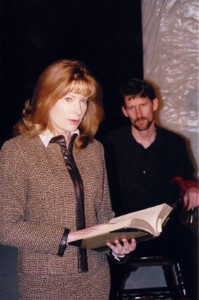
Power Play: Beverly Bartels and Ron Bartels explore the critic-actor relationship.

Kill the Critic

‘Frythescum.com’ turns theater reviewing on its ear

By R.V. Scheide

For a comedy, Stuart Swabacker’s new one-act play Frythescum.com gets off to a fairly grim beginning. A man clad entirely in black, including a black hood, is bound with strips of a torn red sheet to a chair placed at center stage. The play has yet to actually start, and as audience members take their seats in the small, intimate Black Box at Actors Theatre in the Luther Burbank Center, the man twitches nary a muscle. He could be a Guantanamo Bay prisoner, or perhaps the victim of a bondage experiment gone awry.

As it turns out, he’s a theater critic who’s been kidnapped by a group of actresses fed up with his snarky reviews and unethical practices. Seeking revenge, they’ve decided to put him on trial for his crimes, in real-time on the Internet. As a critic assigned to review Frythescum.com and the only person in the audience holding a notebook, I’ll confess to feeling more than a little self-conscious during the course of this frolicking farce.

Fortunately, theater critic Garreth Hunt, played by Ron Bartels with animated, arrogant anxiety, is much more of a scum than most of us. For years, his reviews have relied on the same formula: If the actress sleeps with him, the play gets a good review. He doesn’t remember their faces, just their breasts. After he awakens to find himself a captive, he constantly intones a mantra, “Perceive! Ascertain! Plan! Respond!” as if the power of positive thinking might make it all go away.

But making his mysterious tormentors go away isn’t going to be easy. On stage, the group of actresses Hunt has maligned over the years is represented by the sexy and determined Beverly Bartels, a past victim who has become the judge, jury, and executioner for this trial.

A laptop computer on a card table set up on the left of the stage keeps track of the online viewers; a projection of the laptop’s screen on a backdrop to the right keeps the audience informed. Swabacker uses this interactive element to play with the audience’s emotions in what are the play’s most successful passages.

For instance, when Hunt points out that the ratings for the trial are dropping, Bartels (Hunt calls her “Perky,” but her character’s name is kept secret until the end of the play) begins stripping out of her prim businesswoman’s attire, revealing a leopard body suit underneath. Naturally, the ratings, and the heart rates of at least the male members of the audience, shoot up. When the ratings flag once again, she whips out a carving knife and holds it to Hunt’s throat. She knows sex and violence will keep viewers logged on, and Swabacker knows the same holds true for theater audiences.

Married actors Ron and Beverly Bartels are perfectly cast here; the sexual tension between them is exquisite. Swabacker’s dialogue is sharp and witty, dragging only when it explains the more technical aspects of the online trial software. Without giving the ending away, the fact that the somewhat surprising climax disappointed me says a lot more about my tastes for blood and lingerie than it does about the play. In this manner, frythescum.com becomes much more a commentary on our own cultural values than a tirade against corrupt critics. That’s what makes it worth seeing.

‘Frythescum.com’ plays Oct. 24-25, 8:15pm, at the Black Box at Actors Theatre in Luther Burbank Center. $10 general/$8 seniors. 707.523.4185.

From the October 23-29, 2003 issue of the North Bay Bohemian.

© Metro Publishing Inc.
Irish Pubs

0

Photograph by Rory McNamara

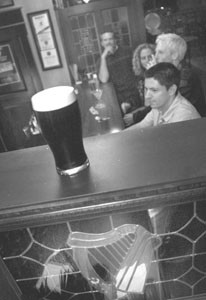
Eyes a-Smiling: Finbar Devine’s, with some help from the Guinness corporation, is spreading Irish goodwill through the North Bay.

Pub Defenders

How authentic is the North Bay’s newest ‘authentic’ Irish pub? And, ahem, how authentic would we really want it to be?

“There are two kinds of Irishmen: the standard Irish, and the toothless Irish,” jokes Patrick Ball, famed Celtic harpist, playwright, and storyteller, smiling amiably as he quietly tells stories at a corner table at Finbar Devine’s Irish Pub in Petaluma. Ball’s wife, English-born landscape artist Susan R. Ball, laughs at the toothless observation and encourages Patrick to tell about the elderly Irish gentlemen he met while visiting Ireland to do research for his play, The Fine Beauty of the Island. Patrick pushes back his bowl of beef and Guinness soup, and describes the tiny town of Quilty, in County Clare.

“It’s a really malodorous little town,” Ball says. “When the tide is out, the effluvia of the town washes out into the bay, and it stinks. One day I was outside the pub, and I spotted this ancient guy in a wheel chair, lurking in the darkened crack between the pub and the next place.”

After starting up a conversation with the aged chap (and, yes, he was largely toothless), Ball invited him inside the pub–a simple, uncomplicated, half-decaying place–for a pint of beer, a couple of sandwiches, and a lively conversation. The old gent died the next year.

“Every pub in Ireland,” says Ball, “has a guy like this, these wonderful, ancient people existing on horrible diets of Guinness and cigarettes. I suppose such folks are part of the mystery and legend of the authentic Irish pub.”

Ah, the Irish pub. Whatever else it is, it is a thing of legend. Just the mention of those two words, “Irish” and “pub,” causes a curious set of pictures to arise in the mind, like Brigadoon leaping from the mist. Though Brigadoon, of course, is in Scotland, not Ireland, and unlike an Irish pub, chances are good you will never, ever find yourself in the fictional Brigadoon. “Authentic” Irish pubs, however, have become as common as potholes in Petaluma.

From Ireland to Italy, from Austria to Turkey, there are few spots on the map that haven’t been touched in some way by that old Irish pub magic. If you believe certain pub-honoring entertainments–Joyce’s Dubliners, John Ford’s The Quiet Man, and Alan Parker’s The Commitments, you might think the Irish pub is part drinking hall, part meeting place, and part town hall, occasionally serving as a good place for a friendly fist-fight, concluded amiably with free whisky for all involved. Certainly, the new breed of “authentic” Irish pub that is springing up all over–Finbar Devine’s being the most recent North Bay addition–have based themselves on this vision (without mandatory Saturday-night brawls, we hope).

But which is more authentic, the comfy, whimsical pubs from the old John Ford movies, or the local places–Finbar Devine’s, the Rose in Santa Rosa, Connelly’s in Guerneville, Ruth McGowan’s in Cloverdale, and Murphy’s in Sonoma–not to mention the North Bay’s numerous English pubs, such as the Mayflower in San Rafael, the Pelican Inn at Muir Beach, and the brand-new Cock and Bull in Occidental?

“Most of the movies have it wrong,” says Patrick Ball, “and if they’re trying to replicate the old-fashioned pubs in Ireland, then the new Irish pubs like this one have got it wrong too–which isn’t really a bad thing, necessarily. Twenty years ago, and still a lot of times today, the pubs of Ireland were dismal and dark; they were dank, but with lots of good craik–that would be conversation. They’re places of mildew, smoke, and curling linoleum. By comparison, these new pubs are pretty spruce.

“If this were Ireland,” Ball adds, “there’d be a lot of dogs in here.”

“And probably,” says Susan, “a nice, friendly pig.”

Finbar Devine’s–which seems a fitting enough location to discuss the “authentic” Irish pub phenomenon–is owned and operated by Frank Capurro (he’s Italian!), former owner of Capurro’s Seafood Restaurant in San Francisco. Named after a real-life Irish cop from New York, the new pub is housed in the site formerly held by New Marvin’s. After extensive remodeling and a complete interior redesign, Finbar’s opened in early September.

The decor is typical of other modern Irish pubs, in that it boasts wall-to-wall Irish stuff, everything from paintings of men in kilts and photos of toothless Irishmen hefting pints of beer to shillelaghs, Guinness posters, and some enormous portraits of John and Bobby Kennedy. (“Where’s the picture of the Pope, then?” asks Ball).

According to Capurro, the decor was selected and shipped with the help of representatives from Guinness, which has over the years become a kind of Irish-pub midwife, assisting in the creation of dozens of new establishments with an Irish-pub theme. Though Capurro went the Guinness route, many newfangled pub owners have been aided by www.your-own-irish-pub.com, an informational website run by Gemmell Griffin and Dunbar in Dublin (the one in Ireland), a company that assists restaurant owners in setting up traditional Irish pubs in various non-Irish parts of the world. If it seems odd to create something authentic by stocking with items purchased on the Internet . . . well, it is.

Still, it’s impossible to enter Finbar’s and not know you’re in an Irish pub. The place is nothing if not Irish. That said, the exuberant, pointed anonymity of the interior design suggests an Irish pub as designed by Imagineers at Disneyland.

Now leaving Tomorrowland. Welcome to Irishworld.

“All the stuff on a pub’s walls in Ireland would pertain to local stuff,” says Ball. “Local soccer matches, local concerts, local residents. There wouldn’t be so much anonymous stuff. Another thing. If this were a pub in Ireland, all of these paintings and photos would be so obscured by smoke you’d not be able to see what they were.”

“So you wouldn’t really want it to be too authentic,” Susan says with a laugh. “To be honest, if you took an actual authentic Irish pub from Ireland and popped it down in Petaluma–“

“No one would ever go there,” Ball finishes. “Truth is, a real Irish pub is not that savory a place.”

Take the food. According to the Balls, the food in Americanized Irish pubs, like Finbar’s, tends to be better than the food in actual Irish pubs.

“If you ask for a salad in a pub in Ireland,” Susan points out, “you’ll get something that’s pretty upsetting.” As for Finbar’s, the food items we’ve snacked on–shepherd’s pie, potato skins, that Guinness soup–get a thumbs up from the experts, though certain menu items, like hamburgers, for example, remind one that they are very much in America.

“And the beans are too good to be authentic,” says Susan, sampling a fresh, perfectly cooked, garlic-seasoned green bean. “In Ireland, these would be severely overcooked.”

“What is the Swahili word for ‘hello’?”

“What is Homer Simpson’s middle name?”

What the hell is going on here?

To conclude the evening, we’ve made our way to Murphy’s Irish Pub in downtown Sonoma to check out another example of the modern “authentic” Irish pub, but the place is so packed with pencil-pushing brainiacs–it seems to be Trivia Night–that we can’t find a place to sit. Even outside on the deck (“No pub in Ireland would ever have a deck,” says Ball), where wisps of acrid cigarette smoke lend a hint of authenticity to the Irish-pub theme, there are no empty tables.

Too bad. Murphy’s boasts some of the best fish and chips in the North Bay, and their mushy peas have become an offbeat culinary icon. Before deciding that Trivia Night is too much to reckon with this evening, Susan steps inside and takes a peek around. Like Finbar’s, the walls of Murphy’s are crammed with anonymous Irish kitsch.

“Extravagantly overdone,” she sums up.

Watching the well-dressed, mostly youngish clientele sipping ale and scribbling answers on pieces of paper, Ball suddenly hits on a way to introduce more authenticity to the North Bay’s Irish pubs. “They could call up a theater company,” he says, “and hire some emaciated, toothless actors to dress up in mismatched suits and lurk in the corners of the pub, being charming and weary and begging for a pint.

“Now that,” says Ball, “would be authentic.”

Finbar Devine’s is located at 145 Kentucky St., in Petaluma. 707.762.9800. Murphy’s is at 464 First St. in Sonoma. 707.935.0660. Susan Ball’s new exhibition of paintings, “From the Ground Up,” will be on display through Nov. 3 at the Graton Gallery, 9048 Graton Road, Graton. For information about Patrick Ball’s upcoming performances, check www.patrickball.com.

From the October 23-29, 2003 issue of the North Bay Bohemian.

© Metro Publishing Inc.

Symposium on Oil Resources

0

Drying Up Fast

Experts address the state of oil resources

By Joy Lanzendorfer

Reaching the global peak in oil production will have an incalculable impact on the world as we know it,” says Richard Heinberg, writer and professor at the New College of California. “It’s a horrific picture. This should be front-page news in every major newspaper in the country.”

Heinberg, author of The Party’s Over: Oil, War, and the Fate of Industrial Societies, will be one of several lecturers speaking at a series of events hosted by New College later this month. The message? The world is running out of oil fast and we had better start preparing for it now.

The two events–a symposium on Oct. 30 in Sebastopol and an all-day workshop on Nov. 1 at New College–will each cost $15 at the door. At the symposium, Heinberg will be joined by Mike Ruppert, investigative journalist and former Los Angeles Police Department narcotics investigator, and Julian Darley, author and co-founder (with Heinberg) of a think tank called the Post Carbon Institute. The follow-up workshop on Saturday will present a series of solutions to how people can best prepare for a world without oil.

The world’s oil supply is in big trouble, believes Heinberg, pointing to historical evidence.

“In the early 20th century, the U.S. was the Saudi Arabia of oil supply,” he says. “But that peaked in the 1970s. Since then, 24 of the 44 principle oil-producing nations have followed suit. We’re running out of oil.”

In addition, he adds, recent studies have said that the world’s oil supply has been overestimated by 80 percent. When the world runs out of oil, the lecturers believe disasters will follow, including the breakdown of the U.S. economy, a shortage in the food supply, skyrocketing costs of gas, and a veritable collapse of the world as we know it.

And it’s all in front of everyone’s noses, but no one wants to see it.

“People are scared to look at this,” says Ruppert. “But would they rather be scared or would they rather die because they don’t want to face these problems in the first place?”

Ruppert made a name for himself in 1977, while working for the LAPD, when he uncovered the CIA trafficking heroin. He says his attempts to expose this fact caused him to be forced out of the LAPD in 1978. In his newsletter, From the Wilderness, which has over 12,000 subscribers, he claims he broke some of the key stories of 9-11 first, including Bush’s connection to the Carlyle Group and how Clinton built up the Taliban. Ruppert has also given lectures on 9-11 called “The Truth and Lies about 9-11.”

He believes looking at the truth is just a matter of knowing the facts. “Often the major media will not realize what they printed,” Ruppert says. “They will bury something in the middle of a story, and I will say, ‘Wait a minute,’ because I know it is connected to other facts.”

The symposium will also cover how alternative energy, though useful in some cases, will not be our savior after all. Hydrogen is just an energy carrier and “takes more energy to produce a given quantity of hydrogen than the hydrogen itself will yield,” according to Heinberg. Nuclear power leaves radioactive waste, and solar and wind power will take a long time to catch on.

The only answer left is for people to adjust to a world without oil. The lecturers will talk about how it is essential to reduce consumption and constrict the global economy. But it will take a huge effort, according to Heinberg. “We’re talking a World War II kind of effort,” he says. “I expect that won’t actually happen until there is a dramatic event of some kind that forces people to act.”

Despite the doomsday message, the New College says the events are not intended to scare people, but rather help people look for solutions.

“We want people to understand that this is a potential crisis unlike one we’ve ever faced before, and we have to start dealing with it,” says David Baker, coordinator of special events for New College. “But this is a message of hope. It’s optimistic. When people understand what the risk is, we can do something about it.”

The symposium on Oct. 30 will start at 6:30pm at the Sebastopol Veterans Auditorium. The all-day workshop begins on Nov. 1 at 9am at New College in Santa Rosa. For more information, call 707.568.2605.

Send a letter to the editor about this story to le*****@*******ws.com.

From the October 23-29, 2003 issue of Metro, Silicon Valley’s Weekly Newspaper.

© Metro Publishing Inc. Metroactive is affiliated with the Boulevards Network.

For more information about the San Jose/Silicon Valley area, visit sanjose.com.

Day of the Dead

0

Altared States: The Petaluma Coffee Cafe hosts work by Ernesto Hernandez Olmos and a showing of ‘La Ofrenda: the Days of the Dead’ as part of Petaluma’s Day of the Dead celebrations.

For Better or Worse

Day of the Dead celebration reminds that life’s better than the alternative

By Gretchen Giles

As the earth continues its sinuous stagger around the sun, the harvest is gradually coaxed from the fields. The light becomes low and slants golden to the ground. The mornings start dark, the days end early. And just as October relinquishes itself to November, the veil between the worlds of the living and the dead is said to stretch, shimmer, and thin perceptibly.

On one continent, ancient Celtic worshippers believed the hours between Oct. 31 and Nov. 1 to be a time of spirit transmigration. Called Samhain (pronounced “sow-in”), this was a celebration of the new year, the cyclical split between the work of the outside summer and the reflection of the indoor winter. Turnips were hollowed and fitted with candles to beckon down the dead. Families feasted from house to house in joyful celebration of their ancestry. Resolutions were toasted, promises made. Today, most of us on this continent call it Halloween, and it generally involves ill-fitting plastic masks and the Hershey corporation.

But other North Americans feel that during this brief ethereal slimming, spirits–drawn down by the pungent scent of marigolds–also return to our mortal sphere. Shed of the load of the physical world, they visit with loved ones, enjoy the fragrance of their favorite foods, commune with candlelight, relish the colors and sounds, and once again whiff the palpable physical pleasures of this life so dear.

This is no macabre spectacle, no ghoulish sport, but rather it involves special sugar candies and fresh-baked cakes and all-night picnics and family reunions in a festival of skeletons, skulls, and dead folks. Called Día de los Muertos, or Day of the Dead, this Aztec-born tradition has gradually spread beyond Hispanic, primarily Mexican, communities to bloom into a cross-cultural celebration of the beauty of life as seen through the dark glass of death.

Or at least that’s how it has transpired for Petaluma resident Marjorie Helm, a parent who has suffered, with her husband Chip Atkin, the cruelest death of all–that of their only child. Just 11 years old in October 2000, their son Trey was at an outdoor birthday party when a tree limb shaken terribly free on a windy day instantly killed him.

The year before, Helm had organized a field trip of Trey’s fourth-grade class to visit the Day of the Dead exhibition at the Sonoma Museum of Visual Art. At the time of his death, she was busy planning that year’s excursion. “And,” she says, “it really made sense to go through with it.”

Helm also went to Santa Rosa’s A Street Gallery, which hosted a community altar that year, too. There, she found that someone had already placed a copy of the memorial literature from Trey’s funeral amid the photos and remembrances of others. Most uncannily, Luz Navarette, a friend of Helm’s sister who had helped to organize the exhibition, had set masses of marigolds grown by Helm and her son around the altar. Navarette had picked them before Trey’s accident; he was there in so many ways.

“The ritual was so comforting,” Helm says, making tea in her kitchen. “A little voice inside of me said we should have something like this at home, in Petaluma.”

So Helm, who has a background in mental health and works as a life coach, gathered the fortitude to go to the fledgling Petaluma Arts Council with the idea that they host their own Day of the Dead celebration. “The idea went over like a lead balloon,” she now chuckles. “I don’t think that people got that it was an opportunity for exhibition.” Encouraged by another council member, she went back the next month and pitched the idea again. This time she was met with a warmer reception.

Teaming up with the Hispanic Cultural Development Corporation and the Spanish-language outreach program at St. Vincent de Paul’s Catholic Church, Petaluma’s celebration is now in its third year. The Sonoma Valley Museum of Art in the town of Sonoma hosts this festival for its fourth year, working with the La Luz Center and local families to open this tradition to people of all nationalities.

According to museum director Lia Transue, the items placed on Day of the Dead altars all have particular meanings. The skulls, for example, symbolize the seat of intelligence, not decay. Water is offered to slake the thirst of the spirit’s journey; food is placed to unite a family again in the homely intimacy of the table. The color purple is for mourning; the color white, for the soul’s purity; yellow, for light amid darkness.

On a recent weekday afternoon, storefronts all around downtown Petaluma boasted small altars teeming with gaily adorned sugar skulls, bright paper flags, and comical folk-art skeletons busying themselves with such joyful activities as eating, dancing, or playing music. Apart from the town center, the Petaluma Coffee Cafe hosts the one-person exhibit of Oaxacan painter Ernesto Hernandez Olmos, and in the window of Copperfield’s Books downtown is a large and personal altar decorated with paintings and cartoons by San Anselmo resident Jaime Crespo.

Crespo, 43, seems the least likely sort of man to occupy himself with images of death. Yet such dichotomy is entirely in keeping with the spirit of the Day of the Dead. Standing in his bright record store in San Rafael, Crespo says, “I had aunts and uncles who [celebrated the Day of the Dead], but my cousins and I weren’t into it. We’d rather be listening to Stevie Wonder.” In fact, Crespo mostly rejected his Latin background, refusing to speak Spanish and imagining himself more closely akin to soul man James Brown than anything else.

But his ancestral culture slowly crept back in as he aged. Drawing a series of comic strips called “Narcolepsy Dreams” and putting out his own Numb Skull zine, Crespo became an icon, with such figures as syndicated cartoonist Keith Knight citing him as a direct influence. For the Petaluma exhibit, Crespo sketches the traditional smiling skeletons of lore, one being a self-portrait at the mic of KWMR, spinning that well-loved disc, “History of Mariachi Speedmetal Clog Dancing, 1930-1935.”

That kind of goofy humor is exactly what attracted Marjorie Helm to the celebration in the first place. “It’s really a chance for a minority culture, one in which there are less people than the majority, to share something of tremendous value,” she says. “Our own culture is so death-denying. But if you can look at death within the context of community, there’s so much lightness. You know, it’s a real paradox. It sets up the ability to laugh at death.

“What I’ve learned is that none of us gets out of here without having to suffer a really significant loss, and I appreciate that Day of the Dead celebrates that. And,” she says, settling on the couch, “it provides an opening for people to shed some light on an area that’s very dark and very scary for most of us.

“With Trey’s death, I realized how much loss everyone carries around with them all the time. And I stopped taking it personally.”

Helm, whose father was born in Mexico, began a family altar with his passing. Trey was fascinated with it and when other family members died, he urged her to keep adding to it. Today, the wood-burning stove in her living room is covered with flowers, a candle is kept burning within, and such objects as baby photos and small skateboarding figurines adorn it. She looks at it quietly.

As her involvement with the Day of the Dead festival has evolved, Helm says, “it’s gotten less and less about Trey and more and more about the cultural gifts we can give to each other. I’ve gotten so much joy from working shoulder to shoulder with people in different cultures.

“When you create in community, there’s a kind of magic that happens.”

Day of the Dead highlights: in Petaluma, through Nov. 2. Friday, Oct. 24 at 5pm, opening reception for Ernesto Hernandez Olmos; at 7:30pm, screening of ‘La Ofrenda: The Days of the Dead,’ Petaluma Coffee Cafe, Second and H streets. Saturday, Oct. 25 at 1pm, sugar skull workshop at St. Vincent’s Catholic Church, Western Avenue and Howard Street; 1pm to 4pm, Live Oak Charter School hosts a festival at the Walnut Park farmers market. Sunday, Oct. 26 at 1pm, reception for “Embracing Living with Dying II,” Hospice of Petaluma, 415 Payran St. Wednesday, Oct. 29 at 6:30pm, bilingual poetry, Herold Mahoney Library, SRJC Petaluma Campus, 680 Sonoma Mountain Parkway. Thursday, Oct. 30 at 7pm, evening of bilingual storytelling, Copperfield’s Books, 140 Kentucky St. Nov. 1 at 10:30am, bilingual storytime for preschoolers; at 2pm, La Rondalla Men’s Choral Group, Petaluma Library, 100 Fairgrounds Drive. At 6pm, procession with giant puppets; 7:30pm, performance by Folklorical Ballet Netzahualcoyotl, St. Vincent de Paul Plaza, Western Avenue and Howard Street. For details, call 707.321.3192 or go to www.petalumaartscouncil.org. Sonoma Valley Museum of Art, Oct. 30-Nov. 1, community altar and exhibit, open 11am to 8pm. Sunday, Nov. 2, community celebration with workshops, food, music, and more, 11am to 5pm. 551 Broadway, Sonoma. Events are free. 707.939.7862.

From the October 23-29, 2003 issue of the North Bay Bohemian.

© Metro Publishing Inc.

‘Out of Time’

0

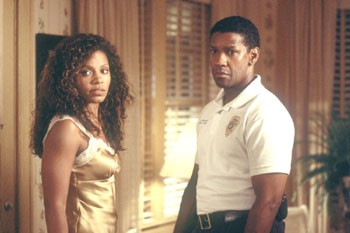
‘Time’ Waits for No Man: Sanaa Lathan and Denzel Washington chide J. Robert Lennon for missing their film.

Telling Time

Author J. Robert Lennon runs ‘Out of Time’–but doesn’t really miss it

Writer David Templeton takes interesting people to interesting movies in his ongoing quest for the ultimate postfilm conversation. This is not a review; rather, it’s a freewheeling, tangential discussion of life, alternative ideas, and popular culture.

It’s ironic. After accepting my invitation to see the film Out of Time, starring Denzel Washington as a wronged cop, New York novelist J. Robert Lennon (The Funnies) has ended up having to miss out on Out of Time because . . . uh, we’ve run out of time. Actually, the screening was moved at the last minute to a different time, and with Lennon’s tightly packed touring schedule, there’s no other time to see it.

Of course, it isn’t the first time a moviegoing experience has gone bad for Lennon, but at least this time the guy’s shoes didn’t get wet (more on that later). But hey, having missed out on Out of Time, we now have plenty of time for lunch.

“I didn’t know much about the movie,” Lennon admits, sliding his sandwich plate onto a sunny cafe table and taking a seat, “but I was kind of looking forward to talking about Denzel Washington, ’cause I was having a conversation the other day with a friend in Portland, and we were comparing Denzel Washington with George Clooney. I don’t remember why. I guess because they’re both handsome and they’re both powerful, but comparing the two, I like Clooney better, because Clooney can do self mockery. Denzel can’t do self mockery. Denzel is never going to play an alcoholic birthday-party clown. Clooney, though, often plays lovable losers, and he’s willing to be cast in a humiliating light, which I think is a good quality in an actor.”

Lennon is currently touring to promote his latest novel, Mailman, which stands among the best books of 2003. Mailman tells the story of a middle-aged postal worker with a bad habit of reading other people’s mail. And he thinks a lot about movies.

“I agree with something Mailman thinks about in the book,” Lennon says. “[He observes] that time passes in a movie, sometimes years pass in a movie. Sometimes when you come out of a movie theater, you actually feel several years older, even if you’ve only been there for two hours. That suspension of disbelief is enormously satisfying, and I definitely feel cheated when a bad movie doesn’t take me there.”

That said, Lennon observes that sometimes it’s the experience of a movie that is most memorable, beyond the movie itself.

“When I went to see the second Alien movie,” he recalls, “it was pouring rain that night, raining so hard you could hear it pounding outside the theater, despite the soundproofed walls and the noise of exploding spaceships and screaming people. There was a fire exit down the lower right-hand corner of the theater, with a stairway that went up to the street-level parking lot. It was raining, right? Well, it turns out the drain at the bottom of the stairwell had become covered with newspapers, and the entire stairwell had filled with water. That’s a lot of water.

“At one point in the theater, the aliens were just about to start coming back to life and killing everyone, and everyone in the theater was just waiting, breathlessly, for that to happen. Suddenly, the door–this big steel door–started bending inward, and water began to sort of spurt out on the sides. There was this amazing moment of anticipation where everyone could see this happening, and the aliens were about to attack onscreen, and we were all just caught in that moment, waiting to see what would happen.

“And suddenly, the door just flew open and the entire theater was flooded by this wave of water. People were screaming and running out of the theater. Everyone in the front row was up to their chests in water. I was in the 17th row, and my shoes were under water. It was great!”

“Too bad it wasn’t a submarine movie,” I observe.

“That would have been even better,” he enthusiastically agrees. “On the other hand, it could have been Terms of Endearment, which wouldn’t have nearly as much fun.”

Well, we’re almost out of time.

“Here’s what I like about movies,” J. Robert Lennon says, wrapping up, “and I do like movies. I love them. I don’t know what I’d do without them, because I think that completely giving yourself over to invention is really exciting. A movie’s fakeness is so absolute that it becomes a whole other reality that I’m completely willing to accept–and that just about everybody is willing to accept–as reality.

“For a little while, anyway.”

From the October 16-22, 2003 issue of the North Bay Bohemian.

© Metro Publishing Inc.
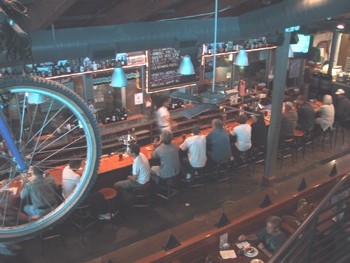
Biotech Ban

Biotech BanMendocino County fights a preemptive fight against FrankenfoodsBy Joy LanzendorferGenetically altered foods have become more prevalent in the United States than most Americans realize. In 1999 half of U.S. soybean and cotton crops and one-third of the corn supply were genetically modified. Since no labeling is required of genetically altered foods, it's impossible to tell what exactly is...

Mental Health Services

Head GamesAs mental health services get cut further, the number of people in need growsBy Joy LanzendorferAbout two years ago, Dave Thompson was diagnosed with clinical depression. His illness was so severe that doctors put him on three different kinds of medication and sent him to a hospital in Concord for treatment. When he was released, doctors told him...

‘Tibet: Cry of the Snow Lion’

Bullets and Riddles: The Chinese government has waged an all-out war against the ancient culture and religion of Tibet.Nation in Crisis'Tibet: Cry of the Snow Lion' offers a moving portrait of occupied TibetBy Davina BaumSince 1950, when the Chinese first invaded Tibet and began its brutal occupation, 1.2 million Tibetans have been killed. That, according to the documentary Tibet:...

Gyuto Monks

Artists Under Fire: The monks of the Gyuto Monastery practice their ancient Tibetan arts in exile in India.Sacred SoundGyuto choir caps a weeklong Tibetan art series at LBCBy Greg CahillA full autumn moon lit the narrow path for Huston Smith as he worked his way along a steep, narrow mountain path toward a ceremonial tent at the Gyuto monastery....

Bars & Clubs 2003

Photos by R. V. ScheideBrewed to Order: The Third Street Alehouse in Santa Rosa offers downtown denizens a place for socializing, though it's soon to get competition from the Russian River Brewing Company.Drinkin' and Drivin'A select tour of the bars and byways of the North BayBy R. V. Scheide"Bohemians," a wizened old man by the name of Banjo Bob...

‘Frythescum.com’

Photograph by Stuart SwabackerPower Play: Beverly Bartels and Ron Bartels explore the critic-actor relationship.Kill the Critic'Frythescum.com' turns theater reviewing on its earBy R.V. ScheideFor a comedy, Stuart Swabacker's new one-act play Frythescum.com gets off to a fairly grim beginning. A man clad entirely in black, including a black hood, is bound with strips of a torn red sheet to...

Irish Pubs

Photograph by Rory McNamaraEyes a-Smiling: Finbar Devine's, with some help from the Guinness corporation, is spreading Irish goodwill through the North Bay.Pub DefendersHow authentic is the North Bay's newest 'authentic' Irish pub? And, ahem, how authentic would we really want it to be? "There are two kinds of Irishmen: the standard Irish, and the toothless Irish," jokes Patrick...

Symposium on Oil Resources

Drying Up FastExperts address the state of oil resourcesBy Joy LanzendorferReaching the global peak in oil production will have an incalculable impact on the world as we know it," says Richard Heinberg, writer and professor at the New College of California. "It's a horrific picture. This should be front-page news in every major newspaper in the country." Heinberg, author...

Day of the Dead

Altared States: The Petaluma Coffee Cafe hosts work by Ernesto Hernandez Olmos and a showing of 'La Ofrenda: the Days of the Dead' as part of Petaluma's Day of the Dead celebrations.For Better or WorseDay of the Dead celebration reminds that life's better than the alternativeBy Gretchen GilesAs the earth continues its sinuous stagger around the sun, the harvest...

‘Out of Time’

'Time' Waits for No Man: Sanaa Lathan and Denzel Washington chide J. Robert Lennon for missing their film. Telling Time Author J. Robert Lennon runs 'Out of Time'--but doesn't really miss it Writer David Templeton takes interesting people to interesting movies in his ongoing quest for the ultimate postfilm conversation. This is not a review; rather, it's a freewheeling,...
11,084FansLike
4,606FollowersFollow
6,928FollowersFollow