Waste Watchers

No One Left Behind: Invite some 20,000 folks over for a weekend party and produce no trash? That’s the idea.

Waste Watchers

Health and Harmony wages a zero tolerance campaign on trash

Julia Butterfly Hill was not pleased.

A few years ago, at Santa Rosa’s Health and Harmony Festival–the annual entertainment event focused on peace, justice, environmentalism and really cool music–the world-famous tree-sitting activist and author was among the many high-profile guest speakers on the festival’s Eco-Village stage. The area was packed with humans eager to hear of Hill’s adventures and earth-saving ideas. Her audience certainly got what they came for–and a lot more. Pointing to trashcans overflowing with discarded water bottles and other garbage, Hill pointedly scolded her listeners for their slothfulness.

“This,” she pronounced in paraphrase, “is an embarrassing amount of trash for a so-called eco-event.”

Although the festival has been at the forefront of the environmental movement for years, Hill challenged the organizers and the event’s many attendees to do even more, to work harder to leave an even smaller environmental footprint on Santa Rosa, and on the planet.

Her message was heard.

“The bar’s definitely been raised,” says new executive director Scott McKeown, who for years coordinated the festival’s popular Saturday night Techno Tribal Dance and who has taken over the festival reins from founder Debra Giusti. McKeown was personally affected by Hill’s message–experiencing an overnight conversion to the sustainable housekeeping cause–and cites such events as Hill’s We the Planet event in San Francisco and the annual Bioneers Conference as examples of major environmentalist summits that leave a minimum environmental footprint.

Inspired by the creative waste-watching policies and highly green standards of those events, organizers of the Health and Harmony Festival have committed themselves to meeting–and beating–those standards. “We’ve been challenged to walk the walk we’ve been talking, and that’s what we’ve committed ourselves to doing,” says McKeown.

It’s an impressive goal. This year, the festival organizers aim to accumulate no leftover waste by the time the gates close at 7:30pm Sunday night. That’s right–no waste. No trash to be hauled off to the dump, no plastic bags full of unrecyclable bottles, no alcohol-scented wine and beer cups, no mountains of origamied napkins and paper plates, no plastic forks embedded in half-eaten tofu burritos. It’s a demanding goal, but a noble one. When the event is finally over, any waste–if there is any–will be weighed and used as a mark to beat for next year’s festival. To pull this off, the team has adopted some extraordinary measures.

As a response to Hill’s challenge, the festival has established a strict BYOB policy, as in “Bring your own bottle.” None of the food vendors will sell water in disposable plastic bottles. Instead, all visitors are asked to bring their own refillable water containers. Free water will be available at several water refill stations, and a range of inexpensive reusable bottles (ranging from $2 for a basic bottle to $15 for a stainless-steel model) will be available at information booths and at Harmony Central, for any and all who show up thirsty and without a bottle.

“It’s better than buying several bottles of water and throwing them away,” says McKeown. “Think of it–even if you have to buy one of our cheap reusables, you get free water all weekend for just $2!” Holding to the “no throwaway bottle” rule is not a simple matter, and the festival organizers have had to make some painful decisions, including turning down a Jamaican bottled-water company that offered $10,000 to be the festival’s official water sponsor.

“We could have used that money,” McKeown allows. “But being a responsible citizen of this planet means making some hard choices. Health and Harmony needs to be the best example to the country–to the world–that we can be. That’s what we’re committed to doing.”

No kidding.

As in the past, the festival will have five action-packed stages operating in all corners of the fairground site. While festival organizers could have plugged into the fairground’s electricity lines–which they’ve done in the past, mainly because it costs them nothing to do so–they have chosen instead to spend an extra $5,000 in order to run the stages completely off-the-grid, powering each one with a different form of alternative energy, from solar and biodiesel to an engine that runs on vegetable oil recycled from the festival’s numerous food booths.

As for the plates and cups and food scraps that overrun any major outdoor event, the festival has decided that merely recycling cans and bottles is not enough. With one exception (the recyclable food containers used by festival sponsor Whole Foods), each and every food and beverage booth will be using compostable dishes, from nifty wine and beer cups made of processed cornstarch (“Looks like plastic,” says Health and Harmony “Green Team” organizer Mary Munat) to plates made from wheat gluten paste.

Since such products are considerably pricier than paper and plastic, the festival established a system in which all food and drink vendors could pool their money and buy the compostable items in one massive money-saving package. As for the disposal end of the system, all compostables, including all leftover food scraps–except oyster shells, for which Johnson’s Oyster Company will be providing special bins–can be deposited of at any of 20 Resource Reclamation Centers. The compostable materials will be transported to the Laguna Treatment Center, where it will be degraded and sold in the future.

“Most people don’t realize that almost everything we eat is compostable,” says Munat. “Even meat is compostable, so it’s a shame to toss it in the trash can. Were composting everything we can, so there’s nothing left to put into a landfill.”

Admitting that many of these steps may seem radical or overreaching to some, McKeown shrugs.

“Look, aside from being one of the best open-air music festivals in Northern California, we have an opportunity to open eyes to new ways of living,” says McKeown. “George Bernard Shaw, I think, said that all great truths start out as blasphemies. If one person comes to Health and Harmony for the music, or the food or the crafts or whatever, and they leave with a new commitment to living lighter on the planet, then we’ve done a good thing.”

The Health and Harmony festival runs Saturday-Sunday, June 12-13. Sonoma County Fairgrounds, 1350 Bennett Valley Road, Santa Rosa. Saturday, 11am-8pm; Sunday, 11am-7:30pm. $20-$25. 415.389.TIXX.

From the June 9-15, 2004 issue of the North Bay Bohemian.

© Metro Publishing Inc.

Swirl ‘n’ Spit

0

Swirl ‘n’ Spit
Tasting Room of the Week

St. Francis Winery

By Heather Irwin

Lowdown: The monastically inspired winery off of Highway 12 would make ol’ St. Francis proud. Named for the pauper saint whose followers brought the first vines to the New World, St. Francis Winery is about simplicity, beauty and big juicy reds that inspire hallelujahs all around.

The newish visitors center is all about warm wood and stucco. Designed in the Cal-Mex mission style with fireplaces and tile, the simplicity of the design is punctuated by the winery’s signature bell tower. The tasting bar stretches the length of the room, offering expansive views of the vineyards and the Mayacamas Mountains through soaring windows.

Mouth value: Though it wasn’t always so, reds–specifically Merlot–are St. Francis’ strength. The Behler Merlot (1999, $45) gets consistently high scores, but a little more intriguing to this palate was the Rockpile Vineyard Red Wine (2001, $35), made with a mix of 60 percent Merlot and 40 percent Cabernet Sauvignon grapes. The Rockpile appellation is producing amazing fruit that give the finished wine a deep, rich, somewhat spicy flavor. The higher-end wines produced at the winery are those from King’s Ridge Vineyard, most notably the Cabernet Sauvignon (1998, $85), offering a velvety, purple color with layer upon layer of complexity. The Old Vine Zinfandel (2001, $22) is also a favorite, with tons of spice and fire.

Don’t miss: If you blink, you’ll miss the town of Kenwood, home to local favorite, Cafe Citti (19049 Hwy. 12, Kenwood, 707.833.2690). At this mom-and-pop-style Italian eatery, you order at the counter from a dizzying array of homemade items, including fresh pastas and focaccia. A family favorite is the tuna, egg, mayo sandwiches on ciabatta which are loaded with all of the above–including the ultracreamy, ultradecadent house-made mayonnaise. Don’t be surprised if you end up dining with a rancher tracking in mud from the farm, wine tourists and a local society matron just back from getting her hair shampooed. The consistently excellent Italian dishes pumped out every day bring in a cross-section of Sonoma culture.

Five-second snob: Rockpile is Sonoma County’s newest appellation. Funny name, serious grapes. The appellation is actually a ridge of about 150 acres stretching from Lake Sonoma to Mendocino. Though most of the vineyards are less than 10 years old, they’re producing some very interesting wines because of the unique microclimate above the fog that gets intense sun and cooler springs. Zinfandel is among the most popular varietals coming from the area, although Cabernet Sauvignon, Petit Syrah and Syrah are also being produced from Rockpile grapes.

Spot: St. Francis Winery, 100 Pythian Road, Santa Rosa. Open daily, 10am to 5pm. $5 tasting fee; $10 reserve tasting; $20 reserve tasting with food pairing. 800.543.7713.

From the June 9-15, 2004 issue of the North Bay Bohemian.

© Metro Publishing Inc.

‘Harry Potter and the Prisoner of Azkaban’

0

Teen Trio: Are wizarding powers merely a metaphor for the inner Hercules? Who the heck knows.

Power Play

Educator Mavis Jukes on the strength of self

In its ongoing quest for the ultimate postfilm conversation, Talking Pix takes interesting people to interesting movies.

“I didn’t really have any idea I’d respond to the film this way,” says author Mavis Jukes, wiping away a flood of tears as the end credits roll on the unexpectedly moving–and surprisingly satisfying–Harry Potter and the Prisoner of Azkaban, based on the book by J. K. Rowling, which Jukes has never read.

“But,” she says, somewhat recovering her composure, “I will thank this writer and the people who made this film for the rest of my life, because for once someone has portrayed teenage kids with respect and appreciation, showing the power they can have to act with courage and integrity. Just for that reason alone, I’d love for every kid in the eighth and ninth grade to see this movie. It’s very powerful.”

No kidding. For the record, Jukes isn’t the only one who’s all choked up. Blame the final 30 minutes of Azkaban (imagine an especially sly, above-average Hallmark card, but with magic and mayhem and mystical flying beasts), and the well-crafted cinematic moment when Harry discovers that he’s a much more powerful wizard than he’d ever believed himself to be. It is a sequence of events that, according to Jukes, actually made her skin crawl.

The author of numerous award-winning fiction books for children (Blackberries in the Dark, Like Jake and Me, Expecting the Unexpected, No One Is Going to Nashville, Cinderella 2000), Jukes has also created a bestselling series of influential and very funny health guides for teens and preteens, including It’s a Girl Thing: How to Stay Healthy, Safe and In Charge; The Guy Book: An Owner’s Manual; and Be Healthy! It’s a Girl Thing: Food, Fitness and Feeling Great. She ostensibly knows what makes kids tick and what gets under their skin, but she was unprepared for the way this new Harry Potter film got under her own skin.

“It was amazing and weird, that sensation I had at that precise moment in the film,” she says. “It was like the hair standing up all over, my skin got all prickly, it was like my skin actually crawled. I guess that really happens to people, but I’ve only read about it. So there’s another surprise–my first official skin-crawling moment happens at age 56, in a Harry Potter movie, when Harry figures out that the power he thought was centered in another is actually coming from himself.”

The whole “discovering the power within” thing is a theme that’s been explored in stories since the beginning of time. But the way it plays out in Prisoner of Azkaban is very effective.

“For kids,” Jukes points out, “this can be a pretty astounding revelation. I think Harry’s magical powers are a metaphor for his inner strengths. Kids don’t know how much power they can have, or how to use their strengths. I think the reason you and I reacted so emotionally to that scene is because it reminds us of what it was like to discover our own inner power–that whatever-it-is, that whatever-it-takes–that comes from inside us, that makes it possible to do what we sometimes doubted we could accomplish.”

“But what exactly is that ‘power’ that we’re talking about?” I ask. “Assuming Harry’s magic is a metaphor, what’s it a metaphor for?”

“The ‘power’ makes it possible for him repel the most negative, scary, terrifying, threatening imaginings–of course, in the movie they’re not imaginings, they’re real,” Jukes muses. “So I guess the power is . . . the power is . . . What is that power? It’s probably something corny like ‘thinking positively’ or ‘believing in yourself.’ People sing sentimental songs about it–you know, ‘The hero lies in you,’ that kind of thing. But on a personal level, there are no words attached to it, no words that describe it. Inner power is inner power.

“And when you have it, when you’ve experienced it,” she says with the smile of experience, “it really almost is like magic, isn’t it?”

From the June 9-15, 2004 issue of the North Bay Bohemian.

© Metro Publishing Inc.
Oil

0

Photograph by Michael Amsler

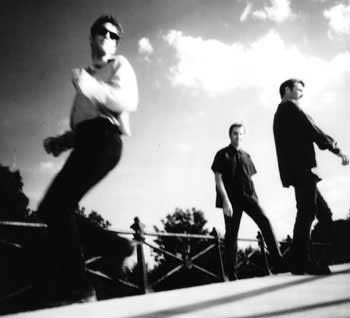
Texas Tea: Richard Heinberg thinks we may have already drunk too deep.

Oil Gone

If peak oil theorists are correct, our dependence on oil is not only foolish, it’s lethal. Does modern civilization have just two choices–change or perish?

By R. V. Scheide

“No blood for oil!” antiwar activists cried worldwide in the months leading up to the U.S.-led invasion of Iraq in March, 2003. Their pleas fell mainly on deaf ears, dismissed by various government officials and media pundits who assured Americans that in the wake of 9-11, U.S. foreign policy had become far too complex to sum up in such a simple, outdated slogan. “No blood for oil!” the activists doggedly insisted, drowned out by the technological thunder of shock and awe.

That might have been the last the general public heard of the phrase if not for an unexpected turn of events that began not long after President George W. Bush crowed “mission accomplished” on the deck of the USS Abraham Lincoln one year ago: the price of oil began rising, and gasoline followed suit. Heading into Memorial Day weekend this year–the second-largest driving holiday of the year in the United States–the average price for a gallon of regular grade gasoline in had climbed 58 cents to $2.05 per gallon, the highest in two decades.

What a difference half a buck per gallon makes! Oil was back in the news. The financial community panicked. Supply shortages and reduced refinery capacity were pushing prices up; analysts warned that any long-term rise in prices would threaten the global economy’s fledgling recovery. Saudi Arabia, already pumping millions of gallons per day beyond its quota, promised to pump even more to increase supply, but the price still gushed to nearly $40 per barrel. That didn’t deter a record number of Americans, including an estimated 4 million Californians, from hitting the road for the holiday weekend.

As travelers settled down to family barbecues, terrorists linked to al Qaida attacked an oil-industry compound in Saudi Arabia, murdering 22 Western employees housed at the facility and casting doubt on the security of Saudi oil fields. No production facilities were damaged, but by the end of the first trading day after the attack, oil had jumped a record $2.45 during the session, reaching $42.33 per barrel and showing no signs of slowing its ascent.

Suddenly, after the terrorist attack, “No blood for oil!” didn’t sound quite so silly. Almost overnight, mainstream media discovered a global oil shortage. The media have yet to state a direct connection between the shortage and the blood that’s currently being spilled in Iraq, but it’s getting warmer.

In recent weeks, major outlets including CNN, the New York Times and National Geographic have run prominent features on “peak oil theory,” until recently a little-known concept outside the circles of petroleum-industry geologists and hardcore conservationists. The theory’s implications are literally nothing short of apocalyptic, which makes its recent dissemination by such mainstream sources even more worrisome. No blood for oil? If the peak oil theorists are correct, we are about to enter an age that makes that price seem like a bargain.

In fact, this age may already be upon us.

The Party’s Over

When Santa Rosa author Richard Heinberg first encountered peak oil theory in the late 1990s, he had a revelation. Somehow, he’d previously managed to write A New Covenant with Nature: Notes on the End of Civilization and the Renewal of Culture without listing “oil” or “energy” in the index–he’d hardly touched upon the subjects in the book. His revelation was that when it comes to the end of civilization as we now know it, oil and energy are the primary areas of concern.

Sitting in a meeting room at Santa Rosa’s New College of California campus, where he teaches courses such as “Energy and Society” and “Culture, Ecology and Sustainable Community,” Heinberg, one of the nation’s leading experts on the ramifications of peak oil theory, humbly explains how just a few short years ago, he knew very little about it.

A self-described generalist who now drives a biodiesel Mercedes Benz, he immediately set out to learn everything he could about the subject. He studied peak oil theory, attended many obscure energy conferences and eventually published The Party’s Over: Oil, War and the Fate of Industrial Societies in 2003. Peak oil theory, originated by the late geophysicist M. King Hubbert in the 1950s, figures prominently in the book, which begins on an exceedingly ominous note:

“The world is changing before our eyes–dramatically, inevitably and irreversibly. The change we are seeing is affecting more people, and more profoundly, than any that human beings have ever witnessed. I am not referring to a war or terrorist incident, a stock market crash, or global warming, but to a more fundamental reality that is driving terrorism, war, economic swings, climate change and more: the discovery and exhaustion of fossil fuel resources.”

Simply stated, peak oil theory holds that total annual global oil production over time, from the oil industry’s beginning in the mid-1800s to its predicted end sometime within our own century, conforms to the familiar bell-shaped distribution curve when graphed. Production rises steadily until reaching the graph’s peak, at which point half of the world’s total oil supply will have been used up. Once the peak is reached, annual oil production begins steadily declining, unable to keep up with rising global demand, and the price skyrockets, leading to widespread financial instability.

Could we be peaking now?

“The short answer is that no one knows,” Heinberg says, adding that the peak can’t officially be declared until global demand exceeds production, which hasn’t occurred yet. While one group of scientists predicts the peak could occur anytime between now and 2008, the current consensus is sometime between 2006 and 2016. Heinberg has seen government estimates as high as 2035, which he says is extremely optimistic. “Those of us who study it think it will be sooner rather than later,” he said. “It’s starting to look like 2007.”

From the point at which the peak occurs, the competition for the remaining half of the world’s oil will grow more intense. Depending on how it’s managed, there could be anywhere from 20 to 50 years’ worth of oil left in the ground. Heinberg firmly believes that how we manage this oil during the coming decades will determine, for better or worse, the fate of humanity.

The problem, as Heinberg sees it, is that oil has been too good to us. Since petroleum helped spark the industrial revolution, the global population has exploded, from less than 2 billion people in post-industrial times to more than 6 billion today, stretching the planet’s natural carrying capacity. Without oil fueling machines and factories and farms, such large numbers cannot be sustained. When the oil peak hits and the shortages begin, civilization will be faced with the delicate task of determining who survives. It’s hard to get any closer to trading blood for oil than that.

“The entire economy runs on oil,” Heinberg says. “The adjustments are not going to be easy.”

Indeed, the worst case scenarios are terrifying: genocide on a scale never before seen, as control of the remaining oil divides along racial, ethnic and national boundaries. Even the best-case scenarios, all of which require unprecedented levels of international cooperation, political courage and public participation, offer grim life-and-death choices. There’s simply no readily available source of energy that can replace oil as it steadily declines over the coming decades. Alternative sources such as wind, solar and tidal power, if applied on a massive scale, will help, but they won’t fill the energy gap.

Nuclear power may be part of the solution, but it can’t be the only solution: the uranium supply is expected to peak by 2100. In fact, all of these measures put together won’t be able to make up for the energy lost through oil depletion. Civilization appears to be on a nonstop collision course with a second Dark Age.

Nevertheless, Heinberg manages to end The Party’s Over on a positive note, present-ing an ambitious “complete redesign of the human project,” an immediate about-face “from the larger, faster and more centralized to the smaller, slower and more locally based; from competition to cooperation; from boundless growth to self-limitation.”

“If such recommendations were taken seriously,” he insists, “they could lead to a world a century from now with fewer people using less energy per capita, all of it from renewable sources, while enjoying a quality of life that the typical industrial urbanite of today would perhaps envy.”

Sounds kind of like west Sonoma County on a Friday night. Of course, it was written a couple of years ago, before the invasion of Iraq, before oil pushed past $40 a barrel, before Heinberg gained a fuller under-standing of the complex interconnections between money, oil, food, water, population growth and pollution. People who study the oil peak have a saying: The more you learn, the worse it gets.

That’s true in Heinberg’s experience. His latest book, Powerdown: Options and Actions for a Post-Carbon World, due out this month, presents civilization with four possible paths to the future. Foreshadowing the black humor sure to be found in the dark days ahead, only one of the paths leads to anything remotely resembling civilization as we know it, and as it turns out, the United States is already a long way down the wrong path.

Oil Gets in Your Blood

Peak oil theory is one of those subjects that just gets into certain people’s blood. When someone with a willingness to test the truth of his own convictions tackles the subject, obsession often ensues. Santa Rosa resident Mark Savinar is a case in point.

A year ago Savinar, 25, had just completed law school and was waiting for the results of his bar exam. While researching on the Internet the role of drug money in the global economy, he ran across a reference to peak oil theory. Intrigued, he studied more and suddenly everything fell into place: the 9-11 terrorist attacks, the invasion of Iraq, the whole war on terrorism. “Oil made it all make sense,” he says over orange juice at a downtown Santa Rosa cafe.

Savinar gathered some of the research he’d collected and posted it on his website, expecting to get maybe 10 hits from likeminded visitors. He got 800 visits the first week and a $250 donation. “This is what I should be doing,” he said to himself. He passed the bar, but he’d already found a new calling: preaching the peak oil gospel on the Internet. Instead of entering law practice, he built up his website, and now www.lifeaftertheoilcrash.net is the top linked peak oil site on Google.

“I wasn’t going to hitch my wagon to something that wasn’t going to be around,” Savinar says, underscoring just how seriously he believes the oil crash is coming–there will be no need for lawyers after civilization collapses. His mission is to prepare as many people as he can for the catastrophe to come.

Savinar doesn’t ask readers to take just his word for it. In addition to providing links to reputable peak oil research, he includes quotes from members of the Bush administration who fully acknowledge that the crisis is coming, if it’s not here already.

“The situation is desperate,” Bush energy advisor Matthew Simmons said in an interview with online magazine From the Wilderness in August 2003. “This is the world’s biggest serious question.” Asked if it was time to include peak oil in public policy debates, Simmons said, “It is past time. As I have said, the experts and politicians have no Plan B to fall back on.” Is there any solution to the crisis? “I don’t think there is one,” Simmons said. “The solution is to pray.”

In 1999, before he was elected vice president and was still CEO of Halliburton, one of the world’s largest providers of products and services to the oil industry, Dick Cheney slipped a little peak oil theory into his own economic projections at a petroleum conference in London.

“By some estimates, there will be an average of 2 percent annual growth in global oil demand over the years ahead, along with, conservatively, a 3 percent natural decline in production from existing reserves,” Cheney said. “That means by 2010 we will need on the order of an additional 50 million barrels a day.”

As Savinar points out, that’s six times the amount currently pumped daily by Saudi Arabia, one of the few countries still possessing excess capacity. Where does Cheney think we’re going to get the extra oil? Does the Bush administration even have a plan?

They haven’t announced it publicly, but with a little creative connecting of the dots, it’s not too hard to decipher how the Bush administration plans to deal with the crisis. One of the first things Cheney did after taking office, besides meeting in secret with energy industry leaders, was to make “energy security” a national priority. Even before 9-11, Cheney strongly advocated invading Iraq, ostensibly to rid the world of an evil tyrant, but no doubt with an eye on the Iraqi oil fields, the second largest reserves in the world after Saudi Arabia’s. Indeed, detailed maps of the Iraqi oil fields are among the few items that have been publicly released from his secret energy meetings.

After 9-11, it was immediately clear to intelligence officials that Saddam Hussein and Iraq had not played a role in the terrorist attack. Cheney and Secretary of Defense Donald Rumsfeld pushed for the invasion anyway, and thanks to some trumped-up intelligence on Iraq’s weapons of mass destruction, the administration was able to cajole Congress into approving Bush’s “preventive war” doctrine; by March, 2003 the invasion was on.

More than a year into the conflict, no WMDs or connections to the 9-11 terrorists have been found; the Iraqis have welcomed their “liberators” with bullets and rocket-propelled grenades instead of open arms; widely disseminated photographs of American prison guards torturing Iraqi detainees have shamed the United States in front of the world; and more than 800 American soldiers have died, not to mention some 10,000 innocent Iraqi civilians.

That doesn’t sound like much of a plan, as the Bush administration’s detractors have increasingly pointed out. But as Savinar says, oil makes it all make sense. Another dot to connect: Cheney is now being investigated for allegedly participating in secret dealings that granted his former company, Halliburton, the contract to rebuild Iraq’s oil industry. Suppose the goal all along was to seize control of Iraq’s oil reserves?

“The reason we don’t have an exit strategy is that we don’t plan to leave,” says Savinar. There’s an estimated 20- to 30-year supply of oil in Iraq’s reserves, and the longer it stays in the ground, the more valuable it becomes. Heinberg is inclined to agree that the United States has no intention of leaving Iraq, pointing to 14 permanent military bases that have been built there since the war started. These bases complete a line of military outposts stretching through Afghanistan, all situated near areas where large reserves of oil are known to exist.

Heinberg says this is the wrong path we have chosen, the path of cutthroat competition that treats blood and oil as commodities to be freely traded, as if neither had its own intrinsic value. As far as Heinberg is concerned, it is the road to ruin for us all.

Last One Standing

Sitting in the New College meeting room, Richard Heinberg hardly looks like a prophet of doom. Thin, with a sparse beard and impish face, he enjoys playing violin with his wife in their energy-efficient home. He grows much of his own food and doesn’t mind that his car’s exhaust smells like French fries. Once, he thought individuals living in this manner might be the solution to the impending oil shortage. But the more you read peak oil theory, the worse it gets.

“We can reduce personal energy usage, live closer to work, grow our own food, reduce our consumption,” Heinberg says. “Beyond that, there are limits to what individuals can do. Ultimately, there is no personal survival without community survival.”

In Powerdown, the path to community survival is similar to the suggestions presented in The Party’s Over. There’s more of an emphasis on population control, both to reduce energy demand and the pain and suffering of starvation caused by declining global food production. The United States can and should immediately begin developing large-scale alternative-energy systems using wind and solar power.

Nations need to begin cooperating with one another instead of competing for scarce resources. Wealthy countries like the United States must be willing to share resources with more needy nations. Collectively, we all have to “powerdown,” reducing energy consumption to the bare minimum, perhaps as much as 80 percent in the long run.

It’s been done before, albeit on a smaller scale. After the collapse of the Soviet Union in 1989, Cuba, which imported almost all of its oil from the U.S.S.R., suddenly faced an annual energy shortage of 25 percent. Fidel Castro’s communist government immediately went to work, breaking up the country’s large factory farms into small plots of land, encouraging city dwellers to move to the country and become organic farmers. Millions of bicycles were imported from China; cars were banned from certain roadways. The reforms worked, and by the end of the 1990s, Cuba had pulled itself out of what could have been a major depression.

Such a plan might work on the global level, Heinberg believes, but there are major obstacles, the primary one for the United States being that some of the methods will smack of communism. “It would require a command-and-control economy and a WW II­level of effort,” Heinberg says.

He’s not too optimistic that’s going to happen. Even communist countries like China have become addicted to industrialization. The very same brand of bicycles Cuba imported used to pack the streets of Beijing. Just last month, the Chinese government banned bicycles from the city to make more room for cars, the fruits of its rapidly expanding economy. India likewise is enjoying an economic boom, and the recent industrialization of both countries is putting enormous new demands on the global oil supply. The world seems inevitably drawn toward the wrong path, the one Heinberg calls “last one standing.”

“If the leadership of the United States continues with current policies, the next decades will be filled with war, economic crises and environmental catastrophe,” he writes in Powerdown. “Resource depletion and population pressure are about to catch up with us, and no one is prepared. The political elites, especially in the United States, are incapable of dealing with the situation.”

Some, of course, will find all this doom and gloom overwhelming and choose to ignore it, traveling down Heinberg’s third path, which he dubs “waiting for the magic elixir.” He writes, “Most of us would like to see still another possibility–a painless transition in which market forces come to the rescue, making government intervention in the economy unnecessary.”

Sorry, that just ain’t gonna happen, at least according to peak oil theorists. Heinberg additionally doesn’t hold out much hope that the United States will be able to turn from the “last one standing” path anytime soon, and he admits that it may already be too late anyway. His plan to “powerdown” will take decades to enact, and the world may not have that much time left. However, when the collapse truly appears imminent, there’s one last path to follow.

“This fourth and final option begins with the assumption that industrial civilization cannot be salvaged in anything like its present form, and that we are now living through the early stages of disintegration. If this is so, it makes sense for at least some of us to devote our energies toward preserving the most worthwhile cultural achievements of the past few centuries.”

He calls that path merely “building lifeboats,” and if it creates a sinking feeling in the pits of readers’ stomachs, perhaps it’s intended.

In a world that continues to trade blood for oil, this may be the only avenue of escape left.

Richard Heinberg appears in discussion after the documentary, ‘The End of Suburbia: Oil Depletion and the Collapse of the American Dream,’ on Wednesday, June 16, at 7:30pm. New College of California, 99 Sixth St., Santa Rosa. Free; donations requested. 707.568.3093.

From the June 9-15, 2004 issue of the North Bay Bohemian.

© Metro Publishing Inc.
Patrick Amiot

0

Photograph by Michael Houghton

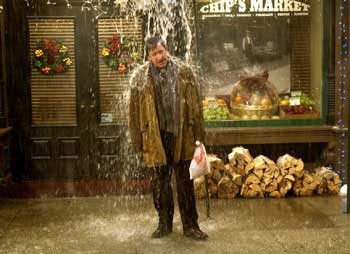
Weld Done: Sculptor Patrick Amiot and the Elvis jukebox that dominates his front yard.

Wealth of Junk

Sculptor Patrick Amiot and the flowing universe

By Michael Houghton

Walking into Sebastopol sculptor Patrick Amiot’s backyard is a little like walking through the doors of the Wonka factory. Past the gigantic Lucky market sign, past the stacks of rusty junk, partially finished sculptures crowd the patio. There’s a 3-foot-high garbage truck, the cab of which will soon be occupied by painted percolators standing in for a local garbage mogul and his family.

There’s an oil drum that is slowly becoming a gigantic wolf head, maw wide open and tongue lolling out, providing a stage for a future Little Red Riding Hood. There’s an Airstream trailer, propped on end that Amiot plans to turn into a “Doggy Diner”–a 15-foot-tall puppy with a food-serving window in its belly.

These sculptures, as well as those in yards along Sebastopol’s Florence Avenue and throughout Sonoma County, are all garishly colored, and somehow not as safely “cute” as much of contemporary folk art–there’s something just a little bit naughty about them. It’s almost as if they might sneak up behind more refined sculptures and give them a wedgie, running away giggling like five-year-olds.

Amiot (whose name, he says, is pronounced “like ‘amigo’ without the g“) almost fits the Willie Wonka part. Energetic and filled with a childlike rambunctiousness, he leads me on a whirlwind tour through the yard and into his house, gesturing excitedly at each work-in-progress with the occasional conspiratorial lift of the brow. Once inside, it becomes clear that his sculptures are actually an extension of the wild, colorful and cartoonish world in which he lives. Amiot’s house is so packed with the oddities he and his family make, it seems they simply exploded out the front door one day, and from there began the surge toward countywide lawn domination.

We eventually settle into homemade chairs in his backyard–mine is crimped out of feed-store signs, his a macramé of bicycle inner tubes–and Amiot points out the piece that, two years ago, started it all. It’s a gigantic fisherman, his torso made from the hull of a rowboat, grinning wildly and holding up a prized catch. Before moving to Sebastopol from Vancouver, Canada, Amiot and his wife, Brigitte Laurent, were full-time ceramic sculptors whose Mad magazine­like clay caricatures supported a workshop of five employees. But after moving, they found that Northern California just didn’t have a market for their ceramics.

“I was thinking I was going to sell the house because my finances were so poor. In a sheer moment of depression, I just said, ‘Oh, the hell with it, I want to do something big,’ which I’d always wanted,” Amiot laughs ruefully, remembering the rough time. “Ceramics is so confining! So I got this rowboat at the flea market for 50 bucks . . . and I thought, ‘I’m going to do something totally wild, and I’m going to put it in front of my house.’ And the next day, oddly enough, people kind of slowed down and smiled and gave me thumbs-up.”

In fact, the response was so positive, that Amiot just kept going, populating his neighbors’ lawns with the whimsical weirdness now pouring from his head. “It was only eight months after I did my first piece that somebody actually commissioned me. And right after that, I sold my first one.” Almost by chance, he had happened upon his new market.

“I owe a lot to my neighbors, because they’ve offered me a gallery–prime real estate,” Amiot enthuses. “It’s so great because I have the pleasure of seeing my work and they enjoy having art and interaction with people coming off the street waving, smiling, people walking up and down.”

Amiot is also proud that his outdoor gallery is helping to rebuild a feeling of community on his street. “There’s a whole new culture now, a whole different type of ambiance, out on the porch,” he says. “And the neighbors feel the same way–they sit on their porches and people smile at them and say, ‘Hey, how’s it going?'” He gives a pinch-me-I’m-dreaming cockeyed grin. “Even the cops wave to me!”

This feeling of small-town community also extends to Amiot’s own backyard. Over the course of our hour together, two people randomly show up to visit, and one of them, a 40-ish male friend, winds up jumping gleefully on Amiot’s trampoline.

“You’ve been wanting to do that for a while, haven’t you?” Amiot asks him. “Yes!” exclaims the friend midair, continuing his leaping. It’s almost as if Amiot’s world gives people permission to revert to a childish freedom, something he hopes his art can help spread.

“I think that most of us are afraid to show our colors,” Amiot muses, “because putting up a piece of art is a big statement. It means that you have a sense of humor, that you’re willing to play and expose something about you that’s not generic. All these new communities are gated and everything is the same, even the same cars, all gray and beige and nondescript. And all of a sudden you walk onto [Florence Avenue], and these front yards are pretty wild. It’s hard to keep a serious act when you’ve got something so whimsical and bold in front of your house, especially made out of junk.”

Though Laurent is less involved in the sculpture, Amiot wants to make sure credit is given to his wife and partner of 22 years, who continues to collaborate with him on all his ceramic and pop-rivet pieces, as well as some of the painting on the larger works. “Brigitte is my salvation, she’s the one who does all the coloring on my ceramics, she’s the one that keeps the balance in the house. If it wasn’t for her, I wouldn’t even be an artist,” Amiot says. Their gallery exhibits in Canada are billed under both their names.

Amiot admits he didn’t give much thought to the recycling aspect of his art for the first few projects, but these days, the fact that he is reusing existing materials is of utmost importance. “California is rich with junk–everybody’s got junk! I couldn’t believe it when I moved here,” he exclaims. “People have so much shit they have to rent lockers to put their shit in.” He shakes his head in disbelief.

“I get a rush every time I see somebody going to the dump, and they stop at my place and say, ‘Do you want this?'” he adds. “I don’t necessarily want it, because my driveway is a mess. But I do want to take it because it’s a statement. It’s a really important thing to me: you’re taking it from one very destructive and negative direction, and you’re transforming it into such a positive thing.”

There’s also a wonderful feeling of synergy that Amiot gets when working with junk: it’s as if the shapes and shadows take on a personality of their own, informing the work and building momentum. “We all have our certain rhythms,” he says. “Whether you’re a musician or a painter or a sculptor, it’s all about rhythms. My approach is very loose and very folky–I just stretch my arm out, and whatever I can see, it doesn’t matter what shape it is, I slap it on there, and for some reason it works. It works because I believe in it and I don’t want to think about it for too long. Because if I start thinking about it, I lose the whole rhythm.”

He grins. “One day I was welding on this big piece, and this lady walks up and she has two pieces of metal in her hand, and she says ‘Excuse me, sir?’ I’ve got my mask on, right, and I say, ‘What is it?’ and she says, ‘Do you need this?'” Amiot beckons her to approach and tells the stranger to stand stock still and close her eyes. “I weld it right on the spot,” he chuckles. “I thought to myself that this for me is the perfect example of letting the whole universe go through you.

“It’s a challenge,” he continues, “because we live in a culture that gets to be so precise–especially the computer world–there’s no more room for that freedom. And that’s been, for me, an incredible awakening. I feel relieved. I feel lighter than ever. I feel as if my worries have gone. Because there’s an immense wealth of junk, and as long as I can let myself be free, I can do anything I want.”

From the June 9-15, 2004 issue of the North Bay Bohemian.

© Metro Publishing Inc.
OAEC

0

Photograph by Jim Coleman

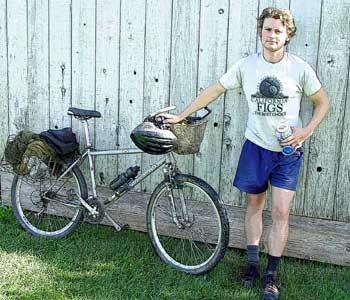
Kitchen Stories: Budding mycologist Jacob Kowalick-Allen gets help with mushroom identification from Brock Dolman.

Overwhelmed with Beauty

At the OAEC, good works and good life go together

By M. V. Wood

The first time I heard about the Garden of Eden, I tried to draw a picture of it. I used every single color in my big box of Crayolas to depict the flowers and foods that would be growing there. I drew birds and imagined their song. I drew the sun and could feel its warmth. I carried that picture back and forth, to and from school, for many days. Eventually, I gave it to a friend who had tripped while jumping rope, fallen down and cried. I figured it would cheer her up. It did.

As I stand at the Occidental Arts and Ecology Center, listening to the birds, staring at the vibrant spring blossoms and enjoying their fragrance, I feel I’ve stepped into the picture I created so long ago. I’m in this garden with a man named Adam. Years ago, he and a group of friends created their own picture of where and how they wanted to live. This summer, they will be celebrating the 10th anniversary of that image, the formation of the OAEC.

“It’s amazing how close this comes to what we envisioned,” says Adam Wolpert, his eyes shaded by a large straw hat. “We wanted a place where we could form a relationship with the land, and we wanted to do meaningful work. And that’s all come about.”

The 80-acre parcel off Coleman Valley Road is home to 15 adults and four children. But the group’s collective vision wasn’t only about having a beautiful place to live for themselves. It included strong social and environmental components. And from that commitment, the OAEC was born, a nonprofit corporation created to develop horticultural, educational and activist programs.

Most recently, the OAEC began serving as the headquarters for the Californians for GE-Free Agriculture Coalition, a campaign uniting farmer-based organizations with consumer and environmental groups aimed at preventing genetically engineered agriculture in California, the country’s leading producer and exporter of food. (Currently, only GE cotton is commercially grown in California, but hundreds of GE field tries are already underway.)

The OAEC also runs a number of programs such as the WATER Institute (Watershed Advocacy, Trading, Education and Research); two biodiversity programs; a permaculture program and an arts program. There’s also a popular school gardens program in which teams of teachers and parents learn how to establish school gardens and integrate gardening with curriculum.

In addition to its programs, the OAEC runs a number of events and classes–woodshop for women, landscape painting, children’s theater day camp and bird watching, to name a few. Some classes are held just for a day, but others run for several days, with participants sleeping in two large hilltop yurts set up as dormitories. Meals are included, and visitors eat dinner with the residents.

“It’s actually a lot of fun having the class participants dining with us,” Wolpert says while walking through the dining area. A small wood-burning stove is located to the side of the room, and a couple of guitars, some drums and a few other instruments lie close by. “We enjoy having new people in here to talk with and hear fresh viewpoints. And I think they like seeing how we live; everyone’s always curious about it.” Many become so curious that they want to learn how to start their own intentional community. The OAEC now runs a program on that topic too.

Although the residents own small, private homes on the property, they share communal spaces, such as the dining area and kitchen, sauna, hot tub and amphitheater. Everyone eats dinner together, and they take turns cooking, much of the food coming from their organic gardens.

“We’re very transparent about our mistakes as well as our successes, and we want to share our experiences with hope that others can learn from them,” says Wolpert, who heads the Intentional Communities Program. “There’s learning and growth that goes into being a member of a community such as this. It’s not simple, but, you know, it’s not difficult, either. It’s just different from what most of us have learned.

“Usually, in our culture, we look out for our personal best interest, not the good of the whole. That’s not because we’re mean people. It’s just that we don’t have many viable options, so we do what’s best in our circumstances. And if the circumstances are such that if you don’t look out for No. 1 you get screwed, then it’s sensible to look out just for yourself and your family.

“But after you become a part of something like this, the circumstances change and, after a while, a shift takes place within you and the way you think. In this setting, it’s smart to think of the group as a whole, and that’s what you end up doing.”

Indeed, much of the grief in the world today comes from people looking out for No. 1 at the expense of the whole. But maybe if a paradigm shift could take place within more people, perhaps we could make the world a better place.

“This place, this land, gives me hope,” Wolpert says. “Nature is so optimistic. You put a seed in the dirt and give it a just a little bit of care, and suddenly the entire power of the universe is on your side. You don’t have to do it all yourself. You just need to step forward with faith and hope and the best you have. And suddenly all of life grows.”

When he’s not busy with his staff duties at the OAEC, Wolpert works as a painter. “Being an artist is my mainstream job,” he says. “I tend to be very visual. And when I get overwhelmed by all the problems in the world, I just look around me at this land and I become overwhelmed with beauty. So I guess maybe they cancel each other out in a way.”

Wolpert’s paintings are used extensively in the OAEC’s full-color, yearly catalogs. The images of vibrant flowers, of sunlight dancing on the leaves of trees, of fog blanketing a valley, bring to mind the possibilities of the garden. In a world filled with obstacles that can trip up your soul, it helps to have images around that can cheer us up.

“I’m optimistic,” Wolpert says with a smile. “I don’t know about saving the world–whatever that means. But I do have a lot of hope that we can live wonderful lives and do good things.”

Upcoming events at the OAEC include ‘Starting and Sustaining Intentional Communities’ (June 11-13), a medicinal plant walk (July 10), a traditional Chatauqua meeting (Aug. 13-14) and permaculture design workshops (Sept. 25-Oct. 8 and Nov. 12-14). The Occidental Arts and Ecology Center, 15290 Coleman Valley Road, Occidental. 707.874.1557.

From the June 9-15, 2004 issue of the North Bay Bohemian.

© Metro Publishing Inc.
Open Mic

0

Domestic Abuse

When it comes to prisoners, mistreatment begins at home

By Van Jones

The images we’ve seen from Iraq’s Abu Ghraib prison are truly horrifying. Now reports are surfacing of similar, videotaped abuses by U.S. soldiers at Guantanamo Bay. But as awful as all of this is, these scandals should come as no surprise. Just look at the way we treat prisoners here at home.

People across the country are rightfully outraged by the abuses in U.S. prisons in Iraq. According to a recent ABC/Washington Post poll, 69 percent of Americans think this kind of abuse is unacceptable in any situation. But where is the outrage for the abuse of prisoners right here at home?

A recent New York Times article details physical and sexual abuse of prisoners in facilities throughout the U.S.–abuse that continues with little public knowledge or concern. Like prisoners of war in Iraq, domestic inmates are routinely humiliated and degraded. In Pennsylvania and other states, staff regularly strip inmates in front of other inmates before their transfer to a different unit or prison.

At the Maricopa County jail in Phoenix, Ariz., jailers force male inmates to wear women’s pink underwear as a form of humiliation. New inmates at Virginia’s Wallens Ridge maximum security prison report being forced to wear black hoods, allegedly to keep them from spitting on guards. Former inmates have said that guards often beat and cursed at them and forced them to crawl.

Texas has been home to some of the worst abuses. For much of George W. Bush’s tenure as governor, Texas prisons were under a federal consent decree due to crowding and violence by guards against inmates. What prompted the consent decree? A federal court found that guards were allowing inmate gang leaders to buy and sell other inmates as sex slaves.

Do you think we are immune from these abuses in “liberal” California? Think again. In fact, the most recent prison scandals here involve our smallest prisoners: children.

Recent official state government reports, including first-hand accounts, describe the California Youth Authority as a violent hotbed of human rights abuses. According to these reports, guards regularly instigate fights among the youth. They also commonly spray wards with chemical weapons and high-pressure hoses.

The facilities are filthy; some have blood and feces smeared on walls. Wards’ emergency medical and mental health needs are neglected. Staff and administrators needlessly lock minors in solitary confinement for 23 hours a day for months on end. And some youth are placed in tiny, one-person cages or are forced to spend hours on their knees with their hands bound behind their backs.

Recently, state authorities released a security video of prison employees viciously beating two young wards at a California Youth Authority facility. In the video, one guard punches a boy in the face 28 separate times as the boy lies helpless on the floor, offering no resistance. Then other guards come and spray the boys with chemical weapons.

This video shocked Californians of every stripe. But what’s more shocking is that state Attorney General Bill Lockyer has decided not to prosecute the guards caught savagely beating two helpless wards.

Even President Bush, who presided over some of the country’s most atrocious prisons, is responding to public pressure by promising that the abusers in Iraq will be prosecuted. But Lockyer, one of the highest Democratic officials, is turning a blind eye to documented brutality here in California. And Democrats have the nerve to scold Bush?

With this sorry human rights record at home, it would have been more surprising if human rights abuses hadn’t happened in overseas military prisons. Indeed, with the United States’ track record on prisons, you could have predicted these abuses before they even happened.

All of us–especially our elected leaders–need to address this most glaring human rights disgrace at home. At least one of the soldiers charged in Iraq–Cpl. Charles Graner Jr.–was a prison guard in Pennsylvania.

The righteous and justified outrage at the images we have seen from Abu Ghraib must be directed not only at that facility, but also at the root of these failures: prisons here at home.

Attorney Van Jones’ organization, Books Not Bars, works to replace the California youth prison system with regional rehabilitation centers.

From the June 9-15, 2004 issue of the North Bay Bohemian.

© Metro Publishing Inc.
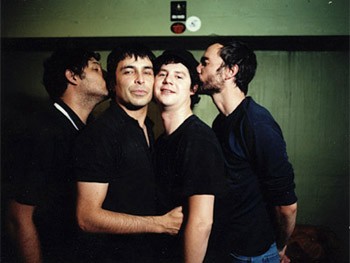
Toast Machine

0

DIY Duo: Toast Machine are self-rising.

Poppin’ Fresh

Local fans warm up to Toast Machine

By Greg Cahill

When everything is firing on all cylinders onstage, it’s the difference between trying to surf and actually being up on the board and having the wave carry you along,” says 24-year-old bassist Gio Benedetti who, with drummer Brandon Warner, comprises the local jazz-inflected, punk-funk, bass-and-drum fusion duo known as Toast Machine. “I’ve gone surfing just a handful of times, so all I know for the most part is the struggle–you’re paddling and you’re exhausted and you’re fighting everything–but there comes that moment when you stand up and it’s like, wow!

“When Brandon and I are able to lock in and create that enormous pocket onstage, it’s pretty amazing. Playing that music in concert is the most enjoyable thing I do. It brings out an energy in me that is the only time I can find it.”

Sonoma County band Toast Machine are part of a small but vibrant movement in modern rock that includes such bass-and-drum duos as the Lightning Bolts from Sacramento and the Rhode Island-based Hella–bands helping to turn rock on its collective ear. “I’m just excited to see people mixing it up with all these different instrumentations while staying in that heavier rock genre,” says Benedetti during an interview from his Cotati home. “Strangely enough, I even had an orthodontist hook me up with a tape he had from high school that had a totally kick-ass bass-and-drum duo named Watts Gnu that just ripped it up.”

Benedetti, a senior at Sonoma State University’s jazz studies program, and the 26-year-old Warner, a Sonoma resident and technician who spends his days at Industrial Light and Magic’s special effects department (he worked on The Hulk and Pirates of the Caribbean), didn’t start out with the intention of creating a smoking standalone rhythm section. In 1993 the two musicians began playing together with a St. Vincent de Paul High School rock band. “We’ve been together so long that I feel like we’re married,” Benedetti says with a laugh.

The duo emerged innocently enough as a way to pass the time while waiting for the other band members to show up at rehearsals.

“It wasn’t like we were trying to create a duo–this began as very informal jamming,” says Benedetti, whose style has developed into a powerful blend of deep groove-laden thumb-slapping action and melodic bass lines.

It clicked. Three years later, Toast Machine popped up for the first time. Initially, Benedetti was hesitant to take the act onstage, so Toast Machine eased into its status as a full-fledged band by performing casually in the lobby at the Phoenix Theatre. “Because of the style, I figured people would think I was just trying to rip off [Primus bassist] Les Claypool,” he says. “I didn’t want people to think I was some lame poseur, but it ended up being really cool.”

The comparisons to Claypool are inevitable, but Benedetti cites the late jazz bassist Jaco Pastorius as his main influence. “I used to play his stuff at practice, and the Jaco thing really got me thinking melodically,” he says. “But we really wanted to rock out and make as big a sound as we could, so a lot of our early stuff has a Tool-like guitar rhythm sound.”

In true DIY spirit, Benedetti and Warner have started their own Brother Maynard label, a name coming not as an homage to Tool singer Maynard James Keenan, but from the character in Monty Python’s Holy Grail who leads a small prayer before someone blasts a rabbit with the Holy Hand Grenade. A couple of weeks ago, Benedetti and Warner reissued Toast Machine’s self-produced eight-track debut CD, The E.P., and they are soliciting other bands for the label.

More recently, the duo have launched a grassroots campaign to get the word out, enlisting an enthusiastic fan base that includes Norwegian web surfers. “The fans have been so supportive,” Benedetti says. “We’re hoping that if we can keep that momentum going then we should be able to do really cool things without having to go to L.A. and audition for the labels and stuff.

“We want to be able to play for more people and do it on our own.”

Toast Machine perform at a CD release party on Friday, June 18, at the Phoenix Theatre, 201 Washington Blvd., Petaluma. Grubb ‘n’ Dubb, You Me and Iowa (featuring Benedetti’s brother) and Shakedown also appear. 8pm. $8. 707.762.3565.


Spin Du Jour

Secret Machines, ‘Now Here Is Nowhere’ (Reprise)

There’s nothing original about Secret Machines, but this Dallas-based alterna-pop trio have their fingers firmly planted on the Cuisinart of rock ‘n’ roll. The band’s debut album is a potent purée of ’70s Kraut rock, ’80s British psychedelia and ’90s dream pop, with liberal splashes of Flaming Lips, Mercury Rev and early Led Zep. Think of it as a modern-rock version of a fortified power shake.

–G.C.

From the June 9-15, 2004 issue of the North Bay Bohemian.

© Metro Publishing Inc.

Goodly Green

Natural Viewing: KRCB launches a new national TV show focusing on people helping the environment.

Goodly Green

Three thoughts, three dots

By Gretchen Giles

Eco-Tourism

Weekend haven, gay getaway village, river outpost–the Russian River area is all of those things. But if the local chamber of commerce has its way, add the term “eco-tourist destination” to that list, please.

Launching a new campaign whose slogan is “Just one more day,” the Russian River Chamber of Commerce believes that if it can get weekend visitors to spend just one extra day in the area, those visitors will return, tell their friends and help to both nourish and infuse the area with a different kind of green: the kind that spends.

“Right now, we’re really weekend-based,” says RRCC board member Nancy Norstad, the owner of the graphics firm Flaunt Media, who is helping to spearhead this new campaign. “And that couldn’t be environmentally worse for the area. People come, stay for two days, trash the place and leave.”

Ever ambitious, the chamber aims to turn its area–as well as a measure of Sonoma County north to Gualala and west to Mark West Springs Road–into prime territory for legions of vacationers who like a little more to their holiday than just a cold one under the hot sun. “Nature is the only thing upon which year-round entertainment is performed,” Norstad pronounces. “And nature provides a lot more interest in the low season than it actually does in the high season,” she continues, listing bird and whale watching, tide pooling and cool weather hiking as lures.

Networking solidly, the RRCC proposes to tie into the work of area recreation providers by creating a full “concierge” package of activities and businesses that hotels, motels and B&Bs can use when directing their guests to local wonders. For every reservation made for and honored by a guest, the originating business receives a commission–smart stuff and a classic win-win for the economy and interested travelers.

But what, one wonders, about da grapes? “We haven’t even talked about wine, and we’re not,” Norstad says with a laugh. “Wine is already done really well out here, and, if anything, we’d focus on touring those wineries on the river that are particularly green, with forums on their specific practices.”

But eco-tourism here is more than just a super-clever way to generate extra income and promote the environment. It may be the best way to help avert the low-flow proposal for the Russian River and to permanently stop the temporarily stalled Monte Rio sewer. “Our big goal in two to five years is to make our entire area–Rio Nido to Monte Rio–a green business area,” Norstad says. “We want to go for certification. The [Russian River RiverKeeper Project] has a list of 18 things that could happen to save the river, and only one of them is low-flow. We are determined to garner the resources to investigate the other 17.” . . .

Eco-Films

Now celebrating its 18th anniversary, the Wine Country Film Festival this year is all about sustainability, featuring an “EcoCinema” fest-within-a-fest that complements the films with symposia on everything from vineyard practices to environmentally wise housing to organic food production and prep. Slated this year for July 22-Aug. 15, the WCFF chose to go gaga for green after festival cofounder Justine Ashton attended the San Francisco Green Festival last year.

“It changed my life,” she says, still sounding awestruck. “I started thinking organic. I don’t even see weeds as being weeds anymore. We started a small organic garden that we’re sharing with other families here. We have a few acres of grapes, and so we’ve changed our vineyard practices. Once I got started, I just couldn’t stop. It just kept growing and growing!”

The unstoppable force of nature as evidenced in Ashton’s passion means that 20 new movies have been selected as representative of sustainability. Since being green when physically making a film is nigh impossible, Ashton and her team chose the films based upon their message. “We cover a broad spectrum of topics, but the bottom line is that everything that we’re showing is proactive and solution-oriented,” Ashton says. “We’re not merely dwelling on the problems. So much is being done right now that it’s just a phenomenon.” . . .

Eco-TV

Claiming to be the first and only series of its kind ever developed for television, local public TV station KRCB launches Natural Heroes, on Sunday, June 20, at 6pm. A slate of 30 episodes of documentary filmmaking centering on how people are helping rather than harming the earth, Natural Heroes is a national feed emanating from our humble burgs.

“It’s a series entirely made up of indie filmmakers who probably wouldn’t have their short films shown anywhere,” says producer Valerie Landes. “Every episode features people who are doing things for the environment.” Landes is just as surprised as this reporter that no one’s tackled this subject before.

“Shows on the Discovery channel are about animals and nature, but not how we help the environment,” she clarifies. “Despite the current administration, this is something that many people are concerned about, are interested in, really want to make a difference about and are thrilled to see others really doing something for the community and on a more global scale; something that is helping us all. Seeing these other stories is really inspiring.”

The programming kicks off on June 20 with “A Lot in Common,” a documentary about a vacant Berkeley lot that is transformed into a community garden through the vigorous efforts of an eighty-something resident and fellow neighbors. Other highlights include the self-evident “Trash Is a Failure of the Imagination”; an investigation of the slow-food movement titled “The Soup Peddler”; and “The Naturalist,” a film that follows the real-life rounds of a hermit named John Muir of the Ozarks, a man who has chosen to live in the solo tradition of Thoreau.

Only 13 of the proposed 30 segments have been chosen and approved. Landes still seeks films. Those interested may call her at 707.585.8522, ext. 124. To learn more about “Natural Heroes,” go to www.naturalheroestv.org. . . .

From the June 9-15, 2004 issue of the North Bay Bohemian.

© Metro Publishing Inc.

Swirl ‘n’ Spit

0

Swirl ‘n’ Spit
Tasting Room of the Week

Field Stone Winery

By Heather Irwin

Lowdown: I remember being dragged to picnics at Field Stone winery as a surly and uninterested teenager, the table set with a loaf of crusty French bread and of course a bottle of wine or two. Aaaah, isn’t this wonderful, the adults would say, as I rolled my eyes and huffed off with my Duran Duran tape. A quiet, peaceful place without pretense or pomp, Field Stone hides among 85 acres of vines in the sun-kissed Alexander Valley, a welcome respite of vine-covered tranquility and natural beauty sure to drive any teenager mad with boredom. Call it parental justice.

Vibe: The winery is actually built into the hill, carved out in the late 1970s as one of the first modern underground wineries. Walking into the barrel rooms is a little disconcerting, as you wind around into the cool, stone tasting room. You’ll likely brush past folks in bicycle pants and hiking gear–the picnic grounds are a favorite among travelers stopping for a quick bottle of wine and lunch. Tasting is a casual affair, with vintners and staff passing through to say hello, and a tasting staff eager to answer questions and explain the history and wines.

Mouth value: After years of experimentation with different varietals, reds have come to rule at Field Stone. The lightest is the summery 2003 Rose of Sangiovese ($12). Served cold, it’s a bright, fruity light wine that’s perfect for picnics. Vintner John Staten loves Rhone wines (and who doesn’t these days?) and has released his first Syrah (2002, $22) this year, an earthy wine that is hard-pressed to live up to its red brethren–Field Stone’s Alexander Valley Cabernet Sauvignon (2000, $24) or the very mellow and matured “Staten Family Reserve” Estate Bottled Cab ($42). The one to buy, however, is the 2000 “Staten Family Reserve” Petite Syrah ($30) made from vines planted in 1894. This is an expansive, velvety wine with plenty of dark fruit and intrigue. The winery does produce some whites, though nearly all are produced from grapes grown elsewhere. The 2002 Chardonnay, from Russian River Valley grapes, is fruity with peach and apricot and not overly oaky. This is the last year for the winery’s dry Gewürztraminer, a favorite for years, and Staten is now working with new Viognier clones just reaching maturity.

Don’t miss: En route from Healdsburg, you’ll inevitably zoom past the old red pickup truck that marks the Jimtown Store (6706 State Hwy. 128, Healdsburg, 707.433.1212). Back up and turn around–the time warp experience of this retro country store is worth a quick stop. The sandwich boards feature the usual turkey and ham, but skip the white bread and try a prosciutto, blue-cheese and fig-olive spread sandwich on a baguette ($7) or a steaming bowl of chili ($4.50). There’s plenty to entertain you while you wait: old-fashioned candy, antiques and a stellar collection of quirky toys. We especially love the Rat Race–a tiny box with little plastic rats running in circles. Make sure to eat outside, under the vines.

Five-second snob: Are you a Rhone Ranger? Many California vintners are nearly fanatical about Rhone-style wines and are planting acres and acres of grapes typically found in the Rhone valley of France. Among the most popular red grapes are Syrah, Petite Sirah, Mouvedre and Viognier–a white grape. Although Viognier is a feisty and notoriously difficult grape to grow, it’s gaining popularity with lightning speed, producing a wine that ranges somewhere between Sauvignon Blanc and Chardonnay, with lots of apricot and tropical fruit flavors. Yum.

Spot: Field Stone Winery, 10075 Hwy. 128, Healdsburg. Open daily, 10am to 5pm. No tasting fee. 707.433.7266.

From the June 2-8, 2004 issue of the North Bay Bohemian.

© Metro Publishing Inc.

Waste Watchers

No One Left Behind: Invite some 20,000 folks over for a weekend party and produce no trash? That's the idea.Waste WatchersHealth and Harmony wages a zero tolerance campaign on trash Julia Butterfly Hill was not pleased.A few years ago, at Santa Rosa's Health and Harmony Festival--the annual entertainment event focused on peace, justice, environmentalism and really cool music--the world-famous...

Swirl ‘n’ Spit

Swirl 'n' SpitTasting Room of the WeekSt. Francis WineryBy Heather IrwinLowdown: The monastically inspired winery off of Highway 12 would make ol' St. Francis proud. Named for the pauper saint whose followers brought the first vines to the New World, St. Francis Winery is about simplicity, beauty and big juicy reds that inspire hallelujahs all around.The newish visitors center...

‘Harry Potter and the Prisoner of Azkaban’

Teen Trio: Are wizarding powers merely a metaphor for the inner Hercules? Who the heck knows.Power PlayEducator Mavis Jukes on the strength of self In its ongoing quest for the ultimate postfilm conversation, Talking Pix takes interesting people to interesting movies."I didn't really have any idea I'd respond to the film this way," says author Mavis Jukes, wiping away...

Oil

Photograph by Michael AmslerTexas Tea: Richard Heinberg thinks we may have already drunk too deep.Oil GoneIf peak oil theorists are correct, our dependence on oil is not only foolish, it's lethal. Does modern civilization have just two choices--change or perish?By R. V. Scheide"No blood for oil!" antiwar activists cried worldwide in the months leading up to the U.S.-led invasion...

Patrick Amiot

Photograph by Michael HoughtonWeld Done: Sculptor Patrick Amiot and the Elvis jukebox that dominates his front yard.Wealth of JunkSculptor Patrick Amiot and the flowing universe By Michael HoughtonWalking into Sebastopol sculptor Patrick Amiot's backyard is a little like walking through the doors of the Wonka factory. Past the gigantic Lucky market sign, past the stacks of rusty junk,...

OAEC

Photograph by Jim ColemanKitchen Stories: Budding mycologist Jacob Kowalick-Allen gets help with mushroom identification from Brock Dolman.Overwhelmed with BeautyAt the OAEC, good works and good life go togetherBy M. V. WoodThe first time I heard about the Garden of Eden, I tried to draw a picture of it. I used every single color in my big box of...

Open Mic

Domestic AbuseWhen it comes to prisoners, mistreatment begins at homeBy Van JonesThe images we've seen from Iraq's Abu Ghraib prison are truly horrifying. Now reports are surfacing of similar, videotaped abuses by U.S. soldiers at Guantanamo Bay. But as awful as all of this is, these scandals should come as no surprise. Just look at the way we treat...

Toast Machine

DIY Duo: Toast Machine are self-rising.Poppin' FreshLocal fans warm up to Toast MachineBy Greg CahillWhen everything is firing on all cylinders onstage, it's the difference between trying to surf and actually being up on the board and having the wave carry you along," says 24-year-old bassist Gio Benedetti who, with drummer Brandon Warner, comprises the local jazz-inflected, punk-funk, bass-and-drum...

Goodly Green

Natural Viewing: KRCB launches a new national TV show focusing on people helping the environment.Goodly GreenThree thoughts, three dotsBy Gretchen GilesEco-TourismWeekend haven, gay getaway village, river outpost--the Russian River area is all of those things. But if the local chamber of commerce has its way, add the term "eco-tourist destination" to that list, please. Launching a new campaign whose...

Swirl ‘n’ Spit

Swirl 'n' SpitTasting Room of the WeekField Stone WineryBy Heather IrwinLowdown: I remember being dragged to picnics at Field Stone winery as a surly and uninterested teenager, the table set with a loaf of crusty French bread and of course a bottle of wine or two. Aaaah, isn't this wonderful, the adults would say, as I rolled my eyes...
11,084FansLike
4,446FollowersFollow
6,928FollowersFollow