

‘In the Realms of the Unreal’

Abbieannian Crusader: Darger’s private world was revealed at his death.

Home Alone

Silence is solace for Henry Darger in the ‘Realms of the Unreal’

By

Henry Darger’s story is one of silence, exile and cunning. In his one-room apartment, Darger (1892-1973) created a prodigious graphic novel, 15,000 pages long. He wove this life’s work from personal experience, from his interest in the American Civil War, from advertisements, coloring books and children’s books. The Wizard of Oz series by his fellow Chicagoans L. Frank Baum and John O’Neill went into the mix. Finally, Darger varnished his creation with a heavy overlay of good old-fashioned Catholic repression.

The strange resulting masterpiece, The Story of the Vivian Girls in What Is Known as the Realms of the Unreal is one of the most grandiose works of outsider art ever made. Documentarian Jessica Yu’s new film In the Realms of the Unreal provides an overview and biography of the shabby, tormented, undersized man who created it.

To passersby, Darger would have been as colorless as a cave cricket. He was the proverbial little old man in a trenchcoat, so reclusive that there’s still argument over whether his name was pronounced with a hard or soft g.

Darger’s epic work is a hallucinatory war story between two feuding planets. The Calvarinian child slavers are opposed by the planet Abbieannia and their female champions, the seven Vivian girls: “Their beauty could not never been painted had they been seen for real, [sic]” he wrote. The many years of war between child-abusing Calvarinian atheists and the devoted Abbieannian Christians is bloodier than a “thrillion” (Darger’s word) Gettysburgs. But there are idylls between the battles–respites in gardens of colossal flowers, with tame armadillos, kitten-headed dragons and fairy girls with butterfly wings or curled horns like rams on their heads.

Using 3D animation, Yu brings Darger’s drawings to life. The reliable character actor Larry Pine does the voice of Darger–here he sounds like a cross between Jason Robards and William S. Burroughs. Dakota Fanning is his co-narrator. Fanning can be the most calculating of child actresses–she shows off her armor-clad cuteness in I Am Sam and elsewhere. Here, she provides an intelligent child’s voice. She disarms us, implying a childishly innocent context for Darger’s dark side, the hell-is-for-children war atrocities that the evildoers inflict on the Abbieannians.

Darger’s illustrations of naked children under torture raise the question of just how innocent Darger was when he dreamt of his girls with little-boy genitals. Yu parries the suspicion of pedophilia in several ways, stressing Darger’s own abused childhood at Catholic orphanages and at the Illinois State Home for Feeble-Minded Children. In Darger’s day, images of naked kids were common in advertisements and in kitsch newspaper photos.

It’s also possible Darger only had a speculative idea of what sex was. (“I really don’t think he knew the difference between boys and girls,” theorizes Darger’s former neighbor, Regina Waters.) Finally, he was an obedient and faithful Catholic, who claimed the Vivian Girls could only be approached by someone in a state of grace. Yu comments, “I decided early on not to include any art experts or psychologists; when it comes to Darger, we’re all guessing, anyway.”

Yu has to be one of the few who has read the entirety of The Story of the Vivian Girls, and that qualifies her as an expert. She previously directed Breathing Lessons: The Life and Work of Mark O’Brien, an Oscar-winning short about a poet confined to an iron lung. Darger’s confinement was almost that total. His life recalls Hamlet’s line, “I could be bounded in a nutshell and call myself a king of infinite space.”

On his death bed at 81, Darger got a lone word of praise for his art. His response was tart: “Too late.” It’s an obvious irony that his talent should be revealed after his death. Worse, perhaps, is the thought of those recluses who don’t have landlords as sensitive to creativity as was Darger’s own unofficial curator, his landlord Kiyoko Lerner. Dumpsters must be brimming with the art of such hermits as purely, madly obsessed as Darger was. You don’t need an imagination as fevered as his to guess what a loss that is.

‘In the Realms of the Unreal’ screens at Rialto Cinemas Lakeside (551 Summerfield Road, Santa Rosa, 707.525.4840) and the Rafael Film Center (1118 Fourth St., San Rafael, 415.454.1222).

From the January 12-18, 2005 issue of the North Bay Bohemian.
© Metro Publishing Inc.

Pop Music Pet Peeves

0

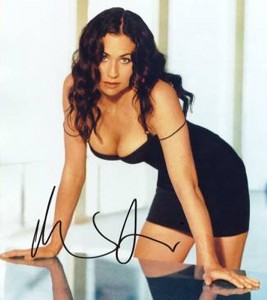
Drivers Him Crazy: Please make the Minnie go away.

Peeves!

Five things that de-tune my day

By Greg Cahill

At the risk of sounding like a total curmudgeon, here are five music-related offenses for the complaint department, little things that should have remained in the background but somehow shot to the top of the white-noise heap. May I speak to the person in charge, please?

1. The people who program in-store music at Borders Books & Music. Wandering around the mega-chain’s San Rafael outlet, intent on spending some hard-earned cash, I was confronted by an insipid acoustic version of Bruce Springsteen’s ode to quiet desperation “Hungry Heart.” Only this new acoustic rendition is sung by Minnie Driver–yeah, that Minnie Driver, the British actress whose screen credits include the God-awful film adaptation of Andrew Lloyd Webber’s musical The Phantom of the Opera.

With 32,000 employees working at 500 outlets and $3.7 billion in worldwide revenue, can’t the Borders Group Inc. find someone with enough sense to keep Minnie Driver away from the buying public? What about those smart guys who write the pithy little reviews posted on the shelves of the Borders’ CD section? Surely, one of them can figure out that Minnie, the singer, is at best (I pray) a passing blip on the pop-music scene.

2. The FCC. No, not because chairman Michael Powell sucks up to the entertainment giant Clear Channel Communications. (Among other despicable acts, Clear Channel recently posted an open letter to viewers of David Letterman complaining that the late-night comedian had based a joke on what Clear Channel claims is an error-ridden article that appeared in Rolling Stone stating that it “controlled” concert bookings in key cities; the magazine stands by the article.)

In a more local vein, the FCC earns my ire because they are completely insensitive to the fact that many residents of West Petaluma (of which I am one) can not pick up KALX, the UC Berkeley college radio station, because the FCC a few years ago decided to allow both KRCB and KCSM to boost their signals in the area on the same frequency that KALX broadcasts (97.1-FM). The result: I pick up all three stations simultaneously on my car radio–and the postmodern quirkiness of that effect grew tiresome long ago.

3. Local radio DJs who use canned online subscription services as source material (and you know who you are). Why is it important to know that today is Chuck Berry’s birthday? How does that information uplift or fulfill listeners? I don’t care what day Chuck Berry was born. Or Peter Gabriel. Or Ann Wilson. Or the faceless bass player in Wilco. Why not share some real insights gleaned from your 30 years in the music business? Oh, that’s why . . .

4. Top 10 lists. I’ve been just as guilty as the next guy of tormenting readers with these exercises in mental masturbation (and sucking up to publicists), but I abstained this year. And I’m glad I did. In a recent Nightwatch column for the Missoulian, music critic Joe Nickell points out that while you can find plenty of curiosities on those lists, almost no one agrees what constitutes a worthy CD title. That’s how the New York Times can ordain U2’s (mediocre) new release How to Dismantle an Atomic Bomb as pop album of the year, when that CD didn’t even make Amazon.com’s Top 100 Editors’ Picks for 2004.

The culprit: no one has time to listen to the 25,000 titles released each year. “Even for the most music-obsessed aficionado, there’s only so much time in a year to listen to music, 5,840 hours, to be exact, if you figure eight hours of sleeping time per day,” opines Nickell, who apparently is never without his iPod. “To assess the quality and staying-power of an album, I personally feel one has to listen to it at least five times, all the way through. Figure an hour of music per album, and that means that one can only consider a maximum of 1,168 different albums in a given year, and that’s assuming one has the endurance and financial independence to commit 16 hours per day, every day of the year, to closely listening to new music.

“More realistically, it’s probable that the most committed music critics around the country only manage to commit that effort to, at best, 40 or 50 new albums in a year. Of those, plenty will turn out to suck.” You can take that to the bank.

5. Music venues that don’t e-mail their entertainment calendars to people on their mailing list. Suffice to say that if the Sweetwater Saloon in Mill Valley had informed me last week that keyboardist, songwriter and producer Al Kooper–whose extraordinary rock ‘n’ roll résumé includes stints with the Beatles, the Blues Project, Bob Dylan and Lynyrd Skynyrd, to name a few–was playing at that cozy nightclub on the night of Jan. 12, you’d be reading an interview with him right now instead of my pet peeves. Now, that’s something to complain about.

From the January 12-18, 2005 issue of the North Bay Bohemian.

© Metro Publishing Inc.

Swirl n’ Spit

0

Swirl n’ Spit
Tasting Room of the Week

The Smart Drinkers’ Tour of Winter Wineland

By Heather Irwin

There are two things you need to know about Russian River tasting weekends. Take a map and don’t lose your glass. OK–three things: bring a sharp pencil as well. Because when push comes to shove–and believe me, it does during Russian River tasting weekends–a little poke is sometimes necessary to move along friendly tourists from Sheboygan. Not that we don’t love tourists and all, but we’re on a mission, people.

After all, $30 is no small sum to lay out for a long weekend of winding your way through the hundred or so wineries of the Russian River, Alexander and Dry Creek Valleys. So, to get your money’s worth, cut the chit-chat and get to sippin’. Always held the third weekend in January, this year’s Winter Wineland is scheduled for Saturday-Sunday, Jan. 15-16.

Amateurs foray into the vineyards willy-nilly, stopping at whatever balloon bouquet beckons them along the winding roads. You’re too smart for that. Pick a single appellation (or region) each day and hit a handful. Keep it to five or six wineries. Concentrate first on smaller wineries that are not usually open to the public–or are usually open by appointment only–like Acorn, Chateau Felice or Michel-Schlumberger. Off the beaten path, you’ll find friendly staff and spectacular wine. Secondly, try to map a route that won’t have you doubling to hell and back, wasting more of your time driving that actually tasting wine. You can find detailed maps at www.wineroad.com.

Though big tasting weekends can be a great opportunity to taste some brand-new wines, they’re also often a way to unload a lot of less-than-stellar wines stacking up in the cellars. Don’t waste your time tasting a crummy Reisling from a winery that’s known for its Pinot Noir. At the same time, be open to adventure–sometimes a new varietal can be the start of something wonderful.

Russian River Valley Favorites
Acorn:
Wonderful Old World field blends (Sangiovese) that win huge awards.
Chateau Felice: Imaginative wines from a young winemaker. Killer Merlot.
J Wine: Sparkling wines that tickle and tease. Plus, the Bubble Room.
Gary Farrell: Exceptional Pinot Noirs and a really great debut Sauvignon Blanc with views that will have you pondering the meaning of life.
Suncé: A fun, family-owned winery with lovely Pinots.

Alexander Valley Favorites
Locals: A fun way to try a variety of small, local wines.
Chateau Souverain: Pull up to the manor, Jeeves. Pretend you live in this amazing French chateau and toast to your newfound greatness.

Dry Creek/Healdsburg Favorites
Preston: Kitties, bread, bocce and jugs of wine on Sunday.
Bella Vineyards: Once you enter the caves, you may not want to leave. Great reds.
Michel-Schlumberger: A beautiful Mission-style space with refined French-style wines.

Winter Wineland is scheduled for Saturday-Sunday, Jan. 15-16, from 11am to 4pm at some 100 wineries along the Russian River Wine Road. Tickets are $10-$35 and are good for the whole weekend. Call the winery where you would like to begin your day to purchase tickets. 707.433.4335. www.wineroad.com.

From the January 12-18, 2005 issue of the North Bay Bohemian.
© Metro Publishing Inc.

Food for Thought

0

Food for Thought

Old World, New World

By Steve Billings

At 4 o’clock on Christmas Eve, the preparations for Holy Supper were well under way. The kitchen was humming with activity, the windows in the adjoining room steamed already. A huge pot of water boiled on the stove, expectant. Rounds of uncooked dough crowded together atop the chopping block in the middle of the room, wrapped in plastic, staying moist. Bowls of sauerkraut, red cabbage, kale, and potatoes and cheese colored the countertop next to the stove. Marlene, my girlfriend’s mother, lets no space go unused.

Meanwhile, my girlfriend, Zoe, rolled out dough with her grandmother’s white marble pin, working it into sheets that were thin and strong. The dough was then sectioned into squares, filled with a dollop of sauerkraut, folded over and pinched shut. We did the same thing many times until all of the fillings were used. A pirohi is once again born.

The pirohi is the ravioli-like centerpiece of the meal that my girlfriend’s family has been preparing each Christmas Eve since long before her great-grandparents immigrated to Pittsburgh, Penn., from Slovakia in the 1920s. Back then, their neighborhood was populated with a few hundred working-class families of Slavic origin. Most of the family live in California now, but the traditions carry on.

The meal still begins with a mushroom soup whose broth is based on sauerkraut juice and browned flour. Some would call it an acquired taste, but when the broth is not overly potent and the sourness is balanced, the soup shines and wakes you up. This is eaten with a round, almost focaccia-type bread called pagach that is sometimes piled in the middle of the table to reflect Jesus as the bread of life. After this come the pirohis, which, when they are made right (as they were this year), are near the apex of comfort food.

Before we sat down at the table to eat, there were ceremonial touches to be done. Marlene lit the Holy Candle, blessed by the church, symbolizing the Star of Bethlehem. We passed around a bowl of silver change, washing our hands in money, encouraging and inviting prosperity in the coming year. Marlene then marked the sign of the cross in honey on each of our foreheads in hopes that the “lives of all present will be sweet without any bitterness.”

We passed around a bowl containing cloves of raw peeled garlic to be eaten for its healthful benefits and ability to keep away evil spirits.

This year our prayers were said for us some 3,000 miles away by the oldest member of the family, Marlene’s 85-year-old aunt MaryAnne from Pittsburgh. As we sat at the candlelit table, Marlene played the long voicemail left by her aunt. It was a few minutes long, some of it spoken words, some song, all of it in Slovak.

Of course, I understood nothing as she sang and prayed. I just listened, letting the words and what felt like kindness run over me. After all these years, new traditions keep arising.

From the January 12-18, 2005 issue of the North Bay Bohemian.

© Metro Publishing Inc.

Edible Obsessions

0

Edible Obsessions

Ode to the Loaf

By Steve Billings

Meatloaf is comfort. Meatloaf is home. Meatloaf is Mom. Meatloaf is something you don’t order from the roadside diner. Or is it?

I always loved my mom’s meatloaf growing up. She topped hers with strips of bacon and served it with mashed potatoes and green beans. This was one of the few meals we had where there was ketchup on the table. We made sandwiches from the leftovers the following day.

Meatloaf. It just keeps on giving.

Yet there is something about the word itself that makes you wonder if it’s a wise choice dining out. It’s not attractive. It doesn’t sound pretty when you say it. It is composed of two monosyllabic words that independently are a hard sell and describe groups of things rather than particulars. When you compound these two vague things into one, the result is only slightly clearer. There is lots of room for the imagination to run wild.

The only thing you know for sure is that there is loaf-shaped meat in front of you. How did it get this way? What kind of meat is in it? What was previously wrong with it that you had to form it up into something else before you served it to me?

But humans have been eating ground seasoned meats for centuries and for many different reasons. Grinding meat makes tough meat more tender, while adding other ingredients (like breads, vegetables, other grains) allows you to feed more mouths and use all edible parts.

But it seems that our American meatloaf is more of a product of industrial evolution and commercialism than one based on necessity or scarcity. The Industrial Revolution introduced commercially available ground meat for the first time, while meat grinders sold to the general public were promoted by including recipe books.

Jean Anderson, author of the forthcoming American Century Cookbook: The Most Popular Recipes of the 20th Century (Gramercy; $14.99), says that meatloaf recipes can be found in American cookbooks from the 1880s onward and were made primarily from veal and “altogether different from the meat loaves so familiar today.” Anderson also reveals that the precursor to our meatloaf of today was something called “cannelon,” a kind of meat roll made from lean chopped steak.

“Though simple loaves of chopped meat may have been made during America’s infancy and adolescence, only in the twentieth century did meat loaves truly arrive,” she writes. “And, yes, many of them did come out of big food company test kitchens. Like it or not.”

I have to admit, I kind of like it.

From the January 5-11, 2005 issue of the North Bay Bohemian.

© Metro Publishing Inc.

Assisted Suicide Bill

0

Jagged Little Pills: Physician-assisted suicide could ease the transition of terminally ill patients.

Mercy or Murder?

Assisted suicide bill challenges conventional notions on death and dying

By Joy Lanzendorfer

In this new year, California will revisit yet another controversy. Local assemblywoman Patty Berg is writing a physician-assisted suicide bill with Lloyd Levine, D-Van Nuys. The bill, patterned after Oregon’s 1997 Death with Dignity Act, will be introduced to legislators in mid-February and will be the second time California has considered whether to legalize physician-assisted suicide. Voters failed to approve Proposition 161, California’s Death with Dignity Act, in 1992.

Sebastopol City Council member Linda Kelley hopes Berg and Levine’s bill will fare better than Proposition 161. She supports physician-assisted suicide not only because she’s a critical care nurse at Santa Rosa Memorial Hospital, but also because of personal experience.

Several years ago, Kelley’s friend, a fellow nurse from Santa Rosa Memorial, was in the advanced stages of AIDS. He told Kelley that he’d secured medication to hasten his death in case the illness got intolerable. Though he never ended up using the medication–slipping gently into a coma before passing away–having it on hand gave him peace of mind.

“He had autonomy over his life,” says Kelley. “The medication gave him a sense of relief. He wasn’t as worried about the indignity that a lot of patients suffer. It was a quality-of-life issue.”

In Oregon, the path Kelley’s friend chose–to have the medication on hand, just in case–has turned out to be the most common choice among patients. Since Oregon’s Death with Dignity Act was passed in 1997, only 171 people–a quarter of those who were prescribed lethal medication–actually committed suicide. The majority chose to die naturally.

It’s having the choice that’s important, insist advocates of the bill. As such, proponents say the bill improves their quality of life. “This is about relieving suffering,” says Berg. “People expect to be spared from unnecessary pain, and that expectation should be met, even at the end of their lives. Maybe even especially at the end of their lives.”

While Gov. Arnold Schwarzenegger has not said where he stands on physician-assisted suicide, formidable groups oppose the issue, including many religious organizations.

“Even in the face of old age or progressive illness, suicide is not an honorable option, but an utter renunciation of one’s own life and the communities to which one belongs,” says Bishop Daniel Walsh, Diocese of Santa Rosa. “Assisted suicide is not an act of mercy, but of betrayal. It violates the justice and mutual trust that are the basis of every genuine relationship of life.”

In Oregon, physician-assisted suicide is open to people with terminal illnesses, but not such chronic illnesses as multiple sclerosis. Patients must apply verbally and in writing to their doctor for assistance with suicide. After a 15-day waiting period, the doctor can prescribe apainless, but lethal, medication. The patient must take the pills–usually the barbiturate Secobarbital combined with antivomiting medicine–without help from anyone else.

While physician-assisted suicide is not euthanasia, opponents argue that it is a slippery slope leading to legalized murder.

“It just hasn’t happened,” says Carole van Aelstyn, acting executive director of Compassion in Dying’s Northern California office. “People are not flocking to Oregon to use this law. The record from Oregon shows it has one of the highest morphine rates per capita and one of the highest hospice rates. The law isn’t being abused.”

The California Medical Association (CMA) has opposed previous attempts to legalize physician-assisted suicide, though it will reserve opinion about the current bill until the association has read it. The CMA is primarily concerned about potential abuse of the law, in which physicians and family members, rather than patients, would make crucial decisions.

In Oregon, the Department of Health meticulously monitors the law to make sure abuse doesn’t happen, according to van Aelstyn. Berg and Levine’s bill would set up a similar system here. Under the Oregon law, if the doctor thinks the patient is depressed, the person must undergo an evaluation by a mental health professional and be deemed mentally competent. The California law would likely be the same.

Still, some say physician-assisted suicide will blur the definition of what it means to be suicidal. In normal circumstances, planning to die is connected to mental illness.

“One of the problems with this issue is that suicide is not a rational decision,” says CMA spokesperson Ron Lopp. “It’s usually a psychologically abnormal event associated with depression.”

Proponents say that the desire for physician-assisted suicide by terminally ill patients is different from the desire of otherwise healthy people to kill themselves. Ideally, the terminally ill patient will have gone through the five stages of accepting death–denial, anger, bargaining, depression and acceptance–before considering the option of physician-assisted suicide.

“For someone to acknowledge the irrefutable fact of their own imminent demise and seek to participate in that process is not something that you could reasonably label suicidal,” says Will Shuck, a spokesperson for Berg.

While no one needs permission to commit suicide, proponents believe that the aid of a physician will help terminally ill patients end their lives safely and painlessly. The law, in their view, would protect patients while giving them more choices.

At the same time, physicians could feel conflicted about this issue, since it goes against their vows to be “healers, not killers,” according to Lopp.

However, he acknowledges that doctor-assisted suicide is a complex issue. Some medical professionals support it and others don’t. For many, the morality surrounding the issue is not cut-and-dry.

“It’s a decision society should make,” says Lopp. “But I’m just not so sure it’s a decision the government should make.”

From the January 5-11, 2005 issue of the North Bay Bohemian.

© Metro Publishing Inc.

Swirl n’ Spit

0

Swirl n’ Spit
Tasting Room of the Week

Paradise Ridge Winery

By Heather Irwin

Lowdown: Every potential bride from here to San Jose has likely mooned over the possibility of hosting her wedding at the breathtakingly scenic Paradise Ridge Winery. However, this is no reason for the unengaged to miss this Santa Rosa gem, tucked away in the midst of Fountain Grove’s suburban sprawl.

Once home to a utopian commune headed by Thomas Lake Harris at the turn of the century, the Fountain Grove ranch has for years captivated the imagination of visionaries of one sort or another. Though the commune was abandoned, its Japanese winemaker, Kanaye Nagasawa, continued on, building Fountain Grove Winery, one of the county’s most prolific wineries, and producing some 90 percent of all of Sonoma County vintages. Now known as Paradise Ridge, the winery is owned by art collectors and vintners Walter and Marijke Byck.

Mouth value: When visiting the tasting room, don’t get too distracted by the vista outside, because there’s plenty to enjoy on the counter. The 2003 Grandview Vineyard Estate Sauvignon Blanc ($14.95) is a bit yeasty on the nose but has a refined sense of fruit, rather than the Chiquita banana quality found elsewhere. The 2002 Nagasawa Vineyard Estate Chardonnay ($21.95) differentiates itself with a soft, oaky quality and a scent of caramelized sugar that’s so yummy it begs to be dabbed behind the ears. Also great is the 2001 Merlot ($25.95), which drinks amazingly well for a new release, with a wonderful nose and lots of dark fruit and vanilla.

The winery’s two Cabernets, the 2000 Sonoma County Cabernet Sauvignon ($25.95) and the Elevation Rockpile Cab ($33), are both lighter, brighter wines that don’t overwhelm the palate. Harvested from grapes that kiss the clouds (or at least the low-lying fog) at 2,000 feet above sea level, the Rockpile is a very drinkable (but equally cellarable) Cab with a noticeable infusion of Merlot. You’ll be asking for a second, third and fourth glass.

Don’t miss: The winery is home to a landscape of immensely proportioned outdoor sculptures tucked into the vineyards and hillsides. Each Wednesday evening from April through October, you can park yourself for a picnic among the art and vegetation, and watch the sunset–a creatively cheap date. Paradise Ridge’s Sculpture Grove offers contemporary work that changes each year.

Five-second snob: Kanaye Nagasawa, who arrived in the States around 1860, was one of eight Japanese men who smuggled themselves out of that country–then sealed to the rest of the world–in order to learn the ways of the West. A member of the samurai class, Nagasawa was the only one of the group not to return to Japan. Perhaps life in Santa Rosa, along with elaborate parties in Fountaingrove’s now-dilapidated round barn, were enough of an incentive to stay.

Spot: Paradise Ridge Vineyards and Winery, 4545 Thomas Lake Harris Drive, Santa Rosa. Open daily, 11am to 5:30pm. No tasting fee. 707.528.9463.

From the January 5-11, 2005 issue of the North Bay Bohemian.

© Metro Publishing Inc.

Marlena Shaw

0

Mercy, Mercy, Mercy: Marlena Shaw is the darling of the sample set.

Soul Standard

Marlena Shaw, a lesser-known gem

By Gabe Meline

It’s only 10am, but Marlena Shaw has already been out doing some Christmas shopping, trying in vain to find the television that her husband really, really wants. Every store is sold-out, but she’s keeping her cool.

“A lot of my life in show business has been the same way,” the singer says by phone from her Las Vegas home. “I expect something to happen and it doesn’t happen, but then something better comes along.”

In recent years, something better indeed has come along for Marlena Shaw. Though her impressive jazz career has included working with Sammy Davis Jr. and Count Basie, recording over 20 albums and performing steadily for nearly four decades, Shaw–who appears Jan. 14-15 at the LBC–is just one of many artists who owes a resurgence of interest to hip-hop sampling.

I first heard Marlena Shaw five years ago on DJ Shadow and Cut Chemist’s Brainfreeze CD, a mix made entirely of snippets from old funk and soul 45s. The DJs only used one verse, but that’s all it took to realize that something incredible was happening–the swirling orchestra, the funky drums, the playful, sultry vocal. The song, “California Soul,” may simply be one of the greatest soul songs ever recorded.

In a heavy groove, this track describes the pulse of life in California and the special brand of soul that only California could give birth to. It feels intimate, like the singer is sitting down and telling you all about it, but at the same time it feels like a late-night beach party.

I hunted record stores high and low, but no one had a copy of “California Soul” until at last I found a reissue on vinyl of the original album, The Spice of Life, one of the greatest soul albums ever recorded. Not that anyone would know. Sadly, the album–in fact, most of Shaw’s fantastic output for both Cadet and Blue Note in the ’60s and ’70s–is unavailable in the United States; you can’t even find “California Soul” on iTunes. Copies of the original 45 routinely sell for $100 and up on the collectors’ market, making the song–and in many ways, Marlena Shaw herself–a lesser-known gem in the world of soul music.

“You know, I love it, I absolutely love it,” Shaw remarks of the mining that her back catalog has endured, pointing out that a new fan is on the other end of every sample. One of them, in fact, is on the other end of the phone line.

Credit has not always fallen where it is due, however. When I bring up the Gang Starr classic “Check the Technique” from 1991’s Step in the Arena, which loops the “California Soul” drum intro, she has no idea what I am talking about. St. Germain’s “Rose Rouge” from the bestselling Tourist album relies almost entirely on a Marlena Shaw sample, yet Blue Note refuses to negotiate any kind of financial compensation for it.

I mention my quest for “California Soul,” and she laughs. “I’m telling you, it has been all over the place,” she says. “During one newscast, right before Arnold Schwarzenegger was running for governor, they introduced him in California and sure enough, they played ‘California Soul,’ and I said, ‘Now you’ve gone one step too far!’

“Of course,” she adds, “the things that I’ve written that have been sampled, you know, it’s nice to get some of those checks, so it has been very good for me.”

The years have been kind to Shaw’s talent as well, and the recent interest in her work has reinvigorated her newer material. Her signature lyric delivery is still in full effect on her latest release, Lookin’ for Love (441). Standards such as “You Don’t Know What Love Is” and “For All We Know” shine like the diamonds they were meant to be, and she sings a biting, bluesy rendition of Cannonball Adderley’s “Mercy, Mercy, Mercy.”

One thing that has remained constant in Shaw’s career is her longstanding penchant for social commentary. In the late 1960s, this was manifest in empowering songs like “Liberation Conversation” and “Woman of the Ghetto.” Shaw even titled a 1975 album Who Is This Bitch, Anyway? At the time, the title raised eyebrows.

In 2004, Shaw is still commenting on the state of the world. On her new album, it takes the form of the ode, “Hope in a Hopeless World.”

“I am seeing so much that is disheartening to me,” she says. “People don’t seem to have the heart anymore, the way we used to. We should be further along in helping our fellow man than we are, but it seems to have gone the other way.”

After 40 years in the business, Shaw exudes a warmth that is the crucial backbone of her singing style, and she’s thrilled about her upcoming shows in Santa Rosa. “I am definitely planning on doing the good stuff,” Shaw promises. “I always have some little surprises, you know.”

Marlena Shaw appears Friday-Saturday, Jan. 14-15, at the new Carston Cabaret at the LBC. 50 Mark West Springs Road, Santa Rosa. 7:30pm. $25. 707.546.3600.

From the January 5-11, 2005 issue of the North Bay Bohemian.

© Metro Publishing Inc.

Mad Cow

0

Meat Is Murder?: What lobbyists don’t know may hurt us.

How Now, Mad Cow?

One year after the first case of mad cow disease in the U.S. was confirmed, promised food safety reforms have yet to be instituted. And they never will be, if the cattle industry has its way.

By Diane Farsetta

For a while, it looked as though one lone cow might succeed. Government officials promised to implement food-safety measures long championed by consumer, family-farm, health, environmental and public-interest organizations. Industry groups–and their former lobbyists now working for regulatory agencies–were on the defensive.

That was Dec. 23, 2003, and the first case of mad cow disease in the United States had just been confirmed.

Within a week, the U.S. Department of Agriculture announced that so-called downer cows–animals too sick or injured to walk–would be banned from the human food supply. Representative Gary Ackerman, D-N.Y., who had unsuccessfully championed a downer ban for years, offered qualified praise.

“We’re pleased that the Agriculture Department is finally banning downed animals after fighting with them for so long to do so,” he said. “The department has seen the light, but that’s only because they’ve been struck by lightning.”

However, that lightning produced more noise than illumination. One year later, reforms proven necessary by the experiences of European and Asian countries have yet to be instituted by the agencies most responsible for food safety: the USDA and the Food and Drug Administration.

Why does mad cow disease matter? Most immediately, because it’s a fatal, neurodegenerative disease that spreads from animal to animal–and from cows to humans–through the food supply. In Britain, the “ground zero” for mad cow disease, 147 people have died from variant Creutzfeldt-Jakob disease, the human form of the illness, and five others have been diagnosed with it. In addition, 3.7 million cattle were destroyed and many family farmers and ranchers went bankrupt.

There’s another reason why mad cow disease is important–even for vegetarians. Like the Merck Vioxx and Enron scandals, the issue reveals how compromised our regulatory agencies have become.

Through lobbying, campaign contributions and the industry-government revolving door, the meat and feed industries have shaped relevant policy from the beginning. In noting the anniversary of last year’s scare, the Sacramento Bee recently reported that “consumer groups were shut out” of the process for developing the mad cow risk-analysis model regulatory agencies rely on. Among those acknowledged for “scientific input and support” are people “with ties to ConAgra Beef, the National Cattlemen’s Beef Association, the National Renderers Association and the American Feed Industry Association,” the paper wrote.

Instead of implementing real reform, over the past year government officials and industry flacks have instead oversold limited policy changes, touted questionable polls and studies, and relied on slick public relations to maintain confidence in the U.S. food supply. (Japan, which formerly imported one-third of all U.S. beef products to the tune of $1.2 billion annually, remains unswayed.)

For example, feed for cows and other ruminant animals may still contain cattle blood and fat, chicken coop waste, and pig and poultry slaughterhouse waste. All of these materials present possible routes of animal-to-animal disease transmission.

In January 2004, the FDA promised to close these gaping loopholes in what most government press releases refer to as the “firewall feed ban.” At the time, the now-outgoing Health and Human Services Secretary Tommy Thompson explained, “Although the current animal feed rule provides a strong barrier against the further spread of [mad cow disease], we must never be satisfied with the status quo.”

Six months later, Thompson announced that the FDA was indefinitely delaying action. Consumers Union called the stonewalling “a betrayal of a promise made to consumers to protect their health.” The FDA’s déjà vu-laden inertia can be chalked up to vigorous lobbying. The American Meat Institute blasted stronger feed regulations as “unwarranted.” The National Grain and Feed Association called them “draconian.” Eight cattle and feed industry groups warned the FDA that the proposed regulations would “cause economic dislocation throughout the livestock industry.”

Washington listened. In 2004, nearly 80 percent of campaign contributions from the livestock and meat processing and products industries went to Republicans, according to the Center for Responsive Politics. In August the grande dame of meat politics, the National Cattlemen’s Beef Association (NCBA) announced in a press release that it was taking a “historic and unprecedented action in the organization’s 106-year history by directing its political action committee to endorse Bush-Cheney for reelection.”

Furthermore, according to Tactics, the newsletter of the Public Relations Society of America, “Key messages for [meat industry] spokespeople to reinforce in media interviews” include the mantras that “U.S. beef is safe,” “the [mad cow disease] surveillance system worked” and “regaining access to export markets is a priority.”

It might take another mad cow–or 10 or 20–to shock U.S. regulatory agencies into action. The main concern of Agriculture Secretary nominee Mike Johanns is international trade, as was the case with outgoing secretary Ann Veneman. Moreover, Johanns is on record as opposing the USDA’s refreshingly open policy of announcing the result of rapid tests used to screen cattle for mad cow disease.

Transparency and stronger safeguards benefit everyone, building real confidence among domestic and foreign markets, not to mention protecting human and animal health. Perhaps the Bush administration and its industry friends will realize this sooner, rather than later.

From the January 5-11, 2005 issue of the North Bay Bohemian.

© Metro Publishing Inc.

Open Mic

Open Mic

Scandal Scope

By

Hunger for scandal is healthy in journalists. To succeed in the profession, one needs a taste for rot and garbage to rival the appetites of Templeton the rat in Charlotte’s Web. But finally, scandals of the day lose their savor–by the time it was over, the Peterson case was squeezed as dry as an old-age pensioner’s teabag. All we can do, then, is sit by the fire and sigh, “Where is the muck of next year?” Here’s a list of scandals we hope to monger in 2005. Hold your nose.

While a new computer system in the archives at a suburban Houston police station is being installed, the files are shipped off to storage. Behind a cobweb-covered filing cabinet, a temp employee finds a discarded folder and smuggles it out to the press. Just a little memento of a “lost year”: this is a “possession of cocaine” arrest record complete with two crystal-clear mug shots. John Waters once said, “Everybody looks better when they’re under arrest.” Sadly, this isn’t the case for George W. Bush. . . .

Divorce is always a tragedy, isn’t it? Especially those really acrimonious divorces–so full of terrible public accusations and sordid details of groping and sexual harassment. We mean occasions of infidelity so flagrant that it surpasses the tolerance of a Kennedy to accept it, even if that Kennedy is named M___a Shr___r. . . .

During the trial of Saddam Hussein, the former dictator–tanned, rested and ready–keeps repeating that he sent peace overtures to the U.S. State Department shortly before Operation Desert Freedom commenced. Lies, all lies, claims Condoleezza Rice, but then Reuters finds Saddam’s correspondence. . . .

The Japanese have a verb for it: bushuru–meaning, “to commit an instance of embarrassing public vomiting.” The word was coined to commemorate the occasion when Bush the elder flashed the hash right into the lap of the prime minister of Japan. The spin machine has to chug into action after Dick Cheney has that mortifying vomiting incident during a tour of a veterans hospital. No, no, no–it wasn’t witnessing the blood, filth and crowding in the wards–it was that questionable oyster Cheney ate at a fundraising luncheon. Yeah, that’s it. . . .

Consider George Michael, mathematician John Forbes Nash, playwright Joe Orton and Karl Rove. When Rove is arrested in late 2005, what crime will these four men have in common? (Hint: “The public lavatory! The last bastion of male privilege!”–Orton, What the Butler Saw.)

“It’s only a litmus test if we say it is” is the unofficial motto of the Bush-appointed Justice Department. When that new Supreme Court candidate is sent up from district court, the judge seems an unstoppable candidate: a rock-ribbed Republican, half-black, half-Hispanic and female, and simultaneously pro-life and pro-death (penalty). Unfortunately, a monkey wrench is thrown in the works when the New York Times reveals she is utterly illiterate. . . .

A sensation at an Antiques Roadshow taping in Baltimore. The droning of the experts on old baseball cards, Bakelite jewelry and Toby jugs is disrupted by shouts of triumph when a furniture dealer discovers a hidden drawer in a 200-year-old Chippendale end table. Inside: a manuscript soon verified as the secret memoirs of George Washington.

Washington reveals his sexual conquests, including a dismayingly detailed account of a dirty week spent in Boston with Betsy Ross. He writes of his apprehension of the other founding fathers: John Adams (“I should rather eat a bushel of chokecherries than endure that man’s company for an hour”) and James Madison (“a half-sized squirt with an unmanly handshake and as for his wife, Dolly, one cannot trust a woman who does not drink, for it is truly saith, what is she hiding?”).

He pours contempt on both Thomas Jefferson (“a weasel in human form, as trustworthy as a two dollar plough”) and Benjamin Franklin (“in faith, even the crack of dawn is not safe around that prating Quaker”). In the finale, Washington voices his feelings about religion: “A comfort for servants and slaves, but mere shoofly-pie-in-the-sky for their masters. . . . Mark my words, it shall be the end of our Republic, if she be turned over to God-botherers.”

From the January 5-11, 2005 issue of the North Bay Bohemian.

© Metro Publishing Inc.

‘In the Realms of the Unreal’

Abbieannian Crusader: Darger's private world was revealed at his death.Home AloneSilence is solace for Henry Darger in the 'Realms of the Unreal'By Henry Darger's story is one of silence, exile and cunning. In his one-room apartment, Darger (1892-1973) created a prodigious graphic novel, 15,000 pages long. He wove this life's work from personal experience, from his interest in the...

Pop Music Pet Peeves

Drivers Him Crazy: Please make the Minnie go away.Peeves!Five things that de-tune my dayBy Greg CahillAt the risk of sounding like a total curmudgeon, here are five music-related offenses for the complaint department, little things that should have remained in the background but somehow shot to the top of the white-noise heap. May I speak to the person in...

Swirl n’ Spit

Swirl n' SpitTasting Room of the WeekThe Smart Drinkers' Tour of Winter WinelandBy Heather IrwinThere are two things you need to know about Russian River tasting weekends. Take a map and don't lose your glass. OK--three things: bring a sharp pencil as well. Because when push comes to shove--and believe me, it does during Russian River tasting weekends--a little...

Food for Thought

Food for ThoughtOld World, New WorldBy Steve BillingsAt 4 o'clock on Christmas Eve, the preparations for Holy Supper were well under way. The kitchen was humming with activity, the windows in the adjoining room steamed already. A huge pot of water boiled on the stove, expectant. Rounds of uncooked dough crowded together atop the chopping block in the middle...

Edible Obsessions

Edible ObsessionsOde to the LoafBy Steve BillingsMeatloaf is comfort. Meatloaf is home. Meatloaf is Mom. Meatloaf is something you don't order from the roadside diner. Or is it? I always loved my mom's meatloaf growing up. She topped hers with strips of bacon and served it with mashed potatoes and green beans. This was one of the few meals...

Assisted Suicide Bill

Jagged Little Pills: Physician-assisted suicide could ease the transition of terminally ill patients.Mercy or Murder?Assisted suicide bill challenges conventional notions on death and dyingBy Joy LanzendorferIn this new year, California will revisit yet another controversy. Local assemblywoman Patty Berg is writing a physician-assisted suicide bill with Lloyd Levine, D-Van Nuys. The bill, patterned after Oregon's 1997 Death with Dignity...

Swirl n’ Spit

Swirl n' SpitTasting Room of the WeekParadise Ridge WineryBy Heather IrwinLowdown: Every potential bride from here to San Jose has likely mooned over the possibility of hosting her wedding at the breathtakingly scenic Paradise Ridge Winery. However, this is no reason for the unengaged to miss this Santa Rosa gem, tucked away in the midst of Fountain Grove's suburban...

Marlena Shaw

Mercy, Mercy, Mercy: Marlena Shaw is the darling of the sample set. Soul StandardMarlena Shaw, a lesser-known gemBy Gabe MelineIt's only 10am, but Marlena Shaw has already been out doing some Christmas shopping, trying in vain to find the television that her husband really, really wants. Every store is sold-out, but she's keeping her cool."A lot of my...

Mad Cow

Meat Is Murder?: What lobbyists don't know may hurt us.How Now, Mad Cow?One year after the first case of mad cow disease in the U.S. was confirmed, promised food safety reforms have yet to be instituted. And they never will be, if the cattle industry has its way.By Diane FarsettaFor a while, it looked as though one lone cow...

Open Mic

Open MicScandal ScopeBy Hunger for scandal is healthy in journalists. To succeed in the profession, one needs a taste for rot and garbage to rival the appetites of Templeton the rat in Charlotte's Web. But finally, scandals of the day lose their savor--by the time it was over, the Peterson case was squeezed as dry as an old-age pensioner's...
11,084FansLike
4,606FollowersFollow
6,928FollowersFollow