
Senior Scam?

0

What gives? The California insurance commissioner has begun an inquiry based on a citizen complaint and the investigation contained in this story.

By Patricia Lynn Henley

During the busiest, most emotional season of the year, seniors and their family members must make decisions affecting their prescription drug and supplemental Medicare coverage for all of 2007. And the information they’re using to make their decisions may not be as unbiased as it appears. At least one for-profit Bay Area insurance agency is being investigated for its potentially misleading marketing materials that could lull Bay Area seniors into thinking the company is an altruistic nonprofit. While this particular situation only affects seniors, it’s an interesting glimpse at the potential pitfalls in the trend toward privatizing services traditionally provided by the government.

The open enrollment period for choosing a 2007 Medicare plan is Nov. 15-Dec. 31. However, prices and coverage policies will change Jan. 1; to switch on that date, applications must be filed by Dec. 8.

Early this month, the feds mailed out a 116-page booklet, Medicare & You 2007, which Congressional Democrats criticized as leaning heavily in favor of private insurance plans while downplaying the traditional government program.

Confused Northern California seniors thumbing through this massive official document may have been relieved to also receive a colorful, easy-to-understand mailer offering free advice from a “Medicare specialist” by calling the toll-free number for the San Francisco-based Senior Educators.

Only in one spot–in extremely small type–does the brochure list Senior Educators’ officially registered name, Professional Senior Educators Insurance Services. This is a for-profit firm that earns its income from signing up seniors with Medicare coverage from private companies–a situation the mailer characterizes as being “licensed to discuss your healthcare options.”

“We’re a business, we’re not a nonprofit,” agrees company spokesman Conor Lee. “Our business basically is that we give people unbiased information for Medicare plans, because we enroll people in the vast majority of plans out there and we get paid about the same amount per plan. We don’t advocate for one particular plan.”

The company’s goal, Lee asserts, is to simplify the Medicare process through easily accessible information–with no long waits on hold as on some governmental phone lines–thus assisting seniors in making wise choices among the plethora of private plans. “We really are proud that our customers come back to us, because we make good recommendations and really work with them to find a plan,” Lee adds. “We’re a business, but we’re in it for the long term.”

The company’s website touts its “unbiased guidance” and its online address ends in “.org,” which many people associate with nonprofit organizations. It takes an extremely thorough reading of either the website or the brochure to learn that Senior Educators is a for-profit business. It’s easy to come away with the impression that this a nonprofit group, selflessly operating for the benefit of California seniors.

Lee says the website is being revised and that seniors who call the toll-free line are informed that Senior Educators is not a nonprofit organization.

Yet a recent press release sent to Bay Area media neglects to mention the company’s for-profit status. A story in the Nov. 12 issue of the Oakland Tribune quoted Senior Educators president Brian Poger on the complexity of the Medicare changes for 2007 and highlighted a Hayward resident who successfully used Senior Educators’ services, without ever mentioning that this is, in fact, a for-profit company.

But under California law, all marketing materials must use the company’s full name, Professional Senior Educators Insurance Services, says Lauren S. Hersh, deputy press secretary for the California Insurance Commissioner.

“Using just the name ‘Senior Educators’ is not only misleading, it is in violation of their license,” Hersh says. “Senior Educators Limited is now under investigation. A report of suspected violation was opened Nov. 14 in response to a complaint. I am not able to comment further on the case, because it is under investigation.”

And Senior Educators isn’t the only outfit with promotional efforts that folks might easily misinterpret. Cindy Scarborough, executive director of the Vintage House Senior Center in Sonoma, received copies of a “special issue” of The Seniors Coalition Advocate with a cover story titled “The Medicare Drug Benefit: One Year Later,” so she put the publication out where the center’s many visitors could read it. A sharp-eyed senior spotted it, and explained to Scarborough that both the AARP Bulletin and Ralph Nader’s Public Citizen have identified Seniors Coalition, United Seniors Association and 60 Plus Association as “advocacy” nonprofits reportedly funded by the pharmaceutical industry.

Scarborough says there could be other misleading publications being distributed. “I’m guessing this is the tip of the iceberg, because there is so much money at stake.”

The current approach to Medicare needs to be revamped, says Congresswoman Lynn Woolsey, D-Petaluma. It’s currently illegal for the government to negotiate lower prices with pharmaceutical companies. Woolsey says that’s one of the first things that needs to change when the newly elected Democratic majority hits Washington, D.C. “It’s clear that our healthcare system is broken, but rather than privatize so the lucky few can afford healthcare, we need to step up and put together a plan that will have universal coverage.”

Meanwhile, seniors are faced with an overabundance of options and not much time to understand the changes in store for 2007. Many private plans have increased premiums, changed the drugs covered and enlarged what’s known as the “doughnut hole,” where total prescription costs run so high that seniors have to start paying the full cost of their drugs until catastrophic coverage kicks in.

Neil Bodrog, outreach coordinator for Marin and Sonoma counties for the state-run Health Insurance Counseling and Advocacy Program (HICAP) notes that one company, considered by many to offer the best plans in 2006, is tripling its basic premium from $5.41 a month to $15.70 in 2007, and is no longer offering a separate plan with full coverage for brand-name drugs. The cheapest local monthly premium for a basic plan in 2007 will be $9.70, he adds, and one with complete coverage of brand-name prescriptions runs $74.80 a month.

There’s also a category known as Medicare Advantage or Senior Advantage, in which private insurance companies provide healthcare benefits. In 2006, there were 25 Advantage programs in the greater Bay Area; in 2007, there will be 43.

Bodrog says seniors often feel they have too many choices. “It’s like walking into a supermarket and facing a wall of cereals and not having any information on what to pick.”

Seniors need to thoroughly understand the plan they have this year and how it will change in 2007, says Bonnie Burns, a training and policy specialist for the nonprofit California Health Advocates. (Details are online at www.medicare.gov; or call HICAP at 1.800.434.0222 for personal counseling.)

“Most people are concerned about their prescription drugs, but if they’re in a managed HMO health plan, they also need to know how their health coverage may have changed, and the cost,” Burns says. “Unfortunately, this issue has more layers than an onion.”

News Briefs

November 22-28, 2006

No butts in Marin

Concerned about secondhand smoke, the Marin County Board of Supervisors recently prohibited smoking in outdoor dining areas, ATM lines, bus stops, public parks, at or within 20 feet of road-building or construction sites, at the county fair, at the farmers market and outside county buildings–among other venues. First-time offenders could be fined $100 and-or serve five days of community service; the second violation is $200 and-or 10 days community service, and that jumps to $500 and-or 15 days for subsequent offenses. The ban is effective Feb. 14. Valentine’s Day was chosen on purpose, says Elizabeth Emerson, the county’s tobacco program coordinator. “It’s a sign of caring for both the nonsmokers and the smokers, because a lot of smokers will use this as an opportunity to quit.”

Lint alert

Rohnert Park residents unplugged a clothes dryer that caught fire Nov. 14. After using a garden hose to douse the smoking exhaust vent, they went to bed. The next morning, smoke filled their house. Using a handheld infrared device, firefighters found a large blaze burning inside the wall between the garage and the kitchen, under the floorboards and in the attic. “Years of dryer lint had been packed solid in the now-useless exhaust hose,” explains Sgt. Art Sweeney of the Rohnert Park Police and Fire Services. “When the dryer ran, the heat was going nowhere except into the wall behind the dryer.” Empty a dryer’s lint trap frequently, clean the exhaust vent at least once a year and contact the local fire department even for small blazes, to be sure they’re completely extinguished, Sweeney says. “We want the call; the alternative could be tragedy.”

Hot credits

In an unexpected result from last summer’s record-high temperatures, PG&E is handing out its annual customer credits earlier than usual. PG&E is only allowed to make a certain amount of money each year; the rest is returned to customers as a year-end credit. Because people faced unusually high bills from air-conditioning costs during July’s soaring temperatures, PG&E is applying the credits now. Statements for October give customers a “heat storm bill credit” worth 15 percent of their electrical costs in late July. “It’s a way to give people an extra hand with these big bills from the heat storm,” says PG&E spokesman David Eisenhauer. It’s uncertain, he adds, whether there will be another customer credit at the end of the year.


Pick Up Sticks

0

November 22-28, 2006

Holiday Gift Guide:

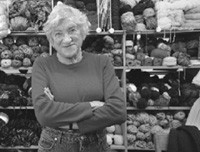
String theory: 86-year-old Adela Kras stays active and young with her Calistoga Yarn Shop.

With no sign of binding off, the knitting craze runs full-speed ahead. Earlier this month, the Internet was abuzz with the news that Julia Roberts will be starring in The Friday Knitting Club, slated for a 2008 release. Roberts will play a mom who owns a knitting store in Manhattan. While the silver-screen star has reportedly knitted in real life for years, Adela Kras, the owner of the Calistoga Yarn Shop, opened her first knitting store in San Francisco, in 1969, just two years after Julia Roberts was born.

Speaking above the chirps of two cockatiels, Kras explains in her thick Polish accent the long lull in knitting’s popularity before it exploded a few years ago to its current frenzy. “In the ’60s, [knitting] was not big. No, you could have bought yarn for 65 cents a skein in San Francisco, and good wool, I tell you, good wool. It was absolutely quiet in knitting altogether. Women found out they could go to Macy’s and buy a little sweater for $15 or $20.

“We stand on our ears to make people realize that handmade–it costs more, but my goodness, it’s so much more beautiful,” she continues, her voice nearly rapturous. “Also, finally, people did find out that to sit down with those two needles and yarn, [was to] relax. You can think about whatever you want and make beautiful things; you can make scarves galore, handwarmers, legwarmers, easy things that don’t take brains,” she continues, her voice nearly rapturous.

Kras’ patience has paid off. “I was waiting for the customers to come in for a long time. I don’t wait anymore. I have customers all the time. I finally got a little more popular. And people know that I can help. I am not neurotic about the whole thing anymore: ‘Will they come? Will they like my work?’ I don’t panic anymore,” she says.

Kras sighs happily. “The world is crazy for knitting right now.”

Right, Julia?

Art of Shopping

Adela Kras pretends to apologize. “I don’t carry the five-and-dime kinds of yarn here,” she says. What her Calistoga Yarn Shop does carry are fine French, English, Scandinavian, Canadian, Japanese and Nepalese yarns, some of which are handpainted. But she has skeins of patience, too, instructing knitters for free. Our suggestion: go in person with your giftee and kill two birds (but not Kras’ cockatiels!) with one stone. Spend Q-T with your giftee, letting her pick out her own pattern and yarn under Kras’ sure guidance. This way, the lucky knitter benefits from Kras’ treasury of advice in-person and you both get to enjoy her delectable personality. 1610 Cedar St., Calistoga. Open daily, 10am-4pm. 707.942.5108.

Bookends Book Store contains a veritable library of books to enlighten your needle-nosed friends. Choose among Vogue Knitting on the Go: Knits for Pets (Sixth & Spring Books; $12.95) and At Knit’s End: Meditations for Women Who Knit Too Much (Storey Publishing; $9.95). Or change it up with patterns for a yarmulke, bathrobe and striped bikini in Greetings from Knit Cafe (STC Craft-Melanie Falick Books; $24.95). One-Skein Wonders,-i> (Storey Publishing; $18.95) is great for new knitters or those without much patience. 1014 Coombs St., Napa. Open daily. 707.224.1077.

Next, walk over to Yarns on First to pick up a ball of yarn to accompany One-Skein Wonders. The store carries a number of hard-to-find yarns, including the Muench Touch Me line ($15-$17), which according to the experts at www.knitty.com, “will put you into sleepy velvet oblivion.” Or buy your beginning fabric-ator entrance to knitting classes, like Learn to Knit, a multiple-session class including six hours of instruction for 50 bucks. 1305 First St., Napa. Open Tuesday-Saturday. 707.257.1363.

Run by a mother-daughter team–Shellie, 45, and Ashleigh Westcott, 22–Knitterly bills itself as a “full-service yarn, knitting and crochet shop.” The store even has its own mascot, Purl. Knitterly is the stop for funky, handmade knitting bags, although they run a mite bit pricey. One of the shop’s most popular gift items are knitting bags made from vintage fabrics by Berkeley-based company Offhand Designs, which has gotten a lot of ink lately ($50-$150). Susan Todd makes knitting bags in New Mexico, by recycling Goodwill sweaters and cutting them up into pieces for the bags ($40-$75).

You can also spring for a knitting bag from the Mielie line ($125-$300)–a range of rug-hooked carpet bags made by a co-op of South African women. Be sure to check out the sanguine array of classes at Knitterly, too. You can always get a gift certificate if you can’t decide. 260 Petaluma Blvd. N., Petaluma. Open daily. 707.762.9276.

To Dickens, France plus knitting equaled Mme. Defarge, the ominous lady who knits the names of the Revolution’s potential victims into her prophetic cloth. Cree-pee. Philato, owned by Parisian Caroline Dlugy-Hegwer, is anything but. The owner, who blogs about crusty croissants and wanting to knit a rainbow of colors during the winter, offers socially conscious needle cases, accessory pouches and knitting bags made by women’s co-ops in Vietnam.

She also carries a range of recycled yarns made from remnants of banana silk, viscose and silk saris. Carved from Northern California birch trees, Brittany knitting needles are stocked on the shelves. Hurry, because Dlugy-Hegwer is moving to Boston at the end of December. 25 Washington St., Petaluma. Open Monday-Saturday. 707.762.0106.

The grande dame of Marin artisan stores, the Dharma Trading Co., has watched the barometer of needle arts rise and fall since 1969. As the Methuselah of fiber arts, Dharma purveys an exhaustive range of dyes, spinning supplies and other technologies, but it also carries more giftable items, like a set of Denise knitting needles with interchangeable tips, so you can obtain different sizes without running to the store ($54). Or grab a Thai silk holder by Della Q to organize knitting needles ($38). If your giftee likes felting, make a kit by picking out a Noni pattern for a felted bag ($8) and letting a helpful employee guide you to the right yarn and needle. 1604 Fourth St., San Rafael. Open Monday-Saturday. 415.456.1211.

Recently opening Atelier Marin as the sister store of Atelier Yarns in San Francisco, owner Amanda Madlener keeps the store’s website up to date with the latest knits from couturiers Hermes, Alexander McQueen and Versace. Indulge your giftee with one of Atelier Marin’s zillions of fashion-forward classes, like making a seamless sweater ($80 for four sessions), learning to crochet in a day ($45 for one session) or general trouble shooting ($45 for two sessions). 217 San Anselmo Ave., San Anselmo. During fall and winter, the store has lengthened hours; closed Monday. 415.256.9618.

Studio Knit‘s aesthetic is handsome–gentleman’s-library style crossed with a Crate & Barrel catalogue photo. In other words, the store is upscale, but also relaxed. For the truly discriminating knitter, Studio Knit carries the Big Yarn’s sterling silver “notions.” Don white gloves to inspect these elegant stitch markers ($42 for set of six), stitch holders ($32), cable needles ($27 for one) and tapestry needles ($31), which knitters use to sew pieces together. Or exercise your social conscience and buy Be Sweet’s Magic Ball of variegated yarn ($30), hand-spun and hand-dyed by South African tribeswomen in a jobs creation program. The Magic Ball makes one adult-sized hat, which most knitters can pound out in just a few hours. 320 Miller Ave., Mill Valley. Open Tuesday-Sunday. 415.389.9994.

The Short List

We also like Calistoga Yarns (1458 Lincoln Ave., #3, Calistoga; 707.942.5108), the Knitting Workshop (117 S. Main St., Sebastopol; 707.824.0699) and Muse (1400 Oak Ave., St. Helena; 707.967.9500).

Crafty Caution

Buying for a knitter, not dropping a stitch

Buying for the knitter, crocheter or embroiderer in your life should be undertaken with care. One shop owner warns that giving yarn as a gift “can be like trying to pick out clothes for someone. Yarn is kind of personal.”

With this in mind, we offer these purls of wisdom:

  • Avoid dropping big bucks on numerous skeins of yarn without conferring first with your giftee (we know–that takes away the surprise, but some of the best gifts are things we actually want). But if you’re feeling adventurous, try buying the pattern, needles and yarn for a specific project that requires only one skein.
  • Safest bet: stick to accessories (like knitting markers or knitting bags), gift certificates, books or even knitting classes. But don’t buy fancy needles without checking with the giftee first (knitters use different sizes for different projects).
  • Almost all yarn shops stock supplies for both knitting and crocheting, but if it’s embroidery you’re after, best double-check first.
  • –B. A.


    Guilt-Free Gifts

    0

    November 22-28, 2006

    Holiday Gift Guide:

    Identity heft: Look for this logo to ensure fair trade status.

    From warm scarves to intricately woven baskets, colorfully glazed ceramic bowls to delightfully dangling earrings, stone statues to shell-covered clutch purses, it’s possible to find a lovingly handcrafted item for someone on your gift list while simultaneously fighting poverty and working for the greater global good. Just shop at a fair trade store.

    “When I hear about sweat shops and child labor, it really affects me. I can’t sleep at night when I read about those things happening around the world,” says Lien Cibulka, co-owner of the Kindred Fair Trade Handcrafts store in Santa Rosa.

    The traditional capitalistic “free trade” approach is based on clout, hard bargaining and, often, making money or getting a good buy at someone else’s expense. With fair trade, also known as alternative trade, every step of the process, from distant artisan or coffee or cocoa farmer to final retail sale, is based on economic and social justice. Workers in developing countries create a range of products, and all receive a fair, living wage in their communities.

    The usual free trade approach is to pay upon delivery, leaving poverty-stricken craft workers scrambling to find adequate materials or even survive while they complete an order. Under the fair trade process, artisans are given a 50 percent deposit, which helps them get the resources needed to create their products.

    When an item reaches a consumer, fair trade retailers can explain where the piece came from and, often, who made it.

    “That’s why we called our store Kindred, because we’re all connected,” Cibulka explains. “People can enjoy knowing they bought a beautiful craft, but they can also connect to the people who made that craft.”

    Fair trade retailers, wholesalers and networks establish long-term relationships with artisan communities, giving the poorest people in the poorest countries a way to make a decent living. The artisans are, by their local standards, well-paid and well-treated, conditions that allow them to produce their best possible work.

    All of that comes to consumers in the form of reasonably priced handcrafted gift items. Fortunately, the North Bay offers a number of opportunities to purchase fairly traded products.

    Kindred is filled with everything from Nicaraguan pottery to Peruvian gourd boxes, Tibetan jewelry and Vietnamese ceramic tableware, and more. Alpaca scarves and hats have been popular in the last few weeks, Cibulka says, as have gourd baskets and boxes. She and her husband moved to Santa Rosa in 2000, and opened the store in 2002. “We have always wanted to do good things on a global scale,” she explains.

    In this case, the good works come in the form of shelf after shelf of unique products. They even carry No Sweat Sneakers made by union-organized Indonesian workers. Each pair comes with a description of workers’ earnings and benefits, banishing any idea that sweatshop conditions (think: Nike) are necessary to create good athletic shoes. Like all fair trade retail stores, Kindred is a great place to discover something beautiful and unique to give a friend or family member—or yourself. 605 Fourth St., Santa Rosa, 707.579.1459. www.kindredhandcrafts.com.

    Baksheesh is a treasure trove in two locations of fairly traded goods from around the globe. The Sonoma store was founded nine years ago by Brian and Candi Smucker, who both quit corporate jobs to get involved in fair trade. “We believe in peace and justice, and we wanted to work on that full-time,” Brian explains. They joined with partner Annette Periera to open a Healdsburg store in 2003, and are looking to open a third North Bay location.

    One of their most popular gift items, Brian says, is a tabletop hot mat, or trivet, made out of tightly hand-rolled coils of newspapers by craft workers in the Philippines. “They’re great for stocking stuffers or hostess gifts,” Brian notes. The stores also offer the ultimate in recycling: bright and colorful elephant dung paper and journals from Sri Lanka.

    A quick walk around reveals baskets made of kaisa grass, palm leaf and other handwoven materials, ranging from a delicate four inches wide to huge hampers. Boxes are crafted from paper, wood and soapstone. The stores also stock distinctive nativity sets year-round, and there’s a wide range of jewelry, tableware, world-music CDs, musical instruments, home furnishings, purses, sarongs from Bali, silk scarves from India and more. Come and browse. It’s great fun. Two locations: 423 First St. W., Sonoma, 707.939.2847; and 106-B Matheson St., Healdsburg, 707.473.0880. www.vom.com-baksheesh.

    World of Good brings fair trade items straight to buyers, even folks who aren’t necessarily shopping for gift items. Instead of opening a retail store, World of Good sets up fair trade displays in other retail outlets, such as supermarkets and bookstores. While picking up produce or the latest thriller, consumers can learn about fair trade items and choose among a variety of products.

    “We try to carry three main categories,” explains World of Good spokeswoman Amy Schilling. “Recycled products, natural materials like hemp and what we call sequins [jewelry and sparkling items].” The products featured on a particular in-store display vary over time. “Our product rotates,” Schilling says. “We refresh it quite frequently, and it will vary from store to store.”

    The company has a special event scheduled, its annual Shop the Fair Trade Warehouse Sale, slated for Saturday, Dec. 9. “It’s really fun because we basically have boxes from floor to ceiling,” Schilling says. “Usually, the public isn’t allowed in the warehouse.” The event is a fundraiser, with 50 percent of all sales going to the nonprofit World of Good Development Organization. Last year’s warehouse sale paid for 20 projects worldwide, such as a water-pump system for women artisans in Kenya. The Dec. 9 event runs from 10am to 6pm at the company’s warehouse, 1380 Tenth St., Berkeley. 510.528.8400. www.worldofgood.com.

    North Bay retail locations featuring World of Good kiosks include select Whole Foods’ stores (340 Third St., San Rafael; 414 Miller Ave., Mill Valley; 1181 Yulupa Ave., Santa Rosa). Other Marin outlets include Book Passage, 51 Tamal Vista Blvd., Corte Madera; Elephant Pharmacy, 909 Grand Ave., San Rafael; Mollie Stone’s, 270 Bon Air Shopping Center, Greenbrae; and Mazvita, 69 Bolinas Ave., Ste. B, Fairfax. In Napa County, go to Copperfield’s Books, 3900-A Bel Aire Plaza, Napa; and Sunshine Foods Market, 1115 Main St., St. Helena. In Sonoma County, there’s Lauren’s Hallmark, 10 Raley’s Towne Center, Rohnert Park; Santa Rosa Community Market, 1899 Mendocino Ave., Santa Rosa; and Copperfield’s Books, 2316 Montgomery Drive, Santa Rosa.

    There are a couple of other, unique fair trade options. Based in San Rafael, Pachamama: A World of Artisans (415.454.5692; www.pachamamaworld.com) sets up home parties to sell fairly traded handcrafts from around the world. It also hosts an online retail store and provide tours to artisan communities worldwide.

    Mayadevi Imports (415.462.5464; www.mayadeviimports.com) is a wholesale operation in Novato, featuring embroidered cushions, covers, bags, silk and wool shawls, wall hangings, dolls and more from women’s collectives and traditional artisans in India.

    The Berkeley-based Global Exchange operates fair trade stores in San Francisco, Berkeley and Portland, Ore., but also sells online at www.globalexchange.org. And to learn more about fair trade in general or identify specific wholesale or retail outlets, visit the Fair Trade Federation at www.fairtradefederation.org.

    This holiday season, go forth and consume in peace and contentment, knowing your purchases are helping others.


    The Byrne Report

    November 22-28, 2006

    On Nov. 12, I attended a forum on the “situation in Oaxaca” held at the Carpenters Union Hall in Santa Rosa. The well-attended program was sponsored by CAMPPO, a committee in support of the people’s movement in the state of Oaxaca in southern Mexico. Rufino Dominguez of the Frente Indigena de Organizaciones Binacionales delivered a first-hand account of the repression of the teachers strike that began in May.

    “The people are tired,” Dominguez reported. “They do not have time to sleep, to do laundry. They feel isolated. The media is not informing people in Mexico or elsewhere about what is really happening. They portray everybody as rebels.” Indeed, American and Mexican media tend to portray Oaxaca as being held hostage by violent anarchists, as opposed to being rocked by a democratic movement of ordinary people fed up with a corrupt regional government. The Wall Street Journal is incensed that the Zucolo in the capital city, Oaxaca, is covered with political graffiti, thereby ruining its much-vaunted tourist appeal.

    Actually, the Zucolo is painted with the blood of indigenous organizers murdered by police agents. Dominguez reports that 35 leaders of the strike and allied support groups have been disappeared; so have many press accounts. The police assassination of Indymedia journalist Brad Will in late October propelled Oaxaca to the top of the corporate news for a day or two. But when it is “just” indigenous people being beaten, tortured and killed by the local and federal Mexican police, Oaxaca is of little interest to our American tribes.

    In his landmark work, Sociobiology, E. O. Wilson defines “tribe” as “any group of people that perceives itself as a distinct group, and which is so perceived by the outside world. . . . The group may be a race, as ordinarily defined. . . . [I]t can be a religious sect, a political group or an occupational group. The essential characteristic of a tribe is that it should follow a double standard of morality–one kind of behavior for in-group relations, another for out-group.” Sounds like us, eh?

    At the present time, it is unlikely that the majority of California tribes would tolerate Gov. Arnold Schwarzenegger ordering the murder of our own teachers, but, hey, if it is in Mexico, who cares? They must have been terrorists, right? Wrong. The teachers went on strike last spring because the governor of Oaxaca, Ulises Ruiz Ortiz, expropriated state funds budgeted for education to fund the presidential campaign of right-wing candidate Felipe CalderÛn, says a CAMPPO spokesperson.

    Eighty percent of Oaxacans are indigenous, many of them struggling in extreme poverty. But Oaxacans have a proud history of resisting oppression from Montezuma’s Aztec armies 600 years ago to the federales of Mexican president Vicente Fox, who is the U.S.-backed enforcer for NAFTA.

    The website for the Oaxacan tourism bureau praises the historic conquest of the mountainous region by Spanish mercenary Hernando Cortes, a genuine psychopath. “Living in Oaxaca is an aesthetic experience,” says the conquistadorean-postive bureau. True enough for legions of American tourists and retirees armed with foreign exchange that enable them to wallow amidst Oaxaca’s natural beauties. Fortunately, according to the bureau, the indigenous people are “happy, at peace, willing to work and eat. Their eyes are luminous and [they] live harmoniously with their family, neighbors or authorities.”

    Until those damn teachers got uppity! You’d think that if NAFTA is bringing an economic miracle to Mexico, Oaxacan kids would have pencils. But NAFTA is a one-way street. Oaxacan farmers, said a native Oaxacan at the forum, export tasty white corn to American dinner tables, while they eat animal-feed corn imported from America. Typical Oaxacan workers make 17 pesos a day; a kilo of meat costs 80 pesos.

    The list of trade and income inequities goes on. The rich natural resources of Mexico are being stripped away by American corporations, even as the Fox and Ruiz governments use Mexican taxpayers’ pesos to “modernize” corporate-positive infrastructure and to defenestrate labor laws in service to the needs of multinational companies for cheap electricity and docile labor. Violent corporate toadyism has become so obvious that the United Nations High Commission for Human Rights recently criticized the Fox regime for torturing prisoners and undermining the legal rights of defendants. (Gee, does that sound familiar?)

    Meanwhile, according to the CIA World Factbook, Mexico is grossly polluted by sewage and industrial wastes, suffering from deforestation and desertification, and afflicted by an ever-increasing deficit of clean water and air–not to mention, the CIA helpfully adds, “low wages, underemployment for a large segment of the population, inequitable income distribution and few advancement opportunities for the largely Amerindian population in the impoverished southern states” of Oaxaca and Chiapas.

    The meltdown of Mexico’s system of protective tariffs began with a massive devaluation of the peso in 1994 engineered by the United States from which the artificially cheapened Mexican economy has yet to recover. Devaluation greased the skids for NAFTA, which has caused U.S. trade with Mexico to more than triple, from $81 billion in 1993 to $266 billion in 2004.

    In 2003, U.S. corporations held an incredible $61 billion in direct ownership investment in Mexican business firms, and Wall Street is salivating at the prospect of eating up the rest of the privatized oil and telecommunications sectors. Pre-NAFTA restrictions on foreign ownership of Mexican industrial infrastructure, land and resources are almost gone, as America neo-colonizes Mexico, reserving it for the production of cheap labor and as a dumping ground for toxic wastes and such excess commodities as sugar substitutes manufactured by Archer Daniels Midland.

    At the forum, workers from Oaxaca, many of them day laborers in the North Bay, testified to the correlations between NAFTA, increasing poverty and political repression. They urged American supporters of La Asamblea Popular de los Pueblos de Oaxaca to ask Mexican consulates and local politicians to put pressure on Fox to stop the political murders in Oaxaca.

    The good news is that Oaxacans are standing up. As are millions of people in Bolivia, Brazil and Nicaragua. All over the world, people and governments are starting to reject the poisoned loans and investment packages offered by American-dominated financial institutions, such as the World Bank and International Monetary Fund. With the resounding defeat of the U.S. military by the Iraqi people, the New World Order declared by President Bush’s father in 1989 has turned into a nightmare for the Skull and Bones gang.

    In the end, the people of Oaxaca, Chiapas and everywhere in Mexico and the nations to its south will expel their economic invaders. They must do this or expire of poverty and preventable diseases. Along the way, they will, of necessity, relax traditional tribal boundaries and organize as a united people. Of course, America might decide to invade a democratizing Mexico with troops under control of the U.S. Northern Command based in Colorado. It is a fact that when the Mexican military holds war exercises, it is to practice repelling an American invasion.

    Sadly, tribalized Americans, charged up now with anti-immigrant propaganda, will probably support their militaristic leaders in yet another invasion to squash freedom and democracy. Back to Dr. Wilson and his tribes. He notes that modern people are still cursed with Stone Age mentalities. “[F]earful of the hostile groups around them, the ‘tribe’ refuses to concede to the common good. . . . Resources are sequestered. Justice and liberty decline. Xenophobia becomes a political virtue. The treatment of nonconformists within the group grows harsher. History is replete with the escalation of this process to the point that the society breaks down or goes to war. No nation has been completely immune.”

    We can do better than this. Call CAMPPO at 707.318.2818 for more information.

    or


    Read ‘Em and Leap

    Ask Sydney

    A Close Shave

    November 22-28, 2006

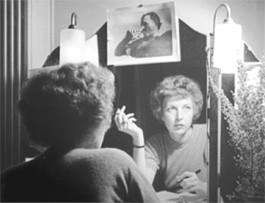
    Ordinarily grotesque: Nicole Kidman and Ty Burrell mismanage a marriage in ‘Fur.’

    There is the Diane Arbus that we all know: the well-bred Manhattan photographer who urged herself to accept the most forbidden people of her day. And then there is the Arbus of Steven Shainberg’s Fur: An Imaginary Portrait of Diane Arbus, a woman whose attraction to the hairier part of life lures her out of the depilated 1950s and into the avant-garde.

    In this fantasy, Arbus (Nicole Kidman) waits in the disrobing room of a New Jersey nudist camp. In order to photograph the campers, she must be naked herself. In flashback, she remembers the road that led her here. She was lured away from her husband (Ty Burrell) by the arrival of a new upstairs tenant, Lionel (Robert Downey Jr.), who suffers from hypertrichosis, like Barnum’s famed Dog-Faced Boy. Lionel beckons Diane with music and clues. After they become friends, he entices her into the night.

    Shainberg has been getting roasted for tampering with Arbus’ life, but the approach isn’t as drastic as it seems. For decades, in one lying biopic after another, Hollywood films rewrote the lives of everyone from Mark Twain to Cole Porter. At least this film is honest enough to admit to the deception.

    But in watching Fur, as in watching Shainberg’s previous film, Secretary, it’s hard not to wonder about Shainberg’s own life. For a time, he lived in a Zen monastery. An Imaginary Biography of Steven Shainberg might have him overcoming his own fear of the fierceness of the monks, realizing how their use of corporal punishment conceals their essential compassion.

    Shainberg always defuses the relations between a master and a pupil–say, James Spader to his employee Maggie Gyllenhaal in Secretary. The mysterious Lionel seems forceful at first, sternly ordering Arbus to strip and bathe, or take a cup of tea. But he owns pet finches and bunnies to show that he is not to be feared. Arguably, this is Shainberg’s best idea; the fastest way to turn horror romantic is to show that a forbidding figure is kind to animals.

    Downey endures what must have been excruciatingly itchy makeup. It’s amusing to hear his covert, muttered tones as he tries to be a proper beast before it’s revealed he’s as frightening as the Cowardly Lion; sadly, when shaved, he turns into a commonplace romantic figure. One echoes Garbo’s complaint upon leaving Jean Cocteau’s best-known film: Give me back my beast! Likewise, Fur doesn’t face the beastly side of Arbus–the cold clarity of the artistic gaze, which refused to acknowledge distaste.

    As in Secretary, though, Shainberg has a lead that helps his peculiar scheme. Is the pale, enigmatic Kidman better in period films because the clothes do the acting for her? Her specialty–a woman being surprised by desire–always looks more impressive against an era when desire was more commonly repressed. All you have to do is look at Kidman’s costumes here to start to feel it’s hard to breathe–those stiff formal suits, those underclothes that look like something designed by an orthopedic surgeon. Faced with those restraints, anyone would rebel, so the finale of Fur is a less ultimate revelation than the typical fantasy of the artist’s life: all freedom, no obsession.

    ‘Fur’ opens soon in select North Bay theaters.


    New and upcoming film releases.

    Browse all movie reviews.

    First Bite

    A colorful variety of attractions are available on the menu at Tommy’s Wok in Sausalito, but it was the rumor of fresh vegetables, organic ingredients and brown rice that sold me. My eating companion and I, both vegetarians, went on a Tuesday night. There was no line and no wait. The staff was attentive and friendly enough, if a little indifferent toward this whole business of serving customers, and our waiter gestured us toward a table by the window.

    Service was fast. Our large vegetarian hot and sour soup ($7.85) arrived only a moment after we made our order. Seasoned heavily with pepper and soy sauce and loaded with shredded egg and tofu, this dish was well-balanced with the sweet, the spicy and the sour. We had eaten a few spoonfuls when our entrées arrived.

    The deluxe vegetables ($8.85) consisted of carrot, broccoli, celery, shiitake mushrooms and some tofu, the latter smooth, tasteless and added for the price of $1. The sauce was clear, shallow and perfectly neutral–not offensive or bad by any means, just in need of a little something. Soy sauce was available, but I think that coconut curry might have been interesting or wasabi or balsamic vinegar or olive oil or hot sauce or hummus. Anything, really. Perhaps just some salt or a squirt of ketchup.

    The spicy basil tofu ($9.85) needed no help with flavor. The asparagus, snow peas, bell peppers, onion and tofu swam in a thick and delicious sauce of peanuts and fresh chopped basil, and the whole dish seemed more in the tradition of something Thai, but that’s fine. I love Thai food.

    With the entrées, our waiter delivered the main attraction. I had gone hungry all day in anticipation of the heaping mounds of steaming brown rice that I had read about on a review of Tommy’s I found on the Internet, but our little bowls ($1.50) were a slight letdown. The rice was gone in just minutes, and we had nothing left to eat our peanut sauce with but our spoons.

    Meanwhile, I sipped a glass of Rodney Strong Cabernet ($6), read the menu some more and wondered about life beyond vegetables. The seafood entrées included the very controversial orange roughy ($14.85), which Tommy’s Wok proudly imports from New Zealand, and Chilean sea bass (neither Chilean nor sea bass; $14.85). The menu featured plenty of other meats, too, a variety of salads, some noodle plates and even chicken corn chowder (small $6.50; large $7.85).

    Tommy’s Wok manages to produce filling and tasty food without the emphasis on grease and oil common to many Chinese restaurants. Full on vegetables and brown rice, we felt light and energized as we cracked open our fortune cookies. My dinner mate was told she is charming and courteous–sort of accurate–while my fortune prophesied that I would be successful in life. It was a nice thing to imagine.

    Tommy’s Wok, 3001 Bridgeway Ave., Sausalito. Open for lunch and dinner, Monday-Saturday; dinner only, Sunday. 415.332.5818.


    View All

    Quick-and-dirty dashes through North Bay restaurants. These aren’t your standard “bring five friends and order everything on the menu” dining reviews.

    Letters to the Editor

    November 22-28, 2006

    Beware of greeks?

    I had to laugh, albeit bitterly, at Remy Wallace’s plaint about by Alastair Bland (Letters, Nov. 8). As your response indicated, you were as surprised at the sensitivity of the reader as I’m sure Bland was. It strikes close to home for me. Until a couple months ago, I worked at Yahoo on a travel website that did monthly series on global adventures: Panama, Thailand, Rwanda and others. All went swimmingly until we did a series on Macedonia, and apparently were too enamored of the former Balkan republic that sits on Greece’s northern border (across from a Grecian province, which they insist is the “true” Macedonia).

    Our site’s comments section was deluged with inflammatory anti-Macedonian arguments from Greek supporters, who felt their country unduly injured. We hardly mentioned Greece–which must have been the problem. To suggest that another country in antiquity might have had a role in the spread of Mediterranean culture (after all, Alexander the Great’s father was Philip, king of Macedonia) was apparently equivalent to heresy. At first, we laughed it off, then the spammers turned their aim at the sponsor, and forced them to withdraw their ads. Apparently, they’ve kept up their antagonistic (a Greek word, by the way, along with “sarcasm” and “archaic”) barrage to the point that Yahoo is considering taking down the site at www.adventures.yahoo.com, with its wealth of media and articles on travel, because the Greeks complain.

    Even though this “border dispute” between Greece and Macedonia is about 2,400 years old, it’s apparently still fresh enough for a special-interest group to pressure an international news site to withdraw a series of stories from publication. Is this funny? I have no way of knowing if the half-dozen women letter writers you refer to from San Rafael who were upset by imagined slights to Greece may or may not be part of the same group that’s pressured Yahoo, but I do know that “paranoia” is a Greek word, too.

    Christian Kallen, Healdsburg

    Mock not the Mock

    This Thanksgiving, President Bush will pardon a turkey as a promotional gimmick for the turkey industry. This Thanksgiving, each of us has the same power to pardon a turkey, but as an act of kindness, compassion and giving thanks for life, health and happiness.

    The 300 million turkeys abused and slaughtered in the United States each year have nothing to give thanks for. They breathe toxic fumes in crowded sheds. Their beaks and toes are severed. At the slaughterhouse, workers cut their throats and dump them into boiling water, sometimes still conscious.

    The turkeys do get their revenge. Their flesh is laced with cholesterol and saturated fats that elevate the risk of heart disease, stroke and cancer. Careful adherence to government warning labels is required to avoid food poisoning. Any day now, they will be bringing us bird flu.

    This Thanksgiving, I won’t be reading the warning labels or calling the Poultry Hot Line. I won’t be staying awake at night wondering how that turkey lived and died. I will be joining millions of other Americans in observing this joyful family holiday with nonviolent delicious products of the harvest: vegetables, fruits and grains.

    My holiday meal may include a mock turkey made from soy, lentil or nut roast, stuffed squash, corn chowder or chestnut soup, candied yams, cranberry sauce, pumpkin or pecan pie and carrot cake. An Internet search on vegetarian Thanksgiving will provide more mail-order items and recipes than I’ll ever need.

    Steven Alderson, Santa Rosa

    Kudos to Imagination

    How lucky Healdsburg is to have the Imagination Foundation! Last night, we drove across the mountains to catch an encore performance of the Living Theater Project at the Sonoma Country Day School. It was well worth the travel for myself and my two daughters, ages six and four. Very few companies (and I wonder how many community theaters) could produce a homegrown play that appeals strongly to adults and kids with complex themes, addressing difficult issues while interweaving lighthearted stage antics.

    The play was so well-executed that both of my kids stayed awake in rapt attention for the whole thing, even though the directors avoided commercial sing-song and Disney imagery. I was especially impressed when, during a particularly engaging scene, I noticed my four-year-old had a rapt look on her face. She couldn’t understand the nuances, yet recognized an emotional shift had occurred. That is good theater and that is what builds community.

    Although we have a nice theater company in Chico, we will definitely send our kids to Healdsburg in the summer for the IF’s acting classes. What a resource for the community! A hearty thank you to all the actors, young and old. Most especially, thank you to the Imagination Foundation for creating such a unique theater. If Healdsburg can’t understand what an amazing resource you provide, Chico will welcome you with open arms.

    Russell Shapiro, Chico


    Senior Scam?

    What gives? The California insurance commissioner has begun an inquiry based on a...

    News Briefs

    November 22-28, 2006 No butts in Marin Concerned about secondhand smoke, the Marin County Board of Supervisors recently prohibited smoking in outdoor dining areas, ATM lines, bus stops, public parks, at or within 20 feet of road-building or construction sites, at the county fair, at the farmers market and outside county buildings--among other venues. First-time offenders could be fined $100...

    Pick Up Sticks

    November 22-28, 2006Holiday Gift Guide: String theory: 86-year-old Adela Kras stays active and young with her Calistoga Yarn Shop. With no sign of binding off, the knitting craze runs full-speed ahead. Earlier this month, the Internet was abuzz with the news that Julia Roberts will be starring in The Friday Knitting Club, slated for a 2008 release. Roberts will...

    Guilt-Free Gifts

    November 22-28, 2006Holiday Gift Guide: Identity heft: Look for this logo to ensure fair trade status. From warm scarves to intricately woven baskets, colorfully glazed ceramic bowls to delightfully dangling earrings, stone statues to shell-covered clutch purses, it's possible to find a lovingly handcrafted item for someone on your gift list while simultaneously fighting poverty and working for the...

    The Byrne Report

    November 22-28, 2006On Nov. 12, I attended a forum on the "situation in Oaxaca" held at the Carpenters Union Hall in Santa Rosa. The well-attended program was sponsored by CAMPPO, a committee in support of the people's movement in the state of Oaxaca in southern Mexico. Rufino Dominguez of the Frente Indigena de Organizaciones Binacionales delivered a first-hand account...

    Ask Sydney

    A Close Shave

    November 22-28, 2006 Ordinarily grotesque: Nicole Kidman and Ty Burrell mismanage a marriage in 'Fur.' There is the Diane Arbus that we all know: the well-bred Manhattan photographer who urged herself to accept the most forbidden people of her day. And then there is the Arbus of Steven Shainberg's Fur: An Imaginary Portrait of Diane Arbus, a woman whose attraction to...

    First Bite

    Letters to the Editor

    November 22-28, 2006Beware of greeks? I had to laugh, albeit bitterly, at Remy Wallace's plaint about by Alastair Bland (Letters, Nov. 8). As your response indicated, you were as surprised at the sensitivity of the reader as I'm sure Bland was. It strikes close to home for me. Until a couple months ago, I worked at Yahoo on...
    11,084FansLike
    4,606FollowersFollow
    6,928FollowersFollow