


FOLLOW US
Mash Note
Oscar Wieners

November 15-21, 2006
Among Catherine O’Hara’s many acting specialties is “the cheeser,” meaning an out-of-control, foaming and usually inebriated woman. (The term is from Dave Thomas’ history of the priceless, the berserk, the never-to-be-forgotten SCTV.)
Nobody talks about desert-island comedy moments, but for your consideration: O’Hara’s cheeser Lola Heatherton on SCTV, an over-amphetamined chanteuse having a titanic moment of self-revelation in front of her audience. The number is shot in the then-fashionable mode of two video cameras, so that different sides of her melting-down face dissolve into one another. We get double views of a madwoman singer, cawing, twinkle-eyed from Dexamyl. “Miss Lola” assays a song called “You’re All Just Parasites (Draining Me of Love).”
The song has a musical resemblance to Carly Simon’s dreaded “That’s the Way I Always Heard It Should Be,” except that instead of describing the way the singer’s parents failed her poor sensitive self, “You’re All Just Parasites” is about the pitfalls of celebrity: “You buy and sell my autograph / But in your face, I hear a laugh / It’s like someone hit me with a kid glove.”
Thirty years later, O’Hara has just about topped this essential comedy moment. Her meltdown in Christopher Guest’s newest improvisational mockumentary, For Your Consideration, takes place in front of the camera of a show very much like Entertainment Tonight. Its host, the irreplaceable boob Fred Willard, intrudes on an actress named Marilyn Hack (O’Hara) in her modest driveway, and finds her shitfaced at 7am, hauling her empty liquor bottles to the trash. Willard is coiffed in what he has describes as a “faux hawk”: a do supposedly stolen from soccer star Beckham, which actually looks like the weird coif of Belgian cartoon legend Tintin.
O’Hara’s Hack, hideously disfigured from Botox, goes from slow-burn to alcoholic Krakatoa–but it’s all preliminary to her wonderful, and even more humiliating finale, the “But seriously, folks” bit afterwards, in which Hack is teaching her students career-murdering crap-acting techniques she picked up from the ancient Bette Davis movie Jezebel.
For Your Consideration‘s plot is simple. The can-do spirit of the cast and crew of a lousy Sunfish (i.e., Sundance) independent film provisionally titled Home for Purim is squashed by rivalry when they get dangerously Oscar-buzzed by the rumor-mill on the Internet. The media, which range from ignorant to contemptuous, sow acres of discord. The first hour leaves the serious film fan draped with melancholy, knowing smiles; it’s the last half hour where the magic comes in, and then you mutter, “Not since Preston Sturges . . .”
What an ensemble! Who does better cows than Jennifer Coolidge? The woman must be part Holstein. The excerpts of Parker Posey’s cabaret piece “No Penis Intended” is a hundred nights of shuddery, crypto-feminist little-theater rolled into one; co-writer Eugene Levy, sniffing the scent of spoiled cream cheese on a free bagel, is like an 800-page treatise on the perfidy of agents. Bob Balaban, waiting sadly for the crush to come, like a hamster in the fist of a debauched little boy–well, he can be none other than a scribbler. (The press notes claim Balaban’s character’s was “co-writer in residence at Staten Island’s Coleman Community College.”)
But the focus is small, let’s admit it.
For Your Consideration blasts entertainment reporters who praise just one particular aspect of a tiny indie film. And from what I’ve written above, it would seem Guest’s comedy doesn’t work as a cautionary tale.
‘For Your Consideration’ opens on Wednesday, Nov. 22, at the Rialto Cinemas Lakeside, 551 Summerfield Road, Santa Rosa. 707.525.4840.
New and upcoming film releases.
Browse all movie reviews.
First Bite
First impressions are as important with restaurants as they are with people. When we stepped into Mai Vietnamese Cuisine in Cotati, I was delighted by the airy atmosphere, the traditional Vietnamese string instruments on the clean yellow walls and the warm greeting from the grandmotherly proprietor, Mrs. Mai.
A small bowl of dry roasted peanuts arrived at the table just seconds after we sat down. The menu has more than 60 choices, ranging from pho (beef noodle soup) to bun (dry noodles with, for example, barbecued pork). Mai has a strong vegetarian menu, with veggie spring rolls, stir-fries and rice plates.
My wife and I stopped there for a celebratory lunch the day after the election: she ordered pho tai, a beef noodle soup made with eye round steak. The soup’s arrival was preceded by a plate of fresh cilantro, lime, bean sprouts, basil and jalapeño peppers to spice up the pho. As Mrs. Mai set down the bowl, the soup’s aromas conveyed the rich, complex flavor of the broth, which hinted of star anise. The thin slices of beef were tender; the slender rice noodles were cooked to perfection. And the large bowl ($7.50) was enough for two meals.
I chose mi ga ($6.50), a mix of shredded chicken and nicely chewy egg noodles in a chicken broth. It was satisfying but didn’t have the delectable interplay of flavors found in the beef noodle soup. We completed the meal with a pork and veggie stir-fry over steamed rice ($6.95). The broccoli, carrots and shiitakes were bright and crunchy, cooked at high heat for just the right amount of time.
After lunch, I walked around the restaurant as if it were a museum, admiring a set of four black lacquer pieces showing the traditional occupations in Vietnam: fishing, woodcutting, farming and herding. When I commented on the beauty of the guitars and lutes with their mother-of-pearl inlays, the owner showed me a CD and told me all the background music in the restaurant comes from bands that play these traditional instruments.
Most reviews mention at least one problem with the restaurant being evaluated, but during my first visit to Mai I couldn’t find anything I’d change. Well, maybe one thing: I wish it were a bit closer to my Sebastopol home.
Mai Vietnamese Cuisine is located in Apple Valley Plaza on Highway 116 in the same center as Buffalo Billiards. 8492 Gravenstein Hwy., Cotati, Open Tuesday-Sunday, 11am-8pm. 707.665.9628.
Quick-and-dirty dashes through North Bay restaurants. These aren’t your standard “bring five friends and order everything on the menu” dining reviews.
Morsels
November 15-21, 2006
America is a culture of opposites: liberal and conservative; the haves and the have-nots; dairy and soy. Tack skinny and fat on to that list, too. Europe may have a much-discussed “clash of civilizations,” but American culture is torn between chunky couch potatoes and skin ‘n’ bones sex-appeal.
Radical independent filmmaker Lloyd Kaufman of Troma Entertainment takes unusual aim at one source of our poundage, producing Poultrygeist: Night of the Chicken Dead, a mocktacular film that attacks America’s fast-food corporate culture. Unlike Morgan Spurlock’s homerun Super Size Me, Kaufman’s latest flick targets youth culture by targeting the fast-food industry in inimitable Troma style. (A white New York male, Kaufmann directed such other hits as The Toxic Avenger, Tromeo & Juliet and Terror Firmer. He cofounded Troma Entertainment with Michael Herz, and regularly announces his desire to be reborn as a black woman.)
In Poultrygeist, a military-themed fried-chicken franchise named American Chicken Bunker builds a restaurant on the site of an ancient burial ground. Supernatural forces “possess” the food and those who eat it. With a guerrilla-style filmmaking, other themes in Poultrygeist are militarism, anti-Muslim racism and a healthy dose of gender politics. The story was written by a fast-food employee and produced with support from animal-crazed PETA. With its explicit political message, Kaufman’s latest is sure to ruffle feathers within many circles. Poultrygeist will be in theaters January of 2007. www.poultrygeistmovie.com.
Quick dining snapshots by Bohemian staffers.
Winery news and reviews.
Food-related comings and goings, openings and closings, and other essays for those who love the kitchen and what it produces.
Recipes for food that you can actually make.
The High Price of Low-Cost Meth
November 15-21, 2006
Editor’s note: This is the fifth in our yearlong feature series on the impacts of methamphetamine on the North Bay. Though a matter of public record, the names of the two women in this story have been changed as a courtesy.
Methamphetamine steals lives. It also steals cars, credit cards, children’s hopes, parents’ dreams, taxpayers’ dollars and much more. On an ordinary Tuesday afternoon in February, this dangerous drug’s widespread influence throughout the North Bay became a hard-fisted reality for a 25-year-old woman who wasn’t willing to let herself become just another victim.
On that particular day, Catherine took a late lunch from her downtown Santa Rosa job so she could exercise. Catherine changed clothes at her gym, went jogging and returned to the locker room where she encountered a younger woman wearing street clothes–jeans and a long-sleeved sweater.
“She seemed really quirky in her mannerisms,” Catherine recalls. “From the second I saw her, I thought something was off.”
Feeling uneasy, Catherine headed to the exercise room. Still, she couldn’t get the girl out of her thoughts. After only 20 minutes, she cut her workout short and returned to the locker room.
The young woman was gone. So was Catherine’s gym bag, and with it her house and car keys.
Catherine dashed to the shopping center parking lot where she’d left her vehicle before going to the gym. She checked her car; everything seemed fine. She made a quick tour of the shopping center, searching for a security guard, then doubled back to the car.
This time, the young woman from the locker room was sitting inside the vehicle, rifling through Catherine’s things. “The second I saw her, my adrenaline started rushing,” Catherine recalls.
Panicked, the girl tried to start the car but the key broke off in the lock. She jumped out frantically and ran. Catherine followed in hot pursuit.
“I don’t think I thought or felt anything,” Catherine explains. “It was all action.”
Catherine tripped the girl and they struggled for a few minutes. The two are about the same build, although Catherine is five inches taller. Fighting furiously, the young woman managed to break away. Grabbing her a second time, Catherine pulled the girl’s arms behind her back and pinned her up against a parked car–just the way she’d seen it done countless times on TV shows.
A man stopped to help. Neither he nor Catherine had a cell phone. Just then, the young woman’s backpack started ringing. Catherine pulled out the phone, disconnected the incoming call and dialed 911.
When the police arrived, they identified the girl as Brandy Jones, then 19 years old. They found a gum wrapper filled with methamphetamine powder in Brandy’s pocket, and needle tracks on her arms.
Later, through court documents, Catherine learned this was one of a series of thefts Brandy pulled by filching bags, keys and other items from local gym locker rooms. The records reveal that Brandy also forged checks and ran up bills on stolen credit cards. Officials’ interview notes indicate that Brandy did it all to look cool, to impress her boyfriend–and to support her meth addiction.
In grappling with Brandy on that winter afternoon, Catherine got her hands on at least one of the many ways that this ubiquitous drug affects all North Bay residents, whether they know it or not.
“I was aware of meth and I knew that people make bad decisions to get their next drug fix, but this incident definitely made me understand that this is going on right here, right now, in our own community,” Catherine says. “I think it’s easy for us to get caught up in our petty little lives and not see what’s going on right here.”
Your Problem, Too
Local law enforcement officials say that meth is everywhere in the North Bay. This easily available and highly addictive drug affects average, non-drug-using citizens through car break-ins and thefts, burglaries, shoplifting, identity theft, check fraud, child abuse, elder abuse, domestic violence, sexual assault and more. There’s a potential for the public’s unwitting exposure to the chemicals used to manufacture it. There are also medical expenses (most addicts don’t have health insurance) and the exhaustive use of child-protective services for their kids, as well as mental health programs and treatment centers for the junkies themselves. Officers report increased law enforcement workloads and crowded jails and prisons. All of this is eventually paid for by the public.
“It’s a major problem in any county in California, probably in any county in the United States. And if not, it soon will be,” says Cmdr. Gary Pitkin of the Napa Special Investigations Bureau. “Methamphetamine is used and abused by people of all different classes, all different races. It doesn’t matter whether they’re unemployed, a janitor, a lawyer or a doctor. Methamphetamine is abused across the spectrum.”
Heroin is a depressant; junkies tend to be passive. Like meth, cocaine is a stimulant, but a cocaine rush lasts a matter of minutes. A meth high can last eight to 12 hours or more, and many users report staying awake and wired on the drug for days at a time. Heroin addiction leads to crime, Pitkin says. Cocaine abuse leads to crime. But there’s so much meth out there and its effects are so much more treacherous and long-lasting, it’s inextricably linked to an incredible array of criminal activities.
“We’ve noticed a lot of pornography and child porn associated with methamphetamine use and abuse. Sexual promiscuity. Violence. Paranoia. Just a sense of distorted reality, of what’s real and what’s not,” Pitkin says. “It’s a heinous drug, and it gets a hold of you.”
Some people try meth because it’s an appetite suppressant; it’s so effective that it can lead to malnutrition and anorexia. Others want the extra energy meth seems to supply, despite the fact that this drug eventually exhausts their bodies. Many users love the invincible feeling they get from meth that they can do or be anything. This false reality only lasts as long as the drug is in their system.
“People get addicted to meth and they walk away from everything,” Pitkin explains. “From children. From 15-year marriages. From 25-year careers. We investigated a case literally involving a rocket scientist who walked away from his career because he found meth. It’s just amazing what it will do to you.”
And meth leads to crime, because addicts do things they wouldn’t have even considered if they weren’t using the drug.
“This is not a problem where members of the community can sit back and say, ‘Yeah, that person has a problem,’ and there’s absolutely no impact on them,” Pitkin notes. “The meth epidemic really does influence the community at large in several ways, from victimization to increased healthcare costs because of emergency-room admissions for people stroking out and having heart attacks, to the increase in incarceration rates which taxes our system. They push the limits of what we can legally and safely house as inmates.”
Two Bad Months
According to court records, the February incident with Catherine wasn’t Brandy’s first brush with law enforcement.
On Jan. 9, 2006, Brandy stole a Volvo from a Forestville market because, she told police, she felt the store employee who owned the car had been rude to her. There were credit cards in the trunk, which Brandy used to charge various items. The vehicle was found abandoned on Jan. 25.
On Jan. 26, Brandy and a boyfriend drove to an auto-supply store on Gravenstein Highway. Spotting a truck with its keys in the ignition, the boyfriend hopped in and drove away, telling Brandy to follow him in the other vehicle. He pulled over briefly so he could transfer tools from the pickup into Brandy’s car, then the two kept going.
Within miles, the truck owner’s wife spotted her husband’s pickup being driven by a stranger and followed it through Guerneville. She pulled up beside the pickup and yelled at the boyfriend to pull over. He finally did so in Forestville, leaping into the car driven by Brandy and roaring away.
On Feb. 13, police responded to a report of a “suspicious vehicle” parked in front of the boyfriend’s home. He was arrested and booked into the Sonoma County Jail. Brandy wasn’t charged in this case, even though items taken from the stolen pickup were found in her Concord home. Court documents indicate that Brandy’s boyfriend told officers he normally wouldn’t steal a car, but he was high on crystal meth at the time.
On Feb. 20, Brandy scooped up a set of car keys from a gym on Industrial Drive in Santa Rosa. She made off with the car, which contained the owner’s purse and credit cards. Brandy charged $30 at a Circle K and $270 at Food Maxx, among other items. She also bought a set of tires for a friend.
And on Feb. 21, she tried to steal yet another car, only to encounter Catherine’s determined defense of her own property.
That Sucked-Up Look
Marin County narcotics detective Scott Harrington remembers working undercover, buying meth from a known dealer. The man asked Harrington if he wanted some stereo equipment as well. When the dealer was arrested, officers found a stash of stolen stereo gear in his car. He had gotten it from addicts who committed an ongoing series of car break-ins and traded the hot goods for their favorite drug.
In another instance, Harrington says that officers searching a dealer’s home found enough stolen property to close about six burglary cases under investigation by the Novato Police Department. “The guy said the stuff was given to him by one of his users. The same guy was also in the process of making counterfeit money. He was spun-out and he was trying to make U.S. currency.”
The phony bills weren’t any good, Harrington adds, but the guy was definitely doing his best to create another source of income.
Harrington has worked for the Marin County Sheriff’s Department for four years, starting as a patrol officer and moving into narcotics. He looks like one of the guys. He dresses casually, and it’s hard to tell how old he is; he could be anywhere from late teens to early 30s. That’s good in his line of work–it lets him blend in. And it takes him to some interesting places.
“I’ve been in houses where you see someone you know has been tweaking on meth for a while,” he says, using the slang that refers to the anxious, compulsive behavior of the addict. “There’s electronic equipment all over the place, and I’d say not even a tenth of it is working. The backs are out, the wires are exposed. They’re supposedly in the process of fixing it.”
The compulsive nature of tweaking on meth leads to repetitive behavior. Meth addicts will go from object to object, their brains racing, convinced that they’re working seamlessly but rarely finishing a project.
Harrington sees the signs of meth all around him, both on duty and off. Recently, he took his girlfriend and her nephews to an amusement park. At one point, a man standing behind them in line had what Harrington calls the “sucked-up look.”
“His cheeks were sunken in. His eyes were kind of bulging. He had scabs on his face, which looked red and irritated, a raspberry color. His hands were dirty. He was a tall guy, almost too slender for his size. I turned to my girlfriend and said, ‘User.’ She looked closer and said, ‘Yeah, I guess I can see that.’ He was there with his family–a pregnant woman and another child. Methamphetamine’s all around us.”
Almost everyone knows how a drunk looks and acts, but few people recognize the signs of someone who’s soaring on meth.
“Sometimes it’s the way they talk,” Harrington explains. “Their speech will be rapid, very animated. Certain things they’re very loud and vocal about that ordinarily they wouldn’t be, that somebody else wouldn’t be. And it’s the movement, a hustling movement. You can see it in their eyes.”
Meth users may start out as fully functional adults with a good job, a home, a family. Gradually the drug takes over lives. He loses his job. She lies to her spouse. He neglects his kids. She alienates her friends.
“There have been times where I’ve been shaking my head,” Harrington recalls. “We had a guy, we did a probation search on his house, and he was stashing his crystal meth in his toddler’s nightstand. He didn’t think we were going to search there. Well, we found it. His toddler was able to reach the drawer from the crib, it was that close in proximity.”
Brandy’s Brick Wall
According to court records, on the afternoon of Feb. 21, Brandy was cruising downtown Santa Rosa with a new boyfriend and another man. Brandy decided to check out a nearby health club, to see if she could steal some easy money so they could get high.
After she grabbed Catherine’s gym bag and extracted the keys, Brandy met her boyfriend out front. Together they searched for the vehicle that matched the stolen keys. When they located it, the boyfriend told Brandy to get in and drive away, following him out of the parking lot.
But Catherine’s sudden appearance interrupted that plan. The ringing cell phone in Brandy’s backpack was undoubtedly her boyfriend, checking to see what was happening.
For her attempt to steal Catherine’s car, Brandy was booked into the Sonoma County jail and charged with three felony counts–entering a business with intent to steal; breaking into a car; and trying to drive off in the car–as well as charges stemming from the other incidents. On March 9, she was released on her own recognizance. She didn’t have to post bail but was required to report to court hearings and submit to drug testing.
At a sign-up interview on March 14, Brandy tested positive for methamphetamine. Later that same day, she failed to appear at a court hearing. An arrest warrant was issued. On March 20, an officer spotted Brandy as she attempted to leave an apartment complex while driving a Honda CRV. The car had been stolen a few days earlier. Brandy and a friend took credit cards, ID cards and personal checks from the vehicle, and forged about $2,000 worth of checks.
Once again, Brandy landed in jail. This time, she wasn’t let out.
On March 27, Brandy turned 20 years old.
All the World’s a Lab
Santa Rosa is a North Bay distribution “hub” for methamphetamine produced by Mexican “super labs,” according to the “Sonoma County Methamphetamine Profile Report,” released to the county board of supervisors this July. Federal and state officials have imposed harsher restrictions on the raw chemicals needed to make meth, such as ephedrine in cold medication, iodine and red phosphorus. But that doesn’t mean the labs have gone away. As Marin’s Det. Harrington explains, “If they can find a location, they’ll make a lab. The money’s just too lucrative to pass up.”
Some people use what are known as “suitcase” labs, because everything they need fits into a large suitcase or even an ice chest. They’ll set up in a rural garage or a vacant industrial area, make meth for a day, then move on. Renting a motel room to use as an anonymous meth lab is common. Inevitably, the next night someone will check into that same room and find a burn mark on the floor that isn’t from a cigarette but from acid, and a stain in the bathroom that’s from iodine, dropped while the “cooks” were flushing away their toxic waste.
The sheetrocked walls will be saturated with red phosphorus and hydrochloric acid. The smoke detector may still be covered with a plastic bag, placed there so the device won’t react to the waves of hydrogen chloride gas filling the air as part of the meth manufacturing process. People renting a room after meth has been cooked there are unknowingly exposed to these foul chemicals.
“The [meth cooks] are not chemists, and they’re using deadly chemicals and toxins. They’re not disposing of them properly and they’re mixing them, trying to make meth,” Harrington adds.
Meth’s manufacturing process is simple but volatile. Cooking up a pound of meth results in six to eight pounds of toxic waste, which has to be dumped somewhere. Small-time manufacturers just pile it up or add it to the trash, says Jackie Long, special agent supervisor for the clandestine laboratory program for the California Department of Justice.
“In some states, trash trucks are catching on fire,” Long says. “The city of Albuquerque, New Mexico, lost seven trucks to fires from meth waste a couple years ago.”
In California, the number of labs busted has dropped from about a thousand five years ago to only 143 January through October of this year. Of course, the odds have also changed. After the 9-11 attacks, 30 officers from California’s clandestine lab program were transferred to homeland security tasks. Another 30 positions were cut during the 2002-’03 state budget crunch. The newest state budget adds 30 clandestine lab positions back into enforcement, each hire taking at least six slow months to enact.
There could be a lot fewer meth labs out there, or there could just be a lot fewer agents looking for them. One clue, Long says, is that narcotics officers continue to find piles of meth-produced toxic waste.
“Although our lab busts are down, the dumps of these chemicals are still present,” Long explains. “If our dumps were down, I’d say absolutely the labs are gone. They may not be here as frequently, but they haven’t gone away.”
Each year, the California Narcotics Officers’ Association (CNOA) holds a statewide workshop on how to make meth. It’s held in a crime lab, the students are all narcotics officers and the meth is disposed of when the class is over. The goal is to let officers see the synthetic drug’s production first-hand, so they can recognize the sights and smells of the process.
“There are several stages during the manufacturing of methamphetamine that are extremely dangerous,” says CNOA executive director Bob Hussey. “When you bust a lab, you seize product in different stages. It’s important to know what part of the process things are in and if it’s dangerous for both the public and the officer.”
There’s an incredible number of ways to make meth, most of which are listed on the Internet. The resulting smell depends on the cooking method used. Often a meth lab gives off a sharp chemical odor; one process in particular produces a smell that has been likened to year-old cat urine. More recently, cookers have been creating ice cocaine by cutting meth with the compound MSN, which turns smaller crystals into larger ones using such solvents as acetone, more commonly found in nail polish remover. The tell-tale aroma for this process is the pungent acetone solvent.
Meth is everywhere, Hussey says, but not everyone recognizes the signs.
“The sad part about it is, I really don’t think the general population believes it’s as big an epidemic as it is. I know the Legislature and Congress have recognized it, but the average person who gets up in the morning, goes to work, comes home–they may not have the full impact of methamphetamine.”
Portrait of an Addict
Catherine took time off work to attend Brandy’ court dates, but they kept getting rescheduled and shuffled around. Eventually, Catherine gave up. Instead, she learned about her would-be car thief through court documents.
Brandy started smoking marijuana when she was in the fifth grade; her uncle grew it, and she would go to his house and pick what she wanted. By seventh grade, she was smoking pot on a daily basis.
The first time she tried meth, Brandy was 13. She smoked it approximately five times a week for about a year. But she stopped using any drugs in 10th grade, after she discovered she was pregnant.
Brandy managed to stay off meth until her first daughter was three months old, then returned to smoking it regularly. She tried marijuana again, but had an allergic reaction. She doesn’t particularly like alcohol, and rarely drinks. At age 16 she was diagnosed with depression and put on medication, which she took for about six months.
Court records note that Brandy dropped out of high school in her sophomore year, never graduated and never earned her GED. Elsewhere, it indicates that in October 2005 she did manage to graduate in a different way: from simply smoking meth to shooting it into her veins with a needle.
Also in October 2005, Brandy was put on three years probation in Shasta County for the misdemeanor offense of driving without a license. An official document dryly notes that she “performed poorly” on probation, committing new crimes just months after starting the stint. The records also indicate that Brandy has admitted to stealing as many as 15 cars in Sonoma County alone, justifying her actions by telling herself she was “borrowing” them. She is also quoted as calling herself the “mastermind” behind the crimes she committed with her friends.
Brandy has been in and out of treatment programs since she was 16. Her only job experience is working at her father’s business as an administrative assistant from February 2005 to January 2006, when her escalating drug use made it impossible for her to keep working.
The official documents list her as divorced with three daughters who are two, four and five years old. Apparently, her girls were placed in foster care in Shasta County and have since been adopted.
Even knowing all of this about Brandy, Catherine says she would still react the way she did that February afternoon in the parking lot. “I’m glad her car-stealing spree was put to an end. She was hurting multiple people. I got to know one of the other women whose car was stolen, and it was a traumatic experience for her.”
Who Are YOU?
In Marin County, between 70 percent and 80 percent of identity crimes are methamphetamine-related, says Sgt. Mike Crain. “Once they start using and become addicted to it, the need to use it more often is there, so they start thinking of ways they can obtain the drugs.”
Lt. Jean Donaldson also sees a definite correlation in Napa County. “The majority of the time when we arrest people who are involved in identity theft, they’re also methamphetamine users.”
It’s true in Sonoma County as well, says Det. Sgt. Glenn Lawrence. “Unfortunately, it’s such an easy crime and a quick way to get cash. People on methamphetamine are up all night and have the time to do this stuff. They’ll tape together little pieces of paper.”
He adds, “If you’re searching for identity theft, you’ll find meth or some kind of paraphernalia indicating that meth use is occurring. Or if you’re doing narcotics, you’ll find evidence of identity theft. They’re so hand-in-hand, it doesn’t seem to matter which one you’re targeting.”
Sgt. Anthony Muñoz of the Alameda Police Department is an instructor for a statewide class on methamphetamines and identity theft. One of the problems, Muñoz says, is that Americans like things to be convenient. They want to swipe a debit card at the gas pump instead of walking into the office to pay. They want to go online to order a TV.
“We could have protections [from identity theft], but it would inconvenience us,” MuÒoz explains. “People want it to be easy to use their cards, and that makes it easy for the thieves.”
A new scam is tied to the fact that many municipalities are cracking down on people who don’t show up for jury duty. A tweaker, Muñoz says, will pick up the phone book and start dialing. Upon making a connection, he says, “We sent you a summons and you didn’t show up for jury duty.” That person may simply hang up.
The addict will just dial again, and say the same thing. This time he quickly adds, “But we can take care of it over the phone, right now.” He asks for the person’s name, address, date of birth and social security number as “verification,” then he tells them, “OK, I’ll go ahead and get you out of jury duty.” And the tweaker then has everything he needs to commit identity theft, Muñoz says.
“Because methamphetamine is a central-nervous-system stimulant and [users] stay up so many hours, they have the time to think of these things and to try them. If it doesn’t work ninety-eight out of a hundred times, that’s fine with them; they have the time.”
People need to be on guard against identity theft and be aware that meth addicts can be extremely clever in devising ways to get the information they need.
“If these people would put their talents to use, we’d have a cure for cancer, we’d solve world hunger,” Muñoz asserts. “These are not stupid people.”
Caught ‘n’ Clean
Brandy committed several criminal acts in a few months–from January to March–but that’s not unusual, says Sonoma County assistant district attorney Larry Scoufus.
“Many times, we see defendants who are on methamphetamine runs doing many crimes in a short period of time. Getting arrested, either making bail or being released by the courts, and then committing other offenses. It’s primarily to support their habit. Often it leads to very violent acts on their part, just because of the nature of the substance that they’re ingesting.”
On April 20, Brandy pleaded guilty to five separate felony charges, among them, grand theft auto, being an accessory to a felony and attempted grand theft auto. She was sentenced to six years in prison, but allowed to go to the 4,700-bed California Rehabilitation Center (CRC) instead. She was officially categorized as a “civil addict” instead of an inmate.
“If the court finds that the defendant is addicted or in imminent danger of being addicted to a narcotic, they can be sentenced to the California Rehabilitation Center rather than prison,” Scoufus explains. “It’s a custodial setting, but the primary focus is on addiction and rehabilitation.”
At first, Catherine wasn’t sure how she felt about Brandy not having to do time in prison, but eventually she decided the CRC was the best option.
“My hope for her in going to the rehab center is that not only can she get clean but also she can get the skills, so that when she gets out she can create a life for herself that’s a good life, that’s clean of drugs,” Catherine says. “I feel that, for her, this is really her last hope.”
But after her first-hand experience of how meth can affect local community members, Catherine thinks rehab is not the only answer.
“We need to do something more than provide treatment centers. I think we need to look at what it is that causes people to turn to this drug. Why are people choosing this drug? Why are people choosing this lifestyle? I think we need to figure out why this is, and attack the problem from the root.”
Our series concludes next month with a look at the art that can ensue from addiction, as well as a personal reflection on the series.
Reservation: Saturday, 8am
November 15-21, 2006
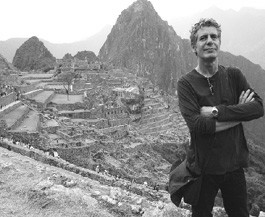
A few nights ago, my roommates, my boyfriend and I were all hanging out in our living room. The roomies had just started plowing into their burritos when my boyfriend, in what could be a contentious move, switched on the TV. The screen filled with Anthony Bourdain, celebrity chef of Brasserie Les Halles, author of Kitchen Confidential and TV host. Bourdain, the star of the Travel Channel’s popular food/culture program No Reservations, was taking South Korea by culinary storm with his young, beautiful Korean-American producer, Nari Kye. Luckily, the roomies were totally enthralled.
Racing through a packed itinerary that ranged from eating a still-wriggling octopus at a fish market for breakfast to making kimchi and doing tae kwon do, Bourdain and his sidekick mesmerized all four of us.
But when the chef, hugging a large stuffed animal and chugging beers in a karaoke lounge, refused to take the stage, one roommate complained, “The girl is cool, but the guy needs to lighten up.”
Over the sound of Kye’s bellowing, I protested. Everybody’s got their principles, right? Even though Bourdain is a chef, and chefs stereotypically belong to a hot-tempered lot, he’s sensitive. And even though he’s sensitive, he’s cool. Bourdain’s appeal depends on mixing these ingredients in just the right proportions. He’s pessimistic, he’s enigmatic and he’s unhappy, sure. But he almost always gets won over in the end, albeit begrudgingly. As soon as he’s convinced you that he’s miserable and tortured, the ruse is up. It’s a game, but when it works, it’s sexy. It’s a flirtation.
At 50, Bourdain is forever young, sporting an earring and a thumb ring and a leather jacket. Literally and often figuratively smoking onscreen, he’s the equivalent of an American Serge Gainsbourg.
The day after watching him on TV with my roommates, kismet strikes. Bourdain is coming to Sonoma on Nov. 21. A prolific writer of both crime novels and nonfiction, this time he’s contributed to a collaboratively written book, How I Learned to Cook: Culinary Educations from the World’s Greatest Chefs (Bloombsury; $24.95). Interviewing Bourdain is a coveted prize (a coworker volunteers to humbly hold the lucky reporter’s notebook during the interview), and apologizing for the early morning call on a Saturday, his publicist tells me that “Tony” will be expecting my call at 8am Pacific time. The anticipation feels a little like calling a high school crush. This is the bad boy of cooking, after all. But I want to find out what the real Bourdain is like.
The phone rings two or three times, then I hear his baritone voice, now familiar from having watched two episodes of No Reservations.
On the road about 10 months out of the year, Bourdain has a rare moment of relaxing at home. Recently, he moved from Hell’s Kitchen in New York City to what he calls “an undisclosed, Cheney-like location,” presumably still in New York.
Bourdain is like a guy I knew in college who aspired to drown himself in Scotch and be a dirty old man, but was cooler than 90 percent of the other guys, who were holding one another upside down to get a better angle at the keg. This guy smoked unfiltered French cigarettes and, just on principle, scorned anything having to do with Germany, New England or the bourgeoisie. You didn’t have to agree with him, though, on these matters. He was always delighted to engage, as long as he won the argument.
Bourdain is the grown-up version of that college guy: semi-reformed but still, thank God, ardently principled, because these tenets are what make his TV personality so unpredictable and volatile. It keeps us on our toes, because we understand that a war over principles can break out at any moment.
Although Bourdain doesn’t preach politics in the traditional sense of the word (he abhors it when celebrities use their status to comment on politics, saying that they’re too far-removed from the lives of ordinary people to add anything relevant to political discourse), his principles give some clues.
Other than ABBA, whom Bourdain has already reviled on No Reservations‘ tour of Sweden, what are five other things Bourdain dismisses on principle?
“Glorified mediocrity, like The Simple Life, which drives me insane with rage. Andrew Lloyd Weber. Bad, soulless action films where you don’t care what happens to either the good guys or the bad guys–like Mission Impossible III,” he lists, stopping to ask what number we’re up to.
Three.
“Really bad newscasters who report non-news. And any generic chain restaurant that has institutionalized low expectations.” Then he hits on the thing that pisses him off most in this exercise. “Fake Italian food! It’s such a sin to do that wrong. You’ve almost got to work harder to ruin it,” he says.
For a mini-mogul, Bourdain espouses some pretty blue-collar tastes in terms of his daily diet. For breakfast on this day, he had coffee and a cigarette, which he always has.
And he avoids the dread Cinnabon like the plague. “It’s dismaying to see people with no necks in an airport at seven in the morning eating things bigger than their heads,” he spits. “It does not give one hope for the future of the world.”
Bourdain is excited about what he sees as a movement on the part of chefs to go back to more “humble ingredients,” like necks and brains–meats that have generally been associated more with peasant food–and using the entire animal. “Steak and lobster bore the hell out of me,” Bourdain says. “It’s no accident that [alternative cuts] are what chefs crave. You want to see a chef fall asleep midsentence? Hand him a filet.”
Does he see a disconnect between foodie culture, celebrity chefs and world hunger? “Yeah, no question about it. But there’s a disconnect between who’s cooking and who’s eating. Chefs worldwide have traditionally come from fairly poor upbringings,” he says. “So much of the restaurant industry is built on the backs of poor Mexicans and Salvadoran cooks. In a sense, that’s who’s been cooking since the beginning of the craft.
“We’re in the service industry,” he continues. “Like maids, prostitutes and artisans, we serve at the pleasure of the rich.”
Bourdain revels in being a daredevil, having once eaten a still-beating cobra heart on one of his travel shows. But does he have any limits?
“I’m not eating rat under any circumstances. I’ve just had too many bad experiences with rats living in New York.” He pauses. “Live monkey brain–absolutely not. I’ve come close. But I just try to make sure they’re never offered.” As an afterthought, he adds Chicken McNuggets to the list.
Finally, is there a difference between the TV Tony and the real-life Tony?
“That is the great luxury of my job and my position,” he explains. “I wrote Kitchen Confidential first.” (The book, told from Bourdain’s frank perspective, is a no-holds-barred account of the restaurant industry.) “When they ran my show on Food Network, then on the Travel Channel, nobody expected me to suddenly morph into Tyler Florence. Everyone knew I was a rude bastard. I make the show with close friends, and it’s like we’re Spinal Tap on tour. There’s no script, no hair and makeup, no lighting. It’s scoot-and-shoot guerrilla filmmaking. If I couldn’t make the choices and say what I want to say, I wouldn’t do it. I’d rather work a salad bar somewhere.”
In other words, Bourdain acts on his own terms, or not at all. The guy really does seem to have integrity, at least over the phone.
I won’t know for sure until I meet him on Tuesday.
Anthony Bourdain arrives in the wilds of Sonoma on Tuesday, Nov. 21, to talk about ‘How I Learned to Cook: Culinary Educations from the World’s Greatest Chefs,’ a collaborative project that he contributed to along with Gary Danko, Ferran Adria, Mario Batali, Eric Ripert and other notables. The presentation, organized and sponsored by Readers’ Books, takes place at Andrews Hall, 276 E. Napa St., Sonoma. 7:30pm. $5 donation benefits the Sonoma Community Center. 707.939.1799.
Quick dining snapshots by Bohemian staffers.
Winery news and reviews.
Food-related comings and goings, openings and closings, and other essays for those who love the kitchen and what it produces.
Recipes for food that you can actually make.
News Brief
November 15-21, 2006
Signing up seniors
For the second year in a row, many of this nation’s oldest residents have a new, must-do holiday activity: figuring out what the heck’s happening with their Medicare benefits. Extensive cost and coverage changes that start Jan. 1 mean that North Bay seniors and their compatriots nationwide must try to decipher which of the plethora of plans best meets their needs for the coming year. Last year, the open-enrollment period lasted six months; this year, it runs from Nov. 15 to Dec. 31. However, folks choosing to switch programs must file an application by Friday, Dec. 8, if they want their new coverage to start Jan. 1. Applications received after Dec. 8 won’t be effective until Feb. 1, says Bonnie Burns of the nonprofit California Health Advocates (CHA). “[Seniors] need to know what they already have and whether there’s been any changes to what they already have. Then they need to know what those changes are and if it will affect what they’ve been getting,” Burns explains. “Some will stay where they are because the changes are ones they can live with and others will have to switch.” The government sent all eligible citizens a 116-page handbook called “Medicare and You 2007,” which some congressional Democrats have argued promotes private insurance plans more than the traditional government-run program. Critics see this as a step toward privatizing Medicare. Many North Bay seniors recently received an “informational” mailing from a for-profit insurance agency called Senior Educators. The firm touts its “unbiased guidance” but it’s not a nonprofit organization and isn’t associated with any governmental agency. A company spokesman says seniors are clearly told on the phone that Senior Educators is a business. At CHA, Burns suggests seniors contact the company currently providing their coverage for specifics about any premium increases or changes in coverage for prescriptions or health services. Detailed comparisons are at www.medicare.gov. “Some of the information on the website is different than in the published booklet,” cautions Burns, suggesting the online version may be more up-to-date. Reevaluating Medicare coverage options can be confusing, but it’s an important process, Burns adds. Seniors not choosing a plan by Dec. 31 might lose Medicare Part D prescription drug coverage for 2007, or be stuck with a plan that doesn’t cover the drugs or services they need. “People are locked into the choices that they’re making,” Burns explains. “They need to be careful about their choices for the coming year.” The state-run Health Insurance Counseling and Advocacy Program provides free guidance; call 1.800.434.0222 to arrange for personal counseling.
Essential Genius

November 15-21, 2006
Around these parts, tales of Tom Waits sightings are exchanged among diehards like late-night cigarettes shared outside of bars: they link our outcast fringe through a shared, communal addiction. In the last year, I’ve seen Tom Waits strolling arm in arm with his wife and collaborator Kathleen Brennan down a misty, nighttime, downtown Santa Rosa street; I’ve spotted him barreling several miles over the speed limit outside of Sebastopol; and I’ve run into him at a local record store, the both of us eyeing a newly issued retrospective box set by the gifted and mysterious late saxophonist Albert Ayler.
“When you die, they give you a box,” Waits told me, resignedly looking over the deluxe carved wood of the box set as if it were a coffin. “Everyone,” he murmured, “gets a box.”
Like many of Waits’ quips, it was a clever aside that also conveyed a truth; namely, that an unwieldy, oversized retrospective box set often has the depressing effect of eulogizing rather than celebrating its subject. Waits knows this. That’s why Orphans: Brawlers, Bawlers & Bastards, Waits’ first box set, to be released Nov. 21, is anything but the cumbersome, thrown-together anthology of his well-known work that you’d expect from a record company in the market-frenzied fourth quarter. Rather, it’s an absolutely essential addition to any Waits collection.
Wait–strike that. It’s essential to any collection. Period.
Waits himself is refreshingly nonchalant about Orphans. “A lot of songs that fell behind the stove while making dinner” sums up his modest assessment. This probably explains the decision to limit the scope of both packaging and quantity: Orphans comes as a simple, regular-sized 94-page, hardbound book with three thin slipcases for the CDs, and is limited at press time to a scant 50,000 copies, ensuring that it will swiftly disappear.
Most exciting, however, is that instead of the simple career retrospective, Waits has culled not only a handful of rare B-sides, soundtrack contributions, tribute-album tracks and songs written for other performers; he’s also given us 30 brand-new, never-heard-before recordings (“Things I recorded in the garage with the kids,” he says), and it is a pleasure to report that they’re outstanding.
Among the finer moments of the three-CD set is “You Can Never Hold Back Spring,” a sentimental ballad from the Bawlers disc ostensibly about the changing of the seasons. With an unconventional song structure, minimalist piano-bass-horn accompaniment and consonants elongated in an enchanting vibrato, it lilts beautifully toward rebirth.
In fact, most of Orphans‘ standouts appear on the Bawlers disc, particularly “World Keeps Turning,” with its themes of borrowed rings and all-night dancing; “Down There by the Train,” loaned to Johnny Cash for his immortal American Recordings album; and a wistful rendering of “Young at Heart,” the first time Waits has tackled a song linked with Frank Sinatra.
Bawlers also contains “Never Let Go,” exemplifying Waits’ knack for turning what would ordinarily be a tender ballad in anyone else’s hands into a throaty, wild romp. The tempo is slow, the lyrics are sweet, but his inimitable from-the-gut delivery is pure abandon. By the time a snare roll sneaks in, with a band playing catch-up, we’re left to wonder why Waits bothers with the clamor of brake drums and electric blues guitar riffs; even set against the most fragile backdrop, Waits has a formidable brawler deep inside his own lungs.
Take, for example, “Bottom of the World,” once again a likely ballad were it not for Waits’ rollicking demeanor as he unreels in classic fashion. “I’m handcuffed to the bishop in the barbershop line,” his protagonist howls, bemoaning the consequences of leaving home and never looking back, “and I’m lost at the bottom of the world.” This is familiar territory for Waits, and the song contains elements of the past: the fatherly advice of “One Lucky Day,” the teenage runaway of “A Little Rain,” the homeless desperation of “Cold Water” and a chorus lifted from Dylan’s “A Hard Rain’s a-Gonna Fall.” Yet like so many other themes that Waits has returned to, he still makes the song sound fresh and unearthed.
Brawlers is almost exclusively based in the blues, a touch that Waits’ music has long toyed with but recently embraced full-bore. A number of its tracks hail from Wicked Grin, his excellent 2000 collaboration with John Hammond, among them “Fish in the Jailhouse,” “Lord I’ve Been Changed” and “2:19.” Like most of his songs written for other artists, Waits’ original versions here shine a new light on Wicked Grin‘s safe, palatable interpretations. The exception is “Buzz Fledderjohn,” which Hammond thoughtfully left untouched, and after hearing the warm, atmospheric recording included here, it’s easy to see why.
Tucked amid the chugging blues of Brawlers–kicked off by the crazed Elvis impersonation “Lie to Me”–is “Road to Peace,” a curious song unlike anything Waits has ever attempted before. At seven minutes, it’s both a lengthy and lofty comment on fundamentalist killing in the Middle East, often reading more like an unrhyming newscast than a song: “They found his toddler’s bottle and a pair of small shoes and they waved them in front of the cameras / But Israel says they did not know that his wife and child were in the car.”
It’s a litany that comes close to succeeding; perhaps Waits is just as angry as the rest of us, and has no patience for penning powerful poetry. If nothing else, “Peace” reminds us just how good Waits has been in commentary mode of late, in particular his overlooked antiwar masterpiece “Day After Tomorrow,” from his 2004 album Real Gone, or the beautifully chilling “The Fall of Troy,” from the film Dead Man Walking.
Soundtrack contributions familiar to Waits’ devotees abound throughout the set, including “Long Way Home” and “Jayne’s Blue Wish” from Big Bad Love, “Bend Down the Branches” from Bunny, “Little Drop of Poison” from The End of Violence, “It’s Over” from Liberty Heights, “Take Care of All My Children” from Streetwise and “Sea of Love,” a minor-key reworking of the Phil Phillips and the Twilights’ classic. Sadly absent are Waits’ contributions to the 1978 Sylvester Stallone film Paradise Alley, but most of Orphans‘ tracks are notably pulled only from the last 20 years.
“Heigh Ho” and “What Keeps Mankind Alive” hail from 1980s compilations produced by the great Hal Willner, the father of the modern tribute album, and they set the tone for the outré Bastards disc. A collection of stories, avant-garde accompaniments, unhinged beat-boxing and other vocal experiments, Bastards may well be the disc that bears the least repeated listens of the three. But it also contains plenty of gems, such as the instrumental “Redrum,” which sounds eerily like a mosquito buzzing around an engine room, and “Home I’ll Never Be,” a traveling ode written by Jack Kerouac and performed tenderly by Waits at an Allen Ginsberg memorial.
Nestled among the oddities on Bastards are two spoken-word slices of Waits’ impeccable imagery: “Nirvana” captures precisely the awe and wonder of roadside America, while “First Kiss” is a descriptive, Burroughs-esque meandering about a woman who “collected bones of all kinds / And she lived in a trailer under the bridge / And made her own whiskey and gave cigarettes to kids / And she’d been struck by lightning seven or eight times . . . And she gave me my very first kiss.” It’s trademark Waits, emceeing a gypsy circus band looped backwards, reminiscent of “What’s He Building in There?” from 1999’s Mule Variations. At song’s end, we hear him strolling away from the microphone and, in a nod to his wife, crooning happily: “Talk about my little Kathleen / She’s just a fine young thing . . .”
Most importantly, Bastards reminds us that Waits is still pushing his boundaries, forging fearlessly into new realms with the same creative fervor that brought such classics as Swordfishtrombones and The Black Rider. Had the Waits of the 1970s stayed in his comfort zone, he’d have burned out long ago in a clichéd haze of boozy balladry. His active curiosity shows no signs of abating, and consequently, neither does ours as fans.
Orphans is a far cry from a coffin for Tom Waits–for his career or otherwise. Its contents are the outpourings of a sprawling, creative mind and a full, complex heart, both of which are brilliantly alive. Expansive and prolific, it is a powerful midlife testament from one of the world’s greatest geniuses, and it heralds a strange and beautiful future for us all.
Walk the ‘Line’
November 15-21, 2006
There is a line running straight across the middle of the stage, from stage left to stage right. It’s one of A Chorus Line‘s staple iconic images, along with the upstage mirrors and the sequined top hats everyone wears in the finale. That line is also metaphorical; in a sense, it separates the show’s fictional dancers who have what it takes from those big-dreaming misfits who only think they do.
That metaphorical line also works to separate those myriad Chorus Line productions that succeed artistically from those that collapse into quivering blobs of embarrassment and unreachable ambition. Deceptively simple–17 leotard-clad dancers standing in a row on an empty set, taking turns talking, singing dancing–A Chorus Line is far harder to pull off than it looks. Ever since rights became available to nonprofessional companies several years ago, this edgy, tuneful show has been catnip to community theater companies far and wide, and more often than not, the “nip” ends up choking the cat.
With that line in mind, you gotta give kudos to the Santa Rosa Players for even attempting A Chorus Line. Since moving to the Sixth Street Playhouse, however, SRP has made chance-taking a part of their modus operandi, so it is not surprising that the decades-old company–one still fighting a reputation for assembling casts of wildly mixed talent–would be bold and gutsy enough to tackle a show demanding more than a dozen top-notch performances, players who must act, sing and dance.
A Chorus Line is not a two-out-of-three-ain’t-bad kind of show; to pull it off, you need a strong cast. The good news about SRP’s new production, running through Dec. 2, is that, with a couple of exceptions, the main cast is plenty strong, with many of the triple-threat performers recruited from outside the SRP stable, and many from San Francisco. Despite an opening-night tentativeness that ran throughout the cast and brought the show’s legendary intensity down a notch or two, director Joe Higgins has pulled together a solidly satisfying Chorus, with a number of eye-popping visual tricks (dancing mirrors!). A big, group tap-dancing number that is usually a throwaway in some productions–try finding 17 tap-dancers–here turns out to be a major crowd-pleasing highlight.
A Chorus Line runs Thursday-Saturday through Dec. 2. Thursday-Saturday at 8pm (no show Thanksgiving); also Saturday-Sunday matinees at 2pm. $17-$25. Sixth Street Playhouse, 52 W. Sixth St., Santa Rosa. 707.523.4185.
Museums and gallery notes.
Reviews of new book releases.
Reviews and previews of new plays, operas and symphony performances.
Reviews and previews of new dance performances and events.
Poised for ‘Destiny’
November 15-21, 2006
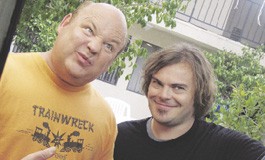
The Tenacious D movie, Tenacious D in the Pick of Destiny, is coming out next Wednesday, to which fans can only say . . . finally, jeesh! The cult of the D is a strange one. Having come together in 1994, Tenacious D were pretty much entirely an L.A. thing for the first five years or so of their existence. Then, after appearing on Mr. Show, they got some attention for their own self-titled HBO show in 1999, and even more for their self-titled album in 2001.
I was living in L.A. in this brief era of their productivity peak and saw their shows get bigger and bigger. But what’s bizarre is that they didn’t truly blow up until they stopped producing almost anything at all. In the five years since that record, Jack Black’s been making movies, Kyle Gass has been doing his side project Trainwreck, and despite fan impatience over a promised second album and the movie, the D are huge.
I was watching ESPN’s SportsCenter a few months back and the guy narrating over the NBA highlights actually said, “How about the power of flight? That do anything for you?” I thought, “Did I just hear a line from ‘Wonderboy’? Not possible.” Then three minutes later he said, “That’s levitation, Holmes!” It was true; the D were getting quoted on fucking SportsCenter! (Jables and Kage probably dug it, though–supposedly they took their name from Marv Albert’s exclamation, “That’s some tenacious D!”)
Now that the movie has finally arrived, their HBO show deserves a second look. If you haven’t seen these episodes–tragically, there were only six–you should go directly to their DVD The Complete Masterworks to experience them for yourself. The joke of the TV show was never that the D failed to measure up to their dreams of rocking tasty sauce. The joke was that they were so committed to rocking that they would do it anywhere, even in front of an open-mic-night crowd. To quote their unofficial theme: “We know it’s open-mic, we don’t care / Tenacious D–we reign!”
The six 15-minute episodes of their HBO series spotlighted the D’s ability to send up rock’s most absurd clichés at the same time that they indulge them. The opening episode, “Inspirato,” follows their hopeless effort to write one song in a week. Instead of actually sitting down and doing it, they run naked through nature, splash in a wading pool and stare blankly into space. Finally, one of Jack’s incomparable tantrums leads Kyle to quit the band, inspiring the song “Kyle Quit the Band.” The D write what they know.
The best example of the D’s funhouse-mirror-of-rock paradigm is the episode “The Fan,” in which Jack and Kyle meet a fan named Lee after a show, and treat him like a “stalkerazzi.” Within 20 minutes, however, the poor guy finds himself being stalked by the D, who are so out of their minds to have a devoted fan that they call him constantly, smash through his window when they’re worried about him and follow him around singing their tribute song to him, “Lee.”
Seven years later, the D have thousands of fans who are dying to see the new movie (directed by Liam Lynch, who did Sarah Silverman’s Jesus Is Magic, as well as videos and short films for Tenacious D). And why not–this is a band that can kill a yak from 200 yards away–with mind bullets! (That’s telekinesis, Kyle.)
But I’ll tell you one thing: if that SportsCenter suit starts quoting “Fuck Her Gently,” I’m outta here.
New and upcoming film releases.
Browse all movie reviews.
Oscar Wieners
November 15-21, 2006Among Catherine O'Hara's many acting specialties is "the cheeser," meaning an out-of-control, foaming and usually inebriated woman. (The term is from Dave Thomas' history of the priceless, the berserk, the never-to-be-forgotten SCTV.) Nobody talks about desert-island comedy moments, but for your consideration: O'Hara's cheeser Lola Heatherton on SCTV, an over-amphetamined chanteuse having a titanic moment of self-revelation...
Morsels
November 15-21, 2006 America is a culture of opposites: liberal and conservative; the haves and the have-nots; dairy and soy. Tack skinny and fat on to that list, too. Europe may have a much-discussed "clash of civilizations," but American culture is torn between chunky couch potatoes and skin 'n' bones sex-appeal. Radical independent filmmaker Lloyd Kaufman of Troma Entertainment takes...
The High Price of Low-Cost Meth
November 15-21, 2006Editor's note: This is the fifth in our yearlong feature series on the impacts of methamphetamine on the North Bay. Though a matter of public record, the names of the two women in this story have been changed as a courtesy.Methamphetamine steals lives. It also steals cars, credit cards, children's hopes, parents' dreams, taxpayers' dollars and much...
Reservation: Saturday, 8am
November 15-21, 2006A few nights ago, my roommates, my boyfriend and I were all hanging out in our living room. The roomies had just started plowing into their burritos when my boyfriend, in what could be a contentious move, switched on the TV. The screen filled with Anthony Bourdain, celebrity chef of Brasserie Les Halles, author of Kitchen Confidential...
News Brief
November 15-21, 2006 Signing up seniorsFor the second year in a row, many of this nation's oldest residents have a new, must-do holiday activity: figuring out what the heck's happening with their Medicare benefits. Extensive cost and coverage changes that start Jan. 1 mean that North Bay seniors and their compatriots nationwide must try to decipher which of the...
Essential Genius
November 15-21, 2006Around these parts, tales of Tom Waits sightings are exchanged among diehards like late-night cigarettes shared outside of bars: they link our outcast fringe through a shared, communal addiction. In the last year, I've seen Tom Waits strolling arm in arm with his wife and collaborator Kathleen Brennan down a misty, nighttime, downtown Santa Rosa street; I've...
Walk the ‘Line’
November 15-21, 2006 There is a line running straight across the middle of the stage, from stage left to stage right. It's one of A Chorus Line's staple iconic images, along with the upstage mirrors and the sequined top hats everyone wears in the finale. That line is also metaphorical; in a sense, it separates the show's fictional dancers who...
Poised for ‘Destiny’
November 15-21, 2006The Tenacious D movie, Tenacious D in the Pick of Destiny, is coming out next Wednesday, to which fans can only say . . . finally, jeesh! The cult of the D is a strange one. Having come together in 1994, Tenacious D were pretty much entirely an L.A. thing for the first five years or so...

Copyright © Weeklys All rights reserved.
Our Publications
