Everyone’s a Winner, Pt. II

0

the arts | visual arts |

By Gretchen Giles

Wow. Even on a year when we are not throwing the kind of plugged-in hootenanny that the North Bay music scene deserves, 1,027 people took the time to vote in the third annual NORBAY Awards. Very cool. While we’re sorry that events conspired against our hosting a live music awards ceremony this year, Blues category winner Volker Strifler has decided to throw an ad hoc NORBAYs celebration at his Friday, Oct. 26, gig at the Last Day Saloon (120 Fifth St., Santa Rosa; 9:30pm, $10. 707.545.2343), welcoming other NORBAY winners as well as North Bay music fans to come on down and raise a joyful noise to our vibrant music scene. Next year, we’ll be back and ready again to do it ourselves! First place winners are indicated in bold; second place, in italics. Thanks for voting.

Elvin Bishop

Eric Lindell

Roy Rogers

Angela Strehli

Volker Strifler

Classical

American Philharmonic

Marin Symphony

Napa Valley Sympohny

Santa Rosa Symphony

Young People’s Chamber Music Orchestra

Country /Americana

David Grisman

Hot Buttered Rum

Poor Man’s Whiskey

Stiff Dead Cat

Trailer Park Rangers

Dance / DJ

Zack Darling

DJ Amen

DJ Dragonfly

DJ Guacamole

DJ Malarkey

Folk / Acoustic

John Courage

Ramblin’ Jack Elliot

Nina Gerber

Kevin Russell

Solid Air

Hip-Hop

Ant D.O.G.

DJ Shadow

Smoov-E

Truthlive

Wisdom

Jazz

Jason Bodlovich

Mel Graves

Julian Lage

Stephanie Ozer

Ian Scherer

Latin

David Correa & Cascada

Banda Sangre Azteca

Mark Taylor-Aire Flamenco

Ramon Trujillo & His Mariachi Caporales

Saul Rayo and Cocina del Mundo

New Age /Spiritual

Steve Gordon

Steve Halpern

Sukhawat Ali Khan

Suzanne Sterling

Jai Uttal

Alt / Punk /Hardcore

Ashtray

Lemon Lime Lights

The New Trust

Polar Bears

Resilience

R&B / Funk

Lydia Pense & Cold Blood

Tony Lindsey

Pride & Joy

Vinyl

Narada Michael Walden

Rock

5 A.M.

Madera Humana

New Monsoon

The Sorrentinos

Zepperella

World

Luna Angel

Dgiin

Groundation

Hot Frittatas

Markus James

North Bay Legends

Mickey Hart

Ali Akbar Khan

Phil Lesh

Sly Stone

Tom Waits


View All


Museums and gallery notes.


Reviews of new book releases.


Reviews and previews of new plays, operas and symphony performances.


Reviews and previews of new dance performances and events.

Essay: Porto isn’t the same as port

0

10.10.07

The most famous fortified wine of all, Porto is as Portuguese as a Lodi Zinfandel is Californian. So how must the Portuguese feel now that wineries around the world have seized the word—which is, of course, the name of a city in northern Portugal—dwarfed the p, amputated the o and slapped the four remaining letters onto millions of bottles of a very sticky, ruby-red fortified dessert wine?

Raul Riba D’Ave, sales and marketing manager for Fladgate Partnership, a conglomerate of four respected Portuguese wine brands in Vila Nova de Gaia, across the Douro River from the city of Porto, is just amused.

“Your wine is an imitation,” he laughs good-naturedly during a recent phone conversation. “It’s actually forbidden to use that name outside the Douro region. You guys are breaking the law.”

Porto originated as an export product for the British in the late 1600s. Vintners along the Douro River began supplying the wine, which often embarked on a second bout of fermentation in transit, leading to popped corks and cracked bottles. To alleviate this problem, shippers began adding brandy before bottling to kill the active yeasts and prevent further fermentation. As time wore on, this fortification process began to occur before shipment, often upstream in the wine country. This alcohol boost stopped all fermentation of the natural sugars in the grape juice, and the earlier this process was enacted, the sweeter the wine. The British liked the trend, winemakers never looked back, and today Portugal churns out 10 million cases of Porto per year.

Porto and port come in two major styles, tawny and ruby. The tawnys have been aged in barrels for years, have oxidized, evaporated, turned brownish-orange and exchanged most of their original fruit qualities for such delicious flavors as caramel, vanilla, tobacco, hazelnut, dried figs and velvet. (I’ve had velvet before, and it’s quite good.)

Ruby ports are bottled-aged. Oxidation and other barrel effects do not occur, and thus these wines retain their brilliant colors and massive fruitiness. Vintage ports, made only in exceptional grape seasons, are rubies, bottled up as soon as they’re ready so as to encapsulate the essences that defined that particular season.

Since tawnys bear a less terroir than rubies, they are easier to imitate, says D’Ave. But is anybody in California really imitating the Portuguese?

“Portugal has set the standards for port, and so it makes great sense to watch them and taste what they make,” says Marco Cappelli, dessert winemaker for Swanson Vineyards in Rutherford. “But we’re like the Australians, and we’re making our own unique style of fortified wines. Port from Portugal and port from here are different animals entirely, and we should appreciate each for what it is.”

Andrew Quady, owner and winemaker at Quady Winery in Madera, produces a line of dessert wines, including two that are red, fortified, sweet and strong. Quady calls them Starboard, a trademarked name.

“One of the great things about the wine business is that we mostly respect what others are doing,” he says, “and nomenclature is very important for those who have been doing something for a long time. Over here, we haven’t, and we can’t just go and call some wine that we began making a few years ago ‘port.'”

In fact, Quady feels that even comparing port to Porto is pointless. “Californian port makers need to look at their wine for what it is,” Quady says. “The only things our fortified wines have in common with real port is that they’re red, sweet and 20 percent alcohol. They’re usually not even made with Portuguese grapes.”

Actually, Quady does make one of his Starboards from four traditional Porto grapes, yet he admits that the wine is nothing like the product from Portugal—terroir at work—and he says that for a California producer to come out with a product that matches a true Porto in flavor, body and aroma is nearly impossible.

Mick Schroeder, winemaker at Geyser Peak in Geyserville, makes two fortified red wines which brazenly go around calling themselves “port.”

“If it’s not port, then what do you describe it as?” Schroeder asks. “If you had to call it a ‘California fortified red dessert wine,’ I’m not sure consumers would even know what it is.”

A native of South Australia’s Barossa Valley, Schroeder makes wine by subtle stylistic methods that he picked up back home, and he finds it fascinating to compare his ports—one, a tawny made from Zinfandel and Shiraz, the other, a Shiraz ruby—to those of other regions.

“It’s not to be critical or to try and make them the same, but just to understand the differences between the regions,” he explains. “That’s what makes wine so interesting to so many people. We definitely don’t want to emulate Portuguese port, but we certainly can incorporate some tried and true techniques and possibly modify them to fit our own climate and conditions.”

Dixie Gill, director of marketing and communications for Premium Port Wine, attributes some of the characteristics of true Porto to the production methods: when the brandy is added; the proof of the brandy, which may range from 140 to 200; and, perhaps most importantly, the pressing of the grapes, which still involves bare feet in parts of the Douro Valley. But grape-stomping is no longer the esteemed career that it once was, and the Symington family, a leading Porto producer in Porto, has invented a machine that mimics the work of the human foot. The mechanism presses the grapes for hours, and a set of silicon toes does the crushing. Like the pads of the human foot, the silicon does not break the seeds of the grapes, which contain bitter tannins.

Producers in Portugal are pushing the E.U. to tighten restrictions on outsiders calling port “port,” and this bugs Peter Prager of Prager Winery. “Porto is a place on a map, but you can’t show me ‘port’ on a map. It’s not a place. It’s a word and a style of wine, and we make it in California.”

Quady may have struck gold with the name Starboard, but, he concedes, it’s just a name.

“Whether it’s sparkling wine or Rhone style, people in California need to start thinking about what the wine we make is and stop comparing it to places in Europe,” he says smartly. “Life is too short to spend it bickering about terms and names.”

Quick dining snapshots by Bohemian staffers.

Winery news and reviews.

Food-related comings and goings, openings and closings, and other essays for those who love the kitchen and what it produces.

Recipes for food that you can actually make.

The Byrne Report: Station Casinos and the Rohnert Park casino—what stinks

10.10.07

Trail of Cash

[The casino is] going to happen, and there’s nothing anyone can do to stop it.
—Greg Sarris, chairman, Federated Indians of Graton Rancheria

The Graton Rancheria casino-hotel project lumbers through the bureaucratic maze constructed to make it appear that some consideration, however slight, is being given to weighing the environmental, sociological and economic costs to the community of building and operating the gigantic, aquifer-destroying, sewage-spewing, gridlocking, crime-generating, flood-causing, marriage-breaking, profit-extracting Tuscan-style ugliosity . . .

Stop, Byrne! Consider this: Isn’t it racist to object to the casino? It is being built by Indians, after all. And our community owes the Indians for the genocide that white settlers committed upon their ancestors.

Heck, even wine-grape pickers owe SSU professor Greg Sarris, who is part Indian. A lot of them are from Mexico. And the Mexican general Mariano Vallejo enslaved thousands of Pomos and Miwoks. OK, so let all of us North Bay non-Indians make reparations to our Native American neighbors. Let us require, as starters, that the North Bay Labor Council’s white-dominated construction unions accept only Indian apprentices. Let’s build houses (on stilts) for homeless Indians on the wetlands that Sarris wants to pave over for his off-reservation emporium. What the heck, let’s pass a $100 million bond to give every registered member of the Federated Gratons $100,000—that’s only $50 a year per parcel for five years.

Absurd? Why? Since cold cash speaks most convincingly to Sarris and his tribe, let’s bribe them to dump the casino. Then the Gratons can finance the non-evil businesses they claim to have wanted all along, having been driven, so they say, into fronting Station Casinos due to lack of indigenous capital.

Let’s be frank. Who is benefiting from this ill-intentioned project that, according to a report on Indian-owned casinos by the California Attorney General, is guaranteed to increase crime, misery, mental illness and loss of productive jobs?

Winner numero uno: Sarris. In 2003, Station Casinos funneled $1.5 million through the tribe to SSU to establish a chair in Native American studies. According to public records, the prof soaks up nearly $200 grand a year for a “reduced” teaching load which frees him up for “community work.”

In his job application, Sarris acknowledged the stinkiness of the deal. “I feel awkward,” he wrote, “because I am the chairman of the tribe that donated the money for the chair. Inability, it seems, mingles with a nagging notion of impropriety.” Listen to that nagging notion, Prof. Sarris, because it is incredibly improper. “Still I write,” he continued, “thinking that you—and my tribe—want me there, want me home.” Uh, not exactly.

Station Casinos’ cat’s paw, the tribe, has its own front group: Friends of Federated Indians of Graton Rancheria. The Station Casinos/tribe-funded “nonprofit” has spent at least $150,000 marketing the casino to the populace as long overdue reparations and a boon to the economy. The board is composed of local business people (who have an obvious eye toward eventually swimming in a lake of slot-machine silver) and representatives of building and construction trades (who hope to build the European-themed complex). Santa Rosa attorney and political fixer Dan Lanahan sits on the board. And then there is Dan Schurman, director of the Laguna de Santa Rosa Foundation, which took a $100,000 payment from Station Casinos and the tribe, and then shut up about environmental concerns.

But the biggest winner of all is Redwood Equities, composed of Clem Carinelli, James Ratto and Dennis Hunter who own North Bay Corp., aka the garbage company. In late 2005, they sold 279 acres of soggy land to Station Casinos’ development subsidiary for $100 million, booking a $89.6 million profit. Carinelli, Ratto and Hunter are the three biggest players in local real estate previously “owned” by Indians. To state the painfully obvious, Sarris and a few wealthy white guys are floating in long green while ordinary members of the Graton tribe have yet to benefit from Sarris’ “self-determination” charade.

History shows that rank-and-file members of casino-owning tribes (such as the Dry Creek tribe in Healdsburg) most often get the short end. Casino jobs are seldom staffed by Indians, and self-selecting tribal leaderships typically prune membership roles to inflate their own dividend for sitting around doing nothing while Las Vegas corporations hide behind their heritage. In fact, even if you can prove that your ancestry qualifies you for membership in the Graton tribe, you are flat out of luck because Sarris—who has bought a $1.5 million residence in Penngrove—put a moratorium on membership applications.

It is not racist for liberal and progressive people to oppose casinos built by poverty-pimping. Nor is the ending of this story written in stone.

or


News Briefs

10.10.07

missing wire

Recently, someone stole a PG&E truck out of the company’s Petaluma yard, making off with its cargo of 2,000 pounds of copper wire worth around $7,500. Steadily increasing prices paid for scrap metal have sparked an ongoing series of metal thefts, with copper wire an appealing target. “It’s a nationwide problem that we’re experiencing here,” explains PG&E spokeswoman Jane Schuering. She notes that from January to June of this year, $900,000 worth of metal was stolen from PG&E. Thanks to close cooperation with local law enforcement, about $600,000 worth of the metal was recovered. “Since 2006, we’ve helped in the making of more than 2,000 arrests associated with metal theft,” Schuering says. The vehicle stolen from the Petaluma yard is a white 2006 Ford F-250 with a PG&E logo, license plate 8C16700. PG&E officials have received several tips regarding the theft and are working with the Menlo Park Police Department on a possible arrest.

wine to go

Want to buy a case of vino without leaving home? In Napa County, American Canyon’s planning commission recently approved a Safeway Inc. proposal to sell wine over the Internet to California residents. The national grocery story chain wants to open a small Internet office in a large American Canyon warehouse occupied by wine distributor New Vine Logistics. According to planning commission documents, New Vine Logistics will assist Safeway with warehousing and fulfillment for this new project. An adult’s signature will be required for all deliveries, which will be made by FedEx. Sales tax will be charged—with American Canyon credited as the point of sale. Safeway officials could not be reached for comment on this new venture.

working-class marin

Not everyone is rich in high-priced Marin County. “There’s this perception that there is no poverty and there are no poverty issues,” says Antonia Hollander of the Grassroots Leadership Network of Marin. “That’s not accurate. There are communities where people are struggling day by day. The issues that affect everyone affect them even more—healthcare, crime and violence, transportation.” The yearlong Equal Voices for Healthy Communities campaign will raise awareness of the issues facing Marin County’s working-class families. Kick-off activities start Oct. 13 with a Right to Housing and Tenants’ Voice Forum in San Rafael, followed by a forum with San Rafael City Council candidates and a dialogue with Marin City leaders. Details are online at www.maringrassroots.org.


Marin activists fight for a free Tibet

10.10.07

San Francisco is scheduled to be the only North American city hosting the Olympic torch as it winds its way to China next April. Several local residents are already making plans for the torch, but their energies aren’t aimed at cheering as this symbol of international unity is carried through the city. They hope to convince the Bay Area that the 2008 Olympic torch should not be welcome here—or anywhere.

Most particularly, they don’t want it in the occupied territory of Tibet, where China intends to run its Olympic flame up and down Mount Everest. China’s hosting of the 2008 Olympics, they argue, is political propaganda fodder, and cheering as the Beijing torch passes will put a worldwide seal of approval on the status quo, including China’s 50-year occupation of Tibet.

“The Chinese torch is already being called the ‘torture’ torch. These are already being called the ‘genocide Olympics,'” asserts Shannon Service of S.F. Team Tibet, an alliance of groups that includes the New York&–based coalition Students for a Free Tibet.

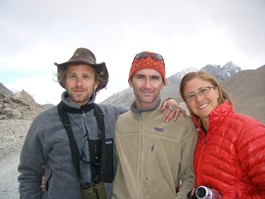
Service, 32, is one of three Sausalito residents who recently put their beliefs on the line in carefully orchestrated protests on Mount Everest and China’s Great Wall. She and Laurel Sutherlin, 30, helped stage an April protest at the Mount Everest base camp where the Chinese Olympic team was practicing for a torch run up the mountain. And in August their colleague Duane Martinez, 26, was videographer for a group raising a 450-square-foot banner reading “One World, One Dream, Free Tibet 2008” on the Great Wall of China.

Tibetan-independence advocates argue that in attempting to use the Olympics to legitimize their country and its tactics in the eyes of the world, Chinese leaders have created an opening for incredibly effective nonviolent protest.

“Right now the Bay Area has an enormous opportunity that we really need to leverage,” Service explains.

She adds, “If the torch comes through [San Francisco], it’s going to be a smear on the city.”

The first jail where Service and Sutherlin were detained was like something “out of a poorly funded Hollywood movie,” Sutherlin says. “It was a cement cell with yak meat hanging from the ceiling and bars on the windows.” Their April 25 nonviolent protest had gone smoothly, which was surprising given all the obstacles.

“There was a lot of cloak-and-dagger shenanigans and high-stakes maneuvering, and a lot of serious effort put into not endangering any Tibetans along the way,” Service says.

Although they’re both gay, Service and Sutherlin posed as an engaged couple eloping to Mount Everest with a high-tech satellite broadcast system so they could share their “big moment” live with the folks back home.

That’s just one of the ways they got the necessary technology into Tibet. But initially most of the cold-sensitive gear didn’t work in the high altitude. So they erected a bright yellow tent (illegally, but nobody stopped them) at the base of Mount Everest. They stayed up all night shoveling yak dung into a fire, heating water and filling hot water bottles which they then snuggled into sleeping bags cradling their equipment. The next morning they walked an hour and a half uphill at 17,000 feet, lugging everything to the protest site.

“It was completely mystical, with the sun rising over Everest and the chorus of bells of the yaks waking up,” Sutherlin recalls. “It was absolutely sublime.”

They unrolled their “One World, One Dream, Free Tibet 2008” banner. Team member Tenzin Dorjee lit a torch and sang the Tibetan national anthem—a brave act in a region where it’s legally considered treason just to say the words “Free Tibet.” The group marched their banner into the Chinese Olympic team’s camp, where they were arrested. They waited to see what would happen next.

“We knew that the Beijing higher-ups wouldn’t want to have injured Americans on hand to create an international incident, but we weren’t sure the field commandos would have gotten that memo in rural Tibet,” Sutherlin explains with a rueful laugh. He adds thoughtfully, “It was a pretty terrifying experience.”

They were detained 55 hours. For the first 30 hours, they weren’t allowed to eat, drink or sleep. And even when they were allowed to sleep, they were frequently shaken awake, keeping them sleep-deprived.

Each was hustled into a separate SUV for the nine-hour drive from Everest to the town of Shigatze, with several stops at local police compounds where the captives were made to walk around in the dark before getting into another vehicle and speeding off again. They only caught glimpses of each other, and were never sure if one of them might have been driven off in a direction from the rest.

Not having been fed for hours, they were led into a huge banquet hall with large round tables, red velvet chairs and a chandelier overhead. Each team member sat at a separate table, surrounded by guards and officials. When they started eating, the room filled with cameramen capturing how well they were being treated. The nightmarish experience ended with a nine-hour, 15-car caravan to the border, sirens blaring all along the way.

“They made a massive pomp and circumstance out of expelling us from the country. It was surreal,” Service says.

It’s likely, she adds, that Chinese officials believe the protesters were treated well.

“The tactics we experienced are just a mild version of what is used throughout Tibet on a regular basis. To them, their treatment of us was gentle, but it actually meets the legal definition of torture. This is the kind of ruthlessness we are talking about in Tibet.”

The one image that videographer Duane Martinez can’t get out of his mind is the windowless brown conference room with buzzing fluorescent lights where his six-member protest team was confined for most of their 36-hour detention after flagging the Great Wall this August.

“If we put our elbows on the table, they’d say no elbows on the table. Or don’t cross your legs. Stand up. Sit down. Any way of keeping us out of a comfortable physical space.”

Occasionally a guard would point at one of them and grunt, “You, now,” and that person went away to be interrogated.

Martinez also remembers the moment on Aug. 8 when the group unfurled their banner on the Great Wall, at a site near the town of Huirao. “I thought my heart was going to fly out of my chest when we started going. It’s a nervousness and an excitement. A lot of that adrenaline was knowing that a live feed was going out. I kept telling myself to think about the ripples that were spreading.”

Security guards jailed the protesters in the rustic cell at the base of the Great Wall. From there they were taken to a nearby town, then to a police compound in Beijing, where they spent about 20 hours. The team members—three from the United States, two from Canada and one from the United Kingdom—refused to answer any questions, asking instead to speak to a representative from their embassy. They never did meet any embassy officials, but after 36 hours of sleep deprivation, interrogation and disorientation, the protesters were told they were being sentenced to five days in jail and ordered to sign Chinese papers. They refused, and all were put on a plane to Hong Kong.

Now back in Sausalito, Martinez, Service and Sutherlin are working to ensure that the Beijing torch won’t receive an unquestioning positive reception in the Bay Area. Sutherlin notes, “This is really a make-or-break moment for the Tibetan people and the Tibetan culture.”

Singer-songwriter Peter Rowan performs at a fundraiser for Students for a Free Tibet, including an auction of work by local artists on Sunday, Oct. 21, in a private home in Mill Valley; $25-$300. For details, go to www.studentsforafreetibet.org/peterrowanbenefit.


Still Standing

0

10.10.07

The record-buying public has recently been faced with a welcome quandary, what with the recorded re-emergence of classic soul singers like Bettye LaVette, Howard Tate, Solomon Burke and Koko Taylor. The background stories are touching—a talented singer with a few hits long ago is forgotten by the major record labels for decades and stages a successful comeback aided by a tasteful, purity-capturing producer—and the music is almost overwhelmingly enjoyable, if not top-notch. Acknowledging the richness and artistic wealth of the soul resurrection, one album stands alone in a field growing ever crowded: the incredible We’ll Never Turn Back by gospel singer Mavis Staples. She appears with Charlie Musselwhite Oct. 11 at the Napa Valley Opera House.

Recent events in Mississippi and Louisiana have brought civil rights issues back to our front pages, and Staples, more than any other singer, is intensely qualified to bring it back to our ears. Her family group, the Staple Singers, exemplify the beautiful confluence so common to the climate of the 1960s. Mixing gospel soul with the political bent of the folk scene, the Staples emboldened the Civil Rights movement with songs like “Long Walk to D.C.” and “When Will We Be Paid?” that dug far deeper than Joan Baez or Peter, Paul & Mary. When Stax Records signed the Staples with Booker T. & the MG’s as a backing band in 1968, the message came out of the churches and streets and onto the airwaves, helping change, or at least alter, the attitudes of millions.

Mavis Staples has stayed active, but it took musicologist Ry Cooder to convince her to return to her roots. We’ll Never Turn Back revisits songs of the Civil Rights struggle—many of which actually precede the 1960s—and in the hands of Staples, the Freedom Singers, Ladysmith Black Mambazo and Cooder’s own band, they are transformed from important but no less dusty artifacts (“This Little Light of Mine”) into powerful new statements of hope and cultural revitalization.

On the album’s title track, amid a looming ambiance, Staples inflects an urgent reminder of how far the movement for racial equality has marched and how imperative it is to continue undeterred. Every breath between phrases, every vibration, every tic in the back of her well-worn throat is nakedly presented. Her conviction is overwhelming. Against all odds, it could reduce even a certain district attorney in Jena, La., to tears.

Mavis Staples performs with Charlie Musselwhite and the North Mississippi All-Stars on Thursday, Oct. 11, at the Napa Valley Opera House. 1030 Main St., Napa. 8pm. $40&–$45. 707.226.7372.


First Bite

0

10.10.07

Editor’s note: First Bite is a new concept in restaurant writing. This is not a go-three-times, try-everything-on-the-menu report; rather, this is a quick snapshot of a single experience. We invite you to come along with our writers as they—informed, intelligent eaters like yourselves—have a simple meal at an area restaurant, just like you do.

Khoom Lanna, the new Thai restaurant in Railroad Square, certainly lives up to its name. Khoom was the former residence of the Thai royal family; Lanna, the isolated kingdom considered a cradle of Thai culture. Khoom Lanna feels like an oasis in the middle of Santa Rosa, and it certainly is a place where you’re given the royal treatment.

When we stepped inside one afternoon, my guy, Doug, and I were carried away on a calming veil of color, sound and delicious smells. The place is really gorgeous, with two tones of dusty and deeper rose on the walls, elaborate tapestries of boats and dancing women and slow ceiling fans with broad petals, like giant spinning frangipani blossoms. They proudly play original jazz composed by His Majesty the King, Phumiphon Adunyadet, which Pookie, one of the owners, told us one patron had found “not Thai enough,” whatever that means. Now they play traditional Thai music, too.

All the standard favorites are served, along with some surprises. If you stick to the lunch menu, all options (satay, pad Thai, chili basil, curry, etc.) are $7.95 and include salad, appetizer and jasmine rice. You can specify chicken, pork, beef or vegetables, and your desired level of spiciness on a scale of one to 10. We chose green curry chicken ($7.95), which was just about as good as it gets, with chunks of zucchini, green beans, green and red bell pepper, and a taste of kaffir lime, basil and just the right amount of heat.

The grilled Bangkok fish ($12.95) is breaded tilapia cooked crunchy on a flavorful beside a bed of julienned red onions, carrots, green apples, cilantro, and accented by a beet cleverly cut into a flower. The duck breast with honey ($17.95) was luscious: tender, smoky meat with layers of sweet (honey? molasses?) and savory spinach. The pumpkin was cooked to such a smoothness, it dissolved in the mouth. The Singha beer (a necessary accompaniment to Thai food) was a tad dear at $4.50 a bottle for an otherwise affordable lunch.

Between courses, Pookie came to our table to chat about the food cooked by chef Yee, the ups and downs of running a new restaurant and the changing face of her hometown of Bangkok (see Bangkok’s SkyTrain). Although we were quite full, she ignored our demurrals about dessert, saying she’d already prepared us two to try. Whisking back from the kitchen, she brought a platter on which a perfectly ripe mango was sliced thin and arranged in the shape of a baby whale. At the center, a mound of sticky rice was drizzled with coconut milk and sprinkled with sesame seeds. I don’t even like dessert, but I loved that one. On another dish were skewers of fried panko-covered banana with honey and served with coconut ice cream, which stayed on Doug’s side of the table. Both of these were offered on the house. Talk about being treated like royalty.

Khoom Lanna, 107 Fourth St., Santa Rosa. Open for lunch and dinner daily. 707.545.8424.


Quick-and-dirty dashes through North Bay restaurants. These aren’t your standard “bring five friends and order everything on the menu” dining reviews.

Marin Theatre Company

0

the arts | stage |

Photograph by Nina Zhito
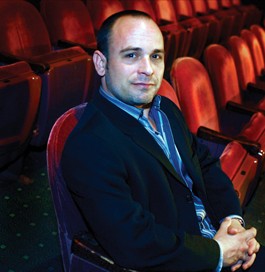
Stage Craft: MTC’s artistic director Jasson Minadakis.

By David Templeton

We really want to be one of the major cultural attractions for the North Bay, and we are well on our way to achieving that goal,” says Jasson Minadakis, artistic director of Mill Valley’s Marin Theatre Company. “Developing and nurturing the artists who live right here in the North Bay is something of huge importance to us,” he says. “Of course, we expect a lot from the artists who work with us, because the community expects a lot from us.”

As the North Bay’s only full-time, all-professional theater company (it’s an Equity house that runs its plays Tuesday through Sunday—just like in San Francisco!) the 41-year-old MTC has a lot of high expectations to live up to. With an annual operating budget of over $2 million, there is always enormous pressure to produce popular and profitable shows. Given that MTC is also pretty much the only theater company north of the Golden Gate that ever gets reviewed by the San Francisco newspapers, it has the additional pressure of being the North Bay’s sole theatrical representative to the rest of the Bay Area. With all that pressure, it would be reasonable for MTC to stay focused on a very simple goal: to stage plays that pack the houses and please the critics—and nothing more.

But there is more to MTC than what happens beneath the proscenium arch. Largely under the radar, with little fanfare or public awareness, the company has been operating one of the most ambitious and expansive culture-education outreaches in the region. Under the direction of Josh Costello, MTC’s artistic director of expanded programs, who works closely with Minadakis, the venerable nonprofit throws much of its effort into a large and growing number of community outreach programs: MTC in the Schools augments the curriculum of Marin County schools by placing drama teachers, playwrights and actors in classes, either after school or as part of existing arts, culture and literature courses; SceneFest gives young actors the opportunity to perform scenes and monologues in a safe, education-oriented acting competition; MTC’s ingenious Teen Advisory Board assembles middle and high school students to act as theatrical diplomats between MTC and the Marin teen community; with Teachers Night Out, educators are invited to attend free preview performances of new plays, where they can pick up study guides and discuss ways to incorporate the plays’ themes into class curriculum; the Me and My Shadow program pairs young students with MTC staff members in order to learn about theater operation from the inside; plus, there are numerous scholarship programs and frequent projects, such as the recent Canal Project, in which students develop original plays based on experiences taken from their own lives.

“The nurturing of an appreciation of theater among nontraditional audiences, and the development of local talent, is a huge part of what we do,” Minadakis says. This results in a large number of local actors and writers being given opportunities to develop fresh plays through such programs as the annual Nu Werks showcase, and the brand-new workshop series presenting such works-in-development as Marin County playwright Kenn Rabin’s Found Objects, which kicks off the workshop series Oct. 10.

“We believe that these kinds of programs are one of the reasons why we’re here,” says Minadakis, “not just to produce vital and entertaining theater, but to develop local theater artists and give them a place to practice their craft in a professional environment, with high artistic standards. Then, our outreach programs are designed to cultivate a generation of new theatergoers, to spread the love of the theater, so that our artists always have someone smart and appreciative sitting out there in those seats.”


View All


Museums and gallery notes.


Reviews of new book releases.


Reviews and previews of new plays, operas and symphony performances.


Reviews and previews of new dance performances and events.

Santa Rosa’s Dance Center

0

the arts | dance |

Photograph by Michael Amsler
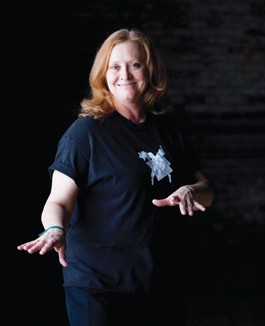
Hoofin’ It: The Dance Center’s director Vicky Suemnicht.

By David Templeton

Inside the lobby of Santa Rosa’s 30-year-old Dance Center, located in an old warehouse near Railroad Square, there stands a massive display case, crammed with trophies and ribbons awarded to the studio and its dancers over the course of its three decades of existence in the community. According to Vicky Suemnicht, director, founder and owner of the Dance Center, the case contains only about one-third of the awards the studio has won.

She also says that while awards are nice and everything, they’re not what the Dance Center—or dance itself—is all about.

“Compared to a lot of studios, we are really not about competition. It’s not a huge part of my philosophy,” Suemnicht says. “If a young dancer wants to win a lot of trophies, this is not the studio for them. I feel strongly that what’s important is the training, the development of technique—and competition can be a distraction. We compete on occasion, and we usually do well, but our focus is on having fun, on developing the students as dancers, and preparing them for whatever it is they want to do next.”

Suemnicht, a longtime dancer, teacher and choreographer whose choreography work is often seen onstage at the neighboring Sixth Street Playhouse, started the Dance Center in 1977 (it was known then as the Tap Studio), establishing the studio in a corner of the Lincoln Arts Center, just around the corner from where she is now. On a weekly basis, hundreds of students, from four-year-olds on up to senior citizens, walk through those doors and past those trophies, dispersing into classes that cover the spectrum of modern American dance: tap, jazz, ballet, musical theater, hip-hop and modern. Suemnicht cannot give an exact number of the people who have learned to dance at the Dance Center, but, including the hundreds who’ve grown up dancing there (every year the Center gives out scores of 15-year pins to longtime students), one could safely put the number in the thousands.

The attraction, aside from the primal appeal of dance and the lure of a comfortable, friendly place to practice, is Suemnicht herself, a tireless advocate for the art of coordinated physical expression, and a first-rate teacher whose positive attitude and supportive approach have made the difference in coaxing plenty of young people to give their all to the craft of dance.

“Dance is such a great activity, for kids and adults,” she says. “It’s a great skill to have, and it feels good. Tap dancing is an especially helpful thing to know. I tell our students all the time, whenever I’m having a stressful day, or when I’m uptight about something, if I just let loose and tap dance for five minutes, I feel a lot better. We see kids tap dancing their way out of bad moods here all the time. Dance is very therapeutic.”

In addition to the classes, staffed by a small army of instructors, the Dance Center boasts seven dance companies that perform around the Bay Area. Each year since 2003, Suemnicht has taken a company of dancers to Jeju City, Santa Rosa’s sister city in South Korea, to perform at the annual Fire Festival. While most of her students learn dance for the sheer pleasure of it, the Center has had a fairly high percentage of students who, after graduation from high school, continue taking dance in college, or go out and get jobs as dancers in touring companies or on cruise ships.

“Dance is a challenging career, it’s a challenging life,” she says. “Yes, some of our students choose to go on and make dance their profession, but most of them, the kids who grow up dancing here, don’t go that direction. But dance is still in them, it’s in their hearts and they tend to find ways to keep dance as a part of their lives.”


View All


Museums and gallery notes.


Reviews of new book releases.


Reviews and previews of new plays, operas and symphony performances.


Reviews and previews of new dance performances and events.

Napa’s Festival del Sole

0

the arts | visual arts |

Photograph courtesy of Barrett Wissman
Sun King: Festival del Sole founder Barrett Wissman

By Gabe Meline

For two years now, Festival del Sole has impacted our small region like a 10-ton asteroid of the arts. Suddenly, an unparalleled summertime festival offers appearances by top names in the classical field, the food world, the fine arts and the winemaking profession, interwoven together by a weeklong program in the Napa Valley. Picking and choosing which events to attend can be deliciously overwhelming, but in the vision of Festival del Sole founder Barrett Wissman, there’s no scaling back on excellence.

“My dream was always to have a festival that could really reinvigorate communities with the arts,” says Wissman from his home in Texas. “That’s the basic purpose. People ask me why I don’t go a little bit slower, why I don’t do just three concerts in the first couple of years, but then you don’t establish quality and depth.”

With past appearances by such fine-art music superstars as Joshua Bell, Jean-Yves Thibaudet, James Galway, Sarah Chang, Anne Sophie von Otter, Samuel Ramey and Frederica von Stade, the festival also hosts culinary demonstrations, winetastings, wellness clinics and high-society gala events. Because of this ambitious scope of global culture descending on the North Bay, it’s a natural to honor Festival Del Sole for a Boho Award this year.

The idea for a multi-artisan festival first came to Wissman while walking around the small village of Cortona, Italy, with his newlywed wife, Russian cellist Nina Kotova. “We were in the town,” he says, “and one day, looking at the old theater—it was hardly used for anything—we thought to ourselves, wouldn’t it be clever and interesting to enliven the town by doing something like this? I like several different art forms, not just music, and I find that they complement each other. I think these days, everything is going so fast in the world that people take little time to enjoy these sorts of things.” Thus, the first incarnation of Festival del Sole was begun in a small Italian town.

Wissman himself started out as a concert pianist before a lucrative run in hedge funds and venture capital in the 1990s; he recently acquired a majority share of IMG Artists—a talent agency with a huge roster of classical talent—positing him as the perfect initiator of such an undertaking. After three successful years of Festival del Sole in Cortona, Wissman happily turned his eye to establishing a sister festival in Napa.

“Napa is the perfect place,” he enthuses. “It’s close to a metropolitan area, there’s a lot going on, there’s an audience, it’s a national and international destination. And though there’s lots of wonderful things going on in the North Bay, arts-wise, there’s nothing that’s a concentrated event like this.”

With Kotova as artistic director, the Festival del Sole utilizes a variety of stunning venues in the Napa Valley, including winemaker Daryl Sattui’s $30 million, 121,000-square-foot Castello di Amarosa. Festival events are also held at the Lincoln Theater, French Laundry, COPIA, Villa Mille Rose, the Napa Valley Opera House, the Culinary Institute of America, Mondavi Winery and the Napa Valley Museum. Ever aspiring, Wissman says he’s still looking for the perfect, “magical” outdoor venue.

“We’ll always use the Lincoln Theater—it’s a perfect space—but eventually, to do some things outside in the evenings would be wonderful,” he says, adding suggestively that he “may have to build it.” But Wissman is especially fond of the ability to give classical artists a world-class reception in Napa; they appear for small fees, Wissman says, but “the important part is that they have been embraced by the community, and that they love coming.”

Wissman plans on continuing Festival del Sole for years to come, and hopes to attract more local residents from the Bay Area with each season. He admits that the process of maintaining and expanding an already staggering festival is hard work. “But if it were easy,” he says with trademark determination, “then it wouldn’t be high quality.”


View All


Museums and gallery notes.


Reviews of new book releases.


Reviews and previews of new plays, operas and symphony performances.


Reviews and previews of new dance performances and events.

Everyone’s a Winner, Pt. II

the arts | visual arts | ...

Essay: Porto isn’t the same as port

10.10.07The most famous fortified wine of all, Porto is as Portuguese as a Lodi Zinfandel is Californian. So how must the Portuguese feel now that wineries around the world have seized the word—which is, of course, the name of a city in northern Portugal—dwarfed the p, amputated the o and slapped the four remaining letters onto millions of bottles...

The Byrne Report: Station Casinos and the Rohnert Park casino—what stinks

10.10.07Trail of Cash going to happen, and there's nothing anyone can do to stop it.—Greg Sarris, chairman, Federated Indians of Graton RancheriaThe Graton Rancheria casino-hotel project lumbers through the bureaucratic maze constructed to make it appear that some consideration, however slight, is being given to weighing the environmental, sociological and economic costs to the community of building and operating...

News Briefs

10.10.07 missing wireRecently, someone stole a PG&E truck out of the company's Petaluma yard, making off with its cargo of 2,000 pounds of copper wire worth around $7,500. Steadily increasing prices paid for scrap metal have sparked an ongoing series of metal thefts, with copper wire an appealing target. "It's a nationwide problem that we're experiencing here," explains PG&E spokeswoman...

Marin activists fight for a free Tibet

10.10.07San Francisco is scheduled to be the only North American city hosting the Olympic torch as it winds its way to China next April. Several local residents are already making plans for the torch, but their energies aren't aimed at cheering as this symbol of international unity is carried through the city. They hope to convince the Bay Area...

Still Standing

10.10.07The record-buying public has recently been faced with a welcome quandary, what with the recorded re-emergence of classic soul singers like Bettye LaVette, Howard Tate, Solomon Burke and Koko Taylor. The background stories are touching—a talented singer with a few hits long ago is forgotten by the major record labels for decades and stages a successful comeback aided by...

First Bite

10.10.07Editor's note: First Bite is a new concept in restaurant writing. This is not a go-three-times, try-everything-on-the-menu report; rather, this is a quick snapshot of a single experience. We invite you to come along with our writers as they—informed, intelligent eaters like yourselves—have a simple meal at an area restaurant, just like you do.Khoom Lanna, the new Thai restaurant...

Marin Theatre Company

the arts | stage | Photograph by Nina Zhito Stage...

Santa Rosa’s Dance Center

the arts | dance | Photograph by Michael Amsler Hoofin' It: The Dance Center's...

Napa’s Festival del Sole

the arts | visual arts | Photograph courtesy of...
11,084FansLike
4,606FollowersFollow
6,928FollowersFollow