News Briefs

ISSUEDATE

Time to vote

With the race already (groan) underway for next year’s presidential election, the Nov. 6, 2007, election may not be high on most folks’ to-do lists. However, this “off year” election will wrap up a lot of nitty-gritty business that needs doing in Marin and Sonoma counties. The good news for Napa County voters is that they get the day off; Napa County doesn’t have a Nov. 6 ballot. So Napans can sit back, relax and save their election energies for next year.

In Marin and Sonoma, voters will be selecting representatives to serve in a wide range of offices, such as mayor or sanitary board member. Current North Bay Bohemian policy is to not make recommendations in individual local races, but we will provide an overview of what’s on the ballot.

One interesting legal note is that special districts which raise money through voter-approved taxes then have to officially ask voters to raise their appropriations limits so they can spend the funds that have been collected. Elections to do just that are being held in the Bodega Bay Fire Protection, Forestville Fire Protection, Inverness Public Utility, Mesa Park (Firehouse Community Park Agency) and Reed Union School districts.

Marin voters will also be choosing candidates to serve on the governing boards of Bel Marin Keys Community Services District, Kentfield School District, Las Gallinas Valley Sanitary District, Marin Community College District, Mill Valley School District, Novato Fire Protection District, Novato Sanitary District, North Marin Water District, Reed Union School District, Ross School District, the San Rafael Board of Education, Shoreline Unified School District, Southern Marin Fire Protection District, Stinson Beach Fire Protection District, Tamalpais Community Services District, Tiburon Fire Protection District and Tiburon Sanitary District.

City Council members will be selected in the Marin County towns of Fairfax, Mill Valley, Novato and San Rafael; Fairfax and San Anselmo are each electing a town clerk; and San Rafael is choosing a mayor, city attorney and clerk/assessor.

Throughout Sonoma County, representatives are being chosen as board members for Bodega Bay Fire Protection District, Bodega Bay Public Utility District, the Mendocino County Board of Education, Monte Rio Recreation and Park District, Occidental Community Services, Point Arena Joint Union High/Arena Union School District and Shoreline Unified School District. And the Sonoma Valley Unified School District is hoping two-thirds of its voters approve a six-year, $91 parcel tax.

Whew. For an “off-year” that’s a lot of elections with a lot of potential impact.


Opinion: Power of Power of Attorney

0

On Christmas day 2005, just three days short of my 21st birthday, I woke up early, excited to open gifts with Mom and Dad. I have been fortunate that my parents are such good friends, even though they have been divorced for over 18 years. Later, Mom and I headed out from her Windsor home to deliver gifts to our friends while Dad did his own thing. The air outside was crisp, as it should be on Christmas morning, and the rooftops glistened with white frost.

When we got back, I opened the front door and felt a chill come over me even though it was warm inside. As I turned the corner, there was Dad facedown on the floor. We rushed to get him up; he wasn’t moving, his body was limp. When I raised his head, he looked at me and his eyes rolled to the back of his head. I yelled, “Wake up, stay with us!” I thought, “Why is this happening?”

I called Jane, my half-sister, Dad’s daughter from a previous marriage who is much older than I and who long ago disconnected herself from the family, to let her know what happened. She came to the hospital, and we met with the doctor in a small room. He told us that, at the age of 64, Dad had suffered a massive stroke affecting his speech and paralyzing his right side.

Dad lay unresponsive in the hospital on the verge of not surviving, hooked up to life-support in the ICU at Santa Rosa Memorial Hospital. I had to figure out if he had a will or any paperwork stating what to do if something like this were to happen. Jane, Mom and I went to search Dad’s house; nothing turned up. There was no power of attorney, no will and no extra names on his accounts. The fact that he had nothing in order made the process of taking care of him that much harder.

Soon after finding this out, I also discovered Jane had deceived me with the show of support and love she had seemed to offer. When we cleared out Dad’s house, she threw out almost everything without seeming to give a second thought to what she was doing. I caught her throwing away a box of old photos, mostly of me when I was little, but also a few photos of Dad when he was in the Navy. I couldn’t believe it. What little belongings she did save fit into Dad’s motor home which she had towed away to a spot unknown. What I did know was that I was alone.

Weeks later, Dad was awake and working with therapists, but with limited communication and unaware of what I was dealing with. In order to figure out what to do for him and where he should live, a meeting was called with the doctors, hospital staff, Mom, Jane and me. Dad had made it clear that he wanted me to be his advocate. Jane would not accept that, nor allow me to take care of him; I had no paperwork from Dad indicating otherwise. But she had a four-page paper typed, ready to distribute to everyone, explaining why it would be “ludicrous” to let me take care of him and how I am a bad person. At that point, I knew I had to fight for him. The first step was getting power of attorney.

It was a struggle, but I knew I couldn’t give up. I made several phone calls, was referred to various people, and filled out paperwork that had questions I could not answer.

Eventually, I did gain Dad’s POA, which came with responsibilities: changing the mail, bouncing between banks, signing him up for Medi-Cal, traveling to the VA in San Francisco, applying for Social Security, dealing with lawyers, scheduling transportation, finding a place close by for him to live and getting him therapy. My 21st birthday came and went in a flood of paperwork with emotions running high. I just wanted everything back to normal.

If Dad had something—a will, POA or a notarized document stating his wishes—this all could have been prevented. See, like most of us, Dad felt like he was going to be healthy forever and figured he was too young to have anything happen to him.

Through all of this, I learned how to fight for someone I love, knowing I couldn’t give up because Dad needed to see that life is worth living. The lesson here is to have your papers in order; you don’t want your loved ones going through this.

Today, Dad has gone from a feeding tube to eating on his own and attending an adapted PE class at Santa Rosa Junior College. We just celebrated his 66th birthday, and he couldn’t be happier; that warm tingly feeling I get inside from seeing him happy makes all the difference in my world. As for me, I am just your average guy making my mark in this world, trying to accomplish as much as possible. I myself just wrote out a holographic will stating what my wishes are for the little amount I have. I want to spare my loved ones the same unintended trauma.

To learn more, contact the Sonoma County Council on Aging (707.525.0143), the Marin County Commission on Aging (415.499.7396), the Area Agency on Aging Napa-Solano (707.644.6612) or check out www.usa.gov/Topics.Seniors.shtml. The Byrne Report returns next week.


Rosso Pizzeria & Wine Bar

0

10.24.07

Editor’s note: First Bite is a new concept in restaurant writing. This is not a go-three-times, try-everything-on-the-menu report; rather, this is a quick snapshot of a single experience. We invite you to come along with our writers as they have a simple meal at an area restaurant, just like you do.

The staff roll their eyes at yet another reference to the Creekside Center restaurant’s former tenant, Anthony’s Music Box. Rosso’s smaller space is unrecognizable from the once-rambling nightclub, except possibly that the smiling chef stands roughly in the spot of the long-ago DJ, spinning pizza dough and cooking it up in the central brick oven to a light techno soundtrack.

The setup is nice—friendly, plentiful staff, vintage Italian-style wall posters featuring local names like Redwood Hill goat cheese—but I wasn’t comfortable at first. For one thing, I had heard eggs and spaghetti were offered as pizza toppings, and that disturbed me, without regard as to how either hip or authentic that may be. But minute by minute, I warmed up to the joint. Appetizers, or salumeria, are offered in categories “Gusto” and “Carne,” most of which are meant to accompany the pizzetta ($3), a rich flatbread, as spreads and whatnot. We chose the warm olives ($3). Rosso is big on local produce, right down to the Love Farms thyme. The Rosso caesar ($8.50) with Sonoma romaine, creamy lemon anchovy dressing, Gorgonzola and Calabrian chiles (OK, not so local), is a satisfying salad. But my dining companion wanted to try the piadine, described as flat bread with a salad topping, with instructions to “fold it, cut it and eat it.” My opinion was, there’s bread, there’s salad, why rock the table? But the Rosso caesar piadine ($7.95) was quite tasty and, contrary to my expectation, didn’t spill all over the plate.

All main courses are “Pizze.” We skipped the meatball and spaghetti Goomba ($11.50), opting for the Funghi ($12.50), which promised shiitake and cremini mushrooms in a garlic-informed white base with taleggio and fontina cheeses and shaved artichoke. It was such a pleasure that I hesitate to mention the unexpected appearance of chicken on the pie. (Since this is a quick snapshot, new concept and all that, I just did.) “This isn’t artichoke, is it?” my vegetarian friend asked. As a sympathetic yet recovering vegetarian, I tasted and concluded—how do you say “quelle horreur” in Italian?—chicken. Our server at first attempted to explain the misappropriation of the fowl bits, but quickly offered to replace the pizza.

The excellent wine list is divided in categories “Here” (Sonoma), “There” (Italy) and “Everywhere” (Spain, New Zealand . . . Napa). Many bottles are under $30, and here’s just how reasonable those prices are: A 2006 Quivira Rosé of Grenache ($19) is just $2 above retail. If the wine-by-the-glass list suffers from the conspicuous absence of Zinfandel amid so much pizza, unlisted wines are available by the bottle, corkage is only $10 and donated to the Santa Rosa soccer league, and all wines are available to go with a 15 percent discount. That’s sweet for anyone who’s ever complained about restaurant markup.

But the clincher was really the delectable, almost lovable warm olive appetizer. The chef stopped by to explain they are marinated for days in citrus and herbs, then baked in the brick oven. That so much time is invested in a $3 appetizer that rewards with such unexpected nuance of flavor seems to signal Rosso’s genuine commitment to quality gustation. As for the spaghetti pizza? Um, you go first.

Rosso Pizzeria & Wine Bar, Creekside Center, 53 Montgomery Drive, Santa Rosa. Open for lunch and dinner daily. 707.544.3221.


Quick-and-dirty dashes through North Bay restaurants. These aren’t your standard “bring five friends and order everything on the menu” dining reviews.

Yes, Virginia: We Do Torture

0

10.17.07

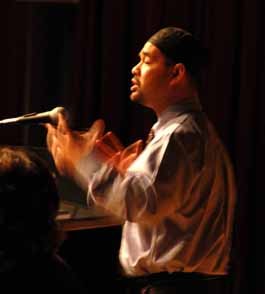
During a week when President Bush rather inelegantly declared that the United States “does not torture people,” the unjust treatment of Army chaplain James Yee seems especially poignant. “I don’t know if the White House is playing with word semantics or what,” Yee says by phone shortly after the president’s statements, “but from my experience, what I became aware of down in Guantánamo at a minimum met the threshold of cruel, inhuman and degrading treatment.”

There are few more entitled to comment on U.S. torture than Yee, a graduate of West Point and winner of two medals for exceptional service. While ministering to the alleged al Qaida and Taliban terrorists of Cuba’s Guantánamo Bay detention camp and acting as staff adviser for detainee religious practices, Yee openly objected to abuses inflicted on the camp’s prisoners. Upon reentry to the U.S., he was surprised to be found in possession of a list of Guantánamo detainees and interrogators. Yee was subsequently charged with sedition, spying, espionage and aiding the enemy.

Transferred to a naval brig in South Carolina, Yee was forced into solitary confinement for 76 days and made to undergo sensory deprivation. More than two months later, all criminal charges against him were dropped. Yee was welcomed back to the Army. He immediately resigned.

Yee has written a book, For God and Country: Faith and Patriotism Under Fire, outlining the harsh conditions of maximum-security units in Guantánamo’s Camp Delta, as well as his own inhumane treatment—an experience for which he has yet to receive an apology. He sees his writing and lecturing less as a healing agent for his own scars than as an imperative message to a new generation. “Ultimately,” he says, “it will be these young men and women who will have to step up and redirect our country towards one that values the ideals that are embodied in our Constitution.”

And as for the claim that the U.S. does not torture people? “It’s a surety that we’ll look back on Guantánamo,” Yee says, “as being one of the darkest black spots in the history of our country, that’s for certain.”

Chaplain James Yee lectures on Tuesday, Oct. 23, at the Cooperage of Sonoma State University, 1801 E. Cotati Ave., Rohnert Park. 8pm. Free. 707.664.4129.


Free from Illusion

Jive 14

0

10.17.07

The notion that the war—any war, all wars—will end and that there will come a lucid day when peace reigns struck quite a chord with our readers. Over 50 writers took the challenge, submitting visions of the war’s last day that ranged from a ho-hum date between two mismatched singles to a weary woman taking out the garbage on a hot morning to the preordained rise of Britney the Great. The Mayan calendar figured inordinately as did (in lesser profusion) fishing rods, flashing armor and colostomy bags. These were a gas to read.

Special shout-outs belong to those writers whose work wracked the judging team most, including Isaac Lefkowitz, Kevin MacGregor Scott, Kristy Cardinal, Luis Guzman, Trevor McCabe and Robert Feuer, whose final line, “Like everything else that had happened in my life, the end of the war was a big dud,” makes us chuckle every time we read it.

As we do every year, we conclude the Java Jive with a party, this year slated for Wednesday, Oct. 24, at 6pm at our new offices: 847 Fifth St., Santa Rosa. This free event is open to the public and we’d love to welcome you to this reading of the Jive winners. Now that we’ve begun imagining the day the war ended, such fantasy has become irresistible. Here’s to it one day being stuff of headlines, not fiction.

—Gretchen Giles

OK with That

SHE LOOKED AS GOOD in her husband’s old sweatshirt as she would have looked naked. She’d probably have still been naked, except it was one of those snappy California days, and she was trying to save on the gas bill.

“Want some coffee?”

“No,” I said. “I used to like it, but now it gives me the shakes.”

“Getting old.”

“Not that old.”

“I guess not. But 30 feels . . . I don’t know. I never figured I’d be with anybody 30. But I kinda like it. You’re OK.”

“Thanks.”

“Don’t mention it.” She went toward the kitchen, the sweatshirt riding high. I heard her making coffee for herself.

I rolled over and put my back up against the pillow that was propped on the headboard.

She came back a few minutes later with that ugly Japanese mug of hers in her hand and sat down on the edge of the bed.

“You think we should be doing this?” I could tell it wasn’t a genuine question, just something she thought she should be asking.

“I wanted to. You wanted to. He’s not here. He may never be here. It happened. It’ll probably happen again. You OK with that?”

“I guess so.”

“You still hearing from him?”

“He e-mails. Once in awhile. Tells me all the shit that’s going on over there. It sounds awful, but it’s been going on so long, and I just can’t deal with it anymore.”

“No ‘loyal army wife’ and all that.”

“Can’t do it. I just can’t do it.”

“Feel guilty?”

“Don’t feel anything.”

“So it’s over?”

“Yeah, it’s probably over.”

She put down the coffee mug, slipped off the sweatshirt and tossed it on the floor next to my shoe.

“I think I feel sorrier for the poor bastard than you do,” I said, pulling her down on top of me.

“Yeah,” she said, “you probably do. You probably do.”

—Charles Martell

Three Stories

THE DAY THE WAR ENDED, Joe McCullough took down the American flag from the stanchion on his porch and rehung it upside down. His wife, Evelyn, following him onto the porch, stood silently before the flag, her face contorting with a smoldering anger that consumed her insides. She suddenly issued a loud bellow, like a sick dog, and viciously attacked the flag. Joe grabbed her. “Honey, don’t,” he said. She bolted into the house, found the 8-by-10 photo, framed in glass, of her son’s platoon posing with George W. Bush in front of the new American embassy in Baghdad during the final year of his presidency.

Dozens of proud, weary, ill-fated soldiers. Evelyn confronted the photo in her hands, trembling. She lifted the frame over her head, poised to hurl it to the floor. Joe barreled through the doorway and held her arms aloft until she collapsed, grief-stricken, in his arms.

One hour ago, news of the end of the war had reached them. The crumpled letter on the coffee table informed them that young Charlie McCullough, their only child, was killed two days ago just outside the Green Zone, about 12 miles from the site of the new embassy.

In the White House, there was unbridled chaos. Public sentiment finally swayed the war’s architects, and the reins of assumed power were handed to the Iraqis. Prepared for this day, the Americans would not be denied their foothold; with the war officially over, the new U.S. embassy could be completed.

The Iraqi company constructing the 100-acre compound, unfazed by the war or who won it, vowed that U.S. taxpayers would not be charged more than the estimated $600 million price tag. And despite well-documented malfeasance and incompetence and an enraged “fringe element” of protesters, administration officials counted on patriotic fervor to sway public sentiment toward completion of this monumental U.S. stronghold Not far from the site of the embassy, two cousins, Ahmed and Muzzafar, reunited in the shade of a burned-out schoolhouse surrounded by concertina wire. They passed a dusty bottle of cheap wine. They had grown up together, but with opposing political and religious backgrounds. Despite these differences, they agreed it was good fortune that they had survived the American occupation. They were aware, however, that despite the official end to this war, centuries-old civil unrest would crystallize simmering resentments and recriminations into deeper hatred and endless acts of insane martyrdom.

“Remember our last day of school here, Ahmed,” Muzzafar declared. “One bomb came so close, I couldn’t hear for a week.”

“Right,” Ahmed said. “But I praised the Americans to Allah for saving me from this shithole school.”

They looked around at where they sat. The irony was not lost on them as they grimly toasted the end of the war.

—Bob Klein

The Bunkers of Graceland

WHEN I RECEIVED the news, I took Sabrina in my arms and ran to the truck, kissing her cheeks as we bounced. “What is it, Daddy, why are you crying, where are we going?”

“Mama’s coming home tonight, baby. We’re gonna round up dinner.” I sped down the street as Sabrina sang her mother’s name, “Mama, Julia, Mommy!”

The news had spread, and the charcoal and beer were ecstatically hauled out in carts. The lines were up the aisles, but no one complained, knees trembling in anticipation, nesting for heroes with candles and sponges. We collected the ingredients for Julia’s favorite meal, king salmon and macaroni. Rolling to the express line, staring wide-eyed at the paper’s headline: “Mission: In Hole, Stop Digging.” Grabbing our groceries, we returned to the truck and flipped on the radio. Mariachi music blared; screaming horns and rapturously strummed guitars shook the cabin. Sabrina laughed and clutched the macaroni. She turned the dial to hear a resolute president declare something about “drinking ice tea in a burning building.” Snickering, the president drew a few more words, interrupted by static. “When the house is floodin’, get a bucket!” I think it was static, it could have been counsel. Sabrina, unmoved by presidential speeches, shut off the radio and went back to singing Mama’s melody.

As we turned off College Avenue onto Humboldt Street, she pointed in wonder at the assembly of crisp American flags flying from the houses. “I remember those from when Mama left.” Without wincing, I replied, “Mama and her friends left because they love America. America’s bringing them home, because America loves them back. Those flags remind us, honey, they connect us to each other.” Good riddance to my last dutiful rationalization; I didn’t need any more. Tonight, Julia would thaw her faithful heart on our wedded bed, fresh from the bunker.

Pulling into our driveway, Sabrina unbuckled her seatbelt and leaped out of the parked truck. She ran upstairs to her mother’s study, jumped on a chair and took the Stars and Stripes from the wall, making sure the flag didn’t touch the ground, as her mother had taught her. “OK, sweetheart, let’s hang it out on the porch.” The sun was setting, the street aflame with candles and fevered conversation. Barbecue smoke billowed into the night sky, wafting the smell of grilled beef and vegetables over fences and rooftops.

After the flag was hung, we went inside and played Julia’s favorite album, Paul Simon’s Graceland. Sabrina turned the stereo up until the windows rattled. “Bet Mama can hear this!” she hollered. Moving to the stirring rhythm, my body trembled for Julia as I squeezed lemon on the salmon. Outside, bottle rockets and Roman candles burst and thundered through the air with the shouts and roars of peace. I almost fainted, watching the fish crackling as it sizzled on the frying pan, the starry night exploding, as Sabrina spun in circles playing her plastic harmonica, waiting for our queen to arrive.

—Michael Harper

Dammit

“Dammit.” She cursed as the hot coffee spilled across the chipped formica. She rushed to the small bathroom, nearly slipping on the still-wet tile, into the shower stall, and grabbed a towel. Returning to the other room, she sopped up the steaming coffee that was now dripping off the countertop onto the already stained carpet below. Righting the cup, she poured a second from the motel room’s coffeemaker and dutifully stirred in the requisite pink packs of sweetener. First sip, ugh.

She walked to the other side of the bed and pulled open the heavy curtain. She lowered herself onto the edge of the bed and stared blankly out at the rain that was drowning the D.C. expressway in a sea of wet and oil, trash and fallen leaves. In the early-morning dimness, the fluid flowing across the roads looked strikingly like the coffee that had dripped off the counter moments earlier. Rush hour was just gearing up, cars splashing through the runoff crossing the expressway’s onramp. Just another fall morning in just another northeast city. Thousands of commuters, one to each car, staring straight ahead as they steered their way through the rainy mess.

From down the hallway, she could hear the sounds of children. “Come on, give it back. Casey, it’s mine. Give it back ! Mom, he’s going to get it all wet! Mom!”

“Oh jeez, Sydney, you’re such a baby. Here, take it back!”

The voices rose in volume until they were just outside her door. A knock.

“Mom, you ready?”

She got up slowly and opened the door to see Jodi and the kids standing just inside the drip line of the awning that covered the second-story walkway. Sydney’s towhead gleamed even in the gloom of the rainy dawn. She reached out a tiny hand and pulled her gently out the doorway.

“Time to go, Momma, come on.”

Turning silent, the four of them walked under a huge black umbrella toward the rental car.

Jodi guided the nondescript four-door as it splashed its way down the expressway’s onramp, and they joined the sea of commuter fish heading south.

Two miles down the freeway, they exited. The car weaved its way along the riverside road, and they merged north, heading through a roundabout.

Suddenly, the businessmen in the car next to them began cheering, one punched the air above his head with his fist and started clapping. A car several ahead of them in the traffic honked its horn. Other cars passing in the opposite direction had passengers in various states of obvious celebration.

“Mom?”

“Turn on the radio.”

After shuffling the dial through several hip-hop stations and a Spanish language talk show, they caught the special report, already in progress:

“. . . is underway. Completion is expected by the end of the month, and no forces are expected to remain. Chancellor Merkel, commenting at the G7 summit in Geneva, stated it was an action long overdue. Other world leaders indicated their overwhelming support. Again, we report that the president has announced the immediate withdrawal of U.S. troops from Iraq and Afghanistan. This comes following the . . .”

She turned the radio off and looked over to her daughter-in-law in the driver’s seat.

Jodi sobbed silently as she steered under the stone archway of Arlington Cemetery.

—Lori Lynne M. Brundick

Dedicated to my stepbrother, Scott W. Dyer, who was killed in Afghanistan on Oct. 11, 2006, and to the rest of his squadron who are still in Afghanistan. Too late for Scott. Too late for so many. Peace be with you all.

The Great Sunset Skirmish

HAD I KNOWN it would be the last time I’d put on my buddy’s extra Army jacket, I might’ve said something. The Coleman canteen carving a crevice into my neck, I took my makeshift weapon made from plastic yellow tubes, and followed my friend into the surrounding woods of the park.

The sweltering sun beat down upon a semi hauling Syrah in the late October air. I crept, carefully trying not to let my shoes come down on the dry leaves.

“We hafta be silent,” my friend said. He was older than me and faster than me, so I followed him as the commander of the unit. We waited beneath a young redwood tree, eyeing the opposite hedgerow for enemies.

“Hey, who we fightin’?” I asked him.

“Germans,” he answered.

“No, we fought them a long time ago,”

I countered.

“Iraq?” he offered.

“No, they’re like really fighting them, out in the Gulf,” I said.

“Well, we could play Vietnam?” he said. The sun was beginning to drift beyond the Mayacamas. I knew I’d get the call home soon.”No, how ’bout Norway?” I asked. I guess it seemed random enough to be true.”Works for me,” he said.

“Over there! Blitttitiitititiratataratom!” My mouth and gun erupted in strafing fire, knocking down the Norwegians’ initial attack.

“Hey, my gun’s a rocket launcher too, look. Pishowwwwwboom! Got ’em!” he yelled.

We beat the first wave back, and the second fell without a problem. But when the third wave hit, my friend was pierced by a shot from a sniper off the rooftops in the neighborhood nearby.

“I’m hit!” he shrieked.

Blitititititishisihshishsi!” I held down my trigger and continued to fight as dusk crept on us like a crook casing a cottage.

“Geoff, Joey! Time to come home!” Geoff’s mom yelled.

“Cease fire,” he said.

“I’ll see ya tomorrow,” I told him.

But I didn’t see him the next day. And the day after that, we would play Whiffle all day. The rest of the week was spent playing more Whiffle and Rollerblading.

Soon after this, we began middle school. There was no more time for war. Postschool activities became more grownup-like, but boring. “Hanging” out at the park, really not doing a goddamn thing.

In the months following, Geoff was too popular, and he had a girlfriend, and the thought of him playing make-believe war was almost embarrassing. I had gotten into video games more than I would’ve liked to, and the girls laughed at me for being heavy.

Had I known that day was the last, I would’ve said something. “Good luck in life. I’m sure gonna miss this.” Something. But I didn’t, and just like soldiers in a real war, that last skirmish beneath the autumn sunset halted and took with it what once was my childhood.

—Tyler Brown


The Green Zone

10.17.07

I discovered my first issue of The Pharmakon while cleaning at the coffee shop where I work. Some people collect stamps, others collect marbles. I collect zines. After only a cursory glance, I could tell that The Pharmakon had much more to offer me than mere padding for my collection. I took the copy back to the front counter and began to browse through it between helping customers. The Pharmakon did more to ignite my imagination and inspire me to take place in community action than any of the caffeine that I had thus far imbibed that morning. Thus began my relationship with The Pharmakon, a monthly publication launched this past June, the creation of Josh Stithem and Bite the Hand Productions.

The Pharmakon creates a beautiful balance between art and community, education and environment. From the last few issues, I have learned about a sustainable beekeeping workshop, Sonoma County Food Not Bombs, Free Mind Media and its community garden, the Tea Room (where one can go to discuss grassroots activism), how to build my own composting bin, the Sonoma County Conservation Action and its Know Your Neighbor program (which helps to connect people in order to protect our environment), the SMART Train, Harvest for the Hungry, a biodiesel workshop and much more.

I contacted Josh, who graciously agreed to give me a tour of The Pharmakon publishing quarters: his house in Santa Rosa. Josh’s home is a living example of what The Pharmakon encourages: community, environmental stewardship and art. He and his roommates have transformed what was once a weed-ridden patch of dirt surrounded by sidewalk into a mini, ecologically sound swathe of gardener’s paradise. They plan to put a community bulletin board on the corner; I suggest a solar-operated espresso machine. Josh tells me that the Pharmakon is motivated by the written word and exists as a place for people to find information and make connections.

In order to explore this idea of connection and community further, I decide to investigate one positive action that I would not have known about had I not picked up a copy of Josh’s zine. Do I make my own mead? Attend an event at Free Mind Media? Or do I check out Monday Night Mass? For the sake of this column and bicyclists everywhere, I leave Josh to his band practice and commit to experiencing what is rumored to be the most successful Critical Mass bike ride this side of the Golden Gate.

Nica Poznanovich is self-proclaimed Queen Bee and coordinator of Monday Night Mass, a weekly event that regularly draws some 50 riders who depart from Santa Rosa’s Community Market around 9:30pm. The bicyclists travel together through the streets via an ever-changing route. Unlike other Critical Mass rides, Monday Night Mass is not a protest but, rather, a chance to be an empowered bicyclist in an environment where you know you will be safe, surrounded and never stranded. This is a chance to make new friends, travel the streets by moonlight and learn to navigate Santa Rosa free from the confines of a carbon-spewing hunk of metal. All levels of riders are welcomed.

(A week after our conversation, Nica was hit by a car while riding her bicycle through Santa Rosa. She was not too badly hurt, but badly enough that she had to miss out on a Monday Night Mass, and she never misses Monday Night Mass.)

Despite Nica’s conspicuous absence, everyone I meet is notably friendly. I could have showed up on a pink bicycle with training wheels, steamers and a banana seat and been welcomed with open arms. As it is, I show up with no bike at all and skulk about, staring at everyone and taking notes, and still every bicyclist I come across is nice to me. One rider tells me she bought her bike for 10 bucks and encourages me to look for one on Craigslist or at the dump. Another rider arrives with a large speaker he pulls on a cart behind his bike. He has a portable CD player strapped across his chest in a holster of sorts. The system slows him down a bit, he admits, especially around turns, but is worth it for obvious reasons.

Some riders tinker with their bikes and fill tires, while others pore over a map of Santa Rosa and discuss their route for the evening. Someone is dispatched to Nica’s house to fetch the walkie-talkies, and friendly debates begin as to what is the safest route to take (apparently Fourth Street is no good, what with a rough right turn near Safeway and a blind turn where Pacific hits Fourth) and where they should stop for check-ins and refueling (Aroma Roasters and a taqueria on Sebastopol Avenue are universally agreed upon).

As I watch the bikers roll into the parking lot of Community Market, singly, in twos and in threes, I want to go with them. Even I—petrified of riding near cars, afraid of dogs and generally not even close to fit enough to peddle up a hill—feel a deep longing stir within my chest. I want to get a bike, and when I do, I know exactly where I am going to go riding.

When I get home, I pull out my August issue of The Pharmakon. I turn to page 19 and read: “Do it yourself, find a bike, fix a bike.”

For information on ‘The Pharmakon’ contact Josh Stithem at th**********@***il.com. For information on Monday Night Mass, contact ni*****@***il.com.


Change-Making

0

10.17.07

“Bioneers” is a word coined to mean pioneering and innovative people who focus on practical and visionary solutions for restoring the planet’s threatened systems. Bioneers look to nature for instructions for how to live on Earth in a healthy way that lasts, in concert with natural principles such as diversity, kinship, reciprocity, food webs and community. The event is designed to explore, connect, discover and celebrate.

Now in its 18th year, this event usually sells out with over 3,000 participants. Do to overwhelming interest, the Bioneers have bloomed, now serving 18 satellite conferences in Alaska, Iowa, New York and beyond with a live feed from the Marin conference, slated for Oct. 19&–21. The morning plenary speeches are beamed from the Marin Center into the other places, which have their own local programs in the afternoon. Ten thousand people are projected to attend the various Bioneers gatherings this year.

Far from its progressive fringe beginnings, last year’s conference was covered by the New York Times, and many of the Bioneers featured prominently in Leonardo DiCaprio’s documentary The 11th Hour.

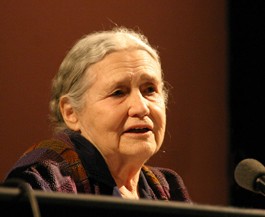
Among this year’s keynoters are author Alice Walker (above), transformation expert Byron Katie speaking on what she has simply come to call “the Work,” playwright Eve Ensler on the continued evolution and importance of her groundbreaking Vagina Monologues and author Edward Tick on “Modern War’s Devastation and Healing.” North Bay presenters include journalist Mark Dowie, the OAEC’s resident biologist Brock Dolman, ethnobotanist Kat Harrison, psychiatrist Jean Shinoda Bolen and members of Farms Not Arms, a national group of activist farmers and veterans with a strong Petaluma chapter.

The organizers of Bioneers, who are based in Santa Fe, N.M., seek to inspire educate and connect. Many prominent groups co-sponsor the event, which also has numerous media partners.

Bioneers Conference runs Friday&–Sunday, Oct. 19&–21, at the Marin Center, 10 Avenue of the Flags, San Rafael. www.bioneers.org.


Museums and gallery notes.

Reviews of new book releases.

Reviews and previews of new plays, operas and symphony performances.

Reviews and previews of new dance performances and events.

Wine Tasting Room of the Week

0


Just west of the bustle of Santa Rosa on a Sunday drive, it is clear that autumn has quickly followed the first few days of rain. Leaves speckle the road, the roses of a roadside memorial glow red in the slanted light and shadows cross the road in the midafternoon. Farther west, traffic thins, save for a flatbed truck stacked with heaping bins of Chardonnay grapes careening down Graton Road to beat the next rain. In these hills where pioneering Russian orchardists encroached on the great Spanish land grants, the apples now give ground to grapevines. The road passes through a little valley green with vineyards, surrounded by redwoods, overlooked by Marimar Torres Estate.

Representing a Spanish winemaking dynasty, Don Miguel Torres brought along daughter Marimar on a California visit in the 1960s. She later made it her home. With support from the family business, Marimar, also a food writer, built the winery in 1993. It’s well laid out: there are bright yellow walls, blue-framed windows, a courtyard fountain and flowers spill out on the walkway to the tasting room above the steep, hand-farmed vineyards.

The tasting room is inspired by a Catalonian farmhouse kitchen, with decor selected from the region, and wines are presented on the central dining table. Despite the Iberian heritage, the wines are strictly Burgundian. The 2006 “Acero” Chardonnay, Don Miguel Vineyard ($29) is named for the Spanish word for “steel,” contrary to the trend towards “roble,” but in keeping with the countertrend against oaked Chardonnay. Yet the aroma is butterscotch, the acidity lemon-lime, the fruit fresh.

From the home vineyard named for Torres’ late father, the 2004 Don Miguel Estate Pinot Noir ($39) is a concentrated Pinot, with rich black cherry fruit balanced between tartness and solid tannin (like a fine Tempranillo?) with something of a smoky, vanilla note. The 2004 Estate Pinot Noir ($45), from a newer vineyard overlooking Freestone and named for matriarch Doña Margarita, is, if it can be believed, more feminine. A hint of strawberry peeks out over dark cherry aroma, subtly perfumed with allspice or clove. The mouth-feel is rich, refined; the tannin supple, without vegetal character save for an afterthought of rhubarb. This is among the best Pinots I’ve tasted in the past year.

Although I’ve been partial to more rustic Russian River valley operations, the picture-perfect Marimar Estate is not a bad stop for locals on a Sunday drive. There’s a feeling of a private tasting at a little-discovered, tucked-away location. The only other folks who showed up during my visit were locals who immediately found one degree of separation with the host and struck up a conversation. Spain’s Prince Felipe has already visited—in 1994—but you can still beat the crowds in this winery’s springtime. Marimar Estate, 11400 Graton Road, Sebastopol. Open 11am to 4pm. No tasting fee; tours by appointment. 707.823.4365.


View All

Local Lit

News Briefs

ISSUEDATE Time to vote With the race already (groan) underway for next year's presidential election, the Nov. 6, 2007, election may not be high on most folks' to-do lists. However, this "off year" election will wrap up a lot of nitty-gritty business that needs doing in Marin and Sonoma counties. The good news for Napa County voters is that they...

Rosso Pizzeria & Wine Bar

10.24.07Editor's note: First Bite is a new concept in restaurant writing. This is not a go-three-times, try-everything-on-the-menu report; rather, this is a quick snapshot of a single experience. We invite you to come along with our writers as they have a simple meal at an area restaurant, just like you do.The staff roll their eyes at yet another reference...

Yes, Virginia: We Do Torture

10.17.07During a week when President Bush rather inelegantly declared that the United States "does not torture people," the unjust treatment of Army chaplain James Yee seems especially poignant. "I don't know if the White House is playing with word semantics or what," Yee says by phone shortly after the president's statements, "but from my experience, what I became aware...

Jive 14

10.17.07The notion that the war—any war, all wars—will end and that there will come a lucid day when peace reigns struck quite a chord with our readers. Over 50 writers took the challenge, submitting visions of the war's last day that ranged from a ho-hum date between two mismatched singles to a weary woman taking out the garbage on...

The Green Zone

10.17.07 I discovered my first issue of The Pharmakon while cleaning at the coffee shop where I work. Some people collect stamps, others collect marbles. I collect zines. After only a cursory glance, I could tell that The Pharmakon had much more to offer me than mere padding for my collection. I took the copy back to the front counter...

Change-Making

10.17.07"Bioneers" is a word coined to mean pioneering and innovative people who focus on practical and visionary solutions for restoring the planet's threatened systems. Bioneers look to nature for instructions for how to live on Earth in a healthy way that lasts, in concert with natural principles such as diversity, kinship, reciprocity, food webs and community. The event is...

Local Lit

11,084FansLike
4,606FollowersFollow
6,928FollowersFollow