This Shouldn’t Even Be a Story

0

01.30.08


The way Vance Sharp III tells it, he and Mac McDonald couldn’t help but strike up a conversation when they found themselves walking toward each other at a wine auction. “There aren’t many people like us around here,” says Sharp, with characteristic understatement. The two men also discovered that both were getting started in second careers in wine. That conversation led to the founding of the Association of African American Vintners (AAAV), now a 10-member group that seeks to promote awareness of minority-owned wineries and help educate consumers. ~

Taking a casual look around, anyone will discover that there exists a singular lack of African Americans in the wine business. Let’s crunch a few numbers. The latest research finds that at least 10 percent of the nation’s wine drinkers are African American, similar to the group’s share of the population. Out of more than 5,600 U.S. wineries, however, fewer than a dozen wineries—a few tenths of 1 percent—are actually African American&–owned. That they exist at all is a continuing source of surprise—not least of all to African American sommeliers and wine enthusiasts.

Although they purchase more than 60 percent of the cognac sold in the United States, the conventional wisdom is that African Americans are not in the market for premium wine. The numbers suggest otherwise. A 2003 Scarborough Research Report found that while 6 percent of all Americans report that they are willing to spend $20 or more when they purchase wine, 39 percent of African Americans will.

Despite these findings, some say that industry interest remains surprisingly lax. In bringing these issues to light, AAAV members can help the wine business generally to connect with this diverse population of 39 million Americans. Their mission is to increase their visibility as a trade group; to help open up new wine careers through scholarships; and to encourage others to develop their own appreciation for wine. Being for the most part successful boutique wineries, they could scarcely sell more wine anyway—no matter who demands it.

The AAAV’s first meeting was a barbecue at McDonald’s house in Windsor; the fourth annual meeting and winetasting was a COPIA event also celebrating the Juneteenth anniversary of slave freedom. During a panel discussion of winemakers, Daniel Bryant of Running Tigers Wines spoke to the audience at large when he stated, “Our goal is to create a day when it’s not a surprise if the sommelier is a person who looks like you.” Indeed, the hundreds of attendees bucked the trend of the typical Napa wine event, a demographic reversal.

During the question-and-answer session, someone noted that cognac brands such as Courvoisier have teamed up with hip-hop artists—might they try a similar marketing approach? But the vintners rejected the idea of being associated with the blingerati. Judging from the audience reaction, it was universally unpopular. “We’re in this for the long run,” explained Bryant. “We must produce nothing but the best—and I think you know why that is,” he intoned.

Some AAAV members’ wines are rapidly becoming stars of the trade, earning high points from critics and in competitions. Negotiating between recognition both of otherness and excellence is the tricky part of their task. Ultimately, in wine there are two colors: red and white. Nevertheless, making reference to their heritage is an important consideration for some. Mac McDonald’s Vision Cellars sports an iconic African ceremonial mask on the label, making it really pop amid a shelf of $60 Pinot Noirs. McDonald says he initially thought of an elephant for his label, then considered a hippo and a variety of other designs. But it turns out that hippos are bad-tempered, so eventually he came back to the jaunty little elephant, in part because of its connotation of memory. “A wine has to be memorable,” Vance Sharp of Sharp Cellars says. “Otherwise, it’s lost in the sea.”

Their stories share a thread with those of many vintners who, smitten with wine earlier in life, are able to realize their deferred winemaking dreams after other careers. McDonald remembers the fruit wines his family made in his childhood in East Texas, where his father was an accomplished distiller of moonshine. But he didn’t care for spirits, until he had a palate-altering experience with a sip of Burgundy in 1955.

After a career as a PG&E supervisor (and a few trips to France), he has realized the “vision” that had captivated him all those years back. Usually seen wearing his trademark straw hat, McDonald’s charismatic manner makes him a natural spokesman for the group, and he spreads the word across the nation. In the Monticello region of Virginia, he discovered Sugarleaf Vineyards, apparently the only African American&–owned winery on the East Coast, and encouraged them to join the organization.

Sharp came to California by way of a 20-year detour in Europe. While serving in the Air Force, he met his wife Monika in Germany, and stayed on. He worked there as a shipping executive, and then operated a car dealership in tony Wiesbaden. When he moved to Sonoma in 1997, Sharp initially looked out over his property and thought that a vineyard would make great landscaping. One of his neighbors was Phil Coturri, who was interested in buying the grapes.

Sharp took viticulture classes at SRJC, and by 1999 had planted an estate vineyard at home as well as one in the Skaggs Island area, each named for his grandchildren. “But the more involved I got in it, the more I wanted to be identified with it,” Sharp says. Before long, he was releasing wine under his own label, with Coturri as consulting winemaker.

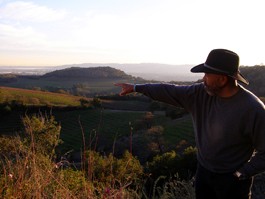
Sharp has an easygoing, personable manner. Wearing a black western hat, he gestures toward his rambling villa and jokes, “You want 5,000 square feet? I’ve got more than I need.” In his cellar, he keeps vintage Rieslings from his life in Germany, and admits a weakness for buying amusing special edition salmanazars—those oversized bottles that improbably hold some 12 times as much wine as an ordinary vessel—at auctions, such as John Lasseter’s Toy Story edition.

There is no public tasting bar, so Sharp lays out several vintages for a guest on his black felt pool table. Although he calls the pop of the cork “the most beautiful sound in the world,” he’s switching to Stelvin enclosures (screw-top) with his next vintage. Sharp tuned his palate in Europe, so perhaps he was thinking of the wine of Alsace when he planned the Sonoma Coast vineyard. His 2003 Pinot Blanc has the taste of rich pineapple, subtle acidity with vanilla and honeysuckle on the nose, and was served at a White House dinner that celebrated Black Music Month.

A flight of his Pinot Noir shows a trend toward earthy bouquets of hay on layers of bright candied fruit. But it’s the Zinfandel that originally had people asking Sharp, “Where can I get more of this?” The 2003 Hailey’s Creek Zinfandel is crafted in the Coturri way, with natural yeast fermentation leaving a bit of residual sweetness that carries the intense fruit over the tannin, yet the alcohol is moderate, and it plays its own uniquely intoxicating blackberry melody on the palate. The Sonoma Mission Inn does good trade in this Zin at $25 a glass.

Sharp remembers one day when he was pouring next to Gary Farrell’s booth at an event. At first people crowded around Farrell, anxious to get a taste of the big name Pinot. But as word got out about Sharp’s wine, “by the end of the day it was a little different story,” he chuckles. Even Farrell employees were eagerly trading him bottles. People will find their way to the good stuff.

Back at last year’s COPIA discussion, one young man posed a rather technical question involving the relative merits of single varietals versus blends, and so on. McDonald paused significantly before joking, “We are just now getting people out of Ripple.” The audience roared. Of course, that fortified wine brand of the 1970s is long gone, and it won’t be long before no one even understands the joke.

Association of African-American Vintners members include: A Color of Grape Wine Tours, Black Coyote Chateau, Esterlina Winery and Vineyards, Marc Norwood Vineyards & Winery Inc., Poston Crest Vineyard, Running Tigers Wine, Sharp Cellars, Stover Oaks Vineyard & Winery, Sugarleaf Vineyards and Vision Cellars. For more information, go to www.aaavintners.org.



Teenagers In Other Countries Did Acid Too

1

Prevailing trends in World Music compilations are funny things. After Paul Simon’s Graceland, the record market was flooded with South African compilations; after Buena Vista Social Club came the glut of Cuban compilations; and between U2, Enya, Riverdance, Loreena McKennitt, Sinead O’Connor and Titanic, the ‘90s had a good ten-year run of hot-selling, yawn-inducing Irish compilations.
It’s hard to pinpoint the exact genesis of the latest compilation trend, but lately people can’t seem to get enough of psychedelic music from around the world.
Whether it’s imported from West Africa (Luaka Bop’s excellent Love’s A Real Thing), Ethiopia (the crazy vibraphone sounds of Mulatu on Ethiopiques Vol. 4) or Brazil (Love, Peace and Poetry: Brazilian Psychedelic Music), world psychedelic music is super-duper hot right now. So hot, I hate to say, that lame-ass collections have started popping up under the false banner of “psychedelia,” corruptly hornswaggling us poor music hounds into chasing the diluted coattails of a trend that, barring any basement discoveries of Os Mutantes or Alla Pugachova outtakes anytime soon, appears to have run its ethno-trippy course.
Case in point: The Roots of Chicha: Psychedelic Cumbias From Peru, which is a very fine collection of dance bands from ’68-’78. The music, played largely by working people from poor backgrounds, is tropical and percussive, sometimes utilizing surf-style electric guitars, farfisa organs and moog synthesizers. The culmination of sounds evokes hot, dry days, dirt roads, lush foliage, and butterfly collars, and though rudimentary, it embodies the flavor of its era.
It’s pretty groovy. But is it psychedelic? Not in the slightest.
Just as film sequels are prime fodder for disappointment, music trends can industrially produce truckloads of hoppin’-on-the-bandwagon mediocrity. The difference is that it’s harder to trace the lineage of music trends, which don’t share franchise names as much as movies do. If they did, it’d be easier to sniff out the perpetrators—like if the Dave Clark Five were called “The Beatles Part II.”
But when a certain catch phrase does catch on and starts making the cash registers ring (a mixed blessing for world “psychedelic” music), you can bet your Salvadorean hookah that copycat products will line up and run the whole damn thing into the ground.
I’ll never forget the time I bought Oliver Nelson’s More Blues and the Abstract Truth, excited as all hell ‘cause I’d just discovered his flawless The Blues and the Abstract Truth album. Realistically, More Blues was a decent enough jazz album, but man, he shoulda just called it something different. Similar disappointments have plagued otherwise fine compilations like Night Train To Nashville Vol. 2, Bay Area Funk Vol. 2 or California Soul Vol. 2, all of them overflowing with weak sauce in inevitable comparison to each series’ kickass first volumes (get them now, if you know what’s good for you).
I won’t even start in on the obvious losers like Metallica’s Reload and Run DMC’s Back From Hell, or b-side cash-ins like Sufjan Stevens’ The Avalanche or Ghostface Killah’s More Fish. We’d all just get depressed. On the bright side, a small handful of sequels are warranted— Julie London’s Julie Is Her Name Vol. II isn’t that bad, come to think of it. But, you know. That was 50 years ago.

Lila vs. Kells at the Roll Call

1


It was a hella enjoyable night last week at Kate & Coalmine’s Roll Call, thanks largely in part to the very funny and ultimately surreal set played by Lila Cugini (seen here getting clubbed by, uh… a sadomasochistic police officer?).
The Roll Call, a recurring feature on Wednesday nights at the Toad in the Hole Pub in Santa Rosa’s Railroad Square, operates like a well-organized (and, thanks to the beers on tap, well-oiled) open mic. Performers are booked in advance, but the carefree, anything-goes attitude is the same. Basically, you never know what you’re gonna get; a time-honored concept which can be excruciating when it fails but awesomely surprising when it succeeds.
It worked for Lila, who happened to be celebrating her birthday last Wednesday and had plenty of well-wishers in tow. Lila opened her set by showing off and reading from her latest present, just given to her by a friend outside on the sidewalk: an autographed script of the pilot episode from M*A*S*H.
Then, kicking things off with a tongue-in-cheek ditty called “I Want An Ugly Man,” Lila told a story about copying and pasting the song’s lyrics onto a personal ad on Craigslist, just as an experiment. “And here’s the really terrible thing about dating in Sonoma County,” she related: two hours later, she opened an inbox full of responses from 19 homely, disfigured, fat slobs, all professing their undying, requited love.
Lila plays simple chords and sings simple melodies, and even when she forgets her own lyrics, she’s got a charming, hey-I-could-do-that-too thing going on. Her voice reminds me of a younger Lucinda Williams circa Happy Woman Blues, and her songs—“My Lovin’ Days Are Over,” “She Wants Him Back”—reveal a similar plaintive heartbreak.
But it was the set’s closer that brought the house down.
Last time I saw Lila, oh, about five years ago, she dedicated a cover song—Green Day’s “She”—to her son, Adler. On Wednesday, her cover song of choice had changed considerably: R. Kelly’s “Real Talk.” Totally goddamned hilarious. You haven’t lived ‘til you’ve seen a birthday girl with a voice full of heartbreak, strumming slow chords on an acoustic guitar, singing lines like “I been with you five years and you listenin’ to your motherfuckin’ girlfriends / I don’t know why you fuck with them ol’ jealous, no-man-havin’-ass hoes anyway.”
(P.S.: Throughout the set, North Country bike enthusiast and all-around man-about-town Chris Wells projected weird-ass videos on a screen, and just when the night couldn’t get any stranger, he quickly followed “Real Talk” with a candid clip of Lila, Kate and Dani (all of whom were at the Toad, none of whom knew they had been filmed) sitting around a campfire at a dustbowl hoedown party, singing Neutral Milk Hotel’s “King of Carrot Flowers” at the top of their lungs. Awesome.)

‘Cloverfield’ keeps it . . . kinda real?

0

In our current YouTube- and camera phone-saturated culture, bankable television producer J.J. Abrams (Lost, Alias) hit on quite the clever idea to make a movie imbued with the realest of realism that comes from fictitious found footage. And if there was any genre that needs a good Blair Witch-ing, it’s the oh-so-tired monster movie formula. In the recent box office buster Cloverfield, that whole monster part of the story is indeed sufficiently unique and exhilarating. But for a movie intent on keeping it real, why did writer Drew Goddard insist on saddling his stars with clunky dialogue and a painfully contrived storyline?

For those who haven’t yet seen the film (but don’t mind having it spoiled), it’s fairly amazing that Cloverfield manages to squeeze even a scant 77 minutes of a movie out of a premise that should logically be limited to “Monster attacks New York. We get the fuck out of town. The End.” By having the gang of protagonists get the brain-dead idea to literally run directly into the rampaging beast’s path in an attempt to rescue their trapped friend, the plot is extended.

The reasoning? Leading pretty boy Rob is madly in love with the damsel in distress and in desperate need to save her because of the piss-poor way he treated her earlier that very evening. Now, my heart is not in fact made of stone, but I would hope that my lady friend would understand if, after finding out she was trapped under several tons of rubble and an ornery sea monster’s butt, I text-messaged my heartfelt goodbye and took the nearest freeway exit out of town. Maybe it’s Abrams’ television roots that made him believe this soap opera storyline would work on the big screen, but he seems to have forgotten that the heroes in a film are the people we’re supposed to relate to. And any audience member looking for more than an ear assaulting sound mix will undoubtedly spend most of Cloverfield’s running time trying to figure out why these people who we’re supposed to care about are total idiots.

Whither Thou City Sound Inertia?

7


Why is this blog called City Sound Inertia?
I’m destined to be asked this question sooner or later, so I may as well answer it in my first-ever blog posting.
In 2003, I put together a compilation CD of local Santa Rosa bands who, due to a variety of reasons (lack of press coverage, the nonexistence of MySpace), no one had heard outside of occasional house parties and dingy fly-by-night clubs. I wanted to remedy that. So I collected together 11 songs that I felt were best representative of Santa Rosa’s local music scene at the time, put them on a CD, and sold it for $2.99.
Lots of people, including those at the Bohemian (funny how life works out), took note; but unfortunately, more than a few people, while I was getting songs together, told me something along the lines of “that’s so great, man, ’cause this town sucks for music!”
It hurt. Those of you who know me also know that I’m awfully defensive about Santa Rosa, and by putting together the compilation I wanted to outline precisely that this town does not suck for music; in fact, there’s fantastic music in this town around every corner. It’s hard to get people to take notice of it, true, and being in a band can be a very uphill and very expensive battle, but year in and year out, good music seems to constantly prevail.
With that in mind, I gave the CD a title: City Sound Inertia.
Half the bands on the CD have broken up by now, but the compilation’s liner notes conveying my optimism still hold true. I wrote them quickly but passionately, and in essence, they apply to the future of this blog as well. Read on:

I Love Annie Hayworth

0

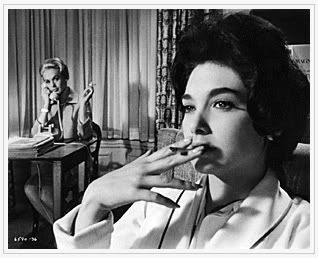
Not to take any attention away from Heath Ledger, who was a fine actor and surely would have gone on to inestimable heights, but I have to admit—the death of Suzanne Pleshette last week, relatively untragic though her passing may be (she died last week at 70 of respiratory failure), affected me more.

People in the North Bay no doubt know Pleshette as the husky-voiced schoolteacher Annie Hayworth in Alfred Hitchcock’s The Birds, filmed locally in Bodega and Bodega Bay. In contrast to the oafish Mitch Brenner and the vapid Melanie Daniels (characters nonetheless expertly played by Rod Taylor and Tippi Hedren), Pleshette’s hypnotic Annie Hayworth completely steals the film for me. I was so struck with her performance upon first viewing, in fact, that I scrawled “I Love Annie Hayworth” in messy ball-point pen on my high school book bag, successfully confusing my Piner High classmates.

There’s a lot of great stories about the filming of The Birds, some of which can be found on the website for the Inn at the Tides and many of which involve Hitchcock’s attention to local detail. You can hear a news report in the film from real-life radio station KSRO; in it, the radio announcer mentions the real-life Bay Hill Road. Hitchcock wanted a realistic classroom in the Bodega schoolhouse, so he hired my mom’s math teacher to write some realistic-looking math equations on the chalkboard.

But my favorite story involves the time a real-life school bus stopped near the film site to drop off some local schoolchildren during filming of the scene when Annie Hayworth’s pecked and bloodied body is discovered. Some of the young kids, instantly horrified at what they thought was surely a dead woman face-down in the front lawn, started crying. To assuage their fears, Hitchcock halted the filming for over an hour, removing and then reapplying the makeup to Pleshette’s face over and over to sufficiently demonstrate the make-believe world of movies to the local kids. Pretty great.

Pleshette’s brilliant detachment shines brightest in what to me is the film’s best scene: when Annie’s explaining to Melanie why she’s stayed in Bodega Bay all these years—to be close to Mitch. “You see, I still like him a hell of a lot,” she says, with all the cool demeanor that a years-long flame shouldn’t rightfully come close to having. It still floors me, and it’s the first thing that went through my mind when I’d read that Suzanne Pleshette died.

Rufus Wainwright Set To Sell Out Napa

0

Attn: eBay scalpers, please direct your attention elsewhere…

Here’s the inside scoop: It’s just been announced that Rufus Wainwright will be performing a special solo show at the tiny, 500-capacity Napa Valley Opera House on Sunday, March 9. The $55 tickets will go on sale THIS FRIDAY, January 25, at 10am.

The different methods for obtaining tickets are outlined here, though I wouldn’t recommend the “order by mail” option. If the gushing reports from Wainwright’s show in Santa Rosa last year are any indicator, then these tickets are going to disappear instantly.

This show in Napa is Wainwright’s only Bay Area appearance on his current tour.

Junkyard Zin

0

James Knight


Many people admit to being hesitant about describing wine. “I like wine,” they say, “but I don’t know how to talk about it.” Fear of making a mistake may so seize them that they dare not ever tread in a tasting room. They imagine that an all-knowing employee pouring for an hourly wage will judge their knowledge, find it lacking, and serve as executioner. “Yummy raspberry? I don’t think so, honey. Try cassis and Chinese five-spice—or get back together with your friend, Carlo Rossi. He misses you.”


For others, it may simply be tedious to catalogue these fruit and mineral corollaries. Thinking about it too hard, one may forget to enjoy the glass before it’s empty. Well, it’s enough for a $4.99 bottle of wine to slake one’s thirst. But at $60, it had better be an ambrosial admixture of marionberry and Royal Anne Cherry—throw in a bouquet of allspice and toasted cashew, if it’s no extra charge.


There are no hard and fast rules. Blueberries ought to taste like blueberries. Wine, not so much. The wine wheel is merely a signpost. Descriptors help to identify what it is we like about a wine and allow us to tell the good news to others. Wine may not only taste similar to some of our favorite fruits, but also remind us of nonfood memories. “Cigar box” is a favorite, although the number of wine drinkers who remember their grandfather’s cigar box may be dwindling. Many a Pinot Noir has been saddled with the description of a “barnyard” aroma. To urban folks, that sounds derogatory, but rural France is Pinot’s first home, and to many, that conjures fond rustic associations. (It probably makes a difference whether we’re talking about wet or dry hay, horse barn or sheep pasture.) I’m particularly fond of Pinot that is redolent of strawberry conserve plus hay and scan tasting notes, mostly in vain, for this.


In honor of this week’s Zinfandel Advocate and Producers event, I submit a fresh New World descriptor: “Junkyard.” Hang in there. It’s for those few Zins that exhibit two aromas in harmonizing measure. One is the typical bramble-berry fruit; the other a mineral element, oil. Like “barnyard,” “junkyard” is not necessarily good or bad. Petrol has long been used to describe Riesling with no harm intended. (A recent wine magazine issue mentions petrol or “home heating oil” 23 times!)


Imagine a junkyard at the end of a country lane. A light afternoon breeze brings the scent of oily old engine blocks and rusted old cars intermingled with riotous blackberry vines that spill over them, in a not environmentally sound, but surely photogenically rustic, scene.

Junkyard is not a descriptor for every Zin, or even for every Zin fan (if they’ve never been to the pick-and-pull). You can take, leave it or, better yet, come up with your own. The more the private mystery between tongue and mind elicits a unique, memorable experience, the more you’re getting out of wine.


Yummy strawberry-barnyard: 2006 Siduri Willamette Valley Pinot Noir.


Nostalgic junkyard: 2005 Kokomo Timber Crest Zinfandel.


View All

Breaking ‘Wind’

0

01.23.08


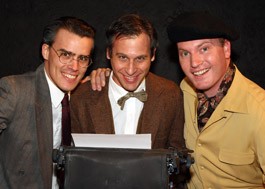
The act of writing, it has often been said, may be interesting to the person doing it, but is boring as hell to watch. Writing is primarily an internal, cerebral activity taking place entirely inside the writer’s mind, while outside he or she appears to be doing little more than tapping on a typewriter or staring into space. Yet Moonlight and Magnolias, the three-year-old comedy-drama by playwright Ron Hutchinson now on the boards at the Sonoma County Repertory Theater, depicts the writer’s life in action. Moonlight and Magnolias tells the story of that legendary week in 1939 when producer David O. Selznick (Benjamin Stowe) impulsively shut down production of Gone with the Wind after just three weeks of filming. He fired director George Cukor, yanked director Victor Fleming (Chad Yarish) off the ready-to-wrap set of The Wizard of Oz and sequestered Fleming in Selznick’s studio lot office along with screenwriter Ben Hecht (Justin Scheuer). Hecht reworked the script into the version that would become one of the most beloved films of all time. What probably happened during those five days was a whole lot of Hecht banging out pages while Selznick and Fleming watched. Needless to say, this would make for stultifying (if somewhat daring) theater, so what we get instead in Hutchinson’s soft-focused romp is Fleming and Selznick acting out a condensed version of Margaret Mitchell’s epic novel, Reduced Shakespeare&–style, as Hecht sits at the typewriter taking dictation and making acerbic observations about the dubious merits and questionable politics of Mitchell’s Civil War melodrama. Is any of this believable? Not really. Can we accept that Fleming once donned a make-shift dress to vamp Scarlett O’Hara prancing and fiddle-dee-deeing her way around Tara, or dropped screaming to the floor to play poor Melanie giving falsettoed birth? Definitely not. Is there any chance that Hecht wrote his uncredited version of the screenplay inspired solely by the punch-drunk goofballing of two exhausted filmmakers without so much as glancing at any previous draft? Not for a second.Is it entertaining and amusing anyway? You bet. This is one example of a writer writing that is anything but boring.

Kicking off the Rep’s 15th anniversary, director Jennifer King has given Hutchinson’s loosey-goosey script a touch-up of her own, imbuing the antics of the three main characters with a solid dose of Marx Brothers&–like shenanigans just this side of pie-throwing. By spotlighting the humor of the situation, King sidesteps what could have been a very dark slog, as the three men slowly lose their minds while debating everything from the inherent badness and inappropriate racial notions of Mitchell’s epic, to the soul-sapping contradiction of being a wealthy Jewish filmmaker in a town that—this being set in 1939—does not allow Jews to join country clubs. The darkness of Hutchinson’s play is still intact, but with King’s inspired directorial nonsense, this production takes on a manic-depressive weirdness that is perfectly suited to a play so broadly and fantastically sketched. With a nicely detailed studio-office set by Doug Faxon, the energetic and youngish cast (all about half the age of the people they are portraying) give action-packed, mostly convincing performances. As Hecht, a screenwriter who was legendary for hating the source material he was forced to doctor, Scheuer plays his character’s frustration and dismay with potent, palpable discomfort. Ben Stowe, a Rep mainstay, gives one of his strongest performances to date, convincingly blending Selznick’s obvious megalomania with a charmingly sweet love of film. And Yarish, while not quite conveying the exhausted insanity of Fleming after days of being locked in an office and fed only bananas and peanuts, does exude a veneer of comic macho arrogance that makes it all the funnier when he’s playing Scarlett O’Hara’s more simpering tirades.A nice additional surprise is Denise Elia (hot off a sensational run in the Loading Zone’s seething Macbeth) as Selznick’s shell-shocked secretary Miss Poppenghul. With little to do through most of the play beyond uttering “Yes, Mr. Selznick” and “No, Mr. Selznick,” Elia still manages to incite huge gusts of laughter, sometimes with little more than a gesture with a pencil and the raising of an eyebrow.

‘Moonlight and Magnolias’ runs Thursday&–Saturday at 8pm through Feb. 24. Also, Feb. 17 and 24 at 2pm. $18&–$23; Thursday, pay what you can. Sonoma County Repertory Theater, 104 N. Main St., Sebastopol. 707.823.0177.


Museums and gallery notes.

Reviews of new book releases.

Reviews and previews of new plays, operas and symphony performances.

Reviews and previews of new dance performances and events.

Say You Want a Revolution?

0

01.23.08

Former president Bill Clinton made a surprise trip to U. C. Davis on Jan. 15, where some 11,000 college students crowded the campus’ new athletic center to hear Clinton, the J.F.K. of their generation, re-envision the American Dream. The Clinton campaign had offered less than 24 hours to organize the event, hoping that a rough handful of 1,000 people might attend. That the total number was some 11 times their expectations speaks exactly to what young voters, and American voters in general, are rapaciously thirsty for: vision, leadership and even that workhorse of the current media blip, change.

Clinton spoke extemporaneously for over an hour that night, reminding the crowd who Americans are and what America is supposed to be. Were most of the students there that night—raucously repeating Clinton’s name, screaming in adulation and stomping the floor like he is a rock star—Hillary supporters? An informal survey of the crowd says no. Televised news stories say no. Newspaper interviews say no. Blog entries after the event say no. They were, by and large, Bill Clinton supporters, buoyed aloft by childhood memories of a larger-than-life politician whose mistakes are filmed in haze when compared to his successes; who, as a leader, spoke regularly of hope; who reminded citizens of our noblest goals. And they are absolutely thirsty for such leadership today.

Many of those still on the fence about the Democratic presidential candidate are attracted to Hillary’s “Ready to Go” slogan. There is a sense of childlike calm in thinking that since this mess is so big and so deep and so tall, someone who’s been there before can clean up it, all. And have Bill there to help her do it. (“Billary!” was a consistent bellow from the college crowd.)

Hillary knows Washington, she knows the players, she knows how the sausage gets made. As you’ll read in the argument below, that’s exactly what’s wrong with her.Given our current circumstances, it no longer seems wise to worry if the next president already knows how to find the washroom on the Oval Office floor. The right team can direct the president there.

The president, rather, needs to have an acute vision and leadership, ideas and values that match the highest principles. As wonderful as Bill Clinton is in hindsight and as ready to go as Hillary Clinton undoubtedly would be, we’re recommending away from dynasty. We’re recommending toward the future. That’s the best vision. —Gretchen Giles

Proposition recommendations written by Gretchen Giles, Traci Hukill, Eric Johnson, Steve Palopoli and Paul Wagner.

Democratic Primary: Barack Obama

Obama has the vision to return the U.S. to itself

Bill Clinton and Al Gore erected a bridge to the new century. George W. Bush bombed it. We need to rebuild it.

If Barack Obama is elected, it will send the world a message that this is a new America: not the monocultural, aggressive, ugly America that we occupy this very moment, but one that is hopeful, forward-looking and engaged with a diverse planet. Hillary Clinton is less well-equipped for that job. For all of her strengths, she is essentially a policy wonk, with more scars than accomplishments from her Washington years. Failed health care initiatives, as well as her votes on Iraq, should give voters pause. Her condemnations of disgraceful national practices like water-boarding and extraordinary rendition came only after she was pressed on the campaign trail, when she could have been a leader in the Senate opposing the administration’s conduct.Obama has been such a leader. The clarity of his ideas is rooted in the depth of his convictions. Even more important in this bleak political landscape, he has shown an extraordinary ability to inspire a broad range of Americans.

Obama has been primarily responsible for the rare buzz of excitement surrounding the 2008 primaries. This is often attributed to his prowess as a speechmaker, but it’s a mistake to think of Obama as merely a great orator. Ever since Obama first captured the national spotlight with a show-stopper of a keynote address at the 2004 Democratic National Convention, what’s electrified voters is the power and clarity of his ideas, and the sense that people get, when listening to him talk, that he is speaking the truth.

In a debate a few weeks ago, NBC’s Tim Russert asked the candidates to describe the moment that they decided to run for office. Obama’s response was by far the most memorable. He said he has struggled with the decision: “The most important question was not whether I could win the presidency,” he said, “but whether I should.”

At the same time that he is connecting in a heartfelt way with the people who hear him, Obama is putting forward some simple and powerful ideas. At the center of his campaign—as everyone knows—is the simple and profound notion that American politics is in need of a revolution.

“It’s not the magnitude of our problems that concerns me the most,” he says, “it’s the smallness of our politics.Obama’s promise is that he brings a vision, that he is a true leader. When he says, “I will bring the country together,” he is talking once again about building a bridge. Americans know in their hearts that this is exactly what needs to be done if the country is going to be able to more forward again. It’s a big job, and we believe Sen. Barack Obama can do it. We recommend voting for Barack Obama. —E. J.

YES on Proposition 91

Stop government raids on gas tax funds

The public, overall, likes it when overdue-book fines go solely to libraries, bridge tolls pay only for better bridges and fishing license fees fund the restocking of fish. But elected officials, always looking for bucks to bridge some budget gap, feel boxed in by these limits. As a result, the public and its servants struggle regularly over earmarking.

Proposition 91, the “Transportation Funds Constitutional Amendment and Statute,” is the latest such struggle; namely, a longstanding argument over where the approximately $3.3 billion annually collected state gasoline and diesel fuel taxes should go. Into the general fund, of course, say most officeholders. No. Into roads and transit, say voters.

Voters announced that they had won that in March of 2002 upon approving Proposition 42, which steered fuel taxes into a special fund solely for transportation projects; dedicated 40 percent of funds to critical state projects; directed 20 percent each to counties, cities and public transit; and allegedly prohibited raiding the fund except for financial emergency.

But victory was premature, as it turns out that Prop. 42 offered such loose definitions of the term “emergency” that within the next five years the governor and legislature had already declared two of them and had proceeded to strip the transportation fund of an entire year’s worth of revenue.The legislature offered a “solution” in the form of its own Proposition 1A, which purported to tighten the rules by limiting emergencies to two a decade and require repayment of any raided monies within three years. It passed in November of 2006. Apparently not noticing that Prop. 1A still allows funds to be raided six out of every 10 years, Prop. 91 petition organizers declared themselves content, turned in what they imagined was an inadequate number of voter signatures and declared their much tighter version “not needed.” In fact, they say exactly that in the official state ballot pamphlet.

But then, two significant developments occurred. First, the proportion of valid voter signatures supporting Prop. 91 turned out to be so much greater than usual that it qualified for, and by law had to appear on, the ballot anyway. Second, early this month, the governor and legislators once again began nibbling at the transportation funding lockbox, trying to lower the guaranteed Prop. 42 percentages cities and counties will get. The out-and-out raiding is likely to begin again. YES on Prop. 91. —P. W.

YES on Proposition 92

California’s community colleges deserve the boost

The question here is whether to leave community college funding lumped in with K-12 money or let it move out and get its own apartment, administratively speaking. A yes vote means an imminent trip to Ikea—separate funding, more money for community colleges in the future and an immediate reduction in fees from $20 per credit to $15.It’s a sad thing to see educators fight over money, but that’s what happens when there isn’t enough. Right now the state, under Prop. 98, spends 40 percent of its general fund on K-14 education. California’s 109 community colleges get roughly 10 percent of that pie; K-12 gets the other 90 percent. The way the community colleges figure it, the formula for determining that split is unfair (it’s tagged to K-12 enrollment—community college enrollment doesn’t count) and has cost them $2 billion since 1988.

There are good arguments against Prop. 92, chief among them that it’s silent on the subject of where that extra money will come from. Kind of a huge problem this year. As a result, the main opponents are the UC and CSU governing boards and the California Teachers Association, all of whom fear the community colleges will take money from their own strapped schools and universities.

California’s budget is going to need some fixing, with or without the financial burden this measure imposes. Meanwhile, California’s future deserves an investment. YES on Prop. 92. —T. H.

NO on Proposition 93

Term limits an end-run to protect Nuñez and Perata

Nothing on this ballot is generating as much confusion among California voters as Proposition 93. And that’s no accident. In fact, it’s by design. Prop. 93 is the initiative process at its worst: a measure written to insulate the state’s elected officials from checks on their power, spun around to be sold as term-limit reform. In truth, the only significant thing this measure will do to the terms of California’s lawmakers is to increase them: from six to 12 maximum years in the assembly, and from 8 to 12 years in the senate. It will also allow dozens of legislators who would term out this year to do an end-run around term limits via a so-called “transition” period. It’s not that we don’t like many of these seatholders; in fact, we’re sorry to see some of them go. But there’s a reason term limits are so popular with voters. They blunt the system’s ridiculous incumbent advantage and promote accountability to the electorate, while promoting new energy and ideas. Is this little more than a move to save the powerful jobs of Assembly Speaker Fabian Nuñez, Senate President Pro Tem Don Perata and a few select others? Yes. NO on Prop. 93. —S. P.

NO on Propositions 94-97

Don’t let budget woes influence these bad Indian gaming compacts

Propositions 94-97 are essentially identical, differing only in which of the so-called Big Four tribes will benefit if approved. These four Southern California tribes—the Pechanga, Morongo, Sycuan and Agua Caliente—each already have casinos with 2,000 slot machines a piece, so these propositions are not about the introduction of gambling into communities. What they are about is California’s unbridled avarice when it comes to the specter of gambling monies sluicing into the state’s General Fund.The Pechanga and Morongo tribes are each seeking to increase their slot machine inventory to 7,500; the Sycuan and Agua Caliente to 5,000. Their contributions to the state would accordingly rise to an estimated $9 billion over the next 20 years, averaging somewhere around $450 million a year.

The Governor signed a Memorandum of Agreement with the tribes last summer and the federal government approved the compacts in November, legally allowing them to be enacted before the Feb. 5 election. Only the U. S. Department of the Interior has curiously acted with a conscience, refusing to enter these compacts into the Federal Register, a final step in ratification.

Whether lawmakers should be larding California’s coffers with gambling monies is moot. It is the text of the propositions which give pause. Contrary to proponents’ advertising, none of the phantom profits are directly earmarked for schools. Environmental impact accountability is hugely weakened in these proposed propositions. Guarantees for casino workers are essentially nil. Also, the smaller of California’s 108 tribes would be adversely affected by sweetheart deals offered to just four of their tribal members.NO on Props 94-97. —G.G.


This Shouldn’t Even Be a Story

01.30.08The way Vance Sharp III tells it, he and Mac McDonald couldn't help but strike up a conversation when they found themselves walking toward each other at a wine auction. "There aren't many people like us around here," says Sharp, with characteristic understatement. The two men also discovered that both were getting started in second careers in wine. That...

Teenagers In Other Countries Did Acid Too

Prevailing trends in World Music compilations are funny things. After Paul Simon’s Graceland, the record market was flooded with South African compilations; after Buena Vista Social Club came the glut of Cuban compilations; and between U2, Enya, Riverdance, Loreena McKennitt, Sinead O’Connor and Titanic, the ‘90s had a good ten-year run of hot-selling, yawn-inducing Irish compilations. It’s hard to pinpoint...

Lila vs. Kells at the Roll Call

It was a hella enjoyable night last week at Kate & Coalmine’s Roll Call, thanks largely in part to the very funny and ultimately surreal set played by Lila Cugini (seen here getting clubbed by, uh... a sadomasochistic police officer?). The Roll Call, a recurring feature on Wednesday nights at the Toad in the Hole Pub in Santa Rosa’s Railroad...

‘Cloverfield’ keeps it . . . kinda real?

In our current YouTube- and camera phone-saturated culture, bankable television producer J.J. Abrams (Lost, Alias) hit on quite the clever idea to make a movie imbued with the realest of realism that comes from fictitious found footage. And if there was any genre that needs a good Blair Witch-ing, it’s the oh-so-tired monster movie formula. In the recent box...

Whither Thou City Sound Inertia?

Why is this blog called City Sound Inertia? I'm destined to be asked this question sooner or later, so I may as well answer it in my first-ever blog posting. In 2003, I put together a compilation CD of local Santa Rosa bands who, due to a variety of reasons (lack of press coverage, the nonexistence of MySpace), no one had...

I Love Annie Hayworth

Not to take any attention away from Heath Ledger, who was a fine actor and surely would have gone on to inestimable heights, but I have to admit—the death of Suzanne Pleshette last week, relatively untragic though her passing may be (she died last week at 70 of respiratory failure), affected me more.People in the North Bay no doubt...

Rufus Wainwright Set To Sell Out Napa

Attn: eBay scalpers, please direct your attention elsewhere...Here's the inside scoop: It's just been announced that Rufus Wainwright will be performing a special solo show at the tiny, 500-capacity Napa Valley Opera House on Sunday, March 9. The $55 tickets will go on sale THIS FRIDAY, January 25, at 10am.The different methods for obtaining tickets are outlined here,...

Junkyard Zin

James Knight ...

Breaking ‘Wind’

01.23.08The act of writing, it has often been said, may be interesting to the person doing it, but is boring as hell to watch. Writing is primarily an internal, cerebral activity taking place entirely inside the writer's mind, while outside he or she appears to be doing little more than tapping on a typewriter or staring into space. Yet...

Say You Want a Revolution?

01.23.08Former president Bill Clinton made a surprise trip to U. C. Davis on Jan. 15, where some 11,000 college students crowded the campus' new athletic center to hear Clinton, the J.F.K. of their generation, re-envision the American Dream. The Clinton campaign had offered less than 24 hours to organize the event, hoping that a rough handful of 1,000 people...
11,084FansLike
4,606FollowersFollow
6,928FollowersFollow