Dollar Logic

0

01.30.08

A ccording to Dec. 21, 2007 figures, here’s how the top candidates in the Democratic and Republican primaries are spending their—and your—money.

Hillary Clinton

Last year, the Clinton campaign shelled out large for strategist Mark Penn, paying him some $1,860,611. Clinton’s other biggest expenditure? Donation refunds, to the tune of $1,778,494. Shame on you, Norman Hsu. Clinton had to return some $850,000 as Hsu prepares to go to prison on felony charges.

Clinton’s PR spending broke down to $3.8 million by year’s end, the majority of which, 56 percent, was spent on “other.” Of the rest, 16 percent went to Internet campaigning, on which she spent $204,000 to build her website when your kid could have done it for $199,000 less and only spent $406 on print media.

John Edwards

No news here. Edwards’ disastrously expensive haircut appears on his year-end statement, with Torrenueva Hair Designs, Beverly Hills (listed under “Political Consultants”), coming in at a sharp $800. Edwards also spent $346 for office supplies from Iowa Prison Industries.

The Edwards campaign spent $4.1 million on PR efforts in 2007, with 59 percent for telemarketing/direct mail and the teeniest 4 percent for Internet presence. Edwards paid former Howard Dean manager Joe Trippi a weirdly small $65,000 stipend (see Axelrod’s six figures for the Obama campaign) while blogger Amanda Marcotte got the web .02 rate: $1,500.

Rudy Giuliani

Mr. Nine Eleven lavished some $3.8 million on the Karl Rove-related consulting firm of Olsen & Shuvalov and somehow went all Ahab on the Moby Dick Airways, spending $288,448 for their air services. For PR purposes, Guiliani had spent $2.7 million by the end of 2007, of which a whopping $208,000 was spent on photography.

Mike Huckabee

These two campaign expenditures read like an Arkansas poem:

Mattress King: $963;

Christian Party Rental: $846.

Duncan Hunter

Who?

“Flag Expense: $764.”

What?

Alan Keyes

We had to look up information on this moral conservative from Texas who liberally uses ancient Ronald Reagan quotes to support his campaign. In 2007, Keyes mostly had to give money back, making donation refunds totaling $25,302, some 54 percent of his campaign’s total expenditure.

John McCain

McCain spent a total of $2.8 million on PR last year, with the majority of it (66 percent) going to telemarketing and direct mail efforts. Just 16 percent of his money was extended to media consultants, 12 percent to “other” and a mere 6 percent given to online marketing.

Barack Obama

In 2007, Obama paid former John Kerry consultants GMMB a whopping $3,518,225, while political strategist David Axelrod commanded $704,630 to help the campaign. The stress must have gotten to our man, which would explain the expenditure to Blue Turtle Yoga for $20.

Obama spent $9 milllion on PR activities in 2007, with 40 percent of that devoted to telemarketing/direct mail and 37 percent to broadcast advertising. The remaining monies were spent on the Internet (10 percent), to media consultants (8 percent) and the ubiquitous “other” (5 percent). Obama paid Google $193,000 for online advertising and was the candidates’ top broadcast spender, expending some $3,280,000 on TV and radio messages.

Ron Paul

The Liberatarian from Texas actually and truly spent campaign monies in 2007 on such as “Peters Cut Rate Liquor: $259” and “DJ Dad/MC Mom, Cedar Rapids, Iowa: $100.” Who could make that up? No wonder he’s such a hit with the frat crowd.

Mitt Romney

Romney makes one’s own personal gaffes seem easy to pull off, particularly after one learns that he easily spent $114,528 on photography—including $4,358 for framing—last year from his campaign funds. And meanwhile, the family that travels together never makes it out of the Republican primary together, as proven by the $61,436 spent on an RV for Romney’s five sons.

As with Clinton, an enormous amount of Romney’s PR spending (62 percent) went to the amorphous “other” category. Spending only 1 percent on media consultants, Romney spent $17.7 million last year on PR, including $614,000 on those horrendous robo-calls.

Fred Thompson

Like McCain, Thompson focused his promotional expenditures the old-fashioned way, with some 51 percent of $1.9 million spent in 2007 going to telemarketing/direct mail. His campaign rented mailing lists from the Florida GOP ($1000,000) and Students for Life ($650), which makes renting out lists sound like a very lucrative pastime. But Thompson’s most interesting 2007 expenditure was for $13,082 to the Sentimental Journeys limousine company, auspiciously named, as it turns out, as that’s what the campaign was for Thompson.

Stats reprinted with permission from the January 2008 ‘Primary Colors’ issue of ‘Mother Jones’ magazine.

Open Mic is now a weekly feature in the Bohemian. We welcome your contribution. To have your topical essay of 700 words considered for publication, write [ mailto:op*****@******an.com” data-original-string=”Fa/krCIT+621cgZI81IRKw==06a0ntUevEOX4FeQjJgMGLFpKi72S+4fCzvKJa3Nyw+xG8/hIH+MqVRITD496qbjxah/zpXv9oE86DDKsT3WW5SBEAaVYwq0y1oNWam7ST6OfE=” title=”This contact has been encoded by Anti-Spam by CleanTalk. Click to decode. To finish the decoding make sure that JavaScript is enabled in your browser. ]op*****@******an.com.


Propaganda 101

0

01.30.08


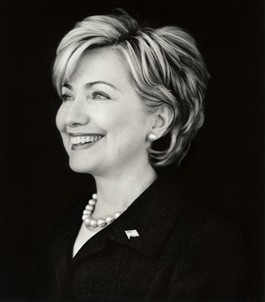
H illary Clinton has what pollsters call “high negatives,” which essentially means that lots of people really don’t like her and never will. But her supporters have long argued that she is a formidable candidate despite these negatives because those numbers aren’t likely to go any higher. As the theory goes, Americans are already well-acquainted with the Clintons’ dirty laundry—Whitewater, Monica, etc.—and as a result, any more mud slung at Hillary isn’t likely to stick. Unlike the less-seasoned presidential contenders, she’s been through the mill and is still standing. But the recent Washington premiere of Hillary: The Movie is any indication, this particular case for Clinton the candidate is wishful thinking.

Created by the conservative political group Citizens United, the anti-Hillary movie makes the Democratic primary season look like a polite college-debate tournament. Moreover, it doesn’t simply recycle the old anti-Hillary stuff; it raises a slew of new charges to spin the New York senator as a cross between Machiavelli and Lady Macbeth. The movie offers a preview of what the general election could look like should Clinton become the Democratic nominee.

Hillary dips briefly into some of the old Clinton scandals, including Bill’s well-documented skirt chasing. An alleged victim of the former president’s sexual advances, Kathleen Willey appears in the film a decade after her moment on the national stage, reprising some of the material from her recent book, Target: Caught in the Crosshairs of Bill and Hillary Clinton. In a taut-lipped interview, she suggests that after her name surfaced in the Paula Jones sexual-harassment lawsuit against Bill Clinton, the Clintons arranged to have her kitty assassinated. She says a private investigator tipped her off that the White House was having her investigated. (The investigator, a pockmarked Jared Stern, also appears in the film like some sort of Deep Throat, interviewed in a parking garage.)

To great effect, the film also digs into the tale of Billy Dale, the former longtime head of the White House travel office who was allegedly sacked on Hillary’s orders so that she could staff the office with cronies boasting Hollywood connections. According to the movie spin, the White House falsely accused Dale of embezzling thousands of dollars from the travel office as justification for the firing. He was prosecuted and acquitted by a jury in two hours.

Of course, unsaid in the film is that there was substantial evidence in his trial that Dale had mismanaged the travel office; that he was getting freebies—like sporting-event tickets—from contractors; that he had diverted $54,000 in refund checks into his own bank account; and lost track of $14,000 in petty cash. All solid reasons to fire the guy.

But the movie’s producers smartly skip over most of the ancient history from the Clinton administration and stick to fresher material, much of which will be unfamiliar to the average viewer (or voter). The fundraising scandals alone provide a mountain of fodder, and Hillary makes great use of the video footage from the 2000 “Hollywood Farewell Gala Salute to William Jefferson Clinton.” The star-studded event was organized and paid for by Peter F. Paul, a repeat felon and con artist who had cozied up to the Clintons in the waning days of the administration. Aiding him was Aaron Tonken, another con man who was later convicted of defrauding charities, and who helpfully provides an interview from prison.

Paul, who is interviewed extensively in the movie, paid $1.2 million to put on the gala, which raised money for Hillary Clinton’s Senate race. Her Senate campaign, however, reported to the Federal Election Commission that the event only cost $523,000. (In-kind donations such as hosting a party count toward candidate spending limits.) The FEC eventually fined Clinton’s campaign $35,000 for underreporting the cost of the party. Hillary Clinton’s finance director was tried and acquitted for his role in reporting the event cost.

After the Washington Post reported on Paul’s criminal history, which includes drug charges and all sorts of financial shenanigans (even defrauding Cuba, if you can imagine the level of criminal ingenuity that would entail), Clinton distanced herself from him. But Hillary showcases lots of footage and chummy photos of the former first lady with Paul, even a video of a conference call she made to him. All this suggests a close relationship that’s going to be tough to avoid addressing if she ends up facing off with a Republican next fall.

The criminal past that makes Paul a problem for Clinton also makes him a problem for the filmmakers. To address this issue, Citizens United hired a professional polygrapher to administer a lie-detector test to Paul on film, which of course he passes. It’s a laughable scene, and it’s tempting to dismiss the guy’s story, except that a lot of it is true. The Clintons have still never explained how they hooked up with him. You don’t need to be James Carville to see how the episode may play out in campaign ads next summer.

The film, however, goes overboard on conspiracy theories about how the Clintons have tried to suppress information that Bill Clinton failed to kill Osama bin Laden when he had the chance. The documents Berger destroyed, Hillary suggests, were part of that effort. But the fact that Berger is now advising Hillary’s presidential campaign is a legitimate issue that can’t be brushed off as right-wing propaganda.

And, finally, you can already see the making of the campaign ads in the film’s segment on Bill Clinton’s pardoning of 16 members of the Puerto Rican terrorist group Fuerzas Armadas de Liberación Nacional, which the film lays at the feet of Hillary. The film tries to jerk some tears by interviewing Joseph Connor, whose father was killed in a Fuerzas Armadas bombing of the Fraunces Tavern in New York City in 1975, when Joseph was nine years old. There’s lots of lip-biting, and overkill is the operative word, especially given that none of the people Clinton pardoned were personally responsible for the tavern bombing.

The conservative chattering class are all here: Bay Buchanan, Tony Blankley, an utterly vicious Dick Morris, Robert Novak, Michael Barone, Larry Kudlow, as well as such luminaries as Indiana congressman Dan Burton, for whom Citizens United president David Bossie worked in the 1990s, Newt Gingrich and Buzz Patterson, a retired lieutenant colonel who carried the “nuclear football” as the senior military aide to Clinton but who has since churned out a host of books attacking his former boss for wrecking the military.

The odd man out in all this is former New York Times reporter Jeff Gerth. In contrast to everyone else in the film, Gerth’s comments are measured and mostly refer to the research from the book he recently co-authored, Her Way: The Hopes and Ambitions of Hillary Rodham Clinton. His biggest knocks on Clinton are that not one of the 200 speeches he reviewed addressed counterterrorism, and that she is constantly wrestling with her own identity. But Gerth’s appearance in the film will bolster suspicions among those in the Clinton camp that the reporter was in cahoots with the vast right-wing conspiracy to bring down Bill with his reporting on Whitewater.

Whether anyone outside the Free Republic universe will actually see the film is another matter. While it will be screened in theaters across the country, federal election law has prevented Citizens United from advertising the film on the grounds that it is a campaign ad. Bossie has sued the FEC, arguing that it should be protected commercial speech and thus exempt from the campaign laws, which would require the group to disclose its donors, something it clearly doesn’t want to do. A panel of federal judges recently heard arguments in the case, but no decision has yet been made. For now, Bossie will have to rely on Sean Hannity and word of mouth for promotion, which in a way is too bad.

Democratic primary voters ought to watch it, just to make sure that they fully understand that a vote for Hillary is also a vote to bring back the people behind this film. The Clinton-haters are alive and well, and in fighting form. It’s clear that the American public won’t be able to have one without the other.


All Ears

0

01.30.08

S anta must have thought I was a good girl last year, because for Christmas he brought me an iPod. I am now officially caught up with the rest of my generation.

I like the thing, but I haven’t found much of a use for it yet. The iPod is delightful to listen to when I drive the truck Mr. Bir Toujour and I share, particularly when it’s just me in the cab and the truck becomes a roving music bubble of early ’90s hip-hop and every song is like a funky, miniature audiobook.

But these instances are rare, as I typically take the bus. The iPod should be a bus rider’s salvation, and many of my co-passengers indeed sport the slender, telltale twin white wires descending from their heads. If you have to spend time on the bus, why not spend it commiserating privately—intimately—with the music of your choice? Handily, it not only drowns out the banter of crazies and grumps, it also discourages lecherous overaged creeps from starting up conversations.

But I learned to cope with all this in my pre-iPod days, and over time I’ve come to appreciate the ample slices of life the daily bus commute offers its hapless riders. My bus line is particularly savory, passing as it does multiple addiction-recovery centers.

I’ve come to recognize two gentlemen in particular; when they talk, their conversation evokes bulldozers facing off at a construction site. It’s sort of sweet, them hanging out~and shaking their habits together, their favorite topics being the horrors of drug use and nostalgia for drug use.

One day, one of the bulldozers started talking about Metallica. “So in ‘Master of Puppets,’ the master is the dealer and the puppets are the addicts, see?” he said. Then he sang half the song, sounding like James Hetfield if he sang through one of those throat-cancer voice-box thingees. I have never wanted a tape recorder so badly.

No one else on the bus noticed the special moment, though. They were all plugged into their own music—it’s even remotely possible one of them was listening to the Metallica version of “Master of Puppets” right then!

Every year when I was young, my parents would drive our family from Ohio to South Carolina for summer vacation. It was a 12-hour journey, which I happily passed by listening to the Beatles’ 20 Greatest Hits and The Beatles 1967&–1970 over and over again in my Walkman, witnessing rolling hills become green mountains and then gradually spread out into southern flatlands, all to the same precious soundtrack. The images from the songs and the scenery mingled together in my thoughts, so that I’d tunnel through the songs into the passing landscape to make it my own. For a dozen hours in the backseat of my parents’ monstrous diesel-engine Cadillac, the world was my oyster.

It’s possible that for all of the iPod users, the daily bus ride becomes a compressed version of that 12-hour slog, and as the same sights pass faithfully by to favorite songs, they gain a special significance that illuminates an otherwise dreary aspect of life.

But I think about the time a mentally challenged woman sat next to me and offered to paint my fingernails pink (I let her); or the time a woman jumped onto the bus, breathless, commanding the driver to move fast because her boyfriend was going to kick her ass (the boyfriend didn’t make it on, though he pounded at the window, cursing, as we pulled away); or the bedraggled man who boarded without a pass and proceeded to tell a convoluted story about getting shoved through a glass coffee table and getting discharged from the emergency room with glass still in his leg (by the looks of him, that’s probably what happened).

I listen to the iPod now when I run, which is of course much less safe than listening to it on a sedentary bus ride. But I finally got to the point where I want to be there for the ride, not escape from it. And no way will I miss hearing that guy sing “Master of Puppets” again.


Monster Beers

0

01.30.08

N o one would have believed in the last years of the 20th century that the West Coast beer market was being eyed closely by a monster brewery with ambitions far greater than our own esteemed Lagunitas or North Coast breweries could begin to imagine. That, as we busied ourselves marveling at international bitterness units (IBUs) of 60 and alcohol percentages of 10 or 11 percent, while we touted ourselves as torchbearers to the craft brewing revolution—yes, while we were so self-absorbed—we never noticed that beers with twice the power were spreading across the Eastern seaboard, mobilizing for an invasion of California.

In 2008, the monster has arrived: Dogfish Head, an East Coast microbrewery with a distribution of several beers beginning on the West Coast this winter. To start, Californians will be liquored up with their relatively docile 90 Minute IPA, a 9 percent ABV brew, and the Midas Touch, also 9 percent and made from a honey-saffron recipe reconstructed from oily residues found in a drinking vessel in the very tomb of King Midas.

Dogfish Head was founded in Delaware in 1995, and the company has exploded until it is now the 36th largest brewery in the United States. Dogfish Head is responsible for such bruisers as the World Wide Stout (18 percent ABV), Olde School Barleywine (made with dates and figs) and the illustrious 120 Minute IPA (brewed to 20 percent ABV and containing a majestic 450 calories per 12-ounce bottle).

While the beers suggest that owner Sam Calagione is insane, his purpose is benign: to make beers that can age for decades and that pair well with food. Buying good beer is not a hobby limited to the elite.

“World-class beer is an affordable luxury,” says Calagione.~”You can walk into any liquor store in the county with 20 bucks and walk out with a six-pack or two of the world’s best beer. Try doing that with wine.”

Calagione’s 90 Minute IPA is among the country’s strongest beers in its category. A prominent sweet grain character melds with a not-too-hoppy drinkability, and with 294 calories per 12-ounce bottle, 90 Minute feels like a square meal. Try the sweet Midas Touch for dessert, with its rich almond flavor and creamy herbal honey notes. Watch the aisles, too, for Palo Santo Marron, a brand new big brown ale of intriguing vanilla and caramel scents. At 30 IBUs and 12 percent ABV, it’s still a baby for Dogfish Head. Eventually, they’ll send the big guns.

Quick dining snapshots by Bohemian staffers.

Winery news and reviews.

Food-related comings and goings, openings and closings, and other essays for those who love the kitchen and what it produces.

Recipes for food that you can actually make.

Juxtapose

0

01.30.08

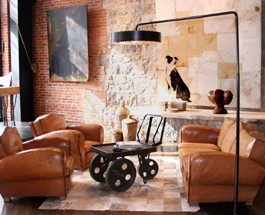
L ike a museum or an art gallery, the items on display at St. Helena’s Martin Design Showroom change on a regular basis. Over Christmas, the massive tire from an 18-wheel truck lorded over the room, placed standing alone on an oversized antique wooden table. Industrial link chain was used to hang rough-hewn wooden planking from the ceiling as shelves. Nautical rope as thick as a man’s fist tied paintings and other artifacts to the walls. Art books devoted to Dutch designers covered another table; white ceramic bottles were clustered artfully and antlers formed the inspiration for a set of candlesticks. In the center of it all, a “curtain” entirely composed from fresh-strung marigolds about five feet wide cascaded from the ceiling to the floor.

But unlike a museum or art gallery, there is no regular schedule to the changing look at Martin. That depends upon the fresh-faced whims of designer Erin Martin, the resident genius behind this contemporary space. Someone who Martin met on the street in L.A. was going to discard that tire, if that can be believed. She arranged to have it shipped up. Unaware that the San Francisco Museum of Modern Art is currently showing a curtain entirely composed of strung fabric flowers that cascades from ceiling to floor, she and 12 friends sewed together their marigolds in honor of India’s day of the dead celebration and to better meditate on a friend who had just passed away. (The showroom’s cleaning lady didn’t know what to make of it and tidily cut the bottom of the curtain straight off.) When a new shipment of artifacts Martin has collected arrives, the whole suite tumbles over again.

“The showroom is a mix of everything that we love; it changes all the time,” Martin says by phone while driving through Marin to meet a client in the wealthy East Bay enclave of Atherton. “It could be super French, and then it could go industrial. Right now, it’s big coffee tables and this great chaise that I’ve found that just makes me crazy with pleasure. We had a good shipment come in this past week, so we’re really excited, including a whale bone from the rib of a whale, which really reminds you how small you are in this world and how amazing it is to experience all of this.”

To say that Martin, 35, is aware of how amazing it is to experience all of this is an understatement. Raised in the Palm Desert area of Southern California by an architect father and interior designer mother, Martin skipped out on college, finding her education in four years of travel to such countries as Israel, Hungary, the bloc governments of Eastern Europe and to Morocco. With an eye and aesthetic trained by her parents from birth, Martin seems to have a fearless approach to the pleasures of both life and design. The showroom is for fun, and it certainly draws clients, but Martin’s real meat is full-scale home interior design.

Juggling between eight and five clients at a time, Martin is careful to ensure that the results aren’t too mannered. “I’ve really tried, but I can’t create nostalgia,” she says. “It doesn’t come from me but from someone’s life and the stories they can tell. At the end of the project, there’s space for clients to put their own things. The things that make you laugh or remind you of your dad or make you cry—those are the things that are truly special and make a house a home. [Interior design is] not brain surgery, but it is creating a place where people have refuge and Thanksgiving dinner and wake up in their beds and find a peaceful place. Living’s the good part.”

With her work frequently featured in the gloss of House Beautiful, Home & Garden and even in the ultra-luxury pages of the Robb Report , which calls her “ubiquitous for her wine country interiors,” Martin seems more self-styled Zen artist than snob. She gamely took on the Trading Spaces reality show that forced her to designer-up a room for under $1,000 in less than eight hours. She foraged in the neighborhood, finding an old church sign with the word “Jesus” on it that was refashioned into a door. And her use of ready-mades, such as plunking an 18-wheeler’s tire in the middle of things, is inspired.

Yet one of Martin’s most effective design tools is absence. She’s not one to rush to fill up a room with stuff. “Sometimes you just have to leave the space alone and let it tell you what it’s going to be,” she says.

“All you can do is try and see how it works. It’s OK that not everybody else gets it. If you get it and it gives you joy and makes you smile, then why the hell not?”

Martin Design Showroom
1350 Main St., St. Helena
707.967.8787


Creative Classical

0

01.30.08

T ime may not have dealt too kindly with the high-minded and outer-worldly aims of the brilliant Russian composer Alexander Scriabin (1872&–1915), but the fact that he has both been exalted as a genius and condemned as a charlatan proves the uncommon and enduring qualities of his tantalizing output. Rife with sexual connotation, his later compositions, upon which he is most judged, sought to cohere the aural and visual arts. Scriabin claimed to “see” tones as colors, even creating a “keyboard of light” to aid his technique. Scriabin died at age 42, having successfully developed his famed “mystical” chord of fourths, but his cosmic output has long been overshadowed by his uncanny philosophies—Igor Stravinsky, for example, called Scriabin a “musical traveler without a passport.”

Naturally, with the advent of the 1960s psychedelic era, the world eventually began the arduous task of catching up to Scriabin’s peculiar vision. (Scriabin’s piano sonatas represent perhaps the best classical music to listen to while on drugs.) The Poem of Ecstasy has remained his best-known piece, a tone poem marrying 19th-century romanticism to 20th-century technique. The composer once wrote in a letter that the piece “offers a small hint of what I wish my principal work to be.” It is performed by the American Philharmonic—Cotati along with works by Brahms, Tchaikovsky and Franck, on Sunday, Feb. 3, at the Wells Fargo Center. 50 Mark West Springs Road, Santa Rosa. 3pm. $20 reserved; general admission, free. 707.546.3600.

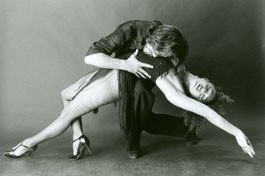
A more literal approach to sexuality is explored through music and dance when the Santa Rosa Symphony kicks off its impressive Latin Waves festival this weekend, promising an exhilarating array of flamenco, bossa nova and mariachi performances over the next three months. South-of-the-border sabor musical is soon to arrive via artists such as Claudia Villela, Robin Brown, Elena Marlowe, Randy Vincent and Mariachi Champaña Nevin (who dazzled in an outdoor appearance last year at Santa Rosa’s Juilliard Park), but this weekend it’s all about Argentina’s tango tradition in a joint performance of the Symphony Chamber Players and the guest dancers Miriam Larici and George Furlong (above).

Exploring the roots of modern tango with compositions from the masters Astor Piazzolla and Anibal Troilo, the evening also promises added excitement: two works by modern Argentinean ass-kicker Osvaldo Golijov. The Santa Rosa Symphony has championed Golijov’s music before, having premiered the composer’s beautiful and challenging Dreams and Prayers of Isaac the Blind for orchestra and clarinet in 2006. Golijov himself was on hand that night; something tells me that the fiery undulations and precise passion of world-class dancers Larici and Furlong will more than suffice on Saturday, Feb. 2, at Jackson Theater. 4400 Day School Place, Santa Rosa. 5:30pm. $23&–$31. 707.546.8742.


First Bite

E ditor’s note: First Bite is a new concept in restaurant writing. This is not a go-three-times, try-everything-on-the-menu report; rather, this is a quick snapshot of a single experience. We invite you to come along with our writers as they—informed, intelligent eaters like yourselves—have a simple meal at an area restaurant, just like you do.

When Monte Rio was a stop on the North Pacific Coast Railroad, the summertime population would swell to over 30,000, drawn by the dancehalls, the seven-story hotel cleverly built into the side of Starrett Hill, so that every floor was a ground floor, and the elaborate riverboat revels.

You can catch a whiff of old-time Monte Rio at the Highland Dell. Established in 1906, this hotel (gorgeous rooms, $99–$259) with bar and restaurant is redolent of a bygone era, but with some new twists. Owners Herb and Ingrid Loose have taken what was a cozy, rustic dining room and floated the roof up high, so that when we walked in one evening, all I could think of were trapezes and doves. The wall facing the river is all windows, with an amazing view of the bridge, the beach and the roiling, sinuous Russian River.

The rest of the place is beautifully appointed: creamy yellow walls, lots of mahogany and brass, lustrous leather chairs. All the scrappy elements of river culture—which, being a river denizen myself, I love, don’t get me wrong—seemed far away, cast afloat on a rosy sea of the biggest dang cosmopolitan ($7.50) I have ever been served. The place has a pampering elegance that creates an ambiance equally appropriate for conversations about the symbolism of dreams, the history of the platform shoe or tawdry tales of office misalliances. On Friday evenings, diners can enjoy acoustic music by local guitarists.

Jude and I went on a Local’s Night (Monday or Thursday) when a three-course prix fixe meal is priced at an astounding $9.95 in appreciation for local patronage. I appreciate the appreciation whether I order the local’s meal or not, which, as it turns out, neither of us did. We went instead for the Schwabentopf ($17.95) both for the pleasure of saying its name, and because the Highland Dell is known for its German fare. This savory mound of pork, bacon, mushroom and onions on cheese-spaetzle (German for “little sparrow,” and a little like fried macaroni and cheese) puts the comfort in the overused phrase, “comfort food.”

Other traditional German dishes featured include Jaëgerschnitzel ($15.95) and Sauerbraten ($16.95). The catch of the day sounded interesting and tasted, well, interesting. I guess I should have known that seared sea scallops with vanilla lemon bean butter ($21.95) would be on the sweet side, but the scallops were also perfectly cooked and tender.

For punctuation, we chose the brandy chocolate mousse from among other sweet things, including an almond torte, bananas Foster, ice cream sundae and fresh fruit crisp (all $4.95). The mousse was all it promised to be, deeply, darkly, richly, creamily chocolatey with an expanding air of brandy. Oh, for the tongue of giraffe to get inside that parfait glass!

Herb and Ingrid made us feel very welcome indeed. It won’t take a return to train service to draw both visiting and local patrons back to Monte Rio. The Highland Dell is a destination in itself.

Highland Dell Lodge, 21050 River Blvd., Monte Rio. Open for dinner Thursday–Tuesday. Brunch begins Sundays after Easter. 707.865.2300.


View All

Quick-and-dirty dashes through North Bay restaurants. These aren’t your standard “bring five friends and order everything on the menu” dining reviews.

Naw’lins up North

0

music & nightlife |

By Gabe Meline

W e may not have a Bourbon Street, with all its wrought-iron balusters and urine-drenched side alleys, but that’s not going to stop the North Bay from providing a miles-wide gumbo stew of Mardi Gras celebrations. Conveniently scheduled throughout the weekend both before and on Fat Tuesday here’s a quick smattering of the dirty rice that’s cookin.’

On Friday afternoon, Feb. 1, Napa’s COPIA kicks things off with a demonstration and zesty lunch of shrimp remoulade, jambalaya, cornbread and sweet potato pie. . . . On Saturday night, Feb. 2, there’s a Mardi Gras Mambofest at Mill Valley’s 142 Throckmorton featuring Lady Mem’Fis and Rahni Raines with Rhythmtown Jive; gumbo dinner included. . . . The French Garden in Sebastopol turns into a mini Preservation Hall with the Fourth Street New Orleans Jazz Band, while Marin’s Rancho Nicasio hosts the Tee Fee Swamp Boogie Band with Cajun menu specials. . . . The landmark 85-year-old Monroe Dance Hall in Santa Rosa serves a curious mix of a Cajun dinner paired with tango and swing dancing, while Little Switzerland , an even older dance hall in Sonoma at 102, hosts perennial zydeco favorites Gator Beat.

Nurse that hangover right outta your life on Sunday, Feb. 3, to the Dixieland sounds of Golden Gate Rhythm Machine as they highlight a smattering of jam sessions by “jass” traditionalists T.R.A.D.J.A.S.S. at the Last Day Saloon in Santa Rosa.

After a day to recoup, throw on those nutty outfits and get to drinkin’: it’s Fat Tuesday! First is the KRSH party at the Last Day Saloon with Rhythmtown Jive, kicked off by a parade around Railroad Square—perfect for suggestively tossing your Mardi Gras beads to the host, Bill Bowker. . . . Naw’lins flavor spreads into blues, reggae and R&B when the award-winning Pulsators take over the Tradewinds in Cotati, while Graton’s Ace-in-the-Hole hosts the Canal Street Jazz Band, honking out classics like “Sweet Georgia Brown.”. . . Sabor of Spain in San Rafael goes full-hog with dinner, winetasting, a mask contest and cover tunes by the Erin Band, while the cozy Hurley’s Restaurant in Yountville serves up a traditional Fat Tuesday dinner via guest chef Karen Crouse. . . . And finally, even lil’ ol’ Calistoga gets in on the debauchery with the local all-star Wild Catahoulas bringing down the Calistoga Inn . Laissez les bon temps roulez!


FIND A MUSIC REVIEW

Climate of Change

01.30.08

T he freedoms and inspirations that led up to our information age arrived with a mighty price tag of environmental devastation attached, a price tag that we must now share with our children. How unfortunate that while we offer them really fast WiFi and a level of access to knowledge that is enough to make even the most lackadaisical quiver with curiosity and excitement, we are also serving up the seeming inevitability of earthly destruction.

How best to help our kids understand and navigate through this conundrum? How to instill them with feelings of joy and hope while making sure that they understand that this is not a time when any of us can afford to be overly thoughtless? I discovered one piece to this puzzle disguised as a relatively mild, and easy enough to instigate, curriculum change.

I met Maitreyi Siruguri, program coordinator for the Cool Schools Program, an offshoot of the Graton-based Climate Protection Campaign (CPC), over lunch. The Climate Protection Campaign is a nonprofit that has dedicated itself, with great success, to taking a proactive approach to dealing with what they call “the climate crisis.” Due largely to the efforts of the CPC, all nine Sonoma County cities and county governments have adopted a commitment to reducing greenhouse gas emissions by 25 percent below 1990 CO2 levels by the year 2015. If Sonoma County is to meet this bold goal, the CPC believes that education is critical. The up-and-coming generation of drivers, thinkers, workers and shoppers needs to be educated and given the tools necessary for creating change.

The Cool Schools program focuses on the integral role schools play in our ability to reduce the emissions that are contributing to climate change. Cool Schools takes a hands-on, student-led approach that aims to empower and educate entire campuses of adolescents, and seeks nothing less than to break down the outdated societal belief system that equates cars with freedom. In 2005, Cool Schools began to work with David Casey, an inspired statistics teacher at Analy High School in Sebastopol. The ultimate goal of the project was to reduce CO2 emissions from students commuting to and from campus.

The students in Casey’s class performed a school-wide survey to figure out the school’s emissions. According to their study, 62 percent of students drive to and from school alone, consume 2,506 gallons of gasoline and drive a total of 42,000 vehicle miles per week. Next, the students engaged local businesses in offering incentives for students who were willing to car pool, bike, skateboard, walk or take the bus to school. The idea was to reduce single-passenger commutes to and from school by 20 percent, a goal that they managed to achieve. In 2006, the Cool Schools program was adopted by Windsor High School, where students renamed it eCO2mmute, and set a target of reducing their schools greenhouse-gas emissions from student commutes by 25 percent.

In order for such a program to be successful and far-reaching, donations are vital, not just in the form of monetary support, but in the form of local incentives for participating students. I, for one, would be much more likely to ride my bike to school for a week if I got a free scoop of ice cream at the end of it. Siruguri tells me that Cool Schools is currently working on a tool kit that teachers can use to bring the program into their classroom. The tool kit will offer a five- to six-month program that takes only an hour per week of class time and yet offers a comprehensive campaign for initiating and maintaining emission reductions on campus.

As we finish up our lunch, Siruguri, a native of India, tells me of her recent travels. During her four-hour layover in Hong Kong, she saw banners on climate change, boldly displayed. In Bombay, she found flyers about carbon credits posted in a friend’s apartment building. Siruguri believes that climate change has become an issue for us all, wherever we are in the world. Because we are now raising a generation of children who are living through the experience of climate change, it is only fair that we offer them education on this issue—education that inspires both hope and action. The next generation needs to be empowered, not overwhelmed, by this daunting responsibility. Luckily for Sonoma County, Cool Schools is here to help students learn not just about the realities of climate change, but about the solutions.

For more information on the Climate Protection Campaign and the Cool Schools Program, visit www.climateprotectioncampaign.org or call 707.823.2665.


Designing TV

0

01.30.08

Even the clutter looks good in the headquarters of Edelman Productions in Corte Madera. There’s a definite style to the hundreds of crazy-office-party photos taped casually on a long stretch of padded cubicle walls. There’s a decided dash to the way audition tapes fill floor-to-ceiling shelves adjacent to the receptionist’s desk. There’s a distinctive élan to the array of objects, both functional and decorative, perched on desks and cabinets throughout the maze of offices. And there’s an impressive high-tech edge to the stacks of equipment that define the production and editing areas.

This is a local television production company, but there’s nothing bare bones about it. The place has an informal atmosphere, but it’s extremely organized. It’s also infused with a sense of style and presence, which is appropriate, as the majority of Edelman Productions’ shows are created for cable’s HGTV and do-it-yourself networks, with a focus on design.

If it has to do with spiffing up your home, inside or out, Edelman has a show about it.

Founded in 1993 by former reporter, anchorman and syndicated-show host Steve Edelman, this company is a classic illustration of how the industry has moved away from L.A.- and N.Y.-based television shows to a variety of regionally based producers hustling to fill the huge demand for niche cable TV content. The shows created by Edelman Productions highlight extremely personable hosts presenting design information in a clear and coherent fashion.

“It’s the difference between an article in Time magazine about design and an article in a more sophisticated design magazine,” Edelman explains. “If people come to a design channel on a regular basis, they care more, they know more. The fundamental and important thing is interesting, unusual design information.”

As the head honcho of a company dedicated to helping Americans beautify their domiciles, Edelman’s innate sense of style has nurtured a wide range of shows. His company’s shows currently airing on HGTV include Color Splash, Curb Appeal, Designed to Sell, Decorating Cents, Design Remix, Double Take, FreeStyle, House Detective, Landscape Smart and Sensible Chic, plus three new ones that recently premiered, Sleep on It, Get It Sold and Find Your Style. Edelman’s series on the DIY network include Bathroom Renovations, Fresh Coat, Home Transformations, Weekend Handyman, Wood Works and Kitchen Renovations.

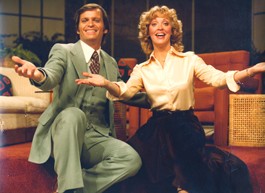
A law school grad who chose to work in television instead, for 12 years Edelman hosted the syndicated Good Company show out of Minneapolis with his wife, Sharon Anderson. When their show ended in 1994, he was 49 years old and determined to be his own boss. His timing was perfect.

One of his series ideas was snapped up by the then-fledgling HGTV network, which had just debuted. At the same time, technological advances made television cameras incredibly portable, letting Edelman’s crews film almost entirely in the field. Accordingly, they brought their cameras into people’s homes and to retail stores, wholesale warehouses, artisans’ workshops, furniture factories—anywhere that home design is happening and real.

“It’s a demanding business,” Edelman says. “If you’re going to be current, if you’re going to compete, you’ve got to be on the cutting edge not only with people and ideas but with equipment and your willingness to be flexible.”

As soon as he could, Edelman relocated from Minnesota to California. The company started with a small office on the second floor of a two-story building in Corte Madera. Today Edelman Productions is the largest cable TV production company in the Bay Area. It occupies most of the building, but use of the overall space changes depending on what’s in development and what’s in production.

“It all morphs according to who’s shooting what, when,” explains Sally Wilson, Edelman’s executive assistant, as she leads a brief tour of the company’s space.

Downstairs is the “cage,” a lot room that secures the gear each production team will use during a day of shooting. It’s all color-coded, so each crew gets exactly what it needs. One employee works full-time just keeping things organized.

A day of shooting yields anywhere from 10 to 20 raw tapes, which are immediately brought back to the office. “They’re a precious commodity,” Wilson smiles. The tapes are digitized and logged, then carefully edited. Edelman Productions has one editing room downstairs and four upstairs. They operate on a 24-hour schedule, with two editing shifts and one digitizing shift daily.

Edelman oversees it all, brainstorming concepts for new shows and pitching them to the networks. He also serves as executive producer, helping to fine-tune the first episodes of each new series. It’s a task he enjoys.

“It just one of those things,” he says. “I can watch a TV show and I can say that’s good, that’s bad, change this. It’s almost automatic. It’s just natural. It’s effortless.”

It’s also a vital skill for the company, Wilson says. “He can look at a show and give them five comments that make it perfection.”

Edelman glances across his Corte Madera office, checking the time on a trio of clocks sculpted in rusty metal. He had the hands painted red, making it easier for him to see the time on all three clocks. From a design perspective, the addition of the small bit of red works perfectly, “popping” the smooth glossy color on the hands against the rugged metal of the three clocks.

It’s also highly functional, because in addition to its Marin County headquarters, Edelman Productions now has offices in Minneapolis, Washington, D.C., and Atlanta. In all, the company has some 150 employees, and the trio of clocks lets Edelman know the time in each office, so he knows when he’s calling.

And on a wall just down the hall from his office, there are printouts of pictures and bios for the employees in all four offices, so people in Marin know what the folks working in the other offices look like, and vice versa. It’s one of the ways that Edelman stays in touch with what’s happening and keeps everyone else connected as well.

“I’m very involved in the hiring of people, because I think that’s fundamentally important,” Edelman notes.

The idea for a television show can come from a concept, like one of Edelman Productions’ newest series, Sleep on It, where potential buyers get to spend the night in a home they’re almost certain they want to purchase. Edelman thinks it’s a “killer” idea.

“It’s only been on four times, but it’s been doing big numbers [in the ratings],” Edelman enthuses. “Who knows, that show could actually start a trend.”

Shows are also developed around someone with both design or DIY skills and a warm, friendly personality that comes across well on television.

“There is no formula,” Edelman says. “We find individuals who deserve to have a show wrapped around them.”

But Edelman Productions isn’t limited to just interior design or do-it-yourself shows. It created three shows—Spa Chef Diet Challenge, Ultimate Kitchen and Ultimate Restaurants —for the Food Network. And it even produced two programs for the History Channel. The first was Tactical to Practical, which highlighted items that started as military projects and evolved into consumer products, such as Humvees, GPS and night-vision goggles. The second program is Man, Moment, Machine, which combines rare archival footage, eyewitness interviews, expert opinions, re-enactments and computer imagery to focus on individuals who employ new technologies at pivotal moments in history.

If those topics seem far removed from choosing paint colors, it’s because they are.

“The truth is, we make two different kinds of shows,” Edelman explains. “We make shows that are primarily geared to women and we make shows that are primarily geared to men. I think it’s rare that a company will do shows both for the History Channel—which has been nicknamed Hairy Armed TV—and for HGTV.”

The common denominator is quality, a clear format that engages viewers. Really good television, Edelman says, has a hypnotic quality.

“It requires a certain energy that draws you into it on a regular basis. Otherwise you just kind of float away. In order to keep your attention on that little box—which is now becoming a bigger box—you have to create things that draw you into the set. I call that hypnotic. It’s got to be engaging. You can call it anything you want, but it has to be immersive.”


Dollar Logic

01.30.08A ccording to Dec. 21, 2007 figures, here's how the top candidates in the Democratic and Republican primaries are spending their—and your—money.Hillary ClintonLast year, the Clinton campaign shelled out large for strategist Mark Penn, paying him some $1,860,611. Clinton's other biggest expenditure? Donation refunds, to the tune of $1,778,494. Shame on you, Norman Hsu. Clinton had to return some...

Propaganda 101

01.30.08H illary Clinton has what pollsters call "high negatives," which essentially means that lots of people really don't like her and never will. But her supporters have long argued that she is a formidable candidate despite these negatives because those numbers aren't likely to go any higher. As the theory goes, Americans are already well-acquainted with the Clintons' dirty...

All Ears

01.30.08S anta must have thought I was a good girl last year, because for Christmas he brought me an iPod. I am now officially caught up with the rest of my generation.I like the thing, but I haven't found much of a use for it yet. The iPod is delightful to listen to when I drive the truck Mr....

Monster Beers

01.30.08N o one would have believed in the last years of the 20th century that the West Coast beer market was being eyed closely by a monster brewery with ambitions far greater than our own esteemed Lagunitas or North Coast breweries could begin to imagine. That, as we busied ourselves marveling at international bitterness units (IBUs) of 60 and...

Juxtapose

01.30.08L ike a museum or an art gallery, the items on display at St. Helena's Martin Design Showroom change on a regular basis. Over Christmas, the massive tire from an 18-wheel truck lorded over the room, placed standing alone on an oversized antique wooden table. Industrial link chain was used to hang rough-hewn wooden planking from the ceiling as...

Creative Classical

01.30.08T ime may not have dealt too kindly with the high-minded and outer-worldly aims of the brilliant Russian composer Alexander Scriabin (1872&–1915), but the fact that he has both been exalted as a genius and condemned as a charlatan proves the uncommon and enduring qualities of his tantalizing output. Rife with sexual connotation, his later compositions, upon which he...

First Bite

Naw’lins up North

music & nightlife | By...

Climate of Change

01.30.08 T he freedoms and inspirations that led up to our information age arrived with a mighty price tag of environmental devastation attached, a price tag that we must now share with our children. How unfortunate that while we offer them really fast WiFi and a level of access to knowledge that is enough to make even the most lackadaisical...

Designing TV

01.30.08Even the clutter looks good in the headquarters of Edelman Productions in Corte Madera. There's a definite style to the hundreds of crazy-office-party photos taped casually on a long stretch of padded cubicle walls. There's a decided dash to the way audition tapes fill floor-to-ceiling shelves adjacent to the receptionist's desk. There's a distinctive élan to the array of...
11,084FansLike
4,606FollowersFollow
6,928FollowersFollow