The Meat of the Matter

0

02.20.08


Vegan, locavore, vegetarian, omnivore—politics makes strange dining partners of us all. And now, in ways unforeseeable just a decade ago, politics is helping to create a new renaissance in, of all things, meat eating.

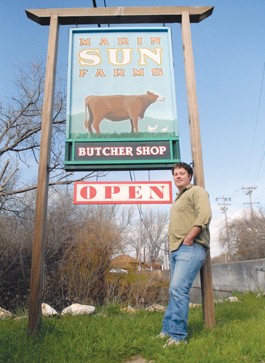
Not for any single, or simple, reason. Perhaps it hasn’t yet become politically correct to eat meat, but it has become a lot less politically incorrect. And for that we can thank pioneers like Bill Niman, as well as new “back to the pasture” ranchers like Jim Dunlop of Watsonville’s TLC Ranch and David Evans of Marin Sun Farms.

A quick rewind might help set the table. About 10,000 years ago, when agriculture sprang up across the globe, gregarious animals found that they could survive better in the company of humans. The grain grown on small family farms became feed for domesticated cows, chickens, donkeys, goats, sheep, camels and pigs, a classic win-win situation that helped put milk, cheese and, yes, meat on the table.

So the human diet expanded to include accessible flesh, as well as foraged nuts and berries and cultivated crops like maize, barley, beets and cabbages.

Full bellies fueled the expansion of human populations, who in turn began moving their herds to new grazing lands. The price of beef, pork, chicken and lamb went up. Soon, even with the mechanization of husbandry (i.e., factory farming) made possible by the 19th-century industrial boom, fewer people could afford the end product. Meat became a special-occasion food, and most of the week, the working classes ate grains, breads and legumes. That “chicken in every pot” usually showed up only on Sundays. Or only for the rich.

After World War II, First World lifestyles and incomes supported and encouraged the consumption of meats. Inexpensive ground beef and roasts became everyday fare for the middle and upper-middle classes. And with those came high cholesterol, diabetes and obesity. Synergized by the publication of the animal-welfare manifesto Animal Liberation by Peter Singer, the 1970s the “back to the land” movement joined forces with warnings about animal fats and heart health, and suddenly the word “vegetarian” was on everyone’s lips. Avoiding meat became not only fashionable, it flattered the budgets of those without trust funds.

Can You Say ‘Mad Cow’?

Restaurants added meat-free entrées to their menus. Natural-foods stores refused to carry any meat or fish or poultry. Books for vegans looking for ways to pump flavor and nutrition into their diet did brisk sales. Just as vegetarians reached philosophical palate fatigue, new medical research came out with the astonishing news that eggs were not bad for us, that lean meats might not lead to heart attacks. Carbohydrates were in fact the evil empire.

Call it coincidence, but just as the discovery of mad cow disease and the unsavory details of factory farming and stockyard practices came to light, organic farmers began raising chickens not only for eggs, but also for their meat. Looking to the free-pastured practices of West Marin’s own Niman Ranch—not to mention the profitability of chops, steaks and roasts bearing the Niman brand—ranchers began putting pigs on their pastures, letting them roam and forage freely before taking them down to the road to be slaughtered, and then selling the all-natural, artisan-butchered cuts at farmers markets and small local restaurants. For top dollar. (Or small dollar. See “Meat the Makers” sidebar, p18.)

All of this expands the possible solutions to the “omnivore’s dilemma,” a term coined by psychologist Paul Rozin and popularized in the book of the same name by Michael Pollan. Centering on the issue of choosing what to eat when you can eat everything and anything, the dilemma seems to have eased, thanks to the growth of traditionally raised, naturally fed and humanely treated animals.

These Little Piggies

“Niman is true to its mission,” asserts Niman Ranch CEO Jeff Swain, en route to a meeting in New York. “There are a lot of ‘natural meats’ out there using the ‘never ever’ mantra—that means no added hormones, no antibiotics, no animal products in feed, ever.”

But Swain contends that Niman still leads the production pack in significant ways. “We also grow our animals on individually owned family farms. Other brands can still be ‘natural’ and still be factory farms. Niman means open-range, traditionally pastured animals who are unconfined, grown on traditional family farms.”

In the 30 years since Bill Niman first pampered steers on a small Bolinas ranch, the brand has networked into 650 family farms raising beef, lambs and hogs in a sustainable way. “We move the hogs from one pasture to another, so that their fertilizer improves the soil. It’s a closed circle of sustainability,” Swain says.

Also easing the consciences of growing numbers of take-back-the-steak carnivores is the notion of provenance. “We have complete traceability of our animals,” Swain says. “We know their parent’s stock and in some cases, even their grandparents’ pedigree.” Growing animals on small farms means that the cycle of waste, soil enhancement and pasture health is maintained. The messy infrastructure of intensive, large-scale ranching is avoided.

Politics aside, the superior flavor of these hand-raised meats has gained Niman meats access to top menus, including Chez Panisse, the Ahwahnee Lodge, Spago, Post Ranch, Robert Mondavi Winery and the Zuni Cafe. Even the Chipotle fast-food chain, with its huge market, has helped drive Niman’s growth.

Following the money as much as the ethics of Niman Ranch, farmers interested in creating artisan specialties for discerning chefs are turning to traditional husbandry techniques. And purists looking to lower their environmental footprint by eating locally as much as possible are looking for sources closer to home than Niman’s pork farms.

Which often means grass-fed meat. According to the business research group Organic Monitor, the grass-fed-meat movement is growing, with over a thousand U.S. ranchers switching to an all-grass diet in the past five years. This helps small farms stay in the game and compete with large stockyard operations.

Greener Pastures

Niman paved the way for ranchers like David Evans, whose Marin Sun Farms networks with a small group of Marin and Sonoma family-owned ranches to raise grass-fed animals. Here, the livestock graze out on the open range and travel a short distance to their final destination on Bay Area tables and kitchens. Evans, a fifth-generation California farmer, not only raises his beef, pigs and sheep on sustainable farms, he refuses to ship his products out of the state. Locally grown meat shows up on local tables.

The results of doing without antibiotics or hormones, of allowing for long, natural growth and providing grass foraging means that there may not be the consistency found in mass-produced products. And prices will almost certainly be higher for steaks and roasts that have taken months longer to mature. Steaks finished without the addition of hormones and water will weigh less and cost more—often twice as much as conventional steaks.

Chefs don’t seem to mind.

“It makes such a huge difference,” says chef Ben Sims of the well-beloved Santa Cruz institution Ristorante Avanti. He’s breaking down a quarter of a pig delivered the day before from TLC Ranch, raised just 15 miles south of his restaurant. TLC hogs eat pretty much anything in sight on the Watsonville acres they share with a few cows, some sheep and hundreds of heritage breed chickens. Allowed to grow to their full 350&–400 pound maturity, the hogs are taken to a family-run slaughterhouse, dispatched as humanely as they were raised and then sold to restaurants eager to pass along to consumers the superior flavor and culinary ethics.

Like restaurateur and author Jesse Ziff Cool, Sims also uses Poulet Rouge Fermier du Piedmont, a heritage chicken breed from North Carolina. “They’re more like a wild breed,” he explains. “More muscle development. The meat is incredible, even though it can be tougher and not as uniform as commercially raised chicken.”

Cool calls the pasture-raised heritage chickens “delicious.” Her restaurant also serves beef and lamb from Marin Sun Farms and Niman pork because of her longstanding relationship with Paul Willis, Niman’s pork guru, and his work with small family pork farms. A 30-year veteran of local, sustainable and organic foods, Cool is finding “greater access to these meats, and increased local production, which is so exciting.”

A Steak in the Future

Given the increasing availability of small-farm-pastured, sustainably produced meat, are former vegetarians turning into omnivores?

“For sure,” says TLC Ranch’s Jim Dunlop, himself a vegetarian for a dozen years. “I was in the same boat when I was in school and did homework on factory farms and saw the suffering, the incredible stress that these animals undergo. But I started eating meat again once I began raising my pigs.”

Chef Sims doesn’t keep statistics, but he does have the kind of anecdotal evidence that confirms Dunlop’s hunch. “Once I started putting Niman Ranch, humanely raised meat on our menu a year ago,” says Sims, “two friends of mine, both vegetarians for over 17 years, started eating meat again at our restaurant.”

For the CEO of Niman Ranch, the numbers support a resurgence of thoughtful meat eating. “Our company grew 26 percent last year,” Swain says, pointedly adding, “and not just in the Bay Area.”

Au Juice

Drinkin’ with eatin’

Those with red wine allergies are all but out of luck. Only Champagne makes sense as a white wine pairing with red meat. In general, big flavors demand big wines. Wine consultant John Locke admits that one could successfully join an earthy blanc de noir bubbly with lamb, where the stone fruit and cassis flavors of a blush Champagne bring a great deal to the table.

And, he adds, “White burgundy is a good choice as well for duck or chicken—even pork. A dry Riesling might be wonderful with these lighter meats, especially an Alsatian, drier-style Riesling. And of course you could try a rosé.”With beef, Locke still likes Syrah. “Or a big, juicy Spanish Garnacha, even a Barbera, where the acidity is generally a good match with beef.” Another great red wine with beef, according to Locke, is the much-maligned Valpolicella. “There are wonderful Valpolicellas out there,” he assures.

Winemaker Randall Grahm “would want to go with something that has a fair bit of tannin, perhaps, something Cabernet-based, though a proper Madiran would not be out of bounds. For elegance, I would elect a mature Bordeaux over a California Cab. You do need some acidity, after all, but would definitely wish to steer clear from the flamboyantly slutty international style, pace Mr. Parker.”

Deciding that bigger is better, I tried my own combination at home. We were taste-testing two rib-eyes: one, a grain-fed natural prime from Kansas’ Creekstone Farms; and the other, an organic, 100 percent grass-fed steak from Sommers Organic, an Illinois-based meat marketer that works on the same principles of networked organic family farms as do Niman and Marin Sun. The grass-fed steak was more buttery, leaner, unevenly marbled with fat, supple and deep-red. It was delicious in a way that could be called “wild.” The grain-fed beef had an even, tight grain—the marbling was consistent all the way through. It was more tender, the flavor more of a deep baritone. With the beef, we drank a Châteauneuf-du-Pape powered by Grenache and Syrah into a voluptuous Rhône classic. A winning combination.

—C.W.

Potatoes, Please

Potatoes, members of the nightshade family and therefore related to tomatoes and tobacco, were first cultivated in the Andes thousands of years ago. Until the recent revival of heirloom varieties, the best-known potatoes were russets for french fries, the Red Pontiac and the Désirée for boiled potatoes.

Thanks to enterprising seed collectors and entrepreneurs, farm markets, home gardeners and restaurants alike began harvesting potatoes with names like Yukon Gold, French fingerling, Highland Burgundy, Golden Wonder, Peruvian blue and Sharpes Express. Chefs loved their unusual shapes and colors. Diners craved their earthy, sweet or nutty flavors.

Heirloom or not, the lowly potato is always a love match for meats. No Parisian steak would dare be plated without its crisp pommes frites. And Americans like them creamy. See for yourself with this classic recipe.

Gratin Dauphinois

(adapted from Julia Child’s Mastering the Art of French Cooking)

2 pounds boiling potatoes (Yukon Gold or Yellow Finn)

ovenproof baking dish

1/2 clove garlic

4 tbsp. butter

1 tsp. salt

1/8 tsp. pepper

1 c. grated Gruyère cheese

1 c. boiling milk

Preheat oven to 425 degrees. Peel and slice potatoes; place in cold water. Rub the baking dish with cut garlic and with 1 tbsp. of the butter. Drain the potatoes and pat dry. Arrange half the potatoes in the bottom of the dish. Sprinkle half the salt, pepper, cheese and butter over them.

Arrange remaining potatoes over the first layer and season them. Sprinkle on the remaining cheese and butter. Pour on boiling milk.

Bake for 20-30 minutes, or until the potatoes are tender, the milk absorbed and the top nicely browned.

—C.W.

Meat the Makers

Sonoma Meat Buying Club goes directly to the ranch

As with fruit and vegetables, the trend in meat is toward sustainable, locally raised and organic. But unlike with plants, there has so far been no CSA system in which growers provide their products direct from farm to consumers. That’s all changing with the Sonoma County Meat Buying Club. The brainchild of Sonoma Direct president Marissa Guggiana and supported with administrative help from UC Davis Ag Extension, the Meat Buying Club made its first delivery on Feb. 19.

Here’s how it works: club members sign up for three months of food at a time, designating whether they want seven, 15 or 25 pounds of meat per month. Each month, a different provider is highlighted and the packages feature a mix of beef, pork and lamb in prime and unusual cuts. Members receive a handmade designer bag to pack their products in, as well as special sauces and butters to accompany the food, rancher bios to better learn where it came from and laminated recipe cards from UC Davis that tell how to prepare the stuff.

“It comes out to $7 or less a pound,” Guggiana says, “and if you shop at Whole Foods, that’s not expensive at all. You’ll get some amazing prime cuts that would be $30 a pound and other, less familiar cuts, such as a shoulder chop that you might not otherwise buy and now you’ll know how to prepare. Chef Roger of La Gare is our chef of the month [for February], and he made herb butters and a Bourgogne sauce. We’re trying to bring in all the people on the food chain, and that’s been really fun.”

Guggiana, a co-leader of the Slow Food Russian River group, got the idea when she was discussing the lack of slaughterhouses with staff at Davis’ Ag Extension. Her Sonoma Direct is a meat-processing plant that also markets local, sustainable meats. (“We’re knives for hire,” she laughs.) The only model for those wishing to buy meat directly from ranchers has been for folks to pool their funds and purchase an entire steer. That generally requires an extra freezer and an immense amount of up-front cash. “That’s a burden for a lot of people in a lot of ways,” Guggiana says, “and it’s not necessarily sustainable with our lifestyles. Sonoma Direct is taking on that responsibility.” Her company purchased all of the meat for the first three months themselves, hoping to attract some 40 club members. At press time, 52 had signed up.

“Everything is raised in Sonoma County, every animal is humanely treated and everything is totally organic,” Guggiana says before sighing happily. “It’s just so cool.”

For information on joining the Sonoma County Meat Buying Club, go to www.sonomadirect.com.

—Gretchen Giles

Quick dining snapshots by Bohemian staffers.

Winery news and reviews.

Food-related comings and goings, openings and closings, and other essays for those who love the kitchen and what it produces.

Recipes for food that you can actually make.
What’s Up @ State U.

0

“Hey, dude you look like a pimp in those sunglasses.” Welcome to Sonoma State University, Spring 2008 semester. I pricked up my ears when I heard one male student shout those words across the quad to another male student. Here on campus, it’s all about words and these days if you’re male it’s cool to look pimpish. It’s also cool if you’re a woman and you’re in “The Vagina Monologues” – Eve Ensler’s play – which is coming to campus at the end of February. I’ve been at State U. for 25 years and I have never heard the word “vagina” spoken more often and with more pride than right now in public and in what’s called “mixed company” – meaning among men as well as women. In fact, you might say that “vagina” is on everyone’s lips and that the coming of “The Vagina Monologues” to campus has taken whatever sting was still in the word. “Pimp,””Vagina” – students say the darnest things. It ain’t just sex they’re taking about either. You hear the name “Obama” on lips a lot, too, and students seem to think that he has a chance to become the next president of the U.S. of A. Obama’s candidacy has also generated much discussion about race and racism. “I’m not a racist,” one white female student commented in a class. “Don’t say that,” a black female student said to her, and went on to explain that racism ran deep in American society, and that folks who often insist they weren’t racist often were – they just didn’t know it. All this talk about pimps, vaginas and racism just could be contagious, and it makes me wonder what students will be talking about come graduation in May. – Professor Mojo

Qualities of Belonging

0

the arts | visual arts |

Photograph by Elizabeth Seward
Out of Time: Boback Emad’s sculpture aims to predate its future placement.

By Gabe Meline

Y ou’re not going to be making anything big out here again, are you?”


The voice is gruff but plain, and it belongs to Boback Emad’s landlord, stopping by the sculptor’s studio to check on the strange happenings around the facility of late. Just weeks prior, Emad had erected a gargantuan two-story, particle-board model out in the driveway, and apparently the other residents of the area hadn’t viewed the wooden structure with the receptive, discriminating eye of an art connoisseur. “No,” Emad smiles reassuringly.


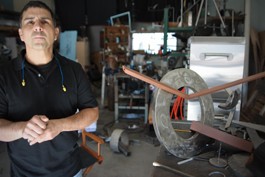
But Boback Emad is going to making something big again. So big, in fact, that he’ll need a crane to install it. Emad has been chosen out of 22 other entrants by the city of Santa Rosa to create and install Whole Some, a 24-foot-high, 18-foot-wide steel sculpture at the triangular corner of College, Mendocino and Healdsburg avenues as a northern gateway for the city’s downtown arts district.


“This sculpture evolved out of this site, it really did,” he says, poring over an enlarged satellite photo of the intersection in his northwest Santa Rosa studio. “It was about the complexity of this site—not just its architecture, but the visual angles and the speed. Because it is a very busy site, both visually and in real terms.”


Whole Some begins on the ground as an upturned, 90-degree triangle echoing the odd plot of land from which it will spring, made of weathering steel carved with incidental hieroglyphs. Continuing through the base floats the main attraction, a large, inviting circle of bright stainless steel, created to reflect the many changes of light at a well-trafficked intersection. As the final touch, to be visible for a half-mile around, is a beaconing antenna inspired by the angles of Santa Rosa’s DeTurk barn that shoots up from behind and turns directly and dramatically into the sky.


“All of this stuff”—Emad points again to the haphazard collection of streets and buildings in the overhead satellite photo—”it’s meaningful and it’s big and it’s heavy and you can’t move it, but none of it makes any sense! So in my mind, I thought that what I really want is something that gives purpose to this. That will make this feel like, ‘Oh, that’s why this place is all crazy, because of that thing! Because that was here first, and then they put these roads around it!'”


Along with Charles Ginnever’s Hangover II as a southern gateway in Juilliard Park and Ned Kahn’s Digitized Field on the old AT&T building to the west (an eastern gateway has yet to be chosen), Emad joins a growing cadre of artists whose work has been commissioned by the city to demarcate its burgeoning arts district. Emad’s sculptures have been installed all over the world—in Colorado, in Puerto Vallarta, at the Melinda French Gates building of Children’s Hospital in Seattle—but this is the first large-scale project for his own town. “I feel very lucky, where I’m at,” Emad says, “because there’re not a lot of artists who get the opportunity to make an effect on their community.”


I ask what emotions Whole Some expresses, and he looks at a model of the piece, thinks for exactly 12 seconds, then replies, “It has a quality of belonging,” he says, “and of happiness to me.”


For the most part, Emad is content to let his work speak for itself. He’s more likely to explain his sculptures by reciting a Sylvia Plath poem than with any of the usual descriptors like “bold” or “flowing,” and he maintains that his personal backstory has little, if any, involvement with his work.


Emad was born in Toledo, Ohio, in 1963 to two Iranian immigrants; his mother was a fashion designer who sewed constantly. “I think that what I got from my mother was that freedom, that plasticity of fabric,” Emad says. “She used to say, ‘There’re no ugly people,’ and she’s right. You get these people and their bodies are misshapen, but when you dress them up, you can develop any of those qualities that are there. She could use the fabric to do that. I think that was a big thing for me.”


As a teenager, living back in his parents’ native Tehran, he attended an American school of primarily military children, the gymnasium of which was bombed during the early stages of the Iran revolution. Luckily, Emad was out of school at the time, but his mother nonetheless sent him, at age 13, to safer shores two days later—first to Copenhagen and then to New York City, where he was picked up by cohorts of Ross Perot and eventually moved with other Iranian refugees to a house owned by the billionaire in Garland, Texas.


“One of the cool things he did that I always commend him for,” Emad says of Perot, was that “all the people who were in the midst of that tragedy got to go there.” Perot also signed a guardian form so the young Emad could return to high school.


After studying at Cal Poly, Emad worked in architecture but found it too creatively compromising. To make ends meet, he accepted various jobs, including working as a roadie for the Police in the early 1980s, disassembling and reassembling heavy arena speakers in the middle of the night. Twelve years ago, he and his wife bought a house in Santa Rosa on Lincoln Street, where his daughter was born, a half-block away from the destination of his multi-ton sculpture. A son has since followed.


When Whole Some is complete—Emad is shooting for some time in April—it’ll be trucked down the middle of College Avenue in the dead of night, taking up all four lanes and barely eking underneath a freeway overpass with just a two-foot clearance. Because of the work’s scale, Emad is prepared for the divided reaction that regularly accompanies public art. “If people don’t like it,” he says, “I suppose it’ll be hard, because of the hope I have for that site, of the hope I have for this city in terms of it being a place in the art world.

“Doing this, it satisfies a part of me that only it can do. I used to hear people say, ‘I couldn’t be anything else but an artist!’ I never understood that. But now I do. Because it’s not that you couldn’t do anything else—but the dissatisfaction, the hollowness, the emptiness would never leave you, to the point where you’re up all night. You can’t figure out why you’re up, so you find yourself with a pencil and paper. Pretty soon you’re on the floor of the kitchen making something. And you go, ‘Oh, wow. Yeah. That’s right.'”


View All


Museums and gallery notes.


Reviews of new book releases.


Reviews and previews of new plays, operas and symphony performances.


Reviews and previews of new dance performances and events.

Replicant Repasts?

02.20.08

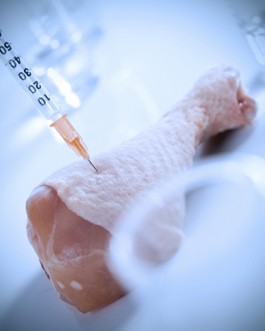
T he Food and Drug Administration may think cloned animals are ready to enter our food supply, but some local ranchers and dairy farmers do not. In fact, they are concerned that this new technology may put our food supply at risk. And once that happens, it’s hard to go back.

Last month, the FDA said the meat and milk from cow, pig and goat clones are as safe as any other food. Clones are an exact genetic replica of the donor animal, similar to latter-born identical twins.

Although the FDA is planning to keep track of cloned animals, critics doubt that their system is good enough to keep cloned animals out of organic food. Albert Straus, owner of Marin’s Straus Family Creamery, has seen this firsthand with genetically modified organisms (GMOs). In order to be able to call his milk organic, Straus gives his cows organic feed, which cannot contain GMOs. Although the FDA tracks GMOs, Straus decided to test his feed for them anyway. He found that even though the feed was certified organic, 25 percent to 33 percent of it still had traces of GMOs.

Straus felt that the results threatened the integrity of his product. He is concerned that, like GMOs, cloned food will soon proliferate through the food supply and contaminate his cattle.

“I feel like we’re all guinea pigs,” he says. “A lot of people in the government come from the biotech industry. The FDA is a revolving door for the industry. It’s not about human health; it’s about where money can be made.”

The FDA began its evaluation of cloned meat and dairy in 2001. Its testing was peer-reviewed by independent scientists, and the results were consistent with reports released by the National Academy of Sciences in 2002.

For many, like Matt Byrne, spokesperson for the California Cattlemen’s Association, that is good enough.

“We are content to rely on the experts,” he says. “And the FDA is the paramount expert on food safety in the U.S.”

Both Byrne and Straus agree that there is little practical use for cloning in ranching and dairy—yet. The technology is too new and expensive to be used in daily operations.

“It is very much a fledging technology,” Byrne says. “Potentially, there are benefits in selective breeding and genetics, but that is still a ways away. It’s a little too early to expect to see it in common use.

“But,” he adds, “if the FDA indicates safety of the product, it opens the door for it to be used in commercial use.”

Fries with Your Clone?

In testing, the FDA found no evidence that cloned meat or milk increases allergenic risk. They found no new or strange proteins in cloned meat. Rodents that ate cloned food showed no health problems. In short, the FDA found that the food from clones and their progeny was no different from conventional meat and milk.

Therefore, the FDA reasoned that “if an animal is healthy, it will likely produce safe food. . . . The existing food inspection methods and standards would effectively prevent the entry of unhealthy clones into the food supply.”

But opponents think that the FDA has not done enough testing on food safety. In fact, the FDA did less than half a dozen tests on food safety on fewer than 40 animals, according to Charles Margulis from Oakland’s Center for Environmental Health.

“It’s playing Russian roulette with our food,” he says. “They are going to trust the food supply of 300 million people to studies done on a couple dozen animals? That’s insane.”

Clones have a high failure rate, meaning that it takes many tries to get a healthy clone. The host mother suffers through multiple abortions or miscarriages and sometimes gives birth to abnormally large babies. Some clones are born with birth defects and deformities. Others have shortened lifespans.

Naturally, these points have animal-welfare advocates concerned. But it might also affect what we eat; the host mother is often given large quantities of drugs to help her give birth to a healthy clone.

“I don’t think the FDA has adequately looked at the fact that humans will be consuming hormones and antibiotics at a higher level, particularly our children,” says Rebecca Spector, West Coast director of the Center for Food Safety. “Our children will be drinking that milk.”

Contains Cloned Meat

Sen. Carole Migden, who represents Marin and parts of Sonoma County and San Francisco, has re-introduced a bill to the California State Senate that will require labeling of cloned meats and dairy on packaging. The bill would let consumers know if they are eating food from cloned animals.

This is the second time Migden’s bill has gone through the legislature. The first time, it made it all the way to Gov. Schwarzenegger’s desk only to have him veto it in January 2007 because, he said, the bill was premature.

The public seems to support labeling cloned food. In a poll by the Consumers Union last year, 89 percent of people said they wanted cloned food to be labeled. Another 69 percent said they are concerned about cloned food in general.

Labeling would also mean that cloned food would have to be tracked more efficiently than it is now, adding expense to ranchers and dairy farms that would use the technology.

“Labeling not only gives consumers a choice, it forces a better tracking system, which the industry doesn’t want because it is too expensive,” says Spector. “But with the problems with beef like E. coli and mad cow disease, we need a better tracking system anyway. We need a way to track the cow all the way from birth to plate. ”

At the very least, labeling would let consumers choose whether they want to eat cloned food. But that may not be sufficient protection from a technology that could carry unforeseen consequences, says Margulis.

“Labeling is the minimum we should expect,” he asserts. “Once it has been proven safe, it should still be labeled for people who don’t want to take part in the technology for ethical or religious reasons. “But labeling,” Margulis stresses, “should be the last step here, not the first.”


Fresh Water

0

02.20.08


A horrible situation&–losing our lease—was a blessing in disguise.” Becky Steere can say that now—now that the venerable Sweetwater, Mill Valley’s iconic downtown live music venue, has, quite literally, a new lease on life.


And a new address. When it reopens later this spring, the Sweetwater, which Becky and Thom Steere have owned since 1998, will be located at 32 Miller Ave., just around the corner from the cozy space on Throckmorton that was home to the club for its first 30-plus years.


That fabled history—studded with legendary impromptu jams and low-key performances by both neighboring and visiting rock luminaries such as Elvis Costello, Bonnie Raitt, Jerry Garcia, Carlos Santana, Bob Weir, Huey Lewis and dozens more—came to an inglorious end last fall when the building’s owners pulled the plug on the month-to-month lease extensions under which the venue had operated for the previous two years. Although relations between the Steeres and their landlords had long been difficult, the eviction was based on needs to renovate the aging building, a family spokesman said at the time, rather than any particular or cumulative issues with the club.


An outpouring of dismay and protest from patrons, music lovers and scene-makers did not affect the deadline, and the original Sweetwater shut its doors for the last time at the end of September. But that groundswell of support proved pivotal to the club’s impending rebirth, as it helped the Steeres access the considerable cash needed to remodel the former Greenwood furniture store that is becoming their new home.


Not only is the new space larger than the 90-seat room the Sweetwater formerly occupied, “It has the same footprint as the old Sweetwater,” Steere says, adding that it is a little wider, “and it has the nice high ceilings, the skylight, everything we wanted”—including “a much better lease, a long-term lease.”


The relocation won the sanction of the Mill Valley Planning Commission in mid-December, a well-attended session that culminated in a unanimous vote to approve the necessary permits.


“They welcomed Sweetwater back,” Steere says. “Even the opposition—which really wasn’t opposition, but was just homeowners who live close by—even they supported the club reopening.”


When that happens (no date has been announced yet), visitors can expect a lot of familiar elements in the new Sweetwater. “When we moved out of the old Sweetwater site, we took everything with us,” Becky says. “We took the 26-foot bar and all of the stained glass and old cabinets behind that. We also took all of the barn wood that was attached to the walls, and of course all the memorabilia. So we are recreating that in the new space.”


Of course, there will be some changes, too: fully accessible bathrooms, an upgraded sound system and generally new furnishings throughout. “It will be a much more people-friendly environment,” Steere promises. “We’ll be able to put more people in, but in a less cramped area.”


While the remodeling work is underway, the Steeres have begun offering live music dates at the former Larkspur Cafe Theater, now rechristened the Sweetwater Station. Most of those acts are acoustic, she notes. “It’s a much different venue, more of a listening room.” Even so, it’s bigger than the original Sweetwater, with seating for 100 at tables, and another 50 in the adjoining bar.

The Station also boasts a busy calendar, with weekly open mics on Tuesdays and notable upcoming dates by Peter Rowan (Feb. 21), Chris Webster (Feb. 27) and a “Jerry Day” benefit with Jelly and the Jerry All-Stars on Feb. 22. (Jerry Day itself comes around on Aug. 3.)


The quadrennially extended month will be observed Feb. 29 with a special leap year event, a triple bill featuring Jim Brunberg (formerly of Box Set), Ashleigh Flynn (a CD release party) and Ric Hardin and his band. Hosted by the newly launched local label About Records, the date will also include a 4pm songwriters’ workshop and competition. The writer of the best song there wins a spot on the bill at the label’s next event.


“We’re trying to reach out and cross-pollinate” among area performers, says Drew Pearce, About’s music performance manager, who freely admits that the events also serve as a convenient form of talent-scouting. Which adds, of course, to any Sweetwater venue’s usual form of entertainment: talent-spotting.


Sweetwater Station, 500 Magnolia Ave., Larkspur. 415.924.6107.


Wine Tasting Room of the Week

0


Glen Ellen’s most notable rock ‘n’ roll winery is surely B.R. Cohn, but on any given Friday, the tunes are cranking way past his olive trees at the neighbor’s place. That’s when Little Vineyards’ owner Rich Little gets out his Chapman Stick in the corner of the tasting room and noodles out a few licks. Off the beaten track, Little Vineyards is a refrain on the small, family winery started in the late 1990s, with a few surprises, like its own recording studio and a house wine with its own companion CD.


I first encountered Little Vineyard’s Band Blend at my local pub. At $5 a glass for an estate bottled Sonoma Valley red, it was an improvement over the previous house wine, and what wine looks more in its element in a bar with a Stratocaster on the label? The Band Blend Track 2 ($15) is unfined, unfiltered and also uncomplicated to open—crack the screw cap and you’re ready to rock. With a backbone of Cabernet Sauvignon and Petite Sirah, Syrah and Cab Franc to fill in the center, it’s accented by juicy riffs of Zinfandel. Dry, but gulpable, with dark black cherry fruit, it’s not a sipping wine or your father’s Oldsmobile. Plus, it has its own CD mix. Since this column is about wine, I will demur to the music critics—look, my tape deck was playing Flock of Seagulls on the drive over—but the wine rocks, for sure.


All of the Little’s wines are made from their 15-acre estate vineyards, and they’re serious about their product. If winemaker Ted Coleman doesn’t like a particular vintage, he sells it out as bulk. Can’t redub it, you know? I like that approach. So there will be no 2005 Zinfandel, but the available 2004 Zinfandel ($25) is a bright, claret style, with a red raspberry zing and phase shifted volatile notes—echoes of Meeker Vineyard’s acid-rock Rack ‘n’ Roll. The 2005 Syrah ($30) is a more gothic number, rumbling with dry dark fruit of the grape.

While contemplating the wine or tapping your toes, you may note that you’re sharing the same tasting bar with Jack London some years hence. The Littles chanced upon this heavy, dinged-up wooden stand-alone bar in a neighbor’s barn in Glen Ellen. From the Rustic Inn, it bears the proprietor’s proud plaque certifying that the famous author tippled with him here in 1916. Not a lucky year for London, but had he only had such fine and robust wine as this . . .


Little Vineyards Family Winery, 15188 Sonoma Hwy., Glen Ellen. Tasting by appointment. 707.996.2750.


View All

First Bite

0

2.20.09

Editor’s note: First Bite is a new concept in restaurant writing. This is not a go-three-times, try-everything-on-the-menu report; rather, this is a quick snapshot of a single experience. We invite you to come along with our writers as they—informed, intelligent eaters like yourselves—have a simple meal at an area restaurant, just like you do.


We demand a certain authenticity from our Irish pubs, even faux American Irish pubs. A proper pint served by bartender with a brogue is required; yellowed posters advocating sympathy for armed resistance, optional. Santa Rosa’s new Stout Brothers Pub is a picture-perfect specimen from the kit pub genre. Gently illuminated but not dark, handsomely furnished with Irish-themed accoutrements, all that it lacks, as one wag commented, is a track running through it so that patrons could ride through, Disneyland-style. But insofar as it is a comfy public house that fits nicely in between the loud, dressed-down din of a brewery and the tense chill of a cocktail lounge, so what? It’s a welcome alternative in downtown Santa Rosa; here the casual crowd fits right in the middle.


Pub-goers can choose from a good variety of seating possibilities, from the full bar to various tables and nooks and a cozy hideaway upstairs surrounded by gold-flecked wainscoting and balcony railing, under a ceiling stained to simulate decades of diligent smoking.


Stout’s key appetizer is a bit of a misnomer. So-called Gaelic chips ($3.75) are what the Irish would term “crisps,” or potato chips. Served with whiskey-barbecue dipping sauce, they’re a tasty snack, but to say they were oily would be like noting that Guinness is wet. Speaking of which, our pints displayed the disturbing trend toward icy-coldness and were suspiciously speedy. Regardless of fad, Guinness likes a warmer, more restful approach, with two pulls on the tap and less chill in its timbre.


A bowl of potato leek soup ($5.75) was a rich, chunky purée served with rustic soda bead. My dining companion was nonplussed by the large brick of undercooked potato found lurking at the bottom, but enjoyed the fresh, simple Gaelic wedge salad ($6.75), iceberg lettuce sluiced with blue cheese dressing and bacon. The fish and chips ($11.75) were crisp on the outside and fresh and tender on the inside, but the devil was in the mushy layer of batter in the middle, possibly telling of incompletely defrosted frozen fish. The tartar sauce was wanting, and our malted vinegar never showed up.


Service was a bit spotty, although the various servers who circulated by our table were friendly and well-intentioned. The group across from us hadn’t seen their server for a good fortnight, while we belatedly received at least one fork and knife to share after requesting setups. The best surprise was the ploughman’s lunch sandwich ($8.50). Layered with grilled vegetable slices, mushrooms, caramelized onion and cheese, it’s a scrumptious repast that bodes well for the menu’s Irish burger, something I’ve yet to try.

With a few kinks ironed out, this insta-Erin watering hole may deliver on its promising atmosphere. Given our distance from the Emerald Isle, we might as well bring on the frosty pints and the barbecue-dip crisps while putting another Pogues number on the jukebox.


Stout Brothers Irish Pub & Restaurant. Lunch and dinner daily. 527 Fourth St., Santa Rosa. 707.636.0240.


Quick-and-dirty dashes through North Bay restaurants. These aren’t your standard “bring five friends and order everything on the menu” dining reviews.

Helvetica

0

I heard about Helvetica last year from a friend of mine who’s a graphic designer in New York—he was excited about it even before it came out. Since then, two more graphic designer friends of mine, including Jackie at the Bohemian, have sang its praises. I finally watched it last night, and no matter what your line of work or your level of interest in design, I hereby and totally recommend it.A film about a font might sound pretty dull. It’s not. Through interviews with over 20 design experts and with lots of montages revealing Helvetica’s omnipresent usage, the film charts the 50-year life of the most popular font in the world. You go to the factory where Helvetica was born, you are shown why it works, scientifically, as the perfect font, and you drink in its massive cultural impact.The best part is that just when you start getting sick of hearing how incredible and wonderful Helvetica is, the film brings on the haters—and they’re just as convincing. Helvetica is the font of nothing, they say; it represents conformity and blankness and corporate culture. One graphic designer goes so far as to blame Helvetica for the Vietnam war.Watching this film will change the way you look at the world, if even only for a day or two. The interviews are astounding; it’s fascinating what kinds of wild corollaries emerge when professionals start talking about their craft. Helvetica is full of those moments: incredible insight into something that most of us rarely, if ever, think about at all.It’s got a great soundtrack, too, courtesy of these guys.

Sisters of Dreary

0

the arts | stage |

Photograph by Cindy Brillhart True

By David Templeton

M en dressed as nuns are funny. Who knows why, but it’s true whether it’s Jeff Goldblum and Rowan Atkinson singing and dancing in wimples and robes in The Tall Guy ; male Carnevale dancers in Rio parading down the streets attired as women of the cloth; or the subversive political antics of San Francisco’s reigning queer nuns, the Sisters of Perpetual Indulgence. There’s something undeniably joyous and silly about seeing a nun who is actually a dude.

So it was welcome news when Sonoma’s Hoochi-Doo Productions—having already enjoyed huge success with their previous string of Dan Goggins’ various Nunsense musicals—announced that their 2008 season would kick off with Nunsense A-Men , a variation on the original, cabaret-style Nunsense , done exactly the same except that the Little Sisters of Hoboken are to be played not by women but by guys.

How could that not be funny? I can’t answer that, except to say that in Hoochi-Doo’s surprisingly flat, energy-deficient new production, it isn’t.

I can only theorize that the cast, some of whom are reasonably experienced and accomplished in the ways of musicals, are trying too hard to play it “straight,” avoiding going over the top into the realm of camp. The problem is, this play is camp; even when the nuns are played by women, it’s camp, intended to be played slightly over the top.

These nuns are named Sister Mary Amnesia and Sister Julia, Child of God. They sing songs about leprosy, with lyrics describing the shedding of body parts. One nun performs a vaudeville routine with a hand puppet, while the Mother Superior gets stoned and starts tripping on stage, pretending to do the Australian crawl while suspended on a stool. It’s camp, and the only thing that happens when you play that down, especially when your nuns are a bunch of guys in nun drag, is to make it less funny. Sadly, that’s exactly what they’ve accomplished with this one.

It’s a disappointment, given that Hoochi-Doo has made such a strong name for themselves doing the Nunsense plays over the years. We’ve come to expect better from director Vicki Martinez, who, as a veteran of musicals, certainly knows what she’s doing and has proven herself to be an able and inventive director of cabaret shows.

Nunsense A-Men’s story, what little there is of it, has not been changed. In the recreation hall of the convent’s school, the Little Sisters of Hoboken are staging a musical benefit show in order to raise enough money to bury some of their order, who recently died of botulism—blame Sister Julia, Child of God—and are cooling their heels in the dining room freezer. The reverend mother Sister Mary Regina (Jeremy Berrick) rules the show with an iron fist, browbeating the nuns into performing song and dance routines (“Nunsense Is Habit Forming,” “Holier Than Thou”), refusing to allow the street-wise Sister Robert Anne (J. Anthony Martin) to have more than a supporting role in the show.

Sister Hubert (Edwin Richards) is the reverend mother’s competitive second-in-command, gamely enforcing the R.M.’s show plan while taking every opportunity to interject her own ideas. Sister Leo (Curtis Hoffmann) is the newest and youngest member, a classically trained dancer who imagines she’ll one day become the world’s first nun ballerina; the benefit show is her big opportunity to strut her stuff. Sister Mary Amnesia (Scott Maraj) is so named because a crucifix once fell on her head and now she can’t remember who she is—or any of the dance steps.

Of all the actors, Martin, familiar from performances at various companies around the North Bay, comes out best here, ably demonstrating his fine singing voice and commanding stage presence. Maraj has perfected a kind of blank, smiling, slightly worried facial expression as Sister Amnesia, which is genuinely endearing. No one else in the cast makes much of an impression, another disappointment given how well-defined and colorful each character has been in past Hoochi-Doo Nunsense shows.

The best part of this production is the theater itself. A nifty new space created on the campus of the Sonoma Charter School, the Playbox (as it’s been dubbed), is a comfortable “black box” room with a reasonably good-sized stage and great sight lines from every corner of the audience area. It’s a good home for Hoochi-Doo. I look forward to their next production there. Presumably, with this misfire securely behind them, Hoochi-Doo will be back in the same fine form that has made them one of Sonoma’s most promising companies.

‘Nunsense A-Men’ runs Friday–Sunday through Feb. 24. Friday–Saturday at 8pm; Sunday at 3pm. The Playbox, Sonoma Charter School, 17202 Sonoma Hwy., Sonoma. $20–$25. 707.332.0621.


View All


Museums and gallery notes.


Reviews of new book releases.


Reviews and previews of new plays, operas and symphony performances.


Reviews and previews of new dance performances and events.

Heathen Hemp?

02.20.08

Before interviewing Mike Fata, cofounder of Manitoba Harvest, purveyors of hemp foods and oils, I do a mental tabulation of everything I think I know about hemp. While I tabulate, I eat Manitoba Harvest hemp-seed nut butter by the spoonful, a slow, delectably sticky process that gives me inspiration along with a much-needed protein boost.


George Washington grew hemp. Long used to fashion rope, hemp, no matter how much of it you smoke, will not get you high. Some people like to wear clothing made from hemp fibers. Yet hemp clothing, while certainly durable and sustainable, is rarely considered fashionable by anyone other than those who also wear hemp clothing. (I briefly consider asking Fata if this is one of the reasons why he and fellow cofounders Alex Chwaiewsky and Martin Moravcik have steered clear of the textile industry. Have they too have been frightened away by those boxlike hemp hats and ill-shapen hemp pants? Fortunately, the high nutritional content of the nut butter seems to be working on my brain, and after a few moments of consideration, I decide to cross this question off my list as potentially offensive.)


As it turns out, Manitoba Harvest’s decision to focus on oils and edibles rather than textiles has more to do with its commitment to quality than to fashion sense. Fata claims that hemp is such a large and versatile crop, with such a multitude of uses, that they simply had to focus. The decision to concentrate on the possibilities of hemp seed was based on a passion and commitment to promoting healthy lifestyles.


In fact, Fata says that Moravcik is the Godfather of Hemp in Canada, where he has led a decade-long fight to legalize this farm-saving crop in the United States; Canada decriminalized its production in 1997. Despite the bad name given to hemp by that very different strain of cannabis, hemp is so useful and lucrative that it now provides steady income, as well as a sustainable farming lifestyle, to the 20 farmers who are investors as well as growers for Manitoba Harvest.


Industrial hemp once covered 400,000 acres of farmland in the United States, yet all that is left is the remnant “ditch weed,” or feral hemp, that grows sporadically across the countryside. Innocuous in nature, the federal government nonetheless spends large amounts of our tax dollars attempting to eradicate ditch weed, which any cross-country traveler can tell you will get you about as high as smoking a smudge stick—in other words, not at all.


Fata says that by the time he was 18, he weighed 300 pounds. As this was the 1990s and fat-free diets were all the rage, he chose to lose weight the no-fat way. The method was effective. He quickly dropped down to 160, almost killing himself in the process. Thus began Fata’s exploration into the world of healthy fats. He began to learn about hemp seeds, which offer a rich source of the omega-6 and omega-3 essential fatty acids (EFAs), providing the best source of balanced EFAs of any other plant source.


After convincing family members of the health benefits as well as potential profits, Fata purchased a European oil press. He began pressing hemp seeds from his home, producing oil which he then sold with great success to health food stores in Winnipeg. In 1998, Fata partnered with hemp activists Chwaiewsky and Moravcik, and together, they moved from a small personal oil press in his kitchen to a 6,000-square-foot kosher- and USDA-organic-certified facility. They now ship their hemp seed oil, hemp nut butter, hemp milk, hemp protein powder and hemp-seed nut all over the world.


Manitoba Harvest is in the process of preparing to move its entire facility to a new 20,000-square-foot facility. This daunting task is necessary, as Manitoba Harvest grows and packages all of its own products. The company’s success, considering the fact that it processes only hemp seed and nothing else, is really quite astounding, and proof that the products speak for themselves.

After my conversation with Fata, who assures me that the winters in Manitoba really aren’t so bad, I peruse the company website for recipes and inspirations. The way this Canadian native says the word “about” like “a boot” is so irresistible that I briefly consider defecting just to be surrounded by such an accent. My plans are temporarily stalled when I see that Hemp Bliss is not shipped November through April due to “product freezing.” It’s true, I’m a fair weather fan. In the North Bay, the temperature is currently hovering in the mid-60s, and so I will remain put in my backwards-thinking, hemp-banning country of origin, where I can import hemp, I can wear hemp and I can eat hemp. I just can’t grow it.


For more information on Manitoba Harvest, go to www.manitobaharvest.com. For more information on legalizing hemp in the United States, go to www.votehemp.com and [ http://www.industrialhemp.net/ ]www.industrialhemp.net.


The Meat of the Matter

02.20.08Vegan, locavore, vegetarian, omnivore—politics makes strange dining partners of us all. And now, in ways unforeseeable just a decade ago, politics is helping to create a new renaissance in, of all things, meat eating. Not for any single, or simple, reason. Perhaps it hasn't yet become politically correct to eat meat, but it has become a lot less...

What’s Up @ State U.

"Hey, dude you look like a pimp in those sunglasses." Welcome to Sonoma State University, Spring 2008 semester. I pricked up my ears when I heard one male student shout those words across the quad to another male student. Here on campus, it's all about words and these days if you're male it's cool to look pimpish. It's also...

Qualities of Belonging

the arts | visual arts | Photograph by Elizabeth...

Replicant Repasts?

02.20.08T he Food and Drug Administration may think cloned animals are ready to enter our food supply, but some local ranchers and dairy farmers do not. In fact, they are concerned that this new technology may put our food supply at risk. And once that happens, it's hard to go back. Last month, the FDA said the meat and...

Fresh Water

02.20.08  A horrible situation&–losing our lease—was a blessing in disguise." Becky Steere can say that now—now that the venerable Sweetwater, Mill Valley's iconic downtown live music venue, has, quite literally, a new lease on life. And a new address. When it reopens later this spring, the Sweetwater, which Becky and Thom Steere have...

First Bite

2.20.09Editor's note: First Bite is a new concept in restaurant writing. This is not a go-three-times, try-everything-on-the-menu report; rather, this is a quick snapshot of a single experience. We invite you to come along with our writers as they—informed, intelligent eaters like yourselves—have a simple meal at an area restaurant, just like you do.  We demand a certain authenticity...

Helvetica

I heard about Helvetica last year from a friend of mine who’s a graphic designer in New York—he was excited about it even before it came out. Since then, two more graphic designer friends of mine, including Jackie at the Bohemian, have sang its praises. I finally watched it last night, and no matter what your line of work...

Sisters of Dreary

the arts | stage | Photograph by Cindy Brillhart...

Heathen Hemp?

02.20.08 Before interviewing Mike Fata, cofounder of Manitoba Harvest, purveyors of hemp foods and oils, I do a mental tabulation of everything I think I know about hemp. While I tabulate, I eat Manitoba Harvest hemp-seed nut butter by the spoonful, a slow, delectably sticky process that gives me inspiration along with a much-needed protein boost.  George Washington grew hemp....
11,084FansLike
4,606FollowersFollow
6,928FollowersFollow