Hopmonk Update

0

12.05.07

W hen Dean Biersch, cofounder of the Gordon Biersch brewery chain, took over the Sebastopol Brewing Co. in downtown Sebastopol last month, he hinted at a neighborhood friendly operation with his new Hopmonk Tavern.

It looks like he’s delivering.

The upscale, North Bay—friendly bar and bistro opens this spring, featuring handcrafted beers made by small, independent and traditional brewers. Sure, some of the beverages will come from Europe, but now the official word is out: We’re guaranteed “an impressive array of local” product, too.

In fact, Biersch, a Sonoma resident, will be personally selecting each and every beer found on the constantly changing lineup, and will be hands-on in the tavern’s day-to-day operations. Want to request a specific brew from a rare backyard talent? Just shout it out, and if it’s not in stock, Biersch himself may track it down for you.

Now, Biersch also tells us that the short but sexy food menu will draw from lots of local fish, produce, cheese and meat vendors. Look for seasonal, beer-friendly plates with “a California vibe.”Sonoma County musicians and music lovers can rejoice, too. The 1,400-square-foot venue adjacent to the restaurant will showcase local, regional and international performers.

Yet here’s how we can really tell we’re not going to be treated like big-city corporate customers: in a sneak peak at marketing materials, we saw this unique selling point: “In addition to ample free vehicle parking, a regional bike trail passes through the front of the property, and bike travelers are invited to stop by.”

Free parking? Bike racks? Now that’s a welcome mat only a small, neighborhood-respecting place could know to lay out.

Sebastopol. [ http://www.hopmonk.com/ ]www.hopmonk.com.

Quick dining snapshots by Bohemian staffers.

Winery news and reviews.

Food-related comings and goings, openings and closings, and other essays for those who love the kitchen and what it produces.

Recipes for food that you can actually make.

Let’s Rock

0

music & nightlife |

By Gabe Meline

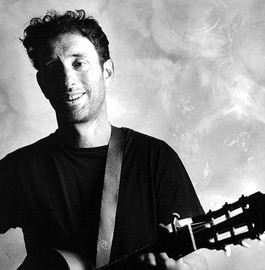
A few years back, Petaluma’s Mystic Theatre faced a minor show-business crisis: the scheduled opening act for John Hammond canceled at the last minute, just hours before curtain time. The owners paced the sidewalk outside, wondering what to do, when they spotted a familiar face in a nearby restaurant window: look—Jonathan Richman! Would he like to walk down to the theater after dinner and play for a packed house?

Richman, aka the Most Sincere Person Alive, leapt into action, borrowed a guitar from the nearby instrument store and, aided by a slapdash rehearsal with Hammond’s drummer, turned in a surprise performance that had the unsuspecting crowd howling for more.

Jonathan Richman has written so many great songs that it’s tempting to say that I don’t know where to start. But that’d be a lie, because I do: “Back in Your Life,” from the album of the same name. Quite simply one of the most innocent songs ever written, it evokes the simple life of rural Vermont, replete with covered bridges and maple syrup, in a cajoling, desperate plea to win back the heart of a former love. Like most of Richman’s songs, it’s just three chords and a huge heart on his sleeve, but it’s enough.

Song two: “The Lonely Financial Zone,” which finds our lonesome wanderer out in the middle of the night, gazing upward at dark skyscrapers full of empty offices. Richman usually makes merry of those banal locales where dread is the daily special (“Rockin’ Shopping Center,” “Abominable Snowman in the Market,” “Government Center”). Yet in the lonely financial zone, the humbled wonder and funerary march of the song’s sparse accompaniment says it all: We all sometimes feel like small and weirdly unimportant human beings in an towering tangle of concrete caves.

Song three: “The Morning of Our Lives,” possibly the greatest pep talk ever recorded; it zings straight to the core of what being young is all about. Song four: “New England,” a joyous sing-along celebration of all things Northeast. Song five . . . Well, you can see where this is going. I may know where to start when it comes to Jonathan Richman songs, but I sure as hell don’t know where to stop.

After that surprise show (which dutifully included the early hits “Astral Plane” and “Pablo Picasso”), I spotted Richman in the theater lobby. So many things ran through my head: Ask about his surreal interview with Space Ghost! Tell the story of the time I played “Roadrunner” at my friends’ wedding as they walked down the aisle! Maybe even ask if he ever got to go back to Vermont to collect maple syrup with his old flame! Instead, I simply said thanks and shook his hand. He smiled widely and said thanks right back—just as sincerely as you’d expect from the Most Sincere Person Alive.

Jonathan Richman appears this Saturday, Dec. 8, at the Mystic Theatre. 21 N. Petaluma Blvd., Petaluma. 8:30pm. $15; 18 and over only. 707.765.2121.


FIND A MUSIC REVIEW

Dickens’ Diction

12.05

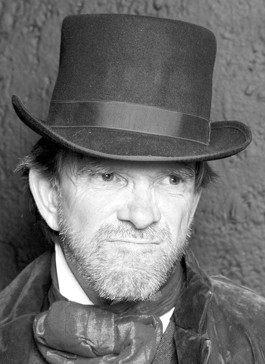
I n most stage adaptations of Charles Dickens’ Christmas Carol , the emphasis is placed squarely on the ghost-story plot, the beloved waist-coated characters and often, as in ACT’s famous annual production in San Francisco, the tricky special effects. In the adaptation staged each holiday at the Sonoma County Repertory Theater, with a script by Preston Lane and Jonathan Moscone, the emphasis is placed squarely on the beautiful language of Dickens’ original text, first published in 1843 under the cumbersome title A Christmas Carol in Prose, Being a Ghost Story of Christmas . Under the affectionate direction of Gene Abravaya and the mischievous performances of an energetic cast, Dickens’ lively, funny, surprisingly poetic prose pops off the stage like dead old Jacob Marley leaping up out of nowhere in Ebenezer Scrooge’s bedroom.

Many forget what a wonderful wordsmith Dickens was, but this adaptation makes it clear that Mr. D loved playing with words as much as the miserly Scrooge loved counting his money. In introducing Ebenezer Scrooge to his readers, the author describes him as “a squeezing, wrenching, grasping, scraping, clutching, covetous old sinner, hard and sharp as flint, from which no steel had ever struck out generous fire, secret, and self-contained, and solitary as an oyster.” They are words meant to be spoken aloud, and the script finds clever ways to put Dickens’ gloriously witty narration into the mouths of the actors, who all take a turn as narrator, sometimes reciting whole phrases, such as the one quoted above, in rousing unison.

As Scrooge himself is the solid Scott Phillips, taking over the role from Eric Thompson, who has played the part at the Rep for the last several years. It will be interesting to watch Phillips grow into the role in years to come, especially with such a strong start. Playing a slightly younger, more agile Scrooge than many I’ve seen, Phillips interprets the greedy Victorian loan shark as a man who revels in his reputation as a nasty piece of work, cackling with pleasure at every new indication that he has frightened a child or disappointed a charity worker.

Scrooge, remember, is a man with a great sense of humor, albeit a wicked one, and Phillips embraces the character’s fondness for mean-spirited wordplay. His ultimate transformation into an exuberant lover of life is equally delightful, somehow drawing huge, warmhearted laughs with a line as simple as “I don’t know what to do.”

The rest of the cast take turns playing all the characters, and while the experience level onstage runs the gamut from fresh to seasoned, the cast is uniform in its high-spirited, infectious pleasure at playing out Dickens’ familiar story. Standouts included Chris Murphy, who as the quivering ghost of Scrooge’s dead partner, Marley, infuses the role with so much self-directed angst, twitching and shuddering agony, you just want to run up and give a there-there pat on the head, except that he might just bite off your hand.

Also very good is the young Gwen Kingston, who as Scrooge’s one-time love Belle is heart-tuggingly sweet, sincere and strong, both early on when she dances with a young Scrooge, eyes locked on him with obvious love, and later, when she heartbreakingly describes watching his “nobler aspirations fall off one by one.” Expect good things from Kingston in the future.

Bob Dougherty as Bob Cratchit, Scrooge’s long-suffering clerk, is excellent, especially in the later scenes involving the fate of his son Tiny Tim, and Hollie Martin, as Mrs. Cratchit (“Dressed poorly, but bravely, in ribbons”), imbues the role with a potent sense of affronted dignity. I liked the youthful Gabriel Stevens, who, as the Ghost of Christmas Past, manages to snap back and forth between being helpful and cordial to being frighteningly no-nonsense (with the help of some well-timed sound effects).

It is no simple thing to take a story so familiar and present it with such freshness and delight. The escalating sense of good feeling and wise humor makes this Christmas Carol one to savor and remember, like the repentant Scrooge, though Christmas and beyond.

‘A Christmas Carol’ runs Thursday&–Sunday through Dec. 23. Thursday&–Saturday at 8pm; Sunday, at 2pm. Sonoma County Repertory Theater, 104 N. Main St., Sebastopol. $18&–$23; Thursday, pay what you can. 707.823.0177.


Museums and gallery notes.

Reviews of new book releases.

Reviews and previews of new plays, operas and symphony performances.

Reviews and previews of new dance performances and events.

Wine and Cheese 101

0

12.05.07

S uccessful wine and cheese pairing comes down to a slippery combination of science, art, luck and the personality and physiology of the taster. But party planners needn’t freak, because the whole tradition is based on the fact that wine and cheese simply taste good together. That’s because there are some common laws at work underneath it all.

Acid loves fat Acidic foods eaten with fatty foods make both taste better. Whether it’s lemon butter, oil and vinegar, tomato and mayo or wine and cheese, when acid and fat converge and dance in your mouth, it rules.

Young wine loves cheese One of the main reasons cheese and wine go together is that cheese can help mask the taste of underaged wine. The astringent flavor characteristic of some young red wines comes from the tannins. Over time, tannins break down and mellow, becoming an important part of a wine’s complex terroir. Because tannin breakdown can take time, many underaged wines have too many tannins for most palates. The fat in cheese protects your mouth from them.

Earth loves earth The Rule of Terroirism states that pairing a wine with a cheese from the same region will allow the respective terroirs to share the secrets of their home ground.

Acid loves acid Some people insist that cheese of high acid content, like goat cheeses, should be paired with wines of similarly high acidity, like Sauvignon Blanc. They might be hallucinating. (This is more professionally known as “the Flashback Rule.”)

Bad wine loves cheese In research reported in New Scientist , trained wine tasters were presented with cheap and expensive versions of four different varietals. They evaluated the strength of various flavors and aromas in each wine—both alone and when preceded by eight different cheeses. They found that cheese suppressed berry and oak flavors, as well as sourness and astringency. Only certain “buttery” aromas were enhanced by cheese—possibly because cheese contains a molecule responsible for a buttery wine aroma.

Co-principal investigator of the study, UC Davis professor Hildegarde Heymann, suggests that proteins in the cheese may bind to flavor molecules in the wine, or that fat from the cheese may coat the mouth, deadening the tasters’ perception of the wines’ flavors. So even while the acid of the wine tastes generally good as it cuts through the fatty coating on your mouth, that same coating might prevent you from perceiving the wine’s more subtle flavors. You could conceivably get the same pleasure from a lesser wine.

If that’s the case—if the cheese raises even cheap wine to godlike status—better to spend your money on the cheese.

Of course, there are many who’d call Heymann’s conclusions total balderdash. To find out where you stand, test yourself. Start with a good cheese, say a Saint-Nectaire, and pair it with some cheap Cabernet. Then eat the cheese with a good Bordeaux Cru Bourgeois. If you can taste the difference, then delving further into the realm of pairing would probably be worth your while. If you can’t, then you probably know all you need to know about wine and cheese.

Quick dining snapshots by Bohemian staffers.

Winery news and reviews.

Food-related comings and goings, openings and closings, and other essays for those who love the kitchen and what it produces.

Recipes for food that you can actually make.

Wine Tasting Room of the Week

0


As slow foods go, wine is a contender. After a long growing season, fermentation, a year in the barrel and another in the bottle, it needs, they tell you, another five before you may really enjoy sipping it leisurely. The Slow Food USA movement marched a few wine grapes onboard its “Ark of Taste,” a project to highlight heritage foods and shelter “endangered tastes” through the storm of corporate standardization. Charbono has been voted onboard the Ark because it makes a one-of-a-kind wine that is uniquely companionable with food, and it’s holding on to a mere 84 acres.

Like Zinfandel, Charbono (“shar-BO-no”) was a humble 19th-century immigrant that found its sweet spot in California. Unlike Zinfandel, it never made the big time. Mistaken identity was one problem. Often grown as Barbera, it was also thought to be Dolcetto or sometimes Pinot Noir, and it may or may not be Bonarda in Argentina. UC Davis researcher Dr. Carole Meredith found that it is identical to Corbeau, an obscure blending grape in the French Alps. Duxoup Wine Works’ Andy Cutter hints that it’s older yet—Pliny the Elder mentioned the grape 2,000 years ago. After two weeks in Italy tasting Dolcetto, Cutter says, “There was nothing that would in the least make me suspect that they were anything but maybe distant relatives. That is with Charbono being the great, great grandpa.”

What is so enticing? Having tasted three examples, I can say that it is aromatic, charming and warrants further study. Just by being itself, Charbono makes what vintners of other varietals do somersaults trying to achieve. It’s a dark, purple-hued wine with aromas of berry, plum, leather and a hint of wild grape. You expect a powerful, tannic wine and are in for a mid-palate surprise. Charbono neither blusters up to “match” the food nor merely washes it down in an acid bath. If Charbono could speak, it would say, “Wasn’t that delicious? Let’s have some more!”

One key stop for devotees of the cult to Charbono is On the Edge Winery. As with any shrine, the tasting room is indeed filled with candles—but not just votives. Hurd Beeswax Candles in Calistoga may seem an unlikely if not unpleasant location, but after a few minutes talking with owners Paul and Mary Sue Smith, you’re off on a passionate conversation about Charbono, the proposed Calistoga AVA, bees and the perils of Yugoslavian queens, for starters. Mary Sue is a Frediani, and much of Napa County’s Charbono comes from Frediani Family Vineyards.

On the Edge 2004 Charbono ($40) is redolent of chocolate and brandy, wild grape and extra-ripe blackberries. One fan who stopped by the bar opened up enthusiastically when asked about it. He said he buys a case every year, and waxed poetic about how well the 2003 paired with dinner at Indian restaurants. Damn the corkage—the great thing about this cult is you don’t have to sacrifice so much for a bottle of Charbono. Yet.

On the Edge Winery, 1255 Lincoln Ave., Calistoga. Open daily, 10am to 5:30pm. First taste free; additional tastes, $2. 707.942.7410. Slow Food USA, www.slowfoodusa.org/ark. Other local Charbono producers include August Briggs, Coturri, Fife, Mount St. Helena Brand, Pacific Star, Shypoke, Summers, Tofanelli and Turley.


View All

Full Speed Ahead

0

12.05.07

H oly bejeezus, Matilda! Strap on those boogie shoes and get outta the house, ’cause it’s a helluva weekend, this one. How to choose? Flip a candy cane . . .

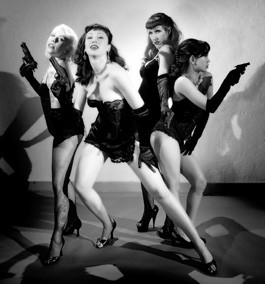
Over in Point Reyes there’s Peppermint Twisted , a holiday cabaret party and burlesque show with gal-pals Miss Coconuts, Bombshell Betty and Pinky Pfeiff-a-dero (above) delivering “mild irreverence and unapologetic sentimentality” through music, va-va-voom clown balloons and good ol’ tease-o-rama. Juxtaposed against the rough, splintered yokes and rusted stirrups spiked against the walls, a lil’ bit of skin should be lookin’ especially soft. (Friday, Dec. 7, at the Old Western Saloon, 11201 Hwy. 1, Point Reyes Station. 9pm. $6.) . . .

The Fab Four get a thorough croaking-over courtesy of your own angelic throat at the Beatles Sing-Along with Mr. Music and friends, who ask attendees to dress “as your favorite Beatles character”—Lovely Rita G&C Meter Beater, perchance? (Friday, Dec. 7, at Subud Hall, 234 Hutchins Ave., Sebastopol. 8pm. $10.) . . .

Crabalocker fishwives! Pornographic priestesses! Might as well syncopate it trio-style with Beatlejazz , who distill from the deep well of largely post- Revolver jams eloquent Keith Jarrett&–esque meditations. You’ve seen Across the Universe ? It’s like that, without the gaudy cheeriness. (Friday, Dec. 7, at the Ledson Lounge, 480 E. First St., Sonoma. 7pm. $25.) . . .

Time is tight when soul legend Booker T. Jones splays his frenzied fingers across the booming B-3 in Nicasio, and there’re about 5,000 worse ways to spend a Thursday night, ain’t there? (Dec. 6 at Rancho Nicasio, 1 Old Rancheria Road, Nicasio; dinner reservations required. $35.) . . .

The get-down rock ‘n’ roll of the Supersuckers steamrolls everything in its path on the way to Hollywood’s Viper Room, including just one shitkickin’ show in the Bay Area. (Dec. 11 at 19 Broadway Niteclub, 19 Broadway, Fairfax. 9:30pm. $18&–$20.) . . .

The Mystik Journeymen , no longer slangin’ tapes on street corners, drop some living-legend rhymes over early-MPC beats with Jesus-friendly rapper Pigeon John in P-town. (Saturday, Dec. 8, at the Phoenix Theater, 201 E. Washington St., Petaluma. 8pm. $17.) . . .

Balkans, unite! Greece and Albania, stand up and be honked at! Bellies, ukuleles and harps all get raucous when the Eastern-European flavors of the Brass Menazeri rollick into town. Didja miss ’em at the Glendi food fair? Didja miss ’em at San Francisco City Hall? Miss ’em no more, my friend, ’cause they’ll put those boogie shoes to fine use while things get chest-nutty around here these next couple weeks. (Saturday, Dec. 8, at the Sebastiani Theatre, 476 First St. E., Sonoma. 2pm. $10&–$17.)


High Tea

12.05.07

W estern Sonoma County residents may have noticed a new mural going up in the town of Sebastopol. Arched around the doorways of a warehouse off Highway 12—one of those slated for eventual tear-down and massive reconstruction, according to the controversial northeast plan for re-developing downtown Sebastopol—the newly added rainforest scene arches gracefully around the entrance to Guayakí Yerba Mate, which will soon boast the North Bay’s first exclusively maté bar. Yerba maté, a hot drink made from dried leaves and twigs of a holly plant native to subtropical South America, has a slight caffeine kick and is the preferred social beverage of that part of the world, kind of a natural Starbucks of the jungle.

Guayakí Yerba Mate, a company created by Alex Pryor and David Karr as their senior project at Cal Poly back in 1996, boasts organic, fair-trade, shade-grown yerba maté. CEO Chris Mann meets with me at the processing plant, which is located in the warehouse behind the planned maté bar, and gives me a tour that proves to be a lesson in history and horticulture as much as it is on the benefits of cultivating a taste for what many consider to be one of the healthiest teas on the market.

I’ve been a casual maté drinker for about 13 years, ever since a beloved roommate came back from a surf trip to Argentina with a maté habit so intense he never went anywhere without his gourd (the traditional drinking receptacle, often shared among friends), bombilla (a metal straw also traditional to the drink), a bag of maté and a thermos of hot water. His influence has never worn off, though I usually just brew mine like the American isolationist I am—alone and in a cup.

As Mann and I stroll though the Guayakí compound, past the tasting room and down into the storage facility that houses, literally, tons of organic maté, he enlightens me regarding the history of maté and why, by buying Guayakí products, I am not just keeping myself off coffee for one more day but am inadvertently participating in the successful reforestation of Argentina, Brazil and Paraguay.

Yerba maté is harvested from a relatively small tree by rainforest standards. The maté tree reaches only 70 to 80 feet and grows under the canopy of the rainforest. This is what it means to be “shade-grown.” Mann tells me that in South America, where maté is considered a staple of daily life, there are over 400 different brands of it, and almost all is sun-grown. When the Jesuits came to Paraguay, they took it upon themselves to oversee all maté production and use it for commerce on their own behalf. Rainforests were clear-cut, and maté was grown in the sun. The land could now be fenced, production increased and the workers properly oppressed.

The time of the Jesuits may have passed, but because more and more farmers are turning out of desperation to clear-cutting their land to run cattle or grow soy, Guayakí has stepped in to provide a vital economic driver for native farmers and indigenous peoples to use in returning to shade-grown maté for commerce. Cofounder Alex Pryor, a native of Argentina, has returned to South America, where he is able to monitor their projects directly and ensure that rather than just “giving and leaving” as Mann puts it, Guayakí is able to make a lasting difference in both the quality of the lives of the indigenous peoples and the preservation of the continent’s most precious world resource, the rainforests.

I’ve been aware of yerba maté’s medicinal and energizing properties for a long time, but until now I never stopped to consider the difference that I, as a consumer, could make by such a seemingly simple decision as what tea to drink. According to Guayakí statistics, if I drink two cups of its maté per day, I will be protecting an acre of rainforest for a year. This is a good feeling, very much in contrast with my usual seemingly inevitable participation in the earth’s decay.

I leave the Guayakí warehouse pleased that I have managed, by chance and circumstance, to stumble on to such a sustainable habit so many years ago, when I would share a gourd of maté with my roommate with no thought of rainforests or carbon footprints, simply enjoying the camaraderie of the moment.

For more information or to order some Guayakí Yerba Mate, go to www.Guayakí.com.


Grown-Up Alert!

0

12.05.07

North Bay movie-lovers, long-time fans of the great Frank Langella (above) and everyone following the career of the actress who played Claire Fisher in Six Feet Under (the marvelous Lauren Ambrose), will get a chance to see what happens when two great actors share screen time in an intelligent art-house drama about love, loss and literature. Writer-director Andrew Wagner will be in Wine Country—downtown Healdsburg, to be exact—on Wednesday, Dec. 12, for a very special Hollywood-style cocktail party, movie screening and after-show dinner, served up by the same folks who bring us the annual Sonoma Valley Film Festival. The film, Starting Out in the Evening, has been praised by Rolling Stone as sure-fire Oscar bait for Langella and Ambrose. The story follows a fading novelist whose grief after the death of his wife is complicated, and somewhat assuaged, by the appearance of a luminous young grad student, eager for an interview with a literary giant. Hey, it could happen. The pre-screening reception (starting at 5pm) and the after-show dinner will both be held at the beautiful Hotel Healdsburg, with the screening of the movie scheduled to begin at 6:30pm at the Raven Film Center. The dinner begins at 9pm. Cost for the reception and screening is $25, with the dinner (featuring gourmet food and great wines) is priced at $150, which includes the reception and movie. For details, call 707.933.2601.


New and upcoming film releases.

Browse all movie reviews.

Wedding Crasher

12.05.07

F unny. Critics endorse the tough, realistic qualities of the physical violence in No Country for Old Men, but they turn pale-faced at the emotional violence of Margot at the Wedding . “Why should we spend time in the company of such horrible people?” asked writers who had happily watched Chigurh the killer knock in all those skulls.

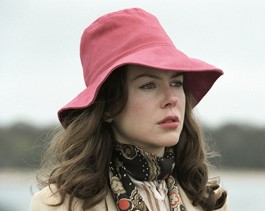
The titular antiheroine of Margot at the Wedding is the kind of drastically bad mother we have all encountered somewhere along the line. During an overcast spring weekend somewhere near Long Island, Margot (Nicole Kidman) and her sister, Pauline (Jennifer Jason Leigh), wash, fold and iron several years’ worth of dirty laundry.

It’s wedding bells for Pauline, who is getting hitched in her backyard, partially for money reasons. The groom, Malcolm (Jack Black), has neither a job nor ambition. A former minor-league rock musician, Malcolm is now more interested in writing beautifully crafted letters to the editors of magazines. The early spring weather isn’t too good. Neither is the neighborhood. The neighbors are truculent, trash-throwing rednecks with violent tempers.

Margot and her young son, Claude (Zane Pais), arrive from Manhattan for the weekend. Margot is a published short-story writer. Her slightly exalted status in the world masks a violent inability to cope.

Over the course of the weekend, Margot’s soon-to-be ex-husband (John Turturro) drops in for a visit, and she gives a public reading at a bookstore and has a fine public meltdown. And eventually, Margot renders her judgment on Malcolm: he’s completely unsuited for her sister.

Coincidentally, the plot resembles that of Knocked Up, complete with vindictive sister-in-law, pregnant bride and slacker husband-to-be. But where Knocked Up went for easy, TV-level laughs, Margot‘s director and writer Noah Baumbach worms his way into the motives of all the wedding guests.

Baumbach’s method is a Nouvelle Vague—style of carving scenes down to a series of abrupt sharp moments. This constant whittling causes confusion. The too-dim, natural-light photography leaves some of the faces shadowed, and the minor characters never really pop out.

Dark as the screen is, Baumbach does a good job of illuminating the kind of self-pity that leads to impotence. And he’s made a prime comedy about violently clueless sophisticates. Why should we pay attention to them? Well, they’re funny, for one thing, even if their behavior is so bad.

David Denby in The New Yorker magazine castigates Baumbach for not letting us know whether Margot has merit as a writer or not. (Of course she has merit, David, she’s been published in The New Yorker.) In Margot’s view, her status excuses her trespasses, and she has as much respect for boundaries as a coyote. I admire Baumbach for taking it off the table; it’s immaterial whether Margot is a genius or just another modish, small-fry literati.

There is a clue, though; if Margot really knew herself, she wouldn’t be so easily unmasked. All it takes to melt her down is a little simple literary analysis by a fellow writer. (The more openly arrogant novelist is played by Ciaran Hinds.) As in The Squid and the Whale, Baumbach excels at depicting the hostilities of the literary world, the rivalries, snobberies and scrabbling for small handholds of status.

Baumbach takes two actresses who pride themselves on ominousness, rigor and tension, and he gives them loose, fresh roles. Kidman and Leigh enjoy themselves for a change. It’s been a while since we’ve seen Leigh’s witchy grin, widening as her Pauline figures out a good way to pay her sister back for her snobbery.

It’s been longer since we’ve seen Kidman tempering her uncanniness with a dry tomboy humor. I think this is Kidman’s most thoroughly watchable performance, even if the role of Margot won’t be a popular part. Audiences rarely forgive a mother who gives her child a hard time. And the son she alternately kisses and rakes is a very touching and vulnerable kid.

Margot at the Wedding is a harsh movie, more urgent and more wicked than Baumbach’s last. The final 15 minutes seem out of control, even badly cut, as the group leaves the island and gets caught up on the mainland. However, the shrewd finale has it both ways without being spineless. Margot’s clingy maternal side is just as bad as her startlingly narcissistic side.

And there’s a real victory of love and forgiveness in this picture—a small sweet triumph salted by Black’s almost Lucille Ball—worthy scene of comic weeping. It’s a humane movie after all. Baumbach favors emotional breakthroughs over the brutal honesty and clarity Margot thinks that she alone possesses.

‘Margot at the Wedding’ opens at select North Bay theaters on Friday, Dec. 7.


New and upcoming film releases.

Browse all movie reviews.

Unbound Sound

0

12.05.07


T he rumbling shakes the floor and the sneakers of 30 or so people taking in the vibrations. The flyers said this band was from Portland, but the bizarre, rambling singer, at the end of a freeform spoken-word poem, announces that they’re from Colorado. They sound like they’re from outer space.

This is what it’s come to: shows in old sheds like this one. Shows in barns, in living rooms, in garages, in abandoned buildings and on empty docks. This is the thriving underground in an age when legitimate clubs seem to get shut down left and right, when the sanctity of Wine Country supercedes the communal nourishment of its offspring. The cops are sure to come and break this night up—we’re only on band number three of a six-band bill here—but no one seems concerned. What do you say to the cops, anyway?

The band’s plunged into a groove of organ-pedal bass, growling fuzz and Thelonious Monk&–like piano soloing. Finally, heads are nodding. You get the feeling that they’re making it up on the spot, whatever “it” is. You’re certainly not gonna hear it on the latest iPod commercial, and you may never hear anything like it again, unless you move to Portland or Colorado or outer space.

This morning, we all read the front-page news about another nightclub faced with closure by the city of Santa Rosa. Too many problems, the city says. The club promises to water down its drinks and quit playing hyphy, and as pathetic as that kind of pleading sounds, it probably won’t help anyway.

But for years, the story’s been the same: the most creative music bubbles in young circles, and young circles will always build a new boat for themselves when the helm is taken away. It’s an inspiration to see resourceful action like tonight, and with so much processed, auto-tuned garbage passed off as popular music these days, this immediate, spontaneous music is a breath of fresh air.

I almost lived in this house 10 years ago, looking for a place with a girlfriend, but it was a couple hundred bucks out of our range. We wound up living in the country instead, which was heaven, and then the suburbs, which was hell enough to kill us off for good. But I always remembered this address as the house that could have been. I’d like to think that she’d be excited about tonight. About jazz-funk bands playing in what should have been our garage back when rent was still cheap.

The band’s done and there’s an electric milling about. People talk in excited tones about Charles Mingus, Sonny Sharrock and Gunther Schuller. Somehow, I get cornered into a lunatic conversation about underground L.A. hip-hop that starts with the Freestyle Fellowship and spirals into some other galaxy. Turns out the band was from Portland after all—they’re called Watery Graves. I buy a couple records from their stand, a table with LPs and cassettes. No CDs—a sign of the times.

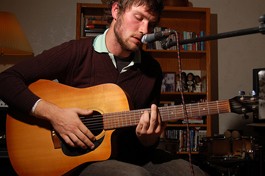
Later: Nik Proctor and Guy Henry are playing, passing a red Rickenbacker back and forth, swapping songs for the late-night faithful. Ever know someone for years and never know just how unique and talented they are? These songs, they’re unlike anything I’ve ever heard—fingerpicked in upside-down patterns, strangely phrased and beautifully eerie. Nik sings a surreal song about corn dogs, hospital genocide, supermarket aisles and getting laid, and Guy slyly counters with a pensive number about bacon, Sasquatch, drugs and clogged veins—touché.

Back and forth, each song more magnetizing than the last, people screaming their heads off after each quiet little tune like they’re at a Van Halen concert. Guy’s mom is even here from Minnesota, probably totally confused and maybe, hopefully, a little bit proud. It wouldn’t be until the next day I’d find out why she was in town.

Guy Henry, spending his wedding night in a cold, dark shed, playing music to the wife he married just that same morning—now that’s awesome.

The show’s over too soon, and my fingers freeze as I ride my bike home, but my heart is warmed. Nights like these keep ever-looming bitterness at bay, reminding me that even in Santa Rosa, there’s always some fresh, captivating music bubbling somewhere beneath the surface. You just gotta catch it while you can. Like the girl who lives there told me tonight: the backyard shed is slated to become a five-story luxury condo building sometime next year.

The Watery Graves are at www.marriagerecs.com. Nik Proctor can be found at www.myspace.com/eucalypocalypse. Guy Henry can be found at www.myspace.com/lowfiveguyhenry.


Hopmonk Update

12.05.07W hen Dean Biersch, cofounder of the Gordon Biersch brewery chain, took over the Sebastopol Brewing Co. in downtown Sebastopol last month, he hinted at a neighborhood friendly operation with his new Hopmonk Tavern.It looks like he's delivering.The upscale, North Bay—friendly bar and bistro opens this spring, featuring handcrafted beers made by small, independent and traditional brewers. Sure, some...

Let’s Rock

music & nightlife | By...

Dickens’ Diction

12.05I n most stage adaptations of Charles Dickens' Christmas Carol , the emphasis is placed squarely on the ghost-story plot, the beloved waist-coated characters and often, as in ACT's famous annual production in San Francisco, the tricky special effects. In the adaptation staged each holiday at the Sonoma County Repertory Theater, with a script by Preston Lane and Jonathan...

Wine and Cheese 101

12.05.07S uccessful wine and cheese pairing comes down to a slippery combination of science, art, luck and the personality and physiology of the taster. But party planners needn't freak, because the whole tradition is based on the fact that wine and cheese simply taste good together. That's because there are some common laws at work underneath it all. Acid...

Full Speed Ahead

12.05.07 H oly bejeezus, Matilda! Strap on those boogie shoes and get outta the house, 'cause it's a helluva weekend, this one. How to choose? Flip a candy cane . . . Over in Point Reyes there's Peppermint Twisted , a holiday cabaret party and burlesque show with gal-pals Miss Coconuts, Bombshell Betty and Pinky Pfeiff-a-dero (above) delivering...

High Tea

12.05.07 W estern Sonoma County residents may have noticed a new mural going up in the town of Sebastopol. Arched around the doorways of a warehouse off Highway 12—one of those slated for eventual tear-down and massive reconstruction, according to the controversial northeast plan for re-developing downtown Sebastopol—the newly added rainforest scene arches gracefully around the entrance to Guayakí Yerba...

Grown-Up Alert!

12.05.07North Bay movie-lovers, long-time fans of the great Frank Langella (above) and everyone following the career of the actress who played Claire Fisher in Six Feet Under (the marvelous Lauren Ambrose), will get a chance to see what happens when two great actors share screen time in an intelligent art-house drama about love, loss and literature. Writer-director Andrew Wagner...

Wedding Crasher

12.05.07F unny. Critics endorse the tough, realistic qualities of the physical violence in No Country for Old Men, but they turn pale-faced at the emotional violence of Margot at the Wedding . "Why should we spend time in the company of such horrible people?" asked writers who had happily watched Chigurh the killer knock in all those skulls. The...

Unbound Sound

12.05.07T he rumbling shakes the floor and the sneakers of 30 or so people taking in the vibrations. The flyers said this band was from Portland, but the bizarre, rambling singer, at the end of a freeform spoken-word poem, announces that they're from Colorado. They sound like they're from outer space.This is what it's come to: shows in old...
11,084FansLike
4,446FollowersFollow
6,928FollowersFollow