The Show Won’t Go On

0

02.27.08

Under the big top, trapeze artists soar through the air, tightrope walkers defy gravity and motorcyclists speed upside down inside the steel-cage Globe of Death. Spotlights, wires and posts, strung together for children of all ages fueled on a two-hour diet of cracked peanuts and cotton candy, fill the enormous tent while clowns and gymnasts wow the crowd. And under the big top, workers assemble and reassemble the entire circus from scratch every few days, bringing the show to a new town.

But this year, the only thing under the big top is a patch of weeds. The once-towering Circus Chimera tent sits lumped in a bundle in James Judkins’ backyard, a lonesome reminder of the stalled legislation needed to get the circus back on the road. The 2008 season for Circus Chimera, Judkins hates to say, has been cancelled.

Along with carnival companies that provide midways to county and state fairs across America, every traveling circus in the country dependent on foreign performers has been disabled by political grandstanding during a hot-button immigration era. Yet none of their performers or laborers are actually immigrating. This is sad news for North Bay circus lovers among the hundreds of towns where Circus Chimera has set up tent and distributed popular two-for-one admission coupons each year. A traveling circus with no animals, Circus Chimera’s elaborate productions consistently combine old-fashioned show business spirit with high-kicking world-class talent.

Like many other circuses and carnivals across the country, Circus Chimera is composed of seasonal performers and workers from around the world, and Judkins says that he has always made sure that everyone in the show comes to the United States with legal work visas. Unfortunately, a key provision for returning workers expired last year, and not one of his regular employees was able to acquire the usual temporary visa to work this year’s circus. As in years past, the provision came up for extension, but Congress, facing a full table right before the Christmas break, failed to act, allowing the provision—and the circus—to fade away.

“The people in the show are my family,” Judkins said last week, speaking from his home in Texas. “It’s put me in a serious depression for quite a while. I’m working on other things, trying to get reorganized for the future, but it’s hurt a lot.”

A staffer at Helm & Sons, the organization that supplies the carnival midway for the Sonoma County Fair each summer exclaimed bluntly, “It’s killing us!” before promising a return interview call that did not arrive, despite repeated prompts, by press time.

For his part, Judkins is currently focused on meeting with lawmakers and getting legislation underway, but it’s apparent that the big top is in his blood; he’ll scramble in any way possible to keep the show on the road. He’s considered scaling back his circus, perhaps buying a smaller tent, maybe visiting fewer towns. It’s not that the crowds aren’t there, he says; it’s that the nature of circus work simply isn’t attractive anymore to an American workforce.

“I ask people,” he says, “if they’d want to travel on the road for eight or nine months out of the year, moving to a different town three times a week.” So far he’s found no takers. Judkins himself joined the circus 33 years ago for a summer job in college, but notes that times have changed. “Now, college students, they do internships, they take summer classes, everybody’s so busy. Nobody has the time or the energy to do something like this.”

Since its inception in 1990, the H2-B visa program has allowed for a maximum of 66,000 temporary work visas to be granted each year to seasonal workers from other countries. Over the years, this cap has never risen proportionately with a growing economy. Demand for the temporary visas increased annually until 2003 when the cap was reached for the first time, putting many American businesses in peril.

Lawmakers swiftly scrambled to provide a way for seasonal workers to continue to return legally.

Three years ago, Sen. Barbara Mikulski, D-Md., and Rep. Wayne T. Gilchrest, R-Md., introduced the H2-B return worker exemption, a provision stating that temporary workers who had previously worked legally in the United States—paying taxes, abiding all laws and returning home—would be exempt from the national cap of just 66,000 visas. Renewed in 2006, the bipartisan provision was widely utilized until September of last year, when it expired and left many businesses strapped for employment.

What happened last year is that instead of another simple renewal, the return worker exemption got swallowed by the Comprehensive Immigration Reform Act. When that failed, the return worker exemption was then attached to a Senate appropriations bill, but it was stripped in a conference committee at the behest of the Congressional Hispanic Caucus, strange as that may seem. Naturally, the CHC wants the ever-popular return worker exemption renewed—but only if it’s attached to legislation sweetening the pot of its larger goals for immigration.

“Basically they’re holding us, and everybody else, hostage for Comprehensive Immigration Reform,” Judkins says, “for the ‘greater good,’ as they say. Which, to me, makes absolutely no sense. Businesses are closing down and letting American workers go, at the same time Congress is debating an economic stimulus package! It just doesn’t make any sense at all.”

Meanwhile, approximately 50,000 workers who’ve previously taken advantage of the return worker exemption are out of work. Circuses and carnivals in particular face a crucial timing issue in that applications for the remaining visas cannot be filed until 120 days before the work starts. For the circus season, this means Oct. 1—and by that time, all of the visas will have been snatched up. (Having a circus in December is highly impractical, Judkins says, due to weather and attendance issues.)

Circus Chimera’s seasonal employees, many of whom have been with the circus for nearly a decade, have since struggled to re-enter a tight labor market in Mexico. With an unemployment rate near 50 percent and the pay topping out at $100 a week, it’s a far cry from the $600-$700 per week plus meals and lodging that the circus provided.

“They’re just sort of bewildered, too,” Judkins says, “You tell ’em, ‘Let’s do it the right way. Don’t come across illegally. Do it right, we’ll get your visas.’ And all of a sudden, this year, they can’t grasp why, when they’ve done everything right, they can’t come back.” Judkins says that some of his best circus workers, with whom he stays in constant contact, are picking oranges or working at a bank for $80 a week. One of his men has even taken to selling fish door-to-door.

Judkins has traveled to Washington, D.C., four times to meet with lawmakers, and they all say the same thing: they’d vote to extend the return worker exemption in a heartbeat. After all, it’s not just the circus and carnival industries that are hurting; the restaurant, landscaping, agricultural and hospitality industries have relied overwhelmingly on the return worker exemption as well. “We couldn’t find any congressman or any senator,” Judkins reports, “who said it was a bad program, that they wouldn’t vote for it.”

But political bickering surrounding the hot button immigration issue has stalled the process. Nancy Pelosi, honoring the Congressional Hispanic Caucus’ wishes, wants the return worker exemption folded into yet another bid for Comprehensive Immigration Reform. (Pelosi’s office did not return repeated calls for comment on this story.) When that will finally pass is anyone’s guess, and meanwhile Judkins’ tent sits rumpled and unused, denied its reason for existence: keeping a great American entertainment tradition alive.

More than anything, Judkins wants to see Circus Chimera and others like it back on the road. “I just love it,” he says. “I like to travel, I like to see the crowds. You get a great deal of joy out of it. When people come out to see the show and you hear ’em clapping and stomping their feet and having a good time, you feel like you’re doing a good thing.”


Cream of the Crap

0

02.27.08

T he full-bodied tone, the rattle of the large reed, the layout of the keys—these and so many other key ingredients in John Coltrane’s forcefully expressive quality were inextricably tied to the tenor saxophone. So why, then, would anyone try to adapt Coltrane’s music to a different format—especially one as staid as a string quartet?

For Coltrane fans, it’s pretty funny to hear the Turtle Island String Quartet’s A Love Supreme: The Legacy of John Coltrane, in the same way it was maybe funny to hear Strung Out on OK Computer: The String Quartet Tribute to Radiohead seven years ago, and in the same way that it’s not funny at all to pore through the outright mercenary and novelty glut of string-quartet tributes recorded since then. The guilt-by-association factor alone should steer anyone away: when even low-rung losers like Hawthorne Heights, Jessica Simpson and Barry Manilow have their own string quartet tributes, throwing Coltrane in the mix is not just bad timing, it’s contextually insulting.

Don’t tell that to the members of the Turtle Island String Quartet, who undeniably, sincerely adore Coltrane’s music. They love it so much that they’ve wrested the great accomplishment of transcribing his searing solos and replicating them on the violin. But don’t they know that flat-out imitation goes against everything Coltrane’s musical approach stood for?

The disc gets off to a nice start by highlighting the complex chord structure of Blue Train’s “Moments Notice” in a lively arrangement, but it goes downhill from there. “La Danse du Bonheur,” a wanky John McLaughlin thing from 1976 in no way affiliated with Coltrane’s career, leads next into “Model Trane,” the Turtle Island String Quartet’s own homage to Coltrane, which is really just a tissue-thin rip-off of Coltrane’s own “Impressions.”

Where are the Coltrane compositions on this disc? Not in the played-to-death “My Favorite Things” or the Stanley Clarke tribute “Song to John.” Not in Thelonious Monk’s “Round Midnight,” which, sure, Coltrane once played, but so has everyone else in the world. The centerpiece is Coltrane’s “A Love Supreme” itself, but hearing the Turtle Island String Quartet’s attempt at it is like watching someone play Hamlet with a fake Danish accent: it’s excruciating specifically because of the sincerity of intent.

Nevertheless, A Love Supreme: The Legacy of John Coltrane has risen to the cream of the crap of string quartet tributes. Before her death, Alice Coltrane lauded this project, and it won a Grammy Award last month for Best Classical Crossover Album. Find out what the fuss is all about when the Turtle Island String Quartet perform Friday, Feb. 29, at the Napa Valley Opera House, 1030 Main St., Napa. 8pm. $35. 707.226.7372.


The Mercury Myth?

0

02.27.08

Mercury is a poison, but how toxic is it really when ingested in varying quantities through seafood? Voices in the scientific community offer conflicting answers. Many authorities assert that the metal has been associated with memory loss, fatigue, numbness in the extremities, blindness and depression. Others suggest that reported negative health effects blamed on mercury are false or imagined, and a developing theory even suggests that simultaneous consumption of selenium will protect the body and brain against any negative effects of the infamous heavy metal.

Dr. Philip Davidson of the University of Rochester has closely observed children in the Seychelles Islands since 1990 in a generational study of those reared on a fish-heavy diet. Davidson says that mercury contamination and mercury poisoning are very different things. He asserts that only two cases of severe mercury poisoning caused by fish consumption have ever occurred, each in Japan in the 1950s after local industries dumped huge amounts of highly contaminated refuse into the ocean.

“Generally, the levels of mercury found in fish are way, way below what are needed to poison a person,” he says. “In the Seychelles, we’ve found no consistent adverse effects in the children we’ve studied in a period of almost 20 years.”

Dr. Nicholas Ralston of the University of North Dakota’s Energy and Environmental Research Center (EERC) supports a theory that suggests that sufficient dietary selenium will counter potential threats of ingested mercury. Through experimentation on nonhuman subjects, Ralston has found that selenium molecules bind tightly to mercury within the body, rendering the toxic heavy metal inert and harmless. Ralston believes that the public has not caught on due to a general misconception about selenium.

“People aren’t excited about this because they often believe that selenium itself is a toxin,” he says. “It’s actually a required nutrient for neural development, and if this was better understood I think people would be more enthusiastic about its role in protecting against mercury.”

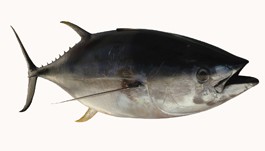
Selenium naturally occurs in high densities in such ocean fish as tuna, salmon, swordfish and many others. Selenium facilitates brain development, strengthens the immune system and detoxifies free radicals in the body. But actually barring mercury from imparting any damage to the body and brain is the most dramatic, if debated, attribute of this element. If real, this could reshape how we’ve been trained to think about such fish as tuna and swordfish, notorious for their high mercury levels.

In May 2006, Frontier GeoSciences Inc., an independent laboratory in Seattle, tested 142 samples of 18 species of fish. Ninety-seven percent of the individual samples contained far more selenium than mercury; even tuna and swordfish were found to carry as much as 25 times more selenium than mercury, a ratio exceedingly sufficient for safeguarding against mercury poisoning according to Dr. Ralston.

But not all experts trust his theory. Kimberly Warner, a marine-pollution scientist with the nonprofit environmental advocacy group Oceana, says that multiple published studies demonstrate negative effects on the human body due to mercury consumption. At the University of British Columbia, Warner says, professor of pediatrics Dr. Sheila Innis has reported an influx in various physical symptoms among Asian Canadians, a large fish-eating population, serious enough to send concerned parents to hospitals with their affected kids.

Warner also points toward a 2006 paper authored by M. Saldana published in the British Journal of Ophthalmology that details the case of an individual who nearly went blind while indulging regularly in mercury-laden Caribbean red snapper. Those on the other side of the argument can just as readily rattle off the names and affiliations of various studies which back their own claim that mercury is not the devil we have come to think it is. But Jackie Savitz, pollution campaign director for Oceana, is immediately skeptical of researchers who discount mercury as a danger to human health.

“When I hear people say that mercury is not as damaging as once thought, then I begin to wonder where their funding is coming from,” she says. “If you follow the money, you will find the tuna industry behind a lot of studies.”

For example, in October of 2005, serious questions arose about the validity of a study released by the Harvard Center for Risk Analysis. That particular paper stated that the benefits of eating fish far outweigh any risks presented by mercury. The fishy part? Harvard accepted approximately $500,000 in research funding from the National Fisheries Institute and the United States Tuna Foundation.

The University of North Dakota’s EERC also receives a portion of its selenium-mercury research funding from the tuna industry. Annual grants of $200,000 from the EPA keep Ralston’s project afloat, but the Tuna Foundation caught wind of the good news emanating from his laboratory after Ralston’s first year of research. The foundation promptly began donating, as did the U.S. Department of Energy, with each offering $100,000 over a three-year period.

“It doesn’t mean that anyone’s lying,” Savitz concedes. “It just raises a red flag, since he’s putting forth a serious question that is totally inconsistent with the consensus in the scientific community. It doesn’t mean he’s spinning the science, but it could suggest that the results are driven to some degree by the funding.”

Ralston defends the validity of his research. “Nobody’s allowed to have a say in our results and findings,” he says. “People who start making accusations about this kind of thing just don’t understand the basic respect that most scientists have toward scientific integrity.”

He also insists that the idea of mercury “poisoning” is far more conceptual than factual.

“Where all this fear has come from, it’s hard to say. Except in a few extreme cases, serious mercury poisoning has never even happened.”

Quick dining snapshots by Bohemian staffers.

Winery news and reviews.

Food-related comings and goings, openings and closings, and other essays for those who love the kitchen and what it produces.

Recipes for food that you can actually make.

Wine Tasting Room of the Week

0


T he past few years have seen much excitement about the 1976 “Judgment of Paris,” from a 30th-anniversary rematch to a film treatment of the celebrated competition in which French judges deemed several California wines better than the best of France. Lesser known is a 2007 competition in which Napa’s Rocca Vineyard’s 2002 Cabernet Sauvignon crushed the cream of California Cabs in France. Call it “the judgment of Bordeaux,” 12 ultra-fine (unlike damn-fine or even smokin’ hot, ultra-fine is an official category) Cabernets and Bordeaux-style blends were evaluated in a blind tasting by an orderly mob of 100 European enophiles. (The California Vintner’s Club named Rocca’s 2004 Cab “the best of the best” in a similar tasting.) What is particularly entertaining is that this upstart wine showed up area heavyweights with demand-driven prices; at $65, it’s a comparative value.

A native Santa Rosan, Dr. Mary Rocca took a circuitous route over the hill by way of the East Coast where she founded a dentistry practice and later a gourmet market in Pt. Reyes before purchasing vineyards. She releases vintages with the help of longtime consulting winemaker Celia Masyczek, making Rocca Vineyards one of few woman-owned and -run wineries.

The tasting salon occupies a large space in a historic stone building on Main Street, where visitors can be seated and enjoy the generous pours at leisure. What with the Oxbow Market and a gaggle of new tasting rooms in Napa, it’s now possible to spend an entire day in this town. I had to ask: How can a 2,000-case winery afford such real estate in a revitalized gourmet center? Rocca’s husband, Dr. Grigsby, shares the building for his practice in pain management. It would be entirely reckless to muse that they are therefore in a similar business—but Rocca does craft the kind of wine that softens the edges of life and brightens the rainy afternoons.

Dressed up in wrangler dude duds, the doctor makes an appearance on the label of Rocca’s 2005 Bad Boy Red ($29), a big and dry wine that opens with toasted graham cracker, with black fruit and baking chocolate on the palate. Rocca’s 2003 Syrah ($42) is inky to nose and eye, with aromas of fruitcake and charred oak, while the 2004 Syrah ($45) offers woodsy spice, riparian scents and hints of leather and Virginia tobacco—a Russian River Pinot on overdrive? A purple floral bouquet wafts from a 2004 Cabernet Sauvignon ($65), leading to leathery dark fruit and a sweet finish of blackberry. When I tasted this wine earlier with a friend who has been until recently a confirmed Cab hater, she was thoroughly won over by this wine’s warmth, silky texture and dark clove spice—for me, as good an endorsement as any by a panel of 100 experts.

Rocca Wine Tasting Salon, 1130 Main St., Napa. Open Monday–Saturday, 1pm to 6pm. $10 tasting fee. 707.257.8467.


View All

Cheese World

02.27.08

Why, we scratched, are we so blessed in the North Bay to have two fairly major cheese events slated for the same bleary first week of March? We fancied that it had something to do with the annual rhythm of the cheese maker’s year: new spring grasses, calving animals—the usual verdant agrarian fantasy. In fact, according to Sheana Davis, founder of the Sonoma Valley Cheese Conference , now in its sixth year, it has to do with winter’s drop in tourism and the opportunity that allows something new and different to help fill restaurants and hotel beds. OK, so not a verdant agrarian fantasy—but who really cares? This is cheese we’re talking about. And indeed, a full week of cheese instruction and eating is our good fortune, beginning with Davis’ Sonoma conference March 4&–6 and continuing with the second annual Artisan Cheese Festival in Petaluma March 7&–10.

Focused on providers, restaurateurs and on the business of cheese-mongering, the Sonoma Valley Cheese Conference is composed of three daylong seminars on the marketing, storage, preparation, purchasing and importance of community connections for those in the businesses of purveying or producing artisanal cheeses. Each day ends with a tasting reception featuring different wine and beer makers, as well as cheeses from around the world. “Sixteen years ago, when I first became a chef,” Davis says, “everyone [in the restaurant world] knew their beef producer, their poultry producer, their fruit and vegetable producers—but no one knew their cheese producers. I decided to go out and meet them.”

For its part, the Artisan Cheese Festival is aimed at the consumer. It features an opening reception and two days of educational tastings and seminars, a cheese marketplace and a gala dinner. Field trips to local creameries are also scheduled.

Next year, Davis promises that the two events will be a full month apart; as it stands, local cheese makers can’t attend the training she offers because they have to be selling at the Petaluma event. “A small business owner can’t be away for seven days,” she says.

Saturday, March 8, is the big day in Petaluma, focusing on the educational aspects of producing delicious cheeses made by local dairy and farming families, as well as how the consumer can help support and sustain the artisan communities who farm on protected agricultural lands.

“Our mission is to support the artisan cheese community,” says Lynne Devereux, the festival’s associate director. “We’re here to highlight what’s in our own backyard.”

To learn more about the Sonoma Valley Cheese Conference, go to www.sheanadavis.com; for details on the Artisan Cheese Festival, go to [ http://www.artisancheesefestival.com ]www.artisancheesefestival.com.

Quick dining snapshots by Bohemian staffers.

Winery news and reviews.

Food-related comings and goings, openings and closings, and other essays for those who love the kitchen and what it produces.

Recipes for food that you can actually make.

Vaginals in the Crux Basement

I’ve had “For Reverend Green” by Animal Collective stuck in my head all day, and it wasn’t until I got off work and started pedaling towards the Crux House that I figured out why I like that song so much. It’s essentially a bunch of totally strange, disparate sonic elements, but they’ve been identified and recast as new ingredients of a cohesive composition with structure, melody, and form. It combines just the right amount of adventure in creating a familiar end result, which is how all good songs that get stuck in your head should be.
I was still thinking about this when I made my way down to the basement at the Crux House tonight to watch a band from San Diego, whom I knew nothing about, called Vaginals. Three girls, one guy, and in devout subscription to the hipster code, no “the.”
The band started playing, and I was immediately intrigued at how off the wall they were. Weird singing! Discordant guitar solos! Everyone playing unusual instruments in different keys!
But as their set plodded on, the potential faded along with any initial thrill. Vaginals seem to view adventure as both the means and the end, with no solidified result other than ingratiation. The totally strange, disparate sonic elements were all there—lots of cool shit like delayed vocals, thumb piano, modified synthesizer, harmonica, cello, maracas, haphazardly-played drums—but none of them ever came together to resemble what’s commonly referred to as a song.
Okay, okay, there were two things that sounded like songs. One of them started with the line “I’m not waiting around for your review” (which I hope is actually the case, because they’re not likely to appreciate this one very much) and ended with the hopelessly steamrolled-into-the-ground doll reference: “I’m not one of those perfect Barbie girls.” The other one rhymed “Slim” with “Jim” and “Gin” and “Him” over and over again in a screeching fake Southern accent. You get the picture.
Near the end, during a Residents cover, just for a quick second, I saw their singer crack a rare smile, and it was then that I realized what had been missing. Where was the fun?! It’s fine to be art-school charlatans who make crappy noise that makes no sense, but damn, at least have some fun while you’re doing it. Realistically, that’s the only way anyone’s gonna take you seriously, unless it’s 1965 and you’re John Tchicai.

Becoming Independent takes over the A Street Gallery

0

It’s official. Beginning March 1, Becoming Independent, the nonprofit that serves some 1,110 developmentally disabled adults in the North Bay, is the proud new owner of what has been the A Street Gallery in Santa Rosa. A Street owner, artist Andrea Hibbard, has run her innovative gallery for a miraculous eight years and is ready to do something for herself for a change. “The thought was that I could retire and go back to my art studio and do some traveling and I wanted to take the momentum that we built here and shift it to something that was really important to me,” Hibbard says. “This will be a fusion gallery of artists in the main community coupled with artists in the mainstream working together.”

A Street has long made it a tradition to host an annual exhibit by the BI artists, who have an extensive art facility at the nonprofit’s home campus and an innovative Art Works program there that Hibbard helped to launch and which is coordinated by former Arts Council executive director Barbara Harris. Hibbard feels assured that this will be a postive step for the entire community. “I’ll still be on the advisory board and advise them on installation. We don’t want to drop our aesthetic ball. We will make sure that this continues to be a great space to visit.”“Outsider art,” that which is created by artists with no formal training, is enjoying a vogue. Viewers find themselves captivated by the honesty portrayed in work done by the developmentally disabled. The Sonoma Valley Museum of Art last year held a superb exhibit of such work. Having a permanent public outlet for BI is a dream come true for Hibbard. “We do a lot of editing in our lives,” she says. “They’re more able to be free of critics and desires—for critics, for fame, for attention—even thought the artists really enjoy when they sell. They’re not trapped. There is a kind of a freedom, and in some ways, they’re mentors.”

The gallery is yet unnamed and will open to the public on April 19. As for Hibbard, it’s the best of both worlds. “People think that it’s generous, but it’s really quite selfish,” she laughs happily. “This is the bomb for me.”

The Beach Boys, 1964

The year was 1964, back when Santa Rosa was a completely different town than the city we know it as today. The population: 35,000. Hardly a considerable tour stop for a group with a huge hit on the charts.
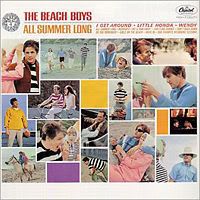
The Beach Boys’ All Summer Long had just been released in July, and its big hit, “I Get Around,” was lighting up Top 40 radio. So it was a pretty big deal when KPLS 1150 AM radio announced that the Beach Boys were coming to perform at the Veterans’ Memorial Building in Santa Rosa. Tickets, priced at $2.50, went on sale at the station’s office in Coddingtown, and word spread throughout Santa Rosa’s drive-ins and high schools like wildfire.
On the night of the show, the capacity crowd filed into the auditorium and sat politely in rows of folding chairs. The curtain opened, and the Beach Boys, clad in their trademark vertical-striped shirts, launched immediately into their current smash hit: “I Get Around.” The set list included “409,” “Fun Fun Fun,” “Surfer Girl,” “Be True To Your School,” and “Surfin’ Safari,” among others, and the audience stayed in their seats the whole time—a matter of personal dignity that Beatlemania would soon render obsolete.
Of course, there’s no reason why I should know this, except that my dad, who bought tickets numbered #0006 and #0007, remembers it like it was yesterday. After all, at age 12, it was his first concert. I suppose it was a pretty big deal for my grandpa, too, who was cool enough to change out of his mailman uniform after work and go with his kid to the rock ‘ roll show.
Fast-forward to 2008: The Wells Fargo Center Luther Burbank Center has booked the Beach Boys for August 2, and it’s being advertised as the Beach Boys’ “First Time in Santa Rosa.”
It’s a nice thought and all—and tickets, against all sensible odds, appear to be selling well—but I know a few people who grew up around here who’d have a pretty good case with which to argue the claim.

Healdsburg Jazz: Off the F’n Heez for ’08

1

The lineup for the 10th Annual Healdsburg Jazz Festival has just been announced, and it’s totally out of this world. Charlie Haden, Kenny Barron, and Joshua Redman together. The Bobby Hutcherson Quartet. Bennie Maupin and James Newton playing Eric Dolphy. The Cedar Walton Trio. Even Don Byron, in some configuration or another, makes an appearance.
It doesn’t stop there: also dropping in this year are Eddie Palmieri and Pete Escovedo, Fred Hersch and Kurt Elling, the Julian Lage Trio, the John Heard Trio, a Sunday morning concert of gospel spirituals, the awaited return of Marc Cantor’s killer jazz films, and an All-Star Alumni Band on the festival’s last day.
The looming question: who is the secret “beloved and internationally-acclaimed saxophonist” performing on May 31 whose name, for contractual reasons, cannot be unveiled until April 1?
(Pssst. . . be a flatfoot: Check SFJazz’s lineup and find the guy playing with Jason Moran, Eric Harland and Reuben Rogers, all of whom have been announced in Healdsburg without their headliner.)
So kudos to the Healdsburg Jazz Festival, and stay tuned to City Sound Inertia for further coverage.

Bad 13 Challenge Countdown

0

 The Bad 13 Challenge winner will, after WEEKS of anticipation, be announced in this Wednesday’s Bohemian. Yes, indeed: bigger than the Oscars.To hype things up, we’ll be posting the playlists of non-winners all week long. Everyone who sent us Bad 13 Challenge entry is, in their own way, a winner, and our hats go off to them all.Here’s the entry from Nielzine, a repeat offender who chipped in on the Hot 13 Challenge last year.Nielzine’s Bad 13 Anti-Metal I have spent two hours, one pack of Camel Lights, ten beers, two “magic” brownies and 30,000 brain cells on this Bad 13 tape.      I pride myself on many titles. One, of course, being “Bad.” I am here today to take the title of the worst Anti-Metal! I am the Lord of Bad Metal!          Be prepared to be electrified by my metal horns of pure doom. You will cry and scream for help. In the end your mind will sweat with remorse for daring to listen to these horrors I record for you. Please hold my cloak. They know my soul. I will be your guide. Hold tight my youth as we travel into the Anti-Metal abyss. Are you ready for the pain! I warned you! 

  1. Kiss the Bastard—Saints and Sinners
  2. Blueberry—Lita Ford
  3. Big Boys Don’t Cry—Extreme
  4. Colors—Saigon Kick
  5. Kiss It Goodbye—Helix
  6. She Wants More—Slaughter
  7. Just for You—Bango Tango

B-Side

  1. Hold the Dream—Firehouse
  2. Unskinny Bop—Poison
  3. Ceremony—The Cult
  4. Bang to the Bone—Every Mother’s Nightmare
  5. Word—Live Skull
  6. Since I Don’t Have You—Guns N’ Roses

 The sick part is I own all these tapes. Amazing what a dollar can buy. P.S.—Be glad I can’t record my albums! Nielzine’s Bad 13 entry had some bad songs (check out the lyrics to Lita Ford’s “Blueberry”, and everything single thing about Guns N’ Roses awful treatment of “Since I Don’t Have You”), yes, but overall it is way too fun to be a true contender. It was also our only cassette entry. “Unskinny Bop” is a total blast to sing karaoke to, by the way.

The Show Won’t Go On

02.27.08Under the big top, trapeze artists soar through the air, tightrope walkers defy gravity and motorcyclists speed upside down inside the steel-cage Globe of Death. Spotlights, wires and posts, strung together for children of all ages fueled on a two-hour diet of cracked peanuts and cotton candy, fill the enormous tent while clowns and gymnasts wow the crowd. And...

Cream of the Crap

02.27.08T he full-bodied tone, the rattle of the large reed, the layout of the keys—these and so many other key ingredients in John Coltrane's forcefully expressive quality were inextricably tied to the tenor saxophone. So why, then, would anyone try to adapt Coltrane's music to a different format—especially one as staid as a string quartet?For Coltrane fans, it's pretty...

The Mercury Myth?

02.27.08Mercury is a poison, but how toxic is it really when ingested in varying quantities through seafood? Voices in the scientific community offer conflicting answers. Many authorities assert that the metal has been associated with memory loss, fatigue, numbness in the extremities, blindness and depression. Others suggest that reported negative health effects blamed on mercury are false or imagined,...

Cheese World

02.27.08Why, we scratched, are we so blessed in the North Bay to have two fairly major cheese events slated for the same bleary first week of March? We fancied that it had something to do with the annual rhythm of the cheese maker's year: new spring grasses, calving animals—the usual verdant agrarian fantasy. In fact, according to Sheana Davis,...

Vaginals in the Crux Basement

I've had "For Reverend Green" by Animal Collective stuck in my head all day, and it wasn't until I got off work and started pedaling towards the Crux House that I figured out why I like that song so much. It's essentially a bunch of totally strange, disparate sonic elements, but they've been identified and recast as new ingredients...

Becoming Independent takes over the A Street Gallery

It’s official. Beginning March 1, Becoming Independent, the nonprofit that serves some 1,110 developmentally disabled adults in the North Bay, is the proud new owner of what has been the A Street Gallery in Santa Rosa. A Street owner, artist Andrea Hibbard, has run her innovative gallery for a miraculous eight years and is ready to do something for...

The Beach Boys, 1964

The year was 1964, back when Santa Rosa was a completely different town than the city we know it as today. The population: 35,000. Hardly a considerable tour stop for a group with a huge hit on the charts. The Beach Boys' All Summer Long had just been released in July, and its big hit, "I Get Around," was lighting...

Healdsburg Jazz: Off the F’n Heez for ’08

The lineup for the 10th Annual Healdsburg Jazz Festival has just been announced, and it's totally out of this world. Charlie Haden, Kenny Barron, and Joshua Redman together. The Bobby Hutcherson Quartet. Bennie Maupin and James Newton playing Eric Dolphy. The Cedar Walton Trio. Even Don Byron, in some configuration or another, makes an appearance. It doesn't stop there: also...

Bad 13 Challenge Countdown

 The Bad 13 Challenge winner will, after WEEKS of anticipation, be announced in this Wednesday’s Bohemian. Yes, indeed: bigger than the Oscars.To hype things up, we’ll be posting the playlists of non-winners all week long. Everyone who sent us Bad 13 Challenge entry is, in their own way, a winner, and our hats go off to them all.Here’s the...
11,084FansLike
4,446FollowersFollow
6,928FollowersFollow