Hey Va-Jay-Jay

0

03.26.08


Last weekend, three iconic plays about women and sexuality opened multiweek runs in three separate Sonoma County theaters, all on the very same night. The shows are Eve Ensler’s groundbreaking Vagina Monologues, Willy Russell’s acclaimed one-woman play Shirley Valentine and David Mamet’s controversial battle-of-the-sexes drama Oleanna.

In early March, in the midst of rehearsals, the Bohemian invited all three casts to sit down for a roundtable conversation. Present were actors Maria Grazia Affinito, Carmalita Shreve, Shannon Veon Kase and Alicia Sedwick of The Vagina Monologues, along with that show’s director Hector Correa, plus actors Gwen Kingston and Tim Kniffin of Oleanna, and Shirley Valentine herself, Mary Gannon Graham. Pizza was served.

To start the conversation off, each cast was asked to describe their show in terms of the message it makes or its underlying questions about the attitudes of women and men regarding sex and sexuality.

“Well, The Vagina Monologues is about women,” said Shannon Veon Case. “It’s about women and their struggle with their sexuality, their struggles with themselves, with relationships, with whatever’s been happening in their lives, and—”

“It’s a celebration of vaginas,” Hector Correa interjected. “That’s what I tell people it is. It’s about accepting your vagina, embracing your vagina. If there is a message in the play, it’s that you are your vagina.”

“Does that go for men as well as women?” Tim Kniffin asked.

“Of course it does,” Maria Grazia Affinito said.

“The world would be much better if men got in touch with their inner vaginas,” Kase said.

“To me,” Affinito continued, “the vagina represents the deep, secret place that no words can explain or express. With this play, that remote, mystical, secret place now has words and expressions, and we,” she said, gesturing to her fellow TVM performers, “get to deliver those words. It’s a privilege, really, to do this show.”

“I feel that way about Shirley Valentine,” said Mary Gannon Graham. “For me, this is the story of a woman on a spiritual journey. She’s found herself trapped by the things that have been expected of her all of her life—to grow up, to meet the boy, to get married, to have children, to live in a little house and go to work and blah blah blah blah until she dies. She’s lost herself. There’s a part of the play where she talks about her unused life, and how we all carry around the weight of this unused life, so when she’s given a gift by a friend, an opportunity to go to Greece, she leaves her home and husband, and ultimately she finds herself again. She finds it through sexual healing. She finds it, as she describes it, through discovering her clitoris, or her cli-tor-is, as she pronounces it.”

“Hey, our plays are related!” Alicia Sedwick laughed.

“They really are,” Graham agreed. “They both talk about vaginas clearly and proudly.”

Not so with Oleanna.

Directed by Linda Reid with no overt discussion of genitalia, this intense drama entails a power struggle between a college professor and the young women who accuses him of sexual harassment. It is, as Gwen Kingston pointed out, a play with no message, only questions.

“If we knew what our play was saying, we wouldn’t have a play,” Kingston said. “It’s a play about sexual power, power over someone else’s life, power to help or to hurt.”

“It’s interesting,” Tim Kniffin said, “because when I tell people I’m in Oleanna, there have been people who say, ‘Oh, you’re playing the asshole!’ and I think, ‘Really? Is that the case?’ I don’t know. It’s not that simple. It’s not Mamet saying, ‘Here, this is what I want you to think.’ He’s giving the actors five or ten choices to play, and so every member of the audience is going to have a different reaction.”

“The way in which he does or does not abuse his power over her,” Kingston added, “is not entirely a sexual thing. That’s the label she chooses to put on it, but it’s also about the way she believes he’s using his power over her in a more complicated, intellectual, psychological way, to manipulate her and make her uncomfortable. If it were overtly sexual, it would be a lot less complex and ambiguous.”

“You talk about sexual abuse,” Sedwick said, “abuse is strongly implied in [The Vagina Monologues]. Hector, as the director, has been very careful not to have us victimize what our characters have gone through, just to tell their stories honestly. But there are some uncomfortable pieces. The graphic stuff is squirmy, and as an actor playing it, it makes me squirmy, the descriptions of violence against women, it’s—”

“Squirmy,” Kase repeated.

“One thing that my director, John Shillington, has been clear with,” Graham said, “is that Shirley Valentine—though you could say she’s the victim of abuse, or at least neglect—is not to be played as a victim. She’s a survivor. She’s not a weak woman, but she’s woken up to see that she’s in a situation she has to do something about, so—”

“So she takes action,” Correa suggested. “I know that play. It’s a wonderful play. She takes action, and when you take action, you stop being a victim.”

Asked if everyone anticipated a larger number of women attending these shows than men, and how they feel about that possibility, Sedwick laughed.

“I think the question is, will the men who show up make it all the way through the play?” she said.

Affinito added, “I had a man come to me and say, about Vagina Monologues, ‘I don’t really know if I can come to that show. I don’t know if I can handle it.’ And I said, ‘Well, then that just means you’re ready for the experience.'”

It is suggested that some men might worry that, as a gender, they will be perceived as the villains in all of these shows.

“A lot of people think I’m the villain in my play,” Kingston exclaimed. “When Oleanna was first produced, the opening-night audience booed the girl at the end. Maybe men aren’t always the villains.”

“That goes back to what I was saying,” Kniffin said. “Who the villain is isn’t that obvious or clear. Maybe it’s not even important. I suspect that’s true in all of these shows.”

“Right. Nothing’s all black or all white,” Graham agreed.

The Vagina Monologues’ Carmalita Shreve, who had been silent through much of this conversation, finally spoke up.

“About the Vagina Monologues,” she said. “When this play opened up in San Francisco several years ago, quite honestly, I didn’t want to see it. I thought, ‘I know all the terrible things that happen to vaginas in this world. I don’t need to see that.’ I thought it was going to be all boom-boom-boom to the vagina. And then I read the script, and it wasn’t so boom-boom-boom, actually. This play invites people to think deeply and to delve into their own feelings. I’d like men to come to this Vagina, I invite them to come, and maybe they will go away with a different mind-set or some sort of understanding. I think men can walk away from this play, maybe all three plays, realizing that the vagina is an amazing and mysterious and precious thing.”

“That was beautiful, Carmalita,” Affinito praised.

“It was beautiful,” Correa said. “Of course, you do know you said you hope men will come to this vagina. It sounded kind of dirty.”

“That’s not what I meant, Hector!” Shreve said.

“But, hey, if men do, what a great reaction right?” Kase laughed. “I mean, talk about a standing ovation!”

‘Oleanna’ runs Friday&–Sunday through April 12. Friday&–Saturday at 8pm; Sunday at 2pm. Studio Theatre, Sixth Street Playhouse, 52 W. Sixth St., Santa Rosa. $12&–$18. 707.523.4185.

PASCO presents ‘The Vagina Monologues’ Thursday&–Sunday through April 13. Thursday at 7:30pm; Friday&–Saturday at 8pm; Sunday at 2:30pm. Spreckels Performing Arts Center, 5409 Snyder Lane, Rohnert Park. $17&–$20; Thursday, $15. 707.588.3400.

‘Shirley Valentine’ plays Thursday&–Saturday through April 27; also April 20 and 27. Thursday&–Saturday at 8pm; Sunday matinees at 2pm. Sonoma County Repertory Theater, 104 N. Main St., Sebastopol. $18&–$23; Thursday, pay what you can. 707.823.0177.


Museums and gallery notes.

Reviews of new book releases.

Reviews and previews of new plays, operas and symphony performances.

Reviews and previews of new dance performances and events.

Lynn Woolsey on the Iraq War’s Fifth

0

“Five years ago today, President Bush took to the oval office to tell the world that the invasion of Iraq was underway. Five years later our country finds itself in an unwinnable quagmire, a failure so great that it will forever overshadow the lengthy list of President Bush’s other disappointments and missed opportunities during his eight years in office.“The invasion of Iraq has cost us the lives of nearly 4,000 of our nation’s bravest and brightest men and women. Fathers and mothers, brothers and sisters, have been taken from their families and loved ones, which represent the greatest and most horrific sacrifice that any nation could ever be forced to bear.“But theirs has not been the only sacrifice. So far, over 40,000 Americans have returned from Iraq with the irreparable physical and mental wounds of war – scars that will last for their rest of their lives, and will affect them in ways that we can’t even imagine. And hundreds of thousands of Iraqi civilians have been caught in the cross fire of a violent civil war that has further propelled Iraq into darkness and hopelessness.“And then there is the financial cost of this President’s mistake, which Nobel Laureate Economist Joseph Stiglitz recently projected will cost our nation at least $3 trillion over the next decade. What is most damning about this figure, however, is the lost opportunity costs that it represents. At a time when some children are forced to learn in crumbling schools, when too many seniors are forced to chose between putting food on their table and buying the prescription drugs that they need to survive, when homeowners wonder how they will keep pace with their rising mortgage payments, and most jarring of all, when our veterans, the very people that this President sent to war in the first place, are forced to wait for months to see a doctor, we are spending over $11 billion a month on an unwinnable occupation.“That’s why so many of us continue to voice our opposition, day in, and day out. We’re fighting on behalf of every family who will lose a loved one while fighting in Iraq, every family who will struggle even though they live in the richest country in the world, and on behalf of the people of Iraq who want to control their own destiny.“At this hour, at any hour, our nation is better than this. It’s far past time that we help restore America’s reputation in the world, refocus our energy on rebuilding our own country, and return Iraq to the Iraqi people. Our troops have done everything that has been asked of them, it’s time to bring them home.”

Hist-Hop

0

03.26.08

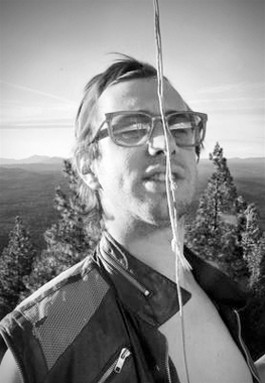
W ith his shaggy hair and white-rimmed glasses, Chris Peck seems just another indie rock kid subscribing to the Weezer school of geek chic. Upon meeting him, it’s hard to believe he’s Peck the Town Crier, the local musician whose innovative hip-hop, jazz and funk fusion invades Bedrock Records on March 30 and Sweetwater Station on April 16. But when Peck opens his mouth, his enthusiastic and unpretentious mix of California and b-boy colloquialisms leaveno doubt of his artistic eccentricities. “I’m not really efficient at, like, spreading the word or marketing myself,” he tells me, sipping his java, “but I am a mystical soldier of writing new shit.”

As he speaks, I can’t stop hearing his song “Coffee,” where rhymes and plastic-soul croons are buoyed by a marching band drumbeat. “It turns my world around / Keeps me from sinking down / It turns from black to brown / You add a little cream / It’s a whole new scene.” While this tongue-in-cheek offering may recall Beck or Har Mar Superstar, Peck is less schticky and more organic. On his new album, Groundhog’s Day , he brings a sincere, scholarly reverence to every style explored, from the be-bop of “Jump for Joy” and the soulful p-funk of “Underwear,” to the honky-tonk of “The Widow and the Wasp” and cheerleader stomp of “Shout!”

“I call it hist-hop,” he says of his music, “because we’re pulling from all kinds of roots of weird old American music.” His lyrics are just as eclectic, combining refreshingly positive affirmations with quaint stories. “Some songs are colorful little jokes that happen through hangin’,” he says. “The fabric of ‘the hang’ ends up in my raps.”

Peck the Town Crier is a phenomenon that could only have come from Marin, and it began with Peck learning guitar at the Saint Mark’s School’s fertile music curriculum, which was rife with rock-star parents. “I remember the drummer from Journey, Steve Smith, played with us in fifth grade,” he says. “It was a face-melting experience.” By the time he graduated from the Branson School, he’d already completed Your Tape Machine’s Not Broken, recorded on a four-track reel-to-reel.

Through school shows and sitting in at the short-lived San Rafael club Jazzed, Peck became hooked on performing. “It was a way to shine and have an alter ego,” he says. His current brand of eccentric theatricality features tear-away trousers and even a wall of clapping hands. “It was somewhat of a disaster onstage,” he admits with a laugh, “but a charming disaster.”

As a student at NYU, he was part of the jazz department, but a bout of severe tendonitis made him unable to play any instruments at all for weeks at a time. It proved serendipitous in the end. “I used to make my guitar sound good, and everything else was an afterthought,” he says. “But when I couldn’t play, I started turning into more of a composer, playing with all these musical Lego’s instead of playing just one.”

Nevertheless, California was calling him back, especially after one spring back home. “I met energy healers and people who grew weed and people who were into weird local music that I couldn’t have heard in NewYork,” he says, still sounding excited. “I got more music written here than I had in years. I went back to New York and said, ‘As soonas I graduate, I’m moving back, and it’s gonna be, like, on !'”

And it has been “on” ever since, with endless projects like “Le Chronique,” an upcoming concert series in San Francisco that will utilize his improvisational jazz training to blend looping with live instrumentation. “I need to stay connected to the old ways, not something that is trumped up by the machine,” Peck says. “I need to be part of the continuum of the really raging, aesthetically sharp shit.”

Peck the Town Crier performs on Sunday, March 30, in a ‘parking lot hoedown’ at Bedrock Records, 2226 Fourth St., San Rafael. 2pm. Free. 415.258.9745. On Wednesday, April 16, he appears as part of the Comcast Battle of the Bands at the Sweetwater Station, 500 Magnolia Ave., Larkspur. 7pm. Free. 415.388.7769.


Branded Man

0

music & nightlife |

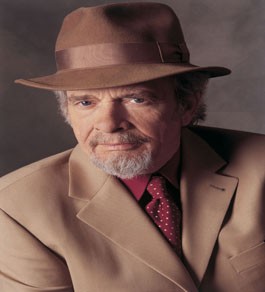
True Country: Merle Haggard appears April 2 in Santa Rosa.

By Gabe Meline

T urn on country radio these days, listen for a half-hour or so, and without fail, an atrocious slice of dreck will air, following this essential structure:

Verse: When I was a wild kid, my parents used to tell me this thing!

Chorus: The thing!

Verse: Now I’m all grown up, and I tell my own kids the thing!

Chorus: The thing!

Bridge: Ain’t life funny that way?

Chorus: The thing!

The “thing,” of course, is usually some kind of catchy phrase with a double meaning, which allows listeners to believe they’re smart for figuring it out. Lately, especially with acts like Big & Rich, the “thing” is blatantly stolen from hip-hop slang, which offers the listener a delusion of street cred. Worst of all, in the modern country tradition, the “thing” always toes the aw-shucks, what-can-you-do, that’s-how-life-is line.

Somewhere, Merle Haggard is shaking his head at all this sentimental novelty bullshit and wondering where things went wrong. Ask any country star about Merle Haggard, and they’ll fall all over themselves to prove they love the guy, but apparently, no one in Nashville has heard any of his perfectly written songs.

Everyone knows the story about Johnny Cash performing at Folsom Prison, but not everyone knows that Merle Haggard was in the audience, an inmate at the time serving a 15-year sentence for robbery. It wasn’t until years later, after weaving this wizened worldview into hit after hit, that he had the chance to tell Cash face to face how much he’d been inspired to shape up, get out of prison and get back to writing songs.

“Branded Man,” “Whatever Happened to Me,” “Life in Prison”—they all tell the tale in Haggard’s unflinchingly authentic voice of Oklahoma dust bowls, Texas oil fields, California plains, places where Haggard soared and worked and drank and broke the law and fell in love.

Haggard’s dad died when he was nine, and his mother, Flossie Mae, struggled to raise her kids right. Haggard ran away to Texas, got arrested, wound up in juvie, ran away, wound up in prison, got out, got sent back. The song? “Mama Tried.”

In prison, he was offered a breakout plan by a fellow inmate. He turned it down, but the inmate escaped, eventually shooting a cop and landing himself on death row. The song? “Sing Me Back Home.”

Once out of prison for good, he teamed up with Buck Owens to create the “Bakersfield sound” of the 1960s. Then he flew up to Seattle, stole Owens’ wife and married her in Tijuana two weeks later. The song? “Just Between the Two of Us.”

Any album during Haggard’s late ’60s heyday on Capitol Records is a haystack full of golden needles. For every hit like “Silver Wings,” “Hungry Eyes” and “The Bottle Let Me Down,” there are fantastic undiscovered gems like “The Son of Hickory Holler’s Tramp,” which describes Mom as the town whore who turns tricks to support the family after Dad leaves, or bizarre tunes like “The Girl Turned Ripe,” about a girl who turns 18 and has a “great long line of pickers” in waiting. Misogynist or, in the days before Barely Legal , merely true? And how to reconcile it against his latest song, “Hillary,” which recommends “a big switch of gender” and urges “let’s put a woman in charge”?

Haggard’s politics, like his life, are notoriously scattered and messy. The guy behind “Okie from Muskogee” and “The Fightin’ Side of Me” has since eschewed the redneck anthems, and since 2001, when the entire industry of country songwriters has either gone limp or stupid, he’s demanded that we get out of Iraq with “America First” and criticized conservative media with “That’s the News.” At the same time, he sings duets with Gretchen Wilson about the flag and the Bible, and he’s also still writing excellent heartfelt material, songs like “If I Could Only Fly” and “Learning to Live with Myself.”

As long as he doesn’t cave in and start writing songs about the “thing,” he’ll always be all right in my book.


Merle Haggard appears on Wednesday, April 2, at the Wells Fargo Center, 50 Mark West Springs Road. Santa Rosa. 8pm. $15–$85. 707.546.3600.


FIND A MUSIC REVIEW

View All


Concert notes and news.

Hog Heaven

0

Photograph by Charlie Gesell
Porcine Passion: Chef Charlie Palmer (center), chef Philippe Rispoli and Eric, one of Palmer’s twin sons, hold forth in Healdsburg.

By Carey Sweet

F rom snout to tail, rustic pig is all the rage these days with top chefs. So celebrity chef Charlie Palmer, founder of the all-things-hog Pigs & Pinot festival held March 14–15 in Healdsburg, had a pivotal tip for would-be cooks hoping to duplicate his exquisite porcine cuisine at home.

“Become a good client in a very good restaurant,” he said, looking up from a pan of veal stock he’d been reducing for a sauce to serve over slow-roasted pork cheeks. “Spend a lot of money there and make friends with the chef. Then, when you need special ingredients, like a couple of pounds of cheeks or a few quarts of stock, he’ll give them to you.”

He flashed a grin to show he was joking. Or maybe that he wasn’t.

It may have been an odd thing for a chef to say in the middle of a Saturday-morning cooking class he hosted as part of Pigs & Pinot—particularly one where attendees had paid $150 for the privilege of uncovering a famous kitchen master’s deepest secrets—but it was refreshingly realistic.

Because, while the premise of the class, staged as a centerpiece to the third annual gala, was to demonstrate how to turn inexpensive cuts into something sublime, what students really learned was this: Crafting rustic pork parts into something special can be pretty hard work. As Palmer led students through two hours of slicing, dicing, mixing and mashing, it became increasingly clear that the reality of transforming trotters to estouffade might be better left to the professionals.

As pig offal—those oft-tossed parts like cheeks, head, feet, tail and internal organs—has become increasingly popular on expensive restaurant plates, its recipes have garnered great appeal. What was once peasant food is now immensely popular with the high-end set, showing up at such classy spots as Bovolo (Healdsburg), Zazu (Santa Rosa), Santi (Geyserville), Syrah (Santa Rosa), Madrona Manor (Healdsburg) and Palmer’s own eatery, the Dry Creek Kitchen adjacent to the Healdsburg Hotel. The Secret Eating Society hosts its own take on offal from a wide range of animals April 12 in conjunction with Amphora Winery.

And why not? The idea of filling our kitchens with excellent, savory, piggy-rich smells is seductive; impressing our friends with homemade pâté is noble. Except how many typical home chefs really want to spend hours doing what the chefs do: slaving over a hot stove making stock (roasting bones and vegetables, skimming froth, simmering up to 14 hours, sieving and such)? And if we did, how many typical grocery stores keep offal in their coolers for an impromptu meal of blood sausage? (Santi chef Dino Bugica, for example, crafts his with pork skin, back fat, pine nuts and currants.)

Working with his partner chef Philippe Rispoli (trained at Daniel Boulud Brasserie at Wynn, MGM Mansion and Charlie Palmer’s Aureole of Las Vegas), Palmer demonstrated the long road taken to turn leftovers into luxury. A pâté de champagne blends boneless pork shoulder, pork belly fat, veal escalope and chicken livers with pistachios and cognac under a thick, glistening cummerbund of barding fat. He made it look easy at first, feeding the chunked meat into a big, shiny red grinder set up on the counter of the new Relish Culinary Adventures cooking center that’s opened in a beautiful building next door to the Healdsburg Hotel. The recipe is also a great way to use up scraps of venison, duck, what-have-you from your hunting trips, he said.

Yet after its approximate three-hour prep and cooking time, the pâté should sit for at least three days, so its flavors can intensify.

“Make it Sunday,” he shrugged, sprinkling quatre épices into the meat mixture for a heady aroma of cinnamon, clove, nutmeg and pepper. “Make a lot. Eat it all week, and give a couple [terrines] to your neighbors.”

Then call the paramedics. Because while savoring old-fashioned pork isn’t easy, Palmer isn’t pretending it’s healthy, either. Acidic pairings are necessary to cut the pure grease and make it so delicious, he explained, which is why many countrified pig plates come with cornichons, powerful mustards (homemade, of course) or, naturally, a perfect Pinot.

The best way to make a dish like Palmer’s braised pork belly with caraway and sauerkraut is to start with belly (bacon that’s uncured and unsmoked) from a heritage farmer, Palmer and Rispoli said. Heritage pigs are allowed to roam free, feed their natural omnivorous diets and develop deep-red, fatty meat. Commercially raised pork becomes “the other white meat” only from anemia, which is why it’s lean yet often dry, bland and tough. (A recent Cook’s Illustrated test, in fact, found that heritage breed pork butt has 50 percent more fat than supermarket butt, while old-fashioned pork chops tip the chart at 210 percent more fat than the usual grocery staple.)

Asked where to locate the specialty meat, Rispoli held up a snapshot of two handsome, spotted Berkshire pigs and pointed to a gentleman sitting in the back row of the class. His family farm raises boutique animals in Missouri, and what the students had been sampling was donated by a six-month-old pair weighing in at about 225 pounds each.

After securing the belly, the intrepid chef needs to cure it. After a deep caramelizing in oil, the meat, so fatty that it’s self-basting, is slow-braised for several hours until it emerges from its bath of white wine, onion, potatoes and sauerkraut gorgeously succulent; it bites tooth-tender then melts into the mouth with a rich, creamy center.

Palmer arranged the finished cheeks on a dollop of ultrasmooth polenta, which had magically appeared from Relish’s rear kitchen. The meat had been braised in Pinot, chopped heirloom tomatoes and a flurry of plucked-from-the-earth root vegetables, and its savory juices seeped into the grits. Barely two ounces of meat made each serving, yet it was lusty enough to almost make a full meal.

These aren’t dishes he makes at home, he admitted as the students devoured his handiwork. Rather, a quick meal at casa de Palmer might be a much simpler crispy panko pork schnitzel with fresh-squeezed Meyer lemon. He also doesn’t use lots of gadgets like he had in the Relish kitchen, or numerous pots and pans, because someone (him) has got to clean it all up.

Palmer didn’t need to voice his final tip. After all, the current “spring neighbor menu” at Dry Creek Kitchen features a course of slow-braised kurobuta pork cheeks in a Szechuan pepper-corn-infused pork jus. The only thing required to make? Reservations.

H ere’s an elegant riff on pork and beans that’s far removed from Van de Camp’s. Yet the premise still holds for that wonderful pairing of legumes and pure pork blubber: the fat rounds out the beans’ earthy flavor and makes a simple dish impossibly rich and savory. The boiled technique utilized below is a riff on the Italian “bolliti misto” style of cooking that adds extra flavor to the lentils. The recipe comes from Charlie Palmer’s “try this at home” recommendation.

Salt Pork with Lentils

Serves: a lot. Plan a dinner party, or freeze in small batches for multiple meals.

18 ounces spare ribs

14 ounces salted pork loin

14 ounces. ham

7 ounces salted pork belly

2 1/2 c. lentils

1 large onion stuck with two cloves

2 carrots

3 leeks

bouquet garni: sprig of fresh thyme, dried bay leaf, several sprigs of fresh parsley handful black peppercorns 16 ounces fresh sausage, such as sweet Italian or garlic sausage

Thickly slice all the pork, except for the spare ribs. Place all the pork, spare ribs, salted loin, ham and pork belly in cold water for at least two hours. Rinse all the pieces, place in a stock pot and cover with plenty of cold water, bring to a boil, skim thoroughly and reducing heat to simmer for one hour. Pick over lentils, then wash, drain and place in a saucepan. Cover with water and cook for 15 minutes. Drain lentils and add to the meat. Add onion, carrots, leeks, bouquet garni and peppercorns. Simmer for 45 minutes, skimming from time to time. Add sausage, then cook for another 40 minutes. Remove all the meat and reserve in a warm place. Discard the bouquet garni and drain the lentils. Place in a large serving dish and arrange the sliced meat on top; drizzle with reduced balsamic vinegar (see below).

Balsamic Syrup

8 ounces good quality balsamic vinegar

Put vinegar in a small saucepan and reduce over medium heat until vinegar is thick and syrupy. Drizzle over sliced meat and lentils.

The Secret Eating Society hosts “An Offal(y) French Menu” in conjunction with Amphora Winery and Sonoma Direct lamb on Saturday, April 12, at 6pm. Amphora, 4791 Dry Creek Road, Healdsburg. $115. 707.431.7767.


SEARCH AVAILABLE RESERVATIONS & BOOK A TABLE

View All


Quick dining snapshots by Bohemian staffers.


Winery news and reviews.


Food-related comings and goings, openings and closings, and other essays for those who love the kitchen and what it produces.


Recipes for food that you can actually make.

Invasive Procedures

0

03.26.08


The dust swirls around Central Coast farmer Tom Broz as he surveys the empty field that will soon be sprouting Live Earth Farm’s tomatoes. In a few months, he’ll go through the annual ritual of hanging twist-ties drenched with pheromones around his farm to disrupt the mating of the codling moth. The ritual requires money, labor and time—three things not in excess at Broz’s small organic operation. Yet for Broz, controlling pests like the codling moth is just “the name of the game” when it comes to environmentally sensitive agriculture.

Now that the light brown apple moth (LBAM), an Australian insect whose ruinous appetite is a matter of debate in ag circles, is also in the area, Broz will likely have to pencil in yet another round of twist-tie-hanging at a cost of about $120 per acre. But it’s not that simple. Since both state and federal government have determined that the LBAM must be eradicated, Broz has more than just the cost of twist-ties to worry about. The feds are inspecting his orchards every month, and if they find even a single sign of the moth, he could be shut down until the inspectors are satisfied that his farm has been rid of it for good.

“Imagine if I lose one week of produce because I’m being quarantined in the middle of the season. That could add up to $20,000 or $30,000 right there,” Broz says. “So controlling something preventatively beforehand ends up costing almost nothing compared to being shut down because there is one egg on the underside of a single leaf in my orchard.”

Broz isn’t the only one calling into question the government’s plan to eradicate the LBAM rather than simply control it. Over the past six months, well-respected entomologists and horticulturalists have expressed increasing skepticism at the scientific basis of the government’s eradication plan. The California Department of Food and Agriculture (CDFA) and the USDA are currently planning to aerially spray biochemical pheromones on five California counties beginning Aug. 1. Four other counties, including Marin, would force ag professionals to establish the twist-tie pheromones that Broz employs. An isolated infestation of the LBAM was found and eradicated in Napa last year, and one LBAM was found in Sonoma County in February; should another turn up, Sonoma will be added to the spray list.

In the course of the debate, wider questions about how to confront invasive pests in an interconnected world have also surfaced.

Behind the Curtain

In May 2007, Dr. Marshall Johnson wiped the sweat from his brow as the sun beat down on the pavement in front of San Jose’s Wyndham Hotel. Making his way through the lobby, Johnson headed straight for the conference room where a group of scientists were already furiously skimming through reams of biological information on the light brown apple moth.

The 10 assembled entomology experts, at least half of whom were on the USDA’s payroll, felt a heavy weight on their shoulders. They had been hastily called together, given the label Technical Working Group (TWG) and tasked with determining whether or not the federal government should declare total war on the LBAM and begin a multistage process of wiping it out. If they decided it was too late and that the pest had become firmly established on the U.S. mainland, they would have to recommend the eradication fight be given up and management pursued instead.

A lot was at stake. The moth was spread across five counties, from Monterey to the Bay Area, but hadn’t yet hit the Central Valley, the heart of California’s agriculture industry. Farming groups and foreign trading partners were already clamoring for the Feds to wipe the pest off the face of the continent. The TWG scientists were presented with figures from Australia, where it costs over $21 million a year to control the pest.

With this mass of information swirling in their heads, the members of the TWG were allowed only three days to make their final recommendation. None of the scientists at the time could have guessed how much controversy their decision to pursue the goal of total eradication would generate, nor could they have predicted the much broader questions about invasive pest policy that would arise as public support for the fight against the pest deteriorated rapidly.

Moth Code Red

Anti-spraying activists have frequently targeted the CDFA as the agency responsible for the blanket spraying, but it was actually the USDA’s Animal and Plant Health Inspection Service that originally sounded the alarm and convened the TWG when it heard the apple moth had been found in California. The Feds wanted action fast. They had on their desks a report produced in 2003 by University of Minnesota entomologists suggesting the moth could infest up to 80 percent of the continental United States. This made the LBAM infestation an extreme threat in their minds, both to the native environment and to the nation’s economic interests.

The pressure was on the CDFA to act swiftly. If the state lagged behind, the USDA reserved the right to quarantine all of California, according to a University of California integrated pest management report. It was under these tense circumstances that Johnson, an award-winning veteran entomologist from UC Riverside, was called to San Jose to talk LBAM. He remembers the three-day conference like it was yesterday.

“When we first went into the group, the assumption was that there would probably be eradication because it was a new pest,” he says. “It wasn’t a big argument or anything like that; it was a discussion of what we know, what we don’t know and what the probability was that this could be accomplished. It was a very short discussion.” However short, this discussion yielded four compelling reasons for eradication, according to Johnson. First was the issue of economic impact.

The USDA predicts crop damage that could cost growers anywhere from $160 million to $640 million annually, and that’s just for the counties already infested. If the LBAM spreads to other states, the USDA predicts that the cost of crop damage could reach the billions.

But that isn’t the whole story. There was also a great deal of fear that the pest could shut down California’s ability to ship agricultural goods out of the country. It’s an ironic series of events: For reasons that aren’t clear, the LBAM was classified as a “Class A” pest by the CDFA in 1996 (it is not clear whether the USDA listed the pest on its watch list as well, but the Feds were nervous enough to order up a report on it in 2003).

Under this CDFA designation, which is the highest possible under state law, shipments of agricultural commodities from New Zealand and Australia had to be inspected thoroughly for the pest before being allowed access to California ports. This meant growers in New Zealand and Australia had to spend extra money and time proving their products were LBAM-free in order to ship their agricultural commodities to California.

When the pest was discovered on the U.S. mainland, the A-rating came back to haunt the CDFA and shake the nerves of USDA officials. Canada and Mexico began requiring thorough inspections of all produce for the LBAM before it was shipped across their borders, and at least seven states were calling for advanced warning whenever shipments from the infested counties were heading their way. Although the LBAM hadn’t damaged any crops yet, it was evident the moth was going to end up costing growers across the state millions in lost sales and control efforts. This costly reality was on the minds of all TWG members, Johnson says.

“The driving factor is the possibility of other countries shutting off our exports to them,” he explains. “If you went from eradication to management, you would have to be at zero tolerance for export.” As for local growers selling their products within an infested county, Johnson predicts they would only use pesticides and other control methods if the cost could be passed on to the consumer, meaning either higher fruit prices at the market or large losses for growers who would have to throw away damaged products.

This would be an expensive long-term proposition for growers, and, to make matters worse, it wouldn’t be concentrated in a single agricultural industry. The pest can infest up to 250 different plants, including most fruit trees and decorative plants sold in nurseries. There are also reports that the LBAM has the ability to incorporate new plants into its diet over time, meaning it could potentially threaten all of California’s agriculture fields, and possibly over 75 percent of fields in the United States. Mysteriously, no crop damage has been reported. Nevertheless, the TWG chose caution.

“Since the light brown apple moth already has a broad range of plants it eats, it makes it a lot easier to adapt to new plant species,” Johnson reasons. “The main ecological ramification would be its ability to invade new areas in California or the United States, and once it started to take off in places like the San Joaquin Valley, where you have peaches, olives and nectarines, you might have to start spraying [toxic] stuff for it.”

Regardless of how far the moth has spread thus far, Johnson and others worry that if management were pursued instead of eradication, individual growers would eventually decide to defend their crops with toxic pesticides. That could cause a huge problem, says Johnson. Not only does the LBAM adapt to new plant hosts as it spreads across the world, it has also shown the ability to evolve pesticide resistance. This was observed most notably during its infestation of New Zealand, says Johnson.

“If you get a lot of people who start spraying for it, and then it develops resistance, people will have to start spraying more toxic pesticides more frequently. You don’t know what the ramifications are for the management system of other pests.”

Not to mention the impact on the state’s water supply and any animals or humans exposed to the toxins. With the severity of these four key threats in mind—export restrictions, the pest’s adaptability, the potential spraying of toxic pesticides by individual growers and a fear that the pest could develop pesticide resistance—the TWG concluded eradication must be pursued swiftly.

In short order, a plan was established: an emergency environmental review exemption was granted by the EPA for use of the Checkmate-LBAM pheromone, a substance that releases the female moth scent over a large area and thus hinders the male moth’s ability to find a real female mate; federal and state quarantines were established in all infested counties; and nurseries were forced to spray the organophosphate chlorpyrifos on all their products if even a single moth adult or larvae was found. The Feds were ready to fight.

The Other Shoe Drops

In September, fewer than five months after the TWG had made its recommendation, three planes were dispatched to release pheromones over Monterey County. In November they sprayed Santa Cruz County. Immediately, a chorus of environmental and public-health groups decried the blanket spraying of pheromones over houses, schools and places of business. Newspaper articles reporting on the CDFA’s handling of the pest poured forth, as did lawsuits attempting to stop the spraying.

Amid this troubling backdrop, respected entomologists and others began to question whether or not the state’s eradication goal was really possible. Dr. James Carey, a UC Davis entomologist who has been researching the field of pest management for over 20 years, believes it is nothing short of wishful thinking to suppose a pest that has now infested at least nine counties can be eradicated.

“It’s not that I don’t favor eradication; I’d like to get rid of it if we could do it easily. That’s not the question. It’s a matter of what I see being a program that’s been launched that has no chance of success,” Carey says. “I seriously doubt that they’ve really delineated the population. There are literally tens of thousands, if not hundreds of thousands, of populations of LBAM, so anything less than 100 percent elimination of every one of these tens of thousands of individual populations is control and not eradication.”

Carey knows whereof he speaks. He provided research that has helped the CDFA keep the Mediterranean fruit fly under control (the Medfly has successfully resisted eradication all along) and has published well over 50 essays on pest management. According to his experience, a perfect mix of biological and political factors needs to be in place before a pest can realistically be eradicated. He doesn’t think these preconditions exist with the LBAM.

“You need an effective tool. We don’t have it here,” says Carey. “You need public support. It’s not clear that we have that here. You need a detection tool that is effective even in the advanced stages of eradication so you can identify pockets, but also in the early stages so you can delineate a population. Lastly, you need long-term funding. You can’t have a program set in motion, and then at the whims of an administration have the program pulled.”

According to Johnson, the TWG had recommended to the CDFA back in May that it evaluate different crops the moth might eat to see which ones would be most severely impacted by LBAM feeding. Johnson said he hasn’t heard of that process going forward, and Steve Lyle from the CDFA said he couldn’t track down any information on these efforts.

Threat Overblown?

Another voice joined the call for management on March 7, when UC Santa Cruz Arboretum director Dan Harder released a report on his research trip to New Zealand. He had toured the northern part of the country, which he claims has a similar climate to the Central California coast, and found that controlling the pest could be cheap, easy and effective.

The trick, according to the 11 sources he cites in his report, is to hit the moth colonies with a one-two punch: First, release the natural predators. According to Harder’s retelling of an interview with a Dr. Peter Shaw of New Zealand HortResearch, about 80 percent to 90 percent of moth larvae are knocked off by these LBAM killers. They include a number of different wasps, flies and even the earwig.

As for the remaining 10 percent to 20 percent of LBAM larvae that survive, Harder cites HortResearch reports that recommend using “insect birth control,” also known as insect growth regulators. These sprays don’t kill the larvae, but instead prevent them from blossoming into adults, meaning they can never reproduce. New Zealanders adopted this two-pronged approach in 2001, after the use of organophosphates between the mid-’90s and 2001 killed off the moth’s natural enemies, resulting in exploding LBAM populations.

Back on this side of the pond, Cavanaugh sees CDFA and USDA officials, who he is quick to laud as “doing the best they can given the circumstances,” being forced to pursue eradication so they can appease trading partners, even as serious questions about the feasibility of eradication are left unanswered.

“It’s like when the bubonic plague hit in Europe,” Cavanaugh says. “People were going around burning down houses and burning people alive because they didn’t know what they were dealing with. Once they found out it was carried by a flea, it was treated appropriately. It’s the same thing here; they don’t have the information ahead of time, so they’re effectively experimenting.”

It may be an experiment and maybe it won’t work, but given what is at stake, eradication should be pursued anyhow. This is the thrust of retired UC Davis entomology professor Dick Rice’s argument. Eradication is never easy, Rice says, but if we just “throw up our hands” and admit defeat before the fight has even begun, there could be devastating consequences.

“Eradication in the coastal areas is going to be difficult, because over the winter and early spring, before the CDFA and USDA start their pheromone program, this pest is going to be spreading into uncultivated areas, not just orchards and agriculture fields,” Rice says. “But it’s still something to attempt if they can afford to do it and show some success. My thinking is that if LBAM did become established . . . up into Oregon and Washington, it would increase expenses tremendously both in terms of ornamental industry and the tree-fruit industry.”

Yet Cavanaugh and other critics of the eradication plan point again to the fact that there has been no recorded LBAM damage to California agriculture. “The basic question is, are we overreacting to exotic pests on pure speculation?” Cavanaugh asks.

Ticket to Ride

The eruption of controversy over the USDA and CDFA’s eradication goal and the subsequent treatment plan may be just a hint of things to come. In an era of global trade, the opportunities for pests to catch a free ride across the ocean become so ubiquitous no government can realistically plug all the holes in their borders.

A report from the United Nations’ Food and Agriculture Organization provides a glimpse into this stark reality. In just one year, from 2004 to 2005, worldwide food exports increased 8 percent. Between 2000 and 2005, the figure was 23 percent. There is little doubt this process will become much more pronounced as the worldwide population increases to more than 8 billion people by 2030 and trade balances between countries continue to deepen.

It’s not just agricultural goods either. Wood packaging, foreign tourists and the ballast water of ships can all easily spread invasive species. As long as consumer goods are produced in China, coffee is shipped to United States ports from South America and summer vacations are spent in the tropics, pests will be transported to and fro.

For many environmentalists, this is less an economic issue than an environmental one. As fragile ecosystems suffer under the weight of human activity and climate change, an invasion by pests with no natural enemies in the area can mean extinction for many native species. Dr. John Randall, who works at UC Davis and runs the Nature Conservancy’s Invasive Species Team, believes this is a huge threat to biodiversity that must be combated first with prevention, but then with swift eradication plans when dangerous new pests are discovered.

“These pests change the character of our natural environments. It’s one more threat to an already beleaguered and limited area of wild vegetation and native species,” says Randall, who is unfamiliar with the specific situation of the LBAM. “If you’re able to identify, contain and eradicate a pest early, the number of pests in the area you have to treat is small and the costs are far smaller. It has been shown over and over again that the state and society spends far less with that kind of approach.

“So perhaps rushing forward with eradication plans even as comprehensive biological research lags behind is wise both for the nation’s food supply and environmental health.”

Not so, argues Carey. “CDFA and USDA right now just basically draw a bull’s-eye and say, ‘Kill!’ It’s not sophisticated at all,” says Carey. “The science needs to be coherent with the operational aspects. The agencies in academia need to work more closely on this. Right now—and I’m trying to change this—UC is really not involved at all, even though we’re the research arm of the state. CDFA, industry and academia all need to be on the same page here.”

Bartuska and Randall both echo this call for increased communication between researchers and policy makers. However, Randall believes this is only one of the many improvements that will need to be made as invasive species find almost daily opportunities to spread in an increasingly interdependent world.

“What we have now is not good enough nationally or internationally,” says Randall. “The bad news is that funding was cut to the CDFA in 2000 and has still not completely been restored. This has hurt the state Department of Agriculture’s ability to keep out pests.”

How the world deals with the invasive pest threat is yet to be seen, but work has already started on finding solutions, both within government and among conservation groups. Whether or not these solutions will be enough to overcome the formidable challenges invasive pests will pose this next century is an open question, even for experts such as Rice.

“We’re going to continue to see more of these invasive species come in, and we’ve known this for years.” says Rice. “This will be particularly true as we get into more of these trade agreements with other countries and the ability to ship things without really high levels of inspection and certification becomes commonplace. It’s going to get much more difficult. I see a lot more of this stuff coming down the road.”

Curing the Cure

Environmental and public-health activists have been beating down the doors of Bay Area legislators in Sacramento for the past three months, demanding they stand up to the CDFA as the agency powers forward with plans to aerially spray four counties with a synthetic pheromone to battle the LBAM. The legislators have apparently been listening.

On Friday, Feb. 22, a set of four bills related to the CDFA’s handling of the infestation surfaced in the State Assembly. Written by San Francisco assemblyman Mark Leno, AB 2760 would halt the aerial spraying, currently slated to begin on June 1, until the CDFA has drafted an environmental impact report. The EIR is still in the early stages; it would likely take well past June to be finalized. Under state law, an EIR is normally required before spraying pesticides, but an emergency exception was granted by the EPA last year.

Marin County assemblyman Jared Huffman wants to force pesticide manufacturers to release information on all the ingredients contained in their products before they’re used by any state agency, emergency or no. His bill, AB 2765 comes in the wake of pheromone manufacturer Suterra LLC’s refusal to disclose the ingredients in Checkmate-LBAM-F, citing its right to protect the information from potential competitors.

Rounding out the challenges to the emergency declaration issue, AB 2764, introduced by East Bay assemblywoman Loni Hancock, would make the governor the only public official who could proclaim a state of emergency requiring the spraying of pesticides over urban areas.

While these three bills respond to the loud accusations that the CDFA has ignored public concerns and plowed ahead with an eradication plan that puts human health at risk, at least one lawmaker is focusing on the overlooked issue of invasive pest planning.


Comedy Tonight

0

03.26.08

Firearms on campus, fuel prices and foreclosures, five years of war and seven years of Washington shenanigans. There’s not a lot to laugh about these days. But laugh we must, and this season brings a plethora of high-caliber talent north of the bridge. From unannounced appearances by Robin Williams to live tapings of TV specials featuring George Carlin and Dana Carvey, comedy is flourishing.

Joking was always big in my house, from whipped-cream fights over dessert to making my younger sister’s friends crack up so hard that milk would spray from their little noses. My first live professional comedy experience came when I was in the eighth grade. My best friend, Ruder (he was the kind of kid who always got called by his last name), and his mom invited me to join them to see Bill Cosby perform at the University of Kansas. We set out for the 40-minute trip from suburban Kansas City with plenty of time to catch the earlier of the two shows scheduled for the evening—it was, after all a school night.

Mr. Cosby was very funny; at the time, he was the biggest comic star in America. He left the stage to a standing ovation, and, as if returning for an encore, came back to the microphone and somberly announced that Martin Luther King Jr. had been assassinated. The second show was cancelled, and the performer jumped on a plane and immediately flew to Atlanta to be with Coretta and the kids. Mrs. Ruder nervously escorted us back home.

Are comedy and tragedy two sides of the same coin? Marin comedian Mark Pitta thinks so. “Ed McMahon tells a story about Johnny Carson. He was doing a sketch about Abraham Lincoln. He had the stovepipe hat, the beard, the mole on the face, the whole deal. Well, the sketch bombs, they go to commercial and Johnny says to Ed, ‘Too soon.'”

On the other hand, Pitta, who hosts a weekly improv and sketch show every Tuesday night at Mill Valley’s 142 Throckmorton recalls being on the bill with Smokey Robinson just three days after 9-11. “We were debating whether to do it or not. The audience was so hot that night, it was cathartic, they were laughing so hard at things that weren’t supposed to be. They needed to laugh. It was odd.”

While TV sitcoms featuring standup comedians as stars—Seinfeld, Tim Allen, Ray Romano—have started to disappear from the tube, live comedy has come back. “There was a time you couldn’t turn on your TV without some comedy special,” says Marc Gurvitz, manager for Carvey, Bill Maher and Dennis Miller. “The big names now [have the luxury of] picking and choosing a venue and my guys just love the room,” he says of Santa Rosa’s Wells Fargo Center. “It feels intimate, and the audiences are great.”

“Sonoma County audiences are grateful these artists are here,” says Rick Bartalini, programming director for the venue. “They can experience the performance close to home.”

Indeed. North Bay resident and Saturday Night Live alum Dana Carvey changed the venue of his upcoming HBO taping from New York to Santa Rosa. One reason: the audience. “They’re smart, well-read and not cynical. They remind me of [the folks in] Minneapolis,” Carvey says. But with better weather. Carvey is on his cell, driving through Mill Valley on a sunny afternoon. He too mentions his fondness for the Wells Fargo Center. “It’s like I’m in the wheelhouse, the way the balcony wraps all the way around.”

Although attending one of the broadcast-bound shows at the Wells Fargo Center has a bit of a Hollywood vibe, there are strict guidelines sent to every audience member. For the recent George Carlin live feed, seat holders were instructed to arrive early, pick tickets up at will call 90 minutes before showtime. Forty minutes before the curtain went up, the lobby bar closed, and everyone had be seated a half hour before Carlin took the stage. And once seated, you had to stay there. God forbid you have to pee.

But, as Mark Pitta would like to remind you, the Wells Fargo Center is not the only room in town. You never know who you might see at his Tuesday-night soiree. Carvey has been working out the material he’ll use in Santa Rosa, as has Robin Williams, who showed up at the Mill Valley theater recently to try out jokes for his USO trip to Afghanistan and Iraq. “The show is always called ‘Mark Pitta and Friends,'” Pitta emphasizes. “The philosophy behind that is we don’t try to get people in the door because of a specific headliner. All the other clubs have to, they need to get the butts in the seats. We don’t know who’s gonna be there. So people just come to laugh, and they don’t care who they see. If they do see Richard Lewis or Dana or Kevin Pollack or Robin, it’s gravy. If they don’t see somebody ‘famous,’ they still see a great show.”

But the big names are the draw. “Two thousand eight will likely have more comedy than prior years,” Bartalini says. “It’s certainly shaping up that way.”

Catching a big name, especially a fellow North Bay neighbor, has its advantages. “I do a twenty-minute bit on Sebastopol,” Dana Carvey says. “It doesn’t play anywhere else. Nobody else gets it.”

More Fun

There are other opportunities to catch live comedy. Here is a peek at some upcoming gigs.Dana Carvey holds the house at the Wells Fargo Center for two nights, taping his new TV special. Friday&–Saturday, March 28&–29, at 7:30pm, no joke. $15&–$65; only standing-room tickets available. Radio hosts Bob & Tom bring their Comedy All-Stars Tour through with Kristi Lee, Donnie Baker, Bob Zany, Ralph Harris, Nick Griffin and Tim Bedore on Friday, April 4 at 7:30pm. $33.75.

The 14th annual Pride Comedy Night, starring Suzanne Westenhoefer, whose own sense of pride comes in part from working unscripted. The traditional dancing and music in the lobby follows this popular event for the LGBT community and beyond. Saturday, June 14, at 8pm. $25&–$35. Wells Fargo Center, 50 Mark West Springs Road, Santa Rosa. 707.546.3600.

The Best of the San Francisco International Stand-Up Comedy Competition carpets the North Bay, hosted by Mark Pitta and featuring headliner Paul Ogata and other alumni of this prestigious 32-year-old event. Wednesday, April 9 at Sonoma State University Cooperage, 1801 E. Cotati Ave., Rohnert Park. 8pm. $10; SSU students, free. 707.664.2382. Saturday, May 3, at the Napa Valley Opera House, 1030 Main St., Napa. 8pm. $35. 707.226.7372.

Mark Pitta hosts ongoing Tuesday-evening laff-fests with established comics and up-and-comers every week at 8pm. $15&–$20. Look for a special Mark Pitta and Friends event on Saturday, April 5, also at 8pm. 142 Throckmorton Theatre, 142 Throckmorton Ave., Mill Valley, 415.383.9600.The Mystic Theatre hosts the Four Bitchin’ Babes on Saturday, April 26, a musical revue that is emphatically not standup, but sounds like a lot of fun for the over-40 set anyway, as four musically inclined performers riff on marriage, kids, social mores, PMS and, of course, clothes. 23 Petaluma Blvd. N., Petaluma. 8pm. $25. 707.765.2121.

The Pachecho Playhouse occasionally hosts standup, as with their March 14 “Comedy Night.” Check www.pachecoplayhouse.org for possible further fun in May. Also under the radar are the sometimes shows hosted at Mary’s Futons. The next one is tentatively slated for June 8 (that could change) and will probably feature the ladies of Kung Pao Comedy, helping to raise monies for the Spectrum Center for Lesbian, Gay and Bisexual Concerns. Mary’s Futons, 4100 Redwood Hwy., San Rafael 415.472.2919.


Museums and gallery notes.

Reviews of new book releases.

Reviews and previews of new plays, operas and symphony performances.

Reviews and previews of new dance performances and events.

Modest Proposal

0

03.26.08

F eb. 28, 2008

SUBJECT: BUSINESS PROPOSAL

Dear President Ahmadinejad and President Chavez:

To introduce myself, I currently serve on the board of a multibillion-dollar hedge fund. You might recognize the name of the fund, but I am not writing to you today in an official capacity. I am writing to you with a business proposal.

I have worked a total of 29 years on Wall Street, most of that time in executive positions. My résumé is attached.

Strange as it may seem for a person like me to say, I believe, like you, that America’s greed has done much to cause poverty and instability in the world. I am ashamed to be an American. Therefore, I am writing to you today with a business proposal. Please allow me to give you some background first.

Today, the dollar closed at another low vs. the Euro. This makes four days of new lows in the last week. Moving in the opposite direction, gold and oil both closed at their respective all-time highs. Many other dollar-denominated physical assets, like industrial metals and agricultural commodities, are also trading at historic highs. Why? Because they’re priced in dollars, and as the dollar falls it will take more dollars to buy the same pound of copper or bushel of corn. Meanwhile, you can’t give bonds away. Auction-rate bond failures approach 70 percent. Yields have doubled since January.

In my 29-year career, I’ve never seen anything like these markets. Nothing comes close. Not Black Monday, the Asian monetary crisis, the Russian bond defaults, the failure of Long Term Capital Management, the dotcom crash or even the terrible events of 9-11.

Today, America’s credit markets are starting to seize up. But the worst is yet to come. Up to the present, we’ve seen only one bubble burst, the residential real estate CMO market. But there are three more bubbles out there, each one bigger than the one before it, and each one ready to burst.

First, we have the bubble in the commercial real estate CMO market. Lots of subprime junk here. Tons of it. Like the residential real estate subprimes, the commercial subprimes were not rated as such. Just like residential subprimes, a lot of hedge funds are highly leveraged into this extremely credit-sensitive garbage.

Next we have the bubble in the private equity or CDO market. Garbage here, too. Think back at all the hundreds of billions of dollars in private equity deals that were done before this summer’s subprime mess. Get the picture?

Finally, we have the bubble in the credit-default swaps and related derivatives market. This is a $45.5 trillion monster. It scares me shitless.

In a front-page article on Sunday, Feb. 17, The New York Times reported on this obscure market. Worse than obscure, this market is also largely unregulated. Congress, the SEC and the NASD have all looked the other way as this market has grown. This lack of oversight is beyond shameful and irresponsible; it’s criminal and immoral. This lack of oversight in credit-default swaps screams out for a collapse.

Which brings me to my business proposal.

Enemies of the United States of America, take note. You want to fuck up the U.S.? Hire me. I’m not kidding. Hire me. This is a bona fide offer. With a few billion dollars, a trading platform and some expertise, we can bring down the house of cards known as the credit-default swap market. Heck, we can bring down the U.S.

Forget about suitcase nukes. Forget about anthrax. Forget about flying jetliners into skyscrapers. Forget about all forms of conventional terrorism. Hire me. I’ll assemble a team of traders, some IT guys and a few guys with prime brokerage experience, and together, with a bankroll from you, we’ll bring Wall Street down.

We’ll use the IT guys to build our own trading platform. I like a proprietary platform. Nice thing to own. The Russian Trading System is a good model. Next, we’ll also use the IT guys to build our own ATS (alternative trading system ) or ECN (electronic communications network). An ATS is a wormhole into the dark matter of the financial universe. You have to have at least one. More than one is better.

Then, our prime brokerage guys can do their thing. What they do is a form of wizardry. Prime brokers are wizards. They create new forms of money—swaps, derivatives and structured products—from nothing. They create portfolios from nothing. They are the merchants of mirrors. They buy, sell and trade illusions and chimeras.

Finally, I need a pile of chips to play this poker game, just a few billion dollars. What’s a few billion, if we can bring down a house of cards worth $45.5 trillion? And, oh, I forgot to mention something. We might make a few hundred billion for ourselves along the way, too.

Too much of a long shot, you say? Too fantastic? No, it’s not. It’s already happening.

So come on, Mahmoud Ahmadinejad and Hugo Chavez. Hire me. Today may be a bad day for the United States, but it’s a good day for you. The dollar is coming to the end of its reign. And with the end of the dollar, together we can attack the credit markets and bring down everything else.

We can bring it all down. America’s preposterous wealth. America’s vulgar extravagances. America’s vanity. America’s hunger for power. America’s desperate need to be the second Roman Empire. We can do this.


Mediterranean Mayhem

0

music & nightlife |

By Gabe Meline

F ounded over 2,700 years ago by Greek Corinthians, Southern Italy’s ancient Sicilian city of Syracuse might not seem like the likeliest nest for a challenging, angular art-rock band who spell their name with a conspicuous apostrophe. Not, at least, until 1998, when Suzanne’Silver, four Sicilians in a city of 125,000, decided to change the landscape of their historic area completely. Ten years later, emboldened by a lot of time spent listening to Sonic Youth, Shellac, the Fall and Unwound, Suzanne’Silver are hitting the West Coast to wreak their Mediterranean mayhem on the shores of the Pacific.

According to the band’s website, the roots of Suzanne’Silver were similar to just about any rock band across the world. “We were teens,” it says, “and play rock ‘n’ roll not to think suicidin’. Sicily’s a very hot country, the soil burns, we don’t wanna work.” Ah, the enviable languor of the Europeans.

Southern Italy has long been associated with the Calabrian mafia, whose historic folk songs contrast beautiful melodies with ruthless tales of revenge and murder. Suzanne’Silver flips the traditional equation around, performing clamorous and nearly malfunctioning music, completely estranged from cuddly pop forms; the lyrical references cascade with such unthreatening subject matter as orange trees, sand dunes and crescent moons. Just as the ruins of Syracuse’s faded Roman Amphitheatre crumble into dust, so too does the conventional structure of Sicilian music crumble under the shirtless and unshaven modernity of Suzanne’Silver.

Suzanne’Silver appear with Wisdom Teeth, from Olympia, Wash., and local de-evolutionist ape-worshippers the Semi-Evolved Simians on Thursday, March 27, at the Last Record Store, 1899-A Mendocino Ave., Santa Rosa. 5pm. Free. 707.525.1963.


FIND A MUSIC REVIEW

View All


Concert notes and news.

Freedom of Hate Speech

03.26.08

N early six and a half years ago, Novato High School’s student newspaper, The Buzz , published a controversial editorial entitled “Immigration.” Penned by the paper’s journalism program student-elected opinion editor, Andrew Smith, then a senior, “Immigration” suggested non-English-speaking immigrants be stopped and questioned. “Seems to me,” Smith wrote, “that the only reason why they can’t speak English is because they are illegal.” Smith advised, “If a person looks suspicious, then just stop them and ask a few questions, and if they answer ‘Que?’ detain them and see if they are legal.”

Smith went on to suggest that peace officers “should treat these people the way cops would treat a suspected criminal.” In fact, Smith claimed many undocumented aliens were just that. “Criminals usually flee here in order to escape their punishment.” Smith suggested that illegals work “manual labor while being paid under the table tax-free,” and are often involved in “drug dealing, robbery or even welfare.”

Reaction to Smith’s op-ed was swift. Many Novato community members were outraged by the piece. On Nov. 14, 2001, the day following publication of Smith’s editorial, about 150 students and parents met to protest it on the Novato High School campus. In response, the school’s superintendent ordered all remaining copies of the paper be seized, and a letter sent to Novato parents insisting Smith’s op-ed should never have found its way into print because it “negatively presented immigrants in general and Hispanics in particular.”

Smith felt his First Amendment rights were infringed upon and that he was being unfairly blamed for writing something both the school principal and his journalism teacher had originally OK’d. Moreover, because of the school administration’s irresponsible and arbitrary actions, Smith felt that he had suffered harassment, ridicule, taunts and that he had “become a target.”

“The only reason I wrote the article and the way I wrote it,” Smith told Fox News, “was to get people to read it and to think about the topic I was presenting.”

On May 2, 2001, Smith’s father, Dale Smith, filed a civil suit on behalf of his son in Marin County Superior Court. The suit claimed that because Andrew Smith had expressed an unpopular opinion, he had been illegally censored.

Thirteen years prior, in 1988, the United States Supreme Court gave public school officials the right to censor their school newspaper’s content, ruling that such abridgement does not violate a student-author’s First Amendment right to free speech. However, the State of California’s public school code Section 48907 ensures each student’s right to free expression unless it “so incites students as to create a clear and present danger of the regulations, or the substantial disruption of the orderly operation of the school.”

This alleged incitement became the basis of the Novato school district’s claim that they had acted legally and responsibly in the case of Smith’s op-ed piece. The larger question was, which would take precedence, state or federal law?

The Smith family obtained counsel from the conservative Sacramento-based Pacific Legal Foundation. Their case was heard first by Marin County Superior Court Judge John A. Sutro Jr., who ruled in favor of the Novato Unified School District. Sutro upheld the school’s right to both remove Smith’s first op-ed piece, as well as allowing them to set limiting conditions on a second piece he’d written on the subject of “reverse discrimination.” This second piece never found its way into print.

Shortly after the Smith lawsuit was filed, Novato Unified School District spokesperson Dianne Pavia said, “It was never the district’s intent to usurp any student’s rights to freedom of speech, but the school district is charged by law to consider issues of safety and disruption to educational programs.”

California State’s First District Court of Appeal disagreed. On May 22 of last year, they reversed the Marin County Superior Court decision, ruling that the school district had indeed usurped Smith’s free speech rights. Speaking for the court, Justice Linda M. Gemollo wrote, “Schools may only prohibit speech that incites disruption, either because it specifically calls for a disturbance or because the manner of expression (as opposed to the content of the ideas) is so inflammatory that the speech itself provokes the disturbance.” Andrew Smith was awarded a declaration that his protected speech rights had been violated, along with $1 in nominal damages.

Novato’s school district challenged the Appeal Court ruling, taking the case before the highest court in the land. On Feb. 19 of this year, the United States Supreme Court decided against hearing Smith v. Novato Unified School District , giving precedence to California’s code 48907 over its own 1988 Supreme Court ruling, thus letting stand the Appeals Court decision favoring the Smiths.

In response to the Supreme Court deciding to forgo the case, Paul J. Beard II, the Smiths’ lead attorney said, “Andrew Smith can now claim a conclusive victory. But in a larger sense, all student journalists in California are winners, because this case establishes once and for all that they can’t be censored for not conforming to some ideological agenda.”


Hey Va-Jay-Jay

03.26.08Last weekend, three iconic plays about women and sexuality opened multiweek runs in three separate Sonoma County theaters, all on the very same night. The shows are Eve Ensler's groundbreaking Vagina Monologues, Willy Russell's acclaimed one-woman play Shirley Valentine and David Mamet's controversial battle-of-the-sexes drama Oleanna. In early March, in the midst of rehearsals, the Bohemian invited all three...

Lynn Woolsey on the Iraq War’s Fifth

“Five years ago today, President Bush took to the oval office to tell the world that the invasion of Iraq was underway. Five years later our country finds itself in an unwinnable quagmire, a failure so great that it will forever overshadow the lengthy list of President Bush’s other disappointments and missed opportunities during his eight years in...

Hist-Hop

03.26.08W ith his shaggy hair and white-rimmed glasses, Chris Peck seems just another indie rock kid subscribing to the Weezer school of geek chic. Upon meeting him, it's hard to believe he's Peck the Town Crier, the local musician whose innovative hip-hop, jazz and funk fusion invades Bedrock Records on March 30 and Sweetwater Station on April 16. But...

Branded Man

music & nightlife | True Country: Merle Haggard appears...

Hog Heaven

Photograph by Charlie Gesell Porcine Passion: Chef Charlie Palmer (center), chef Philippe Rispoli and...

Invasive Procedures

03.26.08The dust swirls around Central Coast farmer Tom Broz as he surveys the empty field that will soon be sprouting Live Earth Farm's tomatoes. In a few months, he'll go through the annual ritual of hanging twist-ties drenched with pheromones around his farm to disrupt the mating of the codling moth. The ritual requires money, labor and time—three things...

Comedy Tonight

03.26.08Firearms on campus, fuel prices and foreclosures, five years of war and seven years of Washington shenanigans. There's not a lot to laugh about these days. But laugh we must, and this season brings a plethora of high-caliber talent north of the bridge. From unannounced appearances by Robin Williams to live tapings of TV specials featuring George Carlin and...

Modest Proposal

03.26.08F eb. 28, 2008 SUBJECT: BUSINESS PROPOSALDear President Ahmadinejad and President Chavez:To introduce myself, I currently serve on the board of a multibillion-dollar hedge fund. You might recognize the name of the fund, but I am not writing to you today in an official capacity. I am writing to you with a business proposal.I have worked a total of...

Mediterranean Mayhem

music & nightlife | By...

Freedom of Hate Speech

03.26.08N early six and a half years ago, Novato High School's student newspaper, The Buzz , published a controversial editorial entitled "Immigration." Penned by the paper's journalism program student-elected opinion editor, Andrew Smith, then a senior, "Immigration" suggested non-English-speaking immigrants be stopped and questioned. "Seems to me," Smith wrote, "that the only reason why they can't speak English is...
11,084FansLike
4,446FollowersFollow
6,928FollowersFollow