
I am the owner of one of the properties featured in Gabe Meline’s article (“Wine Country Confidential,” April 23). His research was not as complete as it should have been. Apparently, he is unaware that two trespassers have accidentally died on this extremely dangerous property. He has no idea the trouble he will have caused me. I have fought for years to keep people off my land and finally was feeling as if I had made some real progress. Foot traffic had significantly decreased. I am absolutely sick about this irresponsible article.
Amy Ciddio
Guerneville
Nice to see roller derby alive and well in the Sonoma County area (“Wheels on Fire,” April 16). And it was nice to see an article about the sport again. However, coming from the old school as a fan, I prefer a banked track and a coed game. Much success to the new group, though!
George Gong
Vallejo
If the supposed motivation for building a multibillion dollar wall on the Mexican border is to thwart a terrorist threat, then why are we so completely unconcerned about the border of Canada?
Unlike the Mexican border, where vast expanses of desert can make traveling extremely difficult, the Canadian border is crossed by 10 gigantic lakes, several large forests and the Rocky Mountains. Good luck building a fence across that!
The racial/political nature of the Mexican border fence should be obvious to people by now since it goes hand-in-hand with an English-only, anti-immigration movement that exclusively targets the Mexican population. White supremacy not only assumes one language to be superior, it attempts to close off the culture to all but a single cultural group. This idea becomes particularly offensive when that group has grown to be one of the largest minorities in our nation. We should teach our children to respect Spanish, not to fear it.
Ronald Lemley
Santa Rosa
Thank you for publishing the article by John Sakowicz depicting the current mess on Wall Street (“Hello, Alternative Universe,” April 23). As a self-employed single woman, it’s frightening how out-of-bounds the industry has become and is becoming.
I am not wealthy. The unregulated activities by high-rolling individuals who behave without regard must be put in line. In truth, we who don’t work on Wall Street have the usual and customary path to be financially responsible for ourselves, our children and our community. To be asked to absorb this fallout is immoral.
Please put the word out with Mr. Sakowicz and others like him. We need your voice.
M. Kathryn Massey
Indianapolis, ind.
Thank you for a general overview of the “shadow economy,” which has become so vast as to dwarf the common economy which we all are led to believe encompasses all “our” assets and liabilities globally as well as nationally. In my opinion, the greatest transformation of wealth is being done before our eyes. The legislation created to answer to and counter the debacle after the Enron failure left out the financial-services sector so as to accommodate the “back room” economy so eloquently described in Mr. Sakowicz’s commentary. The elimination of the Glass-Steagall Act was also a facilitator, as mentioned. Furthermore, the promotion of the “ownership society” by Mr. Bush and Mr. Greenspan also aided in the subprime mortgage fiasco. Mr. Walker, Comptroller General, has resigned mostly because he cannot see the light at the end of the tunnel.
The general economy has collapsed, and we are witnessing internal functionaries attempting to patch it up and give a positive spin to it while aiding the insiders on Wall Street, Fleet Street and elsewhere as the masses of each nation grasp for less than subsistence wages. We have entered a new era in “fractional reserve banking.” Furthermore, we are told that the rising price of fuel is not the direct result of the oil cartel or the petrodollar nations but the speculators—who, I suppose, are out of reach of regulators and legislators. Thus, the impotence factor in resolving the current unfolding of this global event is high as we witness the steady reallocation of wealth from the many to the few and the powerful.
Kakistocracy has returned.
R. D. Gordon
Deerfield Beach, FLa.
&–&–>
Hook and Sling

Entering the music room at the Hopmonk Tavern is a full-body shock for those acquainted with the room’s former life at the Powerhouse Brewing Company or the Sebastopol Brewing Company (seen above). Dark lighting, votive candles and disco-ball glints quaver high in the room’s exposed wooden rafters; two tree braches descend from the ceiling, with futuristic yellow lightbulbs as fruit. The whole experience is like a Tahoe-ski-lodge-meets-Space-Mountain: it’s fancy, but it’s manageably fancy.
Thursday nights at Hopmonk are given over to Juke Joint, the yearlong funk night hosted by DJ Malarkey, and its impressive May lineup of guest DJs is top-shelf Technics talent. DJ Zeph brings the crisp snares and crazy mashups on May 1; J-Boogie, a versatile master on San Francisco’s Om Records, comes on May 8; and Romanowski, whose “Strudel Strut” is a lost gem of Bay Area DJ tracks, arrives on May 29. (DJ Logic is already booked for June.)
These are the DJs that helped put the Bay Area on the turntable map over 10 years ago at Future Primitive Sound Session parties, those legendary all-night affairs that sculpted a new DJ landscape. And DJ Malarkey, aka Patrick Malone, couldn’t be more thrilled with the opportunity to bring them up to the North Bay.
“There’s never really been a funk-based weekly dance event that I know of in Sonoma County,” the 27-year-old says. “I mean, we have reggae nights and hip-hop nights all over the place, but we’re trying to pioneer a funk scene, an afro-beat scene.” Malone’s DJ career started in this very room, and he loves its gussied decor as much as its regular crowd. “The West County heads are just laid-back,” he says. “It’s a kickin’ music scene that’s been waiting to explode, and we’ve basically just provided an outlet for it.”
Up on the DJ stand, crafted from what looks like illuminated blue ice, Malone drops the needle on a flute-funk track with heavy drums. At 10pm, the bar is elbow-deep with twenty- to thirty-somethings—pleasant West County&–chic spillover from Graton’s Underwood Bistro—all vying for the attention of two blonde bartenders in uniform low-cut black shirts, dancing around to Spanky Wilson’s “I’m Thankful.” The stage wall projects mirror images of seaweed and old movies, and a skinny guy—a barback? a manager?—walks around the hustling dance area, clapping enthusiastically on the ones and threes.
At about 10:45, the place starts heating up, and two guys in thick beards and corduroy jackets squeeze inside and look up, down and around the new room. “It’s different,” one of them says to the other. “Yeah,” says his friend, and to the beat of Al Green’s “I Can’t Get Next to You,” they begin a rhythmic inch toward a group of girls, in unison, bopping their heads.
The Juke Joint pops off every Thursday night at the Hopmonk Tavern, 230 Petaluma Ave., Sebastopol. 9pm. $5. 707.829.7300.
Cinco de Mayo: North Bay
The North Bay this week celebrates Cinco de Mayo in a variety of community celebrations highlighting Hispanic and Latino culture.
In Santa Rosa, the third annual alcohol-free event features the traditional music of Banda Pachuco, reggaeton group Riddim 510, Norbay award-winner David Correa and many others (in fact, a free-for-all rap contest often ensues on the side stage). With dozens of food stands and taco trucks, a lowrider parade, salsa dance contest and plenty of information booths, Santa Rosa’s Cinco de Mayo celebration is the largest in the North Bay. It gets underway on Monday, May 5, at the former Albertsons shopping center on Sebastopol Road, Santa Rosa. 4pm&–10pm.
The town of Sonoma will honor its Mexican ancestry on the same site as the Bear Flag Revolt of 1846 with an alcohol-free celebration. Hosted by the La Luz Center, “Fiesta for Education” benefits kids through live mariachi music, dancers and children’s games on Sunday, May 4, at Sonoma Town Plaza, Sonoma. Noon&–5pm. Free.
Also in Sonoma County, Windsor celebrates its sizeable Latino ancestry with a Cinco de Mayo celebration on the city’s town green. Craft tables for kids and food booths add to the festivities with the music of Universo Musical and Mariachi Jalisco and the traditional dance of Ballet Folklorico Sarita on Monday, May 5, at Windsor Town Green, 9455 Bell Road, Windsor. 5pm&–8pm.
Napa’s Latino community gathers in Calistoga for a parade through downtown featuring floats, costumes, dancers and cars. Festivities follow at the fairgrounds with Brazilian-style drum troupe Windsor Bloco, mariachi groups, a trick-rope act, DJ Tolteca and Napa Valley and Woodland Ballet Folklorico. For kids, there’re rides, ponies, games and a singing contest for ages seven to 14 on Sunday, May 4, in downtown Calistoga and Napa Valley Fairgrounds, 1435 Oak St., Calistoga. Free parade at noon; festival follows from 1pm&–5pm. $5; 12 and under free.
In Marin, the third annual Cinco de Mayo celebration takes place in San Rafael with Nixzohatl Aztec dancers, live reggaeton music, Latin rock bands, the hip-hop sounds of the Blaxicans and electronic artist Oblio. Saturday’s festivities also include soccer juggling, poetry, raffles and food galore in an alcohol-free environment. It takes place on Saturday, May 3, outside the offices of Canal Alliance, 91 Larkspur St., San Rafael. 1pm&–7pm. Free.
For the Record
Drawn just 16 years after his birth certificate, misspells his first name. Logged just 16 years after the government officially noted his arrival, this document drily details his departure at the hands of public servants.
In 16 years, Jeremiah had grown to be 5 feet 9 inches tall, and to weigh 127 pounds. He had reached adulthood’s first rung and secured a driver’s license. He had no mustache yet, had started no beard. His person contained no disease, harbored not one single sign of ill health; he was a perfect physical example of a young man on the cusp.
The autopsy is just an ordinary-looking document, one signed and stamped and initialed. But it tells its own story of March 12, 2007, the day Jeremiah died.
When Jeremiah Williams Chass was shot to death in the driveway of his family’s Sebastopol home by Sonoma County sheriff’s deputies, he was wearing a blue sweatshirt, a brown T-shirt, blue jeans, brown plaid boxer shorts and white socks. After he endured 11 gunshot wounds, had been pepper-sprayed and repeatedly beaten about the face and legs and buttocks, the clothing his family had provided for him was removed. Jeremiah Williams Chass was transported nude to the Sonoma County Morgue with an emergency breathing apparatus still lodged in his throat, heart pads still attached to his chest and a single white handcuff still dangling from his left wrist.
In a tragedy widely reported in these pages and in other media, Jeremiah suffered an episode of mental decompensation on Monday, March 12, 2007. The autopsy states that he had been acting strangely the day before and that his parents, Yvette and Mark Chass, had determined to take him to the hospital for evaluation. They got him up around 6am Monday morning and tried to jolly him into the car. He balked. The Chass’ did something so reasonable, so smartly old-fashioned, that one gasps to consider it.
They called the fire department. Surely a ruddy-faced, good-natured firefighter could help cajole their fragile child into the family’s minivan so that they could get the boy some help. Except that you can’t really call the fire department and get a ruddy-faced, good-natured firefighter to come help you get your kid in the car, not even in the family-positive environs of Sebastopol.
That call was instead routed to Sebastopol police, who routed it to the Sheriff’s Department. And then the nightmare blandly detailed in public records but still hotly disputed in private circles began. Jeremiah had a 2.5-inch knifeblade, and at one point, all parties agree that he had custody of his six-year-old brother, who soon escaped with no physical harm. Deputy John Misita arrived at 8:43am. Deputy James Ryan arrived to assist at 8:48am. Jeremiah Williams Chass died at 8:50am.
Documents beget documents. The official report released by Sonoma County District Attorney Stephen Passalacqua on March 6, 2008, angered the community when it cleared both officers of any criminal charges and assessed their actions as lawful. The report notes that the two men grew “weaker” as their less-than-five-minute struggle with the 127-pound youth continued. They began, it states, to fear that their lives and those of others were in danger. And indeed, since Jeremiah’s homicide, five others have died at officer’s hands. Others are in danger.
An autopsy reverses what a mother creates. Just as she grows a child within, his parts miraculously knitting together as they did with such perfection in Jeremiah, so an autopsy unravels that miracle. But even an autopsy is not immune to perfection. Jeremiah’s organs are noted to be “smooth,” “glistening,” “intact.” The tissues covering his brain and spinal cord are described as being “thin and delicate.” Faced with the stunning symmetry of youth, even medical terms prompt poetry.
Jeremiah had one-quarter of an inch of subcutaneous fat around his abdomen. There were no tablets, capsules or pill fragments within. Alcohol and drug toxicity reports were negative. His stomach held not a speck of food and just 10 ml of fluid; his bladder, 20 ml. Office supply stores sell an item in the 20 ml size; it’s called Wite-Out.
And so it was that on March 12, 2007, Jeremiah Williams Chass had the amount of sustenance in his 127-pound frame equal to half a bottle of Wite-Out, and the officers who wrestled him for less than five minutes were so exhausted in engaging his resistance that they feared for their lives.
An autopsy is just a record. A death certificate codifies fact. Both contain heartbreak. In the 13 months since Jeremiah Williams Chass endured a terrifying, violent death in his family’s driveway at 8:50am on a Monday morning, five other Sonoma County residents have also been killed by officers.
Their autopsies, too, unraveled what a mother created. Our outrage has not simmered, such documents hasten bile.
These must be the last.
Jeremiah Chass’ autopsy report is available online in PDF form accompanying this article’s posting at www.bohemian.com.
God’s Commune
I urge anyone who owns land and wishes never again to experience one instant of boredom, who wishes to live in a continuing state of elation, to deny no one access to that land, and watch what happens.
—Morning Star owner Lou Gottlieb
Let there be no more Morning Stars.
—California governor Ronald Reagan
Back in the olden days, like before PCs, iPhones or MySpace, a tall, frizzy-bearded bohemian dreamer “with a nose like a Babylonian patriarch” chanced upon the North Bay. Liking what he saw, he immediately popped for 30 magical hillside acres near Graton in western Sonoma County. The man was a scholar, a teacher, a renowned musician and arranger, a comic, journalist and spiritual quester. He was the freethinking “bigmouth incarnated as Lou Gottlieb, alias Lucky Louie Love Divine, a born entertainer with a heart as soft as mashed potatoes.”
That’s how former Limeliter Lou Gottleib was described by Ramon Senders, Gottlieb’s close friend, fellow musician and communal collaborator. Gottlieb felt his little patch of redwood-dotted paradise was meant—by God—to be shared with every human wishing to share it with him, or at least as many as could fit upon his land. Note I said fit on, not fit in, for as long as Morning Star Ranch had space, all were welcome. Morning Star never did run out of space. But it did run out of time.
Now, four decades since Sonoma County’s legal iron curtain fell down on Morning Star Ranch, MorningStar: The Play, written by Cotati resident Nick Alva, opens May 3 for a short run at Spreckels. The play time-warps its audience back to when members of the unintentional commune played catch with psychedelic-induced fireballs, and Sonoma County Health officials perpetually scoured the property for turds and waste while sheriff deputies hunted up proscribed mood-enhancing substances. But Morning Star Ranch wasn’t simply a Sonoma County phenomenon. Morning Star garnered both praise and damnation across the nation’s media spectrum. providing grist for heated discussions in American living rooms, churches and schools. It even provided one snarky politician a tiny step up his trickle-down ladder to the White House.
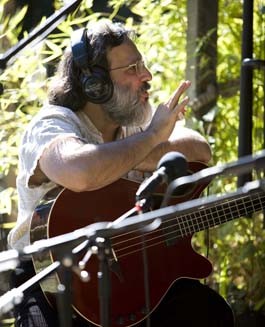
Alva bears an uncanny resemblance to his famed protagonist, sharing Gottlieb’s dexterity with the bass guitar to boot. The idea to write the play came to Alva after a co-worker told him that he reminded her of Gottleib, who passed away in 1996. She handed Alva a scrapbook containing newspaper clippings, photos and text compiled by former Morning Star residents over time, and the idea for a play just clicked.
I spoke with Alva over hot chocolate and iced tea at the Redwood Cafe in downtown Cotati. Writing the play was put on the back burner while he and his wife were having children, but the idea was resurrected a couple years later when Alva contacted Ramon Sender in San Francisco.
“When I contacted Ramon,” Alva said, “the T. C. Boyle novel Drop City was out. And Ramon and a lot of the hippies were upset about it because [part of it was] based on the Morning Star story. He felt that [Drop City] was a negative portrayal of what was going on. So they were very leery. Very cautious. But he finally got the sense that what I was trying to do was something positive.”
Alva describes MorningStar as “a large-scale play, elaborate, involved and dynamic. It is a symphony of many voices, an easily accessible story involving humor and beauty.” Add to that dozens of live-performance tunes, a large ensemble cast, eminent veteran stage director Michael Fontaine and actor Steve Fowler, who’s a true-to-life Morning Star friend and neighbor still living just up the road from the property. Actor and musician Dave Struffles as Lou Gottleib teams with Sonoma native Jonathan Van Nuys in the role of cofounder, experimental music composer and writer Ramon Sender, to lead the ensemble.
The story begins in 1966. While the hippie movement rocked on in the city, folk-music legend and Ph.D. musicologist Lou Gottlieb settled into a modest cabin on his Morning Star Ranch, diligently practicing Chopin nocturnes on his grand piano. Gottlieb also inadvertently advanced the next hip-olutionary step toward unrestricted human freedom. By opening Morning Star to all comers, it in theory replaced urban strife and squalor with an entirely free and gentle “back-to-the-land” lifestyle. Edgy city vibes were to vanish amidst peaceful love-centered spiritual questing, be it via art, sex, macrobiotics, yoga, nudity or free-to-all mind-expanding substances.
Morning Star might have espoused Utopia, but it fell gloriously short of the mark. As the Haight devolved into ripoffs, false prophets, bad drugs and violence, so too did ever-tolerant Morning Star open its arms to hardcore bikers, underage runaways, violent ex-cons, the mentally unstable and skid-row alcoholics. Morning Star embraced them as it had embraced artists, musicians, writers and myriad other gentlefolk before them. What was conceived with the heart’s best intentions was dragged to its grave amidst onslaughts of divisive and punitive legal sanctions, and by neighbors from the flip side of the cultural divide who simply wanted Morning Star gone.
“I was sitting in the lunchroom reading this,” Alva said, “when I got to the place in their history when Lou Gottlieb deeded the land over to God. It just hit me—oh my God, this is theater! It was right before we were going into Iraq, so there was this notion in my mind, ‘How can we face these people down?’ Protests didn’t seem to work, nor did letters to the editor. Congress wasn’t working. Then I realized that back in the ’60s, almost 40 years ago, the hippies and the Civil Rights people stood up to the powers that be.”
Alva paused, pulling his focus to the present. “I got the feeling that there is a metaphysical cycle going on, and that’s what this play is about. It’s riding that cycle back up, and it’s almost cresting on a wave, and that the energy of the story of Morning Star wants to be out there into the community in order to initiate change.”
The Morning Star commune, though short-lived, was a booster rocket in humankind’s continuing race for spaces in which to experiment with and evolve community. Its buildings condemned and bulldozed, Morning Star saw its residents cast into the hippie diaspora, though some found permanent refuge on nearby Wheeler Ranch.
Lou Gottlieb deeded Morning Star to God. The courts took this, too, away. Why? Perhaps God’s a hippie. One who never pays his taxes.
‘MorningStar: The Play’ runs Friday&–Sunday, May 3-18, at Spreckels. Friday&–Saturday at 8pm.; Sunday at 2:30pm. Spreckels Performing Arts Center, 5409 Snyder Lane, Rohnert Park. $16. 707.588.3400.
Beard bash
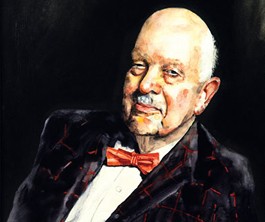
May 5 marks American culinary legend James Beard’s 105th birthday anniversary. Each year, the James Beard Foundation, located in Beard’s own Greenwich Village Brownstone, hosts a Beard birthday-bash-cum-culinary-awards-ceremony featuring dishes culled from Beard’s own recipe book. If you’re gambling on your plane flying to N.Y.C. Monday to catch this annual event, get your gastronomic juices going early and pick up some gossipy schmooze-room tidbits by attending “The Enduring Impact and Influence James Beard on American Food” this Saturday at COPIA.
Eminent food consultant, NYU department of nutrition, food studies and public advisory board chair and Bohemian contributor Clark Wolf moderates a panel of three eminent others, including San Francisco Chronicle food and wine critic Michael Bauer; author, nutritionist and food scholar Marion Nestle; and Jim Dodge, Bon Appétit Management’s director of specialty culinary programs, noted author and renowned pastry chef.
In 1981 Beard cofounded NYC Citymeals&–on-Wheels, a nonprofit that to this day provides meals to elderly New York shut-ins—which conveniently segues into announcement of the ninth annual Council on Aging Meals on Wheels Derby Day fundraiser, to be held Saturday at the Sonoma-Cutrer Vineyards. This blowout features two Iron Chef &–style competitions, tunes by the Fourth Street New Orleans Jazz Band, Sonoma-Southernish dishes prepared by local celebrity chefs, a silent auction and a chance to live-bid on a gourmet dinner for 12. The event finishes you off with the grand running of the Kentucky Derby projected on two monster screens.
Meals on Wheels Derby Day Chef Competition starts at 11am Saturday, May 3, at Sonoma-Cutrer Vineyards, 4401 Slusser Road, Windsor Tickets are $135. Call 707.535.0143 or go to www.councilonaging.com.
NYU Critical Topics Series at COPIA runs 2pm to 3:30pm, Saturday, May 3. Tickets are $10. Wine and cheese reception and book signing afterwards. COPIA is at 500 First St., Napa. Tickets can be purchased by phone at 707.259.1600 or 800.51COPIA.
Quick dining snapshots by Bohemian staffers.
Winery news and reviews.
Food-related comings and goings, openings and closings, and other essays for those who love the kitchen and what it produces.
Recipes for food that you can actually make.
We Are Family?

Picture two part-time workers. Let’s call them Dick and Jane. Each works 25 hours a week at Costco. Dick stands just inside the front door making sure customers flash membership cards as they enter. Jane stands at her demo station cooking, promoting and serving samples to hungry customers. Dick and Jane work inside the very same Costco, have each managed to clock in 1,300 hours and were each hired exactly one year ago today.
So do Dick and Jane both enjoy Costco’s legendary high pay and perks? Most folks would assume yes, but guess again. This year, Dick has earned $2,600 more than Jane. Upon eligibility, Costco will foot the bill for most of Dick’s health insurance, including dental, vision and prescriptions. Dick receives paid holidays, vacations and sick days, a 401k retirement plan, a free life insurance policy, weekend differential pay, stock options, profit sharing and eligibility for yearly bonuses—a veritable cornucopia of goodies. Within four or five years, Dick can expect to earn Costco’s average hourly wage of more than $17 a hour.
Then there’s Jane. After her 1,300 hours spent shoveling out chicken nuggets and jellybeans, Jane takes home 20 percent less than Dick, a 401k option and a Costco holiday pie. With her one mandated 25 cent an hour raise each year (and never a penny more), Jane can expect to attain Costco’s average hourly wage by the year 2040.
In-House Poor House
We’ve always been in favor of improved wages for workers. When you have a strong middle class, they want to buy more stuff at Costco.
—Jim Sinegal, Costco cofounder and CEO
While widely touted as America’s most generous and progressive corporate retail employer, Costco nonetheless ensures that about 10 percent of its in-house workforce receives virtually none of its much-trumpeted compensation bounty. No one outside the industry seems to know it. Product demonstrators are poor cousins once removed from the rest of the Costco family. In fact, even when compared head-to-head with Costco’s notoriously low-paying arch-rival, Wal-Mart’s Sam’s Club, Jane would do significantly better sampling for Sam’s. Every family has skeletons in the closet, and this one has lurked in the shadows behind Costco’s glowing press coverage for 20 years.
What accounts for the enormous disparity between Dick and Jane’s remuneration package? Dick works for Costco, while Jane, who works at Costco, doesn’t actually work for it. Instead, Jane works for either Warehouse Demo Services, based in Kirkland, Wash., or for its mirror-image counterpart, Club Demonstration Services, headquartered in San Diego. For the last two decades, Costco has contracted with these two independent companies to provide them with in-store product demonstrations. Each company was created to service Costco, and Costco alone. But to untangle why Costco pays its “Demo Dollies” even less than the bad boys from Bentonville requires a short rewind.
Caste System Biz Model
Virtually none of the sins of modern capitalism are at Costco.
—Costco board member and Warren Buffet business partner Charles Munger
Costco CEO Jim Sinegal cofounded the warehouse operation together with current chairman of the board Jeffrey Brotman in 1983. They entered an emerging market that would soon be dominated by another newcomer, the Wal-Mart-owned Sam’s Club. But the first kid on the warehouse retail block was actually Sol Price and his Price Club, which started selling wholesale/retail seven years earlier.
Six years before this partial merger, Club Demonstration Services (CDS), a subsidiary of Daymon Worldwide Demos Company, was formed to provide sampling services for Price Club stores. Two years later, Costco struck a similar deal with Ken Chamberlin, one of its in-house brokers. Chamberlin’s company would become Warehouse Demonstration Services (WDS). Following its partial merger with Price Club in 1993, Costco and its founders ultimately emerged to run the combined operation under the Costco moniker in 1997, retaining both CDS and WDS as its exclusive in-house vendor-demonstration services.
Warehouse Demonstration Services now employs 6,000 people in 160 Costco locations throughout the Northwest, the Bay Area, Los Angeles, Alaska and Hawaii; CDS staffs demonstrators in 225 Costco stores stretching across 32 states and Puerto Rico. Both provide their services exclusively to Costco, are permanently housed in and affixed to every single Costco nationwide—and offer equally anemic pay and benefit packages to their product demonstrators.
And just how close are these companies to Costco? Repeated calls over the course of two weeks were made to WDS corporate offices in Kirkland. I was told that in order to speak to company president Ted Coehn, the interview would first have to be cleared by Costco corporate management. When asked if WDS was not an independent company free to speak to whomever, the reply was, “Yes, but we work very, very closely with Costco.”
The contractual arrangements each of the two demo companies signed with Costco are remarkably similar, if not identical. When asked about this, Andrea Morgan, CDS director of human resources, confirmed that “a lot of those things that are structured for WDS are structured the same for our company. With our contract with Costco, we’re working with their corporate headquarters up at Issaquah [Wash]. So generally any contract conditions are going to be the same between WDS and CDS.” All this makes perfect sense, but I had a nagging feeling there was more to it than that.
Demo Dudes & Dollies
We treat [in-store demonstrators] like family, of course. They’re in all our buildings.
—Rohnert Park Costco general manager Dave Renz
With Costco corporate’s eventual blessing granted, the opportunity to speak with WDS president and CEO Ted Coehn was at hand. I was curious about his perceptions concerning the general financial well-being of his demo operatives. Coehn responded, “Our experience is that the majority of our employees are people who are not supporting themselves or have to support a family on this income.”
Specifically, Coehn said, “We have lots of retirees who have pensions and have Social Security, and this is a great way for them to get out of the house and get a little pocket money and buy their kids some Christmas presents. The majority of the people working for us are not people who are living in trailers or are one paycheck away from living on the streets.”
But Coehn’s slant doesn’t match what I heard from a host of WDS product demonstrators, most of whom declined to be named for fear of recrimination. Take, for example, what David Gentner wrote in an email. Gentner’s been a WDS “Demo Dude” at the Rohnert Park Costco for six years. According to Gentner, “Most [demonstrators] work less than 30 hours [a week] and clear eight-something dollars [an hour]. Most clear less than $1,000 a month.” Gentner added, “With other costs, it is clear that most [demonstrators] are below poverty level and qualify for food stamps. I personally qualified for earned income credit for the first time, and it was not for a child or military service or illness, but because my income was just too low.”
Another respondent described demo-folk economics this way: “We are poverty-level paid employees. Some of us have other jobs, but for others, this is it. I do childcare on the side, but it’s not something I can count on.”
Another worker said she’d been working inside Costco for the better part of 20 years. “I didn’t intend to work that long,” she admitted. “We got nothing. No overtime for working Sundays. No Christmas bonus. Nothing, nothing, nothing, nothing, nothing. A paycheck. That’s it. That’s all we get.”
But the most damning comment came from a former WDS sampler in Novato, who said, “WDS often hires people who are already disadvantaged, and then exploits them—aging folks, recent immigrants and disabled. Why can’t all workers share in the embrace of Costco’s prosperity? People who have any choices won’t put up with WDS.”
Bullet-Proof in Bulk
We pay much better than Wal-Mart. That’s not altruism. It’s good business.
—Jim Sinegal
Costco is going gangbusters. While most other retailers sputter and slump, Costco’s earnings jumped 12 percent from last year. Costco’s earnings soared to double-digit gains in nine of the last 10 quarters. One reason for this is that Costco’s customers tend to be more affluent than its rivals. The average Costco-member family income clocks in at $22,000 a year more than the nation’s average. This means that Costco has been bulletproof in an economy that lost 80,000 jobs in March alone.
In fact, as economic conditions worsen, Costco, with its low-priced, high-quality merchandise, arguably becomes a more desirable place to shop in tough times than in flush times, when convenience shopping can trump price. The result is a constant boom. “They end up taking share in good times and in a weaker economy,” says analyst David Schick of Stifel Nicolaus Financial Corp.
Costco could offer the financial muscle to ensure an arrangement with WDS and CDS that provides better wage/benefit packages for its daily in-house demonstrators. Sam’s Club did it. But this is not to say there aren’t those, especially on Wall Street, who would oppose such a move. One widely circulated quote has Bill Dreher, a retailing analyst for Deutsche Bank, complaining, “From the perspective of investors, Costco’s benefits are overly generous. It’s better to be an employee or a customer than a shareholder.” Unless, that is, you happen to be Costco-based Demo Dolly.
Costco sets the high-water mark for employee considerations in our domestic retail universe. Progressives find it hard not to cheer on Costco CEO Jim Sinegal as he takes George Bush to task, lends his support to raising the minimum wage, champions universal healthcare or makes a journalist’s day by providing spicy liberal business-mogul quotes. Sinegal insists on being paid no more than 10 times what his average in-house worker makes. Of course, Sinegal is a centimillionaire from Costco stock, but even us hairsplitters would expect that.
It’s almost inconceivable that, with Costco’s stated policy to nurture the middle class by example coupled with its financially sound and profitable business model, it is incapable of bettering the financial well-being of the thousands of Demo Dollies working beside well-paid employees each and every day. Who, if not Costco, exemplifies proof that a satisfied, well-paid workforce out-performs exploited drudges every time? Costco could insist that WDS and CDS conform to its employee-treatment standards. Or it could do what Sam’s Club does and hire product demonstrators as employees. Costco simply chooses not to do so. How does it justify this inequity? Repeated interview requests to high-level Costco management over a course of several weeks recieved no response.
Extra Upside-Down Logic
We are a company that promotes 100 percent within the company.
—Jim Sinegal
Were they to hire on at Sam’s Club, our Jane and Dick, performing the very same tasks they had at Costco, would get equal pay and benefits. Dick would take a massive financial hit, though, while Jane would have an array of previously unreachable benefits floated her way. Whereas Costco designed a two-tiered in-house worker caste system, divided and decidedly unequal, at least you can applaud Sam’s Club for parity. Fact is, Costco’s indie demo-firm contract strategy wouldn’t surprise a soul had it been the big bad Bentonville banditos shaking down the workforce.
Costco is well known for and justifiably proud of its policy of advancing workers from within. But a Costco corporate manager who declined to be named told me that Costco has no policy favoring WDS employees who would like to improve their lot by working for the parent company. In fact, some have argued there is a contra effect, as the tendency would incline Costco not to “fish off the WDS dock.”
Compared to Costco, everyone at Sam’s, including part-time food demonstrators, is a legitimate employee, eligible for health insurance, stock options, store bonuses, paid vacation, sick and holiday time, a 10 percent discount on merchandise—and even a free Sam’s Club membership card. This, however, is not the case at Costco.
“Costco has thousands of contractors and vendors,” WDS’ Coehn said. “They can’t subsidize all the people that they work with. Their first priority has to be to take care of their own employees and take care of their members by providing a great shopping experience and great prices and great products.”
But thousands of different venders don’t work inside Costco stores each and every day; WDS and CDS do. It seems that Costco’s choice was to deal away 10 percent of those working under its roof each day in order to save the additional expense, instead of making them bona fide employees like Sam’s Club does. Instead, Costco chose to encourage “independent” companies to, in effect, subsidize Costco—on the backs of low-paid demonstrators.
So it appears that Coehn has it upside down. It’s the Demo Dollies who are subsidizing Costco, providing their time and energy at less than the head-on competition pays for the same workforce Evidence would sugges a classic case of corporate hypocrisy and worker exploitation. Maybe Costco and, by extension, its two demo-firm partners have their heads in the clouds when it comes to this imbalance. But the fact remains: Costco purposely set up this inequitable, parallel hiring structure. Sam’s did not.
Costco retains its lauded profile, while low-paying independent demo companies do the dirty work. That’s a pretty sweet financial deal for Costco, but not for the Demo Dollies.
And besides, is this any way to treat family?
It’s High Time

The issues around medical marijuana are not funny,” says Jewel Mathieson, a Sonoma-based poet and patients-rights activist. “This is not some Cheech and Chong movie; this is real life, and medical marijuana is about finding a way to live life at a time when that’s the hardest thing to do.”
With her husband, former Sonoma city mayor Ken Brown, Mathieson is the driving force behind the May 3 Medical Marijuana Educational Forum and Festival. The event is timed to coincide with the 10th annual World Wide Marijuana March (www.worldwidemarijuanamarch.org), taking place in cities all over the planet the same weekend. The international event, which seeks to erode opposition to the legalization of cannabis, is only partially focused on the medical uses of the famous weed, applications that are at the heart of Mathieson’s current passions.
“Our emphasis is entirely on medical marijuana,” she says. “We see the Santa Rosa event, which we hope to be the first annual event of its kind, as an educational festival, though we also hope it will be a lot of fun, and think it may draw people who are curious as well as those who already have an opinion.”
A breast-cancer survivor, Mathieson was forced to drive from her residence in Sonoma to Santa Rosa, the location of the nearest medical marijuana dispensary, to get medicine during her treatment. She often made the drive while suffering the debilitating effects of chemotherapy. Cannabis, she had discovered, was the only drug that effectively minimized the depression, nausea and appetite loss she suffered. There are currently five operating medical marijuana dispensaries in Sonoma County—three in Santa Rosa, one in Sebastopol and one in Guerneville. With the help of Brown, Mathieson attempted to open a medical marijuana dispensary in Sonoma last year, and after meeting with unexpected opposition from the community, decided that the way to change the climate is through educating the public.
“As a family member of someone suffering from chemotherapy treatments and the effects of radiation,” Brown says, “I’ve seen firsthand how much help marijuana can bring. When you think you’ve lost your loved one and then you get them back—they’re eating again, they can be active again, be themselves again—that’s a major thing.”
“People just don’t get it,” Mathieson says. “So this is an opportunity to hook in with an international event that already has momentum, and to use that momentum, hopefully, to establish a dispensary in Sonoma.”
The day will feature screenings of the film Waiting to Inhale, by award-winning documentarian Jed Riffe; educational booths and crafts; panel discussions; appearances by numerous medical marijuana experts (including David R. Ford, author of Good Medicine, Great Sex! ); and just for fun, performances by the bands Gator Beat and Stone Fish. Mathieson will make a special presentation to State Sen. Carol Migden, who will take a break from her re-election campaign and other concerns to speak on the subject of medical marijuana, an issue she’s supported through various pieces of legislation she is working to get passed by the California senate.
“We’re honoring Sen. Migden that day,” says Mathieson, “because she’s done some very important legislation supporting medical marijuana advocates, protecting both the dispensaries and patients.”
In January, Migden proposed SJR 20, which encourages the federal government to respect a state’s compassionate-use laws. Migden’s other medical marijuana bill is SB 1098, which would grant cannabis dispensaries amnesty from having to pay back taxes or fines on what they’ve sold up until now. This, many believe, will encourage underground dispensaries to come above-board and start operating like any other business, with the controls and oversight—and taxes paid—that would be imposed on any other similar business.
“The good people of California approved medical marijuana for medicinal purposes when they passed Proposition 215 in 1996,” says Migden, who was recently in Santa Rosa to address a meeting of the Sonoma County Teachers Association. “At that time, the people of California made a distinction between drug users and hardened criminals. Anecdotal or otherwise, it’s commonly held that marijuana is useful for people when they are ill. We also hear great outcry about the inadequacies of the healthcare system, and there are folks who would rather self-medicate at home to stave off their aches and pains or to increase their appetite. Under strict and supervisory conditions, it is the people’s policy to allow all of that.”
This of course contravenes federal policy, and Migden believes that George Bush’s swan song will be an attempt to eradicate marijuana dispensaries and clubs from this and all other states where similar programs exist.
“We’re trying to make a case,” she says, “and I believe this senate resolution will be passed, calling upon the federal government to back off, to quit persisting with raids, to not endeavor to pulverize these dispensaries and penalize their landlords. But I do feel we are fighting the clock, as this particular president, whose job expires at the beginning of ’09, tries to do as much as he can before he leaves to eradicate these kinds of facilities.
“We know that the federal government is now threatening to seize property from landlords who may indeed rent to these kinds of marijuana dispensaries,” Migden continues. “The federal government, heretofore, has kind of had a hands-off policy in regards to Sonoma County, along with Santa Cruz, San Francisco and other places where the population has firmly demonstrated its commitment to allowing medical marijuana to be used medicinally. I’ve proposed these two bills, in part, to stop the total elimination [of these facilities], because then it becomes a moot point about how we think these clubs should operate.”
According to Migden, a large number of marijuana dispensaries are eager to apply for business licenses, operate like other businesses and pay taxes like other businesses, but are concerned that when that day arrives and the Feds treat them like any other business, they will be charged with back taxes for every year they’ve operated since the medical marijuana law was passed 12 years ago.
“This federal prohibition is a great disincentive, because anyone seeking to pay taxes knows that there could be reprisals of one kind or another,” she says. “Medical marijuana has become an acceptable part of most Californians’ vocabulary, and it’s time to find a way to stabilize these medical marijuana services and outlets if it is the will of the people—and it seems to be—to pursue allowing cannabis to be used as medical relief.”
The first annual Medical Marijuana Educational Forum and Festival takes place Saturday, May 3, from noon to 5pm, with awards and presentations slated for roughly 2pm. Grace Pavilion, Sonoma County Fairgrounds, 1350 Bennett Valley Road, Santa Rosa. Free. Food will be available for sale. 707.256.9706.
Corporate Commitment
The third annual Sustainable Enterprise Conference, slated for May 2, features expert keynote speakers, exhibitors and four tracks of workshops. Organized by the Sustainable Enterprise Coalition—a group of Northern California business leaders, university faculty members, nonprofit leaders and entrepreneurs—the goal of the conference is to promote sustainable business practices and to provide tools and resources that “balance economic viability, environmental responsibility and social equity.”
I speak over the phone with one of the keynoters, Pic Walker, of Blu Skye Consulting. Originally of Healdsburg, now located in San Francisco, Blu Skye is known in part for its work on behalf of what many in the environmental movement view as an evil corporate behemoth: Wal-Mart. Walker’s presentation for the conference is “Creating Business Value Through Sustainability: The Wal-Mart Journey.” Walker says that at Blu Skye, the focus is on practical tools to make businesses more sustainable and to help shift the mindset within a company so that people are thinking through this lens. (I have a vision of the corporate share-holders of Wal-Mart looking through these Coke-bottle-size lenses, trying to visualize sustainability without losing any of their profits.) But the idea, Walker says, is not to eliminate profits; the idea is that a business can save money if it begins to adopt sustainability measures. If saving money also means saving the environment, then perhaps there is nothing here to quibble about.
Walker says that the three goals for Wal-Mart are to eventually reach a point of zero waste, 100 percent renewable energy use and to have more sustainable products on its shelves. Just by changing light bulbs, the company can save $1 million a year. By reducing packaging, more products can fit on a shelf. By working with the fleet trucks, massive amounts of fuel can be saved. By encouraging employees to adopt a “personal sustainability promise,” or PSP, Wal-Mart can reduce healthcare costs and increase employee productivity. (Many of the PSP goals seem to revolve around weight loss, a need possibly fueled by the fact that Wal-Mart provides its employees with only one common food option, a McDonald’s inside each store.)
After speaking with Walker, I decide to further investigate the decision of Wal-Mart’s CEO Lee Scott to transform Wal-Mart’s image from one of the greatest corporate offenders to a model of sustainable business practices, and to find out more about this PSP. The man responsible for this gem is one Adam Werbach, founder of Act Now, an environmental consulting firm that helps companies “capture the emerging green customer base.” Werbach was fired from his position as president of the Sierra Club after his decision in 2005 to take on Wal-Mart as a client.
This small bump in his career obviously did nothing to squelch his creative genius, as he and his consulting team soon came up with the PSP, the goal of which is to get all Wal-Mart employees to commit to a behavior change that will benefit their own health and that of the planet. This voluntary plan, while not nearly as good as, say, a pay raise, seems to be helping hundreds of thousands of Wal-Mart employees learn how to make a difference. The plan reeks of condescending rhetoric, but if Werbach is correct and even a small step toward sustainable living is a step in the right direction, then getting underpaid and overworked Wal-Mart employees to use “positive psychology” so that they can be more productive out on the floor is a good thing. I guess.
Wal-Mart aside, the conference promises a host of interesting things to do and hear. Other speakers are John Harrington, president of Harrington Investments, a socially responsible investment-advising firm, and Jared Huffman, the Sixth District assembly member who is a supporter of AB 32, legislation to cut back on California’s CO2 emissions. Exhibitors such as Benziger Winery, Summerfield Waldorf School, KRCB television and radio, and the Sonoma Valley Vintners and Growers Alliance will be available to showcase the sustainable aspects of their businesses and organizations.
The event is arranged in “tracks,” so that every attendee can find workshops tailored to their needs. Track A is for large and medium enterprises, track B for small enterprise, and entrepreneurs, track C for strategic thinking and visionary leadership and track D for those just getting started on the path to sustainable business practices. For anyone interested in sustainable enterprise, as well as those (such as myself) who love “meals included” happenings, this is an event well worth a Friday.
For more information on the Sustainable Enterprise Conference, go to www.sustainableenterpriseconference.com.
Senior Classics

When I grow old, I shall not wear purple. I shall instead live someplace dark and dreadful, surrounded by forbidden books, masking the smell of my decay with clouds of some as yet uninvented incense that doesn’t make my nose run. I shall look exactly like Ian McKellen, full of decades’ worth of vices no clean person wants to even think about.
I will be the master of the macabre, the epitome of evil, the most sinister man to crawl the face of the earth. I’ll be devoting myself utterly to music, trying to master the well-known Bach Toccata on the organ at 3am, my way of letting the neighbors know I’m thinking about them, even while they sleep. I’m going to open doors no man should enter. I’ll prop them open with eldritch rubber doorstops from some Lovecraftean hardware store. If I should break wind, as old men must, I’ll tell visitors that it’s just a gust of brimstone left over by a recent visit from my friend for eternity, Beelzebub. In comparison, Aleister Crowley will look like the asthmatic punk he was.
So it is with mixed emotions that I watched the documentary Young@Heart, “starring the Young@Heart chorus.” The ordinary person would see this documentary as what it seems to be: a ringing endorsement of elders who cannot be defeated by the rigors of age.
In Northampton, Mass., Bob Cilman has kept a choral group of senior citizens going for some 25 years; some come and, naturally, some go. The lineup as of 2006 is observed on its way to a big public show at the local art center, along with stops to entertain prisoners at a local jail with Dylan’s “Forever Young.” My favorite part: the total mawkishness of the song is overcome by the serious surroundings. Here, the chorus offers a musical benediction to a group who probably never thought very much about what their own old ages would be like.
The peppy British director Stephen Walker is one of those overtalkers, with the upbeat, impossible-to-tune-out persistence of a tour guide. Repeatedly, he exclaims over the efforts of this hardworking group, and he is repeatedly flabbergasted by the urge of these old people to perform. Over the months of observation, the group is driven through some more modern compositions, such as the Ramones’ “I Wanna Be Sedated,” “Stayin’ Alive” and “Schizophrenia” by Northampton’s own Sonic Youth.
On the whole, these are all relatively simple songs, if often beyond the ken or outside the taste of some of the singers here. (One interviewee, Eileen Hall, misses the old days when they used to sing “Yes, We Have No Bananas.”) There’s something touching about hearing a singer testing his limits. The rhythms of James Brown’s “I Got You (I Feel Good),” for instance, are a real stumbling block. On a more obvious level of pathos, these are men and women singing with some of their last breaths. Especially sad is one Fred Knittle, a hearty joker with a big voice, who is losing control of that voice due to the ravages of a bad heart. The notes comment that Knittle had to be wheeled to the camera because of his health.
Even as one mentally plans one’s own retirement during the slow parts of the show (can vultures be domesticated? do you suppose they would gnaw on the electrical wiring?), one admires the bravery here. In particular, Hall, an aged former stripper from England, keeps her flirtatious streak; in her own way, she insists she’s the same person she always was.
I’m a longtime fan of Clyde Forsman, the octogenarian musician who was at the core of Those Darned Accordions; Forsman’s version of the Rod Stewart sleazefest “Do Ya Think I’m Sexy” is never without sex appeal. I wanted to encourage this film when I first heard about it, even if it meant overcoming my lifelong prejudice against the life-affirming.
Others might have less reservation and just wonder at the spryness, bravery and humor of the cast. Young@Heart demonstrates the toughness of old people close to the end, even when they’re weakened with hospital stays and surgery and loss. It’s a great subject, but not a great film, because of the glancing (might one say youthful?) impatience of the camera and the director, urging us all to move along.
‘Young@Heart’ opens on Friday, May 2, at the Smith Rafael Film Center (1118 Fourth St., San Rafael; 415.454.1222) and the Rialto Lakeside Cinemas (551 Summerfield Road, Santa Rosa; 707.525.4840).
New and upcoming film releases.
Browse all movie reviews.
For Shame
Hook and Sling
Cinco de Mayo: North Bay
For the Record
God’s Commune
Beard bash
We Are Family?
It’s High Time
Corporate Commitment
Senior Classics



FOLLOW US
Copyright © Weeklys All rights reserved.
Our Publications
