“In Its Entirety”: Built to Spill and Liz Phair

3

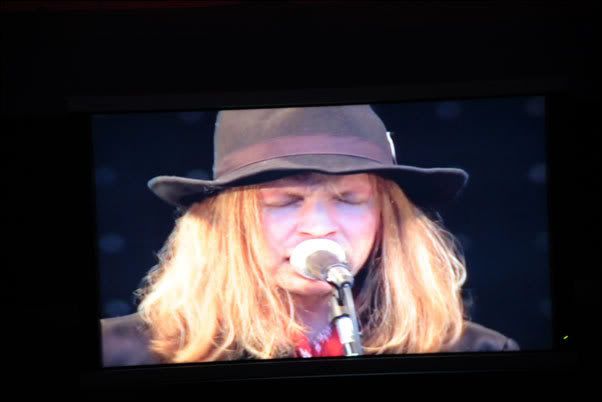
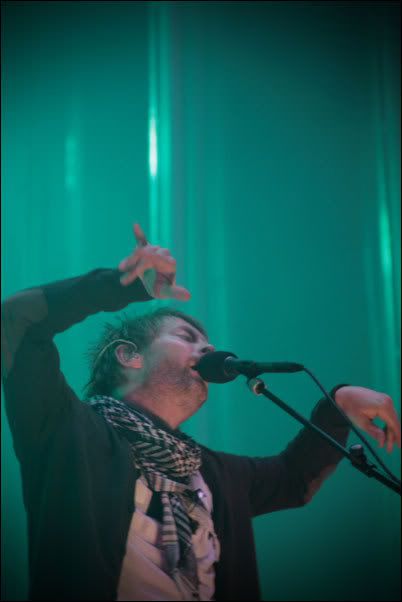
The news hit like a one-two kiss of sloppy, wonderful indie-rock love: both Built to Spill and Liz Phair have announced that they’ll perform their great masterpieces—Perfect From Now On and Exile In Guyville—in a series of shows around the country this year.
I’ve fielded countless questions about if I’m going to these shows, because of a truly million-to-one coincidence: I myself have actually performed both of these albums.
Okay, so maybe it’s not a million-to-one shot, but it’s pretty uncanny: in 2001 as part of a duo, and then again in 2006 with my band, Santiago, I learned and performed Perfect From Now On in its entirety. Earlier this year with my friends Dean and Steve, I learned and performed Exile In Guyville. And now, as if to answer our weird but urgent prayers, both albums are getting the ‘In Its Entirety’ treatment by the OGs.
I’m not claiming any kind of cosmic credit for altering the creative waves of the universe. Lets face it, Sonoma County’s not that big. But I will gladly use the news as a reason to talk about what it was like to learn two of the best records of the 1990s.
As anyone familiar with Perfect From Now On and Exile In Guyville can imagine, they were incredibly daunting projects to take on, especially since I had to not only figure out some truly otherworldly guitar parts but also remember hundreds of lyrics. Yet each album compelled me. They’re both crammed with mystery. I felt like if I could wrestle with them in the most direct way possible—figuring out how to play them, and then playing them in public—I could unlock some of that mystery.
When I first heard Perfect From Now On I hated it. All the songs were long and slow and repetitive, and it didn’t grab me at all. Then Built to Spill put out Keep It Like A Secret, which I instantly loved. “Finally,” I said, “I understand what all my friends have been crazy about!” So I went back and listened to Perfect From Now On. I still thought it was a boring formless piece of shit.
It was, however, a boring formless piece of shit that I kept coming back to, and I can’t explain how it happened, except that one night I was sitting alone in my apartment half-drunk, pitifully alone and staring at the carpet, and “Velvet Waltz” came on, and Doug Martsch sang those lines:
And you’d better not be angry
And you’d better not be sad
You’d better just enjoy the luxury of sympathy
If that’s a luxury you have

Suddenly, Perfect From Now On was the most incredible revelation in my entire life, bursting from its ruminations on the meaning of eternity to its sharp, final accusation: what are you gonna do? As a salve for one of my darkest hours, I listened to it every day and every night for a week, over and over. It was an enormous ocean, and I swam through it like a lost soul from a shipwreck, looking for an island.
I’d heard about a guy named Nick Jackson who played guitar and who knew how to play some Built to Spill songs, so I called him completely out of the blue. “Hi, Nick? Hey, my name’s Gabe. Rob gave me your number, and he says you know some Built to Spill songs on the guitar. I’ve got a totally ridiculous idea for you, and feel free to say no, but do you want to learn Perfect From Now On with me and play it at a show?”
His classic response: “Uh, sure. What’s Perfect From Now On?”
He went out and bought it and quickly and amazingly learned every single note, and we started practicing two weeks later. Just us and our guitars, with me singing. The show, at the Old Vic, went well, and afterwards I felt like I’d not only conquered the record in a way, but also made personal amends for talking so much shit about it all those years.
Fast-forward to 2006, and Santiago’s just finished recording Rosenberg’s After Dark, a sprawling concept album all about Santa Rosa. We needed to clean out our systems, so we started fucking around with There’s Nothing Wrong With Love. But it didn’t seem right, and we kept coming back to the songs from Perfect From Now On. It sure sounded a lot better with a full band. I called up Nick Jackson, who was down to fill in again on guitar, and we planned the ultimate joke: for our record release show, we’d play someone else’s record.
It was such an excellent idea. Then my world fell apart. In the middle of rehearsing, my mom died in a terrible car accident. Suddenly Perfect From Now On took on an entirely new emotion for me, and all of its intertwining mystery came rushing back. There was a lot of pain and confusion and heartache going on, and just as the album had earlier given me a salve for my solitude, it sprang up again and offered me a cathartic way to say goodbye.
The show we played was a blur. I remember only one thing vividly about it: singing those lines from “Velvet Waltz”—the ones about about anger, sorrow, and the luxury of sympathy. Someone recorded the show, and when I hear myself singing those lines today, I realize that I’m not one step closer to understanding Perfect From Now On. It’s still a vast ocean, and for as long as I spent swimming around in it, I never found the island. I like it that way.
Exile In Guyville is another story altogether.
I have an ex-girlfriend who listened to Exile in Guyville all the time when we were together. I’d heard about the album when a friend of mine saw Liz Phair on the cover of Rolling Stone, and at first I thought it was basically a wimpy soft-rock record with some token sex references thrown in for attention’s sake. I couldn’t understand why my girlfriend loved it so much, but how can you argue with a girlfriend who loves songs about sex? So I put up with it. She played it over and over.
Eventually, in a haze of prescription Vicodin and Seagram’s gin and English ovals, Exile In Guyville sunk in. I realized that there’s a lot of songs on the record (like “Explain it to Me”) that drone in a really cool way and some (“Dance of the Seven Veils”) that are just plain surreal, lyrically. Those are the ones that I really fell in love with. The eerie ones. My girlfriend kept on playing the ones about blowjobs, though. Years later, as our relationship soured, she kept turning to the blowjob songs for support, and I decided that I couldn’t understand her anymore at all if she still, after all those years, found more solace in “Fuck and Run” than in “Shatter.” So fuck her and fuck Liz Phair and fuck that record, I thought.
Songs don’t disappear. I eventually bought Exile in Guyville again, cuing up my favorite songs first, of course, and then listening to the whole thing. A healthy dose of distance from the mitigating circumstances of its arrival into my life helped me appreciate it all over again. And again, I picked up the phone and called some people and somehow talked them into learning it and playing it in public.
This idea actually had its genesis in 1995, when I distinctly remember walking around a small town in Indiana, waiting for a flat tire to get fixed, singing “Fuck and Run” in my best Johnny Cash impersonation with Alyssa. How crazy would it be, I asked, to take on the ultimate indie-rock feminist statement and perform it from a male point of view?
13 years later, I had even more of a reason to learn and perform Exile in Guyville. Liz Phair had started completely embarrassing herself with teen-girl-whore pop bullshit, and I needed to remind myself and others that she was once great. Also, there was a serious element of reclamation involved; a personal creed, I suppose, that I could love a record on my own terms, and that it didn’t belong to any one person, or to one ex-girlfriend, or to one gender, or to one line of thinking. Plus, a couple years after being stranded in Indiana together, Alyssa had died of a heroin overdose, and I always remembered that she thought it was a cool idea.
We learned the thing in about 4 or 5 practices, cramped into my small office room, and it was an amazing musical experience. Lots of unnerving surprises. I played piano on “Canary.” The show went incredibly well—even the songs about blowjobs—and I think, somehow, we achieved our goals. If nothing else, it was intensely satisfying.
My favorite Exile in Guyville song is still “Shatter.”
So anyway, the long and short of all this is that no, I don’t think I’m going to see Built to Spill perform Perfect From Now On in its entirety, nor do I fathom I’ll go see Liz Phair perform Exile in Guyville in its entirety. The purpose of going those kinds of shows is to commune, in the most direct way, with an album that you love, and I feel like I’ve already done that in the best way possible. Actually, I feel like I’ve inhabited those albums—and to paraphrase the song, I’m not sure I want to go back to the old house.

Harmony Festival: Missed Connections

1

Heath and Harmony… Damien Marley… – w4m – 28 (santa rosa)
Reply to: pe************@********st.org
Date: 2008-06-10, 8:04PM PDT
I am looking for the cutie that my friend and I ran into while we were obnoxiously weaving throught the crowd at the damien marley concert. You were in a blue collared shirt with small stripes. Your hair was longer but it was under a hat. My friend flirted with you, said you had a great smile, and you turned away and smiled as if you were embarrassed a little. I made a comment about how you had some Jordan’s on from the ealry 90’s, you laughed because you knew I was right.
I doubt you are from Santa rosa, but I hope you find this somehow and contact me….
———-
harmony festival -me.. berkeley woman…you -santa rosa guy.. – w4m – 32 (santa rosa)
Reply to: pe************@********st.org
Date: 2008-06-10, 7:09PM PDT
i never found you again….
we danced at arrested development… you had the nice hat …
then we danced on stage with kidjo… i left to go to the bathroom.. then you were nowhere to be found…
i though you were sweet and cute…. will you read this???? i dont know…
———-
In Serch Of A Girl Named Harmony – m4w – 21 (Harmony Festival)
Reply to: pe************@********st.org
Date: 2008-06-11, 12:52AM PDT
I am the guy you hung out with Sunday night. My friend and I gave you a ride home to Petaluma. I lost your number and have no idea how to find you. I hope somehow you or one of your friends finds this. You were such an awesome girl, I would like to see you again.
———-
Harmony Festival – m4w – 32 (santa rosa)
Reply to: pe************@********st.org
Date: 2008-06-09, 2:56PM PDT
You sat across from me at that back support booth. Your smile is too cute! I was drinking Iced coffee.
———-
Health and Harmony backstage – m4w (santa rosa)
Reply to: pe************@********st.org
Date: 2008-06-11, 8:28PM PDT
We met saturday after the show on the mainstage. I felt like we really clicked, had a lot in common, and enjoyed talking. I am afraid that I might have communicated something wrong in a text message to you later that night and now I am afraid of messing things up. I really liked you a lot and dont want to come on too strong and risk looking a new friend.
Hoping you might see this understand.
———-
TO ALL THE WOMAN AT TECHNO- TRIBAL – m4w (santa rosa)
Reply to: pe************@********st.org
Date: 2008-06-08, 10:04AM PDT
Really enjoyed the show. Just wish more of you lovely ladies would actually wear lesssssssss!!! I can literally have an orgasm just watching each and every one of you shake you things dancing and moving and a grooving to the scene. The costumes are one of the main reasons I go, to see the fish net stockings and the little skirts, short shorts and I just want to lick your toes… A HUGE THANK YOU GOES TO YOU ALL AND PLEASE REMEMBER LESS IS MORE!!!!!

The Dept. of Defense Wants Us?

0

The following is an actual email we received; after the jump, please amuse yourself hugely by reading P. Joseph Potocki’s businesslike reply.

Listing ID: 2223456108

Complete and update information to list North Bay Bohemian, as a supplier available for Department of Defense bid and sales opportunities in the 2008 Department of Defense Buyers Guide. The information on your company and products will be accessed by Department of Defense and military purchasing agents and buying facilities.

Please complete and submit before 06/20/2008 or you will not be listed.

The Department of Defense Buyers Guide is published by Federal Buyers Guide Inc., a private sector organization that has provided vendor information to the government for over 30 years. If you have any questions regarding pricing or information required to list, please don’t hesitate in contacting me.

Craig Heller

Vendor Listing CoordinatorPotocki answers:

Dear Sirs,

Thank you for the wonderful opportunity to feature our North Bay Bohemian defense industry services in your 2008 Defense Department Buying Guide.

Playing the Hand Dealt

06.11.08

It was a lukewarm evening eight disastrous years ago. Freebie microbrews splashed from iced kegs in the outdoor sanctum of the old AK Press digs in San Francisco’s Mission District. A couple hundred Bay Area radicals, anarchists and hang-dog progressives milled about gabbing or doing standups next to bookshelves inside the indie-leftie book distributor’s warehouse.

We’d all come to hear the featured speaker, veteran journalist and CounterPunch publisher Alexander Cockburn. It felt like homecoming for disaffected intellectuals and socially conscious optimists. When the time came to pontificate, Cockburn delivered the goods in spades, peppering razor-sharp political observations with verve and humorous insights in league with Voltaire, Swift and Twain.

But Alexander Cockburn got one thing terribly wrong. In pitching that we vote for the best and not settle for less, Cockburn strongly opined that George W. Bush would be, issue upon issue, a better president than Al Gore—even on the environment. Bush better on the freaking environment, I kid you not.

This isn’t to cast dispersions on Alexander Cockburn. Hell, I supported and voted for Ralph Nader, too. Twice. With California safely in the Dem column, we were afforded that luxury. However, Cockburn’s insistence that there wasn’t much difference between the two major party candidates, and that on balance Bush would be the better of the two, illustrates how progressive navel-gazing, particularly in battleground states, can lead to woes worldwide. By opting out of the old nose-hold, by not playing whatever quad-annual hand actually gets dealt us, we stand to lose every social necessity. Sure, four aces would be ducky, but even a pair of deuces beats folding and fading away.

It’s been eight years now since GW’s minions stole Florida. Then came Bush v. Gore, with the Supremes inflicting Boy George pathogens upon our entire planet. In his recent 60 Minutes interview, (mis)Justice Antonin Scalia arrogantly dismissed still-festering resentment at him and his cronies’ judicial coup as being “so 10 minutes ago.” To hell with the Constitution, insists Antonin the Mighty, laughing off his impeachable behavior like a smirking bully demanding we just get over it. And yet if we don’t play our cards right, a similar hand could play out again this November.

We face yet another rigged election. Doubters should read Mark Crispin Miller or Greg Palast. With Diebold, ID cards, voter caging lists, dirty tricks, targeted voter suppression and just plain old elephantine election fraud all well-oiled and thriving, how do we stop those who’d stomp off with yet another election? The answer, to borrow a current administration failure, is ballot-box shock and awe.

Shock and awe the sons of bitches by signing up, driving, calling and bugging the shit out of so many new and abused voters that even should the Repugs steal 20 percent of the vote, they lose in a landslide. If foreign-democracy numbers of Americans cast ballots in their own self-interest for the best candidate with a realistic chance of getting elected president, we just might beat the house. And with all his warts, shortcomings and question marks, the best candidate with a real shot at the presidency is Barack Obama.

All of which leads us to Hillary Clinton, or, more precisely—to Hillary Clinton’s supporters. Many fervent Hillary backers threaten to sit out the general election—or else to vote for Grampy McBush. I don’t need to explain why that would be stupid. But I do understand the disappointment, and even the rage. Really, I do. I decided to bite the bullet and switch from Green back to Dem this year in vain hopes the donkey herd would wake up and nominate someone who’d actually represent average people.

Dennis Kucinich was my pick among this season’s Democratic hopefuls. Kucinich was ignored and belittled by big media. He dropped out, so I opted for John Edwards. Frankly, both Clinton and Obama ranked pretty low on my list. But here we are and Obama’s it. He’s not what I was hoping for by a long shot, but compared to Bomb-Bomb McCain, and following eight horrendous years of neo-fascism, I’m willing to settle for second or third or fourth or even fifth or sixth best, and to do my part to prevent a repeat of the previous two presidential fiascos.

So to every Hillary backer, disenchanted Republican, new young voter, Reagan Democrat, unenthusiastic lefty, minority person, retiree, student, small business owner, unemployed person, working stiff—and to Alexander Cockburn, too—I propose we play out whatever’s left in our hand this time. The world can’t afford yet another would-be king of clubs dealing out our future from the Oval Office.

Open Mic is now a weekly feature in the Bohemian. We welcome your contribution. To have your topical essay of 700 words considered for publication, write op*****@******an.com.


Lewis deSoto

0

06.25.08

In a conversation that ranges from the early days of the U.S. nuclear weapons program to pondering the question of when the ordinary becomes extraordinary to discussing America’s schizophrenic desire to be a royalist monarchy within a democracy to defining what makes one object a counterfeit and one a simulacrum, one is really just talking about cars.Not any cars, of course. Old cars, like Chryslers. Hard-working autos, like GMC pickup trucks. The 1966 Dodge that led to a lifelong obsession. The mid-’60s Beetle that carried its own emergency fuel. Cars as ready-made objects. Cars poised for meticulous alteration. Art cars.

Midcareer artist Lewis deSoto, 54, whose résumé prints out at nine single-spaced pages, is a master of many genres. His breadth is actually breathtaking, moving fluidly as he does between conceptual installation work to photography to environmental land art to such public works as that found at San Francisco International Airport. His sculpture of the Buddha at his death, Paranirvana, is a 25-foot-long “balloon” made of cloth that features deSoto’s own visage for the face and is inflated with a fan during the day and deflated for both practical and metaphoric reasons each night. One version of the sculpture is owned by San Diego’s Museum of Contemporary Art; another has toured the country to great acclaim for almost a decade. He currently has a small one-man show, “Tales of Power,” at the di Rosa Preserve’s Gatehouse Gallery, which only recently opened its space to work not already found in collector Rene di Rosa’s personal holdings. Seated in his comfortable Napa home, deSoto admits to a certain restlessness that allows him to work on so many projects at once. “I get easily bored, so I tend to work in flashes,” he says. “I work on something for an hour and then I’m done. I’ll move to another thing and work on that for an hour. Sometimes I’ll even watch the clock and wonder how I’ll be able to stay working on something for another 10 minutes. Then I leapfrog to the next one.”

A full-time art professor at San Francisco State, deSoto’s active brain affords him many interests. Rabidly among them is the automobile, both as an expression of design and as an expression of emotion, of history and of power.

Consider a work like Conquest. A 1965 Chrysler New Yorker refashioned to imagine a fictional 1965 Chrysler DeSoto, Conquest is what an auto collector would deem to be “cherry.” In stunning, completely refabricated condition, Conquest is a counterfeit, a fiction. For example, Chrysler certainly never had an electron-microscope image of a smallpox spore nor a slim gold sword adorning its vehicles as Conquest does. Nor was it likely to consider its vehicle as an information conduit for European oppression of New World peoples.

The artist was naturally drawn to a vehicle with which he shares a surname. Perhaps less affectionate is his relationship to his centuries-old relative Hernando de Soto, one of the Spanish explorers who conquered the Incas and whom Chrysler honored with their trademark. Installed on the wall behind the vehicle is a long proclamation purportedly given in Spanish by de Soto to the Incans. The pope is the manifestation of God on earth, it reads. The king and queen are anointed by the pope. They demand your wealth and your land. If you resist, you will be killed. And, as this is ordained by God Almighty Himself, your death will be your own fault.

Conquest sports a vintage window sticker as if it were in a showroom. The Spaniard’s proclamation is replicated as the fine print. DeSoto the artist occasionally takes Conquest to traditional car shows. He also drives it on city streets. How does the vehicle manifest itself as art when it’s being judged for its “cherry” factor, how when on the street and how again when placed in a gallery? In which case is the ordinary made extraordinary?

Untroubled by such questions, car nuts give him prizes because they believe deSoto’s fiction that he has replicated an unknown prototype developed by Chrysler.

The other sculpture placed at the di Rosa doesn’t try to pass as something other than what it is: a 1981 GMC pickup truck that’s been entirely refashioned to comment on the wealth gained by Native Americans after the laws changed in 1981 regarding gaming and sovereign nations. Simply titled Cahuilla, the piece again draws on deSoto’s own heritage, this time in a nod to the Cahuilla tribe, based near Palm Springs, to whom he is related on his father’s side. Loud with the sounds of native song taken from an old wax cylinder recording from the early days of phonographs mixed with the beeps and bings of a modern day casino, Cahuilla has 7-7-7 for a hood medallion, the mason’s eye found on the dollar bill for a side ornament and lights flashing under the engine. But more subtle alterations deserve notice.

The cab’s upholstery is a blown-up reproduction of the edge of a 100-dollar bill which deSoto had woven for the piece. “When it’s abstracted like that, looks a lot like a Navajo image,” he says. The blanket covering the truck’s bed appears to be of indigenous design but is actually an outline of a craps table with the fabric woven with real silver and gold thread. The images that adorn it are taken from Cahuilla basket designs. “It’s a conceit to the idea of them being ‘crafts,'” deSoto says. “Indian crafts came about as a survival mechanism, a way of them being able to make money to survive.”

Back at his home, deSoto’s newest acquisition awaits transformation. A 1956 Chrysler Imperial sits in his driveway getting its first sanding before repainting. A massive vehicle, the Imperial sports images of eagles with crowns and a heraldic badge covering the trunk’s keyhole. “I like that confusion that we have in America about are we kings?” deSoto chuckles. “Are we a republic, are we a monarchy? We get confused. This car has a bit of that confusion: it’s Imperial, yet it’s American, so what does that mean?”

Citing Chrysler’s long relationship with the defense industry, including building the intercontinental ballistic missiles that eventually became space-program missiles, deSoto is considering putting a rocket roof rack on the Imperial or placing a bomb in the thing.

Opening the trunk, he unknowingly strikes metaphor. “I’ve got a lot of space,” he says aptly, “to work with.”

Lewis deSoto’s ‘Tales of Power’ shows through July 19 at the di Rosa Preserve’s Gatehouse Gallery. A discussion with deSoto and writer Anthony Torres is slated for Thursday, June 26, at 7pm. 5200 Carneros Hwy., Napa. 707.226.5991.


Museums and gallery notes.

Reviews of new book releases.

Reviews and previews of new plays, operas and symphony performances.

Reviews and previews of new dance performances and events.

Hidden in Plain Sight

0

06.11.08


Trevor D’Arcy and Nick Livingston are driving up the winding road to a lake. The air is thick with the scent of barbecue and wood smoke, but they aren’t going to the reservoir to cook, kayak, fish or camp. They’re going there because they’re geocaching—looking for hidden containers filled with tchotchkes using the Internet and GPS technology in what is essentially a thousand-man Easter egg hunt.

Geocaching became possible when the U.S. Army made its powerful global positioning system (GPS) technology available to the public. Dave Ulmer of Beavercreek, Ore., decided it would be fun to bury a bucket full of stuff in the middle of a field and then post the bucket’s coordinates on the Internet afterward. He did. The bucket was found in three days, and geocaching was born.

Now, eight years later, geocaching is played by legions of the technologically savvy. They’re using Internet bulletin boards and GPS devices to find geocaches—usually stored in Tupperware, but also sometimes in military surplus containers—and they’re posting the coordinates for other people to find on websites like www.geocaching.com, www.navicache.com or www.terracache.com. Geocaches have been hidden all over the North Bay. For something so common, almost no one knows about them. That’s because they’re hidden so well.

Some of the slyest of the sly will put their caches into things that people wouldn’t ever consider searching. One North Bay cache is a metal tube attached to a metal statue with a magnet. One legendary geocacher buys sprinkler heads from Kmart, puts geocaches in them and then puts them in public parks. Another local geocacher puts them up trees. There’s one above the Arctic Circle. They’re underwater.

D’Arcy and Livingston are after a three-part geocache with a cheesy Arthurian legend theme. They’re discussing how they’re going to get to the island in the lake where a geocache is supposed to be hidden, when park ranger Josh Laeder interrupts to tell them that the cache has gone missing. Someone found it, he says, and took it home.

This happens. It’s not unusual for people who aren’t actively searching for caches to stumble on them, especially the caches that are poorly hidden or hidden by people who think it’s a good idea to hide bomb-shaped caches in conspicuous places. One of the stupider examples of conspicuous geocache misconduct took place on Nov. 7, 2004, during the presidential elections when a large, bearded man named Jay Furr tried to hide a cache around the perimeter of the Los Angeles International Airport. His “I was hiding treasure for people on the Internet” defense didn’t fly with security.

However, geocaching is fun and safe as long as one obeys the law and remembers not to cross Homeland Security. Laeder says it’s mostly parents who take their kids up to look for a cache, and that it’s mostly the hairy survivalist types, not geocachers, who get in the way of the park authorities. D’Arcy and Livingston ditch the plan to get onto the island and head out for the next cache, located on a peninsula at the farthest edge of the lake. They find it hidden in a niche in a rock; inside it is an array of odd stuff: a piece of paper with a story about Merlin, lots of little pieces of Lego toys, a quarter, a stamp and a metal washer. Also in the container is a little logbook with the times and dates of the cache find. According to the logbook, someone else found the cache just a few hours earlier.

The two head off for the next cache, which is described as being hidden in plain sight, and spend the better half of an hour looking for it, but this cache, too, has gone missing. D’Arcy remembers a post on the Internet describing the cache as very easily found, which throws up a red flag for him. Figuring it’s probably been stolen, they head home.

In D’Arcy’s apartment, a discussion follows: even though two out of the three caches were impossible to find, something was accomplished. There’s the satisfaction that comes from knowing that there’s someone on the Internet who is hiding things, but not well enough to hide them from you. And there’s the pleasant knowledge that there’s a group of adult people who don’t know each other but play hide-and-seek with little pieces of plastic and military hardware. Nothing wrong with that.


Men Behaving Badly

0

06.11.08


Men who do bad things are a big deal these days. From movies like There Will Be Blood and Semi-Pro to recent Broadway hits Cry Baby and The Seafarer, examinations of naughty, scheming guys are all the rage. It’s even true in the North Bay, where two shows about guys who commit questionable acts are on the boards, both featuring strong performances by pairs of local actors.

“I’ve wanted to do this play for years, and I’ve wanted to do it with Ed since the first time I saw him act,” says actor Eric Burke. Burke is discussing both Sam Shepard’s classic topsy-turvy masterpiece True West and actor Edward McCloud, with whom Burke is now co-producing and performing in a strong, satisfying new production at the Spreckels Performing Arts Center.

Directed by David Lear, who was handpicked by Burke and McCloud to guide them through Shepard’s most intimate play, this production is notable because, after years of collaborations with various North Bay theater companies, the threesome are doing it on their own, working entirely outside the protections and confines of any established theater company.

“When a project moves you and motivates you and inspires you as strongly as this project has inspired Ed and me,” Burke says, “you can’t wait for the opportunity to be handed to you on a plate. You have to go make it happen for yourself. That’s what we’ve done with True West.”

True West, which premiered in San Francisco 28 years ago this July, tells the manic-depressive, scary-funny story of two brothers whose lifelong sibling rivalry gives way to a rip-roaring dysfunctional showdown when the pair decide to collaborate on a Western screenplay. As the brothers’ actions begin to mirror the ebbs and flows of a typical western movie, the entire play becomes an examination of American masculinity and the downside of the great myth of the West. Toasters, fistfights and a truly nasty mother add to the action.

“It’s been a lot of work, making this happen,” adds McCloud, “not only acting this incredibly demanding material, but also producing it, financing it, thinking about how to promote it—all the stuff actors usually don’t have to think about because someone else [is running the show]. But I have to say, this has been an incredibly satisfying artistic experience, from every angle. True West, I mean—it’s Sam Shepard! How great that we get to do this work, and do it on our own terms.”

Such commitment to a project might seem madness to some, but as Burke and McCloud see it, that commitment is exactly the kind of thing that Shepard’s work tends to inspire.

“It’s been a long time since Shepard was performed in this area,” Burke says. “It just such good material. It’s dark, but it’s funny. Most of the other productions I’ve seen have ignored the fact that this is a comedy. [Director David Lear] gets that. So this will be dark, but there are gonna be big funny moments too. That’s what Shepard is so good at—shocking you to your core at the same time he’s making you laugh.”

Another play with two males as the lead characters accomplishes the exact opposite of the whole funny-drama thing. Ken Ludwig’s Leading Ladies, opening this weekend at the Sixth Street Playhouse, is a cross-dressing comedy with undertones of serious drama. This one leads with the laughs and then surprises with the substance.

“I’m 6-foot-5 in my bare feet, but in this show I’ll be even taller—because I’ll be wearing high heels,” says Shad Willingham, sitting beside Dan Saski, his co-star in transvestitism. “We were in full costume last night, so I’ve already experienced the high heels, and, yes, they take some getting used to.”

“I’ve been wearing heels in rehearsals for a week now, just to get comfortable with them,” Saski boasts. “People are getting suspicious, because I’ve become very at-home in heels.”

“That and because he brought his own high heels,” Willingham jokes. (For the record, Saski was issued his heels by costumer Pamela Johnson.)

In the show, Saski (best known for his work with the Sonoma County Rep) and Willingham (cofounder of the Rep before departing for several successful years onstage with the Oregon Shakespeare Festival) play two barely working Shakespearean actors who concoct a plan to inherit a fortune from a dying woman by impersonating her long-lost nephews. Because it’s reflecting Shakespeare, Steve and Max turn out to be short for Stephanie and Maxine, and the plot calls for the boys to switch plans and appear in drag.

“From day one of rehearsals, we’ve had great chemistry,” says Shad, for whom this role is a short stop on the way to a teaching job in New Orleans. “That chemistry is important because this play, at a certain level, is about the incredible bond between these two guys.”

“A bond that is threatened,” Saski adds, “when they start dressing like women and falling in love with people.”

Asked about the differences between OSF, with it’s annual operating budget of $24 million, and Sixth Street, where the beautiful sets are routinely constructed out of recycled hand-me-downs, Willingham insists that there is little difference in the one area where it really counts.

“The play’s the thing,” he says. “We’re doing what we do with less than I might be used to, but that’s what happens all over the country every single day in small theaters all the time. We’re taking a good story and we’re telling the hell out of it.”

“The high heels,” Saski laughs, “just make it more interesting.”

‘True West’ runs Thursday&–Sunday through June 29. Thursday&–Sunday at 8pm; Sunday at 3pm. Bettie Condiotti Experimental Theater, Spreckels Performing Arts Center, 5409 Snyder Lane, Rohnert Park. $17&–$20. June 15, bring Dad, Grandpa or your grad for one free admission; June 19 and 26, pay what you can. 707.588.3400.’Leading Ladies’ runs Thursday&–Sunday through July 6. Thursday&–Saturday at 8pm; Saturday&–Sunday at 2pm. Sixth Street Playhouse, 52 W. Sixth St., Santa Rosa. $14&–$26. 707.523.4185.


Museums and gallery notes.

Reviews of new book releases.

Reviews and previews of new plays, operas and symphony performances.

Reviews and previews of new dance performances and events.

Maudlin Street

0

06.11.08

Awful Conflagration of the Steam Boat Lexington in Long Island Sound on Monday Eve’g, Jan’y 13th, 1840, by which Melancholy Occurrence Over 100 Persons Perished. That’s the title given by Nathaniel Currier, of the 19th-century printmaking team Currier and Ives, to one of his earliest and most successful lithographs. Now, well over a century and many generations later, one of Currier’s direct descendants is bestowing similarly morbid titles on her work. “Two Shots to the Head.” “The Demon.” “Sleeping Dead.”

These are just a handful of many minor-key songs contained on Dark Overcoat, the debut album by Currier’s great-great-great-give-or-take-a-few-granddaughter, Emily Jane White, who stumbled upon Currier’s maudlin reputation while recently researching family genealogy. “I was like, ‘Oh my God, it’s in my genes,'” the 26-year-old says of her dark streak. “And my dad is very much the same.”

If recent write-ups in Rolling Stone and Spin and a successful tour of Europe earlier this year are any indication, White could be as important to San Francisco’s burgeoning indie-folk movement as her ancestor was to lithography. Also like Currier, she’s not going to do it by singing anything bubbly or light—or, for that matter, particularly contemporary, commercial or hip. “I’m kind of a classic person,” she says.

“I could listen to Bob Dylan forever.”

While most of the music emanating from the City by the Bay’s neckerchiefed hipsters pushes psychedelically toward the future through acts like Devendra Banhart, Xiu Xiu and Six Organs of Admittance, it would be remiss to ignore an equal regional pull into the past. Be it Two Gallants’ 78-rpm-era fingerpicking, Jolie Holland’s timeless and tortured drawl or Joanna Newsom’s infatuation with the Renaissance age, the Bay Area’s typically progressive thought stops short, it seems, in bearded and milk-faced lads and lassies who take up stringed shell and make merry in song.

White’s young obsessions with the past, in the form of Bessie Smith and Edgar Allen Poe, coalesce into the gothic storytelling of Dark Undercoat, a 10-song journey through the shadowy side of an already darkened imagination. Utilizing blues idioms, religious imagery and traditional icons, White’s lyrical content, at times doubled, acts like a demon of both shoulders who long ago killed off the angel. The recording’s atmosphere is similarly evocative, with squeaking cellos and rattling bass strings; close your eyes, and it’s like stumbling across a band of troubadours in the forest, warning of impending despair.

It might have helped that White grew up in a house built by her father on 30 acres of woodland outside of Fort Bragg, and that she took up horseback riding and reading Jack London and Shakespeare to pass the days. As for music, her parents had programmed a constant stream of Frank Sinatra, which she hated, but alternatives were few. “My first album ever? God, I think it was Madonna, on cassette tape.”

Going away to college in Santa Cruz, she says with an extended giggle, “was like going to a giant metropolis!” After playing in a reverb-laden surf-punk band and an all-female country group on the Central Coast, White took off to France, where she began accumulating material for Dark Undercoat. Upon returning home to Mendocino, she met Santa Rosa&–based musician John Courage, who encouraged her to record with fellow Sonoma County musicians Muir Houghton and Ross Harris.

Sounding far older than her age, and with an attraction to the final end, it’s no wonder that White’s recently gotten an email from a woman imploring her to learn and perform the songs of her deceased brother. She’s still not sure what to make of it.

“There’s so much out there that’s very dark for no reason at all other than to freak people out,” White says. “I feel like if you’re gonna talk about darkness, then make it literary, make it beautiful and also make it really important.”

Emily Jane White performs with the Spindles on Friday, June 13, at the Black Rose Irish Pub, 2074 Armory Drive, Santa Rosa. 8:30pm. Free. 707.546.7673.


Stop the Spray

06.11.08

There is nothing about the words “aerial spraying” that soothes the mind, and nothing about the term “pest eradication” that speaks to environmentally friendly farming practices. Put together, the terms “aerial spraying and pest eradication” become even less benign. The light brown apple moth has been well-covered within these pages, and many of us are aware that forced aerial spraying has already taken place in both Monterey and Santa Cruz counties, that hundreds of people reported health problems after the spraying occurred and that the dangers of this moth are no more well-documented than the dangers of the pesticides rained down upon us. By mid-August, spraying is slated to begin in Marin County as well as the San Francisco Bay Area. Sonoma and Napa will no doubt be next in line, as this multimillion-dollar spraying campaign works its way across California.

The moment we stop acting is the moment it becomes too late to manifest change. For this reason, when I heard about Chic for a Cause: Stop the Spray, a fashion fundraiser for StopTheSpray.org, I decided to drive down to the city for a night of light brown apple moth awareness, live music, fresh fruit, funky fashion and raw chocolate delicacies. The event, hosted and organized by Annette Richmond, owner or the Bay Area fashion PR firm Avant Garde Public Relations, took place at Muse Studios, a bright, open space located in the Tenderloin district. In only a month and a half of planning, which is about how long ago Richmond first learned about the moth, she managed to pull together a fantastic event, attended by over a hundred people.

While waiting for the fashion show to begin, I ate and ogled all sorts of wonderful donated products available through silent auction—I was particularly taken with a Be Sweet handbag that was way out of my price range. The band Diamond Ortiz played tunes, people mingled and Stop the Spray Marin showed up with educational materials and a friendly group of volunteers. I chatted with nature photographer Jocelyn Knight, who has been frantically framing in preparation for this one-night event. Her nature shots of Marin County adorn the walls featuring coyotes, butterflies, flowers and other living things that will suffer from the spray.

This event was held by people who are donating their products, their efforts and their time to raise money and awareness about the proposed spraying. I overheard things like, “If they spray, I’m leaving the country” and “What is this about? Who’s spraying what?” I spoke with violinist Wallace Harvey, on hand to offer musical accompaniment to Laurie Tumer’s Glowing Evidence series, in which she documents the way pesticides travel and persist on skin and clothing. Harvey said that he’s feeling a little fatalistic about it at this point, but was here to support the resistance anyway.

Lisa Chipkin, co-coordinator for Stop the Spray Marin, has been working on this issue full-time ever since hearing about it. She cautioned that the governor’s temporary hold on aerial spraying should not be believed. This is just a way to put people to sleep, she said, to make them relax and think the threat is over. The threat is not over, she warned, and we must stay alert and persistent. Already there are lawsuits in the works in both Monterey and Santa Cruz counties, and with the amount of passion I saw in this single studio space, I have no doubt that these NorCal residents will not hesitate to do the same.

Once the models began walking, the crowd settled down. The fashion show started with botanical couture by Theron Nelson Designs. Nelson happened to be standing next to me, still holding a pair of garden clippers in one hand. He’d been working since the day before to make outfits crafted entirely out of leaves, flowers and dried grasses. While a bikini made out of straw and leaves cannot be pulled off by just anyone, the models did justice to his work, and though the ensuing organic-wear was not quite as exciting as Theron’s more minimalist style, the mood was properly set.

Richmond said that when she heard about the spraying, she knew she had to do something. Because her comfort zone is fashion, she decided to focus her energies on putting together an event that she could feel excited by. With this event alone, she managed to raise over $1,000 for the cause, and she’s not stopping there. Because some of the donated items available for auction did not sell (unfortunately, my handbag did), Richmond’s next goal is to start Stop the Spray eBay. Keep your eyes open for a great opportunity to both support the cause and hook yourself up with some amazing eco-products.

For more information about Stop the Spray go to www.stopthespray.org or www.stopthespraymarin.org.To see fashion show pix, go to bohemian.com/bohoblog.


Geiger Counter

0

music & nightlife |

By Brian Griffith

It was Willie Dixon who sang “The little girls understand,” and if you have one around the house who’s grown out of the Hannah Montana stage, you probably already know that Teddy Geiger is coming to town for an all-ages show at the Mystic Theatre this weekend. The 20-year-old singer songwriter from Rochester, N.Y., has legions of mostly young, female fans who call themselves “Tedheads.”

What sets Geiger apart from contemporaries like the Jonas Brothers is that he’s not a “packaged” pop star. He wrote his first song at the age of 10 and has developed into a seasoned musician. Too young to play clubs, Geiger honed his chops at high schools and coffeehouses, and self-released an EP in his hometown at 15, drawing the attention of VH1, who invited him to audition for In Search of the New Partridge Family.

The network thankfully never did find the new Partridges, but Geiger was discovered by Sony, signed to a deal and put on the road, opening for teen queen Hilary Duff. It was a perfect outlet for the gangly, dark-haired, blue-eyed songster, as Duff’s young audience ate him up.

Underage Thinking, Geiger’s 2006 major label debut, entered the Billboard charts in the Top 10, earning good reviews not only from the teen mags but from critics in the New York Timesand the Associated Press, who said that Geiger “showed an unforced maturity in his songwriting.”

Geiger has yet to release his sophomore CD, but he’s posted 33 completed songs on his website, asking his Tedheads to choose the 11 that will ultimately be packaged and sold. And his acting career continues with a role in the upcoming comedy The Rocker, alongside Rainn Wilson and Christina Applegate.

Opening the show is another young singer-songwriter, Hilary McRae. Hailing from Florida, the 21-year-old boasts a soulful alto and arrangements dripping with ’70s R&B and pop sensibilities. Her debut, Through These Walls, features McRae’s electric piano, and horn charts reminiscent of Chicago and Steely Dan.

A safe bet to kick off the kids’ summer, this all-ages show should be fun, a lot more sane and far less expensive than an arena sojourn for Miley. Brave the squeals when Teddy Geiger hits town on Saturday, June 14, at the Mystic Theatre, 23 Petaluma Blvd. N., Petaluma. 8pm. $20–$22. 707.765.2121.


FIND A MUSIC REVIEW

“In Its Entirety”: Built to Spill and Liz Phair

The news hit like a one-two kiss of sloppy, wonderful indie-rock love: both Built to Spill and Liz Phair have announced that they'll perform their great masterpieces—Perfect From Now On and Exile In Guyville—in a series of shows around the country this year. I've fielded countless questions about if I'm going to these shows, because of a truly million-to-one coincidence:...

Harmony Festival: Missed Connections

Heath and Harmony... Damien Marley... - w4m - 28 (santa rosa) Reply to: [email protected] Date: 2008-06-10, 8:04PM PDT I am looking for the cutie that my friend and I ran into while we were obnoxiously weaving throught the crowd at the damien marley concert. You were in a blue collared shirt with small stripes. Your hair was longer but it was under...

The Dept. of Defense Wants Us?

The following is an actual email we received; after the jump, please amuse yourself hugely by reading P. Joseph Potocki's businesslike reply.Listing ID: 2223456108Complete and update information to list North Bay Bohemian, as a supplier available for Department of Defense bid and sales opportunities in the 2008 Department of Defense Buyers Guide. The information on your company and products...

Playing the Hand Dealt

06.11.08It was a lukewarm evening eight disastrous years ago. Freebie microbrews splashed from iced kegs in the outdoor sanctum of the old AK Press digs in San Francisco's Mission District. A couple hundred Bay Area radicals, anarchists and hang-dog progressives milled about gabbing or doing standups next to bookshelves inside the indie-leftie book distributor's warehouse. We'd all come to...

Lewis deSoto

06.25.08In a conversation that ranges from the early days of the U.S. nuclear weapons program to pondering the question of when the ordinary becomes extraordinary to discussing America's schizophrenic desire to be a royalist monarchy within a democracy to defining what makes one object a counterfeit and one a simulacrum, one is really just talking about cars.Not any cars,...

Hidden in Plain Sight

06.11.08Trevor D'Arcy and Nick Livingston are driving up the winding road to a lake. The air is thick with the scent of barbecue and wood smoke, but they aren't going to the reservoir to cook, kayak, fish or camp. They're going there because they're geocaching—looking for hidden containers filled with tchotchkes using the Internet and GPS technology in what...

Men Behaving Badly

06.11.08Men who do bad things are a big deal these days. From movies like There Will Be Blood and Semi-Pro to recent Broadway hits Cry Baby and The Seafarer, examinations of naughty, scheming guys are all the rage. It's even true in the North Bay, where two shows about guys who commit questionable acts are on the boards, both...

Maudlin Street

06.11.08Awful Conflagration of the Steam Boat Lexington in Long Island Sound on Monday Eve'g, Jan'y 13th, 1840, by which Melancholy Occurrence Over 100 Persons Perished. That's the title given by Nathaniel Currier, of the 19th-century printmaking team Currier and Ives, to one of his earliest and most successful lithographs. Now, well over a century and many generations...

Stop the Spray

06.11.08There is nothing about the words "aerial spraying" that soothes the mind, and nothing about the term "pest eradication" that speaks to environmentally friendly farming practices. Put together, the terms "aerial spraying and pest eradication" become even less benign. The light brown apple moth has been well-covered within these pages, and many of us are aware that forced aerial...

Geiger Counter

music & nightlife | By...
11,084FansLike
4,446FollowersFollow
6,928FollowersFollow