News Blast

0

07.09.08

Leaky Hulls

It’s been eight months since 58,000 gallons of Cosco Busan bunker fuel severely damaged Bay Area waters and beaches, killing, injuring and endangering wildlife—with monetary costs now exceeding the $61 million federal insurance liability limit.

One North Bay organization working to prevent future spills is especially devoted to protecting Bay Area marine wildlife by providing hands-on opportunities for citizen action. Marin Headlands&–based Seaflow “is an educational nonprofit organization building an international movement dedicated to protecting whales, dolphins and all marine life from active sonars and other lethal ocean noise pollution.” In addition to focusing on audio threats, Seaflow’s Vessel Watch Project, modeled after the Beach Watch movement, asks concerned citizens, surfers, swimmers and beach walkers to help monitor large vessel traffic into the Bay. The aim is to prevent another Cosco Busan&–type disaster.

This Saturday, July 12, Seaflow invites volunteers to sail with them to the Gulf of the Farallones National Marine Sanctuary and newly proposed state Marine Protected Areas. California Assemblyman Jared Huffman is expected be present at the launch. A Scripps Marine Laboratory acoustician will be aboard assisting volunteers while they sight, listen to and record whales and other marine wildlife. Participants will also track radar, monitoring large ships passing through the Sanctuary area for potential Coast Guard violations.

To sign up for either Saturday’s cruise, for a second trip on Aug. 2, or to participate in the Vessel Watch Project go to www.vesselwatchproject.org, or contact Jackie Dragon at 415.229.9354.

Legal Marriage

Though hundreds of LGBT’s have now legally tied the knot, their travails have not yet ended. The next state challenge to marriage between two humans in love comes this November in the form of Proposition 8, the “Anti-Marriage Ballot Initiative.” The proposition, if passed, would constitutionally ban same sex-marriage, thus overriding the recent State Supreme Court decision permitting it.

To highlight the issue, Spectrum LGBT Center, serving Marin and Sonoma counties, along with underwriting sponsor Fountaingrove Lodge and a host of co-sponsors, holds a town-hall gathering at Santa Rosa’s Glaser Center on Tuesday, July 15. A reception kicks things off at 6:30pm, followed by four prominent local presenters: LCLR executive director Kate Kendell, Maya Harris, Northern Cal’s ACLU executive director Deb Kinney, Chair of Equality California’s Marriage PAC Committee and Evan Wolfson, author of Why Marriage Matters: America, Equality, and Gay People’s Right to Marry.

To RSVP (not required), call 415.457.1115, ext. 209, or email ev****@****************er.org. A $5&–$10 donation is suggested.


Blowing Hot Air

07.09.08

Millions of gallons of North Bay wastewater are pumped high into the Mayacamas Mountains each day, injected down deep-drilled wells aimed at permeable igneous rocks, which lie like enormous frying pans atop molten magma thousands of feet beneath the earth’s crust.

On contacting this supraheated rock, the water flashes into steam, racing back to the surface via corresponding production wells. The steam is funneled through tentacle-like networks of above-ground pipes before arriving at one of 22 spotless geothermal plants spread throughout 30 square rugged miles comprising The Geysers geothermal area. The steam is fed through turbines mounted inside each plant, which generate more electricity than any other geothermal field in the entire world. In fact, the electricity generated from these plants could easily power the entire North Bay, were it a truly local resource.

My idea was that there might be some big company who was trying to control all the hot lands, and as I consider the Geysers the best . . . therefore could not see how it was to your advantage to join any such combination when you have done all the pioneer work and put the whole matter on a good foundation.

—Luther Burbank’s 1924 letter to Mr. J. D. Grant of Healdsburg

Eighty-four years have passed since Luther Burbank penned that letter. The Geysers, the geothermal power anomaly Burbank hoped would remain in local hands, is instead a tiny subholding tied to trillions of international finance dollars, massive worldwide pollution, carbon energy, corporate rip-offs, juicy scandals, Third World oppression, neo-con and Republican Party politics, and even to the machinery of war.

But what does this transcontinental dynamic suggest about the nascent development of our nation’s renewable “green” energy resources? Will humanity’s inevitable shift away from “dirty” fossil fuels merely lead to an adjusted energy regime, a corporate-controlled continuum emphasizing nuclear, ethanol, geothermal, massive solar plantations, mammoth wind farms and other big centralized “clean” technologies?

Or does our ongoing energy crisis bring us to an opportunistic fork in the road, a point at which we might choose to shift the entire energy paradigm and plunge, Manhattan Project&–like, into developing technologies aimed at decentralizing energy generation, taking us off the grid for good by clean-powering our entire physical existence from those very places we live, work and play?

One way to explore these complex issues is to put a face—or in this case, three distinct human faces—upon the corporate power structures within which our local green resource, The Geysers, is currently subsumed. In other words, let’s start by exploring just who’s really behind all that steam at The Geysers.

The New ‘Deal’

“Delaney & Strong can make a lot of money with your tax plan,” star investment banker Tom Hanson says to naive environmentalist Abbey Gallagher, concerning her carbon-trade-for-pay scheme. “Which means all these companies that are developing alternative energy will finally get the money they desperately need. At the end of the day, it’s all about results. All the good intentions in the world,” Hanson says, “aren’t going to save the planet.”

—From the movie The Deal

David M. Leuschen was an executive producer (i.e., the money man) for Christian Slater’s 2005 straight-to-DVD flop The Deal. The film has all the earmarks of an autobiopic wank-fantasy. In real life, Leuschen is cofounder and senior managing director of the private equity firm Riverstone Holdings LLC. He’s also a managing director for the Carlyle Group. Carlyle Group associates, past and present, include former president George H. W. Bush, his former secretary of state and consiglieri James Baker, former U.K. prime minister John Major, billionaire George Soros, former secretary of defense Frank Carlucci and Shafig bin Laden, brother of you-know-who.

Riverstone and Carlyle partnered up with U.S. Renewables to buy up both Santa Rosa&–based ThermaSource, which provides worldwide geothermal drilling services, and the newly restored Bottle Rock geothermal plant located at The Geysers in Lake County.

For relaxation, David Leuschen kicks back at his Switchback Ranch, 200,000 acres abutting Yellowstone National Park in Wyoming. But don’t think this means Leuschen’s some soft-headed enviro-nut. Nosiree, he’s a former partner at what the NPR show Marketplace calls “the granddaddy of investment banking,” Goldman Sachs.

Leuschen founded and later headed up Goldman Sachs’ Global Energy and Power Group, advised Mobil on its merger with Exxon and, according to the Carlyle Group, “was responsible for establishing and managing the firm’s relationships with senior executives from leading companies in all segments of the energy and power industry.” These companies, in addition to Exxon-Mobil, include Kuwait Petroleum, Chevron, BP Amoco, Unocal, Anadarko Petroleum, Kinder Morgan, and Phillips, to name but a few.

While Leuschen may dabble in geothermal, solar and ethanol, he’s stuffed to the gills with fossil-fuel investments, including lots of dirty coal-fired plants. “Our first obligation to our investors is to make money,” Leuschen told BusinessWeek in 2006, “and I wouldn’t have initially considered renewable energy the best place to make money.” In other words, damn the environment, full carbon ahead!

And now, back to Hollywood.

Mideast war rages across an obsolete cathode ray tube. U.S. homelanders take it in the shorts as gas hits six bucks a gallon. It’s us true-blue, freedom-lovin’ patriots against them schmarmy A-rabs again, and we’re jonesin’ bad to score their cheap sweet crude. Condor Oil, the high-powered energy firm with ties to the White House, steps in with the fix: a dubious-sourced petrol flood from Kazakhstan.

Meanwhile, star investment banker Tom Hanson (Christian Slater channeling David Leuschen?) from Delaney & Strong (read: Goldman Sachs), “the most prestigious firm on Wall Street,” seduces cute kung-fu tree-hugger Abbey Gallagher (Selma Blair) over to the corporate dark side, from whence, Hanson reminds us, all sensible environmental protections and alternative green-energy breakthroughs are conceived, designed and implemented.

By the film’s end, our shining knight has throttled the Russian mafia, resurrected his embattled firm, exposed corporate malfeasance, nailed the girl, saved the nation’s honor and mused over how he got here from art school—before dramatic irony knocks him from his idealistic perch, thus restoring the rational cynic in him. Anyway, that’s The Deal.

Ring of Fire

The David M. Leuschen&–invested Geysers are actually fumaroles, meaning the hot fumes they emit are mostly dry steam. The Geysers are tied into both the volcanic and seismic systems of the Pacific Ring of Fire. Volcanics provide the thermal, supraheating permeable rock beneath the earth’s crust, while the millions of gallons of treated wastewater shot down The Geysers’ injection wells periodically provoke earthquakes.

For at least 10 millennia, aboriginal peoples came here for medicinal and spiritual R&R. During the American Era, these 30 square miles of billowing hot plumes, mud pots and “radium and arsenic” hot springs were used for a series of commercial resort ventures. Mark Twain, J. P. Morgan, Ulysses S. Grant, P. T. Barnum, the future King Edward VII, William Jennings Bryan, Teddy Roosevelt and Italian revolutionary Giuseppe Garibaldi were a few of its many famous visitors.

In 1921, gravel-pit owner and Healdsburg native J. D. Grant realized that The Geysers could be harnessed to generate electricity for local communities. Famed horticulturist Luther Burbank ponied up as an investor. But Grant’s initial stab at tapping The Geysers’ electricity-producing potential proved a financial failure. Truth is, he just couldn’t compete with cheap fossil-fuel operations.

Two other local firms gave it a shot in the 1950s, but it took power behemoth PG&E to build the first “modern” geothermal electricity plant at The Geysers in 1960. Union Oil Company of California assumed operation of the steam fields in 1967. Sixteen years later, Union Oil morphed into a subsidiary of the newly formed Unocal, which eventually was acquired by Chevron.

The Geysers are only arguably a renewable “green” resource, though. Arguably renewable, because just like any sauna, keeping the rocks hot presents a challenge. Experts predict The Geysers’ heat will peter out in decades to come, even with judicious management of the resource.

Secondly, The Geysers are only arguably green, because while they emit far fewer toxins than oil or coal-fired facilities, they do spew steam that contains arsenic, chromium and copper. On the other hand, PG&E estimates a 1 million&–barrel oil savings for each 110 megawatts of power generated each year at The Geysers. With its current 750 megawatt output, that means The Geysers save the environment 7 million expended barrels of oil each year.

However, even combined with every other geothermal resource worldwide, geothermal presently delivers merely a drop in the terrestrial energy bucket, especially when compared to the open hydrants of fossil fuels pouring into today’s marketplace.

Some 22 separate power plants spread throughout The Geysers draw from nearly 400 production steam wells powering turbines generating sufficient electricity to keep the entire North Bay humming 24/7. While additional power plants are currently in the works, 19 of the 22 facilities presently online at The Geysers are owned and operated by Calpine Corp. However, Calpine, which recently emerged from Chapter 11 bankruptcy, is considered prime pluckin’s. Just this May, Calpine fended off a hostile takeover bid from rival indie producer, New Jersey&–based NRG, who, it is said, along with others, still has Calpine in its crosshairs.

The Fix-It Guy

I’m Winston Wolfe. I solve problems.

—Pulp Fiction

Problems, indeed. In Quentin Tarrantino’s famed edit-fest, underworld fix-it man Winston Wolfe, brilliantly portrayed by Harvey Keitel, directs cinema’s seminal no-bullshit, bust-a-gut, murder-scene scrub-a-dub. Once the crime’s bloody evidence has been hosed down and disposed of, so too away rides Wolfe like some lonesome celluloid cowboy riding off into the sunset—only this cowboy’s lonesomeness is attenuated by a trophy moll in tow.

Which leads us next to Geyser-capo number two, corporate turnaround specialist and soon-to-be ex&–Calpine CEO Robert P. May. May is the cucumber-cool corporate version of Winston Wolfe. And just like Mr. Wolfe, who cleans up the scene and moves on, Robert May will soon depart Calpine, doubtless to clean up yet another corporate mess somewhere not far over that angry investor-strewn horizon.

The past four years have been busy ones for May. He bailed out Richard Scrushy’s $2.7 billion accounting-fraud-wracked HealthSouth Corp. after five consecutive CFO’s pleaded guilty of involvement. May also resuscitated Microsoft billionaire Paul Allen’s Charter Communications before coming on board to shepherd Calpine through its Chapter 11 bankruptcy.

Aside from the Calpine mess, the Charter sitch seemed a particularly sticky wicket. May walked in following the indictment of four Charter Com execs, after the Better Business Bureau gave Charter two thumbs down and after both Consumer Reports and PC World suggested that Charter’s media services ratings lay beneath the industry’s metaphorical barrel bottom. All of this just months after Charter had pried open its coffers to settle a class action lawsuit dealing with shady financial reporting.

Still, Calpine couldn’t have been much of a cakewalk, either. The firm, founded in San Jose in 1984 with an initial investment of $1 million, shot straight to the top of the “cleaner” energy production heap, primarily by building and acquiring natural gas-fired power plants. In four short years, that million bucks turned into assets of $21 billion. Its 1996 IPO was the largest offering ever for an indie energy firm. By the year 2000, Calpine had 58 facilities pumping out 3,355 megawatts, enough juice to light up San Francisco, San Jose, Oakland and Sacramento, with java to spare.

The good times stopped dead with the California energy crisis of 2001, a downturn in the economy and the collapse of Enron. Still, by 2004, Calpine had soared to an 89 energy-plant portfolio, generating some 22,000 megawatts of electricity. But the writing was on the wall. Calpine stock, which traded for more than $50 a share in 2001, nose-dived to just over two bits (as in pennies) a share in 2005. It was time to fold the ole traders’ tent. On Dec. 20, 2005, Calpine sought Chapter 11 bankruptcy protection under the guidance and expertise of its new CEO, Robert P. May.

Get it straight, buster—I’m not here to say please, I’m here to tell you what to do, and if self-preservation is an instinct you possess, you’d better fucking do it and do it quick! I’m here to help. If my help’s not appreciated, then lots of luck, gentleman.

—Winston Wolfe in Pulp Fiction

Just a week and a day before filing its bankruptcy, the financially distraught Calpine named May its CEO. Energy deregulation, thanks to verminish members of Dick Cheney’s power-bud junta, had wrecked Calpine, just as they had wrecked both PG&E and California’s aptly-named pre-Governator Gray Davis. The state economy still listed from a mega-profitable surge (for some) of blackouts, brownouts, cutbacks and hyperaccelerated price hikes that financially haunt us to this very day.

May stepped in and worked his well-honed magic. Calpine reorganized, emerging from bankruptcy just this past January. Shortly afterward, with Calpine hosed down and ready to rock again, May announced he’d depart Calpine by year’s end.

In the meanwhile he’ll be advising Deutsche Bank about flat-earth investments, and John McCain about how to best serve corporatist interests, should the old fellow manage to find the keys to the White House. Under “Board Members Affiliated” with Robert May, BusinessWeek lists 121 such connections. These include, but are not limited to Procter & Gamble, U.S. Airways, Daimler, General Motors, Bayer, JPMorgan Chase, BASF and Hyundai.

Great & Powerful Oz

So an individual CEO, let’s say, may really care about the environment. In fact, since they have such extraordinary resources they can even devote some of their resources to that without violating their responsibility to be totally inhuman.

—Noam Chomsky

Oh, no, my dear, I . . . I’m a very good man—I’m just a very bad wizard.

—The Wizard of Oz

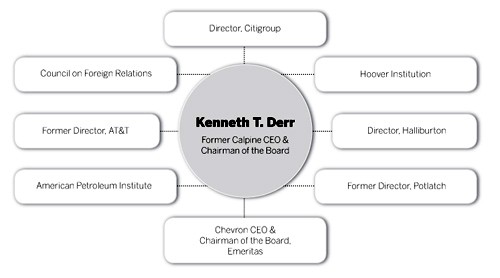
If David Leuschen and Robert May are capitalist archetypes, with Leuschen a Mr. Money Bags, initiating practices and funding projects that May, the Cleanup Guy, is invariably obliged to set right, then our third Geyser-guy, one Kenneth T. Derr, sits Humpty-Dump atop them both. Derr embodies just about everything a genuine corporate fat cat could ever hope to be. He’s the Wizard of Oz, CEO of Emerald City, that sparkling green place comprised of stone-precious folding green, and maybe even a skosh of environmental green, too—assuming it translates into more mounds of moolah.

Derr is the oldest and most prominently connected member of this troika of well-connected execs. Derr was named to Calpine’s board in 2001. He served as Calpine’s interim CEO until Bob May came aboard to guide them through bankruptcy.

Calpine founder Peter Cartwright got shit-canned in the wake of Cheney’s energy-industry imbroglio-cum-Enron debacle. The chairmanship of Calpine’s board was then, fittingly, handed over to the old oil dude, Derr. Derr resigned from the Calpine board late this last spring, his exit curiously coinciding with NRG’s hostile Calpine takeover bid.

But Calpine, once the nation’s largest independent, and one of the nation’s cleanest electricity providers, had to be small potatoes to Ken Derr. Consider that for 10 years, from 1989 to 1999, Derr was both CEO and chairman of the board at Chevron Corp.

But that’s just for starters. Derr’s a former board member at both AT&T and Potlatch Corp., is a member of the right-wing Hoover Institution’s Board of Overseers, a former chair of the American Petroleum Institute, sits on the Council on Foreign Relations, the National Petroleum Council, the Business Roundtable, the Basic Fund, the California Business Roundtable, belongs to the exclusive Pacific Union Club, the equally exclusive San Francisco Golf Club, the UCSF Foundation and the Orinda Country Club.

Derr’s pillaging for pachyderms include jaunts benefiting the George W. Bush for President Committee, Bush-Cheney ‘O4, the Friends of Giuliani Exploratory Committee, the Rudy Giuliani Presidential Committee and, when those last two lost traction, Derr sidled up to John McCain.

Derr’s Chevron tenure was marked by grand success and not a few dark controversies. “Better than the best” was Derr’s motto. Some tagged him a “philosopher king.” Others called him a polluter and human-rights violator.

With Ken Derr at the helm, Chevron shifted emphasis from domestic to foreign petrol acquisitions, selling off two-thirds of its domestic gas and oil holdings. By shifting primary oil acquisitions from domestic to international fields, Chevron skirted EPA restrictions that otherwise would have cut into profits. He instituted a hard-driving informality into Chevron’s button-down corporate culture, carved up sheeps’ heads to get at oil in Kazakhstan, and pulled focus on Kuwait’s Burgan Field, the second largest oil repository in the entire world.

Destiny Road

Back where I come from there are men who do nothing all day but good deeds. They are called phila . . . er, phila . . . er, yes, er—Good Deed Doers!

—The Wizard of Oz

Ken Derr is known for his philanthropic efforts. He co-chairs the Committee to Encourage Corporate Philanthropy and has even shared the stage with renowned bleeding heart Paul Newman. Perhaps someday we’ll see Derr holding hands with Bono. But before getting all misty-eyed and blubbery, consider Derr’s May 28, 1998, exchange at the annual Chevron stockholders’ meeting with Democracy Now! host Amy Goodman. Goodman inquired whether Derr would ask the Nigerian dictator to halt Chevron-abetted murders of anti-Chevron protesters. Derr’s response? A curt “No.”

But recent news tied to Iraq War #2 show how another Kenneth Derr quote still resonates with the U.S. corporate state. Addressing San Francisco’s Commonwealth Club on Nov. 5, 1988, Derr famously said, “Iraq possesses huge reserves of oil and gas—reserves I’d love Chevron to have access to.” It took 20 years to accomplish, but, judging from recent Iraqi government pronouncements, who can deny corporate inertia über alles?

Before leaving Derr, perhaps we should touch on two board memberships he currently holds. First there’s Citigroup, named by Forbes as the world’s largest company. Citigroup has a market value of a quarter of a trillion dollars. It tallied almost $22 billion in net profits on revenues of $147 billion last year, and its assets clock in at close to $2 trillion.

And finally there’s this little Dubai-based company called Halliburton. Derr sits on that board of directors, too. Much could be hammered into this, but with Halliburton being such a wide-body target, it feels rather unsportsmanlike to do so.

So, yes, even obscure, innocuous and fairly clean energy resources like The Geysers tend to be controlled by the very corporatists whose greedy, polluting ways necessitated we stage a green revolution in the first place. And by continuing to destroy life on this planet, these folk actually enhance the eventual worth of their heretofore minor or even purposely suppressed alternative-energy investments.

Pessimism aside, the question remains whether we should continue placing both our common resources (tax monies) as well as our personal resources into the hands of corporate-energy providers.

Which leads us finally here, to that next grand fork down Destiny Road.

“Now which way do we go?”

“Pardon me, this way is a very nice way.”

“Who said that?”

(dog barks)

“Don’t be silly, Toto. Scarecrows don’t talk.”

“It’s pleasant down that way, too.”

“That’s funny. Wasn’t he pointing the other way?”

“Of course” (Scarecrow extends both arms) , “some people do go both ways.”



Wine Tasting Room of the Week

0


K-J being everywhere, everyone’s familiar with the family-owned empire that set the standard for widely available, quality coastal California varietal wine, and whose success even inspired slumbering industry giants to turn a new leaf. Why make a special trip here, in the center of Kingdom Jackson? It turns out, it’s not so much the wine, although K-J pours mainly limited releases, not just the bread-and-butter vintner’s reserve, at two local tasting rooms, where the motto is “a taste of the truth.” The truth is, one’s better off to skip Healdsburg and spring instead for the gastronomic flight in Fulton. Yes, it’s about the food.

The original owner built this landmark chateau, which K-J acquired in 1996, to specifications that would make Marie Antoinette feel perfectly at home sipping Chardonnay with her cake. Under the grand ceiling, visitors may opt for a $5 tasting, browse gifts and get dizzy watching a plasma wide-screen video-rama that swoops roller-coaster-style over lush green vineyards. On its surface, the center offers an enhanced suite of tasting-room standbys. But take a walk around, and find that the grounds are an authentic gourmet-locavore showcase.

Look over here: the wine center hosts a demonstration vineyard planted by SRJC; over there, find a renowned two-acre culinary garden that provides herbs and veggies for a special wine and food pairing, along with regional products like Liberty duck and CK Lamb, served up by talented chefs from the local scene. They even whip up a vegetarian plate that mirrors the flavors of the meaty treats.

Road-weary tourists expecting a meal may make a frowny face when presented with the artful tray of micro meals. I feast my eyes on the intricately detailed amuse-bouche, and note the transformation that accompanies the well-matched battery of wine pours. For instance, though I am not at first won over by Chardonnay from the regular tasting, the butterscotchy 2006 Camelot Highlands Chardonnay ($25) adds another dimension of delight to the Lilliputian pitcher of potato and fennel vichyssoise. And the 2007 Grand Reserve Malbec Rosé ($18), marginally too sweet for my taste on its own, cuts nicely through the neutral-flavored richness of cured California sturgeon, enlivened by spicy garden-fresh radishes.

The varietally solid 2005 Seco Highlands Pinot Noir’s ($35) brooding dark berry and twiggy riparian notes perfectly douse a smoky whiff of duck pastrami, served with microgreens and strawberry mostarda on a bruschetta. Fortunately the brighter, juicier 2004 Hawkeye Mountain Cabernet Sauvignon ($55) is served with the medium rare (and not at all gamey) lamb tenderloin with chimichurri; the 2004 Trace Ridge Cabernet Sauvignon’s ($55) has a dry palate of black cherry and tobacco that calls for chocolate truffle. If this is a taste of the truth, I’ll take a bottle of veracity.

Kendall-Jackson Wine Center, 5007 Fulton Road, Fulton. Open daily, 10am–5pm. Tastings only, $5-$15; food and wine pairing, $25. Sept. 6, Kendall-Jackson presents the 12th annual Heirloom Tomato Festival, featuring over 150 varieties of tomatoes grown in its culinary gardens. 707.571.8100.


View All

Los Lobos at the Marin Fair

1

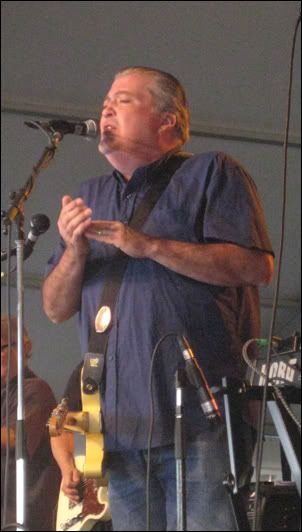
No other band suffers such a disparity between their widely perceived “one hit” and their actual creative prowess as Los Lobos. It’s still one of the great misconceptions in rock and roll: while Los Lobos’ albums Kiko, Colossal Head and Good Morning Aztlan rank amongst the most invigorating and exciting listening experiences of the last fifteen years, drunk accountants in Cabo Wabo T-shirts at the Marin Fair last night still yelled for “La Bamba.”

“Not yet, man,” countered Cesar Rosas, no doubt resigned to the request by now. “If we play it, you’ll all leave!”
No true Los Lobos fan really gives a damn about hearing “La Bamba”—I’ve seen them twice before, and they didn’t play it, and no one asked for their money back. But a County Fair is a different story altogether, and Los Lobos knows this. So you’ve gotta hope that the old trick worked; namely, saving the payoff until the end, while in the meantime providing a look into one of the great catalogs of American music.
I, for one, am completely enamored of Los Lobos, which puts me in the company of bugeyed ex-Deadheads, aging Latino expatriates from L.A., and Sierra Nevada-swillin’ dudes with hairy shoulders. So be it. I love Los Lobos fans, if only to imagine them crawling into work the next morning, bedraggled in the best possible way, while their coworkers chug lattes and try to out-chipper each other with peppy chitchat.
Indeed, the large tent at the Marin Fair—on an island in the middle of a man-made lake—was packed with people preparing to feel like crap the next day. Dancing, swaying, drinking, singing along, and having the time of their life on the ever-festive last night of the fair. At certain moments, such as the ferocious three-way soloing pinnacle David Hidalgo, Cesar Rosas and Louie Pérez achieved in “That Train Don’t Stop Here,” it felt like the entire tent might explode.
Other highlights included “Short Side of Nothing,” “The Neighborhood,” “Kiko and the Lavender Moon,” and “This Time”—the latter of which Hidalgo started, then looked puzzled for a second, and finally asked the crowd, “Hey. . . who knows the first verse?”
If I’m not mistaken, the band played nothing from Colossal Head nor Good Morning Aztlan, but it didn’t matter—they’re so good live, and so dependent on how they play, that it’s somewhat negligible what they play. A few cumbias, a long blues jam, some newer songs, a guest saxophonist, and hey, they still rule.
If there’s any shrug to be had with the set, it’s that it was almost identical to the last time I saw Los Lobos, an entire five years ago. Then as now, covers included Traffic’s “Dear Mr. Fantasy” as well as a sing-along of Buddy Holly’s “Not Fade Away” segueing into the Dead’s “Bertha,” which sent the twirl brigade off and spinning on the fringes of the island.
But it was the final cover of the night that really lit people up: an encore of “La Bamba.” I made my way around the crowd and saw nothing but smiling, laughing, and getting down; and to my surprise, the aforementioned drunk accountant knew every Spanish word of the song. When Los Lobos seized on the chord progression and interpolated the Young Rascals’ “Good Lovin’,” the place went nuts. How can you argue?
I got a Philly Cheesesteak sandwich, watched the fireworks, rode the Merry-Go-Round, and then walked along the railroad tracks, to the rhythm of the bassline of Colossal Head‘s “Revolution,” stuck in my head, back to my car.
(P.S. Steve Berlin, if you are reading this—I’ve always wanted to ask if you’ve got any idea whether Lee Allen intentionally quoted both “Andalucia” and “Across the Alley from the Alamo” during his saxophone solo for “Roll ‘Em Pete” on the Blasters’ live EP, Over There, or if it was merely a musical accident. I’m totally serious—it’s plagued me for over ten years. Any clue?)

Stevie Wonder at the Shoreline Amphitheatre – July 5, 2008

0

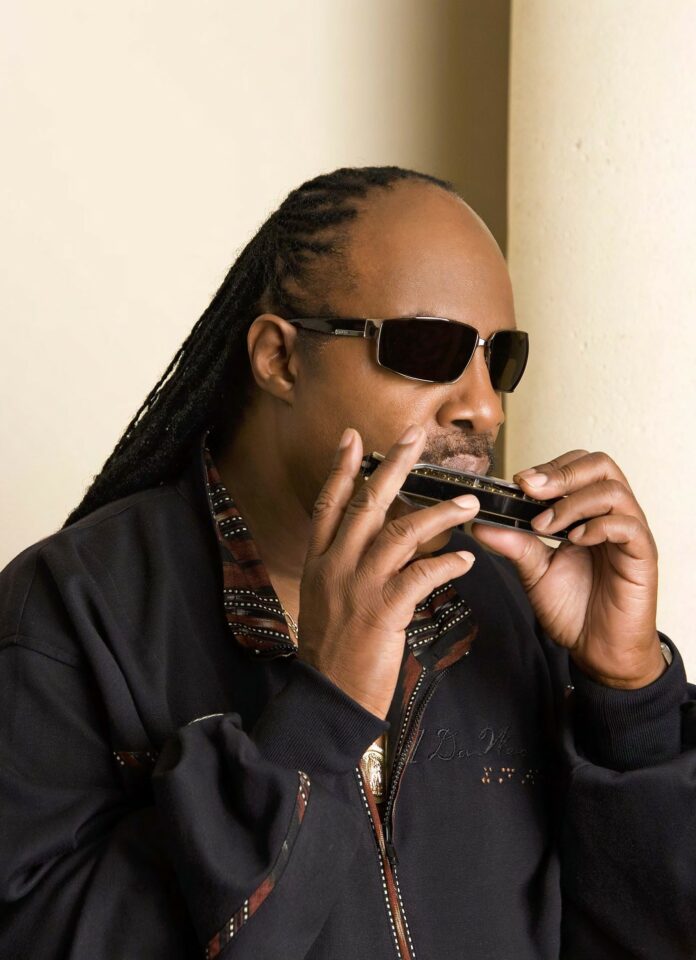
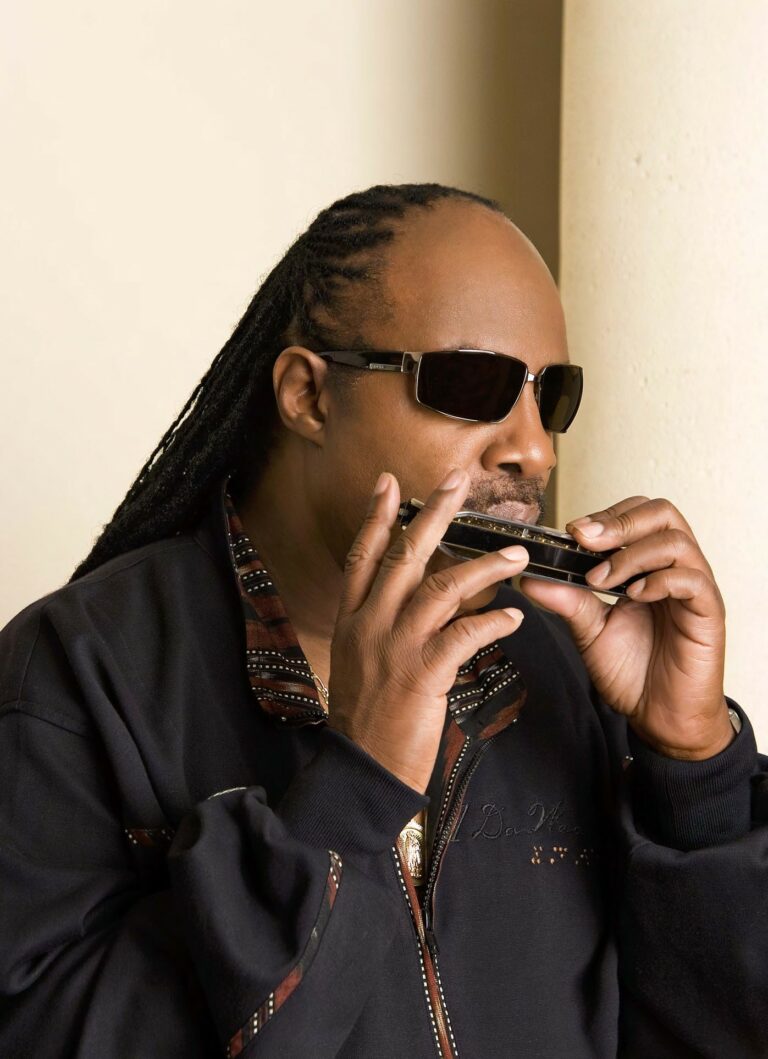
After a near-decade hiatus from touring, Stevie Wonder rolled into the Bay Area for the second time in under a year, this time bringing his acclaimed A Wonder Summer’s Night to Mountain View. While not as life-affirming as last August’s powerhouse performance in Concord (where I actually got choked up only a few seconds into opener “Love’s In Need Of Love Today”), Saturday’s show proved the eighth wonder of the world is still the most solid, enjoyable, cross-generational, and most worth-the-expensive-ass-ticket-price of any of the nostalgia acts in rock n’ roll.

The lawn section (especially at the mammoth, impersonal Shoreline Amphitheatre) is mostly good for spying the latest in lawn chair innovations and observing territorialism in its most fascinating and primal form. Yet our spot behind the new “Family Zone” offered heartwarming views of families enjoying Fourth of July weekend, all possessing the distinctive Stevie Wonder concertgoer vibe: warm smiles, interracial beauty and irie vibes to spare. The lawn itself was packed in way I’ve not seen since Radiohead’s Kid A/Amnesiac showcase in 2001.

Even without an opener, not many around us seemed to mind when the legend appeared nearly an hour after the 7:30 “show time”, with the entire audience rising to their feet in a benevolent ovation. Flanked by his backup singer daughter Iesha and very young son (who later played his own drum kit beside the large band), Wonder again began the show with a few words, this time dedicating the show to Bill Graham as well as his late mother (whose passing was the reason for his decision to tour again) before expressing excitement over Obama’s candidacy.“Don’t just talk about [unity], be about it,” he told the crowd, before asking, “Now, y’all want to hear some music?” After we counted it off at the man’s behest, he was off and running with a pitch-perfect rendition of “As If You Read My Mind”, complete with his killer harmonica solo. Then followed three more numbers from this classic 1980 album Hotter Than July, a dark-horse candidate for Wonder’s best record ever. Much like last year’s concert bookends from Songs In The Key Of Life (The aforementioned “Love’s In Need…” and the extended closer “Another Star”), the opening July suite was a testament to the “album rock” format mostly because the tunes sounded amazingly just like the album versions.

Ian Curtis’ Gravestone Stolen

8

As reported by BBC News, the gravestone for Joy Division’s Ian Curtis has been stolen this week from its Macclesfield, UK cemetery.
Police and city authorities are “stunned,” “shocked,” and “agog” at the theft, but, like, have they never met any Joy Division fans? Can they really be surprised that the tombstone of a singer with the most death-obsessed fans in the world has been stolen?
More obviously: look at the thing. It’s begging to be stolen. It’s the perfect size to fit in a backpack and it’s held in place by tarmac, for chrissakes. On top of all that, it’s inscribed with the ultimate Joy Division epitaph, “Love Will Tear Us Apart.” I mean, geez. Who wouldn’t think about stealing it?
I don’t wanna seem like I’m rooting for the bad guys, but come on.
(I was way more surprised when Mac Dre’s tombstone got nabbed.)

Wine Tasting Room of the Week

0


It’s the end of the day in the middle of a heat wave, and the heat hasn’t lifted. There’s dust in my hair and dirt under my nails. My arms are seared from working in the sun, and I drive toward the ruby western sky needing a refreshing reward. Would a guy work this hard for an aluminum can of carbonated piss-water? Hell no. I want something ice-cold, crisp and clean, with the thirst-quenching character of strawberry and rose petals. Shout it to the world: Gimme some pink wine! Yeah! Say it like this to better convey the guttural gusto: pink wine—yeaaaaargh!

Incongruous? Better known by their French moniker, rosé wines just don’t get the cred here that they do in nations where men wear pink shirts with no fear. Rosés have got a lot of press lately (even from us, see “Rosé Rising,” Feb. 6), and wine shops and specialty groceries carry an improving variety. Unfortunately, the chilled-and-good-to-go section in the supermarket is not pretty in pink. In fact, the situation is not pretty at all—it’s still a white Zin world.

Being no wine snob, I grab the stumble home and Sutter Home ($3.99)—or vice-versa. A nancy wine of merely 9 percent alcohol, it’s not bad with a couple of ice cubes. The problem with cheap white Zinfandel (well, among the, etc.) is that, quantity being the primary concern, grapes are cropped for maximum tonnage, resulting in weak flavors augmented with sugar. Quite the opposite with many North Coast rosés, made from grapes harvested at ripeness for premium red wine. Winemakers separate, or “bleed off,” a portion of the pink juice to concentrate the red even more. The result is flavorful quaffs—in short supply. Par exemple, the 2007 Scherrer Dry Rosé ($14) is a nicely priced fringe benefit of its excellent Pinot Noir.

No wallflower wine, Malbec lends muscularity to 2007 Belasco de Baquedana’s Rosa de Argentina ($15), which shines like a pale ruby and is so dry it could almost use steak sauce. A great choice for the grill, like many of the better pink wines today, it’s enclosed with a handy screwcap top. (In curious counterintuition, the Sutter Home’s corked.) Also easy to break out of its graphically intense prison, Big House Pink ($8.99) is rich with chilled stewed strawberry flavor, and has weight and balance on the palate. Now that’s a refreshing, tasty beverage.

Grasping my stemware with pinky extended, I toss back a swig and shake my head in a raw enjoyment of times like these. Beads of sweat fly in every direction as the South Australian swimsuit team parachutes into the scene.

Among retailers that offer a great selection of rosé wines, try Traverso’s Gourmet Food & Liquor, 106 B St., Santa Rosa. Open Monday–Saturday, 9:30am–5:30pm. 707.542.2530.


View All

Strange Sweetfellows

07.02.08

When I was a kid, I was terrorized by a neighbor down the hill who would force me to drink goat’s milk. While I have grown to love goat cheese, goat milk is something I still associate with eccentric neighbors wielding mason jars and dominating attitudes. So when I was approached by a person in my local grocery store offering free samples of LaLoo’s goat’s milk ice cream, I felt a qualm similar to the one I felt so long ago when the erstwhile neighbor forced her mason jar upon me, claiming as she did so, “It’s good for you.” Turning my cart the other direction, I politely declined.

Created by Laura Howard in Petaluma and now sold nationally, LaLoo’s goat’s milk ice cream claims to be good for you, too. As good as ice cream can possibly be, which means, sure, it’s still ice cream, it still has sugar in it, but it carries all the benefits of goat milk: easier to digest, lower in fat, higher in B-vitamins and calcium. Howard and I meet in one of the small barns she has renovated to serve as an office for LaLoo’s, located on her five-acre farm in Petaluma. Outside, LaLoo’s eight family goats roam about, interspersed with a horse or two, some chickens and a scrappy little dog, while inside, Howard and her two assistants are busy with the plethora of tasks that come with a small-time operation gone big.

I am here partially because I never did accept that free taste in the store, and partly because I want to find out more about LaLoo’s partnership with the Waterkeeper Alliance. LaLoo’s is releasing 25,000 pints of vanilla ice cream, specially marked with the Waterkeeper Alliance logo, this summer. Twenty-five percent of the proceeds from these containers will go directly to the Alliance, and its top three keeper programs in New York, Los Angeles and San Francisco. The Alliance helps protect waterways through education, grassroots mobilization and litigation, ensuring that polluters are held responsible and forced, if necessary, to change their ways.

Howard became engaged in the cleanliness of our waterways via a circuitous route. What began as a simple trade between her and a goat farmer in Maine—a little of LaLoo’s ice cream for some fresh Maine goat milk yogurt—turned into a new mission with the development of Clean Farm = Clean Water, a nonprofit that Howard is in the process of creating with the Waterkeeper Alliance. Howard has a keen sense of taste, evident in the delicate nuances of her 25 different flavored pints. What she noticed in her Maine yogurt would quite likely have passed over the nonconnoisseur’s palate undetected. To Howard, however, the taste was extra special, and she wanted to know why. What she learned was that her cohort in Maine was feeding her goats seaweed, which is rich in the fatty acid DHA.

In an attempt to keep it fresh and local, Howard decided to experiment with feeding her own goats seaweed from the Tomales Bay. What she discovered, however, was gravely disappointing. Apparently, there is no kelp in the Tomales Bay, or at least none to speak of. The bay is so polluted, largely from farm runoff, that its eco-system is in turmoil. Sea otters are dying off, which has allowed for proliferation of sea urchins, which then eat all of the kelp.

What began as a quest for flavor has blossomed into an all-out campaign. What Howard hopes to achieve with Clean Farms = Clean Water is nothing less than keeping the art of goat farming what it is today: small, family-owned and -operated, and free of the industrialization that has overtaken so much of the dairy cow industry. Industrial factory farms provide one of the greatest sources of water pollution in the country. With ice cream this good (and it is good—when I got home I tried one spoonful and then voraciously ate half the pint), it’s possible to visualize a future with goats crammed into warehouses, abused and neglected so consumers can get their goat’s milk ice cream fix.

As I leave LaLoo’s farm, my pint of free Strawberry Darling goat’s milk ice cream beside me, I try not to think about the possibility of little factory-farmed goats bleating among thousands of other bleating little goats. Instead, I think of members of the Waterkeeper Alliance racing about in their motorboats as they patrol the seas, and protect us, essentially, from ourselves. If a pint of LaLoo’s vanilla ice cream will help them fuel their boat, I see no reason not to get busy. While I may not be able to pilot a boat, at the very least I can always eat ice cream.

For more information about Waterkeeper Alliance go to www.waterkeeper.org. For more information on Clean Farm = Clean Water, go to [ http://www.cleanfarmcleanwater.org/ ]www.cleanfarmcleanwater.org.


Grill To-Go

0

07.02.08

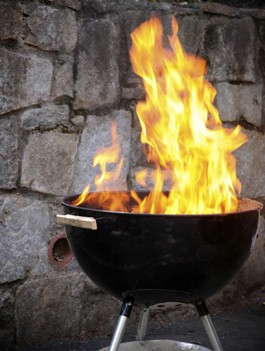
It happens every time. Dashing into the grocery store for the quick two-missing-items pickup, I am stopped by the delicious aroma of barbecue outside the market doors. There is something primal about the smell of charred, smoky meat. The cavewoman within me awakens. Salivation involuntarily starts. It need not be a hot, sunny summer afternoon, when the body craves salt replacement after sweating in the sun all day; a cold, foggy day works just as well, rousing the craving for the warmth of a fire and a good stick-to-the-ribs meal. No matter what the weather, impulse sets in and, damn, I guess we’re having barbecued tri-tip for dinner. The dash into the store now includes a couple of side dishes and a six-pack of beer or a bottle of hearty Burgundy to round out the meal.

Many local markets have smartly caught on to the desire for a hot cooked barbecue meal without the fuss of doing it yourself. There are countless tales of home grills gone wrong, from the whole roasted goat that tasted like “muddy hoof” to the Hawaiian, pit-cooked, translucent white pig with its teeth falling out à la Lord of the Flies.

My own childhood memories of grilling focus on chicken legs cooked on the backyard hibachi, crisply blackened on the outside while a stringy, raw pink on the inside. Best to leave it to the experts, and in the North Bay there are plenty to choose from. And when experts are involved, there are bound to be opinions on the best or most authentic methods for cooking over fire outdoors.

David Hoffman of Sebastopol’s Fircrest Market offers a primer in Barbecue 101. “Real barbecue isn’t done over live coals,” Hoffman instructs. “That’s grilling.” Taking on a scholarly tone, he continues: “True barbecue, which developed in Texas, is done long and slow, with indirect heat. A wood fire, most often using mesquite, is built in a metal box, and the heat is funneled to the meat, like in a convection oven. The slow cooking takes many hours, which gives the meat its intense, smoky flavor and keeps it nice and juicy.”

While other grillers agree that this may be the most accurate interpretation of barbecuing, customers prefer certain items like kabobs, fish or veggies grilled. Some city ordinances do not allow wood fires, so gas grills are the market’s only option. Most stores offer the barbecuer’s trifecta of tri-tip, ribs and chickens, by whole or half, piece or pound. Others offer more specialized meats, sandwiches or sides. Customers usually receive a ticket with their order, pay inside and return to pick up their barbecue after shopping. Unless the inner pyro in me rears its fiery head, I happily leave the cooking to the pros and head out with an easy dinner, its heavenly scent wafting through the car as I drive home—or maybe to the beach.

Here are a few suggestions for markets with barbecue to go.

Sonoma County

Andy’s Produce Market Ducky’s Barbecue offers sandwiches such as a beef brisket or pulled pork that has been slow-cooked for 14 hours. For a buck or two more, add a side of beans, slaw, cornbread or extra sauce. Don’t forget the greens: kale, collards, chard and leeks, sautéed in oil and garlic. 1691 Hwy. 116 N., Sebastopol. Open every day, 11:30am to 7pm. 707.837.3425.

Bill’s Farm Basket Maxwell’s Feel Good Barbecue proudly proclaims that the hot stuff they sell is “not your Grandma’s barbecue,” and Maxwell’s may not be your Grandpa’s, either. Chef Maxwell Meyer, formerly of Zazu and Seaweed restaurants, specializes in eclectic, mesquite-grilled meats, veggies and fruits. Try the soft Rocky chicken tacos with Cuban mojo sauce, black beans, rice, guacamole and veggie slaw for a complete meal. The chimichurri skirt steak and chicken apple sausage with pesto aioli and grilled peppers are also tempting. All foods used are organic and as locally obtained as possible. The menu changes seasonally, so keep a lookout for the hearty grilled soup come winter. A separate grill cooks up vegan and vegetarian treats like a grilled veggie and Bodega goat cheese sandwich. 10315 Bodega Hwy., Sebastopol. Open Friday&–Sunday, noon to 6pm. 707.829.1777.

El Bringuito Market barbecues chicken rubbed with a secret family seasoning, and serves it with traditional accompaniments—rice, beans, tortillas and salsa. 17380 Sonoma Hwy., Sonoma. Open Friday, 2pm to 4pm, and Saturday&–Sunday, 11am to 8pm. 707.996.4912.

Fiesta Market tumbles whole or half tri-tips in teriyaki or Italian garlic marinade. New to the menu are Willie Bird drumsticks. Corn on the cob, salmon steaks and oysters are offered when in season. 550 Hwy. 116 N., Sebastopol. Open Friday&–Sunday, 12:15pm to 7pm. 707.823.4916.

Fircrest Market Texas-style barbecued chicken, ribs and tri-tip. 998 Gravenstein Hwy. S., Sebastopol. Open Friday&–Saturday and select holidays, 1pm to 7pm. 707.8239171.

Lads Market presents an extensive range of meats and vegetables done up in sauces and marinades from around the globe. Island chicken teriyaki sticks, Brazilian churrasco beef kabobs, tandoori chicken skewers and Peruvian pollo a la braza—with garlic, vinegar, cumin and soy sauce—will spice up dinner even on a weekday. Grill master John Perezchica stresses that “all our marinades and sauces are made from scratch, and are original and unique. We pride ourselves on our specialties.” All items are offered in the meat department and can be grilled to order for a $3 charge if not on the daily menu. 3800 Marlow Road, Santa Rosa. Open Thursday&–Friday and Monday from 4pm to 8:30pm and Saturday&–Sunday, 2pm to 8:30pm. 707.573.7081.

Molsberry’s Larkfield Market tempts shoppers with cowboy baked potatoes with sour cream and butter for $1.50, in addition to the usual grilled meat choices. 522 Larkfield Shopping Center, Larkfield. Open Friday&–Saturday, noon to 7:30pm and Sunday&–Monday, noon to 6:30pm. 707.546.5041.

Oliver’s Market Grill Central Station sells the full gamut of grilled items, including oysters, corn on the cob, potatoes and salmon fillets with garlic butter. The menu varies slightly between stores and is not offered at the Cotati location. The guys at the Montecito branch boast that they “have the friendliest service and try to make every customer happy.” Customers waiting in line vigorously nod their heads in agreement. 560 Montecito Center, Santa Rosa. Open Friday&–Sunday, 11am to 7pm. 707.537.7123. 461 Stony Point Road, Santa Rosa. Open Friday&–Sunday, 11:30am to 7pm. 707.284.3530.

Petaluma Market offers “a mean cheeseburger,” according to head griller Bill Compton, who adds that “it’s the best deal in town at a mere five bucks.” Chicken with Italian rosemary dressing, tri-tip sandwiches and other meaty goodies are offered as well. 210 Western Ave., Petaluma. Open daily, noon to 5:30pm. 707.762.5464.

Marin County

Inverness Store serves its own version of surf and turf: charcoal grilled Petaluma fryers and barbecued Drake’s Bay Oysters. 12784 Sir Francis Drake Blvd., Inverness. Open Saturday&–Sunday, 11am to 7pm. 415.669.1041.

Santa Venetia Market Rocky’s Quality Meats Located across the street from the Marin Civic Center, Rocky’s offers a quick picnic dinner for those attending concerts or other events. Try the Burgundy-peppercorn marinated tri-tip or smoked baby back ribs. 71 San Pablo Ave. (at the corner of San Pedro Road), San Rafael. Open Mondays and Fridays, 3pm to 7pm. 415.479.2131.

Scotty’s Market uses a Traeger grill with cherry wood pellets for uniquely flavored meat. 620 Manuel T. Freitas Pkwy., San Rafael. Open Friday&–Sunday, noon to 7pm. 415.4792363.

United Market starts cooking first thing in the morning, and continues till “the shelves are full,” according to grill master Miguel Alizaga. United grills outside, then moves the meat inside for purchase. Turkey breasts, mild Italian sausage and pork loin are also on the menu. 100 Red Hill Road, San Anselmo. 415.456.1271. 515 Third St., San Rafael. Open Friday&–Sunday, from 8am. 415.454.8912.

Napa County

Brown’s Valley Marketcooks up mesquite tri-tip, St. Louis&–style ribs and Rocky Junior chickens. Grilled asparagus, corn on the cob and salmon with garlic and lemon are offered on occasion. All items are cooked outside, and then sold inside the deli. 3263 Brown’s Valley Road, Napa. Open Wednesday and Friday&–Saturday, 4pm to 7pm. 707.253.2178. 

Quick dining snapshots by Bohemian staffers.

Winery news and reviews.

Food-related comings and goings, openings and closings, and other essays for those who love the kitchen and what it produces.

Recipes for food that you can actually make.

Cats and Dogs

07.02.08


When Clare Booth Luce’s comedy-drama The Women opened on Broadway in the final days of 1936, the play, about the rocky love lives of several upper-class NYC socialites, was seen as shockingly, inappropriately modern. The show became a huge and scandalous success, with its casual dropping of such previously forbidden words as “sex,” “impotence,” “pregnancy” and (gasp!) “divorce,” and its inside look into the 1930s mechanics of marriage, mistress-keeping and marriage dissolution. (In those days, the quickest place to get a divorce was Reno, Nev., which became a kind of vacation refuge for jilted women waiting for the papers to be filed.) To modern audiences, Booth’s script will surely sound dated and museum-like, though the basic issues of security, abandonment, betrayal and love have certainly not gone out of style. Soon to be released in an updated film version starring Meg Ryan, Annette Bening and Eva Mendez (the 1939 Joan Crawford and Rosalind Russell version is considered a pre-feminist classic), The Women can be seen in its original form as part of the current Summer Repertory Theater season at Santa Rosa Junior College.

Directed by Luke Yankee, SRT’s lean, emotionally balanced production is being staged on the smallish Newman Auditorium stage, a perfect choice for a play that basically takes place in a series of shops and living rooms.Mary Haines (Rebecca Mason-Wygal, excellent in a difficult role) is a happily married mother who learns that her wealthy husband is having an affair with a gold-digging shop girl (Sara Hogrefe). Her scandal-addicted friends, led by gossip queen Sylvia Fowler (Julia Goretsky), know about the betrayal long before she does, and it is Mary’s eventual redefinition of her relationship to these “friends” and her gradual awakening as a power-packed woman that forms the dramatic spine of the play.

The comedy, and there is a feast of it, comes mainly in the language. Booth, a journalist and congresswoman, had a knack for bitchy-snarky, as when one woman observes, “I think it’s in bad taste for a man to try and mate his wife’s friends—especially when they’re bald and fat.” Though clearly a product of its day, there is much about The Women that remains spot-on, and with its hard-working, all-female cast, this production keeps it all fresh, frisky and funny.

From the old to the new. With Mel Brooks’ Producers, directed and choreographed by Amanda Folena, SRT continues its parade of big Broadway hits making their North Bay debut. Brooks’ 1968 movie of the same name follows an unscrupulous Broadway producer and a neurotic bookkeeper attempting to cash in on their investments by staging an enormous flop. The stage musical version takes the original story and uses it to parody Broadway musical conventions, to giddy, goofy effect.When producer Max Bialystock (William McNeill, the multitalented SRT mainstay last seen in Beauty and the Beast and The Man Who Came to Dinner) and accountant Leo Bloom (a superb Nathan C. Crocker) realize that money can be made from producing a flop—merely by promising all of your investors 50 percent of the profits—they start looking for the worst script ever written. They find it.Springtime for Hitler, written by the crazed, Hitler-worshipping Nazi holdout Franz Liebkind (Tyler Seiple), is an unproducible mess, an offensive white-washing of Hitler’s rise to power written as a light-hearted comedy. Sensing a show so bad it will close on opening night, Bialystock and Bloom hire the worst director in the business, the outrageously gay, taste-challenged Roger De Bris (Jacob Mahler, making a radical shift from the imperious Governor Danforth in SRT’s currently running Crucible). Much of the second act deals with the haphazard preparations for opening night.

Throughout are a string of hilariously tasteless, over-the-top production numbers, from Crocker’s crowd-pleasing “I Wanna Be a Producer” to the spirited theater-insider anthems “Keep It Gay” and “You Never Say Good Luck on Opening Night,” to the side-splitting badness of “Springtime for Hitler,” performed with tap-dancing Aryan youth and a massive swastika in bright pin-wheeling lights.

The heart of The Producers is the evolving friendship between Bialystock and Bloom, each lending the other some strength or bit of humanity they had previously lacked. It is part of this production’s success that, thanks to Folena, Crocker and McNeill, there is an enduring sweetness that remains among all that inspired madness.

‘The Women’ runs through Aug. 3. July 2, 12, 17&–18, 22&–24 and Aug. 1&–2 at 8pm; July 13 and Aug. 3 at 7:30pm; also July 13, 23 and Aug. 3 at 2pm.’

The Producers’ runs through Aug. 9. July 7, 12, 17&–18, 22&–24, Aug. 1&–3, 5 and 9 at 8pm. July 13 and Aug. 3 at 2pm and 7:30pm. Newman Auditorium, Santa Rosa Junior College, 1501 Mendocino Ave., Santa Rosa. $8&–$15. 707.527.4343.


Museums and gallery notes.

Reviews of new book releases.

Reviews and previews of new plays, operas and symphony performances.

Reviews and previews of new dance performances and events.

News Blast

07.09.08 Leaky HullsIt's been eight months since 58,000 gallons of Cosco Busan bunker fuel severely damaged Bay Area waters and beaches, killing, injuring and endangering wildlife—with monetary costs now exceeding the $61 million federal insurance liability limit.One North Bay organization working to prevent future spills is especially devoted to protecting Bay Area marine wildlife by providing hands-on opportunities for citizen...

Blowing Hot Air

07.09.08Millions of gallons of North Bay wastewater are pumped high into the Mayacamas Mountains each day, injected down deep-drilled wells aimed at permeable igneous rocks, which lie like enormous frying pans atop molten magma thousands of feet beneath the earth's crust. On contacting this supraheated rock, the water flashes into steam, racing back to the surface via corresponding production...

Los Lobos at the Marin Fair

No other band suffers such a disparity between their widely perceived "one hit" and their actual creative prowess as Los Lobos. It's still one of the great misconceptions in rock and roll: while Los Lobos' albums Kiko, Colossal Head and Good Morning Aztlan rank amongst the most invigorating and exciting listening experiences of the last fifteen years, drunk accountants...

Stevie Wonder at the Shoreline Amphitheatre – July 5, 2008

After a near-decade hiatus from touring, Stevie Wonder rolled into the Bay Area for the second time in under a year, this time bringing his acclaimed A Wonder Summer’s Night to Mountain View. While not as life-affirming as last August’s powerhouse performance in Concord (where I actually got choked up only a few seconds into opener “Love’s In Need...

Ian Curtis’ Gravestone Stolen

As reported by BBC News, the gravestone for Joy Division's Ian Curtis has been stolen this week from its Macclesfield, UK cemetery. Police and city authorities are "stunned," "shocked," and "agog" at the theft, but, like, have they never met any Joy Division fans? Can they really be surprised that the tombstone of a singer with the most death-obsessed fans...

Strange Sweetfellows

07.02.08When I was a kid, I was terrorized by a neighbor down the hill who would force me to drink goat's milk. While I have grown to love goat cheese, goat milk is something I still associate with eccentric neighbors wielding mason jars and dominating attitudes. So when I was approached by a person in my local grocery store...

Grill To-Go

07.02.08It happens every time. Dashing into the grocery store for the quick two-missing-items pickup, I am stopped by the delicious aroma of barbecue outside the market doors. There is something primal about the smell of charred, smoky meat. The cavewoman within me awakens. Salivation involuntarily starts. It need not be a hot, sunny summer afternoon, when the body craves...

Cats and Dogs

07.02.08When Clare Booth Luce's comedy-drama The Women opened on Broadway in the final days of 1936, the play, about the rocky love lives of several upper-class NYC socialites, was seen as shockingly, inappropriately modern. The show became a huge and scandalous success, with its casual dropping of such previously forbidden words as "sex," "impotence," "pregnancy" and (gasp!) "divorce," and...
11,084FansLike
4,446FollowersFollow
6,928FollowersFollow