Letters to the Editor

01.07.09

David Templeton’s New Best Friend

If it weren’t for the Bohemian and your David Templeton (the king of North Bay drama critics), this transplanted New Yorker and inveterate theater rat/playwright would miss a huge number of wonderful productions in his own backyard. We certainly can’t depend on the Press Democrat to keep its readers abreast of local theater, now can we? I’m amazed (and sometimes appalled) by the PD‘s scattershot coverage, particularly by a number of wonderful productions it ignored at Spreckels alone.

Luckily, thanks to your King David, I was able to catch all the plays that my favorite North Bay actress, Tara Blau, appeared in, and, if I may be so bold, a feature interview with this beautiful and talented local treasure is long overdue. Hint, hint.

 As for Templeton’s “Top 10 Torn Tickets” (say that 10 times fast!), it’s a great list (Dec. 24). But I have an addendum to make for the 10th choice on his list of the best plays of 2008, Always, Patsy Cline. “This year-ending love-bomb,” as Templeton called it, will be playing for three weeks at the Cinnabar Theatre in Petaluma until Jan. 17 if you missed its run at the Sixth Street Playhouse. This fact was mentioned in his original review way back in November, but just in case it was forgotten or overlooked, it shouldn’t be now.

Bob Canning
Petaluma

  ‘Always, Patsy Cline’ is also dutifully listed under Theater in our calendar. For details, see p42.

Heart & Soul

Regarding the “Annual Letter from the Streets” (Letters, Dec. 31), I am also homeless, but in Santa Rosa. I pass through San Rafael often. You can say “whatever” about the Marin homeless, but this man is right! They took the heart and soul out of a very special place for so many needy people when they let the holy man go. And that would be Father Martin.

Willie B.
Santa Rosa

‘Uncool’ being the worst of it?

Dear Editor,

Below is a summary of the Bush years in four short paragraphs. Paragraph 1: The 2000 election; Paragraph 2: 9-11; Paragraph 3: The Iraq war; and Paragraph 4: The aftermath.

(Read in rap rhythm.)
UNPRESIDENCY
Unelected, unfit
Unaccomplished, unworthy,
Unwise, unapproachable
and uncool.

Unaware, unprepared, unsure
Undecided, unnerved, unconvincing
Uninspiring, unpatriotic,
and uncool.

Untrue, unbending, unlawful
Unbridled, uncivilized, undeterred,
Unjust, unresolved, unashamed,
and uncool.

Unpopular, unrepentant, 
Unaccountable, unconstitutional
Unimpeachable, unacceptable,
and unreal.

Emilio Gonzalez
Occidental

Woulda, Coulda, Shoulda

With all the news about the auto company bailout, why isn’t anyone talking about the documentary Who Killed the Electric Car? GM had the technology to produce an electric vehicle in the ’90s called the EV1. They did produce it, but refused to sell it; they would only lease it. This car came about due to the 1990 California mandate titled ZEV, the Zero Emission Mandate. GM took back every EV1 and crushed them in spite of the public’s offer to buy them. I suggest everyone Google Who Killed the Electric Car? and read about this travesty for themselves. Or better yet, assign a journalist to write an article for the Bohemian, and alert the public as to why we may not want to bail out this loser company.

A. Burke
Santa Rosa


&–&–>

The Green Gold Rush
0

01.07.09

We are at the farthest spot in America from Wall Street, and it’s a good place to be right now.”

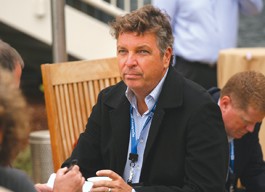
As Tony Perkins says this, he looks out over a crowd of several hundred clean-tech enthusiasts gathered directly under the Golden Gate Bridge. He is speaking literally and figuratively.

“People here today are pretty happy,” he says.

The bridge glows in late-morning autumnal light, and the air is warm, with an occasional brisk breeze. Even by Sausalito standards, it’s a stunningly beautiful day. But that’s not the main reason people at last fall’s  GoingGreen conference were happy.

The 600 entrepreneurs, engineers, scientists and venture capitalists gathered in Fort Baker all believe they’re riding the tip of a huge wave, perched on the crest of a new industrial revolution, one that will remake the world even more profoundly than the last one (the creation of the Internet) and the one before that (the personal computer).

These people are happy because they are, figuratively speaking, a million miles from Wall Street, and they are at work in an industry that is just being born, instead of one that’s dying.

Scattered on coffee tables around the patio are newspapers: the Wall Street Journal and the New York Times, as well as the Chron. The headlines of the New York papers are all about the nightmare on Wall Street. On page one of both of the locals is the breaking news that electric-car maker Tesla will build a plant in Northern California, creating 1,000 immediate jobs.

The man behind Tesla, Elon Musk, will be delivering a keynote to this group in an hour. The green-tech pioneers in attendance are pleased about the Tesla deal, but they see it as a drop in the ocean, a ripple on the wave they are riding.

“We predict that within three to five years, the green area is going to be bigger than the IT area.” Perkins says.

It’s a bold prediction. But then this is the guy who made his first multimillion before he was 25 as the tech guy at Silicon Valley Bank, then founded Red Herring magazine, grew it until it was the size of the phone book and sold it for a gazillion dollars just before the market tanked. He wrote a book, The Internet Bubble: Inside the Overvalued World of High-Tech Stocks, which not only successfully predicted another recent economic event, but gave it its name.

Perkins, who now runs the elite AlwaysOn network, is referred to throughout the financial press as an “opinion leader,” sometimes as a “visionary.” And he now sees big, big money in solar energy, electric cars, smart grids and thousands of similar sustainable technologies.

He says his initial interest in the topic “was about following the money.” He and a lot of big brains have become quite bullish on the “green” sector, which is already the third-largest category in venture investment.

In Silicon Valley, innovation is the coin of the realm. That’s why clean tech is the brand-new new thing. There is a ton of innovation in this new idea, and lots of new stuff coming to market. Driving this category is the idea of looking at everything we do as a society, and trying to do it more efficiently. That is the central tenet of the new green-tech movement.

The go-green consciousness has itself always been driven partly by fear of environmental Armageddon and partly by love of the planet and nature. This new version, the Green Gold Rush, is being driven by those lofty ideals—and something else that runs equally deep.

In the labs where these new inventions are being built, and in the boardrooms where they are being funded, the quest for green gold is being driven by a rigorous admiration for quality and efficiency.

And here’s the secret, the chief value proposition, if you will: Increased efficiency, while creating less pollution and wasting less energy, also saves money. The idea that seems to be inspiring green gold rushers is that we can build an economy around a technology that is intrinsically better. In this view, saving the world from certain ecological collapse and rescuing the economy are one and the same project of retooling the world.

“We are standing at the place where entrepreneurial spirit meets the public good,” Perkins says, looking out over a scene that will perhaps be recreated many times in the future.

The Dream Team

In a still-controversial 2004 essay titled “The Death of Environmentalism,” authors Michael Shellenberger and Ted Nordhaus pointed out a central problem with the movement to which they’d dedicated their careers.

For a political movement to become successful, they said, it needs to present a hopeful vision of the future. Every movement needs its “I have a dream” speech. The message the environmental movement delivers, they said, was “I have a nightmare.” There was plenty of talk about the consequences if we fail to act; much less about the joys of success.

Al Gore’s An Inconvenient Truth is our most powerful contemporary example of that speech. Devastating, brilliant, but not exactly hopeful. The end of the film was, if you recall, anticlimactic. In place of a call to action, Gore delivers a half-baked sermon about inflating your car’s tires and turning off the water when you brush your teeth. It was out of place in what was otherwise a work of political-artistic genius.

Offscreen, however, Gore has been working on the “I have a dream” stuff. His day job, when he’s not off winning the Nobel Peace Prize, is working at Kleiner Perkins Caufield & Byers (KPCB), where he’s a member of the Greentech Initiative. The company says it believes Gore and his team will “help our entrepreneurs change the world.”

“As 4 billion people move from rural to urban living in the next 50 years, they all want clean water, clean power and clean transportation,” reads the Cleantech Initiative prospectus. “At the same time, we face climate crisis. Scientific breakthroughs in biology and materials technology mean there’s never been a better time to start and grow a great green venture. Greentech could be the largest economic opportunity of the 21st century.”

That fund has invested heavily in 10 companies, including biofuels (Altra) and electric cars (Fisker), utility-scale solar (Ausra) and coal gasification (GreatPoint), miniaturized fuel cells (Lilliputian) and thin-film photovoltaics (Miasolé). These businesses are nobody’s pipe dream, but economically sustainable, money-making enterprises.

The idea is not simply to save the ecosystem but also to save the economy. This idea was a central tenet of the Obama campaign. But so far, the clean-tech revolution is a private-enterprise thing.

Just as the World Wide Web would never have been built without the massive infusion of capital from the federal government (for which Gore truly did write the enabling legislation), the hundreds of technological innovations that are launching the New Green Economy would not exist without the capital from KPCB and other investment companies in the new, huge “green sector.”

Green on Green

When Gore retired from politics, saying he believed he could do more in the private sector, pundits said he was naive—or lying. He may have simply been ahead of the curve. At last fall’s West Coast Green conference, the big news was the big money. Gore’s colleagues at Kleiner Perkins were in attendance, as were players from KPCB’s neighboring VC firm, Draper Fisher Jurvetson. Morgan Stanley sent the head of its green fund. There were probably a dozen or more players from around the world. We used to call these events “alternative-energy” fairs or “appropriate technology” forums; they’ve been with us since the first Earth Day in 1970. But there have never been people quite like these guys there. Venture capitalists didn’t hang with the eco-hippies. Nobody had figured out a way to monetize environmentalism.

That’s changed.

Raj Atluru, who heads up Draper Fisher Jurvetson’s green fund, has been in the game since he left Stanford, where he’d gotten a masters in environmental studies and later taught the solar lab, in 2001. He was a speaker at GoingGreen and has invested a half-billion dollars of  his firm’s money in 57 green businesses worldwide. That makes Draper Fisher Jurvetson the category leader. And it seems to be feeling bullish.

Atluru says he has witnessed an explosion in the appropriate-technology space.

“My first year at DFJ, we got 30 business plans,” Atluru says. “This year, that number will be in the thousands.”

“This really is the next new thing,” he says. And the way he says it, it isn’t like he’s reciting the company motto. It sounds instead like he’s just realized it, like, “Whoa. This thing is getting big.”

And although he’s got a soulful presentation, Atluru, like a lot of businessman, speaks in complete PowerPoint slides. “There are three reasons for this explosion of growth,” he says.

“The regulatory environment has changed. In 2001, 20 states had RPS standards [which mandate energy savings]. Today, there are 34 states. Consumers are over the edge. They have decided that they want to maintain their lifestyles without destroying the environment. The amount of innovation has increased by orders of magnitude. I mean, 50 business plans in 2001; 2,000-plus in 2008.”

In conclusion, Atluru says, that’s the big deal. There is definitely more happening in this category than anybody could have imagined.

“No question,” he says. “This really is the new new thing.”

He reels off some of the businesses in his portfolio. There’s Reva, an Indian company that sells an electric car for $6,900. There’s Solicore, which is bringing the cost of photovoltaics way down. And there is BrightSource, which operates solar power plants that could someday put coal and nukes out of business.

The only reason the old technology persists, Atluru says, is that many of its real costs—such as the CO2 pollution that’s heating the whole world—are borne by the general public and not the companies that make the mess. Atluru refers to this as the “tragedy of the commons,” offhandedly referencing a seminal piece of environmentalist literature that bemoaned the fact that public space that we all share—”the commons”—is often sacrificed for private gain.

Make no mistake, Atluru is an unapologetic capitalist, even if he speaks with conviction about concerns that have not often been voiced by the titans of the old economy. “I wouldn’t be invested so deeply in this space,” he says, “if I didn’t believe there is a crisis.”

Rocket to the Future

Elon Musk, founder and CEO of Tesla Motors and chairman of SolarCity, is on the front lines of the clean-tech revolution and heads up two of its most high-profile success stories. He is nevertheless a somewhat unlikely spokesman for the clean-tech industry. In his day job, he is CEO of SpaceX, which builds an extremely ungreen product: rockets.

Musk’s keynote at GoingGreen began with a video of his Falcon 1 rocket ship blasting off, followed by CGI clips of spacecraft docking with the International Space Station. SpaceX, in fact, has a contract with NASA, and its Falcon rocket is scheduled to replace the space shuttle when it is retired. Musk’s company could very well someday be taking human beings to Mars.

Musk explained that ever since he was a young man he’s been obsessed with interplanetary travel, just as he’s been committed to clean energy and post-petroleum transportation. This year, SpaceX has presented its owner with his most daunting challenge—in three tries, the Falcon 1 has not yet been able to achieve orbit, although Musk remains stridently optimistic. In contrast, his other two companies are operating in less risky sectors, even if their success requires a fundamental shift in the entire world economy.

Musk is, however, a man on a roll. He sold his first venture, the media technology company Zip2, for $307 million when he was 27. He then cofounded PayPal, retained majority ownership while growing it, and sold it to eBay for $1.5 billion.

His two clean-tech companies are based on the principle of building efficiencies into every aspect of both product and process. Tesla’s battery and electric motor are, according to most analysts, the best examples of their respective technologies in the world. SolarCity’s primary innovation is financial; it allows customers to lease electricity-generating solar panels, eliminating the up-front cost that has hobbled the industry’s growth.

To explain this part of his business philosophy, Musk quotes the founder of Wal-Mart, Sam Walton. “It’s not about doing one thing 100 percent better, it’s about doing 100 things 1 percent better.”

Already an extremely wealthy man, Musk seems to be motivated more by a historical imperative than any strictly business or even classically altruistic purpose. He says he started Tesla “to show the car companies what is possible, and accelerate the development of electric vehicles” overall.

The man who, a decade ago, insisted that people would want to do business transactions over the Internet—back when most people were afraid to enter their credit-card numbers into a computer—now insists that the internal-combustion economy is dead. He imagines a near future in which everyone drives an electric car and plugs it into a solar-power outlet.

And Elon Musk is able to show a couple of a pretty convincing proof-of-concept examples.


The Tesla Roadster, which will be produced starting next year, goes from zero to 60 in 3.9 seconds, and the Model-S family sedan is well on its way. Musk predicts that his cars (now selling for $100,000-plus) will be affordably priced in five years.

SolarCity, meanwhile, is aggressively leasing systems (2.4 kilowatts for $70 a month) through a deal with Morgan Stanley, and is set to go nationwide with its one-stop shop for installation and financing national.

Taken together, these enterprises could point to a new economy, a new future. If it sounds almost incredible, too good to be true, that may be more proof that it’s real. It’s just another startup.



Westwood Winery

0

W estwood. Kind of sounds like a tumbleweed town ripe for an Old West showdown: “When the stranger strolled across the Sonoma Plaza, the craven December sun shot off two or three spindly rays and ducked behind a storefront on East Napa Street. He followed it down a narrow alley, into a courtyard that glowed as pink as a blushing bride, or a saignée de cuve. In the Westwood winetasting saloon, they were waiting for him: bottles uncorked, wines on the table—the damnedest good wines . . .”

Scratch that; it’s “winetasting salon ,” not saloon, and it’s quite urbane. Furnished with sofas and Persian rugs under a repro stamped-tin ceiling, it’s a casual setting for a serious sit-down tasting with the winemaker or his assistant. A UC-trained biochemist, John Kelly is seriously wonky on wine, yet fatefully beguiled by the irrational ups and downs of moody Pinot Noir. Like all West Coast vintners, he’s required to modestly admit to only “trying to make the best California Pinot”—and if mistaken for Burgundy, that’s OK by him. Sure has a deadeye for the Rhône, anyway.

Here’s the Wild West part of the story. On the northwestern frontier of the Sonoma Valley, Kelly set up weather stations to assess a new vineyard site. The data revealed that parts of this windy, narrow neck of the valley facing Annadel State Park were cooler than some of the most renowned vineyards in the Russian River Valley, inspiring Kelly to plant Pinot where no Pinot had gone before. Coincidentally, a canceled project in the Sierra Foothills left thousands of new Rhône clones from Tablas Creek Winery on his hands. These got planted in the warmer soils of the new Annadel Estate vineyard.

While the new Pinot grows, Westwood sources from southern Sonoma and Napa. The 2004 Carneros Pinot Noir ($60), deep-hued but translucent, has clean earthy aromas of ferns and berries, Jolly Rancher, cigar wrapper, rhubarb and cranberry—a brisk, quenching finish. The lighter-hued 2003 Haynes Vineyard Pinot Noir ($60) delights with rhubarb, cherry, chicory, and—beef bourguignon? The vineyard succumbed to the bulldozer in 2006, but budwood from this old California selection lives on at the Annadel Estate.


The 2007 Annadel Estate 4-Part Rosé ($12.50) is barrel-fermented dry in the manner of Chardonnay, making an unusually rich and complex rosé with notes of toast—don’t wait for summer! The 2005 Sonoma Valley Red Wine, “Red Four” ($22.50) Rhône blend, is like liquid, meaty fruit rubbed with black pepper and thyme; the 2005 Sonoma Valley Syrah, Annadel Estate ($28.50), like Tyrian-dark fruit and wet stone. Kelly says his wines are not fruit-driven, but soil-driven; that distinction may sound wily, but with these it does seem to make sense. There’s fruit, but steeped in minerals, imbued with savory herbs; it’s no simplistic blackberry jam. As for the 2005 “Unobtainium” Syrah— silky and bacon-fat smokey, spiced with juniper and sage, reputedly sourced from a “suitcase” Hermitage clone—don’t even get me started. It’s unobtainable.

Westwood Winery, 11 E. Napa St., #3, Sonoma. Hours by appointment; tasting fee $10. 707.935.3246.


View All

Stir It Up

0

01.07.09


When I was a kid, our annual pilgrimage to the family homeland, a little town in the Ozarks, involved two foods that seemed to me proof positive of the ruined state of adult taste buds. Every year Grandma Hukill, a farm wife all her life, would present my dad with plates smeared with tomato preserves and apple butter. He ate them with gusto. My sister and I were horrified. The problem with the first was, obviously, that it was made from tomatoes being passed off as somehow the equal of strawberries. As for the apple butter, well, it was brown. Tasting it was out of the question.

As a result of this early childhood trauma, I came late to an appreciation of apple butter. It was in the fall of 2003 on a swing through Appalachian Virginia—notable apple country—that a roadside stand crowded with gingham-edged bins of Rome, Winesap and Arkansas Blacks presented me with the opportunity to purchase a half-pint of apple butter. Back home in my D.C. apartment, with its view of the Washington Monument and spired rooftops of DuPont Circle, my boyfriend and I opened it, stirred, looked at each other and tasted. It was spectacular—thick, more luxurious than applesauce, not too sweet and spiced with cinnamon and clove. Addictive. And where had this been all my life?

When I moved back to California, dreams of making apple butter moved with me. One fall, it was time. I consulted The Joy of Cooking. I shopped for spices at the store, I bought quantities of apples at the farmers market. And too late one evening—because I had no idea how long this would take—I started the apple butter.

First I took four pounds of apples (weighed at the market), cut them in quarters, plucked out the stems (leaving the seeds) and covered them with two cups of water in a big 12-quart pot. With the heat on low, it took about an hour for the apples to soften enough for part two, the straining of the fruit. This part was tedious. It involved ladling the very mushy apples into a wire strainer suspended over a pot and stirring it around to encourage actual straining activity, because left to its own devices, that mush wasn’t going anywhere.

At the end of that process I had what was basically delicious, unsweetened applesauce. To each cup of that I added a half-cup of sugar. Then I measured out a teaspoon of cinnamon, half a teaspoon of cloves and a quarter teaspoon of allspice, added it to the mix and commenced cooking it all down over low heat. One must stir constantly at first (until the sugar is dissolved) and then merely frequently for 30 to 45 minutes, until a bit spooned out onto a plate leaves no rim of liquid around the edge of the apple butter. This part is a head-trip: Is this a rim? Is it done yet? (You might also try the “sheeting” method: dip a spoon into the mixture and watch how it drips. If two drops slide along the edge of the spoon and join into one before dripping off, you’re home free.)

Finally, the apple butter was done. I packed it into hot, sterilized jars (it made about two and a half pints), and then gave them a hot-water bath just to be sure. The next day my boyfriend and I opened up a jar for breakfast.

It was very sweet and spicy. Too sweet and spicy. So sweet and spicy I could only eat it on toast with cream cheese, which cut both the sweetness and the spiciness. A lesson learned.

This year I made apple butter again, using less sugar and spice, and the result was charming. It’s not quite thick enough at room temperature, but it’s fine if refrigerated. Here’s the recipe, adapted from Joy of Cooking:

Cook 6 pounds of apples (preferably a blend of Mutsu and Jonagold) slowly until soft in 2 cups of water plus 1 cup of cider vinegar. Strain and add to each cup of pulp 1/3 cup of sugar. To the sweetened, strained fruit add 1 1/2 teaspoons of cinnamon, 3/4 teaspoon of cloves and 1/2 teaspoon of allspice. Cook over low heat, stirring frequently, until mixture sheets from a spoon, then pack in sterilized jars. Makes about four pints.

Quick dining snapshots by Bohemian staffers.

Winery news and reviews.

Food-related comings and goings, openings and closings, and other essays for those who love the kitchen and what it produces.

Recipes for food that you can actually make.

iTunes Goes DRM-Free, Charges You For It

0

No more burning and wasting CD-Rs. No more hooking up cables between computers. No more importing into iMovie and saving as mp3s. No more FairGame, or DRMDumpster, or MyFairTunes.
But if you’ve got a large iTunes library and want to kill the DRM encoding, Apple’s gonna raid your wallet.
In a move rivaling the RIAA’s decision last month to stop suing people who illegally download music, Apple Inc. announced today that finally, 80 percent of its 10 million songs in iTunes will now be available in the DRM-free version of iTunes Plus, and that its entire library will be available DRM-free by the end of March.
But in a move rivaling Mafia shakedown tactics, music fans with songs purchased from the “old” iTunes have the option of converting their current DRM-encoded songs to 256kbps DRM-free files for an “upgrade fee” of 30 cents per song. If you’ve got 2000 songs, that’s a whopping $600—and all for something that both Apple and the major labels should have been offering all along anyway. It’s basically a shrewd and unforgivable variation on the music industry’s tradition of forcing fans to pay for the same music all over again. Fuckers.
Interestingly, the company’s started a variable price-point system as well: songs from iTunes will now cost either the usual 99 cents, the cheaper 69 cents, or the premium $1.29. The labels get to decide how much to sell their songs for, and I think the results will be pretty hilarious. Don’t expect their prices to be based on reality (i.e. new releases vs. back catalog tracks).
Sigh. It’s days like this that remind me the music industry is a festering money bog of rotten slop.

It’s All The Same Song

0

A successful, but far less funny, version of what they tried to pull off live at the Grammy Awards in 2006 arrives in the form of a software-enabled mashup of the Top 25 Billboard hits of 2008:

[display_podcast]

In related news, Pitchfork reverses their past worship and calls for an end to the mashup craze. Too little too late, I say.

Biking to Auschwitz

0


I always make New Year’s resolutions. Not those
obnoxiously goody-goody ones about exercising more and being nicer
to people. That is far too easy. I insist that mine challenge me to
the core. Here’s my list of five resolutions for 2009.

1. I will have only one feeling per day. There are
clearly far too many unchecked feelings loose in the world today.
People confess their sentiments continuously. You hear rampant
mixed feelings of the “Dear Abby” variety, for instance whether
pets have souls or not. Strong feelings run a close second, pro and
contra giving money for Christmas, or who was the worst president
ever. Add to these the gently trickling creeks of good feelings
about a moving prayer at St. Eugene’s and the thank you of a
friendly cashier at Ross Dress for Less.  

In restaurants and stores we are forced to witness a
cell-cacophony of resentments, bitterness, anger, pleasure,
satisfaction, pride and other frenzies directed toward neighbors,
spouses, ungrateful children, friends and meter maids.
Environmentalists speak of a new noise pollution: the noise private
feelings make in public. While my friends are cherishing and
displaying their feelings as if they were heirlooms, I have decided
to downsize my portfolio of sentiments and only use one per day.
Shortly after breakfast, I will choose my daily passion, randomly
or guided by the stock market—dread, love, sadness, joy,
gloom, bliss, etc.—and stick with it for 24 hours. I am
advocating an economical use of emotions.  

2. I will read a difficult book. I have been thinking
about the sixth edition of Hardy and Wright’s Introduction to
the Theory of Numbers
or Chemerinsky’s Constitutional Law:
Principles and Policies
. In previous years, I was modest like
most people, vowing to reread Shakespeare’s sonnets or a
translation of an unknown French auteur. For 2009, I am determined
to read not only for pleasure and enchantment, but for pain. I
think it was Hegel who said that it is only the very best thoughts
that hurt. You can imagine how much I look forward to the wounds I
will receive from my difficult book.

3. I will have a secret. The young, old and middle-aged
are all sharing their received opinions as if they were examples of
wondrous revelations. I am not against it in principle; pouring out
what’s pressing against the inside, however trivial it may be, is a
law of nature. But in 2009 I will recuse myself from the ubiquitous
urge to share. I will consciously tell nobody about certain naughty
thoughts or virtuous facts or exciting stories or sensational
incidents. I can’t be more specific without already breaking my
resolution right here. But I will say this: what I have in mind as
my secret for 2009 has to do with hummingbirds, Bach’s cantata BWV
36 and the smell of a new horseshoe.

4. I will bike to Auschwitz. Once a year, I take a 10-day
bicycle trip to explore a small region in Europe. Mileage is less
important than finding a new museum and a hearty meal. I visit
places that were still hidden behind the then-so-called Iron
Curtain when I was young. Last year, I visited old churches in
Stralsund on the Baltic island of Rügen. In 2009, I must come
face to face with Auschwitz. You might object and alter the famous
quote “Writing poetry after Auschwitz is barbaric” to a censorious
“Bicycling on a vacation to Auschwitz is barbaric” and suggest I
bike to Goethe’s city of Weimar instead.

Why am I going? As a personal pilgrimage of moral cleansing,
letting the tragedy of the Holocaust play out within myself where
until now have only been unspeakable pictures, numbers,
biographies? W. H. Auden called it wicked: “To write a play, that
is to construct a secondary world, about Auschwitz, for example, is
wicked: author and audience may pretend that they are morally
horrified, but in fact they are passing an entertaining evening
together in the aesthetic enjoyment of horrors.” All I know is that
I have to go. I will watch myself as things are happening to me.
It’ll be a long trek, and I need to be fit, therefore:

5. I will exercise more.


Air Supply

0

A ir and wine have that torrid sort of relationship that only leads to ruin. It’s said that air is the enemy of wine, but consider the yogic regimen of letting uncorked wine “breathe,” and air becomes its fast friend. Decanting is employed as a therapy for wines young and old, to open up the closed, smoothen the rough and edify the callow. Critics of the ritual say not to worry about the air, pointing to several high-profile blind tastings in which even professional tasters preferred wine poured straight from the bottle. If anything, a decanter looks pretty on the table, and will, for better or worse, expose wine to its old frenemy.

What about those legitimate occasions when we don’t wish to consume an entire bottle? For the gear-happy, there is an ever-expanding array of novel gadgets that promise to aerate the beejesus out of wine. Perhaps the simplest, yet most mysterious is the “breathable glass” developed by German manufacturer Eisch Glaskultur. It’s claimed to open up wine in a few minutes, equivalent to an hour in a decanter.

No different in appearance than standard crystal, it has no baroque rivulets, valves or channels, no batteries included. The company is evasive about its proprietary technology, explaining only, “After the actual manufacturing process, the glasses undergo an oxygenizing process which gives the Breathable Glass its unique properties. Generally . . . wines with rough edges are softened and flavors are enhanced.”

Naturally, this calls for an experiment. Five-ounce pours were tasted blind from the Eisch against a comparably sized normal glass. To approximate the scientific method, I recruited my estimable colleague Pepe to help randomize the samples and to provide commentary. We agreed that the Eisch flattened out the inexpensive 2005 Forestville Reserve Chardonnay and that the varietal aromas were sharper in the regular glass.

The medium-bodied M. Chapoutier 2006 Côtes-du-Rhône blew off initial aromas from mushroom and dirt to milk chocolate; if anything, the regular glass had brighter fruit and astringency. Pepe got “firecrackers and port” from a regular glass of Viña Cobos “Felino” 2007 Mendoza Malbec (the youngest, most tannic of the test), noting that the Eisch pour “smells better—but smells less.” I got plums and fruitcake, and found the Eisch pour was less volatile, with a somewhat drier, maybe even more integrated palate.

Conclusions: The breathable glass doesn’t improve every wine, but may tamp down initial aromas—both good and lesser—and seems to somewhat round out the rough edges. I noted later that the glass, if simply rinsed out, retains an odor of chemical or oxidized wine, perhaps a clue that there’s some kind of micro-porous coating at work.

There is another, clearly useful purpose to decanting: to keep the sediment at the bottom of an old bottle from murking up one’s glass. Alas, the breathable glass cannot help wine to pour sweet and clear from the brim to the dregs.


View All

Life, Interrupted

0

12.31.08

By Richard von Busack and
Michael S. Gant

In ‘Billy the Kid’ (Zeitgeist; $29.99), Jennifer Venditti’s intimate cinéma vérité study of Billy, the story of an isolated 15-year-old from rural Brunswick, Maine, is told in his own words and is a study in contradictions. Billy is drawn to violent games and is subject to serious anger, but he also longs for love and is gentle at heart. Romantic fantasies almost overcome him. Venditti sets up the conflict between Billy’s immersion in blood-and-thundering pop culture (KISS does the soundtrack) and his intense sensitivity. She doesn’t blame the adults for Billy’s isolation, either; his high school isn’t an urban charnel house.

Additions to this noteworthy documentary are a commentary track and some brief on-camera interviews with Venditti, who describes how she was forced during one cut of the film to add a title card explaining that Billy has Asperger’s syndrome, a gesture she didn’t want to make because she hated labeling him. Zeitgeist offers the film at a reduced rate to educators. While this is certainly a unique film about the plight of adolescence, it especially has a great deal to offer a schoolroom, and I’d be fascinated to hear what high school students think of it. —R.v.B.

Kenji Mizoguchi’s four-disc set ‘Fallen Women’ (Criterion Eclipse Series; $59.95) collects some lesser-known features by the great Japanese director of Sansho the Bailiff, Ugetsu and The Life of Oharu. Instead of lush period pieces, however, these four black-and-white films—Osaka Elegy and Sisters of the Gion (both 1936), Women of the Night (1948) and Street of Shame (1956)—have contemporary settings.

The films all deal with prostitution, both the refined geisha kind and raw streetwalking. While understanding the traditional place prostitution plays in Japanese society, Mizoguchi also exposes the exploitation that dogs sex workers. The director treats his female characters with great respect for their resourceful responses to difficult circumstances. They certainly come off looking much better than the clueless, pitiful and imperious men around them.

In Osaka Elegy, a woman starts an affair with her boss to help cover her family’s debts, a decision that costs her a chance at a respectable marriage. The soft, smoky visuals include an extended tracking shot showing the heroine restlessly pacing behind the gauze curtains of her apartment while waiting for her boyfriend to climb the stairs—it is worthy of Max Ophuls at his most fluid.

Two sisters, one a traditionalist, the other more modern minded, must sell themselves to survive in Sisters of Gion. Made in the immediate post-war era, Women of the Night looks and feels like a Japanese version of Italian neorealism. Faced with shortages and the loss of their husbands, several women are driven to a desperate kind of prostitution in a blasted landscape full of rubble and grime. A social worker tries to salvage some of these lost women, but the prospects are bleak.


A certain stability has returned by the mid-’50s of Street of Shame. A prosperous brothel caters to well-off businessmen; the women range from a hard-headed business type to a flashy new girl. The brothel owner lobbies against a measure to outlaw prostitution, asking his workers, “What’s wrong with selling what you own?” Meanwhile, the women all ring up debts that will keep them trapped at the house. Marriage offers a possible out, but as one woman cynically comments, “Marriage is selling yourself at a monthly rate instead of a daily one.” No extras. —M.S.G.


New and upcoming film releases.

Browse all movie reviews.

Letters to the Editor

01.07.09David Templeton's New Best FriendIf it weren't for the Bohemian and your David Templeton (the king of North Bay drama critics), this transplanted New Yorker and inveterate theater rat/playwright would miss a huge number of wonderful productions in his own backyard. We certainly can't depend on the Press Democrat to keep its readers abreast of local theater, now can...

The Green Gold Rush

01.07.09We are at the farthest spot in America from Wall Street, and it's a good place to be right now."As Tony Perkins says this, he looks out over a crowd of several hundred clean-tech enthusiasts gathered directly under the Golden Gate Bridge. He is speaking literally and figuratively. "People here today are pretty happy," he says.The bridge glows in...

Stir It Up

01.07.09When I was a kid, our annual pilgrimage to the family homeland, a little town in the Ozarks, involved two foods that seemed to me proof positive of the ruined state of adult taste buds. Every year Grandma Hukill, a farm wife all her life, would present my dad with plates smeared with tomato preserves and apple butter. He...

iTunes Goes DRM-Free, Charges You For It

No more burning and wasting CD-Rs. No more hooking up cables between computers. No more importing into iMovie and saving as mp3s. No more FairGame, or DRMDumpster, or MyFairTunes. But if you've got a large iTunes library and want to kill the DRM encoding, Apple's gonna raid your wallet. In a move rivaling the RIAA's decision last month to stop suing...

It’s All The Same Song

A successful, but far less funny, version of what they tried to pull off live at the Grammy Awards in 2006 arrives in the form of a software-enabled mashup of the Top 25 Billboard hits of 2008: In related news, Pitchfork reverses their past worship and calls for an end to the mashup craze. Too little too late, I say.

Top 10 Shows of 2008

1. Pinhead Gunpowder at 924 Gilman, Berkeley 2. Tom Waits at the Ratcellar, Dublin 3. Of Montreal at the Grand Ballroom, SF 4. Boredoms at the Fillmore, SF 5. George Michael at the HP Pavilion, San Jose 6. Crooked Fingers at the Great American Music Hall, SF 7. The Cure at the HP Pavilion, San Jose 8. The Crux at the Boogie Room, Santa Rosa 9....

Biking to Auschwitz

I always make New Year's resolutions. Not those obnoxiously goody-goody ones about exercising more and being nicer to people. That is far too easy. I insist that mine challenge me to the core. Here's my list of five resolutions for 2009. 1. I will have only one feeling per day. There are clearly far too many unchecked feelings loose in the world today. People...

Air Supply

Life, Interrupted

12.31.08By Richard von Busack andMichael S. GantIn 'Billy the Kid' (Zeitgeist; $29.99), Jennifer Venditti's intimate cinéma vérité study of Billy, the story of an isolated 15-year-old from rural Brunswick, Maine, is told in his own words and is a study in contradictions. Billy is drawn to violent games and is subject to serious anger, but he also longs...
11,084FansLike
4,446FollowersFollow
6,928FollowersFollow