All-Time Great

0

02.18.09

We are the hip-hop generation. That’s what they call us, at least. We’re the ones for whom hip-hop was never a threat. To whom hip-hop never was anything but an inspiration, a shared language, a code of conduct, an infinite subject matter, an empowerment. We grew up through hip-hop, yes, but more importantly, we grew out through hip-hop.

We owe a lot of it to Run-DMC. We’re the ones who heard “Peter Piper” and “Proud to Be Black” and thought, damn, that’s way more raw than Richard Marx. Why are all the songs on the radio about love? I’m not in love, man. If anything, I’m in traction. A whole lot to say and no way to say it. “It’s Tricky,” now there’s a song. Dudes just rap what’s on their mind, straight up.

We’d spend hours transcribing their lyrics, those two dudes, and we’d argue about who we liked more. Run was easily excitable, prone to overload. DMC was a little raspier, a little wiser-sounding. “Son of Byford” told it all: he had a family, he had friends and he had rhymes—which, as we loved to repeat on the playground, were McDaniels’ not McDonald’s.

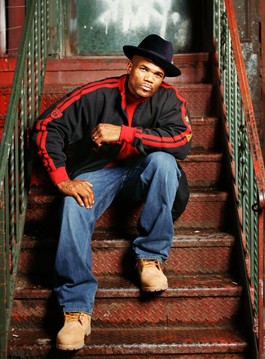
I was in the DMC camp. He seemed more real. I first learned about Jesse Owens and Malcolm X though DMC. I learned about everyday life on the other side of the country, and about brotherhood, and a lot of other things that Richard Marx wasn’t talking about. So when Darryl McDaniels, the DMC in Run-DMC, called my house, I allowed myself to be a little anxious.

McDaniels is on a lecture tour that hits SSU on Feb. 23, talking about the history of hip-hop, and there may be no person aside from his band mate Run with better experience to draw upon. Even so, McDaniels was hesitant to do lectures until he talked to Chuck D from Public Enemy. “For the longest time I was like, ‘No, no, no, no, no,'” McDaniels tells me from his home in New Jersey. “But then Chuck was like, ‘Yo D, you need to go do lectures, man. You’re sayin’ something people need to hear.'”

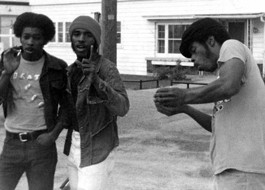
McDaniels’ story offers a look into hip-hop before the music industry seized it and promoted it coast to coast. He talks about meeting Run and Jam Master Jay on 205th Street and Hollis Avenue, hanging out and writing rhymes. He talks about setting up DJ equipment in 192 Park in Hollis and writing rhymes. He talks about getting kicked out of the hallways of his apartment building and retreating to the alley and writing rhymes.

“With or without the music business, before rap was on the record, it was already there,” McDaniels says, adding that college kids born the year of Run-DMC’s breakthrough album Raising Hell might not recognize the organic genesis of hip-hop. “They think it’s all about Billboard Magazine, and havin’ your record in high rotation on the radio and havin’ a good label. It ain’t nothin’ like that. It’s about havin’ something to say in a creative way. So I’m thinkin’, if these kids can hear, maybe hip-hop would get more creative, innovative, inspirational, motivational and educational.”

Inspiration and motivation aren’t exclusive to McDaniels’ era of hip-hop, but he points out that they used to be ideals rather than accidental by-products. The world is filled with well-educated rappers fronting about drugs and violence; in hip-hop’s early days in New York City, it was the other way around. “Afrika Bambaataa and the Zulu Nation was a street gang in New York, but they turned something bad into something good!” McDaniels emphasizes. “Most of the rappers that made positive records were drug dealers, stick-up kids and murderers, but when they stepped to the microphone, they would say, ‘Don’t do what I’m doin’! There’s a better way for you! Go to school, read a book, learn about your history!'”

Run-DMC often gets credit along with producer Rick Rubin for breaking down the wall between rock and rap with guitar-driven tracks like “Rock Box” and the Aerosmith collaboration “Walk This Way.” The idea wasn’t just some marketing ploy, McDaniels says, but a natural cohesion with the “white rock kids” who were early fans. “I’m talkin’ about kids that were listening to Lou Reed, the Ramones, Sid Vicious. We had those punk-rock kids in our shows before we even put a guitar on it, because rock and roll and hip-hop is brother and sister—controversial, innovative, creative, energetic.

“It’s the same feelin’,” McDaniels continues excitedly, “but different expression. These kids was lookin’ at Run-DMC, and sayin’, ‘Yo, I know this! This is familiar to me! Thisis me!’ ‘Cause it wasn’t a black and white thing. We was rappin’ about everything—sneakers, chicken, collard greens. You know what I’m sayin’? We was rappin’ about what everybody was livin’. When I do my lectures, I talk to the kids and say, ‘This ain’t a black and white thing, a rich or poor thing. Hip-hop, whether in Beverly Hills or in the ghetto—we’re there together for those hours at the concert or listening to a rap record, we all on the same level. After it’s over, we can look at each other and say, ‘What’s next?'”

What’s next for Run-DMC is being inducted into the Rock and Roll Hall of Fame this year, an inevitable honor (last year, Grandmaster Flash became the first hip-hop artist inducted). Though most honorees perform at the induction ceremony, Run-DMC has been disbanded since the fatal shooting of DJ Jam Master Jay in 2002, and McDaniels responds immediately and somberly to the idea that the two remaining members perform. “We can’t,” he says. “We can’t do it without Jay. We can’t be runnin’ around without Jay. We was more people than just music.”

McDaniels, who was diagnosed in the late ’90s with a rare larynx disorder which gives him a high-pitched voice, has won a Congressional Award for his work in foster care and adoption services after finding out that he, too, was adopted. (He does not plan to change the lyrics to “Son of Byford.”) Hip-hop remains his first love, although it’s hard to gauge how avidly he follows the genre he helped create. He balks at the success of Lil’ Wayne, and says the last new rapper he was impressed by was DMX, who began making albums over 10 years ago.

“Where do I see hip-hop heading?” McDaniels asks. “That’s a good question. I have no idea where it’s heading. I just know what we can do with it. ‘Cause—put it like this—I don’t want hip-hop to be like it was back in the day. I want it to be better than it was back in the day. ‘Cause I know it can be.” 

Darryl McDaniels speaks on Monday, Feb. 23, at Sonoma State University’s Person Theater, 1801 E. Cotati Ave., Rohnert Park. 7:30pm. $10; SSU students free. 707.664.2382.


Letters to the Editor

02.18.09

Dude. And cialis!

The gay porn story (“Sex in the Suburbs,” Feb. 4) truly lacked balance. Viagra? You must be kidding. Missing from the story is the meth, blow and crack. It is a sad day in paradise when adult gay porn is a front-page story and drugs are not mentioned.

Diane Kane
Cotati

we welcome feedback

We operate a large family resort in Windsor, and having the Bohemian available to our guests is very useful since it usually provides good local information. The Feb. 4 issue was an exception. It actually was an embarrassment. When guests complained about the Sex Issue, we removed the magazine and destroyed all copies.

We hope that you will be more sensitive in the future and not have detailed descriptions of “gay for pay” activities in your magazine.

It is our hope that we will be able to continue to make the Bohemian available to our guests.

Gunter L. Muller, resort manager
WorldMark Windsor

Thanks—You did it for us

I love each week’s “Official Newspaper of . . .”

How about making it the Official Newspaper of Riding Down the Middle of the Road, which is a great way to spend an afternoon on a bicycle during this quiet time of year on the beautiful back roads of Sonoma and Marin counties.

Harry Shaw
Petaluma

earth justice

At the recent Sonoma Environmental Film Festival, the audience was inspired to take action after the screening of River of Renewal, a documentary about restoring the Klamath River Basin and the removal of four dams. The removal of the four dams will be the largest removal of dams in our country’s history. Audience members pledged to send letters to their representatives in Congress and to the new Secretary of the Interior requesting that the agreement to remove the dams be ratified by the first of June.

As promised, the film’s producer wrote a sample letter. It is posted on the festival’s home page at www.seff.us. You can modify it or send it as is. The address for our new Secretary of the Interior, Ken Salazar, who was President Obama’s choice, is included, as are the addresses for Congress members Barbara Boxer and Mike Thompson.

I ran into Rep. Mike Thompson last weekend, and he was happy to learn that he is in the film—that his interview did not end up on the cutting-room floor!

Justine Ashton
Glen Ellen  

From the ‘Stuff We Forgot’ Files

Last week found a funny-ha-ha missive informing you of the changes we’ve made to this here must-read award-winning product (pssst: We killed Movie Times because they are impossible to perfect and added a new Winery Guide, already perfect).

Amid all of the pink-cheeked good cheer of said forced jocularity, the small detail of another stellar editorial addition missed my glazéd gaze: SF Station.

SFStation.com is a calendar aggregate that pulls together the best of everything to do in San Francisco. We’ve heard tell that North Bay residents will occasionally and willingly cross a bridge, and so have teamed up with them to feature several weekly options that you might wish to exercise in your nigh mythic quest to par-tee. Please look for this city-centric wisdom in its own pretty little box in our Music Calendar each week, and prosper.

The Ed.

Can’t Go to Antony and the Johnsons at Noisepop Because it’s a Tuesday Night at 9:30pm All the Way in San Francisco


&–&–>

Stars and Guitars

0

02.18.09

STRING THINGS: Guitars by Michael Garlington & George Lucas.

Which one would you bid on?

Les Claypool’s “How to Play Bass” guitar or George Lucas’ Yoda light saber guitar? Stan Lee’s baseball-card-collage guitar or John Lasseter’s googly-eyed tongue guitar?

The Phoenix Guitar Gala has everybody talking, and with good reason. Where else will one find and be able to bid on 18 different guitars, all individually hand-designed and one-of-a-kind, created by celebrities both local and worldwide? And where else will one be able to further bid on autographed guitars by B. B. King, Carlos Santana and Les Paul, all under the same theater roof that over the years has hosted everyone from Harry Houdini to Metallica? That’s not even mentioning the samba lessons, the capoeira martial arts, the Afro-Brazilian stick dancing, the Brazilian food and the fire dancers.

In fact, the activity under the Phoenix Theater’s roof for its Guitar Gala auction and Carnaval party on Feb. 28 is only a microcosm of just how varied the scene surrounding the beloved building has become. On any given day, it’s not uncommon to walk through the theater’s glass doors—doors formerly entered by Count Basie, Van Morrison, the Red Hot Chili Peppers, Green Day, the Ramones, Sublime and innumerable others—to see teenagers engaged in writing workshops, music lessons, art classes, a free health clinic, acting classes, podcasting courses, recording classes, photojournalism instruction, jam sessions and skateboarding mentorships.

All of this grew organically out of the Phoenix Theater experience. Two decades ago, after house manager Tom Gaffey augmented the theater’s movie schedule by hosting shows with local bands after the late screening, the theater began attracting young people who between bands would draw in notebooks, write zines, practice guitar and work on homework on the lobby steps. Now all of those things and more are part of the theater’s official schedule, thanks to a dedicated board of directors led by executive director Amber Faur, and plenty of volunteers.

STRING THINGS: Guitars by Seth Green, Josh Staples & Les Claypool.

It’s a welcome change, Gaffey says, one that he wouldn’t have been able to instigate on his own. “The organization and all that, that was never a strong suit of mine,” Gaffey says by phone, standing inside the theater’s broom closet to tune out the din of activity. “But now, with so many kids involved and so little space and so many activities, it does require a structure and a schedule. That way we can be consistent. People are coming in with ideas, and they know that there’ll be space guaranteed for them, time guaranteed for them and even some funding sometimes.”

After receiving a donation of guitars from Gibson, the Phoenix board of directors contacted various artists and celebrities to donate their skills. Lots of names were tossed around, many with direct connections to the theater. Devo, for example, played there in 1980;  Les Claypool’s played there countless times. Many of the local artists who designed guitars grew up there.

“This whole thing is through personal relationships and fondness for the Phoenix,” says booking agent Jim Agius. Agius credits Jonah Loop, an old Phoenix regular who’s forged a successful film career in Hollywood, with talking to a handful of high-profile names. Stan Lee, in particular, was “very impressed” with the theater and the concept. “Everyone who was asked,” Agius notes, “said yes.”

The finished guitars are impossible to accurately assess through photos alone; certain fine touches are lost—the sheer girth of Petaluma artist Jack Haye’s piece, covered in BBs, for example. The way the eyes on John Lasseter’s Thunderbird bass glow like marbles, or the intricate wood carving of Josh Staples’ zombie-themed guitar.

It’s similarly impossible to adequately assess the impact and inspiration the Phoenix has had on generations of North Bay teens. Some of them, all grown up, now host yoga classes there. Others serve on the board; some donate money; some organize poetry readings, tutoring workshops and theater productions. All recognize the value of the place.

Gio Benedetti, one such regular, heads the free music program at the Phoenix six days a week, teaching over 50 kids who otherwise wouldn’t be able to afford music lessons. Benedetti credits the Phoenix with his course in life, and relishes the ability to pass along the inspiration. “I can’t imagine what it would be like without the Phoenix,” he says. “Having a building like that, and somebody like Tom who’s so dedicated to the kids, the potential is infinite.”

Indeed, much of the Phoenix Theater’s stature is due to Gaffey’s oversight and ability to convey guidance not from an authoritative fatherly standpoint but from an even-keeled brotherly one. To a casual passerby, Gaffey may seem like the building’s janitor (he still says his favorite tasks include cleaning the bathrooms, and his dedication to sweeping the front sidewalk has become a Petaluma landmark), but all the regulars know him as the heart and soul of the theater.

“Over the years now, I think that we’ve been a good hedge against a lot of things in the outside world, that maybe has given kids a chance to get some breathing room and get a place to be a little bit grounded and avoid some of the pitfalls,” Gaffey says. “I’m glad to see that most of the kids that have come through have been able to use this as kind of an anchor at times. It’s been gratifying, and I hope we get to continue doing it.”

The Phoenix Theater Carnaval and Guitar Gala, featuring over 20 hand-designed guitars, gets underway on Saturday, Feb. 28, at the Phoenix Theater, 201 E. Washington St., Petaluma. 8pm. $30. 707.762.3565. For more info, see www.phoenixguitargala.com.


What Money Can’t Buy

0

02.18.09

Petaluma’s citizens all live in the same city, but we don’t all value the same things. When there’s a difference of opinion on, say, whether or not the proposed Dutra Materials asphalt plant should be built next to a wildlife and wetland preserve like Shollenberger Park, those values determine which side we’re on. Those of us who prefer clean air to toxic, safety over the risk of industrial accidents, and quietude over high decibel noise have raised our awareness about what this asphalt plant would change for the worse in our lives. Our opinions and our values have been ridiculed and dismissed by those who value easy access to asphalt over a healthy environment. We just don’t agree on what is most important for Petaluma.

You can’t have it both ways: healthy and convenient. That’s why asphalt plants are located in remote areas, not in close proximity to residences, schools, wildlife and wetlands preserves and parks. No matter how many mitigations, safety checks, air-quality meters—no matter how ethical or unethical the managing company—accidents happen, filters malfunction, production exceeds permitted levels. Human error, malfeasance and greed happen.

Will the plant operate 7am to 5pm, or will it operate 24 hours a day? Sonoma County supervisor Mike Kerns assures that 24-hour operation will only take place for major contracts and Caltrans projects like the Novato Narrows. Yet this is exactly the job that Dutra wants to build this plant to serve. So once that job gets going, we can expect nighttime operations for about the next 10 years.

Then there are the diesel exhaust fumes. Dutra says there will only be 175 trucks per day, not 750. To some of Petaluma’s residents, another 175 trucks coming in and out of Petaluma Boulevard South is nothing much to worry about, but if your house is at McNear Landing or Golf Club Estates, if you like to walk at Shollenberger Park or if you use the Petaluma Boulevard South exit, 175 trucks per day might get your attention. Daytime hours are 7am to 5pm, that’s 10 hours—or 600 minutes. Divide by 175, and that’s one truck every 3.5 minutes. All day long. Or let’s say they work at night, because it’s that high-capacity time. So instead of 175 trucks, it’s 750 trucks. Now we have a truck every two minutes all day and all night.

That’s a lot of noise, wear and tear on the road, and a lot of diesel exhaust. And that’s only from the trucks! What about the off-loading of aggregate, the crushing of old concrete and the polycyclic aromatic hydrocarbon fumes from hot asphalt in loaded trucks as they leave the site? The picture of a heavy industrial operation emerges, which is why the general plan has to be amended. Measure how far your house is from the site, how close your child’s school is, how close your place of employment is. You either breathe a sigh of relief because you think you’re far enough away that you won’t see the plant or smell it or you might start to make plans to sell your house, change schools, avoid Shollenberger Park and use a different on ramp to Highway 101.

The location of your property determines whether or not you are for the plan. How it affects you and your family personally mobilizes you to start signing petitions, collecting signatures, writing emails to Mike Kerns and the other supervisors, joining Friends of Shollenberger Park, attending county hearings and donating to the legal defense fund. Because you’re beginning to put two and two together and realizing that this plant is going to ruin things that you treasure, threaten your peace and quiet, your health and the value of your property—you don’t like it, it goes against what you value most, the Petaluma you love.

Will the asphalt plant create a health hazard?

Air quality was evaluated in the final EIR. The report grossly underestimated the effect on air quality because toxic by-products of asphalt recycling were not included in the calculation. Levels of nitrous oxide from diesel exhaust were deemed unacceptable, and that’s at the average number of 175 trucks a day, not peak usage. The numbers are clearly being manipulated.


To the supervisors who voted for the Dutra plant, I wonder: where are your houses located? Where do your kids go to school? Which of your family members are sensitive to air pollution? Start thinking about the plant as your neighbor, and then tell us, without a doubt, that we need this plant, right here at the gateway to Petaluma and Sonoma County. Tell us that there’s no better place. Tell us that the numbers you have given us are completely true. And tell us what it is you really value.

 Joan Cooper is a founding member of Friends of Shollenberger Park and Clean Air and was the founder of Biobottoms Inc. and co-president from 1981 through 1996. She is 20-year resident of Petaluma and holds a degree in Landscape Architecture from the University of Pennsylvania.

Open Mic is now a weekly feature in the Bohemian. We welcome your contribution. To have your topical essay of 700 words considered for publication, write op*****@******an.com.


News Blasts

0

02.18.09

rohnert park coffers grow

Having sealed a pact with Sonoma County in July 2008, the Federated Indians of the Graton Rancheria announced last week that it is gifting the city of Rohnert Park with $500,000 to maintain the city’s special enforcement crime-fighting unit. This gift totals $2.63 million made by the tribe to Rohnert Park since 2004. According to a press release composed by Lori Fye, the tribe also recently donated $8,000 to the city for use in planting daffodils. These financial gifts help to tighten the tribe’s bond to a city that they hope will soon be home to a resort hotel and casino.

jewish free clinic

In more news from the little city whose Wikipedia page is strangely wrought in Cyrillic, the Jewish Community Free clinic begins Monday evening walk-in service starting on March 2 from 5:30pm to 7:30pm. Staffed entirely by volunteer professionals, the JCFC serves the 100,000-plus Marin County and Sonoma County residents who do not have health insurance. 490 City Center Drive, Rohnert Park. To learn more, call 707.585.7780 or go to www.jewishfreeclinic.org.

sustainable novato

With Novato preparing to update its general plan, the Sustainable Novato group hosts a community forum on Creating Sustainable Communities on Feb. 25. Joining its greenie brethren in Fairfax, Mill Valley, San Rafael and Sonoma County, Sustainable Novato seeks ways to cement such values into its general plan as living more lightly upon the earth while having a closer connection to one another. Panelists include assemblymember Jared Huffman, green transit leader Stuart Cohen, planning policy wonkette Heather Wooten, Marin County Supervisor Steve Kinsey, housing advocate Marty Murtagh, air-quality chief Kurt Karperos and sustainability consultant Warren Karlenzig. The discussion goes deep and green on Wednesday, Feb. 25, from 6:30pm to 9pm at the Next Key Center, 1385 N. Hamilton Pkwy., Novato. $5 donation. 415.272.3142.

walks on the wild side

The Laguna de Santa Rosa stretches some 14 miles and supports some 200 different species of birds. And those are just some of its smaller numbers. Docents are needed to help educate grammar schoolchildren on this astonishing ecosystem, but it’s not for wussies. A free session for interested docents is slated for Feb. 23; training, however, consists of 10 consecutive Monday-long sessions out on the Laguna with a team of biologists, hydrologists and environmental scientists and costs $145 to defray material costs. This is a stupendous way to immerse oneself entirely in the richness of the Laguna. See if you’ve got what it takes on Monday, Feb. 23, at the Central Library, Third and E streets, Santa Rosa. From 6:30pm. 707.527.9277, ext. 102.


Victory Gardens Return

02.18.09

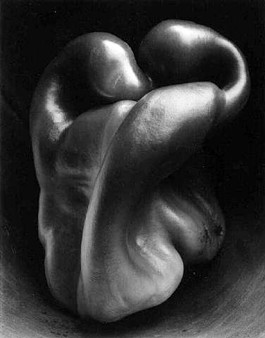
One of the most celebrated bell peppers in modern art—perhaps the most famous of all—is the one depicted in black and white by photographer Edward Weston in 1930. He often captured the curvaceous in nature, and focused his lens on many a good-looking piece of produce. But Pepper #30 outshines them all, with its stunning curves and suggestive twists. Upon first seeing Weston’s image on a postcard, my friend Kevin let out a surprised laugh and exclaimed, “That’s the most sensual-looking bell pepper I’ve ever seen!”

Weston’s pepper is transcendent, and both the artist and the far-reaching vegetable owe the magic of their collaboration to a home garden. Even with the most expensive Hasselblad camera in the world, that quality of art would rarely emerge from shooting pictures of a Safeway pepper. All the curves and personality have been bred out of them, the way the brains were bred out of collies to earn more beauty points at dog shows. But in a home garden with the right seeds, peppers are free to grow themselves as gardeners do—each moment offering the possibility of surprise, delight and the occasional alluring aberration.

I’m not certain whether Weston was the gardener in his home, but the family pepper he made famous was picked before this country became involved in World War II, before the suppression of home gardens. Just 13 years after Weston’s shutter clicked in front of that homegrown beauty, the Department of Agriculture tried to stop Eleanor Roosevelt from planting a White House garden intended to inspire citizens to grow food. Of course, everyone knows how Eleanor Roosevelt stood up to bullying; she was not deterred when they told her that home gardens would be a threat to the food industry. And we should not be deterred either, now that the food industry has become a threat to us.

When the war overseas ended, the war on the environment began with leftover combat chemicals. Agribusiness embraced pesticide dependence even as it coaxed our dependence on convenient, often tasteless veggies; it still guides our eating and controls our Department of Agriculture, which tried to block victory gardens. Science journalist Michael Pollan insists that practices of agribusiness weaken public health, environmental integrity and national security. Readers around the country are still responding to Pollan’s open letter to the new president, published Oct. 9 in the New York Times Magazine. In that letter (and elsewhere, including a PBS interview with Bill Moyers), Pollan calls for the appointment of a food czar in the White House, someone who will develop food policy for the people.


I was thrilled when Alice Waters and friends got San Francisco to replace lawn with lettuce at City Hall. Her goal is to get President Obama to taste a perfect peach, insisting that he will get the message that way, through not just the taste but also the care that nurtured the peach. Go, Alice! I am among the petition signers urging Obama to rip out the south lawn and plant veggies at the White House. I would consider it victory enough if organic, non-GMO vegetables grew there, anything not redesigned at UC Davis with food-industry grant money. Like Eleanor’s 1943 garden, the new White House garden would model empowerment, illustrating how a garden gives us back our food-growing rights, makes a home for honeybees and engages our bodies in meaningful work as it enlivens our senses.

Decades ago, in a conservative suburb of Santa Rosa, one mysterious family grew vegetables and flowers in their front yard. I secretly admired them, thereafter associating front-yard gardening with social courage and creativity. Now Los Angeles artist Fritz Haeg’s Edible Estates (www.fritzhaeg.com) are supplanting lawns here and abroad, and gardens are intertwined with courageous and fun social movements from Slow Food to community building. And don’t forget art. My first garden was a work of art inspired in part by Weston’s unforgettable pepper. Michael Pollan has inspired my next one. It’s a “victory over agribusiness” garden, and I’m planning to send Kevin photographs of all the sensual-looking vegetables.


Museums and Women

0

02.18.09

What happens when as many beautiful, intelligent twenty-something women as could be found at a five-year Vassar reunion crowd into the open floor of a small regional museum? The air zings and, damn, the air smells good. Male, female, straight, gay, young, not-young, whatever—everyone gets a hormone boost in a room heavily spiced by emergent female beauty and attendant wit.

Perhaps to its own surprise, that’s exactly the crowd that the Sonoma Valley Museum of Art found itself hosting at its last Mix event. Intended to lure those crazy young folks into canonized walls, Mix features cocktails and DJs with ample food and a very heady sex appeal. The first Mix of 2009, slated for Feb. 21, is hepped on Japanese food from Shiso restaurant, Paul Hoffman’s boutique Atmosphere, Curveball, Headbanger and 401k wines, sake-based cocktails, electronica and an interactive art project inspired by the current exhibit of Gord Peteran’s surreal furniture and promising to utilize scraps of wood and, one assumes, hammers. (Obvious “hammered” joke not inserted here.)

For those who remain undaunted by a midnight close, an afterparty at Shiso continues the evening into the morning. A mere $25 gets nonmembers a year’s membership to the museum, a free drink and free admission to upcoming Mix events. Even in this economy, that testifies as a straight-ahead deal, and that’s before we start counting in the many blessings of the Vassar crowd.

Mix: Art.Music.Cocktails freshens its lipstick on Saturday, Feb. 21, from 8pm. Sonoma Valley Museum of Art, 551 Broadway, Sonoma. 707.939.7862.


Museums and gallery notes.

Reviews of new book releases.

Reviews and previews of new plays, operas and symphony performances.

Reviews and previews of new dance performances and events.

Adler Fels

0

Once upon a time, there was a little half-timbered winery perched by Eagle Rock that made a fine, sweet Gewürztraminer. Once upon a time, there was also a Scottish-themed restaurant in the same bonny hills east of Santa Rosa. The good news for Adler Fels is that, since 1979, Gewürztraminer has faired slightly better than Scottish cuisine and all things Tudor. Yet how does this romantic idyll persist, when the rare consumer will pay more than $15 for its flagship varietals: light, elegant Sauvignon Blanc and Gewürztraminer? This fair damsel is backed up by a big bottom line.

Alder Fels had already begun diversifying its portfolio with critter labels and custom wine brands when a Southern California wine group purchased the winery in 2004. So it challenged its marketing department to come up with something utterly obnoxious: Big Ass Wine is California’s answer to France’s Fat Bastard, an attention-getting value brand with broad appeal; each label features an artist’s colorful and frank rendering of folks having an outsized good time. And because the négociant wine is such a moneymaker on the East Coast, Adler Fels can keep its premium wines at everyday price points; thus, fans of the Gewürtz benefit from the largesse.

The tasting room is down in the valley, the old Wine Room outpost on Highway 12. Adler Fels just finished putting on a fresh coat of paint, but it’s a bit spartan as yet. Dogs are welcome—but look out for Fifi, a toy poodle that sleeps so soundly in a little bed near the door that it’s tempting to give it a poke, just to make sure it’s real. When I saw it was breathing, I backed off, fooled by the power of C batteries. Folks have got to maintain an offbeat reputation in the Valley of the Moon; after all, their landlord is Tommy Smothers.

For better or worse, the fairy-tale castle is gone from Adler Fels’ new, rationalized label. The 2007 Russian River Valley Gewürztraminer ($15) is lightly sweet, with the juicy crispness of Asian pear and lychee, lending it the refreshing uplift of good mineral water. Adler Fels 2006 Eagle Rock Red ($25) is a blend of Syrah and Petite Sirah, a big cherry bomb.

The Leaping Lizard 2006 Napa Valley Merlot ($13) is dry and fruity, solid and to the point, no more but no less for the price. And what would one expect from Big Ass than a 2007 Napa Chardonnay ($15) that is sweet, fat and wide. That’s not knocking it: this is the kind of Chard that makes the wine-drinkin’ world go ’round.

Adler Fels, 9575 Sonoma Hwy., Kenwood. Open Monday–Thursday, 11am–4pm; Friday–Sunday, 11am–5pm. Tasting fee $10. 707.833.6131.


View All

‘Tis the Cheesen

02.11.09

When the days are short and drear, a person’s fancy turns to cheese. At least that might be a reasonable supposition given the cheese-flavored frenzy that early spring produces in these here parts. First up is Sheana Davis’ Sonoma Valley Cheese Conference. A three-day affair running Feb. 21&–24 and geared toward producers and mongers, this educational confab focuses on storing, selling and producing artisanal cheeses. For the public, the highlight is the tasting day smack in the middle of things. Davis, a professional chef who runs Sonoma’s Epicurean Connection, debuted her own brand of cheese, a cow and goat’s milk blend called Delice de la Vallee last month at the Fancy Food Show, will take pros on area dairy tours and out to special dinners. We mere mortals can only meet them on Saturday, Feb. 21, from 1pm to 4pm, and taste the great miracle of dairy and bacteria that gives them their living. Tickets are $20 and include lots of tastings as well as a yummy lovely glass of wine. Sonoma Valley Women’s Club, 576 First St, E., Sonoma. www.sheanadavis.com.

Davis’ event whets appetites for the California Artisan Cheese Festival, scheduled for March 20&–23 at Petaluma’s Sheraton Sonoma County. This fest features a marketplace tent, a chef’s dinner on Saturday night and seminars. To get advance tix, go to [ http://www.artisancheesefestival.com/ ]www.artisancheesefestival.com.

Quick dining snapshots by Bohemian staffers.

Winery news and reviews.

Food-related comings and goings, openings and closings, and other essays for those who love the kitchen and what it produces.

Recipes for food that you can actually make.

Motor City Madness

0

02.18.09

Detroit has always been a music town, but after Berry Gordy packed up Motown and moved the label to L.A. in 1972, black artists in the Motor City lost the attention of record-label executives who were busy furiously signing the region’s white bands. By the early 1970s, Detroit’s biggest acts—Iggy Pop, MC5, Bob Seger, Grand Funk Railroad—represented an unbalanced façade concealing the city’s teeming black talent. Columbia Records’ Clive Davis recognized this disparity and offered a contract to three black brothers who had a loud, fast, anti-authoritarian attitude long before punk rock became a household word. They called their band Death.

David, Bobby and Dannis Hackney had grown up listening to Smokey Robinson and the Temptations; in 1973, they bought instruments, and the garage noise that resulted sounded more like the Stooges than the Supremes. Undaunted, they picked a recording studio at random from the phone book to record a demo. The studio head was impressed enough to send the demo to Davis, who loved what he heard and signed the band to a deal. After seven songs were recorded, however, he demanded the band change their name. They refused.

Death continued to play shows, and with the help of Columbia’s advance money even pressed up 500 copies of a 45 rpm single to give away for free around Detroit. And then: nothing. Detroit continued to be a white-boy rock ‘n’ roll scene throughout the 1970s, and Washington, D.C.’s, Bad Brains would take the throne as America’s reigning black punk band—until now. This week, Drag City releases the seven songs Death recorded for Columbia Records 34 years ago as Death . . . For the Whole World to See, causing music historians to rewrite their chapters on black artists in punk rock.

This is the type of good story that’s usually accompanied by mediocre music, but the songs that Death recorded are better than even the most rocking Detroit anthems. “Keep on Knocking” sounds like an outtake from Alice Cooper’s Love It to Death, and “Rock ‘n Roll Victim” nails everything that Destroy All Monsters tried to do years afterward. But it’s the nearly six-minute “Politicians in My Eyes” that makes the best case for the band, with hyperchanging rhythms, acerbic lyrics, insane psychedelic guitar sounds and an epic plea for fairness in an unjust world. With its release this week, finally, that plea is answered.


All-Time Great

02.18.09We are the hip-hop generation. That's what they call us, at least. We're the ones for whom hip-hop was never a threat. To whom hip-hop never was anything but an inspiration, a shared language, a code of conduct, an infinite subject matter, an empowerment. We grew up through hip-hop, yes, but more importantly, we grew out through hip-hop.We owe...

Letters to the Editor

02.18.09Dude. And cialis! The gay porn story ("Sex in the Suburbs," Feb. 4) truly lacked balance. Viagra? You must be kidding. Missing from the story is the meth, blow and crack. It is a sad day in paradise when adult gay porn is a front-page story and drugs are not mentioned. Diane KaneCotatiwe welcome feedbackWe operate a large family...

Stars and Guitars

02.18.09 STRING THINGS: Guitars by Michael Garlington & George Lucas. Which one would you bid on?Les Claypool's "How to Play Bass" guitar or George Lucas' Yoda light saber guitar? Stan Lee's baseball-card-collage guitar or John Lasseter's googly-eyed tongue guitar? The Phoenix Guitar Gala has everybody talking, and with good reason. Where else will one find and be able to bid on...

What Money Can’t Buy

02.18.09Petaluma's citizens all live in the same city, but we don't all value the same things. When there's a difference of opinion on, say, whether or not the proposed Dutra Materials asphalt plant should be built next to a wildlife and wetland preserve like Shollenberger Park, those values determine which side we're on. Those of us who prefer clean...

News Blasts

02.18.09 rohnert park coffers grow Having sealed a pact with Sonoma County in July 2008, the Federated Indians of the Graton Rancheria announced last week that it is gifting the city of Rohnert Park with $500,000 to maintain the city's special enforcement crime-fighting unit. This gift totals $2.63 million made by the tribe to Rohnert Park since 2004. According to...

Victory Gardens Return

02.18.09 One of the most celebrated bell peppers in modern art—perhaps the most famous of all—is the one depicted in black and white by photographer Edward Weston in 1930. He often captured the curvaceous in nature, and focused his lens on many a good-looking piece of produce. But Pepper #30 outshines them all, with its stunning curves and suggestive twists....

Museums and Women

02.18.09What happens when as many beautiful, intelligent twenty-something women as could be found at a five-year Vassar reunion crowd into the open floor of a small regional museum? The air zings and, damn, the air smells good. Male, female, straight, gay, young, not-young, whatever—everyone gets a hormone boost in a room heavily spiced by emergent female beauty and attendant...

Adler Fels

‘Tis the Cheesen

02.11.09When the days are short and drear, a person's fancy turns to cheese. At least that might be a reasonable supposition given the cheese-flavored frenzy that early spring produces in these here parts. First up is Sheana Davis' Sonoma Valley Cheese Conference. A three-day affair running Feb. 21&–24 and geared toward producers and mongers, this educational confab focuses on...

Motor City Madness

02.18.09Detroit has always been a music town, but after Berry Gordy packed up Motown and moved the label to L.A. in 1972, black artists in the Motor City lost the attention of record-label executives who were busy furiously signing the region's white bands. By the early 1970s, Detroit's biggest acts—Iggy Pop, MC5, Bob Seger, Grand Funk Railroad—represented an unbalanced...
11,084FansLike
4,446FollowersFollow
6,928FollowersFollow