Live Review: Merle Haggard and Kris Kristofferson at the Wells Fargo Center

The rare treat of seeing Merle Haggard and Kris Kristofferson last night in their first-ever concert together wasn’t one easily passed up. Not by the sold-out crowd; not by Ramblin’ Jack Elliott, who ambled in with trademark cowboy hat and cane; and not by—brace yourselves, folks—Cher, who sat in the sixth row.
What in the world was Cher doing at a Merle Haggard / Kris Kristofferson show in Santa Rosa? We may never know. What’s for sure is that she, along with fans that capped the night with an epic five-minute standing ovation, witnessed two bona fide heroes of country music give a performance at turns tender, humorous, poignant, insightful, and above all, intimate.
Let’s just hope Cher wasn’t the woman who yelled out for “Me & Bobby McGee” a few songs after Kristofferson had already played it.
The 1,400-capacity Wells Fargo Center has a historic knack for achieving a living room-like atmosphere for acoustic music. They did it with the Landmine Free World concert in 1999 with Steve Earle, John Prine, Emmylou Harris, Patti Griffith and Bruce Cockburn; they did it with the two Elvis Costello / Steve Nieve concerts they’ve hosted; they did it with the Texas songwriter night in 2005 with Lyle Lovett, John Hiatt, Guy Clark and Joe Ely; and they did it last night by closing the stage curtain and presenting Haggard and Kristofferson front and center.
When Merle Haggard played at the Center last year, electric, he drew a shitkickin’, Copenhagen-dippin’, cheap perfume-wearin’ crowd. This tour was different. Instead of a parking lot scene with greasy dudes in Suicidal Tendencies T-shirts smoking joints, it welcomed wine tour limousines and sixty-somethings gingerly stepping out of Oldsmobiles. The performance itself suited the new audience: pensive, slow, and mortal.
“If there’s a Hall of Fame for heroes in heaven, this man’s definitely on his way,” said Kristofferson, introducing Haggard after opening the show with “Shipwrecked in the Eighties.” Added Haggard, fresh from successful lung cancer surgery: “Between the two of us there’s about 150 years of experience here.”
Those expecting a “Storytellers”-type show, with Haggard and Kristofferson sitting down with acoustic guitars and swapping tales about the Army (Kristofferson), prison (Haggard), Louisiana oil rigs (Kristofferson) or stealing Buck Owens’ wife (Haggard) got something far better: a run-down of the two giants’ greatest songs backed by an elegant, semi-acoustic version of Haggard’s band, the Strangers. (Turns out Haggard must have won the battle.) As for storytelling, most of the night’s commentary got squeezed between lines of the songs themselves.
Kristofferson, during “Nobody Wins”: “George Bush and Dick Cheney were singin’ this song in the shower together.”
Haggard, during “Sing Me Back Home”: “This goes out to all the ex-convicts. It’s every convict’s dream to be an ex-convict.”
Kristofferson, during “Best of All Possible Worlds”: “Did you know that here in the USA, the land of the free, we got more people behind bars than any other country on the planet? That’s right, boy. We’re #1.”
Haggard, during “Tonight the Bottle Let Me Down”: “I feel like a stripper without a G-string!”
Yes, the two were very funny together, but also incredibly warm, and wise. It’s not uncommon for former hellraisers entering life’s twilight, particularly in country music, to embrace a life-lesson empathy. When I spoke with Kristofferson last year, he elaborated: “There is a freedom in accepting the fact that there is a difference at this end of the road,” he told me. “I’ve watched a lot of my friends and heroes, like Johnny Cash and Waylon, I’ve watched ’em slip and fall. And be gone. And it’s gonna happen to all of us. So I think the acceptance of it gives you a freedom to be less critical of yourself when you make mistakes, and to not be so hard on others.”
Warmth like that was conveyed on stage last night so often, it sometimes outperformed the fantastic songs. Check the set list below—there were nearly 30 of ‘em. The selections played off each other cleverly, as Haggard ran with the torch of Kristofferson’s “For the Good Times” and answered, “Are the Good Times Really Over?” Kristofferson pleaded to help him make it through the night; Haggard, up next, just wanted to make it through December.
Yes, it was a considerable union. To see Kristofferson sing backups on Haggard’s “Silver Wings” and a reworked verse in “Okie From Muskogee,” or to have Haggard play his ranchero-style nylon guitar solos on “Sunday Mornin’ Comin’ Down” and “Help Me Make It Through The Night” was truly exciting. By the end, after the two had finished “Why Me Lord,” the standing ovation seemed endless. No one could believe it when five minutes later, the house lights came up.
(Afterward, Cher was quickly escorted behind velvet ropes into a tinted-window SUV. Kristofferson obliged a waiting crowd of about 50 with autographs and gracious conversation, and Haggard stayed put on his bus until it rumbled, slowly lurched forward through the parking lot, and breezed into Highway 101 for the next town.)
Photos by Elizabeth Seward.
Set List:
Shipwrecked in the Eighties
Big City
Silver Wings
Me & Bobby McGee
I Think I’ll Just Stay Here and Drink
Folsom Prison Blues
Best of All Possible Worlds
If I Could Only Fly
Mama Tried
Here Comes That Rainbow Again
I Wish I Could Be 30 Again
Rainbow Stew
Help Me Make It Through The Night
If We Make It Through December
Nobody Wins
T.B. Blues
Okie From Muskogee
Tonight The Bottle Let Me Down
Back to Earth
Jody and the Kid
The Silver-Tongued Devil and I
Sing Me Back Home
He’s a Pilgrim
Twinkle, Twinkle Lucky Star
For the Good Times
Are the Good Times Really Over
Sunday Mornin’ Comin’ Down
Today I Started Loving You Again
Why Me Lord

It’s a Scrawl World

the arts | visual arts |

THOUGHTS BUBBLE: Some 50-plus years of graphic genius are juxtaposed in a new compilation.

By Richard von Busack

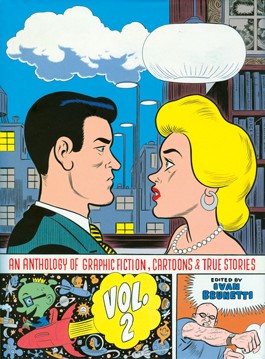
What editor and cartoonist Ivan Brunetti has done: he has presided over a collection that does for anti-commercial comics what the Oxford Anthology of English Verse does for poetry.

What Brunetti was trying to do: something far more modest, apparently. The 86 artists gathered in An Anthology of Graphic Fiction, Cartoons and True Stories, Vol. 2 (Yale University Press; $28) merely “share the same cultural broth,” Brunetti writes. He adds, “Cartoonists are, at heart, doodlers,” and that’s Brunetti’s way of dismissing even his own surpassingly morbid and crazed autobiographical cartoons.

It’s nice to hear an academic understating a case for pop culture, but I’m flabbergasted by the range of work in this collection. The selections are kaleidoscopically varied, almost universally risky and created to satisfy a number of impulses.

Here are street-level scrawlers begging to be remembered, such as Oakland’s Eugene Teal (honored in Karl Wills’ animated short “Teach Me”), and the still missing-in-action Elinore Norflus, an inconnu whose work for R. Crumb’s Weirdo remains some of the most disturbing outsider art ever printed. Also here, though from a different decade, is Fletcher Hanks, a genius who literally froze to death on a park bench.

These supposed doodlers range far out in time. From 1942, we get two pages of Bill Holman’s batshit-crazy Smokey Stover; that comics’ appearance in the Sunday Los Angeles Times was as essential a guide to liberation from the mind-forged manacles of the Southland as were Alfred E. Newman and Dr. Demento.

Sixty years later, Tim Hensley takes the fuggly 1950s panel cartoon, empties it and crawls into it like a hermit crab, to emit S. J. Perelman–worthy scorn. Noting the way bankers and smooth jazz go together like hookworms and pellagra, Hensley has an effete character at a swank restaurant drawling, “When I first heard Eco-Byzantium by Zanzibar Taupe, it was like floating an insolvent surety bond into fiduciary defeasance.”

Doodlers? Well, there’s nothing doodly about the editing here, about putting Joe Matt’s sleazy sexual adventures flush against Jeffrey Brown’s own tenderly awkward story of losing his virginity. There’s more than mere propinquity in having Lynda Barry, Jessica Abel and Diane Noomin rubbing shoulders.

Chris Ware’s stunning miniaturized tales are juxtaposed with Adrian Tomine’s and Daniel Clowes’ own slaved-over graphics. Harvey Pekar’s account of bottoming out as a record-collecting junkie sits pages away from R. Crumb’s That’s Life! The latter is a particularly memorable Crumb (his best work ever?), all about a pair of concentric circles. One is the short, harsh life of an unknown Southern blues musician; the larger one is of present-day blues aficionados gathering to listen to a worn 78.


David Heatley’s portrait of his loving and slightly eccentric parents is far more than a “parents say the darndest things” story—Heatley notes the way his parents cling, and the way he has to gently hold them at arm’s length. Jim Woodring’s elaborate dream sequences have the artist, in pajamas and lumbering like Karloff, wandering through ever more disturbing scenarios. Kevin Huizenga’s The Curse, about the heinousness of that exotic pest the starling, is as handsome as Herge’s Tintin and as informative as an hour of PBS.

Here is all the vigorousness of new art form, not at all pruned to that shape that marketing departments call “a generation.” Rather than defining a time, this collection will defy it.


View All


Museums and gallery notes.


Reviews of new book releases.


Reviews and previews of new plays, operas and symphony performances.


Reviews and previews of new dance performances and events.

Moody Indigo

0

04.01.09

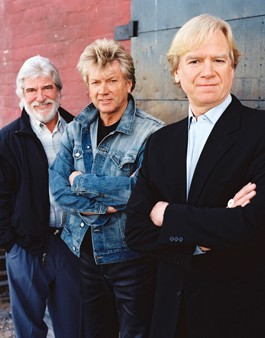
The dilemma,” muses Moody Blues guitarist Justin Hayward, “is not what we play; it’s what we leave out.” Indeed, with a back catalogue of a dozen mega-selling albums studded with myriad memorable songs and singles, the Moody Blues return to Santa Rosa on April with a four-decade history few bands can match—and a set list that is mostly mandatory.

“There are a lot of things we couldn’t get off stage without playing,” he continues, “and there’s only so much you can do in a two-hour show. More than that, I think people would start drifting off.”

But 41 years after the group’s Days of Future Passed album introduced and defined what has come to be known as “symphonic rock,” Hayward insists he never feels an urge to skip playing that record’s enduring signature song, “Nights in White Satin.” “No, no,” he says. “That’s a wonderful thing to be part of. It’s one of those songs that you can go most places in the world and play it, and people will know it and like it.”

With its lush orchestral interludes, solemn poetic passages and broad thematic concept, Days of Future Passed was a studio elaboration of the band’s stage show, tailored to their record company’s desire to showcase its new stereo capabilities. When the record found an enthusiastic audience, “that sort of dictated how the whole thing would go,” Hayward says. “We realized after the first album that it was an idea that really worked for us. We’d see the album as a whole, and even if we were just beginning it, you could see a plan for how we wanted it to be.”

After the band had cut their songs, the symphonic segments of Days were taped in a single three-hour session. “Time was very tight, and there’s still a part of the original recording where the studio cat ran though the orchestra and knocked a tree bell over,” Hayward says. “Arrangers over the years have faithfully reproduced the rather odd timing of that tree bell crashing, but it was never meant to be on the record.”

Faced with the daunting challenge of recreating the rich textures of their recordings on stage, founding keyboard player Mike Pinder turned to the Mellotron, a complicated, often temperamental instrument that played tape loops of strings and other orchestral timbres tuned to its keys. It could sound wonderful, but in practice the Mellotron was a “huge, unwieldy, heavy mechanical machine,” Hayward recalls. “And frequently going wrong. On the very first gig we did in America, at the Fillmore East in New York, it lasted about two songs, and the rest of it—I kept looking across, and it was Mike with his head in the back of the Mellotron with a coat hanger in his hand, trying to work it all out. It didn’t travel well, but it was certainly a big part of our sound.”

Modern synthesizers now handle all that the Mellotron did and more, enabling the current edition of the band—which now features just three of those famous five, Hayward, bassist John Lodge and drummer Graeme Edge—to replicate their well-known records more faithfully than was ever possible when they were new.

As much as he loves playing the classic Moodys material, Hayward hopes that a disc of new songs might still find favor, although he has tempered his expectations. “It can never be on the scale that it was before,” he acknowledges, “because the most valuable commodity in the whole music business is probably youth. And that’s the one thing you can never buy back.”


Regardless, he’s ready to carry on with the Moody Blues “as long as there’s somebody willing to buy a ticket.

“It’s all I’ve ever wanted, really, to be in a great band that does my songs well, and I can play with the other guys and do things they like, too,” Hayward says simply. “It’s just brilliant, and I couldn’t ask for more. It’s not something you’d want to readily give up.”

 The Moody Blues appear Tuesday, April 7, at the Wells Fargo Center, 50 Mark West Springs Road, Santa Rosa. 8pm. $30&–$120. 707.546.3600.


Just a Regular Wednesday Morning at the KRSH 95.9-FM

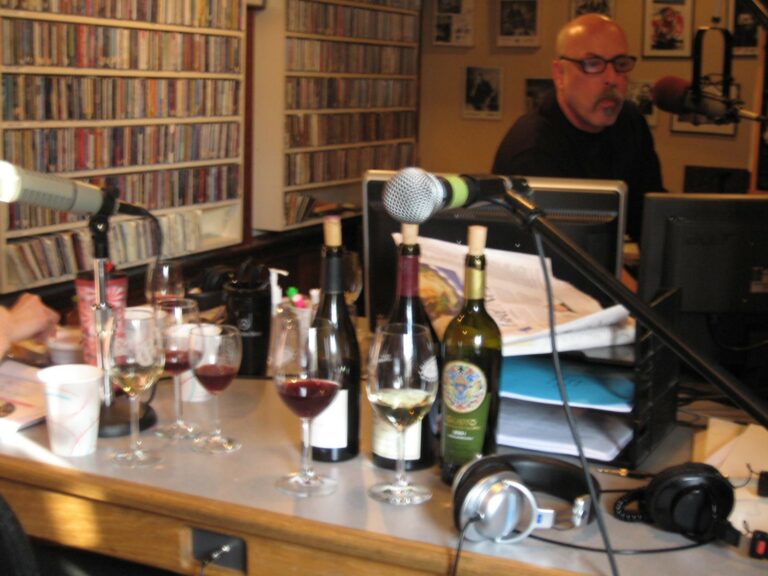
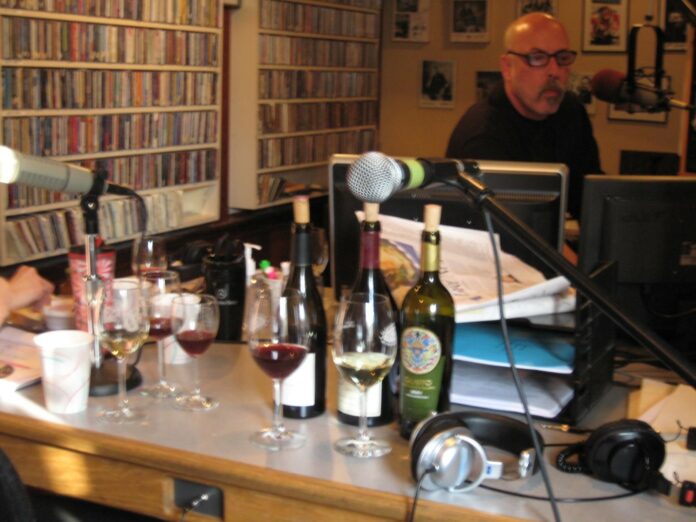
DJ Brian Griffith mans the panels while some $1,000 worth of wine sits out at 8:30am on April 1 —no joke— after Ziggy’s morning show. Barely seen to the left is Ziggy spreading French chévre onto bread before topping it with a smidge of fig jam because it’s just so good with $600 Pinot in the morning. I had three sips—Three! Sips!—and was unable to remember today’s cover story while on air.

Senior Suds

0

04.01.09

Several years ago, I read Microbrewed Adventures by traveling beer journalist Charlie Papazian, in which he went about Europe tasting beer in some of the most coveted places. I recall several occasions when he visited old European monasteries. There, monks led him to the dungeons and withdrew from the dusty shadows ale and mead bottled in the 19th century. According to Papazian, the relics were not bad. Some lacked bubbles, but the writer eulogized the 100-plus-year-old brews as the ultimate in “experience” beers.

It has since been one of my objectives in life to build my own formidable and abundant collection of wise old beers, and I have now accumulated both homebrews and commercial brands dating back to 2005. Come nightfall, the beer demons haunt me. They tell me that my brews are peaking and that I must open them now. I resist and tell myself that the beers in my closet will continue to improve for years, that I must endure the decades, and that the experience of someday drinking ancient homebrews will be a pinnacle of my life.

But recently I caved. I sampled one of my last 2006 homemade barleywines; it tasted like liquid cardboard. I’ve since learned that even most commercial labels cannot transcend time the way Papazian’s experience had me believe. Consider Brown Shugga’, Lagunitas Brewing Company’s 9.9 percent ABV slugger, first concocted in 1997 with cane sugar after a barleywine recipe went haywire.

In late December, I enjoyed a private tasting of this beer with brewery co-captain Ron Lindenbusch. From the beer library behind the band stage, Lindenbusch pulled bottles of Brown Shugga’ as old as five years. He prepared a vertical tasting so that we could observe in a snapshot glance how the product has changed with age.

As is the fashion in verticals, we started at the top, with the 2008 release. Brewed just two months prior, it tasted familiar, bright and bitter, malty, and alive with hops and a clear freshness. Though sweet and tasty as always, it was rather mundane. The ’07 Shugga’ was a dramatic departure. The aromatic hops were almost entirely gone along with the bitter bite, but the malt character was beginning to develop and deepen. The ’06 vintage was still heavier, thicker, stickier, deeper with toffee, and delicious.

There was no 2005 available, so we tasted the ’04 next. A dusty, slightly stale taste surfaced through the candy. The beer seemed past its prime, and the 2003 was even further gone. There was a trace of sourness and tartness—signs of oxidation—and the malty body had worn thin. Brown Shugga’, we concluded, peaks at two years. Given its high level of alcohol, which is a preservative, I had expected much more.

But Mark Ruedrich, president and brewmaster at North Coast Brewing Company, explains that a beer needs more than just alcohol to live long and prosper. North Coast’s Old Stock Ale, a heavy 11-plus percent ABV beer, has been in production since 2000, and a recent tasting of the original vintage was a “fabulous” experience, Ruedrich reports. But he says it’s not just the alcohol that has given the beer its longevity; it’s the expensive, complexly flavored Maris Otter barley in the Old Stock recipe.

“High alcohol is pretty obvious as a way of keeping a beer from getting worse,” he says, “but we wanted a beer that actually would improve, and using this malt creates an environment in which this beer actually gets better over time.”

Only with several years does the full potential and marvelous complexity of the Old Stock begin to arrive, Ruedrich says, and the beer may be well worth stashing away.

Avery Brewing Company in Colorado brews several unusually strong beers. One, the 16 percent ABV Mephistopheles Stout, has been in production for only three years, but company brewmaster Adam Avery believes the first vintage will still hold its form for at least another decade. With bottles stashed away in the brewery library, time will tell. Meanwhile, Avery’s Hog Heaven barleywine has been in production for a decade, and the company recently held a 10-year vertical tasting. Though Avery says he prefers this big beer when it’s “super fresh and reeking of ganja,” guests at the tasting found the 10-year-old to be “spectacular,” and the majority, Avery says, favored the five-year-old.

Dogfish Head in Delaware strongly promotes the cellaring of its beers, some of which run 18 to 20 percent ABV and are meant to be aged for spectacular lengths or time.

“In our experience, research and opinion, we’re confident that Dogfish Head beers over 10 percent alcohol will improve with age, potentially for decades,” owner, brewer and founder Sam Calagione wrote to the Bohemian in an email.

Some brewers, on the other hand, don’t vouch for old beer. At Moylan’s in Novato, brewer Denise Jones believes the best beers are those served fresh, straight across the bar when the brewer decides that they’re ready, usually soon after conditioning. Jones prefers her Old Blarney barleywine, for example, at just three to six months of age.

Lagunitas founder Tony Magee has said in previous conversations that most barleywines improve for a year or two, but beyond that point they “just get interesting.” The late and revered beer critic Michael Jackson wrote in 1995 that 99 out of 100 beers will decline with age, but that Lee’s Harvest Ale is one that improves markedly over time, peaking, he said, at about seven years before it becomes overwhelmed by Madeira notes. 

The integrity of a brewery’s equipment and how completely the beer is protected from oxygen exposure after fermentation and before bottling will affect how long the beer lasts in the cellar, experts say. Lagunitas replaced its bottling line machinery in 2005 with an improved system, and Lindenbusch wonders whether the Brown Shugga’ made on the new equipment will live longer than two or three years.  

How beer should be enjoyed is strongly a matter of preference. Drinking 50-year-old homebrew will likely be disappointing, though well-made beers can doubtless remain drinkable for decades. Such old specimens will likely have lost their bitter edge, bright freshness and youthful luster by the time their day comes. For beer intellectuals, such an evolved beer can be rewarding—an “experience beer”—if not an ideal after-work refreshment. For others, however, there is nothing like a beer fresh and alive from the brewpub, and for these men and women, a beer without hops, without body and without bite is nothing but a beer gone bad.


Quick dining snapshots by Bohemian staffers.

Winery news and reviews.

Food-related comings and goings, openings and closings, and other essays for those who love the kitchen and what it produces.

Recipes for food that you can actually make.

James Beard Awards

04.01.09

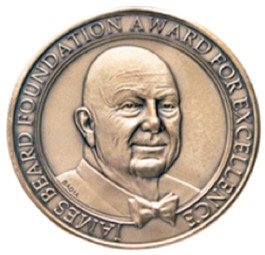
From the Better Late than Never files, we finally got over to the James Beard Awards list and were gratified to confirm what other media outlets had reported last week: the North Bay is beautifully represented at this annual honor. With the final awards to be announced in New York City May 3&–4, many area chefs and food professionals are proudly represented, including the perennial Thomas Keller (for his book Under Pressure: Cooking Sous Video); Redd’s Nicole Plue (Outstanding Pastry Chef); Merry Edwards for her eponymous brand as well as John and Doug Shafer of Shafer Vineyards (Outstanding Wine and Spirits Professional); and Ubuntu’s Jeremy Fox and Cyrus’ Douglas Keane (Best Chef: Pacific).

But really made us start up from our slump was to see our own Clark Wolf listed as an inductee into the Who’s Who of Food and Beverage in America category, along with such luminaries as chef and entrepreneur David Burke, Southern Foodways Alliance director and author John T. Edge, culinary historian and cookbook author Betty Fussell and French Culinary Institute founder Dorothy Hamilton. Clark, who divides his time between Guerneville and N.Y.C. (and has the good humor to realize the bad T-shirt that makes), contributes Napkin Notes on an occasional basis to these pages.

Owner of the Clark Wolf Company, a food and restaurant consulting firm that has been instrumental in guiding the Las Vegas culinary boom, Clark’s latest book is American Cheese, a fitting tome for a former English major who found his passion in a San Francisco cheese shop and parlayed that into an international career that includes establishing the New York chapter of the American Institute of Wine and Food and hosting NYU’s seminal Critical Topics in Food series, which enjoyed a West Coast run at the now-defunct COPIA.

Locally, Clark has done much for programs up on the River, establishing the Russian River Food and Wine Festival with former partner Scott Mitchell, which not only allowed patrons to have relaxed interactions with nationally known chefs and providers but donated huge, large swadges of cash to promote locally grown sustainable food for local nonprofits. We’re very proud of our lad.

Quick dining snapshots by Bohemian staffers.

Winery news and reviews.

Food-related comings and goings, openings and closings, and other essays for those who love the kitchen and what it produces.

Recipes for food that you can actually make.

End of a Street?

0

04.01.09

Despite public outcry and a brief civic reprieve, artists at Santa Rosa’s A Street Studios are packing up and preparing to vacate the building where most of them have worked for over a decade.

The dynamic space, which houses artist studios in the back and whose front exhibit space just a year ago became the Gallery of Sea and Heaven—showcasing work by the developmentally disabled clients served by Becoming Independent—has been the cornerstone of Santa Rosa’s efforts to create an arts district. Formerly the A Street Gallery, this warren of creative endeavor has hosted cutting-edge art exhibits by emerging and midcareer Bay Area artists of the sort not easily seen elsewhere in Sonoma County. The space has hosted twice-yearly street parties that support area businesses, and its presence has helped to reclaim the adjacent Juilliard Park from drug dealers and gang activity.

It all comes down to earthquake readiness and a crack in the wall that city inspectors believe portends the building’s immediate demise. But artist Andrea Hibbard, who held the lease on the place for some 10 years and who has managed both the studio spaces and the art gallery before it went to Becoming Independent, knows differently. “It’s been there since 1969,” she says of the crack.

Seismic upgrades have been done to the building, which is owned by Lee Montgomery of Pleasanton’s Amador Properties, but city officials have deemed the place an immediate threat to tenants and visitors. The artists could do retrofitting themselves, and Hibbard says that she has been touched by the number of offers for pro bono work that have poured from the community, but ultimately A Street tenants felt that they could not accept such goodwill offers without knowing their fate.

“We’ve been on a year-to-year lease for a decade,” Hibbard explains. “We’ve rolled the dice, and without being able to know for sure if we can stay next year, we would just be using these people’s help and additional funds to improve a building we don’t know that we can have.” The building will be vacant by mid-April.

One small light is the possibility that Becoming Independent would purchase the place, should it come up for sale. “It’s a dream spot for them,” Hibbard says, “being in the middle of A Street, next to the park. It’s gentle here, and people really enjoy this project. Towards the end of the year we were really seeing a fusion of camaraderie. It was an experiment that was working.”

Buoyed by the possibility that BI might be able to step in and replace the artists and reopen the gallery, Hibbard is nonetheless saddened by an era’s end. “It’s like death,” she says with a short laugh. “You always know it’s going to happen, but when it does, it’s a drag.”


Lunch With Francis: Coppola, Rubicon and the ‘Foie Gras Wars’

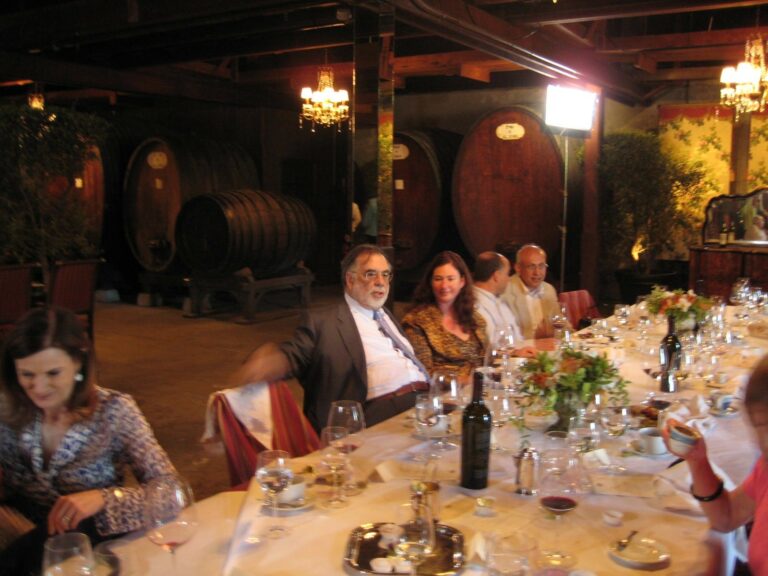
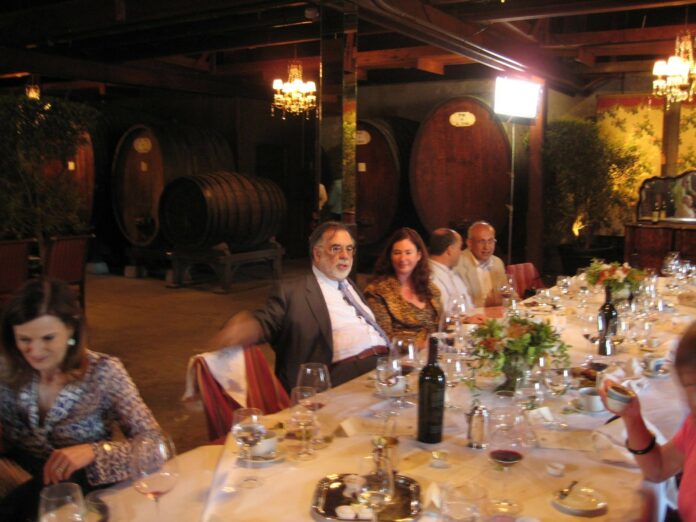
Sometimes I actually do have the life I’m supposed to have, and last Friday, March 27, contained a slice of that supposed pleasure. The occasion was twofold: The launch of Chicago Tribune writer Mark Caro’s new book The Foie Gras Wars, and a celebration of Francis Ford Coppola’s 2005 Rubicon Estate Cabernet, held in the caskroom of the 1860 Rutherford chateau formerly home to Inglenook.

Caro, who is primarily an entertainment writer, has interviewed Francis, his wife Eleanor and their daughter Sofia on several occasions. They consider him a family friend, and so flew him and his wife out to Rutherford for a weekend launch of the book that began with local journalists on Friday and segued to wine club members and the public on Saturday. Focusing on California’s Sonoma Saveur as well as the two other U.S. foie gras producers, Wars is a lively read about a deeply misunderstood food targeted by animal rights activists in great part because it has no lobby to protect it.

Francis, whose new film Tetro, starring Vincent Gallo, comes out in June, hosted CNN to the journo luncheon as they filmed the proceedings for a short doc that will debut with Tetro. But his real passion was discussing what it takes to make a great wine as opposed to a merely “good” one. Francis—and yes, in the life I’m supposed to have, he and I are first-names only—reckons that he’s got a mere seven years left to segue his Rubicon firmly from the good to the great and if he’s unable to do that, he’ll give the whole danged franchise over to his son Roman.

Eleanor was also talking progeny, saying that families have changed over the years. “When our children were young,” she said, “if Francis was going to be gone more than two weeks, we’d pack everyone up and go with him.”

I earnestly rejoined, “Like when you spent three years in Thailand! I just loved Hearts of Darkness!”

She paused politely and continued. “Now, my daughter and her rock star boyfriend have a two-year-old and only see each other when they feel like it.”

(A neighbor with an iPhone quietly Googled Sofia to determine that the “rock star” is singer Thomas Mars of the French band Phoenix, which just reinforces that asking journalists into your environs and then being actually nice to them is a poor idea.)

Francis, a napkin tucked into his lapels over his tie, remembered the early 1970s when he was deeply in debt. Worried about losing American Zoetrope and its San Francisco building, he cast about to make a film that might make some money. He was given what he remembers as a dirty awful book about dirty awful people written by Mill Valley novelist Mario Puzo. The punchline remained unsaid.

Other than that small gushing outburst with Eleanor, I played it cool. A cucumber was I until, after several lovely glasses of 2005 Rubicon Cab, I was in the ladies room preparing to leave. Bam! It hit me that I’d been having lunchwith Francis Ford Coppola!!!!!

I washed my hands and rushed back into the cask room. “Francis! Francis!” I fairly shouted as he was leaving, trailed by the CNN camera. “I’ve been cool up until now but I just have to say what an impact your art has had on my life. I gave birth to my second son while watching all three Godfather films back-to-back and, next to Lawrence of Arabia, Apocalypse Now has to be the best film ever made!”

I panted and sweated, bug-eyed and immediately embarrassed.”Well,” he said appraisingly, “you did keep your cool for quite a while.”

Back to the life I really have, instead of the one I should have. Clearly, I can’t keep my mouth adequately shut for the promised land.

Fuzzy Francis

Flawed Beauty

04.01.09


Lydia, by the fast-ascending Bay Area playwright Octavio Solis (Bethlehem, Gibraltar, June in a Box), is two plays intertwined in one. In its West Coast premiere at Marin Theatre Company, the first act and the last 10 minutes of the second act are among the best plays I’ve seen in years. In these portions of Solis’ ambitious work, Lydia is achingly lyrical, breathtaking in its inventiveness and heartbreaking in its view of the dark, shimmering heart of senseless tragedy and the wounded but still hopeful humanity of its characters.

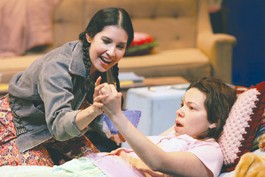
In MTC’s production, Lydia, at its best, is brilliantly committed, carefully planned and precisely paced by director Jasson Minadakis, a beautiful execution of the playwright’s vibrant vision of a 1970s El Paso, Texas, where the emotionally scarred, Mexican-American Flores family lives in a fishbowl-shaped house, and a brain-damaged daughter spins desperately beautiful webs of words even as her body lies trapped in near silence on her bed.

Frustratingly, the other play—the one that occupies the bulk of Lydia’s second act—is a run-of-the-mill family potboiler bordering on the melodramatic that is ramblingly structured and bizarrely paced, with a smattering of unsatisfying character arcs and abrupt endings which lead (at last!) to the real ending, the one that belongs to the first Lydia, an ending that is both shocking and lovely, magnificently tragic and absolutely perfect. In spite of its flaws, Lydia is a play that simply can’t be dismissed, its achievements far outweighing its faults.

Our sometime narrator is the semicomatose Ceci (a truly astonishing performance by Gloria Garayua), stricken on the eve of her Quinceañera in a car accident that has shattered more than windshield glass and Ceci’s young life. Crushed by a mix of anger, remorse and guilt, Ceci’s brother Rene (Lakin Valdez, excellent) has embraced a self-destructive lifestyle of macho posturing and late-night brawling, while their overworked, still-hopeful mother, Rosa (Wilma Bonet), has traded her lifelong Catholicism for the miraculous promises of a local Holy Roller church.

Rosa’s husband, Claudio (Luis Saguar), an undocumented immigrant too distraught over his daughter’s condition to even look at her, has become a monster, either locked in alcohol-fueled silence before the TV or exploding in violence against his youngest son, the sensitive poet Misha (David Pintado), the only Flores who treats Ceci as if she were still a member of the family, reading and talking to her as she lies convulsing and murmuring on her mattress in the living room.

Ceci’s cousin Alvaro (Elias Escobedo), recently returned from Vietnam and signed up, to the irritation of his family, as a border patrol officer, was once the object of Ceci’s adolescent desires, and his appearance threatens to reveal the secret of what really happened the night of Ceci’s accident.

But the largest threat to the family’s status quo, for bad and good, is the arrival of Lydia (Adriana Gavira), the feisty, spirited girl-woman Rosa hires as a live-in maid. Her instant bond with Ceci, and her casual insistence that Ceci can communicate with her, rattles some members of the family while charming others—including Ceci. Enigmatic, resourceful and casually intoxicating, Lydia appears at first to be the family’s savior, but even she cannot alter the Flores’ crash-course with destiny.


Underscoring everything is Ceci’s lively inner monologue, fueled by the appropriate amount of teen angst and pent-up sexual yearnings. As Garayua rises from the bed to bound around the room (a fine functional set by Robert Mark Morgan), jumping on the couch, sneaking up to sniff her brothers and parents, her comments are alternately directed to the audience (describing the accident: “The Pontiac was wrapped around the pole like a lover, and me flying in the air through confetti glass”), to her unhearing familia, and to God (“How could you take so much of my brain and forget to take the part that wants the hokey-pokey?”).

Flaws and all, loss of focus or not, Lydia is a remarkable, indelible work of art. My suggestion to all those fortunate enough to see it is simple: Enjoy the parts that are good. Be dazzled by the parts that are great.

‘Lydia’ runs Tuesday&–Sunday through April 12 at the Marin Theatre Company. Tuesday and Thursday&–Saturday at 8pm; Wednesday at 7:30pm; Sunday at 2pm and 7pm. Special performances April 2 at 1pm; April 11 at 2pm. 39 Miller Ave., Mill Valley. $20&–$51; Tuesday nights, pay what you can. 415.388.5208.


Museums and gallery notes.

Reviews of new book releases.

Reviews and previews of new plays, operas and symphony performances.

Reviews and previews of new dance performances and events.

The New News Thing

0

04.01.09

BLOCKING SCREEN: ABC hooked up with Facebook in 2007, but the upstart social networking site backed out of the deal.

GOOGLE CEO Eric Schmidt believes that the Internet is a “cesspool” of false information and that filters are needed to help sort through the muck and mire. Most observers agree that some sort of credibility-trust delivery filter for news and information is now necessary—how else can we be sure that the news we see and hear is actually true?—but they disagree as to what the best filter may be.

Predictably, corporate executives like Schmidt offer their corporate “brands” as the answer. “Brands are the solution, not the problem,” Schmidt told a collection of top American magazine editors last fall. “Brands are how you sort out the cesspool.”

Many executives in traditional media companies share Schmidt’s belief in brand power. Richard Stengel, executive editor of Time magazine, is among them. At the Time Warner “Politics 2008—Media Summit” in October, Stengel remarked, “I actually think that in this blizzardlike universe of news usage, brands are actually more important and rising above the chaos because people don’t have places they can trust and rely on.”

Paul Slavin, senior vice president of digital media at ABC News, is in accord. “Brands are the answer to the credibility questions,” Slavin says. “ABC News is known worldwide, and most people feel we are balanced and fair, that we offer a vetted, careful environment for news and information.”

He believes that brands are already being used as a necessary filter to combat the “too much information” problem, and that our reliance on them will grow over time. “Brand power will only increase as noise level increases,” Slavin explains. “It will all come back to tried and true brands. The fundamental understanding of and protection of our brand truly is our future.”

Slavin, who has coordinated ABC News’ exploration of and collaboration with the emerging media, said in a 2008 interview that ABC “started looking for relationships with social networks a year and a half ago. We looked at MySpace first, then Facebook.” The motive, he says, was simple: “We wanted to tap into their younger demo and expose them to our content.”

In the end, ABC decided to work with Facebook. “Facebook friends function as personal aggregators, and that can be very powerful,” Slavin believes. “We needed to figure out how to tap into that.”

In November 2007, ABC entered into a formal partnership with Facebook, the first of its kind with a traditional media outlet. The agreement enabled Facebook users to follow ABC reporters electronically, view reports and video and participate in polls and debates. The companies also announced that they would collaborate to sponsor a presidential debate in New Hampshire on Jan. 5, 2008. Facebook users around the world could connect and instantly discuss the debate as it occurred live on ABC.

The ABC Facebook page received a lot of traffic “when actively promoted by Facebook,” says Slavin. “We had very good cooperation and coordination initially, and it resulted in 1.5 million downloads.” Slavin recalls.

Later, the social network changed direction, however, and decided it didn’t want “a strong relationship with just one media group like ABC. We had talked about more collaboration in the general election,” Slavin says. “Our goal was to expand our audience to include people not coming to us for news already. The Facebook relationship can be very powerful if and when Facebook wants to do it and pushes it.”

Viral Moves

Why was ABC so interested in the online social networks? “If you’re ABC News, your content can spread virally through all these friend networks,” Steve Outing, an interactive media columnist for Editor & Publishermagazine, explained to The New York Times.

Slavin says, “In terms of the election, it gave us another way to communicate and to generate interest and questions for town halls. Sure, we were looking for ways to connect with their audience of young people. We had already looked at YouTube—then they did a debate with CNN and got very hot.”

Slavin says that ABC News would “love to work with Facebook more,” and that he is “looking to re-engage and expand the relationship.” He still finds YouTube interesting, but “is not sure what we would get out of the relationship, since there is no money to be made—maybe marketing?”

In conclusion, he notes, “Everybody is grappling with this now. This is the most interesting time I’ve ever experienced in news business. There’s such an explosion of new technology that my main problem is that there are simply not enough hours in the day to deal with it all. Everyone is talking to everyone else, and we’re all trying to figure this out.”

Conveyor Belt

Mark Lukasiewicz is another top network news executive who is grappling with the related issues of legacy media, emerging media and trust. Lukasiewicz, vice president for digital media at NBC News, takes issue with some of what Schmidt and Slavin say. “The Internet is a conveyor belt for information, not a repository of it,” Lukasiewicz begins. “You could call the telephone system a cesspool of misinformation as well! Let’s not blame the messenger. The net is no more of a cesspool than life in general.

“The question is: What tools do people have to determine what is true?'” Lukasiewicz adds.

“In previous times, the medium itself conveyed some of that trust relationship. But now, since so much information comes through this new device of the Internet, it’s become a lot harder to make those distinctions. Branding is part of what’s necessary,” he believes. “But the big challenge for mainstream media like us is that people today are less trusting of news brands—the war in Iraq had a great deal to do with that—and now this new ability of people to find and share information on their own feeds into that.”

Lukasiewicz says that other, fundamental changes are also shaking the firmament of the legacy media. “After all, what conveys authority?” he asks. “That is what is changing. … Today, for us in the mainstream media, being a singular provider—the one brand, offering everything it and only it produces—is actually a negative. People want to see a multiplicity of sources; they want you to be comprehensive. So if we link out, and offer content other than our own—even that of our competitors—it still enhances our own brand in the eyes of the consumer.”

Lukasiewicz adds, “I know there is more than one vision and more than one view point. Multiple view points are what consumers want. So you build a trusted brand by sharing others’ content. It sounds a bit paradoxical, but … it works, even though in traditional media terms, linking to the competition once would have been seen as self-destructive.”

Lukasiewicz thinks that some sort of hybrid social-brand filter may be the answer. “The brand that increasingly matters is the one called ‘my friend,'” he says. “People don’t come to Facebook for news content, but they get it there. So yes, NBC News wants to be your trusted friend. And I do that by being in all the places where you are—cell phone, online, in the back of a taxicab, on a screen in an airliner, on Facebook, you name it—when I do what I do. I want to be there for you, where and when you want it.

“All this is still rapidly evolving,” Lukasiewicz concludes. “For credible coverage of major events, for example, people still turn to trusted news brands. But in the future, I really believe that if you can create a cross-platform home for your news delivery, you will also succeed in creating a trusted brand.”


Live Review: Merle Haggard and Kris Kristofferson at the Wells Fargo Center

The rare treat of seeing Merle Haggard and Kris Kristofferson last night in their first-ever concert together wasn’t one easily passed up. Not by the sold-out crowd; not by Ramblin’ Jack Elliott, who ambled in with trademark cowboy hat and cane; and not by—brace yourselves, folks—Cher, who sat in the sixth row. What in the world was Cher doing at...

It’s a Scrawl World

the arts | visual arts | THOUGHTS BUBBLE: Some 50-plus years of graphic...

Moody Indigo

04.01.09The dilemma," muses Moody Blues guitarist Justin Hayward, "is not what we play; it's what we leave out." Indeed, with a back catalogue of a dozen mega-selling albums studded with myriad memorable songs and singles, the Moody Blues return to Santa Rosa on April with a four-decade history few bands can match—and a set list that is mostly mandatory....

Just a Regular Wednesday Morning at the KRSH 95.9-FM

DJ Brian Griffith mans the panels while some $1,000 worth of wine sits out at 8:30am on April 1 —no joke— after Ziggy's morning show. Barely seen to the left is Ziggy spreading French chévre onto bread before topping it with a smidge of fig jam because it's just so good with $600 Pinot in the morning. I had...

Senior Suds

04.01.09Several years ago, I read Microbrewed Adventures by traveling beer journalist Charlie Papazian, in which he went about Europe tasting beer in some of the most coveted places. I recall several occasions when he visited old European monasteries. There, monks led him to the dungeons and withdrew from the dusty shadows ale and mead bottled in the 19th century....

James Beard Awards

04.01.09From the Better Late than Never files, we finally got over to the James Beard Awards list and were gratified to confirm what other media outlets had reported last week: the North Bay is beautifully represented at this annual honor. With the final awards to be announced in New York City May 3&–4, many area chefs and food professionals...

End of a Street?

04.01.09 Despite public outcry and a brief civic reprieve, artists at Santa Rosa's A Street Studios are packing up and preparing to vacate the building where most of them have worked for over a decade.The dynamic space, which houses artist studios in the back and whose front exhibit space just a year ago became the Gallery of Sea and Heaven—showcasing...

Lunch With Francis: Coppola, Rubicon and the ‘Foie Gras Wars’

Sometimes I actually do have the life I'm supposed to have, and last Friday, March 27, contained a slice of that supposed pleasure. The occasion was twofold: The launch of Chicago Tribune writer Mark Caro's new book The Foie Gras Wars, and a celebration of Francis Ford Coppola's 2005 Rubicon Estate Cabernet, held in the caskroom of the 1860...

Flawed Beauty

04.01.09Lydia, by the fast-ascending Bay Area playwright Octavio Solis (Bethlehem, Gibraltar, June in a Box), is two plays intertwined in one. In its West Coast premiere at Marin Theatre Company, the first act and the last 10 minutes of the second act are among the best plays I've seen in years. In these portions of Solis' ambitious work, Lydia...

The New News Thing

04.01.09 BLOCKING SCREEN: ABC hooked up with Facebook in 2007, but the upstart social networking site backed out of the deal. GOOGLE CEO Eric Schmidt believes that the Internet is a "cesspool" of false information and that filters are needed to help sort through the muck and mire. Most observers agree that some sort of credibility-trust delivery filter for news and...
11,084FansLike
4,446FollowersFollow
6,928FollowersFollow