Orchard Spotlight Goes Dim

0

04.08.09

One month after the city of Santa Rosa changed the zoning code to make it harder for all-ages venues to open downtown comes the disappointing news that the Orchard Spotlight, a historic church and acoustic performance space, has been forced by the city to cancel all of its upcoming concerts. The music has been quiet. The attendees have been well-behaved. The neighbors haven’t complained. So what’s the deal?

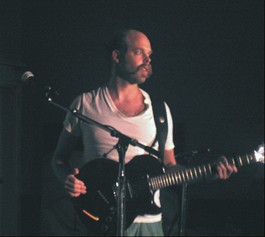
Last week, the Orchard Spotlight hosted Will Oldham, aka Bonnie “Prince” Billy (above), an underground legend who drew a large line on the sidewalk causing a nosy tipster driving by to notify the city. “It wasn’t like they were even complaining,” says Spotlight co-owner Linda Rose-McRoy, “they just called with an inquiry, saying, ‘We saw this line outside of 515 Orchard. We wondered if that was OK.’ Like, duh!”

Rose-McRoy and co-owner Cheryl Ulrich met soon after with the Community Development department and were informed that the Orchard Spotlight violates the area’s residential zoning. “We’ve known for a while that there were going to be some zoning questions here,” says McRoy, mentioning certain loopholes to stay loosely legal—registering on the internet as a church, for example, and holding “mass” at 8pm on Friday and Saturday nights. “But Cheryl and I are the kind of people who don’t like feeling we have to continually look over our shoulder,” she adds. “But we’re also not giving up.”

What’s exciting is that “not giving up” involves working with the Arts District and the city council to get a variance in zoning to allow entertainment at the venue. Vicky Kumpfer, coordinator of the Arts District, thinks it’s possible. “This is really an interesting opportunity to try to make this viable, and to work within the law,” says Kumpfer. “Yes, we have these laws, but is there a way that we can have a certain exemption?”

What the issue comes down to, then, is the neighbors, and so far, the Cherry Street neighborhood association has been supportive of the Orchard Spotlight. If that continues to be the case, and if the city is willing to honor its general plan guideline to “consider the diverse cultural needs and talents of the community,” we may see the Orchard Spotlight rise again. “It’s just gorgeous,” Rose-McRoy says of the space. “It’s so moving, because it was built in redwood, for sound, for the human voice! I love it. It just makes me tingle all over. And so we’re not giving up.”


News Blast

0

04.08.09

Free choice in hard times

Five hundred business organizations adamantly oppose its passage, bailed-out banks wage war against it and Home Depot cofounder Bernie Marcus calls it “the demise of a civilization.” What on earth strikes such fear in the gilded hearts of so many wealthy people? Labor Unions and the Employee Free Choice Act (EFCA), that’s what.

Simply put, the act makes it easier for workers to organize. But EFCA, too, has its own list of backers. “The Change We Need” EFCA public forum, on tap for Saturday, April 18, at SRJC’s Newman Hall, brings its supporters out in force. Panelists include U.S. Congresswoman Lynn Woolsey, State Sen. Pat Wiggins, State Assemblyman Jared Huffman and Sonoma County Supervisors Shirlee Zane and Effren Carillo. Sponsors include the Living Wage Coalition and North Bay Labor Council, along with SEIU 1021, Sonoma County Conservation Action and the Sonoma County Democratic Party. 1501 Mendocino Ave., Santa Rosa. Noon. Free. 707.478.9663.

Service slashing

It’s no surprise that Sonoma County tax revenues are plummeting. And with its $21.4 million shortfall still growing, the county’s board of supervisors is asking you to tell them what to cut from this year’s budget. A series of “vital” budget cut workshops will be held in five different communities on consecutive Thursday evenings starting April 9. Each session runs from 6pm to 8pm. The first workshop is slated for the Guerneville Veterans Hall. County supes promise “true, two-way communication,” and encourage all to attend and participate. First up—slashing programs and services. Family, Youth and Child Services, the Sheriff’s Department, Capital Projects and Adult and Aging Services are all on the chopping block. “Public input is vital during these tough economic times,” says board chair Paul Kelley. To learn more, go to www.sonoma-county.org-bos or call 707.565.2188.

Soles for planet earth

Last year’s Great Shoe-In collected nearly 2,500 pairs of “gently worn” athletic shoes for distribution to local shelters and social agencies. The remainder went to Third World inhabitants or were ground up and transformed into playground surfaces.

This year more than 20 schools are on-board as collection stations, as are select local retailers throughout Santa Rosa and other North Sonoma County locations. Great Shoe-In organizer Corky Cramer says this year’s goal is to gather 5,000 pairs of athletic shoes and “to expand throughout the entire county, if not the entire North Bay, next year.” For drop-off locations, call 707.318.1226, or email [ mailto:co****@***ic.net” data-original-string=”ayq+j0Qukr6pYebLjsEs1Q==06aKh6GoRbRyIQs+gXO5oZv8BbeIYUO9SpbRLhm0lP7QF5F+VuBqqVu+8/nVxiOyIsxl+49×2+Mlqt+su4LOP6ESw==” title=”This contact has been encoded by Anti-Spam by CleanTalk. Click to decode. To finish the decoding make sure that JavaScript is enabled in your browser. ]co****@***ic.net.


Enkidu Wines

0

One recent afternoon, unshaven and unshorn, I caught wind of a brand new tasting room in the east, and made across the fields—toward Enkidu. Rather taken with myth, winemaker Phillip Staehle named this project for a character who played a supporting role in the ancient Sumerian epic of Gilgamesh. Enkidu (“EN-kee-doo”) was an original wild man, with “hair as long as a woman’s,” created by the gods as protector of the animals. This proved unsatisfactory to local hunters, until a wise man suggested they try a sort of soft-pedal counterinsurgency. Thus conquered by love, Enkidu joined civilization in what is modern-day southern Iraq, teamed up with king Gilgamesh and embarked upon epic adventures.

If we allow for a Joseph Campbell moment, the connection becomes clear: the vine was a wild thing of the forest that’s long been tamed. We may wax on about the precocious grape, but it’s as loyal to the service of our pleasure as old Enkidu to his king. Never mind about the whole underworld of the dead part of the story; that comes later.

Enkidu the winery was created to focus on Rhône-style Syrah and Petite Sirah. Conveniently located in Kenwood Village shopping center, the tasting room was as cool and softly lit as a cellar on a recent afternoon; future plans include a by-the-glass menu and courtyard tables. The hostess is a wine-family local, as well versed in the grape as in The Epic of Gilgamesh, having been made to read it 10 times in high school.

Best reason to stop by sooner than later: the 2007 Shamhat Russian River Valley Rosé ($5) is named for the woman variously described as temple harlot (church socials must have been a lot different back then) or, more poetically, love priestess, who was enlisted to seduce and domesticate Enkidu. Yup, $5 per bottle, and there’s nothing wrong with this pink; they’re just clearing out the 2007 to make room for the fresh 2008. With light strawberry-raspberry fruit, a hint of green in the middle like candy-dipped celery and a firm, dry finish, it’s a more than serviceable springtime rosé.

The 2007 Sonoma Coast Pinot Noir ($28), with allspice aromas and a soft silky body, is more than equally inviting. Forward spice meets black olives and rich tannins in the 2005 Odyssey Russian River Valley Syrah ($34). Dark and intense with overtones of purple paint now, I wonder if a longer interlude in the bottle will have a civilizing effect. It’s said it’s the mark of civilization to delay gratification.

The 2006 Humbaba Sonoma County Rhône Blend ($25) smells of animal crackers and nutmeg, with the Petite’s blackberry acidity complementing the Syrah’s earthiness. While Enkidu was in the employ of Gilgamesh, a bout of unfortunate bombast led them to slay hapless protector of the forest Humbaba—and the Bull of Heaven, to boot. The gods were displeased, and Enkidu took the fall. He was thereupon condemned for eternity, sending Gilgamesh doleful tweets from the underworld. Seems like Enkidu got a somewhat raw deal overall, except, well, for the love priestess.

Enkidu Tasting Room, 8910 Sonoma Hwy., Kenwood. Open 11am–6pm Tuesday–Sunday. Tasting fee $10. 707.939.3930.


View All

Local Lit

04.08.09

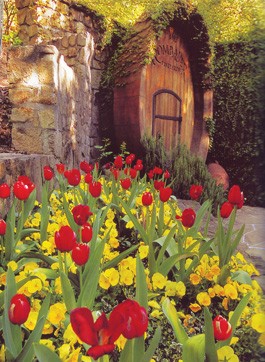
GOOD LIFE: Rombauer is among the wineries resourced in ‘The California Directory of Fine Wineries.’

Compiled by Suzanne Daly, Gretchen Giles and Gabe Meline

New Orleans in summer. A well-dressed, well-spoken urbane woman attends the posh opening party of the newly refurbished Hotel Remy. All the beautiful people of the city are there. The hotel’s fresh interior is blessed Crescent City–style with three Cajun priestesses undulating across the ballroom’s marble floor. Suddenly, our woman feels a sharp pain in her side and falls, the victim of a stabbing. Awakening at the hospital, she begins to remember how this story unwound. So begins Novato novelist Tess Nottebohm’s ‘Sultry Days of Blood and Angels’ (Xlibris; $27), a thick humid gumbo of ‘Nawlins lore and mystery with plenty of sex stirred in to keep the afterlife, the current life and even our heroine’s forgotten life spicy. —G.G.

Dedicated to the breath that inspired her to write ‘River of Breath’ (iUniverse; $22.95), 76-year-old Breathexperienceâ„¢ practitioner Margot Biestman offers a diary of how breathing alternately helped and obstructed while writing the book. When in her 50s, Biestman had back pain. She came across a flyer for a Breathexperienceâ„¢ workshop called “The Experience of Breath” and was struck by the authenticity and simplicity of breathing. In that first Breathexperienceâ„¢ workshop, she writes, “I could begin to realize there was something deep that was happening within me, without my seeming to do anything.”

In a personal, inside-the-author’s-mind style, Biestman chronicles her feeling about her daughter’s depression, her estrangement from her brother, her personal awakenings as a director of the Middendorf Institute for Breathexperience™—all with a comprehensive report on the author’s own breathing and her real-time reaction to that breathing. “My breath was held the whole time I wrote those lines,” reads a typical passage, “specifically held in the usual place, at the end of exhale, so I could hardly receive my inhale. I’ll never be satisfied this way, ‘never good enough.'”

In poems with titles such as “Exploration of My Breath Supporting Me to Recognize My Illusion of Control,” in cultural musings about the masculine principle of exhalation overriding the feminine principle of inhalation, and in scattered exciting and interpretive pages of art inspired by different breath forms, Biestman—who divides her time between Sonoma and Sausalito—reminds the reader to take a closer look at the thing that’s with us from our first moment to our last. —G.M.

Offset printed in an edition of 300, ‘Homeless in Petaluma’ (New Way Media; www.enewway.com) collects Michelle Baynes’ poems from 13 years of working with Petaluma’s homeless population. Baynes, whose career as a real estate agent selling houses evolved into street outreach to those with no houses, writes with alarming empathy about the people she’s met along the way.

There’s Nelson, the gracious, shy man who stayed on a boat in the Petaluma River’s turning basin and who was struck by a truck while crossing the street. There’s Jose, an Army reservist living underneath the D Street bridge waiting to ship off to Iraq, never to be seen again. There’s John, who cries when he’s brought a birthday cake from the soup kitchen and says that for his birthday he wants to stop drinking. There’s the nameless character of “You Came to Me Crying,” a devastating poem about a man who once gave $800 business seminars before losing his house to foreclosure; death threatens him while trying to sleep by the Petaluma River, and suicide tempts him on the Golden Gate Bridge.

Baynes delivers with impressive succinctness the complex stories of those who have fallen through the cracks and eulogizes without syrupy sentiment those who didn’t make it. Hope comes at the end, when the reader discovers that Baynes has returned to real estate, and has already sold houses to a number of lucky people she once assisted on the streets of Petaluma.—G.M.

Sleuthing in dusty attics, faded barns and long-forgotten storage containers often yields the most interesting treasures for diligent hunters. And that’s where Lesa Tanner, a second-generation Graton native, discovered the bounty of photos comprised in her book, ‘Images of America Series: Graton’ (Arcadia Publishing; $21.99). With the help of the Graton Community Club, Tanner has assembled the first pictorial history of this tiny town, which includes 208 rare photographs with extensive captioning. The author used all original photos from private collections and the archives of the West County Museum and the Graton Community Club.

Tanner writes from a personal, hometown perspective, and not just a historical viewpoint. She tells a memoir of Graton, engaging readers with her vast, insider knowledge about the people and events in the photos. When she contacted older community members to ask for contributions for the project, she would introduce herself by listing who her relatives were. “I was only allowed to use a lot of the personal material collected because of my connection to the community,” Tanner recalls. “A stranger would not have been allowed this access. Being a hometown girl gave me a great advantage. The research was very fun and gave me a chance to visit a lot of the elders in our town.”

While collecting the stories and accompanying photographs—sometimes a two-hour conversation might yield one picture—she quickly discovered that people were resistant to sharing for different reasons, such as family feuds, or family members who had taken and hidden the albums from other relatives. But persistence paid off, and the resulting book is an engrossing snapshot of this small, rural, agriculturally based town. The book is arranged chronologically, starting in the 1850s with the Gold Rush pioneers who find that wealth lies in farming rather than mining, and continues through a century of the town’s rise and decline. It ends with Graton’s 100th birthday in 2005, a fitting celebration of the heritage of this West County community. —S.D.

It was about a week after my sixth birthday when this social worker showed up where Mom and me lived in Redding. She found me asleep on the sofa, TV still on. Woke me up and told me she’d died. Mom.” So begins “Learning to See Fish,” one of 10 stories in Sonoma County writer Michael David Fels’ new collection ‘Gone to Ground’ (PublishAmerica; $24.95). The title piece finds a divorced father of two rather happily living in nice, big hole that he’s dug, a pleasure marred only because the boys aren’t allowed to spend their weekend with him in it, 10 feet below the earth’s crust. Using many different narrative voices, employing dialect and setting his characters in rough circumstances as well as more “ordinary” arcs familiar to North Bay residents, Fels has created a lovely swathe of humanity to people his pages.—G.G.

I pick up the book. It’s called ‘Wickhead’s Guide to Verbal Gusto’ (Groundbreaking Press; $14.95). It’s not written by anyone named Wickhead. Nope, it’s written by a guy who works the night watch at a Sonoma winery near a ghost town. Name’s Jim Kelly. Seems to be a bunch of flowery phrases. “There are well over 100 books on insults,” says the press package. This book instead contains compliments. I crack the spine.

With what mellifluous verbiage are my formerly arid brain cells appeased! Bask anon, dear thirsty cerebella and medullae oblongata, for revealed unto thee shall be a cornucopia of wordly delight! Hark, for o’er the arduous journey of seven years’ time comes a compendium of jovial ribaldry hewn from many thesauri, many Renaissance faires, many websites of surf terminology and many a flowery snippet of light dialogue culled ever so astutely from Monty Python’s Flying Circus!

Yea, ever-curious and indefatigable specimen of humanity, cleave forth unto the bibliophilistic pleasure undertaken by perusing yon guide of assistive phraseology to pepper speech with the spice-mastery of Julia Child and punch oral genuflections with the uppercut of Rocky Marciano! Alight these containments upon the necks of humanity, that it may be bless’d henceforth with thy precocious pronouncements of positivity!

I close the book. I set it down. The workday resumes.—G.M. 

If you don’t want to have a baby, are you selfish? If you have tried the old-fashioned way to conceive and haven’t yet succeeded, should you embrace the cost and uncertainty of medical intervention? If you’ve had one child, shouldn’t you offer a sibling? If you conceive and aren’t ready to have a baby, what path leads to the least grief? These questions and others are asked and answered by Healdsburg writer Marisol Schowengerdt in her self-published work, ‘A Selfish Life?’ ($13.99). Modra and Kevin have a loving marriage and financially secure life in Healdsburg, replete with hobby vineyard and sun-drenched windows. As agreed, Kevin prepares for a vasectomy on Modra’s 38th birthday. They’ve been willing to let nature take its course but don’t want to parent late-life teenagers. Onto this day come three other women, all of whom have the secret life of the uterus uppermost in their minds, and so A Selfish Life? unfurls questions, dilemmas, fears and even some of the joys that those with biological clocks ticking at all ends can feel. —G.G.

The best parties, whether for two or 200, serve luscious libations and fabulous food in a manner that promotes circulation among lively and interesting company. St. Helena’s renowned chef Cindy Pawlcyn has been serving small plates to her ravenous fans for years, first at San Francisco’s Fog City Diner and currently as the chef-owner of Mustards Grill, Cindy’s Backstreet Kitchen, and Go Fish, all in the Napa Valley. The queen of kitchen mojo shares over 30 mouth-watering recipes in her latest cookbook, ‘Cindy Pawlcyn’s Appetizers’ (Ten speed Press; $15.95).

Readers and eaters might start with simple chile-garlic peanuts, move on to chorizo and goat cheese half-moons or Mustard’s famous onion rings, and slurp down some barbecued oysters. For the plate-happy, Pawlcyn offers a simple avocado-papaya salad, potato-leek pancakes and goat-cheese-stuffed Gypsy peppers. A few heartier plates featured could be a meal in themselves—think parsnip and mushroom lasagna or porcini mushroom pot pies. The cookbook is cleverly formatted as a small easel, allowing the cook to easily read the recipes, and then store it away in its hardcover case. Lavishly illustrated with colorful photographs, this little book is sure to make a big impression on the eyes as well as the taste buds. So throw a party, and test your own cooking mojo. Your friends will be glad you did.—S.D.

The image hovering against a stark white backdrop on the cover of ‘Split: A Memoir of Divorce’ (New American Library; $15) by recent divorcée Suzanne Finnamore says it all: a gilded but rusted padlock no longer locked, its shackle open, as if looking in the emptiness for something new upon which to hang and, if luck prevails, latch again. Finnamore, whose Zygote Chronicles won the Washington Post‘s Book of the Year in 2002, is that lock throughout this memoir, which begins with her husband drinking a pair of three-olive vodkatinis, changing into a wool blazer, and driving out of her life in his very nice car.

And so it goes: the drinking, the support of girlfriends and family, the drinking, the plans for winning him back, the drinking, the divorce sex, the drinking and the inevitable realization: he is not for me. Beautifully written, Finnamore’s story is a page-turning, emotional ride between funny and sad without going to extremes of either. Local readers will find familiar environs in Marin County enshrined, or reviled (“Kentfield,” Finnamore sneers, “the very word seemed to exude money and nefarious intent”), and anyone, particularly women, who has been through what Finnamore goes through in these pages will be comforted by knowing that they and their broken locks are not alone. —G.M.

One of the truisms for those who live in wine country is that we rarely go winetasting. Sure, when the inevitable out-of-town guest arrives seeking a purple tongue, we’ll grudgingly get out a thin designated-driver smile and take off, but otherwise, not so much. Sonoma journalist Marty Olmstead and Mill Valley photographer Robert Holmes might just plump that grin as the fourth edition of ‘The California Directory of Fine Wineries’ (Wine House Press; $19.95) knowledgably profiles an eclectic group of Napa, Sonoma and Mendocino county wineries both in long narrative text and in an easy-to-read sidebar roundup that notes everything from the winery’s owners (“Rubicon: Francis Ford and Eleanor Coppola”) to the facility’s current winemaker to nearby attractions (ignore all COPIA suggestions). Sized more like a first edition than a throw-it-in-the-backseat-and-go guide, Fine Wineries is intended to be actually read rather than scanned, and makes for fine preparation for perhaps even enjoying winetasting with out-of-town guests. —G.G.

Those who can read and understand sci-fi fiction are surely those who can read and understand long Russian novels. Both genres feature names and nicknames unseen by Occidental eyes, and each features emotions and situations less universal than a mere cherry orchard. Doubtless, Anne Wilkes’ ‘Awesome Lavratt’ (Unlimited Publishing; $12.99) is a fun sci-fi read; the small amount that I was able to understand included plenty of lusty sex and an assured local send-up when heroine Aranna Navna and her Han Solo–like pal Horace Whistlestop careen into a place called Calistania. Navna has in tow the Awesome Lavratt, a device allowing her to read all minds and aiding her in a swift seduction of Horace. Those who labored a full summer on such as Anna Karenina, however, can’t understand exactly what happens from there but see no reason not to good-naturedly assume that it’s plenty of fun. —G.G.

It’s hard to say when I got interested in old buildings (although a childhood fascination with the wooden outhouse in Bodega comes to mind). Since then, it’s been a dusty, musty ride. You can keep your Hustler magazine any day over ‘Historical Buildings of Sonoma County: A Pictorial Story of Yesterday’s Rural Structures’ (3rd Wing Press; $18.95), cuz buddy, photos of decaying local buildings are my porn. Just looking at the wooden outhouse pictured on the cover brings me back to that first taste of dilapidated charm in Bodega, and stimulates the glands. Where is it? I ask myself. I must know!

Author Jack Withington, a third-generation Sonoma County resident, grew up on a farm in Penngrove and expertly describes the rural structures which he spent two years documenting with photographer and longtime friend Ron Parenti. Rather than a basic primer on the very well-known and well-documented historic buildings in the county, the rural structures featured are often on back roads, back alleys or tucked behind houses in backyards; one will not find the McDonald Mansion or Vallejo’s home in this book. Instead, Historical Buildings of Sonoma County features feed mills, hop kilns, hatcheries, smoke houses, silos, stables, barns, public scales and grange halls—in other words, the tiny pearls, individually overlooked, that collectively give Sonoma County its soul. —G.M.

When Kimberly Poole, the owner of a small garden and kitchen shop in Kansas, begins to research her family lineage, she discovers that her family’s name had been changed. Meanwhile, in Seattle, a reluctant freelance journalist is assigned a story by his editor regarding the true paternity of Abraham Lincoln. Lots of Google searching and emailing brings these two stories together in ‘The Lincoln Secret’ (Martin Pearl Publishing; $13.99), in which author John McKinsey conjures a Da Vinci Code–esque historic novel from an ongoing theory about the true origins of America’s most revered president.

McKinsey says The Lincoln Secret came about when he stumbled across an out-of-print book called Truth Is Stranger Than Fiction: The True Genesis of a Wonderful Man, published in 1899. It documents an alternate oral history that Lincoln was an illegitimate child actually fathered by one Abraham Enloe. When Nancy Hanks worked on Enloe’s farm in North Carolina, the story goes, she became pregnant; she returned to Kentucky in shame, then married Thomas Lincoln, who accepted the child as his own. Interweaving this story into his novel, McKinsey has written a compelling mystery of genealogy, history and personal journey that questions not only the story of Lincoln but the truth of all history. —G.M.

My husband is a wanderer. He always has his eyes peeled, looking for the curves, the unusual and mysterious types. Oh, it’s not like that. He wanders while driving. Any road on a map that’s not heavily marked in red or bold black, that’s pale gray or dotted, is fair game for exploration; any road not on the map is the best, the Holy Grail for wanderers. And for the most part, that’s OK with me. A drive through the countryside with a sweetheart, from coast to valley vineyards, holds promise for a wonderful weekend. But if the bum goes numb and the stomach starts to rumble, a helpful book in the passenger’s lap—no, definitely not The Thomas Guide—can be a relationship saver.

‘Favorite Recipes from California Inns,’ (Crowley’s Creations Publishing; $24.00) by Dr. Ann M. Crowley, profiles 35 inns in Sonoma, Napa and Mendocino counties. The book gives a brief history of each, as well as tempting house recipes, enticing the road-weary to stop for a visit. Crowley chose the inns for their interesting settings and architecture, as well as their tasty meals and outstanding service. Accommodations range from Victorian mansions or expansive ranch houses with vineyards, to intimate coastal cottages, and many are listed on the National Registry of Historic Homes.

The innkeepers contributed favorite breakfast, lunch and dinner recipes, some which have been in the families for generations. Many of the dishes feature the abundance of fruits, vegetables and seafood found locally. Crowley, a registered dietitian and commercial food photographer, offers tips for making the dishes and suggests wine pairings to complement them. She also includes a directory of the inns and a map in the back of the book—ensuring happy wanderers a friendly spot to rest and enjoy a meal—and each other. —S.D.

Katrina Kay is good at what she does, but the market is slumping. That’s what prompts her boyfriend and fellow real estate agent Tom to rent a San Jose billboard and fill it with nothing but an oversized photo of her terrific legs. The calls start coming into the brokerage, but they’re not the kind KK wants to take. Incensed with Tom, she jumps into her Mercedes Cabriolet and drives up north for a night’s Monte Rio stay with her gay friend Val, a former soap opera star with a secret who spends his stage time now with the Sixth Street Playhouse.

With fevered descriptions of designer clothes, plenty of Sonoma County references and a funny story that steams along in the swoon of a Jackie Collins boiler, ‘Legs’ (iUniverse; $20.95) by North Bay real estate agent Angela Lam Turpin is a hoot that could easily make for a pleasant hour’s read at the beach, Mercedes Cabriolet parked at the ready, Calvin Klein bathing suit remaining ever-so-perfectly dry, Korbel chilling. —G.G.

My wife is five months pregnant with our first child, which makes me the perfect audience for the collection of essays contained in ‘Labor Pains and Birth Stories’ (Catalyst Book Press; $15). Of course, everyone who’s ever had a child has a story about the childbirth, and by now, my wife and I have heard plenty of tales about childbirth’s grisly physical and emotional details—from close friends at parties and complete strangers in the supermarket alike. Some are uplifting. Some are harrowing. All of them will be different from our own story, which is right around the corner.

My hope is that our child’s birth will be simple and smooth. Labor Pains and Birth Stories assures me that this is a delusional fantasy. Labor Pains and Birth Stories reminds me about pelvic exams and pitocin and epidurals and slowed heart rates and complications and death and arrrggghhh. Elisabeth Aron turns in a tear-jerking story of a stillbirth; Ann Angel writes about her teenage daughter giving a child up for adoption; and Sebastopol author Tania Pryputniewicz shows that no matter how carefully one plans for a natural, simple birth, there’s always the possibility of the dreadfully unexpected. Can’t it just be easy? Please? —G.M.

The AIDS epidemic cut a cruel ditch through the middle of San Francisco in the 1980s. Little understood, the disease decimated the artistic and homosexual communities, of course making its greatest horror felt in the Castro District. In her novel ‘One of Another’ (BookSurge Publishing; $15), Sonoma County author Lizann Bassham sets friendship fiction in the Castro during the ’80s, as a young woman, a young man and a local priest confront the epidemic and the ancillary loss of life with love, humor and stalwart friendship. —G.G.

The Sonoma County Writing Practice is a collective of writers who meet once a week and, using a short jump-off line, write quickly, feverishly for 10 minutes. Losing oneself in the art of writing is the goal, not unlike a single-line piece taken from the depths of experience for an off-the-cuff drawing; the results, when inspired, have an honesty and immediacy not found in belabored “real” writing. ‘Hair Pieces: Sonoma County Writing Practice Anthology 2008’ (Sonoma County Writing Practice; $15) collects together these writings from 51 different Sonoma County writers, and it reads like a free-form jazz album containing solo after improvised solo.

Opening with director Margaret Caminsky-Shapiro’s “And Still I Write,” a call to arms for writing, and delving into stories and poems about childhood, foreign lands, the Rockettes, witch doctors, husbands, piano lessons, Home Depot and, yes, hair. Marie Galletta writes about childhood summers spent with her dad 3,000 miles from home, while Jane Paul goes straight to the heart of cancer treatment in “Turbans and Wigs.” Throughout, the writing is inspiring, especially with the knowledge that it comes from our own backyard. —G.M.  


Museums and gallery notes.

Reviews of new book releases.

Reviews and previews of new plays, operas and symphony performances.

Reviews and previews of new dance performances and events.

Barn Loyalists

0

04.08.09


The Crux belong in barns, clanging away with armloads of rusted chains, wailing through cheap electric bullhorns, hoisting ancient portable cassette players in the air and pressing play, pressing the buttons half-sewn onto last century’s dresses and defrocking the eternal mystery of theater.

For the past two years, the Crux, from Santa Rosa, have perfected their Doc-Watson-by-way-of-Joe-Strummer outpourings in all manner of places: pubs, parties, theaters. But the barns where they where born and where they belong most—the barns whose splintery wood grain echoes with countless shanties, cobblestones, murder ballads and bloodied lace—those barns are destined for goodbye. The conception, the aspiration, the curettage.

The Boogie Room, the latest barn soon to bid farewell, hosts the most bittersweet of the Crux’s CD release shows this weekend for their debut album, Now, Ferment. No other band defined the spirit of the Boogie Room quite like the Crux, and it’s fitting that their album comes out in the same week the under-the-radar DIY venue closes down. Now, Ferment is the Crux’s child, just as they are the Boogie Room’s child, and grandparent will have one chance to welcome kin into the world before shuffling off.

“I think we grew together, in a big way,” says the Crux’s Josh Stithem, age 26, sitting on the railroad tracks one recent morning. “Maybe the Boogie Room’s the womb, or maybe it’s our twin in the womb . . . Our relationship is pretty deep.”

That relationship fostered the Boogie Room’s Insect Carnival, where during each annual three-day festival Stithem and 22-year-old band mate Tim Dixon presented a holy-rolling barn revival by donning white robes, lighting candles and shouting a crazed sermon of repentance and redemption backed by a 10-member choir. Limber backs would bend backward toward the roof beams, arms shaking, heads baptized with water. Was it real? Was it a mockery? “We find the sacred in the profane,” is all Stithem says.

The Crux began when Stithem and Dixon met working at Sonoma County Conservation Action, and for six months before their first rehearsal they’d discuss creating a traveling vaudevillian troupe of music, theater and circus performance. “When we started,” Dixon says, “we were like, OK, here’s a couple chords, and we’ll go up and do whatever the hell onstage.”

Now, Ferment compiles that rudimentary energy with all of the atmosphere of ancient, creaking buildings. Adam LaBelle’s booming bass drum, as if from some other side of a long, abandoned naval base, punches and uppercuts Stithem’s story of black picket fences and bronze sculptures in “The Loyalist.” Rebels and lovers sound false alarms with Zoe Kessler’s haunting, musical saw&–like vocals: “I’ve missed you ever since you left home,” she sings like a terrestrial siren, and, again, “I’ve missed you ever since you left home.”

Backed by banjo, upright bass, horns, accordion and guitar, the Crux’s lyrics are just as quick to criticize society (“For a good investment, buy stock in prison cells / Because felonies are Champagne bubbles for our boys on Capitol Hill”) as they are to invoke bizarre interpretations of the dead (“Marlene Dietrich had a copper groin”).

“One weekend,” Dixon posits, “we’ll play a Pyrate Punx show where there’ll be a bunch of drunk punks, and the next weekend we’ll be at a know-your-neighborhood community-organizing event with a bunch of middle-aged activists, drinking wine and eating cheese.” The variety isn’t an accident, but rather a result of the band’s ideal of artists as connectors, of intersecting paths, of, as it were, a crux. “Being an independent artist doesn’t mean you’re cut off from the community,” says Stithem. “It means you know how to interact with your environment.”


The Crux belong in barns, but they sit here this morning on the railroad tracks, talking about what comes next. Evidently, it involves constructing the barn planks into a ship. “And after the pirate ship,” Stithem explains, “we settle in a small town that’s corrupt, with detectives.” Dixon chimes in. They’ve discussed this. “It’s kind of film-noir, ’30s jazz-type stuff meets modern, inner-city hip-hop.”

“Yeah,” offers Stithem, “we know we’re gonna crash-land into the harbor of Carnegie eventually, but currently we’re going from island to island.”

The Crux play with Pete Bernhart from the Devil Makes Three on Saturday, April 10, at the Last Record Store, (1899-A Mendocino Ave., Santa Rosa. 3pm. Free. 707.525.1963); at the Boogie Room and Gardens in rural Santa Rosa (www.myspace.com/theboogierooom. 8pm. $5); and on Sunday, April 11, at the Toad in the Hole Pub (116 Fifth St., Santa Rosa. 8pm. $5. 707.544.8623).


Cool for School

04.08.09

The kids in Occidental may be among the luckiest in Sonoma County, and perhaps in all California, when the Salmon Creek Falls Environmental Center gets certified. The town just cut the ribbon on this wavy-roofed beauty, positioned to become the county’s first LEED-platinum-certified building and California’s first LEED-platinum-certified structure on a K–8 campus. Why are these kids so fortunate? Lots of reasons, not the least of which is getting to spend part of the school day in a toxin-free environment.

The new campus building does not include classrooms, but the cafeteria, auditorium and meeting spaces of the center are free of VOCs (volatile organic compounds). According to the U.S. Green Building Council, conventionally built school buildings—and the carpets, paints and furnishings that go with them—emit neurotoxins absorbed by body and brain. Often these structures are inadequately ventilated with little natural lighting, and waste so much energy that heating and cooling costs eat up the equivalent of one or more teacher’s salaries each year.

So the Green Building Council has been pushing the LEED program for years, claiming it makes public the ingredients of a building the way mandatory labeling reveals the ingredients of food products. These allied industry members ask, in presentations that promote green schools, “Every day you can go into the store and buy an 89 cent box of [animal] crackers and know exactly what you’re getting. So shouldn’t you be able to walk into an $8 million building and know that same thing?”

At a cost of $3.6 million plus lots of donated materials, the community in Occidental knows precisely what their new, curvy building contains and what it does not contain. “It doesn’t typically cost that much to create a green building,” says project facilitator Victoria Johnston, the force behind the project. “But we designed a curvy building, and curves cost more.”

On the undulating roof, a section of plants will filter pollutants and save cooling costs; on some of the walls, recycled cork will provide an aesthetic tip of the hat to the wine industry, keep material out of the landfill, help absorb sound and also insulate. One wall is finished with recycled glass, another with recycled surgical gowns. There’s a glass floor in the foyer, radiant-heat concrete floors finished in tung oil and orange citrus solvent, and an Arthurian round table made from a tree that fell on the 50-acre school property during the early stages of the project. The old growth redwood, already familiar to the schoolchildren, was milled and dried on the property, furnishing not only the seven-foot-diameter tabletop but also interior wainscoting.

“My intention was to build something with yummy architecture,” said Johnston, who did not want Occidental’s new building to be “ugly” like other green buildings she has seen. Her concept of yummy was devised by a 16-member design team that included a few children, and realized with hundreds of thousands of dollars’ worth of donated materials from companies pioneering green products. The undulating roof wears a seamless wetsuit—a spongy material called Neptune coating that is gunned on from a 50-gallon drum. The building was designed as a straw bale structure, but permits were refused, so they were forced to use forest-certified lumber. After thousands of hours of LEED documentation paperwork and six years of effort, the building is done and is 100 percent solar-powered with state-of-the-art “smart” lighting system, waterless urinals and low-flow toilets.

And let’s not forget Johnston’s secret ingredient. “The energy in the building is stunning. All that love that went into the process—you can feel it,” says Johnston. “That’s exactly what I wanted, a building where you walk in and it takes your breath away and inspires you to incorporate green building practices in your own life.”

The American Recovery and Reinvestment Act of 2009 invests in green building and energy efficiency—including about $9 billion governors can use to bring schools into the new green world. When it’s time to improve California’s schools, designers can head to Occidental and visit the new Salmon Creek Falls Environmental Center for inspiration. Hopefully, they too will feel the love.


Dance / Fight / Art

04.08.09

I‘m sweaty from my workout, and pleased as punch because I’ve stumped my hyperathletic friend, the one who thinks she knows everything about every sport that ever was.

“You’re doing cap-a-what’s-it?” She cocks her head at me.

“Capoeira. Brazilian martial arts dancing. Like in that video game Tekken.”

“Brazilian?” My friend’s eyebrows go up. “Does that mean you have to, you know . . .”

My eyebrows go up, too.

“No! No waxing.”

Capoeira (“cap-o-where-uh”), I explain, is a high-energy exercise that combines acrobatics, dance and martial arts. And while it may be sexy (one school, Capoeira Claremont, promises to “make members 33 percent sexier”), participants have to keep their clothes on. In fact, the official uniform is entirely modest: white pants with a white shirt.

I find capoeira especially helpful during unpleasant economic times. Like all exercise, it’s an excellent stress reliever and helps to keep you healthy. It’s also inexpensive and doesn’t require special equipment. Most important, because you play capoeira with others, it builds a strong community and you make friends. Not only can you make friends with the capoeiristas in your own group, but it becomes an open invitation to other groups literally all over the world, most of whom share the same ideals of responsibility.

The respectability goes back to capoeira’s history. Developed by slaves in Brazil, it was associated with street crime and violence, and so prohibited. A Brazilian named Manuel dos Reis Machado brought capoeira into an academy setting and developed a code of conduct that includes no drinking or smoking (hard activities to do with feet flying in your face, anyway).

Thanks in large part to his efforts, capoeira was legalized in Brazil in 1937. It made its way over to America in the 1960s through pioneers like Mestre Acordeon, a teacher in Berkeley. Now there are capoeira schools nearly everywhere, including where I train, the Mandinga School in Santa Rosa, which just celebrated its 15th anniversary. 

Is capoeira just the latest in a long line of designer-trend sports like yoga, muay Thai or mixed martial arts? All of these are unique and new, and all promise to be the one to change your life for the better. Yet capoeira has some real differences that I think are the reason it’s certainly changed my life. One is that it is both an individual and team sport; just as it takes two to have a conversation, you can’t play capoeira alone. But it’s also an individual sport in that each player chooses her own movements, taking the consequences, whether good or bad.

Another major difference is that while some athletics use a soundtrack—aerobics and cheerleading come readily to mind—in capoeira, the music is an equally important part of the art form. Capoeiristas play instruments, sing and clap to create the good axé, or energy, that in turn inspires those playing in the roda, or circle.

What capoeira is really known for is its community. Maybe because of the past illegality, capoeiristas form strong, close-knit communities that extend outside class. Participants say they enjoy being a part of a group and, in these stressful times perhaps, having a place to share anxieties.

One fun symbol of capoeira community is getting a nickname. They were meant to protect people back when capoeira was illegal, like graffiti artists have nowadays, and while it’s no longer necessary for safety, the trend continues. Traditionally given in Portuguese, some people’s nicknames are flattering, like Gavião (“hawk”), but most don’t give much in bragging rights, like Falador (“talks too much”).

Capoeira allows participants to wear many hats (fighter, dancer, musician, singer), and since each game, or joga, can have a different feeling (playful, serious, friendly, competitive), mastering capoeira is a lifelong journey.

It’s a trip that can be started at any point in life. Most people join capoeira in their 20s or 30s, late by Western standards. Some come with a martial arts or dance background, but many have never been athletic at all. There are kids and adult classes, most of which are all levels.


And capoeira is welcoming to all. Despite the undoubted coolness of the acrobatic moves, the fluidity of the basics, and the fun of the music, it is the friendship and community that keep so many of us hooked.

Mandinga Santa Rosa holds a free Open House event on Friday, April 17, at 6pm. The Dance Center, 56 W. Sixth St., Santa Rosa. 707.832.4033. www.capoeirasantarosa.org .

Open Mic is now a weekly feature in the Bohemian. We welcome your contribution. To have your topical essay of 700 words considered for publication, write op*****@******an.com.


Moving House?

04.08.09

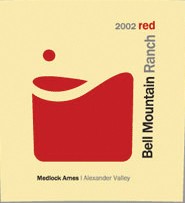
As reported earlier in these pages (“Tempest in a Beer Cup,” March 4), the Medlock Ames Winery has purchased the century-old Alexander Valley Store and Bar. Closed for good on March 31, the store and adjacent bar inspired a fierce loyalty among regulars, many of whom treated the Medlock Ames folks like hostile takeover artists rather than devoted greenies who mildly purchased a property from an owner who was only too happy to hightail it off to warm and sandy climes.

Devoted to all things sustainable and organic, Medlock Ames now has a small problem on its hands: an early 1900s house entirely renovated in 2000 that no one wants. “We could demolish it and repurpose the materials, but we’d prefer to donate it,” says Medlock Ames general manager Kenny Rochford. “We’ve put the word out and spoken to local landowners. There’s been a little bit of interest, but the expense of moving a house may be prohibitive.” How prohibitive? Rochford gives a short laugh, his native Scottish accent burring. “Well, the last estimate I got was $50,000 to move the house within a five-mile radius. But that was a few months ago, perhaps the economy has helped move that number down.”

The winery aims to reopen the property on Aug. 1 with the former store newly refurbished as a tasting room, with local products showcased alongside the wine, and the bar a more modern spot that will open at 5pm just as the tasting room closes down. “We’re moving the bar from the side of the building into the back and turning it into a locals speakeasy that tourists can discover as well,” Rochford says. “We’d love to be able to provide farm-fresh produce from the ranch as well as other local providers. Let’s stock some [Taverna Santi chef Dino Bugica’s] salumi. It will be a taste of the valley, a dozen eggs from the neighbor down the street. A seasonal snapshot of what the valley produces—that’s what we’re after.”

But for now, Rochford needs to get back to work. “The opening is fast approaching. I was looking at the calendar yesterday and starting to have a small panic attack,” he says. “There are so many things guaranteed to go wrong.”

For information on taking the house donation on offer, call 707.431.8845.

Quick dining snapshots by Bohemian staffers.

Winery news and reviews.

Food-related comings and goings, openings and closings, and other essays for those who love the kitchen and what it produces.

Recipes for food that you can actually make.

Multiple Oh’s

04.08.09


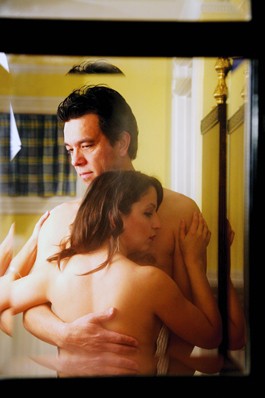
An actor’s job—to put it rather crudely and simplistically—is to become other people, to do that as effectively and deeply as possible,” says David Lear, director of David Hare’s The Blue Room, which opened last weekend in the Studio at Santa Rosa’s Sixth Street Playhouse. “What’s so exciting about this piece is that it gives these two exceptional actors an opportunity to do that on a very deep level, by creating and embodying several characters each. The creative opportunities are multiplied. It’s a very demanding piece for the actors, which is why I’m so thrilled to have such fine actors as collaborators.”

The actors to whom Lear is referring are Denise Elia, who has successfully dabbled in multiple-character work in last year’s one-woman Nine Parts of Desire, and David Yen, who caused a bit of a sensation last winter with his one-man staging of David Sedaris’ The Santa Land Diaries. With The Blue Room, playwright Hare’s adaptation of Arthur Schnitzler’s controversial 1900 play Der Reigen, Hare has enhanced the opportunity for multiple characterizations by reconstructing the play, originally written for 10 actors, so that its wildly varied characters are played by just two performers, one male, one female.

The scandalous aspect of the play, which led to Schnitzler being denounced as a pornographer, is the way the play’s 10 distinct scenes flow from one to the next. Each scene portrays the moments just before or after a sexual encounter, with one member of each couple ending up in the next scene, having sex with a different person, who ends up in the following scene having sex with yet another person, until the whole thing comes back around to one of the first characters.

It is believed that Schnitzler’s original intentions for the play, which he claimed to have written only for distribution among his friends, was to show how venereal disease is passed up and down the social ladder. In Hare’s version, there is no mention of disease. According to Lear, the emphasis is more philosophically aggressive, exploring the way people lie to one another, and to themselves, and the rich spectrum of motivations that stand behind such deceptions.

“What’s so appealing to me about this play,” says Elia, “is that, as an actor, I have to be very, very clear in my portrayal of each of these characters. They are all very different from each other, so there’s one challenge. In the first scene, I get to play a young girl just starting out as a prostitute, and later in the show, I’m a very wealthy woman having an affair with a younger man, so I have to make strong choices to make each character distinct.”

“The other [part of the process] that is so challenging,” Yen says, ” is that we each play five characters twice, each time in a different scene with a different partner, and in each one that character we play is lying, they’re putting on a fake façade, so in a way we’re each playing more than five characters, because each of them, in a way, is ‘playing a part’ with the other.

“That,” he laughs, “is incredibly complicated to figure out. How do I give each of these characters their own recognizable characteristics, even when that character is trying to put on an act? It’s not easy, but as an actor, it’s very, very satisfying.”

“I feel that as an actor,” Elia adds, “I’ve never had to work so hard to define my characters’ physicality, their voices, their reactions. In Nine Parts of Desire, I learned to slip back and forth between characters, but I was all alone onstage. In The Blue Room, I get to take that to the next level, because I also have to react, in character, to whatever David is doing. It’s just so exciting,” she laughs, “and so fun—and so hard!”

“But they don’t make it look hard,” Lear says, “and that’s why I feel so privileged to be working with David and Denise on this. When I first read the script, I immediately thought of them, and it’s only been them, in my mind, ever since. When our audiences finally get to see what they’ve accomplished with this piece, I think everyone will understand why.”

‘The Blue Room’ runs Friday&–Sunday through April 26 in the Studio at the Sixth Street Playhouse. Friday&–Saturday at 8pm; Sunday at 2pm. $14&–$20. 52 W. Sixth St., Santa Rosa. 707.523.4185.


Museums and gallery notes.

Reviews of new book releases.

Reviews and previews of new plays, operas and symphony performances.

Reviews and previews of new dance performances and events.
Welcome to the Twitterverse

Orchard Spotlight Goes Dim

04.08.09One month after the city of Santa Rosa changed the zoning code to make it harder for all-ages venues to open downtown comes the disappointing news that the Orchard Spotlight, a historic church and acoustic performance space, has been forced by the city to cancel all of its upcoming concerts. The music has been quiet. The attendees have been...

News Blast

04.08.09 Free choice in hard timesFive hundred business organizations adamantly oppose its passage, bailed-out banks wage war against it and Home Depot cofounder Bernie Marcus calls it "the demise of a civilization." What on earth strikes such fear in the gilded hearts of so many wealthy people? Labor Unions and the Employee Free Choice Act (EFCA), that's what. Simply put,...

Enkidu Wines

Local Lit

04.08.09 GOOD LIFE: Rombauer is among the wineries resourced in 'The California Directory of Fine Wineries.' Compiled by Suzanne Daly, Gretchen Giles and Gabe MelineNew Orleans in summer. A well-dressed, well-spoken urbane woman attends the posh opening party of the newly refurbished Hotel Remy. All the beautiful people of the city are there. The hotel's fresh interior is blessed Crescent City–style...

Barn Loyalists

04.08.09The Crux belong in barns, clanging away with armloads of rusted chains, wailing through cheap electric bullhorns, hoisting ancient portable cassette players in the air and pressing play, pressing the buttons half-sewn onto last century's dresses and defrocking the eternal mystery of theater.For the past two years, the Crux, from Santa Rosa, have perfected their Doc-Watson-by-way-of-Joe-Strummer outpourings in all...

Cool for School

04.08.09The kids in Occidental may be among the luckiest in Sonoma County, and perhaps in all California, when the Salmon Creek Falls Environmental Center gets certified. The town just cut the ribbon on this wavy-roofed beauty, positioned to become the county's first LEED-platinum-certified building and California's first LEED-platinum-certified structure on a K–8 campus. Why are these kids so fortunate?...

Dance / Fight / Art

04.08.09I'm sweaty from my workout, and pleased as punch because I've stumped my hyperathletic friend, the one who thinks she knows everything about every sport that ever was. "You're doing cap-a-what's-it?" She cocks her head at me. "Capoeira. Brazilian martial arts dancing. Like in that video game Tekken." "Brazilian?" My friend's eyebrows go up. "Does that...

Moving House?

04.08.09As reported earlier in these pages ("Tempest in a Beer Cup," March 4), the Medlock Ames Winery has purchased the century-old Alexander Valley Store and Bar. Closed for good on March 31, the store and adjacent bar inspired a fierce loyalty among regulars, many of whom treated the Medlock Ames folks like hostile takeover artists rather than devoted greenies...

Multiple Oh’s

04.08.09An actor's job—to put it rather crudely and simplistically—is to become other people, to do that as effectively and deeply as possible," says David Lear, director of David Hare's The Blue Room, which opened last weekend in the Studio at Santa Rosa's Sixth Street Playhouse. "What's so exciting about this piece is that it gives these two exceptional actors...
11,084FansLike
4,446FollowersFollow
6,928FollowersFollow