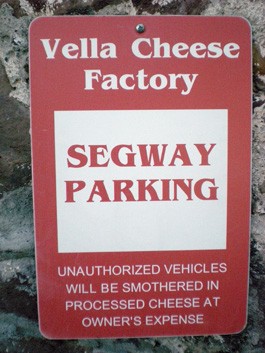
Animal Planet

04.22.09

A reminder that Disney’s Earth is an event, not a movie, comes right away; it’s during the coming attractions for the sequel Disney’s Ocean, slated for Earth Day 2010. Here are small-screen excerpts from Disney’s nature shorts of the 1940s&–’60s; here are reminders of the eight Oscars Disney’s won in a format in which “nature writes the screenplay” (though this comment is as open to argument as the statement “Disneyland is the Magic Kingdom”).

The Discovery Channel and BBC collaborated on Disney’s Earth, but it is very much Disney’s movie. It begins with James Earl Jones rumbling on the soundtrack as the sunrise is viewed from outer space. Holding the series of critter encounters together is the plight of a polar bear family—”Dad,” “Mom” and two cubs during the course of a year. We keep returning to these bruins, in a documentary in which man never appears.

The more stunning small effects are what’s worthwhile. Disney’s Earth has fine trees. Remarkable new time-lapse photography pans gently across a valley, while observing the yearly change of a forest of deciduous trees from bare branches to scarlet leaves.

Peaceful moments don’t sell, and what’s a movie without conflict, anyway? From the “Nature Is Scary” files, we find shark vs. seal, polar bear vs. walrus, lions vs. elephant and cheetah vs. gazelle. The last of these battles, while bloodless, is almost pornography. The herbivore succumbs as much as she is killed, in ultra slow motion. One feels bad about the outcome, but not that bad. As Orwell wrote, “You can’t look at a gazelle’s hindquarters without thinking of mint sauce.”

Disney’s primacy in nature documentaries is a subject Neil Gabler examines in his recent biography of Walt Disney. In the 1940s, Disney had an encounter with Stanford president David Starr Jordan, an expert on the fur-seal territory debate between Japan and Russia. Thus, Disney decided to make a documentary on the seal islands of the North Pacific. Disney’s inspiration was to cut out most of the human factor: “More seals,” he kept cabling to the photographers in the Arctic. RKO Studios, Disney’s regular distributor, didn’t see the percentage in it. Neither did Roy Disney, Walt’s partner and brother: “Who wants to look at seals playing house on a bare rock?”

Hindsight shows how many people did. Gabler writes, “Seal Island would become the model not only for Disney documentaries but for nature documentaries generally: a strong plot, anthropomorphized animals with emotions imputed into them, and a musical track . . . which made the documentaries into real-life cartoons.” And so forth, on to the non-Disney hit March of the Penguins.

Disney’s Earth sticks with the successful formula. When we see a pride of lions lapping water together, their heads squeezed closer by a telescopic lens, they look as conspiratorial as the Clanton Gang. Time magazine film critic Richard Schickel writes, “There is no moral hierarchy among the species, and the business of cuing response through music, narration and film editing . . . leads to this sort of ranking by the spectator that is reprehensible.”

That’s the downside of Disney’s Earth all over; the technology has improved brilliantly, but the formula is same-old, same-old. Here is more rumbling narrator and more overwrought music. (We hear Celtic keening when a prey animal gets it in the neck.) We sometimes learn a little something about the land; we hear we’re in the Himalayas, the Serengeti or the New Guinea habitat of the aptly named birds of paradise. Maybe the most stunning part of this film is the mating dance of the superb bird of paradise, flashing its neon-bright, iridescent turquoise feathers, but the scene is marred by gag writing. “Git down!” Jones jokes as a different bird of paradise dances.

To the organization’s credit, Disney bites the bullet: “The planet is warming,” Jones says, leaving no room for backpedaling in this noncontroversial noncontroversy. But the ending is happy—they always are in the critter shows.

Always, delicate creatures make narrow, unlikely escapes, signifying the fate of a whole endangered species: “The marmoset is safe . . . for tonight. But how long can the whiskered monkeys of Venezuela hold their dominion against the invasion of man?” On the one hand, it reminds the gentle viewer of how many of the earth’s creatures are hanging on by a thread; on the other hand, it assures these viewers that some providence will look out for them. And so to bed.

‘Disney’s Earth’ screens all over the North Bay on April 22 and beyond.


New and upcoming film releases.

Browse all movie reviews.
Two Giants

0

04.22.09

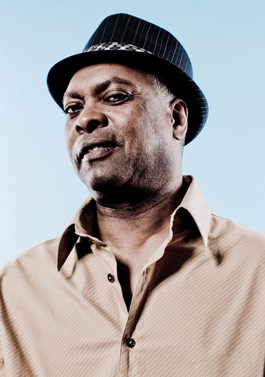
When baby boomers moan about a long-gone work ethic, it’s easy to ignore. The way things are looking, we probably won’t be able to retire anyway. But the old-timers may have a point. This week, classic soul legend Booker T. Jones, 64, and New Orleans R&B saint Allen Toussaint, 71, bring us albums that prove they’ll do anything but rest on their laurels.

Although a successful songwriter and performer, Booker T. Jones remains renowned mostly as an “alchemist” of the Hammond B3 organ, particularly for his work leading the MGs, the Stax house band which buoyed luminaries like Otis Redding, Wilson Pickett and the Staple Singers. Recorded in only a week, Potato Hole is likely to augment his legacy, with his signature keyboard lyricism stretching to new sonic textures beyond trademark hits “Green Onions” and “Time Is Tight.”

Right from the brash opener “Pound It Out,” Jones sounds miles away from the lounge-y cool of “Green Onions,” thanks in large part to the triple-guitar attack of backing band the Drive-By Truckers and fourth axeman Neil Young. Jones’ instantly recognizable organ licks are flanked by power chords, distortion and dirty blues solos, making for the boldest sound in his catalogue. “Native New Yorker” has the biggest Neil stamp on it, with its heavy guitar stroll and Jones’ piercing keys seemingly mimicking Young’s famous falsetto tenor.

But Jones presents many moods throughout the record, including the serene love letter to his wife, “Nan.” Here he plays chiming acoustic guitar, electric guitar and, of course, the organ, which sustains the gorgeous two-minute piece with astoundingly communicative melodies.

While his distinctive soloing may evoke great jazzmen, Jones’s accessibility is afforded by his concise rock ‘n’ roll song structures, evinced here in his covers of Outkast’s “Hey Ya” and Tom Waits’ “Get Behind the Mule,” the latter presented in a kinetic, brilliantly plodding arrangement. The expressiveness of Jones’ playing makes one hardly miss the lyrics. This instrumental success reaches its zenith in the epic, slavery-themed title track, whose relentless drums and grinding guitars aid Jones’ extended organ solos in a narrative that’s damn near understandable. In addition to his renewed creativity, the soul veteran has brought imagination back to rock ‘n’ roll.

Also returning with his first solo album in eons is Allen Toussaint, a New Orleans legend who’s become even more synonymous with the city in recent years. Since Hurricane Katrina left him homeless, he’s kept busy in exile with club residencies in New York and a cathartic high-profile album and tour with Elvis Costello, 2006’s The River in Reverse.

The gorgeously sequenced The Bright Mississippi is a collection of blues numbers that poignantly mirror Toussaint’s current transience and break from the Professor Longhair disciple’s sprightly pieces. The dozen jazz and gospel standards revisit—or are haunted by—his fragmented hometown. From beginning to end, the album is a chiefly somber affair, with Toussaint leading his group through what seems like an extended jazz funeral. The opening track, Sidney Bechet’s “Egyptian Fantasy,” seems ominous and foreboding thanks to Don Byron’s leaden clarinet and a more pronounced marching beat.


“Dear Old Southland” brings the mood down with a slower tempo and Nicolas Payton’s longing trumpet. “St. James Infirmary” confirms the somber theme, but throughout the set Toussaint’s iconic second-line piano perseveres. The traditional hymn “Just a Closer Walk with Thee” serves as the album’s turning point, with Toussaint’s tickled ivories sounding like the sunlight after a long storm and making way for a cheery title track by Thelonius Monk.

The sense of resolution that is the epilogue to The Bright Mississippi is not a naïve one. While Toussaint feels hopeful about emerging from the darkness, his journey remains a lonely one. “Sometimes I feel so weary traveling through life alone,” he laments in “Long, Long Journey,” the album’s sole vocal track, “It’s a long, long journey, and I can’t make it on my own.” The album ends perfectly with a sparse “Solitude” with Toussaint’s isolated piano fighting through the familiar melody.

These two triumphant new records give us no choice but to respect our elders. Booker T. Jones and Allen Toussaint can still justifiably boast, “Back in my day, we didn’t need lyrics.”


Words Fail

0

04.22.09

When the State of California held me prisoner 2002 to 2003, the name of the agency was the California Department of Corrections, or the CDC. Since then, for reasons unclear to me, the word “rehabilitation” has been added to create a new acronym, CDCR. Neither euphemism has any basis in reality.

Having had an inside view of San Quentin, Old Folsom and the adjacent Level 4 facility, New Folsom, I did not see any programs to correct what caused inmates to be sent to prison. Nor did I see any rehabilitation going on that would help the convicts gain legal employment once they were released.

We were told the guards were to be referred to as correctional officers, or COs. When I asked one of the guards about this months later, he gave me an honest answer, “Mariani, what about you being sent here would you like me to correct? They don’t train me to correct anything about you. I’m paid to guard you to make sure you don’t hurt someone or escape—the end. It says ‘CO’ on my shirt, but I’m paid to guard you, not to correct you.”

Another word that took on new meaning for me in prison was “absconding.” It was not a word that I had run into often until I was incarcerated. Most of the inmates were back in for their second, third or more time without committing a new crime. They had been out on parole and failed to show up for a scheduled visit to their parole office to pee in a cup for a drug test that they knew they would fail. That act of “absconding” would generate a warrant for their arrest. At state expense, whenever and wherever they were located, they were returned to prison.

A recent famous example of absconding is Sara Jane Olson, aka Soliah. She was part of the Symbionese Liberation Army in the 1970s and indicted in February 1976 for planting bombs under police cars and for a bank holdup in Sacramento where a female customer was shot and killed. After she was found guilty, Sara absconded and was not located, rearrested and extradited to California until 23 years later in June of 1999.

She was recently released after serving her time. Yes, she was punished for what she admittedly did, and was guarded while in custody, but what was done to “correct” what she had done? When she was in custody, what was done to “rehabilitate” her?

Another CDCR euphemism is the “literacy program” at Old Folsom. The work assignment I obtained that earned my day-for-day halftime was as a literacy clerk. With a civilian credentialed teacher as my supervisor, I tested all new inmates to determine their grade-level reading ability. I trained volunteer inmate tutors and tutored inmates myself. While being held at Folsom, I read in the Sacramento Bee that the warden had bragged to her Rotary Club about how this program was helping to prepare inmates to find jobs when they were released so that they would not return to prison. However, out of the entire inmate population, there was only a budget for—and room in the Folsom library for—25 inmates. That number also included all one-on-one tutors. “Correction” and “rehabilitation” was being provided to 26 inmates, including myself.

I was released in 2003. Even with written recommendations from my civilian supervisor, I have not been able to get a job tutoring. “Have you ever been convicted of a felony?” and “We will do a background check and require fingerprints” is as far as any of my applications have gone.


The CDCR does not train inmates how to be electricians, plumbers or painters. Inmates who already have these skills try to get work assignments to earn halftime and less than $1 an hour. To let you know how the CDCR values education, my literacy clerk job was an unpaid work assignment. It did however, earn me my halftime, which cut my two years sentence to 13 months served. There is something correct in that.  

Tom J. Mariani, a Santa Rosa resident and published freelance writer, has just completed 25 chapters of  ‘Impugn? What About Reasonable Doubt?’ which covers his 18-year career in bank management and 11 years in corporate risk-management, to a falsely accused two-strike felon.

Open Mic is now a weekly feature in the Bohemian. We welcome your contribution. To have your topical essay of 700 words considered for publication, write op*****@******an.com.


Soul Food

0

04.15.09

You create everything in your life” is painted in handwritten scrawl just above the kitchen window. Faded blue wood panels collected from old boats are tacked to the walls. Small tables are scattered about. Two C-shaped booths are pushed up against large windows giving full view out onto Third Street. Passersby look in. Diners look out. Meet GG’s Earth and Surf, the first green-certified restaurant in Santa Rosa.

Suzan Fleissner, the owner of the recently opened vegetarian/pescetarian restaurant says that the quote on the wall was her mom’s. Formerly, it lived on a scrap piece of paper beneath a magnet on her fridge for years before she found the perfect place to put it, right on her restaurant wall. Fleissner named her restaurant GG’s in memory of her mom, Gudrun, whom her own children called Grandma Gudrun. “I found myself searching for a name that would make me happy to hear over and over again,” Fleissner says. And the space itself is not without Grandma Gudrun’s influence.

Aside from her quote on the wall, Fleissner kept in mind her mom’s favorite saying, “If it isn’t used, it isn’t loved,” while shopping for the restaurant’s décor, purchasing most of it second-hand and refurbishing it herself. The tables are from the Flamingo in Santa Rosa, the booths from Roy’s in San Francisco, and the blue wood on the walls from a scrap lumber yard in Berkeley. Over the last 10 years, Fleissner said that she ate out a great deal with Grandma Gudrun, who enjoyed trying new restaurants in the area. As a result, Fleissner became increasingly interested in restaurants offering local and sustainable foods, an interest that would inspire her to open GG’s.

During a recent Wednesday lunch, Fleissner is hard to pin down. Informally clad in jeans, a white collared shirt and a gray sweater, she doesn’t stand out as the owner. The restaurant has hardly been open a month, and already the press has been in two or three times, and the buzz about the restaurant that finally occupies “that empty space” on Third Street has caught up. Patrons come in talking among themselves about the inexpensive fare and the already famous Sunday brunch.

When she sits for a moment, Fleissner is warm but distracted, her eyes constantly scanning the restaurant while she talks. She answers questions quickly, leaving expounding detail at the door, seeming eager to get back to work. Having started her hospitality career 30 years ago at Rosie’s Cantina (which is now the Third Street Aleworks, coincidentally GG’s next door neighbor) and being part owner in Hemenway and Fleissner’s in the ’80s, she is not new to the hospitality industry. 

At the core, it is the personal elements of GG’s that shine. After selling her interest in Hemenway and Fleissner in the ’80s, Fleissner owned and operated Simply Savory catering while raising her two children. She also contributed to local restaurants and catering businesses like John Ash and Co., Mixx and Elaine Bell Catering. Fleissner furthered her skills at the California Culinary Academy in San Francisco, earning a degree in hospitality and restaurant management that included an externship at Nick’s Cove during Pat Kuleto’s renovation of the famous coastal eatery. After all that collaboration, Fleissner was ready to do things her way.

The California-based nonprofit Thimmakka educates restaurant owners on greening processes. To be certified green by Thimmakka, a restaurant must implement 60 environmental measures; GG’s implements 453 environmental measures, exceeding the minimum by a sizable amount. What has becoming “green” meant for GG’s? Installing all Energy Star equipment, using environmentally friendly cleaning products, putting “to go” food in recyclable containers (no styrofoam), reducing waste by composting, not serving meat and remaining true to the “locavore challenge,” which means that almost everything on the plate has come from within a 150-mile radius. Naturally, exotics like pepper and cinnamon are still obtained by the old colonial model.

That the food at GG’s is both vegetarian and locally grown has very tangible environmental benefits. Buying food from within 150-mile radius means that less actual gas has been used in transporting the ingredients to the Third Street location. In turn, this challenge means that Fleissner and head chef Trevor Anderson devote a great deal of energy to buying produce from local farmers, fish from local, sustainable clean fish programs and bread from local bakeries like Penngrove’s Full Circle. The elimination of meat from the menu ensures that GG’s does not contribute to the pollution or land and water wastes that come with raising livestock.

These efforts, however, are not always easily achieved. For example, Fleissner admits that finding organic or sustainable local wines for her “everyday” wine list, which features 20 wines under $25, posed a challenge. The goal was certainly attainable, thanks to the wine country in the backyard. But Santa Rosa’s position of latitude 38 means no tropical fruit, a geographical reality that cannot be sidestepped. “Staying true to the locavore idea means leaving certain luxuries, like grilled pineapple, which is one of my favorites with fish, off the menu,” Fleissner says.

Other challenges to Fleissner’s vision include the expensive start-up cost of being green, like buying all Energy Star products. The expense seems reasonable to Fleissner, though. Not appearing bothered by it, she says, “Eventually it will pay off. PG&E bills will be smaller a few months down the road.” Call it intuition to assume that economic benefits are not why Fleissner went green with GG’s.

When asked what her favorite part about opening her own restaurant is, Fleissner says, “I’m just glad to offer a menu where people never have to ask, ‘Was this made with chicken stock?’ or ‘Does that have animal fat in it?'” She adds, “I’m glad my customers don’t feel they have to take precautions before digging in.”

The success of the idea is in part due to the fact that reading GG’s menu is not like reading a “substitute for meat” menu, using tofu where meat is usually featured. Instead, it is clear that GG’s has a new way of approaching meals based in earth-grown materials. For Fleissner, it was an easy menu to make, saying, “You just don’t need to cook with meat. Like with our soups, we don’t lose anything by not using meat stock. The full flavor is still there. I don’t think it’s necessary to use meat in a good minestrone.”

Somewhat surprising for a green, sustainable vegetarian restaurant, the menu is reasonably priced. Six oysters are $10; mushroom walnut pâte is $6; vegetable stew, $8; and an array of fish dishes range from $10 to $13. Fleissner is just happy to offer her inspiration. “Through all the jobs and time in between, my vision was to have my own restaurant,” she says. “I know I talked about it, dreamed and schemed out loud about it, and now I am living it.” Of that beautiful scrawl from Grandma Gudrun that is written above the kitchen window, Fleissner says, “What you feel about what you create is what counts most.”


Bean Fritters

This is a favorite recipe that Fleissner frequently made when toiling away in cubicle America. Recipe adapted from Mark Bittman’s How to Cook Everything Vegetarian.

 2 c. cooked beans
1 c. minced onion
1 c. minced parsley
1 egg (or egg substitute)
1 c. coarse cornmeal or fresh bread crumbs
salt and fresh ground pepper to taste

Mash or process beans, adding a bit of liquid if dry. Don’t purée; you want some chunks in mix. Combine all other ingredients. (Here you can play with heat, taste or texture by adding pepper flakes, chopped veggies or herbs.) You should be able to shape with hands without much sticking. Form into 2- to 3-inch patties.

Heat skillet, cover bottom of pan with oil. Brown on both sides; total cook time 7&–8 minutes.

Serve with salsa, salad dressing, lemon wedges or avocado cream. 

 GG’s Earth and Turf, 630 Third St., Santa Rosa. 707.528.1445.


Quick dining snapshots by Bohemian staffers.

Winery news and reviews.

Food-related comings and goings, openings and closings, and other essays for those who love the kitchen and what it produces.

Recipes for food that you can actually make.

Whey Hey!

04.22.09

Vella by P. Joseph Potocki; Matos by Gabe Meline

Vella Cheese Company Ignazio “Ig” Vella insists that the Sonoma bridge named in his honor resulted from his decades of county and community service. Still, there can’t be many traffic spans honoring a master cheesemaker. Well, perhaps in France.

While tourist hordes invade the Sonoma Cheese Factory on the Sonoma Plaza, locals amble a few soothing blocks east to taste crumbly aged dry jacks, raw milk cheddars and Italian-style table cheeses in the quietude of the old stone brewery building in which Ig’s father, Tom, first opened his Vella Cheese Company back in the last Great Depression.

“I started working here when I was four years old,” Vella says. “My dad and I would drive into San Francisco to deliver our cheese, especially in North Beach, where most of the Italians and the French lived. I’d throw the cheese from the truck to him.”

The Vellas have never used animal rennet in any of their cheeses. Vella’s vegetable-coagulated cheeses contain only about 1 percent salt, and the edible rinds get rubbed with cocoa, black pepper and vegetable oils.

While Vella cheeses are definitively old-time artisanal—and they have a wall of gold metals to prove it—Vella’s 2007 Sustainable 6 environmental award illustrates just how innovative green technologies like the photovoltaic solar panels installed on the roof of his creamery complement time-honored techniques of a craftsman.

Fittingly, last year Ig Vella was also honored by the trendy and yet back-to-time-proven-basics Slow Food International folks. Carlos Petrini, founder and president of the organization, sent along a letter accompanying the award acclaiming Vella for “work that is helping to improve food that is good from an organoleptic [i.e., taste, smell, sight and feel] point of view, that is sustainable for the environment and fair at a social level.” And if these many hosannas weren’t enough, the Slow Food award gives Ig the perfect excuse to squeeze “organoleptic” into his next acceptance speech. 315 Second St. E., Sonoma. 707.938.3232. —P.J.P.

Jose Matos Cheese Factory Nothing says “Resident Tourist” quite like the Jose Matos Cheese Factory, which offers a perfect opportunity to whisk visiting relatives through the rural Sonoma County that still exists in small word-of-mouth locales. Jose and Mary Matos, a couple from Portugal, make only one kind of cheese, the St. George, at their small farm off Llano Road, and it’s not only delicious but fantastically applicable—I’ve had equal success using it on pizzas, burritos, sandwiches and huevos rancheros. Even better is that buying the stuff is a true backroad adventure.

Drive on Llano Road until you see the Jose Matos sign, just south of Todd Road. Lumber down a bumpy dirt road, past cows grazing udder-deep in manure, and past large diesel gas tanks for the tractors, all the way to the end. Veer left and park next to the large pile of moldy grapefruit. One of the small buildings will have a tiny “Open” sign in the window. Pull the door and hear the unceasing rattle of a very loud bell, alerting the presence of a visitor.

Inside, a diminutive woman will eventually appear in a hairnet, slice off a sample of the cheese from the rustic display case, and silently hand it over. Tell her how much you’d like to buy, and she’ll wrap it up, seven bucks a pound, cash or local check only. Make sure to crane your neck into the back room, where shelves upon wooden shelves hold hundreds of rounds of the aging cheese, and once outside, avoid the arrival of convertible PT Cruisers piloted by winetasters in Bermuda shorts eager to have the same authentic rural farm-tour experience. 3669 Llano Road, Santa Rosa. 707.584.5283.

Quick dining snapshots by Bohemian staffers.

Winery news and reviews.

Food-related comings and goings, openings and closings, and other essays for those who love the kitchen and what it produces.

Recipes for food that you can actually make.

Spectrum of Thought

04.15.09

Happy Earth Day. I imagine celebrants looking through green-colored glasses like those donned by Dorothy and pals in the Emerald City. But my green is too vague for the likes of Alex Steffan, author of Worldchanging: A User’s Guide for the 21st Century. Steffan would make these glasses fit his “New Environmental Spectrum,” restricting the lenses to light, bright and dark greens according to the manner in which one sees the solutions to environmental problems. A light-green environmentalist, according to Steffan, advocates taking “small, pleasant steps” toward change that is personal and ultimately aggregate. “Oh honey, it’s Earth Day,” says Light Green. “Let’s use our fabric shopping bag today at Whole Foods.” 

Dark greens, Steffan argues, are interested in making changes on a community level and are not attracted to market-based actions but in fact “pull back from consumerism” and turn toward “direct connection to the land.” I perceive these people to be the original nature lovers. “Hey babe, it’s Earth Day,” says Dark Green. “Let’s pick some chard and sunflowers from the garden for the community potluck tonight. I hear there’s going to be a roots band and a lecture about permaculture.”

Steffan himself aligns with bright greens, who are builders of better worlds and gadgets. Got a failing planet? Design your way back to stasis without giving up any of the toys that bring happiness. “Bright Green environmentalism,” Steffan writes, “is a call to use innovation, design, urban revitalization and entrepreneurial zeal to transform the systems that support our lives. “Wow! Earth Day again,” says Bright Green. “Let’s take the Prius to the sustainable-architecture trade show today. I want to study the blueprints for the proposed eco-city and buy that new metering device for our solar system.”

Steffan, whose work has been recognized by the New York Times and the Wall Street Journal, is clear to point out that his categorization is not intended to divide green thought into camps or suggest that green thought is limited to one of the three hues. Instead, we combine the shades, depending on the circumstance or issue.

My favorite of Steffan’s categories is actually the one he terms “gray,” because it makes a tidy grouping of the dark-siders who insist that there is no such thing as global warming. Among the grays are climate scientists who whore for oil companies to distract public attention from the scientific community’s unanimous acknowledgement of climate change. Also in the gray category are those who take other kinds of money for posturing as science-minded skeptics, constantly considering the present crises as a theory to be analyzed, slowly, over and over again while “you all go on about your business” (that is, don’t take any action).

Steffan locates what he calls the “epicenter of gray thinking” to be on K Street in Washington, D.C., where one finds the “nest of lobbyists and industry-funded think tanks” that provide reading and radio material for graying the thoughts of others. “Aw crap, it’s Earth Day,” says Gray Thinker. “I’ll grab a styrofoam cup of coffee, turn on all the electrical appliances in my house and speed to work in my Hummer. I’ve got to send off those scripts for Rush and draft another global-warming-denial article for George Will today.”

Just thinking about the grays helps me laugh to keep from crying and better appreciate the verdant tones with which we approach our changing lives on a warming planet. Steffen asks us to classify our own thinking, to identify which shades of green we are and why. I live most of the time in the dark-green camp because I feel most at home with natural systems and grassroots solutions. But I celebrate anyone of any color or camp who understands that we have a planet to nurture back to health, be it in baby steps, through community organizing or on high-tech solar scooters. It would be absurd to limit ourselves to one way of approaching a problem. Any contribution is better than denying we are in a crisis. We can leave that drabness of mind to K Street.


Eat the Plate

04.22.09


In difficult economic times, it’s valuable to look at ancient cultures to see how they fared in adversity. Sometimes the resulting food is rather spectacular. Take pizza.

Why is pizza such perfect food? Maybe because it’s so very old. Maybe because it wasn’t developed by some random R&D team, but rather through experimentation by generation after generation of hungry folks. Maybe it’s because it reduces a meal to good, solid, basic elements that deeply satisfy.

Bread is one of the oldest foods and dates back to at least Neolithic times. The practice of adding other stuff to bread can be found throughout antiquity. The ancient Greeks had a flatbread that was eaten with toppings that probably included herbs, onions and garlic. And in Virgil’s epic poem The Aenied (written, oh, about 19 B.C.E.), he refers to bread as an edible plate. Talk about a long, slow, trend movement. Love that.

Now, if you want to taste a benchmark, you may wish to go to Italy, where, it turns out, they waited until recently (the 1980s, just in the nick of time) to formalize some nearly ancient, deeply solid traditions. It was the feisty Neapolitans, the people in and around Naples, who brought it all into focus and format. They’re a people and it’s a city well-versed in good times and bad times. A lot like now.

The fabled Antica Pizzeria Port’Alba in Naples is said to be the world’s first pizzeria. Rumor (or history) has it that they started making the magic pie in about 1738 and sold it from an open-air stand straight through until some time in 1830, at which point they evolved into a restaurant with indoor and outdoor seating, which is where they still make and sell boatloads of extraordinary pizza to this day.

What makes a perfect pizza? The Association Verace Pizza Napoletana has some pretty basic ideas—rules, actually—that in fact do ensure that what gets called a pizza is indeed the real deal.

Wood The pizza must be cooked by wood. Gas, coal or electric ovens do not conform to tradition. You never get the right blistering or that lightly smoky finish.

Ingredients 00 flour, San Marzano tomatoes, all natural fior-di-latte or buffalo mozzarella, fresh basil, salt and yeast. Only fresh, all natural, nonprocessed ingredients are acceptable. Variations are fun and tasty, but for me it’s a simple Neapolitan (tomato, buffalo mozzarella and basil) or it’s a no-go.

Technique Hand-worked or low-speed-mixed dough. Proper work surface (usually slab or marble) and oven temp (800 F). Cranky or even hammy show cooks not required.

Review A designated representative of the association must assure that the ingredients, technique and final product conform to the tradition.

Around 1830 (maybe just after the grand opening party for the indoor seating of the Antica Pizzeria Port’Alba), the French writer Alexandre Dumas described pizza as the only food of the humble people in Naples during winter, and wrote that in those days it was flavored with oil, tallow (pork fat), cheese, tomato or anchovies. All throughout Campania you see those core ingredients on happy and natural display. Their elongated tomatoes are grown in the rich volcanic soil of Vesuvius and get hung under rafters away from the rain and wind to gently dry. The arugula seems to be peeking out everywhere (on menus, that is), and the mozzarella fairly pops out of the water buffalo nearby.

We have all those ingredients here—even the water buffalo. They roam along the Sierra foothills and give the milk that the folks at Bubalus, Bubalis in Gardena, Calif., turn it into oozing, milky balls. We can do it. And one good thing about this drought we seem to be facing is that dry farming, especially of delicious tomatoes, is sure to increase.

On a recent trip to Italy’s pizza heartland, I visited a place that sold pizza by the meter. Two toppings per nearly three-foot expanse. The place was clean and big, and the pizza, a bit thicker than that had at other places, was delicious. But clearly this could have been ground zero for bad American pizza, could have been where “concept” escaped and ran amok, producing fun and life and profits and lousy pizza; but it was still shockingly delicious.

As we emerge from what has felt to many like a frightening economic nuclear winter, many of us are hopeful about what’s to come. Certainly, our regional bounty of intensely flavorful foodstuffs can be part of the value systems realignment that the world really needs to address. Simple pleasures may well be priceless. And these days, simpler seems so much more right and yet so much harder to do. But so very worth the trouble.

Crusty Bubbles

Rosso Pizzeria & Wine BarWant to have great pizza without leaving town (or region)? Go, as I often do, to Rosso. The right dough, allowed to rise (some say for 11 hours; some, 12 and 1/2) just so, with only a drizzle of olive oil, some ripe, slightly dry tomatoes and maybe some peppery arugula. Or mozzarella and tomato sauce. Not much more. 53 Montgomery Drive, Santa Rosa. 707.544.3221. —Clark Wolf

Pizzeria Picco This pizzeria also offers Strauss soft-serve ice cream, making for the perfect pairing. 320 Magnolia Ave., Larkspur. 415.945.8900. —C.W.

Filippi’s Pizza Grotto If you just need to feed in a kid-friendly place in Napa, relax. You really can slum it after all. Filippi’s is where the soccer team goes after a big game, where neighbors talk across tables about the other neighbors’ divorce or the city council meeting last night, and where a kid you don’t know might crawl under your table and get back to his parents at his leisure (after asking you for a bite of that garlic toast).

This is one of those places decorated with black-and-white photographs of old Italian grandmothers, so you might believe you’re getting just-off-the-boat-Italian rather than the corporate-approved fare that’s exactly the same in their nine other Northern California locations. But who cares? Your kid gets lots of spaghetti and lots of opportunity to act like a kid, and you can always enhance the undistinguished pizza with beer or wine. Be careful when ordering water, however. One night my son and I asked for tap water and got iced water with a surprise ingredient. So when you need aqua, just say, “Tap water, please, no ice—and hold the salt.” 645 First St., Napa. 707.254.9700. —Juliane Poirier Locke

Azzurro Pizzeria E Enoteca I do not group this place with pizza restaurants, even though it does have the word “pizzeria” in the name. It’s just too good: the service, the food, the attitude, the place. I think of it as pizza by grownups for grownups, even though I’ve hauled my kid in there on a few occasions, and he loves it, too. But kids are not the audience for this place. They can’t appreciate the wine and beer selections. They can’t grasp that it’s all about excellent, relaxed and sophisticated . . . well, pizza dining.

When someone told me about the manciata signature dish—salad on a hot pizza bread, folded and eaten taco-style—it sounded so lame that I put off my first visit to Azzurro entirely. Now I’m hooked. I broke down in a weak moment and ordered the spinach manciata. Amazing. Now I order it every time. Everything on the menu is good here, and the chrome-and-steel aesthetic is stylish and loudish, creating an upbeat and even boisterous atmosphere in which to sip very nice wines and very cold beers while talking to adults. 1260 Main St., Napa. 707.255.5552. —J.P.L.

Pizzeria Tra Vigne It’s usually a really bad sign when a commercial spot leafs through near-seasonal name changes while still hawking the same product. Thankfully, such is not the case with St. Helena’s Pizzeria Tra Vigne (PTV), formerly known as lots of other pizzerias, with bloodlines and tentacles reaching into Santa Rosa, PBS and even the Food Network.

A recent cross-mountain foray confirmed that it’s still possible to find top-notch, crisp and chewy, woodfire-blistered pizza amid the vines and hydrangeas of way expensive Napa Valley. And to think PTV hasn’t even changed names since the last visit. At $12.95 the spicy and sweet saucy tang of PVT’s 12-inch margherita comes equipped with both scorched and bubbly mozzarella and a side of fresh coarsely chopped basil. The sight before first bite reminds that though this earth be round, heaven is molten stuff on crisp flat bread.

Drop by in nice weather and accompany your fare with a bit of dappled sunshine on the restaurant’s adjacent deck. Or have a beer after work with a game of stick and round ball on the big screen. Though PTV may seem all melting cheeses, upscale veggies and pricey meats strategically placed upon a scientifically sound surface of baked starch and gluten, the proprietors appreciate that humankind lives not on hot pies alone. They serve up a mean piadine, for example, which, while also an oven baked flatbread with salad placed topside, does have a catchy and distinctive name and is technically no pie.

News Blast

0

04.22.09

North bay workers, unite!

For 125 years, ever since 80,000 people marched down Chicago’s Michigan Avenue to demand the eight-hour work day, May Day has been the American labor movement’s day of action, protest and celebration. This year’s North Bay activities include Santa Rosa’s International Workers Day March, co-sponsored by a coalition of 14 local organizations, including the Peace and Justice Center of Sonoma County, North Bay Labor Center, Petaluma Progressives, Committee for Immigrant Rights and the Green Party.

Workers Day March begins with a rally at the old Albertson’s parking lot. Coalition members plan to distribute information on a range of causes to those gathered. This year’s highlighted issues include the drive for universal healthcare, the right to organize, living wage legislation and education. Particular focus will be paid to racial profiling, particularly in regards to ICE raids and collaborations by county authorities with federal immigration authorities.

Workers and their supporters will march from Roseland to Court House Square in Santa Rosa. Festivities on tap at the court house include live music. Everyone, including children, is invited and encouraged to join in.

The rally starts at 665 Sebastopol Road, the Roseland area of Santa Rosa, at 3pm, on Friday, May 1.

Community reports

For the past 12 years, the Community Media Center of Santa Rosa has provided community access television on four different Comcast cable channels to viewers in Santa Rosa city proper. According to executive director Dan Villalva, plans are afoot to expand access and volunteer opportunities to include all of Sonoma County some time soon.

But for now, anyone with an internet hookup can view three short proto-pieces for the center’s brand-new project called Community Reports. The new programming provides county residents the straight dope on an ever-expanding range of local news-related items, while providing volunteer citizen journalists a forum for their work.

Community Reports is the brainchild of Sonoma County resident Charlie Woods. Woods, who works locally in the real estate industry, created the first three-minute-long reports, all of which focus on how the still unfolding mortgage crisis has affected the North Bay. Unlike YouTube’s citizen journalist offerings, these segments are well-produced, include professional graphics and even aerial footage of the region.

To watch Community Reports online, go to www.communitymedia.org and scroll down to the photo of Woods, microphone in hand, or tune to Comcast Cable channel 26 or to the AT&T U-verse system channel 99 under “Santa Rosa Community Channels.”


Class Act

0

04.22.09

My friends Fred and Sue are off to see Boz Scaggs this week. It’s a date for the long-married couple, one that they have experienced before: once in college before they were married, once before their kids were born, and once after the kids were raised. Come to think of it, the couple were in the audience the last time Scaggs played here in Santa Rosa.

A Boz Scaggs show is like a great date movie. Guys admire his ability to straddle the boundaries between rock and R&B, and the fact that he’s downtown and down-home. The ladies like his style. In the tradition of the great crooners of an earlier era, Scaggs has always projected a grace that is rarely seen in the swaggering macho land of rock. Performing in Oakland at the newly renovated Paramount Theatre in 1974, he showed up in a silk tuxedo.

A Bay Area favorite since his early days with the Steve Miller Band, Scaggs has hung his hat in Northern California since the ’60s. Always the gentleman, he now is a gentleman farmer as well, owning a winery on Mt. Veeder. Scaggs Vineyards celebrates the Rhone varietals and Boz tends to the winemaking process, except in the summer when he hits the road.

Expect smooth tunes and girls that swoon when Boz takes the stage on Tuesday, April 28, at the Wells Fargo Center, 50 Mark West Springs Road, Santa Rosa. 8pm. $30&–$70. 707.546.3600.


Just Give In

1

On the downside, it’s Trident gum commercializing the flash mob concept (it was bound to happen) by paying participants to advertise for an upcoming Beyoncé cross-promotion.
On the upside: It’s 100 girls doing the “Single Ladies” dance in Piccadilly Circus. What’s not to love?

[display_podcast]

Animal Planet

04.22.09 A reminder that Disney's Earth is an event, not a movie, comes right away; it's during the coming attractions for the sequel Disney's Ocean, slated for Earth Day 2010. Here are small-screen excerpts from Disney's nature shorts of the 1940s&–'60s; here are reminders of the eight Oscars Disney's won in a format in which "nature writes the screenplay"...

Two Giants

04.22.09When baby boomers moan about a long-gone work ethic, it's easy to ignore. The way things are looking, we probably won't be able to retire anyway. But the old-timers may have a point. This week, classic soul legend Booker T. Jones, 64, and New Orleans R&B saint Allen Toussaint, 71, bring us albums that prove they'll do anything but...

Words Fail

04.22.09When the State of California held me prisoner 2002 to 2003, the name of the agency was the California Department of Corrections, or the CDC. Since then, for reasons unclear to me, the word "rehabilitation" has been added to create a new acronym, CDCR. Neither euphemism has any basis in reality.Having had an inside view of San Quentin, Old...

Soul Food

04.15.09You create everything in your life" is painted in handwritten scrawl just above the kitchen window. Faded blue wood panels collected from old boats are tacked to the walls. Small tables are scattered about. Two C-shaped booths are pushed up against large windows giving full view out onto Third Street. Passersby look in. Diners look out. Meet GG's Earth...

Whey Hey!

04.22.09Vella by P. Joseph Potocki; Matos by Gabe MelineVella Cheese Company Ignazio "Ig" Vella insists that the Sonoma bridge named in his honor resulted from his decades of county and community service. Still, there can't be many traffic spans honoring a master cheesemaker. Well, perhaps in France. While tourist hordes invade the Sonoma Cheese Factory on the Sonoma Plaza,...

Spectrum of Thought

04.15.09Happy Earth Day. I imagine celebrants looking through green-colored glasses like those donned by Dorothy and pals in the Emerald City. But my green is too vague for the likes of Alex Steffan, author of Worldchanging: A User's Guide for the 21st Century. Steffan would make these glasses fit his "New Environmental Spectrum," restricting the lenses to light, bright...

Eat the Plate

04.22.09In difficult economic times, it's valuable to look at ancient cultures to see how they fared in adversity. Sometimes the resulting food is rather spectacular. Take pizza.Why is pizza such perfect food? Maybe because it's so very old. Maybe because it wasn't developed by some random R&D team, but rather through experimentation by generation after generation of hungry folks....

News Blast

04.22.09 North bay workers, unite!For 125 years, ever since 80,000 people marched down Chicago's Michigan Avenue to demand the eight-hour work day, May Day has been the American labor movement's day of action, protest and celebration. This year's North Bay activities include Santa Rosa's International Workers Day March, co-sponsored by a coalition of 14 local organizations, including the Peace and...

Class Act

04.22.09My friends Fred and Sue are off to see Boz Scaggs this week. It's a date for the long-married couple, one that they have experienced before: once in college before they were married, once before their kids were born, and once after the kids were raised. Come to think of it, the couple were in the audience the last...

Just Give In

On the downside, it's Trident gum commercializing the flash mob concept (it was bound to happen) by paying participants to advertise for an upcoming Beyoncé cross-promotion. On the upside: It's 100 girls doing the "Single Ladies" dance in Piccadilly Circus. What's not to love?
11,084FansLike
4,446FollowersFollow
6,928FollowersFollow