Putting It Together

0

06.24.09

Twist And Push: George Miller’s Sonoma home is filled with beautiful, complicated creations.

Can the mathematical nature of a puzzle ever articulate an artistic expression? Can an emotion or intellectual thought ever manifest itself in a puzzle?

The answers may never come in black and white, but the colors and complexities give much to discuss in the exhibition “Intersections: Puzzles as Art,” currently at the Sonoma Valley Museum of Art through Aug. 16. Co-curated with Nancy Mintz, the show is presented by self-described “puzzle prototyper” George Miller, puzzle collector since childhood, published puzzle designer and member of the International Puzzle Party. With a lifetime of puzzle exploration and dedication under his belt, who better to organize the current exhibition?

Miller’s love of puzzles becomes evident at the entrance to his Sonoma home. Through the doors of his remarkable hilltop abode and through an entryway jungle of safari-inspired art pieces, puzzles line this house overlooking the gorgeous valley. Miller’s personal collection of pieces from all over the world made of metal, wood, plastic, paper and foam adorn all rooms of the house. From the approximately 40-foot-long encased shelving along his hallway–looking as though it should sit in a science lab–to his building-block coffee table, to the many workstations that bring his puzzles to life, his environment is surely a puzzle lover’s paradise.

And yet a great deal of Miller’s work takes place behind the house, in what he calls his “Puzzle Palace.” Here, Miller does woodwork, maps out his puzzles, and paints and pieces them together. Miller displays a map of a mazelike interactive floor piece featured in the exhibition. The piece lies on the ground while exhibit attendees must maneuver through and figure out how to successfully exit the maze with the correct number of steps. It’s difficult to navigate, and certainly puzzling, but visitors are not to worry. Miller is quick to hand over a business-card-sized code providing the solution.

Though eye candy and curiosity constantly bombard anyone who takes a tour through Miller’s home, the most fascinating room is his 3D printing room. Located in a narrow black space adjacent to his bedroom, the 3D printer looks like a futuristic clothing dryer from a science fiction film. Hooked up to a computer that displays an image of the piece being printed, the device builds the pieces based on the information plugged in by Miller. When it’s ready, he opens the printer and pulls out a plate. On the plate is the finished product obscured by supports that Miller hammers off to reveal the item as shown on the computer screen, like magic.

Unlike many art shows, “this exhibit is going to be interactive,” Miller explains. “Puzzles beg to be played with.” Miller, whose love of puzzles grew out of childhood, also encourages kids to come and experience the hands-on atmosphere.

Even more distant from the archaic granddaddy of the puzzles, the jigsaw, is a piece that appears to be a photograph. Standing up close, the image looks like Albert Einstein, while far away, it takes on the likeness of Marilyn Monroe. Standing in between, the piece portrays varying degrees of Monroe crossed with Einstein. For the exhibition, Miller has placed two copies of the piece on opposite ends of the room to play tricks on visitors’ eyes. Puzzle? Art? Either way, it’s definitely captivating.

Miller is also an active member of the International Puzzle Party. The exclusive group of 300 members meet every year at a secret location, and while he wouldn’t give specifics around the location of this year’s meeting, Miller says this year’s IPP meeting will take place in Northern California. Miller also confirms that the members of the IPP plan to attend “Intersections” sometime in early August; beyond that, he is suitably tight-lipped.

The IPP meets in Asia, Europe and North America annually. Entrance to the exclusive group is subject to discussion and extensive evaluation. Of the 300 members in attendance, about a hundred take part in the puzzle exchange. These members create an entirely unique puzzle, duplicate it a hundred times, and bring their offering to the other members. Each member leaves with a hundred completely unique pieces.

Before departing from the Puzzle Palace atop the Sonoma hills, Miller hands over an example of one of his original pieces that he made for the puzzle exchange, entitled “Free Willy.” Created with his 3D printer, the puzzle’s objective is to maneuver trapped blue plastic in the shape of a killer whale out of its surrounding cage.

Although “Intersections” is held at an art museum, Miller does not make any claim that the pieces on display are, in fact, art. More importantly, he wants to provoke thought in the observer. When previewing a spherical piece made up of numerous triangles from the upcoming exhibition by featured artist George Hart, Miller makes an interesting point.

“It strikes a harmonious chord, but I don’t know if it’s art,” he muses. “That’s what this exhibit is supposed to produce. What is art? What is a puzzle? And is there an overlap?”

‘Intersections’ runs through Aug. 16 at the Sonoma Valley Museum of Art. 551 Broadway, Sonoma. Wednesday-Sunday, 11am-5pm. $5; Sundays free. 707.939.7862.


Museums and gallery notes.

Reviews of new book releases.

Reviews and previews of new plays, operas and symphony performances.

Reviews and previews of new dance performances and events.

News Blast

0

06.24.09

Working Out

Almost 20 years ago, Sean Garvey’s dad, Pat, led a cross-section of concerned citizens in constructing temporary housing for Napa Valley workers. This Friday, musician Sean Garvey will be doing his own bit for Valley workers, hosting the first annual June Bug Dance at the Tucker Farm Center, just off Highway 29 near Calistoga. The event’s proceeds will benefit St. Helena’s Work Connection.

According to Work Connection director Nora Selina Garcia, her nonprofit helps match day laborers with employers at their location just south of downtown St. Helena six days each week. Summer being the busiest time of year, Garcia says about 200 people are presently working through their service. Jobs range from vineyard and winery labor to landscaping, gardening and various forms of construction and odd jobs. Additionally, Work Connection offers its clients classes in basic English skills. While Work Connection doesn’t set a minimum wage, Garcia encourages employers to pay workers as least $10 an hour.

The June Bug Dance features three roots and folk-rock ensembles, including straight-from-Nashville headliner Kevin Gordon, the Riff Raff Ramblers and the event’s organizer, Sean Garvey.

The June Bug Dance gets underway on Friday, June 26, at the Tucker Farm Center. 1201 Tucker Road, Calistoga. 7pm. $25. 310.313.6374.

Art For Peace

The following day, at the other end of Napa Valley, the world’s first Human Draw-In will take place. The Draw-In is inspired by “the spirit of the be-in, sit-in, bed-in (and) love-in.” It’s hosted by Napa’s Brown Street Gallery, a nonprofit art space and day program of Napa Valley Support Services, providing services for adults with developmental disabilities. The co-sponsor of the event is the Napa Nest, whose mission is to “live creatively and give generously.”

The Human Be-In showcases 60 artists working simultaneously in three one-hour shifts. Once complete, the final works will be hung on the gallery walls, available to purchase for $50 each. Snacks, refreshments and music by Five Cent Coffee and friends fill out the event.

The Human Draw-In is Saturday, June 27, at Brown Street Gallery. 2225 Brown St., Ste. 102, Napa. 6-10pm. $5. 707.255.8523.


Loudness Wars

0

music & nightlife |

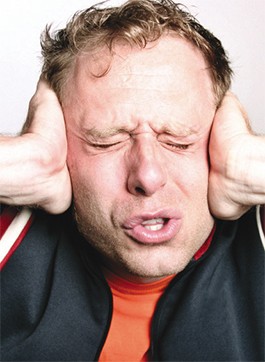
From a whisper to a scream: Most new albums are just a brick wall of sound.

By David Sason

It’s called “soundcheck” on the iPod. On some television sets, its name is “steady sound.” Today, virtually every electronic entertainment device has some sort of built-in volume control, seeking to level the increasingly jarring fluctuation in the loudness of audio or video content in the 21st century. “What’s probably most noticeable to people is how loud a commercial is on television when it comes on,” says Allen “Big Al” Wagner, recording industry veteran and proprietor of Big Toe Studio in Vancouver, Wash. “That’s the same technology being used to make music louder.”

As the cofounder of Turn Me Up!, Wagner, along with engineer-producer Charles Dye and rock musician John Ralston, is trying to counter a trend that’s quickly entering the cultural lexicon via a dramatic term: the “loudness wars,” a moniker that aptly describes the aggressiveness with which the loudness race has progressed and the destructive effect it’s had on the audio arts. Whether rock, hip-hop or jazz, music is roaring like never before. Turn Me Up!–the name tells listeners what to do with quieter, more dynamic albums–aims to hush the blast.

“It’s the equivalent of someone screaming everything they say,” says Wagner. “Imagine taking a painting and saying, ‘It’s not bright enough, so let’s take the Mona Lisa and go over it with all day-glo colors so that all the colors scream, all the time.”

While best exhibited aurally–YouTube has plenty of didactic videos on the subject–the way a “loud” recording mutilates the original tracks is perceivable in a sensory nature. Individual elements within the recording (the range of instruments, for instance) are raised to a similar level to allow for a larger output, a process called compression. Without the contrast, drums once crisp and forceful are now muffled amid the rest of the sounds. Detail and distinction suffer in pursuit of a bigger impression. Sometimes, a cacophony of distortion occurs, known as “clipping.” “There are no highs and lows, there’s no inflection, and the original piece of art is actually being tampered with,” laments Wagner.

Why would any musician release a record this way? While the rise of the still-controversial mp3 sound file has certainly undermined sound-quality preservation, the loudness war is just another example of the age-old dilemma: art vs. commerce. In the iTunes store, for instance, a heavier volume has proven a potent way to stand out among the competition. “Unfortunately, the human ear is easily tricked into thinking something is better if it’s louder,” says Wagner. “It’s all about attention and sales. ‘This record’s going to come out and we need it to catch attention, so make it louder than everybody else’s’–this is a common conversation in the industry.”

And apparently not a new one. Way back when jukeboxes were a prominent form of music dissemination in the mid-20th century, 45s were mastered “hotter,” as it was known then, to attract the attention of bar or club patrons. Even the great Motown Records was known for the practice, but the vinyl record format had its own inherent defense against the practice. “You could only make a record so loud when it came to using a vinyl LP disc or else the needle would jump out of the groove,” says Wagner laughingly. “There were some natural restrictions, which is why you can’t get an LP that can compete in the loudness wars beyond a reasonable limit.”

The liberating technology in the 1980s of the compact disc, Wagner believes, was soon squandered. “CDs offered the wonderful vista of this extended dynamic range to where we could hear softer lows and louder highs, and that was going be a panacea for the music lover,” he remembers. “Instead, the music industry chose to use all that extra headroom to push the volume as high as possible, and they used it as a launch pad for volume instead of taking advantage of its dynamic potential.”

Although modern sound quality has been a concern for many rock luminaries like Bob Dylan, Neil Young and Beatles engineer Geoff Emerick, no case has garnered as much attention as that of Metallica. Due to the squashed “loudness” of their latest album, Death Magnetic, the band’s fans turned on them, especially after the same tracks were released, sans the compressed mastering, on the video game Guitar Hero to universal praise. A petition is underway to demand a remaster of the CD and digital download versions.

Turn Me Up! applies the goal of dynamics to business as well as sound, looking for a way to make a record that doesn’t join the loudness wars but is still commercially viable. The proof is abundant, Wagner feels. “If you go back and listen to The Joshua Tree by U2 or Synchronicity by the Police, they’re very good examples of very dynamic records,” he says. “You certainly can’t say that either of those weren’t powerful records or that they didn’t sell well.”

JJ Golden of Golden Mastering in Ventura couldn’t agree more. “There’s a reason why music from the ’60s and ’70s is still having such an influence on musicians,” says the audio mastering technician, who’s worked on records for everyone from Sonic Youth to Devendra Banhart. “Each time you listen, you may hear some little detail that you never heard before. These days, with overproduced and overcompressed recording, mixing and mastering techniques, it doesn’t have that repeat-listening effect.”

Since audio mastering is the final creative step before a final master is made, professionals like Golden are on the front lines of the volume wars. Engineer Ted Jenson, who mastered the notorious Metallica album, exacerbated the bad press through a telling online post last year. “Believe me, I’m not proud to be associated with this one,” he wrote on Metallica’s online fan forum.

“I’ve mastered a lot of records where volume is more important to the artist/label/producer/etc. than quality and feel,” says Golden. “There’s a certain immediate ‘wow’ factor when you listen to a loud album, but that wears off very quickly. It might work for TV commercials, but it doesn’t do much for an album’s longevity.”

The tide is turning, but some artists may have to learn the hard way. “The same people come back a year or so later to master another CD and tell me they want this one to have more dynamics than the last CD and how they just can’t listen to that last album anymore,” says Golden. “But there are thousands of bands who are making their first record right now and will need to take that journey to ‘loud land’ to get some perspective.” And the more common music fans that get involved, the better for the cause. “The more we talk about it in a nontechnical arena, the more aware people will become,” Golden continues. “I think what Turn Me Up! is doing is great.”

Wagner is similarly optimistic. “It’s a matter of figuring out who’s going to make the first move to start the dominoes toppling a little bit,” he says, “and hopefully we have some small part in being that first domino.”

Listeners can find out more, and bands can get their records certified for clarity, at www.turnmeup.org.


FIND A MUSIC REVIEW

Crazy Love

0

06.24.09


The Wedding Singer, despite its occasional flaws as a musical and some random technical problems on opening night, is the perfect show to open this 36th season of SRJC’s annual Summer Repertory Theatre. The Wedding Singer, a Tony-nominated adaptation of the hit 1998 Adam Sandler comedy, is bright, optimistic and full of open-hearted, youthful enthusiasm–essentially the same attitudes that have driven SRT to become one of the country’s leading training grounds for young theater students.

It takes optimism and energy to tackle the production of five different shows, all of them running in repertory (theater-speak for “at the same time, back-and-forth, over a period of weeks”), with less than three weeks of rehearsals, set-building and dance practice to make it all happen. And it is optimism and youthful enthusiasm that draw to Santa Rosa the 60-plus performers and technicians who annually drop in from all over the world for the equivalent of theatrical boot camp. So, yes, The Wedding Singer is pretty much the perfect show to start out an SRT season.

Robbie (Johnathan Tweedie, from Johannesburg, South Africa) is a kind-hearted musician whose ’80s-era dreams of rock-and-roll fame have been replaced with a career as New Jersey’s favorite wedding singer. The ’80s mood and the character of Robbie are nicely established in the opening number, “It’s Your Wedding Day,” a spirited, upbeat anthem that tells how Robbie became a wedding singer and establishes Robbie’s belief that love will find us all.

It’s the eve of Robbie’s own wedding to the sexy but self-centered Linda (Eve Winters, from London), but in swapping philosophies of love with wedding-hall waitress Julia (Alison Plot, from San Jose), it’s clear that they instead are kindred spirits. When Robbie is left at the altar by Linda, Julia tries to coax him out of his depression by dragging him along as she shops and prepares for her upcoming wedding to the obnoxious money-hungry Glen (Joshua Roberts, from San Francisco).

Meanwhile, severely soured on the whole love thing, the newly pessimistic Robbie is persuaded to keep working, resulting in a disastrous wedding reception where Robbie and his band perform the hilarious “Casualty of Love,” during which the wedding singer leads an assortment of lovelorn misfit party guests into raucous rebellion against the happily just-married bride and groom. It is obvious that before the end of the show, Robbie and Julia will get the message that they belong together, and the pleasure of the play is in watching them slowly fall for each other, dodging obstacles and pitfalls along the way as Robbie regains his enthusiasm for love.

The cast is uniformly fine. Not only does everyone excel in singing as well as the slightly over-the-top comic acting required for this kind of show, but the dancing (not usually an SRT strongpoint) is extremely strong, in large part due to the work of choreographer Anne McAlexander. The large party numbers where the play’s dozens of characters dance McAlexander’s deliriously joyous moves are electrifying. Much of the success of this show belongs to the sure-handed direction of New Yorker Bobby Cronin, who, despite having to hurdle some technical issues, delivers the best SRT musical since 2007’s magnificent Working.

About those hurdles–on opening night, there were still several jitters and kinks that will no doubt have been worked out by the second week of the run. These include some pacing problems in the second act, when some of the energy seemed to go out of the production before recapturing it for the splashy goofy-sweet climax (which involves a Tina Turner impersonator delivering one of the best fake knockout kicks I’ve ever seen onstage), and the usual SRT microphone issues, with mikes popping on and off, and the volume careening from too loud to too quiet from minute to minute.

Despite all of this, the infectious energy of the show and competent embrace of The Wedding Singer’s sweet life-affirming heart carry the show all the way, giving the 2009 SRT season a happy kickoff that, like all memorable weddings, ends with one hell of a kiss.

‘The Wedding Singer’ runs through Aug. 8. June 26, July 25 and Aug. 7-8 at 8pm; June 30, July 2, 14-16, 23 and Aug. 2 and 4 at 7:30pm; July 15 and Aug. 2 at 2pm. Burbank Auditorium, SRJC, 1501 Mendocino Ave., Santa Rosa. $10-$25. 707.527.4343.


Museums and gallery notes.

Reviews of new book releases.

Reviews and previews of new plays, operas and symphony performances.

Reviews and previews of new dance performances and events.

Deer Tick Pickin’

0

music & nightlife |

By Cassandra Landry

I s it just us, or do wineries just keep getting cooler? The days of stuffy and exclusive winetastings are seemingly disappearing, as evidenced in part by Gundlach Bundschu’s recent brainchild, the Indie Rock Concert Series. Of course, concerts featuring “indie” bands are not new. But tossing an up-and-coming Rolling Stone -favored band like Deer Tick on a redwood stage while the public basks among picnic baskets and goblets of wine is distinctly Sonoma County.

Gundlach Bundschu hospitality manager Megan Cassady said booking the plucky rock band from Rhode Island was simply a matter of timing and good luck. “They’re playing at the Independent a few days after, so they were in the area,” she says. “Plus, they seemed like a good fit.”

Last year’s acts, Jonathan Rice and Maria Taylor, drew around 200 people, but Cassady says the winery is hoping for closer to 250 this time around. Guests can settle in on the grassy, sloped hill with a glass of wine, nosh rotisserie chicken provided on-site or pack a picnic to kick off the summer nights to come. “We’ll have our wine bar open so people can drink some wine and listen to cool music that Sonoma doesn’t always get to see,” she says.

John Joseph McCauley III, lead singer of Deer Tick, discussed the tour and upcoming album release from the road, en route to Washington, D.C., after a “crazy” evening at the House of Blues in Boston. McCauley seemed to be feeling the aftermath as he chatted about the change in band mates in a gravelly voice.

McCauley is the sole musician remaining from Deer Tick’s freshman album War Elephant , released in 2007. The band’s newest creation, Born on Flag Day , will be released June 23. “Everybody in the band is new from War Elephant ,” he says. “It makes shit a lot easier for me. All the guys in the band now are fantastic players. I don’t have to worry about anything with them.”

Deer Tick have been called everything from alt-country to freak folk, but McCauley isn’t buying it. “We’re a rock ‘n’ roll band,” he says, somewhat emphatically. “And if somebody doesn’t believe it, they should just come see us play.”

Deer Tick rock the hillsides with opening band Birdmonster on Saturday, June 27, at Gundlach Bundschu Winery. 2000 Denmark St., Sonoma. 7pm. $20-$25. 707.938.5277. www.gunbun.com/deertick.


FIND A MUSIC REVIEW

Teahouses of the Holy

06.24.09

It’s hard to imagine that one man’s grief over the demise of songbirds led ultimately to a change in China’s tea trade. But it did. Back in the 1980s, when David Lee Hoffman learned that the songbirds he loved were not coming back to his west Marin home, he woke up to the fact that pesticide use was unraveling the natural world. Hundreds of species were going extinct every day. He wanted to do something to make a difference, and decided he would have more credibility if he approached the problem as a businessman.

Hoffman is no ornithologist, but he was a tea drinker from his decade-long rambles in Asia, and so he became a tea merchant, searching China’s mountain villages for the best teas in the world. While in China during the late 1980s and early 1990s, he used his purchasing muscle to push against government-sanctioned chemical farming. Hoffman worked his way around the business model in use at the time and bought directly from those small farmers and tea artisans who grew and created tea the old way–naturally and by hand.

The gradual result was the start of a new era in China’s tea markets. Hoffman diplomatically struck a blow against pesticide farming and helped open the door for small, traditional tea farmers. Those same farmers, decades later, can now market their tea directly and get a good price for it. Hoffman’s impact on the China tea trade was documented in the 2007 film All in This Tea, most of the footage for which was shot 12 years ago. Pouring three different kinds of tea on a recent visit to his unfinished hillside teahouse, Hoffman marvels at what has altered since then.

“The country has changed quite a bit since I first started going there,”he says. “China has gotten wealthy, and now they can afford to buy the good stuff.”From a diminutive porcelain bowl, he sips “the good stuff,”first a fragrant green, then a vigorous black, and finally a reddish, earthy-tasting tea known as pu-erh. Oxidized and fermented, pu-erh is Hoffman’s personal favorite.

As we sit in his teahouse, I taste for the first time the flavors that inspired one British botanist to risk his life sneaking cuttings out of China, the very plants that would supply the British Empire via farms in colonized India. This, indeed, is the good stuff.

Hoffman lives the good life, though not in any conventional fashion. His home is a tactile expression of his maxim to live as simply as possible–chickens, a garden, worm composting and a meeting of Asian tradition, California whimsy and primitive tribal architecture that takes the breath away. I tell him the property feels like a retreat. “It is a retreat,”he affirms, noting that he designed and built the structures with help from others (he is amid building the teahouse alone).

Hoffman sold his tea business five years ago and kept the pu-erh teas. Now these made-to-age teas have dramatically increased in value. “I have perhaps one of the world’s finest collections of pu-erhs,”Hoffman explains. When he completes the teahouse–the raw wood walls are still open to afternoon breezes–he will go back into the tea business here from his own home.

Hoffman claims tea selling fits the Buddhist ideal of right livelihood. “It’s so simple,”he says. “I can bring in one container and supply 20,000 people with tea for a year. Tea is healthful, relaxing and good for the earth. I use no packaging for my teas, and when you’re done, tea leaves make perfect compost.”

This man who wandered Asian paths for 10 years, sipped tea with the Dalai Lama and stood up against Chinese officials to revive natural tea farming and crafting looks forward to his new enterprise. Hoffman’s business will launch next spring after a buying trip to China. Private, by-appointment tea-tasting sessions will be part of a business he calls the Phoenix Collection, which in Chinese mythology represents both regeneration and excellence.

Ultimately, Hoffman could not bring back the songbirds from extinction. But from the ashes of that loss he seems to be continually serving the world a more comforting cup of tea.


Inside the Pornocopia

0

06.24.09

Go!: Pornography is ubiquitous on the net. But does it actually hurt our kids?

Jessica Lussenhop

While many interviewed below gladly gave their full names, we adults have excised their surnames for their own good. 

Four teenaged boys are gathered around a chessboard having a civilized conversation about pornography. As he mulls his next move, Chris, a straight-talking 18-year-old with a goatish beard tufting from his chin, recalls some of his earliest dabbling.

“In junior high, I started printing out porn and bringing it to school. I don’t even know why,” he says. “We’d go, ‘Ooh, aah,’ and I’d put it away. It wasn’t really sexual stimulation, it was, ‘We’re doing something we’re not supposed to at school.'”

Never was that so clear to him as when he was dragged into the principal’s office on an unrelated charge with a half-inch-thick stack of smut in his bag. Terrified he would be searched, he ended up “dumping it in the vice principal’s trash can,” he says. “Then she came in and decided to eat an apple. She was peeling it into the trash.”

Luckily for the preteen Chris, the vice principal never looked down into the trash, but he didn’t exactly learn his lesson. Now he trades chess pieces and porn parables with his 17- and 18-year-old friends with the utmost candor.

“I think our social group has overused the access,” he says. “It is certainly past the point of being new to us.”

“I have 140 gigs of porn on my computer,” one of his friends says. “I was going to put it all on an external hard drive and pass it to all my friends. And I said this in front of my friend’s parents.”

His frankness is astounding. This very nice boy with 140 gigs of pornography gave me his first and last name to print; I’m not going to. Even though he seems to be a very mature 17-year-old, I’m not entirely sure he’s thought about the fact that the day this story hits the web, any prospective employer, dean or girlfriend who Googles his name will find the words “140 gigs of pornography” in the same sentence. But maybe for this generation, that’s not going to matter.

It is easier than ever to watch, create and share pornographic images and text, and as the first wave of web-savvy teenagers who have always had the instant gratification of DSL, who get cell phones as soon as they’re old enough to talk and who’ve never used air quotes with the word “blog,” their knowledge can easily be applied to creating their own porno paradise. Which leads to the question, can this be bad for them? If cigarettes stunt your growth, does porn stunt your soul?

Porn Pups

On the second floor of the Santa Cruz Teen Center, 16-year-old Jane considers the concept of “sexting,” or sending naked photos via cell phone. Behind her is a row of computers with signs posted nearby that read “NO PORNOGRAPHY.” “In my high school, technology isn’t necessarily openly used as much for sexually explicit stuff, but more for cheating on tests,” she says.

That said, Jane, along with a small sample of extremely gracious teenagers ranging in age from 14 to 18, concede that they’d sought out or at least seen internet pornography. Most were given access to a personal or family computer between the ages of nine and 14, and it took only a year or two after logging on for the first time to find sexually explicit material. One boy says he started seeking it out as early as 11 years old. They’re in good company: recent surveys show somewhere in the neighborhood of 70 percent of adolescents report they’ve seen pornography while surfing the internet.

Furthermore, they think it’s no big deal. A 2008 study found that two-thirds of college-age men and one-half of women think viewing pornography is acceptable. “Most people I know are decently open about it. They aren’t quite as open as [I am], but they’re certainly not closed,” says 17-year-old Bill.

If there is a common thread, it is nonchalance and acceptance. “I think this is happening basically every day for students in high school,” says 15-year-old Matt. “It doesn’t bother me. I don’t particularly have negative thoughts against that type of thing.”

Another 18-year-old girl confesses that she wasn’t shocked when her 15-year-old brother told her he looks up pornography on classroom computers when the teacher’s back is turned. “I’m used to it now that I’ve finished high school,” she says. “That’s old.”

Perhaps unsurprisingly, none of the more active young connoisseurs felt their porn proclivities were inflicting psychological damage on them. “More access is not a bad thing. I’m not exactly sure if it could be a thing that influences you to be a bad person,” says 17-year-old Matthew, a home-school student. “It depends on your nature.”

His friend Kendall agrees. “There are people who will see it as an opportunity to be themselves, and there are people who will see it as a tool to exploit people,” he says. “It really depends on the person.”

Evidence Inconclusive

Dr. Neil Malamuth, a professor of communication and psychology at UCLA, knows firsthand why studying sex, teenagers and technology is so fraught with peril. You have to apply your findings to your own kids.

“At one time, my son was about 15 or 14, and I went with him to San Francisco and we checked into a hotel, into two different rooms,” he says. “The bellhop said, ‘Oh, should I disallow the sexually explicit movies in this room?’ and I said, ‘Yeah, yeah, you should.’ My son got very upset, saying, ‘What right do you have?'” Malamuth also insists that his son attend a panel discussion he was participating in the next day. “So then he comes to my talk, and the first speaker was a radical feminist who was talking about very extreme porn. She showed samples of it.”

He laughs. “My son’s sitting in the audience and he’s smiling,” he says. “When you try to apply this to your own children, you have to consider real-world situations.”

Despite the failure of his personal policies, Malamuth has soldiered on and studied one possible consequence of heavy porn usage: sexually aggressive behavior. After 37 years’ worth of research, he has found that Matt and Kendall’s intuitive assumptions may be true.

“First of all, it’s inaccurate to try to make a simple generalization across the board–porn is good, porn is bad,” he says. “When it comes to effects that we can label as undesirable and antisocial, then it seems to depend on the content of the pornography and very much the profile of the person.”

Malamuth says a constellation of certain factors can result in a sexually maladjusted person and seem to rely more heavily on the predisposition due to negative factors like a narcissistic personality, hostile feelings toward women, violence in the home or aggression between one’s parents. “By and large, the answer is, if a person is high on multiple risk factors, heavy consumption of pornography does add fuel to the fire,” he says. “For people who are not at a particular risk of committing sexually aggressive acts, whether or not they are heavy pornography users, it doesn’t make much of a difference.”

Neither does risky sexual behavior in teenagers seem to correlate with the rise in technology, according to Dr. Doug Kirby, a senior research scientist at ETR Associates who has studied adolescent sexual risk behavior for over 30 years. “It is not the case that all the changes that have taken place in society, including much greater access to pornography, have led to an increase in sexual behavior,” he says. “Between the ’90s and the early 2000s, the percent of young people who’ve ever had sex did not increase.”

Indeed, a study by the Centers for Disease Control shows that from 1991 to 2007, the number of adolescents in grades nine through 12 who have had sex at least once dipped 16 percent, from 54.1 percent to 47.8 percent. Along with it went the incidence of teen pregnancy among 15- to 19-year-olds, which dropped 38 percent from 1990 to 2004 (in California in particular, pregnancy rates dropped dramatically). Though it’s too simple to say this absolves technology of any influence it’s had on the sex lives of teenagers, a long-term study that explicitly asks how porn affects child and adolescent development hasn’t yet been done.

Similarly, development professionals are not exactly suggesting that these materials have no effect on teenagers. “I don’t think that they’re going to become more deviant, perverted people because of this,” says Dr. Neville Golden, chief of adolescent medicine in the pediatrics department at the Stanford School of Medicine. “Still, I think life is much more complicated for young people. They’re bombarded with much more topics much earlier in life. It can be confusing.”

Many of the teenagers I interviewed saw the internet most importantly as a tool for learning about themselves sexually rather than just a fast track to hot naked babes.

“It can be a tool for anyone, anywhere to find out who you are if you don’t fit in very well,” says Jane. “I think the internet is a great way to learn about that and do some self-realization.”

But, Golden warns, that’s no reason to unlock the internet filter and throw away the password. “The internet has a lot of information. Much of it is good, but there is also information that is potentially dangerous,” he says. He points to bad medical information or fringe websites that encourage unhealthy behavior like eating disorders, though he stops short of writing off pornography as a wholly destructive use of one’s time online. “The studies are in the infant stage,” he says, “We’re not there yet.”

‘Sex, Boobs and Asses’

Lala and Nessa, both 18, come to this discussion from a very different perspective. The two best friends are chatting in the weedy backyard of Lala’s house in Watsonville while she cradles her squirming three-month-old baby boy. “He’s like a fish,” she says, looking down at him pulling mightily at a baby bottle with his toothless gums. As she struggles to keep her grip on his tiny wiggling body, she admits, with evident guilt, that this isn’t the life she’d hoped for.

“I didn’t want to have a baby. I wanted to finish school. I guess it didn’t work out like that,” she says. “It’s hard, it’s really hard. You can’t go to school. I can’t even take a shower anymore.”

Nessa keeps checking her phone. Texts from her overzealous boyfriend keep coming in. Though Nessa is taking classes and working, she remembers with a tinge of regret the boy-crazy high school days that ended with half of her friends becoming mothers. “If we were less experimental at a young age, we’d have had more time to focus on our futures,” she says.

“In school, it’s all about sex and boobs and asses,” says Lala. “Everybody’s comparing themselves to things they see on technology. All my friends were having sex.”

Though both girls acknowledge that their classmates watched pornography and posted risqué pictures of themselves on MySpace, Lala has a pretty old-school theory on why she ended up a stay-at-home mom at age 18. She gestures to Nessa.

“She’s the way she is because of her dad, because he would call her and call her,” says Lala. “My parents would never call me. They would just let me do whatever I want. That’s why she’s in school and doesn’t have a baby.”

Nessa considers this. “The positive way is talking to your kids; the negative way is using aggression and raising your voice,” she says.

Lala nods. “I did whatever I wanted all the time,” she says again.

The Parent Factor

Though Lala’s situation has plenty of other issues couched in socioeconomic and cultural differences, her perspective on her own pregnancy seems to be one of the few things that both development professionals and teenagers can agree on: parental involvement has not become obsolete.

“The reality is, they still want parents in their lives,” says Dr. Claire Brindis, a researcher in adolescent health at UC San Francisco. “Even with these new devices, teenagers that I’ve come across in my research still have this unmet need for comprehensive sex education. We as a society must recognize that the period of adolescence is one of the most challenging, and young people need guidance. These are universals that have not gone away.”

For Dr. Marty Klein, a licensed marriage and family therapist and author of America’s War on Sex, the more alarming behavior has come from adults overreacting to teenager’s technological expressions of sexuality, like the recent media hysteria over “sexting” (a term none of the teens I met used or could use without making a face).

“A lot of the public policy conversation that’s taking place about kids’ sexuality is more about adult anxiety,” Klein says. “When I hear district attorneys criminalizing sexting, what I hear them saying is, in order to prevent kids from ruining their lives, we’re going to ruin their lives.”

Another thing that both teens and their doctors seem to agree on is that no matter what the consequences may be, kids will find a way–through any internet filter, past any padlock, through any key code–to get at the things that fascinate them. “I think if a young person is going out for it, they’re going to find it one way or another, if it’s really hard or really easy,” says 16-year-old Tanya. “It’s not changing the interest you have in sex; it’s just another source of information.”

Given that assumption, Klein stresses that parental involvement is crucial. “The answer is to teach them how to talk about sex to one another, how to value their bodies,” he says. “Teach them how males and females can talk to each other rather than separate them in sex-education classes. The thing we need is more education, not fear.”

Easier said than done. Many interviewees reported that their parents had, at one time or another, attempted to have “the Talk.” One of them was 15-year-old Matt. “I kind of shot my dad down because I thought he was being sort of cheesy,” he says. “I learned my thoughts and opinions on that stuff on my own.”

Fourteen-year-old Zack balked when his mom tried to talk to him about sexting after a neighbor girl got caught sending nude photos to her boyfriend. “My mom was like, ‘Don’t do that, don’t send pictures of yourself,’ and I was like, ‘OK,'” he says. “It was weird. I was like 13 or 12 then, so I didn’t even know about it yet.” Many kids reported that by the time their parents worked up the nerve, they could only tell them, “I already know this from the internet.”

Text Question, Please

Luckily, there are other options developing that actually use the same technology parents are so worried about.

Santa Cruz County health educator Sarah Harmon tries to answer the text messages that come to her cell phone with a little “ding-dong” sound. “Oh, there’s one now,” she says.

As coordinator for the teen pregnancy prevention program, Harmon gives presentations to hundreds of students on birth control and family planning. Two years ago, she started offering her work cell phone number to students as a way for them to contact her with any concerns. “I was not a texter. I was totally foreign to the whole thing. I gave it out thinking they would call me,” she says. “But this is the way teenagers communicate.”

Harmon says the number of texts she receives has doubled in the last school year alone, and though the majority of the questions are just to find out Planned Parenthood clinic hours, she is also asked how certain birth control methods work or about extremely personal situations her students might not feel comfortable asking verbally. “A lot of them are wanting pregnancy tests, or just wondering if something that’s going on with them is normal,” she says. “Our society in general doesn’t talk about sex much. Teens realize they can ask questions of me that they can’t ask their parent or teachers because they’re afraid.”

Programs like Harmon’s are springing up throughout the country, and Californians, who have always rejected abstinence-only education, are at the forefront. San Francisco teenagers can text a number to get a menu of frequently asked sexual questions and automated responses, and a service called the HookUp that texts weekly health tips and can locate the nearest health clinic by zip code is available statewide. Sonoma County is interested in developing a student-to-educator texting service like Harmon’s, even as state budget cuts are cutting teen-pregnancy-prevention programs to the bone.

There are also less tangible things at stake. Judging from Kendall’s assertion that his girlfriend of a year and a half is someone who helped him see “who I wanted to be more into the future,” or the way that Jane lightly kisses her girlfriend Tanya’s wrist as she talks, or Nessa’s feigned exasperation as her phone buzzes with her boyfriend’s umpteenth text, puppy love still thrives in the digital age. Several of the teenagers I spoke with had been in the same committed relationship for a year or longer. But is one’s capacity for intimacy adversely affected by hours of hours of online bonkfests?

Again, while little research is currently available, Malamuth points to a 2008 study done in Croatia which showed that a small but statistically significant number of young men age 18 to 25 reported lower feelings of intimacy with their partners, though the correlation was found only in those watching extreme or more socially unacceptable pornography. “There was no effect in mainstream sexually explicit material,” he says. “[Again,] it depends on the type of person and the type of pornography.”

Brindis is quick to dismiss the notion that technology will terminate the butterflies in teenagers’ stomachs. “The power of Romeo and Juliet, the intensity of that love, gets repeated in the 21st century,” she says. “You still have to go through the phases of finding out who you are and defining who your romantic partner should be. It’s not going to take away from that.”

And, she says, with so many more ways to keep in touch, teenager may actually becoming more intimate and in touch. “I always say, high tech, high touch,” she says. “You may be on the phone more often, you may be texting or Twittering more.”

Jane agrees. “Between couples, there’s plenty of that. Why not? What’s stopping you? You don’t have to set a time or a date or wait until your parents are going out of town.”

Generation Sex

Neither Chris nor Lala nor Will nor Matt nor Nessa nor any of the rest can really say that their early exposure to pornography and other early sexual experience was too early, or that their lives will be adversely affected long into the future. Neither can the development professionals. But all are trying their best.

“At the end of the day, what needs to drive public policy around sexuality is science rather than emotion,” says Klein. “The science says that kids from the beginning of time have looked at sexual pictures, and it doesn’t seem to harm them very much. As young people have more access to technology, they need more and more sex information; they don’t need more repression.”

The teenagers I spoke to did not wish that pornography be wiped from the face of the earth–no surprise there–or that cell phones be confiscated on a wide scale. They all feel pretty relaxed about the availability of X-rated material in their lives, particularly Bill. “When I was younger, I was definitely more shy, more shut in. I rarely would leave the house,” he says. “In my current being, I’m a lot more open to new experiences, and I think at least a small part of that could be contributed to the internet and pornography. I think I turned out just fine.”

Back at the chess game, as Chris’ chances of winning slowly slip away, he considers whether or not his habits have any downside. He thinks hard. “I think the overease of access makes everything blasé,” he says.

Does that boredom make him nostalgic for the days of diving underneath mattresses for your older brother’s Playboys?

He shakes his head vigorously no. “Ease of access is nice. It definitely is nice.”


Voice of Change

0

06.24.09

When I’m singing, I have a picture in my head of what I’m singing about,” explains Mavis Staples, “because I can remember what was happening when I was first singing it, as we marched. I’m reliving the time, but I’m sharing it with this audience that has come to see us.”

The lifelong gospel-soul singer is talking about the music with which she came of age, singing on the front lines of the Civil Rights movement in the early 1960s. These are songs she returned to for her powerful 2007 CD We’ll Never Turn Back, and which she continues to feature on tour this summer, including her first-ever appearance at the Kate Wolf Memorial Music Festival this weekend. It’s a recording she readily admits felt important.

“I felt that it was time for some freedom songs again,” she continues, settling into a reflective mood from her home office in Chicago, remembering the history-making marches through the Deep South along with the Rev. Martin Luther King. “These are songs that we sang as we marched during the movement. I grew up singing these songs, and I just felt that the generations today, they need to hear these songs and to know what we went through in order for them to be able to live like they are today.”

Spare and impeccably produced by Ry Cooder, We’ll Never Turn Back features potent traditional songs like “Eyes on the Prize” and “We Shall Not Be Moved” alongside more recent, like-minded material such as the Mavis-penned title song. “When I saw Katrina, my heart went out and I thought about Dr. King and what would Dr. King do, what would he say,” she reflects.

That connection dates back to 1961 when Staples’ father, Roebuck “Pops” Staples, the patriarch and leader of the acclaimed Staples Singers, took his performing family to see King preach in Montgomery, Ala. Afterward, she says, “Pops called us to his room, and said, ‘Listen y’all, I really like this man’s message. And I think if he can preach it, we can sing it.’ So we began writing freedom songs, joined the movement.”

That was a notable change, as the Staples were by then among the top gospel performers in the country. Breaking through with “Uncloudy Day,” an astonishing commercial success in 1956, they had become known as “God’s greatest hit makers.” But as they became deeply involved in the Civil Rights movement, the Staples moved into a style that was dubbed “folk-soul,” and showed a willingness to reach out musically, recording Dylan’s “A Hard Rain’s Gonna Fall” and Stephen Stills’ “For What It’s Worth.”

A third, even more dramatic stylistic change followed a few years later, as the group signed with Stax Records and soon hit their popular peak with such crossover soul hits as “Respect Yourself” and “I’ll Take You There” while enduring sharp criticism from some quarters for this supposed transgression away from their faith.

“The church people wanted to put us out of church for singing ‘I’ll Take You There,'” she acknowledges. “They called that the devil’s music. We had to do so many interviews telling the people, ‘You know, the devil ain’t got no music. All music is God’s music.’ And if you’d listen to our lyrics, you’d see we’re talking about taking you to Heaven.” (The one time the group truly crossed into the secular, Mavis says, was when Curtis Mayfield persuaded Pops to record the soundtrack hit “Let’s Do It Again.”)

Mavis started out singing the baritone voice in the family quartet, but was promoted to the lead role, against her preference, as her brother Purvis’ voice “changed overnight when he reached puberty.” She soon realized her heavy contralto also had the range to reach the necessary high notes, and came to relish the extended, gospel-derived ad-lib riffing that closes many of her finest performances, from “Respect Yourself” to the highly personalized “My Own Eyes” and “I’ll Be Rested” from We’ll Never Turn Back.

These extended moments are a highlight for Staples. “It’s still a part of what I’ve been singing about on the song, but I’m just riding the music,” Mavis explains. “It’s a good feeling, an up feeling, and you just float. I feel as light as a feather.”

Mavis Staples appears with Richard Thompson, Emmylou Harris, Ramblin’ Jack Elliott, Buddy Miller and more on Sunday, June 28, at the Kate Wolf Memorial Music Festival running June 26-28. Black Oak Ranch, 50250 Hwy. 101, Laytonville. $35-$80. 707.829.7067.


Try to Keep Up

0

the arts | visual arts |

By Cassandra Landry

I mprov shows are generally either pee-your-pants fantastic or . . . bad. Really bad. Sitting in a dark comedy club with a pitying smile plastered across your face as a handful of comics desperately bluster around the stage is no fun for anyone. Thankfully, the Sixth Street Playhouse has teamed up with Instant Gratification Theater to prevent such a tragedy by presenting a show, aptly titled the Best of Sonoma County Improv, featuring actors from Sixth Street Improv, the World’s Biggest Comedy Duo, the Improvaholics, Hot Curtain, Slip-Goose Monkey, the Improv Orphans and a collective “jam” with members of Whose Line Is It Anyway? and more.

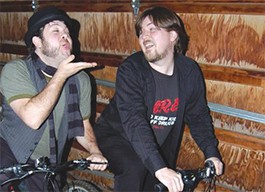
Matlock Zumsteg, a founder of the 10-member World’s Biggest Comedy Duo (pictured above with Brandon Wilson), likens improv to a Zen Buddhist way of life. “A lot of improv has to do with living in the moment, and not really knowing where a scene is going to take you. So you have to be really open-minded to that possibility.”

Zumsteg recalls a recent stage blunder: During a round of “Moving Bodies,” an audience-participation game, Zumsteg got up close and personal with Zack Koback, a fellow performer. Very up close and personal. “I was in a scene with Zack, and he was wearing these very loose, baggy MC Hammer-type shorts, and I don’t think he was wearing anything underneath. One of the audience members who was moving me, he put my hand right on Zack’s penis. I felt it right under the pants,” he says, laughing. “The whole audience saw my reaction to it, and I screamed, ‘I’m touching it, oh God I’m touching it!’ I complained for two hours of feeling phantom penis on my hand afterwards.”

The thrills–and complications–that come with audience participation are inevitable, he adds, even if the crowd goes for the raunchy joke right off the bat. The art of improvisation isn’t all phantom penis and forcing a laugh out of the audience, Zumsteg stresses, and rushing a comedic moment often leads to disaster.

“Improv really lends itself to comedy anyway, so we don’t need to try super hard to make things funny,” he says. “We focus on just building a scene and allowing whatever needs to happen to happen.”

Get your laugh on with the Best if Sonoma County Improv on Friday, June 26th, at the Glaser Center. 547 Mendocino Ave., Santa Rosa. 7:30pm. $15. 707.568.5381.


View All


Museums and gallery notes.


Reviews of new book releases.


Reviews and previews of new plays, operas and symphony performances.


Reviews and previews of new dance performances and events.

Just Milling Around

06.24.09

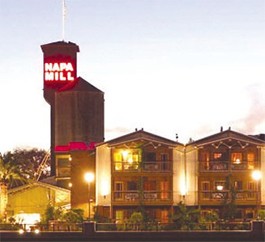
Recently gussied up, Napa’s Old Mill is now home to some of the best food and culture Napa County has to offer, and every Wednesday, guests walk over 100-year-old stone while notes from jazz musician Alec Vidler and smells of fresh local dishes are carried on the evening breeze. It’s Locals Night at the Mill, where in the plaza, the grills are covered with sizzling hot dogs while local restaurants have their doors propped open, welcoming guests with their own treats waiting to be gobbled up.

Locals Night guests have the opportunity to taste an eclectic sampling of what the Mill has to offer, with various culinary specialties highlighted each week for just $5. Sweetie Pie Bakery offers two cupcakes for $5; the Vintage Sweetshop is preparing two specialty coffee drinks for $5 (as well as sinful chocolate dipped strawberries–three for $5); the Napa general store pours wonderful local wine–$5 a glass, which can be paired with tasty appetizers such as a Mediterranean olive bowl and ahi tuna wontons for $5 each. After tasting these goodies, one heads over to Angèle Restaurant, offering 50 percent off all bottles of Pinot Noir and its homemade coq au vin–an aromatic braised chicken with fettuccini pasta.

With bellies and wallets full, it’s time to really unwind. Celadon offers the “Bella,” a sassy cocktail, or indulge in a $5 chair massage from La Pelle Skin Spa and Boutique. All in all, the grills are hot, and the bakers and chefs are waiting to share some of their best treats. Come, let strong appetites lead the way to some of the Napa Mill’s excellent food.

Locals Night at the Mill happens every Wednesday at the Historic Napa Mill. 500 Main St., Napa. 5-7pm. Free.

Quick dining snapshots by Bohemian staffers.

Winery news and reviews.

Food-related comings and goings, openings and closings, and other essays for those who love the kitchen and what it produces.

Recipes for food that you can actually make.

Putting It Together

06.24.09Twist And Push: George Miller's Sonoma home is filled with beautiful, complicated creations. Can the mathematical nature of a puzzle ever articulate an artistic expression? Can an emotion or intellectual thought ever manifest itself in a puzzle?The answers may never come in black and white, but the colors and complexities give much to discuss in the exhibition "Intersections: Puzzles as...

News Blast

06.24.09 Working OutAlmost 20 years ago, Sean Garvey's dad, Pat, led a cross-section of concerned citizens in constructing temporary housing for Napa Valley workers. This Friday, musician Sean Garvey will be doing his own bit for Valley workers, hosting the first annual June Bug Dance at the Tucker Farm Center, just off Highway 29 near Calistoga. The event's proceeds will...

Loudness Wars

music & nightlife | From a whisper to a scream: Most new...

Crazy Love

06.24.09The Wedding Singer, despite its occasional flaws as a musical and some random technical problems on opening night, is the perfect show to open this 36th season of SRJC's annual Summer Repertory Theatre. The Wedding Singer, a Tony-nominated adaptation of the hit 1998 Adam Sandler comedy, is bright, optimistic and full of open-hearted, youthful enthusiasm--essentially the same attitudes that...

Deer Tick Pickin’

music & nightlife | By...

Teahouses of the Holy

06.24.09It's hard to imagine that one man's grief over the demise of songbirds led ultimately to a change in China's tea trade. But it did. Back in the 1980s, when David Lee Hoffman learned that the songbirds he loved were not coming back to his west Marin home, he woke up to the fact that pesticide use was unraveling...

Inside the Pornocopia

06.24.09Go!: Pornography is ubiquitous on the net. But does it actually hurt our kids? Jessica LussenhopWhile many interviewed below gladly gave their full names, we adults have excised their surnames for their own good. Four teenaged boys are gathered around a chessboard having a civilized conversation about pornography. As he mulls his next move, Chris, a straight-talking 18-year-old with a goatish...

Voice of Change

06.24.09When I'm singing, I have a picture in my head of what I'm singing about," explains Mavis Staples, "because I can remember what was happening when I was first singing it, as we marched. I'm reliving the time, but I'm sharing it with this audience that has come to see us."The lifelong gospel-soul singer is talking about the music...

Try to Keep Up

the arts | visual arts | ...

Just Milling Around

06.24.09Recently gussied up, Napa's Old Mill is now home to some of the best food and culture Napa County has to offer, and every Wednesday, guests walk over 100-year-old stone while notes from jazz musician Alec Vidler and smells of fresh local dishes are carried on the evening breeze. It's Locals Night at the Mill, where in the plaza,...
11,084FansLike
4,446FollowersFollow
6,928FollowersFollow