Michael

13

There are certain deaths whose sting of importance have always stayed with me. I heard about Kurt Cobain on TV, inside a Tower Records in London. Jerry Garcia, on tour driving through Kentucky, on the van radio. Joe Strummer, on a computer.
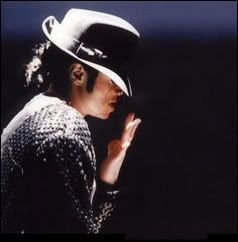
I was born in 1975, and Michael Jackson was the first superstar I ever loved. His was also the first death I watched unfold slowly online, in a sterile, digital environment made suddenly alive by speculation. During the purgatory of truth, when TMZ had the story but no reputable news sources could confirm, I, like the rest of the world, went to about 10 different news sites which had nothing—and then to Facebook, which had even less. A Twitter search for “Michael Jackson” turned up countless entries, and after a mere 30 seconds went by, the mind-boggling message: “There have been 5,675 new entries since your last search. Click here to refresh.”
Upon finding the L.A. Times confirmation, I swallowed a hard lump in my throat. I’d been joking about it with my co-worker, suspending just enough disbelief to make light of the situation, but I’ll admit it: I was sunk.
I lament the demise of the superstar from time to time, but what I’m really pining for, personally, is to have another Michael Jackson. To have another icon so completely capture the world’s attention, without any haters or snark. That such a thing will never happen is as much a statement on Michael Jackson’s greatness as it is on the changed landscape. The entertainment industry was far more consolidated in 1983, and one’s choices were either Michael Jackson or Black Flag, with not much in between. Now there’s a million options, and a million opinions, and an internet to dilute it all and to serve as a platform for information and negativity instead of knowledge and hope.
But also, sure. I was 8. At Mark West Elementary School, where I loyally wore a white sequined glove most days, Michael Jackson was king. No one questioned his superiority. It seems incredible to have once been in an environment where I agreed with everyone’s musical tastes, and perhaps this is part of the idyll of Michael Jackson. Nowadays, we pay $50 to share an experience with like-minded people; in 1983, we just had to go to the playground and there’d be a group of kids surrounding a flat piece of cardboard practicing the moonwalk.
But after a while, I woke up one day and Mark West Elementary had decided that Michael Jackson was a fag. The worst insult stopped being “You shop at Kmart” and instead became “You like Michael Jackson.” This was a sad and confusing day for me. I tried to tell everyone they were wrong, that Michael Jackson was the best. Thinking about it now, my campaign was worse than unsuccessful—it actually completely decimated what little  social standing I’d managed to acquire.
“If you love Michael Jackson so much,” one particularly knuckleheaded bully demanded, “then why don’t you go out on a date with him?”
“I would go on a date with Michael Jackson,” I replied, and, further twisting the knife on my own suicide, added, for reasons unfathomable to me now, “In fact, if I had a piece of his poo I would keep it in a jar by my bed.”
I got beat up a lot in the next five years.
Why would I say such a thing? I’d like to think I was keenly reacting to unfair treatment of a genuine talent with theatre of the absurd, or that I was presaging the vicious cycle of celebrity at work and wanted to monkeywrench its purveyors.  But basically I said it because it was the truth. I loved Michael Jackson’s music, but I loved even more what Michael Jackson gave me: a sense that I was really a lot cooler than I really was.
If I could just master the moonwalk, I‘d think to myself, incessantly rewinding the Motown 25 special we’d taped on the family VCR and scrutinizing Jackson’s every step in slow-motion. If I could just wear my pants high, or memorize all his songs, or play them on the piano, or get that red jacket, I could have a piece of what he has. Such innocence is as tragic on the outside as it is triumphant from the inside, but it wouldn’t have been right for someone to tell me that Michael Jackson couldn’t solve all my problems. Foolish innocence has to run its course naturally and brutally.
In the next year or so, I got into Herbie Hancock, the Force M.D.s and Lisa Lisa & Cult Jam. Then Run DMC came along, and everything changed. Michael was still great, but he wasn’t the only great. In the shadow of rap music, his tough-guy act in the corny video for “Bad”—all eyes glued for the world television premiere—was unconvincing.  The album was good, but it was 1987, I was 11, and I’d discovered other good music. How can a kid actually worship Michael Jackson after discovering the Smiths?
Dangerous was an afterthought; the party was over. Michael Jackson’s music entered that weird area occupied by the Beatles and Huey Lewis—music that I loved and memorized by heart and that I never needed to hear again. I discovered punk rock and criticized the corporate music industry and its sinister star system, and I turned my back on its most successful product. Plus, when Jackson started getting weirder and weirder, I was ashamed that all those years ago, Mark West Elementary was sort of right.
My story isn’t far different from anyone else’s. We all watched him slide, and we all groaned at the late night TV jokes, and we all shrugged our shoulders. What good would worrying about his well-being do? He lived on another planet, one where talent was processed by his lungs and where shame was used as currency. One where real money was used to recreate Graceland’s gaudiness and to buy the Beatles’ catalog from under McCartney’s nose, and where laughably unrealistic confidence in Invincible caused him to lose everything.
Watching the events unfold online yesterday, the quip I saw repeated most was that “the real Michael Jackson died a long time ago.” But the real us died a long time ago too. We all got so callous and sure and filled with judgment that the part of us once able to be spellbound by an intoxicating pop song and an unbeatable performer died, and we failed to realize the Dorian Gray effect of his deteriorating face reflecting the grotesque nature of the world.
And still, from inner-city nightclubs to suburban wedding receptions, his music never failed to fill the dance floor.
I don’t have my sequined glove anymore, or my sheet music to “Say Say Say,” or my demographic-assured allegiance to Pepsi. I have not listened to one note of his music since he died yesterday. Gravity tore us apart. But I cannot deny what he once meant to me, and how he once gave me hopes and dreams far beyond reality in a distant world completely different than the way we know it now.

The Hamartia of Black Elvis (Michael Jackson, 1958–2009)

0

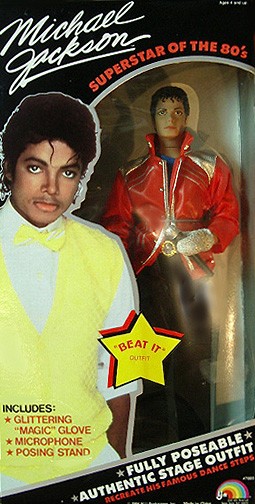
A doll. I loved Transformers and G.I. Joe like any other 5-year-old boy in the early ‘80s, but I also owned a goddamn Michael Jackson doll, with the one little glove and everything. For me, there is no better symbol of how pervasive a presence he was at the time. Right there in my memory, alongside Russian vilification, Jack Tripper, Sesame Street, and my first bike are the music videos of Michael Jackson. “Beat It”, “Billie Jean”, and of course the mini horror film “Thriller” were the most exciting things on television, period. While Jackson breaking the color barrier on the powerful new MTV has been well documented, this importance cannot be overstated.

Aside from timeless songs and exhilarating dance moves, the reason Jackson affected little brown-skinned me in a way that Bruce Springsteen, Duran Duran or Wham! never could is the same reason President Obama could repeat the Bush Administration travesties tenfold and still be eternally beloved.

Let’s face it. Role models and paradigms do matter. Imagine never seeing anyone in a position of great power look remotely like you do, in politics, the arts, entertainment, etc., The reflection of your image in “the upper crust” or “the beautiful people”– or lack thereof – is an awesome force. Michael Jackson’s worldwide popularity was a new phenomenon that has yet to be replicated. Like the Beatles decades earlier, Jackson’s appeal was truly universal: the girls loved him and the guys wanted to be him – everyone, all around the world. Virtually every child of the ‘80s has tried his moonwalk, leg kick or countless other moves seen in his videos. And, of course, the music was outstanding, so critics approved & the songs became classics. To this day, Thriller is the best-selling album of all time.

Most astounding was that, despite the nose job, he was black. Black black. I mean, not even that light-skinned. A full decade before the term “African-American” entered the cultural lexicon and hip-hop style dominated youth culture, this was a huge deal. And no other black entertainer has achieved that kind of widespread pandemonium. Sure, New Edition, Boyz II Men and B2K were popular, but not when compared to what the New Kids on the Block, Backstreet Boys or NSYNC sold in music and merchandising.

Michael Jackson was no Little Richard, left to watch Elvis Presley’s ascension from behind commercial and societal barricades – he WAS Elvis. He had the voice, the pelvis, and the vaguely androgynous style, and people could not get enough. In the music world, “Michael” (the most common name in the English language) would only mean one person (basketball’s a different story). By the end of the decade, suburban kids were trying to grow their hair like Axl Rose or Joe Elliot, but for a short time the coolest guy in the world had a Jheri curl. This spoke to me and countless other non-white kids in a much deeper, emotional way than any mentions of “equality” and “rights” in centuries-old documents ever could. Iconic status, being “the best” in a recognized field, was possible.

That’s why Jackson’s protracted devolution was so traumatic. When Bad came out in 1987, he was obviously much lighter than before (with an even thinner, less “ethnic” nose). As an 8-year-old, I remember hearing the rumor that his plan was to look like Diana Ross. It seemed creepy and he looked completely different, but he still had the moves, the voice, and a generally tanned skin tone.

But by 1991’s “Black or White”, his nearly pink complexion was impossible to ignore. As a 12-year-old with fond recollections of the Thriller era, I remember having trouble wrapping my mind around this. Perhaps he wants to appear as a combination of all peoples, devoid of race, I told myself. When Jackson told Oprah it was a “skin disorder” a couple years later, I really, truly wanted to believe him, especially since his tunes remained as soulful and funky ever. But it was no use.

Working against him was the fact that every date he’d appeared with publicly, no matter how farcical, was Caucasian. Then he married Lisa Marie Presley and procreated with another white woman. Big deal, I thought. So he likes white women. But as his children got older – and by no stretch of the imagination exhibited the traits of half-black kids – it was clear as day. Our black Elvis did not want to be black.

Over the years, any talent or philanthropy were outshined by two molestation allegations and a wealth of other inappropriate behaviors. I couldn’t just dismiss him as a “freak” like everyone else, because he meant so much to me during the formative years. With each bit of news, my shock and horror were compounded by his palpable self-hatred. I would try to reconcile this in my head, over and over. It made the least amount of sense out of everything. Maybe he looked too much like his abusive dad so he hated his own face? In every black woman, did he see the mother who failed to protect him from his father’s abuse?

Then I would see his blond-haired, blue-eyed kids and all the beneficial doubt was eradicated. And it stung. Although I sympathized with everything, from the appearance of body dysmorphic disorder, to the abuse he endured, to the pressure at a young age, to the fame that magnified it all, to the arrested development, it felt awful that the King of Pop himself could not happily be an African-American. A pioneer was ashamed of who he was. No matter what painful forces compelled his ongoing desire to be white, witnessing it still felt like shit.

Throughout the years I was continually amazed that many other people “of color” that I knew had the ability to enjoy and support his music as much as ever, even during the first molestation trial when the court of public opinion ruled unanimously to hang him. I was still too disturbed. Only recently have I rediscovered his art, away from his personal life. I’ve even been curious to finally check out the Invincible album. A few weeks back, my brother and I even flirted with the prospect of taking in one of his postponed “farewell” shows in London. Jackson was still a live act we just had to see in our lifetime. After a few laughs at the crazy idea, I said we’d catch his show if it came to the U.S. And for the first time since childhood, I really meant it.

I hope Michael Jackson has finally found some peace. On the verge of my 30th birthday, I realize that he was, despite the action figure I had of him, only human. His untimely death made me wonder if he was my generation’s John Lennon, Elvis Presley, etc. But his was a unique American tragedy, one where the glass ceiling was shattered, but all progress was spoiled by human foibles.

When people say we live in a “post-race world”, my scoff always ends up a shrug. There are certain things that some people will never have to understand. For the rest of us, good thing we still have Obama.––David SasonRest in peace, Michael. Hopefully, you heard Dave Chappelle’s kind words before you left this world. If not, here they are again (at 4:10) along with a triumphant moment that everyone enjoyed, hopefully you included. Thanks for the great music and dancing.

Waiting on Michael Jackson

0

As I write this, TMZ is reporting that Michael Jackson has died.
While I, like the rest of the world, keep refreshing the New York Times and CNN for a more reputable confirmation, I share a piece of my discussion with Kate, the Bohemian calendar editor.
“What if,” I posited, “he wasn’t actually dead? I think that’d be crazier than him actually dying—if TMZ jumped the gun and got it wrong.”
“Yeah, right,” Kate replied. “Like, wouldn’t it be awesome for Michael Jackson if he actually wasn’t dead?”
She paused. “I mean, other than he’d get to be alive?”
(Update: He’s Gone.)

June 28: Rock Royalty Tour at the Lincoln Theater

0

By the time their record label got around to releasing the misspelled masterpiece Odessey and Oracle in 1968, the Zombies had already broken up, never able to fully reap the success of the album’s smash hit, “Time of the Season.” Two years ago, original members Colin Blunstone and Rod Argent regrouped and brought the old magic out on tour; this year, they’re joined by the Yardbirds and the Spencer Davis Group on a “Rock Royalty” tour. Don’t expect to see Jimmy Page, Jeff Beck or Eric Clapton in the Yardbirds—they’ve got just two original members. Steve Winwood, likewise, is not in the Spencer Davis Group anymore. But live reviews have been good for the tour so far, and what better place for rock veterans to fire off the old hits than an actual veterans home? The Rock Royalty tour gives you some lovin’ on Sunday, June 28, at the Lincoln Theater. 100 California Drive, Yountville. 5pm. $39–$59. 707.944.1300.Gabe Meline
June 27: Bret Michaels at the Sonoma-Marin Fair

0

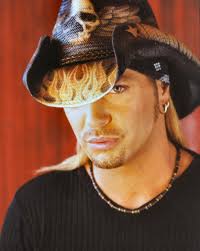
Admit it, man. You’re not going to see Bret Michaels so you can hear “Every Rose Has Its Thorn.” You’re going to see the scantily-clad drunk bimbos in thong bikinis, all clamoring for the attention of a 46-year-old washup with hair extensions before boarding the “River Rock of Love” bus supplied by River Rock Casino. You’re going so you can yell anonymously at him about getting bonked on the head and leveled out at the Tonys earlier this month. You’re not going so you can sing along to “Nothin’ but a Good Time.” You’re going to witness the slow, pitiful decay of American culture—and maybe to revel in its grotesque beauty. “Something to Believe In”? Forget it—schadenfreude, irony and guilty pleasures are the greatest hits when Michaels plays on Saturday, June 27, at the Sonoma-Marin Fair. 175 Fairgrounds Drive, Petaluma. 8pm. Free with $10–$15 fair admission. 707.283.3247. Gabe Meline

June 26: Candye Kane at the Cloverdale Plaza

0

Once a 17-year-old single mom, later a pin-up girl and stripper, the large-and-in-charge Candye Kane has established herself over the course of 10 albums as one of the preeminent blues-belting females of our time. Raised in a tumultuous household, brought up in a world that told her that girth was a sin, Kane rechristened herself as a no-nonsense singer of empowering songs like “200 Pounds of Fun” and “Great Big Woman.” She appears this weekend at Cloverdale’s summertime Friday Night Live series, whose bookings have been one of the best things to happen to the sleepy city to the north. Last year’s lineup included indie cellist Bonfire Madigan, and later this year the Pink Floyd-loving bluegrass act Poor Man’s Whiskey settles in. Grab a burrito from La Hacienda and hang out with Kane and her big, rich voice on Friday, June 26, at the Cloverdale Plaza. Cloverdale Boulevard between First and Second streets, Cloverdale. 6:30pm. Free. 707.894.4410.Gabe Meline 
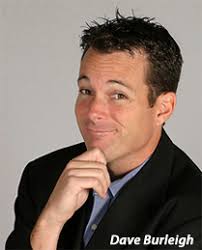
June 25: Dave Burleigh in Mill Valley

0

It’s one thing to be able to impersonate one celebrity well, but it’s another thing entirely to be able to impersonate a wide array of celebrities—especially without costume changes. Doing it off the cuff with remarkable precision is Dave Burleigh, who gets into the nuances of Christopher Walken, Nicholas Cage, Matthew McConaghey and dozens of others, offering up the essence of each one. This weekend, Burleigh reconstructs famous scenes from television, music and film in an evening of comedy and music sure to provide laughs for anyone with even a corner of an eye on pop culture. On hand will be DJ Jay Biz, spinning records and cuing up visuals for the show, which hopefully will include Burleigh’s hilarious Owen Wilson / Vince Vaughn routine. Bring a loved one and laugh your guts out together on Thursday, June 25, at 142 Throckmorton. 142 Throckmorton, Mill Valley. 8pm. $15–$20. 415.383.9600.Gabe Meline

June 25: Charlie Musselwhite at the Windsor Town Green

0

The last time blues legend Charlie Musselwhite played a free concert on the Windsor Town Green, it was so crowded you’d think he was throwing out free money to the audience. To blues fans, Musselwhite’s signature harmonica tone and phrasing are better than money—they’re among the best in the business. Whether delivered through a green Shure bullet mic and Fender Twin Reverb, Chicago-style, or a simple SM58, Musselwhite is at the top of harp players with a gilded manner to match. Anyone who’s caught his stellar Sunday morning radio show “Charlie’s Room” on 95.9 KRSH-FM, replete with thrilling anecdotes and Musselwhite’s signature drawl, knows that he’s one of the most easygoing and engaging personalities in the North Bay. See what 40 years of playing with the greats means when he appears on Thursday, June 25, at the Windsor Town Green. Bell Road at McClelland Boulevard, Windsor. 6pm. Free. 707.838.5315.Gabe Meline

Lovers Passed

06.24.09

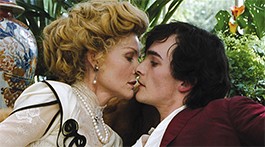
Once one of the grand horizontals of Paris’ Belle Époque, Lea de Lonval (Michelle Pfeiffer) is ready for retirement and a hobby. She picks a particularly ruinous kind: the care and feeding of a beautiful, diffident young man nicknamed Cheri (Rupert Friend).

Cheri is the son of Madame Peloux. What both the courtesan and the courtesan’s child had in mind was a dirty fortnight in the Norman countryside. The narrator explains that the tryst lasted six years. And now the still beautiful but aging Lea is quite hooked on Cheri.

Meanwhile, Mme. Peloux has got it into her head that she wants grandchildren to dandle on her lap, and thus she’s arranged a suitable marriage for Cheri. With a virgin, of course.

Cheri director Stephen Frears reunites with scriptwriter Christopher Hampton and Pfeiffer to revisit the type of games all three of them played 20 years ago in Dangerous Liaisons. There are reference points between this film and the older one. Having a meal alone, in misery, Lea’s glance falls on a fork, and we can hear in our mind’s ear the speech Glenn Close’s Marquise made about learning how to look cheerful while under the table she stuck a fork into the back of her hand. The two films end similarly, too.

The difference, in two words: no Malkovich. The male point of view, the reverse angle, is neglected in this adaptation of two Jazz Age novels by Collette. Today’s crop of young men seem to hate to play spoiled, weak-willed characters. Friend, as Cheri, is pretty but inert, a plaything and nothing more, and he doesn’t give us anything but surfaces.

The film brings out Pfeiffer’s gloriousness, her translucent skin, the limbs and hair still golden. And yet Pfeiffer is best when the mask drops. When Lea sits up in bed, weeping–nay, howling–for her faithless, worthless lover, Cheri gets it right emotionally as well as visually. This juiciness complements Cheri‘s other good qualities: the mauve and poison-green hues, the lavish wardrobes, the gardens crowded with almost-blown flowers. An audience of a certain age will admire Pfeiffer’s brave way of holding off time. Curled up in bed with her Cheri, she parries a compliment about her body. A good one lasts forever, she says.

Lea is posed as the normal member of a bizarre family of professional companions. Afternoons chez Peloux become ever more odd. The courtesan Lili (Gaye Brown) adorned with a mercury-red wig and a pompon hat, resembles nothing more romantic than Bozo the Clown. She is the plaything of a duke’s young son, who is one-third her size. The idea of such garishness must be to make Lea look the best and the brightest of her profession.

She does, yet Kathy Bates’ Mme. Peloux walks away with this picture–not that she does much walking. Peloux, too, is flamboyantly dressed. When one of her circle murmurs about the impropriety of a woman going off with a strange man, Peloux sighs knowledgably, “All men are strange.”

Peloux’s motivation isn’t clear; it can’t just be plain sadism that makes her step aside when her son puts the moves on Lea. If Peloux’s compliance is a plan to embarrass her friend and rival, there’s too much that could possibly go wrong. Still, the elegantly bitchy dialogue is rich. Examining Pfeiffer’s neck, Peloux comments, “Don’t you find that now that the skin is less firm, it holds perfume so much better?”

Cheri isn’t firm either, but it does hold its perfume. The film appeals as a gaze-fest at Pfeiffer, for its sturdy plot and finally for its heart-tugging story of heartlessness.

‘Cheri’ opens on Friday, June 26, at the Rialto Cinemas Lakeside. 551 Summerfield Road, Santa Rosa. 707.525.4840.


New and upcoming film releases.

Browse all movie reviews.

Michael

There are certain deaths whose sting of importance have always stayed with me. I heard about Kurt Cobain on TV, inside a Tower Records in London. Jerry Garcia, on tour driving through Kentucky, on the van radio. Joe Strummer, on a computer. I was born in 1975, and Michael Jackson was the first superstar I ever loved. His was also...

The Hamartia of Black Elvis (Michael Jackson, 1958–2009)

A doll. I loved Transformers and G.I. Joe like any other 5-year-old boy in the early ‘80s, but I also owned a goddamn Michael Jackson doll, with the one little glove and everything. For me, there is no better symbol of how pervasive a presence he was at the time. Right there in my memory, alongside Russian vilification, Jack...

Waiting on Michael Jackson

As I write this, TMZ is reporting that Michael Jackson has died. While I, like the rest of the world, keep refreshing the New York Times and CNN for a more reputable confirmation, I share a piece of my discussion with Kate, the Bohemian calendar editor. “What if,” I posited, “he wasn’t actually dead? I think that’d be crazier than him...

June 28: Rock Royalty Tour at the Lincoln Theater

By the time their record label got around to releasing the misspelled masterpiece Odessey and Oracle in 1968, the Zombies had already broken up, never able to fully reap the success of the album’s smash hit, “Time of the Season.” Two years ago, original members Colin Blunstone and Rod Argent regrouped and brought the old magic out on tour;...

June 27: Bret Michaels at the Sonoma-Marin Fair

Admit it, man. You’re not going to see Bret Michaels so you can hear “Every Rose Has Its Thorn.” You’re going to see the scantily-clad drunk bimbos in thong bikinis, all clamoring for the attention of a 46-year-old washup with hair extensions before boarding the “River Rock of Love” bus supplied by River Rock Casino. You’re going so you...

June 26: Candye Kane at the Cloverdale Plaza

Once a 17-year-old single mom, later a pin-up girl and stripper, the large-and-in-charge Candye Kane has established herself over the course of 10 albums as one of the preeminent blues-belting females of our time. Raised in a tumultuous household, brought up in a world that told her that girth was a sin, Kane rechristened herself as a no-nonsense singer...

June 25: Dave Burleigh in Mill Valley

It’s one thing to be able to impersonate one celebrity well, but it’s another thing entirely to be able to impersonate a wide array of celebrities—especially without costume changes. Doing it off the cuff with remarkable precision is Dave Burleigh, who gets into the nuances of Christopher Walken, Nicholas Cage, Matthew McConaghey and dozens of others, offering up the...

June 25: Charlie Musselwhite at the Windsor Town Green

The last time blues legend Charlie Musselwhite played a free concert on the Windsor Town Green, it was so crowded you’d think he was throwing out free money to the audience. To blues fans, Musselwhite’s signature harmonica tone and phrasing are better than money—they’re among the best in the business. Whether delivered through a green Shure bullet mic and...

Lovers Passed

06.24.09 Once one of the grand horizontals of Paris' Belle Époque, Lea de Lonval (Michelle Pfeiffer) is ready for retirement and a hobby. She picks a particularly ruinous kind: the care and feeding of a beautiful, diffident young man nicknamed Cheri (Rupert Friend).Cheri is the son of Madame Peloux. What both the courtesan and the courtesan's child had...
11,084FansLike
4,446FollowersFollow
6,928FollowersFollow