Frog Song

0

07.29.09


There’s a tiny species of tree frog that sings a song familiar to anyone who knows Puerto Rico, anyone who has phoned a relative at night and heard its familiar chirp in the background, evoking memories of and homesickness for that small Caribbean island: coqui, coqui, coqui.

Named after the frog and its call, El Coqui is also Santa Rosa’s only Puerto Rican restaurant, and since its opening last month, it seems to be working the same sort of magic as does the famed amphibian for which it is named. Those who know the frog—and everyone else—are flocking to the restaurant in droves. El Coqui has been averaging about 300 customers a day and has seen lines out the door and around the corner.

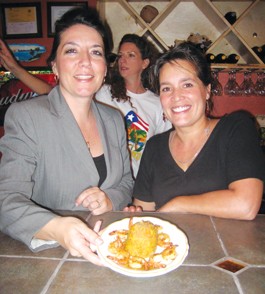
Sonoma County is not known for its large Puerto Rican community. But to the relative surprise of El Coqui’s co-owners Christina Jackson and Jacqueline Roman, a Puerto Rican community has been thriving, albeit quietly, in the North Bay.

“Before we started this, I would have said that there weren’t that many Puerto Ricans here,” Jackson says. “But as a result of doing this, Puerto Ricans are coming out of the woodwork for us.”

Leaning over the restaurant’s bar one Monday night—a “slow night” that had every table full by 8pm—Jackson and Roman surveyed their new venture and the crowd of enthusiastic clientele. Around the room, customers worked away at large plates of garlicky fried plantains, tangy avocado salads and savory portions of meat. The mood was as lively as the salsa music that hummed softly from the stereo and the orange and green walls dotted with images of Celia Cruz, Ricky Martin, tropical beaches and a large Puerto Rican flag.

El Coqui serves up classic island dishes like simple plates of white rice with fried eggs, stewed black beans and Spanish olives; thin-cut pork chips and plantain in all its authentic island varieties: mofongo, refried green plantain mashed with garlic; tostones, fried green plantain patties; maduros, sweet ripe fried plantain; and canoas, whole sweet plantains fried, split down the middle and stuffed with seasoned beef and cheese. Puerto Rican food uniquely mixes the flavors of all the various cultures that have influenced the island: Taino and Arawak Amerindians, Spanish, African and North American.

Though not Puerto Rican herself, Jackson (who jokes that she’s “Irishrican”) points to a man seated at the head of a table of eight and remembers when she and Roman were first moving in and needed to rent a truck. When they told the man working the rental desk about the opening of El Coqui, he looked at them incredulously and responded, “Really? I’m Puerto Rican, too!”

The truck rental employee was not alone in excited identification with the new restaurant. When a local food blog reported their opening, Jackson and Roman received over 80 supportive posts on their MySpace page. Drivers honked by their Mendocino Avenue location while it was still under renovation, shouting, “Hurry up and open!” When they handed out fliers at the Santa Rosa farmers market, they had dozens of people come up to them enthralled at the prospects of a Puerto Rican restaurant in Santa Rosa, because finally they could have the kind of food they used to eat at their family homes in San Juan or Brooklyn.

For first-time restaurant owners Jackson and Roman, this was like music as sweet as the coqui’s call itself.

“I want this place to be like going to your grandmother’s house. It’s not just a business,” Roman says. “I want customers to feel like whatever they need, they can have.”

At the very least, El Coqui’s food will taste like it’s from grandma’s house, because almost all the recipes come from Roman’s own grandmother. Roman, a Queens native (and still a Yankees fan; a team decal sticks to the restaurant’s back wall) grew up immersed in her family’s cultural traditions, spending summers with her grandmother in Puerto Rico. With her 16 brothers and sisters, she soaked up all the practical knowledge her grandmother had to offer—everything from how to use a machete for picking coffee beans to old-school tricks for achieving the perfect ratio of water to rice.

“I don’t measure my food; I do everything by eye,” Roman says. “It just comes naturally to me.”

Roman moved from New York to work at San Diego’s Camp Pendleton Marine Corps base. She ordered food for seven mess halls, feeding around 8,000 troops a day. After Pendleton, she sold produce, owned a furniture store, worked as a linen wholesaler and found her way to Rohnert Park. Selling linens and produce, Roman was often in contact with Sonoma County restaurants. From closely watching how restaurants operated, she began to wonder about committing herself fully to something she had done naturally since the age of nine.

“I always said, ‘Why is there not a Puerto Rican restaurant in Sonoma County?'” she remembers. “So something crawled up my back and said ‘Why don’t you do it?’ I started talking to my mom about it and she kept saying, ‘Do it. Do it. Do it.'”

Roman also talked to her longtime friend Jackson about the financial implications of opening up a restaurant. Jackson, a manager at Bank of America in Santa Rosa, knew all too well the harsh realities of the restaurant business.

“People will laugh at you if you walk into a bank saying you want to open a restaurant. You can’t get a loan. There’s a 98 percent failure rate,” Jackson says. “In some aspects, it’s really scary to do something in these times, but from another perspective, it provides an opportunity. We believed in the vision, and Jackie’s cooking is fabulous and she’s just a natural-born entertainer.”

With commercial lease values dropping and failing restaurants selling off equipment for low prices, Roman and Jackson were able to afford all the initial startup costs without seeking additional investors. Suddenly, their vision seemed feasible.

However, it was not without challenges, least of which was the death of Roman’s mother to cancer just prior to El Coqui’s opening.

“She was supposed to be here with us, so it’s been hard,” she says.

Roman proudly explains that her mother, Carmen Rosa Medina, used to sing with the young Tito Puente at El Teatro Puertorriqueño and points to two smiling framed portraits of her on either side of the restaurant.

There were also the infinite logistical challenges and unexpected costs that come with opening any new restaurant. Roman and Jackson had no hint of the restaurant’s overwhelming popularity. They had planned to do several soft openings with just family and friends, but Jackson says, “as soon as people saw the lights on, they were lining up outside.” Unprepared for this onslaught, Roman and Jackson scrambled to get more staff and rework their own hours. It has been an exhausting endeavor, and Jackson still works full-time at the bank.

Furthermore, in trying to stay as authentically Puerto Rican as possible, El Coqui requires many difficult-to-find ingredients and spices. With the larger-than-anticipated customer flow in their opening weeks, Roman and Jackson faced some daunting situations. However, what they also could not have predicted was the incredible support of the local Puerto Rican community.

“We’ve had many Puerto Rican people who have stepped up to help us,” Jackson says.

“Because they literally say, ‘I want to see you succeed, how can we help, let us go to Oakland for you, let us go to Hayward for you. We’ll go get the special this or special that.’ Without the support of the people who really stepped up to help us, I don’t know where we’d be.”

Ismael Rivera, a Santa Rosa resident born in Puerto Rico, is one such community member. He makes the hot sauce for El Coqui while his wife makes their desserts. For Rivera, El Coqui has filled up a much longed-for absence: the flavors of his birthplace.

“We’ve been waiting for it for a long time,” he says. “As soon as you walk in, you feel different, better.”

As the Monday-night crowd wanes, Roman and Jackie wave at customers, turn up the music and instruct the waitstaff in the very precise way you should eat your plantain with meat. A group of young women by the bar tell the owners that they plan to make El Coqui a weekly tradition.

When Roman asks them how the food was, they respond, “Como siempre.” As in: like always. Like they always eat plantains mashed with garlic, like they always enjoy meat cooked in a rich medley of spices, like just how grandma always used to make it in Miami, New York or San Juan.

El Coqui Puerto Rican Cuisine, 400 Mendocino Ave., Santa Rosa. Lunch and dinner daily. 707.542.8868.

Quick dining snapshots by Bohemian staffers.

Winery news and reviews.

Food-related comings and goings, openings and closings, and other essays for those who love the kitchen and what it produces.

Recipes for food that you can actually make.
Best Of—in July?

0

Bohemian staff and contributors know that their lives are nothing but fodder for our annual Best of the North Bay issue, published each March. In addition to the annual Readers Poll, we always include a rabid section of Best Of material from our writers, who are instructed, reminded, cajoled and admonished each January to gather every small personal remembrance of the last year lived in the North Bay as cheaply-paid copy. As the chief instructor, reminder, cajoler and admonisher, it occasionally falls to me to have some fun, too. To wit: My Summer Weekend By Gretchen Giles—Best Of Material in the Making.

Photos by William O’Keeffe

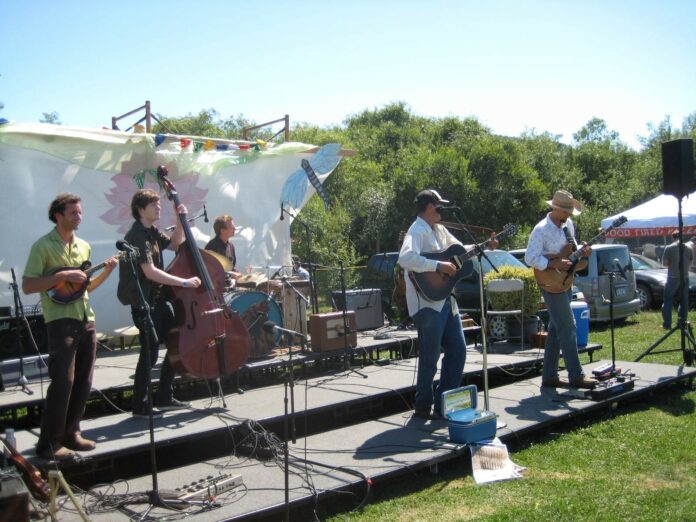
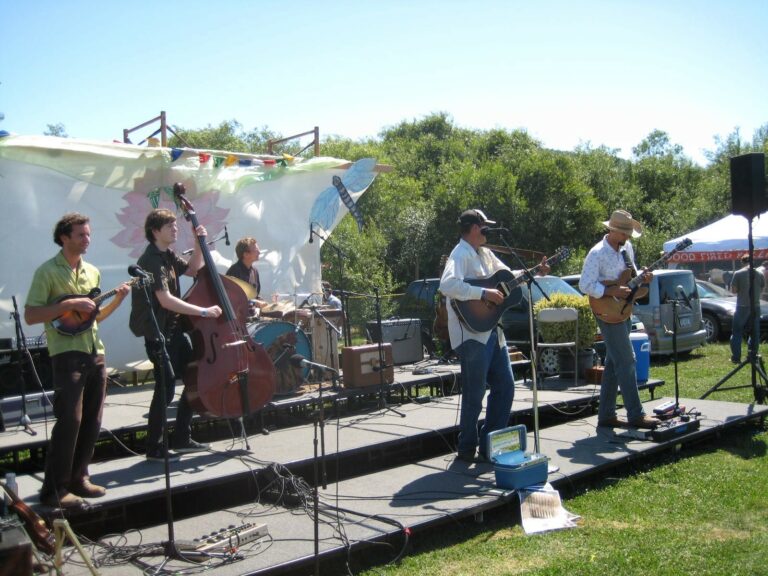
Best Free MojitosArann Harris and the Greenstring Farm Band play “pesticide-free” farm funk about such homely subjects as milk (audience members are encouraged to use their thumbs as udders), doctors (“My doctor is Dr. Bronner! My doctor is Dr. Scholls!”), pigeons (“I’m your pigeon! A dirty old nasty bird!”) and the mournful demise of marijuana gardening (“My baby don’t want me growing that weed”) with a low rumble and plenty of fun. At the recent Far West Festival put on by West Marin radio station KWMR 90.5-FM, the band had another strike in their favor: free mojitos. Pointing to the kind of large blue canteen normally seen strapped to the flatbed of working trucks for those laboring  in the sun, Harris said, “Now, I don’t want to undercut the profits of the fine folks of the Far West Fest, but if you all are feeling a bit thirsty, I invite you to sample some of our homemade mojitos.” Dude. The line to the blue canteen was instantaneous and the mojitos—cool and minty from the organic Green String Farm’s own herbs—delicious. While Toast Machine’s Gio Benedetti held up the upright bass and Hot Buttered Rum mandolinist Zac Matthews smiled away, Harris stomped and growled and introduced a fully below-the-waist tingle to a bright sunny Sunday in a country field that more usually plays host to children’s baseball games. The newstyle hippies and their small children danced, milked each other’s “udders,” hailed Dr. Seuss, yearned for pigeons, passed garden marijuana over the toddler’s heads, and howled in the sun. And for a little while, the mojitos flowed.

Best Reason For Sweaty Thighs

The C. Donatiello Winery does this thing on Sundays throughout the summer that I’m loathe to write about again because the first time I did it resulted in a terrifying radio ad in which my name is used as an imprimatur of cool, which is staggeringly awful to hear when one knows the truth about me, as I so assuredly do. That said, the Live from the Middle Reach music series at Donatiello has its own imprimatur of cool. Held Sundays through October from 1pm to 4pm, there is no charge for this afternoon of live music; patrons are nicely asked to purchase at least a glass of wine, but there’s no fuss made if not; and singer/songwriters of all stripes just casually play on a slightly elevated stage next to the winery’s guest cottage. On July 26, progressive folk artist Summer Mencher sweetly held down the boards accompanied just by her keyboard and a bassist, while writers gathered  for the recent Wine Bloggers Conference traded notes, heated up their smart phones and complained about the lack of pay for free work at tables nearby. Mark Aug. 30 down as a special afternoon at C. Doniatello as guests not yet ready to have their very names shouted into the air will converge and be warned: This is Healdsburg in the summer. It is hot even outside of the sun, but the single-block Chardonnay grown just down from the stage works its magic in cooling down hot heads, if not hot thighs.

Best Place to Eat Carrots Dredged in Honey

The biodynamic Quivira Vineyards has launched a new Farm to Table dinner series that matches serious diners with serious growers, serious wines with seriously good local food. The evening begins with a brief farm tour of Quivira’s market gardens, many of which are marked with the Healdsburg restaurants that buy their bounty (Dry Creek Kitchen, Bovolo, et al) and stories of the wild pigs that are currently terrorizing the garden, the 25 chickens that are better housed than many children and the life cycles of the bees and salmon that frequent the property. After the education, the eating begins, the July 25 dinner taking place outside in a back field near a nicely gnarled fig tree. Diners were seated family-style at a long table and served chef-farmer Doug Nicosia‘s take on fresh pickled green beans, garlic sautéed New Zealand spinach, smashed potatoes, cucumber and feta salad and long gorgeous slices of steak carved from a steer that the winery raised and slaughtered itself. Strangers have to meet when competing nicely for that last scoop of potato and the Farm to Table concept is a wonderfully old-fashioned way to eat and socialize. The next one is slated for Oct. 10 and will feature fresh meat from a lovely round pig currently snuffling around its orchard pen reveling in fallen pears and fermenting apples whom the staff have fondly named “Entree.”

Shake Your Groove Thang

0

07.29.09


Performing with a local dance company can be like volunteering at the food shelter, performing in a third-grade recital and busking on some big city street, all at the same time. The pay is nonexistent, the only people in the audience seem to be Mom and Dad, and venues are hard to come by. At the end of the day, there better be a good, strong passion behind the dance. New dance company K Plus and the Electrolytes have the passion part down.

“My whole intention with it from the very beginning has been to have it be a nonprofit organization,” group founder Kaci Tipton says as she settles into a wrought-iron chair outside Andy’s Market in Sebastopol. She has a small build but radiates a punch of energy; half of her face is hidden behind pink sunglasses and the other half is taken up by a huge smile. She rifles through her fuzzy, stuffed-animal purse and triumphantly comes up with a K Plus and the Electrolytes button. “The company is kind of a product to generate awareness and money to bring food and medicine to people around the world and in our community,” she continues.

The group has been making the performance rounds this summer with appearances at the Harmony Festival and activism benefits all over the county.

“Audiences are giving us great feedback,” Tipton says. “We have so much fun, and we just bring this buzz of energy wherever we go.”

The Electrolytes evoke a feeling not unlike one might have felt while watching the San Francisco Mime Troupe during the 1960s: artistic talent wrapped up in a circuslike package with an activist flair.

“We definitely fit in our own kind of box in the dance community,” she says. “We’re more like a circus. We’re not just dancing for the sake of dancing. We want to travel around the world and perform at orphanages and just spread joy.”

The dance scene in the North Bay, much like other small-town artistic centers, is constantly subject to abandonment; many talented dancers often pack up and move to L.A. or San Francisco where companies are more successful and there are monthly checks. Tipton agrees that by staying in the area, the Electrolytes are trying to do their part for the arts.

“We’re kind of taking it slow for now. We can’t really blow up huge quite yet,” she adds, mentioning her busy schedule as a reason for the restraint. Tipton is a 33-year-old nursing student at the Santa Rosa Junior College with her own healing practice, Full Spectrum Healing Arts. Though she is immersed in Western medicine, she says her interests lie more toward the Eastern practice of Ayurveda.

Not unsurprisingly, this fusion of West meets East can also be found in her dance; she has spent time with a Bollywood dance troupe and several contemporary companies over the years. After a semester without dance, she decided to take matters into her own hands rather than seek out a company that would fit her schedule. She passed around flyers, and the first rehearsal for K Plus and the Electrolytes was held in September of 2008.

When asked to define the company’s style, Tipton grins and says that she has been considering how to explain it for a while.

“That is the question,” she says. “It’s so hard to do. We need to come up with a new word for it. We have elements of every dance I’ve ever done in my life.” Since Tipton has danced for about 25 years, this includes a host of influences: Bollywood to jazz, contemporary modern to hip-hop.

“I like to describe it as risqué hilarity. That doesn’t scream dance troupe, but it’s a good way to describe what we do,” she says. “We’re very burlesque, and we do onstage costume changes and that kind of thing. You name it, we’ve probably got in there somewhere.”

Company member Bryce Williams has danced alongside Tipton on and off since their involvement with local dance troupe Grassroots Movement in 2005. Although the group has since dispersed, Williams joined forces with Tipton with the creation of the Electrolytes.

“Dancing in the troop has been a total blast,” Williams says. “Kaci choreographs from the heart and soul of a funky jazzy rainbow with tap shoes and Adidas track shorts. The troupe is nothing short of a wild collection of personalities.”

Funky jazzy rainbow, indeed. The current cast of members stands at about 11, but fluctuates, explains Tipton, and throughout the changing numbers she says a group of six dancers have formed the core of the group, including three men who play horns when they’re not playing horndogs. “We have all been great friends and artists together for a long time,” Williams says. “It shows in the pieces we have created.”

One feature that makes the Electrolytes so intriguing is the difference in skill and technical level among company members. Traditionally, a dance company strives for uniform talent, making the pieces more consistent, but Tipton says the lack of conformity is part of what makes the troupe unique.

Area dancer Allison Frenzel says, “My experience with the Electrolytes has been quite different than my experience working in other performance-based dance companies. The dancers learn at their own pace, and there is no competitive energy or judgment. That’s a refreshing mentality in the dance world.”

After the initial round of performances last fall and this spring, audience members contacted Tipton vying for an opportunity to perform with the group.

“It started off as being very inclusive,” Tipton admits, “but now that we’re getting better, I’m not really letting people in who don’t have any dance experience, because we’re evolving so quickly.”

She says the members are getting stronger with each rehearsal and becoming a more cohesive unit. But where, deep in the mind of the choreographer with the heart and soul of a funky jazzy rainbow, did the group’s unique moniker come from?

“Electrolytes are keys to life. We would die without them,” Tipton says. “K plus is an electrolyte—it’s potassium in its normal state, and it’s one of the most important electrolytes we need. So it’s not like I’m different from the electrolytes; I am an electrolyte.”

She adds with a giggle, “The dancers are coming up with their own electrolyte names now, it’s cute. Chloe-ride, Phospho-RayRay, Foxy Dioxy—rehearsals are a blast. We laugh a lot, and we dance our asses off.”


Museums and gallery notes.

Reviews of new book releases.

Reviews and previews of new plays, operas and symphony performances.

Reviews and previews of new dance performances and events.

Yap Stars

0

07.29.09

We’ve heard it all before: “Is that a dog or a rat?” “Hey, a punt dog!” Or the highly original, “Why don’t you get a real dog?”

As far as membership in that sector of society still safe to belittle, we who own smaller canine breeds rate right up there with rednecks and the obese. Stereotypes abound, both for us and our pint-sized pals. We’re airhead heiresses with a Shih Tzu parked in our Gucci bag or post-menopausal women who’ve restocked their empty nests with furry surrogates.

And oh, how they mock those poor dogs not quite tall enough to drink out of the toilet bowl. If a movie needs a punchline, a throwaway visual joke, bring in the Chihuahua. Or a bow-bedecked papillon. Bantamweights really do need their own Al Sharpton to do a little barking on their behalf. Perhaps it’s time to dispel a few of those tired old myths about us and our “kids,” as so many of you are convinced we call them.

Myth #1: Little dogs don’t count as dogs.

Oh yeah? Tell it to the American Kennel Club, which yearly ranks the most popular breeds. Almost half of the 10 top breeds to cycle up and down AKC’s list for the past several years would barely clear your average Labrador’s chubby thighs. We’re talking Yorkies, dachshunds, poodles, Shih Tzus, miniature schnauzers, Pomeranians and Chihuahuas. As long as a burgeoning population of humans continue to cram themselves into ever-smaller living conditions, the little ones will eventually loom over the bigger lunks.

Myth #2: Tiny dogs bark more than big dogs.

Not really; it’s just more grating. Those tiny vocal chords make for a higher pitched yap. They’re trying to communicate the same thing as German shepherds or rottweilers. They’re anxious, they’re lonely or they’d really appreciate it if you weren’t all up in their grill. One sounds like a very large man asking if you want a piece of him; the other comes across like a kindergarten bully.

Myth #3: They snap and bite more often than the larger dogs.

Big dogs that bite will hurt people. They quickly change their behavior or end up on death row at the local shelter. Tiny jaws, however, rarely do much more than nip and annoy. Some of their less responsible guardians write it off as a small downside of a small dog.

It’s true that your typical Chihuahua will not joyfully run up to slobber all over you like its bigger relatives. You, too, would be a little nervous if everyone you met were as tall as a six-story building. Additionally, most canines were originally bred to do some type of chore: bring down lions, retrieve birds, round up sheep. A Chihuahua was bred specifically for one job: companionship. That would be companion—singular, not plural.

Myth #4: The smaller they are, the harder they are to housebreak.

Yes, but it has nothing to do with bladder or brain size. Like their stealth-pooping, they just get away with it easier. Discovering where a Great Dane dropped its load is a lot easier than spotting droppings smaller than your pinkie. Trainers and dog behaviorists agree that the best way to housebreak a puppy is to catch it in the act and quickly carry it outdoors while pouring on the praise. A youthful St. Bernard tends to make itself known as it prepares to squat, while a toy breed in its puppyhood can easily disappear behind a moderate-size potted plant. Also, it’s easier to forgive a creature that leaves Jimmy Dean breakfast links versus a steaming mini-Everest.

Myth #5: Only women and gay men leash themselves to dogs with balls the size of kibble.

As a middle-aged broad who tools around town with a car load of tiny yappy dogs, I’ll be the first to admit that I fit quite snugly into this general preconception. So I would like to bestow the Golden Milk-Bone Award to Mickey Rourke, who attended this year’s Academy Awards with a picture of his recently deceased Chihuahua, Loki, worn as a pendant around his neck. Showing further class, Rourke thanked all his Chihuahuas, past and present, when he won the Golden Globes for his turn in The Wrestler. He spoke for the legions of big, hunky men who don’t think twice about a toy breed or two wrapped in their musclebound biceps.

It takes a real man to love a lapdog. A confident man, a fella comfortable with his sexuality. When hip-hop culture starts to venerate Pomeranians instead of pitbulls in videos, on T-shirts and in lyrics, we may grudgingly trust there actually is something inside of those baggy crotches they so love to grab.

Myth #6: We like our little dogs better than humans.

Oh, right. That one’s true.

Myth #7: We think they’re children.

Finally, it’s time to address this misguided assumption that our tiny charges take the place of children we wished we had. There are plenty who prefer a small creature that takes up to four years to housebreak. Many more have committed themselves to young companions who scream “I want,” fling food or collapse in a sobbing heap each time they are taken for a walk in public. When our Pekingese reaches the human equivalent of 14 years old, we do not worry about drug abuse, gang affiliations, morbid adolescent poetry or wonder what they do on the internet hour after hour. Our “kids” set us back about $80&–$100 for a six-week school session, not 15 grand a semester. We do not fear they’ll lose their job and move back in with us. They never left.

We don’t begrudge you and your muscle dogs (unless you’re Michael Vick, of course). We’d just like a little respect. Think of us as dedicated environmentalists, just trying to leave an ever smaller paw print on the planet.


News Blast

0

07.29.09

Cassandra Landry

Free kids clothes

The unyielding cash flow from Mom’s wallet at back-to-school time is one of the best parts of being a kid—the new backpack is absolutely necessary, as are the stiff new pairs of jeans and squeaky sneakers. In this setting, the words “hand-me-down” and “used” usually release a barrage of mortified whining, but this season there’s a cooler way to save money. The Back-to-School Clothes Swap on Aug. 8 allows parents to find back-to-school chic on the cheap—make that free—for kids from ages five to 13.

The swap is hosted by organizing consultant and speaker Grace Brooke, “The Efficiency Specialist,” who says parents feel the cash crunch most during the beginning of school season.

“I have a daughter going into kindergarten,” Brooke says. “I realized that it’s got to be tough on a lot of parents facing all that school shopping in these challenging financial times.”

The idea of a kids clothes swap snowballed from a desire to give back to the community and old memories of thrifty ways. “I did a clothes swap with some of my friends 10 years ago,” Brooke says, “but I really like the idea of being able to help out the community using my skills as an organizer.”

Brooke emphasizes that swappable items include shirts, pants, shorts, skirts, dresses, coats, shoes and belts—and they must be in good condition. Clothes can be dropped off at 9am the day of, and the bartering (on a first-come, first-served basis) will begin at 9:45am. Participants may bring no more than 10 things to trade and will receive one ticket per item to be used in exchanging clothes.

There will be prize giveaways, refreshments —the works—and as an added bonus, Brooke will be giving away a free two-hour consultation on organizing a bedroom closet.

“When it’s your own children, it’s a lot harder for to get them to listen to you,” she says. “When it’s someone from the outside coming in, it’s a bit easier.”

All leftover items that aren’t swapped will be donated to Sutter VNA and Hospice thrift store.

“It’s a great way to teach kids about reusing and recycling, and living green in general,” she says. “My hope is that they get involved and it’s not just the parents picking out the clothes for them.”

Revamp the wardrobe on Saturday, Aug. 8 at the New Vintage Church, 3300 Sonoma Ave., Santa Rosa. 9am&–1pm. Free. For more information, contact Grace Brooke at 707.321.4232.


In the Smoking Tent

07.29.09

California’s “cuts only” budget deal is a horror.

Doors will slam shut next year on 35,000 applicants to the California State University system. UC Regents previously cut 2009 freshman enrollments by 10 percent. Both university systems have approved 20 percent tuition and fee hikes since the start of 2009 that will squeeze more students out of higher education.

Another $4 billion in new cuts to kindergarten through community-college education mean overcrowded classrooms, fewer teachers and tens of thousands of youths denied college entrance and job-training programs.

Deep new cuts to health services will stop hundreds of thousands of poor children from obtaining health insurance. Many thousands of low-income, frail, elderly and disabled persons will suffer reductions to in-home support programs. Local government services will reel from billions the state “borrows” from local property and transportation tax revenues.

Don’t believe headlines that proclaim this a budget that everyone hates. Big oil and other profitable corporations made out like bandits.

The budget deal leaves intact $2.5 billion in new tax breaks for the biggest corporations that were silently slipped into budget packages approved in 2008 and 2009. These tax cuts do nothing to encourage any worthwhile goals such as job creation. They are handouts, plain and simple, that politicians granted to business giants at the same time they were raising taxes on working Californians.

The budget deal doesn’t tax oil extracted in California. We’re the third biggest oil-producing state and the only one that fails to tax oil drilling. ExxonMobil, Shell, Chevron and Occidental Petroleum are California’s dominant oil producers. They reported record combined profits of $95 billion in 2008, but they don’t pay a penny to the state for the privilege of pumping oil from the ground.

Instead, the budget deal gives big oil another win. Forty years after a massive oil spill off the Santa Barbara coast launched the modern environmental movement, the budget reopens that area to new offshore oil leases.

The two-thirds budget and tax adoption rules made a “cuts only” budget inevitable. But acknowledging this sad truth does not answer the question of what went wrong.

Republican lawmakers in Sacramento haven’t wavered in their devotion to cutting government services and deregulating business, even after voters delivered Republicans a devastating repudiation last November. The two-thirds rule gave the dwindling Republican minority a short-term tactical advantage in crisis budget talks, which they exploited. The minute Democratic leaders sequestered themselves into Gov. Schwarzenegger’s “smoking tent” to negotiate the closed-door deal, the majority party and its progressive allies lost.

Democrats will now produce the lion’s share of votes for a punitive budget. Republicans will likely offer up the handful of votes needed to enact the budget. Democrats will own this budget and Republicans will be free to disavow it.

We are now a full year into crisis budget deals and do-overs. As the state’s economy continues to worsen, budget assumptions will unravel yet again. Don’t be surprised to see a new round of midyear cuts before 2010. Let’s resolve now that crafting the best smoking-tent deal cannot substitute for a strategy in the next round of budget cuts.

It will take a unified campaign by labor and progressive community-based constituencies, mobilizing around values that resonate with voters, to put us back on offense. The November 2008 realignment of American politics makes this a fight we can win. It is time to prepare for the long war to win budget and tax fairness that we can no longer avoid.

Richard Holober is the executive director of the Consumer Federation of California, a nonprofit advocacy organization. Each year, CFC testifies before the California legislature on dozens of bills that affect millions of our state’s consumers. The Consumer Federation of California also appears before state agencies in support of consumer regulations.

Open Mic is a weekly feature in the Bohemian. We welcome your contribution. To have your topical essay of 700 words considered for publication, write op*****@******an.com.


Don’t Bank on It

07.29.09

I used to wonder what really good surfers thought about—I mean, besides sharks. Now, after watching and watching again his brilliant YouTube video, I have a good idea about what at least one wave rider is thinking: let’s alter global finance together.

With sun-bleached hair and faded T-shirt, this tanned teenager says to the camera, “My name is Kyle Thiermann, and I’m a surfer from Santa Cruz. And recently I went on one of the best trips of my life, to Constitución, Chile.” Bam. Scene change to South America, downbeat to Chilean music and we dive under the surface of his purpose-driven vacation to see the stunning landscape and hear the charged voices of Chilean men and women who don’t want a coal power plant built on their coastline any more than we would want one at China Camp or Goat Rock. Who is funding it? In part, Bank of America customers including those in Marin, Sonoma and Napa counties.

Bank of America and Citigroup have long been funders of coal power; one bank-funded developer has even been implicated in the alleged murder of Colombian coal miners attempting to unionize. It’s disturbing to learn what your paycheck or your savings can do without your permission.

A freshman majoring in green business, Thiermann explains in his video how B of A, using the combined funds from customer-supplied deposits, loans money to coal corporations that develop plants around the world. Rainforest Action Network reports that the 150 new coal-fired power plants in development in the United States alone will “emit an estimated 600 million tons of greenhouse gases every year” and “negate, in just 10 days of operation, Home Depot’s efforts to curb climate change by funding the planting of 300,000 trees across the country; negate, in just one month, Wal-Mart’s investment of a half billion dollars to reduce the energy consumption and GHG emissions of their buildings by 20 percent over the next seven years; and negate, in just eight months, California’s recently passed legislation that would cut GHG emissions in new cars by 25 percent and SUVS by 18 percent starting in 2009.” The Rainforest Action Network has targeted the world’s largest banks in an attempt to stop the funding of more coal power plants and to start funding alternative energy projects instead.

In a phone interview, Thiermann explains that his video was a student project through Gaia University. “I’ve never been interested in banking before, but I got the idea when I learned that the only thing that might stop the [Los Robles] coal plant from going forward was if they couldn’t get funding from a bank,” Thiermann says. “So since it’s our dollars doing that, it’s very easy for everyone to stop funding the problem and start funding healthy projects. All we have to do is put our money into local banks that fund local projects.”

To accomplish his goal of educating the public about banking practices, Thiermann wrote a successful grant to the Carter Foundation, allowing him to take his surfboard along with photographer Ryan Craig to Chile for interviews and some spectacular surfing on some of the best waves in the world. These same waves will be fouled along with the fishing industry if the Los Robles coal-plant is built. Presently, due to protests and activism, coal plant developer AES Gener has placed the Los Robles plant temporarily on hold because, yes, there appears to be a problem with funding. (In 2008, AES’ utilities revenues in South America were over $6 billion.)

Since his video was posted on July 7, Thiermann calculates the money moved from big banks to local ones amounts to about $350,000, and is growing. That number will jump into the millions, Thiermann says, when a Los Angeles&–based clothing company, Livity Outernational, moves its account from Bank of America to the San Francisco&–based New Resources Bank. The owner of the company called Thiermann after seeing the video. “Everyone has a bank account,” Thiermann says. “It’s one of the easiest and most powerful tools we have to affect change in our community as well as worldwide.”

To watch Thiermann in action, go to http://claimyourchange.wordpress.com.


Tin Barn Vineyards

0

Yes. Like the similarly candid Ernie’s Tin Bar (Swirl ‘n’ Spit, Dec. 6, 2006), Tin Barn is situated in a metal shed. This shed is some several magnitudes larger, the winery’s sign plate hidden away in the midst of still more sheds, as remote and nowheresville as it gets in Sonoma. North of the Sonoma Skypark, east of the water treatment plant, it’s picturesque, for sure—I’m thinking motion picture: the deserted industrial park, the sunbaked asphalt canyons and long, looming warehouses that go on for a half a day could easily backdrop a rendezvous scene involving fast cars and contraband freight. I only lacked for teardrop sunglasses.

The thing about warehouse wineries is that they’re really all about the wine, that’s no line. Inside Tin Barn, the theme is continued with a nicely styled, bright tasting area accented with corrugated metal roofing. In the cellar, I found the manager, cradling a small dog, leading an informative tour, but mindful that there was naught but tanks and barrels to see in the tidy warehouse, I ducked into the tasting room to beat the crowd. Wine club members were already bellying up to the bar, and soon the tour group spilled in. The surprisingly busy little place filled with an ensemble cast, including detached young urbanites and friendly older win- club types, but the plucky staff managed to keep my glass in the rotation.

The crisp and pleasant 2006 Sauvignon Blanc ($18) had a narrow pine resin aroma with a shade of tropical and Jolly Rancher with just a sliver of oak—boding well for the just-released 2008. The 2007 Pinot Noir ($34) was seasoned with coriander and allspice, and fresh raspberry with dried herbs, jelly and plum skin on a silky road to a dry finish. Odd hints of horse tail and violets introduced the 2004 Sonoma Coast Syrah Coryelle Fields Vineyard ($28), followed by jelly Danish, dark toasted oak and gym locker; in short, a fine Syrah with varietal interest. The clean, conserve aroma and high notes of red fruit and grape jelly make the 2004 Napa Valley Cabernet Blend ($34) a simply enjoyable claret style quaff.

Alert: Eighth Street wineries hosts its annual open house on Saturday, Aug. 8. Tin Barn and neighboring warehouse dwellers Parmelee-Hill, Enkidu, Anaba, Three Sticks, MacRostie, Ty Caton and Talisman will roll up their doors for library tastings, new releases and barrel tastings. While some of these boutique operations have off-site tasting, others are not otherwise open to the public. Admission includes logo wine glass; BYO tear drop sunglasses. Tickets ($20) available at MacRostie Winery, 21481 Eighth St. E., Sonoma. 707.996.4480.

Tin Barn Vineyards, 21692 Eighth St. E., Ste. 340, Sonoma. Open Saturday–Sunday, 11am to 4pm. Tasting fee $6. 707.938.5430.


View All

Enter Sandman

0

07.29.09

The Marin History Museum offers visitors a tremendous glimpse into the county’s venerable past with an expansive collection of artifacts and ephemera, with everything from sepia-toned vintage postcards advertising the rail line of Muir Woods’ glory days to galvanized tin milk buckets from the bygone dairy farms of San Anselmo, and exhibits on such notable natives as arctic explorer Louise Boyd, New Deal photographer Dorothea Lange, notorious lumber baron Robert Dollar and many more. Soon to be added to this august list of Mariners: James, Kirk, Robert and Lars. Or, more simply, Metallica.

That’s right. Metallica.

The thrash-metal, multiplatinum, group-therapy-seeking, Napster-busting, leather-pants-wearing soon-to-be Rock and Roll Hall of Famers and lords of rock will be performing in September as part of a fundraiser for the Marin History Museum’s upcoming exhibit “Marin Rocks.” The exhibit will celebrate the county’s rich tradition of hosting such music icons as the Grateful Dead, Janis Joplin, Big Brother, Jefferson Airplane and, yes, those bad-boy shredders themselves.

Why are these heavy-metal, some-kind-of-monster men playing a benefit show for a county history museum? Well, besides being hard-as-nails-aggressive-thrash mavens, they’re also dads. According to museum chief curator Dawn Laurant, band members and Marin residents Lars Ulrich and James Hetfield are actively engaged local citizens.

“They are very rooted in the community and into raising children here,” she says. “They liked the idea of combining history with workshops and classes to connect generations and keep the Marin community alive.”

In developing this exhibit, the museum developed ties with many musicians, but Metallica was the first to clear a spot on their world tour for the benefit concert. The band has its own rich history in Marin. They recorded their 1997 Reload at the Plant Studio in Sausalito and have their own “HQ” recording studio in San Rafael.

Since the announcement of the upcoming show went up on Metallica’s website, the museum has popped onto the radar of thousands of metal-heads worldwide, even receiving enthusiastic phone calls from Germany.

“We just want to say how thrilled we are that Metallica is giving us this benefit. We couldn’t do this without the support of local musicians,” Laurant says. A bit of head-banger herself, she rather uncontrollably adds, “Yay! I can’t wait for the concert!”

Hold onto your sepia-toned vintage postcards, it’s going to be wild when tickets go on sale Aug. 1; they are going to go faster than Lars can decimate his 15-piece kit. The masters of metal will turn the amps up to 11 on Sept. 11 at the Marin Center’s Veterans Memorial Auditorium. 10 Avenue of the Flags, San Rafael. Ticket prices start at $100. 415.499.6800.


Pat’s Place

0

07.29.09

If you wandered into Pat’s Bar in Guerneville the other week, looking to get a bit of fine dining from the adjacent Chef Patrick’s, you were out of luck. The chef packed up and left.

Yet you needn’t go far to find him. Just trot across Main Street and down the block a bit: Chef Patrick’s is now serving its California-French cuisine in the old Charizma restaurant space, which had closed its doors this past September. Pat’s Restaurant, next to Pat’s Bar, has long been a favorite of diners savvy enough to know that, despite the unlikely setting of a dark room connected to an even darker pub, there was some good food to be had here.

Yes, it was a little complicated. The Pat in “Pat’s Bar” was actually owner Richard Hines, who served casual breakfast and lunch. “Chef Patrick” is Patrick Wong, who was leasing space from Hines to offer more upscale dinner service, and he was only open several nights a week, with often random hours.

At the new Chef Patrick’s, Wong continues with his familiar classic recipes, but in a brighter, quieter, more sophisticated setting. White tablecloths are a nice touch, though the prices remain reasonable (the menu changes frequently, yet a recent visit found the highest price dish to be filet mignon in Sonoma Merlot sauce with mashed potatoes and vegetables for $25.95). Most everything else stays comfortably below $13.95 and $21.95 for entrées.

While Wong is Vietnamese, his background as a San Francisco caterer and hotel chef trained him in French and Italian cooking. And so he sends out delicious but approachable dishes like porc champignon, poulet de onion confit, prawn risotto and herb-crusted lamb chops in mint Bordelaise sauce. Seared ahi is expertly rare, teamed with artichoke hearts and sun-dried tomatoes, and drunken prawns are particularly good, sautéed and finished with cognac.

Things get much more relaxed at lunch, when it’s a choice of a salad or sandwich, such as field greens in Champagne vinaigrette, roast beef with garlic remoulade on French bread, or prosciutto and dry salame with brie on French bread. If you’ve been craving a pastrami sandwich, this one’s a winner, layered with basil remoulade and tomato on rye (though be sure to request Swiss instead of the American cheese it comes with).The hours still seem to be being worked out—a week ago Chef Patrick’s was open only for weekends, but this week, the hostess promised service for lunch and dinner every day except Wednesday. Your best bet? Call ahead.

Chef Patrick’s. 16337 Main St., Guerneville. 707.869.9161.

Quick dining snapshots by Bohemian staffers.

Winery news and reviews.

Food-related comings and goings, openings and closings, and other essays for those who love the kitchen and what it produces.

Recipes for food that you can actually make.

Frog Song

07.29.09There's a tiny species of tree frog that sings a song familiar to anyone who knows Puerto Rico, anyone who has phoned a relative at night and heard its familiar chirp in the background, evoking memories of and homesickness for that small Caribbean island: coqui, coqui, coqui.Named after the frog and its call, El Coqui is also Santa Rosa's...

Best Of—in July?

Bohemian staff and contributors know that their lives are nothing but fodder for our annual Best of the North Bay issue, published each March. In addition to the annual Readers Poll, we always include a rabid section of Best Of material from our writers, who are instructed, reminded, cajoled and admonished each January to gather every small personal remembrance...

Shake Your Groove Thang

07.29.09Performing with a local dance company can be like volunteering at the food shelter, performing in a third-grade recital and busking on some big city street, all at the same time. The pay is nonexistent, the only people in the audience seem to be Mom and Dad, and venues are hard to come by. At the end of the...

Yap Stars

07.29.09We've heard it all before: "Is that a dog or a rat?" "Hey, a punt dog!" Or the highly original, "Why don't you get a real dog?" As far as membership in that sector of society still safe to belittle, we who own smaller canine breeds rate right up there with rednecks and the obese. Stereotypes abound, both for...

News Blast

07.29.09 Cassandra LandryFree kids clothesThe unyielding cash flow from Mom's wallet at back-to-school time is one of the best parts of being a kid—the new backpack is absolutely necessary, as are the stiff new pairs of jeans and squeaky sneakers. In this setting, the words "hand-me-down" and "used" usually release a barrage of mortified whining, but this season there's a...

In the Smoking Tent

07.29.09California's "cuts only" budget deal is a horror.Doors will slam shut next year on 35,000 applicants to the California State University system. UC Regents previously cut 2009 freshman enrollments by 10 percent. Both university systems have approved 20 percent tuition and fee hikes since the start of 2009 that will squeeze more students out of higher education.Another $4 billion...

Don’t Bank on It

07.29.09I used to wonder what really good surfers thought about—I mean, besides sharks. Now, after watching and watching again his brilliant YouTube video, I have a good idea about what at least one wave rider is thinking: let's alter global finance together.With sun-bleached hair and faded T-shirt, this tanned teenager says to the camera, "My name is Kyle Thiermann,...

Enter Sandman

07.29.09The Marin History Museum offers visitors a tremendous glimpse into the county's venerable past with an expansive collection of artifacts and ephemera, with everything from sepia-toned vintage postcards advertising the rail line of Muir Woods' glory days to galvanized tin milk buckets from the bygone dairy farms of San Anselmo, and exhibits on such notable natives as arctic explorer...

Pat’s Place

07.29.09If you wandered into Pat's Bar in Guerneville the other week, looking to get a bit of fine dining from the adjacent Chef Patrick's, you were out of luck. The chef packed up and left.Yet you needn't go far to find him. Just trot across Main Street and down the block a bit: Chef Patrick's is now serving its...
11,084FansLike
4,446FollowersFollow
6,928FollowersFollow