Violence Is a Choice

08.05.09

Very little has changed in our culture since Robert Kennedy said in his 1968 speech “The Mindless Menace of Violence” that “we seemingly tolerate a rising level of violence that ignores our common humanity and our claims to civilization alike. We calmly accept newspaper reports of civilian slaughter in far-off lands. We glorify killing on movie and television screens, and call it entertainment. We make it easy for men of all shades of sanity to acquire whatever weapons and ammunition they desire.”

Forty years later it is sad to know that our culture continues to be divisive, encouraging hate and fear. Our government continues to spend billions of dollars on weapons and war with very little investment in existing programs to avert violence at its root cause. It is true that we have an increasing number of universities and colleges, including our government agency United States Institute for Peace, which teaches strategies for peace. However, they are grossly underfunded and not fully recognized by our cultural institutions.

It is obvious to many Americans that we need more balance in government that would end the violence at home and stop the march to endless war. A cabinet level Department of Peace and Nonviolence would facilitate the research, funding and implementation of the best practices to reduce violence. Since Dennis Kucinich introduced HR 808 in 2001, thousands of grassroots volunteers have united to lobby their representatives in Congress and the Senate, to educate civil society, governmental and local leaders to see the wisdom of endorsing this bill. It is not surprising that so many cities have now passed resolutions to endorse HR 808. They include such diverse cities as Atlanta, Detroit, Cleveland, Oakland, San Jose, San Francisco, Minneapolis and most recently Los Angeles, the second largest city in the country.

It is also not surprising that people around the world have been inspired by Dennis Kucinich’s legislation for a Department of Peace within the U.S. government structure. (I believe he has more recognition abroad than in his own country.) People from at least 30 countries are now working for the same in their countries. Through the work of the Peace Alliance Foundation, together with other grassroots campaigns of the Global Alliance for Ministries and Departments of Peace, three annual global summits have been held to provide a venue with workshops for learning, assistance and collaboration. This year’s summit in Japan was attended by about 50 civil-society activists and government officials, from 21 countries and six continents.

Here in Sonoma County, the relationship between the police and the community is increasingly difficult. The challenges are great. Sadly, I believe that we are not using all the skills and tools we have at our disposal to quell disputes before they grow out of control and become violent. We are too ready to buy and use the latest weapons, but seem loathe to prioritize investment in the ongoing training of our “peace officers” in peaceful conflict resolution.

As a society, we choose violence when do not invest in cultural education and nonviolent communication skills in our schools and institutions. We choose violence when we make minorities the scapegoats of crime in a broken system that makes us fear one another. We choose violence when we do not concern ourselves with poverty and illness. We choose violence when we turn a blind eye to the violence of movies, video games, sports, television shows and advertisements.

We choose violence when we invest in companies that make weapons for war and agribusinesses that destroy our environment. We choose violence when we ignore bullying, teasing and insensitive remarks. We choose violence when we only inflict punishment rather than work on restorative justice and when we imprison criminals without offering some form of rehabilitation. This is absurd when we know there are better options to provide human security.

Let’s choose to work for peace, to educate ourselves to be the peace we want to see in the world through education in peace studies. Let’s choose peace by investing in peace with our creative talents and resources, our energy, time and money.

Please join me in this historical and unstoppable movement. It makes sense.

Maggi Koren is a volunteer for the Peace Alliance, a national educational and lobbying organization campaigning for a culture of peace and the passage of HR 808, which calls for a cabinet level Department of Peace.

Open Mic is a weekly feature in the Bohemian. We welcome your contribution. To have your topical essay of 700 words considered for publication, write op*****@******an.com.


News Blast

0

08.05.09

Gangs be gone

Due to the 2004 voter-approved Measure O, the city of Santa Rosa has alotted sizable funds toward raising awareness around gang prevention. The week of Aug. 9 marks Santa Rosa mayor Susan Gorin’s Gang Prevention Task Force “Gang Prevention Awareness Week.”

According to a press statement, Gorin says that “we cannot arrest our way out of gang problems—it takes the entire community to reclaim our youth and our neighborhoods from rising gang violence,” and so has implemented youth activities, parent-family support groups, job-readiness training, job placement for gang-involved youth, outpatient services, gang mediation, intervention services and other services to help gang-involved youth get out of the life.

This coming week will showcase these programs through a series of events. There will be gang-awareness activities all week long at the Santa Rosa Plaza. The Wednesday Night Market will also hold an event to raise awareness and, lastly, Martin Luther King Park will see some awareness activities at its “Summer Day and Night Festival.”

For details, contact Ellen Bailey, Interim Gang Prevention Intervention Services manager at 707.543.4321.

Please make that more

Everyone’s favorite orphan (aside from little Annie) Oliver comes to the Sixth Street Playhouse on Aug. 11, bringing Oliver! with him.

The one-night-only event will benefit the Redwood Empire Foster Parent Association. The REFPA is a nonprofit that assists foster families by providing clothing, hosting social events, providing financial assistance and granting scholarships to foster children. Along with enjoying a spectacular production, a $30 donation includes complimentary wine and hors d’oeuvres.

Cocktail hour begins at 7:15pm; the show, at 8pm. For tickets and more information, contact Rita Jacobs at 707.565.4274, Marie Regan-Szatlocky at 707.565.8581 or Kay Delaney at 707.565.4342.

Roots, roofs and power

Underserved and underrepresented communities of Marin speak out courtesy of Grassroots Leadership Network on Aug. 7. A variety of speakers, including Linda Jackson, the principal planner for the city of San Rafael, will gather at the Marin Heath and Wellness Center to empower the people of Marin to take action. With the goal of improving civic participation through education, coalition-building and policy advocacy to reduce poverty and improve the quality of life in underrepresented communities, the meeting will start at 11am in the Connection Center of Marin’s Health and Wellness Center. For more information, contact Ericka Erickson at 415.451.4350, ext. 303.


Lone Star State of Mind

0

08.05.09

The wizardry of Harry Potter’s continuing saga recently filled all nine theaters in Sebastopol’s Cinema Complex. But his isn’t the only magic being conjured up there. In the theater parking lot, working outside the backdoor of a small building that sits kitty-corner to the movie house, world-renowned chef Larry Vito feeds hardwood logs into an industrial steel smoker, imparting Texas-style barbecue with his secret signature flavors. The pile of apple-, oak- and nut-wood logs shrinks as he feeds the smoker’s wood box, which can accomodate six whole hogs, 120 racks of ribs or 200 chickens inside, slowly cooking to juicy perfection.

Walk around the front of this unassuming building, past the Patisserie Angelica sweet shop, and you’ll discover the welcoming covered veranda that is the new home to Larry Vito’s BBQ Smokehouse Restaurant. Diners order the wide variety of barbecued meats, homemade appetizers and side dishes at the corrugated-metal-clad counter and eat at homey picnic tables covered in red, checkered cloths. Old saddles, bridles and other ranch paraphernalia grace the walls, and barbed wire wraps protectively around the light fixtures. Wagon wheels line the edge of the deck, and small wooden pigs whimsically fly in the trees that shade the restaurant from the street.

Vito’s menu offers succulent Memphis-style pork ribs, tender North Carolina pulled pork, caramel-crusty chicken wings, still-pink smoked salmon, lean yet flavorful house-made andouille chicken sausage and butter-soft brisket. All are prepared Southern-style, rubbed with Vito’s secret blend of spices, and then slowly smoked over hardwoods using indirect heat. This regional method avoids the use of gas cooking, which Vito says taints the meat with its sulfuric components, and the use of soft woods, which he believes add too strong a flavor. Most importantly, sauce is not used during cooking but is offered as a condiment on the side, to be employed sparingly to enhance the flavor of the meat.

Vito notes that in some parts of the country, locals eat their barbecue “naked,” leaving the sauce for tourists. His tables are graced with two homemade varieties of sauce, a tart and traditional North Carolina variety and the restaurant’s original barbecue sauce, developed after 25 years of experimentation. Either way, the patrons at the restaurant, kids and adults alike, happily eat with gusto, washing down the meat’s subtle heat with house-made strawberry lemonade or iced tea with fresh mint.

All meat-struck homilies aside, one does wonder how a classically trained five-star chef who has cooked with a pantheon of culinary celebrities ends up smoking meat in a small-town theater parking lot? Simple: pure love.

Growing up in upstate New York in a tiny town of 500 on Lake George in the Adirondacks, Vito helped his grandmother with the cooking at her resort, and by age 18 was running the kitchen. College found him majoring in English but morphing into culinary arts, where he studied his passion at New York City’s Culinary Institute of America.

As he gained experience, his star rose, and Vito eventually trained with such gastronomic giants as James Beard and M. F. K. Fisher. Many meals and miles later found him on a road trip through the Deep South, “touring and working as a guest chef,” he remembers, cooking with local luminaries and sampling the regional fare. “I spent one week with Emeril Lagasse—before he was famous—at Commander’s Palace,” Vito says. “Then I spent a week with Paul Prudhomme, eating gumbo and crayfish étouffée with a fistful of butter in it.”

After a few weeks tasting the rich meals of New Orleans, Vito drove west and found himself in East Texas. “I had an amazing epiphany in a strip mall there,” he recalls. “It was a tiny, nondescript place where they served food on paper plates, but I will remember the chicken and ribs forever. That meal was more memorable than anything I had on the whole trip.”

After a stint with Wolfgang Puck in L.A., Vito worked with Alice Waters at Chez Panisse in Berkeley. It was 1985. He visited Santa Rosa to meet Laura Chenel, pioneer of American-made chévre, and fell in love with Sonoma County. “Once I saw the area, I knew this is where I wanted to be,” he says. Two years later, he moved to San Francisco and accepted the position of executive chef at the Stanford Court, then rated the No. 1 hotel in America and 15th worldwide. He spent seven years at the hotel restaurant before moving to Sonoma County.

Once in the North Bay, he eschewed restaurant work, instead creating a high-end catering business, which also offered barbecue for cowboy weddings and wine-pairing events. He began to actively nurture his passion for barbecue, experimenting with a $15,000 professional pit while mentoring with Mike Mills, three-time consecutive winner of the Memphis in May World Championship Barbecue Cooking Contest, considered to be the pinnacle of barbecue cook-offs. Vito finally jumped into the proverbial fire by deciding to split his business in two, spotlighting his obsession by focusing on barbecue.

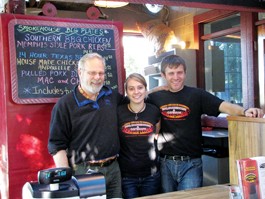
His modest restaurant is a family affair with Larry serving as pit master, while his brother Alex manages the restaurant. Larry’s wife, Renée Fritze, is the executive events coordinator for the catering company.

The company mission (“Raising the bar in barbecue”) highlights its focus on educating and delighting the public so they “finally know what real barbecue is,” as opposed to grilling or slathering meats in overly sweet or tongue-burning sauces. Vito is adamant in his belief that true barbecue is flavored through smoking and indirect heat from hardwoods, applied over a long period of time.

“There’s something primal about fire and smoke,” he says. “The flavor of good barbecue is almost addictive, and people who haven’t had real barbecue don’t know what they’re missing.” He explains that ribs cooked correctly are not “falling off the bone,” as many diners believe. Instead of describing ultimate tenderness, meat that falls from the bone is generally overcooked, sometimes to the point of mushiness. Instead, meat should pull cleanly from the bone but remain intact.

Likewise, sauce shouldn’t be used to mask the flavor of overcooked meat. As one of his relatives colorfully put it, “Saucing up falling-off-the-bone barbecue is like putting a party dress on a dead body. No matter what you do, it’s never gonna get up and dance!” Vito’s goal for raising the bar toward perfection also holds true for the many side dishes on the menu; he altered the recipe for the macaroni and cheese “at least 15 times,” he says, before he was satisfied.

Perhaps the chef’s real mission reflects a different type of passion. “My wife and I love barbecue, and she’s from Santa Rosa,” he says with a smile. “She always talked about Jesse, a legendary local character who used to have an unrivaled barbecue joint where Pack Jack’s was on Highway 116. I wanted to impress my wife, because she didn’t think my barbecue could match Jesse’s. It’s hard to compete with a legend.”

Larry Vito’s BBQ Smokehouse Catering, 6811 Laguna Park Way, Sebastopol. 707.575.3277. www.bbqsmokehousecatering.com.

Hot Joints

Other barbecue to love

Sonoma

Bluegrass Bar & Grill 14301 Arnold Drive, Glen Ellen. 707.935.4488.

D’s Diner 7260 Healdsburg Ave., Sebastopol. 707.829.8080.

Jerome’s Mesquite Barbeque 1390 N. McDowell Blvd., Petaluma. 707.795.2114.

Lombardi’s Barbeque & Deli 3413 Petaluma Blvd. N., Petaluma. 707.773.1271.

Also: 101 E. Cotati Ave., Cotati. 707.795.3354.

Porter Street Barbeque 500 E. Cotati Ave., Cotati. 707.795.9652

Napa

Bar Bers Q 3900-D Bel Aire Plaza, Napa. 707.224.6600.

Bounty Hunter 975 First St., Napa. 707.226.3976.

Buster’s Original Southern Barbecue 1207 Foothill Blvd., Calistoga. 707.942.5605.

Red Rock Back Door BBQ 1010 Lincoln Ave., Napa. 707.226.2633

Marin

California Grill & Rotisserie 1531 S. Novato Blvd., Ste. A., Novato. 415.897.7655.

Mauna Loa Hawaiian Barbecue 810 Third St., San Rafael. 415.453.2003.

Larry Vito recommends:

Memphis Minnie’s BBQ 576 Haight St., San Francisco. 415.864.7675.

Quick dining snapshots by Bohemian staffers.

Winery news and reviews.

Food-related comings and goings, openings and closings, and other essays for those who love the kitchen and what it produces.

Recipes for food that you can actually make.

Jests in Time

08.05.09

The good thing about the very obedient is that they are very credulous. The Yes Men Fix the World plays as part of the traveling series of the San Francisco Jewish Film Festival, screening Aug. 8&–10 at the Smith Rafael Film Center. The film is the follow-up to The Yes Men, the Dan Ollman&–Sarah Price documentary of 2003. Regardless of the serious prank-power of Sacha Baron Cohen, the antics of Andy Bichlbaum and Mike Bonanno (who directed) are even funnier: the arrow of the humor is pointed at corporate cads instead of a pack of Arkies out for a night of cheap beer and wrestling.

The Yes Men’s long-running prank is to insinuate themselves into think tanks, press conferences and trade shows, pretending to be representatives of name-brand corporations. Using “cheap suits and fake websites” (and some weird PowerPoint demonstrations), the Yes Men drop Dow Chemical’s stock by three points. Posing as representative “Jude Finisterra” (“end of the world”), one member ginned up an interview on the BBC, claiming that Dow was going to at long last reimburse the victims of Bhopal “just because it’s the right thing to do.”

Later, Bichlbaum and Bonanno travel to that still-blighted city of 1 million; there, they demonstrate that there wasn’t much substance to the BBC’s face-saving claim that the mean prank had caused Indians to weep bitter tears.

Happily, petrochemical engineers are slightly cannier. Take the Yes Men’s unveiling of “vivoleum,” a human-corpse-based fuel, at the Go Expo in Calgary, which even the “childlike exuberance of a great industry” can’t quite swallow.

Later, they pose as unusually benign government officials at a New Orleans presser, sharing the stage with the city’s mayor and the governor of Louisiana. When exposed, one Yes Man claims that his partner, the bogus HUD official, is odd because “he just got here from France.” This could be called the Conehead Defense. The Yes Men Fix the World screens Aug. 9.

Some other standouts at the festival include Yoo-Hoo, Mrs. Goldberg (Aug. 8), which resurrects some episodes from a mostly forgotten multimedia phenomenon. The Goldbergs, a long-running situation comedy about Jewish life, leapt from radio (1929&–’46) to television (1949&–’56). Gertrude Berg’s Molly Goldberg, the ultimate Jewish mama, entertained millions and even mentioned the Holocaust.

The episodes revived here aren’t exactly the TV version of Henry Roth’s Call It Sleep, but they’re a certainly a revelation about the seriousness and power of early television. Berg, in character as Mrs. Goldberg, sells Sanka in one-minute wraparounds to the main show. This is all the better to avoid interruptions for the main comedy-drama, which is laugh-track and zinger-free.

Filmed on a small set, the action takes place in a crowded apartment, with dumbwaiter and airshaft opening up the space to neighbors who shout new information. The episode “Matchmaker” has Gertrude trying to stretch a boiled chicken dinner to all the eligible men crowding in to court Gertrude’s niece. Surprisingly old-country faces and voices show up in this episode. The window The Goldbergs provides into postwar Jewish urban life is more than just a TV show’s painted backdrop.

The erstwhile crowdpleaser Hey Hey It’s Esther Blueberger (Aug. 8) gives you fair warning in the title. Thirteen-year-old Esther (Danielle Cantanzariti) of Adelaide, Australia, jumps the fence of her cruel private school and encounters a public-school rebel, a surly half-Maori girl called, perhaps ironically, Sunny (Keisha Castle-Hughes from Whale Rider). At first, Castle-Hughes shows Malcolm McDowell&–like levels of cockiness, but she gets monotonously mannered, looking as morosely diffident as Richard Burton when his heart wasn’t in a film.

More intriguing, if ultimately disenchanting, is Israel’s Seven Minutes in Heaven (Aug. 9). Galia (Reymonde Amsellem) is in an aura state following a trauma; she was clinically dead for seven minutes after a terrorist bombing in Jerusalem. Far more interesting than director Omri Givon’s M. Night Shyamalanesque touches is all the stuff the director took from life before he shaped it for metaphysics. This is what seems real, and must be happening every day: Galia’s thorny feelings, the itching of her scar tissue and the dialogue with record keepers who deal with the bombings. Their interchange goes thus: “Were you in the one at the mall?” “No, the one on the bus.” “French Hill?” “No, at the city center.” “Ah, God, that was horrible.”

The 29th annual San Francisco Jewish Film Festival screens 13 films Saturday&–Monday, Aug. 8&–10, at the Smith Rafael Film Center. 1118 Fourth St., San Rafael. Times vary. 415.454.1222.


New and upcoming film releases.

Browse all movie reviews.

Seed Savings

0

08.05.09

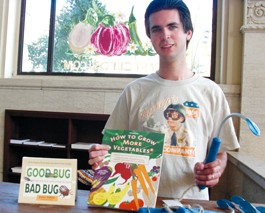
SAVING FORTHE FUTURE: Seed store owner Jere Gettle and his wife have traveled the world collecting rare and exotic seeds, as well as the more homely ones found in area fields.

That we are in the midst of the Great Recession, as UC Berkeley economist Robert Reich has named it, is now a given. Whether we weather this storm with discomfort but without a real tempest breaking loose economically is anybody’s guess. Either way, it seems a wise time to look to a deeper level of security for family and close friends, including food security, and the time has never been better to bring a seed bank to town. The Baker Creek Seed Co., taking up new residence in Petaluma, offers an amazing variety of ways to grow.

Hard times create a longing for what is perceived to be a simpler, sweeter time, the foggy past recalled through the lens, perhaps, of Laura Ingalls Wilder. Interesting that Wilder wrote her stories of honest, hard-working farming families a mere 10 miles down the road from where the original Baker Creek came into being in the midst of the Missouri Ozarks.

Baker Creek stocks some 1,578 separate varieties of organic and heirloom seeds, all set out in bins about chest-high in Petaluma’s majestic former Sonoma County Bank building. The company claims to be simply “the largest source of heirloom seeds” in California. The seed bank not only stocks fruits and veggies, but also actively seeks and stores rare seeds whether or not a profit is likely. Some have suggested that as a storehouse for endangered seed, Baker Creek is really a service organization, ripe for nonprofit status, but for the foreseeable future, the seed business is coming along fine without protection of a 501c3.

Since 2003, Baker Creek has published a full-color magazine, The Heirloom Gardener, with the slogan “The no-ads, no-fluff, all-dirt magazine” matching its in-depth articles on various aspects of gardening and the little-known vocation of “seedsman,” an endeavor coveted by owner-founder Jere Gettle since he was a small child planting seeds alongside his grandparents in their Missouri orchards.

“I always hoped I wouldn’t have to take up another kind of work other than gardening,” says Gettle. He never did. Gettle is very partial to vegetables and became a vegetarian on his own volition at age 12, publishing his first seed catalogue at age 17. Gettle, a still young entrepreneur at 28, made his career choice public by starting up Baker Creek, named after a creek that runs alongside his family’s land.

The inside of Baker Creek essentially houses a miniature theme park called Bakersville Pioneer Village, which reflects a real place in Missouri that celebrates old-fashioned ways in pharmaceuticals, retail, music, baking, seeds and more and houses Gettle’s main store.

Gettle, his wife, Emilee, and their one-and-a-half-year-old vegetarian daughter, Sasha, have traveled around the globe to seek seeds. The couple even went to Thailand and Japan, and plan to explore the Middle East when Sasha is a bit older.

A team of Amish workmen who have worked with the Gettles in Missouri facilitated the move into the immense Petaluma building. The Amish crew was flown in from their farmland near Bakersville. “These men are the hardest workers I’ve ever known,” Gettle says. The Amish drew attention to the project wearing their traditional flat straw hats and suspenders during construction of the store, and their presence was noted with enthusiasm by locals and tourists alike.

Sonoma County is awfully far from Missouri. Why here? “We needed to have a place to store some seeds that doesn’t freeze in the winter,” Gettle explains. “Some of these seeds would be endangered by the winters in Missouri.”

Ironic that Baker Creek has moved to Sonoma just as the Marin-based Smith & Hawken is closing its doors. Yet the reason people came to Smith & Hawken at first is even stronger in 2009 than in 1984 when that company began. People want a great garden more than ever, whether to best the Joneses next door or because they take dire peak-oil predictions to heart and are serious about self-sufficiency.

Popular lecturer, radio host and author Caroline Casey likened gardening to some sort of new age heroism at the recent Harmony Festival in Santa Rosa, calling on the crowd to “compost” every evil thing on the planet. “Let’s take all the chi out of it!” she said, referring to war and social injustice in all their forms.

Gettle may not care about chi, but he does care about the land, describing his business in a recent interview as an effort to “swim against the river of modern agriculture as we continue to work for the farmer, the gardener and, most of all, each and every eater.”


Half Baked

08.05.09

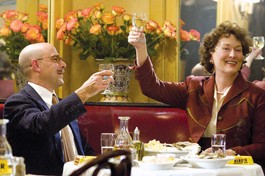
Meryl Streep’s greatness—her facility with accents, her plasticity and that uncompromising quality every really lasting actor has to have—has often been used to portray the limits of human suffering. In Julie & Julia, Streep gets to kick up her heels instead. She has such fun with the part of the cookbook writer Julia Child that she’s consistently intoxicating to watch.

The gusto of this life is like the little bits of happiness that turn up in other biopics. You keep waiting for the clouds to gather. You know how it is when you’re watching a film, and the happiness onscreen is so complete that you know someone’s going to have to pay for it. When Child’s equally ungainly and boisterous sister Dorothy (Jane Lynch) turns up in Paris, and the ladies chatter like exotic birds, throwing back their red wine by the glass, you think, “Ah, so the sister’s going to get cancer.” But it doesn’t happen.

Streep continues at full sail through the film, elevated a bit on a high heels, and trotting with the happy clunkiness of a Clydesdale. Child’s distinctive voice—the whoop of surprise, the trill and warble when she spoke—makes Streep’s part of the film enthralling. Cast as her beloved husband (I’ll spoil this: nothing fatal befalls him) we have a dapper, droll Stanley Tucci, playing a cultural attaché. Tucci shows the best way to hold your own with a first-rate actor having the time of her life: recede a little and react slyly.

Julia has her crisis—first overcoming a soupçon of prejudice to try to graduate the Cordon Bleu, and then yearning to take the good word of French cooking back to 1950s America. But in this scrumptiously, art-directed version of 1950s Paris, she has a great good time. Watching this woman’s oversized delight in food and wine and sex is prime stuff.

But there had to be some way to hold the film together, and sure enough disaster befalls. Half of this film is based on Julie & Julia, the hustled-into-print book version of a blog by Julie Powell. Amy Adams, the most charming young actress alive, plays Julie, and she’s still a horror. Powell’s schtick was cooking all the recipes in Child’s Mastering the Art of French Cooking in one year, a grim marathon conducted in a tiny Queens kitchen. She obsesses over this, while working a day job and browbeating her husband (Chris Messina). Director Nora Ephron tries for frankness in her script by having Julie Powell call herself a bitch. That isn’t enough to rehab her.

Ephron may not have the taste or the patience to deal with a girl of our decade, compared to her more idealized notion of life in the 1950s. It’s probably inadvertent, but the film has the aspect of a hit job on the blog generation. This is Ephron’s best movie by a mile, but the dreary back-and-forth about Julie Powell’s problems are hard to bear. It’s a study in contrasts, for sure: one person marvels at life, another grinds away at it; one person tries to bring joy to the world, the other tries to figure out the fast track to fame. Give me Julia over Julie any day.

‘Julie & Julia’ opens in wide distribution on Friday, Aug. 7.


New and upcoming film releases.

Browse all movie reviews.

Bully Bard

08.05.09


There is no escape from Shakespeare. But why should there be? In the North Bay, Shakespeare is an escape, a way to detach ourselves and place our focus on something as different from everyday life as possible, something full of drama and vision and magic and beauty. How else to explain the vast number of theater companies offering the works of Shakespeare all over these three counties every single summer?

Most regions of this size are lucky to see one or two of wild Willy’s plays. In the North Bay, it’s hard to keep track of all of them. Even with the apparent demise of North Bay Shakespeare (aka Shakespeare at Stinson), even with Windsor’s Shakespeare on the Green having concluded its offerings for the year, even with the Sebastopol Shakespeare Festival having just completed its hugely successful open-air run of A Midsummer Night’s Dream (with its one non-Shakespeare offering, The Three Musketeers, still to come), there are numerous Shakespearean extravaganzas still on the boards or waiting in the wings.

In San Rafael, where the Forest Meadows Amphitheatre reigns as the most enchanting and secluded venue for Shakespeare in the North Bay, the Marin Shakespeare Company has been delighting fun seekers and offending purists with its ’60s-era musical adaptation of Twelfth Night, here subtitled All You Need Is Love. Adapted and directed by Lesley and Robert Currier, Shakespeare’s tale of love, mistaken identity, cross-dressing and practical joking has been frosted over with tasty songs from the Summer of Love, borrowing from the Beatles, Bob Dylan, Donovan and others. The show runs weekends through Sept. 27.

On Aug. 21, the company adds a traditional staging of the epic Julius Caesar, featuring Barry Kraft in the title role and television actor Jay Karnes (The Shield) as the conflicted conspirator Brutus. Julius Caesar runs through Sept. 27. 50 Acacia Ave., on the Dominican University of California campus, San Rafael. 415.499.4488. www.marinshakespeare.org.

Santa Rosa’s Narrow Way Stage Company has established itself as being fearlessly eager to present the Bard in unexpected, subversively political ways, and is about to launch a double shot of Shakespeare with two shows in repertory. First out of the gate is a Wild West, post&–Civil War staging of the intense drama Coriolanus. Notable as one of the best Shakespearean plays that no one ever produces, Coriolanus follows the tragic trajectory of a Roman warrior, here re-imagined as a returning Yankee war hero, whose pride, unfamiliarity with politics and extremely meddlesome mother result in his banishment and doom. The show, directed by Merlyn Sell, will be presented in the outdoor courtyard of the Glaser Center on Aug. 6&–9, 14, 16, 20 and 22.

Running side by side with Coriolanus is Twelfth Night (yep, that’s two productions of TN in the North Bay!), with heightened emphasis placed on the play’s physical comedy and pent-up sexual tension. Directed by Nick Christenson, Twelfth Night runs Aug. 13, 15, 21, 23 and 27&–30. Glaser Center, 547 Mendocino Ave., Santa Rosa. For information and tickets, visit the website, www.narrowwaystage.com.

Finally, the Sonoma County Repertory Theater Company stages a truly innovative and visually rich spin on Shakespeare’s The Tempest. This world premiere by playwright and puppeteer Conrad Bishop, titled Dreaming the Tempest, runs Sept. 18&–Oct. 18 and transforms the world of The Tempest into an surreal mirage, employing “theatrical animation” (puppetry, of sorts) with masks, shadow illusions, projections and a soaring “Mythic Kitchen” ensemble, part of Sebastopol’s legendary Independent Eye theater company. This show will be presented indoors at the Rep’s cozy 80-seat home theater. 104 W. Main St., Sebastopol. 707.823.0177. www.the-rep.com.


Museums and gallery notes.

Reviews of new book releases.

Reviews and previews of new plays, operas and symphony performances.

Reviews and previews of new dance performances and events.

C. Donatiello Winery

0

The PR standard along Westside Road is the same as any other wine road: portray uncompromising family farmers—as deeply rooted as the vineyards they tend—in black-and-white vignettes, creating a timeless idyll meant to contrast the full-color, fast-moving worlds of tech and finance. In reality, it seems like winery trends and proprietorship shift as often as the tectonic plates that lie beneath them.

The man behind the curtain at scenic Belvedere Winery, for instance, was none other than tech sector investment wizard Bill Hambrecht. A few years ago, Hambrecht parceled off vineyards and closed the popular but financially troubled 100,000-case Belvedere, then helped to relaunch it last year with East Coast wine and spirits executive Chris Donatiello in the fore. Donatiello pared down production to 7,000 cases and narrowed the focus to the region’s star Burgundian varietals.

None of which matters to the koi fish lazily swishing in their fountain. The same landscaped grounds provide picnic spots, herbal stairways and rose-studded garden paths leading to the revamped tasting room. The interior has been opened up, with a central bar island where our low-key, knowledgeable host briefly updates us on the current ownership and then directs our attention to the pertinent story: the winemaking team, vineyards and the product.

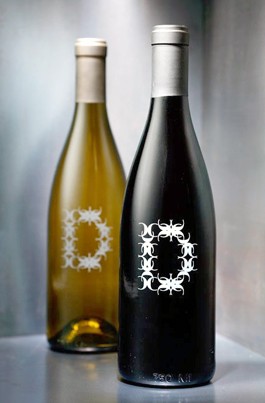
Tasting flights are tiered: a dabbler’s for a fiver, all-Chardonnay and all-Pinot, with a glass provided for each pour. The 2008 Sauvignon Blanc ($24) is the outlier varietal. In between lean and sweet-bodied styles, it’s a front lawn of lemongrass leading to a small orchard of mild peach skin and guava. The 2007 Maddie’s Vineyard ($34) popped out from the Chardonnay pack for its nose of for-once-it’s-not-butter aroma of taffy and chewy caramel candy; the palate is tense with oak, fleshed out with—what else?—baked apple.

While the 2006 Russian River Valley Pinot Noir ($48) pours onto the palate like ripe cranberries out of a bog, it’s otherwise free of riparian weedy notes, accented with brown spice and red cherries. The supple 2007 Floodgate Vineyard RRV Pinot Noir ($55) smacks of plum jam, with indistinct but seamless flavors. The 2007 Maddie’s Vineyard RRV Pinot Noir ($62) is a cooler character, more tart and austere but knitted together in the same soft and pleasing format. Neither aggressively extracted nor shy of flavor, these Pinots inhabit a still pool in of the plump middle of the Russian River profile; classy but immediately accessible wines to enjoy in the here and now.

C. Donatiello Winery, 4035 Westside Road, Healdsburg. Open daily, 11am to 5pm. Tasting fee, $5–$12. The winery hosts a summer concert schedule, “Live from the Middle Reach,” on Sundays from 1pm. Free. 800.433.8296.


View All

Interview: Depeche Mode’s Andrew Fletcher

0

By David SasonThree decades on and Depeche Mode remain an anomaly in the arena-rock world. What other electronic group could enjoy such consistent success and inspire devotion from millions of fans around the world? Armed with songwriter Martin Gore’s hypnotic electro-goth tunes, the pioneering U.K. trio’s “synthesizers-can-rock-too” spirit has best been proven by their celebrated live shows. Despite some canceled European dates (due to singer Dave Gahan’s gastroenteritis, bladder tumor and leg injury), the American leg of their Tour of the Universe actually began as planned last week, bringing them to the Bay Area on August 12. I caught up with founding bassist/keyboardist Andrew Fletcher (far left) to chat about touring, aging, deejaying, and survival amid the band’s two big egos.

D.S.: Thanks for doing this, Andrew. How are you?

Andrew Fletcher: Good, thanks. We’re in New York at the moment, just having a couple of days break. We just started, three gigs over now, so it’s going pretty well.

D.S.: It’s great that you guys are back up and running. It’s unusual for you guys to be sidelines. You guys are known as the road warriors.

Andrew Fletcher: [Laughing] It sounds like a video game. [In fake trailer voice] “The Road Warriors”!

D.S.: I trust Dave has recuperated now.

Andrew Fletcher: It’s been pretty bizarre. The European tour has been one of the most successful tours we’ve ever done and the most calamitous as well, all in one go. But Dave has really got a competitive spirit in him. If anything, he thrives on these sorts of things.

D.S.: The challenge, right. Does touring ever get too grueling? You guys have been going on three decades now.

Andrew Fletcher: Well, we get treated pretty well these days [laughs]. You know, we get flown around, with nice hotels…but is it grueling? Well, I’m sure a lot of your readers have more grueling jobs than we do. Yeah, it’s tiring and not really nice being away from your family all the time. But it’s what we do, and we like it. We feel we’re still doing good shows, so it’s okay.

D.S.: How have things changed since, say, Music for the Masses Tour? Surely the backstage scene must be completely different now.

Andrew Fletcher: Of course your favorite stories and the real things you remember come back from those early days. We were very young, you know? All we had in our lives was Depeche Mode, and we made an album pretty much every year, we toured every year. And it was just a fantastic feeling, especially to break in America like we did, which was something completely unexpected for us, and one of the sort of nice things that’s happened in our career. But now, we’re domesticated; we’ve got families and stuff. And I think quite a lot of our fans are in that situation as well, so. It doesn’t mean you don’t love music; it’s just different, you know.

D.S.: You mentioned making a new album every year, but you guys are still pretty prolific–

Andrew Fletcher: –I don’t think our fans would say that we’re prolific [laughing]. Not now.

D.S.: Well, you’ve kept busy, without, say, a five-year break in between records.

Andrew Fletcher: No. We haven’t got anything planned for after the tour, but with the atmosphere at the moment being really good, I’m sure we are going to make another album & do another tour. We’re in a really good position. We sort of work for two years, then have a year off. It’s pretty cool.

D.S.: People are loving Sounds of the Universe, and one of the descriptions coming up over and over again is  “return to your roots”, and there have been tales of the vintage equipment you guys used. How did the recording differ from Playing the Angel?

Andrew Fletcher: It didn’t differ very much from Playing the Angel because we were basically working with the same people, with a couple of changes. And we recorded it in pretty much in New York and Santa Barbara. But I think for some reason it seems to be a very easy record to make, and a lot of fun as well. I mean, the vintage equipment, for instance, that was good fun. Martin is buying up the whole world’s supply of vintage synthesizers and then turning up every day in the studio. It was fun. It was really fun, opening the box and getting a sound up. It was a bit like the old days, yeah, going back to the roots. Yeah, it was good.

D.S.: But it happened organically, right? It wasn’t a conscious decision?

Andrew Fletcher: No. I mean, no. We don’t really…we’re not sort of U2-like in that way. Nothing against U2, I think they’re a great band and we know them pretty well. But they seem to have a master plan, and we tend not to have much of a master plan, especially in the studio.

D.S.: A lot of people have this image of you in the middle, keeping the whole group–

Andrew Fletcher: In the back, you mean, not in the middle! Oh, you mean in the middle, keeping the warring factions apart. [laughing]

D.S.: Exactly, in addition to being the makeshift manager.

Andrew Fletcher: I was very much involved in the management during the first half of our career. We didn’t have a manager at that point, so that was the thing that I was quite interested in. But, like I said, I’m not the person in between the warring factions at the moment. I’m in the back, because there is no warring factions…touch wood…touching the desk here…and the atmosphere in the band is good, you know. I like being in the background. I think you can’t have a band when every single person in the band is going for the limelight.

D.S.: Was that awkward, those few years when Dave went solo? At the time, did it seem like the end of Depeche Mode?

Andrew Fletcher: Nope, it never was the end. It was important for Dave to do that because he’s always been a singer who doesn’t write the lyrics. Doing his own thing, I think, was very important because he’d talked about doing his own thing for years and he’d never ever done it. Really, if you look at it, the amount of stuff Depeche Mode has worked outside of Depeche Mode is not very much. Martin’s done two solo albums, Dave’s done two solo albums in 30 years, so it was never a…If Dave’s solo album was like a massive hit or something, and he said “bye bye, boys”, I don’t know. [laughs] But no, it was never like that.

D.S.: I understand Dave & Martin wrote together for this album. Would you ever consider joining in the process?

Andrew Fletcher: Not really, no. Actually they didn’t really write together. Martin did an instrumental and Dave separately put some words to it. So they didn’t actually write it together, and I really don’t have any interest in songwriting. I know I’m not a good songwriter, so I’m very lucky to be in a group with Vince Clarke, who’s a great songwriter, Martin, and now Dave’s writing some good songs. You know, not everyone, not every musician is a songwriter. And that might sound strange [laughs].

D.S.: No, I think it’s very refreshing, and you’re very humble because I’ve heard great things about your long-lost album Toast Hawaii.

Andrew Fletcher: It’s not “long-lost” now. Unfortunately Martin Gore’s got a copy of it…

D.S.: So it’s only a matter of time before–

Andrew Fletcher: Yeah, before…I have to be careful, if I annoy him to much he’s going to put it out there.

D.S.: Do you think it will ever get a proper release?

Andrew Fletcher: No, no, it was done as a bit of fun when we were recording probably Black Celebration or something like that, in Berlin, and it’s just me covering rock n’ roll songs with the band playing various instruments.

D.S.: How your Toast Hawaii record label going?

Andrew Fletcher: The label’s not doing anything at the moment. Again, I can only really work with the label when I’m not working with Depeche, because the role of the label is to be full involved with an artist I take on. But when we had our last year off, I didn’t find anyone in that year really, and I ended up deejaying for a few months. So you never know. I have next year off, so if I find someone hopefully, the label will be back on. It’s not like a label that’s “on the go” all the time; it can just start up at any point, you know.

D.S.: You brought up your deejaying, which is another reason you’re known as the member who’s always trying something new. You’ve been getting rave reviews for it. What is your style like?

Andrew Fletcher: I use about 50% vinyl, 50% CDs at the moment. I don’t know what I’m going to do next, maybe a bit more computerized, I don’t know. But it’s been a normal setup. I try and play sort of a lot of music that I feel is suited around Depeche Mode, but I really play anything. I enjoy it, and I tend to go to places that Depeche Mode doesn’t go much, like Bucharest and places like that.

D.S.: Have you ever been asked to guest-deejay at Popscene in SF? They sometimes have guest deejays and it seems right up your alley.

Andrew Fletcher: No I don’t think so. Martin deejays as well, he’s our west coast DJ. He does Santa Barbara, L.A., and I’m sure he does San Francisco.

D.S.: Are you still based in the U.K.?

Andrew Fletcher: I’m based in the U.K., Martin lives in Santa Barbara, and Dave lives in New York, so we’re spread around.

D.S.: Besides the deejaying, what do you do when you’re not working with Depeche Mode?

Andrew Fletcher: On the year off? I just see my family basically. For two years I haven’t seen them that much. They’re probably happy with that actually. You know, just see my friends, go on holiday. Decent things I need doing, quite a few things to do.

D.S.: Why do you think Depeche Mode has had such longevity while other bands – especially electronic bands – have fallen by the wayside?

Andrew Fletcher: A few reasons. I think obviously good songs are very important. We’ve worked very hard, especially on the touring side, which is very important for an electronic band because it’s very easy to be seen as being studio-fied. And just being surrounded by good people. Daniel Miller from Mute Records has been very important since the day we met him, kept us grounded as well as kept us evolving over the years. So, just to finish off, it’s amazing, it’s a dream come true for us to be still going strong after so many years. We were real realists in the beginning. We sort of thought our careers might only last two years or three years. So to be still going now is just a dream come true really. It’s really amazing.Depeche Mode performs Wednesday, August 12 at the Shoreline Amphitheatre in Mountain View. Peter Bjorn and John opens the show. Tickets are still available. Sounds of the Universe is available now.—David Sason

UPDATE: The show has been canceled; doctor’s orders are for Dave Gahan’s complete vocal rest for 48 hours. There will be no rescheduled Bay Area date this year. I guess Fletch wasn’t bullshitting when he called the tour “calamitous”. Full statement is here.

On the Stereo: Building the Baby’s Room

0

I’ve been working a nonstop string of 12-hour days doing construction on my house lately—building a bedroom for my first baby-to-be—and while nailing, sanding, wiring, sheetrocking, and plumbing, I’ve had lots of music-listening time. Construction work is traditionally affiliated with heavy doses of AC/DC, but because I would rather be placed in a vat full of rancid hamburger juice than listen to AC/DC for any extended period of time past, say, two and a half minutes, I’ve had to make do with less-macho tunes.


Okay, okay, I did listen to Thin Lizzy, but hey, it was their first album, which is meandering, sort of psychedelic, and totally cool. No one would mistake it for AC/DC. Its first song is “The Friendly Ranger at Clontarf Castle,” for cryin’ out loud, which is an anagram for “Defer Thinly a Fragrance Transect Toll.” Bon Scott would never come up with something like that.


Jack DeJohnette, who is the most bendable drummer I have ever seen, released a record earlier this year with Danilo Perez and John Pattitucci, both currently with Wayne Shorter’s group. It’s called Music We Are, and if you would like to hear jazz musicians who predate the Bad Plus by many years sound like the Bad Plus, it is the recording for you. Heavy left-hand pumping on the upbeat, drumming that sounds like egg beaters. Pattitucci, as always, is the Entwistle of jazz—anchored and regal.


It Still Moves is the album that sold me on My Morning Jacket, but Okonokos drained my proverbial bank account—I listened to the entire double live album every day for a complete month, if I recall. It’s always weird going back to the studio recording when you’re accustomed to the live versions, and part of me had been thinking about getting rid of all the My Morning Jacket albums besides Okonokos. Yesterday, while screwing drywall, I realized that would be a foolish maneuver.


Smokey Robinson plays a rather expensive concert this weekend at Robert Mondavi Winery, but I want you to consider how your life would be changed if Smokey Robinson had never been born. Think: No Motown as you know it. No “Ooo Baby Baby” or “Who’s Loving You,” or “You Really Got a Hold on Me,” or “I Second That Emotion,” or . . . ah, I could go on and on. And speaking of live versions that rival studio recordings, check out this footage of “Tracks of My Tears,” proving Smokey Robinson is still in top form. Wait for the bridge, and man, brother, that’s from 2008! Now dry your eyes, and let’s move on.

 

It is the fate of even the greatest DJ mix CDs to be listened to for a week, absorbed, loved, and discarded. For some reason, I’ve kept Andy Smith’s The Document around for years now, probably because of the presence of both Peggy Lee and the Jeru the Damaja on one mix. Paul Nice’s Soul on the Grill has stayed with me for years, too. Others, like Cut Chemist & DJ Shadow’s Brainfreeze or Z-Trip and Radar’s Future Primitive Soundsession, belong in a mixtape hall of fame of sorts; admired from behind glass, remembered for their achievements, and rarely listened to ever again.


Litany for the Whale has put out Dolores, an album I cannot help but compare to Converge’s Jane Doe. It begins with a couple terrifying minutes of noise courtesy of the Velvet Teen’s Judah Nagler—I think of it as a more ferocious, cracked-out stepsister of “Sartre Ringo,” from Elysium, and makes stronger the case for noise as composition. The rest of the album is like morphine for people raised on hardcore, which is not to say it’s wimpy. Just soothing.


Some nights are Lennon Sisters nights. Others, the Boswell Sisters. Lately I’ve been resting my bones to the McGuire Sisters and their collection Just For Old Times’ Sake. I can do without the honkey education of “The Birth of the Blues,” but give me signature songs by Jimmy Durante, Johnny Mathis, the Platters, April Stevens and Duke Ellington sung by some effervescent gals on a diet of Jesus and yellow corn, and I’m there.


I know nothing about Woods, except that they are unfortunately from Brooklyn. Making the discovery that a good band is from Brooklyn is a lot like discovering a good baseball player is on steroids. Therefore, I wish Woods were from Lexington, especially since they sound far more Kentuckian than Park Slopian. They also bear the distinction of being the first band in some months whose record I bought after hearing them on the radio. It’s messy, untied, and perpetual.


Speaking of the radio, 95.9 KRSH has been getting lots of construction airplay on the job site. I am always thrilled when the KRSH plays things like Spoon or M. Ward, which happens every so often, but even more glad when hear “I Don’t Wanna Grow Up” as sung by Hayes Carll. Something about “I Don’t Wanna Grow Up” always seemed corny to me, especially when the Ramones covered it. Hayes Carll turns the same words and chords into a completely believable treatise on eternal adolescence. It’s like the song was written just for him. Bill Bowker yesterday also dropped the needle on Jeff Buckley’s version of “I Know It’s Over,” which reminds me of two things: 1) Jeff Buckley is one of the fortunate few who could actually present a necessary Smiths cover, and 2) Bill Bowker has now been on the radio for 40 years. Way to go, Bill!

 

Also on the ghetto blaster, competing with the nailgun: the Majesticons’ Beauty Party, the Blasters’ Hard Time, The Queen is in the Closet, Los Lobos’ Good Morning Aztlan, Grizzly Bear’s Veckatimest, and quite a few spins of Drum Dance to the Motherland by the Khan Jamal Creative Arts Ensemble.
I’m gonna be a dad here in the next few days, and then I’ll see you again soon.

Violence Is a Choice

08.05.09Very little has changed in our culture since Robert Kennedy said in his 1968 speech "The Mindless Menace of Violence" that "we seemingly tolerate a rising level of violence that ignores our common humanity and our claims to civilization alike. We calmly accept newspaper reports of civilian slaughter in far-off lands. We glorify killing on movie and television screens,...

News Blast

08.05.09 Gangs be goneDue to the 2004 voter-approved Measure O, the city of Santa Rosa has alotted sizable funds toward raising awareness around gang prevention. The week of Aug. 9 marks Santa Rosa mayor Susan Gorin's Gang Prevention Task Force "Gang Prevention Awareness Week."According to a press statement, Gorin says that "we cannot arrest our way out of gang problems—it...

Lone Star State of Mind

08.05.09The wizardry of Harry Potter's continuing saga recently filled all nine theaters in Sebastopol's Cinema Complex. But his isn't the only magic being conjured up there. In the theater parking lot, working outside the backdoor of a small building that sits kitty-corner to the movie house, world-renowned chef Larry Vito feeds hardwood logs into an industrial steel smoker, imparting...

Jests in Time

08.05.09 The good thing about the very obedient is that they are very credulous. The Yes Men Fix the World plays as part of the traveling series of the San Francisco Jewish Film Festival, screening Aug. 8&–10 at the Smith Rafael Film Center. The film is the follow-up to The Yes Men, the Dan Ollman&–Sarah Price documentary of...

Seed Savings

08.05.09 SAVING FORTHE FUTURE: Seed store owner Jere Gettle and his wife have traveled the world collecting rare and exotic seeds, as well as the more homely ones found in area fields. That we are in the midst of the Great Recession, as UC Berkeley economist Robert Reich has named it, is now a given. Whether we weather this storm with...

Half Baked

08.05.09 Meryl Streep's greatness—her facility with accents, her plasticity and that uncompromising quality every really lasting actor has to have—has often been used to portray the limits of human suffering. In Julie & Julia, Streep gets to kick up her heels instead. She has such fun with the part of the cookbook writer Julia Child that she's consistently...

Bully Bard

08.05.09There is no escape from Shakespeare. But why should there be? In the North Bay, Shakespeare is an escape, a way to detach ourselves and place our focus on something as different from everyday life as possible, something full of drama and vision and magic and beauty. How else to explain the vast number of theater companies offering the...

Interview: Depeche Mode’s Andrew Fletcher

By David SasonThree decades on and Depeche Mode remain an anomaly in the arena-rock world. What other electronic group could enjoy such consistent success and inspire devotion from millions of fans around the world? Armed with songwriter Martin Gore’s hypnotic electro-goth tunes, the pioneering U.K. trio’s “synthesizers-can-rock-too” spirit has best been proven by their celebrated live shows. Despite some...

On the Stereo: Building the Baby’s Room

I’ve been working a nonstop string of 12-hour days doing construction on my house lately—building a bedroom for my first baby-to-be—and while nailing, sanding, wiring, sheetrocking, and plumbing, I've had lots of music-listening time. Construction work is traditionally affiliated with heavy doses of AC/DC, but because I would rather be placed in a vat full of rancid hamburger juice...
11,084FansLike
4,446FollowersFollow
6,928FollowersFollow