
Waste? Not!

0

08.12.09

BACKSTORY: Dude. It’s not all methane all the time in these pages, just two quick weeks’ worth of gaseous wonder. This one’s pretty startling in its innovation, actually.

The most valuable direct byproduct of a Sonoma County heifer may be milk, but another worthy resource that exits the lower quarters of local dairy cows—not to mention most other farm animals—goes completely untapped: methane. Now, however, the Sonoma County Water Agency (SCWA) is making plans to build an anaerobic digesting facility at one of several possible locations in Sonoma County to capture the emissions that waft from manure and other decaying organic matter and put it to productive use. Such operations, scarcely present in California, more so in such states as Vermont and already commonplace through much of Europe, consist of silo-like tanks where rotting waste stews for 10 to 30 days as bacteria break down the organic matter, generating methane as a byproduct. The gas may be piped either directly for onsite use or to generators for transmission of electricity onto the public grid. Greenhouse gas contributions are simultaneously curtailed.

According to Cordel Stillman, SCWA capital projects manager, dairies will likely serve as the primary source of feedstock for a county-operated digester system. The county’s dairy industry of 27,000 cows produces almost 500,000 tons of manure each year, and removing this waste in adherence to state manure-handling laws has proven expensive and even crippling to many small farms. Many have sold their animals to Central Valley farmers or otherwise folded, and whereas 200 dairies operated in Sonoma County in 1999, just 81 remain.

“It’s been hard for small family dairies to survive the regulatory manure-handling laws, and if they can work with us, it may help them be able to stay in Sonoma County,” Stillman says.According to Stillman, a single giant digester built at a central location would be ideal for processing manure from multiple sources with feedstock also likely to be trucked in from county food processing facilities as well as wineries, which generate over 43,000 tons of grape waste and expired yeast each year. Possible locations for an anaerobic digester system include the Sonoma Valley’s Laguna Wastewater Treatment Plant, the Airport Treatment Plant, the Central Landfill north of Petaluma or at a conveniently located dairy farm yet to be decided upon. Building the structure might cost $1.5 million to $3 million, says Stillman, and $200,000 from a California Energy Commission grant has been secured to help fund construction. The rest of the money will likely derive from the facility’s own future energy sales, says Stillman, who expects a digester to be operating within three years.

Though highly undeveloped in the United States, methane harvesting via anaerobic digesters is an old technology. In 19th-century Europe, sewer gas served to light street lamps. In WW II, German tractors ran on methane. Today, Europe leads the world in anaerobic methane production, and in Germany alone, 3,000 facilities have appeared in the past decade. In the United States, meanwhile, only 200 exist. Most such American facilities operate on dairies, several on hog ranches and a handful on beef farms.

Mark Moser, agricultural engineer with Resources Conservation Management, a consulting firm hired by the SCWA to help assess the economic viability of a local anaerobic digester, says that the United States experienced a push for anaerobic digesters some 20 years ago before big-business influence on lawmakers erected legal hurdles that effectively prevented small operations from producing their own electricity and selling it back to the grid.

“The only way for most dairies to pay for [onsite digesters] was by producing and selling electricity, so they made laws prohibiting [small private companies] from selling any electricity,” Moser explains.

The interest in the technology thereafter flickered and largely died, says Moser, and only in recent years has progressive lawmaking lifted the barriers to small-scale electricity production.

Nearly any biodegradable material, bar wood, will serve aptly in a digester, and for several years in Eastern Europe, many methane harvesters began utilizing freshly harvested corn as feedstock, resulting in the same problem that has tarnished the reputation of the ethanol industry in America: severe misallocation of land use and edible resources. However, European lawmakers quickly amended electricity-production incentive policies to prevent any rewards or rebates from going to those who fed human- or animal-grade food to their digesters. Today, most European anaerobic digesters run on inedible waste matter.In Sonoma County, digesters would have a ready supply of waste feedstock, though precisely which cows will provide the manure, which wineries will provide the lees and what other industries will offer their own compostables for a county methane-production factory is not yet known, though Stillman says that Kendall-Jackson Wine Estate, for one, has expressed interest in providing feedstock. Sonoma County’s dairy herds are almost certain to play a substantial role. County-directed research into wind, wave and other renewable energies, as well as methane, is underway as the SCWA pursues a goal of going carbon neutral—sequestering as much carbon from the environment as it emits—by 2050. The water agency currently uses more energy than any other entity in the county, but if its plans carry through, it could become one of the cleanest.
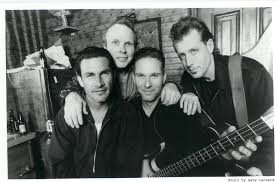

Aug. 8: the Blasters at the 19 Broadway Niteclub

0

Yes, Dave Alvin is an amazing guitarist, but the Blasters without Dave Alvin is perfectly fine with us. What’s the reason? Phil Alvin, that’s what. Phil’s voice and his wincing, sweating delivery—illustrated on the Blasters’ first LP—are what make the Blasters great. The songs are what make the Blasters great. Yes, Dave Alvin provides that extra dash of brilliance which makes the Blasters a gift from heaven, as evidenced by their brotherly reunion tour several years ago, but when you’ve got those songs and that voice, frankly, any guitarist will do. “Border Radio,” “Make You Dream,” “I’m Shakin’” and “Marie Marie” are gifts from rock ’n’ roll gods, even with Keith Wyatt. Who’s Keith Wyatt? He’s the poor guitarist who must suffer endless comparisons to Dave Alvin. We say: let the comparisons end! Slam a Michelob, comb back your hair and enjoy the quintessence of full-blooded American rock ’n’ roll when the Blasters cause the nightclub walls to drip condensation on Saturday, Aug. 8, at the 19 Broadway Niteclub. 19 Broadway, Fairfax. 9:30pm. $15–$18. 415.459.1091.Gabe Meline

Aug. 8: Nice Jewish Girls Gone Bad at Judd’s Hill Winery

0

Stripping down to panties stamped with a strategically placed Star of David while clarinet Klezmer music wails away. Lighting cigars off the menorah. Reciting beat poetry with questions like “Should I fiddle on a fucking roof for you?” It’s all included in the beer-swilling musical-comedy-burlesque show ‘Nice Jewish Girls Gone Bad.’ The brainchild of New Yorker Susannah Perlmann, whose bat mitzvah turned into a waterfall of teenage liquor consumption and subsequently supplied her with a hungover critical fisheye on her religion, Nice Jewish Girls Gone Bad is saucy, ballsy and irreverent in all the most entertaining ways. Think of it as Beach Blanket Babylon with borscht, rhinoplasty and pasties. It’s the sort of thing they’d never allow on stage at the local synagogue when the Nice Jewish Girls go bad—in a benefit for the local synagogue—on Saturday, Aug. 8, at Judd’s Hill Winery. 2332 Silverado Trail, Napa. 7:30pm. $25–$45. 707.255.2332.Gabe Meline

Aug. 8: Mike Henderson at the di Rosa Preserve

0

Plenty of comparisons have historically been made between music and painting—Bill Evans’ liner notes to Kind of Blue summarize the concept perfectly—and yet it’s not often the opportunity arises to admire an artist’s visual painting and his music at the same time. That chance comes this weekend, when abstract expressionist and blues guitarist and singer Mike Henderson appears at the di Rosa Preserve. A faculty member at UC Davis for over 30 years, Henderson works with a paintbrush the way most bluesmen bend nickel-wound strings, and openly states his goal is to reveal a painting that has more questions than answers. As a singer, Henderson is rugged and rough-edged, with a style that cries for empathy. To benefit educational programs, he and his band perform above the lake at the di Rosa in conjunction with his current new work on display in the Gatehouse Gallery. Advance tickets, including VIP seating with buffet dinner, are required when Henderson struts his stuff on Saturday, Aug. 8, at the di Rosa Preserve. 5200 Sonoma Hwy., Napa. 7pm. $50–$100. 707.226.5991.Gabe Meline

Aug. 5: Expunge Criminal Charges at the Sonoma County Bar Association Office

0

It was a hot summer night, and me and this country singer I was dating sleeping with were completely loaded. We grabbed a bottle of Charles Shaw from my apartment, headed downtown, and amused ourselves by flying paper airplanes from the top of a five-story parking garage. The fuzz pulled up, and I was brusquely informed I could either get a ticket for the open container or for littering paper airplanes all over the streets below. “Waazz cheeeeaper?” I slurred. “Open container,” replied the cop. (The country singer promised to split the fine with me, but we fell out shortly afterward.) An open container charge isn’t that big of a deal, but maybe I’d like to get it removed from my record—in which case, I’m in luck and you are, too. Just bring your criminal docket from court, and learn how to expunge criminal charges from your permanent record in a valuable one-hour lecture on Wednesday, Aug. 5, at the Sonoma County Bar Association Office. 37 Old Courthouse Square, Ste. #100, Santa Rosa. 5:30pm. $10. 707.546.2924.Gabe Meline

Photos & Live Review: Rock the Bells – Shoreline Amphitheatre, August 9, 2009

0

Review by David Sason

Busta Rhymes photos by Santiago Quintero.

All other photos by David Sason.

The traveling hip-hop festival Rock the Bells came to the Bay Area yesterday, with over two dozen acts over two stages, but cancellations plagued the final date of the tour. Common was a no-show, as was Raekwon. The latter showed up briefly during Big Boi’s set of mostly Outkast staples, but it was a letdown next to the new tracks off the highly anticipated Only Built 4 Cuban Linx II he was reportedly scheduled to perform. A surprise 30-minute set by legend Slick Rick was the talk of the fest, but many attendees heard of the news afterward.”You are about to witness history,” announced emcee KRS-One before the headlining set from “God’s son” Nas &”Bob’s son” Damian “Jr. Gong” Marley, and they certainly ruled the evening with big hits, big energy and crowd engagement. Opening with “Hip-Hop Is Dead” and moving through gems from “The World is Yours” to the inspirational “I Can” to an exhilarating & conflicted “One Mic”, Nasty Nas proved his headlining mettle with unrelenting, clear delivery. Marley – with his incendiary dancehall jams & flag-waving onstage spectacle – was particularly forceful following a day of straight hip-hop tunes and sparse stage setups. Highlights were his already-classics from 2005’s Welcome to Jamrock and new songs from the oft-delayed collaboration Distant Relatives(Now Nas says “sometime this year”). When it finally does drop, the Nas & Damian Marley show is a must-see.–David Sason

*

*

*

Big Boi (with Raekwon)

*

*

*

Busta Rhymes

*

*

*

Nas

*

*

*

Damian “Jr. Gong” Marley

Letters to the Editor

08.05.09

Boy, People Sure Hate Taxes

This letter is in response to the letter blaming Proposition 13 for the bankruptcy of California instead of blaming the politicians who are unable to properly run this great state or even take an interest in trying to do the job they were voted in to do. Perhaps it would be wise to recall why Prop. 13 was passed in the first place. Because of the sudden growth of our population and the influx of the tech industry, property prices started to rise, so the state lawmakers decided it was quite all right to just raise property taxes at their whim. This caused many elders who were retired and on fixed incomes to have to sell their homes because they could not afford these taxes. I knew many who were affected in this way. Obviously, the hideous taxation condition dictated that people would have to take taxation into their own hands and we passed Prop. 13. Now, when you buy a home, you have some sort of certainty as to what the tax bill will be. This helped California to grow and prosper. The state is not lacking in funds; it’s just not spending the funds that it does get judiciously. The state began keeping all the property tax money for themselves, and over the years individual counties and districts have had to pass other taxes voted by the people to fund local needs. Everyone should be wise enough to know the state legislators will tax and spend us to death if allowed to do so.

Susan Varga

Glen Ellen

Independents’ Day Update

At the end of the Alejandro Adams article (“Independents’ Day,” Cover Story, July 1), I made a joke about the indie film scene being so overbooked it was hard to get an audience to watch people have sex. I should have talked directly to Tony Comstock, the successful director of seven tender documentaries on the way various types of people make love.

Comstock has written a three-part piece titled “How Film Festivals and Distribution Deals Kill Independent Films” on his ComstockFilms.com blog (NSFW), which is absolutely required reading for indie-film watchers and makers. Via phone, Comstock says that he is deeply frustrated with the film-festival circuit: “It leaves you broke and desperate—the worst possible position to be in when a distributor comes.” But he emphasizes that he has made a successful end run around this circuit, through the internet and direct sales. His films go through multiple pressings on DVD. Comstock considers, as “indie production gods we should worship” Bruce Brown and Warren Miller, who hand-made their documentaries about surfing and skiing, respectively, four-walled (rented) theaters and used the profits to make more films.

Comstock is continuing to get recognition and make a living as an indie filmmaker. It wasn’t my intention to insult Tony Comstock. My intention was to criticize a scene that’s wearing down and bankrupting young talent.

Richard von Busack

FIlm Reviewer Extraordinaire

Dept. of Wacky Compasses

In our Arcadia issue, Jackie Johansen’s article about geocaching (“Hide and Seek,” July 22) incorrectly referred to the official geocaching website as Groundspeak. The actual website, as anyone with a rudimentary handle on this crazy newfangled device called Google could tell you, is easily found at www.geocaching.com.

Furthermore, it’s been drawn to our attention by a small contingent of Boho Cache participants that certain coordinates printed in our Great Bohemian GPS Stash Hunt just, like, totally have to be wrong, because even after looking and looking and looking, where’s the friggin’ Boho Cache? Considering the attention drawn by happy and celebratory Boho Cache participants who have come up with the goods, we kindly suggest to take a deep breath, think of whatever calms you (Cary Grant, in our case) and keep looking. All Boho Caches have been placed within 100 yards of the subjects written about, and if you just reach that nutzoid frustrated zone where you can’t take it anymore and want to throw your GPS against the wall and curse our names forever, MapQuest has a handy little latitude -longitude map that’ll point you to the exact spot. Bingo!

Gabe Meline

Ass. Ed., emphasis on ‘Ass.,’ N 38° 26.604´, W 122° 42.600´


Ruminant Rumbling

08.05.09

Cows are my friends. But their collective gifts to bucolic scenery, ice cream and the sale of barbecue sauce may be overshadowed by their contributions to global warming. The post-digestive gas deposits—burps and flatulence—of easy-going bovines compose almost one-fifth of the world’s greenhouse gas emissions.

Cattle who have never driven an SUV, invested in coal or wasted a single kilowatt-hour in their lives are the target of initiatives, including a recently failed carbon tax of $175 per head. Despite the subsidies paid to cattle ranchers, this tax would have resulted in a spike in prices for dairy and beef. But such a spike might have repositioned cows in the public consciousness, given us a peek behind those Clover billboards and beyond the Gary Larson cartoons where ruminators stand on two legs and have funny conversations when no one is watching.

Common cattle management is actually neither cute nor clever, given the environmental problems it causes, although some herds are raised sustainably in small operations. The problem is scale. There are too many cows for the earth to sustain, and the number is expected to increase. Authors of the oft-cited global study “Livestock’s Long Shadow,” calculate that the 229 million tons of meat being produced at the start of this decade will rise to 465 million tons by 2050. That’s more than double. Also in this report is the summary of environmental impacts caused by crowding the planet with cattle.

The report found that on a global scale, cattle:

• produce 37 percent of the anthropogenic methane, possessing 23 times the global warming potential of CO2;

• occupy 70 percent of the deforested Amazon;

• threaten more than half of the world’s biodiversity hotspots and almost half of the world’s ecoregions;

• produce 65 percent of anthropogenic ammonia emissions, contributing to acid rain and acidification of ecosystems;

• and use 8 percent of the world’s water, mostly to water feed crops.

This is just a partial list. In the United States alone, the report says, cattle are responsible for “55 percent of erosion and sediment, 37 percent of pesticide use, 50 percent of antibiotic use and a third of the load of nitrogen and phosphorus into freshwater resources.”

What to do? The worst idea I found was cooked up at the University of Alberta in Canada, where the Frankenfood crowd wants to reengineer a cow that burps less. A saner approach by a national food distributor, Stonyfield Farms, is a burp-reduction diet plan for dairy cows in the land of Ben and Jerry’s—that would be Vermont.

Over a bowl of Cherry Garcia, I pondered the idea that if my ice cream came from a cow on a methane-reduction diet—say alfalfa, flax or hemp—I might be on a lower fat diet, too. According to Stonyfield Farms, the cow diet not only reduced emission up to 18 percent, but as a happy accident also reduced saturated fats in the milk. (Don’t rush out for ice cream yet, as the Vermont cows in the study are busy making organic yogurt at the moment.) The big claim by this distributor is, “If every U.S. dairy were to adopt this approach, in less than one year the amount of greenhouse gas emissions we could reduce would be the equivalent of taking more than half a million cars off the road!”

Take half a million cows off the planet, daily, for several years, and far more problems might be solved. Because it isn’t just about the burps and farts of cattle; it’s the degradation of land and water caused by too many cows and their drain on resources needed to sustain life on this planet. When the EPA proposed the per-cow carbon tax last year, cattle-industry lobbyists conveniently transformed livestock into sacred cows. This was followed by sacred cheese, created by government subsidies attached to 102,000 tons of American dairy products for export. What can we do to change the practices and the herd sizes of an industry managed unsustainably and propped up by subsidies? The most powerful thing we can do right now is change how we eat.


Heart and Soul

0

08.05.09

1977 Huey Lewis’ band, Clover, backs Elvis Costello for his debut album My Aim Is True, which is weird. As the singer, Lewis is left out of the recording sessions, and instead he blows harmonica with Thin Lizzy, which is actually weirder. Clover also play the Inn of the Beginning in Cotati, and Lewis’ photo from that night hangs on the wall for the next 20 years.

1982 Two years after an unnoticed debut album, Huey Lewis and the News put out Picture This, with the big hit “Do You Believe in Love.” However, when the band appears on television shows, they instead insist on performing, a cappella, the Tymes’ 1963 romantic ballad, “So Much in Love,” beginning an a cappella band tradition that stretches from Curtis Mayfield’s “It’s All Right” to perpetual appearances at pro baseball and football games singing “The Star-Spangled Banner.”

1984 In the middle of “Workin’ for a Livin’,” as documented in a VHS home video recorded live in Germany, Huey Lewis lets out a primal, uproarious scream, placing himself in outré but firm proximity to Roger Daltrey and his famous “Won’t Get Fooled Again” scream, which of course is the greatest rock ‘n’ roll scream of all time.

1985 Huey Lewis and the News play at the Petaluma fair, a modest North Bay date booked just before the massive Top 40 success of Sports, which the band, who are suddenly playing stadiums, graciously decide to fill. With the band at the top of the charts, it is the single most coolest thing going on in town, and at the end of “Heart of Rock and Roll,” after rattling off “Cleveland” and “Detroit,” Huey Lewis points to the sky and shouts, “Petaluma!” The rodeo arena goes totally apeshit.

1985 Sports contains “Walkin’ on a Thin Line,” cementing the dichotomy that is Huey Lewis: the same man who gave to the world one of the greatest Vietnam vet anthems also brought us, on the same album, “Bad Is Bad.”

1986 Huey Lewis and the News take a cover shot for Fore! at Tamalpais High School featuring the dorkiest possible looking photo of Johnny Colla, the group’s saxophone player. They make the heads-in-the-sand video for “Stuck with You,” which is the dorkiest possible video on MTV. They release the song “Hip to Be Square,” at the time a somewhat successful defense of their enduring dorkiness. The band close out a banner year with a string of sold-out concerts at the Oakland Arena, with guest appearances by Ronnie Lott, Dwight Clark and Joe Montana of the red-hot San Francisco 49ers singing onstage.

1993 Huey Lewis appears in his first major film, Short Cuts, portraying a fisherman in Robert Altman’s brilliant adaptation of Raymond Carver stories. In the middle of an early fishing scene in the film, inexplicably, Huey Lewis unzips, pulls out his dong and starts peeing in a river. Huey’s dong. Right there, on the screen.

1995 During an episode spoofing Lollapalooza, The Simpsons brilliantly offers an argument between Homer, Bart and Lisa about what’s cool. Defending his Grand Funk Railroad uncoolness by quoting Huey Lewis, Homer declares, “You know what the song says: it’s hip to be square!” Lisa, with a perturbed look on her face in the back seat of the car, quickly replies, “That song is so lame.”

1996 Mario Cipollina, the totally bad ass-looking bassist who quit the News in 1994, is stopped by Novato police and found with heroin, meth, a knife and a gun. Two years later, Cipollina steals over $5,000 worth of radio-control cars from a toy store in San Anselmo. In 2006, he is found with heroin and meth in his pockets and busted again. Moral of the story: don’t quit the News.

2000 Huey Lewis co-stars in Duets with Gwyneth Paltrow, and their version of “Cruisin'” pours out of supermarkets and dentists’ offices forever.

2005 In the SF Weekly, Katy St. Clair writes what is perhaps the definitive statement on Huey Lewis’ fan base, subtitled “The Enduring Bond Between Huey Lewis and the Developmentally Disabled.” (St. Clair also makes what perhaps is the definitive statement on Huey Lewis by asserting that “Huey Lewis is a retarded version of Bruce Springsteen.” She said it, not me.) The story flies around the internet, and Huey Lewis’ guarantee for corporate parties and country clubs, coincidentally or not, skyrockets.

2009 Huey Lewis and the News plays on Thursday, Aug. 13, at the Wells Fargo Center, 50 Mark West Spring Road, Santa Rosa. 8pm. $30&–$100. 707.546.3600.


Lunch Bunch

08.05.09

I feel as if summer just started, but already I’m reading about back-to-school sales and getting kids ready for another year. While I doubt that many grade-school students feel the same way, I’m looking forward to the start of school this year. This fall, Congress is scheduled to take up two school nutrition bills. With Barack Obama in the White House, change could be coming to the National School Lunch Program. And change is long overdue.The National School Lunch Act of 1946 was signed into law by President Harry S. Truman with noble-sounding intentions. It guaranteed a hot lunch to every school kid who couldn’t afford one. According to the U.S. Department of Agriculture, the agency that oversees the program, approximately 30.5 million students receive free or reduced-price lunches each school day. But what was supposed to be a way of ensuring needy kids get enough to eat so they can pay attention in class has become a national disgrace.

Making sure kids don’t go hungry sounds like a high-minded idea, but the lunch program was really established as a way to support already heavily subsidized farms by passing off their surpluses to schools. In effect, schools became the garbage cans for what the market didn’t want. The program benefits agribusiness, not kids.Michelle Obama has gladdened the hearts of Alice Waters&–loving, Michael Pollan&–quoting foodies everywhere with her involvement in the White House garden. Many in the so-called good-food movement see her as an ally and are looking for her to be a champion for school lunch reform because her focus at the garden has been involving children in gardening and cooking. Many food-policy analysts are watching to see what role she and the president will play when the Child Nutrition Act comes up for congressional reauthorization next month. This is the opportunity for Congress to right the many wrongs in the way we feed our kids at school.The Physicians Committee for Responsible Medicine is on the right track. The group supports increasing the number of vegetarian and vegan meals served in school cafeterias because current menus are too high in saturated fat and cholesterol and deficient in fiber, fresh produce and grains. Check them out at www.healthyschoollunches.org. The website includes an online petition urging Congress to adopt a healthier school lunch policy that provides for vegetarian-based meals.

Reforming school lunches will be very challenging, especially in California. For one thing, schools are broke, and spending more on fresh, higher-quality food instead of frozen commodity foodstuffs is going to be difficult. Of course, schools shouldn’t bear all the blame for fat and unhealthy kids. Parents are the single most important factor in what a child eats. If parents eat at McDonald’s and guzzle two-liter bottles of Coke at the dinner table, kids will too. But schools are supposed to educate children in many subjects, and one of those subjects should be what constitutes a healthy meal. Sadly, that lesson is seldom taught.

Quick dining snapshots by Bohemian staffers.

Winery news and reviews.

Food-related comings and goings, openings and closings, and other essays for those who love the kitchen and what it produces.

Recipes for food that you can actually make.

Waste? Not!

08.12.09 BACKSTORY: Dude. It's not all methane all the time in these pages, just two quick weeks' worth of gaseous wonder. This one's pretty startling in its innovation, actually. The most valuable direct byproduct of a Sonoma County heifer may be milk, but another worthy resource that exits the lower quarters of local dairy cows—not to mention most other farm animals—goes...

Aug. 8: the Blasters at the 19 Broadway Niteclub

Yes, Dave Alvin is an amazing guitarist, but the Blasters without Dave Alvin is perfectly fine with us. What’s the reason? Phil Alvin, that’s what. Phil’s voice and his wincing, sweating delivery—illustrated on the Blasters’ first LP—are what make the Blasters great. The songs are what make the Blasters great. Yes, Dave Alvin provides that extra dash of brilliance...

Aug. 8: Nice Jewish Girls Gone Bad at Judd’s Hill Winery

Stripping down to panties stamped with a strategically placed Star of David while clarinet Klezmer music wails away. Lighting cigars off the menorah. Reciting beat poetry with questions like “Should I fiddle on a fucking roof for you?” It’s all included in the beer-swilling musical-comedy-burlesque show ‘Nice Jewish Girls Gone Bad.’ The brainchild of New Yorker Susannah Perlmann, whose...

Aug. 8: Mike Henderson at the di Rosa Preserve

Plenty of comparisons have historically been made between music and painting—Bill Evans’ liner notes to Kind of Blue summarize the concept perfectly—and yet it’s not often the opportunity arises to admire an artist’s visual painting and his music at the same time. That chance comes this weekend, when abstract expressionist and blues guitarist and singer Mike Henderson appears at...

Aug. 5: Expunge Criminal Charges at the Sonoma County Bar Association Office

It was a hot summer night, and me and this country singer I was dating sleeping with were completely loaded. We grabbed a bottle of Charles Shaw from my apartment, headed downtown, and amused ourselves by flying paper airplanes from the top of a five-story parking garage. The fuzz pulled up, and I was brusquely informed I could either...

Photos & Live Review: Rock the Bells – Shoreline Amphitheatre, August 9, 2009

Review by David SasonBusta Rhymes photos by Santiago Quintero.All other photos by David Sason.The traveling hip-hop festival Rock the Bells came to the Bay Area yesterday, with over two dozen acts over two stages, but cancellations plagued the final date of the tour. Common was a no-show, as was Raekwon. The latter showed up briefly during Big Boi's set...

Letters to the Editor

08.05.09Boy, People Sure Hate TaxesThis letter is in response to the letter blaming Proposition 13 for the bankruptcy of California instead of blaming the politicians who are unable to properly run this great state or even take an interest in trying to do the job they were voted in to do. Perhaps it would be wise to recall why...

Ruminant Rumbling

08.05.09Cows are my friends. But their collective gifts to bucolic scenery, ice cream and the sale of barbecue sauce may be overshadowed by their contributions to global warming. The post-digestive gas deposits—burps and flatulence—of easy-going bovines compose almost one-fifth of the world's greenhouse gas emissions. Cattle who have never driven an SUV, invested in coal or wasted a single...

Heart and Soul

08.05.091977 Huey Lewis' band, Clover, backs Elvis Costello for his debut album My Aim Is True, which is weird. As the singer, Lewis is left out of the recording sessions, and instead he blows harmonica with Thin Lizzy, which is actually weirder. Clover also play the Inn of the Beginning in Cotati, and Lewis' photo from that night hangs...

Lunch Bunch

08.05.09I feel as if summer just started, but already I'm reading about back-to-school sales and getting kids ready for another year. While I doubt that many grade-school students feel the same way, I'm looking forward to the start of school this year. This fall, Congress is scheduled to take up two school nutrition bills. With Barack Obama in the...
11,084FansLike
4,446FollowersFollow
6,928FollowersFollow