Clean Art

0

08.26.09

One of the most exciting and innovative art experiences of the summer is happening in a former abattoir. The Slaughterhouse Space, located adjacent to the Duchamp Winery, hosts “Remember Me to Someone” on Aug. 29, the third in an annual trilogy of performance art pieces hosted by Duchamp owner Pat Lentz and curated by East Bay artist Jordan Essoe. An action-packed afternoon, this one begins with a presentation by a Kirby Vacuum salesperson.

“It pays homage to the sales pitch as performance,” Essoe explains, “and we’re essentially also asking Kirby to show us how to clean the slaughterhouse. The whole thing is a purge and revisiting how to clean this space.” Accompanying the salesperson, whom Essoe is truly hoping will move an appliance or two, is Headlands Center for the Arts program coordinator Jessica Brier playing cello, making for a remarkable marriage of sounds.

In fact, the entire lineup of participating artists is remarkable. On view at the start of the afternoon are works on paper by “moving painter” Naomi Kremer, a midcareer artist lauded for her kinetic pieces and animation, as well as a one-minute-long piece, My Father Breathing into the Mirror (above) by video artist Neil Goldberg and work by conceptual artist Justin Hoover. Sound artist Laetitia Sonami will provide a solid chunk of sonic speculation to break up the word-heavy afternoon program and Essoe’s own mother Kelley Miles—daughter of Hitchcock fave Vera Miles—performs a 35-minute performance art monologue written by Essoe.

“It’s an experimental narrative that deals with the embodiment of relationships,” Essoe explains. “She plays two different roles of coworkers from one perspective and another. What the co-workers are doing is working on a documentary animated film about a fictional anthropologist who has this broad-reaching theory about human migration.”

Naturally.

He laughs. “Naturally,” he agrees.

The afternoon ends with a reading by the poet and art critic Bill Berkson, who will read from and discuss his newest collection, Portrait and Dream: Selected Poems 1959–2007.

According to Essoe, the afternoon, as disparate as it is, hangs together heavy with metaphor. “‘Remember Me to Someone’ is this loose collection of words that I came up with as a reflection of ego, wanting to make a mark, wanting something to be remembered,” he says. “There’s something sort of poignant in that. Finality is what we’re driving at—without putting too fine an emphasis on it.”

“Remember Me to Someone” is slated for Saturday, Aug. 29, from 3:30 to 6pm. Slaughterhouse Space, Duchamp Winery, 280 Chiquita Road, Healdsburg. Free. 707.431.1514.


Museums and gallery notes.

Reviews of new book releases.

Reviews and previews of new plays, operas and symphony performances.

Reviews and previews of new dance performances and events.

Back in the Box

0

08.26.09


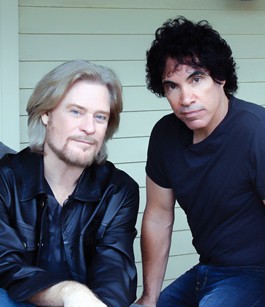
John Oates has been digging deep into his past lately, reviewing his role as half of the phenomenally successful pop-soul duo Hall & Oates. His partnership with Daryl Hall dates back to 1967, when the two aspiring musicians met at a Philadelphia concert, and endures today in a forthcoming four-CD box set, due out in October, which prompted the backward looks.

Through 17 albums over 32 years, including a half-dozen No. 1 hits, the pair explored a number of variations in their blend of folk and R&B influences with crisp hooks, sharp rock guitars, dance grooves, techno touches and—always—tight vocal arrangements.

The evolution of a sound that embodied those disparate elements is traced through the 74 tracks (16 previously unreleased) that have been compiled for the forthcoming box, which even reaches back to include early singles that Oates and Hall each cut with their own early bands before they met, drawn together by a shared love of Philadelphia’s famed street-corner harmonizing.

“Doo-wop was an important part of our roots, a little bit more so for Daryl than me,” Oates says, settling in to chat from his mountainside home near Aspen, Colo. “My roots were more in folk and traditional American music—bluegrass, blues, acoustic-oriented stuff. When we met, we brought different elements of these roots to each other. If you had to distill what Hall and Oates is, it’s a combination of this acoustic Americana mixed with urban R&B.”

Still, that distillation took many different forms through the 1970s and ’80s before coalescing into the chart-topping sound of albums like Private Eyes, Voices and H2O and such hits as “Kiss on my List,” “Maneater” and “I Can’t Go for That (No Can Do).” Revising the explorations along that path, Oates says, was full of surprises.

“When we actually had to listen to all these songs, I came away—and I’m not saying this from an ego point of view—pretty impressed with the adventurousness and the unusualness of a lot of the material, especially the stuff we resurrected from the vaults that was never released and live tracks that no one’s ever heard.”

But through it all, he adds, the basis for everything is their songs.

“Without the songs, we would be nothing, we would never have had a career,” he asserts. “For me, the accolades, the No. 1 records, the money—those things are byproducts of the songwriting.” And he marks a clear distinction between the song and a recording of it.

“They’re two completely different things to me. The song is what happens when you’re writing it, you’re sitting in your room with an instrument, and the record is what happens when you go into the studio and collaboration occurs between an engineer and musicians and producers and technology. A song can be recorded in a million different ways. Look at the Dolly Parton song ‘I Will Always Love You.’ Listen to her version and listen to Whitney Houston’s version; it’s the same song, but they’re two completely different records.”

Peeling back those studio embellishments was the basic idea underlying Oates’ recent series of solo dates, a show he titled The Stories Behind the Songs. “After all these years, so many people know this material and it’s become a part of the cultural and generational background, but a lot of people don’t know where the songs came from. I think it changes people’s perceptions of the songs because everyone, when they hear a song, seems to relate it to their own experience. That song speaks for an emotion or a moment or a feeling,” he says intently. “And what I do is say, from our point of view, this is where it really came from.”

The relaxed schedule that Hall & Oates maintain now also leaves room for some more unlikely individual projects, like Hall’s series of monthly online concerts, Live from Daryl’s House, featuring stars like Smokey Robinson performing in Hall’s living room and, perhaps more notably, the adventures of J-Stache, an online animated action show, in which Oates, lending his own voice, plays straight man to the distinctive mustache he sported throughout the ’70s and ’80s.

“I shaved my mustache off in 1989, so when I see that guy, it seems like someone else. It’s an animated version of what I used to be, so I can step away from it,” he laughs, “and the mustache can be the really insane character.”

Daryl Hall and John Oates perform together on Monday, Sept. 7, at Rodney Strong Vineyards. 4pm. $75&–$110. 11455 Old Redwood Hwy., Healdsburg. 707.869.1595.


Express Fest

08.26.09

Maybe you have to be really Apollonian to make a truly Dionysian film. Taking Woodstock is way more than what the French call “nostalgia for the mud.” Ang Lee and screenwriter James Schamus bring their customary historical density to this view of the three-day-long music festival in upstate New York, August 1969. There are no significant anachronisms to throw you back into 2009, none of the sense of modern-day actors swishing their wigs around to an array of moldy oldies.

This film won’t mollify hippie-haters, even though it acknowledges the portable toilets, the drenched fields and the chocolate-colored slop on the ground. But Taking Woodstock‘s makers are also aware of the tensions and pretensions of these ’60s types (the film notes that the road out of Woodstock led to Altamont). Jonathan Groff as the organizer Michael Lang, a helicopter-borne hippie capitalist, has the sinister confidence of a general. Taking Woodstock‘s slightly military title makes this peace movie the twin of a war movie; it concerns the same conflict, the same transitory gains, and the same trampled, unsettled ground.

Based on Elliot Tiber’s memoir, this is the story of Elliot Teichberg (Demetri Martin) trying his best to keep the family’s decaying and over-mortgaged Catskills motel open in the summer of 1969. It’s several clapboard cabins engulfed by the poison sumac, with a swimming pool personally Cloroxed by Elliot’s father, Jake (Henry Goodman), a roofer by trade. “Excuse our appearance while we remodel” signs try to make up for the fact that the towels here require a dollar deposit.

Ornery mother Sonia (the uproarious Imelda Staunton) greets guests with the warm welcome you’d expect at a skid-row flophouse. This area was once the refuge for New York Jews escaping the tropical summer heat, and there’s plenty of ambient anti-Semitism among the locals, just waiting for a little conflict to dig it out.

Elliot is going nuts trying to keep the place going with an arts festival; he has a troop of Living Theatre types called the Earth Light Players rehearsing in the barn. He’s the youngest head of the chamber of commerce in the history of Bethel, N.Y., in desperation after hearing a nearby community is going to cancel a huge rock concert because of fear of rampaging hippies. Elliot has the inspiration to contact the local dairy farmer Max Yasgur to see about renting his pastures for the concert.

Lee keeps the big event mostly offscreen, though he considers it from different angles: the lilt of electric music over the trees and ponds, a benign apocalypse of closed roads, with a long tracking shot of the abandoned cars and the young people roaming off to a destination we don’t really visit. The festival’s chaos helps Elliot get free of his mad mother, takes the cork out of his bottled-up sexuality and finally gives him rebirth in the womb of a VW van with a tab of blotter acid and two friendly West Coasters (Paul Dano and Kelli Garner).

In this sequence, augmented by computer-animation, Elliot gets as close to the concert as he’s going to get. It’s a vision of a far-off electrified stage glittering and surrounding with a shimmering nebula of humanity (the LSD is still doing its work).

Demetri Martin is excellent in the lead role. He resembles Dustin Hoffman, but he may be a more inclusive and tart actor; the recessive comic reactions to the pressures on all sides of him keep the film funny throughout. The supporting acting builds Lee’s vision of harmonizing eccentricities. Emile Hirsch is maybe the exception; playing a traumatized young Nam vet, he sticks out like a sore trope. But Leiv Schreiber’s Marine-sergeant-turned-drag-queen Vilma is a pure delight; it’s a performance on the far side of camp, with only a slight italicization in the words to mark his own unusualness.

The great Eugene Levy plays old Yasgur as a man as ruminative as his cows; as always, Levy revels in the beauty of being a square.

It’s not easy to make a good movie about this event; the younger the viewers, the more sick they are of hearing about it. Taking Woodstock‘s serene appreciation for a past time makes this one of the best fictional movies about the 1960s. It’s the history lover in Schamus and Lee that appreciates Woodstock’s uniqueness, and its ultimately transitory nature.

‘Taking Woodstock’ opens on Friday, Aug. 28, at 7pm with a ‘How Hippie Can You Be?’ costume contest. Rialto Cinemas Lakeside, 551 Summerfield Road, Santa Rosa. 707.525.4840.


New and upcoming film releases.

Browse all movie reviews.

Taste at Oxbow

0

Taste occupies prime real estate across from the Oxbow Public Market, in a corner storefront that’s all windows. The floor space is generous and holds a long table for groups, tables for two, and islands of wine country paraphernalia with plenty of room left to mill about. Dance, even. The long bar is inlaid with festively colored nuggets of glass, and furnished with stools so that patrons can relax and while away some time with a glass of wine and, well, bland wafers. Taste would seem to promise the world, while delivering only a taste—except that when considering the name, I can’t say that they ever promised anything more.

It’s a co-op tasting room that pours the product of two local wineries, and does offer a little charcuterie and mixed nuts on weekends. Wines are also available by the glass for a reasonable price, making it a reportedly busy spot in the evenings when tourists drop by between winery-hopping and dinner for a refreshing quaff like Mahoney Vineyard’s 2007 “Las Brisas” Albariño ($18). The Iberian varietal wine had a rich palate of honey, apricot and white raisins.

Where did we last see Mahoney Vineyards? Somewhere by the sea (May 13, 2009), a wine that rhymes with Albariño . . . Have the 2008 Las Brisas Vineyard Vermentino ($13)? I asked the bartender. Sure did, and produced a bottle from under the counter. This light, white varietal that winegrower Francis Mahoney discovered in southern Italy again proved fresh like sea-spray and focused like a laser, with a lean palate of grapefruit-lime. Crab cakes, please!

Invited to compare the 2005 Mahoney Ranch Pinot Noir ($28) against the 2006 Las Brisas Vineyard Pinot Noir ($28), I accepted. Though similar, Las Brisas differentiated itself with Carneros weeds laden with berry fruit, textbook cranberry, forest-berry fruit, clove spice and a dry, nicely tart finish, while the Mahoney Ranch showed a little warm earthiness and hint of classic barnyard—clean and tidy barnyard, like maybe a petting zoo.Although the giddy decor of Taste doesn’t tell the story, the Mahoneys are no newcomers here. Producing for 30 years under the Carneros Creek label, Mahoney planted dozens of Pinot Noir clones, partnering with UC Davis to lead the way in early Carneros clonal research. Even now, experimentation continues with Iberian, Italian and Sardinian varietals. As for Waterstone, I never really got to that side of the menu; check out their Napa Valley Cabernet Sauvignon, if you’ve got a taste for it.

Taste at Oxbow, 708 First St., Napa. Open Sunday–Thursday, 11am–7pm; Friday–Saturday, 11am–9pm. Tasting fee $10. 707.265.9600.


View All

Slow School

0

08.19.09

When President Harry S. Truman signed the National School Lunch Act into law in 1946, he couldn’t have envisioned the grip that Big Agro would eventually come to have over a meal as mild as a school child’s lunch. Some 50 years later, Truman’s intention—to ensure that every student have enough food in his or her belly to allow his or her brain to absorb the most education—appears to have gone grossly off-target.

The statistics are disturbing. According to data released by the American Academy of Pediatrics earlier this month, almost 5 percent of all American children ages two to 19 are severely obese—not just merely obese—a 300 percent increase from 1976. This generation is also the first not expected to exceed its parents’ life expectancy. Diabetes, as has been widely reported, is on a sharp increase, as are other diseases related to inactivity and weight gain.

The numbers align with poverty, the poorest children being the fattest; those of higher income parents, the slimmest. These statistics, of course, have to do with lifestyle and access, wealthier and better educated parents presumably having the time or the help to encourage their children to exercise and eat sensibly. But it also has a lot to do with schools and their lunch programs.

The Child Nutrition Act regulates the food systems in public schools, providing free or low-cost lunches and breakfasts year-round. The problem is what they’re feeding our kids everyday, meals based around America’s sacred crop, corn, as well as the unholy troika of salt, fat and sugar. The Child Nutrition Act expires on Sept. 30, requiring Congress to approve the next five-year cycle of this $12 billion program that feeds some 31 million kids. President Obama has already pledged another $1 billion in the 2010 budget to it, but a national movement rapidly led by Slow Food USA is asking for even more. Not money, necessarily, but innovation.

According to the new documentary Two Angry Moms, which follows a year in the life of two women trying to change the Westchester County school lunch program, most U.S. schools don’t make the meals they serve. Rather, the food is ordered “à la carte”—a fancy term which in this instance means “from catalogues”—from large food companies that offer buy-backs and discounts on volume.

“It’s all coming in as processed food; there’s not even an option any more,” explains Slow Food Russian River convivia member Susan Campbell. “It’s like going into a 7-11 at some of these schools. I remember that we had milk or an apple in the vending machine when I was in grade school. You never could have had a Coke.”

Problem is, a Coke is much cheaper these days than an apple. The current estimate is that the government spends $2.68 per child on the food program, the majority of which is spent on overhead and administration costs to provide the meals. Another dollar per head would allow for school participation in local CSAs, farm-direct programs or simply just that much more lettuce on the plate.

“They’re desperate for [food company kickbacks] because there’s no funding,” Campbell explains. “And it’s on the backs of the kids. No wonder these kids are all fat!”

Peter Lowell’s screens Two Angry Moms on Aug. 27 and Slow Food USA sponsors a series of “eat-ins” on Sept. 7 to protest the poor food served to our students.

“So many good foods can be eaten raw,” assures Lisa Montemaggiore of Slow Food Northern Sonoma County. “So much of it comes vacuum-sealed and plastic-wrapped and for all I know they’re made in Wichita. But the USDA is reviewing the school nutrition guidelines this year, and the idea is that we look at all of those programs while at the same time our healthcare costs are skyrocketing—maybe we can ameliorate it before it gets worse.”

Montemaggiore, whose own son attends elementary school in Windsor, particularly bemoans the weird glamour that hot lunches have for the young. “Because it’s so inexpensive and the vast majority of the kids get it free, everyone does it,” she sighs. “The food that we give our children at a young age should be much more related to the food that we see growing out there. It’s creating bad lifelong eating habits.”

A cursory look at area school lunch menus, however, offers more than a little good news. The children who attend Ross School in Marin County have their school lunches provided by Kid Chow, a San Francisco&–based company that serves Niman Ranch hot dogs, fresh pastas, organic butternut squash tamales and other artisanal foods for $5&–$6 per meal, about twice the usual cost of a full-price school lunch. At Mary Collins School at Cherry Valley in Petaluma, students have daily access to a salad bar, as they do in most of the Napa Valley school district, Bel Aire elementary even opting for such simplicity as hummus and cucumbers for lunch on Tuesdays.

But the majority of Americans, let alone Californians, don’t breathe such rarified air. According to the California 2007 demographics on food insecurity, some 1.3 million Golden State households are food insecure on a daily basis, meaning that the children in those homes don’t know where the next meal might be coming from. For these families, the Child Nutrition Act is a humanitarian godsend.

But why is Slow Food involving itself? Susan Campbell cites the organization’s new president, Joshua Viertel. “He’s young, he’s politically active and he really has a strong agenda,” she says. “I think that it’s also a way for Slow Food to establish itself as more of a political movement than just a dinner party club, which a lot of people have the perception of it being.” She laughs. “I don’t need another dinner party.”

Peter Lowell’s screens ‘Two Angry Moms’ as part of GoLocal’s Dinner and a Movie series on Thursday, Aug. 27, at 8pm. 7385 Healdsburg Ave., Sebastopol. $20; includes dinner. 707.328.5905. Slow Food convivial in the North Bay host eat-ins on Monday, Sept. 7. In Healdsburg, meet at the Plaza from 5pm to share a family-friendly picnic supper. Slow Food Russian River hosts a picnic at Bayer Farm from 4pm with tacos and tamales provided; please bring side dish to share and extra garden tomatoes for a salsa and guacamole feed. 1550 West Ave., Santa Rosa. Donation requested. in**@********rr.org. For other convivial events, go to www.slowfoodusa.org.

Quick dining snapshots by Bohemian staffers.

Winery news and reviews.

Food-related comings and goings, openings and closings, and other essays for those who love the kitchen and what it produces.

Recipes for food that you can actually make.

Letters to the Editor

08.26.09

we get letters . . .

Pious blubberings like those of Thomas Creed (Letters, Aug. 19) lamenting the “rampage” of the public response to the town-hall meetings, labeling the passion of the protesters as “lunacy,” and lecturing us all on the “fragile process of sitting at the table to work out a common goal” have failed utterly to see the forest for the trees.

The fact is that the people aren’t in a debating mood at this juncture. Certainly that’s regrettable, because a full-throated, wide-ranging discussion is clearly in order. It can’t happen at this time, however, because the people are, frankly, pissed off—and quite understandably so. This administration has rapidly overreached itself, and the public is balking.

There has been a groundswell of not merely discontent, but indeed very deep resentment building almost since Inauguration Day, and there’s no point ignoring or denying it any longer.

What’s more, the protesters—in the main—aren’t politicos of any stripe. What they are, largely, are independents who are feeling increasingly betrayed and used. This isn’t the “change” they signed on for in November, and if the president thinks he’s got a mandate to restructure the healthcare system or the health-insurance industry (let alone the broader economy), he’s in for one rude awakening.

When the administration and congressional leadership declared their intent to have a healthcare bill in the Oval Office for signature before the August recess, they exposed their high-handed elitism for what it was.

In effect, they were signaling their intention to push through this legislation without a public debate—because that’s precisely what a pre-recess bill would have entailed. So all this shmegegge now from the reform proponents—about how their desire to “discuss” the matter is being foiled by the “disruptions” of “organized mobs”—is the height of chutzpah. It’s outrageously disingenuous and precisely 180 degrees bass-ackwards.

Let’s be candid: if the Democratic Party leadership truly wanted a debate, they would never have attempted to ram through a bill before the recess. What’s more, while various elements (conventional or less than) may well be trying to make political hay of it, this movement is neither Republican-inspired nor Republican-organized. Get real: the GOP could neither inspire nor organize a pissing contest in a brewery.

Nor is this the “creation” of conservative talk-radio. Arguably, in fact, it’s just the reverse. The insurgents have effectively taken their discontent to talk radio, not from it. You can’t “create” that kind of passion, and it’s damned hard to co-opt it. Go ahead; ignore these words if you like. Write this off as the ravings of an addled crank. But the longer you remain in denial, the greater will be your shock of awakening when it finally arrives.

Michael Zebulon

Petaluma

. . . About Letters

Re “Boy, People Sure Hate Taxes” (Letters, Aug. 5), I think a little historical research is needed here. I asked a former California state legislator, a former California town mayor and both pro- and anti-Proposition 13 people for the facts. This is what was concluded: Prop. 13 was and is a double-edged sword, a pork barrel initiative and a wolf in sheep’s clothing. There is no doubt that Prop. 13 is a root cause of California’s fiscal crisis.

Here are some sensible solutions:

• Legalize marijuana and tax it. There has to date been no medical, scientific or rational argument for marijuana to be illegal. All the “offenders” who have been imprisoned for committing the victimless crime of smoking or growing pot should be released from prison, with an apology. This will also further reduce the draining of our economic resources.

• Eliminate or at least suspend the death penalty. Keeping inmates on death row costs us billions.

• Tax off-shore oil. That alone would probably solve the state’s budget problems. (But then, the oil companies and corporations have more say over our government than we, the voters, have.)

Jay Cimo

Sebastopol


Spectral Love

0

08.26.09

SPECTRAL INDIFFERENCE: They see you when you’re sleeping, they know when you’re awake—and they could care less.

As Florence tells Steve about her brothers, Steve can hear a loud voice inside his head, insisting that Florence has another brother she is not mentioning. “Do you have one more?” he asks. “I am hearing that you have one more.”

“No, I don’t,” she insists. “There is Dave in Idaho, there’s another in New Jersey. . . .” As she continues the list, Steve hears the voice again, and somehow he knows that the unmentioned brother died a few weeks after being born. He wants to be counted, too. Steve tells her this. Florence turns sheet-white. “My mother lost a baby when he was three weeks old. The family never told anyone.” She looks faint.

Turning people sheet-white is something Steve Osborn is used to. He is a medium, which means that, like that corny line from the movie, he sees dead people. “I have been dealing with the dead since I was four,” Osborn explains matter-of-factly. “I had an imaginary playmate that wasn’t so imaginary.” Osborn hosts Ghosts 101, an interactive event for people to become more educated about the paranormal and learn how to photograph, find and avoid ghosts on Aug. 29. All the proceeds go to the Food for Thought Food Bank to fund and service those living with AIDS and HIV.

A nurse for 30 years, working in a place where people die, Osborn was continuously in contact with the dead. “When we die, we do not turn into a box of worms—our energy moves on,” he says. He has volunteered for the food bank for 11 years and has done readings for almost all his co-workers. “People come for readings, they find me. The dead show up,” he shrugs. Through his experience and on-target descriptions of deceased loved ones, Osborn has gained a solid reputation.

Osborn wants to share what he has learned over the years, as he thinks that what most of us think we know about the other side is sheer misinformation. “Ninety percent of the information out there is wrong or stretched—and about 50 percent of psychics are fake,” he charges. Osborn emphasizes that he is not here to convince anyone of the existence of ghosts, but acknowledges the increased interest in the paranormal. “There has been a rise in interest in the spiritual realm,” he explains. “Especially as baby boomers, who grew up without a spiritual background, start to face their own mortality and look for something greater.”

On the other hand, those who grew up with a religious background often are taught it is bad to believe in ghosts and life after death. But they are still curious. “People want proof,” Osborn says, “and when relatives ‘come across,’ they have their proof. None of it collides with people’s beliefs; it only collides with those hell-bent on not believing.”

Such television shows as Ghost Hunters, Most Haunted and Ghost Adventures have peaked public interest in the paranormal. Osborn dismisses such shows as misleading. “When ghost hunting, people don’t often know what they are dealing with,” he says. “It is not a sport. Many of the spirits do not know they are dead. Ghost hunting might sound fun, but it is not always fun for them.”

According to Osborn, there are two types of ghosts. Earthbound spirits are those that stay on this side and can cause problems. Ghost-imprint spirits are imprinted on a place, such as a Civil War battle site, and can never leave. It’s a kind of limbo in situ. Osborn cites an old Cathedral in Europe where a spirit continuously walks the same path as an example of an imprinted spirit. When the building was remodeled, the floor was raised and now the ghost can only be seen from the waist up.

Do dead people watch us shower, are they in the bedroom with us when we make love? Osborn says that the answer is yes, but they do not care. Can the spirit world give us financial advice? No, not really, since they do not care about money. Our deceased relatives often care about our happiness and our well-being, but not our worldly woes.

Allen Chivens, owner of Food for Thought’s Antique and Collectibles, the store hosting the event, stresses that this is “not a ‘Casper the family ghost’ night, but rather is for people to become more educated about the paranormal.”

The workshop developed organically. “A lot of the merchandise in the store comes from estates,” Chivens says. “There is a thread of history in each item you can’t help but wonder about. It is full of mystery.”

The antique store even has a few ghosts of its own.

One volunteer has seen a small child roaming downstairs and upstairs. There have also been sightings of an older gentleman spirit, who Osborn says used to be an owner of the building. If a volunteer stays later than closing, the ghost tends to get irritated and will throw books on the ground. Although Osborn has not had this same experience, this particular spirit does not care for Osborn being there and will “shush” him when he speaks.

For the workshop, Osborn hopes that people will bring cameras or phones with cameras. After a ghostly interactive discussion, Osborn will take attendees upstairs to where the former owner resides to hopefully capture orbs in the photographs.

“The dead often give us clues, but we just don’t always want to hear,” Osborn says. The workshop helps to educate about the paranormal which helps to diffuse the fear that often surrounds ghosts. “Usually, when I get a little voice in my head, it is a mother who wants her children to know she loves them,” Osborn says. “I feel what they feel, and often their messages are full of love.”

Ghosts 101 is slated for Saturday, Aug. 29, at Food for Thought Antiques and Collectibles. 2701 Gravenstein Hwy. S., Sebastopol. 6pm. $15. 707.823.3101.


Museums and gallery notes.

Reviews of new book releases.

Reviews and previews of new plays, operas and symphony performances.

Reviews and previews of new dance performances and events.

There to Be There

0

08.26.09

EXTRA SET OF HANDS: Police chaplains volunteer to help support crime victims and other ordinary citizens who come into police contact for a variety of reasons.

Spiritual practice and police work may seem an unlikely pairing, but for more than 50 volunteers with Sonoma County’s Law Enforcement Chaplaincy Service (LECS), the combination is a way of life.

“I wanted to contribute in a way that included spiritual practice as a focus and center,” explains Teresa Franklin, a registered nurse and graduate of last year’s LECS academy. “One thing that surprised me is how closely I identified with the chaplaincy community, and also the work of law enforcement. I felt a kinship—like it was not a stretch to understand the personality type and loyalty toward serving the community that goes into those professions.”

The interfaith, nondenominational agency, which begins its 11th training academy Sept. 23, describes its mission as one that provides solace and “emotional support” to law enforcement personnel and the community alike.

Officially, that mission includes acting as spiritual adjunct to Sonoma County’s 18 emergency-response agencies by making death notifications and sitting with accident or crime victims—tasks which require an emotional depth that often receives short shrift in police training. In practice, says assistant senior chaplain BreeAnn Crespan, it also means doing what’s needed for those having the worst day of their lives, “whether it’s making phone calls, picking kids up from school, doing the dishes—we’re there to be an extra set of hands, and a shoulder to cry upon if they need it. We are just there to be there.”

Crespan acknowledges that there are those who may be reluctant to engage with someone whose job description includes any mention of God. But she stresses that the chaplain’s job is primarily to listen—and never to convince.

“When people think ‘chaplain,’ there may be a stigma. People, in my experience, have automatically thought that means that we’re going to proselytize,” she says. “That’s exactly the opposite of who we are. Our purpose is not to go in there and tell people our stories, but to be able to help them in an emotional way because we may know how they feel.”

Franklin, who received her commission in April, was gratified that the need to serve others reached across lines of faith and into something universal.

“One thing that was a real pleasant reality was how diverse and interfaith it is; it doesn’t require any particular religious affiliation,” Franklin says. “In addition to having excellent leadership and really good peer support, I really felt like I was in excellent hands the whole time. We were given the skills and resources necessary to meet the challenges of the work.”

Those skills and resources include an insider’s view of police culture and procedures; tours of a funeral parlor and the county dispatch center, morgue and jail; familiarization with gangs, domestic violence and child abuse; and extensive role-playing and assessment, as well as the self-assessment necessary to avoid the burnout that can afflict all helping professionals. Candidates must go through a rigorous screening process before being admitted to the 28-week academy. Those who graduate are expected to commit to at least one year of being on 24-hour call twice a month and attending bimonthly in-service training.

Crespan says that while a chaplain candidate’s basic qualifications are easy to state (“We’re looking for someone who’s compassionate, who’s loving, who has good listening skills”), the decision to become a law-enforcement chaplain is less easily described.

“There are no words to explain it; you just know you’re meant for it,” she says.

Franklin agrees. “At first, my family and friends were saying, ‘Why would you want to do that?'” she laughs. “And now they have a really deep sense of pride. They understand the work.”

So does Franklin. She has so far participated in two “call-outs,” or incident responses: one shortly before her April graduation, the other shortly after. One in particular illustrated for her that she had done the right thing.

“I had all of the uncertainty and anxiety of a newly commissioned chaplain,” Franklin recalls, saying that one call-out concerned a man who had died in his mother’s home. In this case, she was called to sit with the man’s mother and 15-year-old daughter.

“The body needed to be removed, and that’s not the kind of thing that a mother wants to witness,” Franklin says. “Naturally, my fear was that I wouldn’t know what to do. But I was so well trained to use my intuition and skills that the next decisions seemed to come naturally.

“The feeling I had after spending two and a half hours with that mother and adolescent girl—I walked out and said to myself, ‘I did something good today.'”

The Law Enforcement Chaplaincy Service begins its 11th annual training academy on Sept. 23. For more information, including how to apply, visit www.sonomalawchaplains.org.


Good Mutations

0

08.26.09

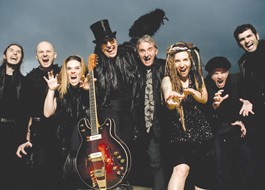
About half way down the 68-act list of artists slated to rock Golden Gate Park at this weekend’s Outside Lands Music & Arts Festival, there’s a name that sticks out like a sore thumb. It’s not Pearl Jam, MIA or even recent Beastie Boys replacements Tenacious D, but rather a band as influential as it is obscure, and one that, for fans of psychedelic rock, is a monolith of the genre’s proud history. That name is Os Mutantes. And after reuniting and recording the group’s first new album in 35 years, the crew will bring its signature Tropicália sound to the festival’s Sutro Stage this Saturday. The troop’s lead guitarist and only remaining original member, Sérgio Dias, gave the goods on the band’s latest mutations by phone from his home in São Paulo.

“I’m the same kid I was back in the ’60s,” says Dias with a lilting Portuguese accent. “Really, it was the kids who got us to come back out. The music we are doing now, I think, is the music that Os Mutantes would naturally be doing in the 21st century.”

Brazil in the 1960s was a country locked in the throes of a social and political revolution. At the time, the band was a well-groomed, wholesome-looking trio made up of Dias on guitar, his brother Arnoldo Baptista on bass and keys, and doe-eyed starlet Rita Lee on vocals. The Tropicália movement sprang up around the same time, and was, by most accounts, a dada-style mishmash of music ranging from samba and funk to folk and acid rock.

Since then, Os Mutantes have been cited by bands like Beck, Nirvana and the Talking Heads as being one of the most influential groups in pop music. Beck’s 1998 album Mutations was a tribute to the band and was made famous by the hit single “Tropicalia.” Yet the Mutants of 2009 are a far cry from the 1960s and ’70s version. The lineup, having gone through 11 band-member additions and deletions over the years, is still anchored by Dias, but now features longtime Mutante Dinho Leme on drums, plus five recently added musicians on vocals, keys, bass and guitar. The group’s new album, Haih or Amortecedor, due out Sept. 8, is a departure from the lush Samba-psyche-pop of yesteryear and a step toward a more progressive rock sound, but one where the iconic Tropicália style still shines through.

“Mutantes is not about me or the band; it’s an umbrella term for a state of mind,” says Dias. “The music speaks for itself. And when you see us live, there won’t be any special lights or pyrotechnics, it’ll just be us smiling onstage and getting lost in the music.”

Os Mutantes rock the Sutra Stage at the Outside Lands Music & Arts Festival in Golden Gate Park, San Francisco, on Saturday, Aug. 29, at 4:50pm. The three-day festival runs Aug. 28&–30 and also features performances from Pearl Jam, the Dave Matthews Band, Ween, Modest Mouse and the Mars Volta, along with 62 other acts on seven stages. Single day tickets are $89.50 and three-day passes are $225.50. Check www.sfoutsidelands.com for more details.


Light-Hearted Blues

0

08.26.09

The magic formula for holding a successful fundraiser, it seems, is to simply give the attendees an abundance of what they like. If said fundraiser happens to be in Sonoma County, then the formula gets even easier: lots of wine and damn good music.

At least, this is what works for the Petaluma Wine, Jazz & Blues Festival, and they’re not about to change a thing. After a hugely successful debut in 2008, the festival is returning with a lineup straight from jazz and blues heaven: big-wig Charlie Musselwhite, Joe Louis Walker (above), the Peter Welker Sextet and Booker T. are just a few to look for. More than 80 wineries will be attending, pouring their little vintner hearts out in the form of over 200 wines for a good cause.

The festival, which will take place at the new Sonoma-Marin Fairgrounds this time around, is a benefit for music-education programs in all Petaluma-area schools.

It’s hard to say what could be better than lounging around on a grassy slope on a lazy, late summer day with a bottomless wine glass and seven hours of high-end musical entertainment. Oh, that’s right—the Lagunitas Brewing Company will also be on site, as will a variety of specialty food vendors. One more thing: a music artist’s booth for meet-and-greets, autographs and all the merch a hepcat could dream of.

Don’t think one day is enough? Festival organizers have added an opening-night gala on Friday, Aug. 28, at McNear’s Mystic Theatre, featuring the Pete Escovedo Latin Jazz Orchestra. $25. 23 Petaluma Blvd. N., Petaluma. 707.765.2121.

The Petaluma Wine, Jazz & Blues Festival is slated for Saturday, Aug. 29, at the Sonoma-Marin Fairgrounds, 175 Fairgrounds Drive, Petaluma. 12:30&–8pm. $30&–$75; under 11, free. 707.283.3247.


Clean Art

08.26.09One of the most exciting and innovative art experiences of the summer is happening in a former abattoir. The Slaughterhouse Space, located adjacent to the Duchamp Winery, hosts "Remember Me to Someone" on Aug. 29, the third in an annual trilogy of performance art pieces hosted by Duchamp owner Pat Lentz and curated by East Bay artist Jordan Essoe....

Back in the Box

08.26.09John Oates has been digging deep into his past lately, reviewing his role as half of the phenomenally successful pop-soul duo Hall & Oates. His partnership with Daryl Hall dates back to 1967, when the two aspiring musicians met at a Philadelphia concert, and endures today in a forthcoming four-CD box set, due out in October, which prompted the...

Express Fest

08.26.09 Maybe you have to be really Apollonian to make a truly Dionysian film. Taking Woodstock is way more than what the French call "nostalgia for the mud." Ang Lee and screenwriter James Schamus bring their customary historical density to this view of the three-day-long music festival in upstate New York, August 1969. There are no significant anachronisms...

Taste at Oxbow

Slow School

08.19.09When President Harry S. Truman signed the National School Lunch Act into law in 1946, he couldn't have envisioned the grip that Big Agro would eventually come to have over a meal as mild as a school child's lunch. Some 50 years later, Truman's intention—to ensure that every student have enough food in his or her belly to allow...

Letters to the Editor

08.26.09we get letters . . . Pious blubberings like those of Thomas Creed (Letters, Aug. 19) lamenting the "rampage" of the public response to the town-hall meetings, labeling the passion of the protesters as "lunacy," and lecturing us all on the "fragile process of sitting at the table to work out a common goal" have failed utterly to see...

Spectral Love

08.26.09 SPECTRAL INDIFFERENCE: They see you when you're sleeping, they know when you're awake—and they could care less. As Florence tells Steve about her brothers, Steve can hear a loud voice inside his head, insisting that Florence has another brother she is not mentioning. "Do you have one more?" he asks. "I am hearing that you have one more." "No, I...

There to Be There

08.26.09 EXTRA SET OF HANDS: Police chaplains volunteer to help support crime victims and other ordinary citizens who come into police contact for a variety of reasons. Spiritual practice and police work may seem an unlikely pairing, but for more than 50 volunteers with Sonoma County's Law Enforcement Chaplaincy Service (LECS), the combination is a way of life."I wanted to contribute...

Good Mutations

08.26.09About half way down the 68-act list of artists slated to rock Golden Gate Park at this weekend's Outside Lands Music & Arts Festival, there's a name that sticks out like a sore thumb. It's not Pearl Jam, MIA or even recent Beastie Boys replacements Tenacious D, but rather a band as influential as it is obscure, and one...

Light-Hearted Blues

08.26.09The magic formula for holding a successful fundraiser, it seems, is to simply give the attendees an abundance of what they like. If said fundraiser happens to be in Sonoma County, then the formula gets even easier: lots of wine and damn good music. At least, this is what works for the Petaluma Wine, Jazz & Blues Festival, and...
11,084FansLike
4,446FollowersFollow
6,928FollowersFollow