Back in Terrapin

The Grateful Dead were always more than just a band. Together with their fans, they created a lifestyle, a philosophy and, mostly, a community. So it only makes sense that Terrapin Crossroads, the new restaurant owned by bassist Phil Lesh and his wife, Jill, is much more than a place to assuage your hunger.

On a sizable chunk of land jutting placidly onto the San Rafael Canal, Terrapin Crossroads encompasses a music venue, bar/taproom, outdoor patio, dining room, huge kitchen, upstairs living room, family room and even a private marina for those customers who prefer to sail in. No wonder the folks who work there refer to it as “the campus.”

It happens to be Day of the Dead when I visit the campus, which is not far from the Grateful Dead’s longtime recording studio where albums like Shakedown Street and Built to Last were produced. Though the building (formerly the Seafood Peddler) echoes with the memory of a much earlier time, the mood is celebratory, both an homage to and promise of life lived large.

The Grate Room, which is being acoustically remastered and upgraded into what director of operations Brian Reccow calls “a world-class music venue,” will reopen on Nov. 29 with a show featuring (who else?) Phil Lesh, Bob Weir and Jackie Greene. “It was good before,” Reccow tells me, eyes shining, “but now it’ll be phenomenal.”

Like the Dead, Terrapin Crossroads appeals to a multi-generational crowd. A carpeted dining nook aptly called “the family room” has leather couches and a shelf of toys and games to keep the kiddies entertained.

After all, this is the kind of place where you linger, whether on a tall black barstool listening to the free Sunday brunch band in the shade of the soon-to-be-tented patio, or tucked into a cozy booth in the dining room with its well-worn baby grand, fireplace and porthole-style windows. Covering the reclaimed-wood walls are framed photos of Phil and his friends—Jerry before the beard, Dylan before he found Jesus.

Truly upscale is the second floor living room, whose color palette is all muted blues, grays and creams with bright splashes of pink and orange. Diners can enjoy live-streamed shows on a flat-screen TV from the often sold-out Grate Room or peruse the bookshelf’s eclectic collection of hardcovers on everything from the Sistine Chapel to Chez Panisse.

At the culinary helm is chef Chris Fernandez, formerly the executive chef at Sausalito’s Poggio, recognized in 2004 by Esquire magazine as one of the best new restaurants in the country. Fernandez takes pride in what he describes as “hyper-seasonal and local gastro-pub food that is accessible to lots of different people.” In the drying rack of his kitchen, slices of bright orange persimmons await their fate on the cheese plate.

The cuisine is as vast and varied as the Grateful Dead’s discography. A charcuterie platter ($14) and rib-eye steak ($28) share the menu with a grilled cheese sandwich ($12) and mushroom risotto ($17). There are also wood-fired pizzas ($11–$14), a fun-to-read cocktail menu (Satan’s Whiskers, anyone?), and plenty of local beer and wine. This is a place designed to make people happy.

As Reccow says, “Terrapin Crossroads is Phil’s opportunity to give back to a community that has embraced him for so many years.”

Terrapin Crossroads, 100 Yacht Club Drive, San Rafael. 415.524.2773.

Up in the Air

In her long career as a novelist and nonfiction writer, Barbara Kingsolver has never turned her pen away from humanity’s dark turmoil.

Her devastating and beautiful 1998 novel The Poisonwood Bible tells the story of a missionary family that moves from Georgia to the Belgian Congo. Like its ancestor, The Heart of Darkness, the book winds a tale around the emotional and psychological violence inherent when religious fervor knocks skulls with colonialism and its discontents. (It also contains one of the more horrific scenes involving a snake ever to be committed to the page.) Leon Trotsky, Frida Kahlo and Diego Rivera play major roles in the Virginia-based writer’s 2009 novel The Lacuna, a book that challenges expectations about how a narrator should be and how a story should be told.

In the aftermath of Hurricane Sandy, aka climate change’s debutante ball, Kingsolver’s latest book couldn’t be timelier. Set in Appalachia, Flight Behavior takes as its foundation the impact of global concerns on a rural community. Weather extremes, clear-cutting, cyclical rural poverty and a forested valley alight “in a cold orange flame” all combine to make what promises to be one of the best books of 2012. Barbara Kingsolver appears on Thursday, Nov. 15, at the Wells Fargo Center for the Arts. 50 Mark West Springs Road, Santa Rosa. 7pm. $25; $45. 707.546.3600.

Pao’r Rangers

0

Brazilians are sexy bunch, there’s no arguing that fact. Could it be their diet of mostly lean meat and bread made with low-carb tapioca flour? Brazilian cheese bread is a delicious and healthy snack, breakfast or side dish, and there’s at least one company bringing it to the masses in Sonoma County.

The Cosmic Cookie Jar specializes in gluten-free baked goods, one of which happens to be pao de queijo (pronounced “pow dah kay-zhoo”). Literally translated as “bread of cheese” from Portuguese, it’s made from oil, water, milk (or soy milk), salt, tapioca flour, garlic, Parmesan cheese and eggs. The dough turns out like cottage cheese but bakes up into light, spongy, rich bread balls that explode with flavor without feeling too heavy.

The bakery has other flavors, like pesto, hot pepper, gorgonzola, curry and sundried tomato. “I’m not sure that anyone mixes in the flavors the way that we do,” says Olga Jones, who makes up half of the Cosmic Cookie Jar team with husband, Craig.

In Brazil, they’re sometimes stuffed with Catupiry (a brand of cream cheese), guava paste or dulce de leche, all but negating their healthy aspects. If America is going to catch on to these tasty balls, cream cheese and dulce de leche can only help.

Cosmic Cookie Jar can be found at farmers markets around Sonoma County and online at www.thecosmiccookiejar.com

Laid Back

0

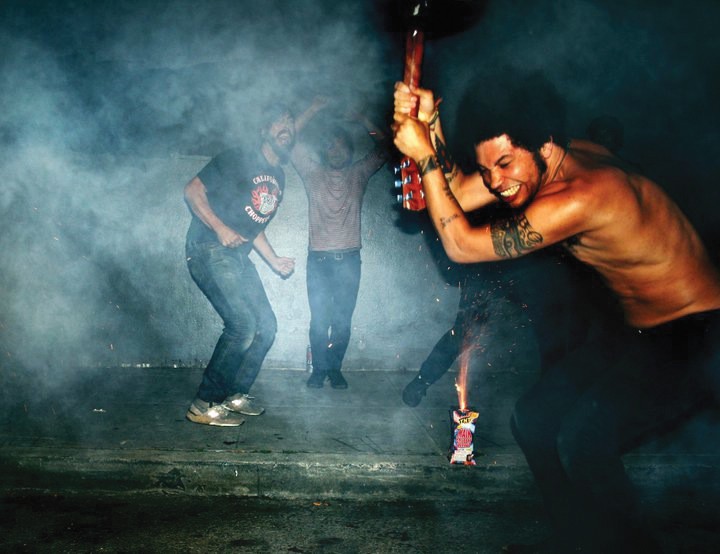
Fresh from headlining Coachella, Snoop Dogg plays the Phoenix Theater (Dec. 15) in one of the venue’s biggest bookings yet. If this means seeing Tom Gaffey and the braided, blunted one in the same room, we’re all for it. And don’t forget Snoop plays the Uptown in Napa the night before (Dec. 14). Commence “Snoop Lion” jokes now . . . The Uptown also brings boisterous bassist and blaster of bottom end Bootsy Collins (Dec. 21), and the Phoenix closes out the year with Zion-I and Mistah F.A.B. (Dec. 28).

The erstwhile Nostalgia Fest, an annual let’s-get-bands-back-together effort bringing you the comforting local sounds of yesteryear, returns with Victims Family, Coffee & Donuts, the Louies, Edaline, Punch the Clown and others at the Phoenix Theater (Dec. 22), while over at the Last Day Saloon, California rock juggernaut Trapt flow the juices and chime the power chords (Nov. 27).

Members of the Grateful Dead are all over the December concert calendar, as Phil Lesh plays with Warren Haynes, John Scofield and John Medeski (Nov. 30–Dec. 2), and then with the original “Friends” quintet (Dec. 6–Dec. 9) at his harbor venue Terrapin Crossroads. All shows are steep, but selling out, at $150. Likewise, it’s $125–$175 to see Bob Weir and Jackie Greene at 142 Throckmorton (Dec. 6), but remember, it’s a benefit. And Mickey Hart wins the former Dead egalitarian award, playing with his space-communicating band at the Uptown Theater for $35 (Nov. 29).

National treasure John Prine plays the Wells Fargo Center (Dec. 5) while Iris Dement, heartache personified, returns to the Mystic Theatre (Nov. 29). Human power drill Dick Dale returns to the Mystic for the 536th time (Dec. 6), while newcomer J. D. McPherson rollicks through a week later (Dec. 11). In other Americana bookings, the Wells Fargo Center hosts Dwight Yoakam (Dec. 15), the Napa Valley Opera House has the Punch Brothers, featuring Nickel Creek’s Chris Thile (Nov. 29), the Uptown gives a victory lap to Glen Campbell (Nov. 30), 19 Broadway lights up with Tea Leaf Green (Dec. 21), and the Raven Theater fools around with Elvin Bishop (Nov. 24).

Those keeping smooth for the holidays can find aural Alprazolam in the annual holiday show of Dave Koz & Friends at the Wells Fargo Center (Dec. 14), while super-producer Narada Michael Walden caps a tough year (his biggest successes came working with Whitney Houston) with his all-star benefit Holiday Jam (Dec. 21). Finally, the wild a cappella of Straight No Chaser swings by the Wells Fargo Center (Dec. 2)—and if you’ve never heard their “Christmas Can-Can,” you haven’t known the joys of being weary of Christmas, in all its carols, cash-in albums and returning holiday shows.

Long Remembered

Steven Spielberg’s Lincoln, by far the most intelligent of the director’s historical films, has as its backdrop the passing of the 13th Amendment. This otherwise first-rate film doesn’t quite make the circumstances clear; it doesn’t explain that the Emancipation Proclamation might have been considered a wartime emergency measure or that it could have been struck down after the war ended. But Tony Kushner’s wily script counters Spielberg’s instincts to Capra-ize this history.

In Lincoln, portrayed with sterling wit and nobility by Daniel Day-Lewis, we have the reliable pleasure of watching a charismatic, covert man who won’t tell us what it is that’s dearest to him. Visible right from the beginning is not just an uncommon man, but a very strange one. And certainly an unhappy one. It’s a story of Lincoln as an outwardly serene manipulator; you can see the mask of the weary saint, herding lame-duck congressmen and using his agents to cajole, bribe and threaten.

Lincoln observes the tension between a man haunted by four years of carnage, sleeplessness and grieving, with Sally Field as his proud, unbalanced wife. (She’s as weird as he is, really.) The film traffics in moments one didn’t know about, such as the irony of the location of Lincoln’s son Tad (Gulliver McGrath) when he heard the bad news about his father.

Hal Holbrook lives large as the vast and elderly kingmaker Preston Blair, but he’s eclipsed by Tommy Lee Jones’ soon to be Oscar-winning Thaddeus Stephens. The performance involves an askew wig and a dog-headed cane (Jones keeps mulling over the carved head, like a jester gazing sadly at his coxcomb). He has grounds for biliousness: a stern radical courted by the milksop mainstreamers, he’s ultimately made to take one for the team.

Lincoln is so bewilderingly good, it makes up for occasional, crowd-pleasing banal points. And it overcomes the gulf of time, which makes it so hard for people of today to understand the most remarkable man this nation ever produced.

‘Lincoln’ opens in wide release on Friday, Nov. 16.

Glow Local

0

As towns across Sonoma County consider breaking with PG&E and forming Sonoma Clean Power, the energy sources that would light and warm local homes—as well as the company that would supply them—are still unknown.

Last year, Sonoma County’s water agency began studying the feasibility of creating a Community Choice Aggregation, or CCA, in which local governments would buy power from a supplier of their choice and sell it to residents in their jurisdiction. Since AB 117 was passed in 2002, Marin and recently San Francisco have formed CCAs, using PG&E’s lines while purchasing energy elsewhere. Consumers living in the area Marin Clean Energy supplies are given the chance to opt out and stay with PG&E, and San Francisco is planning a similar policy for its fledgling organization.

But although the two CCAs supply an energy mix generated partly from renewable sources to their customers, both have faced scrutiny for trading one gas and electric giant with a dubious environmental record for another: Shell. Marin Clean Energy signed a five-year contract with Shell Energy North America in February of 2010, and San Francisco’s board of supervisors approved a four-and-a-half-year contract between the same power leviathan and CleanPowerSF in September. Marin activist and publisher of Solar Times Sandy LeonVest has been one of the most vocal North Bay critics of this alliance with the multinational corporation.

“SENA is a wholly owned subsidiary of Royal Dutch Shell, a dues-paying member of the democracy-busting American Legislative Exchange Council (ALEC) and one of the world’s worst polluters and human rights abusers,” she wrote in a recent edition of her newsletter.

In an article last year, the Bohemian examined Sonoma County’s landscape and concluded that between the coast, the geysers and the thriving agricultural community, this region’s CCA could be different. California’s Renewable Energy Secure Communities thought the same thing in 2009, when it awarded the water agency a $1 million grant to research geothermal heat-pump technology and treated wastewater, solar voltaic and wind power generation. Whether or not other counties are able to truly go local for their heat and electricity, it’s a real possibility for Sonoma.

According to Sonoma County Water Agency deputy chief engineer Cordel Stillman, the agency’s board of directors has set the goal of locally generating one-third of the county’s total power, or 120 megawatts at peak, by 2030, if a local CCA continues to go forward.

Local advocacy nonprofit Climate Protection Campaign is on the steering committee of Sonoma Clean Power, and according to its website, it would like to see over half of Sonoma’s power gleaned from local sources.

“We want to get local power as soon as possible and we think there is potential to get much more locally, but it will take a lot of effort between here and there,” says the campaign’s communications director Brad Heavner. The CCA, which is currently being pitched to local governments around Sonoma County, has to be stable financially to even get to that 2030 date, he points out.

Sonoma’s power agency would likely require each household to pay between $4 and $10 more each month over the next 20 years, according to the water agency’s feasibility study (though Paul Fenn, who wrote the 2002 law permitting CCAs, believes a zero-rate increase is possible). There’s a risk that if too many people opt out of the CCA, it will have to sell its excess power and take a loss, the study concludes. Part of the financial picture will include the company chosen to supply Sonoma Clean Power’s energy, and if it comes up with a competitive price, that company could be Shell, according to Stillman.

“What is going to be palatable for the consumer, that’s going to be a big concern for us,” he says.

Nine potential suppliers, including Consolidated Edison, Calpine and Goldman-Sachs, have been interviewed by the agency, Stillman wrote in an email, adding that the agency has yet to receive formal proposals and supplier price ranges.

According to Charles Sheehan, communications spokesperson for CleanPowerSF, the new agency ended up choosing Shell partly because of its green portfolio, which includes state-certified renewable energy generated from solar panels and wind turbines, and partly because “it’s a credit-worthy institution. They could make credit assurances to the city so it wouldn’t be put at financial risk.”

“The less we can rely on long-term contracts, the better,” says Heaver, speaking about a potential liaison with the same oil company. “But right now it’s all about the numbers.”

However Sonoma County’s CCA could bridge the gap between PG&E and locally sourced power, Heaver feels confident that it will happen. While he says there haven’t been any guarantees yet that geysers, wind and solar will be the future of Sonoma’s CCA, he says the job creation that could come with building plants and turbines is important to the steering committee and the Sonoma County Water Agency’s board.

“We have an entity that is very concerned about local power,” he says.

After the Storm

0

I went to New York last weekend to perform a wedding ceremony, and while I was there I figured I might as well go to one of the areas hardest hit by hurricane Sandy, the Far Rockaways. I’d been there in the summer, and I have a dear friend who lives there. When he went there to work, I went with him. We drove into the war zone from Manhattan, traffic snarled, troops wearing the colors of camouflage, an army of dump trucks, New York police directing drivers around mounds of refuse, gnarled fences, dead electrical wires down in the street, a sense of suspense hanging overhead.

At least the old sun warmed the polyglot neighbors sharing food and hope. The disaster brought out the saints, the criminals and city bureaucrats imposing rules on ornery citizens perched on the edge of the city working with volunteers to redeem their homes.

Here are some of the images in my head: the rosebush blighted in my friend Paul’s front yard, the garden soil sogged with oil and salt from the sea, the sound of a solitary bird singing in a bare tree, the air filled with the stench of garbage, a stray cat walking along the top of a sagging brick wall. In the gutted basement, drywall removed, Paul salvaged family heirlooms: his great grandfather’s record of military service in the Spanish American War and the water-soaked score for “Melodic Rag” in Eubie Blake’s own hand, and I wondered what rag Blake might play for the ravaged Far Rockaways on this Sunday.

We ambled along the mud-covered street to the sea, past the wrecked cars ready for the junkyard, past desolate houses, nearly everything broken that was built by humans. Past tattered American flags fluttering in the breeze, past two women wearing face masks against the stench and contamination, and on a wall these words handwritten: “We need never be hopeless, because we can never be irreparably broken.” I took nothing away with me, but it was a part of me now, inside forever.

Jonah Raskin grew up on Long Island, N.Y. He lives in Santa Rosa.

Open Mic is a weekly op/ed feature in the Bohemian. We welcome your contribution. To have your topical essay of 350 words considered for publication, write op*****@******an.com.

Live Review: Chucho Valdés Quintet at the Green Music Center

3


It’s a concert hall hailed for impeccable acoustics, but the Green Music Center had an unfortunate reverberation to deal with after Chucho Valdes’ performance on Sunday night—the mutterings from the audience about the show’s bad sound mix.
Out in the lobby immediately after the show, I ran into a jazz radio DJ and a professional pianist, both going down the list of problems. The piano was tinny and abrasive. The drums were far too loud. The piano, in turn, was turned up in the mix to compensate, which only made everything worse, and although Valdés tried to talk into the microphone after each song, it wasn’t turned on for 40 minutes.
I heard the same problems during the show, but I sat in the seats behind the stage, where the sound is bound to be a little strange. Was it really that bad out on the floor? I decided to find out, and a stroll around the lobby yielded even harsher criticism.

Nov. 8 and 11: Johnny Legend’s ‘TV in Acidland’ at the Rafael Film Center

0

tvinacidland.jpg

Johnny Legend is a man of many roles—he’s a self-proclaimed rockabilly bastard, being a musician since the hippie days, a wrestling promoter, and an archiver of the weirdest and the rarest bits of film debris. Legend is an expert in psychotronia recognized by QT and Eli Roth alike. TV in Acidland is Legend’s hand-made montage of the most shudderingly strange and awesomely revealing moments early television could offer—a stream-of-consciousness look back at chimera like Pinky Lee, Spike Jones and other unfortunately less remembered performers. Legend’s musical career pays off here: the stuff he assembled really gets under the skin of your ears. See Groucho Marx transcends the lens flares of the cruel cathode tube, while well-known movie stars such as Marilyn Monroe and Humphrey Bogart mortgage their integrity in embarrassing skits. The damnedest thing you ever saw. TV in Acidland screens Thursday, Nov. 8 (7pm) and Sunday, Nov. 11 (2pm) at the Rafael Film Center. 1118 Fourth Street, San Rafael. $10.50. 415.454.1222.

Is Raley’s Going the Way of Walmart?: Grocery Strike Goes Into Day Four

0

Kelly Fernandez, Olga Arvin and Joe Colosi hold down the picket line at Raleys on Fulton Road in Santa Rosa.

  • Becky Fernandez, Olga Arvin and Joe Colosi hold down the picket line at Raley’s on Fulton Road in Santa Rosa.

Raley’s workers across Sonoma County and Northern California continue to strike after thousands of workers walked off the job on the morning of Sunday, November 4. The action follows a breakdown in negotiations between leaders of UFCW-8 Golden State and UFCW Local 5 and company labor negotiators. Raley’s, Nob HIll and Bel Air stores in Northern and Central California have been affected in a dispute affecting approximately 7,000 union members.

Bob Tiernan, the current Raley’s-Nob HIll Labor Relations Director, is the former chair of the Oregon Republican Party. The UFCW accuses Tiernan of being a “carpetbagger” who has “sold a formerly decent company a bill of goods.”

This is the first time in the 77-year-history of the Raley’s-Nob Hill grocery chain that workers have walked out. Nearly all employees of the Rohnert Park store are on strike, with “temporary” workers taking their spots at one of the chain’s oldest stores. Meat counter workers represented by the UFCW are on strike at the Santa Rosa, Windsor and Petaluma stores.

Joe Colosi is a retired Raley’s meat department worker. He worked for the company for 18 years. He says that they are not striking for more money, but to maintain current benefits for both retired and current employees. Raley’s has proposed switching a company plan in which the store would take over the management of health and welfare benefits. In addition, the company says they can “no longer afford” to provide health coverage to retirees once they qualify for Medicare.

“Our fathers started to build the company, we built the company as the baby-boomer generation, which is when they did the most growth,” says Colosi.

Raley’s has more than $3 billion in annual sales.

The company looks to be taking cues from Walmart, a multi-billion dollar company that pays its low-level workers an average of $8-$9 dollars an hour, forcing some of them to file welfare to get medical benefits, says Colosi. This past October, Walmart workers in 12 states actually went on strike for the first time in the company’s history.

“Raley’s says the reason they need the money is to cut their expenses so they can compete,” says Colosi. “But they’re in a high-end grocery business. They cater to a different clientele.”

Mike Teel, President and CEO of Raley’s (and the grandson of founder Tom Raley) posted an open letter to customers on their website, in which he writes that Raley’s has been “impacted significantly by the recession and the continued expansion of other stores selling groceries.”

“Unfortunately, most of these stores are non-union, with lower operating costs that have made it harder for Raley’s, Bel Air and Nob Hill Foods to remain competitive. As a result, our market share has suffered a significant decline. In an effort to stabilize and put us back on a growth path, we have focused on two critical areas: reducing our operating costs and improving the value we deliver our customers.”

Strikers say the company has more than enough profit to keep benefits as they stand. They’ve been handing out fliers with a photo of the Teel Family yacht, “The Ozark Lady,” taken at Bay Ship in Alameda; Colosi says the yacht costs the family millions with maintenance.

Becky Fernandez is 57 years old and has worked in the Raley’s meat department for 13 years. She says that if the cuts to benefits go through she won’t be able to retire next year as planned.

“I was planning on retiring next June. If they do the takeways I cannot retire until I’m 62,” says Fernandez. “I’ve worked a long time to get where I’m at now and it’s very scary.”

Colosi accuses the company of taking advantage of a bad economy, as well as listening to “union-busting” attorneys that see this as a good time to break down the union.

“90% of this business is goodwill,” he adds, explaining how times have changed since Tom Raley, who was beloved by many employees, was in charge. “Once you lose the goodwill, it’s not going to work for you too well. They’ve done a lot of good things, but this is the worst thing I’ve ever seen happen in my history with Raley’s.”

Note: This post has been corrected to reflect a mixup between “sales” and “profits” in a quote from Colosi.

Back in Terrapin

Phil Lesh's Terrapin Crossroads more than just a Deadhead's paradise

Up in the Air

New Kingsolver novel takes on climate change

Pao’r Rangers

Brazilians are sexy bunch, there's no arguing that fact. Could it be their diet of mostly lean meat and bread made with low-carb tapioca flour? Brazilian cheese bread is a delicious and healthy snack, breakfast or side dish, and there's at least one company bringing it to the masses in Sonoma County. The Cosmic Cookie Jar specializes in gluten-free baked...

Laid Back

Hot club dates for the holidays

Long Remembered

'Lincoln' buoyed by Daniel Day-Lewis, but great all around

Glow Local

Sonoma County's public power agency considers energy source options

After the Storm

Snapshots of Hurricane Sandy in Far Rockaway

Live Review: Chucho Valdés Quintet at the Green Music Center

It's a concert hall hailed for impeccable acoustics, but the Green Music Center had an unfortunate reverberation to deal with after Chucho Valdes' performance on Sunday night—the mutterings from the audience about the show's bad sound mix. Out in the lobby immediately after the show, I ran into a jazz radio DJ and a professional pianist, both going down the...

Nov. 8 and 11: Johnny Legend’s ‘TV in Acidland’ at the Rafael Film Center

Johnny Legend is a man of many roles—he's a self-proclaimed rockabilly bastard, being a musician since the hippie days, a wrestling promoter, and an archiver of the weirdest and the rarest bits of film debris. Legend is an expert in psychotronia recognized by QT and Eli Roth alike. TV in Acidland is Legend's hand-made montage of the most shudderingly...

Is Raley’s Going the Way of Walmart?: Grocery Strike Goes Into Day Four

Becky Fernandez, Olga Arvin and Joe Colosi hold down the picket line at Raley's on Fulton Road in Santa Rosa. Raley's workers across Sonoma County and Northern California continue to strike after thousands of workers walked off the job on the morning of Sunday, November 4. The action follows a breakdown in negotiations between leaders of UFCW-8 Golden State...
11,084FansLike
4,446FollowersFollow
6,928FollowersFollow