Projected Figure

0

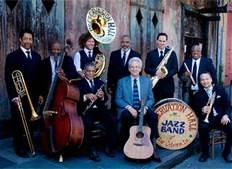
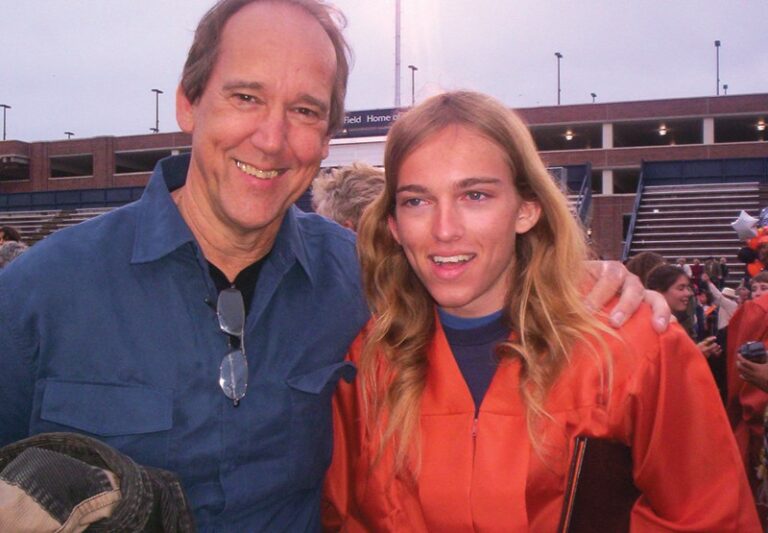
The great irony of the Alan Parsons Project lies in the fact that the ensemble’s namesake can scarcely be heard on their initial recordings.

“I didn’t do anything on the early albums in particular other than engineer and produce,” the transplanted Englishman admits by phone from his home near Santa Barbara. “I occasionally sang a backing vocal or [played] a small guitar part, but I wasn’t really part of the outfit.”

As the Alan Parsons Project progressed, Parsons’ musical participation increased gradually, but “the public at large had always thought I was the artist,” he admits. “And in fact it was a subject of much laughter in the late ’70s when I was nominated as the 13th best male vocalist in Cashbox magazine. And of course, I’d never sung a note.”

Not that it mattered to listeners. Starting in 1976, the Project crafted a series of popular albums, distinguished by elegantly melodic songs organized around a loosely defined concept and a rotating cast of featured vocalists, all burnished to a high-gloss sonic sheen. Radio-friendly albums like I Robot, Eve and The Turn of a Friendly Card meshed with the rise of soft-rock FM, and spun off such AM hits as “Eye in the Sky” and “I Wouldn’t Want to Be Like You.”

Through all that, the Alan Parsons Project remained studio-bound.

“We didn’t really have the mechanical requirements to play live” back then, he says. Plus, “it was questionable what I would actually do onstage,” he laughs.

Still, for a 1994 “solo” album Try Anything Once, “we decided to assemble a band and see how it went,” Parsons recalls. “I played a few keyboards and a little guitar and we had some really great musicians in the band playing their parts, and it worked. And we’ve been doing it ever since.”

Parsons plays the Uptown Theatre in Napa on Feb. 24, and though he enjoys these occasional road trips, he sometimes wonders why he waits so long to begin them. “In some ways, I regret it,” he muses, “because we could have possibly become a much bigger live act, possibly even a stadium act, if we’d started doing it earlier.”

Despite his well-deserved reputation as an audio expert—known for his work behind the board with Al Stewart, Ambrosia and Pink Floyd’s Dark Side of the Moon, he recently put out a triple DVD set, The Art and Science of Sound Recording—Parsons is firm that his concert performances are not electronically enhanced.

“The keyboards are important to recreate the orchestration,” he elaborates. “But we don’t cheat; it’s all coming from the stage, it is a band playing, there’s no obvious taped sound. There’s the occasional rhythm track loop that we play to, but otherwise it’s very real.”

Alsace Varietals Festival

0

Anderson Valley can get downright hot, I’m told. No doubt, the mature trees shading a patch of turf in the Mendocino County Fairgrounds provide welcome shade. Even in the midst of winter, it’s clear enough: just north of the Lamb Palace, arrayed around a gazebo, thick-trunked redwood trees bear the mark of summer fairgoers past, who have lounged in their shade, year on year, rubbing the bark smooth to a height of just about six feet.

As a wine region, it’s Anderson Valley’s comparative coolness, of course, that’s lately made it a haven for Pinot Noir. But Pinot, most often hitched with Chardonnay in such cool-climate locales as this remote valley, shares the spotlight here with a few other French cousins: Pinot Blanc, Pinot Gris, Muscat, Gewürztraminer and Riesling.

Although the latter two are commonly associated with Germany, France’s Alsace region grows them, too, and the style there is much like the style here: dry. For eight years running, the Anderson Valley Winegrowers have held their International Alsace Varietals Festival at the fairgrounds in Boonville. It’s a small event, but to keep it even simpler, I stuck with Riesling. Happily, it was well represented.

Truly international, the event includes imports from Germany, Alsace, New Zealand, even Napa. Stony Hill Vineyard’s Peter and Willinda McCrea, who make the trip from St. Helena every year, appreciate that this event attracts a more serious sort of taster. Sure enough, only one glass was heard crashing to the floor—to no applause. All the better to appreciate Stony Hill’s sizzlingly crisp, floral 2011 Riesling.

Oregon winemaker Chris Williams concurs. Whether or not it’s a boon to sales, says Williams, he likes the vibe of this friendly, little festival. And it’s great to get another taste of Brooks Winery’s outstanding 2009 Willamette Valley Riesling. From down south, look for dry Riesling from San Luis Obispo’s Claiborne & Churchill, and Santa Barbara’s up-and-coming Tatomer.

Local highlights include Breggo’s orange-blossom-scented 2010 Riesling and Toulouse’s 2012 Riesling, cashew-scented and creamy as per usual. Greenwood Ridge’s 2011 Riesling is lean and dry, with a hint of petroleum—if you know, and like, what I mean—and apricot. And Riesling from Michigan’s Old Mission Peninsula—who knew?

Why have I spent so much time talking about an event that won’t happen again until February 2014? Because Anderson Valley is not really that far away, and it rewards the adventurous taster who can keep a firm hand on the wheel.

Meanwhile, check out the 16th Annual Anderson Valley Pinot Noir Festival, May 17–19. Mendocino County Fairgrounds, 14400 Hwy. 128, Boonville. Tickets go on sale March 15 at www.avwines.com.

All Things Cheese

Like a good cheddar, the annual Sonoma Valley Cheese Conference has come of age. This week, for the 10th year running, artisan cheesemakers, retailers, distributors, food writers and aficionados from all over the country gather in Sonoma for three days of tasting, sipping and chatting. Hosted by Sheana Davis of the Epicurean Connection, this year’s conference focuses on the next generation of young cheesemakers who have heeded the curdling call.

Festivities kick off in Sonoma on Sunday, Feb. 24, with a Winter Artisan Cheese Fair. In addition to plenty of beer and winetasting, guests will sample selections from the mac-and-cheese cook-off, featuring chefs from Hopmonk, Depot Hotel, Hot Box Grill and Real Food Company, among others.

Two days of seminars, speakers and networking sessions follow on Monday and Tuesday, with local cheesemakers Gabe Vella of Vella Cheese Company and Carleen Weirauch of Weirauch Farm & Creamery joining in a panel discussion with Wisconsin farmhouse cheesemakers Andy Hatch and Katie Hedrich. Proving that cheesemaking isn’t just for farmers, urbanites Bob Willis and Kurt Dammeier discuss the art of curdling in the midst of the concrete jungle. And on Wednesday, author, CEO and self-described “lapsed anarchist” Ari Weinzweig gives a presentation on how to build a better business with less bureaucracy and more fun.

The conference runs Feb. 23–27 with various price points; to register, email Sheana Davis at sh****@*om.com or call 707.935.7960.

Visit www.theepicureanconnection.com to learn more.

Spirit Flight

0

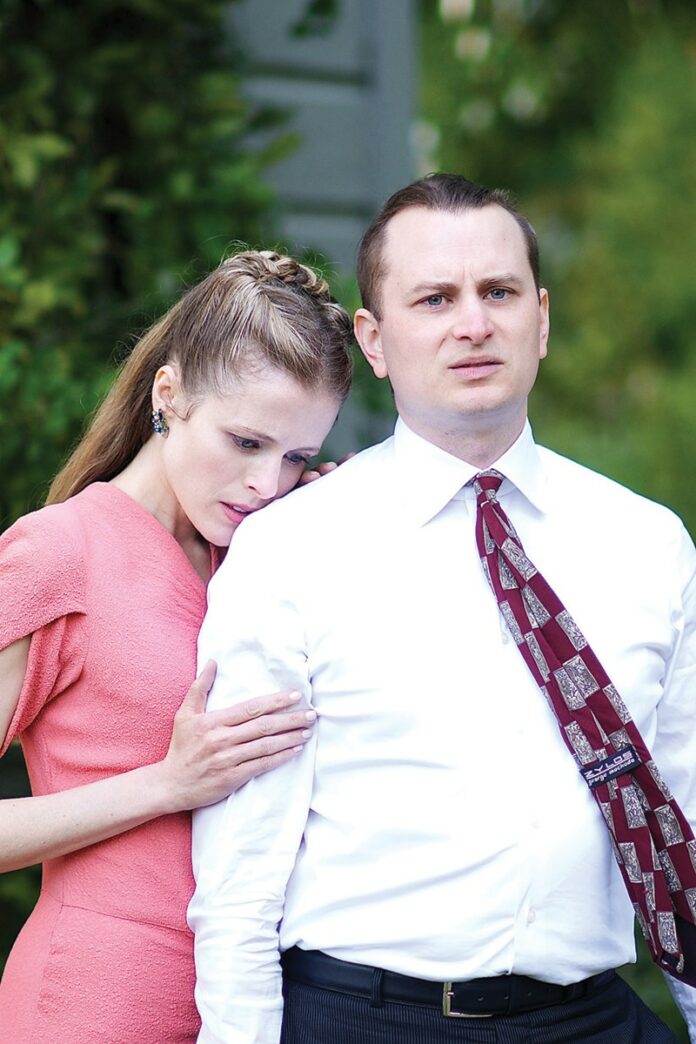
“This is such an amazing piece for me,” says actor-writer Eliot Fintushel of the new play Left After Not, opening next week at the Imaginists Theatre Collective in Santa Rosa. “When I started doing mime, my mime teacher was a fellow Zen student, and we were always making a serious effort to separate our spiritual practice from our theater practice. Then, all these years later, I come up against this piece, and I swear, going to rehearsals is like some weird spiritual practice.

“A practice,” he adds with a laugh, “where everyone acts like a bird and flaps their wings a lot.”

Left After Not (“I don’t really know what the title means,” Fintushel admits) is a world premiere experimental theater piece based on Farid ud-Din Attar’s 12th century Persian poem The Conference of the Birds. Attar was a Sufi poet and teacher, whose works—Conference of the Birds in particular—inspired the craft of many mystic poets, most famously Rumi. In the poem, a large assortment of birds set out to find the mysterious godlike bird Simurgh, traveling through seven valleys, each with new tests and trials to endure. One by one, birds begin to grow disheartened and abandon the quest. Ultimately, the few remaining birds learn a life-changing truth about the Simurgh, and their own deepest nature.

Birds is being developed by Fintushel and the entire Imaginists’ ensemble under the direction of executive director Brent Lindsay and artistic director Amy Pinto. Lindsay and Pinto will be traveling to parts of Europe this year to rub shoulders with other experimental theater figures in Budapest and Moscow, courtesy of the Center for International Theater Development, which hand-picked the Imaginists for its dedication to collaborative, bilingual theater.

But first, there are all those birds to launch.

“We do a lot of improvisation in developing this piece,” Fintushel says. “The birds are going on a trip toward illumination—but you can’t do a piece about the search for God without including a sense of humor. Otherwise, it would be just deadly. So there is a lot of funny stuff in this.”

And of course, transforming into birds, even for actors with less mime experience than Fintushel, is a supremely physical activity.

“We practice flying every day,” he says, demonstrating the graceful wing movements of the finch he plays in the show. “We fly out into the street and up and down.

“Of course,” he smiles, “We do stop for cars.”

Letters to the Editor: February 20, 2013

Mate Trail

Jay Scherf is to be commended for his daring expedition to outermost Patagonia, where he discovered the shocking news that canned and bottled mate drink is not exactly traditional yerba mate (“Bottling the Tradition,” Feb. 13). He also reveals that Argentines speak a peculiar dialect known as “castellano” (a term interchangeable with “Español,” a language spoken by people in most of South America as well as Spain, Mexico, Central America and the Caribbean. Argentines have a distinctive accent—so do lots of others who speak Spanish; it’s all castellano). He also researched “indigenous mate farmers”—presumably the folks who grow the gourds that yerba mate is sipped from, unless he was trying to describe yerba growers.

Santa Rosa

SRJC’s Job Board

I recently encountered this article in the Bohemian (“Living in Limbo,” Jan. 23), which was promptly followed by the astounding realization that the SRJC Job Board has been farmed out to a company called College Central Network, which charges $200 to post an employment offer for 30 days.

I have been going to the JC for the last three years studying graphic design. I am graduating this year, and an internship that I found on the original (free) JC job board has turned into a real job for me already. My employers were so pleased with me and the training that I received at the JC that they were eager to post another job offer to fill a currently available post. We went through the steps on the new job board, only to come to the bottom of the page and find that it costs $200! Needless to say, this small yet growing and thriving local employer jumped ship. No wonder there haven’t been any posts on the job board lately.

It is a great loss to this community, the local economy, and especially the students at the JC that someone decided that this was an appropriate budget cut. They perhaps thought, erroneously, that they might make money for the JC from this site, when a nominal charge could have covered the costs of maintaining the original job board.

With Craigslist charging $70 to post job offers and SonomaCountyHelpWanted also charging $200, it’s no wonder people can’t find jobs. Word of mouth and social connections are the most viable way for people to find work in an environment like this. It’s not surprising that an 18- or 20-year-old can’t find a job—they have few useful connections for finding a job.

Just sayin’.

Forestville

Illegal Torture

Recently, the national discussion has again turned to gun control and the issue of excess violence in our culture, along with increased, untreated mental illness. Sadly, the entertainment industries continue to feed American consumers a steady diet of violent action thrillers—games, films, books—filled with brutality for young and old audiences alike. This type of entertainment does not model or encourage well-adjusted social behavior such as compassion, kindness or understanding. Instead, it feeds an already unhealthy trend in our society that emphasizes aggressive behavior.

We have a deep concern about the showing of the new film Zero Dark Thirty in local theaters. This film presents viewers with a “fictionalized” story depicting many graphic scenes of the horror and brutality of U.S.-sanctioned torture and assassination. We are deeply concerned that these images strengthen the mass psychology that otherwise immoral and deplorable behavior is acceptable in the face of perceived threats to national or personal security.

Some argue that the film does not endorse torture, but it is undeniable that its extreme content—along with hundreds of similar films—desensitizes our minds and normalizes these brutal acts. Our moral fabric is being torn apart, and with it, a notable lack of life-nourishing experiences. Today’s field of entertainment offers little of humankind’s positive aspects and the need to care for our beautiful world, but there is no reason that it couldn’t.

Signed By: The Peace & Justice Center of Sonoma County; Veterans for Peace, Chapter 71, Sonoma County; Praxis Peace Institute; California 2nd Congressional District of the Peace Alliance/Department of Peacebuilding Campaign; Healdsburg Peace Project; Petaluma Progressives; Metta Center for Nonviolence; Sonoma Valley Peace & Justice.

Write to us at le*****@******an.com.

Piling It On

0

Before you ask, you cheeky music nerd, you—no, they’re not playing “Apple Jam.”

In fact, when the Steve Pile Band covers George Harrison’s triple-LP opus All Things Must Pass at Hopmonk in Sebastopol, they’ll leave out that third experimental-improv disc entirely, as well as the second disc. Which is just as well, since all the best songs come early: “My Sweet Lord,” “Isn’t It a Pity,” “What Is Life,” “If Not for You” and more, all harking back to the messy breakup of the Beatles and the comfort Harrison tried to seek amid interpersonal and global tumult.

Pile, one of Sonoma County’s best all-around musicians, conceived the idea of covering Vol. 1 of Harrison’s 1970 masterpiece after taking part in a similar John Lennon tribute night in Austin, Texas. “I thought that George deserved the same kind of treatment,” Pile says, hinting at other Harrison solo cuts and Traveling Wilburys tracks as part of the night’s set list. He’s got some heavyweight local musicians on the team, too: Isaac Carter on guitar, Josh Yenne on pedal steel, Jess Young on keyboard, Jason Thor and Alex Garcia on horns, and many other special guests promised.

Opening sets by ukulele troupe the Butterdishes and sitar whiz Chris Vibberts pay homage to “the quiet Beatle” as well. Be there for those melancholy opening chords of “I’d Have You Anytime” on Saturday, Feb. 23, at Hopmonk Tavern. 230 Petaluma Ave., Sebastopol. 8:30pm. $12–$15. 707.829.7300.

A First-Class Institution

0

Consider 50 cents. What does that buy these days? Not a cuppa joe—that’ll cost you two bucks at Starbucks, and even McDonald’s wants a dollar for a small. Nor will it get you a newspaper, a pack of gum, a shoeshine or a bus token. And Walmart, which promotes itself as the palace of cheap, sells practically nothing for a half-buck.

There’s one place, though, where you can get a steal of a deal for a fifty-cent piece: your local post office. Put down two quarters, and you’ll get a first-class stamp in return—and you’ll even get change. Slap that 46 cent stamp on a letter, drop it in the mailbox, and our nation’s postal workers will move your missive clear across the country—hand-delivering it to any address in America within three days (42 percent arrive the very next day, and 27 percent more get where we want them to go within two days).

Each day, six days a week, letter carriers traverse 4 million miles toting an average of 563 million pieces of mail, reaching the very doorsteps of our individual homes and workplaces in every single community in America. They ride snowmobiles to reach iced-in villages, fly bush planes into outback wilderness areas that have no roads, run mail boats out to remote islands in places like Maine and Washington state, and even use mules on an eight-mile trail to bring mail to the 500 members of the Havasupai tribe of Native Americans living on the floor of the Grand Canyon.

From the gated enclaves and penthouses of the über-wealthy to the inner-city ghettos and rural colonies of America’s poorest families, the U.S. Postal Service literally delivers. All that for 46 cents. And if you’ve written the wrong address or your recipient can’t be found, you’ll get your letter or package back for no charge.

The USPS is an unmatched bargain, a civic treasure, a genuine public good that links all people and communities into one nation.

So, naturally, it must be destroyed.

THE POSTAL PANIC

On Feb. 6, Postmaster General Patrick Donahoe announced plans for the post office to stop Saturday delivery of letters, theoretically saving the USPS $2 billion a year. The cut in service, which would take effect in August, plays right into the hands of those who want you to believe the post office is broke. For the past year, assorted corporate front groups, a howling pack of congressional right-wingers and a bunch of lazy mass-media sources have been pounding out a steadily rising drumbeat to warn that our postal service faces impending doom: the situation “is dire,” USPS “nears collapse,” it’s “a full-blown financial crisis!”

According to this gaggle of gloomsayers, the national mail agency is bogged down with too many overpaid workers and costly brick-and-mortar facilities, so it can’t keep up with the instant messaging of internet services and such nimble corporate competitors as FedEx. Thus, say these contrivers of their own conventional wisdom, the Postal Service is unprofitable, is costing taxpayers billions of dollars a year in losses and is plummeting irreversibly into bankruptcy.

Wrong, wrong and wrong. I realize that the Powers That Be never allow truth to get in the way of their policy intentions, but come on—three strikes and you’re out! Let’s examine.

Unprofitable? So what? When has the Pentagon ever made a profit? Never. Nor does anyone suggest it should. Neither has the FBI, Centers for Disease Control, FDA, State Department, FEMA, Park Service, etc. Producing a profit is not the purpose of government—its purpose is service. And for two centuries—from 1775, when the Continental Congress chose Benjamin Franklin to be our fledgling nation’s first Postmaster General, until 1971, when Richard Nixon’s Postal Reorganization Act took effect—America’s nationwide network of post offices was fully appreciated as a government service.

[page]

In fact, the Post Office Department was considered such an important function of public affairs that it was explicitly authorized by the founding document of our nation’s government (Article I, Section 8 of the Constitution). The founders would’ve laughed their wigs off had anyone proposed that the existence of such an essential civic agency be dependent on its profitability. Be efficient and fiscally responsible, yes, but the bottom line for the Post Office was delivering a public service for the good of all the people.

But Nixon happened. His presidency gave laissez-faire ideologues a long-sought opening to insert blasting caps into the structural framework of government. Their first big success was the 1971 “reform” that shattered the public service model by imposing a bottom-line profit mentality on the Post Office and installing a corporate form of governance over it. “Run it like a business,” was the political demand of the right-wing think tankers, Nixonians and congressional fixers.

So overnight, the cabinet-level Post Office Department that was overseen by Congress and funded by taxpayers was transformed into today’s Postal Service, overseen by a board of governors and funded by postage sales. Technically, the USPS is an independent agency of the executive branch, but operational authority is in the hands of the 11-member board (whose acronym, aptly enough, is “BOG”—as in a morass that prevents progress).

Will it surprise you to learn that the BOG tends to be quite corporate? From 2005 until 2011, for example, one of its most influential members was James Miller III, who was Ronald Reagan’s budget director and a longtime proponent of totally privatizing mail service. He’s a product of such right-wing, Koch-funded outfits as the American Enterprise Institute and Citizens for a Sound Economy (now called Americans for Prosperity) that are ardent pushers of postal privatization.

Also, prior to the 1971 transformation, the postmaster general had status as a cabinet official appointed by the president and confirmed by the senate. Now, though, the top postal executive is hired (and fired) by the board. This helps explain why incumbent Donahoe—who started as a postal clerk and rose through the ranks—has been a willing member of the sledgehammer crew that’s out to “save the service” by demolishing it.

NOT FUNDED BY TAXPAYERS

The anti-government ideologues have had to concede that profit’s not the point, but still they groan that the USPS is losing billions of dollars a year. Why should hard-pressed taxpayers be expected to keep shoveling money from the public treasury into this loser of a government agency?

They’re not. Important factoid No. 1: Since 1971, the postal service has not taken a dime from taxpayers. All of its operations—including the remarkable convenience of 32,000 local post offices (more service outlets than Walmart, Starbucks and McDonald’s combined)—are paid for by peddling stamps and other products.

But wait, what about those annual losses? Good grief, squawk the Chicken Littles, the USPS has gone some $16 billion in the hole during the past five years—a private corporation would go broke with that record! Important Factoid No. 2: The Postal Service is not broke. Indeed, in those five years of loudly deplored “losses,” the service actually produced hundreds of millions in operational profit—$100 million of it in just the first quarter of 2013.

What’s going on here? Sabotage of USPS financing, that’s what. In 2006, the Bush White House and Congress whacked the post office with the Postal Accountability and Enhancement Act, an incredible piece of ugliness requiring the agency to pre-pay the healthcare benefits not only of current employees, but also of all employees who’ll retire during the next 75 years. Yes, that includes employees who are not yet born! No other agency and no corporation has to do this. Worse, this ridiculous law demands that the USPS fully fund this seven-decade burden by 2016. Imagine the shrieks of outrage if Congress tried to slap FedEx or other private firms with such an onerous requirement. This politically motivated mandate is costing the Postal Service $5.5 billion a year—money taken right out of postage revenue that could be going to services. That’s the real source of the “financial crisis” squeezing America’s post offices.

But it’s not the only hocus-pocus that has falsely fabricated the public perception that our mail agency is “broke.” Due to a 40-year-old accounting error, the federal Office of Personnel Management overcharged the post office by as much as $80 billion for payments into the Civil Service Retirement System. Last year, a Senate bill allowed the USPS to recoup less than 14 percent, or roughly $11 billion, of those funds. Restore the agency’s full access to its own postage money, and the impending “collapse” goes away.

A MANUFACTURED CRISIS

That’s all well and good, claim postal-agency opponents, but there’s no disputing the fact that government-delivered mail is a quaint idea whose time has gone. They point out that the USPS’ first-class business has fallen by about 7.5 percent in each of the past couple of years, and even Postmaster Donahoe says flatly, “That’s not going to change.” This funereal school of despair breaks into two groups: “Kill it” and “Shrink it.”

[page]

The killers are the outright privatizers who’ve pushed for decades to get the post office out of . . . well, out of our mailboxes. In the 1960s, AT&T chairman Fred Kappel headed a presidential commission on postal reform, and he told a congressional panel, “If I could, I’d make the Post Office a private enterprise.” FedEx CEO Fredrick Smith (a former board member of the Koch brothers’ Cato Institute) has been the leading corporate champion for, as he put it in 1999, “closing down the USPS.”

The greater danger at the moment, however, are the shrinkers. They propose to fix the proud public service by cutting it down. Postmaster Donahoe is presently the shrinker-in-chief, having put forth a plan that will close 3,700 of our post offices; shut down about half of the 487 mail processing centers across the country; cut more than 100,000 jobs; and, as announced this month, restrict mail delivery to five days a week by eliminating all Saturday postal services.

Republican senator Susan Collins of Maine is among the people of common sense who recognize that the post office “cannot expect to gain more business, which it desperately needs, if it is reducing service.” Likewise, Fredric Rolando, head of the National Association of Letter Carriers, sees that compromising “high-quality service” is a boneheaded business move: “Degrading standards not only hurts the public and the businesses we serve; it’s also counterproductive for the Postal Service, because it will drive more people away from using the mail.”

Such drastic cutbacks, consolidations and eliminations create a suicidal spiral that will slowly but surely kill the USPS.

SMALL MINDS AT WORK

While it’s certainly true that emails and tweets are faster than mail, there remains a vast demand for postal services, especially where broadband internet does not reach, as well as when hard copy and physical delivery are essential. FedEx has its place, but its self-serving priority is always to go after maximum profit; it has no interest in or ability to deliver universal service at an affordable price to the whole nation. (Letter delivery through FedEx, for example, starts at $8.)

Postal privatizers and downsizers have reams of data on the price of everything USPS does, yet they are completely unable to calculate value. The post office is more than a bunch of buildings; it’s a community center and, for many towns, an essential part of the local identity. As former senator Jennings Randolph poignantly observed, “When the local post office is closed, the flag comes down.”

This is perhaps best exemplified by the fact that the list of 3,700 postal facilities suggested for closure includes the historic Franklin Post Office in Philadelphia, located on the very site of Old Ben’s house in Franklin Square.

THINK LARGE

The biggest lie of all is that USPS is an antiquated, unnecessary, failing civic institution that simply must give way to electronic technology and corporate efficiency. Obviously, the Postal Service is no longer the only player making the rounds, and it must make some major adjustments to find its proper fit and new opportunities in the marketing and public-service mix. But this requires top management and political overseers to be a bit more creative and business-like than constantly cutting, closing, outsourcing and eliminating.

Innovation could start with three phenomenal assets that the USPS has: (1) that network of 32,000 retail outlets that form the most extensive local presence of any business or government in America, drawing more than 7 million people into them each day; (2) an experienced, smart, skilled and dedicated workforce of nearly 600,000 middle-class Americans who live in the communities they serve; and (3) the general good will of the public, which sees their local post office and its employees as “theirs,” providing useful services and standing as one of their core civic institutions (in a 2009 Gallup Poll, 95 percent of Americans said it was personally important to them that the Postal Service be continued).

There are a few ways to build on those big plusses. Going digital is one. John Nichols reports in The Nation that the USPS already has the world’s third-largest computer infrastructure, including 5,000 remote locations with satellite internet service. Expand that into a handy consumer service offering high-speed broadband all across the country.

Services could also expand. Sen. Bernie Sanders wants to let post offices sell products and services that they’re now barred from offering (thanks to corporate opposition and congressional meddling). Sanders suggests allowing sales of cell phones, delivery of wine, selling fishing licenses, offering photocopy services, notarizing documents, etc. This would be a boon to the people in poor neighborhoods and rural areas who don’t have convenient access to such services.

Instead of five-day letter delivery, how about seven days? Think about it: the post office could be the only entity that offers reliable delivery service to every community in the country, seven days a week. And here’s a big one: banking. From 1910 until bank lobbyists killed it in 1966, a Postal Banking System operated successfully through local post offices all across the land. It offered simple, low-cost, federally insured savings accounts to millions of “unbanked” Americans who couldn’t meet the minimum deposit requirements of commercial bankers or afford their fees. This small-deposit banking system could be brought back to serve these people and create loan funds for investments in local communities.

America’s postal service is just that—a true public service, a grassroots people’s asset that has even more potential than we’re presently tapping to serve the democratic ideal of the common good. Why the hell would we let an elite of small-minded profiteers and their political hirelings dropkick this jewel through the goalposts of corporate greed? This is not a fight merely to save 32,000 post offices and the middle-class jobs they provide, but to advance the big idea of America itself, the bold, historic notion that “Yes, we can” create a society in which we’re all in it together.

That’s worth fighting for.

A version of this article originally appeared in the ‘Hightower Lowdown.’ www.jimhightower.com.

The Big Hit

Last week, our planet took two celestial shots. First, a meteor struck Russia, showering the Chelyabinsk region with fragments and injuring several hundred people, and then, Asteroid 2012 DA14 whizzed past. This coincidence of events should be a warning to humanity that meteors are not always as benign as “shooting stars,” and that the next asteroid might not miss. Will we heed this warning?

DA14 can be seen as one of about 10,000 near-Earth asteroids that have been discovered in the past 15 years, threatening an impact. Since we have seen these asteroids and are currently tracking them, we can predict any upcoming impacts.

Earth has been hit by one of these relatively small DA14-sized asteroids about once every 300 years, on average. And “small” is far, far from insignificant. The DA14-like asteroid that hit Earth in 1908 did so in a remote region of Siberia, where the explosion (the equivalent of about 250 Hiroshima nuclear bombs going off at one time) destroyed over 800 square miles of the countryside.

Until just about a year ago, DA14 was one of about 1 million similarly sized, near-Earth asteroids, which we know are out there, statistically, but that we haven’t yet seen. Until we find them in our telescopes, we are like sitting ducks in a shooting gallery.

Unbeknownst to most people, if we have adequate early warning, our current space technology is sufficiently advanced to deflect these asteroids. For smaller impacts, even a last-minute warning of several days could enable a local evacuation.

Several groups have recommended placing an infrared space telescope into orbit around the sun in order to discover the bulk of Earth-threatening asteroids. The B612 Foundation, a nonprofit organization of former astronauts, scientists, engineers and supporters, is mounting precisely such a mission. This Sentinel telescope is planned for launch in 2018; by the end of its planned lifetime, Sentinel will have discovered well over 90 percent of the asteroids that could destroy entire regions of Earth on impact.

The B612 Foundation has undertaken this project as a nongovernmental initiative. Our motivation is strictly to ensure the survival of life on Earth—all of it.

Rusty Schweickart is a former Apollo 9 astronaut and research scientist living in Sonoma.

Open Mic is a weekly op/ed feature in the Bohemian. We welcome your contribution. To have your topical essay of 350 words considered for publication, write op*****@******an.com.

My Yolk Is Heavy

0

The institution of breakfast is rarely challenged. It ranks somewhere between sleep and oxygen in reputed health benefits, and supposedly supplies irreplaceable energy to get you going—it primes your metabolic system, keeps your muscles healthy, feeds your brain and generally prepares you for the day.

But what if it’s all an old wives’ tale? Recent studies suggest that at the very least, the benefits of breakfast are not so simple.

On Jan. 18, Nutrition Journal ran a study suggesting that people will eat the same size meals at lunch and dinner regardless of how much they eat for breakfast. This challenges the conventional wisdom that if you skip breakfast, you’ll gorge later to make up for it.

Another recent study looked at the differences between exercising on a full or empty stomach. In late January, the British Journal of Nutrition published a paper that suggests exercise before breakfast burns 20 percent more body fat than the same workout after breakfast. The study also determined that people who exercise before breakfast do not consume additional calories or experience increased appetite during the day.

Doctoral student Javier Gonzalez, part of the team, told Science Daily, “In order to lose body fat, we need to use more fat than we consume. Exercise increases the total amount of energy we expend, and a greater proportion of this energy comes from existing fat if the exercise is performed after an overnight fast.”

Bodybuilder and blogger Martin Berkhan forced himself to eat breakfast for years, buying into the conventional wisdom that one must eat five to eight times a day to preserve muscle mass. Nowadays, Berkhan doesn’t break fast until mid-afternoon, following his daily weightlifting routine. Berkhan credits skipping breakfast for helping him not only reach his fat loss goals, but his muscle-building goals too.

In a recent post called “Why Does Breakfast Make Me Hungry?” Berkhan wonders why different people react so differently to breakfast.

“For me and many others out there, skipping breakfast keeps hunger away far better than eating in the morning—paradoxically enough. . . . Why is it that some people are better off not eating anything at all in the morning? How can you be better off with zero calories than hundreds of calories under these specific conditions?”

His heavily cited hypothesis is based on a phenomena called the “cortisol awakening response,” in which levels of the hormone cortisol are elevated in the morning, to help you wake up. Cortisol increases blood sugar. How your body deals with that increased blood sugar, according to Berkhan, determines how well you do on breakfast.

I’ve tried skipping breakfast, and I might never go back. When exercising, I’m much better running on empty. My gastrointestinal system is not the well-oiled machine it once was, and when my belly is full of food, it can get in the way of physical activity and movement.

Eating habits change over a lifetime. There’s a big difference between when you’re young, growing and basically hungry all the time, and when you hit the fattening 40s, like I recently have. It would be easy to keep eating like I used to, out of habit and momentum, but if I listen to my gut, I’m less hungry than I used to be, especially in the morning.

It took me a while to break through the idea that by skipping breakfast I might as well be playing Russian roulette for a living. But I feel great, and the paunch has waned.

Wading through all of the emerging data can be confusing, but your gut is the final arbiter. Listen to it.

Cranking It Up

Roadside Bombs, a punk band from Sonoma, is practicing in the tracking room. Indie band Midnight Candy pops in, needing a power cord. Mexican dance band La Herencia de Santa Rosa want to switch out a bass amp for a guitar amp.

Such is the daily activity in the control booth of the Live Musicians Co-op, where on a recent afternoon, above the constant clamor, co-owners Ben Stephens and Nate Prowse reminisce about the thriving local music scene of the late 1990s, and the subsequent lull.

“All these bands were going through Santa Rosa, and there was a huge wall put up by the city,” says Prowse. “They got really strict on the places to play, and venues shut down. Now with a different city council in there, it seems they are starting to support more of the arts. They realize Sonoma County is a very artistic community. Some of the best musicians in the world are here.”

Stephens and Prowse, 34 and 30 respectively, are both seasoned music professionals with experience in the struggles of a musician’s lifestyle—trying to make a living off low-paying gigs, finding a decent practice space for cheap. The exhausting routine prompted Stephens to open Live Musicians Co-op six years ago in Santa Rosa. The Co-op has always strived to be an affordable, professionally equipped space for up-and-coming bands to network and record demos.

“I saw this huge market for bands that hadn’t made it yet,” says Stephens, “or who didn’t have any kind of finances.”

Indeed, the place had filled a void; as we talk, we’re periodically interrupted by musicians checking on room reservations and making session payments. Roughly 40 local bands sign up to rehearse here each week.

“This is a live musician’s performance center where people can come together and perform, work on their act, tighten up their sound, get critiqued and record their album,” explains Prowse, who also serves as a piano instructor. Hands-on teaching is a key element here, where young musicians are instructed on band etiquette, how to communicate with each other, how to properly use amps and microphones and write their own music. Week-long summer camps bring kids together to form pop-up bands, record songs and make a music video. “We are trying to teach kids how to be a musician and make money,” reiterates Stephens.

Recently, he and Prowse secured the building next door in order to expand the Co-op’s recording capabilities. Entirely renovated by hand, from the floating ceilings to the acoustic insulation, it’s a serious recording facility for the community. Three additional fully equipped rehearsal rooms, each tapped into a professional-grade control room, share space with a giant tracking area and vocal booth. And though not a traditional venue, a 200-capacity “live room” has a full sound system and moving stage for live performance production.

“We just kind of wanted to build one networking center where people can rely on each other,” Prowse says, “and where there’s always going to be a scene.”

Projected Figure

Studio whiz Alan Parsons goes live

Alsace Varietals Festival

Bahl hornin' in Boonville

All Things Cheese

Like a good cheddar, the annual Sonoma Valley Cheese Conference has come of age. This week, for the 10th year running, artisan cheesemakers, retailers, distributors, food writers and aficionados from all over the country gather in Sonoma for three days of tasting, sipping and chatting. Hosted by Sheana Davis of the Epicurean Connection, this year's conference focuses on the...

Spirit Flight

Strange mysticism in 'Left After Not'

Letters to the Editor: February 20, 2013

Letters to the Editor: February 20, 2013

Piling It On

Steve Pile Band cover George Harrison at Hopmonk

A First-Class Institution

Despite the clamor raised over cutting Saturday delivery, the Post Office is not broke—and it hasn't taken any of our tax money since 1971

The Big Hit

Last week's meteor over Russia was no freak event

My Yolk Is Heavy

Studies suggest that it's healthier to skip the so-called most important meal of the day

Cranking It Up

Broke-ass bands find refuge at Live Musicians Co-op
11,084FansLike
4,606FollowersFollow
6,928FollowersFollow