Meet Kurt Stenzel, Soundtrack Composer to ‘Jodorowsky’s Dune’


Unless it’s a rockumentary like Sound City or 20 Feet From Stardom, the soundtrack to a documentary usually isn’t much more than an afterthought. But for Jodorowsky’s Dune, the new documentary about one of the greatest films never made, the music is an essential part in bringing to life a film that doesn’t exist. San Francisco composer Kurt Stenzel has done exactly that with his synth-laden, spooktacular mood setting composition for the film.

The performance artist/musician had never been asked to make a soundtrack before, but his work in the electro-art group Spacekraft caught the attention of the filmmakers. His synthesizer list is extensive, ranging from Radioshack toys to Moog to custom Dave Smith creations. The result is pulsing, warped and sometimes eerie sounds that create a sense of uncertainty. It would have had a big impact on Jodorowsky’s film vision for the epic science fiction novel, had it ever been made.
Stenzel’s ambient music is non-offensive and, like abstract art, can be interpreted in many ways—unlike his former project, the New York punk band Six and Violence. The self-taught musician admits he doesn’t have “chops” in the traditional sense, meaning he won’t bust out with a Chopin etude on request. But he does know his way around a synthesizer, and his music these days is about texture and timbre more than virtuosity.
Stenzel’s texture on Jodorowsky’s Dune is reminiscent of Isao Tomita, the pioneering Japanese musician who rose to popularity with his futuristic synthesizer renditions of Holst’s Planets suite and pieces of the Star Wars soundtrack in the 1970s. Stenzel grew up in a “classical music household,” and is familiar with Tomita’s work. He’s also a big fan of the Krautrock genre, especially Rodelius and his group, Cluster. When Dune director Frank Pavich was looking for a “Tangerine Dream type soundtrack,” Stenzel was the obvious choice.
Spacekraft’s music is also represented in the film. About nine minutes of the group’s music was left in the film after Stenzel sent over some music “as a placeholder” to Pavich, while he worked on more original music. “Some things just kind of stuck,” says Stenzel. The group is largely performance art these days, with a whole crew of “flight attendants” and more accompanying the experience of a Spacekraft show, which can be seen usually at art galleries and grand openings. Listeners can sit in airline chairs and control the music with their own iPhones, or take personality tests during the performance. “The whole thing is designed to take you somewhere else,” says Stenzel. “We’re kind of weird and make some drug references here and there,” he cautions. Sometimes, the public doesn’t quite understand what’s going on. “People ask if we’re a software company, or Scientologists, or whatever.” For the record, they’re neither.
“We’re somewhere between the pretentious art world and the happy-go-lucky-Bay-Area-friendly-lets-just-do-this-for-fun kind of thing,” says Stenzel.
The soundtrack will be released soon in full analog glory on a double-LP. Stenzel says he’s now interested in writing more music for film. “I like to be challenged,” he says. “This one, I was already doing this type of music… I would love to do a drama or something different.”
Listen to Stenzel’s work in this trailer for the film:

Making a Buck

0

To most people, flattened cardboard boxes are worthless. Which is precisely why Nick Mancillas turns them into canvases, and then into currency.

“One of my goals is to give value to the valueless,” says Mancillas, who forages the cardboard from dumpsters and then creates mixed-media collages of the famous men (mostly presidents) whose stoic faces appear on our money. “I’m interested in a sort of artistic alchemy.”

Reflecting both our obsession with money and our disposable society, the Cardboard Currency collection will be part of a show called “Follow the Money” opening May 23 at the new Chroma Gallery on South A Street in Santa Rosa.

“I’m not painting on top of cardboard because I’m poor,” explains Mancillas, who’s taught art at Piner High School for 20 years, “but because it’s a throw-away material, the vernacular of the common people. And yet each box has a whole story behind it.”

Often, the box’s original purpose is reflected in the title of the piece, as in George Washington Mushrooms and Two Buck Jefferson, which features Thomas Jefferson (of the somewhat rare two-dollar bill) on a box of Charles Shaw (of the beloved “Two-Buck Chuck”). Created from the ephemeral papers of Mancilla’s life, the pieces are also deeply personal: he cuts up and creates collages out of his own TSA reports, newspapers, food package labels and even photocopied Benjamins.

Reflecting what Mancillas calls the “economic colonialism” of our continent, he’s also painted the less familiar (and even female!) faces of Canadian and Mexican currency, including a diptych of Queen Elizabeth, who appears on Canada’s $20 bill, and Juana Inés de la Cruz, a poet and nun who graces the 200 peso bill.

“I paint them backwards, to reflect the backwards nature of our economic reality,” he says, “and because I don’t want to be thought of as a forger.”

Though he’d been making art his whole life, about seven years ago his two adolescent daughters inspired him to up the ante. “I realized that I couldn’t control them,” explains Mancillas, “but I could show them what it looks like to pursue your dreams.”

For Mancillas, that meant earning an MFA in a low residency program at the Art Institute of Boston and booking shows in San Francisco and Sacramento. “I’m extremely grateful for the chance to show my art in my hometown of Santa Rosa,” he says.

Given the ubiquity of plastic credit cards, “these are nostalgic images now,” notes Mancillas, who is forthcoming about his own economic duress—a couple of houses lost to banks and two daughters in college.

His art, then, is ultimately about finding value where we least expect it. “If I could transform a turd into a gold nugget, and make it worth something to someone, I would.”

Shawn & Steve

0

She’s an enduring contemporary folk songwriter praised for her poignancy and emotional range; he’s a legendary Nashville songwriter, author and poet whose songs have been recorded by the likes of Johnny Cash and Willie Nelson.

Shawn Colvin (shown) is best known for the single “Sunny Came Home,” from her platinum-selling album A Few Small Repairs. Since entering the mainstream, Colvin has continued to craft bittersweet and cathartic albums and recently published a memoir that’s as candid as her music.

Steve Earle moved to Nashville at age 19, after following Townes Van Zandt around Texas. He was a consummate songwriter, penning songs for other artists before releasing his own records in the mid-’80s. Earle is recognized for establishing the “new country” sound, though his catalog is a diverse array of alt-country, roots rock and hard rock.

This May, Colvin and Earle, longtime friends and mutual admirers, are touring together for a special run of shows. “Stories and Songs” showcases the two performing duets and trade-off on their most popular works, as well as favorites from of their folk and country contemporaries.

Shawn Colvin and Steve Earle perform on Tuesday and Wednesday, May 20–21, at City Winery Napa, 1030 Main St., Napa. $65–$75. 8pm. 707.262.7372.

Petroleum Politics

0

A state fracking law enacted last year to regulate the oil and gas extraction practice is now helping lawmakers dodge a new anti-fracking moratorium push.

Welcome to the well-oiled wheels of fossil-fuel politics in the Golden State.

Sen. Holly Mitchell, D-Los Angeles, co-sponsored the bill to stop fracking in the state, pending further environmental review. The bill is headed to a vote in the Senate appropriations committee May 19.

But SB 4, a fracking bill signed into law last year, is providing cover to oppose the new measure for at least one committee member, Sen. Ricardo Lara, D-Bell Gardens.

His position appears to be finding favor: use the existing law as a pretext to oppose a renewed moratorium push.

“Some of the more moderate ones are taking that position,” says Teala Schaff, a spokeswoman for Sen. Noreen Evans, D-Santa Rosa, who supports the Mitchell moratorium.

Mitchell’s bill, SB 1132, would enact a moratorium until there’s a “clear finding that it could be done safely and that there are regulations that ensure that it is done safely,” says spokesman Charles Stewart.

They already tried that last year.

Sen. Fran Pavley, D-Agoura Hills, introduced SB 4 in the last session as a bill that would have hit the pause button on the state’s limited hydraulic-extraction industry.

But the state’s gas and oil lobby got that language extracted, and Gov. Jerry Brown signed it into law. Democrats have since characterized SB 4 as basically the “better than nothing” law.

While SB 4 did enact some of the nation’s toughest fracking regs, it also provided language that would allow for an expansion of the practice, which uses pressurized water, sand and acid to bore through rock to get at previously unreachable reserves in the Monterey Shale formation.

Anti-frackers say the law opened the door to a fracking boom, a door lawmakers are reluctant to close. “It allows for a green-light for fracking in the state,” says David Turnbull, campaigns director for Oil Change International.

Nixing a fracking gold rush in a state that has only recent stepped back from the brink of insolvency was always a hard sell. The numbers are big all around. There are upwards of 15 billion gallons in the shale, with high-end promises gushing from the oil industry of
3 million new jobs and $25 billion in tax revenue.

Environmental groups around the state had supported the Pavley bill because it offered the moratorium. When she yanked the moratorium language, they yanked their support.

Despite growing opposition—and rising concerns about fracking’s potential to cause earthquakes—prospects for a moratorium appear to be running out of gas this time around, too.

The two Republican members of the appropriations committee, Mimi Walters and Ted Gaines, have already signaled opposition. Walters received $33,500 from the fossil-fuel lobby in 2012, according to data provided by Oil Change. She opposed the Pavley bill last year (too much regulation!), and opposes the moratorium.

Meanwhile, Lara abstained when the Mitchell bill came up for a previous committee vote. Lara, who, according to Oil Change, accepted $17,300 from fossil-fuel interests in 2012, recently told the Los Angeles Times that he wanted to see how Pavley’s law played out before considering a moratorium.

Lara did not respond to two emails seeking further comment.

A spokesperson for committee chairman Sen. Kevin de León, D-Los Angeles, said the senator was studying the Mitchell bill and would not take a stand in advance of the May 19 vote.

Sen. de León has received over $30,000 in contributions from the fossil-fuel lobby over eight years in the state Assembly and Senate, says Oil Change.

Sen. Jerry Hill, D-San Mateo, will support the Mitchell bill, says his spokesman.

Sen. Alex Padilla, D-Pacoima, and Senate President pro Tempore Darrell Steinberg, D-Sacramento, did not respond to emails and phone calls seeking comment.

All of the Democrats on appropriations voted for the Pavley bill last year, as did Mitchell, who represents a low-income district of Los Angeles that sits atop the Inglewood Oil Field.

“We supported Sen. Pavley’s bill, but just felt that we needed to go further,” says Mitchell’s spokesman.

Evans also supported SB 4 after the moratorium language was stripped. “We have got to start somewhere,” Schaff says, adding that Evans has offered a bill of her own this year that slaps an extraction tax on the gas and oil industry.

Assemblywoman Mariko Yamada, whose district comprises parts of Napa and Sonoma counties, says she is supporting Mitchell’s bill, but admits that it’s a “heavy lift because of the enactment of SB 4.”

Gov. Brown promised unspecified amendments in a signing statement last year that would, he said, strengthen SB 4 to the liking of environmentalists.

“Unless the amendment is, ‘We’re going to stop fracking,’ it’s not going to placate the environmental community,” says Turnbull.

In any event, those promised amendments are nowhere to be seen this legislative session.

Sci-Fi’s Father

The inspirational quality of the documentary Jodorowsky’s Dune is immaterial to the potential of the half-made movie it disinters. That inspiration transcends the tunnel-vision of some of the critics thrilled by a film that might have beat their beloved Star Wars to the screen by a few years.

Now the storyboards by French cartoonist Moebius can be animated, and this mad psychedelic project can be anatomized. The mystical filmmaker, 85-year-old Alejandro Jodorowsky, who’d been tripping out elite viewers with midnight cinema such as El Topo and The Magic Mountain, describes how he and producer Michel Seydoux tried to adapt Frank Herbert’s bestseller a corrupt interplanetary empire.

The team of “warriors” they assembled included the star for the project, Jodorowsky’s own son, who was put through two years of martial arts training. Dan O’Bannon, the FX artist on John Carpenter’s Dark Star, sold his possessions and came to live in Paris to work on Dune. British illustrator Chris Foss drew living spaceships with the dapples and stripes of scorpionfish. H. R. Giger, the father of Alien‘s xenomorph, created several terrifying fortresses, bristling with spears and teeth. And Jodorowsky set off after a cast that would include Orson Welles, Mick Jagger and Salvador Dali.

Dune was an early meeting of the minds who created the science-fiction film wave to come. With his obsessions about virgin birth and messianic sacrifice, could Jodorowsky have reached audiences on the wow-level of visuals alone? David Lynch’s version—a better movie than director Frank Pavich’s documentary claims it is—didn’t succeed on that merit. I’m as inspired as anyone by Jodorowsky’s passion, but it’s chafing to hear Dune described as “the greatest movie never made.”

For a story on Kurt Stenzel, the San Francisco-based composer of Jodorowsky’s Dune soundtrack, go to http://bit.ly/1g2obsQ.

‘Jodorowsky’s Dune’ is now screening at Summerfield Cinemas,
551 Summerfield Road, Santa Rosa. 707.522.0719.

North Bay James Beard Award Winners

0

The North Bay picked up three James Beard Foundation Awards in New York City earlier this month. At the annual “Oscars of the food world,” Civil Eats was named “publication of the year.” The food-policy blog was founded by Penngrove’s sustainable food-media impresario Naomi Starkman.

“The James Beard Foundation award for publication of the year proves that content-driven, in-depth dialogue on food-systems issues matter,” Starkman wrote in a blog post about the award. “Civil Eats is a spark that ignited the food movement, and this award is for everyone who believes that storytelling can transform the world.”

Until recently, the blog was volunteer-run. But a successful Kickstarter campaign netted $100,000, making it the most successful crowdfunding campaign ever for a news outlet. Starkman and editor-at-large Paula Crossfield hope to hire a D.C.-based reporter to cover food politics from where a lot of the action is.

Meanwhile, Healdsburg’s SHED earned a Beard award for Best Restaurant Design in the “76 seats or more” category. I don’t think there is a better looking restaurant-market in the North Bay. And in Napa Valley, the Restaurant at Meadowood picked up an award for outstanding service. The food at St. Helena’s Meadowood gets most of the attention, but the front-of-the-house ninjas are something to behold too.

Congratulations to all. For a Q&A with Naomi Starkman please go here.

The Big Reveal

Pulitzer Prize–winning journalist Jose Antonio Vargas stunned the world in 2011 when he revealed that he was an undocumented immigrant in a New York Times Magazine essay.

Vargas came to the U.S. from the Philippines when he was 12, and was raised in Mountain View by his grandparents. No one in his family ever obtained the proper papers to grant him permanent residence. After graduating from San Francisco State University, Vargas began a career in journalism that took him to New York, Washington, D.C., and elsewhere. For 15 years, Vargas worked, paid taxes and kept his status a secret.

Produced and directed by Vargas, the film Documented follows the aftermath of his immigration-status outing in 2011, and how he has dedicated himself to opening up the dialogue regarding the estimated 11 million other undocumented Americans living and working in the country. The film also follows him on a personal journey to reconnect with a mother he’s not seen in 20 years.

Documented opens in limited release
this month and makes its North Bay debut May 16 at Rialto Cinemas in Sebastopol.
On Sunday, May 18, Vargas will be on hand for a Q&A session after the 1pm showing.
6868 Mckinley Ave., Sebastopol. 707.525.4840.&mdash

Letters to the Editor: May 14, 2014

Drought Thoughts

Whether it rains or not at this point, we Californians are in a drought. Nonetheless, you still see bright green grass and sprinklers watering away in the middle of the hot midday sun. Seems people either don’t want to believe we’re in a drought or they must have forgotten.

The problem is that currently we are on the honor system, but the fact of the matter is that people are still wasting water, and a great deal of it. Don’t get me wrong. I’m not saying to not water your yard; just be more aware when the sprinklers come on and for how long, and turn them off when it rains. Watering your lawn really should not be this complicated.

We are in this together and all need to do our part to save what water we do have. It’s going to get worse before it gets better with summer quickly approaching. So when you are out with the kids running in the sprinklers this summer, think to yourself: maybe I should buy a kiddie pool.

Santa Rosa

Money and Politics

When the votes are counted in early June, the most closely watched results in the North Bay will be for the state Assembly in District 10, which includes all of Marin County and much of Sonoma County.

Right now, the incumbent, Marc Levine, hasn’t outgrown the mega-business interests that boosted him into the Assembly.

Levine has never given a satisfactory answer to a question asked by the Sacramento Bee last year, when he abstained from a final vote on whether to give the California Coastal Commission more teeth: “Why did Assemblyman Marc Levine take a walk on coastal protection?”

He was in the same grim groove on an important bill for protecting farmworker union negotiations. Levine opted for “not voting” on the bill (SB 25) and earned a public thank-you from Western Growers. The big-agriculture group pointed out that—from its vantage point—”not voting” was as good as voting “no.”

Now keep in mind: Levine was elected in 2012 with help from upwards of $250,000 spent by “independent expenditure committees” controlled by such agribusiness giants as Western Growers.

Individual political ambition and principles often have an uneasy relationship. But what should matter is that communities are vulnerable, lives are at stake and the environment is at risk. With those values, I believe that Diana Conti is the best choice in the Assembly District 10 race.

We need to be much better at safeguarding the health of our society. The best way to respond when politicians embrace the power of big corporate money is to strengthen the ability of the body politic to fight off such opportunistic infections.

Co-chair of the Coalition for
Grassroots Progress,

Inverness Park

Irrational Responses

As a long time resident of Montgomery Village, I too have been outraged by the people displaying the offensive Hitler/Obama comparison in front of the Montgomery Village post office (Letters, April 30). On two different occasions, I have expressed to them their rights to freedom of speech, but asked them if the Hitler mustache on a picture of Obama was really necessary. The response both times was so irrational I found it useless to converse any further. I was somewhat reluctant to even comment on this issue for not wanting to give any more attention to the people involved, but I think it’s important to expose them for what they really are: ignorant, hateful and racist.

Santa Rosa

Go Boho

Nicolas Grizzle’s “No Peeking” article, Laura Gonzalez’s Open Mic “Where Is the Outrage?” on Efren Carrillo, and Jonathan Greenberg’s news brief “Occupy Palm Drive Fizzles” (April 30) were by far the best articles in any publication on these two most important West County issues. May the renewed Bohemian continue to publish such excellent articles.

Sebastopol

Write to us at le*****@******an.com.

Asti Again

0

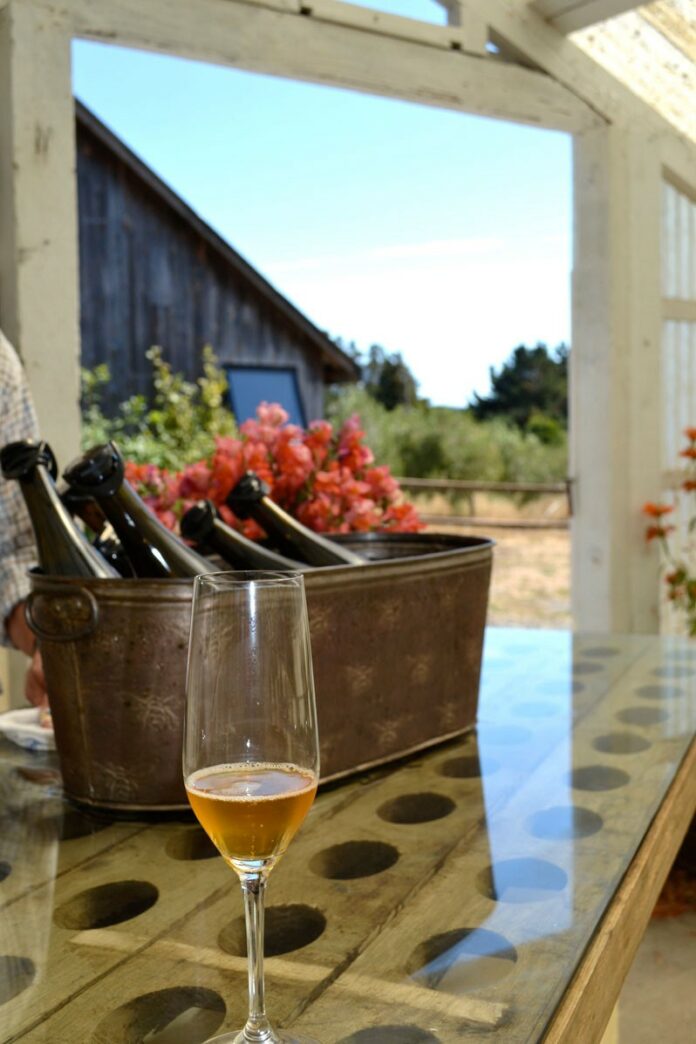
Like a hitherto hidden room revealed in a dream, the tasting room at Asti Winery feels both familiar and long forgotten. If it seems familiar to me, that’s because I visited four-plus years ago when the former Italian Swiss Colony tasting room, reputed to have been California’s second most popular tourist attraction during its heyday, was briefly reopened as Cellar No. 8 before being left to its one sepulchral inhabitant: a marble bust of a dotager cradling a straw fiasco of wine, “His Last Love.”

This weekend, you won’t have to journey into the subconscious to sip wine in this time capsule of a tasting room, now hip by attrition, where the taps flowed with wines “mellowed in redwood” until it was shuttered decades ago. On Friday, May 16, Asti Winery hosts the 17th annual Alexander Valley Winegrowers open house (the Bohemian is a sponsor of this event).

Pointing out freshly hewn, split-rail fencing and handsome new cellar doors, Asti Winery general manager Jeff Collins explains why the carefully restored facade of the 100-year-old cellar reads, “Golden State Extra Dry California Grand Prix Champagne.”

“This is the first ‘bottle shock,'” Collins says. Long before that Paris tasting of 1976, there was the prestigious Wine Exposition of 1911 in Turin, Italy. When the French got wind that the Americans would be competing, a prominent Parisian journal scoffed, “California has produced wines fit only for German troopers.” They weren’t laughing when the California upstart took home the exposition’s Grand Prix prize.

The Italian Swiss Agricultural Colony was founded in 1881 by Andrea Sbarbaro, a grocer from Genoa who became president of the Bank of Italy in San Francisco. “Sbarbaro was a marketing genius,” Collins says. As early as the 1890s, he was bringing trainloads of tourists up from San Francisco to taste wine and party by the Russian River. The parties on May 17 and 18 this year include barbecues, food trucks, photos booths and live music throughout Alexander Valley at participating wineries.

Taste Alexander Valley, Saturday and Sunday, May 17–18,
11am–4pm; various locations. Weekend passes, $65 advance;
$75 door. Opening celebration May 16, 5:30–8:30pm at Asti
Winery, 26150 Asti Road, Cloverdale. Tickets $95 advance, at
www.tastealexandervalley.org or 888.463.0207.

Magical Mystery Tourist

0

I was having tea and Indian snacks with author Ananda Brady on a recent Saturday afternoon, talking with him about his life and his book, Odyssey: Ten Years on the Hippie Trail. We were sitting at an outside table in his compound, talking Buddhism and other spiritual matters, as one does in Bolinas.

The day was warm, the conversation sparkly. As we spoke, a green-hued hummingbird zipped into the picture, hovered over a box of sugar just inches from us. It seemed like an eternity before that hummingbird finally flitted off.

It was a fitting metaphor.

Brady lives up on the Big Mesa in Bolinas
in a hand-hewn Gypsy-circus wagon he built from the ground up, starting with the chassis from a 1955 Chevy pickup truck. The wagon is moveable but it hasn’t moved for years—15 years. “Too much grass growing around the wheels,” Brady said with a laugh.

Brady has another out-building in the compound, the writing space where he put together his 570-page book. His book opens with a poetic tribute to Kerouac, and is deeply flavored with Beat spices.

Odyssey is funny and free-wheeling in its prosody, wryly observed and rich with detail from a 10-year adventure in the 1970s that took Brady, roughly, from Kansas to California to Kansas to Kabul to Kathmandu to Costa Rica—and, eventually, back to California.

His chapter on traveling through Afghanistan in the 1970s is especially poignant in our time of terrorism and war, but there’s no undercurrent in Odyssey of “innocence lost.” These adventures were undertaken in the long, endless shadow of Vietnam. There’s always some innocence out there still waiting to be lost or regained, but Odyssey stands on its own as a historical document.

Brady has entered the Babylon of the internet to publish and promote Odyssey; he had a small-press publisher for the book, but the Amazon self-publishing system had lots of benefits, not the least of which is the author’s ability to flit in and out of the book like that humming bird, making edits and savoring the memories of his long and winding road.

You can buy a copy through Amazon and Barnes & Noble online, or go straight to the source and email Ananda at odysy68@gmail.

For now, here’s an excerpt from the book’s opening chapter. —Tom Gogola

The Zero—the Fool—the un-numbered card in the Tarot, representing the un-anchored point of view, the un-limited range of possibility, the un-classifiable one who—while lightly clutching a small bundle of possessions—is teetering merrily on the brink of a precipice.

Twenty years old, 1966, leaving home, driving with my buddy Brad from Kansas to California in my ’56 Chevy:

Gliding across the dark Mojave bedrock of prickly earth full of rattlesnakes and horned-toads, cactus flowers and tumbleweeds—our windows are down, it’s the middle of night, the glow from the sign atop a forty-foot pole that says simply and irresistibly ‘EAT’ looms in the distance. We slow and pull into the giant graveled truck-stop parking field off the two-lane highway which is the old Route 66, roll up to a pump. “Thirty-six cents for regular! Damn, it’s expensive out here!”

Cutting across the black soft night with its pungent wind blowing through our hair, singing along with “Wild Thing,” and “Paperback Writer” and “California Dreamin'” at the top of our lungs, we’re all exuberance at the approach of our destination. After a while we settle down, to listen to and inhale the magic desert air, to watch the shadows and silhouettes of the cactus, the yucca, the distant craggy bluffs in the faint moonlight. A pack of coyotes skit across the ribbon of asphalt in the far reach of our beams, to go skipping and yelping into the night.

The freeway takes us finally to its end, through the tunnel at Santa Monica at which point it transforms into the Pacific Coast Highway—I get my first glimpse of the Pacific Ocean; it stills my breath, lying vast and mighty in the graying dawn.

Brad slows to a comfortable 35 so we can take it all in. We switch off the radio and glide quietly alongside the walls of the plunging palisades which capture and amplify the roaring hush of the sea. The briny air intoxicated me with love at first sight and as love will do, it filled me with a melancholy for somehow finding a way to claim it – to make this spellbinding coastline my own.

[page]

I make it my own by finding a charming house in the sandy delta of the Topanga Canyon Creek, a two-minute stroll alongside its waters to the Malibu beach. I had many housemates, but for a time they were four girls who happened to work as nude dancers up on Sunset Strip. Tina shared her love with my friend Jerry and me; we went to pick her up one night:

Tina got into the van and was laughing about a new law that forbade totally nude dancing. “So now we have to wear a ‘snatch-patch!’ They gave me one, you wanna see it?” Of course! So she pulled up her skirt, and was absolutely naked underneath. “Oh no, I’m not!” and she proceeded to untie a flesh-colored thread behind her back, then she pulled off the tiniest and most invisible bikini bottom ever invented—a triangular shard of a nylon stocking, with actual pubic hair glued to it. “When I put this on, I’m decent! I’m legal!” It was the funniest thing we’d ever seen, and we couldn’t quit laughing.

We made all kinds of jokes about the law checking for snatch-patches backstage, and the labor force it took to make them for all the girls. A new cottage industry: growing your pubic hair and selling it for extra cash!

So, you see, we had good, clean fun, and I had it all going on, in a short time, through no planning of my own—just good luck. From my little home, I had all the action, all the ethos, pathos and eros that makes for great drama. In two years I rarely went out for entertainment because it all turned up right there under my roof.

It was a time of much soul-searching and discovery for myself and so many others, as though we were hatched like newborns from some galactic sorcerer’s cosmic incubator. Yes LSD, yes marijuana, yes hallucinations—but the genuine visions we also had came from the sincerity of our quests. After two years in the company of goddesses, wizards and just plain crazy people, this college kid from Kansas became filled with an overwhelming lunacy to hoof it around the world—with little money and no plan save a pledge to get to India someday, as I’d been infused with an obsession for India—from within—from the psychic medium of LSD.

A rocky beginning: No cash in the bank. No fat on the bone. Sleep on the ground. Travel alone. Despair. How could I go on? I must go on, so even deeper into Mexico, the day all my money was stolen was the day the adventure kicked into full gear.

Some snippets along the way:

Earlier on this particular morning, living in a bamboo shack on a beach in Costa Rica, I’d eaten six or seven psychedelic mushrooms:

I was stitching up a patchwork quilt for myself, sitting in the cool of a palm in front of our hut. Some erratic flurry of movement along the shoreline catches my eye, and striding toward me with great purpose is a posse of five men. Though they were in street clothes, I knew them instantly to be cops. I was comfortable and involved in my project, so I didn’t feel the urge to jump to attention or straighten my hair. They surround me.

“What brings you fellows here?” I ask in my infinite innocence.

One of them, obviously the chief—el jefe—gets straight to the point in his very good English, “You bring us here, and we know you have drugs!”

I say, “Oh no, I’m sorry, I don’t, but if you need drugs, you should try the surfers.”

“Don’t be funny! We know you have drugs, and we’ll find them, too!”

I motion toward the cabin. “You should check around then, but I don’t think you’ll have any luck.”

I haven’t dropped a stitch. I’m in that ultra-calm state you sometimes get into when you’re really stoned. My American travel-buddy Juaquin is missing all this. Like Luther Burbank he was, and was probably in his garden. The jefe’s henchmen have billy-clubs and mustaches, some with severely pockmarked faces, understandably angry at life. They’re poking around. They search through bags and boxes and go through pockets of our clothing hanging on a rope-line, rudely dropping them in a heap. “What’s this?!” peering into the half-empty, hundred-pound gunnysack of peanuts.

“Peanuts.”

“Why do you have them?”

We make peanut-butter to sell to the surfers, but I can’t tell them that—gainful enterprise is almost as illegal as drugs.

“We like peanuts.”

“Aha!” They’re sure they’ll find the drugs hidden here and dump the whole thing out onto the sand, disappointed at finding nothing. “Have some peanuts,” I say.

On the table are some vegetables and a pile of mushrooms. They’re withered and full of the powerful hallucinogen psylocibin, which turns the stems indigo-blue as they’re drying. They don’t notice them, as they’re looking for “drugs.” I smile to myself. “Are you coming from San Jose?” I ask. “Yes, San Jose.”

“Wow, that’s a long drive. You came all that way just for me?”

“That’s right, Easy,” says the smart one, the plainly clothed capitan; by now he’s bemused and dubs me “Easy.” He squats down and chit-chats for awhile while the dumb ones mill about; when the jefe gives the word, they depart. If he’d have given the word to club me and throw me to the sharks, they’d have done that.

He called me Easy, I chuckled. I knew it was one of the boatmen who had called the law. They didn’t like us and were looking for a way to be rid of us. These cops could have planted anything they wanted or could have trumped up any charge. Hell, if they knew their stuff, they could have made a legitimate bust, with plenty of evidence, and a stoned hippie to boot. The smart one wasn’t quite smart enough—they were looking for coca-een, or mari-whanna; they didn’t know yet what was growing in their own backyard.

[page]

Finally off the continental Americas via Icelandic Airways to Europe. I’m crossing the Strait of Gibraltar to Morocco:

Our ferry cruises out onto high waters, an ocean-going vessel built to withstand the ferocious currents that surge in and out of the massive bottleneck. We pass slowly by the majestic Gibraltar, the one I’d known all my life as the Prudential Insurance Company’s logo—Safe, as the Rock of Gibraltar! We kick into high gear as the waters deepen. Schools of dolphin leap alongside the bow of the ship, keeping pace and ready to dive for pieces of food that they know people will toss to them. I inhale the super-charged air between two continents and two seas, and gaze at the oncoming north shore of the mighty piece of Earth called Africa where millions of people live in states of primal exigency.

I pick my way over the Atlas Mountains and out into the dunes of the Sahara. I’m invited to live with a family of Arabs who live in tents:

One dark day in late morning, the whole bunch of us were holding forth inside the family tent. The flaps were pulled down tight and anchored with stones all the way around. On this day no one went out; a fierce sandstorm was howling across the land and threatening to rip our encampment to shreds. We held fast though the structure was bending and straining at the ropes.

I felt a kinship, as with sailors at sea; we were at the mercy of the whims of mighty forces, our only measure of security being the sturdiness of our tossing craft. I could see how the fundamental shape of these desert dwellings had evolved; they are low-slung and aerodynamic with no vertical surfaces to catch the wind. We were lulled by the quiet bleating of our herd which had positioned itself on the lee side of the tent, huddled down in a tight cluster. Inside we were cozy, a family gathering mixed with tension and excitement.

A closeness fueled by adrenaline held us all in high spirits. We sipped tea, covering our glasses with one hand as a steady rain of powdery sand sifted over and around us. The women had foreseen this big wind coming, and had brought in an extra load of brush the day before. Mingled with the din of the storm, we became aware of another sound, one so familiar yet so out of place as to send a shock of apprehension through us all—an engine was idling just outside the tent. DjiLaLí struggled with the flap, its bottom edges now buried and weighted down with heavy drifts. The headlights from a jeep were sending two dim and dusty beams toward us—the Erfoud police were here, for me.

Some years later, on foot, deep into the untouristed heart of India:

I threaded my way in the scorching heat amid endless toiling of motor workers, food vendors, bundle haulers, cart pushers, brick stackers, bare-footed women working the roads wearing saris and carrying loads of dirt and rubble in pans perched atop of their heads, and often with a baby riding on their hip.

However I was the curiosity as I gave them a moment’s pause in their repetitive lives to gaze upon me in bewilderment as I passed by. I could read the questions on their faces: why wasn’t I, the white American, finely dressed and riding in a car? Why was I eating so poorly and sleeping beside the road? Why was I here in the first place? Indeed. Why was I, the rich American, poorer than they? Why had I been touched by this madness of the wandering mendicant? For what gain am I subjecting myself to all this misery?

In my heart of hearts I know that it’s precisely this lack of normality that is permitting me to view these cross-sections of the world’s humanity. I’ve allowed myself to be stripped of all the defenses that keep me apart from it, and yet I’m not a part of it, but I’m seeing it as closely as I can, and meeting it on its own terms.

At the end of the journey, flying out of Kathmandu, having had ten years of fantastic adventure and having met the woman who would be my wife and mother of our sons, I reflect:

Whatever our belief-systems may be, this god or that, or no god at all—we are each on our own. Our decisions make us the sole arbiter of our own fortune or fate, and we begin with ourselves and those around us. It’s up to each of us to do our honest best for others, and to do our best to be honest with ourselves.

Ultimately, we will be compelled to our destinies by our level of mind, so if we can strive to reach for the highest—to simply recognize the indwelling sacred essence of all beings and all things—to follow the path of introspection that brings us to personal responsibility, to curiosity, amazement, gratitude and a deep appreciation of the miracle that is life—then we will be on the path of dharma, of universal truths.

My understanding of enlightenment—that clichéd and perhaps overworked term of the day—means to me above all that true happiness comes from the light of a caring heart, that the opened heart of love is the heart of all. It’s the doorway through which all else becomes possible, and like the seashore with its sand, the dharma road will never end.

Meet Kurt Stenzel, Soundtrack Composer to ‘Jodorowsky’s Dune’

Unless it’s a rockumentary like Sound City or 20 Feet From Stardom, the soundtrack to a documentary usually isn’t much more than an afterthought. But for Jodorowsky’s Dune, the new documentary about one of the greatest films never made, the music is an essential part in bringing to life a film that doesn’t exist. San Francisco composer Kurt Stenzel...

Making a Buck

To most people, flattened cardboard boxes are worthless. Which is precisely why Nick Mancillas turns them into canvases, and then into currency. "One of my goals is to give value to the valueless," says Mancillas, who forages the cardboard from dumpsters and then creates mixed-media collages of the famous men (mostly presidents) whose stoic faces appear on our money. "I'm...

Shawn & Steve

She's an enduring contemporary folk songwriter praised for her poignancy and emotional range; he's a legendary Nashville songwriter, author and poet whose songs have been recorded by the likes of Johnny Cash and Willie Nelson. Shawn Colvin (shown) is best known for the single "Sunny Came Home," from her platinum-selling album A Few Small Repairs. Since entering the mainstream, Colvin...

Petroleum Politics

A state fracking law enacted last year to regulate the oil and gas extraction practice is now helping lawmakers dodge a new anti-fracking moratorium push. Welcome to the well-oiled wheels of fossil-fuel politics in the Golden State. Sen. Holly Mitchell, D-Los Angeles, co-sponsored the bill to stop fracking in the state, pending further environmental review. The bill is headed to a...

Sci-Fi’s Father

The inspirational quality of the documentary Jodorowsky's Dune is immaterial to the potential of the half-made movie it disinters. That inspiration transcends the tunnel-vision of some of the critics thrilled by a film that might have beat their beloved Star Wars to the screen by a few years. Now the storyboards by French cartoonist Moebius can be animated, and this...

North Bay James Beard Award Winners

The North Bay picked up three James Beard Foundation Awards in New York City earlier this month. At the annual "Oscars of the food world," Civil Eats was named "publication of the year." The food-policy blog was founded by Penngrove's sustainable food-media impresario Naomi Starkman. "The James Beard Foundation award for publication of the year proves that content-driven, in-depth dialogue...

The Big Reveal

Pulitzer Prize–winning journalist Jose Antonio Vargas stunned the world in 2011 when he revealed that he was an undocumented immigrant in a New York Times Magazine essay. Vargas came to the U.S. from the Philippines when he was 12, and was raised in Mountain View by his grandparents. No one in his family ever obtained the proper papers to grant...

Letters to the Editor: May 14, 2014

Drought Thoughts Whether it rains or not at this point, we Californians are in a drought. Nonetheless, you still see bright green grass and sprinklers watering away in the middle of the hot midday sun. Seems people either don't want to believe we're in a drought or they must have forgotten. The problem is that currently we are on the honor...

Asti Again

Like a hitherto hidden room revealed in a dream, the tasting room at Asti Winery feels both familiar and long forgotten. If it seems familiar to me, that's because I visited four-plus years ago when the former Italian Swiss Colony tasting room, reputed to have been California's second most popular tourist attraction during its heyday, was briefly reopened as...

Magical Mystery Tourist

I was having tea and Indian snacks with author Ananda Brady on a recent Saturday afternoon, talking with him about his life and his book, Odyssey: Ten Years on the Hippie Trail. We were sitting at an outside table in his compound, talking Buddhism and other spiritual matters, as one does in Bolinas. The day was warm, the conversation sparkly....
11,084FansLike
4,606FollowersFollow
6,928FollowersFollow