Dharma Bummer

0

The mission to repopulate the world of Tibetan Buddhist texts begins, in a way, in Cazadero.

The Yeshe De Tibetan Text Preservation Project is a nonprofit organization dedicated to bringing back sacred texts destroyed by the Chinese takeover of Tibet in 1951. In this modern world, that requires a printing press and major distribution—and there’s the problem, at least for one resident.

“We do not oppose Dharma [Publishing’s] mission; we think it’s a fine thing that they’re doing,” says Cazadero resident Mike Singer. “What we do oppose is where they’re doing the mission.” The 120-acre spiritual retreat, located 10 miles north of Fort Ross, is not the right place for a printing press, he says, because the rural roads aren’t meant to handle shipping trucks making two trips per day.

When Dharma Publishing was awarded a use permit in 2012 to operate at a spiritual retreat center in the hills of Cazadero, Singer filed an appeal. He says the county’s general plan does not allow for such large printing presses in this instance, and lists several violations of the municipal code. The Sonoma County Board of Supervisors met Tuesday to discuss the appeal. (The outcome is available at Bohemian.com.)

Under a conditional use permit issued in 2004, Dharma Publishing was allowed to operate an 18,000-square-foot printing press as an ancillary operation to Ratna Ling, a Buddhist retreat center (both fall under the umbrella of Tibetan Nyingma Institute in Berkeley). Singer claims Ratna Ling has been in violation of its use permit since 2007, when the printing operation tripled its output with new equipment and more workers.

“Our main concern is they relocated a major industrial press into an RRD [resource and rural development] zone,” says Singer.

One reason for the move is the proximity to Ratna Ling. Volunteers living at the retreat can work at the press through a work-study program. It’s essentially free labor in a trade-style agreement.

“We negotiated with them four or five times,” Singer says. “They said, ‘We have to make it clear here: the printing operations will never be on the table for discussion.’ They don’t give reasons.”

The Sonoma County Board of Zoning Adjustment recommended approval in 2012. Singer’s complaints were not discussed at that meeting because the board lost the notes of its field inspection. He has since resubmitted them.

A March 19 memo from Sonoma County Building and Safety Division manager Ben Neuman, explains that most of Singer’s complaints have been addressed by the applicant. But one condition of the use permit states that a commercial printing press is not allowed. Books, prayer wheels and sacred art are produced at the press and sold at the Nyingma Institute’s large bookstore in Berkeley, as well as online at retailers like Amazon. Depending on the final decision on Tuesday, “If sales and advertisement are prohibited, then this issue would become a violation,” Neuman writes.

The operation is not visible or audible from the road, says Singer. But it’s not just about the local residents. “It affects all the residents in Sonoma County because it sets a precedent,” he says.

Calls to Dharma Publishing were referred to their legal counsel, who did not return phone calls. County supervisors Efren Carrillo and Shirlee Zane declined to comment on the case before Tuesday afternoon’s hearing.

UPDATE:
After a 6 1/2-hour hearing Tuesday afternoon, the Sonoma County Board of Supervisors rejected an appeal to limit Dharma Publishing’s expansion. Most people in the packed room spoke in favor of the press. The 3-2 vote (Shirlee Zane and Susan Gorin voted in favor of the appeal) also allowed the construction of a five-bedroom guest house on the site, made temporary book storage permanent and changed the limit from number of books produced to limit on truck traffic.

Musical Chairs

‘Nunsense . . . is habit forming,” sings a chorus of slightly risqué sisters in Dan Goggin’s popular musical Nunsense, currently playing in Windsor at the brand-new Raven Players Windsor theater. That remark about “habits” could also apply to a recent habit among North Bay theater companies: changing locations.

In the case of the Raven Players, they haven’t abandoned their home base in Healdsburg; they’ve merely added to their fiefdom, acquiring a cinderblock building (formerly a church) right off the Windsor Town Green, where they will be presenting the same kind of musicals and classics that have made the Raven a local institution. Between the two Raven theaters, the next few months will be packed with shows like Noises Off (opening April 25) and Les Misérables.

Yes, there have been recent performances of those shows at other companies in the area. As to the question of how many repetitions of the same shows the North Bay needs, well, we’re about to learn the answer.

Adding to the fun is the brand-new North Bay Stage Company, a split-off from the Raven, which will hold a gala this month, whipping up enthusiasm for its first season of shows, beginning in July with Kander and Ebb’s Cabaret and continuing with A. R. Gurney’s Sylvia. The new company will make its home at the Wells Fargo Center for the Arts, a deliberately central move for the performers who, as members of the Raven Players, often coveted the audiences of companies a bit less far from Santa Rosa.

Meanwhile, the Napa Valley Players are winding up their final season at their longtime home, a charmingly eccentric theater space tucked into a corner of a Napa strip mall. Facing the necessity of expensive renovations, NVP has decided to hit the road, performing in a number of spots around the Napa area. Their final musical will be a show as unstoppable as Nunsense. The Marvelous Wonderettes will signal the end of an era for NVP, as the North Bay theater scene continues its ongoing game of musical chairs.

‘Nunsense’ runs Thursday–Sunday, through April 19 at Raven Theater Windsor. 195 Windsor River Road, Windsor. Thursday–Saturday at 8pm; 2pm matinees on Sundays. $10–$35. 707.433.6335. North Bay Stage Company’s Grand Gala is Thursday, April 24, at the Wells Fargo Center for the Arts. 50 Mark West Springs Road, Santa Rosa. 8pm. $26. 707.546.3600. ‘The Marvelous Wonderettes’ runs Friday–Sunday, May 16–June 8 at the Napa Valley Playhouse. 1637 Imola Ave., Napa. Friday–Saturday at 8pm; 2pm matinees on Sundays. $10–$22. 707.255.5483.

Rancho Reborn

0

With the closing of Rancho Veal in February, the large agricultural community of the North Bay was left without a slaughterhouse. That is, until Marin Sun Farms owner David Evans stepped in with his plan to save the livelihood of ranchers, including his own, when he bought the Petaluma processing plant on Feb. 28. The plant began operations under new ownership this week, with a small animal-rights protest marking the grand opening.

Marin Sun has been approved to process beef and pork, and they say they’ll be able to process lamb and goats “in the near future,” according to a press release. They’re also aiming for organic certification by the end of the year. This is big news for several farms in the Bay Area who currently have no options for organic slaughter. Many, like Bodega’s Salmon Creek Ranch, raise their animals on certified organic land with certified organic feed, but haven’t had access to a certified organic slaughter facility to be able to label their product “Certified Organic” under United States Department of Agriculture standards.

It’s no surprise that Marin Sun bought the facility. In a 2011 Bay Citizen article (which was also printed in the New York Times), Evans said that if Rancho Veal closed, “the alternatives are too far away to be recognizably viable,” and that his “contingency plan” was to purchase the slaughterhouse if it were going under.

Looks like the Nostradamus of meat was on the money.—Nicolas Grizzle

You Sendin’ DeWolf?

0

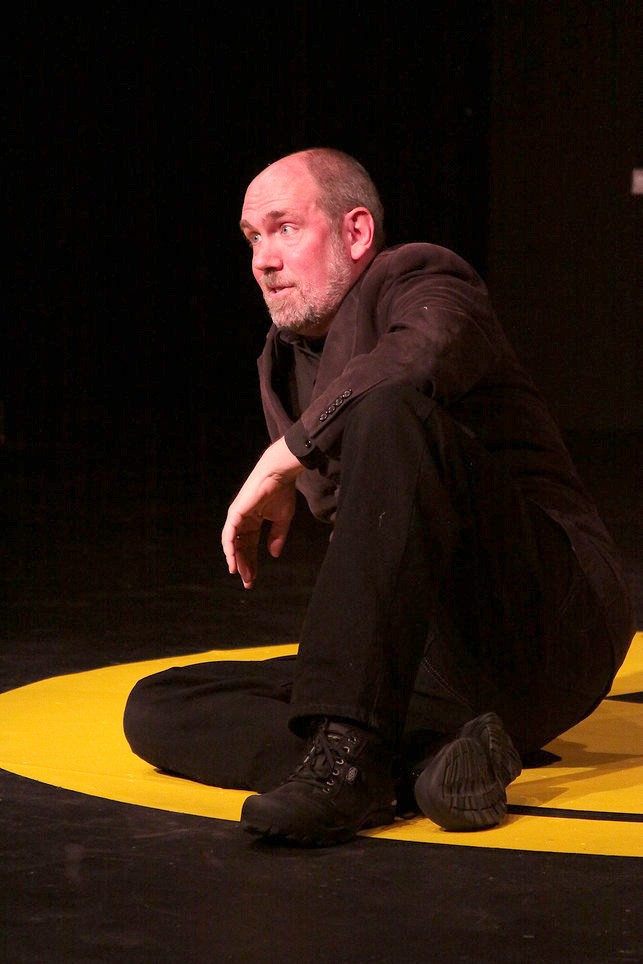
Saying Jamie DeWolf has a way with words isn’t quite right—it’s more like he has his way with words, bending, twisting, breaking and rearranging them to their most expressive positions before jamming them into the ears of audiences around the world. Now he’s coming to Santa Rosa.

The great-grandson of L. Ron Hubbard is a crusader against Scientology, citing its “dangerous” belief system and “pyramid scheme”–like components as factors that, he says, destroys people’s lives—including his grandfather’s. He’s also a filmmaker, teacher and actor, not to mention producer of the East Bay variety show Tourettes Without Regrets and NPR’s Snap Judgment.

DeWolf highlights an evening of celebration for CMedia Labs, formerly the Community Media Center of the North Bay (kudos on the name change) at the Arlene Francis Center. In addition to DeWolf, there’s music by Church Marching Band and a separate DJ lounge featuring Shifty Shey and Good Hip Hop Monthly, trapeze art by Quenby D. Trapeze, breakdancing by Reprezent Clothing, standup comedy by Lila Cugini, belly dancing by Krysta Cook, comedy and video by Eat the Fish Presents, hip-hop by Pure Powers and storytelling by Chris Chandler. Phew!

The C Media Rebirth Party takes place
at the Arlene Francis Center on Saturday, April 12, at 8 pm. 99 Sixth St., Santa Rosa. $12–$20. 707.528.3009.

Letters to the Editor, March 9, 2014

Spring Lit Love

Beautiful and brave piece by Teri Stevens (“There Was a Before,” April 2). I love that writing about Jeffrey keeps his memory alive.

Via online

Hello, Jello

Hi, Jello (“Jello-Rama,” April 2]: Remember Frankie and Ripper and Johnny and Brittley, and playing at the Temple Beautiful? Go ahead, say no, I don’t remember either. Blame it on Yuppies and drugs. Jello Biafra always spoke and played his mind out. I’m sure the music put together for this beer-guzzlin’ little town blew some ear drums. You brought back great memories. By the way, for Santa Rosans, the Temple Beautiful was the previous stomping grounds for the Rev. Jim Jones. Koolaid!

Via online

Be Civil

A citizen’s review board will help all concerned (“Oversight Knights,” April 2]. Too bad something as obvious as this is taking so long to implement. The police and sheriff’s departments might be concerned about less automatic rubber-stamping of their shootings, but their relations with the community should improve tremendously.

Via online

Trauma of War

The rise in psychological trauma associated with the war in Iraq and Afghanistan should not surprise experts. The extent of wartime trauma is directly proportional to the type of warfare fought and the experiences encountered. Studies of Vietnam veterans show that between 26 and 31 percent have experienced PTSD. This rate is understandable given that the Vietnam War combat environment included both guerrilla and conventional warfare. It is arguable that the war in Iraq compares to the Vietnam War, as there is no safe place, no enemy lines, and threats surround the soldier on all sides—situations that can contribute to the development of PTSD. Now soldiers who suffered from PTSD and other mental illnesses are being send back to Iraq, after serving there!

War is the national creed of America. So even though in Washington they knew this was a problem, they didn’t manage it. They allowed doctors who are overstressed to write prescriptions for medications that might dull the pain temporarily, but can have horrible, tragic and sometimes even fatal results.

Palo Alto

Write to us at le*****@******an.com.

Hood Lovin’

0

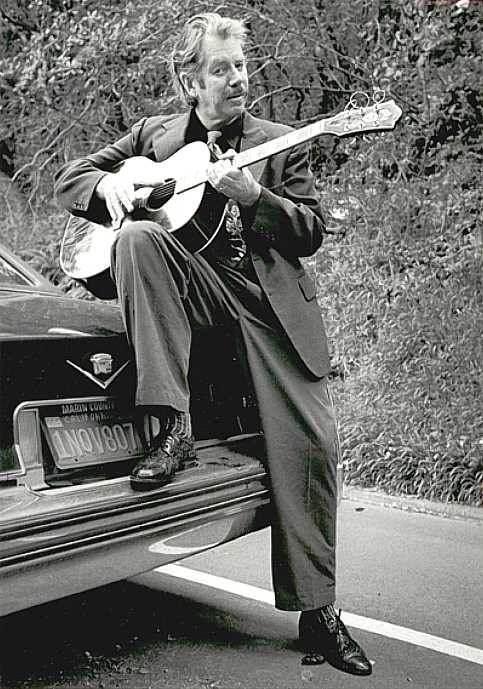
Patterson Hood is feeling his age. The singer-songwriter, best known as the founder and frontman of alt-country band Drive-By Truckers, just turned 50 years old, and, as he puts it, “I never thought I’d see that.”

Born in Muscle Shoals, Ala., a town known for its landmark recording studios and influential musical history, Hood took to writing songs and starting rock bands at age 14. Forming Drive-By Truckers in 1996, Hood and company kept up a breakneck pace of recording and performing for more than 10 years, but recently took a three-year hiatus to recharge.

“We kind of hit the wall there after the last go-round. We’d been on the road too long,” says Hood. “Taking a break, slowing down—we didn’t have a choice. It was like, ‘If we are going to continue, we’ve got to address this, otherwise it’s just not going to work anymore, and then what am I going to do?’ So we took some time. It saved
our band.”

Returning to the studio last year newly invigorated, Drive-By Truckers recently released their first album in four years, English Oceans, which peaked at 16 on the Billboard Top 200 last month. The record marks the first time that fellow guitarist Mike Cooley split song-writing duties equally with Hood, who previously dominated the band’s songwriting.

“Cooley called me—he called everybody—and made this record happen,” remarks Hood. “That was great for the band, for the record and for our dynamic.”

This month, Drive-By Truckers embark on a national and European tour. Leading up to the band’s kick-off show at the Greek Theatre in Berkeley on April 12, Hood is making a few special solo appearances in the North Bay this week, playing at Sweetwater Music Hall on April 10 and the Napa Valley Opera House on April 11.

Contrasting with the Drive-By Truckers rowdy alternative country vibe Hood’s solo material consists of quieter, introspective stories of love and loss. He especially looks forward to revisiting material from his last solo release, 2012’s Heat Lightning Rumbles in the Distance, an album that began life as a semi-autobiographical novel about a chaotic time in Hood’s life before shifting into a collection of songs.

“The timing worked out, and it’s fun to mix it up, get into the storytelling aspect more,” says Hood. Then, with a laugh, he notes, “It’s also fun to sometimes play a show that, when it’s over, my ears don’t take all day to quit ringing.”

Patterson Hood performs April 10 at the Sweetwater Music Hall (8pm; $27–$32; 19 Corte Madera Ave., Mill Valley; 415.388.3850) and April 11 at the Napa Valley Opera House (8pm; $15–$25; 1030 Main St., Napa; 707.226.7372).

Delectations of Empire

0

On my way to Empire Napa recently, I was reminded of a peculiar smell from the spring of 2002.

I was a driver for the Bohemian and delivered the paper along the Napa Valley route. One stop was an old restaurant occupying a prime corner in town, the kind of place where county employees and local business folk meet for lunch hour, year in and year out. The carpets were faded, and a sad bouquet of grease clung to the air like tule fog.

I recently rounded that same corner to find a new restaurant, emblazoned with decorative torches, sleek and shiny inside. It teemed with excited young patrons who leaned in to fabulous conversations and pawed away at digital devices.

“Napa’s changed a lot in the last five years,” I was told as I sipped a sample of late ’60s Lafite. “It’s changed a lot in the last two years.” Visitors are younger, shinier, and they fill the streets as they flit from restaurant to bar. And not just wine bars. Cocktail bars. Dance clubs, like this place: “It’s like L.A.”

I recall, with a provincial cringe, the long-lost roster of Santa Rosa clubs hailed as the next “just like San Francisco” hotspot: the reverential walls of booze; the ubiquitous white kiddie sofas; the horror. Yet here I am, showing up with cat hair on my sweater. The only thing older than me in here is the Lafite, and that guy over there.

A hostess stood at an entrance backdropped with a painting of a smoke-shrouded city in ruins. “Go on in.” The dining room, part wine-country rustic, part dungeon, leads to the bar, and a bartender greeted me before I was halfway there. It was a quiet night at Empire.

Interior decor is by San Francisco designer Michael Brennan. He enjoys the gothic touch: there’s a sparkly black bar, black straws, black pencils with black erasers, and a black Slinky on the black bar. Exotic black ungulate horns grace the “library” room, which is furnished with red velvet booths, perfect for bachelorette parties. Leather “egg chairs” provide a throne for solitary types.

Initial reviews of Empire gushed over an overweening menu that has since been scrapped in favor of bar favorites like blue cheese sliders ($10) and mac-and-cheese ($8) with peas and bacon. Filet and frites ($24) was tempting, but the mac was just fine.

Signature cocktails include the Boulevardier ($13), a bourbon version of a Negroni served in a tumbler. It’s dry enough to let the spicy 12-year-old Elijah Craig shine through.

I visited Empire on “Sketch Wednesday.” There were crayons, pencils, an Etch-a-Sketch and the Slinky. Local artist Penelope painted an oil in the corner, some well-dressed ladies drifted in, and two younger guys sat at the bar, excitedly talking politics: “bifurcation” was tossed about. I am cool with this scene.

If you like a crowd, it’s here on Friday and Saturday. Even then, the bartender says the weekend scene features a more mature crowd than the nearest other scene—”You know, that one down the street,” she says.

I’ve never hit that place’s dance floor, but I’ll never forget the smell of the carpet.

Empire, 1400 First St., Napa. 707.254.8888. empirenapa.com.

The Future Is NEW

0

John Harden has spent a lot of time lately thinking about the future. Not his future— the future of humankind.

“Imagining possible futures,” says the award-winning Santa Rosa filmmaker, “is the primary job description for the science-fiction writer.”

Citing Star Trek and Blade Runner as influences, Harden—whose short films tend toward the fanciful and imaginative—has been working to bring his latest filmic vision, NEW, to life. Shot last summer, the sci-fi short is set in a gleaming approximation of Sonoma County in the 22nd century. Harden has been raising money and pulling editing all-nighters to get NEW ready for spring and summer film festivals.

“That’s what happens with a project like this,” he says. “A lot of it happens up in your head, but then all the rest is just plain hard work.”

NEW follows an elderly couple who are frozen after dying, then brought back to life in the future, in 20-year-old bodies. The couple’s emotions as they react to their second chance at life, in a world they barely recognize, make for a film that’s part science fiction and part love story.

Harden elected not to make the future Sonoma County look like most sci-fi films of recent years: dark, smoggy, full of people who live in factories.

“Cautionary tales have their place, of course, and I love those movies,” says Harden, “but I think dystopian views of the future are just a trendy stock solution. It’s not a good trend, because an unvaried diet of dystopias doesn’t warn us, it just points us toward despair.”

Harden believes we need the utopias, too.

“I think that’s one reason that NEW got [an] endorsement from sci-fi author and futurist David Brin, back when we were launching our first online fundraiser,” says Harden. “He and I are simpatico on that point—which is why my movie shows a lush green future of rolling hills and puffy white clouds.”

Harden has had some success with his short films, which include La Vie D’un Chien, another science-fiction labor of love. The film, about a scientist who turns himself into a dog, was well-received at the Sci-Fi London Film Festival and won several awards. NEW has been accepted to the 2014 Sci-Fi London Fest, even as Harden puts finishing touches on the film and launches a final crowd-sourcing effort to complete the special effects.

Harden says the film is 85 percent of what he’d imagined it would be when he started writing it three years ago. There were compromises and lucky breaks along the way, as artistic decisions took a back seat to financial realities, and Harden had to find creative solutions to unexpected problems.

“You can’t predict how a film will come out,” Harden says, “like you can’t really predict the future. But I’m happy with the film.”

So much so that he plans to use it as a launching pad toward a feature-length version.

How far in the future might that be?

“Not too far in the future, I hope,” Harden says with a laugh. “Not too far.”

For more information on ‘NEW,’ visit www.newthemovie.com.

Homeless Front

0

Anthony Tate had been homeless in states and cities all across America, adrift for decades under the unrelenting thumb of post-traumatic stress disorder from his service in Vietnam, when he arrived in the Bay Area three years ago for yet another chance to get it right.

Before long, the veteran had found himself a place to live with the help of a local veterans organization. With the stability came a purpose, and a profound one at that: Tate devoted himself to trying to make sure veterans from the wars in Iraq and Afghanistan didn’t wind up on the streets as he did.

Tate’s efforts on behalf of homeless vets comes as Californians will be asked, on June 3, to vote on Proposition 41, the Veterans Housing and Homeless Prevention Bond Act of 2014. The proposition would jump-start a veterans housing program that could see numerous multifamily supportive housing units for veterans sprout up throughout the North Bay in coming years.

“I got the support and the help I needed,” says Tate, who now lives in Santa Rosa’s Bethlemem Towers, and has no intention of leaving. The stability gave Tate the grounding necessary to deal with the ongoing fallout from his deployment. And then he could start the work of helping others.

Tate was a desk-bound clerk in the storied 82nd Airborne Division when he was deployed to Vietnam in 1969. It was a big surprise, he says, and one that took him 40 years to get over. “They gave me an M16, a clip of ammo, a canteen, and said, ‘Stand over there,'” he recalls.

“That’s when reality set in. They told me, if you survive 365 days, you can go home.”

Tate survived.

He was 17 when he went to Vietnam and 19 when he returned to America. He subsequently bounced around for decades and ticks off the states he passed through over the decades: Maryland, Ohio, Michigan, Colorado, Mississippi, Illinois, Indiana and elsewhere.

No matter where he was, Tate says he was haunted by the sound of chopper rotors whenever he heard civilian helicopters stateside. “It kept taking me back,” he says. When he arrived in San Francisco, he says “Little Saigon” was off limits because of the PTSD triggers there.

Nowadays, Tate and other vets set up shop outside the Department of Veterans Affairs building in Santa Rosa on weekday mornings to dispense coffee and pastries to veterans. He was hired as a volunteer with the Sonoma Housing Authority board, and he sells baseball caps affixed with military logos to raise money for a local veteran who was grievously injured by an improvised explosive device.

“Never again will one generation of veterans abandon another,” says Tate as he greets a cross-generational group of vets coming in and out of the VA building on Airport Boulevard. His first piece of advice to returning veterans who need help: “Don’t wait 40 years to get it,” he says with a slight laugh.

The second: “The first challenge is housing.”

The news is filled with numbing reports about the challenges facing returning vets—challenges that haven’t abated, even as the post-9-11 wars have wound down. Ghastly rates of suicide and post-traumatic stress disorder among Iraq and Afghanistan veterans remain in the headlines, along with the usual and unfortunate accompaniments to mental illness: alcoholism and drug abuse, crime and violence, family problems and homelessness.

“We work hard to say, ‘Look man, you need help,'” says Tate. “These guys are trained to be independent, so we have to say, ‘Hey, that pride—put it in your back pocket. You need help.'”

But in a tight economy where the concept of “affordable housing” is less an achievable goal for many than a mocking oxymoron, Iraq and Afghanistan veterans have slipped into homelessness even faster than their fellow veterans from the Vietnam conflict. “There have been lots of suicides,” Tate says sadly, “and we want to stop that cycle—and we want to stop the homelessness cycle.”

According to the U.S. Department of Veterans Affairs, about 20 Iraq and Afghanistan veterans take their own life every day. About 63,000 are homeless.

Tate is at the tip of a new post-war effort, spearheaded by President Barack Obama, to end homelessness among veterans by the end of 2015. It’s a laudable goal and a fight worth having. “It’s unrealistic,” says Tate, “but it is offered.”

Even if the country’s most recent wars aren’t popular among many Americans—especially the invasion of Iraq—the soldiers themselves have not faced the degree of animosity greeted upon those returning from Vietnam, notes Tate, an African American who grew up in yet another war zone, the notorious Chicago housing projects.

“We knew not to expect anything when we got home,” he recalls, “but these guys—they are heroes when they come back.”

Tate says doing this work with returning Iraq and Afghanistan vets is how he “started to feel proud to be a Vietnam veteran.”

California has set the stage to do its part for homeless vets by retooling a housing program for them.

The state’s putting a referendum measure on the June ballot that would, according to the Sacramento Legislative Analyst’s Office, “sell $600 million in general obligation bonds to fund affordable multifamily housing for low-income and homeless veterans,” from an undersubscribed $1 billion veterans home-loan program. The $600 million would be used to build housing more in line with the needs of modern-day veterans, many of whom are single, male and afflicted with one war-related disorder or another.

The original program was created decades ago and stipulates that the loans are for family homes or farms—$400 million would remain untouched for these loans.

California voters have to agree to do it, which raises the NIMBY-ism issue, always at hand in the North Bay.

If voters approve it, the referendum would pave the way for building housing for veterans that would include on-site social service programs, the hallmark of the “supportive housing” movement, which takes a page from addiction-therapy models when it strives to “meet people where they are,” even if where they are is poor, addicted and otherwise homeless.

The question for North Bay progressives and others is a thorny one that will play out at the ballot box: Will public support for Iraq and Afghanistan veterans translate into public support for housing that’s not the typical state-run facility for vets? Will support for veterans eclipse concerns about property values?

“We have to start somewhere,” says Tate with a chuckle as he grapples the question. “We’ve had developers who wanted to rehab a home for six or seven vets,” he says. Those developers were told, “You can’t do that here.”

The traditional model for veterans services in California has been provided at a handful of state-run facilities around the state.

One such facility in the North Bay has come under intense fire by state auditors. A recent report from the California auditor blasted the Yountville Veterans Home in Napa County for spending over $650,000 in taxpayer money on high-end frivolities of little use to troubled returning veterans; Yountville’s now-former top brass, for example, approved the construction of recreational zip-lines and an in-house tavern.

All returning veterans deserve respect (and many would argue even a fully stocked bar), but the Yountville audit highlighted a major disconnect in state-provided services for veterans: the state veterans facilities around California do not means-test veterans, so returning wounded warriors of limited means aren’t given special consideration when they come on hard times.

For those troubled men, a highway underpass in Napa Valley or a tucked-away hillside in Marin may have to do for the night—or for longer.

“We’re not going to bring everyone out of the woods, the creeks, the railroad tracks,” says Tate. As he speaks, a man emerges from the rear of the Santa Rosa VA building and gives a wave of hello to Tate.

“He’s a wilderness guy,” says Tate. “He lives out behind the VA.”

The man gets a cup of coffee and disappears.

The New Bohemians

It is an honor to introduce myself as the Bohemian‘s new editor, a position that feels like a homecoming and a new beginning.

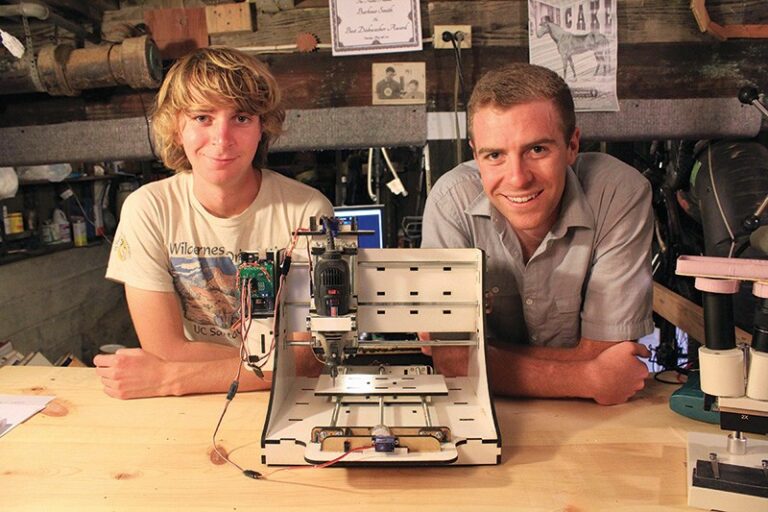
Most recently, I was a senior editor at Sebastopol-based MAKE magazine. But before coming to MAKE, I was food editor for many years at Metro Silicon Valley, the Bohemian‘s sister paper. Previous to that, I was a reporter for various daily and weekly newspapers. In the latter part of my time at Metro, I moved to Sebastopol and wrote for the Bohemian, too, splitting my time between Silicon Valley and the North Bay. It feels good to be back.

Since moving here more than three years ago, I’ve developed a real love for the North Bay, and the opportunity to explore the region in the pages of the Bohemian is a thrill and a privilege. I’m the beneficiary of the great job done by my predecessor, Gabe Meline. I’m committed to building on that work and delivering what I hope will be essential reading for North Bay residents and visitors alike.

What will that look like? We will break news and deliver compelling investigative stories that hold the powerful accountable. We will reflect what it’s like to live, work, eat and play here, with lively coverage of the region’s most important asset, its people. We will enhance and expand our digital offerings. And we will continue to be the go-to source for event listings, so you don’t miss any of what’s going on.

I’m lucky to have a badass staff to help me. Tom Gogola is an award-winning investigative journalist, and was just named the Bohemian‘s news editor, a newly created position that reflects our commitment to news. He was the 2013 recipient of the Press Club of New Orleans’ first and second place awards for his reporting on the Orleans Parish Sheriff’s Office. Over the course of a 25-year career, Tom worked at Connecticut alt weeklies and the Lens, an online investigative website in New Orleans.

Nicolas Grizzle is our staff writer. He writes about food, music and news with equal aplomb. He grew up in Sonoma County and maintains strong roots here.

Calendar editor Charlie Swanson is another Sonoma County local devoted to the North Bay’s music and cultural scene. He spent the past decade writing about music and art, beginning with an internship at the Bohemian in 2006.

Defending the King’s English and protecting us from dangling participles is veteran copy editor Gary Brandt.

The Northern California-based company we are part of, Metronews, recently expanded its holdings with the purchase of Good Times weekly in Santa Cruz and weeklies in Hollister and Gilroy, the latter of which is establishing a wine trail this spring to celebrate its nascent cluster of wineries.

What’s that mean for Bohemian readers? It means we’re part of a growing, independently owned, local company committed to community-based journalism that’s equal parts fearless and fun-loving. Please let me know how we’re doing at le*****@******an.com.

Open Mic is a weekly feature in the ‘Bohemian.’ We welcome your contribution. To have your topical essay of 350 words considered for publication, write op*****@******an.com.

Dharma Bummer

The mission to repopulate the world of Tibetan Buddhist texts begins, in a way, in Cazadero. The Yeshe De Tibetan Text Preservation Project is a nonprofit organization dedicated to bringing back sacred texts destroyed by the Chinese takeover of Tibet in 1951. In this modern world, that requires a printing press and major distribution—and there's the problem, at least for...

Musical Chairs

'Nunsense . . . is habit forming," sings a chorus of slightly risqué sisters in Dan Goggin's popular musical Nunsense, currently playing in Windsor at the brand-new Raven Players Windsor theater. That remark about "habits" could also apply to a recent habit among North Bay theater companies: changing locations. In the case of the Raven Players, they haven't abandoned their...

Rancho Reborn

With the closing of Rancho Veal in February, the large agricultural community of the North Bay was left without a slaughterhouse. That is, until Marin Sun Farms owner David Evans stepped in with his plan to save the livelihood of ranchers, including his own, when he bought the Petaluma processing plant on Feb. 28. The plant began operations under...

You Sendin’ DeWolf?

Saying Jamie DeWolf has a way with words isn't quite right—it's more like he has his way with words, bending, twisting, breaking and rearranging them to their most expressive positions before jamming them into the ears of audiences around the world. Now he's coming to Santa Rosa. The great-grandson of L. Ron Hubbard is a crusader against Scientology, citing its...

Letters to the Editor, March 9, 2014

Spring Lit Love Beautiful and brave piece by Teri Stevens ("There Was a Before," April 2). I love that writing about Jeffrey keeps his memory alive. —Sue Lebreton Via online Hello, Jello Hi, Jello ("Jello-Rama," April 2]: Remember Frankie and Ripper and Johnny and Brittley, and playing at the Temple Beautiful? Go ahead, say no, I don't remember either. Blame it on Yuppies and...

Hood Lovin’

Patterson Hood is feeling his age. The singer-songwriter, best known as the founder and frontman of alt-country band Drive-By Truckers, just turned 50 years old, and, as he puts it, "I never thought I'd see that." Born in Muscle Shoals, Ala., a town known for its landmark recording studios and influential musical history, Hood took to writing songs and starting...

Delectations of Empire

On my way to Empire Napa recently, I was reminded of a peculiar smell from the spring of 2002. I was a driver for the Bohemian and delivered the paper along the Napa Valley route. One stop was an old restaurant occupying a prime corner in town, the kind of place where county employees and local business folk meet for...

The Future Is NEW

John Harden has spent a lot of time lately thinking about the future. Not his future— the future of humankind. "Imagining possible futures," says the award-winning Santa Rosa filmmaker, "is the primary job description for the science-fiction writer." Citing Star Trek and Blade Runner as influences, Harden—whose short films tend toward the fanciful and imaginative—has been working to bring his latest...

Homeless Front

Anthony Tate had been homeless in states and cities all across America, adrift for decades under the unrelenting thumb of post-traumatic stress disorder from his service in Vietnam, when he arrived in the Bay Area three years ago for yet another chance to get it right. Before long, the veteran had found himself a place to live with the...

The New Bohemians

It is an honor to introduce myself as the Bohemian's new editor, a position that feels like a homecoming and a new beginning. Most recently, I was a senior editor at Sebastopol-based MAKE magazine. But before coming to MAKE, I was food editor for many years at Metro Silicon Valley, the Bohemian's sister paper. Previous to that, I was a...
11,084FansLike
4,446FollowersFollow
6,928FollowersFollow