LOL

0

Thanks to Comedy Central, YouTube, the Huffington Post, BuzzFeed, et al., comedians are cool again.

Not that they weren’t before, but with social media, comedians are able to boost their underground, cult-celebrity status. This viral showcase for aspiring performers can generate some rather pitiful cases; however, it can also unveil some hidden gems. In a way, technology is taking us back to the frontier days of rogue performing, when artists performed for the love of their art.

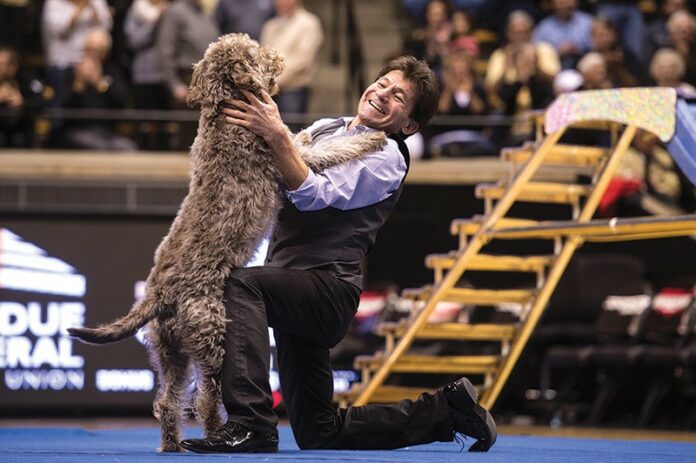
Santa Rosa native Dominic Del Bene, now working at San Francisco’s Rooftop Comedy where he has produced over 40 standup albums and more than a dozen festivals and shows across the country, will be presenting his monthly comedy series, “Set ‘Em Up and Knock ‘Em Down,” Aug. 4 at the Druid Hall in Santa Rosa. The show will feature L.A. comedians, Dave Ross, host of the TERRIFIED podcast on the Nerdist Network, and Barbara Gray who has appeared on Ellen, SF Sketchfest and Deadspin. Matt Lieb, winner of the 2013 Rooster T. Feathers Comedy Competition, will also be performing.

If that isn’t enough, Petaluma’s HenHouse Brewing Co. and Benziger Family Wineries will be providing libations; all bar proceeds will benefit the Sonoma County Bicycle Coalition.

Tickets are $20 with discounts available to members of SCBC and Benziger’s newsletter. Show will be at the Druid Hall, 1011 College Ave., Santa Rosa. 707.542.0908. For more info, visit setemupknockemdown.tumblr.com.

SRJC Bond on Ballot, Fish Story

0

The Santa Rosa Junior College Board of Trustees voted unanimously on July 22 to place a $410 million capital-improvement bond on the November ballot. Officials aired a laundry list of much-needed improvements at the board meeting, which was attended by school faculty and staff.

Among the proposed improvements: a quarter-billion dollars in new construction and renovation; $60 million in modernization of existing buildings; and $74 million for information-technology upgrades. The remaining bond money would be spread between various departments for maintenance, repairs and improvements.

The spending-priority list the board presented was not an actual itemization but a guideline of what the board may approve if the bond measure passes. Final approval of any project would still need to come from the board.

Speakers who addressed the board last Tuesday agreed that money is needed, but also questioned an apparent lack of detail over how the board would actually distribute the funds.

A citizen oversight committee would review board decisions and provide yearly reports about its activities. But the oversight committee will lack veto power, and deliberations will take
place outside of public scrutiny.
JoshuOne Barnes

The Golden Gate Salmon Association threw its support behind the recommendations of a National Marine Fisheries Service (NMFS) study that highlights the hard-hit Chinook salmon fishery in the Central Valley. “It calls for a lot of good things,” says John McManus, executive director of the association, “primarily [aimed] at recovering the winter and spring run Chinook.” The former is on a federal list of endangered species; the latter is considered a threatened species under the Endangered Species Act, says McManus

The study was prepared in conjunction with the California Department of Fish and Wildlife, and found that, because of dams, “Chinook salmon and steelhead are blocked from 90 percent of their historical spawning habitat in the valley.”

The problem is compounded by “water withdrawals, commercial and recreational fisheries, the introduction of non-native fish, and legacy effects of hatcheries, [which] all contribute to declining populations,” according to a summary of the report.

McManus notes that a “recovery plan is not legally enforceable,” but provides a template for restoration of salmon-spawning grounds in and around the Sacramento River. The enforcement backbone to the NMFS plan is contained in a supplemental “biological opinion” from NMFS scientists.

That opinion addresses damage done to the Central Valley by all the various dams, water re-routes and other salmon-distressing water-flow management, agriculture projects.

“The biological opinion is the hammer,” says McManus. “It says things like, ‘Thou shalt, thou must.’ But the recovery plan is basically, ‘If you want to recover the fishery, do this.'”

The NMFS plan, if implemented, could be good news for the fall Chinook run, says McManus. “The fall run Chinook is the target of sport and commercial fishermen off the Marin and Sonoma coast, and even in the bay. To the extent that the recovery plan goals are implemented, one could see a benefit to the fall run, which
is what we’re all targeting.”
—Tom Gogola

Dylan Covers London

0

What does Bob Dylan have in common with Sonoma County’s literary legend Jack London? Not much, if you ask die-hard London fans. But ask renowned Dylanologist Scott Warmuth and you’ll hear a different story.

The New York Times, The New Yorker and
The Daily Beast have all paid homage to Warmuth’s scintillating brand of scholarship, which has stirred up the Dylan world. According to Warmuth, the American folksinger purloined words, phrases and sentences by the dozens from the novels, short stories and letters written by the author of The Call of the Wild, White Fang and nearly 50 other books published from about 1900 to 1916. All the supposedly borrowed lines appear in Dylan’s memoir, Chronicles: Volume One, published in 2004.

In feisty articles such as the “Dylan Dossier: The Jack London File” and “Bob Charlatan: Deconstructing Dylan’s Chronicles: Volume One” that were published online and in the pages of The New Haven Review, Warmuth presents strong evidence of what might be called literary larceny. To make his point, Warmuth prints the original London texts and Dylan’s copies so that readers can compare and contrast.

In the second of his classic dog stories, Jack London writes, “Life had a thousand faces and White Fang found he must meet them all.” In Chronicles, Dylan writes, “A folk song has over a thousand faces and you must meet them all if you want to play this stuff.” In the short story “The White Silence,” London writes that in the Arctic, “all movement ceases, the sky clears, the heavens are as brass; the slightest whisper seems sacrilege.” In Chronicles, Dylan writes, apropos of country-and-Western singer Hank Williams, “When I hear Hank sing, all movement ceases. The slightest whisper seems sacrilege.”

Many of Dylan’s adaptations of London are both playful and brilliant. In his article “Song of the Wolf,” Warmuth points to a passage in which London observes that his main character is “forced to the edge of the fire or the deep snow” and that “ten thousand years of culture fell from him, and he was a cave-dweller.” Dylan borrowed the imagery and describes Johnny Cash as a kind of “cave dweller” who “sounds like he’s at the edge of the fire, or in the deep snow, or in a ghostly forest.”

Other similarities are less potent. In “Bâtard,” yet another dog story, London uses the phrase “a mass of bristling hair.” Dylan purloined it and used it to describe folk singer Dave Van Ronk—the inspiration for the Coen brothers movie Inside Llewyn Davis—as “a mass of bristling hair.”

No big deal, readers might say. But Warmuth insists that when you add them all up, Dylan’s borrowings are a big deal, that they show that the singer read London’s work widely, that he was captivated by London’s language and that he felt so strongly about it that he inserted huge chunks of it into his own work. Call Dylan a blatant copycat or a lyricist in love with London’s writing.

The title of Warmuth’s article in The New Haven Review, “Bob Charlatan,” suggests that he wanted to expose the folksinger as a fraud. Perhaps he did. Today, however, he doesn’t call Dylan a “charlatan” or a thief. “To nail him down has never been my goal,” he says in a phone interview from his home in New Mexico. “From the start, I’ve wanted to know what books Dylan reads and how his creative process operates, because his art is so compelling.”

Warmuth is one of several students of Dylan’s work profiled in David Kinney’s Dylanologists: Adventures in the Land of Bob, a fast-paced book released this spring about Dylan’s fans and followers that reveals a lot about Dylan himself. As Kinney recognizes, sometimes it helps to take a sideways glance at an artist and not look him directly in the face.

[page]

Kinney borrows the conceit for his book from The Shakespeare Wars, a non-academic study in which author Ron Rosenbaum doesn’t write about Shakespeare, as one might expect, but about the legendary scholars who have written about Shakespeare, yet another genius who pilfered and tweaked material from historians who preceded him.

Jack London was as big a thief as Shakespeare, though he got into more trouble than the Bard. Copyright law posed more of a problem for writers in 1900 than in 1600. All his life London borrowed from his favorite authors and his literary role models, some of them famous, such as Rudyard Kipling. Not surprisingly he was labeled the “Kipling of the Arctic.”

Other writers whose work he looted were less well-known, such as Egerton Young, the author of My Dogs in the Northland, published in 1902, one year prior to the appearance of London’s own shaggy-dog story, The Call of the Wild. When copyright issues arose, London usually won; he had the money to defend himself in court and knew how to manipulate the media.

Andrew Sinclair, author of Jack: A Biography of Jack London says, “Jack certainly thought that he had the right to use other people’s plots in the same way as he used other people’s political ideas.”

Jack London never drew clear lines to divide fact from fantasy or to separate imitation from originality. He also recognized that copying could be the sincerest form of flattery, and that young talented writers improved by mimicking veteran authors. Ever since the Renaissance—and perhaps before—new writers have cannibalized old writers, and the literature of the present day has fed on the literature of the past.

As the Irish playwright Oscar Wilde astutely noted, “Talent borrows, genius steals.” He surely had himself in mind, and maybe Jack London too. If he were alive today, Wilde would recognize Bob Dylan as yet another genius and literary thief. In his own defense, Dylan might borrow from Jack London, who said, “I think the whole subject of plagiarism is absurd. I can conceive of no more laughable spectacle than that of a human standing up on his hind legs and yowling plagiarism. No man with a vivid imagination needs to plagiarize.”

According to musicologist Greil Marcus, Dylan fans—more than the fans of any other ’60s band, including the Beatles, the Stones and the Grateful Dead—assume that his songs are richly encoded and that it’s their mission in life to dig out the hidden messages and decode them. What’s perhaps more significant is that Dylan’s elliptical writings have given birth to the tribe of “Dylanologists,” including the very first, A. J. Weberman, and the very best, Scott Warmuth.

In New York in the 1970s, Weberman claimed that he sorted through Dylan’s garbage and found a motherload of confidential stuff. Maybe he did. Maybe he just talked trash. Scholars have poked holes in the stories about his adventures in dumpsterland. He did, however, coin, or at least popularize, the words “garbology” and “Dylanology.” A pioneer in the field, Weberman published the infamous Dylan to English Dictionary and argued that many of Dylan’s songs were about and specifically written for him.

[page]

Warmuth, the dean of Dylanologists, and Kinney, student of Dylanology, seem like fictional characters who have wandered from a Jack London tale: twins and doubles who genuinely admire one another. Keen critics of pop culture, both were shaped by the kinds of college classes that train students to discover influences and then provide credit where credit is due. Many of us were. Still, they both gave up on dreary footnotes and hoary bibliographies ages ago.

A liberal arts major in college, Warmuth was born in 1966, 90 years after London, an illegitimate kid traumatized by the circumstances of his own birth, arrived in the world, and 25 years after Abram and Beatrice Zimmerman, descendants of Russian Jews, named their infant son Robert Allen.

Warmuth knows the Dylan discography backward and forward. “I’m a Blonde on Blonde baby,” he says. “The first album I heard was Desire, when I was 10. My parents had it.”

Blonde on Blonde is, as he knows, as tangled as any Dylan album. On the 12th cut, “4th Time Around,” Dylan offers his take on “Norwegian Wood,” Lennon’s homage to Dylan. Princeton University historian Sean Wilentz describes the tune as “Bob Dylan impersonating John Lennon impersonating Dylan.”

For more than 60 years, Dylan fans have been scratching their heads and trying to figure him out, even when he seems obvious. When squares and traditionalists complained they couldn’t understand his 1963 ballad “Blowing in the Wind,” Dylan explained tongue-in-cheek, “There ain’t too much I can say about this song except that the answer is blowing in the wind.”

Everybody and anybody who was hip in 1963 knew exactly what he meant. The only Americans who didn’t understand belonged on the far side of the generation gap. “Something is happening here,” Dylan sings in “Ballad of a Thin Man,” one of the most memorable tracks on Highway 61 Revisited, his sixth studio album, recorded the same year as the 1965 Newport Folk Festival when he went electric. All Dylan fans know the line that follows it: “But you don’t know what’s happening here, do you, Mr. Jones.”

Like his mentor, Beat poet Allen Ginsberg, Dylan wanted his fans to dig deeply into his work. Then, too, in the spirit of poet Walt Whitman, he crafted songs about himself, about America and about ordinary Americans. To his own voice he’s added the voices of the famous, the notorious and the anonymous, hoping listeners would turn up the volume, tune into the words and identify pilfered phrases, images and sounds. What he’s done is what singers often do: “cover” the work of others.

Jack London “covered” other writers too, though London fans and scholars are often embarrassed by them. Moreover, an older generation of London biographers knows little if anything about Bob Dylan. Earle Labor, author of the definitive London biography, 2013’s Jack London:
An American Life, says, “I’ve heard about the Bob Dylan connection, but don’t know more than that. I’d like to know what you discover.” Even younger “Londonologists,” as one might call them, aren’t aware of the link.

Jeff Falconer, a docent at the Jack London State Historic Park and a longtime fan of both London and Dylan, didn’t know Dylan borrowed from London.

“I don’t think Jack would have been offended by Dylan’s borrowings,” he says, “though if he knew how much money he had, he might hit him up.” He added, “I like the idea that Dylan digs London.”

Nearly a hundred years after his death, London’s books still sell. Dylan keeps on writing and performing. Scott Warmuth continues to read London and listen to Blonde on Blonde and Desire.

“I recognized long ago that, like London, Dylan could have rested on his laurels,” Warmuth says, then pauses a moment and adds, “I’m impressed that he tours at a pace that would tire folks half his age and that he keeps trying new things. Before listeners can figure out his latest album, he’s already on to the next. There’s always more to say about Dylan. I don’t know what more one could want from an artist.”

Jonah Raskin is the editor of ‘The Radical Jack London: Writings on War and Revolution’ and the author of ‘Burning Down the House: Jack London and the 1913 Wolf House Fire.’ He taught Jack London’s work at Sonoma State University, where he worked for 30 years.

Letters to the Editor: July 30, 2014

XOXO

Thank you for your article on the band X (“Mark the Spot,” July 23), which, as far as I am concerned, was the last great band (that is until the White Stripes). My first wife and I must have seen them at least 50 times, maybe more. They signed my wife’s boogie board on our way back from the beach at a record signing. (I think it was at the old Tower Records in Westwood.) Best show I saw had Dave Alvin, who replaced Billy Zoom, and Tony Gilkyson, both on guitar, giving the band a much fuller sound. They tore it up. Man, those were the days.

P.S. If John Doe and Exene had had a kid, it would have been Jack White.

Sonoma

Water Watchers

More oversight is needed on winery water use (“Of Water and Wine,” July 23)! Around Healdsburg, we’re seeing overhead sprinklers in vineyards running 24/7, for days at a time. Not all growers are conserving! Check out this trailer for Russian River, All Rivers. It will delve into the facts of the wine industry’s water use in the North Bay area.

Via online

I don’t know where Daisy is seeing sprinklers on in vineyards 24/7. It does not happen! If she is really seeing this she should notify someone. I think that you better take a look around and see which of your neighbors are irrigating their yards and watering lawns that are only for looks. The farmers are continuously using the newest technology to monitor their water use and to conserve. Keep in mind that this is an agricultural community. Yes, wine grapes are the main crop, and the wine industry is directly related to a minimum of 55,000 employees in Sonoma County. I think that you should also note that the Russian River is a managed water system. If there were no reservoirs, the river would be dry right now and the people who would be most affected are the ones who get their water from the municipalities that use the most water to irrigate landscape.

Via online

Not a Fair Fight

My daughter is 22 months old. I want her to grow up in a world where we won’t see the type of atrocities going on right now in Gaza. The civilians in Gaza have no protection from the Israeli military bombing. Where can these men, women and children go when there is no safe place? U.N. shelters in schools as well as hospitals are being hit. It’s not a fair fight when a powerful military is bombing people living under occupation, surrounded by a wall with checkpoints preventing any exit. The term disproportionate seems insufficient. It’s time for the world to intervene, we need more than a day-long truce, because all lives matter, regardless of borders, walls or sides. We are all responsible.

I grew up with a Palestinian stepfather, and am fortunate enough to have discovered the culture and to know how warm, well-educated and beautiful the Palestinian people are. I’ve also been aware of the decades of injustice they have been dealt living under occupation. I am not anti-Israeli, only against the Israeli policies which impoverish and deny basic human rights. The Irish were considered terrorists for fighting against British rule, so were the Basque for fighting for their identity and rights. Nelson Mandela spent years in prison for his fight against apartheid. We now celebrate these struggles, these cultures for their contribution to the world. Why can’t we open our eyes and hearts and do the same for the Palestinians?

Petaluma

Good Dogs

I was touched by the missive Jack Irving wrote (Open Mic, July 23) about his sweet friend Kern-Dog. Thank you both immensely. I am one of your more conservative fans here in Healdsburg, not normally given to touchy-feely sentiments, but I never, ever miss the Bohemian. Lord did this homage strike an emotional chord, though!

I’ve never had a family but I’ve always had dogs, shepherds initially and Aussies for the last 20 years (brother-sister pairs). I recall well Cyrus, a blue merle Aussie, who was the world’s most perfect creature. Cyrus waited to die until the night I returned home from a two-week trip, after his four-month bout with cancer. His sister, Hana, died from a broken heart four months later in a darkened basement. Both were barely 10.

Running on the ranch now is Ali. Rio died three years ago after being struck by a car four days before Christmas outside the fire station where I volunteered for 20 years.

Oh, how Kern-Dog’s loss must have hurt! I salute you Mr. Irving for writing about your pal. They strike a crazy emotional chord for those of us who are used to death and dying, but we will take our animals’ memories, pleasantly, to the grave. Thank you for honoring our pals.

Healdsburg

Write to us at le*****@******an.com.

Laguna Farms Turns 30

1

After 30 years, Sebastopol’s Laguna Farms has become a household name among food-conscious Sonoma County residents. At the solar-powered farm, cold storage holds some of the 400 or so CSA boxes for weekly pick up, and fresh produce, herbs, local eggs and other farm products are available for purchase. It’s like a farmers market that’s open more than once a week. The produce is sold at regular farmers markets in Sebastopol, Oakmont, Petaluma and Santa Rosa too.

Founder Scott Mathieson was a pioneer of the West Coast CSA movement in the ’80s, and he sold the business in 2011 to two longtime employees, Jennifer Branham and Ignacio Romero. They continue the organic-but-not-certified practices and have expanded to host events, renewable energy practices and youth education about growing food. Heck, even grownup kids find the youth garden fascinating and can learn a thing or two about growing food.

Laguna Farms is located at 1764 Copper Road, Sebastopol. 707.823.0823.

Long Live Drakes Bay Oyster Co.

0

Have you heard the latest chapter in the fight to keep Drakes Bay Oyster Company open? Supporters of the Point Reyes National Seashore oyster-farm operation recently took up the cause and filed yet another lawsuit this month to keep the oyster farm operational.

Owner Kevin Lunny is—or was—under a court order to shutter his operation by July 31, after a “final” appeal to the U.S. Supreme Court failed to gain the justices’ attention. Now Lunny has at least another month to farm and sell his oysters, as a federal court sorts out the latest lawsuit, which hinges on the constitutionality of the Department of the Interior’s original shutdown order. (Note: At this point, reportorial objectivity is about to go out the window.)

OK, you guys win: Long live Drakes Bay oysters!

God, it feels good to say that.

The lead plaintiff in the case is Tomales Bay Oyster Co., a competitor to the north. Tomales’ presence signals that this may be a critical moment for the North Bay aquaculture economy as a whole, and that voracious demand for the bivalve won’t ease just because Drakes Bay Oyster Col. is pushed out of business.

What then for oyster lovers? Who’s going to be the first to suggest that the state import BP-fouled bivalves from the Gulf of Mexico to replace what would be lost at Drakes Bay Oyster Co.?

Wilderness-focused activists say Lunny should be held to the terms of his lease, which expired in 2012 and set off the legal battle. Those activists say the farm should revert to its natural state, and that pro-Lunny forces should lay off the appeals to the feds and the palate.

Anyone who has studied the issue should have some ambivalence: Do you want sustainable aquaculture or a vast tract of pristine wilderness? And do we really have to pick one? I visited the facility a few months ago and was left surprised that the operation, for all the outsized controversy surrounding it, is actually quite small.

The oysters, on the other hand, are huge and luscious.

It’s over for this reporter: Drakes Bay forever! To the ramparts with the shucking knife!

Tom Gogola is the news editor for the ‘Bohemian.’

Open Mic is a weekly feature in the ‘Bohemian.’ We welcome your contribution. To have your topical essay of 350 words considered for publication, write op*****@******an.com.

New Deal at Graton Casino

0

The vote to unionize workers at the Graton Resort & Casino was certified last week. Now 600 service workers and the UNITE HERE union will negotiate a contract—but with whom?

“I can’t discuss that, and I don’t know yet,” says Graton Rancheria tribal leader Greg Sarris, who spearheaded the casino deal. Sarris worked with UNITE HERE Local 2850 to organize the union election at Graton Casino in June. The vote was held in the casino in a common room rented to UNITE HERE.

The casino is owned by the tribe but operated by Las Vegas–based Station Casinos. None of its 18 Vegas-area casinos is a union shop.

UNITE HERE, which represents hospitality and other service workers around the country, lauded the union-friendly efforts of the Graton Rancheria, which allowed the vote to go forward free from “interference from the employer,” according to a statement from the union.

“We fully respect and support the tribe’s neutrality agreement with the union,” says Station Casinos spokeswoman Lori Nelson in an email.

The pro-union vote is great news for cooks and custodians at the Rohnert Park casino—a contract likely means greater job stability and expanded health benefits—but it’s also good public relations for Station Casinos.

“I don’t know if you’ve done your research,” says Sarris, “but Station is not particularly union-friendly.”

Casino owners on Station’s home turf are at a natural advantage because of Nevada’s union-restrictive right-to-work laws. Right-to-work laws, for example, allow non-union workers to avoid paying union dues but still enjoy the benefits of union membership.

Culinary workers at Station Casinos in Las Vegas filed charges with the National Labor Relations Board against the company in 2010, claiming it had harassed pro-union workers with surveillance and interrogations of employees interested in unionizing, according to court documents.

Company officials have long charged that if anyone was being harassed at the 18 non-union casinos owned by Station, it was the workers, who didn’t want to be in a union.

“Station Casinos is pro-employee, not anti-union,” says Nelson.

But a 2012 finding from the NLRB (which followed a ruling from administrative law judge Geoffrey Carter) ruled that Station had violated 82 federal labor laws in trying to keep UNITE HERE out of its Vegas casinos.

UNITE HERE local president Wei-Ling Huber says the bargaining process will likely turn on worker issues, with negotiations over wages and benefits probably falling to tribal leaders. Station Casinos would bargain with the union over job descriptions and duties, performance standards and other operational issues, she says.

That’s news to Station Casinos. The company doesn’t plan to be present at the negotiating table, “as this is an agreement between the union and the tribe,” says Nelson.

The union vote came as the Graton Casino emerged as a post-recession success story for Station Casinos, whose majority-share owners are brothers Lorenzo and Frank Fertitta.

Station posted solid earnings
in March, according to a
statement from the company.
The grand opening of Graton Casino in November 2013 was
a highlight, the company says,
and the company paid off
$50 million in long-term debt.
In the fourth quarter of 2013,
the company received an
$8.2 million development fee and $6.5 million in management fees from revenues generated at the new casino.

That’s a nifty turnabout from the brothers’ fortunes at the time of the 2007 economic crash, which hit the gaming industry hard. Nevada was among the worst in home foreclosure rates nationwide. While Station casinos remained open, the company struggled with the fallout from a 2007 partnership with private-equity giant Colony Capital.

In that deal, Colony and the brothers took the company private in a $5.7 billion leveraged buyout. Colony partially financed the buyout via an equity fund it created with revenue from casino properties under its control, including Station. That fund was called Colony VIII, according to the Colony website.

But the deal was bad news for casino workers, as the Station-Colony deal crashed along with the economy, just months after it was signed. Station eventually filed for Chapter 11 bankruptcy in 2009. The company emerged from bankruptcy intact in 2011.

UNITE HERE organizers in Las Vegas claimed that the combination of the recession and the buyout cost more than 2,000 jobs at Station Casinos. The company forcefully disputes the allegation.

And despite the company’s insistence that contract negotiations in Rohnert Park will be between the tribe and the union, UNITE HERE’s Huber sees an opportunity to build a bridge with the corporate operators.

“We’ll be at the table working on issues together and collaborating on a contract,” says Huber. “Hopefully, we’ll have some insights into how to bridge some of the differences in Las Vegas.”

Graton Casino Workers Vote to Unionize

0

The service union Unite-Here announced yesterday that workers at the Graton Casino had voted to unionize.

About 600 janitors, cooks, waiters and gaming workers will come under the Unite-Here umbrella after a two-day vote in mid-June that saw over 70 percent of affected workers vote in favor of unionization.

The union will now negotiate a collective-bargaining contract with the developer and operator, Station Casinos. The casino is owned by the Graton Federated Tribes, which had an agreement with Unite-Here to let a union vote go forward without interference from management.

The vote was held in a casino meeting room rented by the union.

In a statement, Wei-Ling Huber, President of Unite-Here local 2850 says the tribe has “been committed from day one to operating a casino where workers have the freedom to decide about union representation without interference.”

The Las Vegas-based Station Casinos opened Graton Casino in 2013.

July 24: Dustbowl Revival at Sweetwater Music Hall

0

dustbowl.png

The L.A.-based roots jazz ensemble the Dustbowl Revival has played massive festivals across the country, and shared the stage with legends like the Preservation Hall Jazz Band. The “Americana-meets-dancehall-meets-gospel” that the eight-piece collective belts out is invigorating, and in preparation for recording their first live album in San Francisco, the Dustbowl Revival storms the stage on Thursday, July 24, at Sweetwater Music Hall, 19 Corte Madera Ave., Mill Valley. 8pm. $12—$15. 415.388.3850.

July 25: Chautauqua Revue at Occidental Arts & Ecology Center

0

chautauqua.jpg

Before the radio, before the automobile, storytellers and musicians toured the country spreading entertainment and education in Chautauqua Revue variety shows. Named for the Chautauqua Lake where the summer tradition originated, the revues played to an estimated 45 million Americans in towns and rural areas throughout the United States during the early days of the 20th century. In Occidental, the community gathering is still going strong, and this year’s show boasts a variety of entertainment and storytelling, featuring tales to make you laugh and make you think. The Chautauqua Revue happens on Friday, July 25, at the Occidental Arts & Ecology Center’s outdoor theater, 15290 Coleman Valley Road, Occidental. 7:30pm. $10—$20. 707.874.1557.

LOL

Thanks to Comedy Central, YouTube, the Huffington Post, BuzzFeed, et al., comedians are cool again. Not that they weren't before, but with social media, comedians are able to boost their underground, cult-celebrity status. This viral showcase for aspiring performers can generate some rather pitiful cases; however, it can also unveil some hidden gems. In a way, technology is taking us...

SRJC Bond on Ballot, Fish Story

The Santa Rosa Junior College Board of Trustees voted unanimously on July 22 to place a $410 million capital-improvement bond on the November ballot. Officials aired a laundry list of much-needed improvements at the board meeting, which was attended by school faculty and staff. Among the proposed improvements: a quarter-billion dollars in new construction and renovation; $60 million in modernization...

Dylan Covers London

What does Bob Dylan have in common with Sonoma County's literary legend Jack London? Not much, if you ask die-hard London fans. But ask renowned Dylanologist Scott Warmuth and you'll hear a different story. The New York Times, The New Yorker and The Daily Beast have all paid homage to Warmuth's scintillating brand of scholarship, which has stirred up the...

Letters to the Editor: July 30, 2014

XOXO Thank you for your article on the band X ("Mark the Spot," July 23), which, as far as I am concerned, was the last great band (that is until the White Stripes). My first wife and I must have seen them at least 50 times, maybe more. They signed my wife's boogie board on our way back from the...

Laguna Farms Turns 30

After 30 years, Sebastopol's Laguna Farms has become a household name among food-conscious Sonoma County residents. At the solar-powered farm, cold storage holds some of the 400 or so CSA boxes for weekly pick up, and fresh produce, herbs, local eggs and other farm products are available for purchase. It's like a farmers market that's open more than once...

Long Live Drakes Bay Oyster Co.

Have you heard the latest chapter in the fight to keep Drakes Bay Oyster Company open? Supporters of the Point Reyes National Seashore oyster-farm operation recently took up the cause and filed yet another lawsuit this month to keep the oyster farm operational. Owner Kevin Lunny is—or was—under a court order to shutter his operation by July 31, after a...

New Deal at Graton Casino

The vote to unionize workers at the Graton Resort & Casino was certified last week. Now 600 service workers and the UNITE HERE union will negotiate a contract—but with whom? "I can't discuss that, and I don't know yet," says Graton Rancheria tribal leader Greg Sarris, who spearheaded the casino deal. Sarris worked with UNITE HERE Local 2850 to organize...

Graton Casino Workers Vote to Unionize

The service union Unite-Here announced yesterday that workers at the Graton Casino had voted to unionize. About 600 janitors, cooks, waiters and gaming workers will come under the Unite-Here umbrella after a two-day vote in mid-June that saw over 70 percent of affected workers vote in favor of unionization. The union will now negotiate a collective-bargaining contract with the developer...

July 24: Dustbowl Revival at Sweetwater Music Hall

The L.A.-based roots jazz ensemble the Dustbowl Revival has played massive festivals across the country, and shared the stage with legends like the Preservation Hall Jazz Band. The “Americana-meets-dancehall-meets-gospel” that the eight-piece collective belts out is invigorating, and in preparation for recording their first live album in San Francisco, the Dustbowl Revival storms the stage on Thursday, July 24,...
11,084FansLike
4,446FollowersFollow
6,928FollowersFollow