July 27: Garden in the Sea at Kenwood Restaurant

0

garden_sea.png

Natural landscapes and environmental awareness come together in the beautiful 2011 documentary Garden in the Sea, which explores an underwater art installation located in Mexico’s Sea of Cortez. This week, the documentary screens at the Kenwood Restaurant as part of a benefit for the Wine Country Film Festival. Before the film, there’s a reception, silent auction and special dinner menu available. Garden in the Sea screens on Sunday, July 27, at the Kenwood Restaurant, 9900 Sonoma Hwy., Kenwood. 5pm. $20; $75, includes dinner. 707.935.3456.

July 25: Valerie Plame at Book Passage

0

valerie_plame.jpg

One of the most intriguing real-life spy stories of the last decade is the case of CIA operative Valerie Plame, whose cover was blown in a Washington Post article as retribution for an op-ed piece her husband wrote that refuted the Bush administration’s claims on Iraq. Plame’s career with the CIA ended in turmoil, yet now the betrayed spy has returned with a new career—as a spy novelist, naturally. Her first novel, Blowback, follows a Plame-esque operative, and the true-to-life details add to the thrills. This week, Plame appears in conversation with author and KGO radio host Brian Copeland, discussing her new novel on Friday, July 25, at Book Passage, 51 Tamal Vista Blvd., Corte Madera. 7pm. 415.927.0960.

‘Violette’ Femme

The superb French biopic Violette by Martin Provost (who did the similarly fine Seraphine) isn’t about just another pretty face.

Violette Leduc, a maudite writer whose work attracted the respect of contemporaries such as Camus and Jean Genet, poured her yearning to be loved into surprisingly hard-nosed yet erotic books. Loneliness, the Nazi occupation and constant poverty failed to crush this inconvenient, sexually ambidextrous author. Remembered as the writer of a lesbian classic, Therese and Isabelle, Leduc snaps at someone taking her for gay: “It’s not just women!”

Emmanuelle Devos’ Leduc is one of the best performances of the year. While teachers in script class always remind you that a character needs to want something, a character can also be a whimperer if they’re too needy.

That’s not the case with Devos, who captures the hard-bitten side, the bitter humor and the yearnings of her subject: one of those unfortunates drawn to men who were gay and women who weren’t. Principle among these crushes was writer Simone de Beauvoir. Sandrine Kiberlain gives the noted philosopher all due frost, simultaneously mentoring Leduc and holding her at arm’s length.

Leduc was in many ways a robust country girl, and she spent her later days in a remote hill-town village. But Violette is a revelatory film about Paris, with concentrated passages of costumed, decorated richness; from Leduc’s room, with the city cleared of cars and snowed-in, it looks like the Medieval fortress it once was.

Leduc once wrote that she committed a mortal sin by living as a woman not interested in “being beautiful.” Leduc’s experiences might have more to offer beautiful young women who feel that feminism is irrelevant in their case.

‘Violette’ is playing at Summerfield Cinemas, 551 Summerfield Road, Santa Rosa. 707.522.0719.

Learning from Kern-Dog

0

I’ve lost track of the number of times that Kern-Dog has gone to visit the vet over the years; today, the vet came to visit him.

We did it on the grass in Karen’s yard, the place where Kern-Dog had spent countless hours laying in the sun, chasing squirrels, stalking gophers in the flower beds and, on one memorable occasion, getting his butt kicked by the neighborhood raccoon.

He was his adorable self to the very end—he lifted his head and almost (but not quite) kissed the vet’s hand, even though he had barely lifted his head in days.

Soon the deed was done, and for the first time in 19 years there was nothing left for us to do. We needed to get out the house—that house that had been Kern’s kingdom for so many years—so we went to Fradelizio’s for an early dinner. As we sat reminiscing, I realized that Kern had probably been as much a part of our town as many people I know. When I used to play music at Fradelizio’s, I would bring him in after closing time so that he could canvas the dining room floor for stray edibles while I packed away my guitars. He was more than willing to oblige, and I’m sure that it made the job of vacuuming the floors that much easier.

He’d been into all of the Fairfax bars countless times back in the day, and for a while there he practically lived on the doggie treats from Fairfax Lumber. Many is the night that Karen would furrow her brow in motherly concern because Kern had barely touched his real dinner. Hmmmm, I wonder why?

It’s been said so often now as to become cliché, but what if we could all learn to love with the selfless devotion and reckless abandon of the beloved family dog? To love unconditionally and without limits, without fear of judgment or rejection, to love not for what we hope to get in return but for the sake of love itself?

Jack Irving lives in Fairfax.

Open Mic is a weekly feature in the ‘Bohemian.’ We welcome your contribution. To have your topical essay of 350 words considered for publication, write op*****@******an.com.

Of Water and Wine

0

It’s been a good year for Sonoma and Napa county vineyards. While Central Valley farmers saw 410,000 acres go fallow because of the lack of water, North Bay grapegrowers benefited from well-timed spring rain, moderate temperatures and critical groundwater resources.

But as the grape crop ripens, the North Bay faces a state push to monitor and manage agriculture’s groundwater pumps, which winegrowers see as unnecessary.

Gov. Jerry Brown’s all-fronts fight against the drought already ranges froma $500 fine for failing to use a hose nozzle to a proposed $25 billion twin delta-tunnel project. Now the state will burrow into local water agencies’ business under bills from Assemblyman Roger Dickinson and Sen. Fran Pavley.

Under their proposals, localities would develop water-basin sustainability plans with the assistance of, and approval from, the state. Pump stations would be state-monitored and subject to takeover for water-use violations.

The Association of California Water Agencies, which represents the interests of state water agencies, supports the bill, with amendments under negotiation that would clarify what happens when a local water district is unable to manage its water supply.

The wine industry is leery of the bills. “Both have different language that is more burdensome to ag in general, that we are very cautious about,” says Garrett Buckland, vice president of the Napa Valley Grapegrowers, an organization of Napa County viniculturalists and wine-related businesses.

“We have good [water] resources,” he says. “We have a great monitoring system, and we have a wonderful county system that emphasizes sustainable water use. We feel that local control of these resources is better than statewide control.”

But Nancy Vogel, a spokeswoman for the California Department of Water Resources, says greater oversight is warranted. “We need better technical information,” she says, “and we need the authority to restrict pumping. That doesn’t exist in the law.”

She insists the state will defer to locals. “The state can step in, but the authority is well-defined—and we also count first on the locals to manage the resource, because they know best their basins.”

Buckland is sympathetic to the plight of fellow farmers in the Central Valley but says it’s not fair to lump the North Bay with more water intensive farms elsewhere in the state.

“One size does not fit all,” says Buckland. “We do not receive state water for ag irrigation in general. We get no water from the [Sacramento River] Delta or the North Bay Aqueduct—just water that falls within the county or surface water that’s fallen in the county.”

The soil holds water in the North Bay “like a reservoir,” says Buckland. “Someone who is planting annuals, they can’t fall back on that. If they don’t have water coming to them, they might just be out of luck.”

The grape is second only to cacti in self-regulation, he says. “The same vineyard ground could double [the water] or half the water and still have a crop,” says Buckland.

If only the state were so efficient.

To meet a 6.6-million-acre-feet rainwater shortage, the state spent $447 million this year to pump
5.5 million acre-feet of groundwater.

“Agriculture as a whole got hit hard,” says Vogel, who adds that the state sent some water contractors only 5 percent of their typical allocation. “That’s why they are leaning on groundwater so hard,” Vogel says.

The drought has cost the state $2.2 billion, and will cost another $2 billion over the next two years, according to a July 15 UC Davis report. Most of the pain was felt outside the North Bay. Coastal farms and Southern California fared well compared to the Central Valley, with 19,000 acres left fallow for lack of water. Those areas saw $10 million in lost revenue and $6.3 million in additional pumping costs; the state as a whole spent $447 million on groundwater pumping.

As the costs mounted, Brown asked Californians to voluntarily reduce usage by 20 percent. Instead it went up 1 percent.

Now Lady Gaga has taken up the call to conserve with state PSAs, and there are new fines for residential water wasters.

Buckland says grapegrowers are already zeroed-in on conservation.

The grapegrowers group sponsors viniculture workshops where farmers are encouraged to utilize heartier rootstock, cultivate water-absorbing soil, keep vines trimmed and the rows clear—and closely monitor water intake. “With more information comes more assurances that I can go two or three weeks without watering,” says Buckland.

Growing the Food Scene

0

Successful winemakers win gold medals and blue ribbons. Outstanding chefs get Michelin stars and James Beard awards. But what do farmers and ranchers get for their efforts? If they’re lucky, they earn enough from their labor to cover their narrow margins.

In this year’s annual food and wine issue, we shine the spotlight on a few of the many small-scale farmers and ranchers in the North Bay who supply the raw materials that make our local food scene taste so good. —Stett Holbrook

MEADOWOOD MEALS BEGIN IN THE GROUND

If you’re lucky enough to snag a reservation at the Michelin-three-star Meadowood restaurant in
St. Helena, a host will inquire as to your culinary preferences. It will undoubtedly be one of the finest meals of your life, but there’s a good chance you may have never even heard of many of the plants on your plate. That’s because many of them aren’t available outside Meadowood’s private garden, which supplies about 80 percent of the restaurant’s produce.

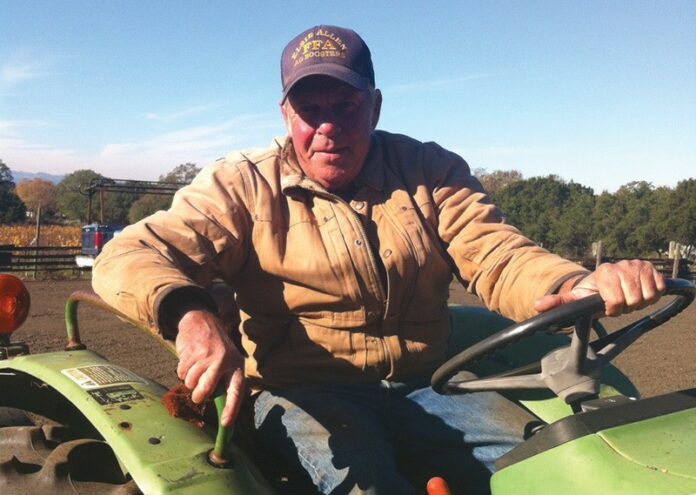
“This entire garden is 100 percent driven and directed by chef [Christopher] Kostow and his team,” says garden manager Christine Kim. “The way we set up our beds, the way we harvest, the way we irrigate is all set up based on what they want for the crop.”

And those crops include mind-blowing plants like oyster leaf, with a fresh, briny ocean taste; day lilies, which have crunchy petals that increase in sweetness toward their base; and ice lettuce, which looks like it’s covered in dew drops but has a crisp, saltwater-infused bite.

The day lilies are Kostow’s favorite plant to cook with at the moment. “They’re extremely versatile and floral, yet vegetal,” he says via email.”We stuff them with spot prawns and lightly grill them.”

On a recent tour, Kim responds to an inquiry about a curious-looking eggplant. “Oh, those are just a variety of blue tomatoes that we’re trying out this year.”

You know—just your everyday, average, normal blue tomatoes.

“We’re still working on developing the flavor of them,” says Kim.

This garden is beginning to feel like it was created by Willy Wonka.

“We want to create a microclimate in each bed, which is why we plant so intensively,” she says. And everything is grown from seed. “It takes a lot of planning,” says Kim, “but it allows us the opportunity to choose from any thousands of varieties rather than just, say, the five basil plants that a nursery might carry.”

The greenhouse full of microgreens is a testament to that extra labor. Being able to pick the garnish and flowers mere hours before they are served ensures maximum flavor and beauty. “A “At this point so much of their menu comes from here that they wouldn’t be able to get over half the products that they get,” says Kim.

The farm is not certified organic, but Kim says they keep to the standards anyway.

The garden is located behind the St. Helena Montessori School, and chef Kostow includes students in the farm-to-table process. A class of 15–20 students plants, harvests, plans, cooks and serves a meal for their parents and teachers at the restaurant.

“The main relationship between the school and Meadowood is actually through the kitchen,” says Kim. “Chef Kostow designs, plans and executes a lunch with the kids that happens once a quarter up at Meadowood. So they get to see that farm-to-table process start to finish. They’re literally seeding what they’re going to use on the menu and they come out and walk through the gardens together and taste things and talk about menus.”

The garden rotates with different plants throughout the seasons. “The first year was very experimental, just kind of getting a feel for what the kitchen tended to like, what they found interesting, how much they could do R&D with,” says Kim. “And now in our third year, I think we’ve really got it down.”—Nicolas Grizzle

STEWARDS OF THE LAND

Twelve years ago, Tamara Hicks and her husband David Jablons decided to start a dairy farm. Never mind the fact that neither had prior experience in the field, and that they were both employed already in the medical field in San Francisco. And that the 160 acres they bought in Tomales had about 10,000 discarded tires on it. And that they would still be working their day jobs. And they weren’t even planning on making cheese for some time. Toluma Farms was going to happen, come hell or high water.

They were welcomed by the farming community, says Hicks. Though Toluma is still primarily a dairy farm, they started making cheese last year under the label Tomales Farmstead Creamery.

The three goat cheeses, named after Miwok words meaning “water,” “woman” and “one,” respectively, are Liwa, a fresh cheese great in salads; Assa, a hard aged cheese that is fabulous on a cracker by itself but even better with peach jam; and Kenne, a delightfully stinky soft ripened cheese with a unique and addicting nuance of flavors.

About 200 goats, all of whom are known by name (“It makes it easier to keep track of them,” says Hicks) and a hundred sheep roam mostly free on the property, which is now tire-free and has gorgeous views of the surrounding area. The farm has a conservation easement with the Marin Area Land Trust, which means it will always remain in agriculture. The nonprofit’s ideals lined up perfectly with those of the first-time farmers.

“We think we’re more stewarding the land than owning it,” says Hicks.—Nicolas Grizzle

[page]

APPLE OF HIS EYE

The apple once reigned in Sebastopol, but now the grape is king, as one orchard after another has fallen to the bulldozer for yet another vineyard.

But farmer Brooke Hazen didn’t get the message. Fourteen years ago, he planted 15 acres of heirloom apples in the Blucher Valley south of Sebastopol. He grows 70 kinds of apples, mostly Fuji and Honeycrisp but also heirloom varietals like strawberry parfait, Ashmead’s Kernel, Hudson’s Golden Gem and Nonesuch. He sells exclusively to Whole Foods Market, and right now his strawberry parfait apples are in stores. He also grows 20 kinds of Asian and European pears. All the fruit is sold under his Gold Ridge Farms label.

Hazen further distanced himself from the grape-growing mainstream when he planted 11,000 olive trees for his estate-pressed Olive Leaf Hills olive oil (see the Bohemian, “Turn Another Leaf,” July 11, 2012).

“This is not your typical apple grove in Sebastopol,” he says.

He uses training techniques and rootstocks that keep the trees small but loaded with fruit.

“Obviously, grapes possibly could have been a higher value crop, but at the time I thought there are just too many grapes already,” he says. “I need creativity to flourish.”

While he loves the gnarled trunks of his olive trees, Hazen has a particular fondness for his apples.

“I enjoy the huge diversity of apple varieties, the amazing colors, fragrances, textures and tastes,” he says. “I enjoy the amazement from consumers when their entire world opens up after confirming the diversity that exists. I enjoy showing people the wonder of the plant world, our world.”—Stett Holbrook

RICHNESS ON THE MARGINS

It’s a windy day up on the vast Bolinas Big Mesa—it’s always a windy day up on the Bolinas Big Mesa—as Caymin Ackerman picks dill and collard greens from the five-acre farm she runs with her boyfriend, Joseph Walker. They met at Green Gulch Farm near Muir Beach.

Along with the chard and cilantro, they’re growing four kinds of kale to feed the current kale craze: Dino, Red Russian, Curly Green and Redbor. The farm provides produce to several Whole Foods in the Bay Area.

There’s a sort of complementary quietude between Ackerman and Walker, the latter of whom specializes in high-demand strawberries, which fly off the shelf at the nearby Gospel Flat farm-stand.

“They’re gone in half a day,” says Walker.

The margins are thin and the drought isn’t helping. “Water is an issue up here,” says Ackerman, with quiet understatement. “Water is part of the overhead.

“But,” she adds, “there is a richness in the marginality that beats all.”—Tom Gogola.

MINDFUL MEATS

Three years ago, Mindful Meats cofounder and CEO Claire Herminjard worked in the San Francisco tech industry. Now she sells organic cuts to markets like Oliver’s, the Mill Valley Market and Osteria Stellina.

“In my free time, I was researching clean sources of meat,” says the former marketing executive, who specialized in so-called remnant inventories and how to sell them.

Herminjard now uses a “remnant inventory of meat”—cattle from organic dairy farms.

“I thought, all those cows are available. What’s happening to them?” Many, she says, were sent through conventional, large-scale slaughterhouses or were shipped out of the region to be slaughtered elsewhere. Now they are slaughtered and consumed in the North Bay.

According to the United States Department of Agriculture, dairy cows comprise about 15 percent of beef consumed by Americans.

“I wanted to feel a part of finding healthy sources of protein for people in this region,” says Herminjard, a 31-year-old native of North Carolina who moved to the Bay Area in 2005. “I wanted to do something I loved and cared about. And I didn’t want to eat meat that supported a pesticide system.”

Herminjard has quickly made a mark in the organic beef industry. She worked with chicken farmers to push the USDA to accept a voluntary non-GMO labeling program. Despite its 18 months in business, Mindful Meats became the first non-GMO-certified beef company in the country.—Tom Gogola

[page]

THE GOSPEL OF GREENS

Gospel Flat Farm in Bolinas, named for the chapels that once sat upon the delta nearby, is a multi-generational and multi-faceted farm, art space, and mobile kitchen workshop. Founded by Don Murch and Sarah Hake 32 years ago, Gospel Flat is known for its organic vegetable farm and educational community services.

Gospel Flat is unique, even for Bolinas: a 24-hour self-serve honor system that sits open along the road. A scale, calculators and a mailbox-style slot offer residents the freshest possible produce, eggs and even fresh baked rolls on some weekends.

Taking over many facets of farm life from his parents since graduating from Reed College in Portland, Ore., Mickey Murch is the face of Gospel Flat, an artist and educator dedicated to providing hands-on education. Murch offers tours of the farm, and leads school groups through the varied steps of growing organic produce.

Next to the farm stand there’s an intimate art space, hosting original shows and live music. Lastly, the kitchen may be the most intriguing aspect of Gospel Flat, “built from the scraps” of what turned out to be a WWII lifeboat pulled from the silt that now acts as a one-of-a-kind mobile culinary classroom popular with students and professional chefs alike.—Charlie Swanson

ORGANIC O.G.

Star Route Farm celebrates 40 years in operation this year, a milestone for the pioneering and pesticide-free farm; the Bolinas organic operation was the first of its kind in California when Warren Weber started in 1974.

Weber farms about 40 acres in Bolinas and another 20 in the desert near Coachella—beets and oregano, radishes and celery, all measure of lettuce and numerous other offerings. The farm’s focus, he says, is “fundamentally greens and cool-weather vegetables.”

The business has shifted over the years. In the late 1990s, Weber says, “the big shippers got wind of organics and the money to be made. In early 2000, we had shrunk quite a bit and decided to go just with restaurants. That’s what we’ve been doing for the past 15 years.”

Weber also runs a few Star Route farm stands around Marin County and sells to local Whole Foods Markets.

“The public has come around in a pretty big way on organic produce,” he says, even if sales in the United States are only around 3 or 4 percent of total fruit and vegetable purchases.

But the pioneering farmer says the number might tick up with an infusion of new organic blood: “There are a lot of young people coming into it now,” he says. “That’s very exciting. We started Marin Organic in 2000, and in last 10 years, there has been quite an upswing in young people who’ve wanted to get into farming.”

Meanwhile, he is ready to hang up his shovel and put his farm up for sale.—Tom Gogola

TRUE GRIT

When he was a boy, Guido Frosini visited his great uncle’s 1,000-acre cattle ranch in foggy Valley Ford in northern-most Marin County. His uncle was castrating bulls and he playfully tossed a testicle his way to freak him out. It worked, but it didn’t scare him away.

Frosini lived in Florence, Italy, until he was 19 when he came to the U.S. to attend the University of San Francisco. After graduating he became increasingly interested in food, where it came from and how to produce it. His great uncle had passed away, but he contacted his great aunt, Ione Conlan, to ask if he might help out on the ranch, which had been in the family since 1867. He worked as a ranch hand for a year and then left to work on a large ranch in Hawaii before coming back again. His first year he lived on the ranch alone.

“That was really hard. No one should do that.”

Once, when he was trying to examine a calf’s hoof, it kicked and stripped the flesh off his hand. The loneliness was hard too.

But he kept at it and grew more knowledgeable about ranching and managing what he says is the property’s most prized asset: the grass. Hence his operation’s name, True Grass.

“It has to start with the grass,” he says.

Together with his partner, Alissa Donovan, he tends a herd of trim, black Wagyu cattle he brought in from Washington five years ago. Wagyu is the breed used in the production of Kobe beef in Japan. Today, he has one of the largest Wagyu herds in California and sells the 100 percent grass-fed beef to subscribers and at Berkeley and Oakland farmers markets. He also raises about 70 heritage breed pigs and unbelievably juicy blueberries.

But the cattle, and their role in rejuvenating grasslands, are his real passion. Thanks to rotational grazing and other practices that tread lightly on the land, he says he’s already seeing more native grasses and more wildlife attracted to those grasses.

“I want to demonstrate that food production and wilderness go hand in hand,” he says.

He’s thinking long-term and says it will take at least 15 years to see if his work pays off.

“I can’t wait to pass that information on.”—Stett Holbrook

SINGING THE SONOMA SWAMP BLUES

Now in its fourth season, Sonoma Swamp Blues blueberry and strawberry farm lies along the Laguna de Santa Rosa, where Occidental Road meets High School Road. A swamp. Founded by Andy Landerman, whose dream was to open a blueberry farm, and his wife, Mamta, Sonoma Swamp Blues offers certified organic, vine-ripened, hand-picked berries.

Though the laguna floods typically in rainy weather, the hearty plants that make up the 20-acre farm survive each winter’s soaking. There are 12 varieties of blueberries on the farm, and each ripens in its own time during the season, which typically runs from June through August.

In addition to the seven-day-a-week farm stand, Sonoma Swamp Blues can be found in local grocers like Oliver’s Markets and Whole Foods. They also appear weekly at farmers markets through Sonoma County. Andy Landerman sadly passed away earlier this year, but his dream endures.—Charlie Swanson

Amid the Ruins

0

It was already getting dark, and the big auger drill was having difficulty digging into the hard-packed dirt. Above, the stars began shining though the black night.

In the background, work lights powered by a small generator illuminated two massive brick walls, all that remains of California Packing Company Plant No. 5. on West Third Street in Santa Rosa’s Railroad Square district. As the ground fought back against the foot-and-a-half-wide drill, David Lear asked himself the question he’s been asking for a year now. “What have we gotten ourselves into?”

Those walls have long held a fascination for Lear. “I’ve always had my eye on the cannery,” says the director, who has worked with Cinnabar Theater and 6th Street Playhouse, and most recently directed plays at Ives Park in Sebastopol. His vision for the old building was an annual outdoor theater festival called Shakespeare in the Cannery. While having a cup of coffee at Flying Goat nearby last year, he looked over the railroad tracks and thought, “It’s time.”

That’s when Lear shared his idea with Martin Hamilton, director of the nearby Arlene Francis Center. Hamilton’s a dedicated community activist working to make Railroad Square a cultural center. When Lear mentioned his idea of turning the vacant land down the road into a theater, Hamilton’s eyes lit up at the prospect.

“I think I just said, ‘We’ll do it,'” recalls Hamilton. The two formed a partnership. But they needed help.

Chris Costin has practiced law in Sonoma County for 30 years, often in issues of land use and real estate. He is also a champion of the local theater scene and a former board member at 6th Street Playhouse, and his offices happen to be in Railroad Square. When Lear and Hamilton approached him for help, he naturally signed on.

The cannery was built in 1917 in the heart of the town’s Little Italy district. At its height in the 1920s, the three-block-long building employed dozens of workers, mostly women. They canned crops from all over the area before the goods were sent by rail across the state. The company relocated in 1928 and the building closed for good in in 1932. The city has struggled on what to do with crumbling space ever since.

The landowner, San Francisco developer John Stewart, whose own plans recently fell through, generously gave the group a free two-year lease for the space. The Santa Rosa City Council voiced its support when they heard the idea. All Lear, Hamilton and Costin had to do was get the permits. They took their plans to the planning department, and confidently put in a request for a temporary land-use permit back in April.

It was promptly denied.

The city had concerns about safety. The plan had to be totally reworked. Lear was devastated. He thought he had lost his dream before it had even begun. Yet the next week, Costin came back with revised ideas and the group met again with Santa Rosa chief building official Mark Setterland. “If it wasn’t for Chris [Costin], we’d be dead in the water,” says Lear.

About 45 minutes into the meeting, Setterland suggested they all meet on site, to see what they could do. With extensive revisions to the proposal in place, the city issued a permit to start building a theater space. Suddenly, Shakespeare in the Cannery was a go.

That’s when the real work began. Those holes the auger was drilling late into the night were subsequently filled with concrete to hold lighting poles in place throughout the space. A solar-powered generator was specially developed to power the lights. Debris by the dump-truck load was removed. Architects and structural engineers were brought in. Contractors built a massive, three-tier stage. Hundreds of feet of fencing was erected to keep crowds a required 40 feet away from the walls. Visitors will walk from the entrance on Sixth Street at the Playhouse, past a rusted water tower, to the open-air stage now centered on a field located within the walls.

“Nothing has been a smooth ride. We solve one problem and it becomes another problem, and we just keep solving them,” says Lear, a week from the theater’s opening night. “This thing got away from us. It said, ‘You created me, now keep up with me.’ But my mantra is, if you believe in something, nothing stops it except you. And I’m not going to stop it.”

Shakespeare in the Cannery’s inaugural performance is Romeo and Juliet. Donations from the city council, the county, local businesses and personal investors have kept the project going. Hamilton says donations have totaled about $20,000, slightly less than half of current costs.

When opening night, July 18, finally came last weekend, Setterland and the city signed off on the permits and approved the event only an hour before doors opened for the first performance.

As the crowds watched from blankets and chairs on the lawn, and the sun dipped away in the background while swords clattered and star-crossed lovers danced, Lear’s vision became real.

“I’ve been so fixated on the minutiae, I couldn’t see the big picture,” says Lear. After the premiere weekend, he’s still trying to put it all into perspective. “Honestly, it hasn’t really sunk in yet. But I’m very proud of everyone. I’m very happy.”

For Hamilton, the success of Shakespeare in the Cannery signals the potential for Railroad Square. “We want to think about what will be here when the Smart Train comes though,” he says. “This is the theater district now.”

Costin also points out that there are no other major venues in Sonoma County on the forthcoming train’s route, and he hopes the cannery becomes a cultural destination, not only for the local community but for the entire North Bay and beyond.

Want Cab Franc with That?

0

Next time you go winetasting, consider this silly-simple insight: wineries are in the business of selling wine, not raking in tasting fees, or even charging extra for a tour and gourmet food pairing—which is why increasingly popular small-plate food pairing experiences may actually maximize your bang per banknote.

Whether you’re on a date, entertaining visitors or just getting out of the house, the big pours, multiple stems and quality bites are almost a loss-leader in your favor. Here are four top choices:

J Vineyards On Swirl’s last visit, we lounged on cushions in the Bubble Room, lapping up roasted cauliflower soup and forkfuls of crab cakes, pork medallions with rutabaga, braised veal cheeks, plus cheese course and dessert (menu changes seasonally; $75). Since then, J Vineyards has added a Terrace Tasting ($45) with tapas or cheese plate: Bellwether pepato, baby, Pennyroyal Boont Corners—no cheap stuff. By the way, if J Cuvée 20 ($28) seems too sweet, lay the new J Cuvée XB Extra Brut ($45) on your palate. Tastes like a grapefruit razor slicing a toasty, custard tart. Sparkling, Chardonnay and Pinot Noir. 11447 Old Redwood Hwy., Healdsburg. 707.431.3646.

Ram’s Gate It was too good to be true: fireplaces blazing at midday, food and wine available to all, credit card on the barrelhead. Since our last visit, this Carneros hotspot has thinned the flock: the à la carte menu has been ditched, and appointments will be required after Sept. 1. But arrange for an estate tour and Palate Play ($60), and enjoy petite but nicely executed bites like fried game hen with Fuji apple slaw and duck cassoulet with huckleberries. A variety of wines. 28700 Arnold Drive, Sonoma. 707.721.8700.

Lambert Bridge Those chandeliers in the redwood-paneled barrel room were begging to light something, like new bistro table service featuring butternut squash soup with pepper pork and pomegranate sauce. Not a gut-buster, but cozy atmosphere and a good price ($45). Chard, Zin, Cab and Cab Franc. 4085 W. Dry Creek Road, Healdsburg. 707.431.9600.

Jordan Jordan’s new estate tour and tasting ($120) takes you through rugged cattle country—Wagyu cattle included—and vineyards in the comfort of a somewhat incongruous luxury bus. But the boxed-treat pitstops by the lake and at the top of the hill, in a sleek gazebo overlooking Alexander Valley, are high style. Chard and Cab. 1474 Alexander Valley Road, Healdsburg. 800.654.1213.

Chewy Tea

0

Take a tasty, sweet iced tea with milk and throw a bunch of chewy, dark, mostly flavorless tapioca balls in the bottom of it, serve it with a huge straw and watch the balls shoot up into your mouth like a pneumatic tube system. Yes, boba is weird. But it’s strangely addicting.

Bubble milk tea, as it’s also known, is wildly popular in the Asian community, which is why it’s surprising to see a boba cafe pop up in Rohnert Park, a city not known for its diversity. The owners of Tea Rex say they opened it because they were “tired of driving an hour for boba,” since their closest options are in the East Bay or San Francisco. So last year they opened a place themselves. The vibe of the cafe is youthful, with a green and purple color scheme and weapon-wearing dinosaurs reminiscent of the 1980s cartoon series Dino Riders.

Drinks include sweet fruity options, like honeydew and kiwi, to jasmine milk tea and iced coffee, each with a variety of boba available. There’s food too. The Vietnamese bahn mi sandwiches are hearty, packing enough calories to feed two people for less than $5. Consider the meat bahn mi: head cheese, rich pâté, mayo and pickled veggies on a big, flaky soft roll. If the head cheese and pâté combination isn’t for you, there’s a vegetarian option as well. Best bet for snackage may be the fresh waffles—a wonderful accompaniment to the sweet, strange, deliciously chewy tea.

Tea Rex is located at 1 Padre Parkway,
Ste. E, Rohnert Park.

Bigger & Better

0

K&L Bistro didn’t just triple in size; it tripled its appeal. The Sebastopol restaurant reopened in May after an extensive remodel that upped its footprint to 3,200 square feet.

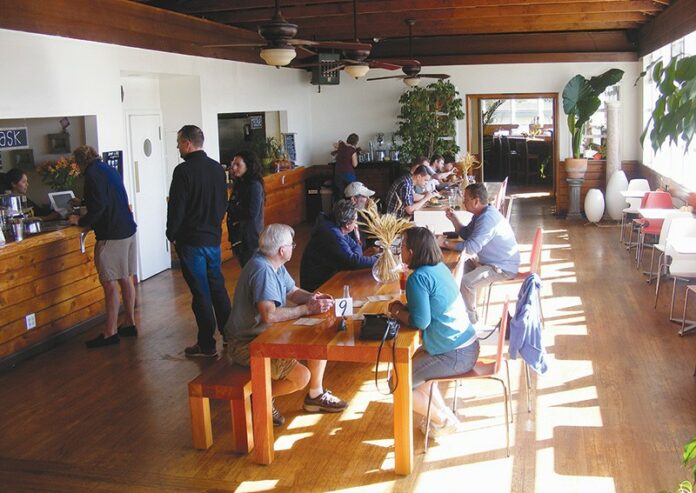
The old K&L was a beloved restaurant, but let’s be frank: it was cramped and got stuffy and noisy when it was crowded, which was often. But now there’s room to enjoy a meal without someone’s chair bumping into yours. The kitchen is bigger now, too.

The old dining room has become a lounge boasting a long and beautiful copper-topped bar with an oyster-shucking station at the end. The bar is not only a beauty, it’s loaded with a great selection of lesser-known booze. I’m a fan of mescal, and it’s great to see a few choices here. Fidencio mescal goes into La Palabra ($10), a cocktail made with housemade habañero simple syrup and chocolate bitters.

The lineup of craft brews on tap is worth a stop too. If it’s still available, check out Galaxy, a white IPA from Anchorage Brewing made with a touch of brettanomyces and subtle hints of kumquat, cumin and white pepper. It’s a very food-friendly brew.

Complementing the new bar is an eclectic bar menu that breaks from the Mediterranean-leaning lunch and dinner menus. Look for the taco of the day ($3), Korean fried chicken ($8), a kimchi-topped hotdog ($7), chicken liver mousse ($10.50) and even steamed pork buns ($8).

The handsome bar, deep list of libations and food menu have made the restaurant into the nighttime hotspot it never was, though its menu of bistro classics remains the same. There are no fancy foams
or postmodern deconstructions
on a plate here—just a menu
of dependable standards that succeed on the basis of quality of ingredients and execution. You’ve no doubt had French onion soup gratinée before, but K&L’s ($10) might as well serve as the gold standard. The beef broth contains a depth of flavor that only comes from slow-roasted bones and hours of slow bubbling in a large stock pot. It’s as good as it gets.

When I reviewed K&L two years ago, I loved the simplicity of the sole meunière ($23.50), and it’s just as good today. Consistency can be hard to achieve with cooks coming and going, but this dish is a testament to co-owner Lucas Martin’s training of his staff.

The impeccably fresh fish comes from Bodega Bay. The basic white-wine and butter sauce lets the sweetness of the fish shine. The house-cured Monterey Bay sardines ($11.50) are another dish I remember fondly last time that was just as good this time around.

K&L is also known for it boudin blanc sausage ($21), and for good reason. The aromatic, juicy sausages are wonderfully flavorful, but what got me is their light, cut-with-a-fork delicacy. The accompanying apple endive salad and crisp fries round out this local favorite.

While it’s a far cry from traditional, the watermelon and pork belly salad ($11.50) is a good addition to the menu. The refreshing sweetness of the melon is a great foil to the meaty chunks of pan-fried pork belly. A star anise vinaigrette and spicy pepitas complete the frolic of flavors.

I wish there was a better list of wines by the glass. Better are the wines by the bottle, which include a few hard-to-get local standouts like Radio Coteau and Littorai.

Bigger isn’t always better, but with the new K&L, it is.

K&L Bistro 119 S. Main St., Sebastopol. 707.823.6614.

July 27: Garden in the Sea at Kenwood Restaurant

Natural landscapes and environmental awareness come together in the beautiful 2011 documentary Garden in the Sea, which explores an underwater art installation located in Mexico’s Sea of Cortez. This week, the documentary screens at the Kenwood Restaurant as part of a benefit for the Wine Country Film Festival. Before the film, there’s a reception, silent auction and special dinner...

July 25: Valerie Plame at Book Passage

One of the most intriguing real-life spy stories of the last decade is the case of CIA operative Valerie Plame, whose cover was blown in a Washington Post article as retribution for an op-ed piece her husband wrote that refuted the Bush administration’s claims on Iraq. Plame’s career with the CIA ended in turmoil, yet now the betrayed spy...

‘Violette’ Femme

The superb French biopic Violette by Martin Provost (who did the similarly fine Seraphine) isn't about just another pretty face. Violette Leduc, a maudite writer whose work attracted the respect of contemporaries such as Camus and Jean Genet, poured her yearning to be loved into surprisingly hard-nosed yet erotic books. Loneliness, the Nazi occupation and constant poverty failed to crush...

Learning from Kern-Dog

I've lost track of the number of times that Kern-Dog has gone to visit the vet over the years; today, the vet came to visit him. We did it on the grass in Karen's yard, the place where Kern-Dog had spent countless hours laying in the sun, chasing squirrels, stalking gophers in the flower beds and, on one memorable occasion,...

Of Water and Wine

It's been a good year for Sonoma and Napa county vineyards. While Central Valley farmers saw 410,000 acres go fallow because of the lack of water, North Bay grapegrowers benefited from well-timed spring rain, moderate temperatures and critical groundwater resources. But as the grape crop ripens, the North Bay faces a state push to monitor and manage agriculture's groundwater pumps,...

Growing the Food Scene

Successful winemakers win gold medals and blue ribbons. Outstanding chefs get Michelin stars and James Beard awards. But what do farmers and ranchers get for their efforts? If they're lucky, they earn enough from their labor to cover their narrow margins. In this year's annual food and wine issue, we shine the spotlight on a few of the many small-scale...

Amid the Ruins

It was already getting dark, and the big auger drill was having difficulty digging into the hard-packed dirt. Above, the stars began shining though the black night. In the background, work lights powered by a small generator illuminated two massive brick walls, all that remains of California Packing Company Plant No. 5. on West Third Street in Santa Rosa's Railroad...

Want Cab Franc with That?

Next time you go winetasting, consider this silly-simple insight: wineries are in the business of selling wine, not raking in tasting fees, or even charging extra for a tour and gourmet food pairing—which is why increasingly popular small-plate food pairing experiences may actually maximize your bang per banknote. Whether you're on a date, entertaining visitors or just getting out of...

Chewy Tea

Take a tasty, sweet iced tea with milk and throw a bunch of chewy, dark, mostly flavorless tapioca balls in the bottom of it, serve it with a huge straw and watch the balls shoot up into your mouth like a pneumatic tube system. Yes, boba is weird. But it's strangely addicting. Bubble milk tea, as it's also known, is...

Bigger & Better

K&L Bistro didn't just triple in size; it tripled its appeal. The Sebastopol restaurant reopened in May after an extensive remodel that upped its footprint to 3,200 square feet. The old K&L was a beloved restaurant, but let's be frank: it was cramped and got stuffy and noisy when it was crowded, which was often. But now there's room to...
11,084FansLike
4,446FollowersFollow
6,928FollowersFollow