Oct. 31: Halloween with William Gibson! Book Passage, Corte Madera

0

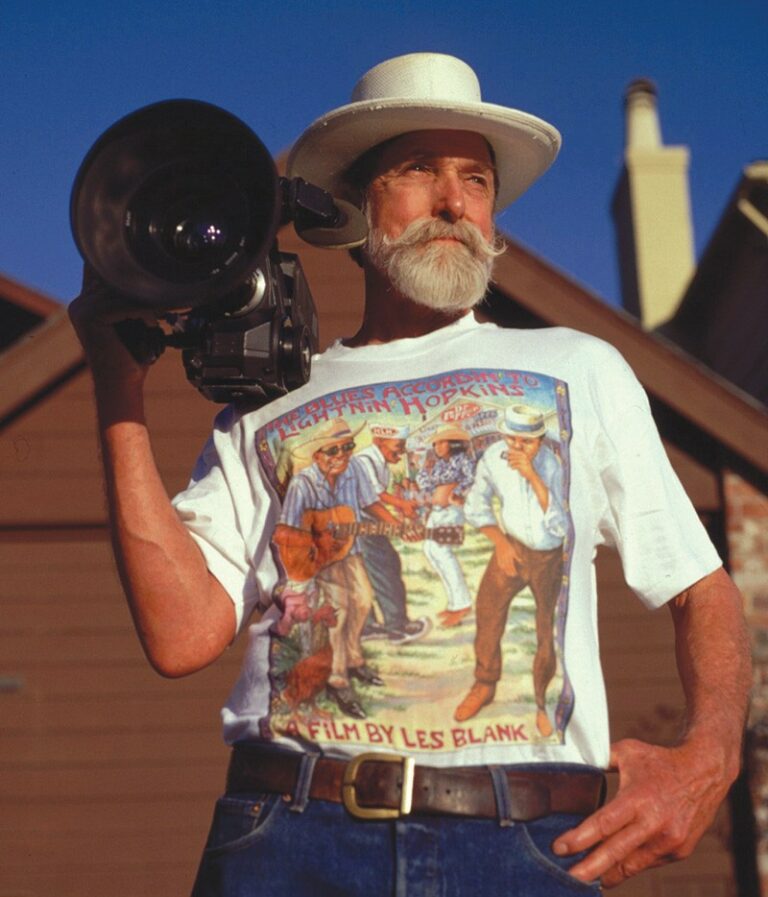
Before the internet even existed, science fiction and speculative author William Gibson coined and crafted the idea of cyberspace and predicted the World Wide Web in his groundbreaking 1984 debut novel, Neuromancer. Gibson’s idea of a global network touched on a cultural nerve, and some argue it influenced the way the internet itself was developed. For the last 30 years, Gibson’s celebrated works in cyberpunk have continually predicted increasingly dystopian visions of our future and alternate realities, and his new book, Peripheral, is being hailed as a dazzling hi-tech thriller. This week, Gibson appears and reads on Friday, Oct. 31, at Book Passage, 51 Tamal Vista Blvd., Corte Madera. 1pm. Free. 

Nov. 1: Napa’s Jarvis Conservatory Reopens – A Grand Night for Singers!

0

Housed in the second oldest building in downtown Napa, the historic Lisbon Winery, the Jarvis Conservatory suffered severe damage from the Aug. 24 earthquake. After undergoing structural and flood damage repairs and replacing theatrical equipment, the conservatory will finally reopen Nov. 1 with the 19th anniversary of its popular ‘It’s a Grand Night for Singers’ concert. Falling on the first Saturday of every month, this ongoing series has continually brought together brilliant voices and talented musicians. The show celebrates with a lineup of longtime audience favorites and plenty of Champagne on Saturday, Nov. 1. 1711 Main St., Napa. 7pm. $20. 707.255.5445. 

Nov. 2: Mumenschanz in Marin!

0

Mummenschanz has been a world-wide delight for four decades, born from the minds of Swiss experimental theater performers and incorporating elements of dance, theater, masks and mummery. Performers often dress head-to-toe in black and move in complex choreography while holding large props built out of ordinary items made to look like gigantic masks. It’s a one-of-a-kind theater experience, and now the dance troupe is on its 40th anniversary tour with stops in the North Bay. Mummenschanz transcends the ordinary on Sunday, Nov. 2, at the Marin Veterans Memorial Auditorium, 10 Avenue of the Flags, San Rafael. 3pm. $20–$45. 415.499.6800. 

Nov. 2: Pollan Family at Spinster Sisters, Santa Rosa

0

Well-read foodies everywhere are familiar with author and activist Michael Pollan, whose work continually examines and critiques the food industry and culture. Surely, his fascination with food started at the family table, and now the rest of the Pollans are offering an enticing new cookbook of favorite recipes and nourishing meals. Authored by mother Corky and sisters Lori, Dana and Tracy, ‘The Pollan Family Table’ contains more than 100 dishes as well as gorgeous photos and tips on technique. This week, the Pollan clan come together for a prix fixe dinner and book signing on Sunday, Nov. 2, at the Spinster Sisters Restaurant, 401 South A St., Santa Rosa. 6pm. $95. Tickets available at Book Passage,

Behind the Wine

0

There are more than a hundred wineries in Sonoma Valley, with 13,00 acres of grapes spanning 17 miles, and several generations worth of experience crafting diverse, delicious wine.

It can be almost too much to keep track of. This weekend, our region’s winegrowers offer an array of excursions that take you behind the scenes of many of these celebrated wineries during the Reserve Sonoma Valley event.

Set for Nov. 1, Reserve Sonoma Valley is an eclectic day of memorable wine country experiences. There are eight different excursions to choose from, each visiting four acclaimed wineries and each with a special focus and story to tell. “Harvest in Sonoma Valley” shows off the lively harvest atmosphere and tells the story of the journey from vine to bottle. “Generations of Sonoma Valley” travels to some of the oldest wineries, highlighting the traditions behind these family wines. The “Sommelier Tour” is a full day of professional perspectives on the best wines of the valley.

There are also several “Discover” tours tracking various micro-regions within the valley, from the highland views of the Moon Mountain District to the coastal climate of Carneros. Each excursion includes chauffeured transportation and lunch, making for a worry free day.

Reserve Sonoma Valley takes place on Saturday, Nov. 1, departing from 2000 Broadway, Sonoma. 9:30am. $110. www.sonomavalleywine.com.

Acting Lessons

0

‘What would you rather see?” a colleague once asked. “A strong performance in a weak play? Or a weak performance in a great play?”

Easy. The most brilliant script cannot survive performances that aren’t up to snuff. But nothing beats a great performance.

Which brings us to Alfred Uhry’s Pulitzer-winning Driving Miss Daisy, a groundbreaking play staged so often it hardly feels groundbreaking anymore. But in a pristine production at Petaluma’s Cinnabar Theater, some exceptionally good acting makes the show well worth seeing (or seeing again).

Directed with thrift and polish by Nathan Cummings, Daisy is the tale of an elderly Southern matron (Laura Jorgensen, pitch-perfect) forced, after one too many car accidents, to hire an amiable chauffer (the splendid Dorian Lockett). Told in a series of vignettes spanning 25 years, the play (with solid support from John Browning as Miss Daisy’s steady son Booly) sails on a slipstream of actorly assurance.

Rating (out of 5): ★★★★

Christopher Durang’s Vanya & Sonia & Masha & Spike, now playing at Main Stage West, won the Tony award for best play in 2013. Revolving around three middle-aged siblings whose Chekhov-loving parents have recently died, the appealingly offbeat comedy employs masterfully complex language, blended with sharp one-liners and crackpot characterizations.

Vanya (a gently sad-sack Eric Thompson) is a cranky curmudgeon who lives with sister Sonia (marvelously played by Madeleine Ashe). Both are lonely and resentful after years of caring for their parents while sister Masha (Elly Lichenstein) pursues her career as a movie star.

Housecleaner Cassandra (Naomi Sample, a joy to watch) claims to be clairvoyant, warning of coming changes at the hands of someone named Nina. After Masha arrives with dim actor boy-toy Spike in tow (Tyler Costin, hilarious), the prophesied Nina arrives (Ivy Rose Miller, practically glowing with star-struck innocence), a neighbor and longtime fan of Masha.

Beautifully directed by Sheri Lee Miller, with as much attention paid to the characters’ underlying emotions as to the comedic elements in Durang’s loopy and literate script, this one proves that strong acting is a play’s heart and soul.

Rating (out of 5): ★★★★

Caught Looking

0

For young Brazilian Leonardo, burgeoning adolescence is more difficult than it is for others. Leo has never been kissed; Leo is also blind. Daniel Ribeiro’s film The Way He Looks follows Leonardo’s interactions with jeering classmates and overbearing parents—and his dawning realization that he’s gay.

Leonardo strives to pull away from the constant supervision of his helicopter parents but doesn’t quite know how. Regardless of the friendship with his best friend, Giovana, the introduction of new student Gabriel provides him with an individual who aids in his escape from the confines of routine, and shows him the way to the life of acceptance and freedom that he’s always craved. The classic “twist” on this story of adolescent awakening? A love triangle between the three main characters where each encounters jealously, insecurity and companionship, and tentative attempts to find a place in each other’s lives.

Unquestionably an art film, the cinematography and sets supplement the youthfulness of the story. Pastel colors and lots of light accentuate the innocence of the characters and their situation, and the featured music of indie pop band Belle and Sebastian, representing the changes in Leonardo’s life, lends to the upbeat tone. Still, the film is deeper than its candy-coated exterior; a serious conversation about the pressures of adolescence is present just beneath the surface.

The film is based on Ribeiro’s 2010 award-winning short film I Don’t Want to Go Back Alone, and uses the same actors to flesh out an already intriguing story of vulnerability, breaking routine and desire. The Way He Looks touches the same themes but with more focus on dialogue and acting, and takes advantage of the longer format to flesh out the characters.

In an interview, Ribeiro says he “wanted to create a universal story that, gay or straight, blind or not, everyone would be able to relate to,” a sentiment that shines through in a film that addresses tolerance and acceptance.

The Way He Looks is a commentary on attraction without sight, our definitions of sexual orientation and the prejudices society places on both of these factors. Ribeiro’s vision was to remove homosexuality as an obstacle or problem in plot, and instead “prove to society, friends and family that being gay is ‘normal.'” Leonardo’s sexual orientation is not the focal point of the film; instead, it’s the desires and experiences of first love that we all recognize.

The Way He Looks is the official Brazilian entry for the Academy Awards, and has already won the FIPRESCI Prize and Teddy Award from the Berlin International Film Festival, the Audience Award at the Frameline Film Festival, and is an official selection at the Cannes Film Festival.

‘The Way He Looks’ opens Nov. 14 at Rialto Cinemas, 6868 McKinley St., Sebastopol. In Portuguese with English subtitles.

Letters to the Editor: October 29, 2014

Beefs with ‘Beef’

“If I ever desire to eat meat, I will do so because there is no reason not to do so,” said Nicolette Hahn Niman in last week’s story about her book Defending Beef (“Eat More Beef,” Oct. 22). And yet there remains an undeniable reason not to eat meat, and that is the colossal cruelty inherent in the meat industry. I would have hoped this longtime vegetarian would not sell short her “affinity for animals” because, outside of some of our precious Sonoma and Marin ranches, and maybe a few others scattered here and there, every single one of the animals raised for food suffers a life of misery and brutality. That is reason enough to eschew eating meat.

Petaluma

Although methane emissions are indeed lower than CO2, the EPA graphs only measure quantities of emissions. The Bohemian article didn’t mention anything about rather recent IPCC studies on how methane’s chemistry may have a greater impact on radiative forcing. Maybe Hahn Niman’s book does. But methane may have potential to “have 34 times the effect on temperature of a carbon dioxide emission of the same mass over the following 100 years.” I must add I sincerely appreciate the efforts of grass-fed free-range beef operations as a step in a noble direction.

Healdsburg

Editor’s note: ‘Defending Beef’ does discuss the impact methane emissions. Space didn’t allow inclusion of this issue into the article.

Sad, sensationalist piece that panders to the meat-loving crowd. What exactly qualifies this lady to call out a mass of scientifically published journals/reports as “flimsy science”? If this is the route the Bohemian is going to take with such an impending issue, please cite sources. Even the text used at the [SRJC’s] introductory class for environmental science states that the best way to lessen your carbon footprint is to adopt a plant-based diet.

Via online

This makes no sense, her reasons . . . It is absurd and she is harming living beings that feel pain for her own desires and then justifying it. She should watch the documentary Cowspiracy.

Via online

Nothing sensational at all—the author cites scientific reports to debunk all the myths that are being passed off as “science.” maybe you should read the books as well their footnotes before making such ill-informed comments. Besides, any introductory environmental course that doesn’t understand the carbon cycle, ecosystems and soil health really isn’t a very good one. Diets that require a lot of transportation for out-of-season produce don’t have small carbon footprints.

Via online

Go Meatless

U.S., state and municipal health authorities are working overtime and spending millions of dollars to stem the spread of ebola, which has killed just one person here.

Where is the comparable effort to stem the spread of heart disease, stroke, cancer, diabetes and other chronic diseases that kill 1.4 million Americans annually and are linked conclusively to excessive consumption of animal products? According to the U.S. Centers for Disease Control, that’s 23 times the number killed by all infectious diseases combined, including AIDS, hepatitis, blood poisoning and intestinal infections!

Yet each of us can take personal responsibility for our own health by reducing then dropping animal products from our menu.

Santa Rosa

Sinister Snobbery

I know and work with Rami Batarseh and Vicky Kumpfer. From the beginning, they have worked creatively with the long-term local art community. I am very concerned with the negativity of this article (“Making a Scene,” Oct. 8). I am in dialogue with Rami about this.

Flora Tsapovsky has misrepresented what Batarseh and Kumpfer said and meant. She presents the Fulton Crossing gallery’s attitude as outrageously disdainful and disrespecting of “typical local artists.” Her intent seems to be build a controversy at the expense of the gallery’s reputation. Sabotage!

What can the Bohemian do to repair the damage done by Tsapovsky to Fulton Crossing’s reputation? What was intended as positive publicity for Batarseh and Kumpfer’s efforts at building an artistic asset within our community has instead been written as an exposé of sinister snobbery toward local older artists.

I appreciate your attention to this and to finding a way to promote good will.

Sebastopol

Flora Tsapovsky responds: I sat down with Fulton Crossing’s team to talk about Sonoma County art and its prospects. The result was a critical discussion that put the local art community in a larger context .The local art community deserves an honest, in-depth evaluation, which, in my opinion, is the very opposite of disrespect.

Write to us at le*****@******an.com.

The Middleman

0

You’d have sworn it was an Onion story: Why is there a pink-hued fracking drill bit jutting out from my Facebook newsfeed?

It was crazy, but it was no satire. The Susan G. Komen Foundation made headlines last month when it linked up with the fracking industry to promote its annual Race for the Cure against breast cancer. The image they decided on was the pink-hued drill bit, and it was weird.

This was “cause marketing” gone sideways, and not the first time Komen’s dalliance with corporate donors raised eyebrows among veterans in the nonprofit community.

Marin author-entrepreneur Bruce Burtch was recently holding court in a San Rafael coffee shop and recalled another Komen snafu from 2010. Burtch is the author of Win-Win for the Greater Good, and self-described coiner of the phrases “cause marketing” and “do well by doing good.” The high-energy San Rafael resident matches big-pocket investors with altruistic nonprofits, and has been at it since the 1970s.

In 2010, Burtch recalled, Kentucky Fried Chicken got with the Komen Foundation and offered customers pink-hued buckets of wings, thighs and breasts. It was an unmitigated public relations disaster for Komen. Why would the company accept money from purveyors of fried, factory-farmed fast food that might give you cancer?

“They thought they were doing the right thing,” says Burtch. Speaking generally, he adds, “A mismatched cause can destroy in five minutes a 20-year effort.”

Burtch has matched nonprofits with for-profits since he brokered a mutually beneficial liaison between Marriott theme parks and the March of Dimes in the late 1970s. Love them or hate them—and many progressives hate them—these alliances are here to stay. Ideally, they are “partners working for the greater good,” says Burtch.

He says the landscape between giver and receiver has shifted in recent years, as corporations work to maximize the public relations appeal to consumers—and contribute to employee satisfaction in the bargain, Burtch says. This is not just about sending the money and then taking the feel-good photograph for the annual report to investors.

These days, he says, “if you just put your hand out, it’s not happening. More corporations now take the approach of, ‘We want to give the money but we also want to work with the nonprofit.'”

According to the Marin County Nonprofit Landscape Study 2013, there are more than 1,500 nonprofits in Marin County alone, the highest, per capita, in the state and maybe the country.

That shouldn’t surprise anyone, given the outsized levels of social concern and commitment on display in much of the enlightened North Bay, not to mention its proximity to lots of money.

The nonprofits here range from Point Reyes Station’s Environmental Action Committee to Marin Fair Housing, to the Jackson Café in San Rafael (see Dining this week, page 13, for more on the Jackson Café), and beyond.

Nowadays investors in nonprofits like these will put an emphasis on employee volunteering, pro bono work for the organization and other activities where the nonprofits can leverage the “brain power” of their investors to the greater good, says Burtch.

A 2009 study on cause marketing from Stanford University’s Social Innovation Review set the bar even higher for concerned corporations in search of a nonprofit: “Rather than tying charity to profits, corporations should focus on their own responsibility to their employees (through means such as fair wages and healthy, satisfying work conditions), the environment (through means such as greener and more sustainable practices), and the global society (through means such as Fair Trade practices and loyalty to communities of operation). Corporations might also join other foundations and donors in funding grassroots efforts to improve communities.”

“Anyone with a good idea can start a nonprofit,” Burtch says, and that’s not always such a good idea.

With the big number of nonprofits comes big competition for donor money—and, says Burtch, duplicated efforts that aren’t necessarily serving the people who are supposed to be served.

The nonprofit is not the cause, Burtch says: “I think a lot of the nonprofits take their eyes off the prizes, in my opinion.”

For example, Burtch notes that there used to be two food banks serving Marin County. Everyone thought they were doing the right thing, but the result was duplication of services, waste and possible confusion among clients who rely on food banks for nutrition.

The problem was solved, says Burtch, once the nonprofit administrators got involved. “Marin Community Foundation said to merge, and they did. They have the money.”

The latest Komen controversy highlighted why there’s often public skepticism over such liasions. And, there’s often mistrust between organizations even after they’ve teamed up.

It’s a “huge” issue, says Burtch, and the trick to closing the chasm is to “bridge the cultural divide between for- and nonprofits, first by not having any surprises or hidden agendas,” he says.

“The first question I have for a corporation is, why are you doing this? Is there an ulterior motive for giving? Get the agenda out there, put that on the table, because this is about trust.”

The difficulty is selling that trust to the public. Chevron, which operates a refinery in Richmond, participated in a workforce development program with Catholic Charities in 2009.

The idea, says Burtch, was for Chevron to pay to train men and women, “and maybe provide a better workforce for Chevron.”

But many in the hyper-progressive region could not get past “Oh my God, you’re taking money from Chevron,” says Burtch—as he also admits the obvious: “Sometimes companies are looking to burnish their image by developing cause marketing. Good faith is the key.”

Good faith is good; better still are built-in corporate values that reflect the cause being promoted. In some cases, says Burtch, the corporation will offer a product connected to the cause or, in the case of Patagonia or Salesforce.com, will “build ’cause consciousness’ into the [investment] plan. For them, it’s not about the money—it’s about the messaging.”

Investors, he says, “are looking for a social return on their investment. This is a business-value proposition to for-profits.”

Regardless of the motive or the investor, says Burtch, the bottom line in any link-up between for-profits and the nons has to be: “Where’s the public benefit?”

Creature Comforts

0

Driving down Old River Road south of Ukiah one day, I swerved around a lump on the road that looked like a cat. I pulled over to remove the animal and look for a tag, because it’s sad enough to lose one’s pet; I hate to think of someone finding theirs after traffic ran over it for the remainder of the day. Then, in the rearview mirror, I saw one leg stab pitifully at the air. It was still alive.

This must be one expensive cat, I thought as I approached it, because of its wild-looking spots and handsome coat. Instead, it was a wild bobcat. I put the bloodied, listless thing in my hatchback and brought it to the bemused officers at the local animal shelter. But they contacted a Mendocino County wildlife rescue group, who took the cat to several state-of-the-art Bay Area facilities.

Veterinary surgeons fixed her broken jaw and leg, and specialists in Morgan Hill rehabilitated her in an environment created to minimize human contact—hiding their scent and wearing leaves when feeding.

Months later, I was called in to help release the cat near where she was found. The young bobcat in the transport cage had grown up: snarling, wild and very much alive. And an expensive cat,
after all.

You can help to fund efforts to save injured or displaced wildlife just by having a beer. Tuesday, Nov. 11, Lagunitas Brewing Company hosts “Pints for Paws,” a fundraiser for Sonoma County Wildlife Rescue (SCWR). A cover charge and all beer sales will be donated to the organization, with the Pulsators and Dylan Chambers and the Midnight Transit providing the tunes. While the lively scene would be too stressful for SCWR’s educational animals, animal-shaped touch and feel boards—with real skunk fur, for instance—will be on display.

The Petaluma-based organization rescued three baby bobcats this season, according to executive director Doris Duncan. Wildlife Rescue also partners with wineries to place and maintain barn owl boxes in vineyards. Nest activity is monitored and GPS coordinates help to re-home orphaned owlets—and the owls pitch in by adopting them.

“Pints for Paws” at Lagunitas Brewing Company, happens Nov. 11, from 5:30pm to 8pm. 1280 N. McDowell Blvd. $10 cover. 707.992.0274. www.scwildliferescue.org.

In April, 2015, the Wildlife Rescue Center of Napa County invites supporters to have “A Wild Night at the Castle” at Castello di Amorosa. 707.224.4295. www.napawildliferescue.org.

Marin County’s Wildcare Bay Area invites the public to meet animals during daily feedings and “turkey vulture enrichment” sessions. 76 Albert Park Lane, San Rafael. 415.456.7283. Donations accepted at www.wildcarebayarea.org.

Oct. 31: Halloween with William Gibson! Book Passage, Corte Madera

Before the internet even existed, science fiction and speculative author William Gibson coined and crafted the idea of cyberspace and predicted the World Wide Web in his groundbreaking 1984 debut novel, Neuromancer. Gibson’s idea of a global network touched on a cultural nerve, and some argue it influenced the way the internet itself was developed. For the last 30...

Nov. 1: Napa’s Jarvis Conservatory Reopens – A Grand Night for Singers!

Housed in the second oldest building in downtown Napa, the historic Lisbon Winery, the Jarvis Conservatory suffered severe damage from the Aug. 24 earthquake. After undergoing structural and flood damage repairs and replacing theatrical equipment, the conservatory will finally reopen Nov. 1 with the 19th anniversary of its popular ‘It’s a Grand Night for Singers’ concert. Falling on the...

Nov. 2: Mumenschanz in Marin!

Mummenschanz has been a world-wide delight for four decades, born from the minds of Swiss experimental theater performers and incorporating elements of dance, theater, masks and mummery. Performers often dress head-to-toe in black and move in complex choreography while holding large props built out of ordinary items made to look like gigantic masks. It’s a one-of-a-kind theater experience, and...

Nov. 2: Pollan Family at Spinster Sisters, Santa Rosa

Well-read foodies everywhere are familiar with author and activist Michael Pollan, whose work continually examines and critiques the food industry and culture. Surely, his fascination with food started at the family table, and now the rest of the Pollans are offering an enticing new cookbook of favorite recipes and nourishing meals. Authored by mother Corky and sisters Lori, Dana...

Behind the Wine

There are more than a hundred wineries in Sonoma Valley, with 13,00 acres of grapes spanning 17 miles, and several generations worth of experience crafting diverse, delicious wine. It can be almost too much to keep track of. This weekend, our region's winegrowers offer an array of excursions that take you behind the scenes of many of these celebrated wineries...

Acting Lessons

'What would you rather see?" a colleague once asked. "A strong performance in a weak play? Or a weak performance in a great play?" Easy. The most brilliant script cannot survive performances that aren't up to snuff. But nothing beats a great performance. Which brings us to Alfred Uhry's Pulitzer-winning Driving Miss Daisy, a groundbreaking play staged so often it hardly...

Caught Looking

For young Brazilian Leonardo, burgeoning adolescence is more difficult than it is for others. Leo has never been kissed; Leo is also blind. Daniel Ribeiro's film The Way He Looks follows Leonardo's interactions with jeering classmates and overbearing parents—and his dawning realization that he's gay. Leonardo strives to pull away from the constant supervision of his helicopter parents but doesn't...

Letters to the Editor: October 29, 2014

Beefs with 'Beef' "If I ever desire to eat meat, I will do so because there is no reason not to do so," said Nicolette Hahn Niman in last week's story about her book Defending Beef ("Eat More Beef," Oct. 22). And yet there remains an undeniable reason not to eat meat, and that is the colossal cruelty inherent in...

The Middleman

You'd have sworn it was an Onion story: Why is there a pink-hued fracking drill bit jutting out from my Facebook newsfeed? It was crazy, but it was no satire. The Susan G. Komen Foundation made headlines last month when it linked up with the fracking industry to promote its annual Race for the Cure against breast cancer. The image...

Creature Comforts

Driving down Old River Road south of Ukiah one day, I swerved around a lump on the road that looked like a cat. I pulled over to remove the animal and look for a tag, because it's sad enough to lose one's pet; I hate to think of someone finding theirs after traffic ran over it for the remainder...
11,084FansLike
4,446FollowersFollow
6,928FollowersFollow