Dying Behind Bars

0

Barely two months after the ink dried on a five-year extension to a contract worth at least $32 million, the California Forensic Medical Group (CFMG) faces scrutiny at Sonoma County’s Main Adult Detention Center after three recent deaths—including a suicide—over a period of three weeks.

County corrections officials confirmed that three people died at the Santa Rosa jail, and another sick inmate died at Sutter Hospital after being transferred there from the North County Detention Facility.

The county has promised an investigation of the deaths to determine if there’s anything connecting them.

“It is an anomaly to have the incidents clustered in such a short time frame,” says Sgt. Cecile Focha, public information officer with the Sonoma County Sheriff’s Office. “In response, we are taking a progressive stance to analyze the circumstances and evaluate the current custodial and medical procedures.”

Rhonda Jean Everson died
Oct. 18 in a cell she’d been placed in while going through withdrawal, and was reportedly in the cell from Friday night through Sunday, when she was found dead.

Mikol Stewart was found hanged in his cell Sept. 28, and Diego Armando De Paz died in his cell Oct. 8. The fourth inmate, Charles Weathers, died at Sutter Medical Center Sept. 23 after being transferred there from the North County Detention Facility.

A review of documents raises questions about factors that may have played a role in the cluster of deaths:

• An understaffed jail where officials are forced to work up to 60 overtime hours a month.

• Gov. Brown’s “realignment” solution to the state’s overcrowded prison crisis, which has put additional pressure on county lockups’ mental and medical-health services. Realignment was Brown’s 2011 solution to a U.S. Supreme Court order to depopulate its unconstitutionally overcrowded state prisons by moving prisoners to county facilities.

• The county’s for-profit medical-services provider and its eye on the bottom line and a healthy return for investors.

The Monterey-based CFMG is the largest for-profit provider of mental and medical health services in the state. According to its website, CFMG contracts with 65 detention centers in 27 counties around the state—serving 16,000 inmates while providing medical health services to roughly 90 percent of the state’s local lockups.

Napa County also contracts with CFMG for medical services in its lockups. Marin County relies on county health workers to provide the services.

The state leader in outsourced inmate health services operates under the umbrella of a huge global private equity firm. In 2013, CFMG entered into a “strategic investment” with H.I.G. Capital, which has offices in San Francisco and an asset portfolio of about $17 billion. According to the Monterey Herald, it signed several jail contracts soon after the “strategic investment” with H.I.G. Capital.

One of the obvious questions for investigators is whether sick inmates pay the price for a healthy return on investment—but it’s unclear whether they’ll ask it.

They should. California Forensic Medical Group is in the midst of a federal lawsuit that originated in 2013. Company founder Dr. Taylor Fithian and CFMG, according to an April report in the Monterey Herald, are “the target of a high-profile federal lawsuit alleging unconstitutional and ‘systematically’ poor medical care at Monterey County Jail.”

That story, by reporter Julia Reynolds, noted that the Monterey lawsuit was of a similar nature to a 2004 lawsuit in Yolo County that CFMG lost. In Monterey, Reynolds cited a federal court deposition given by Dr. Mike Puisis, a medical-corrections expert: “It appears that [Monterey County Jail] is systematically denying necessary medication to patients with chronic disease.”

California Forensic Medical Group did not respond to a request for comment by deadline.

[page]

The 2013–14 Sonoma County Grand Jury report offered recommendations that “focus on the sheriff’s office, encouraging it to continue efforts to address the impact of realignment and to address the needs of inmates with health problems.”

In a recent Facebook post, the Sonoma County Sheriff’s Office wrote: “The Grand Jury and the Sheriff agreed that the State’s Realignment Program continues to pose challenges to our adult detention facilities. Also, inmates with medical and mental health issues make significant demands on [Main Adult Detention Facility] staff and facilities. In addition to these issues, the mandatory overtime is an increasing burden for correctional personnel.”

According to documents reviewed by the Bohemian, the county re-upped its service contract with CFMG in August, with a first-year outlay of $6.5 million. The extension allows for annual increases pegged to the consumer price index, which means the latest contract is worth at least $32 million—in a jail inadequately staffed by overworked corrections officials forced to work overtime.

Business has been good for CFMG in Sonoma County. Its 2000 contract was for $3.1 million a year; by 2014, it was charging taxpayers $6.5 million annually for healthcare services.

Both the Sonoma County Behavioral Health Department and the Sonoma County branch of the National Alliance on Mental Illness (NAMI) provide mental health services to the jail, which makes the deaths more puzzling, given the level of attention paid to county inmates with mental health issues.

Sheriff’s department spokesperson Focha stresses that “there is close communication about an individual’s medical and mental health to insure that he/she is provided quality, appropriate resources and continuity of care.”

Courtney Puckett is the program coordinator for NAMI Sonoma County, and she applauds Sonoma County for what she calls proactive and innovative approaches to its mentally ill inmates. Puckett cites several outreach programs and other efforts officials have made to keep inmates healthy while they’re incarcerated. The alliance provides clinicians to the jail as part of its nonprofit mission; it doesn’t get paid.

“Our general concern, whether it’s at the national, state or local level, is a cultural one: the criminalization of mental health,” says Puckett. “But we truly believe that the county health department and the sheriff’s department are using innovative approaches. Our county has taken a lot of steps in the right direction,” she says. Part of the reason, she says, is because of a well-documented history of mental and medical health scandals at the jail.

“They’ve said, ‘It’s an issue, address it, and be proactive about it,'” says Puckett.

After a string of deaths at the Sonoma County jail in the late 1990s, the county ended a contract with the St. Louis–based Correctional Medical Services and re-contracted with CFMG in 2000 (the company had earlier provided medical services for several years). The CFMG contract was renewed in 2008, and again in August. The county renewed the contract while acknowledging that CMFG’s bid was higher than two others under consideration and that the higher bid was the result of higher average salaries and benefits paid out by the company.

Was everything done to prevent the jail deaths? How did Stewart manage to hang himself?

Corrections officials, under best practices standards set out by the

U.S. Department of Justice, should be trained in the use of a “cut-down tool,” used when inmates try to hang themselves. Focha says correctional deputies are trained, and that the equipment is “readily available to personnel” at both adult detention centers.

Focha says that Stewart had been held in a “mental health module for a period of time” before apparently killing himself in his cell, and that Everson was in a specialized unit for inmates undergoing withdrawal when she was found dead.

Focha could not answer a question about how often Everson had been checked on over the weekend by deputies or other staffers, citing the ongoing investigation.

Best-practice guidelines stress that inmates under mental duress are supposed to be monitored at least once every half-hour. This might be a challenge at a jail where, as the Sonoma Grand Jury reported, the ratio of prisoners to guards is 60 to 1 at the main lockup. A 10-to-1 ratio was cited as the “standard” by author Janice Van Cleve, who has written extensively on the privatization of American corrections facilities.

Focha says CFMG personnel were assigned to treat the four inmates who died, but couldn’t provide any more detail. “There is a current investigation pending. We are not providing details about specific tasks and personnel.”

Focha was asked if the sheriff’s office was concerned about whether CFMG had fulfilled its contractual obligations, in light of the four deaths. “We are confident in our practices, procedures and tools regarding the working relationship with CFMG,” she responded, noting that the jail is considered a “model institution with best practice systems in place.”

Eye Candy

Big Hero 6 is built to amaze, and amaze it does. It’d take some 10 viewings to properly enjoy its fantasy city of San Fransokyo. Torii arches top the caissons of the Golden Gate Bridge. Coit Tower is a pagoda. Everything meant to give the audience an oriental anxiety attack in 1982’s Blade Runner—the neon, the noodle shops, the blimps, the ornaments—is here used to delight an audience of 2014.

Our orphaned hero Hiro Hamada (Ryan Potter) is a scruffy 14-year-old designer who fritters away his skills in illegal robot fights. Big brother Tadashi took a more legitimate path at the lab in SF Tech. Tadashi works with an assorted (but never fully differentiated) Scooby Gang of five students—particularly the Shaggyish leader Fred (T. J. Miller).

Tadashi’s breakthrough invention is an inflatable first-aid robot named Baymax, a bot with a pleasantly calm and toneless voice (Scott Adsit). After some plot thickening, Hiro seeks to retrofit this nurse-bot into a warrior.

Baymax is self-inflating, but Big Hero 6 doesn’t puff itself up with importance. If you’ve ever daydreamed what a Disney-animated Batman would look like, it’s here: a Kabuki-masked mad-engineer surfs a tidal wave of millions of mentally controlled robots, each the size of a toggle button. Riding his moving steel mountains, he stimulates the first car chase I’ve cared about in years. Training montages slow things down, but Big Hero 6 gets back its excitement in what you could call “the final finale,” a sequence bursting with tropical colors, a reef of colossal sea anemones and razor-sharp debris.

If the producers are fishing for young male viewers, this dazzling spectacle doesn’t flatter their bloody-mindedness. It still takes a good old “Comics Code” approach to vigilantism. It’s not mere kid’s stuff to prefer stories where the villain is left alive and chastened.

‘Big Hero 6’ is playing in wide release across the North Bay.

Time Warp

In 2015, The Rocky Horror Picture Show will celebrate its 40th birthday, a milestone already celebrated by the stage play that inspired it—Richard O’Brien’s 1973 game-changer The Rocky Horror Show.

How interesting that a show originally met with shock, disgust and accusations of moral depravity should today be embraced with warm and fuzzy affection and sighs of wistful nostalgia.

Of course, those who feel that way already know how raunchy a play it is—especially with the addition of smutty “call backs” shouted out tauntingly throughout the play by the audience.

In the high-energy production now playing at 6th Street Playhouse, which had a hit with the musical last year and has wisely brought it back to the Studio, those call backs (delivered from a perch at the rear of the theater by stage manager Sarah Passemar and spotlight operator Emily Stryker) are a major part of the show, giving the whole enterprise some of its biggest laughs.

Returning from last year’s production are Rob Broadhurst as the sexually omnivorous, cross-dressing alien Dr. Frank N. Furter and Julianne Bradbury as the initially virginal Janet Weiss (call back: “Slut!”). Also back is director Craig Miller, whose glee at staging this kind of material is evident in every detail.

Everyone else in the cast has been replaced (a number of them transplanted to 6th Street’s recently ended Addams Family musical), and the changes actually make the show even better this time. As Janet’s uptight fiancé Brad Majors (call back: “Asshole!”), Mark Bradbury brings a manic energy that perfectly fits the show’s satirical vibe.

When Brad and Janet find themselves stranded in the rain, they take refuge at the castle where the doctor conducts experiments with his eerie servants Riff Raff (a spot-on Zack Howard) and Magenta (Abbey Lee, who begins the show with some outrageous acrobatics on a spinning hoop). Fine work is also brought by Tim Hayes as the story’s criminologist narrator, Rose Roberts as Frank’s giddy groupie Columbia, Zac Schuman in the dual roles of brain donor Eddie and his science-teacher uncle Dr. Scott, and Jared Newman as Rocky, the laboratory-created boy toy of Frank N. Furter.

Let’s face it. It’s not exactly a brilliant script, and the third act is a moody buzz-kill, but the songs rock throughout, and it really is fun to sit back, do a little time warp, and remember a time in the distant 1970s when being a little “bad” felt really, really good.

Rating (out of 5): ★★★★

Love His Way

0

You sort of had to be there, the 1980s. The era of John Hughes movies and Ronald Reagan descending to cuckoo-bats on national TV, and how about MTV before all that reality-show schtick, back when they played videos, one after another—and featured weirdoes like Richard Butler (pictured) and the Psychedelic Furs on shows like 120 Minutes.

Come to think of it, the 1980s were a horrible decade. When Greed is good is a decade’s most memorable catch-slogan, that’s a problem. And then there was Pretty in Pink, a horrible, shallow movie with a great title track that’s still great even after the Furs scrubbed the punk out of it for the movie.

Anyway. I always dug the Psychedelic Furs even when they were watering down their music for teen-hump John Hughes movies. And decades later, Butler’s voice remains distinguishable for its smoky stylings, and the songs still rule.

The Lemonheads? I never got the appeal. Yet Evan Dando is not irredeemable, and that cover of “Mrs. Robinson” was pretty cool. And Dando did go to the prom with one of my ex-girlfriends, back in the 1980s. I’m sure she was looking very pretty in pink for the big night. When we were together, however, it was strictly love my way, or the highway. Which is to say that I found myself on the highway, living on the heartbreak beat—just like Richard Butler sang it all those years ago.

The Psychedelic Furs and the Lemonheads play Tuesday, Nov. 11, at City Winery, 1030 Main St., Napa. 8pm. $38–$45. 707.260.1600.

Forget Turkey—Go for Crab

0

The recreational crab season opened this past weekend and it’s already got me thinking about Thanksgiving. I’ve always threatened to switch from turkey to Dungeness crab for Thanksgiving, but the idea never passes muster with my family traditionalists. But crab makes much more sense.

Crab season is in full swing come Thanksgiving, and cooking up a big mess of crab strikes me as a great way to celebrate autumn on the West Coast. There isn’t a season for turkey; they’re available as long as the grocery store is open. And most of the turkey we consume is factory-farmed trash, pumped up on antibiotics and bred for breasts so large the birds have to be artificially inseminated because their overly large chests prevent them from mating naturally. I don’t think our prim pilgrim forefathers would approve. Plus, it’s hard to stuff yourself silly with crab like we do with turkey.

You could buy your crab cracked and cooked, but I like to do it myself. I’ve experimented with several ways of cooking crab, and here’s what I think works best: Take a live crab and lay it on its back. With a heavy, sharp knife, cut the crab in half. This kills the crab instantly and strikes me as more humane than throwing it alive into a boiling pot of water. Once cut in two, separate the legs and body meat from the shell and all those crabby guts and stuff. This makes for a cleaner tasting crab and easier handling once it’s cooked. I love Old Bay seasoning. Throw some of that in the pot and cook for about 10 minutes.

In truth, we’ll probably have turkey on Thanksgiving like everyone else. But if I can’t have crab as the main course, perhaps I can sneak it in as a side dish.

On a more serious note, my sincere condolences to the families of the four crab fishermen who lost their lives off Bodega Bay Saturday. Next time you enjoy a meal of crab, think of them and the fishermen who put themselves at risk to bring good food to the table.

Letters to the Editor: November 5, 2014

More Beef with ‘Beef’

It is unfortunate that Stett Holbrook waited until the very end of his article “Eat More Beef” (Oct. 22) to bring up the most interesting—and disturbing—aspect of this story. Nicolette Hahn Niman urges others to eat meat, but “when pressed,” admits that “she feels too strongly about animals to eat them.” Hahn Niman admits she’s a vegetarian due to her “really strong affinity for animals,” implying that anyone with a strong affinity for animals would be uncomfortable choosing to eat them. It seems some part of Hahn Niman feels it’s wrong to kill an animal no matter how good meat may be.

Stett Holbrook barely scratches the surface of this blatant contradiction. Why? Isn’t this exactly the kind of disturbing disconnect that journalists are supposed to investigate?

Petaluma

Compassion is what one feels in response to the suffering of others, and it motivates a desire to help. Compassion is often regarded as having an emotional aspect to it, though when based on cerebral notions such as fairness, justice and interdependence, it may be considered rational in nature and its application understood as an activity based on sound judgment. The etymology of “compassion” is Latin, meaning “co-suffering.”

More involved than simple empathy, compassion commonly gives rise to an active desire to alleviate another’s suffering. Compassion is often, though not inevitably, the key component in what manifests in the social context as altruism. In ethical terms, the expression down the ages of the so-called Golden Rule often embodies the principle of compassion: Do to others what you would have them do to you.

Compassion is considered in almost all the major religions as among the greatest of virtues. Compassion is what is missing in the cover story of the Oct. 22 issue of the Bohemian. For myself and for the millions of others who work to free the other animals from our abattoirs, feedlots, heifer huts, auction yards and other places of exploitation, compassion is a great freeing of the soul.

Cowspiracy: The Sustainability Secret will be playing Thursday, Nov. 6, at the Summerfield at 6:30pm. Strengthen your compassion by joining us.

Sebastopol

The author of Defending Beef loses a lot of credibility even before the first page by misuse of the word “sustainable.” Most environmental scientists agree we are way past our sustainability level with regard to the human population and the resources we consume, even under the best of circumstances.

The fact that we are in the beginning to middle stages of a mass extinction event belies the reality of our unsustainable population. Are we really supposed to believe that eating beef produced the way Nicolette Hahn Niman says it should be will do anything to stop that mass extinction? The main threat to the environment from anthropogenic sources these days is loss of biodiversity. Beef ranchers have a reputation for shooting mountain lions or any other animal that threatens their herd. Is that good for biodiversity?

The United Nations is not the only group doing research on CO2 emissions from livestock. According to a team of scientists led by Akifumi Ogino from the National Institute of Livestock and Grassland Science in Tsukuba, Japan, the production of one kilogram of beef causes the same amount of greenhouse gas as driving a car 160 miles. And those calculations do not include emissions from managing the farm equipment and transporting the meat.

If the Nimans don’t want to believe the researchers at the U.N., let us try another source. Researchers at the University of the Netherlands say takes about 50 times the amount of water to get the same amount of protein from a cow as it does from vegetable sources. In these times of extended drought, the choice is obvious for me.

In my range-management class at the SRJC, we went on a field trip to Joe Pozzi’s beef ranch. According to Mr. Pozzi, if you are raising cattle in Sonoma County, you will have your cows on grain 120 days a year. It takes 15 times the amount of grain fed to a cow to get the same amount of protein from a vegetable source. If you apply the 120/364 ratio to the 15 times amount, you still come up with five times more grain production to get your protein from beef. Since agriculture is the No. 1 cause of water pollution, the eating beef argument still isn’t very appetizing, environmentally speaking.

All things considered, I still have no reason to alter my diet and still take great pride when I tell people that I haven’t eaten any red meat since 2006.

Santa Rosa

Shock and Disgust

The cover of your fall literature Issue was so woman-hating and insulting that I was shocked to see it. I can’t imagine the reasoning that went into perpetuating impending rape against a woman. I guess you thought it was enjoyable for some men. But you disgust and turn off women with your detestable picture.

Sebastopol

Write to us at le*****@******an.com.

How Low Can You Go?

0

The ARCO station near the Soco coffeehouse in Santa Rosa was charging $3.26 for a gallon of super-premium gas on Monday night, as local media outlets revved up the ol’ engines on a tried-and-true story: “Residents Reflect Cheerily on Lower Gas Prices, and Hope They Go Even Lower.”

That was the gist of one happy-pants story Debriefer read in the Marin Independent Journal this week, the newspaper of record in a hyper-progressive county.

Wait a minute. Aren’t those people supposed to be supportive of higher gas prices as a way to get us out of cars and looking for non–fossil fuel solutions? What’s with you, Marin?

Which is to say: Why can’t the rest of Marin be more like Bolinas? That’s of course the West Marin poster-child town for utopic engagement with the petro-devil. The hippie freaks of Bolinas subsidize a whole commune’s worth of low-income downtown housing with sales from BoGas, where a gallon is still over $5, despite steep declines elsewhere.

Our friends at AAA report that the national average for a gallon of premium is now $3.34, down 30 cents from a month ago. In California, a gallon of high-test dropped from $3.88 to $3.50 over that same time. If you pay cash, the Santa Rosa Arco will sell you a gallon of regular for less than $3.

Here’s a thought for Marin County officials: Take a page from Bolinas, buy up all the gas stations in the county, jack the prices sky-high, and build some affordable housing with the proceeds as you nervously chuckle at the death threats. Otherwise, stop complaining that people are
living in their cars in Mill Valley.

Back in the Ring

It’s a warm Central Valley evening when Sir Samurai drives down the highway toward Modesto, an hour and a half away from his home in Sacramento. The 41-year-old is making the rounds again. Next weekend, he’ll be in Reno, but tonight, with a warm breeze whipping through his long hair, he sets his eyes south.

It’s near dusk when he arrives at the squat multipurpose building. The lights in the parking lot are on—mostly. A handful of cars already litter the lot, and Sir Samurai spots his partner, Drake Frost, the other half of the Honor Society. As they walk in through the side door marked “Wrestlers Only,” Sir Samurai sees his stage for the night, a mass of steel beams, tightly wound ropes and wooden planks covered by canvas mats.

If you only know names like Hulk Hogan, Steve Austin or Dwayne “the Rock” Johnson, you’ve barely scratched the surface of the pro wrestling world. Punk bands don’t have anything on the life of independent professional wrestlers like Sir Samurai, who endure a hard road for a relatively small amount of glory and almost zero money. “Jobbers,” as the working-class pros are called, practically live on the road and will drive long hours to get the chance for just 20 minutes in the ring.

For over 50 years, independent federations have been holding matches and bringing live action to enthusiastic crowds throughout the country. In California alone, dozens of promotions, like Sir Samurai’s Supreme Pro Wrestling out of Sacramento, operate in small towns and big cities alike, though professional wrestling has largely been absent in the annals of North Bay sports history. Until now.

On Nov. 14, Phoenix Pro Wrestling, the newest wrestling promotion in the Bay Area, will make its debut in Petaluma at the Phoenix Theater.

PHOENIX RISING

Phoenix Pro Wrestling is the brainchild of Josh Drake, KWTF radio founding board member and an event organizer who hosts a popular weekly gaming event in Petaluma as well. Working alongside Phoenix Theater booker and filmmaker Jim Agius and Sir Samurai’s Supreme Pro Wrestling federation, Drake plans on reshaping public opinion of this niche entertainment and aims to build the first successful wrestling institution in the North Bay.

“There is no wrestling north of Oakland or west of Sacramento. There have only been a handful of shows up here and nothing sustained; no one has made it an institution,” says Drake.

For one night, Phoenix Pro Wrestling will transform the historic music venue into a sports arena for an all-ages, family-friendly event celebrating the drama of live wrestling. Phoenix Pro Wrestling promises a clean and thrilling show.

Drake and Agius are handling the event promotion and production, with an almost obsessive focus on a professional look and attitude. Sir Samurai, a veteran promoter himself, is booking wrestlers from around the region. Phoenix Pro Wrestling will feature all the hallmarks of the classic wrestling events that fans grew up with, from an authentic championship belt made out of leather and gold, to pre-match interviews and a cast of colorful characters.

“We’re giving the wrestlers an environment to thrive,” says Drake. “We’re setting the tone to look like an already established promotion, like the stuff we watched on TV. That’s how I like my wrestling.”

Phoenix Pro Wrestling will be filming the event for the web. “Our idea with this show is to not only put on a great wrestling show for the audience in the room, we’re also trying to make episodic web television wrestling shows,” says Drake.

He shares a story about watching WCW’s Super Brawl I over 20 years ago on pay-per-view. A tag-team championship match between Sting and Lex Luger and the Steiner Brothers was interrupted by the “Russian Nightmare” Nikita Koloff, who stormed the ring, bashing Sting.

“And that’s all cool,” says Drake. “But what’s awesome is when Nikita Koloff bails, he goes into the back and the cameras follow him, and you see Sting coming for him and they start fighting it out back. And then they go out the door and start fighting in the parking lot, and it was like, ‘This is for real!’ I’m 10 years old and I’m thinking, this is the most awesome thing I’ve ever seen,” reminisces Drake.

“It went so much further than just wrestling in the ring. It made it bigger,” Drake continues. “And after that I didn’t play with my Ninja Turtles anymore. I wrestled with them. And every match went out of the ring. I think it’s the extra stuff that makes it so much more interesting.”

And while its unlikely that any matches will go out onto Washington Avenue on Nov. 14, Drake and Aguis are focused on delivering an event filled with suspense and action.

[page]

ISNI’T IT FAKE?

This isn’t the first time Drake has run a wrestling promotion at the Phoenix Theater. Back in 2006, there was the short-lived “Punk Slam” series, where wrestlers, including Sir Samurai, and punk rock bands shared the spotlight in an experimental blend of live concert and sports.

This time, Drake and Agius are solely focused on the sport and the storytelling that enthralls fans. “I’m interested in presenting it like a show: have interviews, motivations for why wrestlers want the title, simple stuff to give people time to get to know the characters, so it’s more meaningful when they see people they like wrestle in dangerous situations or when there’s something on the line,” says Drake.

“I tell people the first time I brought wrestling to the Phoenix, the audience was getting excited for headlocks and early pins. I didn’t feel the need to do the big spectacle, though everyone still remembers when Adam Thornstowe did a Moonsault [backflip] off the skate ramp. We can work up to stuff, but we want the audience to be with us for the show,” he adds.

Agius says the video experience is what’s missing in most independent promotions, and that it unfairly detracts from the action. “There’re two types of people out there,” explains Agius. “There are people who think wrestling is great, and people who think wrestling is dumb and would never give it a chance. Our position is, let your guard down a little and take a look. We’re going to treat it with respect, and try to get people into the idea of wrestling again,” he says.

“I notice there’s a stigma about wrestling fans too,” adds Agius. “We had Mick Foley at the Phoenix back in August, and meeting him was an absolute joy, a dream I didn’t know I had come true, but people acted like, ‘You’re not really a wrestling fan, are you?’ Of course I am. Nobody argues that because Rambo is scripted they like the movie any less.”

So what of the fact that wrestling is scripted? It’s been almost two decades since the 1997 Montreal Incident, commonly called the “Montreal Screw-job” by fans, when owners of the popular World Wrestling Federation (now called World Wrestling Entertainment) manipulated the outcome of a match between Bret Hart and Shawn Michael, without Hart’s knowledge.

Long before the incident, it was already widely accepted that wrestling was scripted, but this very public opening of the curtain angered many fans and disenfranchised others. Yet a new generation of fans has grown up in the new era of scripted wrestling, and Drake and Agius consider that perhaps the stigma of fakery may be a thing of the past.

“In talking to people, I find myself getting the whole ‘it’s fake’ thing out of the way, but are [the fans] actually the ones continuing the idea that people think it’s dumb because it’s fake? Maybe it’s not an issue anymore,” says Drake.

“People also think it’s dumb because it is dumb sometimes,” admits Agius. “There are shameful things that have happened, negative stuff which makes it look bad on a national level. Our goal is to have that be absent from our promotion. We want to make it so you can bring your kids and your family and have a positive experience.”

IN THIS CORNER . . .

For the Phoenix event, Sir Samurai has assembled a bill of eclectic matches. Sir Samurai himself will tag team with Drake Frost once again as the Honors Society, and will take on the gruesome twosome of Will Rude and Damien Grundy, “two big jacked dudes,” as Sir Samurai describes them, who go by the tag-team name Cold Cold World. “We’ve never faced each other,” says Sir Samurai. “So we’re looking forward to that.” Watch for the Honors Society to unleash their signature double-team move, the 12 Stack Superplex, in which Sir Samurai jumps onto Drake’s shoulders and slams an opponent onto the mat from the top ropes.

Also on the bill will likely be Virgil Flynn, described by Sir Samurai as one of the region’s best high flyers, taking on Marcus Lewis, a young, hungry wrestler making a name for himself with his aerial feats. Not to be missed is the match between Jeckles the Jester and CJ Curse. “They’re just two crazy wrestlers,” says Sir Samurai. Expect a knockdown, drag-out slugfest there.

Adding to the color of the night’s matches, there will even be ringside announcing from “Big Time” Tim Livingston, the voice of the Sonoma Stompers baseball team, and color commentary by “Rudo” Eric Ritz, longtime musical director at Sonoma State University’s KSUN radio station. Both are rabid fans with encyclopedic wrestling knowledge.

For the Phoenix Theater, this is a new chapter for a venue that has seen it all in a century’s time. Under the management of Tom Gaffey, the building has acted as a valued community spot in Petaluma, and Agius and Drake would love to see it continue to be so. “The Phoenix is such a great resource, it should be doing a million more things than it’s doing,” says Agius.

“Anyone can come in and do anything,” Agius adds. “Anybody who has Tom’s phone number, which is listed on the website, can call him, and if you want to use that building for any crazy idea you have, you would be allowed to do it. So in the spirit of that, this is our crazy idea.”

Phoenix Pro Wrestling debuts Friday, Nov. 14, at the Phoenix Theater,
201 Washington St,. Petaluma. 8pm. $2–$10. 707.762.3565

Moonlit Memoir

0

David J Haskins has been an influential figure in post-punk and alternative music since he broke out in 1979 with the darkly industrial British group Bauhaus.

As a bassist and songwriter, he and fellow members Peter Murphy (vocals), Daniel Ash (guitar) and brother Kevin Haskins (drums) are often regarded as the first ever goth rock band.

Bauhaus rode a tumultuous wave, and broke up in 1983. Haskins then formed the band Love & Rockets with Ash and his brother. More recently, Haskins has become a celebrated solo artist. His most recent album, 2014’s An Eclipse of Ships, is a must-hear for fans old and new alike.

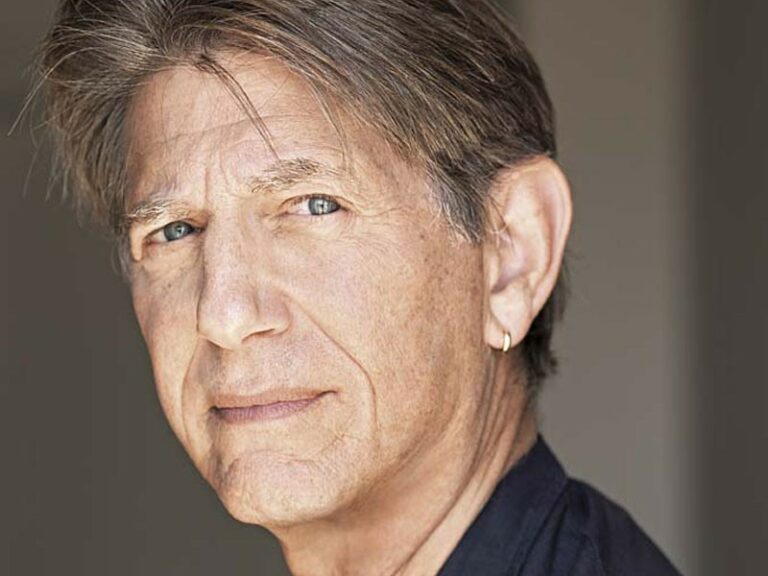
Now Haskins reaches back to the early days of his career and examines the rise and fall of Bauhaus in his new rock and roll memoir, Who Killed Mr. Moonlight? Haskins reads from the book on Friday, Nov. 7, at Book Passage in Corte Madera, where he’ll also play a few songs and engage the audience with a Q&A session.

“It’s a story I’ve been living for most of my life,” says Haskins by phone from his home in Los Angeles. “It became a cathartic exercise, not that that was the initial intention, but that’s how it turned out.

“It took me seven years to write [the book],” Haskins says, “and, fortunately, I always keep journals and diaries, and I have these going back to 1980, so those were my little stepping stones to retread the trail,” explains Haskins.

With a wealth of memories written down, Haskins could recall a surprising amount of detail. “There were conversations I had written down verbatim, when they happened, if they were particularly spicy or over-the-top, so I had that to draw from,” says Haskins.

The book follows Bauhaus from the early days of “enthusiasm and naiveté,” says Haskins, to the painful end, a place Haskins found difficult to return to.

“It was a very volatile relationship, that band; it fueled the music and it also fueled the calamitous explosions of emotion that would often end in violence, and ultimately led to the demise of the band,” says Haskins.

The memoir’s title comes from a Bauhaus song that Haskins explains took on another meaning. “Mr. Moonlight for us was representative of the mysterious, poetic side of the group. It was a representation of the entity of the band. So when I say, ‘Who killed Mr. Moonlight?’ I’m saying who killed the band?

“And then,” Haskins teases, “you find out who killed Mr. Moonlight right at the end.”

Bowled Over

0

I gave up on Thai food. It seems like every Thai restaurant serves the same stuff—green, red and yellow curries. Pad Thai. Fish cakes. Lemongrass-coconut chicken soup. Beef salad. Pad see ew.

I like pad prik king as much as the next guy, but what seemed like an exciting new cuisine 25 years ago has grown predictable.

So when I accepted an invitation from a colleague to try Santa Rosa’s four-month-old SEA Noodle Bar, I went with low expectations. The Coddingtown Mall location didn’t promise any new culinary frontiers, but the first spoonful of spicy beef noodle soup shut me up. The place is good.

Chef Tony Ounpamornchai owns the beloved SEA Thai Bistro in Santa Rosa’s Montgomery Village. “SEA” stands for Southeast Asian and refers to Ounpamornchai’s use of neighboring ingredients and preparations. He also cooks with local and Western ingredients too. Maybe it’s because he’s willing to cross borders that his noodle restaurant is so appealing. And for me, it’s all about the noodles.

The best thing about the noodles are the deeply flavorful broths that borrow from Vietnam’s tradition of noodle soups like pho and bun bo Hue. Indeed, the spicy beef noodle soup ($13), with its bone marrow broth and inclusion of gelatinous bits of beef tripe, is decidedly pho-like.

The spicy lemongrass noodle soup with wild prawns ($14) swims in an electric, lemongrass, galangal root and kaffir-lime-leaf infused broth. I was pleased the prawns didn’t come from a noxious farmed operation, but when I asked where they came from the answer was “the Pacific.” That’s kinda vague.

My other favorite was the lamb curry noodles ($15), thin slices of tender lamb, water spinach, pickled mustard greens, bean sprouts and half a hard-boiled egg. The vegetable broth is enriched with coconut milk and yellow curry, and the crunchy tang of the pickled mustard greens is a great counterpoint.

The menu offers a choice of noodles: thin or thick rice, mung bean and egg noodles. I tried them all but liked the springy bite of the thin egg noodles best.

The rest of the menu is good, but not as strong as the noodles. The rice bowls are fine but don’t add up to much, just some wok-fried ingredients served over rice. The deconstructed pad Thai noodle ($15) with its constituent elements of organic chicken, prawns and tofu arranged around the plate was a novel presentation but otherwise unremarkable.

From the list of starters, the duck spring rolls ($9) are fine but nothing special. Thai papaya salad ($8) falters because its star ingredient should be pucker-tart and crisp but tastes more like the wedge of cabbage it’s served with. My favorite by far was the superb pork cheek potstickers ($8).

The restaurant is a great looker. The pendant, glass-domed lights and framed artwork suspended by wire give the place a cool, urbane feel, while the dark wood accents add a warm, handsome touch. The rectangular bar in the center of the room (which has a solid lineup of beer and wine) completes the look.

I know somewhere there is a Thai restaurant that breaks from the norm and serves lesser-known, regional dishes that go well beyond pad Thai and curry. But until then, I’ll take SEA Noodle’s Bar’s unconventional approach.

SEA Noodle Bar 268 Coddingtown Center, Santa Rosa. 707.521.9087.

Dying Behind Bars

Barely two months after the ink dried on a five-year extension to a contract worth at least $32 million, the California Forensic Medical Group (CFMG) faces scrutiny at Sonoma County's Main Adult Detention Center after three recent deaths—including a suicide—over a period of three weeks. County corrections officials confirmed that three people died at the Santa Rosa jail, and another...

Eye Candy

Big Hero 6 is built to amaze, and amaze it does. It'd take some 10 viewings to properly enjoy its fantasy city of San Fransokyo. Torii arches top the caissons of the Golden Gate Bridge. Coit Tower is a pagoda. Everything meant to give the audience an oriental anxiety attack in 1982's Blade Runner—the neon, the noodle shops, the...

Time Warp

In 2015, The Rocky Horror Picture Show will celebrate its 40th birthday, a milestone already celebrated by the stage play that inspired it—Richard O'Brien's 1973 game-changer The Rocky Horror Show. How interesting that a show originally met with shock, disgust and accusations of moral depravity should today be embraced with warm and fuzzy affection and sighs of wistful nostalgia. Of course,...

Love His Way

You sort of had to be there, the 1980s. The era of John Hughes movies and Ronald Reagan descending to cuckoo-bats on national TV, and how about MTV before all that reality-show schtick, back when they played videos, one after another—and featured weirdoes like Richard Butler (pictured) and the Psychedelic Furs on shows like 120 Minutes. Come to think of...

Forget Turkey—Go for Crab

The recreational crab season opened this past weekend and it's already got me thinking about Thanksgiving. I've always threatened to switch from turkey to Dungeness crab for Thanksgiving, but the idea never passes muster with my family traditionalists. But crab makes much more sense. Crab season is in full swing come Thanksgiving, and cooking up a big mess of crab...

Letters to the Editor: November 5, 2014

More Beef with 'Beef' It is unfortunate that Stett Holbrook waited until the very end of his article "Eat More Beef" (Oct. 22) to bring up the most interesting—and disturbing—aspect of this story. Nicolette Hahn Niman urges others to eat meat, but "when pressed," admits that "she feels too strongly about animals to eat them." Hahn Niman admits she's a...

How Low Can You Go?

The ARCO station near the Soco coffeehouse in Santa Rosa was charging $3.26 for a gallon of super-premium gas on Monday night, as local media outlets revved up the ol' engines on a tried-and-true story: "Residents Reflect Cheerily on Lower Gas Prices, and Hope They Go Even Lower." That was the gist of one happy-pants story Debriefer read in the...

Back in the Ring

It's a warm Central Valley evening when Sir Samurai drives down the highway toward Modesto, an hour and a half away from his home in Sacramento. The 41-year-old is making the rounds again. Next weekend, he'll be in Reno, but tonight, with a warm breeze whipping through his long hair, he sets his eyes south. It's near dusk when he...

Moonlit Memoir

David J Haskins has been an influential figure in post-punk and alternative music since he broke out in 1979 with the darkly industrial British group Bauhaus. As a bassist and songwriter, he and fellow members Peter Murphy (vocals), Daniel Ash (guitar) and brother Kevin Haskins (drums) are often regarded as the first ever goth rock band. Bauhaus rode a tumultuous wave,...

Bowled Over

I gave up on Thai food. It seems like every Thai restaurant serves the same stuff—green, red and yellow curries. Pad Thai. Fish cakes. Lemongrass-coconut chicken soup. Beef salad. Pad see ew. I like pad prik king as much as the next guy, but what seemed like an exciting new cuisine 25 years ago has grown predictable. So when I accepted...
11,084FansLike
4,446FollowersFollow
6,928FollowersFollow