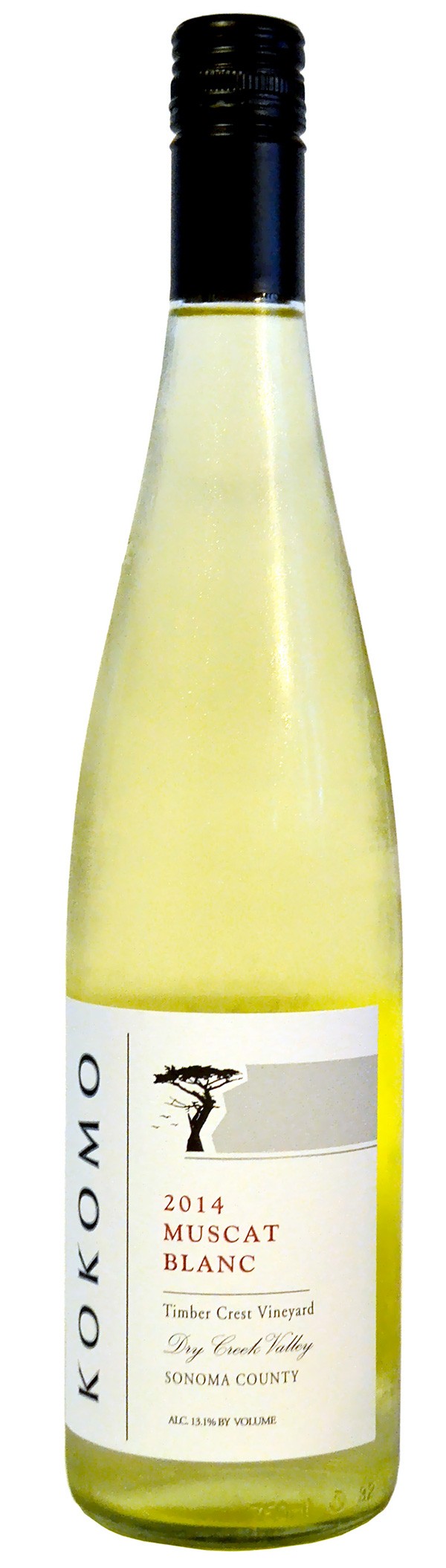
Silverado Burners

0

The Terraces is tucked behind a nook in a dell just off Silverado Trail. Soon after we’re buzzed through the gate, it’s clear this is no chichi, “the terraces at [fill-in-the-blank]” sort of joint. It’s something a little different.

Up at the winery, director of hospitality Monica Jones introduces us to co-owner Sharon Crull. Stirring a pot of sauce, Crull explains she’s just helping out the winery chef at the moment.

We sink into sofas on the deck while Sharon pours a crisp 2013 Chenin Blanc, yesterday’s underdog white that’s all the rage now as a light, starter wine. But the reason for this Chenin, Crull says, is that Terraces lost the Rutherford source of their favorite aromatic white, Riesling. And now I am perking up. Really? And then what happened?

They missed it, so they found a Carneros source in 2013. Out comes a bottle of 2013 Napa Valley Riesling ($30), tropical like ripe Sauvignon Blanc, and just as dry, but elegant with that Riesling acidity. Timm Crull joins us for a taste of the 2009. Oxidized, Timm says, chucking the rest of his pour over the railing. But I like the honey and raisin aromatics—and I like that they’re keeping the faith.

A couple from Wisconsin joins the group, and we board an all-terrain vehicle for a tour with Sharon while Timm gets back to his pots and pans. Turns out, he’s the winery chef. “I live for food,” Timm exclaims at one point in the afternoon, adding with a blend of understatement and foodie bravado, “The wine stuff, it’s a beverage—but I live for food.”

Highlights of the tour include the stone walls of the property’s original 1885 “ghost winery,” restored block by block, and a balsamic tasting in the stone acetaia, from a series of hobbit-sized barrels imported from Italy. The Crulls are also avid bee keepers, and grow a small cider apple orchard.

Then we sit down to langoustine pasta and smoked tri-tip, 2013 Chardonnay ($30), 2012 Petite Sirah ($38) and 2012 Cabernet Sauvignon ($60). The wines are lush and polished, no rough edges here, while the wide-ranging conversation may have surprised the Wisconsinites. Lunch by Timm is not part of the everyday package here, but if you find yourself supping at First Camp in Black Rock City, where Timm has cheffed for several years, you’re in for some good eats. I do believe these are the first Napa Valley winery owners I’ve met who’d rather talk about the Playa than terroir.

The Terraces, 1450 Silverado Trail, Rutherford. Daily by appointment only, 10am–4pm. Tasting only, $25; tour and tasting, $45. 707.963.1707.

Debriefer: May 6, 2015

0

A bill sponsored by freshly minted State Sen. Mike McGuire, D-Healdsburg, is one of several cannabis-related bills under consideration in Sacramento this session. It may be the highest quality bud-related bill of the year.

As McGuire himself wrote in an Open Mic in these pages last week, Senate Bill 643 would go where others have gone—and failed—and create a single set of state protocols around its multibillion-dollar medical-cannabis industry. Last week, McGuire’s bill cleared the Senate Governance and Finance Committee and now heads to the Senate Appropriations Committee for another toke.

“On the North Coast, many of the medical marijuana growers are running small family farm operations,” notes McGuire in an April 30 press release (he did not respond to a request for comment). “SB 643 would provide a legal framework for those farmers who want to comply with state and local regulations.

“SB 643 would create a statewide comprehensive regulatory program for medical marijuana, preserving local control of licenses and applications, and protecting the environment from illegal trespass grows that dump pesticides and illegally divert millions of gallons of water from rivers and streams.”

But what McGuire doesn’t mention in his press release or recent op-ed is that his bill is sponsored by McGuire and McGuire alone, which distinguishes it from other recent legislative attempts to square the state with its landmark 1996 medical cannabis law. Speaking on background, a McGuire staffer says that the state senator deliberately did not seek out sponsorship for his bill from outside organizations with a dog in the medical cannabis hunt. That includes pro–medical cannabis organizations and also groups representing law enforcement.

So what? Well, last year, a medical cannabis bill co-sponsored by an outside group—the California Police Chiefs Association—collapsed under the weight of tough-on-crime amendments that seemed to be a little overly focused on butane extraction of hashish and its debatable crystal corollary à la Breaking Bad country.

The accepted wisdom of the day—but which is by no means universally shared in the medical cannabis community—is that squaring up the medical cannabis industry in California is key to paving the way to legalization, expected to unfold here in 2016.

McGuire’s press release from April 30 makes clear that he’s only interested in the medical end of things. But a cannabis activist source tells Debriefer that in a recent conference call. a McGuire staffer said part of the rationale for the bill was to ensure that medical cannabis protocols would be locked in before the legalization push.

In his statement, McGuire insisted on normalizing relations with medical cannabis growers through oversight and regulation that’s already part of the landscape for other growers here: “We are well aware of all the regulations and permits that farmers and ranchers have to go through when growing wine grapes, row crops or raising dairy cattle. But right now there is no regulation or permits for marijuana farmers, and it’s putting Northern California residents and our pristine environment at risk.

The Bohemian Life

Last week we aired our second episode of
“The Bohemian Life,” a video feature that profiles the people who make the North Bay what it is. What is the North Bay? That depends on whom you talk to. We’re going to talk to chefs, winemakers, surfers, farmers, writers, brewers, artists, cyclists, musicians, and anyone else we find who’s got a good story to tell.

The first installment focused on David Kent and the Santa Rosa Table Tennis Club. Last week focused on Sebastopol antiquarian bookseller Ben Kinmont. My vision for these videos is to create a series of three- to five-minute-long documentaries about our North Bay neighbors doing what they love. Like the videos on table tennis and Kinmont, some of the videos will supplement our cover stories and other articles in the Bohemian. These will generally feature the reporter on location introducing the story and the people in it in a loose, unscripted format.

Other videos will stand alone as special, web-only content. These will be shot and produced by out videographers as mini documentaries.

I’m excited about this new venture, as it opens a whole new avenue of storytelling. We’re diving in head-first.

Please check out the videos on Bohemian.com or go straight to our YouTube channel at tinyurl.com/boholife, and please subscribe. There’s not a lot there now, but much more is on the way.

In addition to the work we do in-house, I’d love to see short documentaries created by Bohemian readers. We’ll air the best of them on Bohemian.com and on our Facebook page at facebook.com/bohemian. Send them to me at sh*******@******an.com.

See you in the movies!

Stett Holbrook is the editor of this paper.

We welcome your contribution. To have your topical essay of 350 words considered for publication, write op*****@******an.com.

Genre Buster

0

If there’s one thing Rhiannon Giddens detests, it’s genres.

Classically trained in opera, Giddens moved on to a whole different style of music when she cofounded the Carolina Chocolate Drops, the Grammy-winning old-time string band. She plays at City Winery in Napa on May 11.

“I hate genres. I know that they’re necessary, but I hate them,” Giddens says with a laugh during a mid-March phone interview. “Americana, what the hell does that mean? I don’t know. It’s American music, that’s all I know. If people want to call it Americana, that’s fine. What I’ve learned is that these labels change and what they mean changes.”

Giddens may have to grapple with the genre topic quite a bit now that she has expanded her musical range by participating in T Bone Burnett’s New Basement Tapes project and releasing her debut solo album, Tomorrow Is My Turn. The common thread running through both projects is producer Burnett, who first saw Giddens perform in 2013 and suggested they work together. He won over Giddens by asking what her ideal project would be.

“I had this list of things that didn’t really fit into the Carolina Chocolate Drops,” Giddens says. “I was just setting them aside, thinking about all these incredible women I was inspired by. It was something that had been hibernating for me, so when T-Bone asked me what my dream record would be, I already had a project right here.”

The resulting 11 songs on Tomorrow Is My Turn form a tribute to a broad range of female singer-songwriters culled from that dreaded Americana category; Giddens interprets songs by, among others, Dolly Parton, Sister Rosetta Tharpe and Joan Baez.

While working on Giddens’ debut, Burnett invited her to participate in his New Basement Tapes project. She joined Jim James of My Morning Jacket, Elvis Costello, Marcus Mumford and Taylor Goldsmith of Dawes in setting to music previously unreleased lyrics written by
Bob Dylan during the time
he was recording what became
The Basement Tapes with the Band.

The project had its challenges, considering that five bandleaders needed to agree on how these songs would sound. But Giddens found the experience rewarding.

“It was pretty amazing,” she says, “but it was also very difficult for me. I had to push through a lot of things for myself personally, but that’s where the best art comes, when you’re striving to overcome something.

“I think it’s one of the best things that I’ve ever done in terms of the output and what I learned and gained. I think I will be processing that for years to come.”

Rhiannon Giddens plays City Winery with Bhi Bhiman on May 11 at 8pm. $25–$35. 1030 Main St., Napa. 707.260.1600.

The Wurst Possible News

0

The red cabbage nearly fell off my fork when the waiter gave the unbelievable news that Café Europe was calling it a day. After two decades and three different locations in Sonoma County, the popular German-Austrian restaurant, a heavenly slice of Bavaria that has been run by chef Robert Buchshachermair and host Herbert Zacher, is smoking its last brat, for now.

Looking ahead to retirement, chef and host both have marked Mother’s Day as their last in business, though they still hold the lease on their Rincon Valley location for four more years. A new chef and a new concept will be filling the space, but details on the new venture are unclear. What’s known is that the new chef will have huge shoes to step into, as Café Europe has consistently been one of Santa Rosa’s most beloved spots to dine.

I’m going to miss that red cabbage and the sauerkraut, the grilled Swiss sausages, the spaetzle, the schnitzel, the sauerbraten and the pork shank, not to mention the liter mugs of Pilsner.

I’m going to miss it all!

Café Europe is located in the St. Francis shopping center, 104 Calistoga Road, Santa Rosa. Open Wednesday–Saturday, 11:30am–2:30pm, and 4:30–8:45pm; Sunday 4:30–7:45pm. Reservations recommended. 707.538.5255.

No Holiday

0

‘When we were young, we loved to be modern.”

That line, from Cambodian singer Sieng Vanthy, begins the revealing documentary

Don’t Think I’ve Forgotten: Cambodia’s Lost Rock and Roll. Chronicling an era of music, art and prosperity that was nearly wiped from memory, the film offers a fascinating look at a nation largely known for military coups, civil wars and the horrific Khmer Rouge regime in the 1970s.

Director Jon Pirozzi, who last helmed a documentary that followed world dance band Dengue Fever as they traveled to Cambodia, returns to the culturally rich country again to pay tribute to the musicians who, in the 1960s and ’70s, soaked up music from Europe, America and South America and turned it into their own style, combining traditional Cambodian rhythms with electric guitars.

Don’t Think I’ve Forgotten starts by telling the stories of iconic pop stars like Sinn Sisamouth, who in Cambodia was basically the entire Rat Pack rolled into one. Beginning in the late 1950s, Sisamouth and others were opening the country’s ears to a new and largely Westernized sound. The film follows the progression of pop in Cambodia, as performers delved into everything from hard rock to a-go go music. It was not to last.

If you know anything of Cambodia’s history, it’s probably the name of Pol Pot. The revolutionary-turned–totalitarian-dictator led the Khmer Rouge and took over the country in 1975. Under Pol Pot, the Khmer Rouge emptied the cities, attempted to erase all Western ideas and influence in the country and essentially turned the entire population into a slave state. An estimated 2 million Cambodians were killed between 1975 and 1979. The Khmer Rouge targeted artists, musicians, business owners and intellectuals as enemies of the state.

Don’t Think I’ve Forgotten does not shy from this fact, and the second half of the film—where the strength of the survivors and the memories of the lost are celebrated—is as unsettling and somber as the first half is vibrant and alive.

‘Don’t Think I’ve Forgotten: Cambodia’s Lost Rock and Roll’ opens Friday, May 8, at Rialto Cinemas, 6868 McKinley St., Sebastopol. 707.525.4840.

Letters to the Editor: May 6, 2015

Water Woes

Editor’s note: Last month’s story on the drought and Big Ag (“Crop Priority,” April 8) didn’t generate too many comments locally but it received a hail of comments when our friends at Metro Silicon Valley posted it on SJInside.com. Here is a sampling.

Blaming agriculture for our water crisis is like blaming retirees benefiting from Proposition 13 for our tax problems. Nowhere in this article do I see a mention of water going for construction, the expansion of housing or the fact that Northern California ships a large amount of water to Los Angeles via the California Aqueduct.

I guess it’s not politically correct to put the blame on the millions of recent arrivals to California soaking their lawns until the water runs into the street. At least in agriculture a good portion of that runoff makes it back into the water table, instead of flowing over nonpermeable surfaces (concrete, etc.) into the creeks. And let’s not forget companies like Nestle, who have several wells operating up and down the state.

Nature causes droughts. Politicians cause water shortages. For more than 3,000 years, humanity knew how to deal with water shortages.

There is abundant fresh water available in the Sierra, in the Pacific Northwest, in Canada. There are people eager to sell water to California. There are people eager to transport water to California. Let’s make a deal!

Endangered snail darters, “Hands up, don’t shoot!” and human-caused global warming are just floats in the endless parade of lies dumped on the busy, hard-working American people by the Malthusian elites who have engineered the water shortage.

The end game is population control. “Humanity is an invasive species.” Paul Erlich explained it all in The Population Bomb. The Sierra Club wants you to go away. After all, it’s their planet, not yours. And there are way too many of you. The Sierra Clubbers have trust funds. They can drink bottled water. But working people need jobs, and the jobs that working people are paid to do require water. No water. No jobs. No invasive species.

The author of this article expresses concern—and rightly so—about the “great unmentionables.” But he’s evidently afraid to mention one unmentionable, and that’s unrestrained immigration, its impact on our population and on the amount of water that’s used.

It’s one thing to have a roommate who uses more than his share of water in some gardening project in the backyard. Things can be worked out with such a roommate. It’s a different matter altogether to have a roommate who, without asking, invites his friends to live in your house and use your water, plays dumb when you point it out to him, and hires expensive lawyers and cozies up to the landlord to prevent you from evicting these water-consuming lawbreakers.

Agriculture has a legitimate place in California; illegal aliens do not. You want to start pointing fingers at “great unmentionables,” then do the intellectually honest thing and point fingers at all of them.

Write to us at le*****@******an.com.

Line in the Sand

0

Sonoma County leaders like Supervisor Efren Carrillo have made no bones about their opposition to a California State Parks–driven move to charge for beach access at parks up and down the coast.

It’s an issue that has roiled North Bay coastal groups and humble beach lovers, especially in coastal Sonoma County, home to numerous beaches managed by the state, and home to a significant number of souls of lesser means looking for some fun and sun in the surf.

Carrillo was the Sonoma County point person who tried to put the brakes on a State Parks proposed $8 parking fee during a California Coastal Commission hearing last month in San Rafael. That effort failed. The hearing was held to adjudicate a fight between the county and the state over jurisdiction of the beaches, and the commission’s vote wrested the issue from the county’s clutches.

In a nutshell, Carrillo and others told the commission that Sonoma County should have jurisdiction over beaches and access thereto, under the Sonoma County Local Coastal Plan and the California Coastal Act of 1976, which encoded the template for universal access to California beaches. Carrillo notes that many Californians believe that unencumbered beach access is a right, not an entitlement.

Carrillo counts himself among them, though according to a report in the Press Democrat, he acknowledged that there are county beaches that charge a fee—the supervisors, he says, are looking to abolish those too. The PD also reported, stunningly, that out of 880 public comments about the state proposal, first unveiled in 2013, a total of two were in favor of the fees.

The Coastal Commission gave a clear indication of the controversy over the proposed fees when it voted 6–6 on the State Parks plan, which would see so-called Iron Ranger self-pay stations plunked down at the gateway to 14 beaches that are now free and open to the public.

Unfortunately for beach lovers of lesser means, the tie goes to the appellant, in this case State Parks. The vote set the stage for possible future fees.

The split vote also told a story of its own. Class issues don’t get any rawer than this one in a county with skyrocketing rents, wages that can’t keep up and lots of backbreaking work to be done in the fields and farms of Sonoma County. Under the State Parks plan, people of lesser means would get the squeeze on their relaxation budget, while the view from that fancy hillside vacation home is just fine, thanks, and that private pathway to the beach is free.

“There are significant disparities, even in a county like this with so much abundance,” says Carrillo. He further notes that the particularities of the Sonoma Coastline present their own impediments to access, owing to geography more than fees. You basically need a car to access the beaches in the first place. That’s not the case in places like, say, Venice Beach in Los Angeles.

“One of my main arguments to the Coastal Commission,” says Carrillo, “was specifically around the premise of families of lesser means having to turn around in their cars and not have access to the coast. We are trying to ensure as best we can that there is universal access, particularly for those families that don’t have the means.”

Carrillo points to a county report from late last year that identified family incomes as low as $14,000 a year in Rohnert Park. That’s called “living in poverty,” in case there’s any confusion about how far $14k will take you in Sonoma County.

But there’s hope, maybe. Carrillo says that since the Coastal Commission vote, State Parks appeared to have gotten a message about the unpopularity of its proposed move, and the promised backlash in the form of class war in the sands, with seething surfers at the vanguard.

Carrillo credits the Coastal Commission for committing to a transparent process as it weighed the merits of the state’s argument over jurisdiction. That very transparency may have piqued the conscience, if not the political considerations, of State Parks bureaucrats. They reached out to Carrillo after the meeting to see if there wasn’t a way through the fee fandango.

“My understanding is that they didn’t necessarily have to open [the meeting] to the public,” says Carrillo as he recounts the blow-by-blow account. “There was a lot of public input and many people who certainly made very, very strong points that supported the county’s position.”

Since the vote, Carrillo says, “we’ve been contacted by State Parks to sit down and confer, and I’m certainly open to and receptive to sitting down with them. I can’t tell you with certainty what that means, but they have reached out and we’ve responded.”

Carrillo says that in the meantime he’ll reach out to organizations such as Coastwalk California and the Surfrider Foundation to make sure they’re in the loop on any further discussion about beach fees. Those organizations have vociferously advocated for unencumbered access.

Hip Couture

0

In the local landscape of camouflage, baseball caps and flip-flops, a girl with iridescent hair and layers of lace and chiffon may look odd—but this being the North Bay, it’s only odd for a fraction of a second. She quite possibly could be a Burning Man enthusiast, a burlesque queen on a coffee route or simply a colorful character.

In Suzy Berry’s case, she’s a designer with a serious entrepreneurial streak who won’t rest until we all walk the streets of Sonoma County in sexy, dreamy attire. While the region is abundant with quirky folk, people who hand-make their own style are harder to find. Try to name a local designer, and chances are you’ll be thinking of wine makers and chefs instead. Berry is trying to fix that.

Berry, 24, grew up in Santa Rosa and “always stood out.” In junior high, she deemed the clothes her mom bought for her boring and so she started making her own.

“I borrowed my grandma’s vintage dresses,” she says in a coy and soft-spoken voice, like a character from season three of Mad Men, “and then started hand-sewing dresses and wearing them to school. My parents bought me a sewing machine at some point, and my grandma taught me needlepoint.”

Some experiments were horrific, says Berry, while others succeeded, though peers rarely understood her style. “They’d call me ‘Grandma Girl,'” she says, laughing. “They would ask, ‘Are you a teacher or a student?’ Sometimes, I actually pretended I was a teacher. I’d go to the teachers’ lounge, eat the food and use the copy machine.”

This rebellious attitude came in handy when Berry decided to turn her hobby into a brand, Dainty Rascal, which started selling clothes on Etsy five years ago. Unlike Project Runway contestants and design students slaving away in New York and London, Berry never sought guidance or mentoring, opting instead for the self-taught route.

“I tried to take a private sewing lesson once,” she recalls, “and just ended up disagreeing with everything.” Disregarding patterns or rules, Berry drafts and sews everything by hand in her home studio and sometimes takes beadwork to the beach.

Her designs are equally unscripted, heavily inspired by pin-up, burlesque and vintage glamour. “Grandma Girl,” who also wore a bikini to school on a very cold and stormy Hawaii Day, always gravitated toward old-school allure, charmed by images of Marilyn Monroe and paintings by Polish art deco artist Tamara de Lempicka—”beautiful, curvy women in glamorous dresses.”

On Dainty Rascal’s Etsy store site, there is a see-through playsuit, a prom-inspired dress with bows, an evening gown adorned with feathers, a lacy two-piece. Many are one-of-a-kind, and while it’s hard to pinpoint a certain signature style, the range is impressive. Some designs are replicas of famous 1950s dresses, such as Monroe’s dress from
The Seven Year Itch; others are dresses Berry created for dates she went on after her divorce last year.

“My main clientele are brides looking for bridal couture,” Berry says. “I do a pretty good replica of the famous [Marilyn] Monroe crystal dress. Usually women in New York order it, and for some reason, it’s always a 48-hour notice.”

“Made to measure” is a slightly more accurate term. Working with a measuring chart, Berry can make a dress for a bride anywhere from Australia to France, while her Etsy store offers ready-made pieces and costumes. Berry often models the creations herself, changing like a chameleon from frame to frame. The photo shoots never skimp on creativity, borrowing generously from the boudoir aesthetic Berry is so comfortable with.

For a young designer with a small online store, Berry has enviable poise and conviction, as well as many plans for growing her business. She’s done a photo shoot with big-shot pin-up photographer Shannon Brooke and collaborated with a Sonoma County fashion blogger, AmusedBlog.com, by creating a simple canvass dress worn by the blogger and decorated by a graffiti artist. She also got herself into the next Vintage Expo in Los Angeles, where she hopes to create contacts with boutiques and retailers. This is all straight out of the playbook of savvy national brands.

Berry’s biggest dream? “To acquire as much acreage as possible and open a rescue-horse ranch which will be funded by a percentage of my business. I want to have special-release dresses featuring the actual horses printed on them,” she says.

Berry owns two horses herself, and her brand’s name, Dainty Rascal, has something to do with the noble animal. “I always considered my favorite horse to be a dainty rascal. He’s beautiful, but so naughty! An untamable spirit, he’s been my inspiration all along.”

Suzy Berry’s designs can be seen at daintyrascal.net and www.etsy.com/shop/DaintyRascal.

It’s Murder

0

‘The first play I ever acted in was The Mousetrap,” says director and drama teacher Carl Hamilton, when asked about his connection to the work of Agatha Christie.

Christie has long been famous for her tightly written whodunits, baffling fans and beguiling critics onstage and on the page. Though Hamilton has been a fan of Christie’s writing since the 1980s, he’s never directed one of her plays.

Until now, that is. Christie’s Witness for the Prosecution, which opened last weekend at the Wells Fargo Center for the Arts, is a production of North Bay Stage Co. According to Hamilton, he waited for the right Agatha Christie play to be his first.

“I think it’s her best play,” he says of the 1953 stage adaptation of Christie’s own 1925 short story, originally titled “Traitor Hands.” No one is saying that’s a great
title, but all was forgiven when
the play, with its new name, opened in London, where it became a huge hit.

The story, set in the courtroom and chambers at London’s Old Bailey, involves a man accused of murdering an old woman. His alibi is his own wife, who suddenly seems a less reliable witness than anyone, especially the accused, could have expected.

“It has one of those quirky endings Agatha Christie was famous for,” says Hamilton, “and this play in particular was known for the big surprise at the end.”

In fact, to protect the big twist, a credit was added to the end of the movie: “The management of this theater suggests that for the greater entertainment of your friends who have not yet seen the picture, you will not divulge, to anyone, the secret of the ending of Witness for the Prosecution.”

“For me, personally, it works as a radio play too,” Hamilton says. “During rehearsals, I liked to just close my eyes and listen to it. If you have good actors, you know it’s working just by listening to their voices.”

The resulting production is fairly stripped down, a trademark of Hamilton’s work. “Though it’s set in a courtroom in England, there are no big English lawyer wigs, no English costumes. Each actor is dressed in black with a splash of color to distinguish them. The show is really tight, because the script is tight. There’s no wasted dialogue.

“If you close your eyes and listen,” Hamilton says, “it’s awesome.”

Silverado Burners

The Terraces is tucked behind a nook in a dell just off Silverado Trail. Soon after we're buzzed through the gate, it's clear this is no chichi, "the terraces at " sort of joint. It's something a little different. Up at the winery, director of hospitality Monica Jones introduces us to co-owner Sharon Crull. Stirring a pot of sauce, Crull...

Debriefer: May 6, 2015

A bill sponsored by freshly minted State Sen. Mike McGuire, D-Healdsburg, is one of several cannabis-related bills under consideration in Sacramento this session. It may be the highest quality bud-related bill of the year. As McGuire himself wrote in an Open Mic in these pages last week, Senate Bill 643 would go where others have gone—and failed—and create a single...

The Bohemian Life

Last week we aired our second episode of "The Bohemian Life," a video feature that profiles the people who make the North Bay what it is. What is the North Bay? That depends on whom you talk to. We're going to talk to chefs, winemakers, surfers, farmers, writers, brewers, artists, cyclists, musicians, and anyone else we find who's got...

Genre Buster

If there's one thing Rhiannon Giddens detests, it's genres. Classically trained in opera, Giddens moved on to a whole different style of music when she cofounded the Carolina Chocolate Drops, the Grammy-winning old-time string band. She plays at City Winery in Napa on May 11. "I hate genres. I know that they're necessary, but I hate them," Giddens says with a...

The Wurst Possible News

The red cabbage nearly fell off my fork when the waiter gave the unbelievable news that Café Europe was calling it a day. After two decades and three different locations in Sonoma County, the popular German-Austrian restaurant, a heavenly slice of Bavaria that has been run by chef Robert Buchshachermair and host Herbert Zacher, is smoking its last brat,...

No Holiday

'When we were young, we loved to be modern." That line, from Cambodian singer Sieng Vanthy, begins the revealing documentary Don't Think I've Forgotten: Cambodia's Lost Rock and Roll. Chronicling an era of music, art and prosperity that was nearly wiped from memory, the film offers a fascinating look at a nation largely known for military coups, civil wars and the...

Letters to the Editor: May 6, 2015

Water Woes Editor's note: Last month's story on the drought and Big Ag ("Crop Priority," April 8) didn't generate too many comments locally but it received a hail of comments when our friends at Metro Silicon Valley posted it on SJInside.com. Here is a sampling. Blaming agriculture for our water crisis is like blaming retirees benefiting from Proposition 13 for our...

Line in the Sand

Sonoma County leaders like Supervisor Efren Carrillo have made no bones about their opposition to a California State Parks–driven move to charge for beach access at parks up and down the coast. It's an issue that has roiled North Bay coastal groups and humble beach lovers, especially in coastal Sonoma County, home to numerous beaches managed by the state, and...

Hip Couture

In the local landscape of camouflage, baseball caps and flip-flops, a girl with iridescent hair and layers of lace and chiffon may look odd—but this being the North Bay, it's only odd for a fraction of a second. She quite possibly could be a Burning Man enthusiast, a burlesque queen on a coffee route or simply a colorful character. In...

It’s Murder

'The first play I ever acted in was The Mousetrap," says director and drama teacher Carl Hamilton, when asked about his connection to the work of Agatha Christie. Christie has long been famous for her tightly written whodunits, baffling fans and beguiling critics onstage and on the page. Though Hamilton has been a fan of Christie's writing since the 1980s,...
11,084FansLike
4,606FollowersFollow
6,928FollowersFollow