Square Dance

0

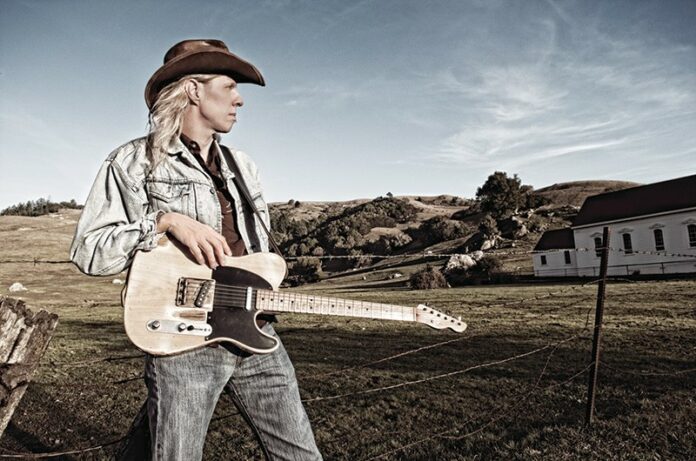
As frontman of the Crux and founder of the nonprofit North Bay Hootenanny, Josh Windmiller is a Santa Rosa devotee. He has organized events in the city’s West End and historic Railroad Square for six summers, and has had a hand in everything from the Handcar Regatta to last year’s Wine & Swine.

“I know this is where the heart of the city is,” he says. “There’s so much activity and imagination here, and there’s a real desire to have something happen in Railroad Square.”

With that in mind, Windmiller unveils the Railroad Square Music Festival on June 7. It’s his biggest event yet.

“I decided I was going to widen the umbrella of the North Bay Hootenanny last year, and this is part of that,” says Windmiller. “I think this festival is important as a flagship event for the organization. It’s a love letter to Santa Rosa, from Santa Rosa.”

Windmiller has enlisted an impressive lineup of Bay Area acts that he’s come to know over the years. San Francisco folk sensation the Brothers Comatose headline; they were the first band to sign on and the act that convinced the city and others to work with Windmiller to get the event off the ground.

“Festivals are backwards,” says Windmiller. “You need to get the word out and then once there’s buzz you go out and talk to people to partner with.” Windmiller has been buoyed by support he’s gotten from the city of Santa Rosa and sponsors like Oliver’s Market and Lagunitas Brewing Company.

Oakland’s T Sisters will be on hand for the show, as will Sam Chase, whom Windmiller describes as the “King of San Francisco.” Other notables include up-and-comer Marty O’Reilly and his Old Soul Orchestra, and local favorites like Frankie Boots & the County Line, the Rainbow Girls and songsmith John Courage.

Two stages will be set up around the railroad depot on Wilson Street between Fourth and Fifth streets. A circus tent will also host a variety of acts. Santa Rosa’s grassroots craft fair, the Shop Party, will offer wares from local vendors, and yes, a family area will be set aside for the kids.

The festival is free, large crowds are expected, and the streets will be closed around the square: Carpooling and bicycles are mightily encouraged.

The Railroad Square Music Festival chugs into town Sunday, June 7, at Fourth and Wilson Streets, Santa Rosa. 11am to 7pm. Free. railroadsquaremusicfestival.com.

Aloha on the Range

0

His grin is as wide and warm as a ukulele as Hawaiian singer-songwriter Kuana Torres Kahele steps inside the Rancho Petaluma Adobe at Old Adobe State Park in Petaluma and greets his host: “Hola amigo! Cómo estás, senor!”

Patrick Garcia welcomes Kahele to Sonoma County with a hearty “Aloha!” Garcia is on the board of directors of the Petaluma-Sonoma State Historic Parks Association and maintains a personal connection to the local landmark.

Television crew members bustle through what is now the entranceway and museum of the historic Old Adobe. Amid the bustle, Garcia shows Kahele around and points out a painting. It’s a vivid depiction of several vaqueros on horseback: These are Mexican cowboys as they might have looked while working the ranchero in the early 1800s.

That’s when Garcia’s fifth-generation second cousin, Mariano Guadalupe Vallejo, built the adobe and established a major cattle operation here, before the region became part of the United States.

The vaqueros are the reason Kahele and company are in Sonoma County. Along with chef Ed Kenney, who has just made his own entrance into the adobe, Kahele and crew are here to shoot an episode of the award-winning TV show Family Ingredients. Hosted by Kenney, who owns a number of acclaimed restaurants in Hawaii, Family Ingredients offers an entertaining blend of cooking show, travelogue, and genealogical documentary as it traces Hawaiian culinary traditions to their roots.

The episode being filmed is all about beef—and there’s a direct link in Hawaii between the cattle and those vaqueros from whom Garcia is descended.

At the invitation of King Kamehameha III, a band of Mexican cowboys from this area traveled to Hawaii to teach the islanders riding, roping, and rounding-up skills. The paniolo—as Hawaiian cowboys came to be known—were greatly inspired by the vaqueros. Kahele himself pays tribute in the popular folk song Na Vaqueros, which is sung in Spanish and Hawaiian.

Kahele and Kenney are escorted into the courtyard, where Kahele will tell a few stories and sing Na Vaqueros for the cameras. Garcia lingers to tell a few stories of his own, before he suits up in the traditional vaqueros’ costume for his moment in the spotlight.

“The Californios, the vaqueros—they were needed to train the local people in Hawaii,” he says “where wild cattle were becoming a big problem. An Englishman had gone there, some years before, and had left a lot of cattle behind. The cattle eventually became pretty wild, and spread out into the different areas of Hawaii.

“The vaqueros became very popular in Hawaii,” he continues.

For this episode of Family Ingredients, which airs next spring, the producers filmed in Petaluma because the adobe is the best existing example of the type of rancheros the early vaqueros learned their trade at. Family Ingredients sets out to bring a sense of living history to the table, and by connecting Garcia and Kahele onscreen, the episode will highlight the connection that California and Hawaii share. That link continues any time a Hawaiian family throws a steak on the barbecue.

Stealing People’s Mail

0

It seemed like so much fun when Jello Biafra sang about stealing people’s mail when he was fronting the Dead Kennedys.

We’re gonna steal your mail

On a Friday night

We’re gonna steal your mail

By the pale moonlight!

But the crime is serious business—and Sonoma sentenced a young mail-stealer to hard time last Friday.

It was the same day that Biafra was in the North Bay for a show with the Guantanamo School of Medicine, at the Phoenix Theater in Petaluma.

Coincidence, you say?

OK, maybe.

Debriefer was flooded with Friday afternoon emails from the Sonoma County District Attorney’s office just as we were gearing up for the holiday—lots of people were going off to prison in advance of the Memorial Day weekend, just as Biafra was hauling up 101 for his Petaluma show.

The Sonoma DA offered news of a DUI sentencing and an unlicensed-contractor scam on Craigs List in the mix of releases—but stealing people’s mail, that one jumped out at us.

Stealing mail is very illegal. Don’t do it.

Santa Rosa’s Teresa Goode probably isn’t humming the Dead Kennedy’s classic today, even if it’s now an official Debriefer earworm we can’t shake, thanks to her crime spree….

And we got license plates, wedding gifts, tax returns

Checks to politicians from
real estate firms

Money, bills and canceled checks

Pretty funny pictures
of your kids

Stick a stamp on Goode, and say goodbye: According to the release from Assistant District Attorney Joseph Langenbahn, Goode was sentenced to eight years in state prison for plundering multiple mailboxes in the service of the relatively new, but wildly popular crime of identify theft.

Seems Ms. Goode was out on bail for previous attempts at identity theft that involved stealing people’s mail, when she was pulled over by police with co-defendant Nikki Sproul, of Rohnert Park, late last year.

Sproul, reported Sonoma District Attorney Jill Ravitch’s office, “was in the back seat along with hundreds of pieces of stolen mail inside several bags. Checks, credit cards, bank statements, driver’s licenses, and ID cards for over 100 victims were located, along with mail containing personal identifying information for an additional 70 victims…”

We got grocery sackful after grocery sackful

After grocery sackful after grocery sackful

After grocery sackful after grocery sackful

Of the private lives of you!

—Tom Gogola

Riding the Wave

0

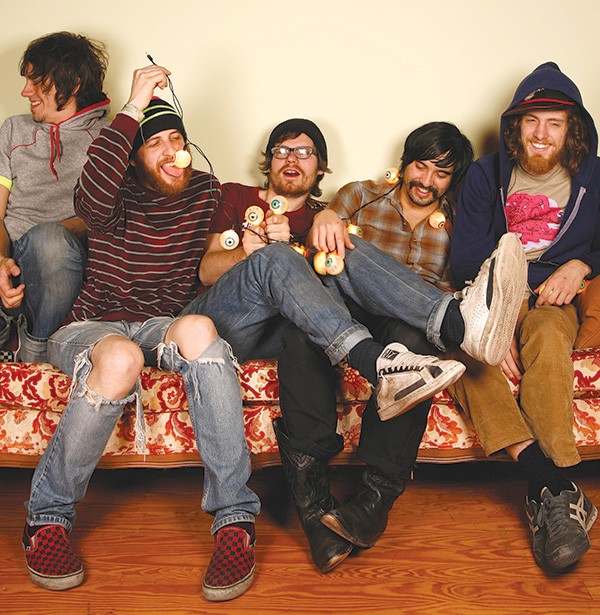
Between the drizzle and the flannel, most folks think of Portland in tones of gray, but the truth is that when the sun comes out, those flannels are ditched immediately in favor of tank tops and cut-offs. And in a city of 10,000 bands, no group represents the summer salad days of Portland quite like Guantanamo Baywatch.

The trio of surf pop enthusiasts has been tearing it up in the Northwest for years now, but it looks like c2015 is the year they go big. Their newly released LP, Darling… It’s Too Late, is already receiving wide-spread praise, and this week the band kicks off a national tour with a show at The Yard in Santa Rosa on May 28.

Darling… It’s Too Late is a brash and irreverent album of throwback surf pop, vintage punk rock and classic garage band aesthetics with a perfect crackle and hum. Listening to the record is like being transported back to a bygone era of turntables and Dick Dale riffs injected with a rowdy concoction of Cramps-style aggression and gritty excitement.

This week, Guantanamo Baywatch will rock the Yard as a special send-off for the space that is soon coming down. Joining GB on stage will be Oakland’s own garage surfers Pookie & The Poodlez, local secret surf society the IllumiGnarly and Santa Rosa power punks Decent Criminal.

Guantanamo Baywatch perform on Thursday, May 28, at The Yard, 769 Wilson St, Santa Rosa. 6pm. $8-$12. —Charlie Swanson

Bottled Poetry

0

Don’t ask this Canadian about Okanagan Valley wine country. Cliff Lede discovered the better weather and bigger wines of the Napa Valley during a business trip in the 1990s, and I tell you man he’s living there still.

Before founding Cliff Lede Vineyards in 2002, Lede worked in his family’s construction company—I think “magnate” was his job title—and, as captains of industry must, collected Bordeaux. So when he purchased the former S. Anderson Vineyard, he replanted with Cabernet Sauvignon and friends—Merlot, Cabernet Franc, Malbec and Petit Verdot—with the help of marquee vineyard consultant, David Abreu. Ten years have gotten behind us since Lede built a new winery on the hill behind the tasting room. In the cellar lie oak tanks fashioned after those at Chateau Latour. The lucky man who gets to play with all of this is winemaker Chris Tynan, who, despite majoring in English, worked his way up in some of Napa’s top cellars.

The tasting room feels casual and familiar, all blond wood and sofas—like you’re inside a Pottery Barn catalog. Those guitars on the wall? Lede (rhymes with “lady”) also likes his rock music, as a stroll through the vineyard suggests. Each block is named for a song or album, mostly classic rock, with a few nods to Prince, the Police and Nirvana.

Lede’s own hit was naming his flagship wine “Poetry” after the “bottled poetry” quote on the iconic sign that welcomes motorists to Napa Valley.

You might blow all your wages for the week on a night’s stay at Lede’s five-room Poetry Inn, located just across the Silverado Trail, but you’re doing Napa right when you greet the morning in an open-air shower the size of a studio apartment. Yes, the rooms are named after famous poets.

And yes, Lede’s 2012 Beautiful Generation Stags Leap District Cabernet Sauvignon ($95) goes to 11 in terms of intense cassis fruit and bitter chocolate tannins, but is trending supple. And since Lede bought Breggo Cellars, here’s an oasis of Anderson Valley Pinot, as well—the FEL 2012 Savoy Vineyard Pinot Noir ($65) purrs with dark Anderson Valley fruit and potpourri spice.

In the reserve lounge and art gallery, “Backstage,” a retrospective of Grateful Dead poster art runs through July 12, 2014. Backstage is only available by reservation Thursday through Sunday, so if you can’t buy tickets for the estate tour ($75) or reserve tasting ($50), then you need a miracle.

Cliff Lede Vineyards, 1473 Yountville Cross Road, Yountville. Open daily, 10am–4pm. Tasting fee, $30; outdoor seating, $40. 707.944.8642.

Until Tomorrow

Casey (Britt Robertson), a young girl in Florida, is arrested for a petty crime, and when she gets her possessions back from the police, she has a little badge she never saw before. When she touches it, she’s transported to an amazing future world of jet packs and sky trains and rocketships. It turns out the badge is the gift of Athena (Raffey Cassidy), a robot girl from this city of tomorrow.

Before the robot-girl can explain why she gave this badge to Casey, the chase is on. Dangerous robots are on their trail. The two girls escape to the house of reclusive, whiskery scientist Frank Walker (George Clooney), who knows Athena from his childhood. Our three heroes get chased from New York to Paris then back, finally, to the world of the future.

Turns out that the Tomorrowland ruler is pissed at the humans of today because they’ve been trying to warn us of our planet-wrecking ways, and we just make cool video games out of it. What the hell is our problem, anyway?

Twelve-year-old Cassidy is terrific. She’s good enough to remove any hint of pedophilia from the love story inside Tomorrowland—how Frank never healed from the broken heart she gave him years before. It’s just the Peter Pan story with the sexes changed, but one recalls Humbert Humbert’s inability to get over youthful sorrow.

Tomorrowland has serious girl power, but the endorsement of positive thinking is as thick as a bad TED talk. It’s a reminder that the real Tomorrowland’s sponsors were companies like Monsanto and Lockheed, neither exactly in the business of liberation. This Tomorrowland is a place where people go to get away from government.

‘Tomorrowland’ is playing in wide North Bay release.

Off to Neverland

0

It’s funny how the older we get, the more emotional we become about J.M. Barrie’s Peter Pan—the 1911 novel and various stage versions. Upon introduction to Peter Pan, kids love the action and adventure, the fairies, the swordfights and the little flying boy. But Peter Pan was never intended as a story for children alone, as is obvious to anyone caught mentioning a fairy “orgy” or decrying the cruelty and “heartlessness” of children, while reading the book aloud to their kids.

Peter Pan is, to a large degree, a psychological and sociological examination of the differences between childhood and adulthood, culminating in the observation that each holds benefits and deficits not available to the other.

In other words, Peter Pan is a very sad story. Fortunately, it’s also a blast.

And in the smart, entertaining, visually inventive, play-drenched production of the 1954 musical adaptation currently playing outdoors atop Mt. Tam as this year’s Mountain Play, there is all of that kid-friendly stuff and plenty of heart-stopping emotion to choke up the adults who still remember what it was like to play and pretend like our lives depended on it.

Director Michael Schwartz, a Broadway veteran with an eye for spectacle, shows a keen sense of how to use the entire enormous stage area of the Cushing Memorial Amphitheatre, overlooking the San Francisco Bay. On a set resembling a summer camp playground in the woods, pirates, natives and lost boys erupt from all corners of the amphitheater, a crocodile is assembled from spare tires and puppets, shadows dance, an invisible fairy knocks things over and pulls hair, magical animals prowl, trampolines are hopped upon, teeters are tottered, and bright-colored balls are bounced out into the crowd.

As Peter, Melissa WolfKlain displays a strong singing voice and a nicely boyish sense of rough-and-tumble confidence, making it obvious why Wendy (Erin Ashe) and her brothers John and Michael (Jeremy Kaplan, Claire Lentz) would leave the safety of their beds and follow him to Neverland, where pirates await amongst other dangers. The goofily villainous Captain Hook (a very strong Jeff Wiesen) and his right-hand man Smee (David Yen, hilarious) do a good job of straddling the threatening-vs-comedic nature of their characters. Most importantly, Peter flies, beautifully, thanks to some conspicuous but still magical pulleys and wires.

Kids will be happy and older folks will be happy and sad at the same time—because, hey, that’s the magic of Peter Pan.

‘Peter Pan’ runs Sundays though June 21 (and one Saturday, June 12), at the Cushing Memorial Amphitheatre. 801 Panoramic Hwy. Mill Valley. 2 pm. $20–$40. 415.383.1100

Priced Out

0

The state wants to charge day-use fees at our Sonoma County beaches. County officials object. We should be treating this as a statewide issue because state park day-use fees are pricing people
out of parks.

Some in power think parks should operate like a business where funding comes mostly from use fees; others think state parks ought to be run like national parks, for the enjoyment of all. There was a time when more than 75 percent of state park operating funds came from the state’s general fund. Now it’s closer to 20 percent.

Camping and day-use fees were very reasonable back in the ’70s and ’80s. Then came budget crunches, and it became all too easy to go after the small departments that either didn’t have much political clout or had weak directors.

It takes money to manage, inventory, interpret and protect natural resources, and this money is an obligation of state government. Protecting and preserving the natural and cultural wonders in parks will never be a moneymaker. The state park’s mission is to “provide for the health, inspiration and education of the people of California by helping to preserve the state’s extraordinary biological diversity, protecting its most valued natural and cultural resources, and creating opportunities for high-quality outdoor recreation.” Unfortunately, there’s nothing in there about reasonable fees.

There are those in Sacramento who would treat parks as a commodity—something to sell—that not everyone could afford. For many, such as minimum-wage earners, day-use fees are too high. One-third of California workers are “low-wage” earners, making less than $13.63 an hour. Our state parks need to be available to everyone, especially low-wage workers. Parks offer us a sanctuary for re-creating our spirits. This is why parks came into being.

Locally our state parks like Armstrong Redwoods SNR, Austin Creek SRA, Bothe-Napa Valley SP, and Jack London SHP, Sugarloaf Ridge SP and Fort Ross SHP charge $8 per vehicle entrance fee, Annadel SP $6. Elsewhere in the state the day-use fees go up to $10-15 per car. For those who wish to visit parks several weekends a month, I think these fees are too high. Just south of us, at Point Reyes National Seashore, the day use fee is zero. At Pinnacles National Park it’s $10, good for seven days. At Yosemite National Park it’s $20, good for seven days.

Another way one would think would be a savings is the state park annual day use pass. Buy this placard, keep in your car and you can visit all state parks an entire year for this single fee.

The state park pass sells for $195. Sonoma County Regional Parks pass sells for just $69 a year. Oh but you’re comparing a county pass to a state pass, some might argue. Fair enough. This got me thinking about other states. What about the 10 most populous states?

Below is a survey of the ten most populous states, and Oregon and Washington, and what they charge for an annual day use pass. I gathered this information via America’s State Parks: naspd.org

Annual Day Use Pass

Fee/State

(Population Top 10)

$195/California

$70/Texas

$60 (Individuals) $120 (Families) /Florida

$65/New York

Free Day Use/Illinois

Free Day Use/Pennsylvania

Free Day Use/Ohio

$50/Georgia

Free Day Use/North Carolina

$11/Michigan “Recreation Passport” (when renewing auto license)

West Coast States

$30 (1 yr) $50 (2 yrs) /Oregon

$30/Washington

Easy to see the cost of an annual day use pass in California is exorbitantly higher that these other states. And look, four of these states don’t even charge a day use fee. California is completely out of line here.

Yes, free day-use for all would be the best for California citizens, but in the economic and political climate of today, this may be unattainable. What seems more reasonable would be a state park annual day use pass closer in price to the $69 Sonoma County Regional Parks charges, not the $195 that the state charges now.

It’s time to change our battle from Sonoma County vs. the State to all citizens vs. the State. If Texas can have a $70 pass (less than 20 cents a day), why can’t we?

Bill Krumbein is a retired State Park ranger and Santa Rosa resident.

Open Mic is a weekly feature in the ‘Bohemian.’ We welcome your contribution. To have your topical essay of 350 words considered for publication, write op*****@******an.com.

Worm Turner

0

An earthworm moves through the soil with its mouth agape like a whale gulping seawater for krill. But instead of tiny crustaceans, the toothless worm eats microorganisms and bits of dirt, leaves and food waste.

That’s where things start to get interesting.

Once those microorganisms enter the worm’s gut, they meet an even greater number of micro flora, and create an exponentially greater number of micronutrients. Garbage may go in, but it’s not garbage that comes out. It’s black gold for soil health and farmers who want to boost the vitality of their crops.

And it’s gold for Sonoma worm farmer Jack Chambers.

After a career as a commercial airline pilot, peering out the cockpit with the world rushing by 30,000 feet below, Chambers now lives life much closer to the ground. He became an avid gardener and 23 years ago that interest took him even deeper into soil under his feet.

“I had a big garden in town and a friend said I should come out and see the worm farm,” he said. “I came out a bought a five-gallon bucket of worms and I took it and put it into my compost pile. I went on a five-day trip and a when I got back the compost pile had been transformed by these worms.”

Chambers, 62, is an affable man with a bemused expression and a deliberate manner of speaking. As he says the word “transformed” he waves his hands as if he were performing some kind of sleight of hand. Two decades in, he still regards worms with wonder. He was so impressed by the transformation of his compost pile that he came back to the farm and asked the elderly owner if he could work with him. A few months later he asked if he could buy the place.

“Two weeks later he said yes and three days later we sold our house and we had a worm farm.”

At Sonoma Valley Worm Farm, Chambers raises worms by the millions. But unlike raising cattle for beef, he husbands the worms for what they leave behind: castings, better known as worm poop.

When raising chickens or cattle, what you feed the animals goes a long way to dictate the quality of the final product. It’s the same with worms. There are about 10,000 species of earthworms, but only four in the U.S. are suitable for vermiculture. The worm of choice is Eisenia fetida, known to savvy farmers and trout fishermen everywhere as the red wiggler.

The red wiggler is particularly suited to vermiculture because unlike other earthworms, they live close to the surface and eat decaying organic material like cow manure, leaves and food scraps. They’re nature’s decomposers. Turn over a rock or a bucket that’s been sitting outside for some time and you’ll probably find a few red wigglers in the soil. Red wigglers also don’t mind being crowded. When food is abundant they live and reproduce in dense masses of squirming worminess. Rapid reproduction is helped by the fact that the worms are hermaphroditic so they don’t spend much time looking for a mate.

“Once you get bit by it and have the worms and see what they do—” says Chambers. “I love them but people are either with you or they’re not.”

He tells the story of a vineyard manager who got grossed out when Chambers reached into a worm bed to show him a fistful of his writhing beauties. Others dig right in with him to hold a handful for themselves.

Chambers is motivated by a desire to move away from so-called “conventional agriculture,” a practice he says is better called “chemical farming” because of the many synthetic inputs it requires. But people are finding that method of agriculture doesn’t work so well over the long term, he says. Worms, he believes, can be part of the solution.

“It’s all about food, actually. It’s helping people grow better food. It’s a think-globally-act-locally kind of deal.”

Chambers gets praise from farmers and vermiculture experts alike for the quality and consistency of his product. Cannabis growers also like his stuff.

“He’s one of the more advanced operators in the industry,” says Rhonda Sherman, extension advisor at North Carolina State University and an internationally known worm expert. She founded the university’s annual conference on large-scale vermicomposting, the only gathering of its kind. “He’s not just slapping this stuff together.”

Chambers trucks in organic dairy manure mixed with straw from West County farms and composts it in steamy piles that reach temperature of 140 degrees or more. Composting kills pathogens and weeds and leaves the manure smelling sweet and earthy. It’s also irresistible to the millions of worms living in the dozen 130-foot-long beds nearby.

Red worms eat nearly three times their body weigh each week. Chambers and his crews sprinkle a layer of the compost on of the beds and the worms worm their way up to eat it and turn the reddish-brown compost black.

That’s what Chambers and his customers are after—worm compost.

In a device of Chambers’ own design, a breaker bar sweeps under the beds to shave off a layer of the material, which has the consistency of fine coffee grinds. The stuff is then sifted and bagged. Farmers, mainly winegrowers at nearby wineries, anxiously seek it out. He produces about 2,000 yards of worm compost each year.

“All of our material is spoken for,” he says. “Demand is ahead of supply.”

While worm castings add fertility to the soil in the form of nitrogen, its real value is the boost in vitality it gives to crops.

“There is something special going on inside the worms,” says Sherman. “What comes out the other end is teeming with microorganisms. The beauty of vermicompost is it has plant hormones. They have a real effect on seedling emergence and plant growth.”

Worm compost helps suppress plant diseases and pests and produce crops with higher yields, she says.

As far as farming goes, the worms do most of the work as long as they stay fed and comfortable. They are a hearty worm, but sensitive to temperature extremes. In the summer when temperatures reach 100 degrees, Chambers says the worms climb on top of their beds to cool off en masse. They emit an eerie sound like a million faintly smacking lips.

“It is important to realize the power of nature,” says Chambers. “It’s so simple but it’s so complex. If you can mimic and help that along that’s what we’re trying to do. Feed the soil and let the soil feed the plants. That’s what we’re all about.”

Letters to the Editor: May 27, 2015

Bank On It

We love the Guerneville Bank Club (“Culinary Riches,” May 20). We’ve already been twice. Unique and super delicious ice cream and pies. They did an amazing job restoring the building. We can’t wait to bring all our friends who visit in the summer.

Via Facebook

Guerneville has a style all its own.

Via Facebook

Dept. of Corrections

Several events in our Hot Summer Guide (May 20) had incorrect information. We regret the errors.
Here is the correct info:

The Novato Festival of Art Wine and Music is presented by the Novato Chamber of Commerce and features two days of fun for the entire family. The free festival will be held on Saturday and Sunday, June 13 and 14 in downtown Novato on Grant Avenue between Redwood Boulevard and Seventh Street. They event is anchored by two two stages at each end. The Seventh Street stage is sponsored by Hopmonk Tavern and features a bevy of local talent including Tim Flannery (well-known former Giant) and Sean Hayes. Some other headliners this year include Petty Theft, Mustache Harbor, Royal Jelly Jive, The Brothers Comatose, Mojo Rising and more. There are more than 200 arts and crafts booths. Children can play in the kids area with a wide assortment of arts projects and games and rides. Locally brewed beer from Moylan’s Brewery is available in commemorative glasses as well as wine tasting for the wine connoisseur. For more information go to www.novatoartwinemusic.com or call 415-897-1164.

Bodega Seafood Art & Wine Festival More than a dozen culinary companies come together to offer delicious seafood specialties at the 21th incarnation of this annual event. Four stages of entertainment. The Main Stage features rockin’ blues, jazz, swing, bluegrass and more, and has a large dance floor. The Wine Stage offers more eclectic musical entertainment. The Entertainment Stage showcases jugglers, magicians and other non-musical acts. And this year there is a new stage with chef demos and fruit and vegetable carving. Aug. 29 and 30. 16855 Bodega Hwy. Saturday, 10am-6pm; Sunday, 10am-5pm; $15 under 12, free.

California Beer Festival is set for Sat., June 20 from 12:30 to 5 p.m. at Stafford Lake in Novato. It’s summertime fun with special guest Burt the Bear. The national anthem will be sung this year by pop singer Megan Slankard. There will be 70 craft brews on tap with favorites from Lagunitas and Hopmonk, but with also lesser known beers from all over the West Coast. The music lineup includes Wonder Bread 5, Irie Fuse and The Grain. VIP tickets are $70, with general admission at $50 and designated driver tickets for $25. Children 12 and under are free but must be accompanied by a parent. Tickets are available on line at www.CaliforniaBeerFestival.com or at HopMonk Tavern in Novato. 

Square Dance

As frontman of the Crux and founder of the nonprofit North Bay Hootenanny, Josh Windmiller is a Santa Rosa devotee. He has organized events in the city's West End and historic Railroad Square for six summers, and has had a hand in everything from the Handcar Regatta to last year's Wine & Swine. "I know this is where the heart...

Aloha on the Range

His grin is as wide and warm as a ukulele as Hawaiian singer-songwriter Kuana Torres Kahele steps inside the Rancho Petaluma Adobe at Old Adobe State Park in Petaluma and greets his host: "Hola amigo! Cómo estás, senor!" Patrick Garcia welcomes Kahele to Sonoma County with a hearty "Aloha!" Garcia is on the board of directors of the Petaluma-Sonoma State...

Stealing People’s Mail

It seemed like so much fun when Jello Biafra sang about stealing people's mail when he was fronting the Dead Kennedys. We're gonna steal your mail On a Friday night We're gonna steal your mail By the pale moonlight! But the crime is serious business—and Sonoma sentenced a young mail-stealer to hard time last Friday. It was the same day that Biafra was in the...

Riding the Wave

Between the drizzle and the flannel, most folks think of Portland in tones of gray, but the truth is that when the sun comes out, those flannels are ditched immediately in favor of tank tops and cut-offs. And in a city of 10,000 bands, no group represents the summer salad days of Portland quite like Guantanamo Baywatch. The trio of...

Bottled Poetry

Don't ask this Canadian about Okanagan Valley wine country. Cliff Lede discovered the better weather and bigger wines of the Napa Valley during a business trip in the 1990s, and I tell you man he's living there still. Before founding Cliff Lede Vineyards in 2002, Lede worked in his family's construction company—I think "magnate" was his job title—and, as captains...

Until Tomorrow

Casey (Britt Robertson), a young girl in Florida, is arrested for a petty crime, and when she gets her possessions back from the police, she has a little badge she never saw before. When she touches it, she's transported to an amazing future world of jet packs and sky trains and rocketships. It turns out the badge is the...

Off to Neverland

It's funny how the older we get, the more emotional we become about J.M. Barrie's Peter Pan—the 1911 novel and various stage versions. Upon introduction to Peter Pan, kids love the action and adventure, the fairies, the swordfights and the little flying boy. But Peter Pan was never intended as a story for children alone, as is obvious to...

Priced Out

The state wants to charge day-use fees at our Sonoma County beaches. County officials object. We should be treating this as a statewide issue because state park day-use fees are pricing people out of parks. Some in power think parks should operate like a business where funding comes mostly from use fees; others think state parks ought to be run...

Worm Turner

An earthworm moves through the soil with its mouth agape like a whale gulping seawater for krill. But instead of tiny crustaceans, the toothless worm eats microorganisms and bits of dirt, leaves and food waste. That's where things start to get interesting. Once those microorganisms enter the worm's gut, they meet an even greater number of micro flora, and create an...

Letters to the Editor: May 27, 2015

Bank On It We love the Guerneville Bank Club ("Culinary Riches," May 20). We've already been twice. Unique and super delicious ice cream and pies. They did an amazing job restoring the building. We can't wait to bring all our friends who visit in the summer. —Julie Ke Via Facebook Guerneville has a style all its own. —Video Spark Productions Via Facebook Dept. of Corrections Several events...
11,084FansLike
4,606FollowersFollow
6,928FollowersFollow