Sept. 3: CULT Status in Santa Rosa

0

The last time underground horror director William Lustig visited the North Bay he brought a double bill of his classic slasher and action films remastered for the big screen. Lustig is back, and this time he shows two of his most popular horror flicks ever when he screens Maniac Cop and its sequel. Starring a young and awesome Bruce Campbell, Maniac Cop is a thrilling ride through the streets of New York, as a deranged killer in a police uniform terrorizes the city. In between the two films, Lustig, one of the best storytellers in the business, offers a Q&A session, on Thursday, Sept. 3, at Roxy Stadium 14, 85 Santa Rosa Ave., Santa Rosa. 7pm. $10. 707.525.8909.

Sept. 4: Music Man in Napa

0

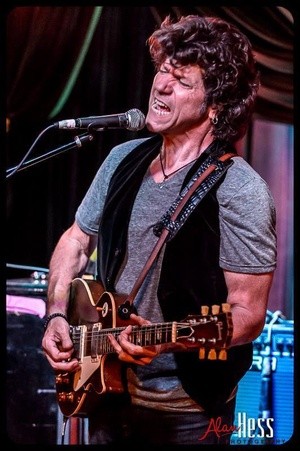
Before moving to Yountville, songwriter Michael Madden already had tremendous success in music, publishing and promotions, both in his hometown of Lanikai, Hawaii, and in Los Angeles, where he worked with heavy hitters like Sting and Jerry Garcia. After moving to the North Bay, Madden helped revitalize the Napa Valley Performing Arts Center at Lincoln Theater and served as the executive director there until last year. This week, Madden returns to the stage for an evening of music with some of his friends, including vocalist Tori Anna and ukulele prodigy Ari Eisenberg, on Friday, Sept. 4, at City Winery Napa, 1030 Main St., Napa. 8pm. $15–$19. 707.260.1600.

Sept. 5: Technicolor Art in Santa Rosa

0

Twenty fifteen marks the 100-year anniversary of Technicolor, the company and process that defined Hollywood films for decades. Inspired by this achievement, Santa Rosa artist Kristen Throop presents ‘The Lion-for-real,’ a new solo exhibit of paintings that incorporate layered colors designed to mimic Technicolor’s vivid look. Throop frequently employs animal symbols in scenes, though this new showing features personal figures that represent her past and childhood memories. The works will be mounted in light boxes, illuminating the gouache pieces from behind, for a bright and imaginative exhibit. “The Lion-for-real,” running through Sept. 27, opens with a reception on Saturday, Sept. 5 at Backstreet Gallery, on Art Alley off South A Street, Santa Rosa. 6pm. 707.478.4739.

Sept. 5: Huge Pianist in Mill Valley

0

Standup star and actor Owen Benjamin is as adept at making jokes as he is with tickling the ivories; onstage, he often sits at the piano mixing classical works with jokes about contemporary culture. He’s been seen in the films The House Bunny and Staten Island Summer and the TV show Sullivan & Sons, as well as his first Comedy Central special, High Five Til It Hurts. Currently touring the States in preparation for his upcoming special, Huge Pianist, Benjamin appears on Saturday, Sept. 5, at Throckmorton Theatre, 142 Throckmorton Ave., Mill Valley. 8pm. $20–$35. 415.383.9600.

Debriefer: September 2, 2015

0

Hey, folks, this paper has a new blog up by news editor Tom Gogola, called “The Fishing Report.” Gogola plans to be posting a couple of times a week and hopes you’ll tune in, send tips to him at tg*****@******an.com, engage, and, of course, push back against his wild-eyed tirades when necessary.

Last week, the Fishing Report made its debut with an item about that incident on the Napa Valley Wine Train that’s been all over the news. The one where 10 black women, and one white woman, got thrown off the popular tourist train for the crime of laughing too loudly.

As the story made its way to an inevitable national “Say whaaaa???” moment, the company that runs the train said it would apologize to the women, even though it had done nothing wrong.

But by the time CNN was on the story a few days after the mass ejection, the company took a 180-degree turn: “We were 100 percent wrong.” Now there’s a civil rights lawsuit in the offing.

Many people who commented on this story—and especially, it seems, in the Napa Valley Register—took the position that “obnoxious” behavior is a race-neutral deal, so why do you have to make everything about race?

Picture this: A group of 10 white women, proud and nerdy members of a book club, are all smiles when they arrive for a long-planned journey on the tourist train. They’re even wearing matching book club T-shirts. It’s not a cheap ride, and the women are excited for the luxe adventure that’s about to unfold.

Almost immediately upon taking their seats, the women are confronted by other train riders for laughing too loudly and for other “disruptive” activities. One of them is 85 years old. Management is summoned, and so too are the police. After a couple of warnings, the women are thrown off the train.

Now pause to reflect: Does anyone really think this sort of treatment would have been visited upon an 85-year-old white woman? Does anyone believe 10 white women from a book club would be frog-marched through the entire train on their way out the door?

In the aftermath, the Napa Valley Wine Train pledged to do better next time. That’s commendable. The company says it will institute sensitivity training so that 85-year-old black women aren’t forced off of old Pullman railroad cars for the “crime” of laughing too loudly.

Those Pullman cars are themselves a part of the racial backstory. As the Fishing Report noted, the Jim Crow “separate but equal” doctrine was enshrined following the Supreme Court’s Plessy v. Ferguson case—itself a case about a man on a Pullman train. Homer Plessy was a mixed-race “octoroon” who in 1892 defied Louisiana’s separate-car law and defiantly sat in the white man’s car. Plessy was thrown off the train and arrested after he refused to move to the “colored” car. He wasn’t laughing.

Check out the Fishing Report as part of your regular media diet at www.bohemian.com.

Gran Wino

0

Winetasting by bicycle during the harvest may look idyllic in a travel brochure, but the reality can be harrowing, at least for new riders and sometimes-cyclists unaccustomed to having trucks, tractors and—yikes, wine tasters!—whizz by their elbow.

While proposed bike paths through the Napa and Sonoma valleys are just getting started, we’ve already got an unofficial wine trail that runs, mostly off-street, through the Green Valley of Russian River Valley AVA: the West County Regional Trail, where the cool, riparian smell of blackberry bushes along Atascadero Creek preps the nose for teasing out the aromatics of Russian River Valley Pinot Noir.

From Mill Station Road to Forestville, the trail runs just over five and a half miles; for shorter trips, there is trail access and parking at Graton Road and Ross Station Road. Even before the trail picks up again at Occidental Road, there’s a winetasting opportunity a brief jog down Barlow Lane, at Taft Street, an old favorite. In downtown Graton, Paul Mathew Vineyards hangs a sign a few spins of the wheel from the trail.

Here, co-owner Barb Gustafson confirms that many of her visitors say they’d like to bike from winery to winery, but they’re not comfortable with the highway traffic. She’s thinking of putting together a map of wineries along the trail. Paul Mathew’s 2014 Russian River Valley Gewürztraminer ($20) is spicy and floral, but this Gewürz finishes dry and refreshing. Rest up for the next leg on cushioned benches in this spacious tasting room.

Further on, a sign invites a detour to the new kid on the block, Ektimo Vineyards, at the former Cahill Winery. At Ross Station Road, don’t miss the turn where the trail picks up again—or go ahead and turn the other way: if you can climb a little hill, sparkling wine and a great view from Iron Horse Vineyards will be your reward. There’s more encouragement for the wine-seeking wayfarer at Russian River Vineyards and Corks Restaurant, where an unlocked gate and big, purple banner all but shout, “Secret entrance here!” A well-worn path leads through the vineyard to the iconic, hop kiln–style winery.

In Forestville, lock up to a proper bike rack right in front of Wine Guerrilla, specialists in big, brambleberry-fruited Zinfandel. Up the street, there’s rustic-chic new Joseph Jewell.

A well-timed afternoon round trip ends at Sebastopol’s Barlow, where tasting rooms are open past 5pm. Wind Gap is all the buzz with their obscure, concrete-fermented varietals like Trousseau Gris ($7 glass; $28 bottle), with a shy aroma, but a finish that can go for miles.

In the Flow

0

Group art exhibits can be a tough deal for artists and art lovers.

The concept has to be strong enough to bind the art pieces together, and engaging enough that casual art fans won’t feel like they’re stuck in some kind of private joke. For the curator, compiling such an exhibition often means dealing with egos and inside politics, and balancing financial interest with personal favors, conceptual needs and technical limitations.

In the case of the show “Artists Are Like Water,” however, the curator and three out of the nine exhibiting artists bonded in an unusual way before the opening: they spent four days floating down the Russian River, camping and gathering raw materials for making art along the way.

The exhibit opened Aug. 27 at Lookup Gallery, the semi-hidden art space in the back of the Guerneville Bank Club building. Focusing on art that “sinks time into a dream,” according to the artists’ manifesto, the exhibit includes work by Los Angeles–based artists Alyse Emdur, Cammie Staros and Jeremy Everett; Constance Hockaday from Oakland; San Francisco’s Colter Jacobsen and May Wilson; Sausalito’s Will Rogan; and two artists from the East Coast, New York City’s Marie Lorenz and Sto Len. In different ways, each piece relates to flotation, liquidity and sailing, directly and metaphorically.

To underscore the concepts of escape and freedom, “Artists Are Like Water” was ushered into the world by a three-day, four-night “floating art studio” last month. Along with Lorenz, Wilson, Hockaday and curator Betty Nguyen, local artist Greg Stimac, cinematographer Yuko Inatsuki and Guerneville Bank Club owner Bob Pullum came along, too.

“We’re looking to bring in nationally known, contemporary artists and expose them to the natural beauty of the area and let that influence new and interesting works whenever possible,” says Pullum.

The floating exhibit started with a festive dinner at the Warnecke Ranch in Healdsburg and flowed from Healdsburg to Jenner with overnight stops at Mirabel Park in Forestville, Johnson’s Beach in Guerneville and Casini Ranch in Duncans Mills.

“I was thinking about how close in proximity the Russian River is to the Lookup Gallery—300 feet, actually—and definitely wanted to curate at least one show approaching it,” says Nguyen, an independent curator and art director in the Bay Area. “The show is a response to time spent living and breathing in that moment of observing what surrounds us. Have you ever tried drawing while paddling downstream? It’s about being mindful, the art of living and finding our balance.”

“Coming from New York, it’s interesting to see how people use the river, and at the same time it’s a pristine place,” says Lorenz, who built her own boat for the trip. “I love to see how the landscape evolves.”

A Fete for Summer’s End

0

It’s Labor Day weekend, so say goodbye to summer and get yourself ready for a rollicking El Niño season.

You’ll need sustenance and a bracingly fun end-of-summer event to prepare you for those early-darkening skies and the cold whip of winter, which is where Saturday’s Taste of Sonoma at MacMurray Estate Vineyards comes into the picture, as part of the three-day Sonoma Wine Country Weekend.

What can you expect after dropping $135 or $175 to attend? An afternoon of total wine and food hedonism in Healdsburg, that’s what. An anticipated 200-plus wineries will be in the hizzie, and over 60 chefs will be on hand to churn out choice pairings to go with the various vinos on offer.

For starters, how about some oysters on the half shell paired with sparkling wine from the Ferrer house of fine fizz? Yes, please. Now wander the MacMurray grounds and you’ll encounter chef pop-ups posted throughout: Baja shrimp and smoked scallop cocktail over here; smoked pork chops glazed in a habanero-peach concoction over there. And it’s all for a cause. The many satisfied revelers who make this fundraising event a top annual draw have raised over
$16 million for the underprivileged of Sonoma County. Last year, funds supported eight new literacy programs.

Taste of Sonoma, Saturday, Sept. 5, at MacMurray Estate Vineyards, 9015 Westside Road, Healdsburg. 11:30am–4pm; $135–$175. Shuttle service is available throughout Sonoma and Marin counties; call 855.939.7666 for info.

Coho vs. Pinot

0

In July, roughly 1,000 rural Sonoma County residents overflowed classrooms and small meeting chambers at five informational sessions convened by the State Water Resources Control Board. It would be hard to exaggerate many attendees’ outrage. At one meeting, two men got in a fistfight over whether to be “respectful” to the state and federal officials on hand.

The immediate source of their frustration is a drought-related “emergency order” in portions of four Russian River tributaries: Mill Creek, Mark West Creek, Green Valley Creek and Dutch Bill Creek. Its stated aim is to protect endangered coho salmon and threatened steelhead trout. Among other things, the 270-day regulation forbids the watering of lawns. It places limits on car washing and watering residential gardens. It does not, however, restrict water use of the main contemporary cause of these watersheds’ decline: the wine industry.

“The State Water Resources Control Board is regulating lawns? I challenge you to find ornamental lawns in the Dutch Bill, Green Valley and Atascadero Creek watersheds,” said Occidental resident Ann Maurice in a statement to the water board, summing up many residents’ sentiments. “It is not grass that is causing the problem. It is irrigated vineyards.”

In what many see as a response to public pressure, the Sonoma County Winegrape Commission, an industry trade group, announced last week that 68 of the 130 vineyards in the four watersheds have committed to a voluntary 25 percent reduction in water use relative to 2013 levels. According to commission president Karissa Kruse, these 68 properties include about 2,000 acres of land.

Sonoma County Supervisor James Gore, whose district encompasses more Russian River stream miles than that of any other county supervisor, has been strongly involved in developing the county’s response to the water board regulations and was the only supervisor to attend any of the state’s so-called community meetings.

“I applaud the winegrowers for stepping up,” Gore says in an interview. “I think they saw the writing on the wall. They knew they weren’t going to continue to be exempt from this sort of regulation for long, and there are also winegrowers already doing good things in those watersheds who wanted to tell their stories.”

Initially, state and federal officials who crafted the regulation said they preferred cutting off “superfluous” uses as a first step. “Our target is not irrigation that provides an economic benefit,” says State Water Resources Control Board member Dorene D’Adamo of Stanislaus. D’Adamo has been the five-member board’s point person for developing the regulations and was appointed by Gov. Jerry Brown as its “agricultural representative.”

Many residents argue that there is no way of monitoring the vineyards’ compliance with the voluntary cutback because their water use has never been metered. Moreover, these residents’ passionate response to the regulation did not emerge in a vacuum. Rather, it tapped a deep well of resentment regarding the long-standing preferential treatment they say state, county and even federal officials have accorded the powerful, multibillion dollar regional wine industry.

As longtime Mark West Creek area resident Laura Waldbaum notes, her voice sharpening into an insistent tone, “The problem in Mark West Creek did not start with the drought.”

A RIVER RAN THROUGH IT

As California lurches through its fourth year of an unprecedented drought, it is no surprise that long-simmering Russian River water conflicts have come to the forefront. At the center of this struggle are salmon and trout, whose epic life journeys play out on a scale akin to Homer’s Odysseus.

Historically, the Russian River has been known for its runs of three different salmonids: coho salmon (which are federally listed as “endangered”), Chinook salmon and steelhead trout (which are “threatened”). All three fish are born in local creeks, or in the river itself, migrate to the ocean as they near adulthood and finally return to their natal streams to spawn and die.

As a growing body of scientific evidence indicates, salmon are crucial to the health of aquatic ecosystems, and their carcasses provide an enormous quantity of marine nutrients that can fertilize vegetation throughout a watershed. Much of the abundance of Pacific Northwest forests is traceable to the region’s salmon runs.

The mountains of Sonoma County are veined with streams that historically provided some of the Pacific Coast’s finest steelhead and coho spawning grounds and rearing nurseries. But the four horsemen of fisheries collapse—habitat degradation, dams, weakening of the genetic pool through the use of hatcheries, and overfishing—have taken an enormous toll. The destruction of ancient forests, instream gravel mining, the construction of the Warm Spring and Coyote Valley dams, and widespread agricultural development along waterways are among the main culprits. Overall, says National Marine Fisheries Service (NMFS) biologist David Hines, the river has devolved into “a basket case.”

“Some of the coastal streams in Mendocino County and further north have stronger fish populations because, even with the history of overlogging, the land hasn’t sustained as much damage,” Hines says. “In the Russian and San Lorenzo rivers [in Santa Cruz County], especially, much more of the habitat is simply gone.”

According to Fred Euphrat, a Santa Rosa Junior College forestry instructor who holds a doctorate in watershed management, the wine industry’s extraordinary expansion throughout the Russian River watershed in the last 40 years has been a major cause of the watershed’s enormous trouble.

“There’s been massive habitat destruction, habitat fragmentation, alteration of land and drainage water that delivers sediment to streams,” he notes.

The vast majority of regional vineyards are irrigated. Many use water from wells, an unknown proportion of which are hydrologically connected to the river. Others pump water directly from streams, creeks and the river itself.

[page]

Most of the vineyards in the Russian River’s lowlands are prone to frost damage. In spring, grape vines emerge from their winter dormancy with new vegetative growth that sprouts from buds established in the previous growing season. Frost can damage this new tissue and significantly affect the subsequent grape yields—and wine sales. Growers have increasingly sprayed water, via overhead sprinklers, on the vines to form a protective layer of ice over the new growth.

The amount of water that this practice requires, as Russian River grape-grower Rodney Strong noted in a 1993 interview with UC Berkeley’s Regional Oral History Office, is “horrendous”—typically, 50 to 55 gallons per minute, per acre. In 2005, University of California biologists documented up to 97 percent stream flow reductions overnight due to frost protection activities in Mayacama Creek, one of the Russian River’s five largest tributaries.

Frost-protection pumping in April 2008 led to dewatering on a scale perhaps unprecedented in the Russian River’s history. On several frigid mornings, winegrape growers diverted more than 30 percent of the river’s flow in Mendocino County alone, as measured at the Hopland US Geological Service gauge. The National Marine Fisheries Service estimated that 25,872 steelhead trout died as a result of frost-protection pumping in the upper Russian on a single day: April 20, 2008.

In response, the state water board moved to establish regulations on frost-protection pumping, albeit with the industry-friendly goal of “minimizing the impact of regulation on the use of water for purposes of frost protection,” according to a water board environmental impact report. The wine industry responded with an intensive lobbying campaign, punctuated by efforts from U.S. Rep. Mike Thompson of Napa—co-founder of the Congressional Wine Caucus and a Lake County vineyard owner himself—to forestall the regulations and question their scientific basis.

Close observers of county water politics say that such episodes have cowed regulators, since the wine industry wields considerable political muscle. Data I helped compile from California’s secretary of state showed that the California Association of Winegrape Growers and the San Francisco–based Wine Institute were two of the top five spenders among agribusiness organizations on lobbying California politicians in 2009 and 2010, when the frost-protection regulations were emerging.

“Regulators are under a lot of pressure to treat the industry with kid gloves,” says former Petaluma city councilmember David Keller, who is now the Bay Area director for Friends of the Eel River. “In the arena where the State Water Resources Control Board has jurisdiction, they’ve failed to strongly protect the public trust, although they are getting more serious. But the county has been missing in action on a lot of important issues.”

HEADWATERS

During the dry months, the Sonoma County Water Agency releases water from the Lake Mendocino and Lake Sonoma reservoirs (with much of the former consisting of water diverted from the Eel River) to ensure they meet the minimum stream flow in the river mandated by the state. In part, these minimum flows are designed to ensure fish survival.

The water agency supplies this water to the cities within the Russian River watershed, such as Santa Rosa, but also shunts these liquid resources across the Petaluma Gap via pipes to Petaluma and the water-starved towns of northern Marin County, which lie outside the Russian River drainage. This year, the agency has been under a requirement to reduce its diversions from the river by 25 percent in keeping with Gov. Brown’s emergency drought order.

This requirement does not extend to vineyards. Even if it did, there are few means to monitor the wine industry’s water use—unlike that of municipal residents—due to a lack of metering.

“We don’t have a countywide breakdown of water use for residences and agriculture,” says water agency spokeswoman Ann Dubay.

Having lived in the Russian River watershed for several years, I’ve been fascinated by the idea that Hopland and Ukiah grape growers had the capacity to reduce the Russian River’s flow by as much as 37 percent during an extraordinary 2008 frost-protection “event,” to borrow growers’ jargon. On July 15, two photographers and I set out on kayaks to document what these pumps actually look like from the perspective of the river.

Our 12-mile trip spanned only a fraction of the 110-mile river artery. Still, what we encountered was staggering. The most immediate problem we noticed is the extent to which river banks are eroding. By trapping sediment, dams force a sluggish river’s banks to erode. Lake Mendocino has caused so much erosion that the river channel has dropped by as many as 30 feet in some areas.

[page]

The number and size of the river’s diversion pumps are just as staggering. We captured photos of 27 diversion pipes that, as a conservative estimate, ranged from eight to 24 inches in diameter. All were attached to intake pumps submerged in the river channel. In several cases, part of the river channel had been excavated with heavy machinery, no doubt, behind small rock wall dams to allow more water to collect at the pump intakes. We also found a handful of artificial channels that led straight to growers’ pumps. Two of the pumps’ generators were running in the afternoon.

Section 1600 of the California Fish and Game Code requires a permit for “excavating material from channels to install and submerge a pump intake,” according to a 2010 Fish and Game memo. Department of Fish and Wildlife environmental scientist Wesley Stokes, who manages stream alteration permits on the upper Russian River, did not respond to requests for information about whether the growers’ dams and channels are permitted. According to Chris Carr of the State Water Board’s Division of Water Rights, these dams “do not fit the jurisdictional requirements of the California State Water Code.”

Most, if not all, of the pumps appear to conform with the legal requirements of the state’s water-rights system. And that system requires no meters or any special drought provisions for Russian River grape growers, other than those in the four Sonoma County creeks. Along with residents, the water board is now asking growers in those four areas to file monthly reports on their water use.

VOLUNTARY MEASURES

For years, wine-industry leaders have opposed regulation on the grounds that it is burdensome and of questionable value. California agribusiness representatives have consistently maintained that they can manage their properties in an environmentally responsible manner without the need for government oversight. In the case of the wine industry, the leading edge of this effort is a marketing and certification initiative called “fish-friendly farming,” which has certified 100,000 acres of vineyards, including a majority of those that suckle at the banks of the Russian River.

The initiative was developed by the California Land Stewardship Institute (CLSI), a nonprofit organization based in Guerneville. “I’m not a big fan of regulations,” says the group’s founder and executive director, Laurel Marcus.
“I think they lead to a lot of conflict.”

Marcus notes that grape growers are undertaking numerous efforts to increase water efficiency, such as construction of off-stream storage reservoirs in the upper Russian River, which they can fill during high-flows in the wintertime and thereby reduce demand during the frost-protection season and in the summertime, as well as soil-moisture meters to help minimize use of irrigation water.

Industry giant Kendall-Jackson has donated money to the “Flow for Fish” rebate program to provide free water tanks to individuals in the four watersheds who agree to conserve water voluntarily. The program is overseen by Trout Unlimited, and several property owners have signed up so far.

A review of the CLSI’s Form 900s filed with the IRS reveals that
eight of the organization’s nine board members are grape growers. The lone exception is Marcus. The organization’s president is Keith Horn, the North Coast vineyard manager of the world’s largest wine corporation by revenue, Constellation Brands.

Tito Sasaki, chairman of the Sonoma County Farm Bureau’s water committee, says his organization is “against meaningless regulations imposed upon us” and notes that some farmers have agreed to release water voluntarily. In a letter to the water board earlier this year, he wrote, “[R]egulations put a wedge between the regulator and the regulated” and “at times become a hindrance to practical solutions such as the aforementioned release of privately held irrigation water.”

Kimberly Burr, an environmental attorney based in Forestville, takes the opposite view.

“If the wine industry really wants to be sustainable, it needs to invite regulation,” she says. “And I believe there are some in the industry who truly want healthy, thriving rivers and will come out in favor of regulation.”

THE NO. 1 THREAT

The lynchpin of state and federal agencies’ effort to recover Russian River coho salmon populations is a hatchery breeding and monitoring program that began in 2001, after the river’s coho population had plummeted to fewer than 10 returning spawners. The program has cost taxpayers more than $10 million so far and has led to a slight rebound in the river’s overall population of fish, which UC Cooperative Extension coho monitoring coordinator Mariska Obedzinski says is in danger of unraveling in the drought.

Fishery officials have been compelled to assess the wine industry’s impacts on occasion. At a November 2009 workshop, a National Marine Fisheries Service (NMFS) biologist presented data showing that, of 60,640 acres of vineyards in the Russian River watershed, an estimated 70 percent come within 300 feet of salmon-bearing streams. In its 2013 Russian River coho salmon recovery plan, NMFS lists agriculture—meaning vineyards, mostly—as the fish’s
No. 1 threat.

As Alan Levine of the environmental advocacy organization Coast Action Group notes, California State Water Code 1243 orders that the Department of Fish and Wildlife “shall recommend the amounts of water, if any, required for the preservation and enhancement of fish and wildlife resources.”

“Exercising regulatory authorities to protect fish is very unpopular with agriculture,” says Levine.

Many observers of regional water politics lay much of the blame for a regional lack of watershed protection at the feet of Sonoma County. As a 2011 Bohemian story, “The Wrath of Grapes” noted, the county has elected not to conduct environmental reviews of vineyard well permits. And, as the article also noted, the county’s planning supervisor could not recall a single case where the county had rejected a winery application.

[page]

When the state was preparing to institute its new emergency regulations on the river, county supervisors Gore, Efren Carrillo and Susan Gorin traveled to Sacramento and met with state officials, including California Secretary of Food and Agriculture Karen Ross (who was a chair of the California Association of Winegrape Growers for 13 years), Department of Fish and Wildlife chair Charles Bonham and water board representatives. According to Gore, the emergency regulations offer a chance for rural residential property owners and the wine industry to work together toward a common goal over the long-term.

“We need to do everything we can do to get water into those streams this year for coho, and then we can have a full-court press when it comes to increasing long-term storage and permanently reducing water use in those areas,” Gore says. “For that to happen, everybody—and this includes grape growers—needs to step up.” One thing the county is talking about, he says, is targeting marijuana eradication operations in the four watersheds.

A common complaint among environmentalists and other residents is that the county has failed to safeguard limited water supplies by approving all new well construction and vineyards under its jurisdiction, including in the four critical areas for salmon, on a “ministerial” basis instead of requiring environmental review, such as a scientific assessment of the development’s impact on endangered species habitat. And, while there are an estimated 800 illegal diversions of waterways in the Russian River watershed, according to water board documents from 2010, the county does not require that developers demonstrate they have a legal water right.

Gore says that the county’s “ministerial” well-permitting will remain in place and cited a new well ordinance requiring that wells be installed at least 30 feet from streams as an example of progress toward a stricter groundwater policy.

A HIGH PRIORITY

Few California waterways are historically as important to coho and steelhead as Mark West Creek, one of the four creeks subject to the water board emergency regulation. Veteran fisheries ecologist Stacey Li, formerly with NMFS, says he had “never seen abundances of steelhead that high anywhere else in California” when he worked there in the 1970s and 1980s. The Brown administration’s California Water Action Plan acknowledges the creek’s historical role, having named it one of California’s five highest priority waterways for restoration funding.

Vineyard development in the headwaters started in the late 1990s when the owner of a multimillion-dollar dentistry consulting business in Marin County, called Pride, bulldozed about 80 acres of ridge-top oak woodlands to plant grapes (some of which were not in the Mark West watershed). Next to plant a high-elevation vineyard was Fred Fisher, a General Motors scion. But the coup de grace occurred when Henry Cornell, a hedge fund manager whose investment portfolio includes the world’s largest corporate distributor of pipes and valves to the oil industry, purchased 120 acres and clear-cut much of its forestland to make way for a vineyard.

The removal of anchoring vegetation activated a landslide on Cornell’s property, which caused 10,000 cubic yards of soil to wash into the creek during a 2006 winter storm. The stream’s staircasing pattern of slow deep pools, separated by abrupt but short waterfalls, had been ideal for fish. The landslide filled in many of the spawning pools and turned much of the staircase stream structure into a rapid water chute.

The threat of hillside and mountaintop vineyards, which became an industry craze in the 1990s, was already well-known. The trend was driven by companies like Jackson Family Wines (owners of Kendall-Jackson), which touts the superior quality of mountain-grown grapes in its marketing. The resulting bulldozing of hillside oak groves and grasslands has caused enormous amounts of erosion to wash into streams. The vineyard operators have also dammed or diverted numerous streams and drilled deep wells, equivalent to placing plugs and straws in the very mountain veins that had served as the fish’s remaining refuges.

In 1999, UC Cooperative Extension specialist Adina Merenlender undertook the only concerted effort to quantify hillside vineyard growth. She found that 1,631 acres of dense hardwood forest, 7,229 acres of oak grassland savanna, 278 acres of conifers and 367 acres of shrub land in Sonoma County succumbed to wine-grape plantings from 1990 to 1997 alone—42 percent in elevations higher than 328 feet. While no similar studies have been conducted since, Sonoma County vineyard acreage grew from 40,001 acres in 1997 to 64,073.2 in 2013, according to the Sonoma County Agriculture Department, with most of that expansion occurring in the Russian River watershed.

Kendall-Jackson’s Santa Rosa corporate office did not respond to requests for comment.

A PUBLIC TRUST

For years, Laura Waldbaum and other Mark West Creek residents tried in vain to compel fisheries agencies to intervene in the creek’s plight. In Waldbaum’s words, they received the “same cut-and-paste answer every time”: the county, rather than the state, is the “lead agency” on land-use decisions. Therefore, the state is not in a position to intervene. Moreover, the Department of Fish and Wildlife claimed that the vineyards, because they rely on well water, are not subject to regulatory action.

Mark West Creek residents eventually succeeded in convincing NMFS to do one thing: install several low flow gauges in the creek to help quantify the effects of various water uses.

The meters provided data for a November 2014 study by the environmental consulting company Center for Ecosystem Management and Restoration (CEMAR). It is one of two official studies on water use in the creeks subject to the water board regulation. It notes that approximately one in eight Mark West Creek residences “have a lawn, visible garden, or other irrigated landscaping.” Although the area CEMAR’s biologists selected for study only contains three vineyards, these properties’ annual water demand is more than two-thirds of the area’s 222 residential properties.

As fisheries officials noted at each of the Russian River emergency regulation meetings last month, however, young coho salmon and steelhead trout are most vulnerable in the summertime, when streams are not being replenished with rain. And that’s exactly when the grape growers now pumping at the banks of these fish’s rearing habitat need water for irrigation. The wine industry uses a similar share of the summertime water in Green Valley Creek, according to a separate CEMAR study.

Now that so much damage has already taken place, Waldbaum and other residents view the state’s relatively sudden interest in Mark West Creek water use as part tragedy, part irony.

“This is ground zero for the state,” Supervisor Gore says. “If the drought continues, everyone else in California will be looking at the same type of regulation. So the state is looking at this area to see if we can achieve success.”

The measure of that success is not only whether coho salmon and steelhead trout survive, environmentalists and policy analysts note, but whether they start to recover. California’s Supreme Court has upheld the primacy of the “public trust doctrine,” which obligates state government to protect public-trust resources, our common heritage of water, rivers, animals and plants, and their interrelationships, whenever feasible. The doctrine is supposed to underlie all efforts undertaken by regulatory agencies to protect the state’s waters. It provides that no one has a right to appropriate water in a manner harmful to the interests protected by the public trust, including fish.

“Salmon bring their biomass back to our rivers from the oceans every year, for free,” notes California water policy expert Tim Stroshane, a policy analyst for Restore the Delta in the Bay Area. “What a miracle. That’s what protecting the public trust is for. That amazing natural subsidy is why it’s the duty of the state to protect them.”

An increasing number of Sonoma County residents are deciding that neither the state nor the county are upholding that duty.

Patience!

0

The hospital PA crackles to life, and medical personnel in scrubs hurry from all directions to the emergency room, where a patient has just had a stroke.

It’s an exciting moment at the Sonoma West Medical Center (SWMC). But the only thing missing is an actual patient. This is a test, only a test—a training exercise, but the hospital’s new executive expects it won’t be long now before actual patients start coming through the door.

“We’re ready now,” says Raymond Hino, CEO of the Sebastopol facility formerly known as Palm Drive Hospital, during an on-site interview last week, just days before a hopeful reopening on Sept. 2

The hospital has undergone a
$5 million upgrade along the way to an reopening that was by no means a certainty after it was forced to close in April 2014 over chronic fiscal shortfalls. Earlier this year, a flurry of expectation attended a proposed April reopening that wasn’t in the cards, but this time they really mean it.

“The only surprise has been how long it has taken,” says Hino.

On Monday, SWMC cleared its penultimate hurdle: a pharmacy inspection by the federal Drug Enforcement Agency. The DEA check-off came after two rounds of approvals from state agencies that ensured the facility had undergone earthquake-proofing and that other tune-ups had been made. The state was scheduled to do a final run-through on the pharmacy on Tuesday. Once the hospital got the green light, Hino would then make a call to the area emergency services network to tell them, “We are available for 911 transports.”

There’s no crinkly bunting to mark a grand opening along Petaluma Avenue, but there’s still an “Open Our Hospital” sign out front, on the lawn of an adjacent medical mini mall.

The sign was itself a draw for Hino when local philanthropist Dan Smith, the major civic driver behind the hospital’s rebirth, called him last year to see if he’d be interested in running the new proposed hospital.

“I was very impressed by the sea of red-and-white signs,” Hino says. He signed on in November.

West County residents wanted an emergency room, and they got one. But the rest of the hospital’s operations have to help pay for the ER, an expensive unit in any hospital, with lots of overhead and unrecouped costs at play.

“You need a hospital if you want to have an ER,” Hino says.

The emphasis at SWMC will be on specialty surgery, telemedicine and marketing the hospital’s top-of-the-line contributions to the regional medical scene, including its state-of-the-art mammography machine.

Hino and the marketing team plan a full-on advertising campaign to let people around the region know about the new hospital. They’re not just bragging about the spacious rooms, the tablets in every room and the visitor chairs that can be reclined into beds for family members: they need the business. “We need to be a regional hospital,” Hino says. “We can’t be successful in just West County.’

The upcoming reopening was harshly criticized by some previous members of the Palm Drive Hospital District board of directors for being untenable and also for essentially transforming the hospital into a showroom for Smith’s tablet-based telemedicine company, which itself was developed by pioneering surgeon Jim Gude. Smith bought the company from Gude, who returns to the hospital as medical director after leaving in 2011. Telemedicine is best described as an elaborate Skype-like system to monitor and evaluate patients from afar.

The controversy over Smith’s role—critics accused him of a conflict of interest—is academic for now. But concerns about the hospital’s viability are of course still open questions. The district board has a bankruptcy contingency plan in place, should the hospital find itself back where it was a year ago: in debt and without enough patients to keep it going.

Hino is convinced that the new hospital can and will be a viable operation.

As I toured the hospital, a group of visiting Nigerian physicians received training in the telemedicine technology. Hino says specialists will make use of the surgical facilities here, and the hospital anticipates buy-in from surrounding medical centers, too.

“Surgery is typically profitable for hospitals,” Hino says.

The new hospital has leveraged opportunities afforded under the Affordable Care Act to partner with area hospitals. “We can’t do this alone,” Hino says.

St. Joseph’s Memorial Hospital in Santa Rosa has pledged to send patients to SWMC, out of necessity. “There’s a bed shortage in Santa Rosa. They are transferring patients out of the county, to San Francisco and Sacramento,” says Hino, a career hospital administrator. “We are a lot shorter distance.”

Hino says he’s been told by regional hospitals: “You’ll be very busy, very quickly.”

He adds that there are benefits to working with a closed hospital, even if it was more expensive in the end. Among other upgrades, the floors were redone, the clinical lab was gutted and rebuilt, and the emergency room was upgraded. “It clearly cost more because the hospital had closed,” says Hino. “The money we spent was mostly on the physical plant side. Lots of stuff had gone to pot.” The physical plant upgrades alone cost about $2 million, he says.

The hospital employs 180 people, and roughly half worked here when it was still Palm Drive, says hospital marketing director Jane Rogan. Lots of employees are already showing up for work in anticipation of opening day, which has been put off. The kitchen is up and running, and Hino says patients can expect “the best-tasting hospital food in the state,” but don’t expect a wine pairing. Maybe a glass of wheatgrass juice.

Some other details: The hospital has a 37-bed capacity but will open with 25. There’s no hospital chapel, but Hino says he’s working on a visiting chaplaincy service. The pharmacy won’t dispense medical cannabis to patients since that’s still a no-no under federal law, despite Sebastopol’s pioneering dispensary operations. There’s no special area for patients who come in under police escort, though Hino says he expects to see patients in handcuffs “from time to time.” There’s a gift shop in the offing, says Rogan, and lots of new loaner paintings on the walls, courtesy of Sebastopol artists.

Most important of all, says Hino, “We are open for everybody.”

Not quite yet, but soon.

Editor’s note: This story has been edited and corrected to reflect that the hospital has not yet reopened.

Sept. 3: CULT Status in Santa Rosa

The last time underground horror director William Lustig visited the North Bay he brought a double bill of his classic slasher and action films remastered for the big screen. Lustig is back, and this time he shows two of his most popular horror flicks ever when he screens Maniac Cop and its sequel. Starring a young and awesome Bruce...

Sept. 4: Music Man in Napa

Before moving to Yountville, songwriter Michael Madden already had tremendous success in music, publishing and promotions, both in his hometown of Lanikai, Hawaii, and in Los Angeles, where he worked with heavy hitters like Sting and Jerry Garcia. After moving to the North Bay, Madden helped revitalize the Napa Valley Performing Arts Center at Lincoln Theater and served as...

Sept. 5: Technicolor Art in Santa Rosa

Twenty fifteen marks the 100-year anniversary of Technicolor, the company and process that defined Hollywood films for decades. Inspired by this achievement, Santa Rosa artist Kristen Throop presents ‘The Lion-for-real,’ a new solo exhibit of paintings that incorporate layered colors designed to mimic Technicolor’s vivid look. Throop frequently employs animal symbols in scenes, though this new showing features personal...

Sept. 5: Huge Pianist in Mill Valley

Standup star and actor Owen Benjamin is as adept at making jokes as he is with tickling the ivories; onstage, he often sits at the piano mixing classical works with jokes about contemporary culture. He’s been seen in the films The House Bunny and Staten Island Summer and the TV show Sullivan & Sons, as well as his first...

Debriefer: September 2, 2015

Hey, folks, this paper has a new blog up by news editor Tom Gogola, called "The Fishing Report." Gogola plans to be posting a couple of times a week and hopes you'll tune in, send tips to him at [email protected], engage, and, of course, push back against his wild-eyed tirades when necessary. Last week, the Fishing Report made its debut...

Gran Wino

Winetasting by bicycle during the harvest may look idyllic in a travel brochure, but the reality can be harrowing, at least for new riders and sometimes-cyclists unaccustomed to having trucks, tractors and—yikes, wine tasters!—whizz by their elbow. While proposed bike paths through the Napa and Sonoma valleys are just getting started, we've already got an unofficial wine trail that runs,...

In the Flow

Group art exhibits can be a tough deal for artists and art lovers. The concept has to be strong enough to bind the art pieces together, and engaging enough that casual art fans won't feel like they're stuck in some kind of private joke. For the curator, compiling such an exhibition often means dealing with egos and inside politics, and...

A Fete for Summer’s End

It's Labor Day weekend, so say goodbye to summer and get yourself ready for a rollicking El Niño season. You'll need sustenance and a bracingly fun end-of-summer event to prepare you for those early-darkening skies and the cold whip of winter, which is where Saturday's Taste of Sonoma at MacMurray Estate Vineyards comes into the picture, as part of the...

Coho vs. Pinot

In July, roughly 1,000 rural Sonoma County residents overflowed classrooms and small meeting chambers at five informational sessions convened by the State Water Resources Control Board. It would be hard to exaggerate many attendees' outrage. At one meeting, two men got in a fistfight over whether to be "respectful" to the state and federal officials on hand. The immediate source...

Patience!

The hospital PA crackles to life, and medical personnel in scrubs hurry from all directions to the emergency room, where a patient has just had a stroke. It's an exciting moment at the Sonoma West Medical Center (SWMC). But the only thing missing is an actual patient. This is a test, only a test—a training exercise, but the hospital's new...
11,084FansLike
4,606FollowersFollow
6,928FollowersFollow