Oct. 16-18: The Word in San Rafael

0

The word “bioneers” was coined in 1990 to describe the emerging culture of social and scientific innovators who wished to mimic natural operating systems and solve the world’s problems in sustainable ways. Through its various media networks and annual National Bioneers Conference, the collective aims to inspire positive change at a local level. This year’s Bioneers Conference features many keynote speakers, such as bestselling author Paul Hawken and Henk Ovink from the Dutch Ministry of Infrastructure. Music, interactive workshops, films and more are all part of the conference, which runs Friday to Sunday, Oct. 16–18, at the Marin Center, 10 Avenue of the Flags,
San Rafael. $175 and up. conference.bioneers.org.

Oct. 17: All’s Fair in Santa Rosa

0

After a two-year campaign, the group behind Santa Rosa Fair Trade recently announced that the national grassroots movement, Fair Trade Campaigns, has named the city one of its Fair Trade Towns. This means that Santa Rosa is a leader in fair trade advocacy, education and action, working under the principles of environmental sustainability, ethical production methods, fair wages and safe working conditions. This weekend, an award announcement, live music, salsa dancing, a fair trade fashion show and many local businesses will be on hand for the Santa Rosa Fair Trade Town Celebration on Saturday, Oct. 17, Old Courthouse Square, Mendocino Avenue between Third and Fourth streets, Santa Rosa. 1pm. Free. 

Oct.17-18: Superhero Halloween in Sonoma

0

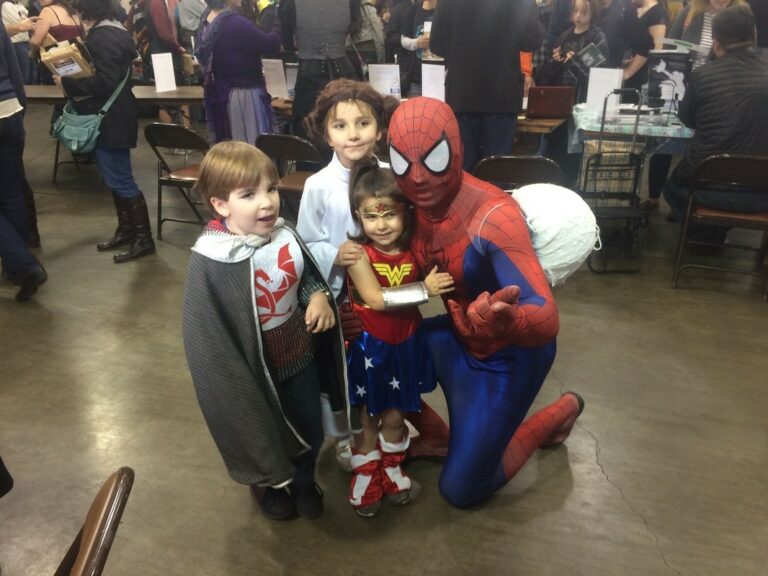
The annual Witchie Poo Halloween Extravaganza marks its 35th year and always features family-friendly variety acts filled with ghosts, ghouls and spooks. This year, superheroes will join the monsters, as the Witchie Poo Players take on the theme of a comic book convention for their delightfully demented performances. Look out for a dance routine from the Batman Tappers as well as the intermission costume parade, where those dressed in their spooky best can win frightfully fun prizes. The Witchie Poo Extravaganza scares up a good time on Saturdays and Sundays, Oct 17–18 and 24–25, at Sebastiani Theatre, 476 First St. E., Sonoma. 2pm. $9–$11. 707.996.9756. 

Oct. 21: Do One Thing in Rohnert Park

0

Author and sustainability champion David W. Orr gives the keynote address at this year’s Sustainability Day, presented by Sonoma State University. More than a traditional conference of talk, this event walks the walk, showcasing several student projects and fieldwork, as well as giving a call to action in their “Do One Thing Today” theme. Orr’s talk will look at our climate crisis and what role students and colleges need to take on to help preserve the planet. Several other speakers, panels, art exhibits, live music and sustainable activities are on tap, and it’s all open to the public on Wednesday, Oct. 21, at Sonoma State University, 1801 E. Cotati Ave., Rohnert Park. 9am. Free. www.sonoma.edu.

Debriefer: October 14, 2015

0

Bodega Bay commercial fishermen, with the help of their local congressman, last week nabbed a United States Department of Agriculture grant designed to help the seaside burg develop new local and regional seafood markets by “sourcing, aggregating, storing and processing locally caught, sustainable seafood for consumers,” according to a statement announcing the grant.

The Commercial Fishing Association of Bodega Bay applied for the grant with the assist of U.S. Rep. Jared Huffman in May. The USDA dollars are pegged for enhancing local food promotion. The grant totals $131,000.

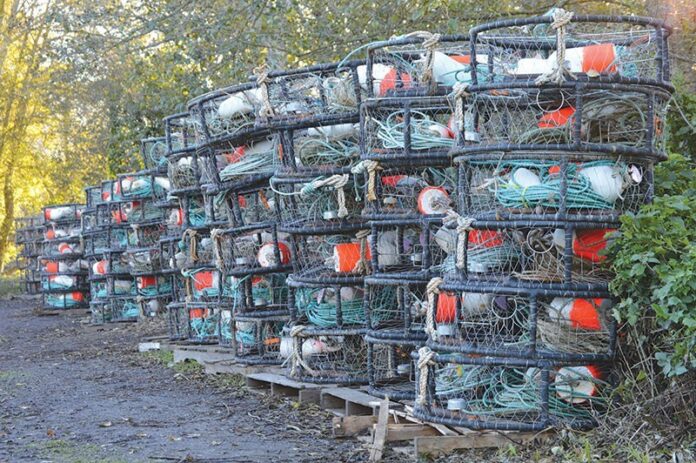
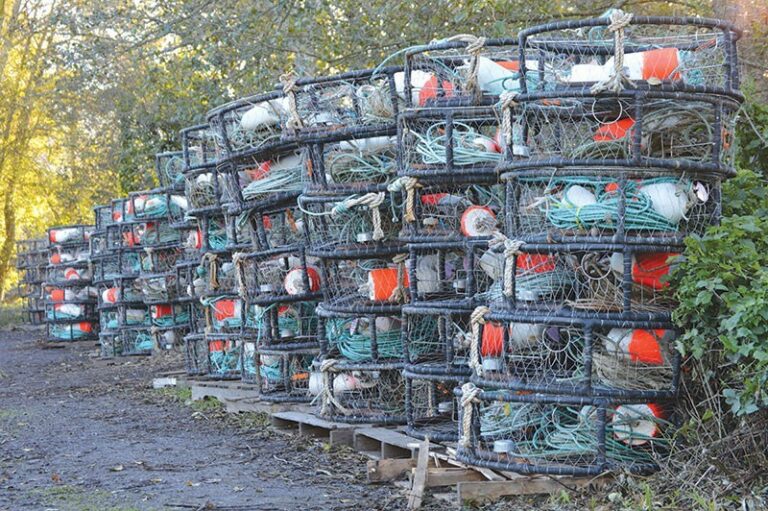
The grant announcement came as two other bits of fish news came over the transom last week—one of which highlights the need to protect Bodega Bay anglers’ ability to earn a living catching crab.

Huffman co-sponsored the West Coast Dungeness Crab Management Act that seeks to permanently extend a 20-year fisheries management agreement aimed at protecting the health of the crab fishery in California, Oregon and Washington. It is set to expire next September.

But there’s a longstanding critique of Dungeness management that small-time Bodega Bay operators say puts them at a disadvantage. They’ve grumbled about bigger crab boats from the north that come to California waters early in the Dungeness season, fish local waters and return with their catch to their home states—and contribute nothing to the local California economy in the process.

The Dungeness fishery is managed by the Tri-State Dungeness Crab Committee, which is overseen by the Pacific States Marine Fisheries Commission. That body sets size and sex restrictions on the crabs, and also sets the season dates.

This year’s commercial crab season opens on Nov. 15 in waters south of Mendocino County; two weeks later, the waters north of Mendo open.

And speaking of endangered species, Republican efforts at mitigating drought impacts on agribusiness have salmon activists up in arms as the season winds down. John McManus, executive director of the Golden Gate Salmon Association, issued a statement last week that pounced on a proposed anti-drought bill from Kern County U.S. Rep. David Valadao. His bill has the sponsorship and support of the California Republican congressional delegation.

The essence of Valadao’s bill: the heck with endangered or threatened salmon, we need the water. “The dedication of vast quantities of water to protect certain species of fish listed under the Endangered Species Act (ESA) is a significant obstacle hindering water delivery in Central and Southern California,” Valadao says of his bill.

The bill, says McManus is “the most aggressively anti-salmon bill we’ve seen, introduced when our salmon runs are already being clobbered by drought. . . . Commercial landings this year are far below expectations and the worst impacts on salmon fishermen may be felt in the next few years. . . .”

One-time speaker-of-the-house candidate Kevin McCarthy offered some characteristically mangled prose about the Valadao bill when he called it “an important step to helping restore the water our communities desperately need by more fully utilizing the most sophisticated water system in the world to quench the robust economic opportunity California families, farmers, workers and businesses all need.”

Whatever, dude.

Legal Lockdown

0

The deputies dragged Lopez to the mental health unit and stripped him naked. Covered in his own feces, Lopez pleaded for toilet paper. The deputies ignored his pleas, laughed at him and locked him naked in isolation covered in his own feces for two days . . .

No wonder Sonoma County went into legal-lockdown mode after news broke last week of a federal lawsuit. The above testimony is drawn from documents that are part of a suit that charges systematic torture by guards during an hours-long orgy of intimidation and violence that took place May 28.

Santa Rosa attorney Izaak Schwaiger brought the suit Oct. 5 on behalf of two plaintiffs who were at Sonoma County’s Main Adult Detention Facility jail that day, Marqus Martinez and Daniel Banks. Both say they were beaten or threatened by masked guards on the Special Emergency Response Team (SERT).

The county is named in the suit along with Sonoma County Sheriff Steve Freitas, officers Mazen Awad and Brian Galloway, and up to 50 “John Doe” deputies. They are accused of going cell to cell to beat inmates on a segregation wing for up to five and a half hours, after Giovanni Montes, heavily medicated and asleep, did not respond to a morning “soap call” and was allegedly beaten by a guard.

Schwaiger says he expects more plaintiffs will be added to the suit; 20 men are alleged to have been victims in the incident and wrote letters to Schwaiger that detailed their treatment at the hands of the guards. The sheriff’s office has denied that any of it happened the way inmates say it did.

The suit against the facility is one of three now before the U.S. District Court in San Francisco that involve allegations of unconstitutional correctional activities at the jail.

Schwaiger is also representing Esa Roth in a 2013 incident where corrections officers Tasered Roth 20 times in an attempt to restrain him.

The incident with Roth was videotaped as part of jail procedure, as was the May 28 incident, or parts of it. Schwaiger is fighting to get the county to release the tapes.

A third federal lawsuit identified by Schwaiger involves a female inmate who charged she was sexually humiliated by a guard. The guard no longer works for the Sheriff’s Office.

Schwaiger has upped the justice ante in his latest suit by asking the court to appoint an independent monitor to the jail for up to three years. The move would implement a regime of federal oversight at the jail—a consent decree—with an aim to bring it into compliance with constitutional corrections norms. The American Civil Liberties Union has been involved in a number of these consent decrees, including one that was in place at the Los Angeles police department for over a decade, beginning in 2000.

The organization is not taking a position on the jail, but Micaela Davis, a staff attorney with the ACLU of Northern California, says in an email that “inmates in county jails around the state face poor conditions, inadequate provision of medical and mental-health care and conditions that foster violence against inmates. If a county is unwilling to fix these problems on its own, federal oversight can be an important tool to ensure compliance with constitutionally adequate conditions and care.”

As news of the suit broke last week, the Sheriff’s Office forcefully shot back, “[We] categorically deny the outrageous and inflammatory accusations delineated in the complaint,” and then said they would investigate. But if the Sheriff’s Office categorically denies any wrongdoing, what is there to investigate? In a statement, the department promised to conduct a further review, as it charged, “the correctional deputies were responding to the actions of a seemingly coordinated mass disturbance.”

Other county officials have declined to comment. Assistant County Counsel Cheryl Bratton says that her office doesn’t “specifically get into the details of any pending lawsuits” and could not identify who in the county would lead or be a part of the investigation, beyond Freitas.

“At this stage of the litigation, I cannot comment on that. All I can tell you is that the Sheriff’s Office and county are committed to transparency, and we will make information available as we can.”

Freitas and the county appear to have been caught off-guard by the suit, which came about after criminal defense lawyers told Schwaiger about the alleged beatings. The suit was co-filed with the Scott Law Firm in San Francisco.

Schwaiger has no confidence the county can investigate itself. Freitas will “never, ever make a finding against any of his deputies, ever, ever,” he says. And if there was no wrongdoing by the SERT team “then let’s see the videos.”

Schwaiger alerted Sonoma County District Attorney Jill Ravitch to his suit last week and asked that she investigate. Her office took a pass, and directed witnesses to the alleged beatings to contact the investigating body—which, unless and until the county says otherwise, is the Sonoma County Sheriff’s Office.

Bright Light

0

When 2005’s Light in the Piazza first played on Broadway, there was much talk that the show, a musical adaptation of Elizabeth Spencer’s 1960 novel, marked a return to the gorgeous scores and lyrical drama of the golden age of musical theater. Ignoring decades of rock and pop influences, composer Adam Guettel created a score that was lush, orchestral, complex, operatic and brazenly romantic.

In a remarkably strong new production at Spreckels Performing Arts Center, director Gene Abravaya, taking a real risk on something this difficult, has more than met the challenge, assembling some first-rate singers and a stellar chamber orchestra for what is quite possibly the most musically competent and artistically successful show the company has ever staged. That some of the cast sing and speak (convincingly) in Italian only adds to the impressiveness.

Set in Italy in the 1950s, the story follows two visiting Americans, the wealthy southerner Margaret (brilliantly played by Eileen Morris) and her wide-eyed daughter Clara (Jennifer Mitchell, whose pure singing voice and expressive face make every emotion clear as a bell). When Clara falls in love, at first sight, with the youthful and exuberant Fabrizio (Jacob Bronson, as emotionally alive and effective as Mitchell), the stage is a set for a series of clashes between Margaret and Fabrizio, and Margaret and Clara, with Margaret fighting to reconcile her desire to protect her daughter with her hope that Clara will find the love she never allowed herself.

The book by Craig Lucas (Prelude to a Kiss; Amélie, a New Musical) includes scenes spoken in Italian, giving a sense of the lost-in-translation confusion that impedes Clara and Fabrizio throughout. In one delightful turn in the second act, Fabrizio’s mother (Barbara McFadden, wonderful) drops the Italian to explain in English what her husband (an excellent Steven Kent Barker) has been saying to their other son (Tariq Malik) and his wife (Amy Marie Webber).

With fine design and technical support, Spreckels’ Light in the Piazza is an impressive achievement, dripping with the danger and allure of love—and that’s worth experiencing in any language.

Rating (out of 5): ★★★★½

‘The Light in the Piazza’ runs Friday–Sunday through Oct. 25 at Spreckels Performing Arts Center. 5409 Snyder Lane, Rohnert Park. Friday–Saturday, 8pm; Saturday–Sunday, 2pm matinee. $16–$26. 707.588.3400.

We’re All Crazy Here

0

Few artists can combine the meticulous musicianship and fiery passion of the blues like guitarist and bandleader Tommy Castro. The Bay Area resident and frontman of the recently formed Tommy Castro & the Painkillers throws a party to celebrate the release of his latest full-length album, Method to My Madness, with a concert on Oct. 16 in Napa.

The follow-up to 2014’s musically varied release The Devil You Know, Castro strips down the sound on Method and lets his backing band, keyboardist James Pace, bassist Randy McDonald and drummer Bowen Brown, shine with raw blues rhythms and Texas-style soul.

Recorded at Laughing Tiger Studio in San Rafael, Method to My Madness is Castro’s first foray into producing, and on tape he sticks to the basics of playing it live and having fun. Castro also wrote or co-wrote 10 of the 12 tracks on the new record, and borrowed from B. B. King and Clarence Carter on the album’s two covers.

Method to My Madness comes out on Oct. 23, though copies will be on hand for the official record release party this Friday. Opening the show is guitarist Mark Karan, best known for his time in Bob Weir’s RatDog.

Tommy Castro & the Painkillers go mad on Friday, Oct. 16, at Uptown Theatre,
1350 Third St., Napa. 8pm $20–$40. 707.259.0123.

Wine Song

0

A wonky memory can do wonders for one’s sense of discovery.

Driving down a country lane south of Sebastopol on a recent morning, I fully expect to find a flight of Pinot Noir and Chardonnay at the little winery at end of the road. After all, this is the heart of Gravenstein-slash-Pinot country, the apple trees often being the slash. What I find is something a little less typical: six acres of Syrah.

That, and the 250 apple trees that owner Stephen Singer (pictured) left standing on the border with his neighbors when he developed the vineyard in 2002. Now it comes back to me: Baker Lane Syrah was the surprise star of a March, 2010 Swirl, about the short-lived tasting bar at Pizzavino 707. Singer has been involved in the Bay Area restaurant and wine business for over 30 years.

In a small compound on Baker Lane, I find Singer and viticulturist and winemaker Greg Adams wrapping up the details of that morning’s harvest. It’s been an unusually early vintage, here as elsewhere, but they like the quality. While Singer walks ahead in the vineyard, tasting the last grapes that remain on the vines, Adams gets deep about the effect of the southwestern exposure on the metabolic rate of the vines.

The key to getting the flavors of this cool-climate Syrah right, Adams says over lunch a little later, is to pick them the moment before they’re at peak ripeness. “Ah, almost like pulling something off the grill and it’s still cooking,” Singer the restaurateur chimes in.

We’re sitting in Singer’s residence, it turns out—his “quote, ‘dream house,'” as he says—not a hospitality center (the wine is made in a custom crush facility in Santa Rosa). With concrete floors and clean lines, it would fit right into the pages of Dwell magazine. Singer hosts all tastings here, or on the veranda overlooking a bucolic little valley, on a very limited schedule.

For starters, Singer pours a light and crisp 2014 Sonoma Coast Rosé ($18). Cool-toned, deep fruit is the rule here, from the citrus and saline-tinged 2014 Sonoma Coast Estate Viognier ($45) to the 2013 Sonoma Coast Cuvée Pinot Noir ($28), which coats the tongue with flavors of blueberry-cranberry juice, not jam.

Signature black pepper spices up the 2012 Sonoma Coast Cuvée Syrah ($28), while the 2010 Sonoma Coast Estate Syrah ($45) makes a more complex statement of dried roses, dark chocolate and dried beef, the plush blueberry fruit providing the last word on an experience of uncommon combination: very exclusive yet reasonably priced, kitchen-counter casual and flavorfully rewarding.

Baker Lane Vineyards, 7361 Baker Lane, Sebastopol. Upcoming tasting dates include Oct. 17, Nov. 7 and Dec. 12. Tasting fee, $15. 707.823.2496.

Horror Stories

0

The instructions for this year’s fiction contest were deliberately vague: write an approximately 450-word ghost story that will scare the pants off us. I expected that entrants would submit stories that were all over the map and filled with ghosts, monsters, crimes and various horrors. And that’s what we got. The winning story, “Occupational Hazards,” is a ghost story with a dark sense of humor: a “corporeally challenged” apparition meeting with a social worker. We also chose two runners-up: Karen Rasore’s story “Haunted,” a short and, yes, haunting tale of loss, and Evan St. Andrews’ bizarre “Holes.” Thanks to all who submitted stories, with an honorable mention to Mandra Drouin. Until next year, enjoy these creepy tales.—Stett Holbrook

OCCUPATIONAL HAZARDS

By Laura Butera

“We’ve received reports that you’ve been haunting outside of your assigned geographical zone, Mr. Moloch,” said Ivan Whiting to the shimmering apparition seated across the desk from him.

The semi-translucent figure folded his arms—which Ivan noted were ropy and muscular and covered in Satanic tattoos—and his eyes seemed to grow bigger and a shade darker, though Ivan knew this was impossible. Slowly, half-smiling, Ivan’s client said, “And what are you gonna do about it, bureaucrat?”

Ivan had been reassured by the Division of Spectral Oversight that this population was absolutely safe. All the experimentation—er, voluntary research—had proven that time and again. His job was secure. He had great health benefits. A stellar retirement plan. Ivan swallowed and answered, “Um, well, seeing as this is your first violation, I’m only giving you a warning. But it will be noted on your record.”

Had Mr. Moloch’s eyes just grown even darker, more sinister? No. Ivan admonished himself for stereotyping his client, and continued: “If you’re finding your transition to the afterlife difficult, I could refer you to some fantastic spectral support groups.”

Suddenly Mr. Moloch’s cool demeanor shifted and he raged, “You want me to go to a goddamn special group for ghosts? You want me to share my feelings”—his voice dripped with contempt—”with a bunch of whiny-ass dead bitches?”

Ivan could feel the sweat begin to form around his temples, and his palms grew slick around his tightly clutched pen. “Um, uh, well we don’t use the g-word anymore. We feel it’s more appropriate to refer to those of your population as ‘corporeally challenged.'”

At this Mr. Moloch began to laugh, a deep and sinister sound that left Ivan with a sensation of leaning precariously over a cliff. Ivan gathered his wits and reminded himself that Mr. Moloch was no different than any other resistant client utilizing defense mechanisms.

“Well, overall I think you’re doing just great,” said Ivan, shakily closing his notebook. “So unless you have any final questions, that’s all for today.”

“I do have another question, actually.”

So Mr. Moloch had decided to seek his help after all. Ivan straightened his back, smiled weakly and nodded. “Of course, Mr. Moloch, I’m more than happy to answer any questions you might have. And remember, we’re in a cone of safety.”

Mr. Moloch sat forward, stared at Ivan, and too late Ivan glimpsed the chasm of pure nothingness deep inside Mr. Moloch’s eyes. A wicked grin spread across his face.

“Are you outside of my geographical haunting zone, Ivan?” The ghost shot forward and Ivan tipped back in his ergonomically fitted chair and landed on the floor. The office went silent. A few moments later, Ivan rose, stretched and strode from the room.

Later that evening, at the dinner table, Ivan Whiting’s wife would comment that his eyes, she could swear, looked just a little darker than they had that morning.

[page]

HAUNTED

By Karen Rasore

Emily opened her eyes and realized that she was sitting in front of the window in her usual spot in the leisure room. She was having the visions again, and although they were unbearable, it was more so to find herself sitting in the chair once more, anchored in a reality she refused to accept. She didn’t tell anyone that she was having the visions again. Her admission only led to electrical shocks and more drugs shoved into her veins or down her throat. Nobody believed her, and they never would. She had no idea how long she had been here now. No one had been to visit her in a very long time.

They wanted her to accept that none of it had been real, but she could not do that. She would never betray the memory of her daughter that way. They are memories, not just visions, she often told herself.

Emily was parked on a dam that overlooked the pond. She sat on the tailgate of the truck and watched her daughter, Lily, play ball with the dogs down on the dock. Lily loved animals, and she especially liked training dogs. She made both dogs sit as she threw the ball into the water. After the dogs had dove in several times, Lily put a leash on one of them. Again, she made both dogs sit. She threw the ball and commanded only one dog to fetch.

At first, the leashed dog waited, but when he began to run for the ball, Lily held on. Lily was only seven and still very small. The dock was wet from the dogs. The dog pulled Lily down the dock; she couldn’t get a footing on the slippery boards, and the animal pulled her into the pond.

Emily jumped from the tailgate, ran down the dam and across the dock, and threw herself into the dark water where she had seen her daughter go down.

She opened her eyes and saw Lily sinking into the depths of the pond. Rays of light punched through the surface and illuminated each strand of Lily’s light hair as it drifted weightlessly across the girl’s frightened face. Emily tried to swim deeper, but her shoes were like boxing gloves on her feet, and she couldn’t propel herself. She went to the surface, took off her shoes and made another dive, and then another and another. She couldn’t find Lily.

The institution stood at the top of the hill, haunting the town. It had been abandoned by staff and patients long ago, plagued by allegations of various horrible abuses. Only one soul remained. She had hanged herself decades earlier, but people still claimed to see a woman who mourned the death of a daughter she never had, sitting in the window and waiting for her return.

HOLES

By Evan St. Andrew

Marie couldn’t believe it. The hole was perfectly round, about the size of a quarter and located directly beneath her dog’s ear. Sparky’s shaggy fur abruptly halted at its edges. Beyond was inky blackness. He seemed perfectly fine. Tail wagging, he gave a little impatient “Yip-yip” as she examined the hole.

Marie’s finger ran little exploratory circles around the circumference of the hole until, her curiosity eclipsing her horror, she dipped the tip of it inside. Nothing. She probed a little deeper . . . deeper . . . until the entire digit was immersed in Sparky’s head. It met no resistance. Marie wiggled her finger this way and that, and felt only cold air.

The girl spied a pencil under the couch. She directed it inside the hole slowly, eraser-end first, so not to hurt her dog. A bird chirped outside, and Sparky jumped and yelped in response. The pencil fell in the hole! Marie gave a startled cry, but Sparky seemed unaffected.

Marie then rushed to find a flashlight. She directed its beam straight into the hole in Sparky’s head and peered inside. She could see nothing. The pencil was gone.

Marie didn’t understand what the hole was, but she knew it must be hidden from her mother at all costs. Her mother hated Sparky and was constantly threatening to send the dog to “the pound.” So Marie put a large bandage over the hole. When her mother inquired after it, Marie lied for the first time in her six-year-old life.

“Just keep him out of my way,” her mother grunted, giving Sparky a swift kick.

As the days passed, Marie’s experiments with the hole increased. Whenever she was alone, Marie dropped whatever she could find in: a tube of Chapstick, pens, pencils, candy, some old razor blades she found in the garage, even a few bugs from the garden.

Marie was midway through sticking an old drumstick into Sparky when her mother discovered them. Screaming in horror, she ripped the two conspirators apart.

“What is that thing?” her mother frantically demanded as Marie started crying. “Stay away from the dog! I’m calling your father.”

Oh, no! Marie sobbed, they are going to take him away forever. She could hear her mother in the other room shouting something unintelligible over the phone. Sparky let out little panicked whimpers, sensing Marie’s anguish. Through blurry eyes she glanced at her dog. The hole had disappeared! Marie didn’t waste a second, immediately running for the kitchen before it was too late.

“Mom, stop! It’s—”

But Marie stopped talking. Her mother lay motionless. Her stomach had exploded outward like rotten fruit. The kitchen floor next to her corpse was scattered with bloody utensils, candy, pens and pencils, and a few bugs crawling among the remains.

The smell was sickening.

Oct. 16-18: The Word in San Rafael

The word “bioneers” was coined in 1990 to describe the emerging culture of social and scientific innovators who wished to mimic natural operating systems and solve the world’s problems in sustainable ways. Through its various media networks and annual National Bioneers Conference, the collective aims to inspire positive change at a local level. This year’s Bioneers Conference features many...

Oct. 17: All’s Fair in Santa Rosa

After a two-year campaign, the group behind Santa Rosa Fair Trade recently announced that the national grassroots movement, Fair Trade Campaigns, has named the city one of its Fair Trade Towns. This means that Santa Rosa is a leader in fair trade advocacy, education and action, working under the principles of environmental sustainability, ethical production methods, fair wages and...

Oct.17-18: Superhero Halloween in Sonoma

The annual Witchie Poo Halloween Extravaganza marks its 35th year and always features family-friendly variety acts filled with ghosts, ghouls and spooks. This year, superheroes will join the monsters, as the Witchie Poo Players take on the theme of a comic book convention for their delightfully demented performances. Look out for a dance routine from the Batman Tappers as...

Oct. 21: Do One Thing in Rohnert Park

Author and sustainability champion David W. Orr gives the keynote address at this year’s Sustainability Day, presented by Sonoma State University. More than a traditional conference of talk, this event walks the walk, showcasing several student projects and fieldwork, as well as giving a call to action in their “Do One Thing Today” theme. Orr’s talk will look at...

Debriefer: October 14, 2015

Bodega Bay commercial fishermen, with the help of their local congressman, last week nabbed a United States Department of Agriculture grant designed to help the seaside burg develop new local and regional seafood markets by "sourcing, aggregating, storing and processing locally caught, sustainable seafood for consumers," according to a statement announcing the grant. The Commercial Fishing Association of Bodega Bay...

Legal Lockdown

The deputies dragged Lopez to the mental health unit and stripped him naked. Covered in his own feces, Lopez pleaded for toilet paper. The deputies ignored his pleas, laughed at him and locked him naked in isolation covered in his own feces for two days . . . No wonder Sonoma County went into legal-lockdown mode after news broke last...

Bright Light

When 2005's Light in the Piazza first played on Broadway, there was much talk that the show, a musical adaptation of Elizabeth Spencer's 1960 novel, marked a return to the gorgeous scores and lyrical drama of the golden age of musical theater. Ignoring decades of rock and pop influences, composer Adam Guettel created a score that was lush, orchestral,...

We’re All Crazy Here

Few artists can combine the meticulous musicianship and fiery passion of the blues like guitarist and bandleader Tommy Castro. The Bay Area resident and frontman of the recently formed Tommy Castro & the Painkillers throws a party to celebrate the release of his latest full-length album, Method to My Madness, with a concert on Oct. 16 in Napa. The follow-up...

Wine Song

A wonky memory can do wonders for one's sense of discovery. Driving down a country lane south of Sebastopol on a recent morning, I fully expect to find a flight of Pinot Noir and Chardonnay at the little winery at end of the road. After all, this is the heart of Gravenstein-slash-Pinot country, the apple trees often being the slash....

Horror Stories

The instructions for this year's fiction contest were deliberately vague: write an approximately 450-word ghost story that will scare the pants off us. I expected that entrants would submit stories that were all over the map and filled with ghosts, monsters, crimes and various horrors. And that's what we got. The winning story, "Occupational Hazards," is a ghost story...
11,084FansLike
4,606FollowersFollow
6,928FollowersFollow