Nov. 5: Tip Top Traveling in Santa Rosa

0

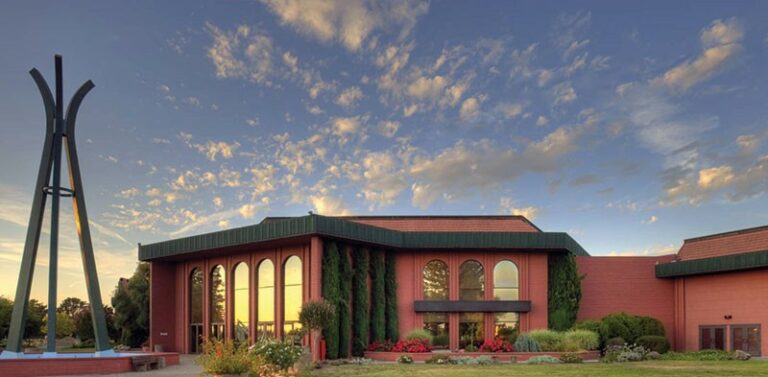
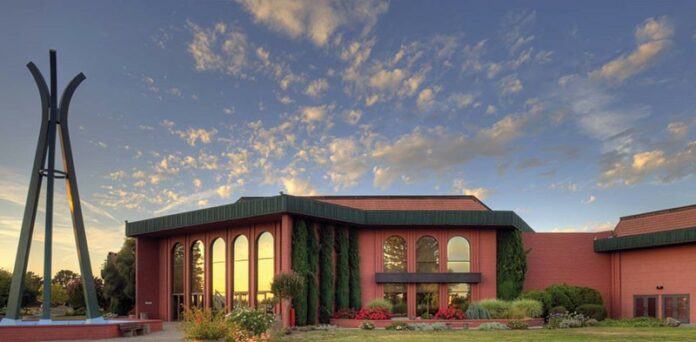
Author and television host Rick Steves boasts a bibliography that is 50 books strong, and also has several public television and radio projects, like Rick Steves’ Europe, that help bring his thoroughly researched guides into America’s homes. This week, Steves presents an illustrated lecture titled “Lessons from a Lifetime of Travel” that covers all the latest on stretching your travel dollar, avoiding crowds, packing smart and eating and sleeping well. Nov. 5, at Wells Fargo Center for the Arts, 50 Mark West Springs Road, Santa Rosa. 8pm. $29–$35. 707.546.3600. 

Nov. 6-8: New Docs in Stinson Beach

0


The Stinson Beach Doc Fest
returns for a second year. The opening night film, Meru, is a breathtaking adventure preceded by the Tastes of West Marin dinner and music event hosted by Jeff Castro and Michael Knowlton. Other docs on the schedule are Best of Enemies, about the 1968 debates between Gore Vidal and William F. Buckley, and Batkid Begins, chronicling the greatest Make-A-Wish event ever. Proceeds will benefit the community center. The Doc Fest screens from Friday to Sunday, Nov. 6–8, at the Stinson Beach Community Center, 32 Belvedere Ave., Stinson Beach. $6–$8 and up. stinsondocfest.org. 

Nov. 7: Deep Ties in Napa

0

Born in Los Angeles, conceptual artist Robert Kinmont has spent 30 years making the town of Sonoma his home and a lifetime exploring his connections to the land around him. He stepped away at the height of his popularity to study Buddhism and work as a carpenter for three decades. Reemerging artistically in 2005, Kinmont gets his first Bay Area solo exhibition this month, featuring both his early and recent works. “Robert Kinmont: Trying to Understand Where I Grew Up” runs through January and with an opening reception on Saturday, Nov. 7, at di Rosa, 5200 Sonoma Hwy., Napa. 4pm. Free. 707.226.5991. 

Nov. 11: Rise Up in Petaluma

0

Asheville, N.C.–based sisters Leah Song and Chloe Smith lead Rising Appalachia. The sisters mark a new chapter on their latest album. Wider Circles is a genre-bending collection of funky grooves and vocal harmonies that lights the fires emotionally and kicks the tires musically. The troupe is traversing the states as part of their current tour, which also aims to aid the Prison Yoga Project, a nonprofit organization who works to bring yoga and mindfulness to American prisons. Nov. 11, at the Mystic Theatre, 23 Petaluma Blvd. N., Petaluma. 8:30pm. $19–$23. 707.765.2121.

Debriefer: November 4, 2015

0

OPEN AT LAST

After much delay as Sonoma West Medical Center struggled to get its pharmaceutical software up to snuff, the former Palm Drive Hospital was rechristened with a ribbon cutting Oct. 30 at 9am.

The Sebastopol hospital was open for business an hour after the ceremony, and exactly three days later, spokeswoman Jane Rogan says, “We have seen 52 patients in the emergency department, including children. There are five patients currently admitted to the hospital for overnight observation and treatment.”

CHAPPED

Last week, Santa Rosa launched a pilot registration program to streamline the process for property owners who want to help the homeless in winter—and lost the support of one of the providers of those services in the process.

The City Council approved the Community Homeless Assistance Pilot Program (CHAPP), which compels property owners to register with the city if they “use their properties or facilities for safe parking, the placement of portable toilets and temporary shelter during the winter months,” according to a statement. The registration program was initiated Nov. 3 and runs through the end of March.

Adrienne Lauby, a Santa Rosa homeless-services advocate explains that the effort “basically chases behind two programs that sprung up as partnerships between concerned citizens and a couple of service providers.”

Those providers are Safe Parking, run by Catholic Charities, and Nomadic Shelter, run by the Redwood Gospel Mission.

The latter organization opposed CHAPP because of the requirement that it register with the city, but its pastor has since approached civic leaders about a meeting. “Redwood Gospel Mission spoke against the program last week at council and has assured us that they will not be participating in the program,” says Kelli Kuykendall, a program specialist with the city’s department of Housing and Community Services. “Hopefully, we can find a way to work together on some level.”

Lauby remains unconvinced that the reporting requirement—and a push from the city to allay NIMBY concerns as they arise—will coax forth additional property owners. “Unless the publicity about the need for registration happens to inspire more organizations to step up,” she says, “it will not give one homeless person a safer place to sleep this winter.”

The city stresses that the program is designed to cut red tape for potential and existing service providers. Kuykendall says the city has been hearing from property owners since the council vote, and is “in the process of identifying potential churches or properties interested in or already providing these services.”

‘NO WRONGDOING’

The lawyer hired by Rohnert Park city officials to investigate a July encounter between police officer David Rodriguez and citizen Donald McComas found no wrongdoing on Rodriguez’ part, according to an Oct. 28 report not released to the public.

The encounter generated controversy after McComas posted a video of the incident on YouTube. In the encounter, Rodriguez unholsters his weapon and asks McComas if he is a “Constitutionalist crazy guy.”

Check out the Fishing Report blog for more on this story at Bohemian.com.—Tom Gogola

Letters to the Editor: November 3, 2015

Firestorm

I have no idea where you got your facts (“Into the Breach,” Oct. 28), but being a community member for my whole 31 year of life and being a graduate from Calistoga High School, I worked my ass off helping the community for the whole week these evacuees had nothing. I had them shower at my house and do laundry. I volunteered on top of my 60-hour work week. I was there the first night of the tragedy and was up until 4am guiding traffic and assisting. Yes, the first night Red Cross was there. But let me tell you, the next morning it was the community that took over, not Red Cross or CVNL. This is appalling to read and you need to get the facts straight before you publish. Shame on you.

Via Bohemian.com

The nonprofits mentioned in this story were not the only ones who helped during the Valley Fire. It’s clear local volunteers like you played a critical role, as indicated in this sentence: “Within hours of the outbreak of the fire, local volunteers stepped up to help.” This was a story about the role nonprofits played in the fire, and I don’t believe it takes away from your efforts.—The Editor

Thank you for the article on the efforts by nonprofits during the Valley Fire. However, your article left out the community of Calistoga and how we came together to aid our neighbors. Please check out our Facebook page: www.facebook.com/VFVCALISTOGA.

Yes, CVNL came to assist, but our group was already in place. It’s not fair for them to take all the credit. Seven staff members from CVNL were there. Valley Fire voluteers had 200 people on a daily basis. We got organized because there was a need. We almost got closed by the Red Cross, and I fought to stay open. We saw rain coming, and we put up huge tents to cover donations.

Last Sunday, we distributed about a hundred pairs of new shoes to youth and kids affected by the fire. We have hundreds left and we’re going back.

Calistoga

Self-Interest

The Bohemian ran a story suggesting that Donald Trump’s opposition to illegal immigration was based on hate (“Trump Up the Volume,” Oct, 7). Trump does not oppose legal immigration. There have also been cartoons suggesting that all opposition to immigration arises from hate. Hate is irrelevant. Opposition to immigration arises from self-interest and resentment of the inequity of newcomers taking advantage of the educational, transportation, parks, welfare state, water systems and other infrastructure without having first paid for building them. Those societal benefits were bought and paid for by taxes paid by existing citizens and their ancestors.

Opposition to immigration arises from self-interest. Immigration accounts for almost all population growth in California. There is a housing shortage, a water shortage, a shortage of transportation facilities, a shortage of open space, a shortage of admissions at the University of California and even a shortage of clean air. Immigration makes all of these problems worse. It is disingenuous to say that opposition to immigration arises from hate or any other emotion. It is entirely rational.

Rohnert Park

Write to us at le*****@******an.com.

Going Native

0

When the first English colonists landed in North America, they found the place lousy with white grapes. Being English, they no doubt preferred a nice red claret. The first order of business, however, was addressing the marked deficit of white European children in the place. They addressed this with the birth of one Virginia Dare in 1587.

The rest of the story of the first English colony in the New World is one of total failure and mystery. Suffice it to say, things didn’t turn out well for America’s first white prom queen, but the future nation’s nascent wine industry came out all the better when a red version of the Scuppernong grape sprang from the ground where Virginia Dare—spoiler alert!—bled to death, shot with arrows, while in the form of a white doe (it’s complicated), by rivals.

Or did the grapevine grow from an enchanted spring? At the Virginia Dare Winery tasting room in Geyserville, employees are in a kerfuffle: everyone seems to have heard a different version of the legend.

Having brought the historic Inglenook brand back from the bottom shelf, director Francis Ford Coppola turned his singular vision to the East Coast in relaunching this long-defunct brand. Founded in 1835, the winery moved to California after Prohibition, and was advertised with the memorable jingle, “Say it again, Virginia Dare.”

The tasting room has the same modest footprint as it did in its former life as Geyser Peak. In the retail area, the emphasis is on Native American artifacts and history. Tasting-room lore has it that when the cowhide pin map of U.S. tribes went up, the detail-obsessed director pulled up a chair and contemplated for a long while, periodically asking staff: “What do you think people will ask about this, or this?”

In advance of unveiling Virginia Dare this September, Coppola released four “teaser” wines: White Doe ($18), a Chenin Blanc blend; Two Arrowheads ($23), a successful marriage of Viognier and Roussanne; Lost Colony ($23), a red blend; and Manteo ($22), a plush, juicy blend of Dry Creek Valley reds. A barrel sample of 2014 Virginia Dare Pinot Noir, which will be released in bottle this November, shows spicy oak over orange peel, milk chocolate and likable cherry-raspberry flavors.

The 400-year-old fate of Virginia Dare may remain a riddle wrapped in a mystery carved on a tree, but a one-year-old mystery has been solved.

22281 Chianti Road, Geyserville. Open daily, 11am–4pm. Tasting fee, $10. 707.735.3500.

Action Figure

Daedalus Howell’s novel Quantum Deadline:
The Lumaville Labyrinth
is hard to categorize. Let’s call it a noirish, sci-fi-lite detective story with a heap of self-parody that’s by turns poignant, witty and comic. It’s set in an alternate version of Petaluma. The novel features a character named Daedalus Howell as a sad-sack journalist in a cheap suit/superhero costume trying to navigate life in the digital age and a darker vision of Petaluma called Lumaville. In addition to sharp writing, the book’s take on the state of journalism and Petaluma’s reinvention is one of its strengths.

“Petaluma is going through a radical transformation,” says Howell. “It’s having its moment. It’s transforming into a Xanadu for a certain kind of post-metropolitan creative professional. Which makes it ripe for parody.”

With humor and verve, the novel takes up some of the experiences and struggles within Howell’s personal and professional life. He says he likes to explore “the liminal space between truth and fact” as it relates to himself.

“I was able to explore the worst parts of myself and expunge them,” he says of the novel. “I’m already a bit absurd, so I just thought I’d embrace it.”

Howell is currently writing a sequel, but for now enjoy this excerpt from the first chapter of Quantum Deadline. If you want more Howell, and I bet you will, he will read from his book on Nov. 20 at 7pm at Outer Planes Comics and Games, 519 Mendocino Ave., Santa Rosa.
Stett Holbrook

[page]

Early in my career, I was a green reporter who wrote purple prose that read like yellow journalism. But they printed the paper in black and white so no one ever noticed.

Now I was just a hack, one who needed a story and needed it bad. The problem, as always, is that I’m not the type to make my own breaks. I’m not inclined to write a bogus memoir, say, or parade as a pillhead or claim to be the last, lone believer in my generation. I’m also not opportunistic enough to know a good thing when I’ve got it, so whatever it is, it won’t make it into print—or pixels—let alone a bestseller list. Even if it did, the editors wouldn’t believe it. Such is the hazard of being in the truth business, not the fact business.

Forgive me. I buried the lede . . .

You see, back in J-School, in the ’90s, my future colleagues and I knew nothing of the then-nascent Internet and the havoc it would wreak on our prospective industry. Now there’s an entire generation that has never read a printed newspaper. And they’re the ones running the papers. Or what’s left of them.

This is how I found myself on the lifestyle beat for a startup that required endless filing of snark and crap that met certain considerations of “keyword density” and adhered to the house style of punchy prose that was neither punchy nor prose by any definition of contemporary letters. IMHO. For the past five years, the work had been winnowed, watered and weighed down in equal measure. For the past five years, I’ve been in psychic exile. For the past five years, I’ve been leaning on a pseudonym to make the rent because . . .

I also buried an intern.

This is the truth. When you fail to talk your newsroom intern out of jumping off the Golden Gate Bridge, prepare yourself for the following: Your intern will be dead, your career will be over and your newspaper will fold. And not into a paper hat.

That’s really how I became a small town newspaperman without a town or a newspaper. I’m sure some even questioned whether I had the moral ground to call myself a man.

With some modest triangulating on Google, it could be known that I was the writer whose words—my stock and trade—had utterly failed to talk a young man out of taking two steps back onto the bridge’s pedestrian walkway and into the rest of his young life.

“Is it going to get better, the newspaper, life, all of this?” he spat against the wind as it whipped his hair against his 21-year-old forehead.

“No. It’s only going to get worse.”

“Then why do we do it?” he asked.

I didn’t have an answer. Or, I did, but it wasn’t the right answer. He shifted his grip and the sweat from his palms darkened the rust-hue of the girder. I improvised.

“Deadlines . . . ?”

This much is certain: It was not the answer he was seeking. He let go and in one glib moment, with no foresight and no hindsight of which to speak, changed both of our lives forever.

There’s more, but we’ll get to that. What’s germane is from that moment hence I’d been searching for a story—a new story that would make my past and failures a footnote to the shiny future I’d lost, that my intern lost, that everyone lost. Really, my new story needed to be an old story: a redemption tale, as they say in Hollywood; one with enough truth and triumph to clear my byline so that, among other advantages, I might use it again.

I found the story. Or, I could get cute and say the story found me. Apparently, that’s an antimetabole. Some day I might look it up to prove it. In the meantime (not to fracture the fourth wall into constituent fractals of meaning) the story begins, as these things do, in a mirror.

There’s a kind of guy who can wear a cheap suit well and I like to pretend I’m him. Frankly, I had no choice, especially after I burned a cigarette hole through my last good blazer and I have an image to maintain. I am among the last of a dying breed of lifestyle reporters, feature writers who, as one neckbearded editor put it, “grok the grub and grog,” which always sounded to me like the sounds of someone being strangled. But it’s a living. Or was. Hence, my pitstop at Gemelli Bros.

The discount suitery was owned by a pair of oily identical twins squeezed into double-breasted suits who called themselves Tweedle Deep and Tweedle Dump in their local television ads. Tweedle Deep, I think, was marking up my new coat with chalk when it happened.

“You like a little room in the chestal area?” he asked, tugging at the coat’s hem. I stood still in the three-way mirror like a human mannequin if they made them in my size, 44 long, wide in the shoulders, taller than most, which made the gut passable if I never exhaled.

“I’ve gotta fit a reporter’s notebook in my left breast pocket,” I said. “And a pen.”

The man grunted and swiftly drew an X over my heart.

“I never met a newspaperman before,” he said. He was being facetious, as if “newspaperman” was what a paperboy grew up to be.

[page]

The phone rang and the man trundled off through the maze of suits crowded on their racks like delicatessen salamis.

In the mirror, I was surprised at how relatively good I looked despite the night before. I outstretched my arms and the black coat opened crisply like an umbrella. I surmised from the inexpensive blend of polymers that the coat was waterproof.

The fat clothier brayed into the phone. His tone was heated. I entertained myself by maneuvering the hinged mirrors, flanking the one in the middle so that my reflection went from triplicate to infinite. This is how I used to kill time when my mother dragged me to department stores when I was a kid. For that matter, it’s how I kept from losing my mind when my ex took me on forced marches through the junior’s department whose trendy tops and shrinking bottoms she could still pull off in her thirties.

I began to entomb myself in the mirrors, creating hundreds of images of myself—rumpled, debauched but serviceably handsome to a certain type of woman. One whose standards have been systematically lowered by being born Gen X and coming of age under the sign of Slack.

An intruder entered my chamber of narcissism. A small quizzical face beamed back at me through the corner of the left mirror. It was a boy of about eleven with dark hair and a tailored blue suit with a badge on the pocket.

He shook his head. I straightened, reflexively, as if he’d caught me picking my nose. I turned from my personal Escher print and spied him standing outside the store window staring at me like I was a ghost or he was a ghost or . . . I couldn’t take it.

I flipped him off.

I expected the kid to do the same back at me. Instead he shouted, “Down!” At least that’s what it looked like he said. I couldn’t hear him through the window. Besides, it sounded like a walnut had just been cracked upside my head. The mirror behind me shattered.

“You fuggin’ asshole!” boomed through the coat shop, punctuated with another shot. This one sounded like a fist deep in a down pillow.

I was on the floor, belly down, atop saber-length shards of broken mirror. My knees had buckled autonomically. Was I shot? I rolled behind a rack and patted myself down. Not even a scratch from the glass. I looked up and saw my tailor clutching his gut.

“She’s my wife!” the shooter said. His tone was one of defeat.

Tweedle Dump kept the gun trained on his twin brother. Two thoughts crossed my mind simultaneously: (a) They should have incorporated some of this sibling rivalry shit into their TV commercials, and (b) Where was the kid? I belly-crawled to the coat rack as another shot rang through the shop. Tweedle Deep wheezed, “Fuck you too.” I peeked through the size 34 slacks. He had a small pistol weighing in his pudgy hand. He dropped to his knees as his porcine twin glowered back, his white shirt now a rising tide of blood and bile.

“That’s not going to come out,” Tweedle Dump observed before also falling to his knees, his bulk jiggling like a massive water balloon. After a beat, both Gemelli twins collapsed onto the beige berber carpet in a puddle of oily, brown blood.

A store clerk with pasted-down hair wandered into the front door and calmly observed dead orcas draining on the floor. He called 911, but not before calling his girlfriend to tell her to stay in bed, because he was taking the day off. He looked at me and shook his head. “It was going to happen sooner or later. Lucky you didn’t get hit. Them brothers was as blind as shit.”

“I’m fine,” I said as I unfolded back onto my feet. “There was a kid in the window, you see him?”

“I didn’t see a kid. If he was here, he was gone when I got here. If he’s a neighborhood kid this ain’t nothing he hasn’t seen before. Had the good sense to run,” he said matter-of-factly. “Probably home doing instant replays on his video game machine.”

When the police arrived, they cordoned off the crime scene with yellow tape until it looked like a cat’s cradle. They took pictures and proceeded to fill paper cups with coffee from a large press pot.

“That press pot is the most important part of our forensics kit,” explained Detective Shane. She was black, rounder than perhaps she cared to be and appeared young for her rank, which is to say, younger than me. “You put shit in it?”

I looked at her blankly and she handed me a cup of black coffee.

“So, you say there was a kid? Did he witness the shooting too?”

“I’m not sure. It all . . .”

“Happened so fast. I know. Bullets are like that. Well, we put a car out looking for him and no one’s turned up. Should be in school anyway,” she said.

I nodded and sipped the coffee. The detective watched me sip.

“It’s good, isn’t it?” she said proudly. Our department has the best coffee in the East Bay.

“What’s your secret?”

“We give a fuck. That’s all. You just gotta give a fuck.” She folded up her notebook. “Listen, I’ve got your statement. You’re not a suspect, the security cameras confirm that. I might need you to come down to the station later for more details, especially if the kid turns up, but otherwise, you’re free to go.”

“Does it matter that I’m a member of the media?” I asked for no good reason. Maybe I wanted to seem in the game—that I wasn’t just a civilian. Shane gave me a once-over.

“In that jacket?” she quipped, then caught herself reflected in my eyes. “It’s really that bad for you guys, isn’t it?”

I nodded, “Just me.” But I knew my luck was beginning to turn and that kid who should’ve been in school was part of it.

Busted Again

0

It was a very busy couple of mid-September days for Sonoma County law enforcement as they embarked on a cannabis crackdown in the waning weeks of the harvest season.

The two-day seizure operation grabbed above-the-fold territory in the Sept. 17 Press Democrat, which led with news of two raids in Santa Rosa—there were at least a half-dozen spread across the county Sept. 15–16. The storyline was familiar, with the ritual photo of plants getting chopped down by men in uniform. On Sept. 16, sheriffs told the PD they confiscated two assault rifles, two other guns and lots of cash, along with hundreds of plants, and noted that there were no medical referrals to be found at a Santa Rosa grow site.

That same morning, a different scenario at a Forestville location got no local media attention. Sonoma County sheriff’s deputies had mustered at a medical-cannabis grow site. Children cowered as deputies forced suspects into a storage container for hours while an armored personnel carrier stormed the site. No weapons were found, but hundreds of plants were destroyed. As a result, up to 52 AIDS patients no longer had the medical cannabis provided to them by cultivator James Joseph Munson.

Those same officers found and confiscated dozens of up-to-date medical recommendations from the veteran Mendocino grower known as “Oaky Joey,” who greeted deputies with an angry expletive that morning.

It was Munson’s first arrest in Sonoma County since moving
to a tract of hillside land he rents behind the Forestville Firewood Products business off Highway 116 four years ago. He says he provides his cannabis at no cost to AIDS and glaucoma patients in San Francisco and the greater North Coast—and has famously beaten the rap before.

“The police are supposed to be doing compliance checks; instead they are doing smash-and-grab,” Munson fumes. “They had the SWAT team, the sheriff’s deputies, the investigators. It was complete overkill, and there was no compliance check. You know, I’ve got a sign right on the door: I got no guns. I’ve never had a gun, ever. I’ve got little kids running around, and I’m growing pot. The only time there are criminals or guns here is when the cops show up. We don’t associate with criminals; we associate with people who are sick.”

The officers also detained or handcuffed everyone else on the grounds of the firewood business that morning—about a dozen people.

The raids occurred just days after legislative leaders in Sacramento agreed on a trio of medical cannabis bills that aim to end 20 years of medical-cannabis confusion across this generally well-regulated state. Gov. Brown signed it, and now there’s a statewide licensing and compliance regime for medical cultivators, providers and users, effective Jan. 1, 2016.

Within this larger backdrop, the Munson bust amplifies recent comments from the Sonoma County Sheriff’s Office that indicate that the department will do whatever it can to keep the lid on cannabis—even in the face of a rapidly changing legal landscape.

Asked about the Munson arrest, Sheriff’s Office spokesperson
Sgt. Cecile Focha told the SF Weekly in late September, “Deputies continue to enforce all laws against marijuana in the same manner as prior to the passage of Proposition 215,” referring to the 1995 state law that established the right to access medical cannabis in California. Focha was unable to answer questions about the incident in time for the Bohemian‘s deadline.

There’s a federal ban that remains in effect, and the government has backed off going after cultivators in states that have passed medical cannabis laws. But when it suits law enforcement purposes—i.e., if anyone is growing more than a suggested federal trigger of 100 plants, or violates the patient-to-plant ratio—the county has not backed off.

It’s not so much “last licks” in the face of the new medical cannabis law and a broader legalization opportunity, says Munson. “I think most of the cops are just about stopping pot.”

Munson’s grow is on a hill where he lives with his wife and two school-age children. A few weeks after the seizure, there are still rows of plant stalks painted blue by the deputies in order to keep track of the plants they’d destroyed.

The day of the raid, Munson says, “They took five grand in cash, and they took all my [doctor’s] recommendations. . . . They had my kids, they are seven and 11 years old, and they put 10 people in a sea crate on my property.”

Munson is adamant that he was working within the law, murky though it may be. He was growing between 400 and 500 plants, he says, and had at least 50 up-to-date doctor recommendations. According to state law, he could have legally grown up to 1,500 plants; the police say he was growing 1,300 plants across two sites they raided that day.

“I’m supposed to be able to have 30 plants per patient. They said I had 14,000 pounds of pot. They must have weighed the trailers,” Munson adds with a laugh as he points to some heavy equipment on the property.

The officers, Munson says, charged him at the scene with four crimes: felony cultivation; operating a “drug house”; selling drugs from a drug house; and cultivation for sale.

But when Munson showed up for his arraignment days later, there was only one charge, which he disputes mightily—clear-cutting—and a request for a continuance from District Attorney Jill Ravitch’s office. Now he says he’s not sure if the county’s going to drop the whole thing before Nov. 16.

“I’ve been to this rodeo before,” Munson says, as he likes to say—and he’s tired of the rodeo.

He’s been arrested numerous times and beat four felony cultivation charges brought against him in the past decade, in Mendocino County. The only other time law enforcement took an interest in his Forestville site was when a kid who was working for him got lost trying to find cell-phone service a few years ago, wound up on the Bohemian Grove lands, and got popped.

“They’ve known I’ve been here for three years,” Munson says as he points to a tarp with bright-orange lettering for police helicopters to see: “50 RX’S.”

Near and around the tarp are planters with new cannabis plants sprouting out of them.

“We’re recovering,” Munson says with an emphatic sigh.

To the Nines

0

The Michelin Guide handed out or kept in place stars for top restaurants like the French Laundry and Meadowood last month. Napa’s Ninebark wasn’t on the list because it’s too new, but I expect chef Matthew Lightner hopes to pull down a pentagram or two for the three-week-old restaurant after Michelin inspectors come calling next year.

Lightner already earned two stars for his work at Atera in New York City. He first came to national attention at Castagna in Portland, Ore. Now he’s teamed up with fine-dining heavyweights AvroKO at Ninebark.

Ninebark is located in a three-story building on Main Street that’s infamous for a 1974 murder that went unsolved for nearly four decades. The former establishment, Fagiani’s Cocktail Lounge, had been closed since the crime until Ninebark opened. Each level of the new restaurant has a different identity: rooftop lounge, bar and restaurant.

Lightner is fond of grilling with a creative use of smoke and dried ingredients. Look for an a la carte menu and dishes like charcoal-roasted duck, poached and grilled halibut, fresh and dried nasturtium in a broth of stewed vegetables, and skewered trout cooked over cedar branches.

Nov. 5: Tip Top Traveling in Santa Rosa

Author and television host Rick Steves boasts a bibliography that is 50 books strong, and also has several public television and radio projects, like Rick Steves’ Europe, that help bring his thoroughly researched guides into America’s homes. This week, Steves presents an illustrated lecture titled “Lessons from a Lifetime of Travel” that covers all the latest on stretching...

Nov. 6-8: New Docs in Stinson Beach

The Stinson Beach Doc Fest returns for a second year. The opening night film, Meru, is a breathtaking adventure preceded by the Tastes of West Marin dinner and music event hosted by Jeff Castro and Michael Knowlton. Other docs on the schedule are Best of Enemies, about the 1968 debates between Gore Vidal and William F. Buckley, and Batkid...

Nov. 7: Deep Ties in Napa

Born in Los Angeles, conceptual artist Robert Kinmont has spent 30 years making the town of Sonoma his home and a lifetime exploring his connections to the land around him. He stepped away at the height of his popularity to study Buddhism and work as a carpenter for three decades. Reemerging artistically in 2005, Kinmont gets his first Bay...

Nov. 11: Rise Up in Petaluma

Asheville, N.C.–based sisters Leah Song and Chloe Smith lead Rising Appalachia. The sisters mark a new chapter on their latest album. Wider Circles is a genre-bending collection of funky grooves and vocal harmonies that lights the fires emotionally and kicks the tires musically. The troupe is traversing the states as part of their current tour, which also aims to...

Debriefer: November 4, 2015

OPEN AT LAST After much delay as Sonoma West Medical Center struggled to get its pharmaceutical software up to snuff, the former Palm Drive Hospital was rechristened with a ribbon cutting Oct. 30 at 9am. The Sebastopol hospital was open for business an hour after the ceremony, and exactly three days later, spokeswoman Jane Rogan says, "We have seen 52 patients...

Letters to the Editor: November 3, 2015

Firestorm I have no idea where you got your facts ("Into the Breach," Oct. 28), but being a community member for my whole 31 year of life and being a graduate from Calistoga High School, I worked my ass off helping the community for the whole week these evacuees had nothing. I had them shower at my house and do...

Going Native

When the first English colonists landed in North America, they found the place lousy with white grapes. Being English, they no doubt preferred a nice red claret. The first order of business, however, was addressing the marked deficit of white European children in the place. They addressed this with the birth of one Virginia Dare in 1587. The rest of...

Action Figure

Daedalus Howell's novel Quantum Deadline: The Lumaville Labyrinth is hard to categorize. Let's call it a noirish, sci-fi-lite detective story with a heap of self-parody that's by turns poignant, witty and comic. It's set in an alternate version of Petaluma. The novel features a character named Daedalus Howell as a sad-sack journalist in a cheap suit/superhero costume trying to...

Busted Again

It was a very busy couple of mid-September days for Sonoma County law enforcement as they embarked on a cannabis crackdown in the waning weeks of the harvest season. The two-day seizure operation grabbed above-the-fold territory in the Sept. 17 Press Democrat, which led with news of two raids in Santa Rosa—there were at least a half-dozen spread across the...

To the Nines

The Michelin Guide handed out or kept in place stars for top restaurants like the French Laundry and Meadowood last month. Napa's Ninebark wasn't on the list because it's too new, but I expect chef Matthew Lightner hopes to pull down a pentagram or two for the three-week-old restaurant after Michelin inspectors come calling next year. Lightner already earned two...
11,084FansLike
4,606FollowersFollow
6,928FollowersFollow