California Roots Music & Art Fest to Plant 800 Redwoods

CA_ROOTS_FINAL_ANNOUNCEMENT_2016_NO_BANDS-1Hosting tens of thousands of music and art lovers in Monterey for the last seven years, the California Roots Music & Arts Festival has grown to become one of the most popular fests in the state. Now, Cali Roots is giving back, partnering with the Redwood Forest Foundation to introduce 400 limited Redwood Passes for next year’s festival. Two redwoods will be planted for each Redwood Pass, resulting in a total of 800 new redwood trees.
“The Cali Roots movement is about developing and sustaining our community and that involves protecting our environment,” says festival co-founder Dan Sheehan in a statement released this month.
In addition to ongoing composting and recycling efforts the festival makes every year, the new program aims to help further reduce carbon emissions through the planting of these trees. California’s redwood forests are the biggest source of natural carbon removal in the state.
The Eighth Annual California Roots Festival will take place at the Monterey County Fair and Event Center, memorial day weekend 2017. Cali Roots will begin artist announcements for the 2017 festival in October.

Aug. 13: Show Off in Santa Rosa

0

Since photography was invented in the 1800s, one of the most popular subjects has been the female figure. This month, a broad range of provocative, humorous and surreal images are displayed in the new art show, ‘Exposure: The Female Nude in Photography.’ Pulled from a private collection, the images span the late 19th century to today, and many have never been seen publicly. The exhibit also features some of the most prominent names in photography, including the pioneering Imogen Cunningham and the controversial Robert Mapplethorpe. Live music and refreshments accompany the photos when “Exposure” opens with a reception on Saturday, Aug. 13, at the Art Museum of Sonoma County, 425 Seventh St., Santa Rosa. 6pm. $15. 707.579.1500.

Aug. 13 & 16: Comedy Culture in Kenwood & Mill Valley

0

Formed by two Bay Area–based comedians Samson Koletkar and Abhay Nadkarni, the Desi Comedy Festival returns for another round of shows performed by dozens of comics who trace their ethnicities back to the diverse communities of South Asia, including Pakistan, Afghanistan, Nepal, Sri Lanka and India. Desi (pronounced “they see”) refers to the culture of South Asia and India’s subcontinent, and the shows boast comedians who can hilariously talk about their personal experiences and the ever-changing Zeitgeist of the region. This week, Crushers of Comedy host the Desi Festival on Saturday, Aug. 13, at Muscardini Cellars, 9380 Sonoma Hwy., Kenwood. 7pm. $20–$40. The comedy also happens on Tuesday, Aug. 16, at Throckmorton Theatre, 142 Throckmorton Ave., Mill Valley. 8pm. $20–$40. desicomedyfest.com.

Aug. 14: Stay Wild in St. Helena

0

The 2015 documentary The Breach is a fascinating look into the perils facing wild Alaskan salmon, once an abundant species that suffered from overfishing in the mid-20th century and is now under federal management. Filmmaker Mark Titus explores the history and still-tenuous relationship between salmon and human beings. This weekend, Titus appears in person to present the film for the inaugural Wild Perspectives event in Napa Valley. After the screening, Titus leads a discussion, followed by a salmon soiree, featuring fine wine, craft beer and salmon prepared by specialty purveyor La Saison. The Breach screens on Sunday, Aug. 14, at Cameo Cinemas, 1340 Main St., St. Helena. 2:30pm. $100. 707.963.9779.

Aug. 15: Spanish for Punk in Santa Rosa

0

Debuting last April, Sonoma County punk rock promoter Shock City, USA excels at ushering in nationally and internationally touring bands to Santa Rosa. This month, Shock City welcomes Barcelona post-punk band Belgrado, currently touring in support of their excellent new record, Obraz. Belgrado combines vintage bass and drum riffs, à la Joy Division, with the ethereal vocals of lead singer Patrycja Proniewska for a cool sound that’s straight out of 1979. Supporting Belgrado is Chain of Flowers, hailing from the U.K. and boasting densely packed punk and sublime shoegaze songwriting. Oakland’s melodic punks Silent Era and Sonoma County rockers Service fill out the bill on Monday, Aug. 15, at the Beach Warehouse, Santa Rosa. 7pm. $10. Email sh**********@***il.com for address.

Stoner City, USA

Where do people like to smoke pot the most? Thanks to government statistics, we have an answer.

In a new report based on data from the National Survey on Drug Use and Health, the number crunchers at the Substance Abuse and Mental Health Services Administration have disaggregated the marijuana-use data, providing a means of getting down to pot-smoking frequency at the local level.

Researchers found that 7.73 percent of Americans age 12 and older reported using marijuana at least once a month. Similar reports based on the data have allowed us to determine the top 10 marijuana-using states, but this time around researchers divided each state into a number of “sub-state” areas.

The sub-state regions include some that have high marijuana-use levels but no cities to speak of. They don’t make the list, but places like these deserve honorable mention: Alaska’s North Coast (14.93 percent), Northern California (13.97 percent), southeastern Maine (13.29 percent) and northern New Hampshire (12.40 percent).

The top pot-smoking cities are hitting the bong at a rate at or near twice the national average:

San Francisco, 15.46 percent
A half-century ago, the city was a hotbed of hippies. Now, it’s a high-tech haven, but they still like to burn the weed in Babylon by the Bay.

Denver, 14.84 percent The Mile High City certainly lives up to its reputation as it basks in the glow of legalized weed and enjoys the benefits of marijuana tourism.

Seattle, 14.31 percent Another high-use city in another legalization state.

Burlington, Vt., 13.87 percent With the highest percentage of tokers east of the Mississippi, this sleepy progressive town has something going for it other than Bernie Sanders.

Portland, Ore., 13.32 percent The City of Roses is developing a reputation as a city that has a real yen for another kind of flower.

Boston, 13.12 percent Bostonians are toking up like they’ve already legalized cannabis, but that won’t happen until November.

Providence, 12.77 percent Rhode Islanders like to toke up, too. In fact, usage rates are even higher outside Providence proper.

Anchorage, 12.37 percent The Alaska Supreme Court legalized possession in 1979, but prohibitionists managed to undo that a few years later. The wheel has turned again as the state ended prohibition in 2014, and Alaskans are taking full advantage.

Olympia, Wash., 12.01 percent It’s just down the I-5 corridor from Seattle, and the pot-friendliness of the state’s largest city extends to the state capital.

Albuquerque, 12 percent You see why they call New Mexico the Land of Enchantment.

Phillip Smith is editor of the Alternet Drug Reporter and author of ‘The Drug War Chronicle’

Grapes to Gravs

0

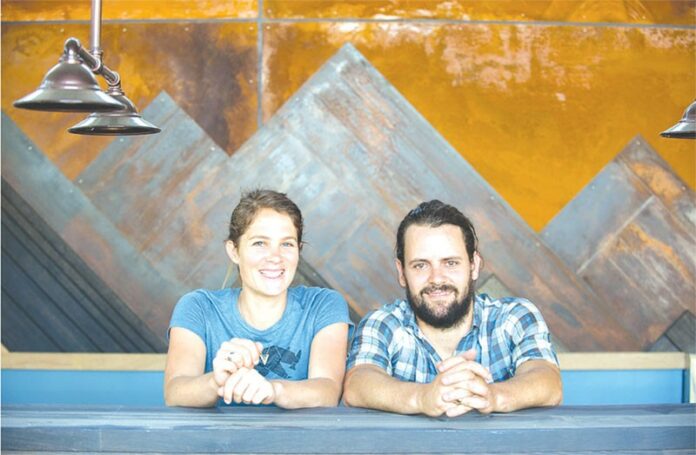
Don’t blame winemakers Chris Condos and Suzanne Hagins for bringing yet more Pinot Noir to Sebastopol’s historic apple country. Just relax under the apple trees at their new tasting room on Gravenstein Highway, and have a long, cold pour of their heirloom . . . apple cider.

The husband-and-wife team behind Horse & Plow Winery got into the cider business by happenstance, according to Hagins. For one thing, from the outset they committed to only buying grapes from certified organic properties, and those tend to support a diversity of crops, including apples. Then one year there was a bumper crop of apples at their son’s school down the road. The cider they made from those apples was a success, and they decided to go for it, commercially.

Horse & Plow ciders and several wines are poured on tap in their “tasting barn,” a rustically styled building that fits right into the weathered promenade of old Gravenstein Highway apple sheds, but is new construction, with recycled wood accents from a barn that occupied the same footprint on this lot.

I wrote about Hagins for Swirl back in 2009, when she was making Lutea Pinot Noir. Now the Pinot program is folded in under “The Gardener” label of Horse & Plow. For all the critical attention they’ve received for Horse & Plow, the couple hasn’t yet made it their only job (Condos runs the 40,000-case Vinum Cellars in Napa), but their young son has. He’ll try to sell you a $3 squash from a “farm stand” he set up on an antique wagon in front of the tasting room.

On a recent weekday, two young women from a local business were overjoyed to unwind after work with a glass of fresh and fruity Beaujolais-style 2015 Carignane ($8 glass), while a dude who favors the bolder reds found the inky purple 2013 Old Vine Petite Sirah ($9 glass, $28 bottle) more his speed. Bright and spicy, the 2013 Horse & Plow Redwood Valley Grenache ($28) has hints of bay leaf and black olive, while the top Gardener barrel selection, the 2014 Russian River Valley Pinot Noir ($45), is as brooding as a blueberry cobbler could be.

The 2015 Hops & Honey Cider ($4 glass, $22 growler, $12 refill) is bottle- and keg-conditioned, meaning that a secondary fermentation produces the bubbles, not a CO2 injection. Only a little bit on the tastefully funky side, the Farmhouse Cider ($12) is Gravenstein-heavy, but also contains heirloom cider varieties. Don’t pass this one up.

1272 Gravenstein Hwy. N., Sebastopol. Open Thursday–Monday, 11am–5pm. Tasting fee, $15; by the glass, $4–$10. 707.827.3486.

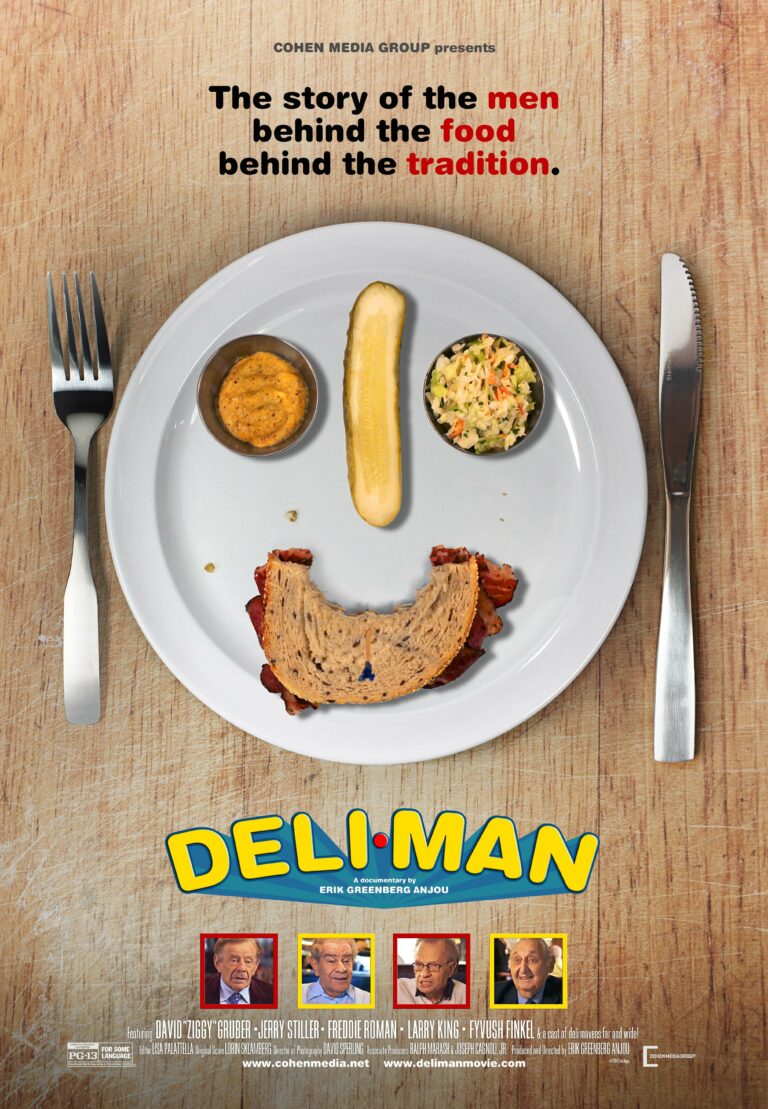
The Perfect BLT

0

Like many all-American classics, a good BLT is more than meets the eye.

The seemingly simple combination of bacon, lettuce and tomato can range from the sublime to the deeply disappointing. For Duskie Estes and John Stewart, the partners behind Zazu Kitchen + Farm, the perfect flavors aren’t the issue; it’s the logistics that make the road to the ideal BLT somewhat rocky.

As longtime BLT fans, the chefs took three summers to perfect their summer BLT pop-up. “We’re known for our bacon,” says Estes, “and the best expression of it is in a BLT.”

Year one found them in a shed in Healdsburg on the property of Davis Family Vineyards, which also happens to be one of Zazu’s three farm sites. The pop-up, then named Zazu on the River, sold BLTs and poured wines, and was generally deemed a success. Year two, the pop-up relocated to the bocce court on the property and into a food truck, which broke down and had to be replaced. This year, equipped with a freshly built, fully functioning truck, the pop-up’s third reincarnation, Black Piglet, is back at Davis Family Vineyards.

“This time, it’s perfect,” gushes Estes. “The vineyard has a shaded deck, you’re the middle of the garden, you can have amazing wine and look at an amazing sculpture of a wine goddess.”

The 15-item menu matches up. There’s the flagship BLT with the option to pick the tomato on your own, a pulled-pork sandwich, a vegetarian grilled-cheese rapini sandwich, a bacon hot dog, pies by Zazu pastry chef Jenny Malicki, and on the weekends, bacon-glazed doughnuts, pork belly poutine and a fresh farm salad. Sorbet from the vineyard’s wines is also available.

The bacon, prepared in-house, is undoubtedly the star. The BLT often tempts creative young chefs to mess with its basic simplicity; Zazu’s is nothing but bread from Nightingale Breads in Forestville, Tabasco aioli, sliced tomato, either grown on the property or from Soda Rock Farms in Healdsburg, crunchy lettuce and bacon.

Explaining Zazu’s staunch lack of variation (there isn’t even a wedge of avocado in sight), Estes says, “We think it’s the best version. It’s less about what we did to it but more about taking the best ingredients and letting them do the talking.”

The bacon, according to Estes, is a whole different breed. “Our pigs are raised on pasture,” she says, “and the bacon is dry-cured, made with real applewood smoke, while most bacon is wet-cured and prepared on liquid smoke.” When it comes to the bacon’s crucial role in the BLT, “because it comes from a happy pig, you can really taste the balance of sweet and salty, and the awesome taste of pork. In a sandwich, it gives a very luscious mouthfeel, with a fat top layer.”

True to Zazu’s strict seasonality, the BLT pop-up is only operational in the summer, when tomatoes are in season, although the season could potentially start early if fried green tomatoes are being used. Despite its short lifespan, the future for Black Piglet seems rosy. In addition to the food truck’s summer location on the vineyard, Estes and Stewart are planning to use it for catering private and public events, from weddings to corporate gatherings. The Spanish clothing brand Zara treated all its regional staff to Black Piglet’s riches as part of an employee event at the Barlow, and a ticketed event is planned on Aug. 10 at Paradise Ridge Winery.

“We had to navigate a bunch of different health department regulations and to build the ideal truck, which took almost two years instead of half a year,” Estes says. “We’re trying to do a countback of how many BLTs we need to sell in order to cover the truck’s cost, and so far we have 3,485 more to go.”

Sounds like a pretty realistic goal.

Black Piglet at Davis Family Vineyards, 52 Front St,. Healdsburg. Open Friday–Sunday, 11:30am–3:30pm until Oct. 2.

Eyes Wide Open

The ongoing national debate over police, videotapes and transparency—and particularly body-cams and dash-cam videos—roosted in Sonoma County last month.

District Attorney Jill Ravitch attempted to restrict defense attorneys’ use of videos via a “protective order” that they would have to sign before being granted access to dash- or body-cam videos. In its initial iteration, which did not ultimately hold sway, defense attorneys would have been banned from using video from a criminal case as evidence in a civil case, and would have been compelled to return the videos to the district attorney once a case was adjudicated.

The ruling was met with stiff opposition from civil rights groups and local defense attorneys, and Ravitch ultimately backed down from the more onerous aspects of the protective-order policy and returned with a less restrictive ruling that nevertheless was viewed as an unnecessary and duplicative gesture that would handcuff lawyers’ ability to properly defend their clients. The order was scaled down to a requirement that neither defense nor prosecuting attorneys could release any video unless they gave a 15-day notice to all parties in a legal proceeding.

Ravitch says her office was just trying to anticipate the intersection where modern policing technology collides with rights of privacy—especially when videos capture persons who are not party to a crime. And yet defense lawyers argued that disclosure rules are already in place to deal with exactly those issues, especially in cases involving sex offenders.

Santa Rosa defense attorney Izaak Schwaiger has spent a lot of time and energy on police and corrections-guard transparency and accountability, and says that when Ravitch revealed the new policy, a fellow attorney congratulated Schwaiger for having it essentially named after him.

Schwaiger has made a mark in local accountability circles for his relentless investigation into instances of alleged misconduct by law enforcement, especially at the Sonoma lockup. Those efforts often begin when public defenders approach him about their clients with claims that they were subjected to excessive force. Recalling the controversy over the Ravitch ruling, Schwaiger notes that “it was interesting because I didn’t release a whole lot of videos.”

Once he’s contacted by the public defender, Schwaiger says, he contacts the police department, obtains the video and makes a determination about whether the officers’ treatment of the arrestee might be actionable.

His most high-profile case was a recent settlement with Sonoma County that involved a man being Tasered multiple times as officers tried to subdue him at the Main Adult Detention Facility. In-house video of that incident was recorded by Sonoma County corrections officials in order to show that the arrestee was highly intoxicated and unruly—a strategy that backfired when the county was forced to pay out $1.25 million in damages.

In recounting the debate over the Ravitch rule, Schwaiger recalls that many defense attorneys refused to sign off on it, along with attorneys in the office of public defender Kathleen Pozzi, a friend of Ravitch who was caught off-guard by the pushback from public defenders over the proposal.

The initial order said that attorneys granted access to the videos in a criminal proceeding could not use them to pursue civil actions against the police—and that the attorneys had to return the videos once a case had closed. That’s not typically how public records are treated. As noted, the rationale was to protect innocent people who might be filmed in those encounters, but Schwaiger scoffs at that notion. “It was specifically and problematically crafted to deter lawsuits against the police.”

The ongoing debate over public access to police body- and dash-cam videos can be viewed through the lens that sees a national tug-of-war over whether black lives or blue lives matter more. As numerous viral-video encounters have indicated over the past year, there’s a problem with the way some officers interact with communities of color.

And in this frustratingly binary construction around policing and accountability, there’s been a reaction from police departments around the country when it comes to limiting public access to body-cam and dash-cam videos, and aggressive posturing in legislatures focused on the rights of victims or their families, but which critics say are obvious attempts to shield the police from lawsuits by any means necessary.

In that sense, efforts to restrict public access to the videos seems to have taken a page from another ongoing national debate, over the right to access a voting booth, to the extent that restrictive voter-identification laws have been dismissed by one court after another in recent weeks as chasing after a problem that does not exist, or is otherwise dealt with in existing federal law.

To bring the analogy home, the California Public Records Act already includes exceptions and rules governing disclosure, says Jim Ewert, general counsel at the California Newspaper Publishers Association, which has lobbied vigorously against two such legislative efforts in Sacramento this year.

One bill, AB 2533, sought to grant police officers the right to sue to prevent newspapers or the general public from accessing dash- or body-cam videos. That bill died, says Ewert, in large measure because of pressure from newspapers around the state that editorialized against the bill, “and those stories helped legislators understand how much of a threat this bill was to the Public Records Act, that anyone who is subject to a request—in this case it was police officers—could sue to prevent the release” of videos that would ordinarily be a part of the disclosure process in legal proceedings.

The other body-cam video bill hits at a highly sensitive issue around videos that are taken when a police officer is killed in the line of duty, SB 2611. The Officer Down Memorial Page reports that four California law enforcement officers have died in the line of duty this year. Factor in the shootings of multiple police officers in Dallas and Baton Rouge this year, and it’s not hard to see why law enforcement agencies are keen on protecting their own. Yet Ewert notes that SB 2611 is not the answer, even as it works its way through the California Legislature.

“That’s on the Senate floor,” Ewert says, “and in some respects, 2611 poses an even greater threat to the Public Records Act than [AB 2533], because it absolutely prohibits the disclosure of any body-cam [information], whether audio or video, that shows an officer being killed in the line of duty, unless the officer’s family consents to its release.”

The bill may have a well-intentioned rationale of protecting a family from watching the horror of a loved one killed on the local news, but Ewert notes that it is “problematic for several reasons. First, it flat-out dismisses any public interest there might be in that footage. And more important—and even more dangerously—it hands the grieving family of the officer the veto power of the access to public records.

“And while it’s being spun as this mom-and-apple-pie bill that protects the families of slain officers, it really has the opposite effect. When you have incidents in communities, with the ubiquity of cameras, [the videos] are going to go absolutely viral, and the local agency will be totally unable to counter the notion that the officer was somehow at fault. Instead of protecting the family, the entire focus is going to be on that family.”

Ewert adds that the bill’s defenders—it was introduced by Silicon Valley Democrat Sen. Evan Low—have claimed that granting the veto power to the families of slain officers would “protect the families against having to see a video of their loved one over and over again. Of course, it will have the exact opposite effect.” And, as with Ravitch’s attempt to limit access to video in Sonoma County, there are already limits on what can and what can’t be released.

Ewert notes that “current law already protects the family in a manner that doesn’t shift the burden to them.” The California Public Records Act already enshrines a balancing-act methodology that would “probably favor nondisclosure most of the time.” But it also allows for the release of those videos if there is a demonstrated public interest in their release.

Ewert agrees with the general proposition that these efforts to limit disclosure can be seen as analogous to recent efforts to restrict voting rights on the spurious grounds of rampant voter fraud. “There is a broader energy at work here,” he notes. “Law enforcement agencies in California just have to control the flow of information about themselves.”

‘Night’ Talker

0

For committed Shakespearean actors, their job is almost always to remain focused, realistic and deeply, deeply serious.

But “in Twelfth Night,” says actor Michael J. Hume, “our job is just to have as much fun as possible, to establish a spirit of relaxed hysteria and to have a great time. And we are. The spirit of fun, mirth and misrule are definitely there. We’re having a ball. I adore this play.”

Hume, a 24-year veteran of the annual Oregon Shakespeare Festival (OSF) in Ashland is currently playing the foolish inebriate Sir Andrew Aguecheek in Marin Shakespeare Company’s rollicking production of Twelfth Night, directed by Lesley Currier. This is Hume’s fifth production of the play over the course of his career, but his first playing Sir Andrew, and his first appearance with Marin Shakespeare.

“I’ve known Robert and Lesley Currier forever,” he says. “But I’ve never been able to perform here because I’ve had a summer gig in Ashland since 1992.”

This year, however, Hume found himself with his first free summer season in two-and-a-half decades, after appearing in a production of Pericles at the renowned Guthrie Theater in Minneapolis. Committing to Pericles meant Hume would be unavailable for Ashland’s 2016 season, and when the Curriers learned he’d be gig-less this summer, Lesley immediately offered him the role of Sir Toby Belch.

Having played that part twice already—once as a youth at the American Conservatory Theater and six years ago at the Oregon festival—Hume said he’d rather take a crack at Sir Andrew, one of Shakespeare’s most complex comedic creations.

“I honestly had no idea how I’d play a character like Sir Andrew,” he says. “It actually scared me a little. Lesley said, ‘Michael, if Sir Andrew would make you happy, then you can play Sir Andrew.'”

Hume admits that, compared to the relative opulence of the Tony-winning Oregon festival, doing Twelfth Night on the Forest Meadows stage at Dominican University is a production that’s a bit less fancy than he’s become used to.

“At OSF,” Hume says with a laugh, “if my character needs a handkerchief, then wardrobe gives me 12 or 15 handkerchiefs. At Marin Shakespeare, someone says, ‘Hey, Michael, do you have a handkerchief you can use?’ It’s a mom-and-pop operation . . . a bit rough-and-tumble.

“But as actors,” he adds, “we all come from rough and tumble. Working here, doing this show, it’s a great reminder of what I got into theater to do in the first place—and it’s marvelous.”

California Roots Music & Art Fest to Plant 800 Redwoods

Hosting tens of thousands of music and art lovers in Monterey for the last seven years, the California Roots Music & Arts Festival has grown to become one of the most popular fests in the state. Now, Cali Roots is giving back, partnering with the Redwood Forest Foundation to introduce 400 limited Redwood Passes for next year's festival. Two redwoods will...

Aug. 13: Show Off in Santa Rosa

Since photography was invented in the 1800s, one of the most popular subjects has been the female figure. This month, a broad range of provocative, humorous and surreal images are displayed in the new art show, ‘Exposure: The Female Nude in Photography.’ Pulled from a private collection, the images span the late 19th century to today, and many have...

Aug. 13 & 16: Comedy Culture in Kenwood & Mill Valley

Formed by two Bay Area–based comedians Samson Koletkar and Abhay Nadkarni, the Desi Comedy Festival returns for another round of shows performed by dozens of comics who trace their ethnicities back to the diverse communities of South Asia, including Pakistan, Afghanistan, Nepal, Sri Lanka and India. Desi (pronounced “they see”) refers to the culture of South Asia and India’s...

Aug. 14: Stay Wild in St. Helena

The 2015 documentary The Breach is a fascinating look into the perils facing wild Alaskan salmon, once an abundant species that suffered from overfishing in the mid-20th century and is now under federal management. Filmmaker Mark Titus explores the history and still-tenuous relationship between salmon and human beings. This weekend, Titus appears in person to present the film for...

Aug. 15: Spanish for Punk in Santa Rosa

Debuting last April, Sonoma County punk rock promoter Shock City, USA excels at ushering in nationally and internationally touring bands to Santa Rosa. This month, Shock City welcomes Barcelona post-punk band Belgrado, currently touring in support of their excellent new record, Obraz. Belgrado combines vintage bass and drum riffs, à la Joy Division, with the ethereal vocals of lead...

Stoner City, USA

Where do people like to smoke pot the most? Thanks to government statistics, we have an answer. In a new report based on data from the National Survey on Drug Use and Health, the number crunchers at the Substance Abuse and Mental Health Services Administration have disaggregated the marijuana-use data, providing a means of getting down to pot-smoking frequency at...

Grapes to Gravs

Don't blame winemakers Chris Condos and Suzanne Hagins for bringing yet more Pinot Noir to Sebastopol's historic apple country. Just relax under the apple trees at their new tasting room on Gravenstein Highway, and have a long, cold pour of their heirloom . . . apple cider. The husband-and-wife team behind Horse & Plow Winery got into the cider business...

The Perfect BLT

Like many all-American classics, a good BLT is more than meets the eye. The seemingly simple combination of bacon, lettuce and tomato can range from the sublime to the deeply disappointing. For Duskie Estes and John Stewart, the partners behind Zazu Kitchen + Farm, the perfect flavors aren't the issue; it's the logistics that make the road to the ideal...

Eyes Wide Open

The ongoing national debate over police, videotapes and transparency—and particularly body-cams and dash-cam videos—roosted in Sonoma County last month. District Attorney Jill Ravitch attempted to restrict defense attorneys' use of videos via a "protective order" that they would have to sign before being granted access to dash- or body-cam videos. In its initial iteration, which did not ultimately hold sway,...

‘Night’ Talker

For committed Shakespearean actors, their job is almost always to remain focused, realistic and deeply, deeply serious. But "in Twelfth Night," says actor Michael J. Hume, "our job is just to have as much fun as possible, to establish a spirit of relaxed hysteria and to have a great time. And we are. The spirit of fun, mirth and misrule...
11,084FansLike
4,606FollowersFollow
6,928FollowersFollow