Sept. 9: Flight of Fancy in Petaluma

0

Bolinas-based artist and sculptor Sha Sha Higby makes art she can wear, in the form of complexly crafted sculptural costumes that she performs in during her hauntingly poignant live shows inspired by Noh Theater and shadow puppetry. This week, Higby premieres her latest whimsical and wondrous work, ‘Paper Wings,’ in conjunction with Petaluma Arts Center’s ongoing exhibit “Journeys Through Light and Dark,” which explores dolls as storytelling devices. Recently returned from Korea, where she spent the last several months teaching and performing, Higby makes her return to the North Bay with her brand-new show on Friday, Sept. 9, at St. John’s Episcopal Church, 40 Fifth St., Petaluma. 8pm. $15–$18. petalumaartscenter.org.

Sept. 10: Lawn Party in St. Helena

0

Forestville singer-songwriter David Luning is on a roll right now. The soulful storyteller spent his summer on tour and signed a record deal with Hwy 61 Records last month. Luning is currently in the studio with producer and engineer Karl Derfler (No Doubt, Tom Waits) with an album due next February, though he’s still heading out for local shows. This weekend, Luning is at the 65th annual Tastings on the Lawn event at Charles Krug. Krug pours new-release wines and grills up savory barbecue for the winery’s biggest event of the year on Saturday, Sept. 10, at 2800 Main St.,
St. Helena. 5pm. $90–$95. 707.967.3993.

Sept. 14: Venn Sounds in Mill Valley

0

The easiest way to visualize the upcoming concert with Tim Bluhm, Andy Cabic and Johnny Irion is a three-part Venn diagram. In one circle, Bluhm (the Mother Hips) overlaps South Carolina native Irion in his band U.S. Elevator, co-writing and contributing guitars and vocals to the group’s 2015 self-titled debut. In another circle, Cabic (Vetiver) overlaps with a producer credit on Irion and his songwriter wife Sarah Lee Guthrie’s 2011 album Bright Examples. Of course, Bluhm and Cabic overlap due to the sheer number of times they’ve crossed paths in their Bay Area–based careers, and now all three get to share a stage when they play on Wednesday, Sept. 14, at Sweetwater Music Hall, 19 Corte Madera Ave., Mill Valley. 8pm. $17-$20. 415.388.3850.

Letters to the Editor: September 7 2016

Blind to the Plight

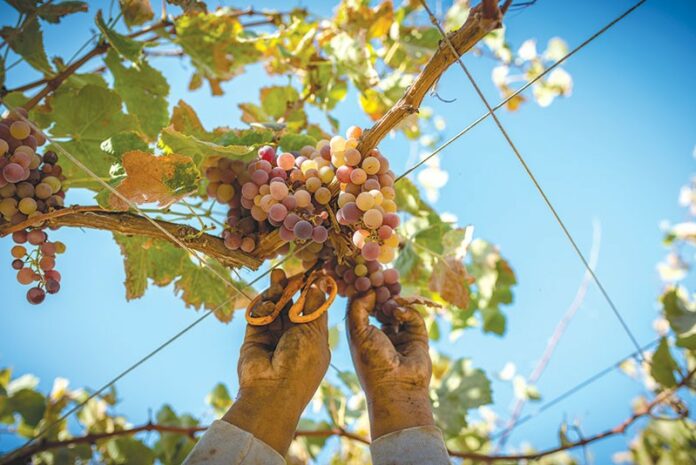
The latest issue of Sonoma magazine recently appeared in my mailbox. Near ads for multimillion dollar homes, expensive wines, expensive vacations and designer clothing, there are photos of the people who pick grapes. In her “Letter from the Editor,” Catherine Barnett writes, “Coming home from a late-night dinner, it is not unusual to see bright lights illuminating a path of endless darkness.” She neglects to say that there are people under those lights picking grapes. She goes on to write, “The shapes are hard to discern. The faces, hidden by caps and hoodies, are obscured by more than shadows.”

These “shapes” are people who have been in vineyards since 3am and work until noon or later doing back-breaking work and don’t receive a living wage. They are not nameless entities. Some of the photos are men in their 50s and 60s, and one man is 73. These are the people who make it possible for so many in the wine industry to possess great wealth. They deserve kindness and respect, not to be spoken of as if they are invisible.

Occidental

Dear Trump Supporters

I’ve been glued to this political season from day one. I haven’t missed one news cycle in the last 20 months. I’ve watched all the debates. Mine has been an indiscriminate immersion of viewing, listening and reading “on both sides of the aisle.”

I have heard it said that Trump supporters are predominantly “uneducated” or “not college-educated” and other things related to lacking in the area of education. Polls reveal this is true. So what? I have found those lacking formal education often excel at common sense, and my own teaching experiences affirm this observation.

But here is the part I do not understand about Trump supporters. Why aren’t you exercising common sense? I ask myself whether I could ever follow or befriend an individual who is so cruel as to mock the disabled? Would I befriend a person who assigns unkind nicknames to others—”Little Rubio,” “Lyin’ Ted,” “Crooked Hillary”? Do I want to hang with a guy who calls a woman “fat pig,” disparages people with truly cruel insults, charges an entire race of being rapists?

Dear Trump supporters: I urge you to sit quietly and reflect upon this choice you are making. Is this truly a choice that makes sense to you? If any manner of critical thinking assures you that this is the right choice for you, then I offer my best wishes for whatever future it is you long for.

Santa Rosa

Dept. of Corrections

The Nugget column of Aug. 24 incorrectly identified Jonathan Elfand as a member of the Sonoma Collective. His Sonoma County–based cannabis collective is called KuurCannaFarms and is not associated with the Sonoma Collective. We regret the error.

Write to us at le*****@******an.com.

Chopping Rock

0

Bassist Jason Newsted joined Metallica in 1986 and spent 15 years as part of the biggest metal band in the world. Since leaving Metallica in 2001, he’s stayed enmeshed in the genre through several projects.

For his latest outfit, Jason Newsted & the Chophouse Band, the Rock and Roll Hall of Fame musician goes acoustic, sharing a collection of classic American songs this month with intimate performances in Mill Valley, Napa and Sebastopol.

The name Chophouse goes back to 1991, when Newsted designed and built a studio space in his San Francisco home to jam with an eclectic crew of friends and fellow players.

“For 25 years, we’ve been putting these blends of people together to make this soup with really no agenda,” says Newsted. “By playing with other people of other styles in the Chophouse, when it came time to go play ‘Enter Sandman’ for the 3,000th time, you come back with a fresh approach.”

Over the years, the players and recordings in the Chophouse opened his mind to more music. “I learned from the Chophouse how to be better in my real-world activities,” he says.

More recently, Newsted has spent time concentrating on his acoustic guitar and collecting a catalogue of over a hundred songs from the likes of Johnny Cash and Neil Young that he can play with his rotating roster of musicians; he hasn’t played these songs in public until this year. A big part of deciding to share these songs, he says, came from caring for his ailing mother in 2013.

“I would take time to play her some of these songs, and she would really dig it,” Newsted says.

“I saw which songs my voice lent the most to and picked my spots, and by playing for my mom, it made me want to do my vocal warm-ups and lessons and all that so I could sing better for her.”

For the upcoming performances, Newsted plans to start the show solo before welcoming percussionist Rob Tucker and building the number of players gradually through the largely acoustic set.

“You can jam without your ear ringing, you can hear everybody and get three- and four-part harmonies going, stuff I haven’t really done in my career,” Newsted says. “I’m finding a lot of firsts as we take [the band] out and show it to people.”

Fresh Catch

0

“California cuisine” isn’t a term used much these days, but there was a time when it was a hot buzzword in the restaurant world. It generally meant Mediterranean cuisine with Japanese influences presented in a whimsical, arty style on the plate. You know, teetering, vertically stacked foods with colorful squiggles of berry flavored beurre blanc sauces and such. The food never struck me as particularly Californian; in fact, some of the influence came from the even sillier spa-cuisine movement from the south of France.

But there are ingredients, dishes and aesthetics that are uniquely Californian. Looking at the opening menu at Sebastopol’s Handline, a new restaurant from Peter Lowell’s owners Lowell Sheldon and Natalie Goble, it comes pretty close to capturing what I think of California cuisine, at least coastal California, which really is a culinary entity of its own.

You can’t talk about California cuisine without talking about Mexico, and Mexican food is a strong thread that runs through Handline—namely tacos, tostadas and ceviche. Goble learned to mill corn from the masters at Sonoma’s El Molino Central. The kitchen will make tacos with made-to-order tortillas, including a Baja-style fish tacos that I can’t wait to try. Also look for a fishermen’s stew, raw and grilled oysters, fish and chips and a few burgers, beef and one bean-and-quinoa—very California.

Fresh fish will be the focus, but sourcing strictly local wild fish is tricky, Goble says. While she’s commited to responsibly sourced seafood, developing regular Bodega Bay connections for fresh fish will take time.

The restaurant promises to be a destination with its light-filled dining room and spacious outdoor seating. The building is constructed around the former Foster’s Freeze that once operated on the site, and it still echoes the mid-century architecture of the late burger joint. The wave-like designs and weathered steel in the building’s exterior are supposed to conjure up images of the North Coast. The restaurant will be a real head-turner along Gravenstein Highway South when it opens at the end of the month.

Handline, 935 Gravenstein Ave. S., Sebastopol. handline.com.

Funny Business

0

Hooray for Captain Spaulding.

And hooray for the weird, wonderful, creatively imitative assemblage of actors who are currently bringing the Marx Brothers ‘Animal Crackers’ to retro-ridiculous life at the 6th Street Playhouse. Originally a long-running play on Broadway, ‘Animal Crackers’ is best known for the 1930 movie version, considered by many to be the finest example of the pun-filled, language-assaulting, physically offbeat comedy that the Brothers Marx made a career of. The play, with songs by George S. Kaufman, also gave the Brothers Marx a tune they would become inextricably associated with—the aforementioned, Hooray for Captain Spaulding, a goofy prog-pop extravaganza containing one of Groucho’s indelible signature lines, ‘Hello, I must be going.’

The 6th Street production uses the Broadway script, so if you know the movie well, prepare for a bunch of bits and songs that were cut from the show when it was adapted for the screen. As Captain Spaulding (the African explorer), played famously by Groucho, Jeff Coté gives an uncanny impersonation, from the painted mustache and active eyebrows to Groucho’s joyously twisty-turny dance moves. As the larcenous musician Emanuel Rivelli, aka Chico Marx, David Yen is delightfully spot-on, blending mischievous enthusiasm with a confidently trouble-making underpinning of potential danger.

Watching Yen and Coté toss famously outrageous one-liners back and forth is one of the show’s chief pleasures.

“That’s a-not a flash, that’s a fish!”

Well, that’s in the show.

Expect a slightly sinister Harpo Marx, who, in the inventive, elastic-faced hands of actor Erik Weiss, is less an imitation of Harpo than a free interpretation of the goofily creepy Professor character he played in ‘Animal Crackers.’ Don’t expect Weiss to play the harp, though. In a conspicuously desperate homage to Harpo’s musicianship, director Craig Miller — who otherwise brings a parade of inventive ideas and cleverly inspired bits to the show – accidentally throws the brakes on the show as we in the audience watch Weiss, as Harpo, hanging out watching a movie of the real Harpo playing a tune.

That probably should have been cut, though it serves a purpose, as the cast needs that time to don their outrageous and elaborate French revolution outfits and wigs to recreate the movie’s bizarre French flight of fantasy.

Though neither of those scenes work so well on stage, Miller reaches outside the film structure to introduce a brilliantly re-worked second act bit in which an excellent John Rathjen – absolutely superb in two supporting roles – steps out in his underwear to sing ‘Keep Your Undershirt On’ while putting on the costume of the marvelously droll butler Hives, nicely dueting with a similarly negligeed Jacinta Gorringe, as the marriage-minded matron Mrs. Rittenhouse.

Also excellent, in duel supporting roles, is Abbey Lee, quick-swapping outfits and wigs as Mrs. Rittenhouse’s hot-to-trot daughter Arrabella and as the scheming neighbor Mrs. Whitehead. Lee, along with the aforementioned Rathjen, commands some of the show’s best musical moments, supported by a fine onstage orchestra under the direction of Justin Pyne, and some nice choreography by Joey Favalora. Unfortunately, many of the other voices in the cast often fail to soar or blend.

Coté and Yen, who sing just fine, thank you very much, sound so much like Groucho and Chico, that – like the rest of this overlong but frequently hilarious, affectionately nostalgic show — are so stitch-in-the-side funny, little else really matters.

★★★★

Brainy

0

‘I’ve come unstuck in time,” insists a distraught but fiery Mileva Mari Einstein, from a hospital bed in Zurich, where she’s being treated for a mysterious paralysis. “The faster I move,” she tells her skeptical doctor, “the slower it all goes.”

It is 1916, the date projected into the vast black hole hovering over the stage of Main Stage West, in Sebastopol. Suddenly and silently, the date is wiped away, as the story pitches and shifts, flowing backward, a new scene already beginning before the last one has ended. Clearly, it isn’t time in which Mileva has become unstuck so much as it is memory.

And so begins Rebecca Louise Miller’s Capacity, a lovely, captivating exploration of the relationship between Albert Einstein (an excellent Sam Coughlin, nicely affecting the iconic Einstein look) and his first wife, Mileva (Ilana Niernberger, heartbreaking and brilliant in her best performance to date).

Capacity shows us how the couple met and eventually married, while both were students of physics at Zürich Polytechnic. When an unexpected pregnancy disrupts their romantic ideals, sacrifices are made, with increasingly devastating results. Initially a union of true mental equals, Albert and Mileva’s complicated romance asks whether intense genius and intense love can long exist in the same relationship, or the same person.

Elegantly and insightfully directed by Elizabeth and John Craven, Capacity marks MSW’s second premiere from Miller. Her 2012 play Fault Lines, inspired by the 1993 murder of Polly Klaas, also debuted there. Similarly borrowing from real-life events to spin a speculative story of stunning emotional power, Miller now examines the human side of one of the most beloved figures in modern history. While Einstein’s reputation as a genius survives intact, his image as an immaculate secular saint is given a devastating—and evidently deserved—takedown.

As the central couple, Niernberger and Coughlin do remarkable work, eschewing accents and makeup as they bounce about in time. Effective, in numerous roles, are John Browning, Rae Quintana, Jared Wright, the latter appears as Einstein’s dying father.

Miller’s lyrical storytelling, aided by clever scene shifting courtesy of the Cravens, is clear-eyed and beautifully crafted. Capacity casts a spell that may forever alter how we feel about Albert Einstein, while reminding us that greatness, for good or ill, is often achieved at extreme personal cost.

Rating (out of 5): ★★★★★

Starring Role

0

Coming to a film festival near you, Leslie and James Simmons’ independent film For What It’s Worth tells a love story set in Sonoma County. A suspense drama, the movie is about the relationship between a younger man and an older woman—but with a sinister twist.

The Simmons have owned Shoot Blue Productions for 12 years. The production company has produced a variety of films, commercials and documentaries, and now the couple enter the spotlight with their own original movie.

“We love what we do, but we wanted to go in new directions,” says Leslie Simmons. “We wanted to focus on our own film,” rather than make movies for other people.

For What It’s Worth is set in Geyserville and uses the rural Sonoma County backdrop as an idyllic setting for the film. Leslie grew up in Geyserville, along with Marc Bojanowski, one of the writers of the film.

“Yeah, Leslie and Marc grew up together on a dirty road in Geyserville,” James jokes.

“Dirt road,” Leslie corrects. “It was a dirt road; it wasn’t dirty.”

When looking for a script, the couple was searching for something that had few locations and a small cast, but it was hard to find something that met their needs.

“So many scripts start with bank robberies,” James says. The couple went through many screenplays before they turned to Bojanowski, who had been working on a story since 2014. When James and Leslie approached him, they saw a script they could work to their advantage and that could be filmed locally—
a big savings in cost.

The rural Geyserville setting wasn’t the only thing that drew in this dynamic filmmaking duo. They wanted their movie to be set in wine country, but didn’t want it to be the main focus.

“We live here, and so it was much easier to film here, plus it’s gorgeous,” Leslie says.

The couple own most of the equipment that was used to shoot the film, and relied on interns and volunteers to produce it.

“I was absolutely amazed at what young people can do in this county, they are so talented,” James says. “And they showed up for work every day. The amount of dedication in this county is really amazing.”

With the limited budget and amount of resources, there were times when filming the movie was difficult, running into issues such as fighting the elements, working with a new crew and staying on budget.

“We took all the hardships of the film and worked together to create a story,” Leslie says.

“Yeah, we made lemons into lemonade,” adds her husband.

The duo plan to submit the film to both local and national film festivals. The film screens at the Alexander Valley Film Festival Oct. 22 at the Raven Theater in Healdsburg and at at the Sacramento Film & Music Festival (Sept. 6–11) on Sept. 8.

Milk Money

Anja Raudabaugh, CEO of Western United Dairymen in Sacramento, published an eyebrow-raising memo on Aug. 26 in response to the debate underway in the California State Legislature over a contentious effort to overhaul the state’s overtime rules for farmworkers.

Raudabaugh, whose organization lobbies on behalf of state dairy farmers, was responding to implicit charges that opponents of proposed overtime extensions to farmworkers had played the proverbial race card, and the lobbyist flat-out went off on legislators who had thrown the card into the debate. “The snowflake culture, a culture that some belong to and feel entitlement is owed and due,” she wrote on the Dairymen’s online newsletter, “is one that utilizes the cry-bully tactic and calls its enemies racists, slavers, and falsely sows the seeds of hatred to damage the logical optics in play on an issue.”

The correct view in this case, she added, is a focus on choice—as in, the choice of workers to labor in the fields, which was theirs to make. The “logical optic with the allowance of agricultural overtime—along with many other industries and sectors that have been given the exemption to overtime, is that this is a VOLUNTARY method for people in this state to make money and decide for themselves how to feed their families. Eliciting phony racism sentiments and likening agriculture to slavery is the lowest point the conversation could have gone. I don’t think the leadership’s capacity for loathing agriculture could be matched with this low blow.”

Raudabaugh’s note did not mention that, as harsh as it may sound, dairy farmers themselves are not obligated to participate in their chosen industry, but let’s set that aside for the moment. The bill, AB 1066, passed through the Legislature with healthy majorities and awaits Gov. Brown’s signature or veto by the end of September. It would phase in new overtime rules over the next nine years and was passed without the support of most of the North Bay delegation to Sacramento, a curious development given that they’re all Democrats and this is a very ag-oriented region where there is general consensus that farmworkers are a struggling class of workers whose efforts are critical to the economic well-being of the region.

But there you have it. Senators Mike McGuire and Jim Wood joined assemblymen Bill Dodd and Marc Levine to either vote against the bill or abstain from voting. Napa senator Lois Wolk was alone among North Bay legislators to vote aye for time-and-a-half hourly overtime wages at the heart of the bill, which was sponsored by San Diego Democrat Lorena Gonzalez and offers a phased-in overtime regime for agriculture workers, beginning in 2019. Farms with operations of fewer than 25 workers would be phased in beginning in 2022.

In voting no, the former Republican Dodd emailed the Bohemian in advance of the Labor Day holiday to say that “I had concerns with the bill that weren’t worked out, so I wasn’t able to support it. I’m supportive of what it’s trying to do, but I want to ensure that changes are balanced and crafted in a way that minimizes unintended negative consequences.”

There lies the rub behind legislators’ no votes and abstentions from the final vote, whose rationales tended toward an implied critique of its one-size-fits-all approach to agricultural workers that lumped dairy and cattle workers in with field workers. Dodd’s district is exceedingly agricultural in its fidelity to Big Grape, but you’d be hard-pressed to find a dairy farm in Napa County.

McGuire offered a more specifically anguished reasoning behind his did-not-vote posture on the bill. He’s got dairy and grape farms in his district, which includes all of Marin and most of Sonoma County.

“This was a difficult decision,” McGuire says via email. “I’m never going to vote against farmworkers, which is why I stayed off the bill. The concerns we advanced relating to small family farmers and dairy owners here on the North Coast were never addressed. Given the tight time frame of this bill we were unable to find middle ground.” Lawmakers signed off on the overtime measure in the last-minute legislative scramble before the Labor Day break, when bills had to be moved or scrapped.

Dairy owners are already paying more than twice the average wage than field workers, according to advocates I talked to who represent those respective workers. Factor in a state dairy industry that is already highly subsidized—which could collapse without annual federal subsidies to prop it up and where the price of milk is essentially socialized with state-set price controls—and the no votes begin to make a little more sense, despite the clear and obvious social-justice question at the heart of the farmworker wage battle.

Because of the price controls and rules governing the subsidies, dairy farmers can’t pass off increased labor costs to consumers if they are forced to pay higher wages. Non-dairy farmers were also opposed to the new overtime bill and argued that it would force them to further automate their operations to make up for the workers they’d no longer be able to afford to hire or pay.

But let’s back up a minute here. To understand the genesis of Raudabaugh’s juicy online riposte—whose “snowflake culture” language is more typically seen in rightward-leaning discourses that slam college campuses over trigger warnings and safe spaces as a bulwark against the dread onslaught of the oversensitized and politically correct—the overtime bill aims to move California beyond federal overtime rules that date back to the presidency of Franklin Roosevelt and are enshrined in the 1938 Federal Fair Labor Standards Act, which, as
AB 1066 itself recalls, “excluded agricultural workers from wage protections and overtime compensation requirements.”

California, as Raudabaugh observes, is one of four states where overtime pay does kick in for all farmworkers, at a 60-hours-worked threshold. The bill on Brown’s desk offers overtime pay through a phase-in period and by the time it’s fully implemented, overtime would kick in at 40 hours worked, for all workers, in 2025.

Marty Bennett of North Bay Jobs with Justice, which vociferously and unsurprisingly supported the proposed overtime overhaul, says that the bill is “at least a half a century overdue and it really does go back to the era of segregation, when African-Americans were cut out of wage-hour legislation because of Southern segregationists in Congress. Roosevelt cut a deal with the racists,” who at the time were Southern Democrats hell-bent on enforcing Jim Crow, often through lynching and other terror tactics. It was an ugly compromise for its dust-bowl time, but what does that have to do with Northern California Democrats in 2016?

Well, sure, there’s a drought. And AB 1066 was passed amid an unpleasantly anxious backdrop as California’s agriculture industry faced almost $9 billion in losses in 2015, according to an annual state crop report issued last week by the U.S. Department of Agriculture that garnered headlines around California. The biggest drop was in the dairy industry, which accounted for about one-third of the total lost revenues between 2014 and 2015, and which saw state output plummet from $56.5 billion to $47 billion. The trickle-down impacts have been just shy of disastrous for the dairy industry, as hundreds of dairy operations have been driven out of business around the state since the advent of the drought.

The drought extends to North Bay field workers themselves, who are very definitely feeling the pinch of low wages and could use a rainmaker of their own to come to the rescue. An October 2015 report from the Sonoma County Department of Health Services focused on farmworkers’ health and well-being, and is filled with awful stats that tell the story of a woefully underpaid workforce that binge-drinks too much and can’t afford the rent as it noted that 92 percent of farmworker families didn’t “earn enough to meet their family’s basic needs in Sonoma County.” The survey highlighted a “dramatic disparity between farmworkers and even the poorest Sonoma County residents.”

And the USDA report found confluence in Sonoma County, where the 2015 crop report found a “dramatic decrease in yield” between 2014 and 2015 which translated into a 14 percent decrease in total crop value over those two years—$756 million from $879 million in 2014.

As the overtime battle unfolded, critics noted that the United Farm Workers, which represents California laborers, could have fought for overtime benefits for their workers through collective bargaining instead of pushing through the Legislature a wholesale redo of the entire agriculture-worker economy, where field workers earn an average of $9 an hour, says Bennett, though dairy workers are in the $21-an-hour range, according to Raudabaugh. A collective-bargaining set-to was always going to be a losing fight, say observers of the process, and supportive lawmakers led by Gonzalez took up the call this year to force the issue across the board, from grape field to milking station.

There’s a big difference between picking grapes and milking or slaughtering cattle, and Raudabaugh says that higher wages are paid to cattle-workers because of regulations and sanitary requirements and the cattle themselves, who must be managed in a responsible and humane way. Because of the skill set and particularities of the industry, she says “we want to hire the most competitive labor possible.”

The particulars of the dairy industry are also distinct from other agricultural pursuits when it comes to those subsidies and price controls. According to federal data compiled by the Washington, D.C.–based Environmental Working Group, between 1995 and 2014, the Sonoma County dairy industry received $17 million in federal subsidies out of a total of $95 million that flowed to the county, the highest subsidy delivered to any sector of the economy, including emergency services.

Marin County, which hosts numerous small- and mid-size dairy operations that provide some of the country’s most sought-after and delicious dairy and cheese products, not to mention the beef itself, got $6 million in subsidies over that same time, out of a total of $13 million.

Clover Stornetta works closely with 28 family farms in Sonoma and Marin counties to make its organic milk products in Petaluma, says company CEO Marcus Benedetti, who adds that “the impacts are on their cost side” as he highlights the price controls that restrict any North Bay dairy operation’s ability to cover increased labor costs with a higher price at the market. And he notes the particulars of the local dairy economy itself, where workers at some dairies that contract with Clover Stornetta are housed on-site—a form of compensation in the high-rent North Bay. “In many cases, it’s a community,” Benedetti says of local dairy operations adding that “not all dairy is monolithic in the state of California, and these farms here are vastly different than what you’ll find in the Central Valley,” with its corporate and decidedly non-organic mega-dairies.

In an interview with the Bohemian last week, the Dairymen’s Rudabaugh reflected on her blistering critique of the Sacramento snowflake crowd with a chuckle as she defended the pushback against social-justice arguments for the bill that focus on race. “I do think the race card was played here, and once that rabbit hole was gone down, it became a very difficult argument to overcome logically,” she says.

Raudabaugh, who has been in her post since 2015 and was once a staffer for former Republican Congressman Doug Ose, stresses that she is “respectful of the dynamics; this is a social-justice issue and I am cognizant of that.”

But she says the race card tainted what should have been a rugged and logic-driven debate over the catch-all nature of a bill that did not distinguish between respective groups of farmworkers and failed to appreciate the struggling margins that dairy farmers, many of them minorities, already occupy.

“It’s really deployed when you have no merits left in the argument,” Raudabaugh says, noting that “we have a very Latino- and black-owner industry, my owners are across the board, but that is not how it was depicted.”

The final bill, with its phase-in of the overtime changes, appears on its surface to be a compromise bill that reflected input from concerned parties such as the Dairymen. Raudabaugh says the lobby has expressed its misgivings to Brown and worked to create a better bill for its members despite ultimately opposing it. And despite the phase-in period designed to lessen the blow on farmers’ bottom lines, she says dairy workers are already fretting. “The scramble is already on to see how to make this work without having to let people go.”

Why weren’t there two separate tracks or a bill that excluded dairy and cattle farms from its scope? “Believe me,” she says, “the Dairymen talked about it but there was no separate effort” by any legislators to offer a bill that would be “better tailored to the types of commodities that we are looking at. There is an intense harvest period for cabbage, for grapes,” she adds. Dairy work is not seasonal or subject to high-season hiring spikes and “some of the more logical lawmakers who did not know that were put into a corner, and there was no way for them to win that corner,” she says. The fix was in when lawmakers started making speeches about how their relatives were sharecroppers, she says, while stressing that’s she’s not unsympathetic to the history.

“I don’t discount those things,” she says, even if many lawmakers did not appreciate the particularities of the dairy and cattle industries as they made speeches over past racial sins and tied them to the current battle.

Marc Levine was among the lawmakers whose position synced with the dairy industry. The lawmaker’s district, which straddles Marin and Sonoma counties, produces many millions of dollars a year in specialty organic cheeses and dairy products, and Raudabaugh says her office discussed the bill with the two-term Democratic assemblyman “at great length.” Levine didn’t vote for the bill, and Raudabaugh notes that his district his filled with the putatively progressive new-economy farmers, “the smaller producers, the non-GMO, the grass-fed-beef ones—those are the ones that are going to take this the hardest.”

In a telephone interview, Levine says it was a difficult call to abstain but insists it was the right call. The lamaker notes that he has supported other efforts designed to address income inequality and that he spoke to Gonzalez about the unintended consequence her bill would bring to family dairies. The major unintended consequence he fears is that farm owners will put “downward pressure on the number of hours on the schedule” and reduce work hours for all their workers and tear at the “amazing but fragile dairy economy” of the North Bay.

Levine says he is all for raising the wages of the lowest paid and lowest skilled farm workers but sees a value in pushing on other fronts to get at the strain on the weekly paycheck and the person signing the check—affordable housing being the standout concern in the North Bay, not to mention the boutique nature of much of the dairy action here. “It’s challenging to distinguish between multibillion-dollar ag enterprises and dairy farms that young entrepreneurs are trying to start with a commitment to the local ethic,” he says. “I want to treat all workers fairly,” he adds and highlights, for example, efforts that small-time operators put into providing on-site housing for their workers.

But legislators’ efforts to cleave cattle from the overtime bill did not ultimately hold sway. Once the specter of race was raised, Levine says “it became a difficult conversation, and unfortunately the national political conversation today is quite toxic.”

But hey, at at least the milk is organic.

Sept. 9: Flight of Fancy in Petaluma

Bolinas-based artist and sculptor Sha Sha Higby makes art she can wear, in the form of complexly crafted sculptural costumes that she performs in during her hauntingly poignant live shows inspired by Noh Theater and shadow puppetry. This week, Higby premieres her latest whimsical and wondrous work, ‘Paper Wings,’ in conjunction with Petaluma Arts Center’s ongoing exhibit “Journeys Through...

Sept. 10: Lawn Party in St. Helena

Forestville singer-songwriter David Luning is on a roll right now. The soulful storyteller spent his summer on tour and signed a record deal with Hwy 61 Records last month. Luning is currently in the studio with producer and engineer Karl Derfler (No Doubt, Tom Waits) with an album due next February, though he’s still heading out for local shows....

Sept. 14: Venn Sounds in Mill Valley

The easiest way to visualize the upcoming concert with Tim Bluhm, Andy Cabic and Johnny Irion is a three-part Venn diagram. In one circle, Bluhm (the Mother Hips) overlaps South Carolina native Irion in his band U.S. Elevator, co-writing and contributing guitars and vocals to the group’s 2015 self-titled debut. In another circle, Cabic (Vetiver) overlaps with a producer...

Letters to the Editor: September 7 2016

Blind to the Plight The latest issue of Sonoma magazine recently appeared in my mailbox. Near ads for multimillion dollar homes, expensive wines, expensive vacations and designer clothing, there are photos of the people who pick grapes. In her "Letter from the Editor," Catherine Barnett writes, "Coming home from a late-night dinner, it is not unusual to see bright lights...

Chopping Rock

Bassist Jason Newsted joined Metallica in 1986 and spent 15 years as part of the biggest metal band in the world. Since leaving Metallica in 2001, he's stayed enmeshed in the genre through several projects. For his latest outfit, Jason Newsted & the Chophouse Band, the Rock and Roll Hall of Fame musician goes acoustic, sharing a collection of classic...

Fresh Catch

"California cuisine" isn't a term used much these days, but there was a time when it was a hot buzzword in the restaurant world. It generally meant Mediterranean cuisine with Japanese influences presented in a whimsical, arty style on the plate. You know, teetering, vertically stacked foods with colorful squiggles of berry flavored beurre blanc sauces and such. The...

Funny Business

Hooray for Captain Spaulding. And hooray for the weird, wonderful, creatively imitative assemblage of actors who are currently bringing the Marx Brothers ‘Animal Crackers’ to retro-ridiculous life at the 6th Street Playhouse. Originally a long-running play on Broadway, ‘Animal Crackers’ is best known for the 1930 movie version, considered by many to be the finest example of the pun-filled, language-assaulting,...

Brainy

'I've come unstuck in time," insists a distraught but fiery Mileva Mari Einstein, from a hospital bed in Zurich, where she's being treated for a mysterious paralysis. "The faster I move," she tells her skeptical doctor, "the slower it all goes." It is 1916, the date projected into the vast black hole hovering over the stage of Main Stage West,...

Starring Role

Coming to a film festival near you, Leslie and James Simmons' independent film For What It's Worth tells a love story set in Sonoma County. A suspense drama, the movie is about the relationship between a younger man and an older woman—but with a sinister twist. The Simmons have owned Shoot Blue Productions for 12 years. The production company has...

Milk Money

Anja Raudabaugh, CEO of Western United Dairymen in Sacramento, published an eyebrow-raising memo on Aug. 26 in response to the debate underway in the California State Legislature over a contentious effort to overhaul the state's overtime rules for farmworkers. Raudabaugh, whose organization lobbies on behalf of state dairy farmers, was responding to implicit charges that opponents of proposed overtime extensions...
11,084FansLike
4,606FollowersFollow
6,928FollowersFollow