Straight Up

0

Healdsburg has been a cocktail hotspot ever since Scott Beattie started shaking things up at Cyrus in 2005. Cyrus closed in 2012, and Spoonbar has taken up the mantle of craft cocktails.

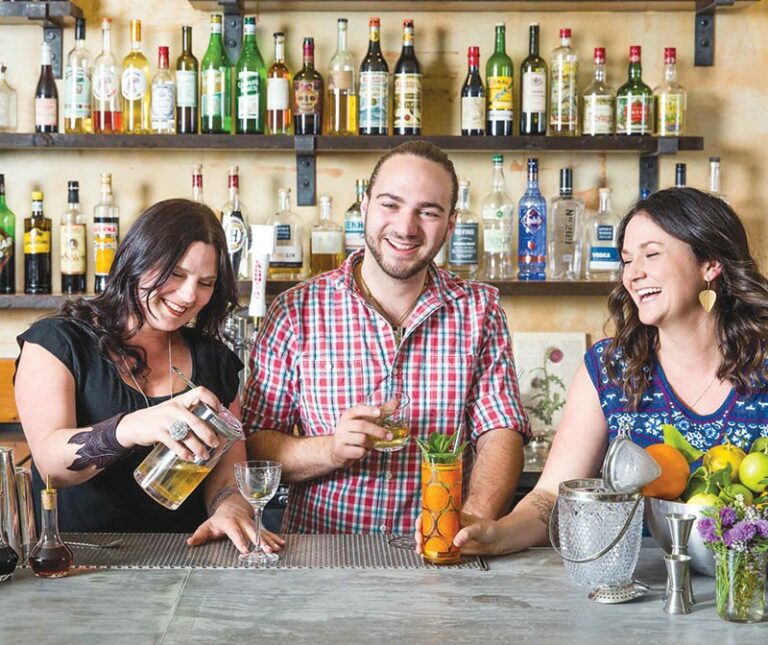
As things go in restaurants and bars, the employees of one place leave to open their own place. That’s what happened with Duke’s Spirited Cocktails. Spoonbar alumni Laura Sanfilippo, Tara Heffernon and Steven Maduro opened Duke’s in June to showcase what they call an “herb-centric cocktail menu.” In fact, Heffernon grows many of the herbs for the bar.

Looks for cocktails like Night Vision ($13), Spirit Works barrel-aged gin, carrot, caraway, lemon and Sutton Cellars vermouth; the Daily Tot ($12), made with Plantation rum, Delord Armagnac, brazil nut orgeat, Amaro di Angostura, orange, lime and allspice; and the Fine Line ($10), Sonoma Brothers vodka, Guayakí yerba mate, verbena and house-made nectarine-tarragon bitters.

All that booze requires a bit of ballast to keep you steady. Nearby Chalkboard restaurant makes bar snacks for $5–$6 like pickled vegetables, rosemary mixed nuts, marinated olives and chips and salsa verde.

Duke’s Spirited Cocktails 111 Plaza St., Healdsburg. 707.431.1060.>

Death Penalty Duel

0

Moments before Richard Allen Davis was sentenced to death in a San Jose courtroom for the kidnapping and murder of Polly Klaas, the young girl’s father addressed the court.

“He broke the contract; for that he must die,” Marc Klaas said on Aug. 5, 1996. “Mr. Davis, when you get to where you’re going, say hello to Hitler, say hello to Dahmer and say hello to Bundy. Good riddance, and the sooner you get there, the better we all are.”

Davis entered the Klaas family’s life on Oct. 1, 1993, when he broke into Polly Klaas’ mother’s home in Petaluma and kidnapped the 12-year-old. The ensuing two-month search engrossed the nation, and ended when Davis led investigators to the young girl’s body. But for Klaas, the torture was far from over, as the case evolved into an emotional three-year trial.

Klaas has looked forward to the killer’s execution as the lifting of a burden. But at sentencing, he never imagined that 20 years later he’d still be awaiting that day. Since 1996, Davis—who sits on death row in San Quentin State Prison, a scant 10 miles from Klaas’ Sausalito home—has had just one appeal heard. His situation is not necessarily unique; the majority of the state’s 747 condemned have been on death row for between 16 and 24 years, with one awaiting execution for 38 years.

Klaas spends his days running the KlaasKids Foundation, one of several nonprofits started in Polly’s memory. But after receiving a call from the California District Attorneys Association, he’s turned his attention to endorsing Proposition 66, a proposal to reform the death penalty headed for the November ballot.

“It was never my intention to be an outspoken advocate of the death penalty,” Klass says, “but apparently it just sort of played out that way.”

Come election day, Proposition 66 will be up against another death-penalty initiative, Proposition 62. Each initiative addresses California’s broken death-penalty system, which leaves the condemned to languish for decades. But the two plans present diametrically opposed solutions.

Simply called the California Death Penalty Repeal,
Proposition 62 would replace the death penalty with life in prison without parole. The legislation sprung from the seeds of 2012’s Proposition 34, which would have abolished the death penalty had it not lost by a narrow margin.

“What the polling shows is that there’s a big difference in the way voters react to the question ‘Do you want to end the death penalty, period?’ to ‘Do you think we should replace the death penalty with life without the possibility of parole?'” says Paula Mitchell, an author of Proposition 62 and professor at Loyola Law School in Los Angeles.

She and others behind the campaign found that voters are much more comfortable with the idea of substituting a life sentence rather than abolishing the death penalty altogether.

The legislation would also force death-row inmates to work in prison and pay restitutions to their victims’ families, a facet it shares with Proposition 66. District attorneys and elected officials, including Lt. Gov. Gavin Newsom and former president Jimmy Carter, have endorsed Proposition 62. It has also drawn an eclectic list of celebrity endorsers, including former CIA operative Valerie Plame, civil rights leader Dolores Huerta and entrepreneurs Richard Branson and Larry Flynt.

The death-penalty-repeal campaign is driven by a belief that the state’s system is fundamentally broken. Since 1978, when capital punishment was reinstated by voters after a brief abolition, California has spent more than $5 billion to run the largest death row in the Western Hemisphere. In that time, 930 people have been sentenced to death but only 15 have actually been executed, according to the state Legislative Analyst’s Office (LAO). No executions have been carried out in California in the last decade because of challenges to the state’s lethal-injection protocol.

[page]

For Mitchell, one of the most compelling reasons to abolish the death penalty is the risk of executing an innocent person. Since 1973, she notes, 144 people on death row have been exonerated nationwide.

“A lot of people around the world are coming to the same conclusion,” she says. “It’s a risky thing, it costs a lot of money; it’s just not worth it.”

On the other hand, Proposition 66, known as the Death Penalty Reform and Savings Act of 2016, contends that the death penalty is not beyond repair, and that it is our duty to fix it.

“This arose out of a will to represent the obvious desires of the majority of the citizens of the state of California,” says Michele Hanisee, a key opponent of 2012’s Proposition 34. “They voted not to eliminate the death penalty, which means they want the death penalty and they want it to work. It’s unfair to those citizens that it’s not working.”

Proposition 66, which is backed by a long roster of district attorneys, sheriffs and law enforcement, attempts to reform capital punishment on several levels. Appeals to the state supreme court based on the trial record would need to be completed in five years. Furthermore, all appeals based on evidence or issues outside the record, known as habeas corpus appeals, would need to be presented in one case; currently the condemned can submit as many habeas corpus appeals as they can muster.

The proposition would assign inmates counsel on the day of their sentencing, and would allow the state supreme court to force qualified attorneys to take capital appeals cases as a condition for being assigned to other cases
in the future. Proposition 66
also allows the condemned
to be housed in appropriate facilities other than San Quentin, the state’s death row for male inmates.

“When we talk about speeding up appeals, some of it sounds sort of unfair,” says Hanisee. But, she adds, slowing down the process can be equally unjust to inmates. In the first capital verdict she oversaw as a Los Angeles deputy district attorney, the condemned man waited four years to be assigned an appellate lawyer, and another year for the lawyer to get up to speed on the case. Eight years later, his appeal has received 21 extensions, according to Hanisee, and no opening brief has been filed.

“If [he] were innocent or had a legitimate cause, it’s not getting heard,” she argues. She estimates that Proposition 66 could shorten the appeals process by half.

Both campaigns claim they will save taxpayers millions of dollars annually. Proposition 62’s website says abolishing the death penalty will save the state $150 million per year, a figure that squares with a May 2016 report from the LAO. Regarding Proposition 66 savings, the LAO said it would come from the way inmates are housed and “could potentially reach the tens of millions of dollars annually,” not hundreds of millions. Overall, the report concludes that Proposition 66’s long-term fiscal impact is unclear because it would likely reduce caseloads but require state courts to be staffed at higher levels.

Fiscal arguments may sway some voters, but the death penalty at its core is an emotional issue. The propositions require a simple majority to pass, and if both receive more than 50 percent of the vote, the one with the higher percentage will become law. Decisions on propositions 62 and 66 could come down to choosing between seeing “the worst of the worst” punished or the fear an innocent person may be killed.

Twenty years have passed, but the death penalty remains an emotional issue for Klaas. Davis no longer dominates his thoughts the way he once did, but his extended stay on death row prevents the closure Klaas seeks.

“Oh, I’m gonna drink Champagne the night that he’s executed,” Klaas says, the white of sailboats in Richardson Bay glinting through his kitchen window. “The mere fact that he still exists on this earth influences my life and it influences my thoughts. So, eliminate him, and you eliminate that burden.”

Latino Lessons

0

It’s a joke that probably dates back to the time of the Aztecs. Attempting to prove mental superiority, a poor schlub reveals a hilarious series of intellectual failings. In the Aztec version, that was probably some guy about to be sacrificed to Quetzalcoatl.

Or did the Mayans do that?

Damn. I guess I’ll have to go see John Leguizamo’s Latin History for Morons again. Written and performed by the actor best known as the voice of Sid the sloth in the Ice Age movies, Latin History for Morons is alternately silly, sour, sweet, sick, offensive, insightful and dumb-as-a-post. The antic solo show was directed by Tony Taccone with the kind of manic energy one expects from a Mel Brooks movie or an episode of The Simpsons. Arguably less artistically successful than those icons of smartly stupid comedy, this breathless, sloppy, big-hearted and surprisingly joyous celebration of Latino culture nonetheless aims for brilliance, even if it never quite achieves it.

But as the Mayans once said, “If you aim for the stars and miss, you could still end up on the moon.” Or was it the other way around? And was it the Incas who said that?

The basic story—and I beg your indulgence for using so grandiose a term for a show so lacking in actual plot or, you know, story—hangs on Leguizamo’s colorful description of his efforts to uncover useful facts about Latino culture, all to help his young son as he struggles with a daunting homework project at school.

That the “facts” this frantic father offers his son are so full of errors is a huge part of the fun of the show, in which the storyteller reluctantly has to face that he knows far less about his own history. From the Mayans, through the Incas, and on to the Aztecs, Leguizamo’s drive to identify a heroic example from Latino history continuously fails, giving the gifted actor plenty of chances to unleash outrageous gags, brilliant improvisations and frequently inappropriate analyses of history and Latin-American culture.

By the time Leguizamo drops the names of people like Carlos Santana and Supreme Court Justice Sonia Sotomayor, his proud Latin American son has acquired a far better understanding of who he is, and why that matters, and it’s this that transforms an otherwise uneven show from a wacky comedy into something profoundly and universally lovely.

Rating (out of 5): ★★★★

Nuevo Rock

0

‘When I first met Rodrigo [Sánchez], we talked about guitar, and guitar and more guitar,” says Gabriela Quintero.

Since that first conversation at Mexico City’s Casa de Cultura art school in 1989, the two have built a 25-year musical partnership, performing an exciting array of rock originals and covers on nylon-stringed acoustic guitars that incorporate flamenco and rumba for high-powered live performances. Rodrigo y Gabriela perform Aug. 7 at the Luther Burbank Center for the Arts in Santa Rosa.

Though the two had no formal training, they shared a passion for guitar and heavy metal music. “We were very obsessive with [guitar],” Quintero says.

In 1993, Quintero joined Sánchez’s metal band Tierra Acida (“Acid Land”). “We wanted to sound like Metallica or Pantera,” she says. After the band dissolved in 1997, the two moved from Mexico City to a beach town near Acapulco, where they expanded their musical boundaries, learning to play jazz and bossa nova, as well as covering a lot of metal ballads suitable for the the cafes and hotel lobbies where they played.

“For us it was like winning the lottery,” Quintero says. “It was rewarding to play different kinds of music.”

Wanting to tour the world, the two saved up money and traveled to Europe in 1999. They eventually settled and lived in Dublin for several years while busking street corners and playing in pubs. There, songwriter Damien Rice and his manager, Niall Muckian, founder of Irish record label Rubyworks, befriended the pair and offered them a record deal.

Rodrigo y Gabriela have released five studio albums and three live albums. Still managed by Muckian, they tour the world constantly, connecting with audiences from Japan to South America.

In the midst of their constant touring schedule, the duo are planning a new album for next spring, currently choosing from the massive number of original and cover compositions they’ve put together since their last record, 2014’s 9 Dead Alive.

For their date this month in Santa Rosa, the pair are playing an acoustic show that promises an uplifting and energizing performance, with Sanchez rapidly picking strings and Quintero using the guitar body like a percussive instrument as much as a melodic one.

“We’re still a rock band in our head,” Quintero says. “And I know over the years people keep insisting we play flamenco or world music, but for us, as long as we don’t say that, we are happy.”

Dry Wave

0

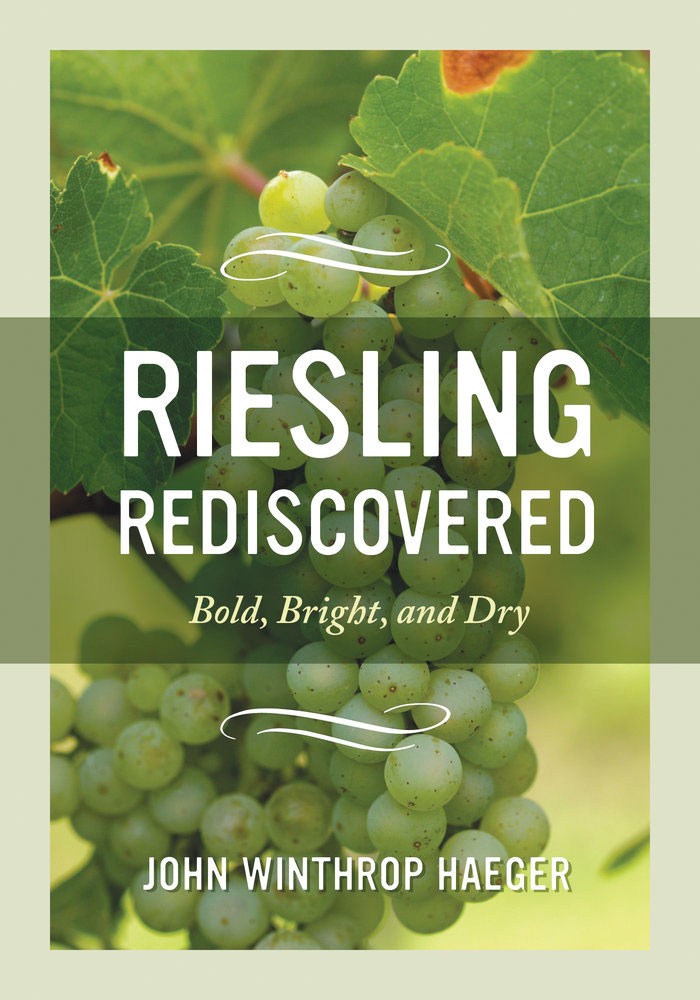
For Riesling lovers, there is something disingenuous about the recent hue and cry for low alcohol wines, for wines of “balance,” for food-friendly wines made from obscure, heritage white grapes of California. Hello—there’s Riesling? They almost always fail to even mention the varietal.

“It tends to inhabit a world of its own,” author John Winthrop Haeger told a group at a book event in St. Helena this past May. “Riesling is the ‘something else’ variety.” Although it is the world’s seventh most-planted grape variety, Riesling is one of the most misunderstood—at least in the American wine market, where the old stereotype that it’s always sweet is as sticky as a Trockenbeerenauslese. Oh, and there’s that little polysyllabic language problem it has, too.

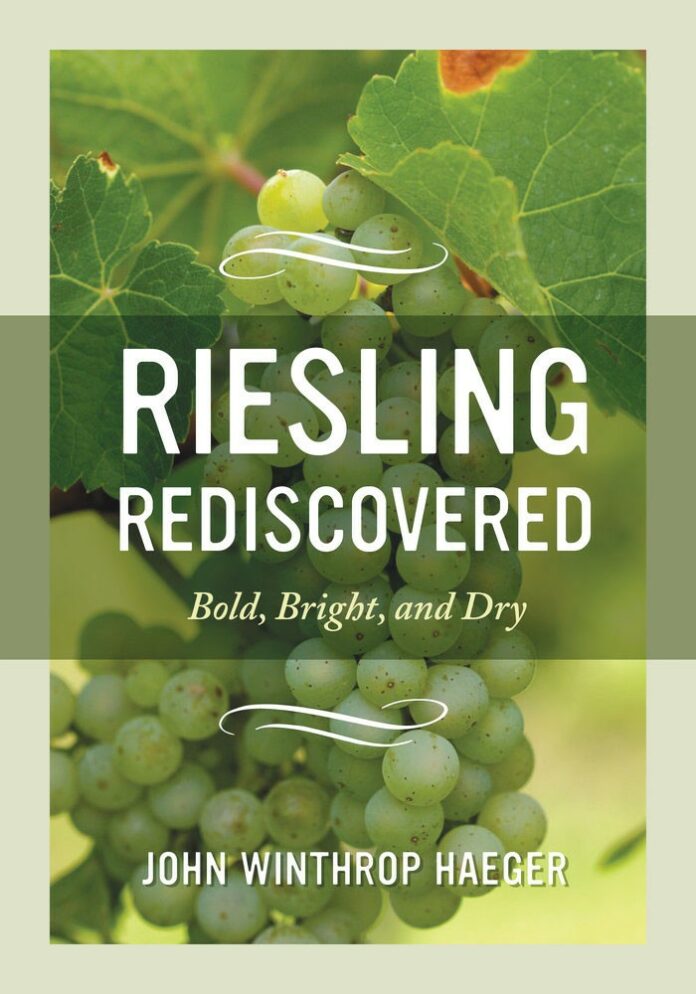
To help untangle the myths of Riesling, Haeger wrote what is almost certainly the definitive book on the varietal currently in print in the English language. Riesling Rediscovered: Bold,
Bright, and Dry
($39.95) was released this spring by University
of California Press. Haeger, who lives in the Bay Area, is scheduled to appear at Cartograph Wines in Healdsburg on Wednesday,
Aug. 10. A benefit for the Friends of the Sonoma County Wine Library, Haeger’s talk is titled “Riesling Myths and Mysteries.”

Unlike author Stuart Pigott’s also informative, if more boosterish Best White Wine on Earth, Haeger’s book focuses on the dry and nearly dry styles of Riesling, which he says now account for three-quarters of the varietal’s German production after a movement that began in the 1970s, dubbed the “Trockenwelle,” or “dry wave,” shifted the industry to the dry style.

The book itself may sound dry, as it is a work of actual scholarship some 360-plus pages long, but fans of both reading and wine will enjoy Haeger’s precise and fluid prose. The book explores the history of Riesling, from the dusty Medieval archives of German towns to the Sonoma Coast, and then profiles individual producers in Europe and North America.

The Aug. 10 event includes a tasting of locally produced dry Riesling. Although they may not be available at this particular tasting, several dry Rieslings that I recently enjoyed include Imagery Estate 2014 Upper Ridge Riesling ($26) and Horse & Plow’s the Gardener 2013 Carneros Riesling ($30). The most assertive example I’ve tasted yet from this Pine Mountain-Cloverdale Peak vineyard, the Imagery boasts mineral oil and honeycomb over lime and lychee, South Australia–style. With an extra year to develop that enticingly floral bouquet I like to call “petrol blossom honey,” the Horse & Plow comes from an organically farmed Robert Sinskey vineyard.

“Riesling Myths and Mysteries,” Aug. 10, 5:30–7pm. $30. Cartograph Wines, 340 Center St., Healdsburg. 707.433.8270.

Festival Season

0

This weekend, Sonoma County basks in late summer glory with two outdoor festivals that celebrate music and community, and feature the best in folk, rock, blues and soul.

On Saturday, Aug. 6, the Petaluma Music Festival marks its ninth year with its biggest lineup to date. Headliners include multitalented roots-rock songwriter Jackie Greene, celebrated Sebastopol guitarist Steve Kimock and San Francisco soul-rockers the Mother Hips (pictured), led by Tim Bluhm and Greg Loiacono since 1990.

Formed by Petaluma High School music director Cliff Eveland, the Petaluma Music Festival last year raised over $30,000 for music programs in the town’s public schools. In addition to ticket sales, the festival boasts a silent auction and autographed guitar raffles to raise money for the kids.

The next day, Aug. 7, the 35th annual Sonoma County Blues Festival finds a new home at SOMO Events Center in Rohnert Park for an afternoon of masterful blues performers curated by longtime radio host Bill Bowker, who returns after a five-year hiatus.

Headlining the festival, Sonny Landreth learned blues slide guitar and incorporated improv jazz and classic rock riffs into it while growing up in Lafayette, La. Detroit veteran blues vocalist Janiva Magness, Mississippi multi-instrumentalist Lightnin Malcolm and North Bay favorites HowellDevine and Volker Strifler also grace the stage. For more info, see Concerts, this page.&

Rocky Road

0

It’s a hot and dusty day in Skyline Wilderness Park in the southern stretches of the city of Napa. You can hear the not-too-distant sounds of heavy equipment at the adjacent Syar Industries quarry operation below as little lizards silently scamper along a winding trail. There are signs along a stone wall at the edge of the park that warn of dangerous and man-made cliffs, and in various places along the trail, there’s evidence of the quarry operation—an old pit is clearly visible with a big pool of bluish-tinged water at the bottom of it.

As one strolls along the park trails through the tall dry grasses and shade trees, numerous areas where Syar has mined stone deposits for use in road-building and other construction projects in Napa and around the Bay Area become visible. There’s a rise that eventually comes into view called the Pasini Knoll, which provides a visual buffer between much of the ongoing quarrying activities and the park.

That knoll is at the heart of the local battle over a controversial expansion of the Napa quarry. As things stand now, Pasini Knoll will be mined—eventually—as part of a long-in-the-making agreement struck by Syar and Napa County in July to expand the quarry operation, to the dismay of local anti-expansion activists who have argued that, at the very least, the Pasini Knoll must remain as a visual buffer between the park and the quarry.

Opponents have argued against the necessity of the expansion and its environmental impacts for years, and continue to say that Napa County does not need what they insist is an inferior product for road-building. “We need a local source of aggregate,” acknowledges Kathy Felch, a leading opponent of the expansion, referring to the road-building material that’s drawn from quarries. “But we don’t want or need Syar Napa aggregate for road building. It is crummy product.”

That’s not an opinion shared by Syar, which has emphasized the abundance of the higher-quality basalt at the Pasini Knoll in its public comments. At a late April hearing before the Napa County supervisors, Syar staff counsel Michael Corrigan acknowledged that the Pasini Knoll expansion “has become the most controversial part of our project . . . and we did not make this decision lightly. As you can see from this process, if we had stayed within our existing footprint, we would have been much better off. We would not have been here today, but we are running out of basalt. And we need to find a new source, and Pasini is the new source.”

Syar Industries and its well-organized opponents have squared off for years over the quarry expansion, with anti-expansion advocates hammering away at diminished air quality, childhood cancer rates, water-quality impacts and keeping Skyline Wilderness Park out of the sightlines—and dust clouds—of the long-standing quarry operation. For every piece of anti-expansion science opponents cited, Syar had a response—as a 755-page environmental review demonstrates in exquisite, if numbing, detail.

In the end, the Napa supervisors voted 4–1 to grant a 35-year permit extension to Syar and green-lit a 106-acre expansion of the operation that will allow the company to extract over 1 million tons of the aggregate from the quarry over the duration of its lease. The entire expansion project, which was whittled down from 291 acres, came down to accessing the Pasini Knoll, which had previously been purchased from a private owner by the Syar family.

The company has been extracting rock with what’s known as an “indeterminate use” permit since 2008, and told locals that a new permit is critical if Syar is to stay in business in Napa, where the quarry has been in operation since 1926.

Getting a new a new permit with a time frame attached to it is ultimately a victory for oversight efforts at the quarry, says supervisor Brad Wagenknecht. His was the lone “no” vote on the proposed expansion, but he only wanted to see a smaller footprint for Syar, about 70 acres, with a dedicated buffer zone between the knoll and the park within Syar’s property. He delivered his vote with some reluctance. “I’ve been an appreciator of Syar as a corporate citizen,” he says, “so that always makes it more difficult.”

Syar has claimed that the Napa quarry would have run out of road-building material within a year unless the new permit was secured. Opponents decried that public posturing as a scare tactic designed to leverage a quick and favorable outcome for Syar. It wasn’t quick, but it was ultimately favorable.

The Napa site is one of nine quarries Syar operates throughout the state, and with an imminent new lease comes new promises for locals from the community-friendly, family-owned business: more recycling of old road bed materials into new road-building product at the plant; 10 to 20 new middle-class jobs for locals at the quarry; an asphalt-production plant on the grounds to help pave gnarly Napa roads; and assurances from the company that the overall footprint of the expansion will be limited, and the resultant air pollution from mining contained.

Another representative of Syar, Tom Adams, addressed anti-expansionists’ concerns at the April hearing, the second-to-last meeting before the supervisors agreed to a revised plan that’s focused on the Pasini Knoll. Adams checked off numerous boxes that he says showed Syar’s commitment to a clean and productive operation,

“We are reducing [greenhouse gas] impacts,” he said at the hearing. “We are reducing truck trips by 300 per day. We reduced the footprint. We retained the Skyline Wilderness Park trails. We increased the setbacks from the park. We included tree planting. We improved the mitigation measures . . .”

Syar’s optimism about its operation and the urgency to expand is not shared by all in the community. Felch is a lawyer in Napa whose organization, Stop Syar Expansion, joined with the Skyline Park Citizens Association in a one-two punch against the expansion.

Stop Syar has put the emphasis on its opposition squarely with the locals who live around the quarry and their exposure to the silicate particulate matter that is part of any quarry operation. The environmental impact report goes into all the dusty details of the debate over diseases wrought by airborne particulates—but when the dust finally did settle, Syar got what it wanted: access to the Pasini Knoll.

Wagenknecht notes that the concerns over silicate exposure is not so much an issue for the surrounding community as it is for the Syar quarry workers who operate under guidelines set by the federal Occupational Safety and Health Administration. The bigger concern for residents, he says, citing the Bay Area Air Quality Management District, “is not so much the silicate. The air district said the issue for neighbors in the community, as they see it, is the diesel” from Syar trucks coming in and out of the facility.

[page]

Felch doesn’t want the additional diesel fumes, and she doesn’t want the silicate exposure, either, or the sound of beeping trucks backing up in the quarry. She and her husband live across from Skyline Wilderness Park on Imola Avenue, in a homestead replete with goats and dogs and fruit trees and a big honking pet goose. Her property is located just outside Napa’s urban-rural boundary, on the rural side.

Felch points up Imola Avenue to the boundary beyond a fence that’s penning in some other goats where there’s a mostly Latino neighborhood. There’s a nearby children’s center as well, and one of the issues raised by anti-Syar activists is the high rate of childhood cancer in the county—the highest in the state. Yet the California Cancer Registry studied the spiking cancer rates and determined its cause was unknown—good news for Syar.

Despite the favorable vote for Syar, Felch says that the supervisors’ recent approval is by no means the last chapter in the expansion fight. Similar fights over expansionist-minded quarry operations in the North Bay have ended up in state court, and every indication is that this one’s headed there too. “We have the resources to sue them and see the lawsuit through,” she says. “It’s unfortunate that we have to do that.”

Along the way to this final resolution—all that remains after the supervisors’ vote last month, says Felch, is a legal OK from the Napa County counsel’s office—the battle over Syar’s expansion has also highlighted a generalized concern over the fate of Skyline Wilderness Park. The park, which covers over 850 acres and features some 25 miles of winding trails, along with rattlesnakes and wild pigs, is owned by the state of California and leased by Napa County.

The lease extends through 2030, and in 2009 county leaders voted to put a zoning overlay over the park that outlawed any local use other than recreational. But in a little-reported-on 2013 geological survey, the state highlighted 540 acres in and adjacent to the park as a prime location for high-quality aggregate for road-building and construction.

State officials have insisted that they have no particular design on Skyline Wilderness Park. Syar Industry lawyers and spokespersons have said the same thing: they support the county lease and zoning overlay, as it gives them a built-in buffer between the mining area and residential areas.

Yet the storyline over the fate of the park took a turn for the weirdly coincidental late last October. On Oct. 21, the Napa County Planning Commission gave its OK to the Syar expansion proposal, which kicked the battle over to the supervisors for a series of public hearings and the eventual vote in July. The very next day the state Department of General Services sent a letter to Napa County demanding that it remove the zoning overlay that banned commercial uses in the park. This raised big alarms with the Syar opponents who saw it as a possible deal in the making that could eventually green-light mining in the park, but Wagenknecht sees it differently.

In short, the state Legislature has voted three times in favor of selling the park to the county; it was vetoed twice, and the third time got hung up on a fight between the state and the county over the proper appraised value of the land, which has yet to be determined in an ongoing state-county squabble over its value.

“The real threat to Skyline Park is not Syar but the state not being willing to deal with the county,” he says.

The state told the Napa Valley Register that the timing of the demand was purely coincidental, and Syar officials, for their part, reiterated their support for the county plan to buy the park, given the built-in buffer zone. But under the new permit and expansion plan, the buffer is going to be eroded over time if Syar prevails and starts taking down the Pasini Knoll to feed local aggregate into road-building and other construction projects—which will include building materials for a new, just-approved $20 million jail in Napa County, just off the Syar land, that the state is paying for.

And there are other local projects on the horizon or in the works that are dependent on a supply of local aggregate, and by a continuing boomtown economy. “The city of Napa will be doing more roads, more streets, and all the other places around the county will be doing more—and you have a couple of hotels, a jail being built, the city of Napa looking at a new city hall,” says Wagenknecht. “Those are things that are going to be built, and if the economy stays hot for the next couple of years, that can happen over a few years.”

The Napa quarry is located in what state geologists refer to as the North San Francisco Bay P-C Region—a zone that was expanded by the state. In 2013, the California Geological Survey, which operates under the aegis of the California Department of Conservation, issued a little-noticed update to its previous study of aggregate resources in the North Bay, known as SR205. The survey was undertaken to ensure that the North Bay region has an identifiable 50-year supply of aggregate materials on hand—enough to build roads and infrastructure, and to have contingencies for natural disasters such as earthquakes, where the cleanup and rebuild is always dependent on lots of concrete and asphalt.

The North San Francisco Bay P-C Region has historically encompassed a smaller footprint within the North Bay as a whole, in deference to prized open space. But in updating the report, state geologists cracked the entire North Bay open and added 2,660 square miles of potentially minable land, which included parts of the state that were previously off-limits to quarry mining, such as West Marin county. The report also identified new areas along the Russian River that could be mined for aggregate materials in the future; Syar already operates a gravel-mining operation on the Russian River.

All told, the updated geologists’ report represented a six-fold increase in the classification of lands identified in the previous report, and also identified land within Syar’s Napa quarry and the adjoining parkland as containing a mother lode of minable materials.

The geological survey has routinely been cited by Syar Industries in public hearings as they’ve fought activists’ attempts to scuttle their expansion plans on environmental, aesthetic and pragmatic grounds.

[page]

The state geologists’ study wasn’t simply some geeky geologists identifying where the good lodes of aggregate material are located. In updating the report, the state reclassified several areas for potential mining under a process that’s known as “designation.” Among other findings, the report notes that the amount of aggregate materials used in road-building and construction in the North Bay was 9 percent higher than the previous 50-year survey estimated it would be. It also noted that some areas that had been previously identified as aggregate mining sites have been paved over and rendered un-minable in recent years, as the North Bay has seen its population centers spill out into surrounding regions.

There’s a basic agreed-upon principle at play here, which is that that it’s generally a good idea to have a locally based quarry. The idea is pretty simple: stone and gravel and sand are heavy, low-value materials whose per-ton price is driven up exponentially for every mile a truck has to drive with a load of the material (the stuff costs around $12 and $15 a ton, according to a scan of industry documents and reports).

But quarry operators are still subject to scrutiny and lawsuits. Syar has faced criticism over the quality of the air in and around its operations, and was threatened with a lawsuit over groundwater contamination in 2013 by the San Francisco Baykeepers for violations of the Clean Water Act at its Lake Herman quarry in Vallejo. Syar agreed to self-monitor its runoff as a condition of not being sued in federal court.

In 2007, several of its facilities were raided by the FBI over charges that remain unclear but appear to be related to requirements that it provide the highest quality aggregate material for road-building projects done by the state and subsidized by the U.S. Department of Transportation. Court records pertaining to those raids have been sealed, and a regional FBI spokesman would not shed any light on those raids and the rationale for them.

The FBI raid coincided with the emergent Great Recession, and Syar was seeing demand for its product dry up. There’s a reason the roads in the North Bay have been a mess for years. The stone, rock and gravel industry took a huge hit in the 2008 recession and is only now making a comeback as the economy recovers.

The question raised by anti-expansionists is whether this particular quarry operation is necessary to Napa County. Syar says that indeed it is. In documents and in testimony before the Napa supervisors, Syar Industries notes that 78 percent of the product mined from the Napa quarry stays in the county. The rest is shipped out to Marin and Sonoma counties. According to state geologists, about 10 percent of the aggregate used in the North Bay is imported from British Columbia. One undercurrent of the fight over the Napa quarry expansion has been the activists’ focus on the quality of the aggregate produced there.

The state geologist’s 2013 report says the grade of material found in Napa is a high-quality material acceptable to state road-building standards. But Steven Booth, a key local Napa figure in the anti-expansion efforts, says that while the Napa product is high-quality, the quality is higher from the nearby Lake Herman quarry because, as he puts it, the material in Napa is more of an “agglomerate” of material whereas Lake Herman provides a cleaner and less mixed product when it is extracted.

Booth pushed for information on Syar’s business around the county, he says, and filed public records requests and talked with numerous officials around the county. He says they all tell him the same thing: Lake Herman is the better source for material used in road projects in Napa cities like Calistoga and St. Helena.

“Very definitely at Napa quarry the basalt is in veins,” he says, “and it is interspersed with other material.”

Wagenknecht says the activists’ emphasis on the quality of the Napa product is news to him, even as he credits the “very active group looking at this very closely” for helping inform the overall expansion plan that was ultimately hammered out. “I hadn’t heard that,” he says of Booth’s findings and claims. “We did have one public works director from the city of Napa that said they needed the product, and that’s the sum total of public input that we had on that.”

Critics also point out that, even as Syar has said it’s going to run out of basalt within a year and must have access to the Pasini Knoll in order to keep the aggregate flowing, the company has also said it wouldn’t even be mining the knoll for several years, at a minimum. In the final hearing before the Napa supervisors, on July 11, Corrigan told the supervisors that the timetable for mining the knoll was contingent upon market demand—which appears to be gaining steam.

“I’m not anticipating getting close to the park for 10 or 15 years,” he said, “or even significantly into the Pasini Knoll for 10 or 15 years. Over the 35 years, we would be getting close to the edge of the mining area if the demand remains heavy. If not, we would be farther away.”

Syar Industries regularly wins good citizenship awards and other honorifics through the efforts of family scion Jim Syar and the Syar Foundation, which won the statewide 2015 award for good citizenship from the Center for Volunteer and Nonprofit Leadership. True to the North Bay way of doing business, the family also grows grapes along the Russian River, and has made numerous campaign donations to local politicians over the years. The family also owned a golf course in Vacaville that they abruptly shut down this February, citing a diminished interest in the sport while lamenting the layoff of dozens of workers.

Syar also has the friendly editorial ear of the local paper of record, the Napa Valley Register. Last year, the paper produced an op-ed in support of the Syar expansion, and the text of the op-ed—which, anti-expansion activists like to point out, ran the same day Syar took out a full-page advertisement in the paper—highlighted that it was unusual for them to weigh in on a local issue as they wholeheartedly endorsed the expansion while noting the activists’ “howls” of protest.

Anti-expansion activists can claim a limited victory over Syar’s original proposal. As the battle ground on for eight years, Syar’s proposal was whittled down several times, starting at a 291-acre proposal before they finally agreed to the 106 acre deal—which is another way of saying that Syar kept its eye on the prize all along: Pasini Knoll. As Tom Adams noted in April before the supervisors, “Pasini—that’s the whole, the only reason Syar applied for the permit was to get access to Pasini. So without that, the project doesn’t work so well.”

Nor does Measure T, a local sales-tax referendum that voters agreed on in 2014 that will see a huge push in road-building projects in Napa County beginning in 2017—just in time for the new Syar permit. As anti-expansionists prepare to bring their fight to court, they face a massive, taxpayer-supported plan dedicated to improving the local infrastructure.

“We know that Measure T is $30 million for road maintenance and resurfacing only throughout Napa County,” noted Corrigan at the April meeting before the supervisors, and Wagenknecht speaks of the “pent-up demand” for aggregate as Measure T money starts flowing.

With that kind of built-in demand on the immediate horizon, it seems that no matter how you crush the stones and crunch the numbers, Syar Industries will hit pay dirt on the Pasini Knoll.

Vokab Kompany Bounce into Sebastopol

0

WEB-VokabPromo1_JORGPHOTO
San Diego electro-funk big band Vokab Kompany is hot off the release of their 5th studio album, The Good Kompany Record [Instrumentals], and is performing this weekend at HopMonk Tavern in Sebastopol as part of their summer tour.
Led by vocalists Rob Hurt and Burke Baby, the eclectic ensemble has successfully gotten the party started for the last 10 years by blending elements of hip-hop, soul, electronica and pop and
Their latest album, an instrumental version of their fourth studio effort (simply titled The Good Kompany Record), is an eclectic testament to the myriad influences and styles the group is capable of mastering in an effortless collection of beats.
Listen to the instrumental album below and catch the Kompany when they perform on Friday, July 29, at HopMonk in Sebastopol with Los Angeles funk stars Soluzion.

July 28: Dance for Your Health in Yountville

0

In the fight against Alzheimer’s and dementia, researchers have found an ally in ballroom dancing. This week, Northern California group Ballroom Dance for Senior Fitness hosts its Awareness Gala in Yountville that will offer information on utilizing dance to boost brain activity and prevent dementia. Yountville mayor John Dunbar will be on hand to offer a declaration of the city’s support, and Napa musician Johnny Smith will lead big-band Opus to play the hits of the 1950s and ’60s as you dance the night away on Thursday, July 28, at the Napa Valley Performing Arts Center at Lincoln Theater, 100 California Drive, Yountville. 6:30pm. $25. 707.944.9900.

July 29: Art Bound in Sebastopol

0

With three distinct gallery spaces, the Sebastopol Center for the Arts opens a trio of fascinating and diverse exhibits this week. In the large Galletta Gallery, the juried group show ‘Boundaries’ offers a wide selection of works in various media interpreting the titular theme by exploring geographical, political, social and emotional takes on the word. Gallery II showcases a solo installation of mixed-media book art by local artist C. K. Itamura, “w[o]rdrobe,” that blends fashion and text. Gallery III displays a photography project of Gary Kaplan, “The Continual Effect of Abuse: Using Photography for Healing.” These exhibits open with a reception on Friday, July 29, at the Sebastopol Center for the Arts, 282 S. High St., Sebastopol. 6pm. By Donation. 707.829.4797.

Straight Up

Healdsburg has been a cocktail hotspot ever since Scott Beattie started shaking things up at Cyrus in 2005. Cyrus closed in 2012, and Spoonbar has taken up the mantle of craft cocktails. As things go in restaurants and bars, the employees of one place leave to open their own place. That's what happened with Duke's Spirited Cocktails. Spoonbar alumni Laura...

Death Penalty Duel

Moments before Richard Allen Davis was sentenced to death in a San Jose courtroom for the kidnapping and murder of Polly Klaas, the young girl's father addressed the court. "He broke the contract; for that he must die," Marc Klaas said on Aug. 5, 1996. "Mr. Davis, when you get to where you're going, say hello to Hitler, say hello...

Latino Lessons

It's a joke that probably dates back to the time of the Aztecs. Attempting to prove mental superiority, a poor schlub reveals a hilarious series of intellectual failings. In the Aztec version, that was probably some guy about to be sacrificed to Quetzalcoatl. Or did the Mayans do that? Damn. I guess I'll have to go see John Leguizamo's Latin History...

Nuevo Rock

'When I first met Rodrigo , we talked about guitar, and guitar and more guitar," says Gabriela Quintero. Since that first conversation at Mexico City's Casa de Cultura art school in 1989, the two have built a 25-year musical partnership, performing an exciting array of rock originals and covers on nylon-stringed acoustic guitars that incorporate flamenco and rumba for high-powered...

Dry Wave

For Riesling lovers, there is something disingenuous about the recent hue and cry for low alcohol wines, for wines of "balance," for food-friendly wines made from obscure, heritage white grapes of California. Hello—there's Riesling? They almost always fail to even mention the varietal. "It tends to inhabit a world of its own," author John Winthrop Haeger told a group at...

Festival Season

This weekend, Sonoma County basks in late summer glory with two outdoor festivals that celebrate music and community, and feature the best in folk, rock, blues and soul. On Saturday, Aug. 6, the Petaluma Music Festival marks its ninth year with its biggest lineup to date. Headliners include multitalented roots-rock songwriter Jackie Greene, celebrated Sebastopol guitarist Steve Kimock and San...

Rocky Road

It's a hot and dusty day in Skyline Wilderness Park in the southern stretches of the city of Napa. You can hear the not-too-distant sounds of heavy equipment at the adjacent Syar Industries quarry operation below as little lizards silently scamper along a winding trail. There are signs along a stone wall at the edge of the park that...

Vokab Kompany Bounce into Sebastopol

San Diego electro-funk big band Vokab Kompany is hot off the release of their 5th studio album, The Good Kompany Record , and is performing this weekend at HopMonk Tavern in Sebastopol as part of their summer tour. Led by vocalists Rob Hurt and Burke Baby, the eclectic ensemble has successfully gotten the party started for the last 10 years by...

July 28: Dance for Your Health in Yountville

In the fight against Alzheimer’s and dementia, researchers have found an ally in ballroom dancing. This week, Northern California group Ballroom Dance for Senior Fitness hosts its Awareness Gala in Yountville that will offer information on utilizing dance to boost brain activity and prevent dementia. Yountville mayor John Dunbar will be on hand to offer a declaration of the...

July 29: Art Bound in Sebastopol

With three distinct gallery spaces, the Sebastopol Center for the Arts opens a trio of fascinating and diverse exhibits this week. In the large Galletta Gallery, the juried group show ‘Boundaries’ offers a wide selection of works in various media interpreting the titular theme by exploring geographical, political, social and emotional takes on the word. Gallery II showcases a...
11,084FansLike
4,606FollowersFollow
6,928FollowersFollow