Sparkle & Pop

0

Celebrate Independence Day with these exciting community and concert events.

In Sebastopol, 2016 marks the Kiwanis Club’s 43rd annual fireworks display. Prior to the sky explosions, there will be a variety of live music, games, raffles and more, topped off with a flag ceremony. The fireworks begin once the sky is dark on Sunday, July 3, at Analy High School Football Stadium,
6950 Analy Ave. 6pm. $5–$10; kids under five are free.

Novato’s patriotic parade is one of the largest Fourth of July events in the Bay Area. World War II vehicles, classic cars and horses add to the traditional American celebration, and floats and marching bands complete the festivities on July 4, Grant Avenue between Reichert and Seventh Avenue, at 10am. Free admission.

At the Napa County Fair, activities range from picnicking, games, a classic parade in downtown Calistoga and a full fireworks show on the Fourth. 1435 N. Oak St., Calistoga. Noon to 11pm. $15–$20 and up.

At Sonoma State, Weill Hall and its lawn hosts vocalist Steve Tyrell and the Santa Rosa Symphony performing classic songs from the American Songbook. The afternoon boasts carnival games, face painting and food. Fireworks follow the music on July 4
at 1801 E. Cotati Ave., Gates at 4:30pm;
music at 7:30pm. $25–$40. 866.955.6040.

Reborn on the 4th

0

Our cover story this week is an excerpt from William Scott Morrison’s novel The Luck of the Draw. He says he wrote the book so people might be reminded of the perils of engaging in unnecessary wars. It’s a well-timed reminder, as America celebrates its 240th anniversary this weekend, in a 2016 that will be remembered for its raging lies wrapped around a flag of proud intolerance.

I recently watched The Last Days of Vietnam, a documentary about the terror faced by Vietnamese citizens and military officials who had worked for the Americans as the Viet Cong rolled into Saigon in 1975—complete with that desperate helicopter-on-roof scene that came to characterize the rushed and chaotic evacuation. It was not a proud moment for America.

Yet it has always struck me how, just one year later, the fall of the American embassy in Vietnam was brushed aside to make way for the fireworks. Just a year later, there we were, celebrating the Bicentennial and finding all sorts of things to be proud of—especially Rocky Balboa.

Rocky was just one of many Hollywood classics released 40 years ago that framed a new narrative for an America eager to reclaim its place in the world through the magic of Hollywood. This trend would find its apotheosis four years later when a former movie star was elected president. While it wasn’t all escapist, 1976 films reveal a cultural repositioning and an urgency to wrap it up and move on.

We had red-white-and-blue Rocky at the top of the Oscar heap, and All the President’s Men to settle the Nixon score, along with WWII genre movies that included Midway, which looked back to a good war to rationalize the imperatives of a patriotic 1976. But ’76 also saw the release of Taxi Driver, whose anti-hero is a Vietnam vet struggling with a past he can’t shake, no matter how long he stares at the mirror talking to himself.

I think of Travis Bickle’s psychotic break with reality every time Congressman Trey Gowdy opens his mouth and starts talking about the American embassy in Benghazi. This week, Congress released its final report on Benghazi, but for Gowdy, there will never be a final reckoning. For Benghazi diehards, who insist on a narrative similar to Vietnam—the politicians lost the war—those helicopters are still hovering around out there somewhere, anxious to clutch victory from defeat, lest anyone remember the truth of the matter.

Tom Gogola is the news editor of the ‘Bohemian.’

Open Mic is a weekly feature in the ‘Bohemian.’ To have your topical essay of 350 words considered for publication, write op*****@******an.com.

Supreme Drama

0

When the Supreme Court ruled on Roe v. Wade in 1973—making most abortions legal in the United States for the first time—the decision marked the end of a very long road.

But in Lisa Loomer’s remarkable new play Roe, running through Oct. 29 at the Oregon Shakespeare Festival in Ashland, the playwright shows that the landmark Supreme Court decision is very definitely not the end of the story. Taking place just before the intermission, the Roe v. Wade decision is merely the first turning point for two real-life women whose names will forever be linked to the abortion question.

One is Texas lawyer Sarah Weddington (Sarah Jane Agnew, marvelous), the young, married attorney who, at the age of 26—in her very first court case of any kind—successfully argued the pro-choice case before the Supreme Court. The other woman is poor, undereducated, frequently pregnant Norma McCorvey (a magnificent Sara Bruner).

Better known as “Jane Roe,” McCorvey was the anonymous plaintiff whom Weddington recruited and then represented in the case. As played by Bruner, she’s also one of the most fascinating, complex, frustrating and hilarious characters to hit the OSF stage in a very long time.

On a spare, mechanized set of gleaming metal, the tale begins as Weddington and McCorvey address the audience, testily battling one another as each attempts to narrate the story. As a large cast portraying dozens of characters, the run-up to the case takes place with mounting drama, followed by the even more remarkable aftermath in which Weddington continues to battle to keep the Roe decision from being reversed or compromised, and McCorvey unexpectedly evolves from defender of choice to primary mouthpiece for the “right to life” movement.

The question becomes, at what point did McCorvey—clearly used by so many different people—finally start playing the system herself? Is she a victim or a con artist—or a little of both?

Directed with impressive reserve and invention by Bill Rauch—who will remount the show next year at Berkeley Repertory Theatre—Roe is surprisingly rich in humor and plot turns. Whatever you think you know about this most divisive of issues—an issue made freshly relevant given the Supreme Court’s ruling on Texas abortion law—you will leave Roe knowing much more, and possibly questioning your own conclusions.

Rating (out of 5): ★★★★★

The Oregon Shakespeare Festival runs yearly from February to October, in Ashland, Ore. For information on all currently running shows—and two more yet to open—visit osfashland.org.

Look, Blanc

0

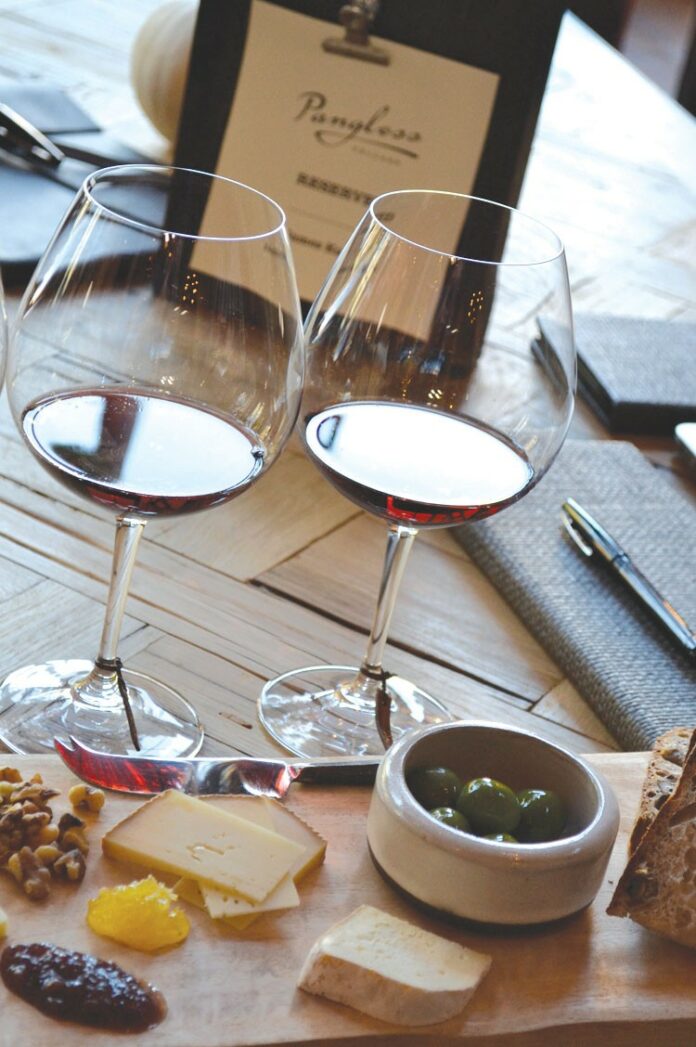
One less-remarked-upon outcome of the perhaps much-too-remarked-upon “Paris Tasting” of 1976 is the shotgun-wedding effect it had on Cabernet Sauvignon and Chardonnay. Better known by the names of their home villages in far-apart Bordeaux and Burgundy, the two assumed the throne as the reigning varietal wines of Napa Valley. Sauvignon Blanc, the actual mother of Cabernet, was let in the side door under an assumed name, Fumé Blanc. Now, especially among producers of Bordeaux-style wines in Napa and northern Sonoma, a varietally labeled Sauvignon Blanc is almost the rule.

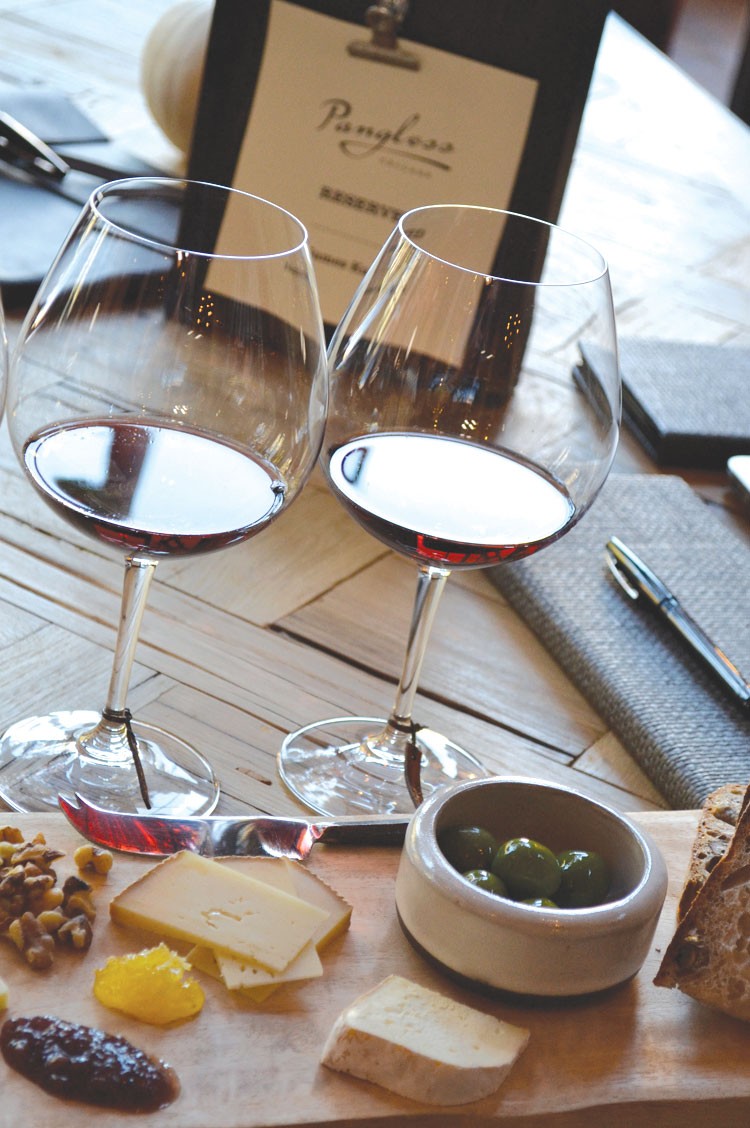
13 Celsius Marlborough Sauvignon Blanc ($17) Hoping to calibrate my palate to the so-called New Zealand style, I find a newly launched wine (after careful test marketing) with a calibration of its own: the back label is supposed to turn blue when it reaches optimal serving temperature, 55 degrees Fahrenheit. I’m still waiting for the label to do anything but indicate that it may be a sign of market saturation that Savvy must now be sold with a gimmick. But it’s spot-on representing for the style: green apple Jolly Rancher, kiwi fruit and sour Pixy Stix acidity tickling a cool, fruity finish.

Captûre 2014 Tradition Sauvignon Blanc ($30) Must favorites always be priciest? This Lake County and Sonoma County cuvée zaps the palate with as much lemony zing as the following wines, but floats a little higher on the tongue, and recalls not just lemon, but those granola lemon bars once sold at a favorite cafe.

Salvestrin 2014 St. Helena Sauvignon Blanc ($25) From a family of longtime Napa growers, whose wines are perhaps best known for being “undiscovered,” this teases with lemon merengue pie aromas sweetening up herbal notes of just-dry hay. Creamy lemon pastry flavor adds appeal but not weight to a lean body. This is what I expect from the better examples of contemporary Napa SB.

Captûre 2014 Les Pionniers Sauvignon Blanc ($45) I should have said pricier, not priciest—with more aggressively herbal character, citrus pith and bitter melon, this is also typical of the varietal, but I don’t prefer it to the Tradition—at least not today.

Clif Family 2015 Rte Blanc Napa Valley Sauvignon Blanc ($28) Named for the “white roads” of Italy traversed by founder Gary Erickson. A little smoke, a bit of apricot, honeydew melon and pear, easy on the lemon in this juicy, soft Blanc. The label shows Erickson crushing a hill on his bike, suggesting that this screw-capped wine might come in handy if packed in your bike bag.

Plum Job

0

If you know anything about Luther Burbank, you know the famed local horticulturalist developed the Santa Rosa plum in his hometown. It’s summer, and last week’s heat wave means the plums are juicy and ripe right now.

Burbank developed his plums for a long shelf life as well as durability for transportation. The plum also has a very long season, which makes it a great varietal to grow in the North Bay if you love plums.

The Santa Rosa plum is a hybrid of Prunus triflora, Prunus simonii and Prunus americana. In 1914, Burbank declared the Santa Rosa plum to be among his four best. His other favorites were the Formosa, beauty and Wickson plums.

When Burbank was developing his hybrid there were no plant patents, so in order to keep his intellectual property secret, he had a special way of recording which trees he used as parents when he was pollinating his fruit. He would tap the pollen from the flower onto a glass watch face, then use a horsehair brush and brush the pollen onto the flower of the tree he wanted to cross-pollinate. He would then tie a piece of torn clothing around the tree that he got the pollen from, as well as the tree he pollinated, and in this way kept track of which tree was the parent to which fruit.

Burbank is also known for the development of the pluot and the plumcot, botanical achievements nay-sayers at the time told him couldn’t be done.

The Lottery

William Scott Morrison’s novel Luck of the Draw was more than 20 years in the making. Morrison, 68, has lived in Sonoma County since 1975, and has created a highly personal work of historical fiction that runs from 1959 to 1973—essentially the 1960s and the years before and after.

The character McGill is a better version of himself, Morrison says. “He is me if I was really cool.”

The central element of the book is the Vietnam War. The book’s title is taken from the lottery system used to induct draftees into the war.

There is no shortage of books on Vietnam and the ’60s, but Scott says his objective in the book was to make sure the main lesson of the war isn’t forgotten: avoid foreign conflicts that don’t serve our national interest

“I wanted to get the truth out about Vietnam as I saw it,” Morrison says. “My goal was to get that into the public consciousness, at least a little bit.”

In this scene, a group of fraternity brothers gather around the TV to see who gets an unlucky number and goes to Vietnam.
—Stett Holbrook

Before the drawing, the Pentagon had been publicizing the Army’s anticipated manpower needs for the coming year, so everybody knew what to expect. The official estimate was that the lucky males in the highest third, from about #240 to #366, were relatively safe and could get on with their lives; those in the middle third, from “about” #125 to #240, were in a sort of limbo and would “probably” not be drafted; and all healthy males in the lowest third who had no deferment were goners. The new system was good for freshmen like Dawkins. If he kept a “gentleman’s C” for the next year, he would be off the hook and not have to worry about the draft unless things got so bad that Viet Cong war canoes came paddling up the Ohio River.

When Nixon’s big show began, the carpet in front of the TV was packed tight with guys sitting on the rug, beers in hand, like at a rock concert. The crowd behind the horseshoe of couches and chairs stood four and five deep, with guys in back standing up on radiators and tables and chairs brought in from the dining room to get a view of the tube.

The soothing voice of Walter Cronkite, America’s most trusted TV newsman, explained how the drawing would work. The camera focused on a clear, cylindrical jar, about three feet high, the same exact one used in the draft lotteries of 1917 and 1940. At the bottom of the jar were 366 blue plastic capsules, about an inch long, each containing a piece of paper with a different day of the year on it. Cronkite held up a sample, and somebody in back yelled, “What’s it look like?”

“Like a fucking horse pill,” came an answer from the front.

The capsules would be picked at random, and the order in which your birthday came up was your very own draft number. Unlike most lotteries, the sooner your number came up, the bigger you lost.

When Nixon’s face appeared on the screen the house rocked to a cacophony of hisses and boos and shouts of “Asshole!” and “Motherfucker!” Just then McGill saw Rotsee Ross come in, carrying his white saucer hat in one hand and brushing snow off the shoulders of his navy blue ROTC overcoat with the other. He grabbed a chair from the dining room and climbed up to be able to see the TV over the crowd in front. When he saw Nixon, he began shaking his white saucer hat at the TV and yelling “Motherfucker” louder than anybody.

The lottery began when a dour Republican congressman nobody had ever heard of stepped up to the jar to pick the first number. The banter stopped, and the house became eerily silent. It must have been like that all across America, as millions of guys and their girlfriends and families gulped and held their collective breaths. The congressman seemed to be enjoying himself as he bent over and shoved his arm into the three-foot-deep jar, right up to his shoulder, to get his hand all the way to the bottom. He fished around for a few seconds, then pulled out a capsule and handed it to an official seated at a table. The official opened the capsule, removed the paper, read it, showed it to other officials sitting around and said, “September 14th.”

“September 14th,” Cronkite repeated in his most stentorian, anchorman tone. “September fourteenth is number one.”

[page]

Everybody looked around to see who would claim the first-place money, but no one did. Rhinebecker checked the calendar in case the winner wasn’t present, shook his head and said, “Nobody’s got it.”

A Little Sister wrote “1” next to 14 on the September poster with a marker and put a line through the space where a name would have gone.

After the first pick, instead of an official doing the picking, the remaining numbers were chosen by 365 young men of draft age from every state in the union who had been flown in to do the dirty work. A tall, cheery-faced boy with thick Buddy Holly glasses jumped up and stuck his arm in the jar, picked a capsule, and handed it to the official who announced, “April 24th,” followed by Cronkite who intoned, “Number two is April 24th.”

“Hey, that’s me!” said somebody’s date, but girls didn’t count.

Rhinebecker checked his calendar. “Nobody’s got it.”

A Little Sister with a black marker wrote “2” next to 24 on the April poster, and another Little Sister used a pink marker to write in the name of the girl who didn’t count.

On the third pull the official said, “December 30th—”

A plaintive “NOOO!” wailed out, and up from a couch jumped Baker, a ladies’ man who always seemed to have a different girl on his arm, just about the last guy you’d expect to see carrying a rifle. Like McGill, Baker was a senior and out of options. He hopped around, shaking his head, tugging at his blonde, Beatlesque hair and screaming, “NOOO! FUCKING NOOOOO!”

The brotherhood offered him its sincerest condolences.

“Die, Baker, die!”

“Your ass is grass, Baker!”

“Dead meat, Baker!”

Somebody sang out, “Bake, Bake, Baker man, go to Nam, fast as you can,” and everybody joined in, chanting, “Bake, Bake, Baker man, go to Nam, fast as you can!”

A Little Sister using a red marker put a “3” next to 30 on the December poster, wrote in Baker’s name, drew a fat circle around it and put a big red star next to it.

Rhinebecker took out a 10 and a five to cover the second and third place “winners” and handed Baker the cigar box stuffed with cash. “Congratulations, Brother Baker, sir!”

Baker opened the lid, peered in, then shaking his head in disbelief, slumped down in his seat on the couch and made a goofy show out of counting his winnings, one bill at a time, but his wide-eyed, shit-eating grin betrayed his utter despair.

With the big money out of the way, everybody relaxed, and the race was on for second. For a while it seemed nobody would take it until the official said, “September 26th—”

“Holy shit!”

It was a freshman pledge, Sharrock. “Pledge Sharrock takes second,” Rhinebecker announced, and handed him the $10 prize. McGill thought it unfair for a freshman to be in the money, since if he kept a 2.0 average for a year he would be safe unless Nixon changed the rules again.

On the 27th pick, the official said, “July 21st—”

“Jesus fucking tits!”

It was Zovis, a junior whose GPA hovered dangerously close to 2.0, putting him at high risk if he got less than a “C” in any course. Already overweight from his job as a fry cook at the Char-Pit, he often joked about eating his way into a medical out. He wasted no time, taking his $5 prize and yelling, “Sharrock, call Marino’s for a large pepperoni with mushrooms and extra cheese.”

Next up was fourth place, just out of the prize money, the biggest loser of all—the douchebag of the day. A few numbers went by and the official said, “March 17th,” followed by Cronkite intoning, “Saint Patrick’s Day is number 33.”

McGill was standing in the back, a cigarette in one hand, a beer in the other, totally dazed, an empty chill already sweeping through him as Rhinebecker yelled, “That’s Brother McGill!” and everybody rubbed it in, hooting, “DOOOOSSHH! DOOOOSSHH! DOOOOSSHH!”

Feminist Fatale

0

As the presidential race comes down to a battle between the unpopular Hillary Clinton and far more unpopular Donald Trump—what are supporters of Bernie Sanders to do, especially those of a feminist mind?

Sanders drew a lot of feminist attention in the North Bay, because his proposed policies would have assisted minority women and women in poverty much more than any of Clinton’s programs. The rhetoric around abortion and the ability to control one’s body is a debate that’s sure to intensify in coming weeks and months following the Supreme Court decision on Monday that voided some of Texas’ extremely restrictive anti-abortion policies.

Sanders has been fully pro-choice his entire career and supports Planned Parenthood, as well as the right to access contraception with public money. His fight for the Equal Rights Amendment in the 1970s and his call to raise the minimum wage to $15 also demonstrate his more feminist tendencies, given the ongoing reality of a “glass ceiling” for wage-earning women. The “centrist” Democrats supporting Clinton recently fought to exclude the Fight for $15 from the party platform at next month’s Democratic National Convention. But Sanders is not likely to be the Democratic Party’s nominee.

Clinton has some solid feminist ideals and positions, and got an endorsement from Planned Parenthood over Sanders in January. Like Sanders, Clinton has been in the forefront of reproductive rights for decades. She embraced the idea that abortions should be “rare, safe and legal” and also supports the repeal of the Hyde Amendment, which bans the use of federal funds for abortions. She says she plans half of her cabinet post to go to women, she famously told the United Nations that “women’s rights are human rights” in 1995, and she pushed women’s issues during her tenure as secretary of state. Yet the center-right Clinton is also considering the pro-choice but anti-abortion Virginia senator Tim Kaine as her vice presidential running mate.

Whatever else you think of her, Clinton has faced misogyny and sexism throughout her career, and while her white male counterpart is busily disrupting politics, flip-flopping on his abortion views and dodging golf balls with swastikas painted on them, Hillary still faces critics likes Fox News’ Howard Kurtz saying she is too shrill—not to mention the torrent of hate from detractors who routinely call her a bitch and a criminal. She has been pulling knives out of her back throughout her career—some planted there by her philandering husband and herself (see: State Department emails, Wall Street speaking fees)—and yet she is still here, for better or worse.

Clinton is a feminist icon merely by being a woman in high public office, and her presidential candidacy gives a voice to women that previous generations did not have. So what are Bernie-supporting feminists to do?

I talked to Liza Featherstone, author of False Choices: The Faux Feminism of Hillary Rodham Clinton. She’s a Sanders supporter for myriad reasons. “He was the first candidate in American politics advocating for social democracy,” she says, “and he has universal programs” that would be of special benefit to minority women and women struggling financially. Featherstone’s objection to Clinton is that she “dedicated her career to an agenda of austerity and militarism.”

The Brooklyn resident plans to vote for Green candidate Jill Stein, a safe bet in a nonswing state that Clinton is almost guaranteed to win, despite Trump’s claims to the contrary.

“We should not have a right-wing racist as our president, but it’s important to be clear that Hillary is not a good antidote,” Featherstone says. “The most important point here is that she has dedicated her life to representing the elite more than anything. Sure, some women are part of the elite, but most women are not.”

Sanders has said all along that defeating Donald Trump is essential, and local Sanders supporter Alice Chan is in agreement, even while she won’t say who she’ll be voting for in November.

“A vote for Jill Stein is a vote for Donald Trump,” says the Sebastopol resident and Democratic Party activist. “We hope that Hillary will be influenced by the Sanders momentum and will realize that she needs our support.” Chan emphasizes that young women got behind Sanders “because they didn’t see a vision of the future in what Hillary was proposing. Getting on her case to see what our vision is is so important.”

Tiffany Renée, the former vice mayor of Petaluma, has been an unapologetic supporter of Clinton all along. She cites Clinton’s focus on families and children, and her history of being strongly pro-choice as reasons for casting her vote for the first female president.

“I feel that our democracy is in jeopardy, and I feel that Hillary has the ability to get elected and get Congress flipped,” Renée says. Renée has been politically active in Sonoma County much of the 27 years she has lived here. “As a Latina, I see [Clinton’s] background and support for urban communities as being very strong, including what she can do for unemployment and women of color. I’m very excited to see this historic moment and to see how far she’s come.”

Sonoma County’s primary vote was the outlier in the North Bay, a close contest with Clinton coming in at 50.7 percent and Bernie nabbing 48.2 percent of the vote. Marin County, which was putatively “Bernie Country,” went for Clinton by a big margin, 58 to 42 percent, despite ample signage and pro-Sanders agitation in places like Bolinas that decried Clinton as a faux-feminist Trojan Horse in the service of corporate liberalism, privately run prisons, a war with Syria and lots of fracking. Clinton also crushed Sanders like a grape in the more conservative Napa County, 60 to 39 percent.

Whether those primary numbers are an endorsement of Hillary-as-feminist is unclear. But it is clear that, given the widely held assumption that Sanders would dominate in the North Bay, there is a big bloc of women who see Clinton as the best candidate to advocate for their rights—while also avoiding a Trump presidency.

Tom Gogola contributed reporting to this article.

Crossfire

After the Brexit vote, a fantasy of English intrepidness is welcome. It arrives in Susanne White’s adaptation of John le Carré Our Kind of Traitor.

We begin with betrayal. “The Prince” (Grigoriy Dobrygin), the new head of the vor, the Russian mafia, is supposedly going legit; part of the public effort to get respectable involves signing over his murky accounts into a bank being considered for the London exchanges. The ink isn’t dry when the Prince’s former associate is ambushed in the snow by machine gunners.

Cut, Bond-movie style, from the snows to the sands. In Marrakesh, a bored lit professor named Perry Makepeace (Ewan McGregor) is trying to patch things up on a vacation with his furious wife, Gail (Naomie Harris).

After Gail stomps away from a restaurant where they’re dining, Perry is invited to join a reveling Russian named Dima. Sweden’s Stellan Skarsgaard plays the big-hearted Slavic stereotype with infectious pleasure.

When Perry punches a rapey guest at Dima’s party, the Russian sees a man he can trust. Dima, a wealthy money launderer, is next on the Prince’s hit list. He wants to defect to England. If Perry can kindly drop off a thumb-drive to British customs, MI:6 will have proof that Dima has lots more info for them, and he’ll be able to hide from the Russian mob in London. But Hector, the government agent handling the case—played by Damien Lewis—has bigger plans for the professor and his wife.

It’s a smooth adaptation for two-thirds the way in, with satisfying locations and loads of thugs in tuxes. But the film loses its tension, and Gail’s turnaround from pissed-off spouse to willing partner is seriously abrupt. “Maybe we’ve been better at looking after other people than looking after each other,” she tells Perry.

Maybe someone should have looked after the script.

‘Our Kind of Traitor’ opens Friday at Summerfield Cinemas, 551 Summerfield Road, Santa Rosa. 707.552.0719.

Building Walls

0

Most murals, when completed, are just that—completed. No more action is required for the artistic vision to become clear.

But for artist Candy Chang, completing her mural was just the beginning. Chang started a series of mural paintings called Before I Die, where she painted a wall with chalkboard paint and inscribed the prompt, “Before I die I want
to . . .” and left chalk for passersby to leave their answers.

Chang started by getting permission to paint over a wall in her neighborhood in New Orleans, allowing her to be a part of the community, albeit indirectly. She then set up a website, beforeidie.cc, to display the wall with instructions on how communities can create their own.

Now there are more than a thousand walls around the world, in places such as Iraq, China, Denmark, Argentina and South Africa. Closer to home, Sebastopol is now on the map, with a wall erected at Toyworks toy store in the city’s downtown.

“We hope the community will gain inspiration to follow their life goals before it’s too late, and to help create a sense of security in us all when facing death” says Jessica Holcomb, local organizer behind the project.

Holcomb and a handful of friends launched a crowdfunding campaign in support of a local Before I Die wall and raised $500, surpassing their goal within two hours. With this money, Holcomb and her crew built an eight-foot-tall timber frame that supports plywood made into chalkboards. The words “Before I Die” were inscribed in large letters at the top of the wall, enticing anyone to come and write a response below in chalk.

Holcomb hopes that this will be a community outlet for those facing the deaths of loved ones, and a space for “triggering awareness of life, life goals and dream aspirations.”

The wall had its public debut on June 19. At the bottom of the installation, an inscription reads, “In loving memory of Peter W. Menuez,” Holcomb’s close friend who passed away last year; his death inspired her to build the wall.

Toyworks owner Jon Goehring offered space for the piece to be erected. “The wall itself, I think, really reflects the outlook and purity of kids,” he says. “Children see the world with unobstructed eyes.”

Goehring sees the wall as a representation of the imagination and dreamlike quality that children possess, but it also allows adults to revisit their childhood dreams as well.

As family and friends gathered around the wall at its debut, people were able to get a perspective into the lives and aspirations of their peers in a new way. Inscriptions such as “Go to Europe,” “Watch my daughter fall in love” and “Share the compassion that I have received” slowly accumulated on the chalkboard.

Construction of the wall allows it to be disassembled, and it may travel to other locations around town. Wherever it goes, the wall will remain a source of art, expression and inspiration.

Letters to the Editor: June 29, 2016

A Clever Line—Any Clever Line

If “a vote—any vote” was so important (“The California Front,” June 22), then why did every Democrat vote against the two bills Republicans offered in the U.S. Senate? Come up with a clever line to explain their craven hypocrisy. We’ll wait.

Via Bohemian.com

Complete Joke

What Congressman Jared Huffman says is a complete joke (“The California Front”). Gun control costs lives, it does not save them. Look at all the mass shootings. They took place in gun-free zones. Additionally, he speaks highly of California and its ability to pass gun-control laws that Gov. Brown will sign. He simply neglected to mention that most of the laws passed in California violate our civil rights by violating the Constitution’s Second Amendment. These laws will do little but make criminals bolder knowing that average citizens will not be able to defend themselves. They also forgot some minor details about California. We are in debt to the tune of almost $2 trillion. The Democratic oligarchy that runs the state is kicking that figure down the road for now.

Via Bohemian.com

Dirty Water

Do you trust the Sonoma County tourism industry (“Toxic Redux?” June 8)? Do you remember last year’s outbreak and those that entered the river during the Russian River Blues and Jazz festival? And the concurrent Valley Fire? Too many were not informed of the Russian River as non-potable and canine-deadly.

Via Bohemian.com

Write to us at le*****@******an.com.

Sparkle & Pop

Celebrate Independence Day with these exciting community and concert events. In Sebastopol, 2016 marks the Kiwanis Club's 43rd annual fireworks display. Prior to the sky explosions, there will be a variety of live music, games, raffles and more, topped off with a flag ceremony. The fireworks begin once the sky is dark on Sunday, July 3, at Analy High School...

Reborn on the 4th

Our cover story this week is an excerpt from William Scott Morrison's novel The Luck of the Draw. He says he wrote the book so people might be reminded of the perils of engaging in unnecessary wars. It's a well-timed reminder, as America celebrates its 240th anniversary this weekend, in a 2016 that will be remembered for its raging...

Supreme Drama

When the Supreme Court ruled on Roe v. Wade in 1973—making most abortions legal in the United States for the first time—the decision marked the end of a very long road. But in Lisa Loomer's remarkable new play Roe, running through Oct. 29 at the Oregon Shakespeare Festival in Ashland, the playwright shows that the landmark Supreme Court decision is...

Look, Blanc

One less-remarked-upon outcome of the perhaps much-too-remarked-upon "Paris Tasting" of 1976 is the shotgun-wedding effect it had on Cabernet Sauvignon and Chardonnay. Better known by the names of their home villages in far-apart Bordeaux and Burgundy, the two assumed the throne as the reigning varietal wines of Napa Valley. Sauvignon Blanc, the actual mother of Cabernet, was let in...

Plum Job

If you know anything about Luther Burbank, you know the famed local horticulturalist developed the Santa Rosa plum in his hometown. It's summer, and last week's heat wave means the plums are juicy and ripe right now. Burbank developed his plums for a long shelf life as well as durability for transportation. The plum also has a very long season,...

The Lottery

William Scott Morrison's novel Luck of the Draw was more than 20 years in the making. Morrison, 68, has lived in Sonoma County since 1975, and has created a highly personal work of historical fiction that runs from 1959 to 1973—essentially the 1960s and the years before and after. The character McGill is a better version of himself, Morrison says....

Feminist Fatale

As the presidential race comes down to a battle between the unpopular Hillary Clinton and far more unpopular Donald Trump—what are supporters of Bernie Sanders to do, especially those of a feminist mind? Sanders drew a lot of feminist attention in the North Bay, because his proposed policies would have assisted minority women and women in poverty much more than...

Crossfire

After the Brexit vote, a fantasy of English intrepidness is welcome. It arrives in Susanne White's adaptation of John le Carré Our Kind of Traitor. We begin with betrayal. "The Prince" (Grigoriy Dobrygin), the new head of the vor, the Russian mafia, is supposedly going legit; part of the public effort to get respectable involves signing over his murky accounts...

Building Walls

Most murals, when completed, are just that—completed. No more action is required for the artistic vision to become clear. But for artist Candy Chang, completing her mural was just the beginning. Chang started a series of mural paintings called Before I Die, where she painted a wall with chalkboard paint and inscribed the prompt, "Before I die I want to...

Letters to the Editor: June 29, 2016

A Clever Line—Any Clever Line If "a vote—any vote" was so important ("The California Front," June 22), then why did every Democrat vote against the two bills Republicans offered in the U.S. Senate? Come up with a clever line to explain their craven hypocrisy. We'll wait. —Kirk Weir Via Bohemian.com Complete Joke What Congressman Jared Huffman says is a complete joke ("The California Front")....
11,084FansLike
4,446FollowersFollow
6,928FollowersFollow